Don’t toss it, pickle it!

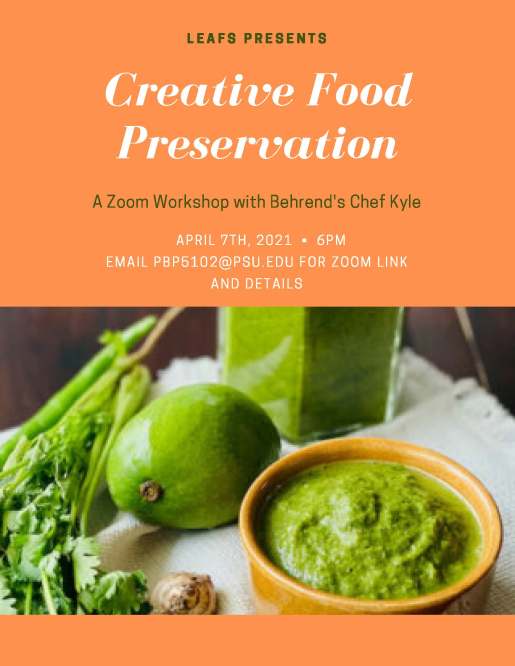
LEAFS Club to host Creative Food Preservation workshop with Behrend’s head chef

By Heather Cass, Publications Manger, Penn State Behrend

According to the Food and Drug Administration, 30 to 40 percent of food in the United States is wasted. That figure is particularly hard to swallow given that an estimated 35 million people in our country experience hunger every year.

“This means that the food isn’t being consumed or even turned into compost, but instead ends up in our landfills,” said Pearl Patterson, a senior Psychology major and president of the Leaders in Education and Action in Food Systems (LEAFS) Club. “While much of the change needed to develop sustainable food systems must come at the policy-making and law-making levels, being able to reduce waste in our own homes is absolutely of importance and can make an enormous difference.”

To help area individuals learn how to safely extend the life of their food, the CLUB is hosting a webinar on Creative Food Presentation Wednesday, April 7, at 6:00 p.m. with Penn State Behrend’s Chef Kyle Coverdale.

“Creative food preservation means using techniques that are traditionally used for preserving food, like pickling, while transforming the food into something new,” Patterson said. “For example, Chef Kyle will be demonstrating a very flexible pesto recipe.”

Making pesto is a great way to preserve leafy greens, such as cilantro, kale, or chard, which can spoil quickly in their original form. Once they are made into pesto, however, the greens will last much longer and can even be frozen for later use.

During the session, participants will also learn about different pickling methods and how to make sauerkraut and ricotta. Participants can buy the ingredients and cook right along with Chef Kyle from their own kitchens or watch and try it on their own later.

To register for the event and get a Zoom link and list of ingredients, email Patterson at pbp5102@psu.edu.

Creative Food Preservation (002)

Eight ways to enjoy a spring day at Behrend

By Heather Cass, Publications Manager, Penn State Behrend

Spring has finally sprung and it looks like we will be enjoying some warm and sunny weather all week! Here are eight great ways to get outdoors and make the most of a beautiful spring day at Penn State Behrend.

*** Don’t forget to mask up; masks are still required at all times on campus, even outdoors. Photos below were taken prior to January 2020 or were taken with high social distancing measures in place. ***

disc golf

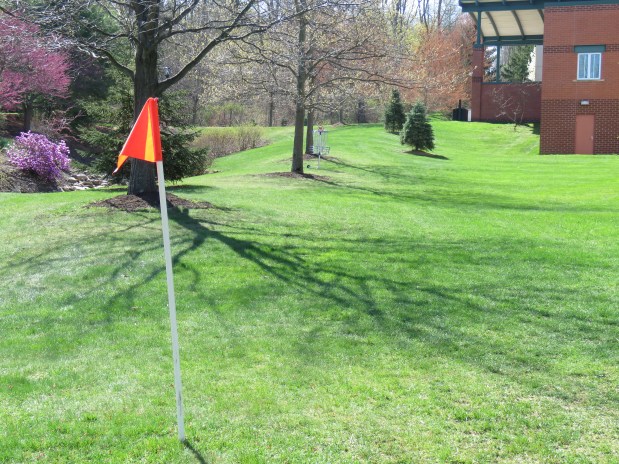
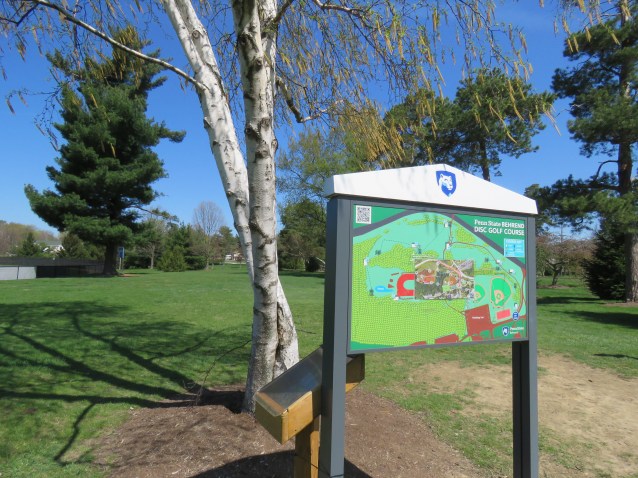
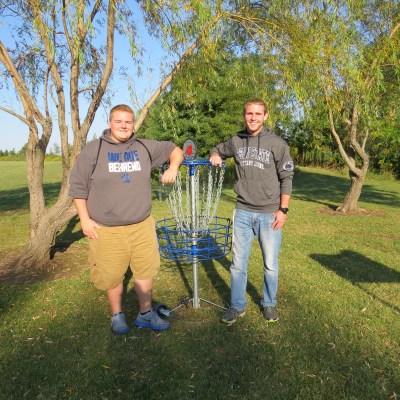
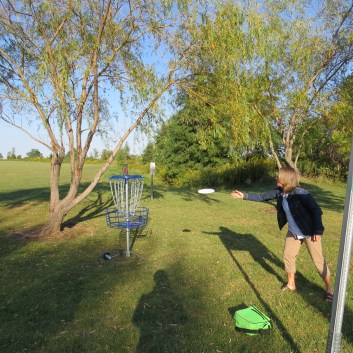
Play a round of disc golf. Penn State Behrend is home to a 9-hole disc golf course that starts in front of the tennis courts. Students, faculty, and staff can borrow discs for free at the Junker Center. Just ask the student worker at either entrance desks. Never played? It’s not hard to learn. For instructions, check out this story or this how-to video.

This slideshow requires JavaScript.

Have a picnic. If there is no event going on (and there aren’t many right now), Wilson Picnic Grove, adjacent to the Wilson Lot, is available for use by the Behrend community. It’s open air and big enough to allow for social distancing.

IMG_20200618_093051030

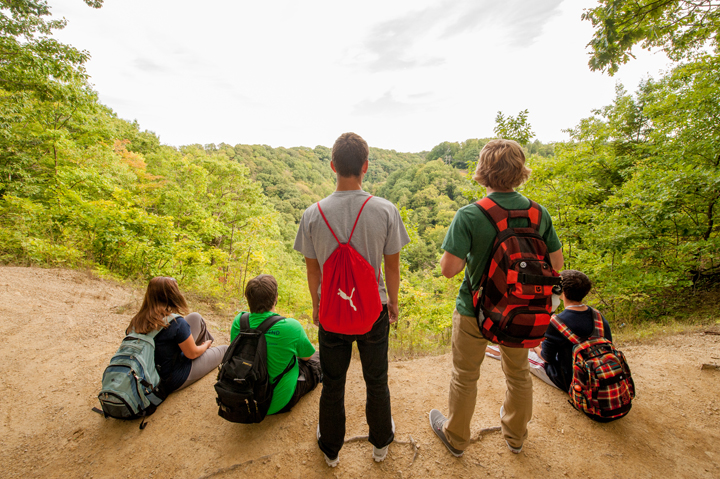
Go to the gorge. Wintergreen Gorge on the edge of campus has winding wooded paths, gorgeous vista views and, if you walk down far enough, a babbling creek to wade in or skip rocks. There’s no better place to enjoy a spring day than in the gorge. Access it from trailheads behind Trippe Hall or in the back corner of the Prischak Lot.

Bayfront Connector Trail (1)_Tagged

Take a walk or run. The paved Bayfront Connector Trail starts at the corner of the Erie Lot and runs all the way to Erie’s bayfront (about 8 miles). The path meanders along the Bayfront Connector through fields, marshy areas, woods, and more. For more details, see this story. Need a 5K route? Check out this story from the archives.

This slideshow requires JavaScript.

Play some games. Behrend has outdoor ping-pong tables (in front of Reed, behind Trippe) and a permanent cornhole game (behind Reed) as well as cornhole boards that you can check out and set up anywhere. You can borrow equipment for any of these games at the Reed Union Building desk with a University ID. They also have other lawn games, including giant Jenga and hula hoops, as well as checkers and chess pieces for the tables in front of Reed.

hanging out2

Read/study outside. Big test or paper coming up? Find a spot to work outdoors. There are tables outside most buildings and in the Wilson Picnic Grove, or you can just hang a hammock or spread out a blanket under your favorite tree. Behrend has plenty to choose from.

Erie sign

Hitch a ride to the bayfront. If you have a car, hop on the Bayfront Connector and take a walk along Erie’s bayfront. Park at the Blasco Library or near Dobbin’s Landing and take the bayfront trail along the waterfront. Cross the Bayfront Highway at the light at Liberty Park and take the ramp/walkway to Second Street to walk along the bluffs and take a photo at the new Erie sign. (About a 3-mile/1-hour walk). Just follow the bluffs/trail back down to State Street to return to your car. Don’t forget, you can take a city bus, too. See the RUB Desk for bus schedules.

views

Watch the sun set from the parking lot. The top of the Burke Parking Deck is the best place on campus to catch a gorgeous Erie sunset (or sunrise, but we know few students are early risers). It offers a wide, birds-eye view of the entire bayfront and, on a clear day, you can even see Presque Isle.

Cook with Chef Kyle at Virtual Cooking Party

By Heather Cass
Publications Manager, Office of Strategic Communications, Penn State Behrend

chef kyle coverdale

Penn State Behrend Managing Chef Kyle Coverdale

Ever wish you could have a professional chef next to you, walking you through a new recipe? Thursday night, you can. Penn State Behrend’s culinary king, a.k.a. Managing Chef Kyle Coverdale will be offering a virtual cooking tutorial via Zoom.

The event, cohosted by two student clubs, Leaders in Education and Action in Food Systems (LEAFS) and Greener Behrend, is not a watch-and-learn, but an interactive cook-along. Sign up and you’ll get a list of ingredients along with your Zoom meeting link. Then, get your shopping done, do the recipe prep work and log on Thursday, November 19, at 6:30 p.m. from your kitchen to cook with Kyle and dozens of other members of the Penn State community.

“As periods of isolation and quarantine continue, we wanted to create a sense of community by coming together, virtually, to learn, cook, and share a meal and conversation,” said Pearl Patterson, a senior Psychology major and co-president of the LEAFS club.

Coverdale said the Food Services staff, including Behrend’s five chefs, have been looking for ways to bring students and the college community together and, traditionally, those events on campus revolve around food.

“Last week, we did a cooking class with students in-person at Bruno’s (with all COVID safety measures and distancing in place) and we made and enjoyed classic Ukrainian dishes,” Coverdale said. “Doing it virtually allows us to include a lot more people because we’re all in our own kitchens.”

We caught up with Chef Kyle to find out what attendees will be making and what he loves about cooking for Penn State Behrend students, faculty, staff, and guests.

What’s on the menu for the Fall Cooking Party?  We’ll be making a Roasted Butternut Squash with Quinoa, Kale, Dried Cranberries and Feta bowl, and Beet Carpaccio with Roasted Carrots and Goat Cheese Mousse.

How long have you been a chef?  I have been cooking for more than fifteen years. I attended culinary school at Mercyhurst University.

What do you enjoy most about being a chef? Being able to bring people together with my work. When I travel and get to cook with other chefs from all over the world, it is amazing how we can “talk” through food. Also, it is an ever-changing artform. There is always something new to learn.

What do you enjoy about cooking at Penn State Behrend? We have so many great events and a diverse population. It gives me a lot of opportunities to cook different things, learn new dishes, and get ideas from our students.

What is the most popular meal/food you make at Behrend?  This is a hard one. From a catering perspective, I have a surf-and-turf meal that is quite popular. It includes a fillet and crab cake over garlic mashed potatoes and asparagus topped with bearnaise sauce. In the dining hall, we just offered a Katsu sandwich, which is an amazing Japanese street food sandwich, that was very popular.

What makes or breaks a recipe? Bad ingredients. If you start with low-quality ingredients, the outcome of the dish will likely be subpar.

What would you say to people who say they hate to cook?  Anyone can cook and if you don’t believe me, watch the Disney movie Ratatouille. Cooking doesn’t need to be hard, and it’s okay to use items that are already prepped to help make the task less daunting. If you do eat out, please do support local restaurants.

Join us!

Want to cook with Chef Kyle? Email pbp5102@psu.edu to receive a list of ingredients and a link to attend the Zoom event!

Home Work – Virtual lab leads to hands-on experience for DIGIT students

By Heather Cass
Publications Manager, Office of Strategic Communications, Penn State Behrend

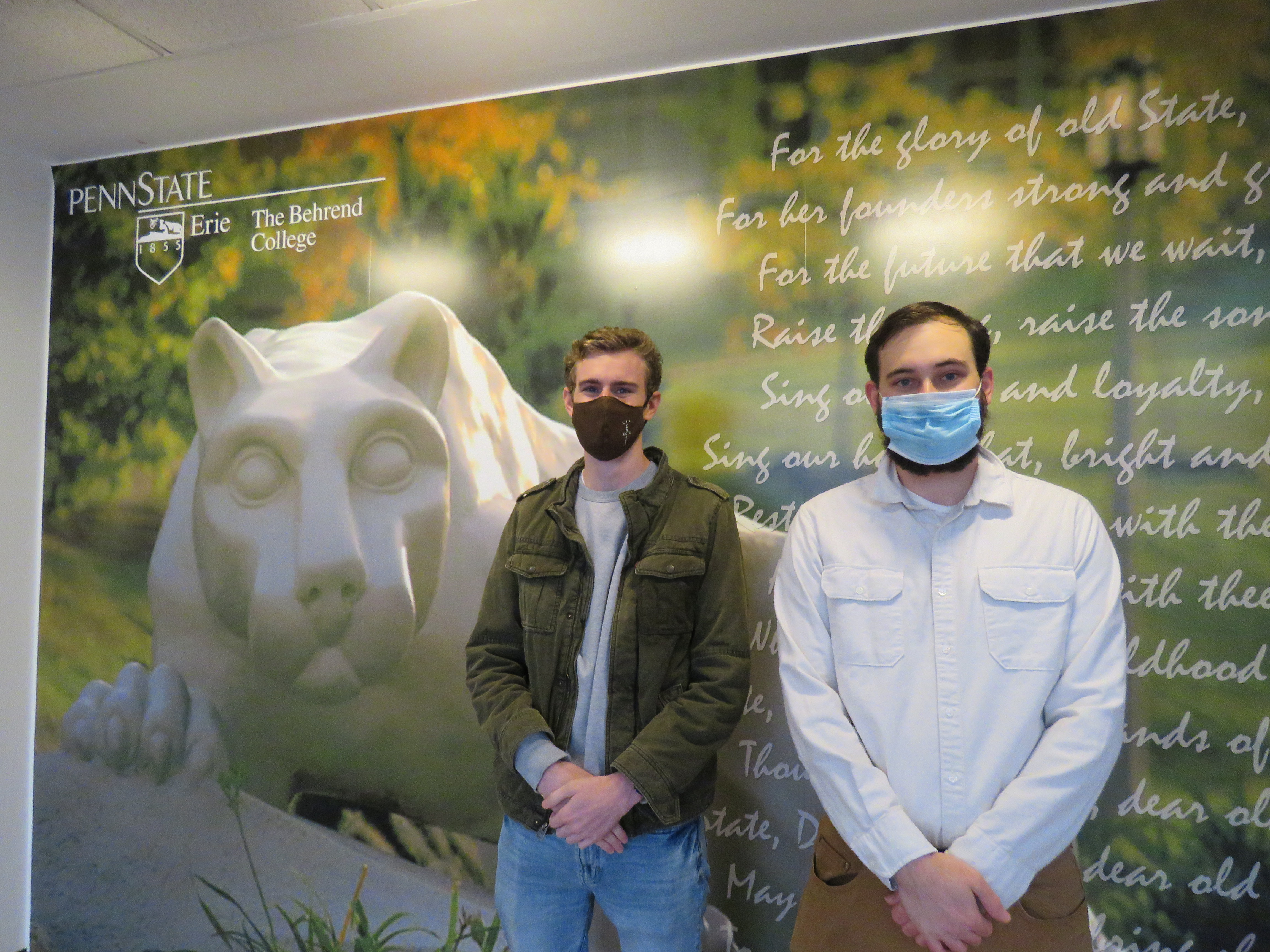
Digital media, arts, and technology students Kurt Brautigam, left, and Zak Teyssier

A quick switch to remote learning this spring forced many of us to rethink the ways that we meet, collaborate, and maintain a community when we have to be physically distant. Tommy Hartung, assistant professor of digital media, arts, and technology (DIGIT), started a virtual DIGIT Lab and invited students to get together with him once a week.

“It was completely voluntary,” Hartung said. “We met up once a week to talk about ideas, and I’d demonstrate some techniques,” Hartung said. “It was a casual way to keep students thinking positively about the future. I viewed it as more of a research group than a class.”

It went so well that Hartung continued the lab over the summer, which is where DIGIT majors Zak Teyssier and Kurt Brautigam learned about an opportunity to get hands-on experience creating a video for UPMC Hamot Hospital in Erie.

“UPMC Hamot reached out to Behrend, looking for help making recruiting videos,” Hartung said.  

Brautigam, who wants to work in video production and editing one day, was happy to jump on board. He and Teyssier worked with Annmarie Kutz, Otolaryngology residency program manager and medical student coordinator at UPMC Hamot, to put together a video for the hospital’s otolaryngology head and neck surgery residency.

Brautigam said it was valuable experience working for a real client.

“Annmarie provided us with the assets we needed to use (since we couldn’t do the filming ourselves due to COVID restrictions) as well as guidelines on logos, fonts, and color schemes to be used,” he said. “I learned how important it is that brands be consistent in their messaging and visuals.”

Brautigam spent most of his time working on the basic structure of the video and color correcting photo and video assets, while Teyssier worked on the audio, including the background music.

“UPMC Hamot standards required us to replace the music Zak had composed with music that was already owned by the company,” Brautigam said. “That was one thing we learned the hard way.”  

After some back-and-forth between the students and their client to smooth transitions and audio, the video was posted to UPMC Hamot’s website where it will used to answer questions and provide information for doctors interested in the otolaryngology residency program.

Kutz told the students that when UPMC marketing professionals in Pittsburgh signed off on the video, they said, “It was very nicely put together and has lots of great content.”

The students hope it might lead to more projects with the hospital.

“We gained valuable experience working with UPMC Hamot on this particular project,” Teyssier said. “We hope to create more multimedia content for them in the near future.”

“We are currently talking about ways we might be able to assist them in creating content for their social media pages,” Brautigam added.

Get Lost in Space with Yahn Planetarium

By Heather Cass, Publications Manager at Penn State Behrend

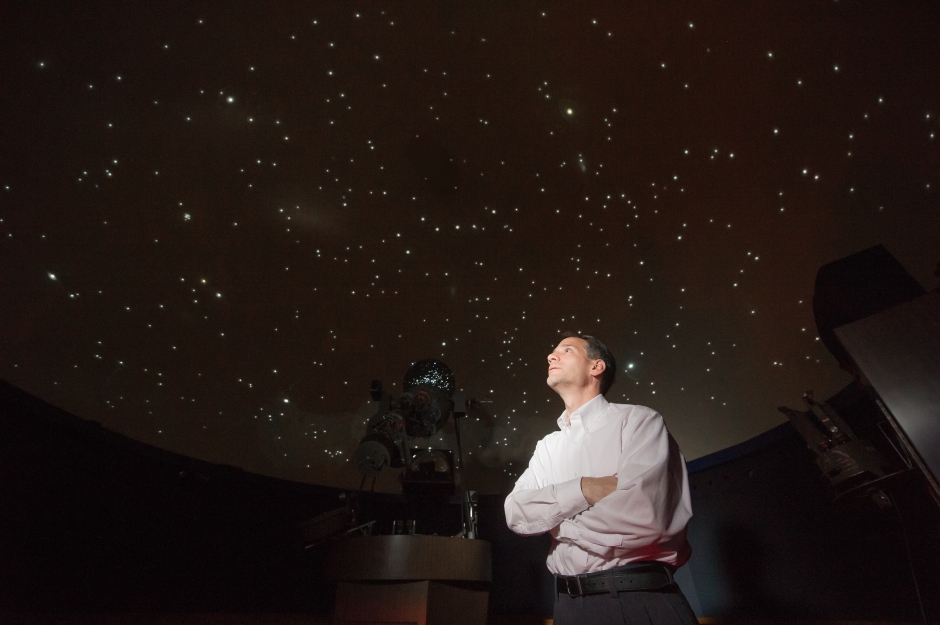
In an uncertain world, it helps to keep your chin up. Way up. Tipped to the sky, in fact. There’s nothing like the vastness of the heavens above to inspire awe and put one’s existence on planet Earth in perspective: Just one tiny human on one small planet contemplating millions of planets and solar systems spinning tens of thousands of lightyears away.

When you really delve into it, space science is mind-blowing and, frankly, who among us couldn’t use a distraction these days? Yahn Planetarium at Penn State Behrend has just what you need, and you can find it online, for free.

“It’s been difficult for the planetarium during this time as we normally thrive on school groups and the public coming in to experience the immersive planetarium,” said Jim Gavio, planetarium director. “But, like many educational facilities, we have adapted to remotely teaching astronomy and space science.”

Gavio has been recording presentations and posting them online at behrend.psu.edu/yahnplanetarium. He is also doing monthly star talks, in which he guides viewers in looking at the current night sky in the Erie area, as well as occasional special presentations, such as one on SpaceX’s recent Demo-2 launch and one on the basics of using a telescope.

The planetarium is also offering virtual field trips, interactive group presentations led by offered by Gavio via Zoom.

“During the bulk of the group programming, I try to simulate what they would see in the planetarium,” he said. “I use an astronomy program that simulates the night sky here in Erie so that I can point out specific constellations and stars and planets that they would see in the sky that night.”

His largest virtual group so far was 130 middle school students this spring.

“The teacher sent me questions from the students in advance, which made for a smooth presentation, in which I could focus on some things they were learning at that time. The teacher told me that she, the parents, and the kids were thrilled to have the experience as it gave them a break from schoolwork and an event to look forward to.”

Speaking of looking forward, Gavio has been using the downtime at the planetarium to develop new programming and to do minor maintenance work on the facility.

“The planetarium has been going nonstop for six years, and we’ve had more than 46,000 visitors in that time, so the space is showing some wear,” Gavio said. “While we’d much rather have Yahn Planetarium open, closing it to visitors has given us time to do some repairs and improvements.”

If you need a good reason to get lost in the stars, Gavio has one for you: NASA will be launching another rover to Mars sometime during the launch window of July 20 to August 11.

“The rover will be looking for signs of microbial life on Mars,” he said. “Another really exciting aspect of the rover will be the small helicopter drone that it carries that will fly around on Mars. This is a first and will be very exciting to watch.”

Not into rovers? How about comets?

“During July and August, we also have Comet NEOWISE which looks like it will be pretty visible to people if they choose to look for it,” Gavio said.

He warns, though, that comets can be tricky.

“Sometimes we think they may be easy to see, then they fizzle out,” he said. “Comet NEOWISE won’t be as noticeable as Comet Hale-Bop was back in the late 1990s, but you should be able to see it with the naked-eye or better yet, with a simple pair of binoculars. In mid- to late-July, it can be seen low in the northwest after sunset. As we head into August, it will climb higher and further from sunset so that it will be in a darker sky. If you’ve never seen a comet, this is one of the best chances we’ve had in long time.”

So, get that chin waaaay up because there’s always something exciting going on in the skies above you. Get lost in space for a little while with Yahn Planetarium.

See Yahn Planetarium at Penn State Behrend videos and schedule a virtual tour at behrend.psu.edu/yahnplanetarium. For more information, contact Jim Gavio, planetarium director, at 814-898-7268 or jvg10@psu.edu.

The Show Must Go On(line)

By Heather Cass,

Publications Manager, Penn State Behrend

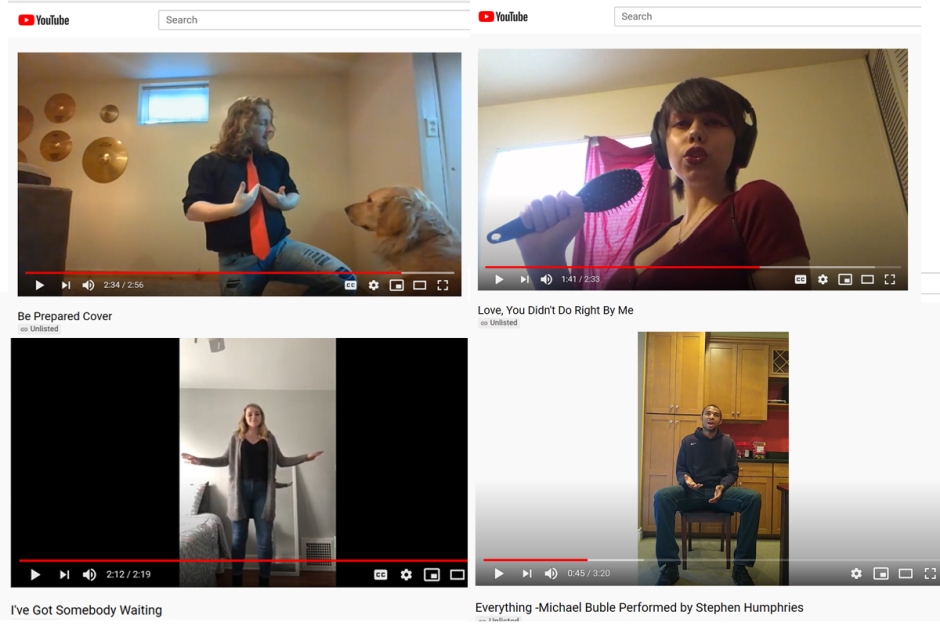
There are few things that singers look forward to more than a chance to get on stage and share their talent with an audience. When the COVID-19 crisis put an end to in-person gathering and, in turn, the culminating event for Behrend choral students this spring, Dr. Gabrielle Dietrich, director of Choral Ensembles and associate teaching professor of music, decided the show much go on. She came up with a plan to allow each student to step in the spotlight – a virtual cabaret performance.

We talked with Dietrich to learn more and get links to some of the students’ performances:

Behrend Blog: What were students tasked with doing?

Gabrielle Dietrich: In a typical semester, the big project we work towards in Music 103 Concert Choir) and 104 Chamber Singers is a full-length concert. We were busily working toward that goal right up to spring break. When it was announced that we would be learning remotely for the rest of the semester, I knew we needed a new project. I knew the students enjoyed a variety of musical styles and might like the chance to work on individual vocal development and a piece of music that spoke to them personally. So, we decided to do a video cabaret, featuring music, song, dance, or drama. Each student chose their own song, which I then purchased for them to use, and they had several individual coaching sessions with me to prepare for the performance.

You discovered early on that live performances on Zoom would not work well, so you asked students to record their performances?

Yes, any music-making on Zoom is impacted both by delay, which is impossible to compensate for in real time (Try singing “Happy Birthday” to someone with a group of friends on Zoom and quickly see what I mean), and sound quality because you’re dealing with both Zoom’s noise filter, which can be turned off on computers, but not on tablets or phones, and also the noise filter of the devices themselves, plus wide variations in equipment quality and sensitivity, not to mention connection speed. Making videos gave students more control over the quality of their performance and the ability to do multiple takes, experiment with microphone placement, the volume of the recorded accompaniment, etc. Once they were happy with their work, they uploaded a video to YouTube and sent me an unlisted link.

Then you gathered at a certain time to watch all the performances at once?

Yes. We kept the date and time of the original ceremony and gave friends and family members the chance to attend virtually, too, as many of them would’ve come to a typical concert. We used a different video sharing system called watch2gether. It turned out to not be ideal, but it was a learning experience. If I were to do it over, I would have requested the videos be done sooner so that I could have had time to assemble a slick playlist in YouTube or even a single video in iMovie.

How many attended/participated the cabaret? 

There were twenty performers, and probably fifty or more audience members in attendance, though that number may be higher as there were likely multiple viewers at some screens.

What was your overall impression of the event?

I was very impressed with the creativity, and I think the students had a lot of fun hearing one other. One of the things I love about Behrend choristers is how quick they are to appreciate and cheer each other on. Singers can be a competitive bunch, but our students are very supportive of one another, and I am really proud of that.

How was the transition to remote learning challenged you?

The hardest thing for all of us seems to be the visceral absence of singing together. If you haven’t had that experience, it’s hard to describe. The full-brain, full-body experience of singing in a choir pulls you out of yourself and connects you with others in an immediate and strangely intimate way, and there’s just no substitute for it. I know we are all incredibly eager for the days when we can get together and sing again.

Have there been any silver linings? Any techniques you plan to keep when you return to in-person classes? 

I like that my students had the challenging experience of being confronted by the honesty of a recording. When we’re in rehearsal, they rely on me for feedback. I work hard to focus on the positives and play to our strengths. Recording devices have no tact. I know that has been really hard for some of them. Hearing a recording of one’s own voice is challenging for most human beings. A big part of my job in the last few weeks has been to help students hear the good rather than focusing on what could have been better. I think I might do more videotaping in the future, simply because it’s a valuable check on our perceptions.

I truly enjoyed the light-heartedness some of my students brought to the table in their interpretations and their staging, and also the deep feeling and musical sensitivity and instinct they demonstrated.

Here are links to some of the students’ cabaret performances. Turn up your speakers and enjoy!

Stephen Humphries – Everything by Michael Bublé

Maribeth Miller – I’ve Got Somebody Waiting by Cole Porter

Jack Golec – Be Prepared (from The Lion King) by Alan Menken

Claire Nicholson – Love, You Didn’t Do Right by Me by Irving Berlin

Victoria Ma – In my Own Little Corner (from Cinderella) by Rodgers & Hammerstein

Emily Green – With Every Breath I Take by Cy Coleman


Crossing Disciplines Pays Off

First-year business student and senior engineering major win short story contest

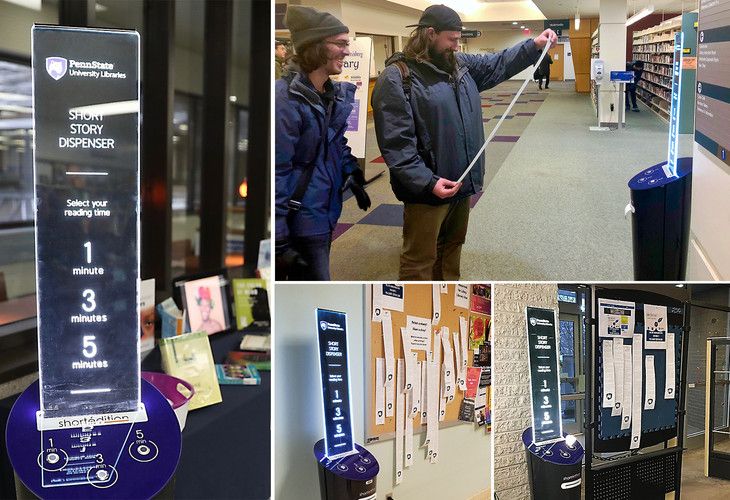
Short-Edition-4CCLs-story-dispensers_0

By Heather Cass

Publications Manager, Penn State Behrend

Look, $100 is $100, OK? So when Senior Mechanical Engineering student Sam Cabot saw the opportunity to earn some cold hard cash (er, Visa card) by whipping up a little story about brunch for Penn State’s University Libraries Short Edition short story dispensers, he was on it like, well, syrup on French toast, if we’re going to stick with the brunch theme here.

It was that delicious hybrid morning meal that students, faculty, and staff were invited to write about for a chance to win money, bragging rights, and a spot in the Libraries’ short story dispensers. There are ten of them spread out among seven University locations, including Behrend’s Lilley Library. With the press of a button, the dispenser prints out a short story that users can take with them to enjoy when they have one to five minutes to spare.

Four “Brunchin’ Around” contest winners were chosen recently by the Short Stories all-student editorial team and two of the authors—Cabot and Isaac Barringer—are Penn State Behrend students.

Barringer, a first-year Finance and Accounting dual major, wrote “The Daffodil House,” about a couple found in their yellow house covered in flies and bellied up to what turned out to be their last meal—brunch, of course, “for the Connors were of a practical stock and believed that breakfast was more efficient if it included lunch as well.”

Cabot, who writes under the pen name Johann Lecker for no particular reason other than the fact that he likes the name (“Lecker” means delicious in German), wrote “To Brunch?” in which the main character finds himself on a mountain in Brasher State Forest in upstate New York trying to make it to Sunday brunch at his grandmother’s house.

“Basically, it’s about someone who tries to remedy an uncomfortable situation, then abandons it altogether, for better or worse,” Cabot said.

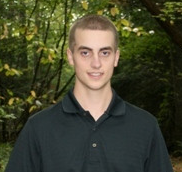
sam cabot

Sam Cabot

Cabot said he entered the contest not only for the potential prize money but for fun and the chance to challenge himself.

“From what I have noticed, engineering students enjoy creative activities as much as any other students, but internships and course load limit the amount of time they can devote to other things,” Cabot said. “Most of the writing that engineers must make time to do is formal and impersonal, so that may be why there’s a stereotype that they are not creative writers.”

Like most authors, Cabot didn’t have a story outlined in his head. Rather, he had a few ideas to start with and the story emerged from there. It’s purely fictional. Cabot has never been anywhere near Brasher State Park, and his grandma didn’t host monthly family brunches.

Asked if it’s unusual that a business major and an engineering major would win a writing contest, Cabot cites the value and of cross-disciplinary learning, which can be beneficial to students in any major.

“It’s easy to grow absorbed in disciplines, like engineering, that are extremely career-focused and require huge amounts of time spent on very specific tasks,” he said. “Adding courses in history or psychology or any of the humanities can provide a healthy balance. The knowledge gained from an occasional hour spent studying the humanities can be as relevant in the real world as the knowledge gained during any of the last eight or ten hours spent sizing a planetary gear train or debugging a C++ program. They both have value.”

But, Cabot said, the ultimate reward for him in exploring the humanities is finding something new and interesting to scratch his creative itch and expand his skills beyond the lab.

You can find links to Cabot and Barringer’s stories as well as the other winners and honorable mention entries here.

Darwin, Sharks, and Cake (Oh, my!)

sharks 2

February 12 event at Penn State Behrend celebrates Darwin and his Theory of Evolution

By Heather Cass

Publications Manager, Penn State Behrend

One of nature’s greatest success stories is one of its most fearsome creatures. Look no further than the top of the oceanic food chain– sharks—for the ultimate lesson in evolutionary survival.

“Sharks have a fossil record that extends back more than 420 million years,” said Dr. Todd Cook, assistant professor of biology at Penn State Behrend, who has done extensive research work on sharks and rays from the Mesozoic and Cenozoic eras. “As a group, they have been able to survive several mass extinctions and events that have wiped out countless terrestrial and marine species.”

Learn how these predators have adapted and evolved on Wed., Feb. 12 when Penn State Behrend’s School of Science hosts Darwin Day, an international celebration of the life and work of Charles Darwin.

“Darwin’s Theory of Evolution by means of natural selection is the central tenet that unites all areas of biology,” Cook said. “This day recognizes his immeasurable contribution to science, but especially to the natural sciences.”

Don’t be fooled by the word “theory,” Cook cautions.

“Common everyday use of the word ‘theory’ would imply that it’s simply an idea or a guess,” Cook said. “But Darwin’s Theory of Evolution is a well-substantiated explanation for natural phenomena that is supported by vast amounts of evidence. It has been, and continues to be, extensively scrutinized, and it holds up as a solid scientific theory.” 

The public is invited to celebrate Darwin at Behrend from 6:00 to 8:00 p.m., beginning with “Life: A Cosmic Story” at 6:00 p.m. in Yahn Planetarium, followed by a presentation “The Evolutionary History of Sharks” by Cook in Room 101 of Otto Behrend Science Building.

The event is free, open to the public, and geared toward those of all ages. After Cook’s lecture, attendees are invited to stay for a celebratory piece of cake.

The Art of Science: Student/faculty artwork enhances science building

By Heather Cass, Publications Manager at Penn State Behrend

Science and the arts might seem to be very different disciplines, but the scientific method and the creative process are quite similar; inquiry is at the heart of each.

“People sometimes think science is about memorizing facts, but it’s really about making discoveries and wringing answers out of nature,” said Dr. Pam Silver, associate dean for academic affairs and distinguished professor of biology. “When you have a scientific question, it takes a lot of creativity to find the answer to it.”

Scientists are, by nature, creative individuals and the School of Science has recently added two works of art that visibly illustrate that.

Ties that bind

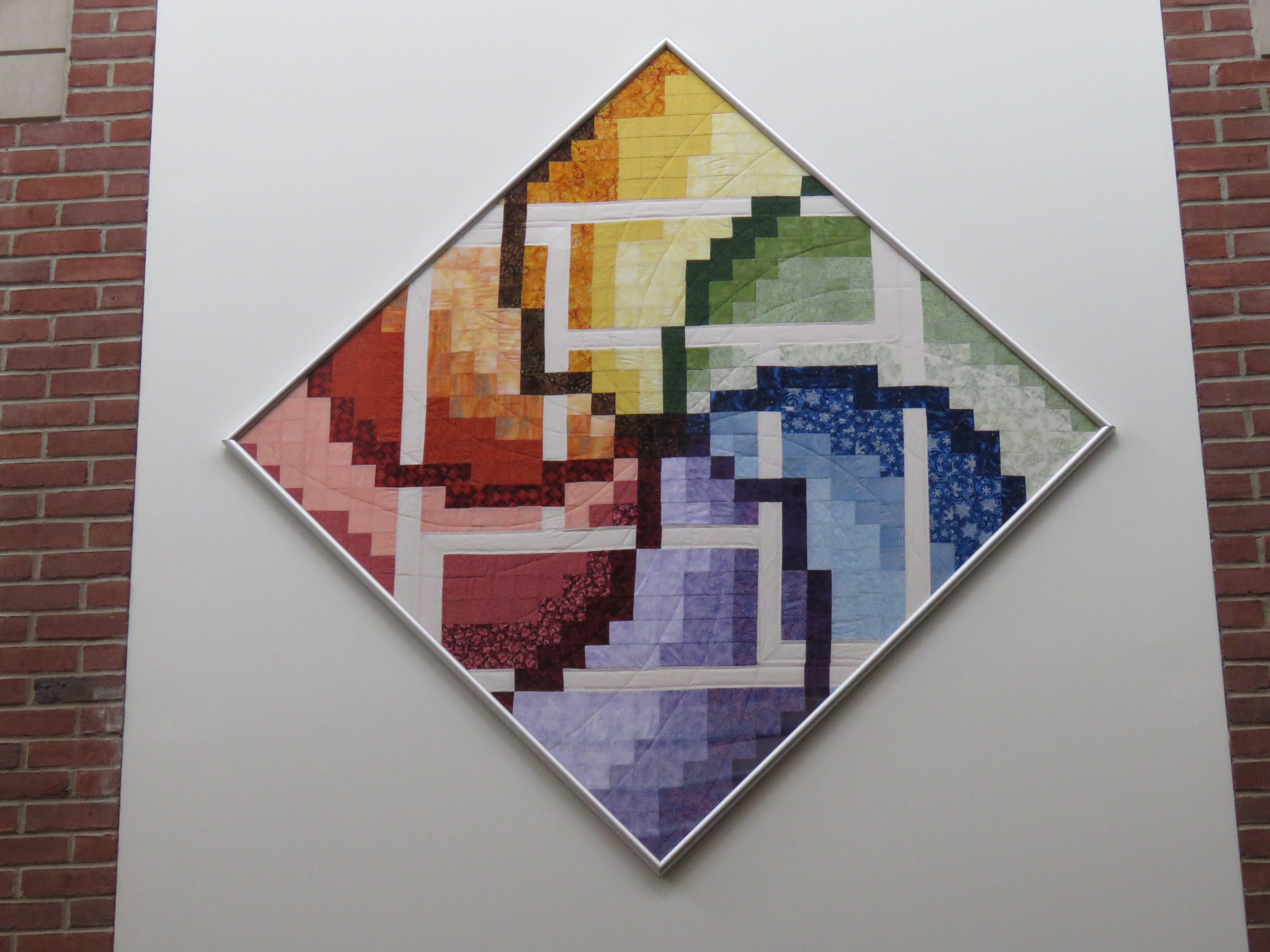
A colorful quilt, titled “A Way of Knowing,” was created by Silver and hangs in Hammermill Hall. Each color in the quilt represents a scientific discipline taught at Behrend—biology, chemistry, environmental science, nursing, physics, and mathematics and mathematics education. A spiral in the quilt represents the net movement of scientific discovery from observation to hypothesis to testing to understanding.

Furthermore, the underlying geometric design “symbolizes that the building blocks of science are not individual disciplines, but rather the discoveries to be made by merging diverse ideas, points of view, and approaches to form a strong and unified way of knowing with the goals of wisdom and the power to enact that wisdom,” Silver said.

briefs - artwork - quilt (1)

“A Way of Knowing,” by Dr. Pam Silver, associate dean for academic affairs and distinguished professor of biology, hangs near the stairwell in Hammermill Hall. 

Math in flight

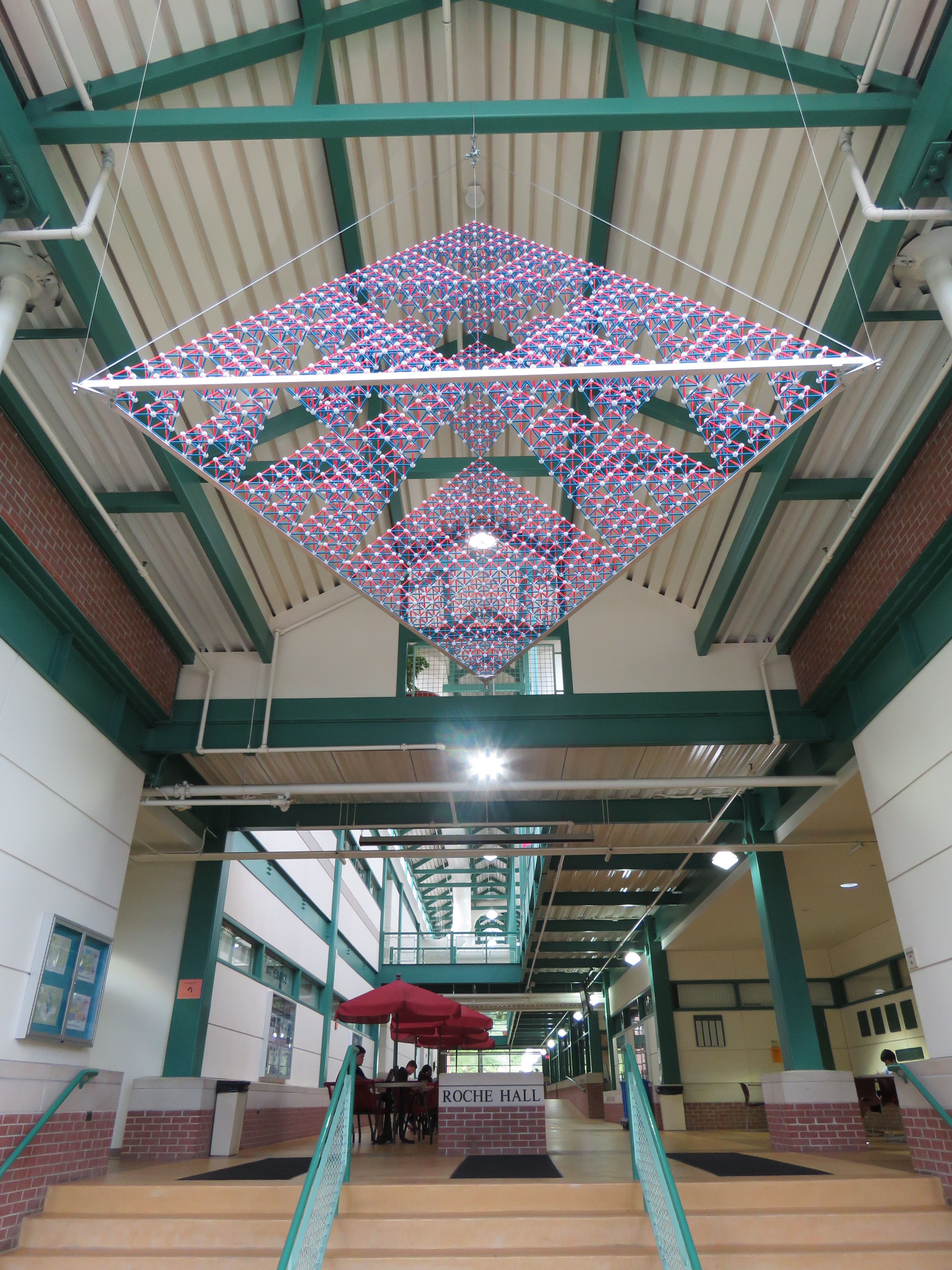
High overhead at the entrance of Roche Hall, is another work of art—a stage-5 Sierpinski tetrahedron that models a fractal with infinite triangles—created by the School of Science Math Club under the direction of club president Thomas Galvin  and Dr. Joe Previte, associate professor of mathematics.

“A fractal is a self-similar structure with recurring patterns at progressively smaller scales,” Previte said. “Fractals are useful in modeling natural structures such as plants, coastlines, or snowflakes.”

Some natural objects appear to be completely random in shape, but there is an underlying pattern that determines how these shapes are formed and what they will look like, according to Previte. Mathematics can help us to better understand the shapes of natural objects, which has applications in medicine, biology, geology, and meteorology.

Students built the fractal using Zometool construction parts. It consists of 2,050 white balls and 6,144 red and blue struts. Learn more about fractals at www.mathigon.org/world/Fractals

briefs - artwork - fractals (1)

A stage-5 Sierpinski tetrahedron created by the School of Science Math Club hangs above the entrance to Roche Hall. 

briefs - artwork - fractals (2)


Student garden interns spend summer sowing seeds of sustainability

By Heather Cass, Publications Manager at Penn State Behrend

67914587_2138250739801265_1950054429583474688_n

Cuddling chickens is not an activity you would expect at Erie’s Blues & Jazz Festival, an annual weekend-long summer music concert in Frontier Park. But two Penn State Behrend students, Jessie Johnson and Pearl Patterson, knew that a handful of hens at this popular event would be a great way to draw attention to their efforts to overturn a law against keeping chickens in the City of Erie.

Johnson and Patterson are spearheading the operation through Chicks4Erie, an online community they formed through Instagram and Facebook to spread the word about urban poultry-keeping.

“Allowing Erie residents to legally keep chickens will bring numerous positive benefits, including improving the environment through the reduction of pests like ticks and providing organic soil amendments for gardeners,” according to the Chicks4Erie mission statement written by Johnson and Patterson, both Student Garden interns at Behrend. “It will also increase self-sufficiency and food security through the production of eggs and contribute to the city’s encouraging overall trend toward urban agriculture.”

The Chicks4Erie initiative is just one of several projects that three Behrend students—Johnson, Patterson and Aydin Mitchell— have been hard at work on this summer as interns for the University’s Sustainable Food Systems Program.

The program, which launched at University Park three years ago, was expanded to Penn State Behrend in 2018 because of food systems already in place on campus. Among these is the student garden, started by the Greener Behrend student organization in 2016. Greener Behrend president, Celeste Makay, a senior Environmental Science major, has continued to help with the garden for the last two years.

Student Garden interns are responsible for the gardens on Behrend’s campus, but their work reaches far beyond weeding and watering.

“They run the campus CSA (community supported agriculture) program that we started, including generating a newsletter and recipes for members, supporting the Erie schools by serving as coordinators of the Jefferson Elementary School garden, and doing outreach programs throughout the district,” said Katie Chriest, sustainable food systems program coordinator for Commonwealth campuses.  “They also are active members of Erie’s Food Policy Advisory Council, and they are finetuning plans for a new campus club that will debut this fall,”

But, that’s not all. The student interns also host educational activities at Behrend for students from Bethesda Trinity Center and the Neighborhood Art House, staff an informational table at the Little Italy Farmers’ Market in Erie, and research expansion efforts for campus garden space and other sustainable food systems initiatives.

Mitchell, a senior Environmental Science major, didn’t have much gardening experience before this summer, but said he has learned a lot along the way. Not all of it is rooted in the ground, but in other vital connections.

“I thought I’d just be taking care of the gardens, but it turned out to be so much more than that,” said Mitchell, who oversees the Jefferson gardens and serves as the manager of education and outreach for the Student Garden intern program. “It’s really about making connections with people in the community and helping them see how vital sustainable food systems are and how and why they should care.”

Which brings us back to the Erie Blues & Jazz Festival’s Sustainability Village where Patterson and Johnson were so successful at making a case for raising poultry in the city that they quickly ran of petition pages to sign.

“At one point, I asked Jessie, who is just going into her sophomore year, what it feels like to be gaining so much support and enthusiasm for their initiative from residents and community leaders,” Chriest said. “She said she was just amazed that, at such a young age, she could have such an impact on the community around her. I’m not sure there’s a more powerful message we could hope to send to our students than that their work matters and that they can make the world a better, and more sustainable, place.”

This slideshow requires JavaScript.