From Collapse to Comeback

Student athlete defies the odds, the surgeons, and expectations to run again

By Heather Cass, Publications Manager, Penn State Behrend
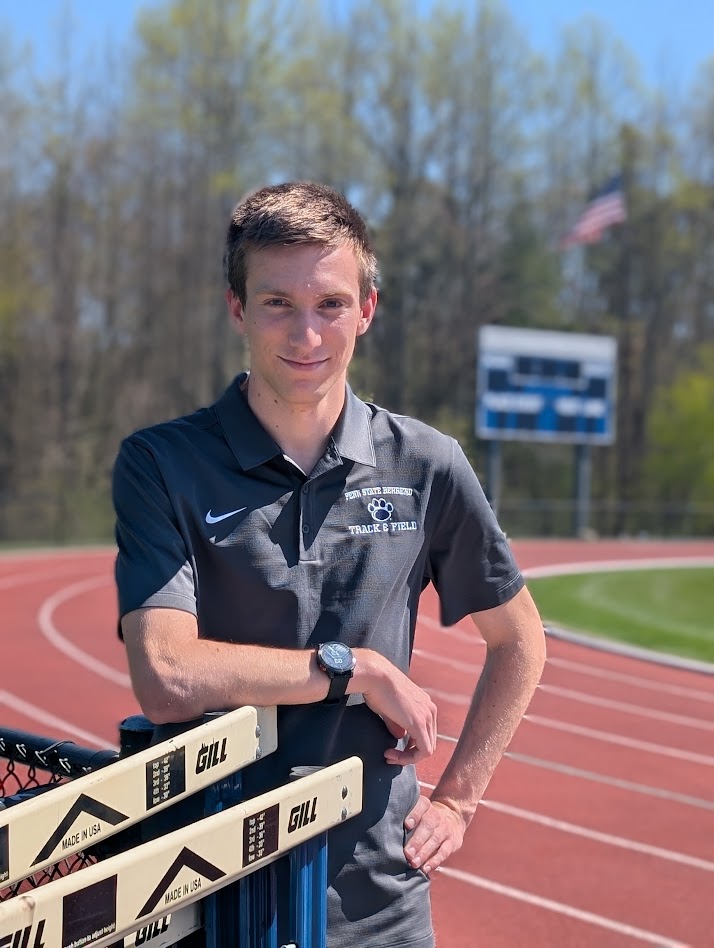
Aiden Seeman ’26

Aiden Seeman, a new graduate of the Mechanical Engineering program at Penn State Behrend and a member of the college’s track and cross-country teams, has been running since fifth grade. He is used to the ups and downs of the sport. You have good runs and bad runs.

But an unusually poor performance at a cross-country meet in Rochester, N.Y., in the fall of his junior year began to raise flags. His coach and athletic trainer thought maybe he was ill.

Seeman had been struggling with breathing, but otherwise felt fine, so he continued running.

“I was setting personal records in all of my events, so I wasn’t too worried,” he said.

But the breathing issue continued to plague him.  

“At the end of a race, my legs felt fine, but I just couldn’t catch my breath,” he said.

He was diagnosed with pneumonia. He treated it and kept running. When he was diagnosed with it again in the spring, he thought that things weren’t adding up. A follow-up X-ray suggested a collapsed lung.  

What followed was a series of tests, including CT scans and bronchoscopies — first in Erie, then in Pittsburgh. When the pulmonologist called Seeman personally to discuss the results, he knew it was probably not good news.

“She told me that they found something ‘concerning,’” he said.  

It was not a collapsed lung. He was diagnosed with an inflammatory myofibroblastic tumor, or IMT, an extremely rare mass in the lungs, most often found in children and young adults. Most of the doctors involved in his care had never seen one.

The news was shocking, but also strangely optimistic.

“I remember thinking: I’m young and fit. This is not something that should’ve happened to me,” he said. “But the good news is that this type of cancer is unlikely to metastasize. This is one of the best draws if you’re going to get cancer.” 

He was able to fit in one cross-country race with his team before he had surgery to remove the mass. Late last October, Pittsburgh surgeons worked to remove the mass. They expected to take 10 to 15 percent of his right lung. They took 40 to 45 percent.

“When they put me under for the surgery, I went under thinking I was going to be fine,” Seeman said. “When I woke up and I heard how much they had to take, I wasn’t so sure.”

Doctors were cautious about his recovery. Hopefully, he could work his way up to daily walks, they said. Running was unlikely.

He sat with that for two dark days. Then he decided that was enough.  

“No,” he said to himself. “I’m going to fight, and I’m going to run again. My goal was to put my track uniform on and compete with the team before I graduated.”

Eight days after surgery, he showed up and stood in the cold to support his teammates at the AMCC Cross Country Championships — not racing, just there.

A couple weeks later, he went on his first post-surgery run with his older sister. They ran a mile, walked for a bit, then ran a mile back. A 10-minute-mile pace, far off his usual 7:30.

“I’m not going to lie,” he said, “it sucked a lot, at first.”  

Through all of this, he maintained his academics, carrying 18 credits, making up all the work from two weeks of missed classes, a feat in itself.

By April, he was back on the track, competing in the 800 meters—the event he has always called his own. He is less than ten seconds off the personal record he set before he got sick. Sub-two minutes is the goal. He knows exactly how to get there.

“I benefit from knowing where I want to be and how to get there,” Seeman said. “And this whole experience has shown me what a goal and hard work can do.”

Greg Cooper, the head track and cross-country coach at Behrend, has watched all of it — the collapse, the diagnosis, the slow miles with his sister, and his comeback this spring.

“I am absolutely blown away,” Cooper said. “It’s hard for me to call it anything but miraculous. He would be quick to remind me he’s running seven seconds off his personal best. I would be quick to remind him he’s defied the odds and overcome more than any doctor told him he could.”

Seeman, graduated May 8, has a six-month follow up CT scan this month. He is looking forward to telling his surgeon that he’s racing again.

“Being able to run is so much more of a blessing than it ever was before,” he said. “I definitely appreciate running with the team more than I ever have. I don’t complain much anymore. Now, running is like an act of defiance.”
Standout Seniors ’25: Meet Anna Smith (IBE and PSCM)

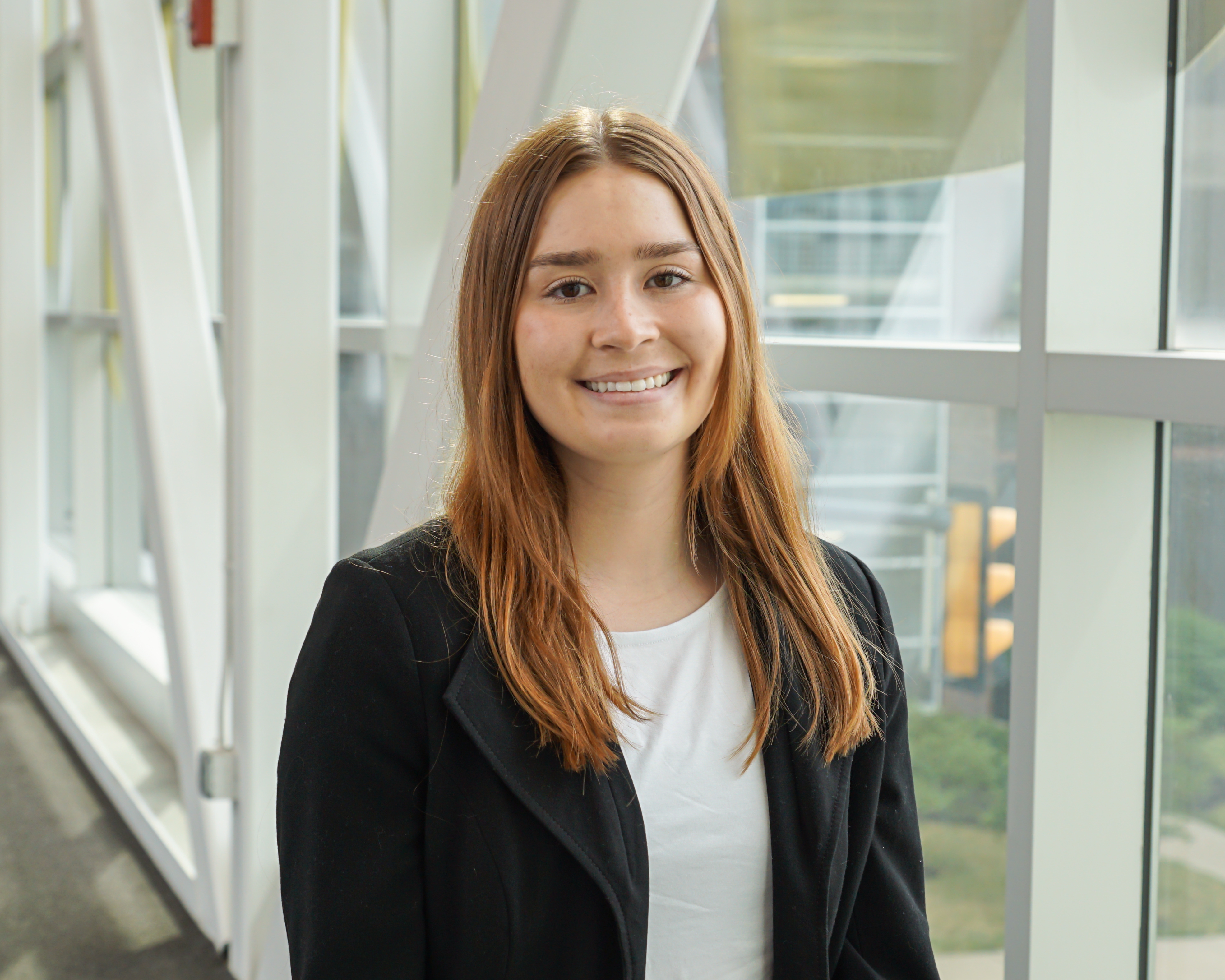
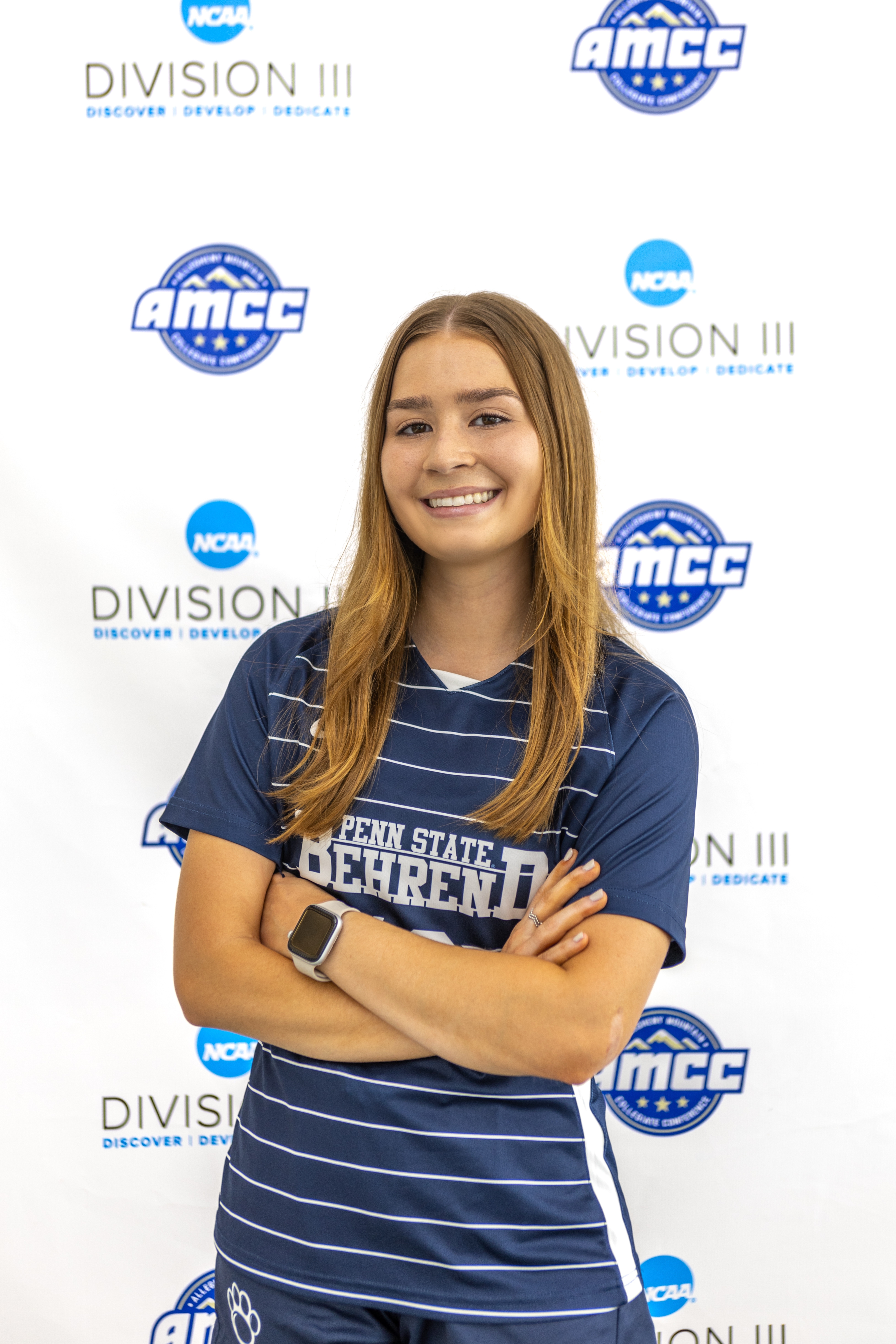
Penn State Behrend’s Class of 2025 is ready to make its mark on the world. We’re proud of our students and all that they have learned and accomplished here at Behrend. Over the next several weeks, we will introduce you to a few of our remarkable seniors who have conducted valuable research, pioneered innovation, overcome challenges, and engaged in college life in a big way.

Today, we’d like you to meet Anna Smith.

Majors: Interdisciplinary Business with Engineering (IBE) Studies and Project and Supply Chain Management (PSCM)

Hometown: Cleveland, Ohio  

Scholarships: Lawrence and Elizabeth Held Scholarship and Penn State Discover Award  

Why she chose Behrend: Because of the unique opportunity it provided for me to excel both academically and athletically. I really liked the idea of being able to thrive both in the classroom and on the field all while working toward a Penn State degree. I’ve always been a part of a team, so I knew going into college that I wanted to continue playing soccer, and Behrend seemed to be the best fit for me.

Why she chose her majors: This decision was driven by my interest in global logistics and operations. Some of my strengths include strategic and logical thinking, which is why supply chain management has always been of interest to me. Additionally, IBE is a unique way of combining both business and engineering practices that only further develops my supply chain knowledge.

Proudest accomplishment at Behrend: Being selected for the AMCC All-Sportsmanship team in our conference, despite losing my entire season to injury (fractured femur) and never once stepping on the field. This recognition meant so much to me because it highlighted the impact that I had off the field. Throughout my recovery, I remained dedicated to supporting my teammates, embodying the spirit of sportsmanship by encouraging and motivating them from the sidelines. This experience taught me that true leadership and sportsmanship extend beyond physical performance. It’s all about showing up for your team, maintaining a positive attitude, and contributing to the collective success in any way possible. Winning this award reaffirmed my belief in the importance of character and resilience, and it remains a testament to my commitment and value that I was able to bring to the team.  

Challenges: Overcoming the challenge of losing my entire senior season of college soccer due to injury has been a transformative experience for me. It has taught me all about resilience and determination as I navigated the physical and emotional hurdles of recovery. This period of adversity pushed me to develop a positive mindset and focus on personal growth. I learned the importance of patience and perseverance, which not only helped me regain my physical strength but also made me mentally stronger.

A team player: Throughout my recovery, I always wanted to be there for my teammates, supporting them from the sidelines and showing up for them no matter what. This experience deepened my understanding of the value of loyalty and commitment, reinforcing the significance of being present for others in their times of need. Through this journey, I was able to gain a deeper understanding of my own capabilities and understand the value of supporting others facing similar challenges.  

Awards and accolades: Dean’s list most semesters,  Academic All-Conference all four years, Chi Alpha Sigma National Student-Athlete Honor Society, and AMCC All-Sportsmanship team.   

After her graduation in May, Anna will join the Supply Chain Rotational Program at Goodyear Tire & Rubber Company’s global headquarters in Akron, Ohio.

Standout Seniors: Meet Matthew Enos (Accounting and Finance)

Penn State Behrend’s Class of 2024 is ready to make its mark on the world!  We’re proud of our students and all that they have learned and accomplished here at Behrend. Over the next several weeks, we will introduce you to a few of our remarkable seniors who have engaged in college life in a big way, conducted valuable research, pioneered innovations, and overcome challenges during their time at Penn State Behrend.

Matthew Enos

Today, we’d like you to meet Matthew Enos.

Majors: Accounting and Finance

Hometown: Sharpsville, Pennsylvania

Scholarships: Penn State Provost Award

On choosing Behrend: I came to Behrend because of the opportunity to double major in business. On top of that, it is easy to get active and involved in clubs at Behrend.

On choosing his major: I have always enjoyed the stock market, so I started more toward finance. Accounting works well with finance, and I just really enjoyed dealing with numbers, doing taxes and auditing.

His proudest accomplishment at college: The way Behrend developed who I am. My senior year of high school, I would have been afraid to talk to a crowd of people or to someone I didn’t know. Now, I enjoy giving tours of the campus and talking to professionals in the accounting field. I am not afraid to talk in front of big crowds and share my experience at Behrend.

Bring on game night: I enjoy playing board games with my family and friends.

His definition of living a good life: Being close and able to spend time with my family is important to me. I want to be able to live without stressing about bills. To be able to separate work and personal life and enjoy both.

His priorities for the coming years: Doing well at work, getting promoted, and starting to save money for a house.

Advice for first-year students: Do not be afraid to try new things and get out of your comfort zone.

After his graduation in May, Matthew plans to work at KPMG in Pittsburgh in their audit department.

Standout Seniors: Meet Alexander Jackson (Mechanical Engineering)

Penn State Behrend’s Class of 2024 is ready to make its mark on the world!  We’re proud of our students and all that they have learned and accomplished here at Behrend. Over the next several weeks, we will introduce you to a few of our remarkable seniors who have engaged in college life in a big way, conducted valuable research, pioneered innovations, and overcome challenges during their time at Penn State Behrend.

alexander johnson2

Today, we’d like you to meet Alexander Jackson.

Major: Mechanical Engineering

Hometown: Cochranton, Pennsylvania

Scholarships: Defrees Family Foundation Endowment, STEM Leaders Program Scholarship, Behrend Excellence Award, Commonwealth Campus First Year Award.

On choosing Behrend: While I was job shadowing in high school, I learned that many engineers in northwestern Pennsylvania graduated from Penn State Behrend. As I talked with more people and broadened my connections, I realized that Behrend graduates were all over the world, working for some of the biggest companies. This gave me the confidence to put my trust in Behrend.

On choosing his major: Mechanical Engineering is a broad major that has allowed me to learn about many different industries and find the best career path for me. I also like that mechanical engineers can have an impact on the world through the design, manufacturing, testing, and implementation of new technology and innovations.

Proudest accomplishment at Behrend: I’m proud of the internships and career opportunities I’ve obtained. I’ve met and worked with some incredible people and clients. I’ve also visited major tech companies and talked with engineers who are pushing the limits of engineering. These experiences are rewarding.

Campus involvement: STEM Leaders Program, Behrend Engineering Ambassadors, Men’s Volleyball player, Student Athlete Advisory Committee.

Awards: Evan Pugh Scholar Award, President Sparks Award, National College Athlete Honor Society, Academic All-Conference, Men’s Volleyball Sportsmanship and Leadership Award, Men’s Volleyball MVP.

Highest priority for the coming years: My highest priority is to continue to learn. Learning doesn’t stop when we walk across that stage at graduation. A desire to learn and grow fuels innovation and creativity.

Sports rank high, too: Outside of work and school, I’m very passionate about sports! I’m a huge Pittsburgh fan (Steelers, Penguins, and Pirates), and enjoy playing and watching all kinds of sports. I love to be active.

Advice for first-year students: Surround yourself with a good group of people because the friends you hang out with will have a great influence on you and your goals. But don’t worry if you don’t find this group right away. As you go through school, you’ll meet others who share your interests and match your energy.

Parting thoughts: I’d like to thank all the faculty and staff members at Behrend. They deserve a lot of credit for the contributions and impact they have on generations of students. So I’d like to give a shout out to all the employees who keep Behrend up-and-running every year.

After graduation, Alex plans to work as a design engineer in the Rotary Wing Group at Parker LORD in Erie.

Captured History

Former math professor’s hobby produced one of Behrend’s greatest gifts

By Heather Cass, Publications Manager, Penn State Behrend

B.p. single

Though he taught generations of college students during his thirty-seven years as a mathematics professor at Behrend, Norman B. “Bill” Patterson, above, established a legacy that goes far beyond linear algebra, differential equations, and statistics. When he retired in 1990, he left a trove of photos documenting life at Behrend with intimacy and affection.

The camera he used to record much of it–a $129 model he saved all year to buy from Erie’s Boston Store in 1954–is in the archives at Lilley Library along with hundreds of his photos, a true gift to the college.

“If a picture paints a thousand words, Bill’s photos are surely the most expensive materials in the Behrend Archives,” said Jane Ingold, reference and instruction librarian and archivist at Behrend. “My ability to answer the many calls for photos for anniversary exhibits and stories like this one would be severely limited without them.”

In honor of Behrend’s 75th anniversary, a sampling of Patterson’s work is on exhibit in Kochel Center. “Behrend Begins: The Campus Photography of Norman B. Patterson” highlights some of his most evocative photos from the 1950s through the early 1970s.

The exhibit provides a fascinating look into the past, offering a visual record of how Behrend has grown and changed over time.

Signs

At 98 years old, Patterson, who resides in an Erie area senior facility, is happy to talk about photography and Behrend with visitors. When asked what type of camera he liked to shoot with, he quipped, “anything I could get ahold of,” adding, “Some things you are just interested in from Day One and I liked taking pictures.”

Patterson’s introduction to photography was in 1938 when his older brother brought a camera, and he became immediately fascinated with it. Much happened for Patterson in the next 15 years, including receiving an undergraduate degree in chemistry, serving a stint in the Army in World War II, and returning to graduate school to earn a mathematics degree courtesy of the GI Bill.

When he was offered a mathematics teaching position at the five-year-old Behrend Center in Erie, a place he had never been, he took the job.  “I said, ‘Well, I have nothing in mind at the moment, so why not?’” Patterson recalled.

When he arrived, no science buildings yet existed. The library was in what is now the Studio Theatre, and Turnbull Hall had been converted from a horse barn for the Behrend family into academic space. On his first day, the original Erie Hall opened.

He quickly fell for the campus and the city. “I liked Behrend, and I love Erie,” he said. “We have it all here.”

As was customary in higher education then, faculty members were heavily involved in the life of the campus and its students. There were few administrators and staff members. It was faculty members who helped with student clubs, activities, and events.

“I was up there at the college for events and things three, four nights a week,” he said. “And if you saw me, my camera would be right next to me. I took it with me everywhere I went.”

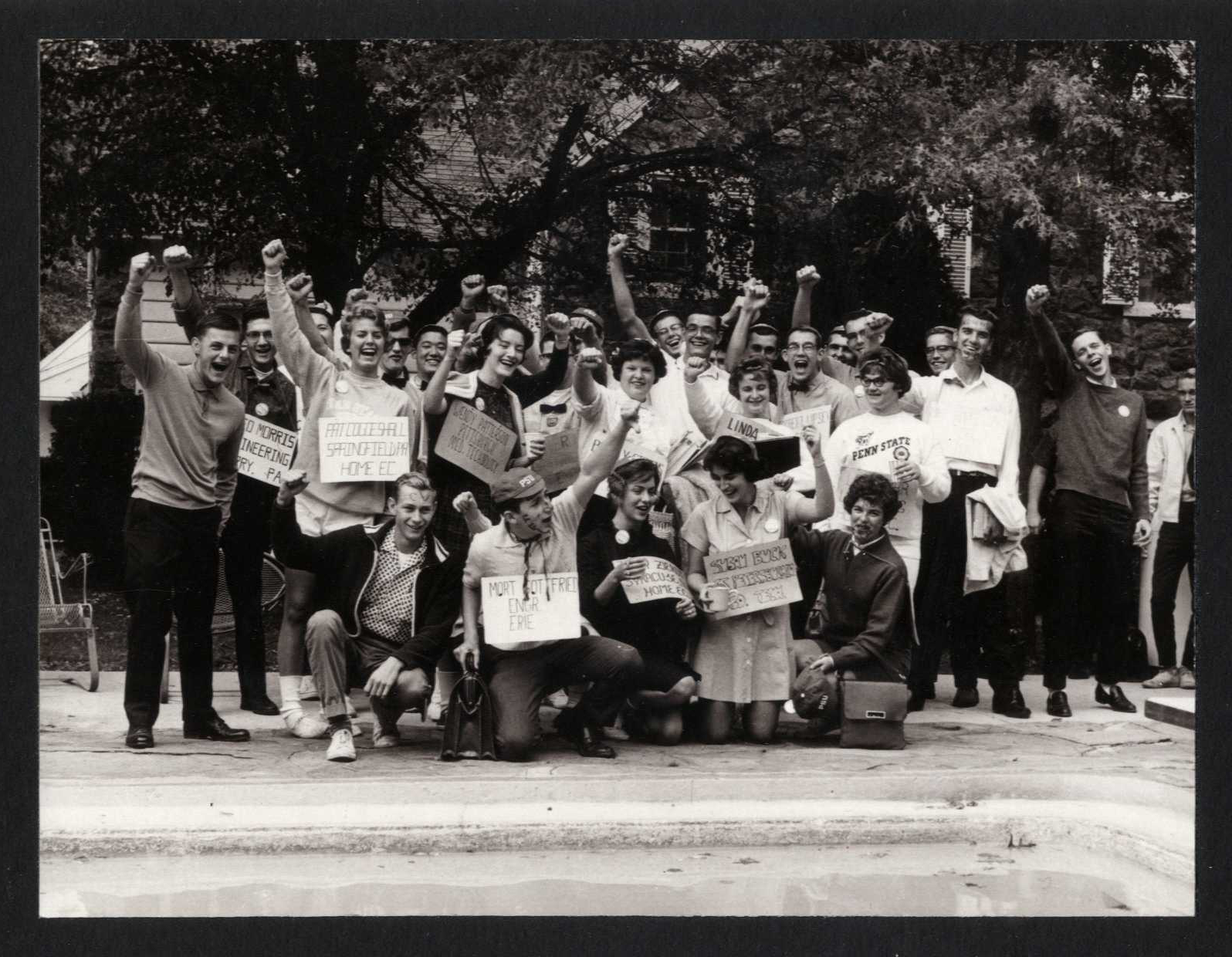
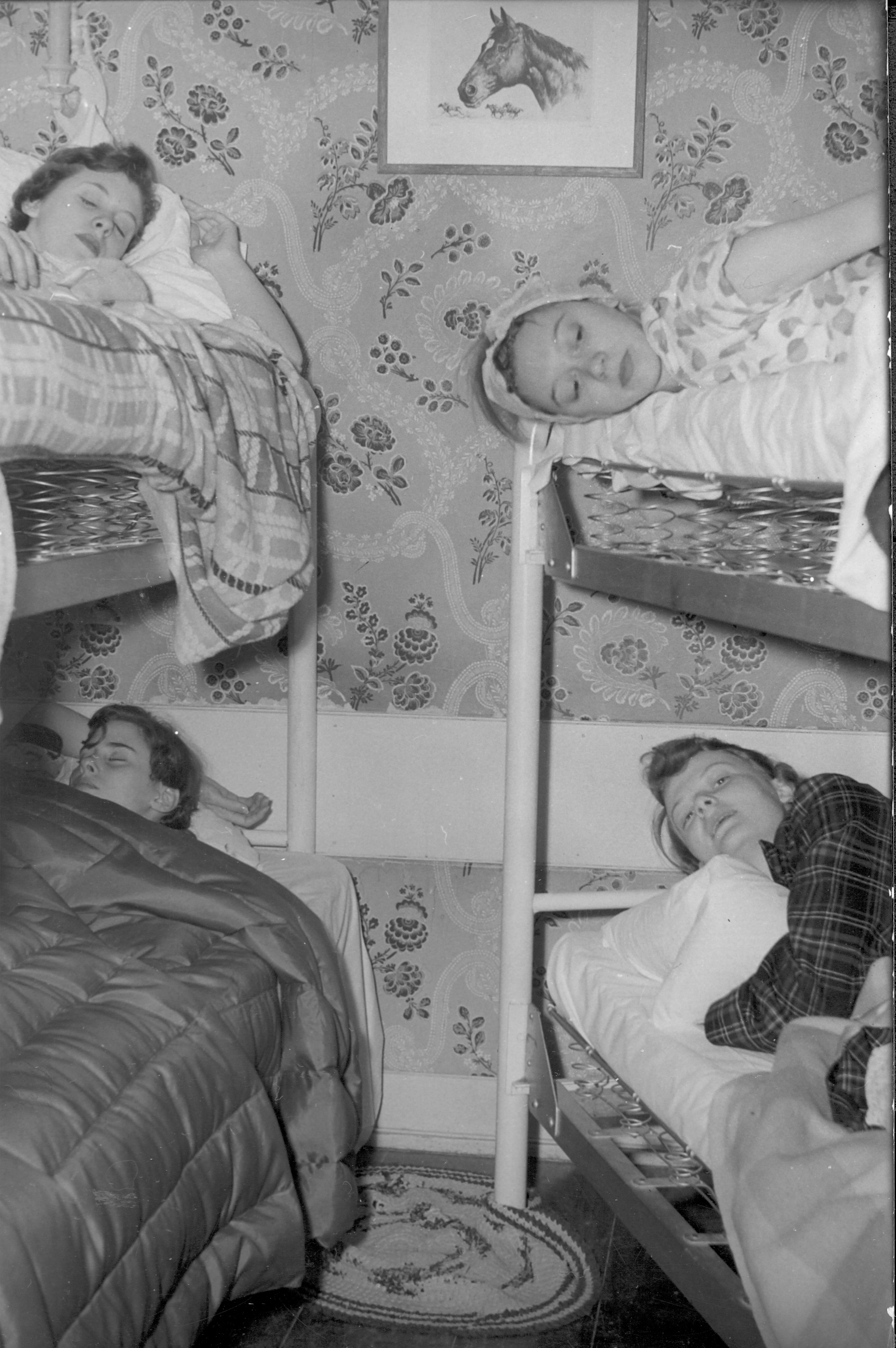
And he recorded history as it happened – one Winter Snowball dance, Hanging of the Greens, and Student Work Day at a time.  He also photographed the daily college life that so fascinates today – the “lunch ladies” making food in the Glenhill Farmhouse kitchen, students cannonballing into the pool and skiing down the hill behind today’s Science Complex, and the female students who lived on the second floor of the farmhouse, with bunkbeds stacked in each room.

4GirlsSleepingInBunkbeds

When night fell, he developed the photos.  “I didn’t have a darkroom, so I just had to wait until it got dark,” he said.

Later, he added a home darkroom in a corner of his basement. His son, Bob Patterson, a lecturer in accounting at Behrend, said that when he and his two sisters were growing up, they knew better than to flip on the basement lights without asking and risk ruining their dad’s work.

By the time Patterson retired, he had witnessed—and captured in photos—the remarkable growth of Penn State Behrend over nearly four decades. And, yet, he has a fondness for the earlier, leaner years.

“The lack of resources in the 1950s meant that you had to make do with what you had,” he said. “We didn’t have people to do the auxiliary, non-teaching work, so the faculty were much more involved in student activities and things.”

And, of course, Patterson, who was never without his camera, was there to document it all, and in retirement, he continued to enjoy photography, even mastering photo editing software programs.

“When dad retired, he got a computer,” Bob Patterson said. “I went over to help him set it up and he was the best student I ever taught. It wasn’t long before he was editing and restoring photos and turning them into 3-D images.”

To further cement Patterson’s legacy at Behrend, a third generation of his family now works at the college: Granddaughter Katie Patterson, Bob’s daughter, who serves as an admissions counselor.

Here are just few of Patterson’s photos:

This slideshow requires JavaScript.