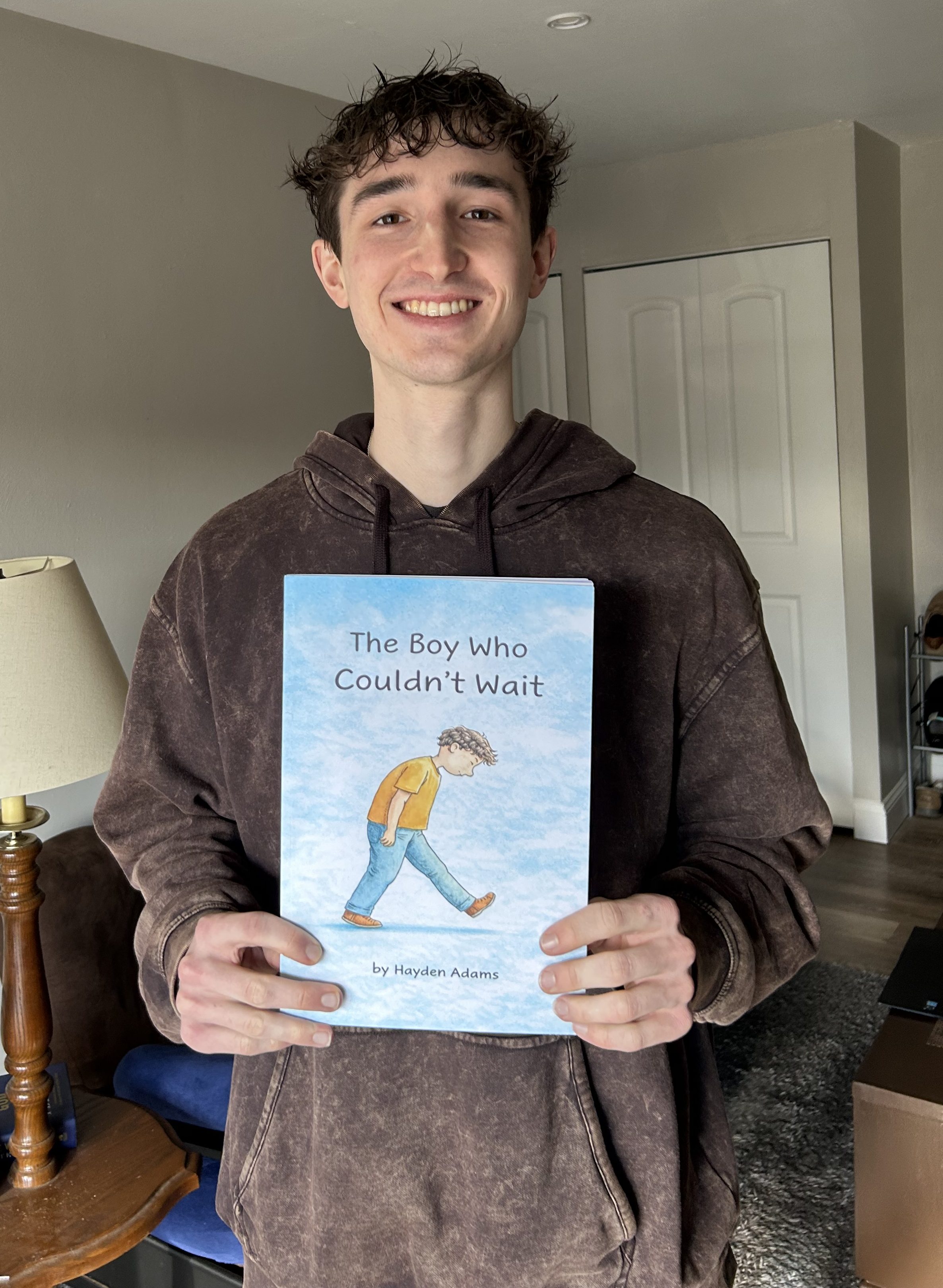
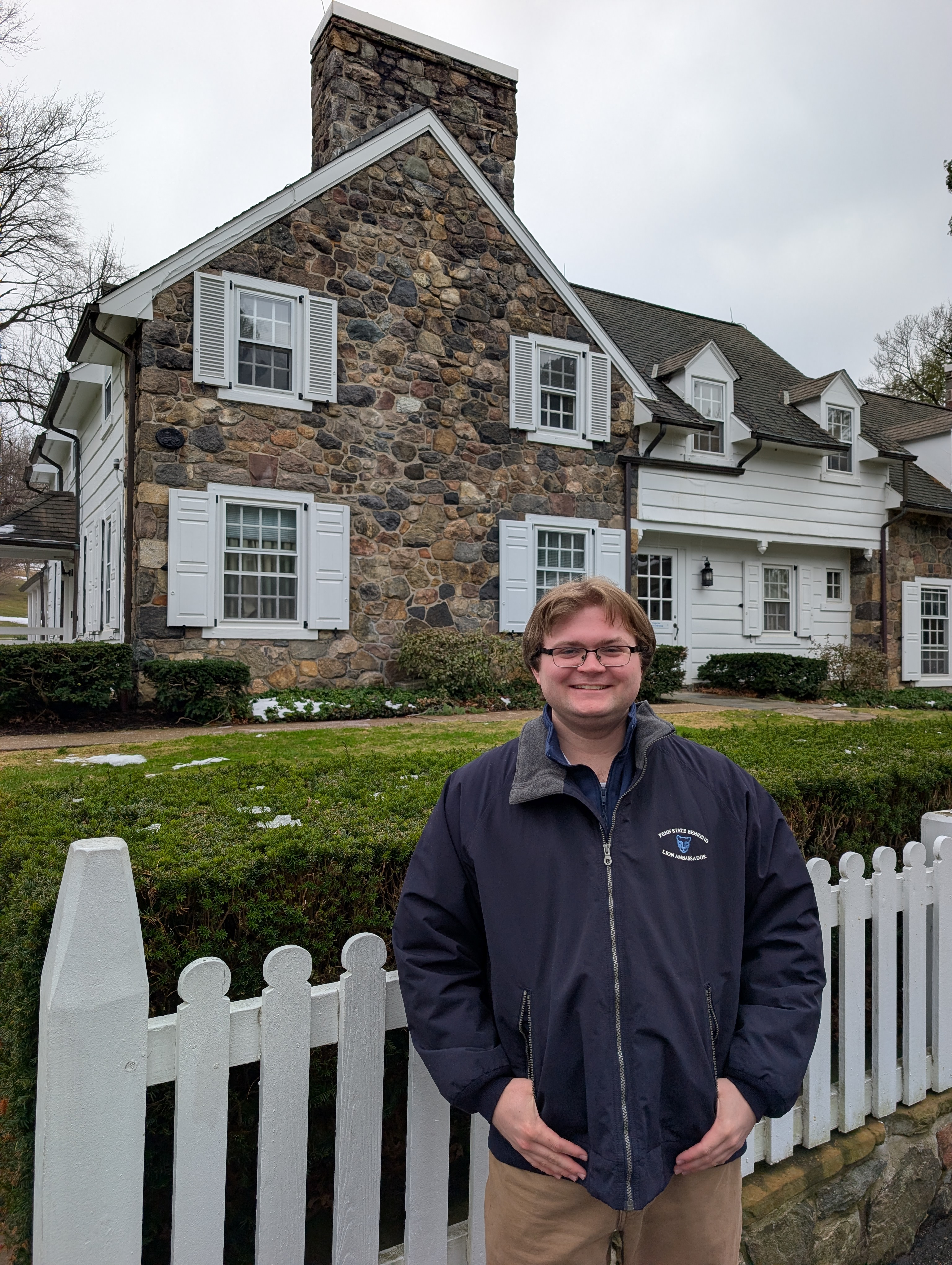
Hayden Adams, author of The Boy Who Couldn’t Wait.
A college assignment became something much more for Hayden Adams: his first published children’s book.
Adams, who earned a degree in Finance at Penn State Behrend in 2025, wrote The Boy Who Couldn’t Wait as the final project for LLED 215N: Children’s Picture Books as Multimodal Texts, which he took during his junior year.
“We all have a handful of projects that we just want to get done and over with, but this wasn’t one of those for me,” said Adams, who works as an investment and financial planning associate at Wealth Management Partners in Pittsburgh. “Once I developed the story, it became valuable to me, and I was proud of how it turned out.”
In the time since, the book’s message about gratitude, being present, and appreciating life as it happens became increasingly personal.
“The further removed I was from college, the more the story became true for me,” said Adams.
The book explores what happens when we’re always rushing toward the next goal—something Adams found himself doing as he entered the workforce and began pursuing professional achievements and certifications.
“We spend so much time chasing the next goal, rushing toward the next chapter of life, dreaming about what life will be like ‘once I have this’ or ‘once I achieve that,’” he said. “However, that mindset is a fallacy because there will always be something else to work toward.”
That idea has particular resonance for Adams as a financial planning professional. His work focuses on helping clients prepare for the future, but he also sees value in enjoying the present.
“In the financial planning world, we are planners,” he said. “Planning, sacrifice and delayed gratification have their places in life. But stopping to smell the roses and enjoy the fruits of one’s labor are just as important.”
While Adams enrolled in the children’s picture book class, taught by retired childhood education faculty member Dr. Lisa Parker, simply to fulfill a general education requirement, the experience left a lasting impression.
“That class ended up becoming one of my favorites during my entire college experience,” he said.
Although Adams majored in finance, he said Behrend’s broader curriculum encouraged him to explore subjects he might not otherwise have considered.
“My Behrend experience forced me to do things I wouldn’t do in my normal day-to-day life,” he said. “Taking Gen Ed courses was one of those influences, as they taught me things I wouldn’t have otherwise studied.”
The Boy Who Couldn’t Wait is largely unchanged from the version Adams wrote in college. He updated the illustrations, using AI tools to refine artwork he had originally drawn by hand, and navigated the self-publishing process through Amazon.
He has been encouraged by the response to the book. Parents have reached out to tell him how much they appreciated the story, and his hometown school district and Penn State Behrend purchased copies of the book for their libraries.
For now, Adams plans to stick to business, but he doesn’t rule out the possibility of future publishing projects.
“I don’t have plans to write another book,” he said. “But if I had a strong passion for another story or message I wanted to share, I would consider doing it.”
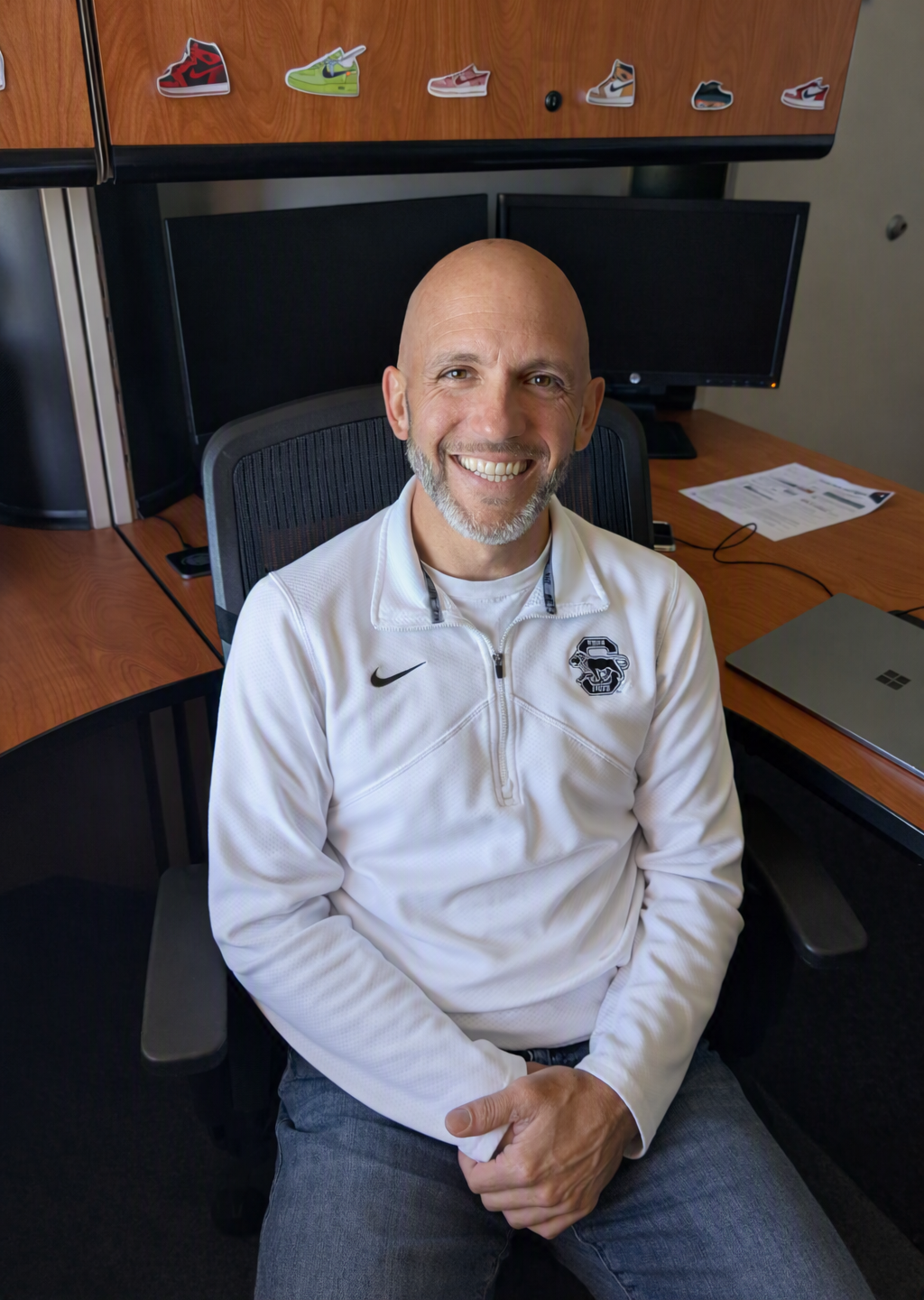
Russell Martin, assistant teaching professor of computer science and software engineering at Penn State Behrend
Russell Martin worked in the tech industry for twenty years before joining Penn State Behrend as an assistant teaching professor of computer science and software engineering. He’s watched multiple waves of technology reshape the field, from early automation tools to cloud adoption to mobile disruption. Artificial intelligence is the latest wave—and he isn’t losing sleep over it.
Behrend Blog sat down with Martin, who earned a bachelor’s degree in Management Information Systems in 2005 and an MBA in 2006, to talk about AI’s impact on the computer and software engineering field and how students can learn to use the technology without relying on it.
Q: A lot of students are worried AI will replace software engineers. Should they be?
Martin: No. I’ve been around long enough to see big shifts in technology. We adapt. What other choice is there?
There is software that’s fifty years old that we’re still using today because it’s good. AI isn’t going to come along and replace everything just because it’s the shiny new thing.
Companies will probably overreact—fire people, say they’re “moving to AI,” make shareholders happy—then they will realize it wasn’t as efficient or as good as they thought. They’ll hire people back. It will be a bit of a shell game. We’ve seen it before.
Q: So you don’t see AI as a threat to engineering jobs?
Martin: I see it as a tool. A powerful one, but still a tool. Students need to be smart users of it.
AI can make you more efficient. It can find problems faster. It can expose vulnerabilities that might have taken weeks, months or even years to find. Use that. But AI shouldn’t replace your own thinking.
Q: You’ve said there’s “no way to make anything AI‑proof.” What do you mean by that?
Martin: If a student wants to use AI, they’re going to use it. There’s no assignment I can write that magically prevents it. So instead of fighting it, I want to know how they’re using it. I want to see their prompts. I want to help them write better ones. I want them to be smart users of the technology, not pretend it doesn’t exist.
Q: How do you teach students to use AI responsibly?
Martin: Fundamentals first. You need to understand what you’re building before you let AI help you build it. Otherwise, it becomes a crutch.
I tell students: AI is a resource. It’s there. Why wouldn’t you use it? But use it ethically. Use it efficiently. Use it in a way that makes you better at doing your job.
Q: You spent more than twenty years in industry before teaching. How does that shape your view of AI?
Martin: In industry, your job as a software engineer has always been to automate your job out of existence. That’s not new. What’s new with AI is the speed at which it’s moving. AI might accelerate some changes—things that once took much longer could happen in three to five months. But the pattern is the same: technology changes, and people adapt.
I’ve worked in small businesses, medium companies, and large corporations. I’ve seen tools come and go. Information technology people are notorious for marketing the next big thing without fully validating it. We always say, “This is it.” Then it changes again. Will AI cause a massive shift? It already has. But where it finally settles—only time will tell.
Q: How does AI show up in your classroom?
Martin: In project‑based courses, students build something real — a business plan, a product, the code, the review. I throw curveballs at them like a business owner would. AI fits naturally into that. It’s another tool they can use to solve problems, find problems faster and learn.
Students can embrace AI without cheating. They can use it to learn. They can use it to experiment. They just need to understand what they’re doing.
By Heather Cass, Publications Manager at Penn State Behrend and Run for Women 5K race director
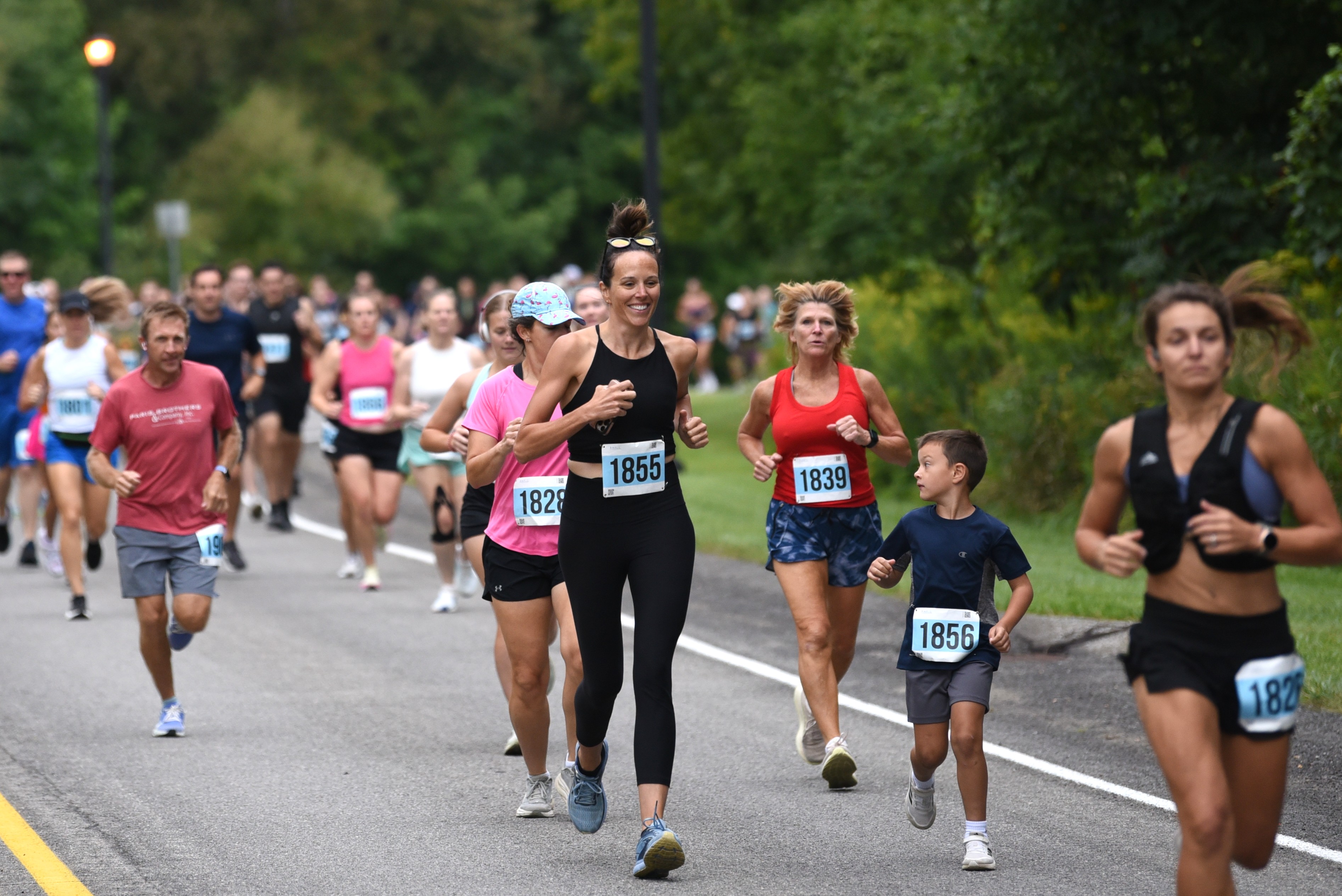
Run for Women 2026 5K winners lead the pack. Landon White, on the left, and Corinne Petrus, right foreground.
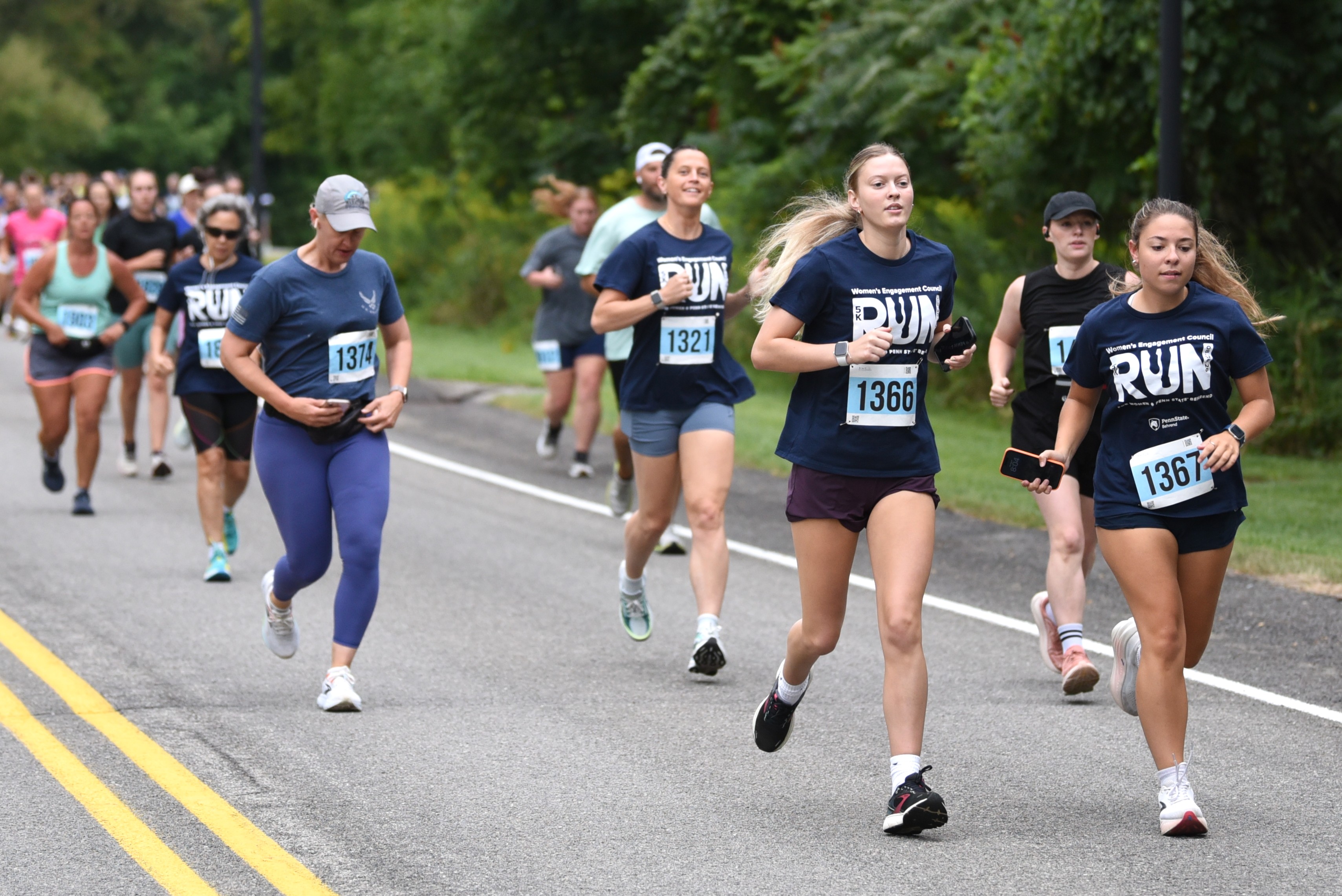
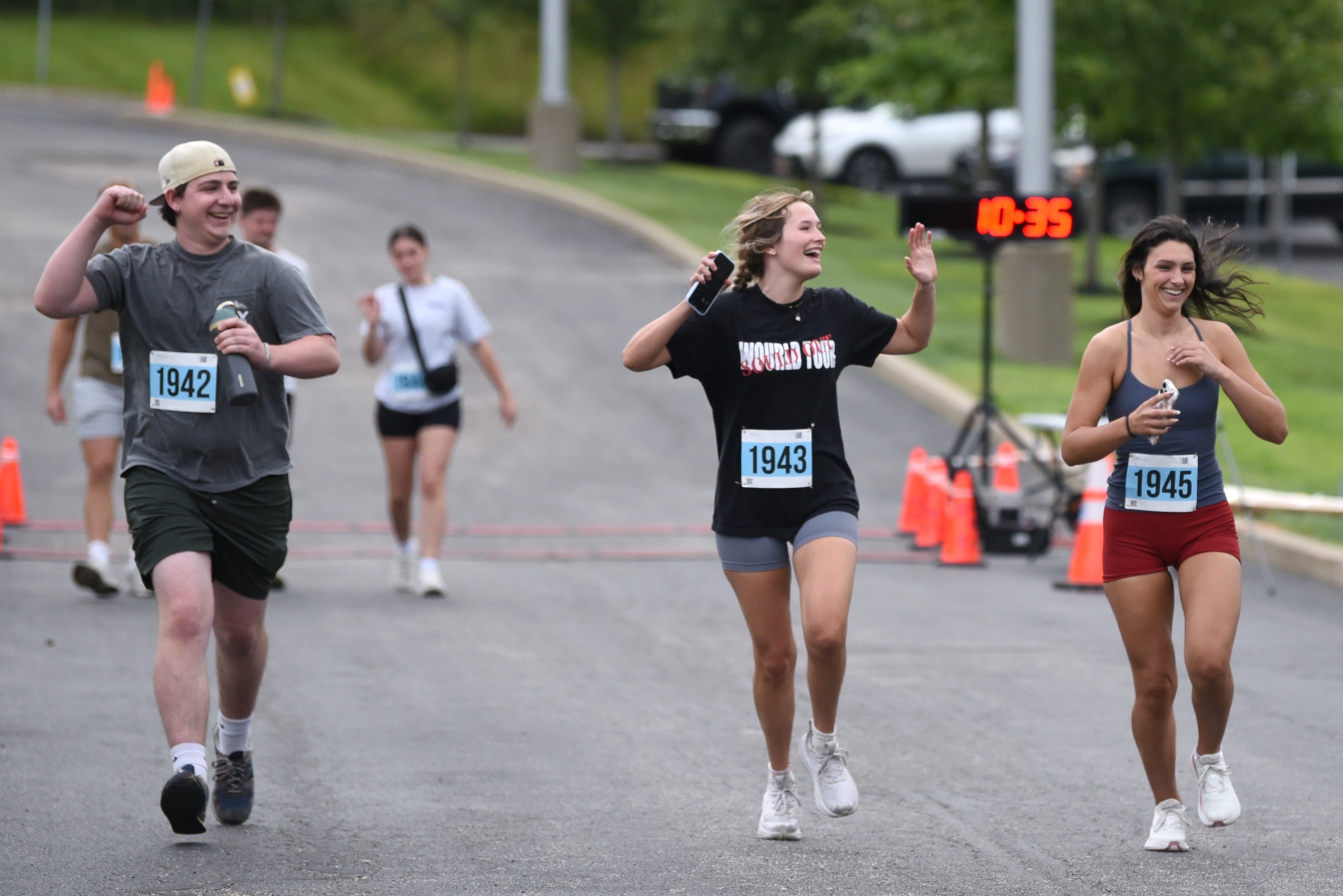
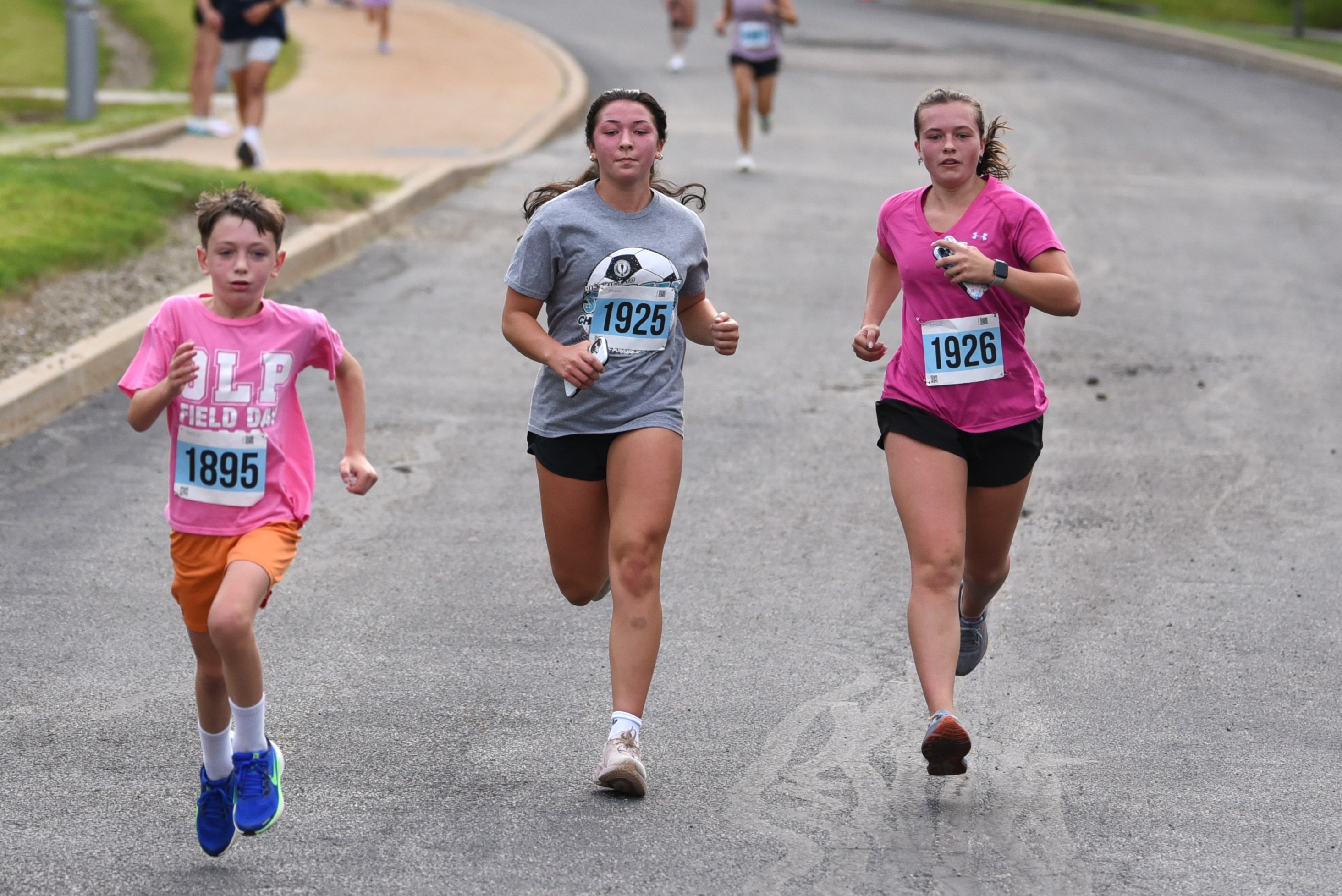
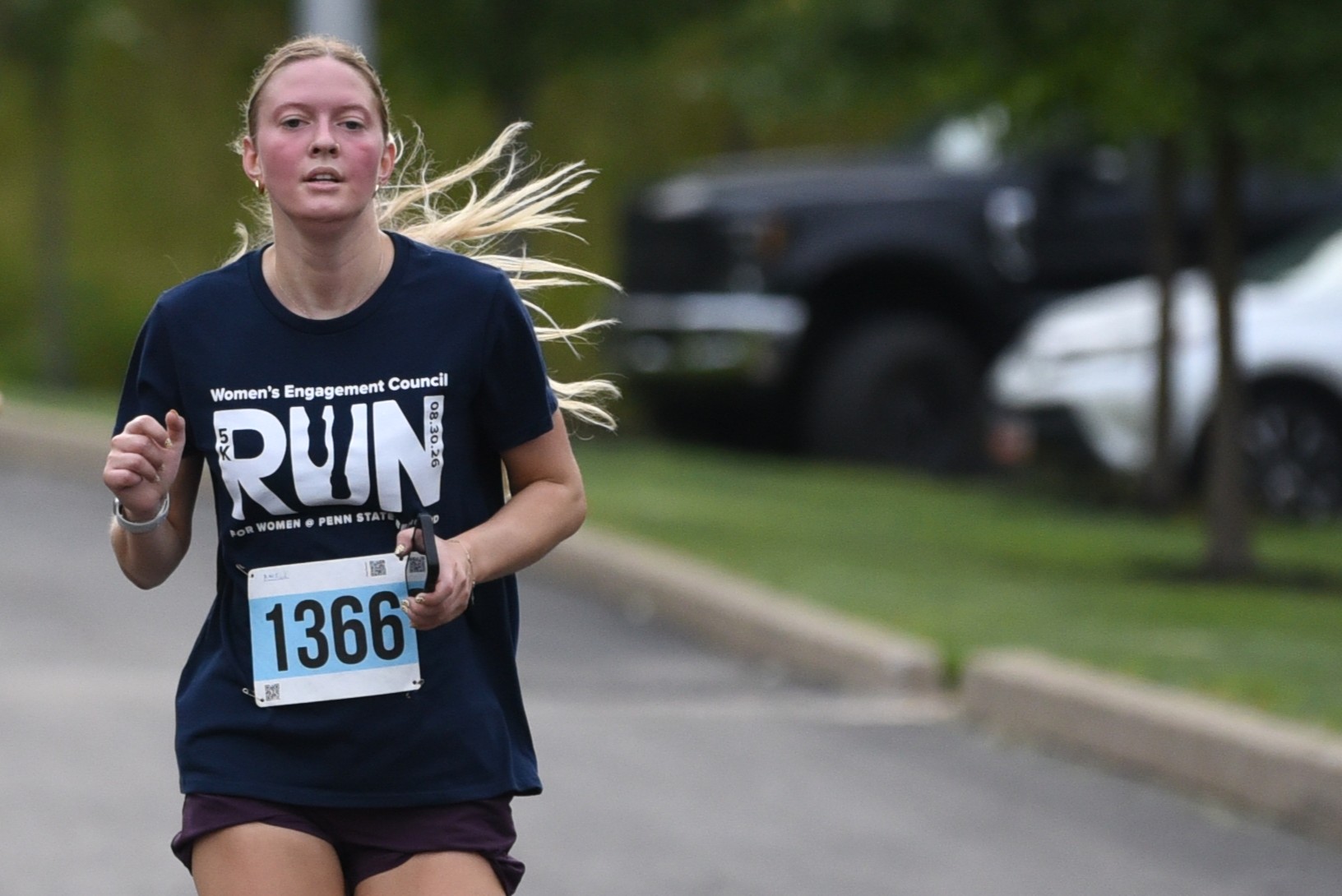
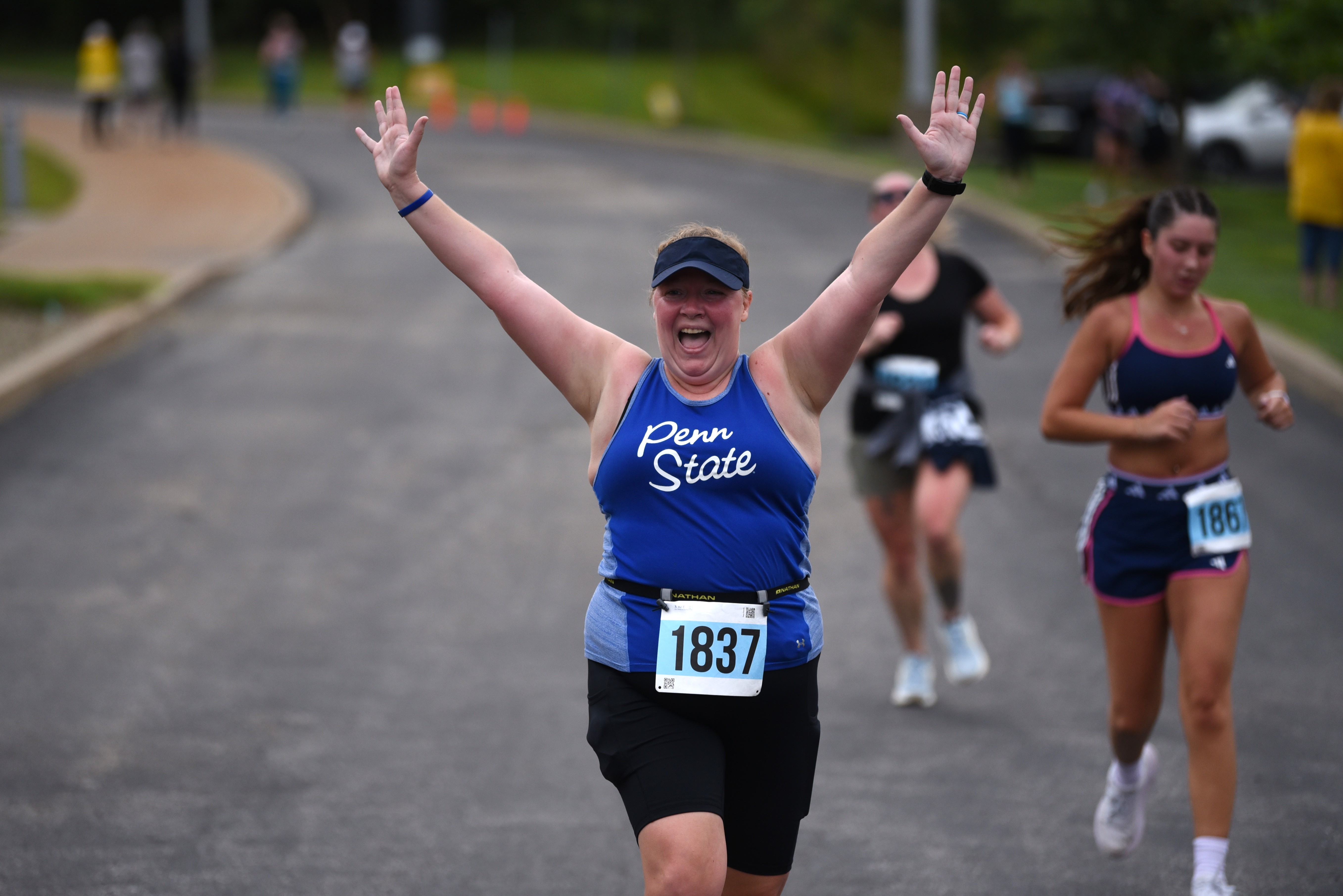
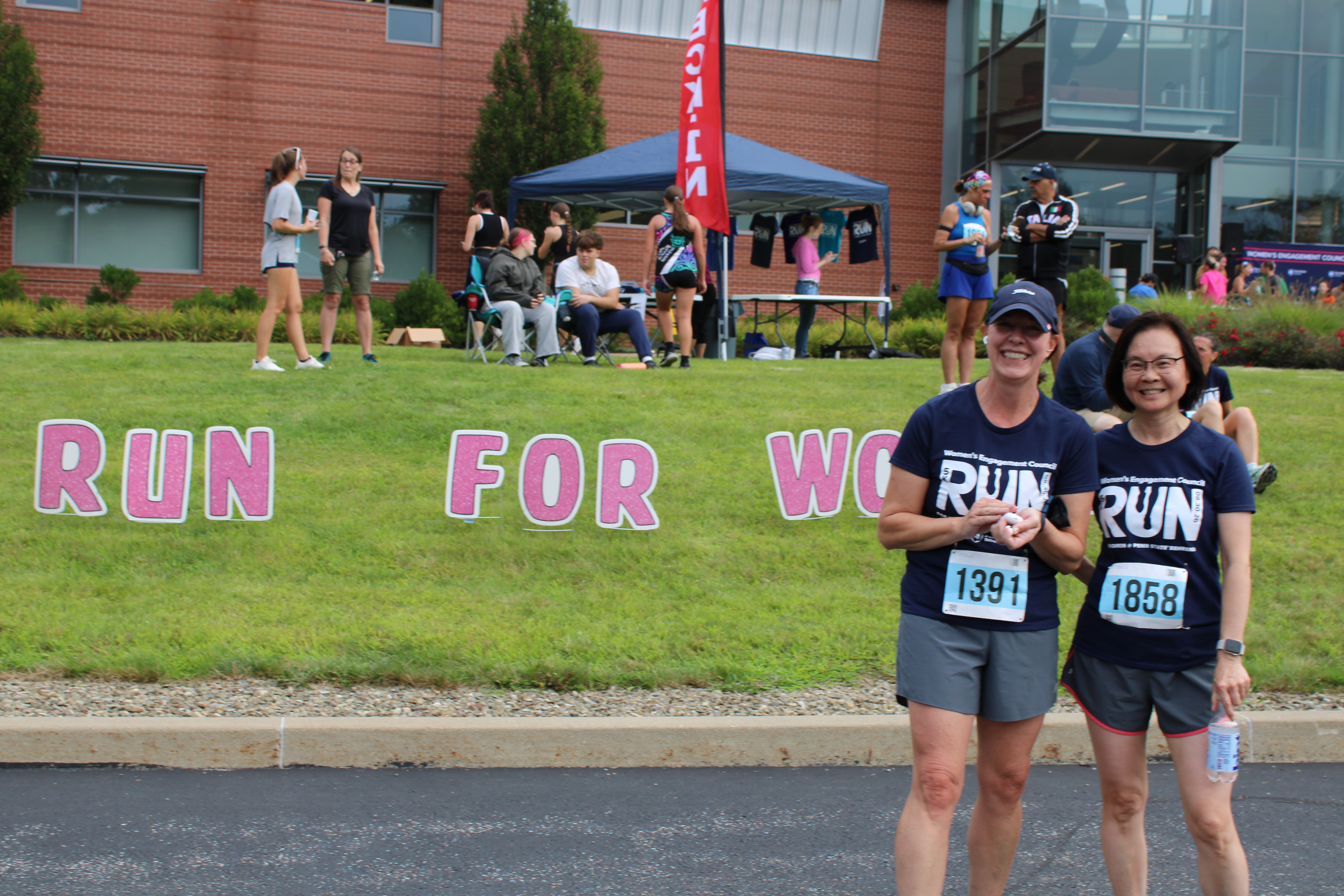
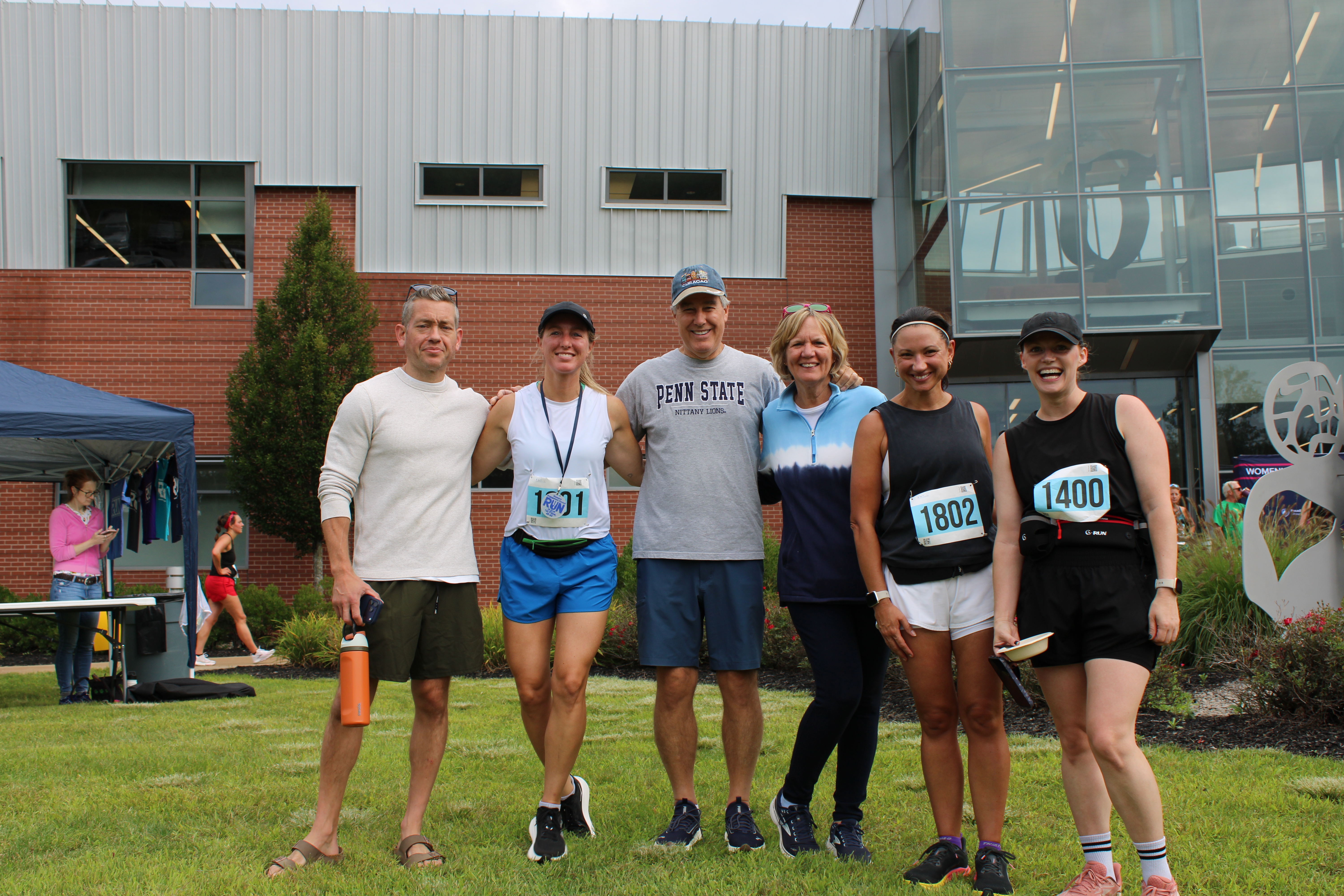
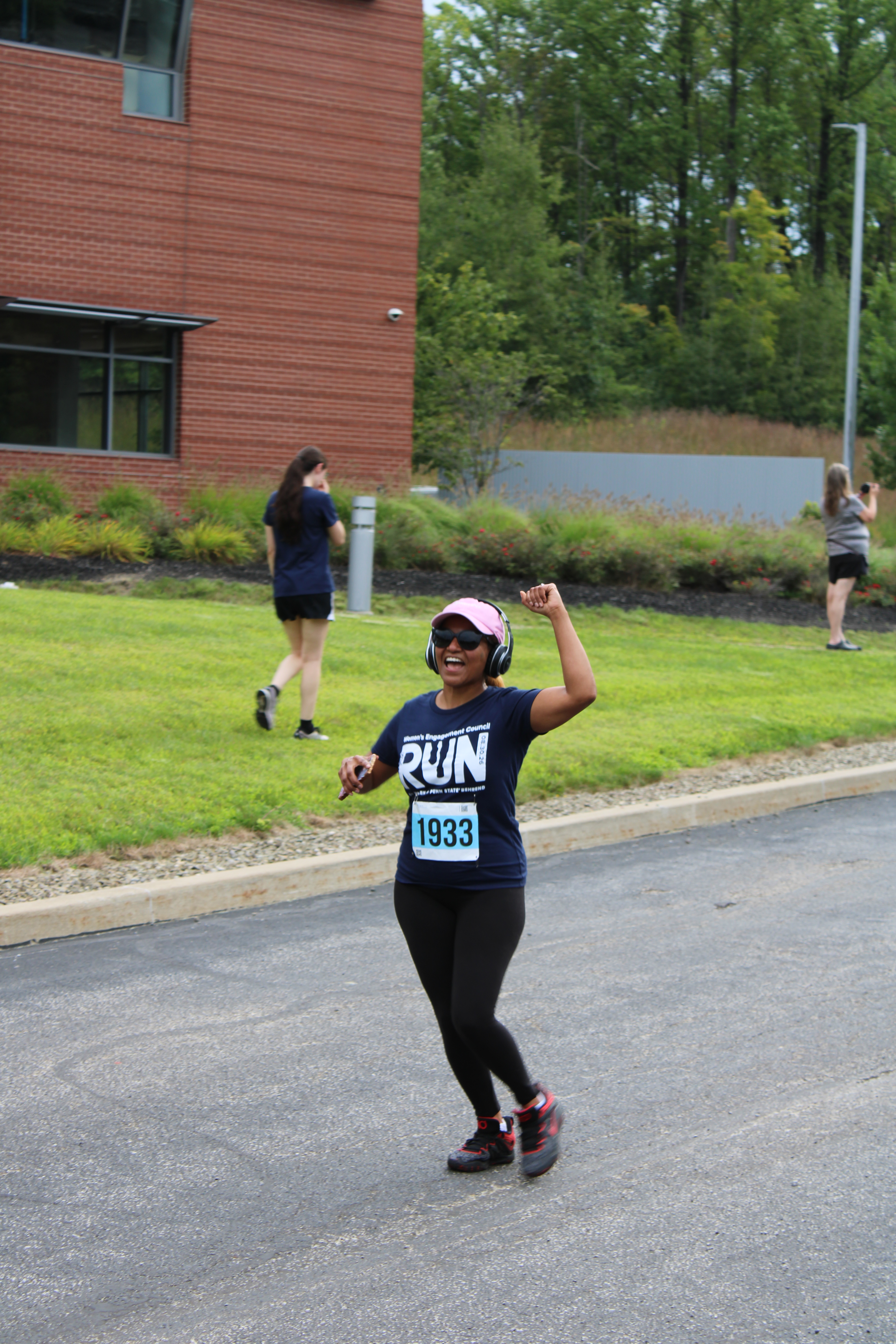
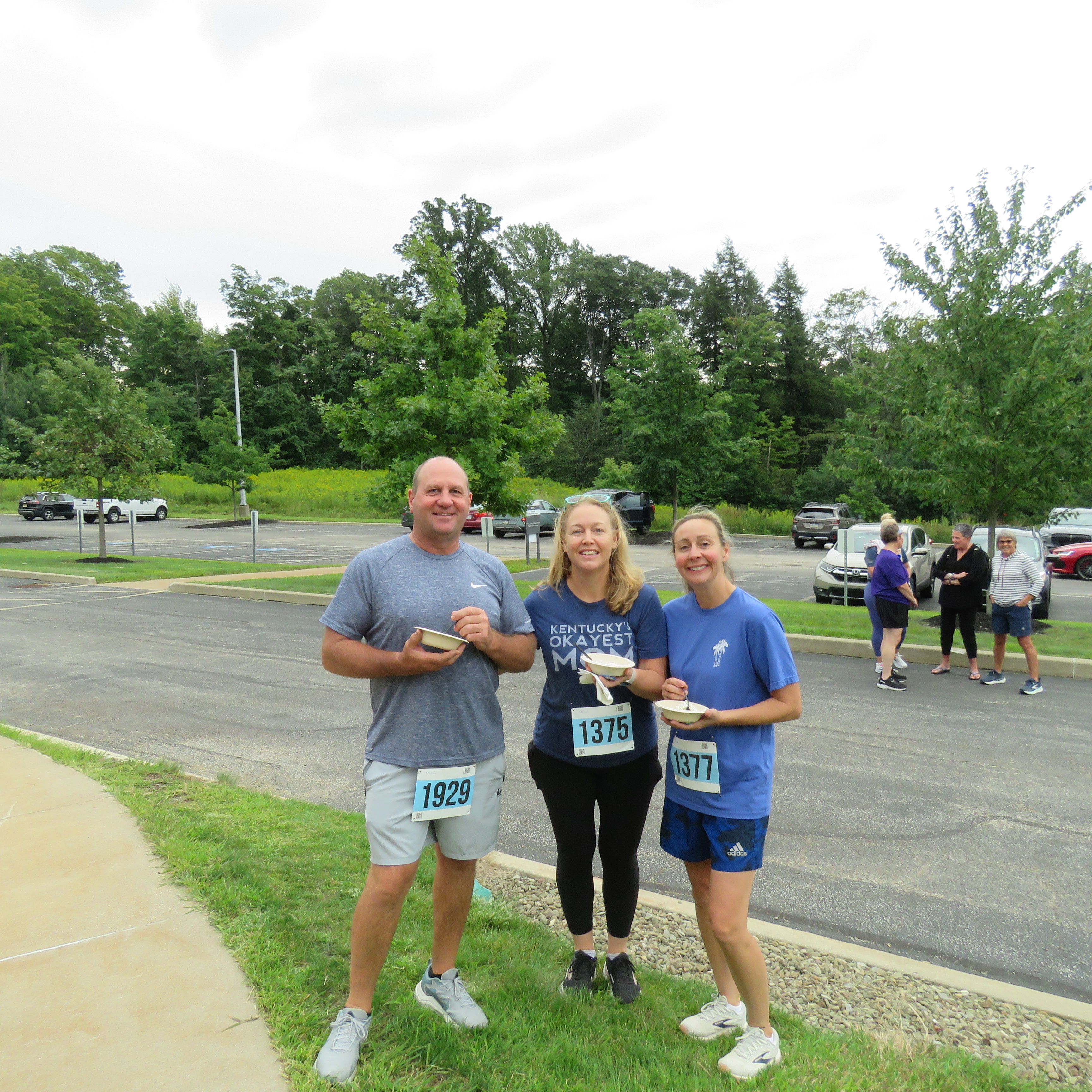
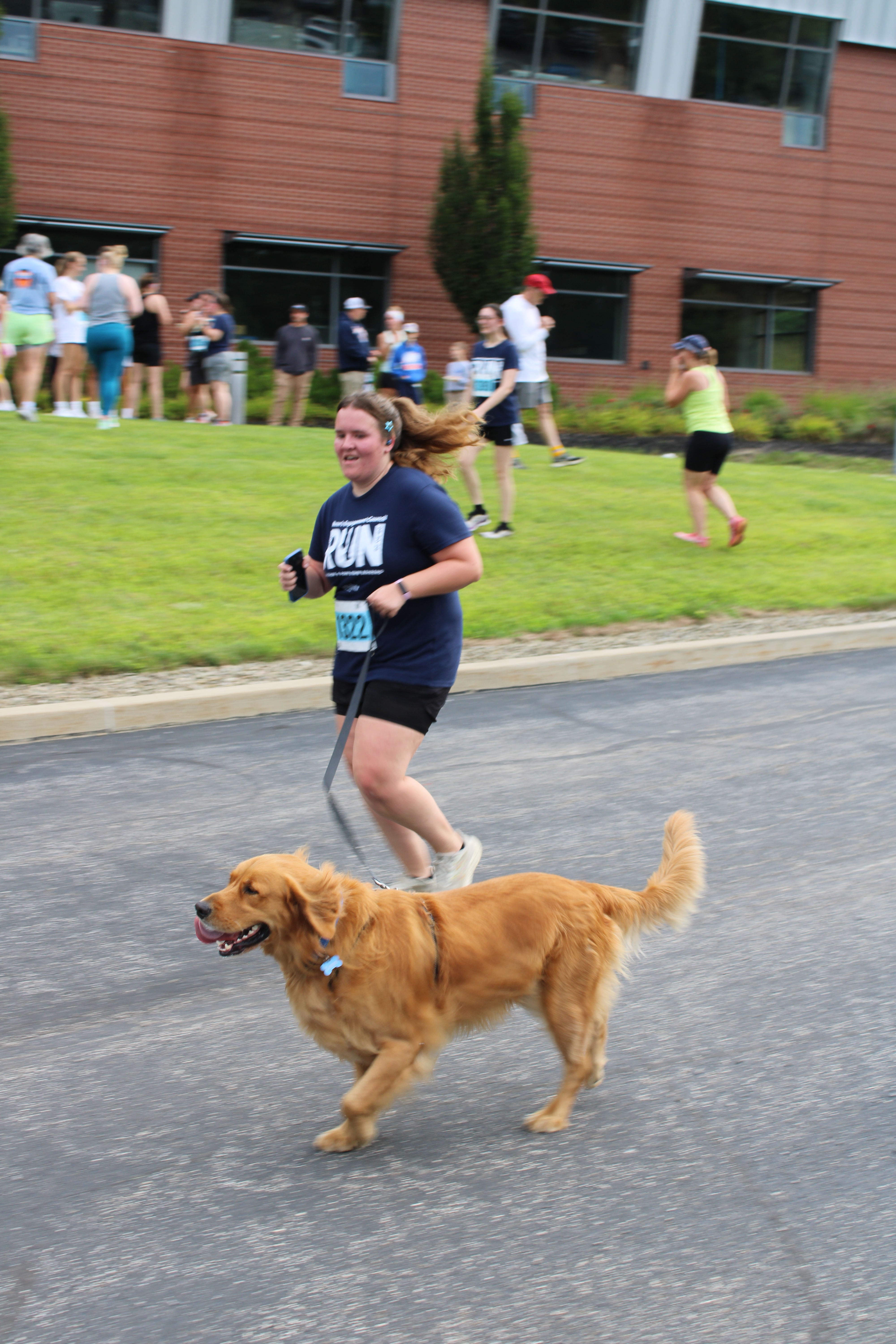
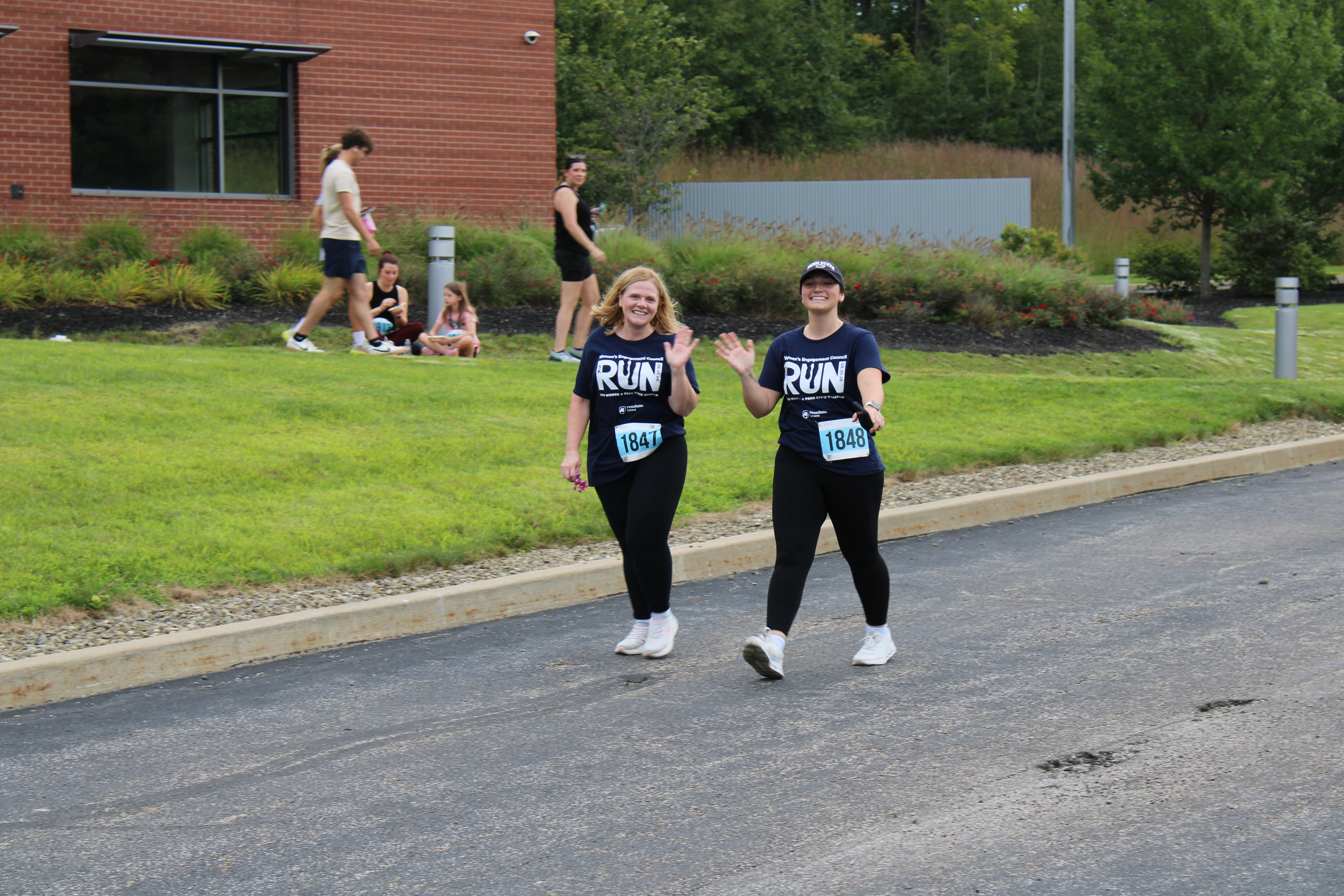
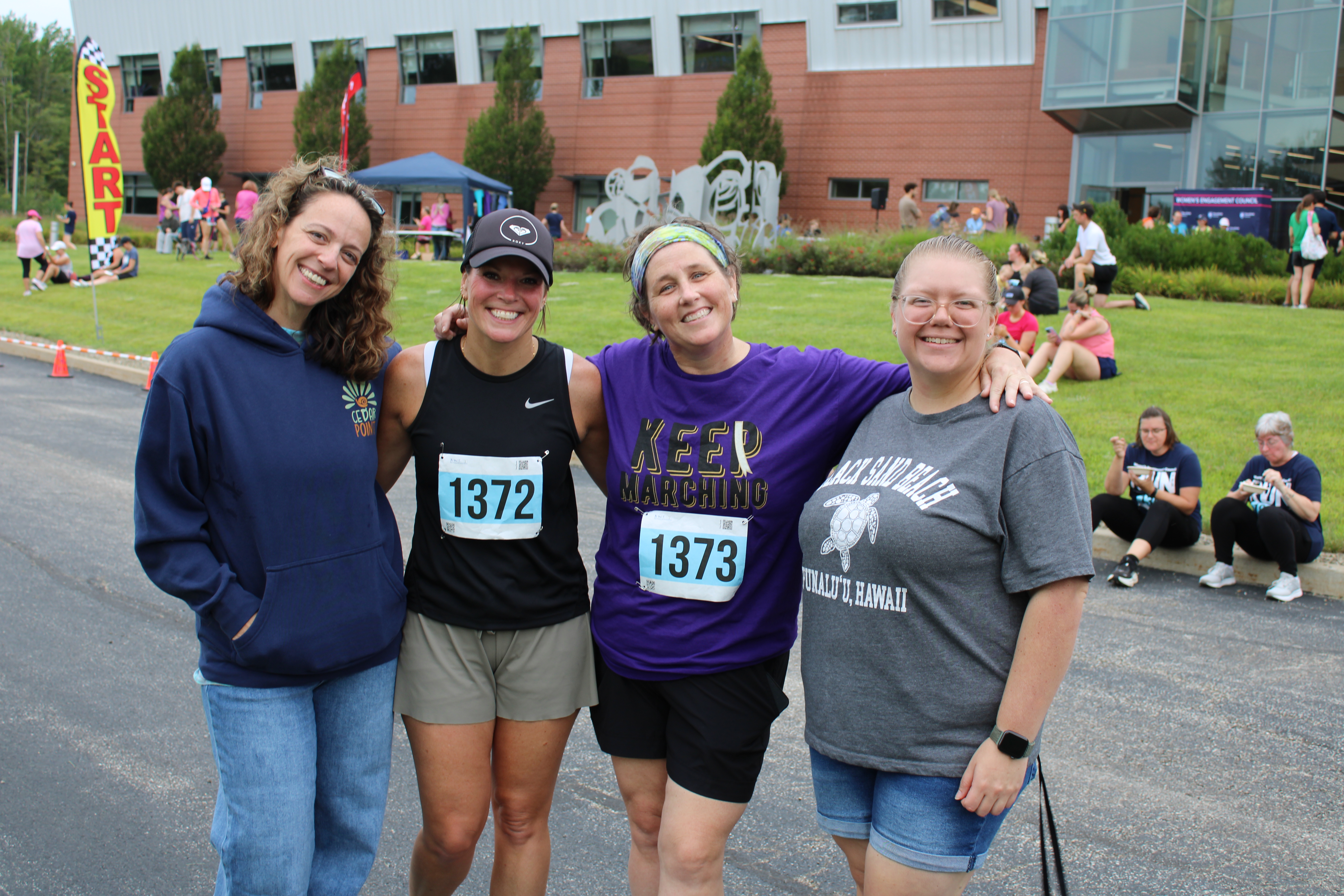
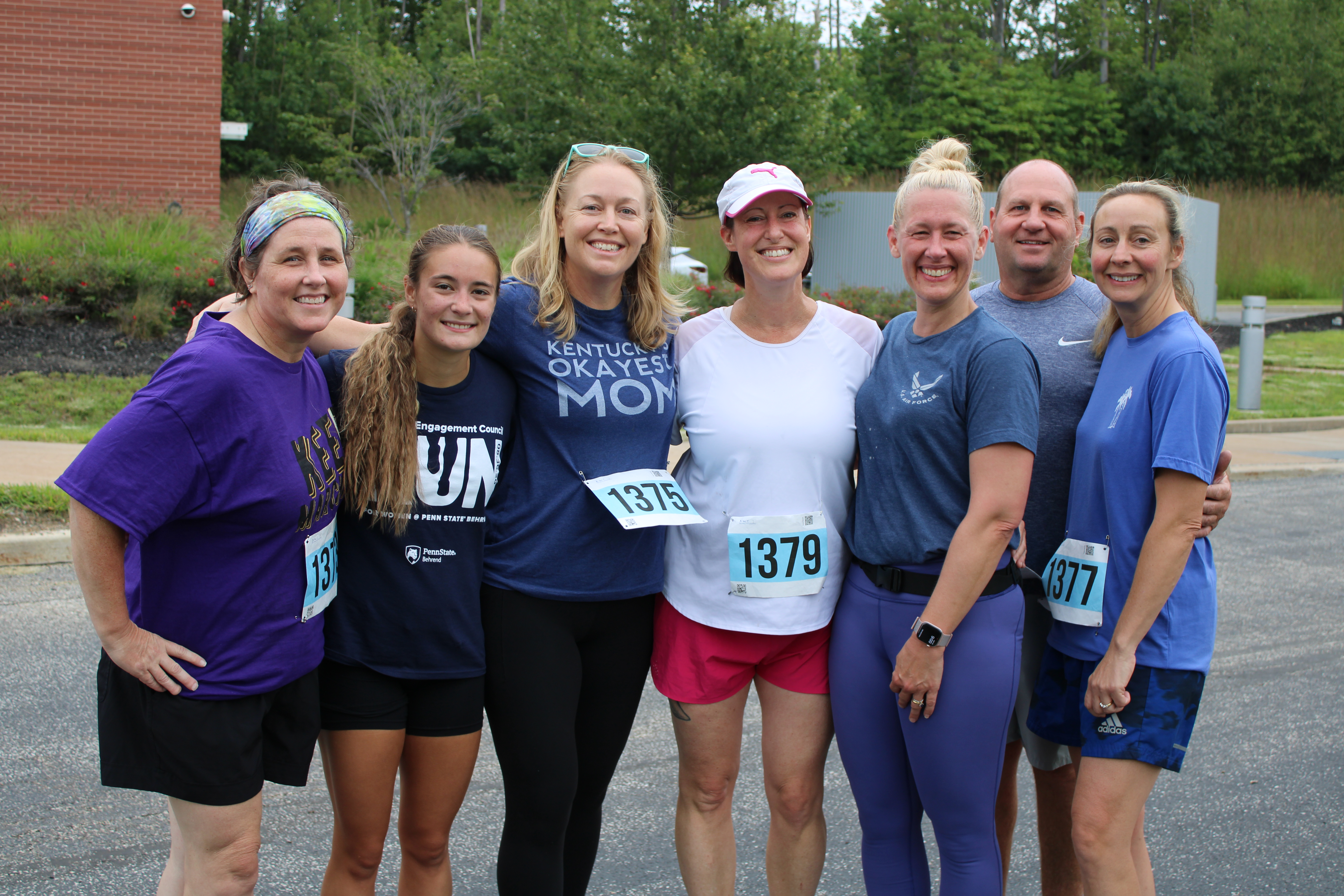
Penn State Behrend’s fifth annual Women’s Engagement Council Run for Women 5K run/walk is officially in the books—and it was our biggest year yet. More than 200 people registered and 193 crossed the finish line, marking steady growth and another strong showing from the community.
We also lucked out with great weather again! We managed to finish the race and get everything packed up and put away before the raindrops arrived. #thankful
This year’s temporary course gave us a fun finish coming into AMIC from the back, but the tight quarter‑mile turn with a still‑packed field was tough. The good news: we’ll return to the traditional course next year once we regain access to the student section of the parking garage.
And yes, you can already mark your calendar: Next year’s tentative race date is 8/29/27.
Thank Yous
There are a lot of people who make this event happen, so here’s the rapid‑fire gratitude section:
Thank you to DJ Kaitlyn Claus of Behrend’s BVZ Radio for keeping the energy high.
Thank you to the Penn State Behrend Cheer & Dance team, the Cross-Country team, Police and Safety, East County EMS, and our lead/sweep bikers Teresa and Greg Wigham for keeping runners safe — and hyped — on the course.
Thank you to the Women’s Engagement Council volunteers who handled everything from packet pickup to the mid-course water stop to setup to scooping ice cream and putting out (and picking up) signs.
Thank you to Penn State Behrend Athletics for sponsoring the post‑race Berkey Creamery ice cream. Every race should end with ice cream.
Thank you to Owen Hitt in the Lilley Library Maker Space for 3‑D printing all of our awards. If you still need to pick yours up, email hjc13@psu.edu.
A Few Final Notes
Did you take photos? We’d love to see them! Send them to hjc13@psu.edu or add them to our Google album.
Have suggestions for next year? Same email — hjc13@psu.edu.
Want a shirt (or another shirt)? We have Large and XL available for $10. Message (you guessed it) hjc13@psu.edu.
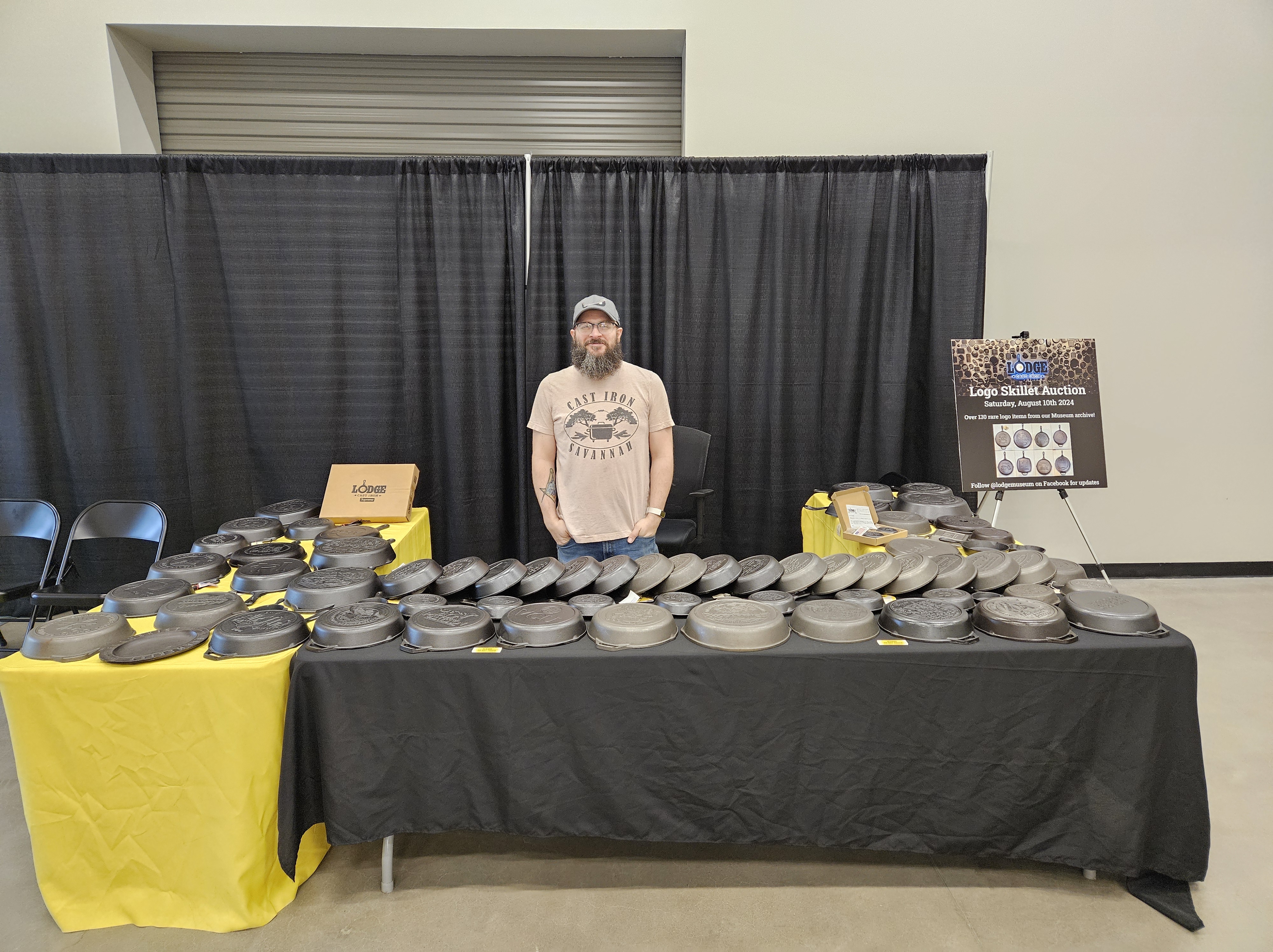
Ken Margraff ’06 at Lodge headquarters in South Pittsburg, Tennessee.
If you own a cast iron pan, you’ve heard the rule—Never wash it with soap. It’s the kind of wisdom people pass down with authority and follow religiously.
Ken Margraff, a 2006 general business graduate and cast-iron consultant, begs to differ.
“If you learn nothing else from me, learn this: Soap is safe,” he said. “Wash your cast iron cookware.”
Turns out, like a lot of things passed down without question, the no-soap rule is only half true. Old-fashioned soap was made with lye, which will strip the seasoning right off your pan. But that was long ago.
“Modern dish soap isn’t even soap,” Margraff said. “It’s technically a detergent. It’s gentle enough to clean baby ducks after an oil spill. Your skillet is going to be just fine. Wash it and dry it well. If it looks too dry, apply a dime-sized bit of oil.”
Margraff knows what he is talking about. It’s his job. Well, one of his jobs.
By day, Margraff is a vice president and branch manager at Synovus Bank in Savannah, Georgia. By night—and weekends, and vacations, and every garage sale in between—he is a cast iron consultant, which is exactly as niche as it sounds.
Skillet Ignites Passion
Margraff grew up in the Philadelphia area in an Italian family where cooking is a form of love. For Christmas one year, his wife Jes Brown, whom he met—and later married—at Penn State Behrend, gifted him a new knife set and a Lodge cast iron skillet.
“Everything all of a sudden became a cast iron meal,” he said. “Steaks, chicken, potatoes — everything just came out better.”
Around the same time, with Jes dealing with some health issues, Margraff started reading about the chemicals in popular non-stick cookware. He didn’t like what he found. He stopped using anything that wasn’t cast iron or carbon steel.
That might have been the end of it, except that Margraff was already obsessed with garage sales and thrift stores. One day he found a rusty cast-iron cornbread pan shaped like cactuses.
“I figured I understood metal pretty well,” he said. “I thought, I bet I can restore this.”
He got on the internet. He joined some Facebook groups.
“Then down the rabbit hole, I went,” he said.
Soon he was picking up cast iron everywhere. He suggested to Jes that maybe they should sell some of the restored pieces. She was skeptical.
He sold every piece.
“She looked at me and said, ‘Okay, go ahead,’ he said. “She knew it was going to be a thing.”
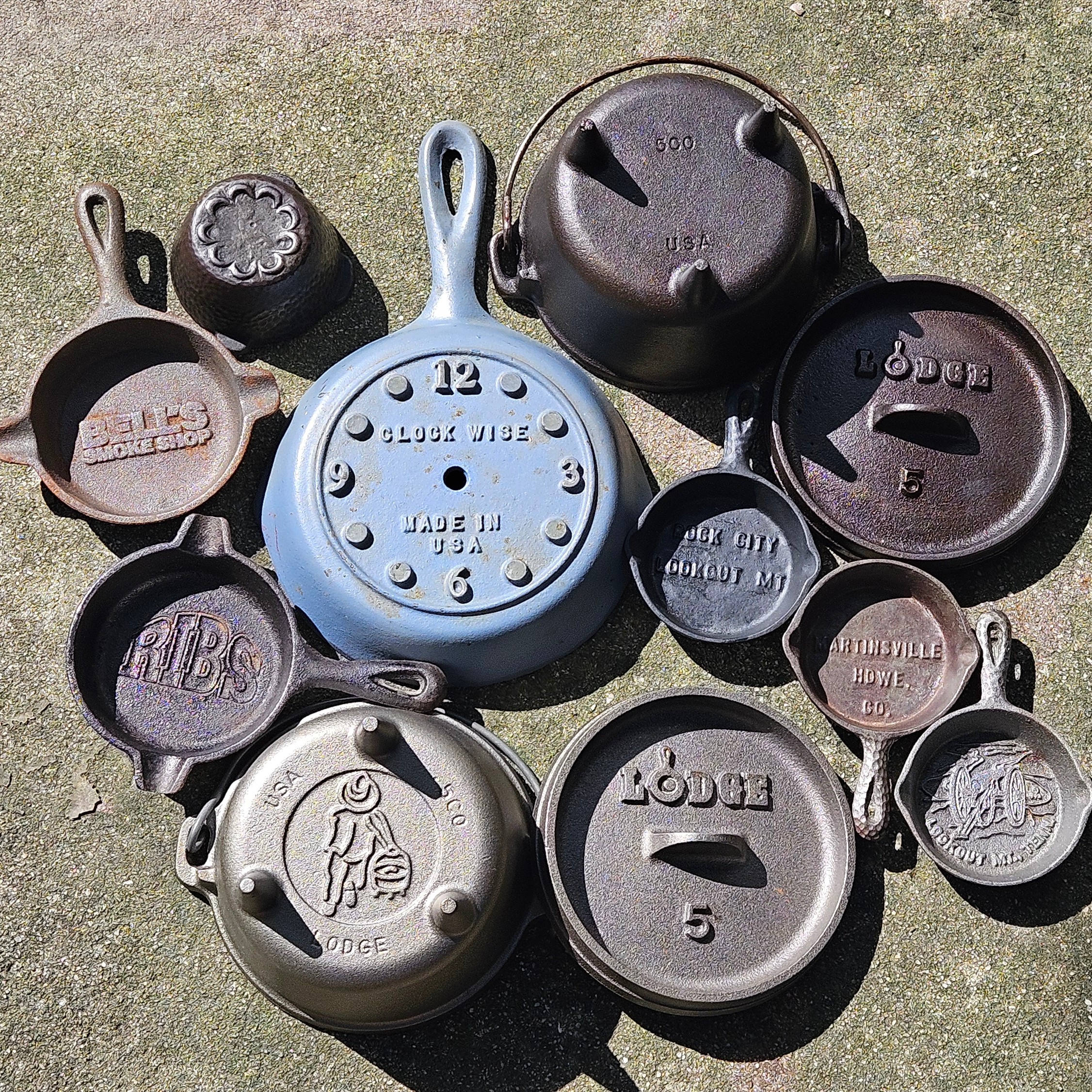
A few pieces of Ken’s collection, including a clock (blue piece in the middle). PHOTO CONTRIBUTED by Ken Margraff.
Cast Iron Savannah to Lodge
Margraff started Cast Iron Savannah and began aggressively hunting pieces, researching, and building connections in the collector community. At his peak, he had close to 3,000 pieces of cast iron, including his personal collection. His business logic was simple: Sell pieces he found to fund buying the pieces he wanted—Lodge minis, which are small, single-serving cookware pieces.
“That way she couldn’t get mad at me,” he said. “It wasn’t household money.”
Cast Iron Savannah started as a buy, sell, and restore operation, with education woven in along the way. The trajectory changed when Margraff started making friends with people at Lodge Manufacturing, the legendary foundry based in South Pittsburg, Tennessee.
Lodge is the biggest cast iron cookware manufacturer in the country by a significant margin. Founded in 1896, Lodge is the longest continuously operating American foundry, producing more cast iron cookware than all its U.S. competitors combined.
Lodge learned about Margraff’s collection and invited him to display pieces at some of their events, including the National Cornbread Festival at Lodge’s main Tennessee location—an event so large, he said, that the entire town shuts down and cell service collapses under the weight of the crowd. That weekend he met the head of the Lodge museum and connected with much of the company’s leadership.
When Lodge started looking for someone to bridge the gap between the foundry and the collector community, the people obsessed with pieces stretching back into the late 1800s—they thought of Margraff.
“The foundry makes cast iron every day,” he said. “To them, it’s a product they manufacture. The collector community is obsessed with the history. They brought me in to speak both languages.”
Margraff goes through old archives and records, gets rare pieces back into collectors’ hands, consults on projects, and serves as a moderator for Lodge’s official Facebook collectors’ group. He is, as far as he knows, one of the only people in the country who does what he does.
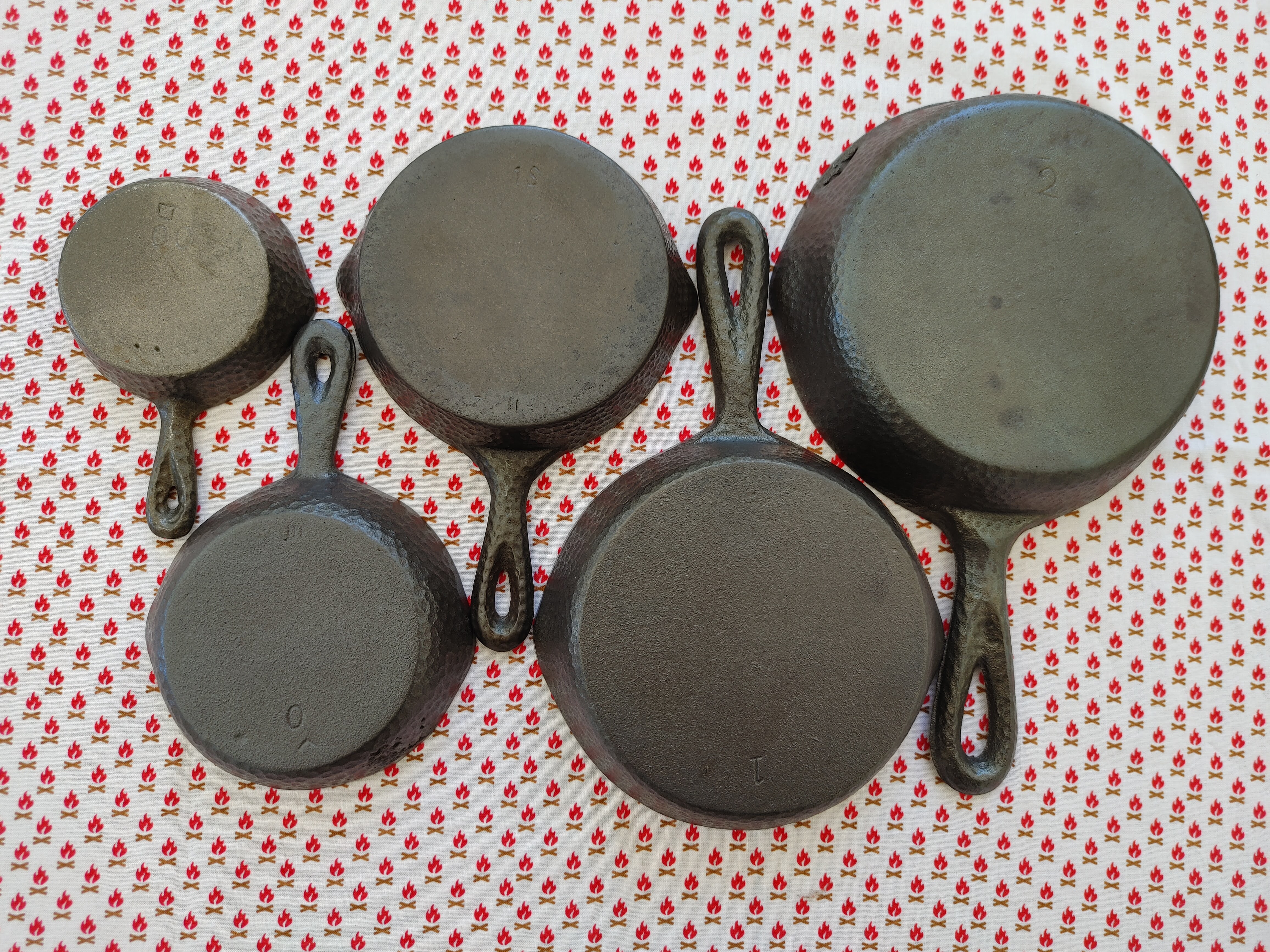
Lodge makes miniature cast-iron skillets in five sizes, ranging from about two to six inches across. PHOTO CONTRIBUTED by Ken Margraff.
A Mini Obsession
If you want to understand what drives Margraff, look at the miniature skillets.
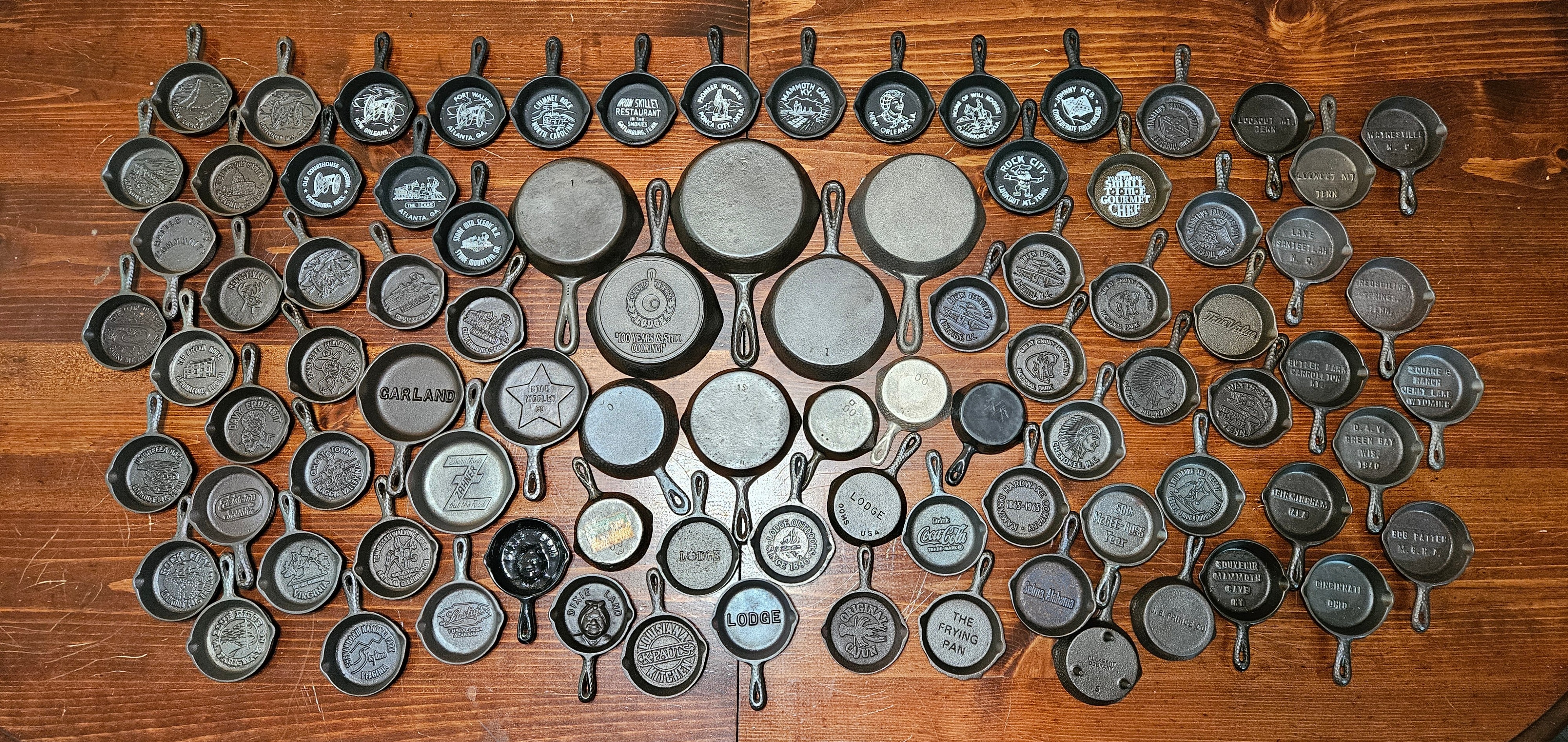
Lodge makes miniature cast-iron skillets in five sizes, ranging from about two to six inches across. Most people think they’re novelties. Margraff fell in love with the little pans, and he has built what he calls the “unofficially official” world’s largest collection of them. He has his eye on a Guinness World Record one day.
“It’s an obsession,” he said.
He maintains a spreadsheet tracking every known Lodge number 2 miniature skillet, which is the rarest one. There are currently twenty of them in the entire collector community. He knows who has them, where they are, and how they were found. When one changes hands, people notify him so the count stays accurate.
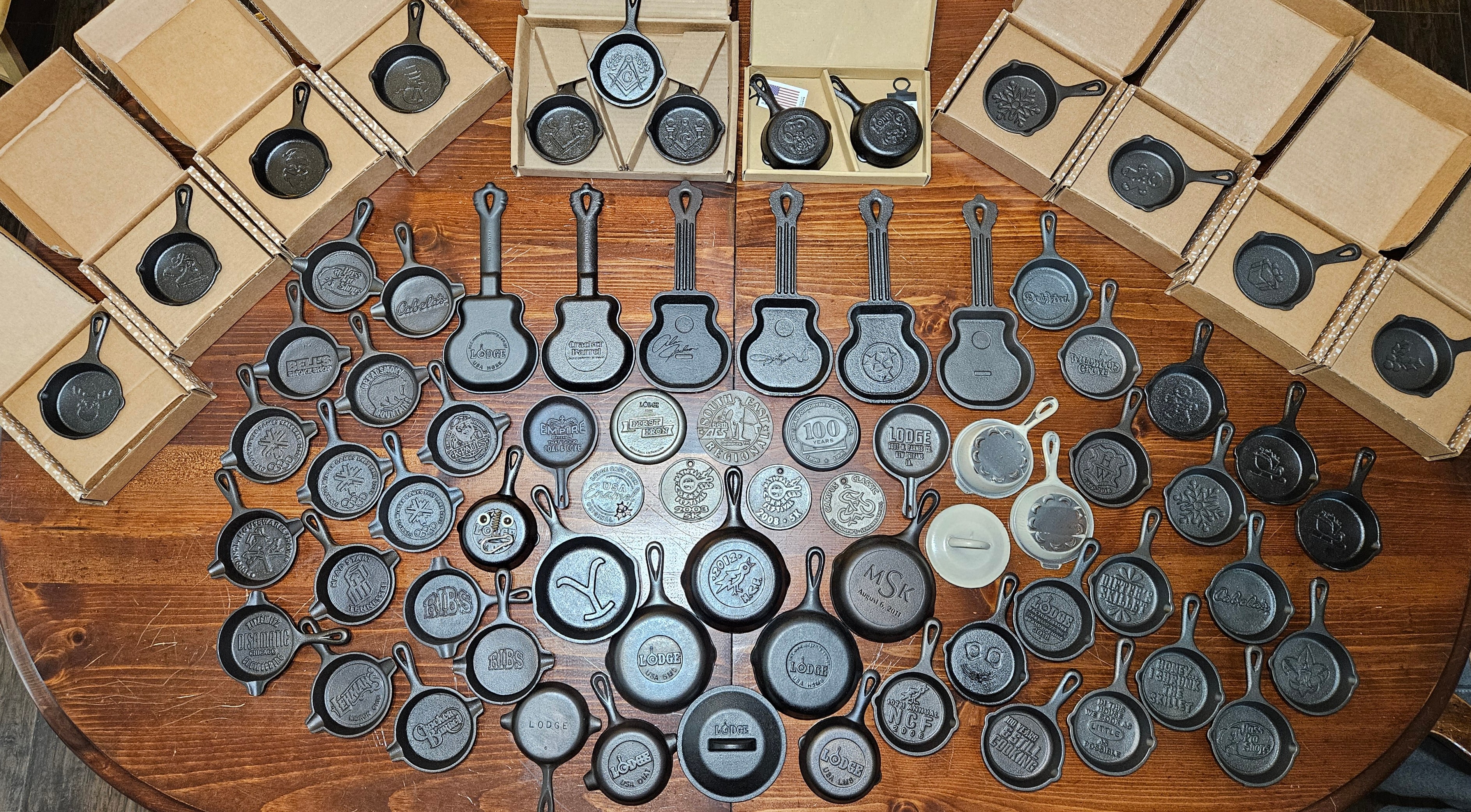
He has also designed four miniature skillets himself—a set of three for his Masonic Lodge as a fundraiser, and one for Lodge Manufacturing after they asked him to submit design concepts. Of the ideas he sent, they produced one.
“I told them my fee was one of the production plates,” he said. “They laughed and sent me one.”
Just some of Margraff’s Lodge mini collection. He is trying to collect one of every Lodge mini ever made. PHOTO CONTRIBUTED by Ken Margraff.More of Margraff’s collection, including some that he designed for his Masonic lodge (top center). PHOTO CONTRIBUTED by Ken Margraff.
The Iron Family
What Margraff didn’t expect, when he fell down that cast iron internet rabbit hole, was the community he would find there.
When he began collecting miniature skillets, people across the country started hunting on his behalf, passing along tips, flagging pieces they found. When his relationship with Lodge developed, instead of jealousy, he got cheers.
“I’ve never seen a community quite like it,” he said.
He has a best friend he met through cast iron—a guy known on TikTok as Orphaned Iron, with hundreds of thousands of followers—whom he talks with every single day. He has a friend in Italy that he ships iron to, tariffs and all. He has a contact in Japan, where they are wild for cast-iron.
“I have friends all over the country and all over the world,” he said, “all because of some pieces of metal.”
The depth of that community became apparent when Jes was diagnosed with cancer. She put together an Amazon wishlist of chemo comfort items, an idea she’d seen on TikTok, for people who wanted to help but didn’t know how.
Within twenty-four hours, her list was empty, purchased by cast iron people from across the country. Some were close friends. Some were people Margraff barely knew. Jes received notes and care packages from people she and Margraff had never even met in person.
“I just never could have imagined it,” he said.
Margraff said his wife, who is in remission, has always been supportive of his cast iron passion
“She is my biggest cheerleader,” he said. “I couldn’t do it without her.”
Tips for Newbies
For anyone just getting started with cooking in cast iron, Margraff’s advice is straightforward: Wash the pan, lower the heat, and be patient. For new collectors, he has one more thing to add.
“Run your own race,” he said. “Your collection is perfect for you. You’ll grow with it and it’ll grow with you.”
Ken Margraff ’06 turned his passion for cast iron into a business, building a niche as a collector, restorer and designer. PHOTO CONTRIBUTED by Ken Margraff.
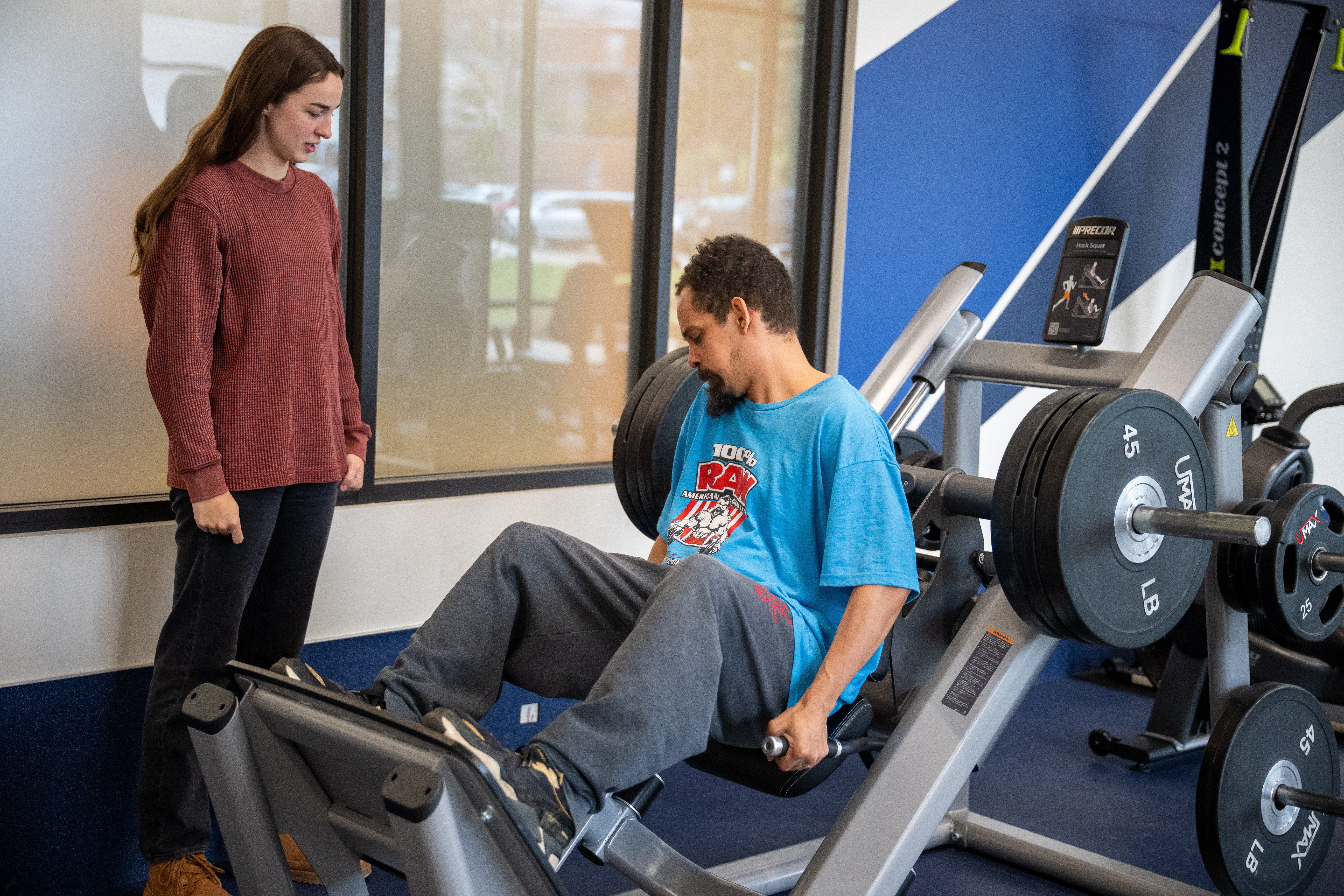
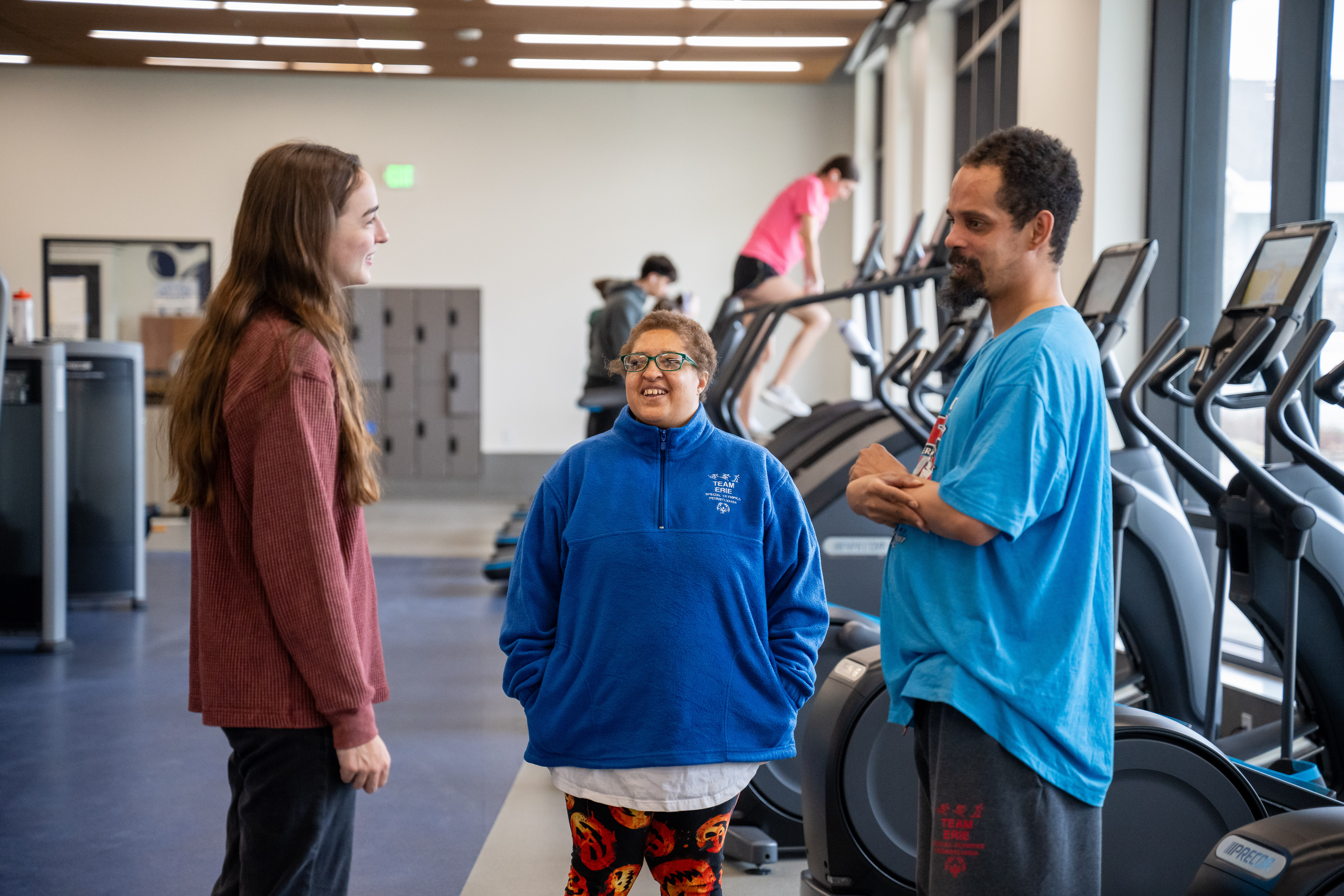
Behrend student Ella Garrity works with Special Olympics powerlifter Jerome Johnson in Erie Hall.
On a quiet Thursday morning in Erie Hall, a tall, muscular student prepares to push himself to failure on the leg press. He asks nearby Behrend student Shelby Hemmerlin and her workout partner, Jerome Johnson, to spot him.
When the student is tapped out and recovering on a nearby bench, he looks up to see Johnson sliding more plates onto the machine—a lot more. The student can only stare, wide‑eyed, as he realizes Johnson, a Special Olympics powerlifter, might be the strongest person in the gym.
That moment—the double-take, the recalibration—is exactly what Kelly Wilson, Behrend’s campus recreation manager, loves about the Unified Fitness program she helped bring to Erie Hall last fall.
“Our students often come in and work out with their headphones on, head down,” Wilson says. “But when the Special Olympics athletes are here, everything changes. You see students start paying attention, getting engaged, smiling, offering a few words of encouragement. The energy in the room just shifts.”
Unified Fitness pairs Behrend students with Special Olympics athletes for twice-weekly workouts at Erie Hall. Athletes and students commit for a full semester, choosing their own workout times and building their own routines together. Special Olympics provides workout frameworks; the athlete typically picks which one they’d like to do that day.
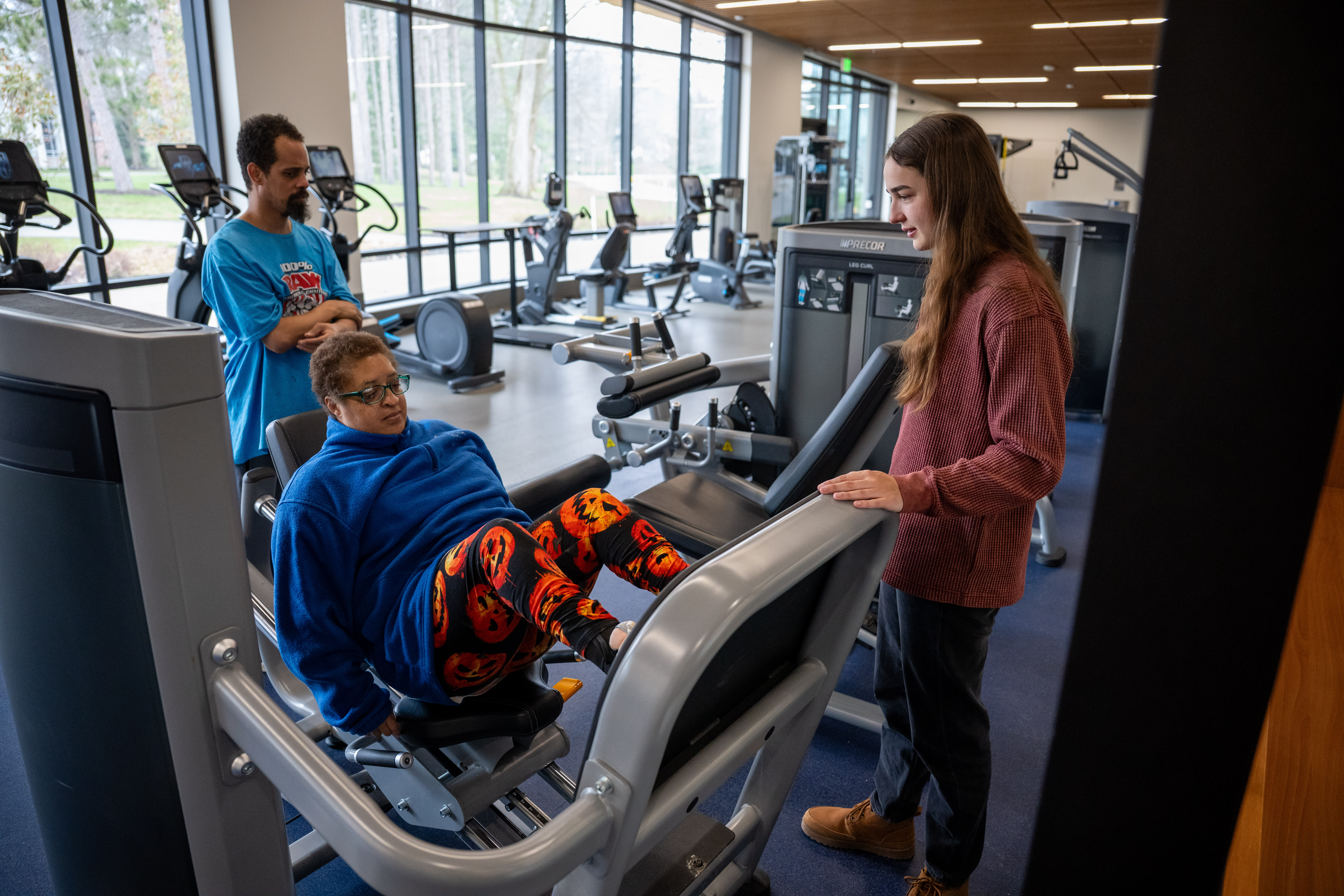
Behrend student Ella Garrity, far right, works with Special Olympics athletes Jerome Johnson, background, and Lawanda Mitchell, seated, in Erie Hall.
The program launched as a pilot last fall with twelve students and six athletes. It grew out of a connection made the previous year, when Behrend hosted the Northwest Regional Special Olympics Polar Plunge. Wilson saw potential for something deeper and more lasting.
“We met to talk about the Polar Plunge University Challenge, and we just kept talking and planning,” said Katherine Reim, regional executive director of the northwest region programming for Special Olympics. “When I told Kelly about Unified Fitness, she was excited and thought it would go over well with Behrend students.”
When the program started, one of the first to sign up was Ella Garrity, a sophomore in the Early Childhood and Elementary Education major, a member of Behrend’s women’s basketball team, and vice president of the Special Olympics club.
“I have been involved with Unified sports since high school,” Garrity said. “I am studying special education and plan to be a high school Life Skills teacher, so this program was perfect for me.”
Garrity has been lifting with Johnson and Lawanda Mitchell twice a week since last fall. She said Johnson continually impresses her with his strength.
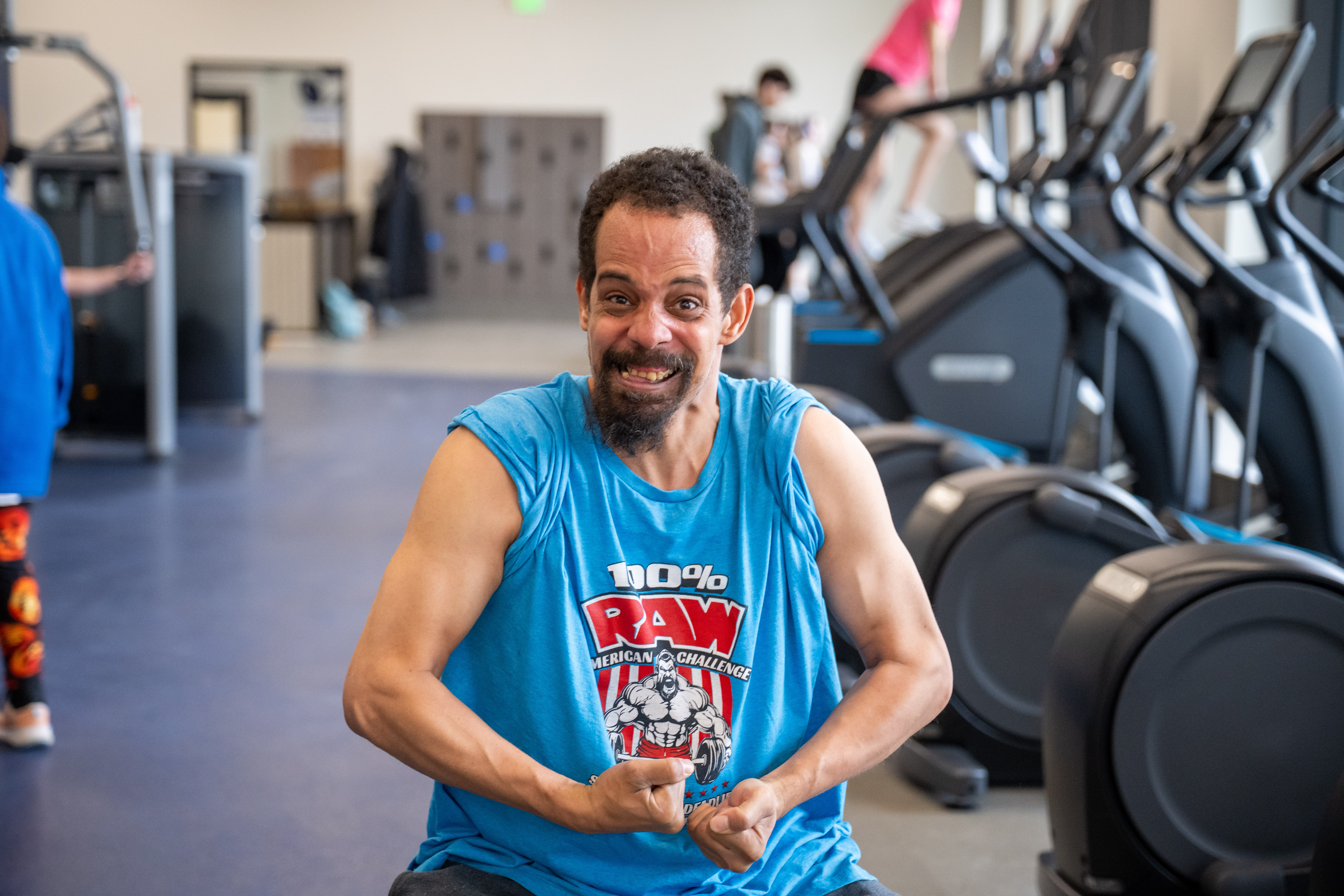
Special Olympics power lifter Jerome Johnson in Erie Hall.
“He lifts more than I am able to help him with, so we always have to ask one of the guys in the gym to spot him,” she said. “His work ethic is so admirable, and the support that Lawanda gives him is the best.”
It’s no different than any of the other friends who meet up at Erie Hall for a workout, and that’s the whole point.
“Too often, people with disabilities are discounted and not part of the larger community in meaningful ways,” Reim said. “This programming erases the stigma that people with disabilities are not equal to their nondisabled peers. I think Behrend students are pleasantly surprised by our athletes’ skills, determination, and engagement.”
Count Hemmerlin among them.
“Most of the athletes I have worked with can out-lift me,” Hemmerlin said. “They have great attitudes and they uplift everyone around them. Meeting up with them always puts me in a good mood.”
Sometimes shared workouts become something more.
“I have become such great friends with Jerome and Lawanda,” Garrity said. “They are some of the funniest and most genuine people I’ve ever met. We call and text daily, and they both come to my basketball games.”
Garrity signed up for Unified Fitness thinking she had something to give. She does. But on game nights, when she looks up and sees Johnson and Mitchell in the stands, she’s reminded that support in this program runs both ways. She’s not just their champion anymore. They’re hers.
Behrend student Ella Garrity, left, talks with Special Olympics athletes Lawanda Mitchell and Jerome Johnson between sets while working out in Erie Hall.
By Heather CassPublications Manager, Penn State Behrend
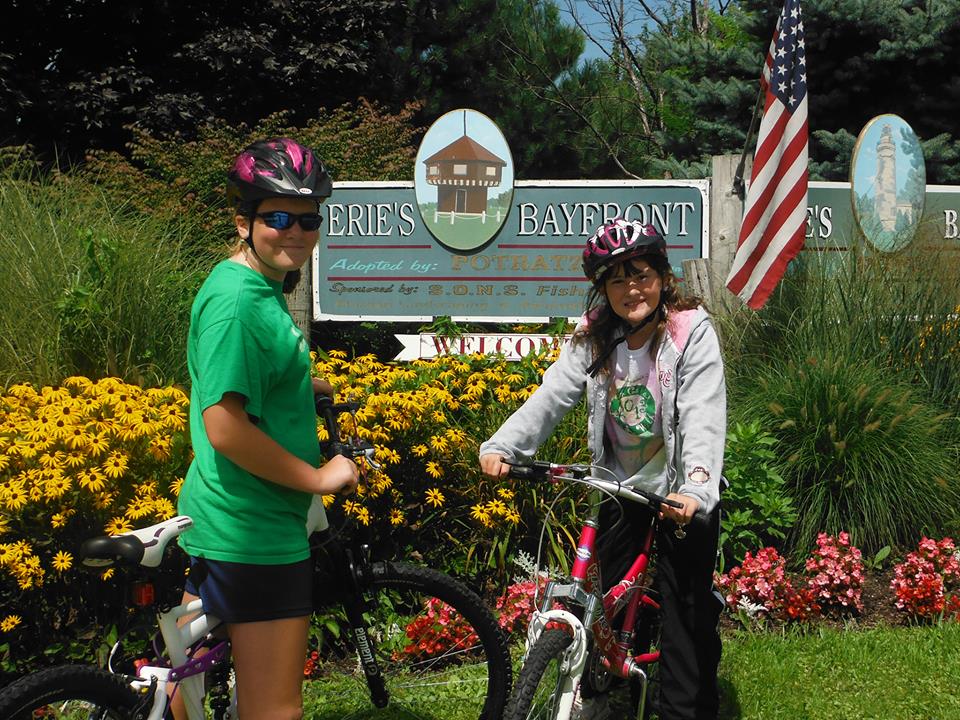
Happy World Bicycle Day!
The United Nations officially designated June 3 as World Bicycle Day back in 2018, recognizing the bicycle as “a simple, affordable, reliable, clean and environmentally fit sustainable means of transport.”
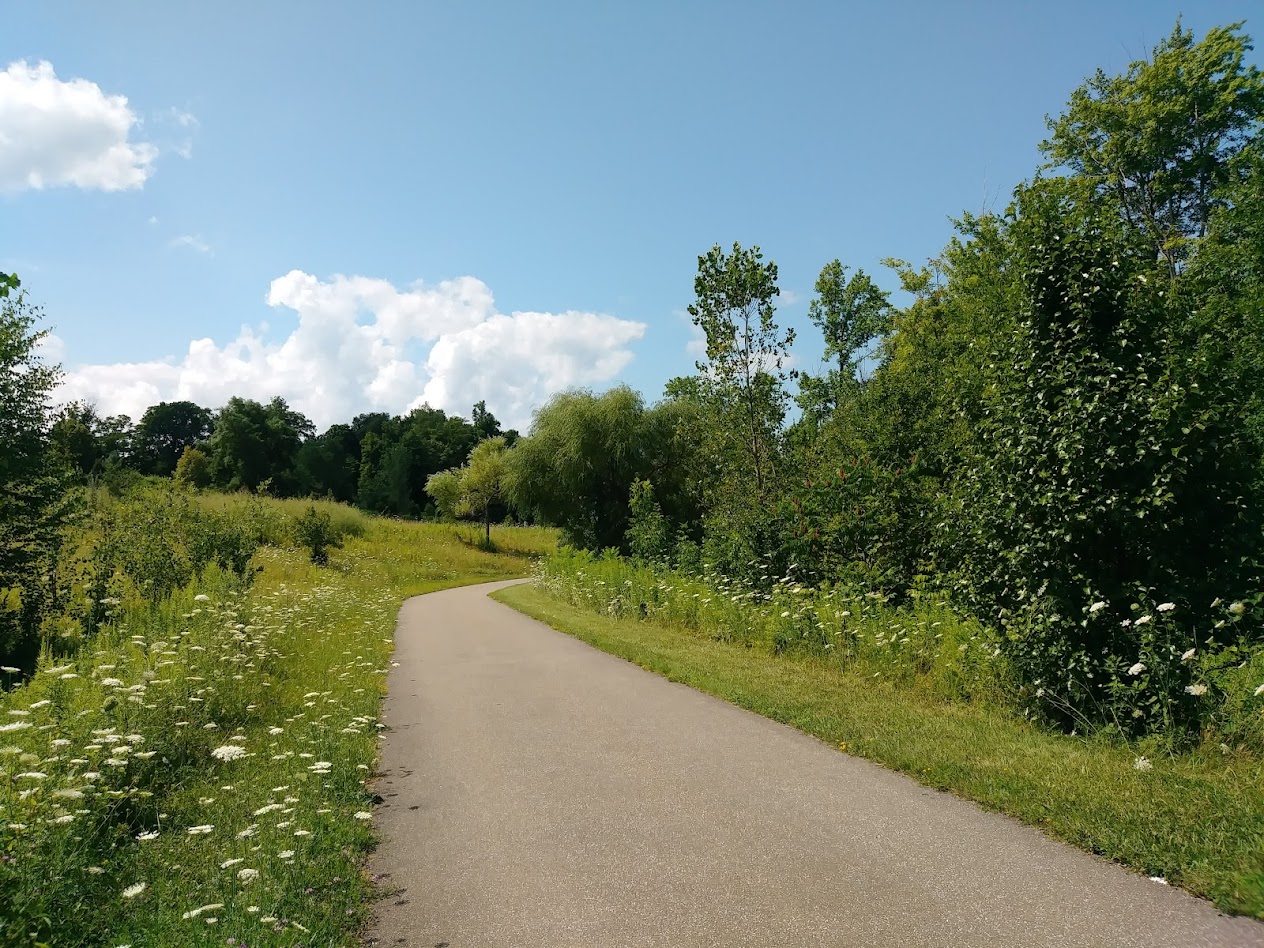
With direct access to the Bayfront Connector Trail, Penn State Behrend is a great place to hop on two wheels and celebrate World Bicycle Day.
I’ve been running and biking the Bayfront Connector Trail for years. I wrote about in 2014, and it’s still one of Erie’s best-kept secrets.
How to Get on the Trail from Behrend
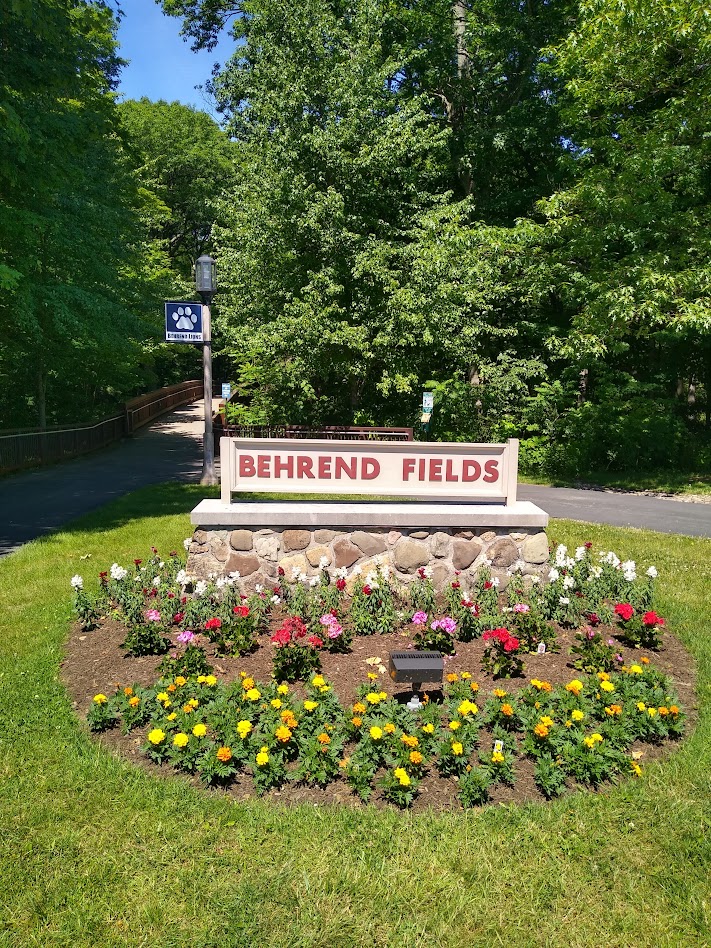
The Bayfront Connector Trail entrance is in the back left corner of the Erie Lot, by the sign that says “Behrend Fields.”
You can also pick up the trail from the college’s Logan House on Station Road, where there are designated visitor parking spots. The trailhead is to the left of the parking lot.
Where You Can Go (Mileage)
Distance via the Bayfront Connector Trail from Behrend (Erie Lot entrance) to…
Shannon Road — 1 mile
38th Street — 1.5 miles
McClelland Ave. — 2 miles
Broad Street — 3.5 miles
12th Street — 4.5 miles
6th Street — 5 miles
Bayfront Parkway — 5.5 miles
Dobbin’s Landing (foot of State St.) — 6.5 miles
Frontier Park — 8 miles
The paved Bayfront Connector Trail ends at Frontier Park in west Erie, but cyclists can continue west on Sixth Street’s designated bike lane to Presque Isle State Park, making it an 11-mile one-way trip from Behrend.
Want more? A loop around Presque Isle State Park will add 13 more scenic miles to your ride.
If you go all the way to Presque Isle, you’ve definitely earned a stop at Sara’s — an Erie institution at the entrance to Presque Isle. There you’ll find foot-long Smith’s hot dogs, chicken sandwiches, curly fries, ice cream, etc. Try one of Sara’s signature orange sherbert and vanilla ice cream twist cones or a thick chocolate milkshake.
Heads Up: Construction Zone Ahead
There is active construction on the bayfront right now, and it will continue all summer.
PennDOT is in the middle of a major overhaul of the Central Bayfront Parkway — adding roundabouts at Sassafras Street and Holland Street, an overhead pedestrian bridge, upgrades to the multi-use trail, and more. It’s a significant project that will ultimately make the bayfront more accessible for pedestrians and cyclists.
For now, though, it’s a hassle. Expect some congestion, particularly in the stretch from Blasco Library to the Bayfront Convention Center. Follow the detour signs — the trail is still navigable, just pay attention and be patient. Once you’re past that section, it’s smooth sailing to the bayfront and beyond.
The scenery changes dramatically over 11 miles — from the manicured green lawns of Penn State Behrend, to an urban stretch with factories to a stunning bayfront with wide-open views of Lake Erie. The Bayfront Connector is a designated National Scenic Byway and part of the Great Lakes Seaway Trail, and once you ride along the bay, you’ll understand why.
A Note About Elevation
Good news: The trail is all downhill from Behrend. Bad news: It’s all uphill on the way back — when you’re good and tired.
Pro tip: Arrange for a ride back with a friend who has a truck or a large trunk, or hop aboard the “e,” the city of Erie’s public bus system. City buses are equipped with bike racks on the front and they are FREE for Behrend students to ride. Just show the driver your ID and make sure you’re on a bus that returns to Behrend’s Reed Union Building.
What You Need to Know
The trail may appear to end at various intersections. It doesn’t. Look ahead and you’ll see where it picks back up.
Safety: I’ve biked this trail more times than I can count — solo, with friends, and with my kids, who are now both Penn State Behrend graduates (wow, 12 years flies). I’ve always felt safe, but the trail does pass through some wooded stretches and urban areas. Take a friend and a fully charged phone. Don’t ride after dark — the only section of this trail that is lit is the stretch on Behrend’s campus between the college and Logan House.
Trail surface: Mostly blacktop — great for biking, easier on the joints than concrete.
Winter: The trail is not maintained in winter. Bad for bikers. Great for cross-country skiers.
Questions? I’ve covered every inch of this trail by foot, bike, and car — feel free to reach out at hjc13@psu.edu.
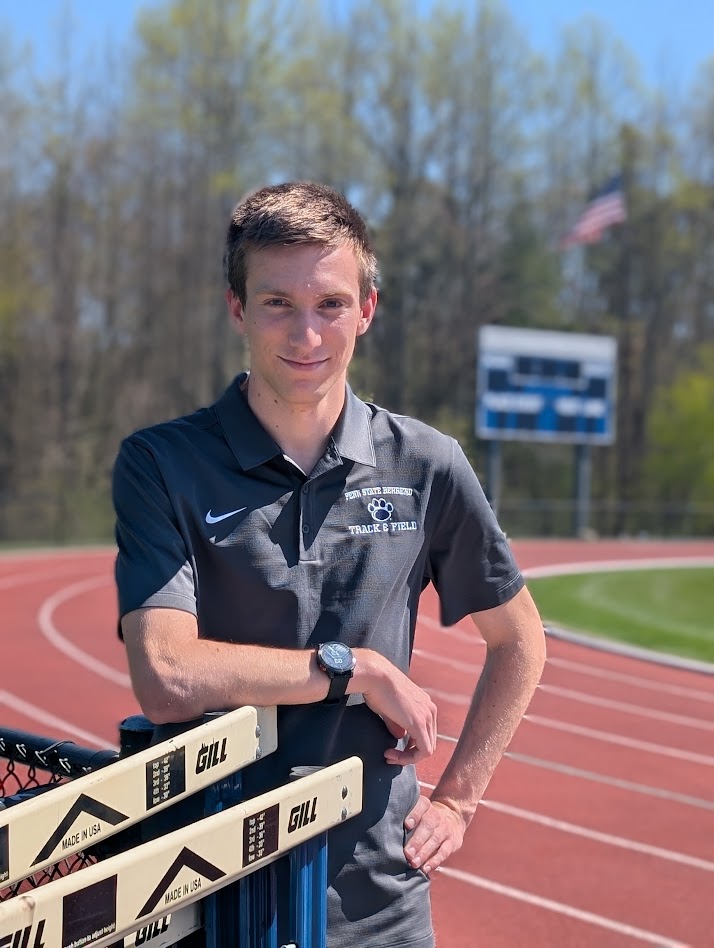
Aiden Seeman, a new graduate of the Mechanical Engineering program at Penn State Behrend and a member of the college’s track and cross-country teams, has been running since fifth grade. He is used to the ups and downs of the sport. You have good runs and bad runs.
But an unusually poor performance at a cross-country meet in Rochester, N.Y., in the fall of his junior year began to raise flags. His coach and athletic trainer thought maybe he was ill.
Seeman had been struggling with breathing, but otherwise felt fine, so he continued running.
“I was setting personal records in all of my events, so I wasn’t too worried,” he said.
But the breathing issue continued to plague him.
“At the end of a race, my legs felt fine, but I just couldn’t catch my breath,” he said.
He was diagnosed with pneumonia. He treated it and kept running. When he was diagnosed with it again in the spring, he thought that things weren’t adding up. A follow-up X-ray suggested a collapsed lung.
What followed was a series of tests, including CT scans and bronchoscopies — first in Erie, then in Pittsburgh. When the pulmonologist called Seeman personally to discuss the results, he knew it was probably not good news.
“She told me that they found something ‘concerning,’” he said.
It was not a collapsed lung. He was diagnosed with an inflammatory myofibroblastic tumor, or IMT, an extremely rare mass in the lungs, most often found in children and young adults. Most of the doctors involved in his care had never seen one.
The news was shocking, but also strangely optimistic.
“I remember thinking: I’m young and fit. This is not something that should’ve happened to me,” he said. “But the good news is that this type of cancer is unlikely to metastasize. This is one of the best draws if you’re going to get cancer.”
He was able to fit in one cross-country race with his team before he had surgery to remove the mass. Late last October, Pittsburgh surgeons worked to remove the mass. They expected to take 10 to 15 percent of his right lung. They took 40 to 45 percent.
“When they put me under for the surgery, I went under thinking I was going to be fine,” Seeman said. “When I woke up and I heard how much they had to take, I wasn’t so sure.”
Doctors were cautious about his recovery. Hopefully, he could work his way up to daily walks, they said. Running was unlikely.
He sat with that for two dark days. Then he decided that was enough.
“No,” he said to himself. “I’m going to fight, and I’m going to run again. My goal was to put my track uniform on and compete with the team before I graduated.”
Eight days after surgery, he showed up and stood in the cold to support his teammates at the AMCC Cross Country Championships — not racing, just there.
A couple weeks later, he went on his first post-surgery run with his older sister. They ran a mile, walked for a bit, then ran a mile back. A 10-minute-mile pace, far off his usual 7:30.
“I’m not going to lie,” he said, “it sucked a lot, at first.”
Through all of this, he maintained his academics, carrying 18 credits, making up all the work from two weeks of missed classes, a feat in itself.
By April, he was back on the track, competing in the 800 meters—the event he has always called his own. He is less than ten seconds off the personal record he set before he got sick. Sub-two minutes is the goal. He knows exactly how to get there.
“I benefit from knowing where I want to be and how to get there,” Seeman said. “And this whole experience has shown me what a goal and hard work can do.”
Greg Cooper, the head track and cross-country coach at Behrend, has watched all of it — the collapse, the diagnosis, the slow miles with his sister, and his comeback this spring.
“I am absolutely blown away,” Cooper said. “It’s hard for me to call it anything but miraculous. He would be quick to remind me he’s running seven seconds off his personal best. I would be quick to remind him he’s defied the odds and overcome more than any doctor told him he could.”
Seeman, graduated May 8, has a six-month follow up CT scan this month. He is looking forward to telling his surgeon that he’s racing again.
“Being able to run is so much more of a blessing than it ever was before,” he said. “I definitely appreciate running with the team more than I ever have. I don’t complain much anymore. Now, running is like an act of defiance.”
Penn State Behrend’s Class of 2026 is ready to make its mark on the world. We’re proud of our students and all that they have learned and accomplished here at Behrend. Over the next several weeks, we will introduce you to a few of our remarkable seniors who have conducted valuable research, pioneered innovation, overcome challenges, and engaged in college life in a big way.
Today, we’d like you to meet Abby Tingley.
Major: Mechanical Engineering
Minor: Biomedical Engineering
Hometown: Union City, Pennsylvania
Scholarships: A. James Clark Scholars Program and Schreyer Scholar Program
Why she chose Behrend: I chose Behrend because of the many opportunities it offers both academically and athletically. There are not many programs where you can pursue a degree in engineering while also playing a collegiate sport, and that balance is something Behrend supports well. I was also drawn to the small class sizes and the chance to build one-on-one relationships with professors, which creates a welcoming environment to ask questions and access support. In addition, the opportunity to participate in undergraduate research was great. I was able to work on a project that combined my major in mechanical engineering with softball, one of my biggest passions, which made the experience even more meaningful and exciting.
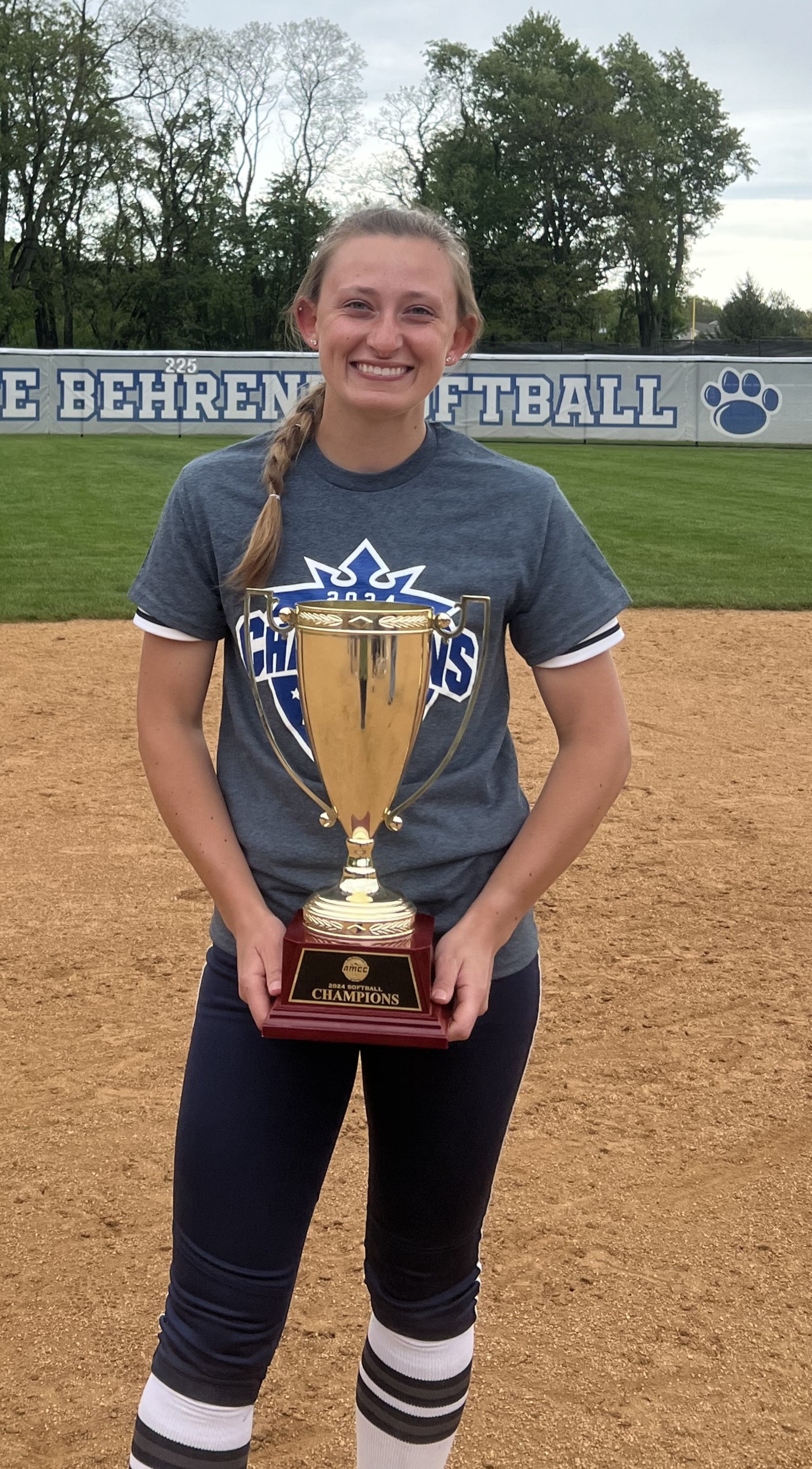
Proudest accomplishment at Behrend: My research. I chose to study and compare the stress placed on the ulnar collateral ligament (UCL) in the elbow during pitching and throwing in baseball versus softball, using motion sensors and a whole lot of engineering. It let me dive deeper into pitching—something I’ve loved since I was eight years old—and turn that passion into an engineering project with real potential for injury prevention in both sports. I’ve spent countless hours working with Dr. Elisa Wu, professor of Mechanical Engineering, planning, testing, and analyzing every detail, and I’m incredibly grateful to the Behrend baseball and softball teams for being so willing to help throughout the process. After nearly two years of effort, it’s exciting to finally publish a thesis on a project that has meant a lot to me.
Campus involvement: Pitcher for the Behrend softball team, Schreyer Honors College, Society of Women Engineers (secretary and president), Behrend Engineering Ambassador (secretary and vice president).
What you’d be surprised to know about her: I worked in the Engineering Office in Burke Center for a semester. It was fun getting to see some of the “behind the scenes” work for Engineering Week, the planning that goes into senior design projects, and how everything stays on schedule. I also got to know some of the staff and learn more about what they do day by day.
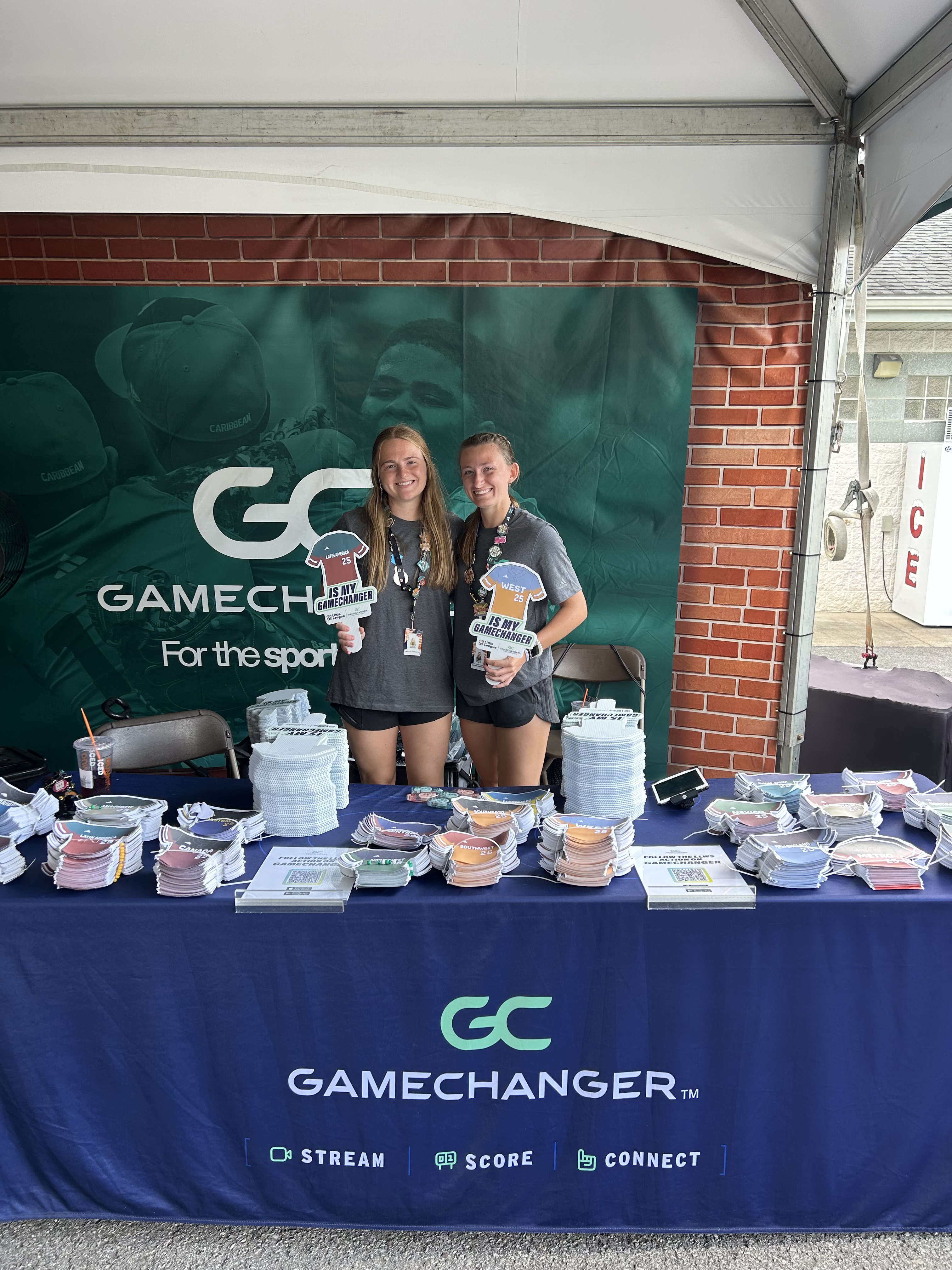
At the Little League World Series: My experience in Behrend athletics allowed me to have the opportunity to represent Game Changer and Dick’s Sporting Goods at the 2025 Little League World Series in Williamsport, Pennsylvania, this summer. I got to take my best friend (and catcher) Alexia with me, and we spent the week experiencing the excitement of the LLWS while serving as ambassadors for those brands. One of the best parts was connecting with so many young athletes who reminded me of myself at their age, full of big dreams and love for the game. It was a surreal, full-circle moment and an experience I’ll never forget.
Her highest priority: Getting out into the world, traveling, exploring, meeting new people, and soaking up as many experiences as I can. I want to gain new perspectives and experiences not just for adventure but to grow in my career and as a person. There’s something about stepping into someone else’s world that makes you appreciate your own even more. I also want to enjoy being young and curious, trying new things while I still have the energy to say “yes” to just about anything. Mostly, I want to collect stories—things that I can one day look back on and smile.
Advice for first-year students: Meet people. Ask the name of the person sitting next to you in class, say “hi” to the person you pass every morning on your way across campus, strike up those tiny conversations that feel small but end up having big impact. Meeting people opens doors you didn’t even know existed—like study buddies, new friends, random adventures, maybe even an internship down the line. At the very least, being the friendly face in someone’s day is a good thing. College is full of opportunities, but the best ones usually start with a conversation you were brave enough to begin.
After her graduation in May, Abby will work as a systems engineer at RoviSys Building Technologies in Aurora, Ohio.
Penn State Behrend’s Class of 2026 is ready to make its mark on the world. We’re proud of our students and all that they have learned and accomplished here at Behrend. Over the next several weeks, we will introduce you to a few of our remarkable seniors who have conducted valuable research, pioneered innovation, overcome challenges, and engaged in college life in a big way.
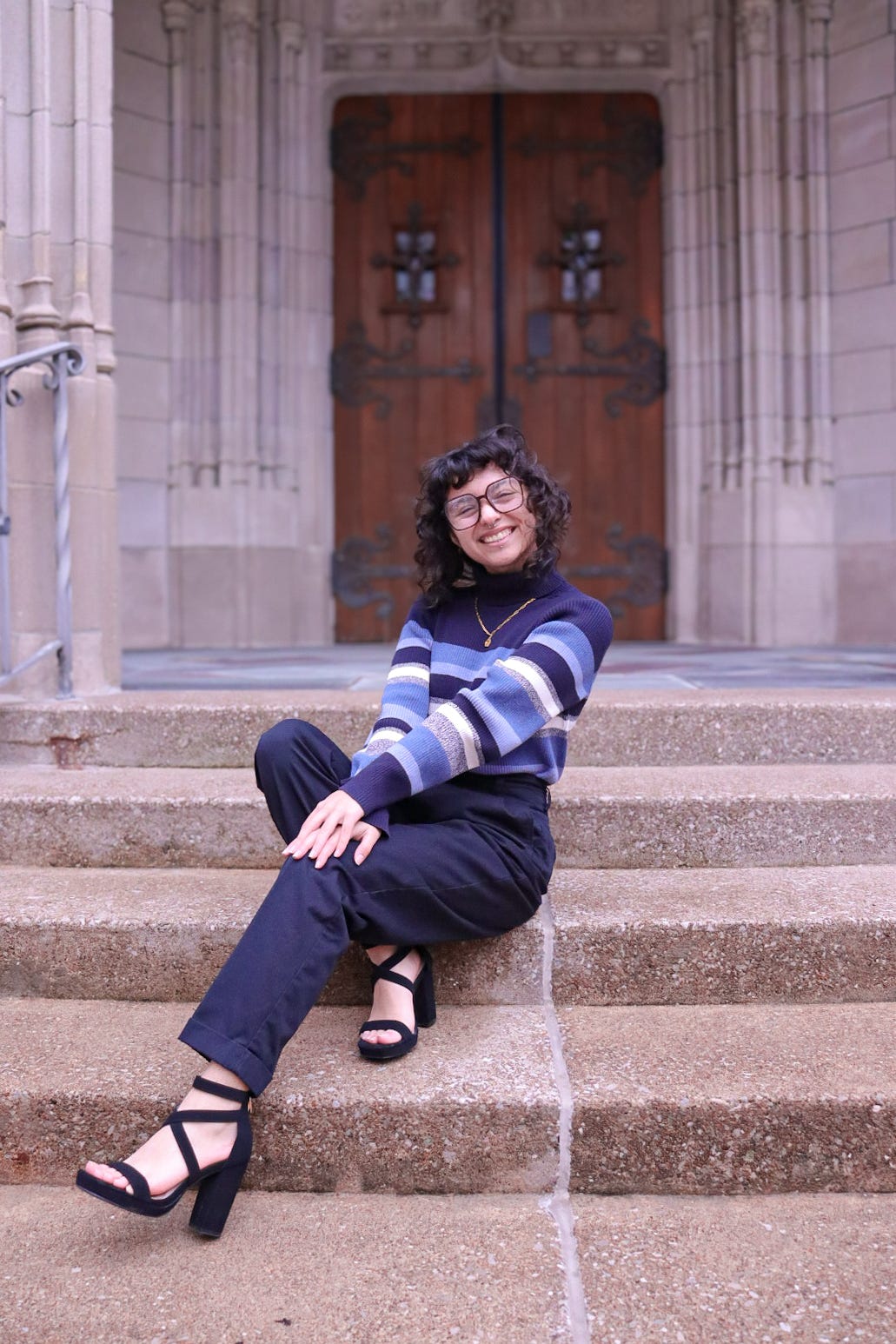
Today, we’d like you to meet Vida Sevilla.
Major: Political Science
Minor: Crime, Law, and Psychology
Hometown: Montclair, California
Why she chose her major: I came here as a Criminal Justice major but switched to Political Science around my sophomore year. Growing up, I saw how harshly the world treats more unfortunate and marginalized communities. I wanted to be a part of fixing the way we see and treat these communities.
Proudest accomplishment at Behrend: I’ve stepped out of my comfort zone a lot in my time here, so it’s hard to give just one example. However, my short time in the Behrend theatre community taught me so much about myself, and I’m beyond proud of myself for participating.
Challenges overcome: Being so far away from home and from my culture, every day can be a challenge, especially being a first-generation student. It’s hard to know if what I’m doing is the right thing. Despite my lack of guidance through life, I’ve come out the other side with the support of the friends I’ve made along the way.
Campus involvement: Alpha Sigma Alpha, executive board member of Panhellenic Council (vice president of Peer Accountability), and member of Studio Theatre/Theatre Club. Over the years I’ve been involved in a few other clubs and organizations, such as Behrend Political Science Society, Groundhog Club, Tone-Acious, Chamber/Concert Choir, and Alternative Spring Break.
What makes her unique: I’ve always viewed myself to be a lover of life. I love experiencing what the world has to offer, even when those things aren’t the most amazing or positive experiences.
What she’s passionate about: Doing what’s right, especially when it’s hard to do so. A lot of the time we find it’s easier to go along with the majority, but it’s important to give yourself a life where you don’t regret the things you should’ve done for the betterment of those you love rather than just for yourself.
Advice for first-year students: Above all else, don’t ever limit yourself to one path in life. Sometimes the world around you will want to push you toward its own standard of excellence—you need to find the strength within yourself to make your own standard. Dream big and loud! If you ever feel that your dreams are too big for this world, then shoot for the stars instead. Do not ever be sorry for what you do to make your dreams happen, just learn from it all.
After her graduation in May, Vida plans to move to New York City to become a criminal investigator.
Penn State Behrend’s Class of 2026 is ready to make its mark on the world. We’re proud of our students and all that they have learned and accomplished here at Behrend. Over the next several weeks, we will introduce you to a few of our remarkable seniors who have conducted valuable research, pioneered innovation, overcome challenges, and engaged in college life in a big way.
Today, we’d like you to meet Alex Irwin.
Major: Biology
Hometown: Erie, Pennsylvania
Scholarships: Council of Fellows Leadership Scholarship, Academic Excellence Scholarship, DeFrees Family Foundation Endowed Scholarship, Phillips Scholarship for Schreyer Scholars
Why he chose Behrend: I felt at home here. I could see myself going to college here and having success. The wonderful faculty and staff who were dedicated to my success even before I stepped on campus really helped me want to attend Behrend.
Why he chose his major: I’ve always been interested in the natural world, especially in how the human body works and functions.
Proudest accomplishment at Behrend: Being elected president of Lion Ambassadors. To have the honor of leading an organization that has given so much to me was an immense privilege.
Challenges overcome: Learning how to say no and not over-commit myself. I’m very passionate about everything I do and want to be as involved as I can be, but I cannot do everything. I had to learn how to prioritize my time and only say yes to things I know I can put one hundred percent of my efforts into.
Campus involvement: Treasurer and president of Lion Ambassadors, treasurer and president of Science Ambassadors, treasurer and president of the Behrend Schreyer Council, member of the Student Facilities Fee Committee, and Resident Assistant for two years.
Award: Aaron Meehl Biology Award (Outstanding Rising Junior)
What you’d be surprised to know about him: People would be surprised to find out that I have a full-size skeleton sitting in the front seat of my car.
His highest priority: Having success and graduating from medical school. I want to become a successful physician.
What he’s passionate about: Helping others, which is what initially drove me to pursue a career in medicine. I want to make sure that everyone receives the quality care they need.
Advice for first-year students: Talk with your professors and form relationships with them. They are truly wonderful people who want to help you succeed. They have connections in your field and can help you apply for jobs or graduate schools.
After his graduation in May, Alex will attend medical school at the Penn State College of Medicine.