
AI Won’t Replace You. Not Understanding It Might.

Software engineering faculty member says the future still belongs to people who know what they are building.

By Heather Cass, Publications Manager, Penn State Behrend
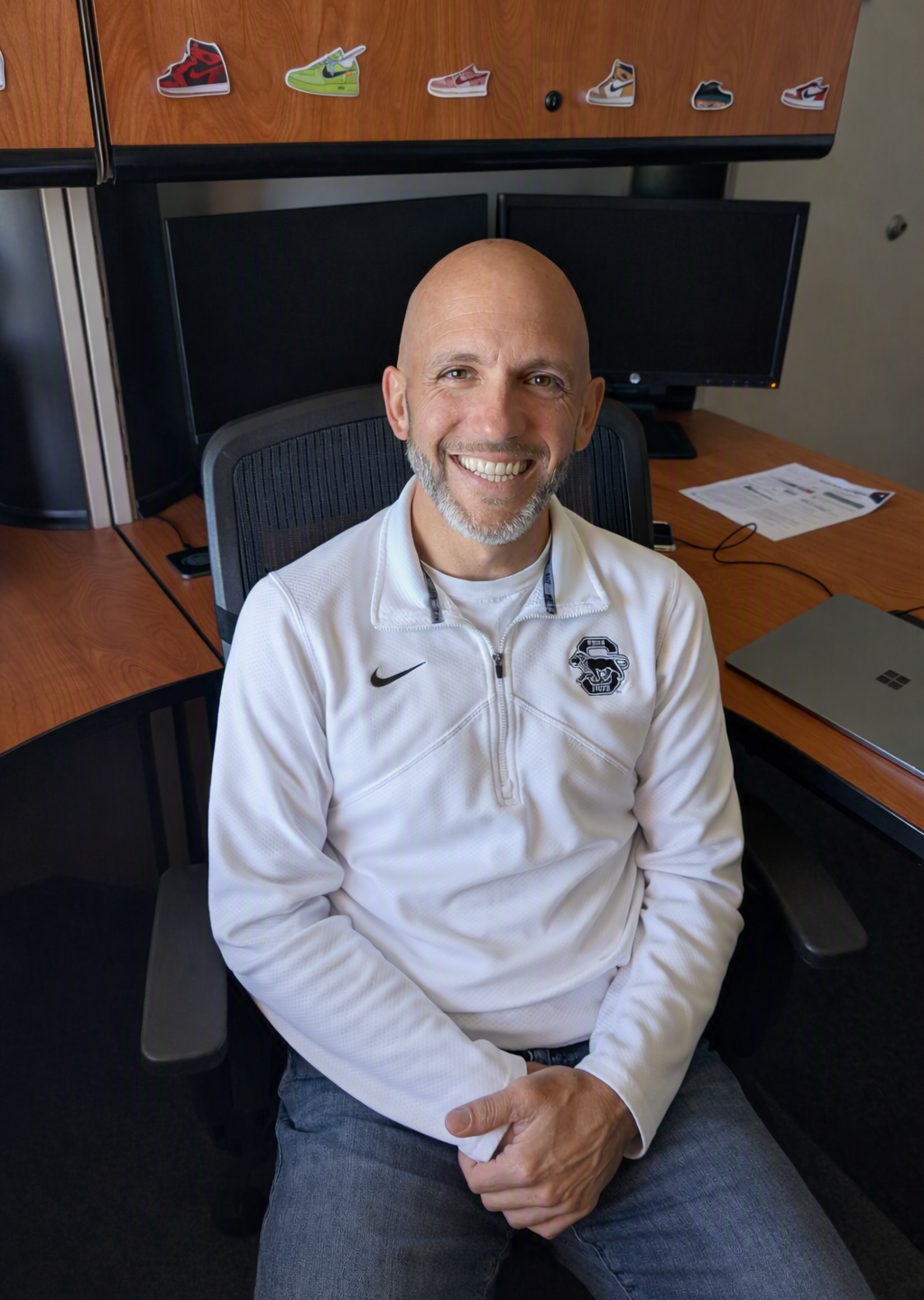
Photo of a smiling bald, bearded man wearing a Penn State pullover, sitting at a desk.
Russell Martin, assistant teaching professor of computer science and software engineering at Penn State Behrend

Russell Martin worked in the tech industry for twenty years before joining Penn State Behrend as an assistant teaching professor of computer science and software engineering. He’s watched multiple waves of technology reshape the field, from early automation tools to cloud adoption to mobile disruption. Artificial intelligence is the latest wave—and he isn’t losing sleep over it.

Behrend Blog sat down with Martin, who earned a bachelor’s degree in Management Information Systems in 2005 and an MBA in 2006, to talk about AI’s impact on the computer and software engineering field and how students can learn to use the technology without relying on it.

Q: A lot of students are worried AI will replace software engineers. Should they be?

Martin: No. I’ve been around long enough to see big shifts in technology. We adapt. What other choice is there?

There is software that’s fifty years old that we’re still using today because it’s good. AI isn’t going to come along and replace everything just because it’s the shiny new thing.

Companies will probably overreact—fire people, say they’re “moving to AI,” make shareholders happy—then they will realize it wasn’t as efficient or as good as they thought. They’ll hire people back. It will be a bit of a shell game. We’ve seen it before.

Q: So you don’t see AI as a threat to engineering jobs?

Martin: I see it as a tool. A powerful one, but still a tool. Students need to be smart users of it.

AI can make you more efficient. It can find problems faster. It can expose vulnerabilities that might have taken weeks, months or even years to find. Use that. But AI shouldn’t replace your own thinking.

Q: You’ve said there’s “no way to make anything AI‑proof.” What do you mean by that?

Martin: If a student wants to use AI, they’re going to use it. There’s no assignment I can write that magically prevents it. So instead of fighting it, I want to know how they’re using it. I want to see their prompts. I want to help them write better ones. I want them to be smart users of the technology, not pretend it doesn’t exist.

Q: How do you teach students to use AI responsibly?

Martin: Fundamentals first. You need to understand what you’re building before you let AI help you build it. Otherwise, it becomes a crutch.

I tell students: AI is a resource. It’s there. Why wouldn’t you use it? But use it ethically. Use it efficiently. Use it in a way that makes you better at doing your job.

Q: You spent more than twenty years in industry before teaching. How does that shape your view of AI?

Martin: In industry, your job as a software engineer has always been to automate your job out of existence. That’s not new. What’s new with AI is the speed at which it’s moving. AI might accelerate some changes—things that once took much longer could happen in three to five months. But the pattern is the same: technology changes, and people adapt.

I’ve worked in small businesses, medium companies, and large corporations. I’ve seen tools come and go. Information technology people are notorious for marketing the next big thing without fully validating it. We always say, “This is it.” Then it changes again. Will AI cause a massive shift? It already has. But where it finally settles—only time will tell.

Q: How does AI show up in your classroom?

Martin: In project‑based courses, students build something real — a business plan, a product, the code, the review. I throw curveballs at them like a business owner would. AI fits naturally into that. It’s another tool they can use to solve problems, find problems faster and learn.

Students can embrace AI without cheating. They can use it to learn. They can use it to experiment. They just need to understand what they’re doing.
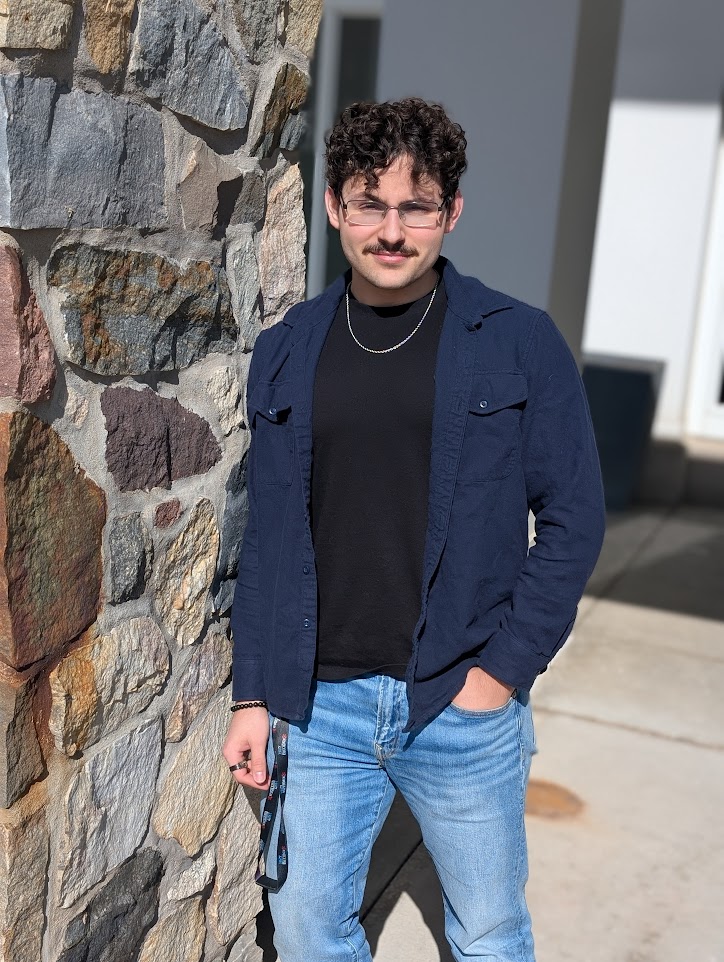
Standout Seniors 2025: Meet Daniel Gayoso (Computer Engineering)

Penn State Behrend’s Class of 2025 is ready to make its mark on the world. We’re proud of our students and all that they have learned and accomplished here at Behrend. Over the next several weeks, we will introduce you to a few of our remarkable seniors who have conducted valuable research, pioneered innovation, overcome challenges, and engaged in college life in a big way.

Today, we’d like you to meet Daniel Gayoso.

Major: Computer Engineering

Hometown: Moon Township, Pennsylvania

Scholarships: Frank S. Palkovic Trustee Scholarship

Why he chose Behrend: I like the smaller size of the campus and classes. It also had a reputable engineering program.

Why he chose his major: I built my first computer when I was 12 years old and kept tinkering all the way through high school. I was always very curious to learn how each hardware component functions alongside the software.

Challenges overcome: My classes, mainly in my junior year, were each a challenge in and of themselves. The raw amount of material to learn was incredible, but what also made it difficult is that much of that material is built off foundational math and science from your first and second year. You have to really understand the foundations.

Involvement and activities: Computer Engineering Club (President, Vice President); Behrend Engineering Ambassadors; Resident Assistant; Institute of Electronics and Electrical Engineering Club.

Side quest master:  I constantly get sidetracked during homework assignments and projects related to my major because I’ll see some random term I’ve never heard of that sounds interesting and I end up spending a half hour researching it.

What you’d be surprised to know about him: I have dual citizenship in the United States and Spain and my parents are immigrants from Venezuela. That said, my Spanish is not very good!

What he’s passionate about: Lifting weights and anything related to computers, electronics, or communications.

Learning happens outside class, too: You will get as much out of college and your degree as you put into it. Spend as much time as you can going beyond what’s being taught in the classroom. Join clubs, do internships, take on extra projects, or seek out research opportunities with professors. Like Dr. Abdallah Abdallah, associate professor of electrical and computer engineering, says: “Use the knowledge taught to you in your courses to build things outside of them.”

Curiosity and enthusiasm matter: Make sure you enjoy what your major has to offer. The best engineers I know are the ones who think about it 24/7. They are the type of people who wake up in the middle of the night with a solution to a problem they’ve been ruminating on for weeks. This doesn’t mean you have to sacrifice a social life or adequate sleep to be a good engineer, but the more curious and enthusiastic you are about your work, the further you will go.

Advice for first-year students: Make an effort to leave your comfort zone. Also, if you didn’t like the person you were becoming before college or wish that you were different in some way, you can reinvent yourself. It’s a whole new start.

After his graduation in May, Daniel plans to work in the computer engineering field for three to five years and then pursue a master’s degree in computer engineering.

Standout Seniors ’25: Meet Ali Ostowar (Management Information Systems)

Penn State Behrend’s Class of 2025 is ready to make its mark on the world. We’re proud of our students and all that they have learned and accomplished here at Behrend. Over the next several weeks, we will introduce you to a few of our remarkable seniors who have conducted valuable research, pioneered innovation, overcome challenges, and engaged in college life in a big way.

Today, we’d like you to meet Ali Ostowar:

Major: Management Information Systems

Minor: Computer Science

Hometown: Olomouc, Czech Republic

Why he chose Behrend: I wanted a quiet and focused academic environment. University Park sounded too crowded for me, so I opted for Behrend, where I could fully concentrate on my studies.

Why he chose his major: My passion for artificial intelligence (AI) led me to explore various academic paths. I chose Management Information Systems because it allowed me to dive deeper into AI while leveraging my previously earned business credits.

Proudest accomplishment at Behrend:  Writing my Schreyer Honors Thesis has been the highlight of my academic journey. Having the opportunity to collaborate with professors I admire on a topic I’m deeply passionate about—and successfully completing it—stands as my proudest achievement.

Thesis topic: My thesis explored the role of emotions in economic decision-making, particularly whether they promote or hinder rational economic choices. This question has long been debated and has recently gained renewed interest as artificial intelligence advances, raising the question of the necessity of emotions in decision-making. While some argue that emotions are fundamental to decision-making, others suggest that an emotionless approach might be more desirable in specific contexts.

Challenges overcome: Transferring from the United Kingdom, where I studied International Business for a year, was already a challenge. However, the biggest challenge was shifting my focus from business to AI and cognitive science. Fortunately, with the support of my adviser, I was able to tailor my curriculum to align with my evolving interests, ultimately leading to my acceptance into a top AI graduate program in the Netherlands. (Editor’s note: Ostowar was accepted into three of the top AI graduate programs in the world!)

Advice for first-year students: Don’t feel locked in your initial major. The flexibility of the curriculum and my willingness to explore courses outside my field led me to discover my true passion. Take the opportunity to experiment, and you might find a path you never expected.

Ali has been accepted into the master’s program in Artificial Intelligence at Utrecht University in the Netherlands. After completing his degree, he plans to pursue a career in academia, focusing on AI and Cognitive Science.