Cross country ski trail emerges on Behrend campus

DSC_1121

By Steve Orbanek
Marketing Communications Specialist, Penn State Behrend

Punxsutawney Phil saw his shadow this year, so it looks like there are a few more weeks of winter left.

But why waste time complaining about it? Dr. Chris Coulston certainly isn’t.

Coulston, associate professor of Electrical and Computer Engineering at Penn State Behrend, has always been an avid runner and cyclist but he decided to try his hand at cross country skiing this winter. He had the perfect training grounds: the campus of Penn State Behrend.

Coulston decided to make use of the wooded area and fields that stretch from the Erie parking lot to Logan House. He developed a one-mile, looped ski trail, which he now frequents on snowy afternoons.

I caught up with Coulston to ask him a few questions:

Steve: When did you start skiing?

Chris: The impetus for taking up cross country skiing was being a member of Team Behrend for the Highmark Quad Games.  In mid-December, I realized that I’m going to have to ski the Quad, and the original date was the second week of January. I thought, “I have to pick this up and figure this out.” That was an important consideration for where this loop came from because I needed something flat and easy to practice on. I put the skis on for the first time in the parking lot down by the tennis courts, and I fell over a lot. It was pretty awkward the first couple of times, but you just watch YouTube videos to see what other people are doing.

Steve: How was the Quad Ski?

Chris: It was my first time competing, and I would say that I didn’t embarrass myself. There were some very talented skiers out there who obviously mastered the technique much better than I have, so I still have a long way to go. Aerobically, it was very challenging. There’s a skill level to it that running doesn’t really require.

Steve: Why do you enjoy skiing?

Chris: When I look at training, I see it in two parts: the engine and the drive train. Cross country skiing is very good for my engine training. It’s not going to hurt the drive train portion of my training, but it’s not exercising muscles that I’ll use in running or biking. That’s actually a good thing because I won’t beat them up in the early part of the season. I enjoy skiing as a form of healthy living and as a thing that helps me to embrace the winter months. It’s lemonade out of lemons. It’s nice to take the weather that you have and do something that you can’t do in Texas or Utah.

Steve: How did you come up with this one-mile course?

Chris: I do a lot of training, which I define as exercise with a goal in mind. Right now, I’m training for a 50-mile run in June, so I exercise every day, and I need to make it convenient. I need low overhead, and that means a location that’s easy to get to. For cross country skiing, it’s nice to have wide-open, flat spaces to learn, and our playing field fit the bill perfectly. I have a GPS watch to measure performance, including distance, and I used that to measure the course.

yo

Steve: How many loops do you usually do?

Chris: As an athlete, I typically measure workouts in terms of time and intensity more than distance. It usually takes me fifteen minutes for a loop, and I typically do an hour. That’s at a moderate effort level. Twelve minutes is fast while twenty minutes is pretty casual.

Steve: Has the course caught on at all around campus?

Chris: I met a staff member down there from the School of Science, and we did the loop together. I’ve advertised it on Facebook, and I’ve seen other local athletes going out there and using the trails. The nice thing with cross country skiing is that the course gets better after frequent use. I say the more people that join the party, the better.

Steve: Why would you encourage students and staff to take advantage of this opportunity?

Chris: It’s pretty unique. People typically ski on golf courses or go to Wilderness Lodge. But you have this really nice resource right here, and it’s just cool to get outside because we’re stuck inside all day. It’s an interesting terrain. You get to see the lake at one point, you get to see trees, fields, and it’s quiet. It’s a quick, smallish loop, and I’m pretty pleased with it.

Thinking of cross country skiing? Here are some videos that can help you get started:

http://www.youtube.com/watch?v=p_HihVl7QKw

http://www.youtube.com/watch?v=eRjFcZRNR1Q

http://www.youtube.com/watch?v=AnJvNatohdM

“Hip-hop violinist” Damien Escobar impresses audience at Behrend

DSC_1111

By Steve Orbanek
Marketing Communications Specialist, Penn State Behrend

The pairing of a violin and hip-hop music may seem unconventional, but not for Damien Escobar. After all, it’s all he knows.

“As a kid, I was married to (Johann Sebastian) Bach and Dr. Dre,” Escobar said with a smile.

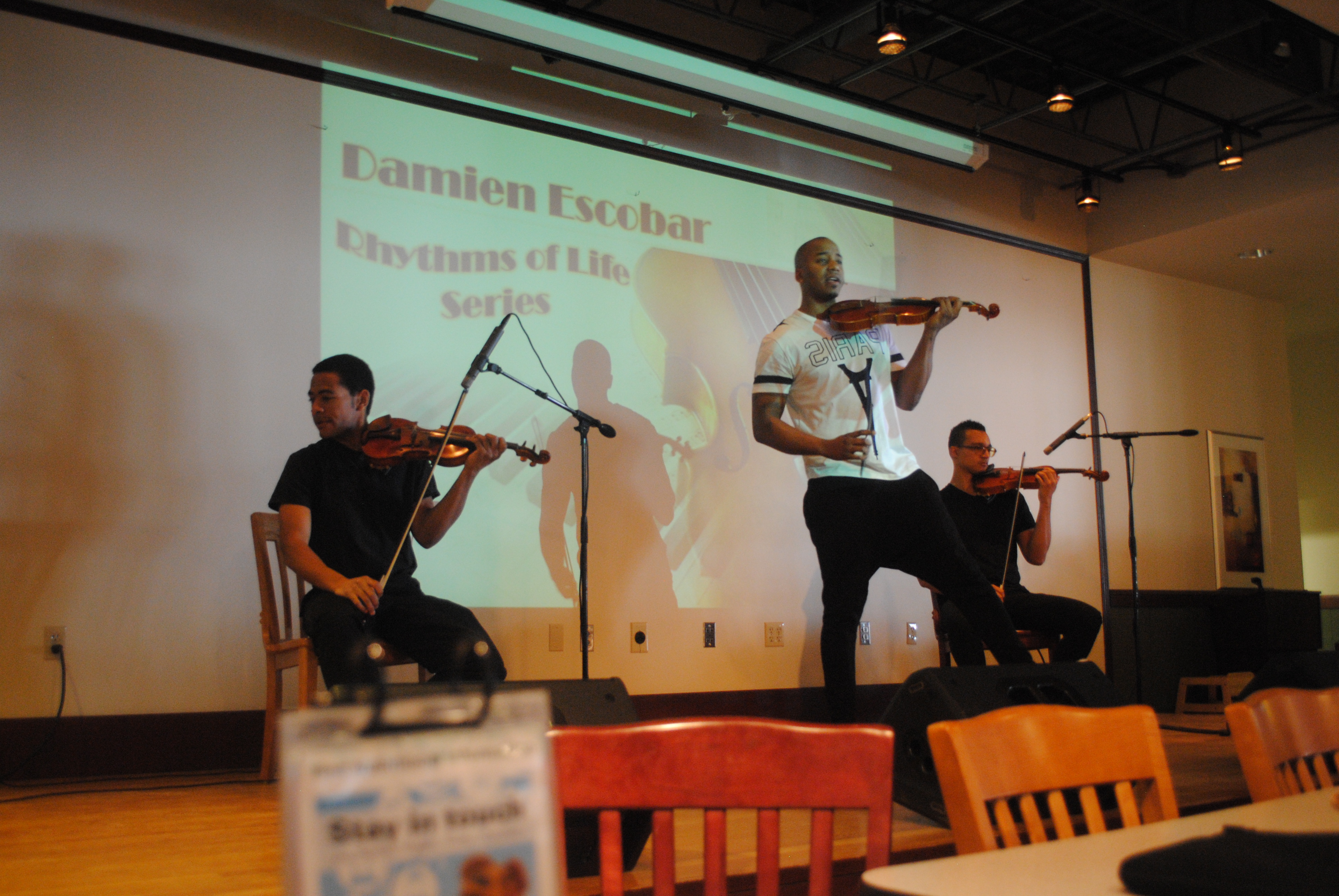
Escobar, who is appropriately known as the “hip-hop violinist,” put his talents on display Wednesday, February 19, as he played a lunchtime concert at Penn State Erie, The Behrend College, as part of the college’s Rhythms of Life series. The series, which began in September 2002 and is sponsored by the college’s Office of Educational Equity and Diversity Programs, promotes cultural awareness on campus.

“I have always felt that the series is very important for the college, not only in regard to promoting diversity, but it enhances the atmosphere and livens up things,” said Andy Herrera, director of the Office of Educational Equity and Diversity Programs.

Escobar certainly did his part to help liven up things Wednesday. Spectators quickly took notice of the austere sounds of a bow on strings combined with the booming volume of hip-hop beats.

One female student turned to her friend and said, “I really like this,” and they both then proceeded to take a seat at Bruno’s Café, where the concert was being held. Other students and staff members quickly followed suit.

DSC_1109

According to Escobar, this ability to draw listeners in is not by accident. Escobar, who was the youngest student at The Juilliard School in New York City when he was accepted at age 9, said he’s always been able to create great music.

Even as a young child, the Jamaica Queens, NY, native could seamlessly merge musical styles in a way that was enjoyable to the ears.

“This is just what would come out,” said Escobar. “I just have a deep understanding of how to put the two genres together in a way that makes sense.”

Escobar is not the only one in his family with musical talent. His brother, Tourie, also specializes in combining the sounds of the violin and hip-hop.

The two blended the styles together from 2004 to 2012 as the musical duo Nuttin’ But Strings. Since then, Escobar has decided to pursue a solo career. His first solo album, “I Am Me,” is scheduled to be released sometime in 2014.

Escobar promises to have an album ranked in the Top 40 within the next year. He said he knows his sound is unique compared to everything else that’s currently popular, but he believes that’s what makes it so strong.

His sound is different by design, and that’s also the advice that he gives to anyone else who might be interested in getting into the music industry.

“I can’t give people advice on how I did it, but I can say that they should identify what’s trending and do the exact opposite. It’s going to take a lot longer, but you’ll find your niche,” Escobar said.

He’s confident that he’s found his.

“There are a million rappers out there, but there’s only one Jay-Z,” Escobar said. “There are a million violinists out there, but there’s only one Damien Escobar.”

Behrend Reacts: What’s your idea of a perfect romance?

BehrendReactslogolarge

By Steve Orbanek
Marketing Communications Specialist, Penn State Behrend

It’s that time of year again. As the old saying goes, “Love is in the air.”

Valentine’s Day is this Friday, which means that plenty of flowers will be delivered, chocolates will be purchased, and five-star restaurants will be frequented. All of this is done for one thing: romance.

We asked Behrend students to explain their idea of a perfect romance. Here are the responses that we received:

Erica Nowak (2)

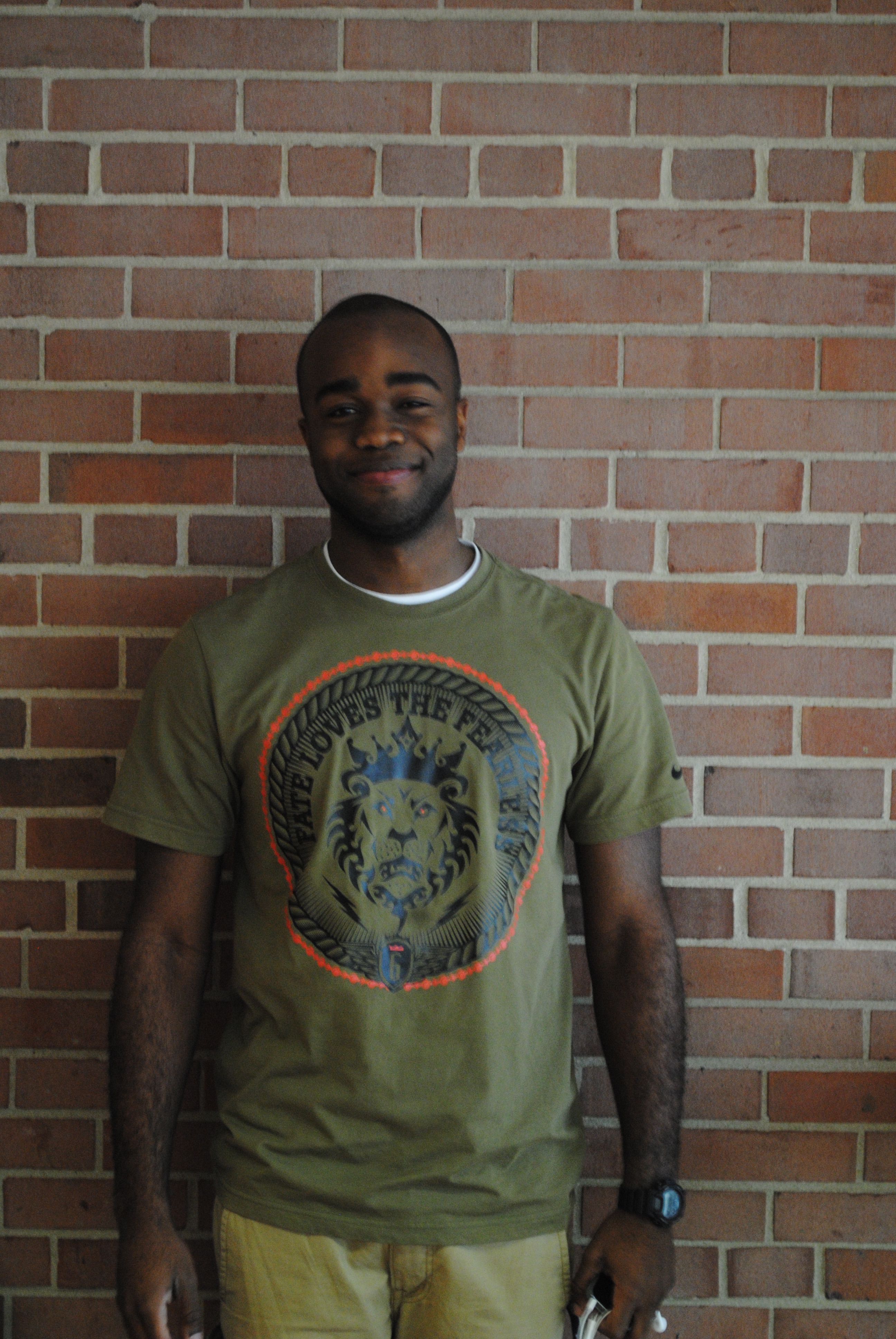
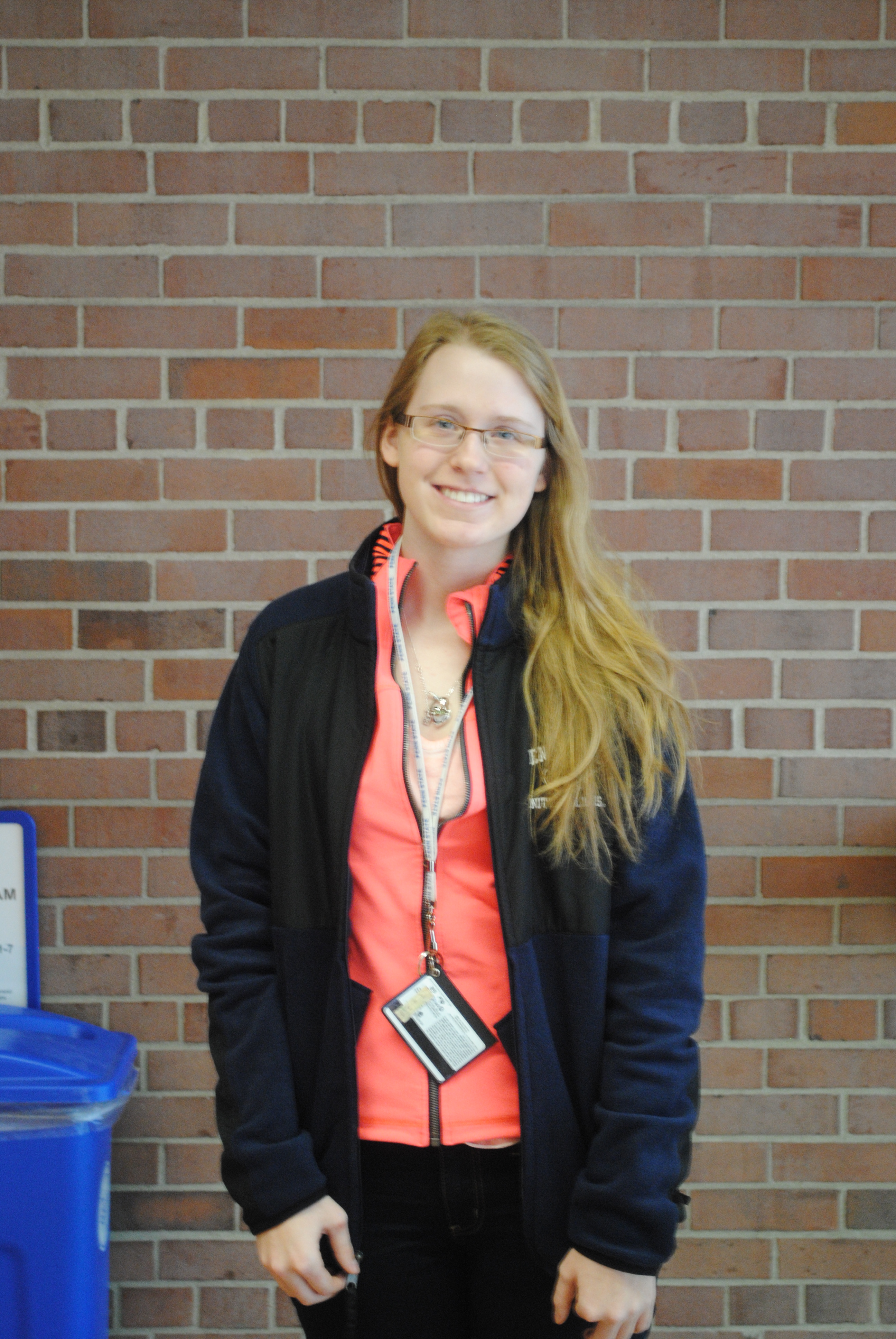
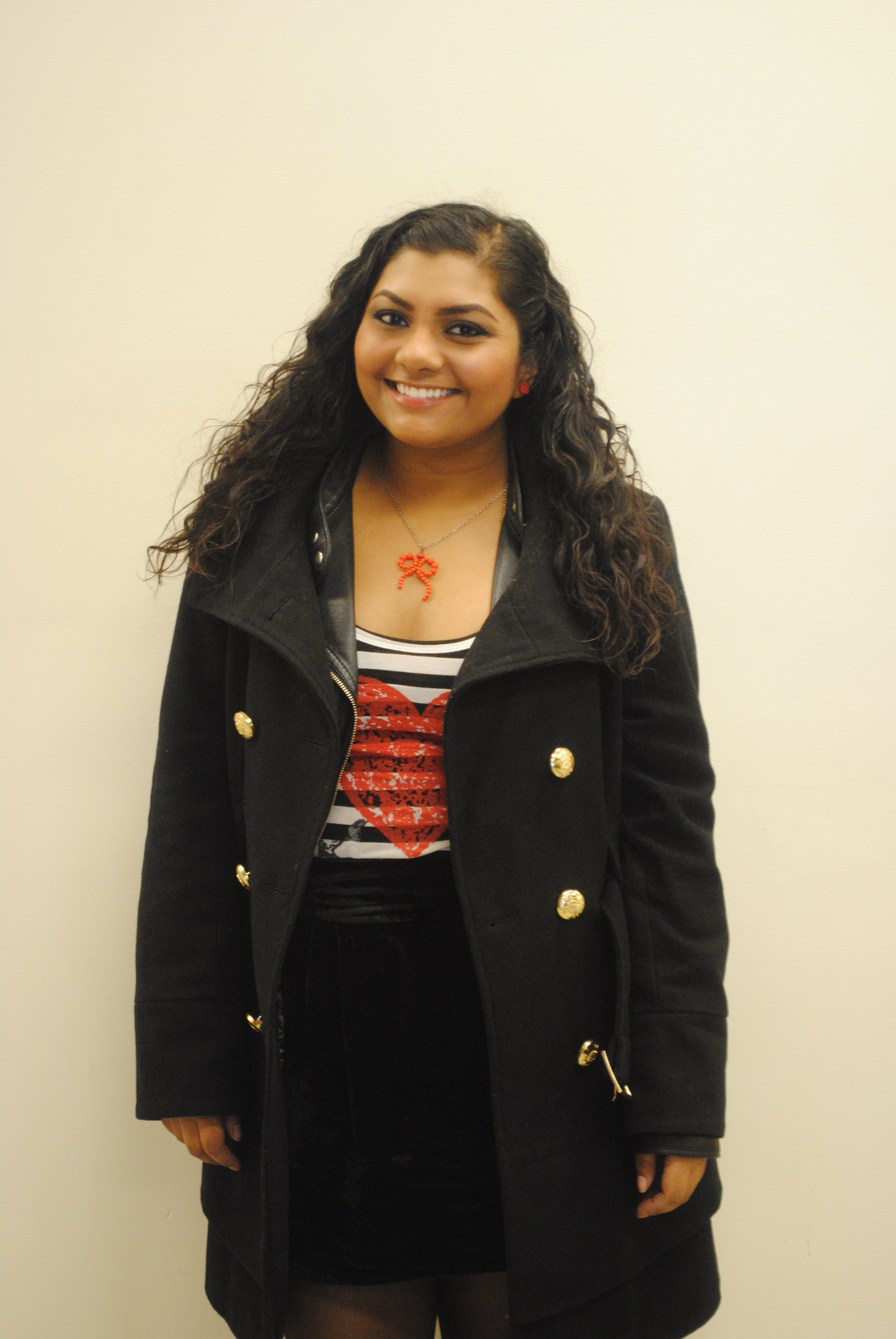
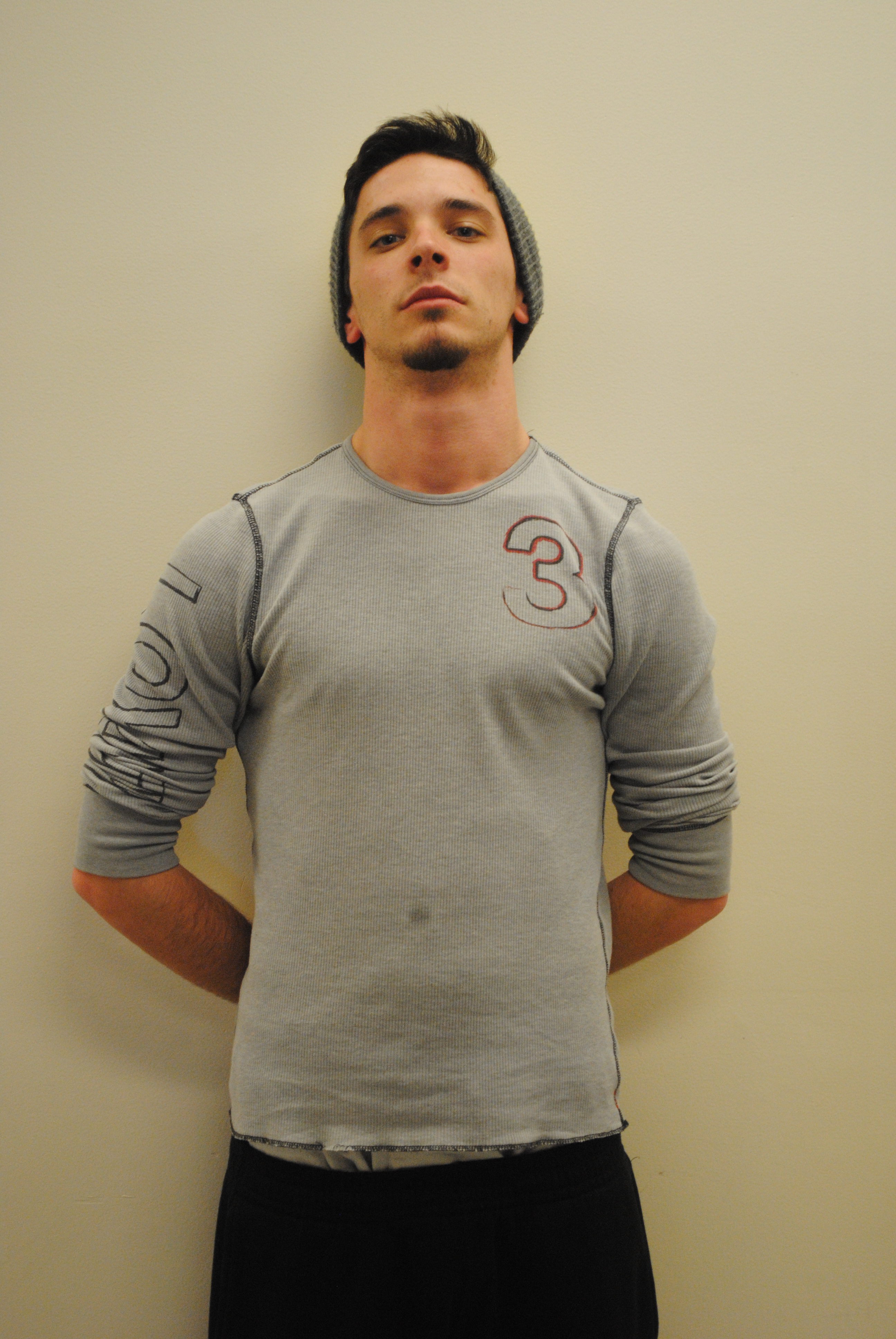
Erica Nowak, sophomore, Communications: “Just spending time with another person you love.”

Patrick Nowak

Patrick Nowak, senior, Accounting: “A nice dinner where you get to spend good, quality time together.”

Kalli Oberlander

Kalli Oberlander, junior, Creative Writing: “Finding a partner who complements you.”

Adam Correll

Adam Correll, sophomore, Electrical Engineering: “Spending an evening with a loved one at home. Just cuddling means the world to me.”

Ronald Cox

Ronald Cox, freshman, Physics: “A faith-based relationship with mutual respect.”

Nicole King

Nicole King, sophomore, Mechanical Engineering: “A perfect romance would be someone who is very kind and considerate of others, funny, athletic, easy on the eyes, and creative.”

Danielle Hardy

Danielle Hardy, freshman, Biology: “The person definitely has to be creative.”

Mike Rahe

Mike Rahe, freshman, Mechanical Engineering: “Getting together with someone you’ve been friends with for a long time.”

Summer Maas

Summer Maas, freshman, Science: “Somebody who can make you laugh.”

Behrend Reacts is a regular Thursday feature at the Behrend Blog that tries to get the campus pulse on a current topic, whether it’s serious or trivial. If you have a question to suggest for Behrend Reacts, please email Steve Orbanek at sco10@psu.edu.

Like Us: facebook.com/pennstatebehrend

Follow Us: Instagram.com/psbehrend

Tweet Us: twitter.com/psbehrend

Watch Us: youtube.com/pennstatebehrend1

Behrend students hone interview skills at Business Blitz event

004

By Steve Orbanek
Marketing Communications Specialist, Penn State Behrend

Jen Powell remembers the stress that goes hand-in-hand with the job interview process. The sweaty palms, the increased heart rate, the inability to concentrate—these symptoms are par for the course when preparing for a job interview.

“You never know what to expect in a job interview. Preparing for an interview can be very challenging,” said Powell, a 2008 Penn State Erie, The Behrend College graduate who now works as a financial analyst at FMC Technologies.

Powell hoped to help students better prepare for job interviews by volunteering her time Feb. 5 at Business Blitz, a speed networking event at Penn State Behrend.

The event, which was co-sponsored by Behrend’s Financial Management Association (FMA) and the Society of Undergraduate Economists (SUE), was held in McGarvey Commons and used a combination of Behrend students and alumni to simulate the job interview process. More than twenty alumni and sixty-five students registered for the event.

A Behrend alumnus sat at every table in the room, and students rotated from table to table every eight minutes. For the first ninety seconds of each session, the student would offer his or her elevator speech to the alumnus. The alumnus then offered feedback during the remaining time.

The event’s goal was to help students become more acclimated to the interview process and professional interaction.

“It’s important for students to know how to talk to professionals,” said FMA treasurer and junior finance major Brooke Landram. “Communication is so important.”

Artur Szastak has had difficulty in his job search, so he decided to participate in the Business Blitz to hone his interviewing skills.

“I feel you either make it or lose it in the first 60 seconds of talking to someone, and this can be good practice for that,” the senior finance major said. “When you come into an interview, it’s almost as if you’re being judged, and it takes you out of your comfort zone. That initial shock starts to wear away with the more experience you get.”

The trial interviews were just one part of the Business Blitz event.

Following the speed networking sessions, students stayed to network with the alumni in attendance. Alumni were also given a book that included the résumés of every student who participated in the event.

“You can make some great connections here in Erie,” said SUE president and senior business, economics, and marketing major Brittany Martinelli. “Hopefully this event continues for a long time.”

For more information on the Business Blitz event, please email Professor of Finance Dr. Greg Filbeck at mgf11@psu.edu.

Bill Nye the Science Guy draws large crowd at Penn State Behrend

1621677_10153787859690220_1918157378_n

By Steve Orbanek
Marketing Communications Specialist, Penn State Behrend

Vee Butler was in search of a draw. She needed to find a speaker capable of filling the house.

“I just saw (Bill Nye’s) name and I thought, ‘What do ’90s kids like more than bonding with other ’90s kids about ’90s things?’ It seemed perfect,” said Butler, a junior arts administration major and executive director of the Lion Entertainment Board at Penn State Erie, The Behrend College.

A jam-packed, standing-room only crowd of almost 2,000 squeezed into Junker Center at Penn State Behrend Wednesday evening to watch Nye as part of the college’s Speaker Series. Nye hoped to inspire students to change the world, but it’s clear he’s already done his fair share of inspiring.

It’s been 15 years since a new episode of the PBS television show “Bill Nye the Science Guy” has been produced, but the effects of the show are still evident today.

Sophomore chemistry major Joshua Wilkins said Nye’s show actually inspired him to pursue a science degree. He was more than a little excited when he heard that Nye would be visiting Behrend.

“Ever since I found out he was coming, it’s been in the back of my mind,” Wilkins said. “It’s been a highlight of my year.”

1535647_739006496109770_1947840122_n

Wilkins said “Bill Nye the Science Guy” is one of his most cherished memories from the sixth grade. He recalled struggling to get through science class, but things always became bearable once the teacher popped a “Bill Nye the Science Guy” tape in the VCR.

“He made science funny. We could all feel his enthusiasm, and he was always the guy we wanted to see because he took us away from the traditional classroom setting,” Wilkins said.

Junior project and supply chain management major Chad Muscarella agreed.

“From his television show to the experiments to the ride at Walt Disney World, I remember it all,” Muscarella said. “He was always making education fun.”

In its five-plus year run on PBS, “Bill Nye the Science Guy” won 18 Emmy Awards and continues to be used in classrooms for educational purposes. An attraction at Walt Disney World’s Future World at Epcot, Universe of Energy, is based on the program. Nye also has written five books under “The Science Guy” moniker.

Zany phrases, wacky experiments and quirky music were par for the course on “Bill Nye the Science Guy,” which is one reason Nye believes it continues to be successful.

“This is an extraordinary claim, and I do not have extraordinary proof of this, but there’s a lot of entertainment there,” Nye said. “The show was information-packed and fun to watch.”

However, even Nye is at a loss for words when he hears of how the show has inspired lives.

“I say all the time that I don’t think I get it,” Nye said. “People come to me and say, ‘You’re the reason I became an engineer. You’re the reason I’m a scientist,’ and I’m like, ‘What?’ It amazes me.”

Behrend alumnus’ company grows following Shark Tank appearance

cellhelmet%20team%20on%20ABCs%20Shark%20Tank

By Steve Orbanek
Marketing Communications Specialist, Penn State Behrend

Sometimes our biggest victories can come in defeat. Just ask David Artuso.

In March 2013, the 2011 Penn State Behrend alumnus attempted to impress investors, including Dallas Mavericks owner Mark Cuban, on ABC’s Shark Tank by pitching cellhelmet, a cell-phone case company he started in 2011 with two friends. The company was founded with the goal of offering cell-phone users a new, sleek case that comes with a guarantee: if the phone breaks in the case, the company will replace everything for $50.

Cuban and the other investors on Shark Tank decided against investing in cellhelmet as they felt competitors would be able to undercut the company’s pricing, but the entire experience can hardly be considered a loss for Artuso and his partners.

“It’s a really good leveraging point when you talk to people,” says Artuso, who is cellhelmet’s CMO, co-founder and master technician.  “You can have a sales guy call a person and ask, ‘Have you ever seen ABC’s Shark Tank?’ They’ll respond, ‘Yeah, I saw that,’ so it’s a nice entry point that helps us get in front of people. It established a lot of legitimacy that we didn’t have before.”

After the show was filmed, cellhelmet reached a deal with Eldridge Communications, a Pittsburgh-based Verizon Wireless retailer, to place cases in their stores. The agreement was a win-win for all parties, but it also had a significant impact on how cellhelmet would later reevaluate its business strategy.

Repairs have always been part of what cellhelmet does, but it had never been the focus. However, that changed thanks to the partnership with Eldridge Communications.

cellhelmet began to fix phones for Eldridge Communications, which would then sell them as refurbished phones. Since then, cellhelmet has focused its efforts on repairs, and the results have been very positive.

“It’s actually growing faster than the cases,” Artuso says. “We still sell a decent amount of them, but our main focus is repairs.”

cellhelmet repairs phones and tablets for a handful of companies and offers public repairs via mail order on its website. Customers can also visit the company’s headquarters in Wexford, Pa., for a walk-in discount.

“We use certified repair technicians, the highest-quality grade parts and offer a lifetime guarantee on our repairs,” Artuso says. “We basically built our entire business model on quality. We like you, but we don’t want to see you again because you probably don’t want to get your phone fixed again. When we’re done fixing a phone, you basically have a brand new device.”

cellhelmet has big plans for the future. Artuso says the company would like to open a few retail locations in the next year that will focus on repairs, and the ultimate goal is to franchise the business model.

“We have our hands in the right area now,” Artuso says. “It’s just a really good platform for us to grow.”

cellhelmet will continue to sell its small, compact cases for which the company is named, but the focus has definitely changed. Artuso says there are no plans to manufacture new cases in the near future because of the high costs involved.

The company recently doubled in size to eight employees in November, and there are plans to hire more as well.

No, Artuso may not have been a “winner” ten months ago when he appeared on Shark Tank, but it’s clear he’s winning now.

So, would he go back and do it all again?

“Oh, yeah. Drop of a hat,” Artuso says.

Link to the Shark Tank episode featuring Artuso

Paint the campus purple for #AJO

ajo

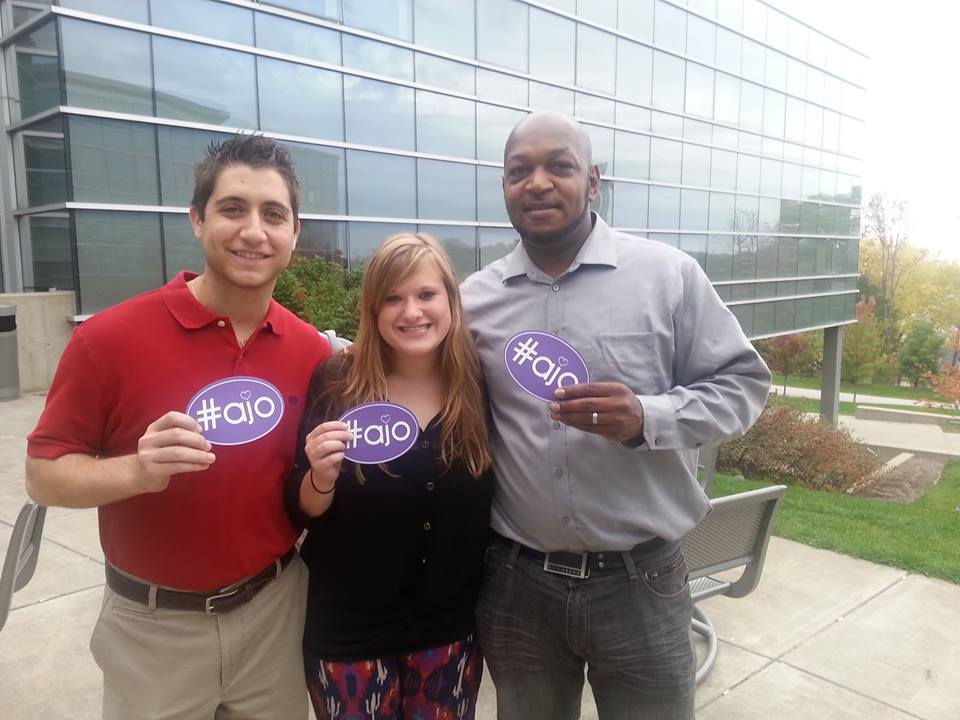
From left, Anthony Cremonese, Melissa Lichtinger, and Antoine Holman are part of the student team working on the #AJO Forever Foundation website.

By Heather Cass
Publications & Design Coordinator, Penn State Behrend

Melissa Lichtinger, a senior majoring in international business and marketing, was working at the Make a Wish booth at a women’s expo in Erie this October when she met Alyssa O’Neill’s father, Jason, and knew she wanted to do whatever she could to help with the #AJO campaign.

AJO stands for Alyssa J. O’Neill, 18, who was a first-year student at Penn State Behrend when she died after suffering a grand mal seizure at home. The day before her death, O’Neill had texted her mother, saying they should meet at Starbucks for a pumpkin spice latte. After her funeral, her parents, Jason and Sarah, bought ten of the drinks for strangers. The barista marked the cups—using purple, a color associated with epilepsy awareness—with #AJO.

That spurred a far broader pay-it-forward campaign. People paid for strangers’ meals, gas, groceries and layaway purchases. They sent #AJO photos from London, Iraq and the Canary Islands. It’s still going. The #AJO Forever in Our Hearts Facebook page has more than 41,000 “likes.”

“Jason said that he and his wife were overwhelmed just trying to keep up with the photos and correspondence pouring in through the AJO  Facebook page,” Lichtinger said. “I wondered how, with my background in marketing, I could help them.”

She asked Dr. Kathleen Noce, senior lecturer in management information systems, if Partnership Erie, a nonprofit outreach extension of the Sam and Irene Black School of Business, could develop a new eCommerce website and social media strategy for the AJO Forever foundation.

Noce agreed and Lichtinger recruited four more students—Anthony Cremonese, Antoine Holman, Kelsie Noce, and Michael Thompson—to work on the project with her.

The new site is expected to be completed by the end of the year.

But Lichtinger didn’t think that was enough. “I really wanted to do something to raise money for the foundation,” she said.

So she talked to Rhonda Reynolds, a Housing and Food Services employee who helped create a very successful employee service committee, and together they came up with the idea to “paint the campus purple” on Tuesday, Dec. 10.

Students, faculty, and staff are all invited to wear purple and take part in making the letters #AJO for a group photo on Dec. 10 at 4 p.m. in the Clark Café in the Jack Burke Research and Economic Development Center. Participants are asked to give at least $2 to the AJO Forever Fund to be a part of the photo.

Students will begin collecting donations at 3 p.m. The first 200 to donate will receive a free purple hat!

The event is sponsored by The Sam and Irene Black School of Business, Partnership Erie, Behrend Commission for Women, the School of Nursing, and Grimm’s Embroidery.

Hope to see you there!

Women in Engineering: Q & A with Alumna, Erie Traffic Engineer

By Heather Cass
Publications & Design Coordinator, Penn State Behrend

Tomorrow (Fri., Nov. 22) is Woman in Engineering (WIE) day at Penn State Behrend. This outreach program is designed to teach girls in 10th and 11th grade what an engineer does and what kinds of careers are available in the field.  This year, a record 167 girls from 17 schools will participate in hands-on and interactive activities/workshops, many of which are taught by practicing female engineers from the Erie area.

We caught up with one such woman, LeAnn Parmenter, 47, who attended Behrend from 1984 to 1986 before moving to University Park to complete her degree in Civil Engineering.   (By the way, it wasn’t all that easy to catch up with Parmenter. In her spare time she’s an avid triathlete and runner who just completed her first marathon and is currently training for her first Ironman next summer.)

Parmenter has been the City of Erie’s traffic engineer for the past seven years.

leann parmenter

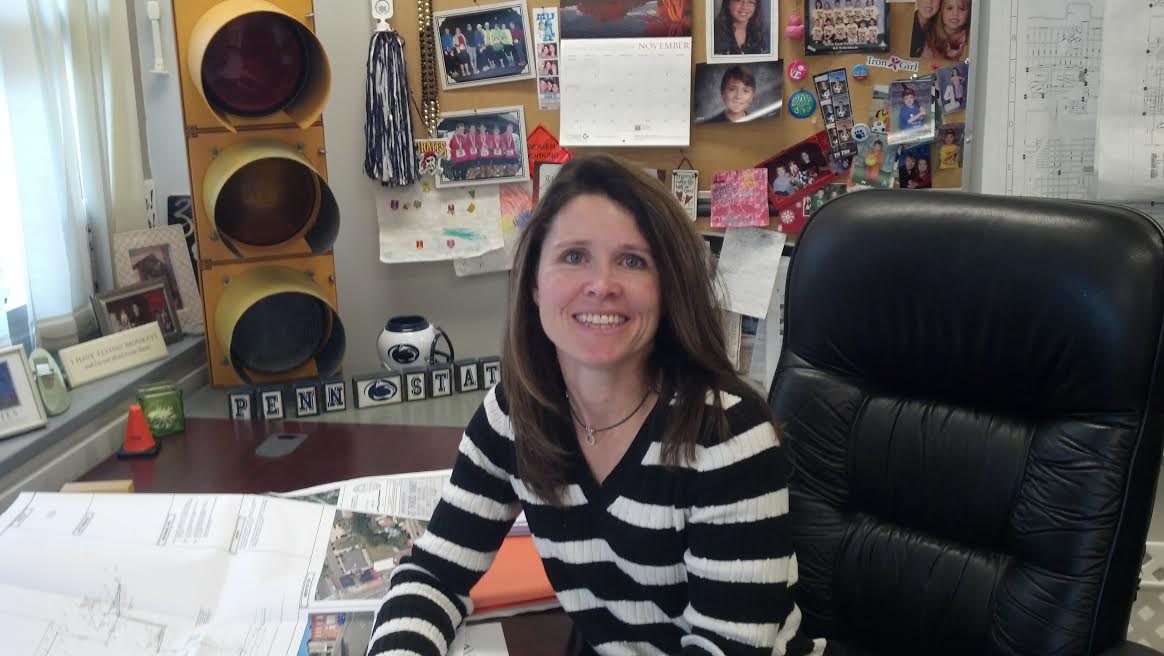
LeAnn Parmenter ’88, City of Erie Traffic Engineer

Q. What is civil engineering? What are your job duties?

Traffic/transportation is just one sub-discipline of civil engineering.  As the City’s traffic engineer, I am responsible for all operations relating to the traffic signals, lighting, signing, and marking.

Q. What did you do before you came to Erie?

I worked for the Maryland State Highway Administration and Howard County Public Works Department where I did intersection and interchange design and project management. After working in a larger city and coming back to Erie, I hoped I could make a difference and bring about some change that is needed. However, it all takes time and money. I’m confident we will get there…slowly but surely.

Q. What do you enjoy about civil engineering?

I enjoy the fact that you can design, advertise, and construct a project and feel a sense of accomplishment after your project is constructed.

Q. What do you not enjoy about your job?

Complaining. But when you work for a public agency, it comes with the territory.

Q. What is it like to be a woman (a minority) in the field of engineering?

As with many male dominated careers, you have to battle some bias from time to time. It’s better now than it used to be, but there are situations in which you have to be strong. You can’t be afraid to shake up a traditionally male mindset.  Women bring a different perspective to the table and it’s important that be represented because, well, we do make up half the population.

Q. When you were in engineering school, were you one of the only women in your major?

There were probably only 10 other women in Civil Engineering at Penn State and fewer in my Master’s Program at University of Maryland. I’m not sure the numbers have changed much. Civil engineering isn’t the most glamorous of the engineering fields. Most of my career has been spent working with men in construction, inspection, police force, streets department, and engineering services.

Q. As a girl, what appealed to you about engineering?

I always enjoyed math and I had some encouraging teachers along the way.

Q. Were you the kid taking apart toasters to see how they worked?

(laughs)  No, I didn’t take apart toasters, but my father worked in construction and I always enjoyed being part of a construction project.

Q. Are people ever surprised to find out you’re an engineer? If so, why?

I don’t fit the stereotype of an engineer, so they’re sometimes surprised. Though, once I tell them what I do, the complaints begin! (laughs)

Q. You’re a wife and mother (she and her husband, Jeff Seevers, have two children, Jenna, 10, and Jason, 11), has this been a career that worked for you as a mother?

I have been lucky to have worked for employers that are supportive of my family life. I worked in Baltimore for 14 years, then moved back to North East after my daughter was born. I worked two days a week, flying from Buffalo to Baltimore for two years. Then, I started working part time for the City of Erie. They’ve been great.  I will say that I gave up some earning potential in return for flexibility and more time with my children, but that’s something that many working mothers have to deal with, no matter what their career.

Q. What advice do you have for young women considering a career in civil engineering?

There are many facets of civil engineering (transportation, structural, geotechnical, environmental, and water resources). Try to expose yourself to all of those and get a broad knowledge base of each so that you can make an informed decision about what you would enjoy doing for the rest of your career. Engineering, in general, can be a very rewarding career path, but you should choose an area that really interests you.

Q. What do you remember about your time here at Behrend?

I loved my two years at Behrend. I had studied abroad in Japan during high school, so I wanted to stay close to home for college. Penn State Behrend gave me that opportunity. I live on campus for two years before I went to University Park. The friends I lived with in my freshman year at Behrend are still some of my closest friends today. And we are all very Penn State PROUD!

Q. Are there any professors or classes you remember here at Behrend that stood out as being particularly helpful?

I took most of my entry level engineering classes at Behrend with a smaller number of students than I would later see at University Park. It was nice to take these core classes in a smaller environment with professors that were accessible and helpful. I remember Dr. Lasher pretty well.

Q. How can we get more girls interested in engineering?

I think we need to encourage them to think big and let them know they can be anything they want to. I always hear, “engineering is difficult” or “math is hard” – well, yeah, it is, but instead of letting our girls off the hook, we should be challenging them.  They can do it. Also, we need to expose them to the wonders of engineering and show them that it can be a really fun and exciting career path.

That’s exactly what the Penn State Behrend’s School of Engineering plans to do on Friday.

Behrend students humbled by poverty simulation

image

By Steve Orbanek
Marketing and Communications Specialist, Penn State Behrend

According to the United States Census, 15 percent of Americans, roughly 46.5 million people, live at or below the government-defined poverty line.

For an hour this fall, Khardiata Mbengue and Teireik Williams could be counted among that group.

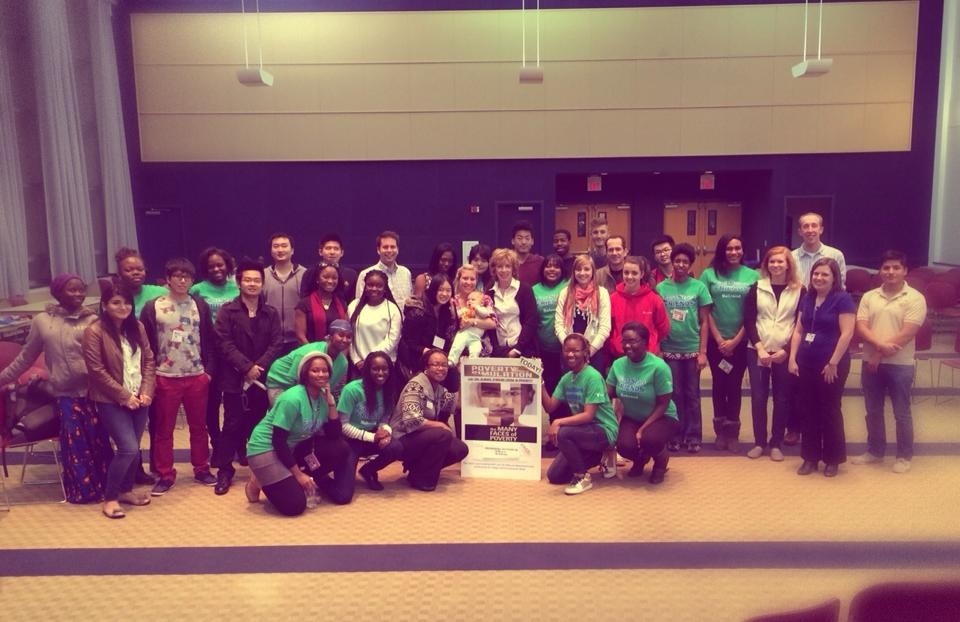
Mbengue and Williams were participants in a poverty simulation sponsored by the Office of Educational Equity & Diversity Programs and the Human Relations Programming Council.

The simulation is designed to help participants understand what it’s like to live in a low-income family, surviving from month to month. Individuals are grouped together as families and are tasked with providing for basic necessities and shelter during the course of four 15-minute “weeks.”

For Mbengue, a junior biology major, and Williams, a sophomore communication and creative writing double major, the simulation was a humbling experience.

The two were paired up as husband and wife as part of the simulation.

I caught up with them to get their thoughts on the program…

Steve: Hi Khardita and Teireik. Thanks for taking the time to join me today. So, to start, why don’t you provide me with a general overview on the poverty simulation?

Khardiata: The poverty simulation is basically designed to help you get insight on how you would live if you were less fortunate or part of a low-income family. Going through the poverty simulation makes you realize how people often live in impoverished conditions even when it’s not their own fault. The system is against them, so they can never work their way up. You also realize that you’re never too far away from the life that they live. After college, we might be doing the same thing that we were doing in the poverty simulation.

Teireik: The poverty simulation provided us with an opportunity to have the same responsibilities of a person who is poverty stricken. It was really designed for you to live a day in the life of the less fortunate.

Steve: How exactly was the simulation set up?

Teireik: The room is divided into different circles, and each circle had chairs that represented a family. Surrounding the housesholds were all of the different businesses and organizations that you had to visit. You also had to purchase a transportation pass for anywhere that you would go. Before the simulation, they gave you a portfolio that had every aspect of your life: how old you were, your family’s history, your savings and your belongings. Everybody’s budget was different. We had savings, and everybody had possessions and things that could be sold for extra money.

Khardiata: And there was a cop, so you could go to jail if you did something wrong.

DSC00083

Steve: Wow, so you could break the law during the simulation?

Khardiata: Someone actually did that, and that person was the only one in the entire simulation who was able to pay their own bills. It just goes to show that it can be difficult to survive, even if you live an honest life. It puts you in a situation where you do what you have to do.

Steve: So, can you give me an idea of what a typical day was like for the both of you?

Teireik: She had to go to work, we had to take the kids to school, we had to pay bills, we had to sign up for benefits like food stamps, and we had to sell our belongings if we ran out of money.

Khardiata: I literally had to run to work, so I would be there on time to receive the full benefits of my work. Even if your child did something wrong at school, it would affect your whole life.

Steve: What do you mean?

Teireik: Our daughter got suspended at school, so one of us had to be at home to take care of her. Khardiata had to go to work, so I was unable go out and pay our bills, search for a job or apply for benefits.

DSC00086

Steve: It seems like the simulation required you to balance a lot of different responsibilities. How humbling was this experience for you?

Khardiata: It was incredibly humbling. It showed me that you should be grateful for everything you have because not everyone is as fortunate. We did this for an hour, but the fact is that many people actually live this life. That was eye-opening for me.

Steve: People living in poverty sometimes get a bit of a bad reputation. Did this change your perspective on them at all?

Khardiata: When I went into the Poverty Simulation, I had that same idea. I thought that if people are in poverty, they could work themselves out. But my opinion changed after living through it. We were doing all we could just to pay our bills and raise the kids, but it still was not enough. Expenses pile up on top of each other. As soon as you thought you had something handled, something else would pop up. That was a major thing that I learned.

Teireik: This simulation shows that not everyone is afforded the same opportunities, and sometimes bad things happen to good people. It’s just out of their control. It’s not necessarily their fault, but they get a bad reputation for it.

Steve: This was the second year for the Poverty Simulation at Behrend. Is this something that you would recommend to others?

Khardiata: Yes, definitely I would. It makes you think, what if this does happen to me? It’s not farfetched to think that it could happen to you. It’s a very realistic thing, and it humbles you a bit. As college students, we seem to think that we’re all struggling, but it’s not as bad as it seems.

Teireik: People should definitely experience it. If you get an opportunity to do something like this, why not? It’s much better to experience poverty through a simulation rather than for real.

Students: Join us on Monday for unveiling of PSLH

branding

Penn Staters make an impact everywhere. Now, there’s a brand initiative that puts it right out there.

The University will introduce the initiative on Saturday, October 12 during halftime of the Michigan game in Beaver Stadium. Penn State Behrend will be unveiling the brand message on Monday (October 14), and students are invited to be part of the announcement.

At 11 a.m., Lilley Library Lawn:
Come watch as your fellow students unfurl a big banner with the theme of PSLH (that’s your only hint!) from the balcony of Lilley Library facing the Bayfront Highway. If you can attend, you’ll see the action from the lawn just below.

At 12:15 p.m, Bruno’s Cafe:
See a short yet dynamic video, grab a cookie, and get your free theme button and vinyl window cling–while supplies last!

Join us Monday to see and hear just how PSLH.