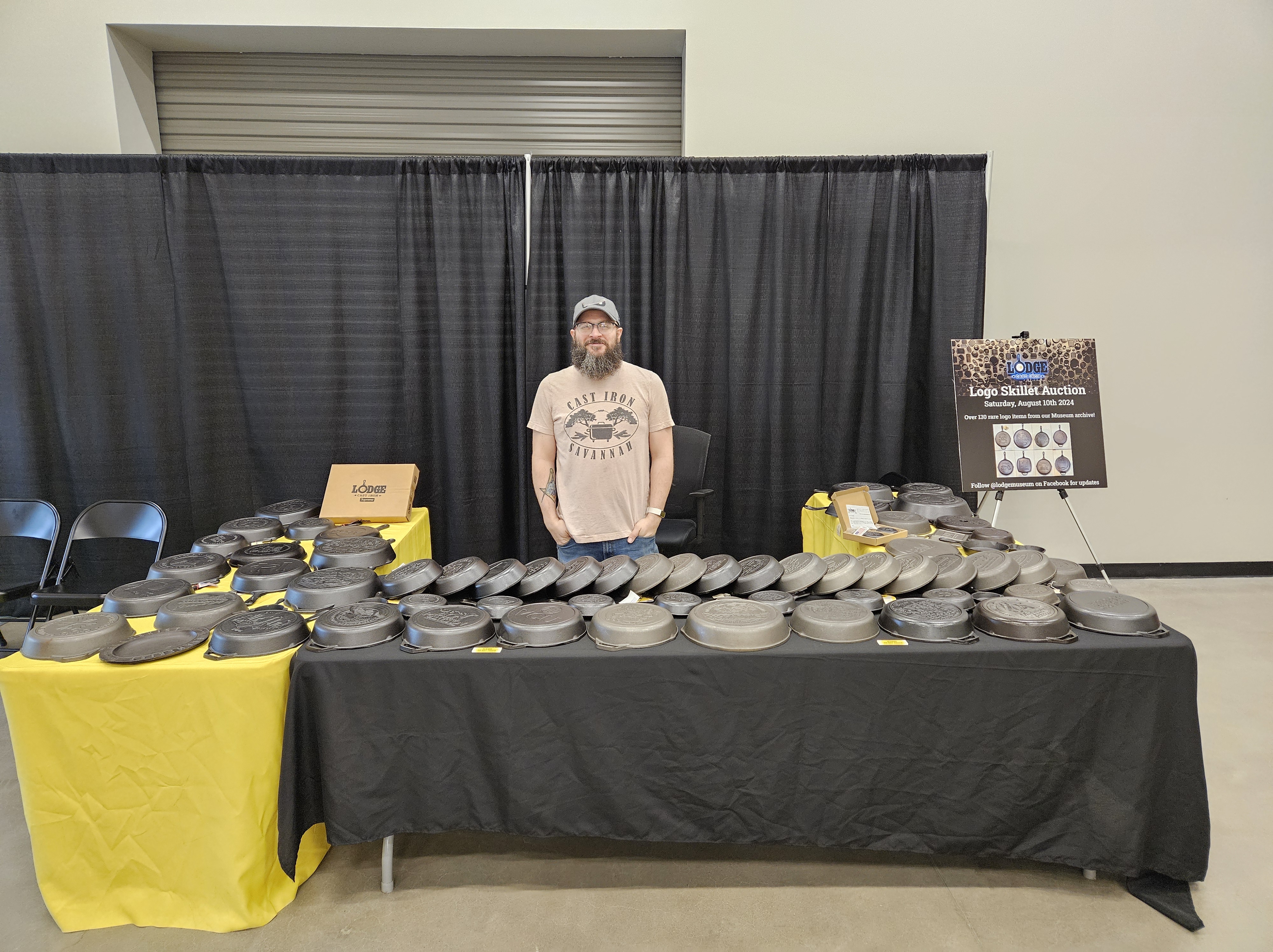
How a Christmas gift turned a Behrend business grad into one of the nation’s go‑to cast‑iron experts
By Heather Cass, Publications Manager, Penn State Behrend

If you own a cast iron pan, you’ve heard the rule—Never wash it with soap. It’s the kind of wisdom people pass down with authority and follow religiously.
Ken Margraff, a 2006 general business graduate and cast-iron consultant, begs to differ.
“If you learn nothing else from me, learn this: Soap is safe,” he said. “Wash your cast iron cookware.”
Turns out, like a lot of things passed down without question, the no-soap rule is only half true. Old-fashioned soap was made with lye, which will strip the seasoning right off your pan. But that was long ago.
“Modern dish soap isn’t even soap,” Margraff said. “It’s technically a detergent. It’s gentle enough to clean baby ducks after an oil spill. Your skillet is going to be just fine. Wash it and dry it well. If it looks too dry, apply a dime-sized bit of oil.”
Margraff knows what he is talking about. It’s his job. Well, one of his jobs.
By day, Margraff is a vice president and branch manager at Synovus Bank in Savannah, Georgia. By night—and weekends, and vacations, and every garage sale in between—he is a cast iron consultant, which is exactly as niche as it sounds.
Skillet Ignites Passion
Margraff grew up in the Philadelphia area in an Italian family where cooking is a form of love. For Christmas one year, his wife Jes Brown, whom he met—and later married—at Penn State Behrend, gifted him a new knife set and a Lodge cast iron skillet.
“Everything all of a sudden became a cast iron meal,” he said. “Steaks, chicken, potatoes — everything just came out better.”
Around the same time, with Jes dealing with some health issues, Margraff started reading about the chemicals in popular non-stick cookware. He didn’t like what he found. He stopped using anything that wasn’t cast iron or carbon steel.
That might have been the end of it, except that Margraff was already obsessed with garage sales and thrift stores. One day he found a rusty cast-iron cornbread pan shaped like cactuses.
“I figured I understood metal pretty well,” he said. “I thought, I bet I can restore this.”
He got on the internet. He joined some Facebook groups.
“Then down the rabbit hole, I went,” he said.
Soon he was picking up cast iron everywhere. He suggested to Jes that maybe they should sell some of the restored pieces. She was skeptical.
He sold every piece.
“She looked at me and said, ‘Okay, go ahead,’ he said. “She knew it was going to be a thing.”
Cast Iron Savannah to Lodge
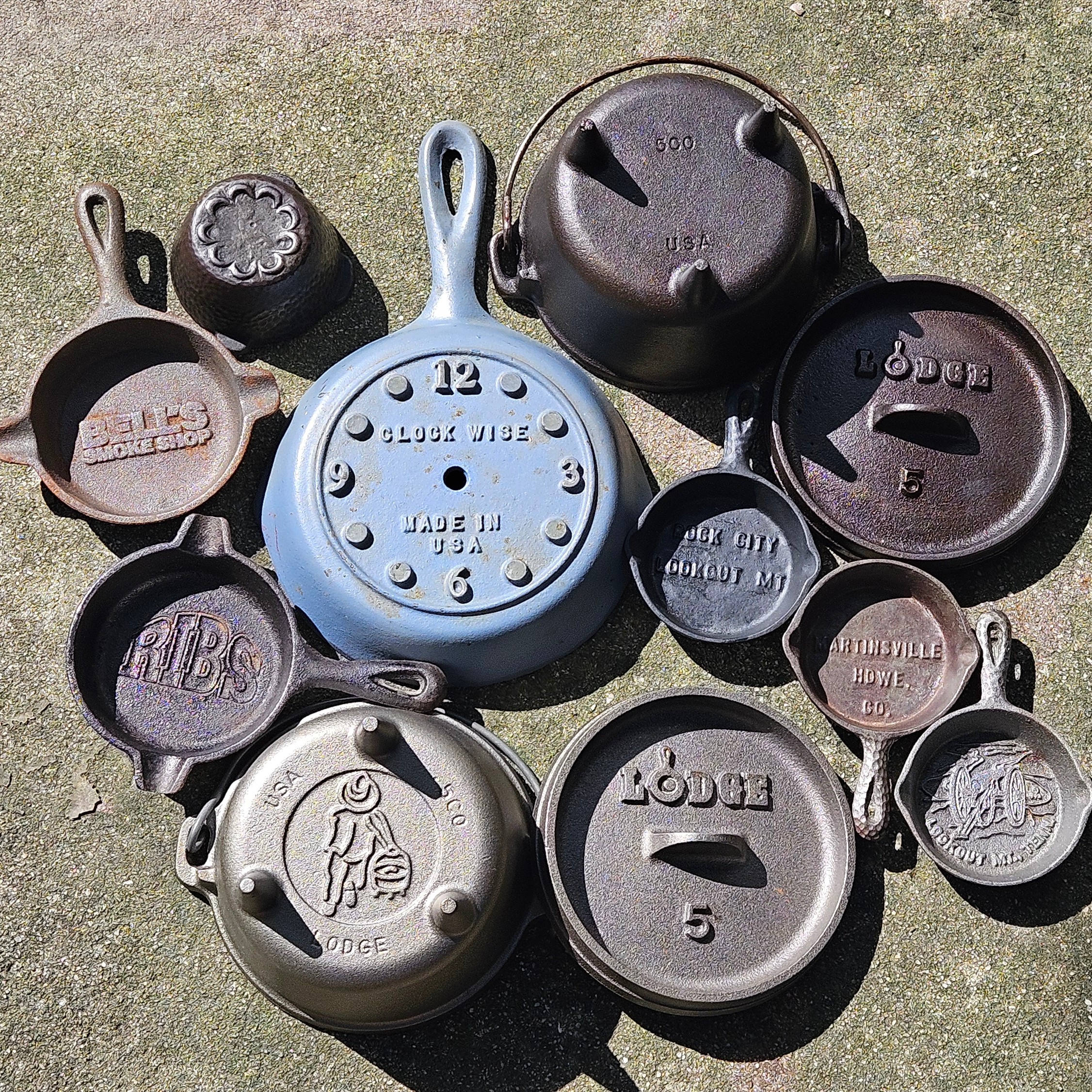
Margraff started Cast Iron Savannah and began aggressively hunting pieces, researching, and building connections in the collector community. At his peak, he had close to 3,000 pieces of cast iron, including his personal collection. His business logic was simple: Sell pieces he found to fund buying the pieces he wanted—Lodge minis, which are small, single-serving cookware pieces.
“That way she couldn’t get mad at me,” he said. “It wasn’t household money.”
Cast Iron Savannah started as a buy, sell, and restore operation, with education woven in along the way. The trajectory changed when Margraff started making friends with people at Lodge Manufacturing, the legendary foundry based in South Pittsburg, Tennessee.
Lodge is the biggest cast iron cookware manufacturer in the country by a significant margin. Founded in 1896, Lodge is the longest continuously operating American foundry, producing more cast iron cookware than all its U.S. competitors combined.
Lodge learned about Margraff’s collection and invited him to display pieces at some of their events, including the National Cornbread Festival at Lodge’s main Tennessee location—an event so large, he said, that the entire town shuts down and cell service collapses under the weight of the crowd. That weekend he met the head of the Lodge museum and connected with much of the company’s leadership.
When Lodge started looking for someone to bridge the gap between the foundry and the collector community, the people obsessed with pieces stretching back into the late 1800s—they thought of Margraff.
“The foundry makes cast iron every day,” he said. “To them, it’s a product they manufacture. The collector community is obsessed with the history. They brought me in to speak both languages.”
Margraff goes through old archives and records, gets rare pieces back into collectors’ hands, consults on projects, and serves as a moderator for Lodge’s official Facebook collectors’ group. He is, as far as he knows, one of the only people in the country who does what he does.
A Mini Obsession
If you want to understand what drives Margraff, look at the miniature skillets.
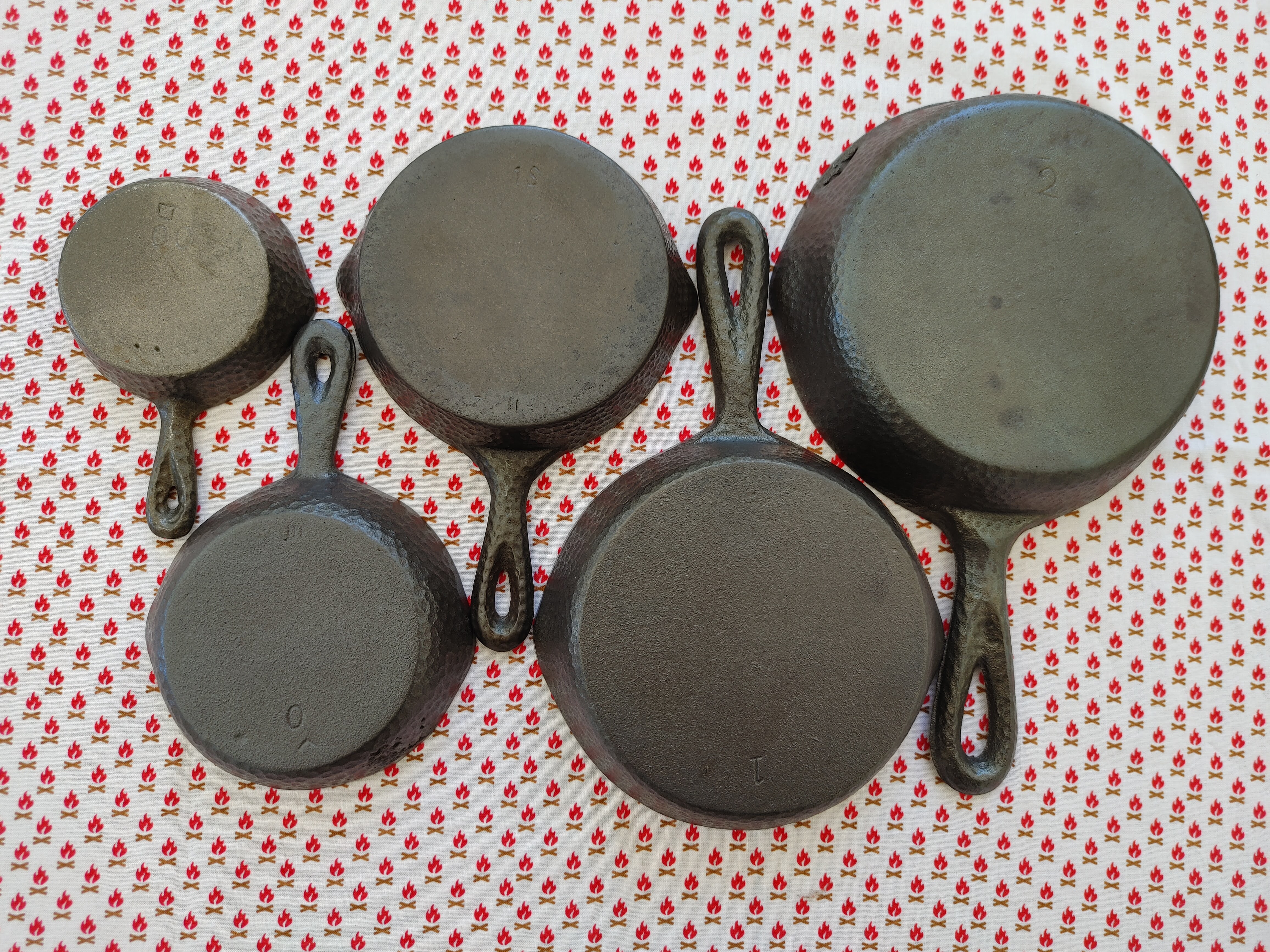
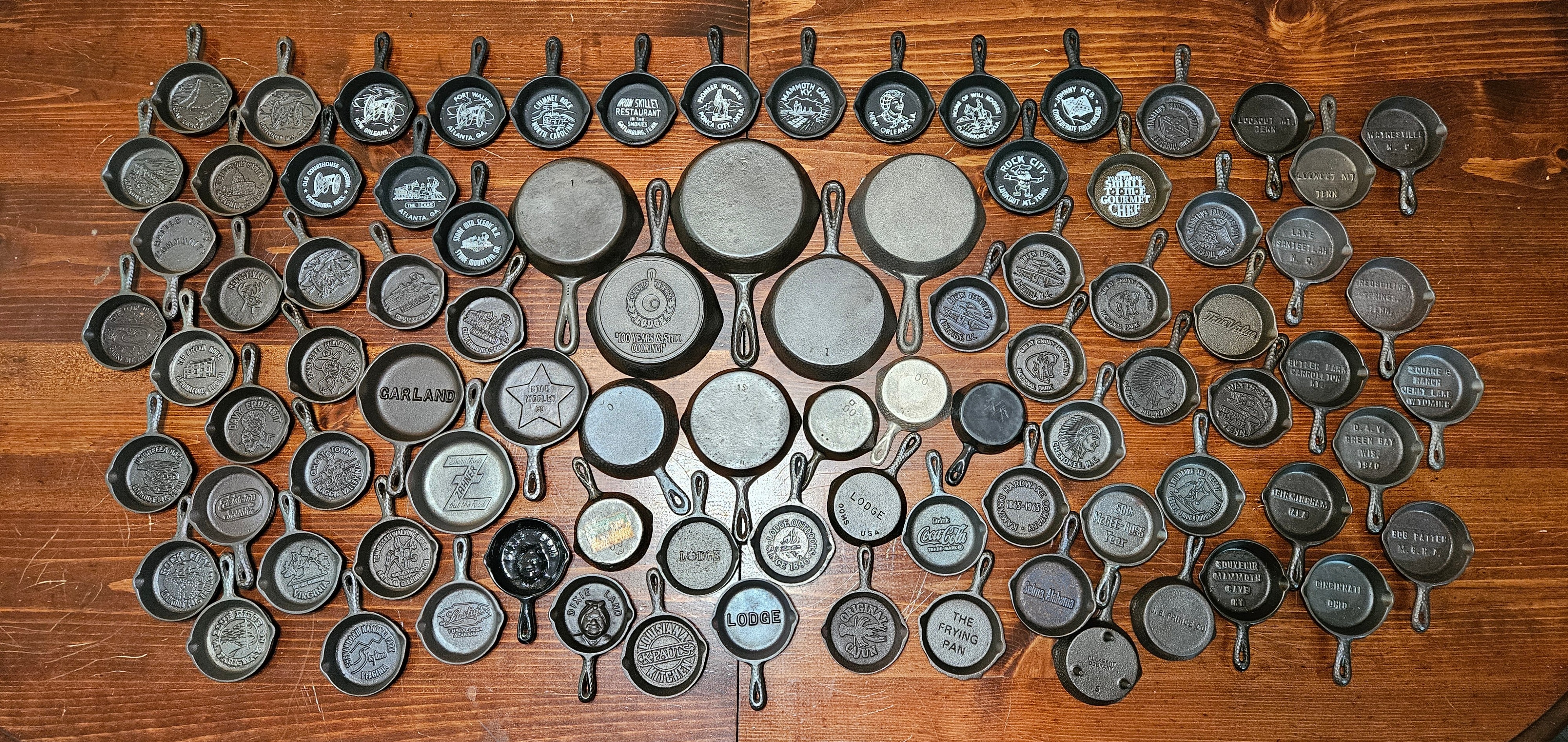
Lodge makes miniature cast-iron skillets in five sizes, ranging from about two to six inches across. Most people think they’re novelties. Margraff fell in love with the little pans, and he has built what he calls the “unofficially official” world’s largest collection of them. He has his eye on a Guinness World Record one day.
“It’s an obsession,” he said.
He maintains a spreadsheet tracking every known Lodge number 2 miniature skillet, which is the rarest one. There are currently twenty of them in the entire collector community. He knows who has them, where they are, and how they were found. When one changes hands, people notify him so the count stays accurate.
He has also designed four miniature skillets himself—a set of three for his Masonic Lodge as a fundraiser, and one for Lodge Manufacturing after they asked him to submit design concepts. Of the ideas he sent, they produced one.
“I told them my fee was one of the production plates,” he said. “They laughed and sent me one.”
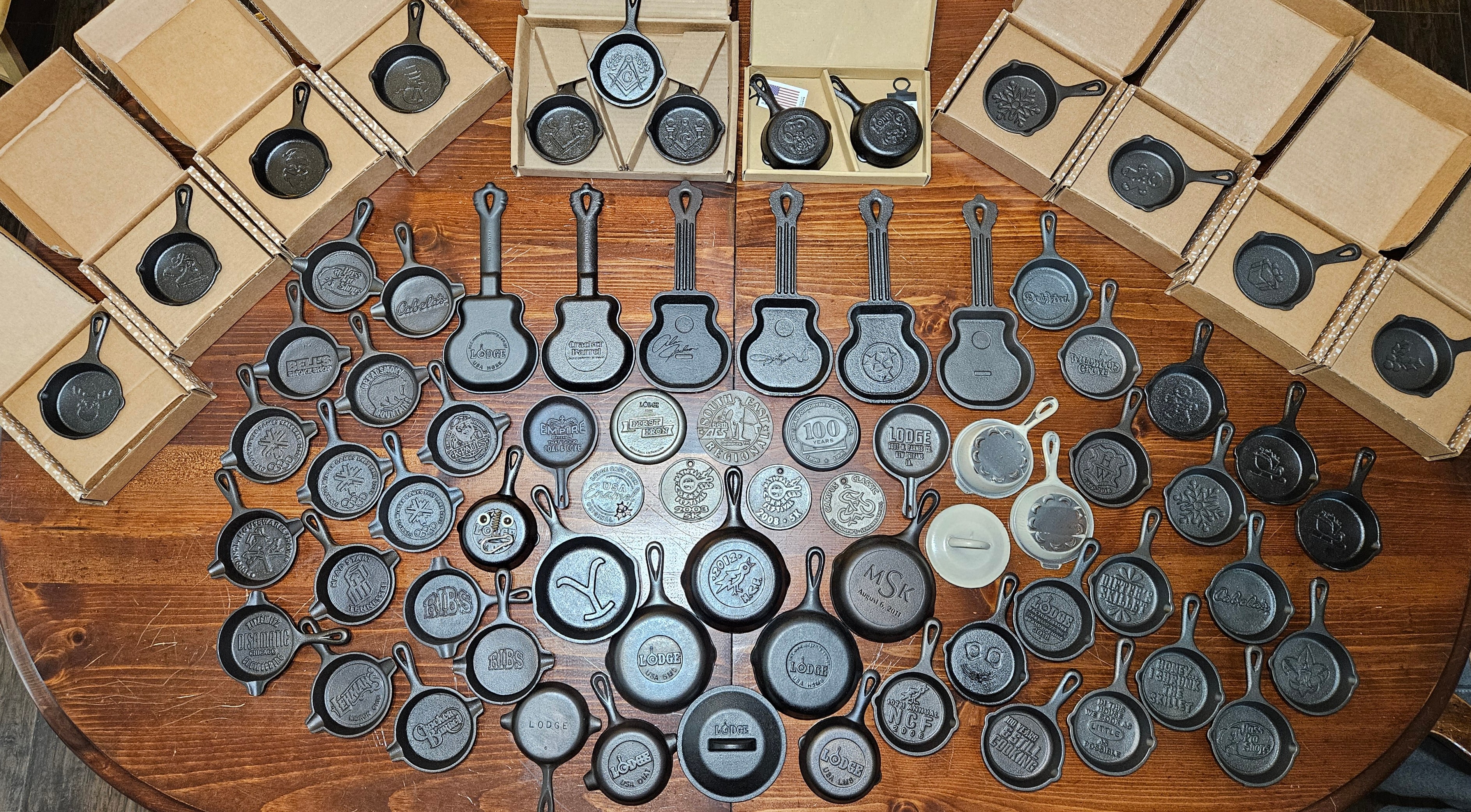
The Iron Family
What Margraff didn’t expect, when he fell down that cast iron internet rabbit hole, was the community he would find there.
When he began collecting miniature skillets, people across the country started hunting on his behalf, passing along tips, flagging pieces they found. When his relationship with Lodge developed, instead of jealousy, he got cheers.
“I’ve never seen a community quite like it,” he said.
He has a best friend he met through cast iron—a guy known on TikTok as Orphaned Iron, with hundreds of thousands of followers—whom he talks with every single day. He has a friend in Italy that he ships iron to, tariffs and all. He has a contact in Japan, where they are wild for cast-iron.
“I have friends all over the country and all over the world,” he said, “all because of some pieces of metal.”
The depth of that community became apparent when Jes was diagnosed with cancer. She put together an Amazon wishlist of chemo comfort items, an idea she’d seen on TikTok, for people who wanted to help but didn’t know how.
Within twenty-four hours, her list was empty, purchased by cast iron people from across the country. Some were close friends. Some were people Margraff barely knew. Jes received notes and care packages from people she and Margraff had never even met in person.
“I just never could have imagined it,” he said.
Margraff said his wife, who is in remission, has always been supportive of his cast iron passion
“She is my biggest cheerleader,” he said. “I couldn’t do it without her.”
Tips for Newbies
For anyone just getting started with cooking in cast iron, Margraff’s advice is straightforward: Wash the pan, lower the heat, and be patient. For new collectors, he has one more thing to add.
“Run your own race,” he said. “Your collection is perfect for you. You’ll grow with it and it’ll grow with you.”