Student finds niche playing Smith Carillon

james-lisi-7
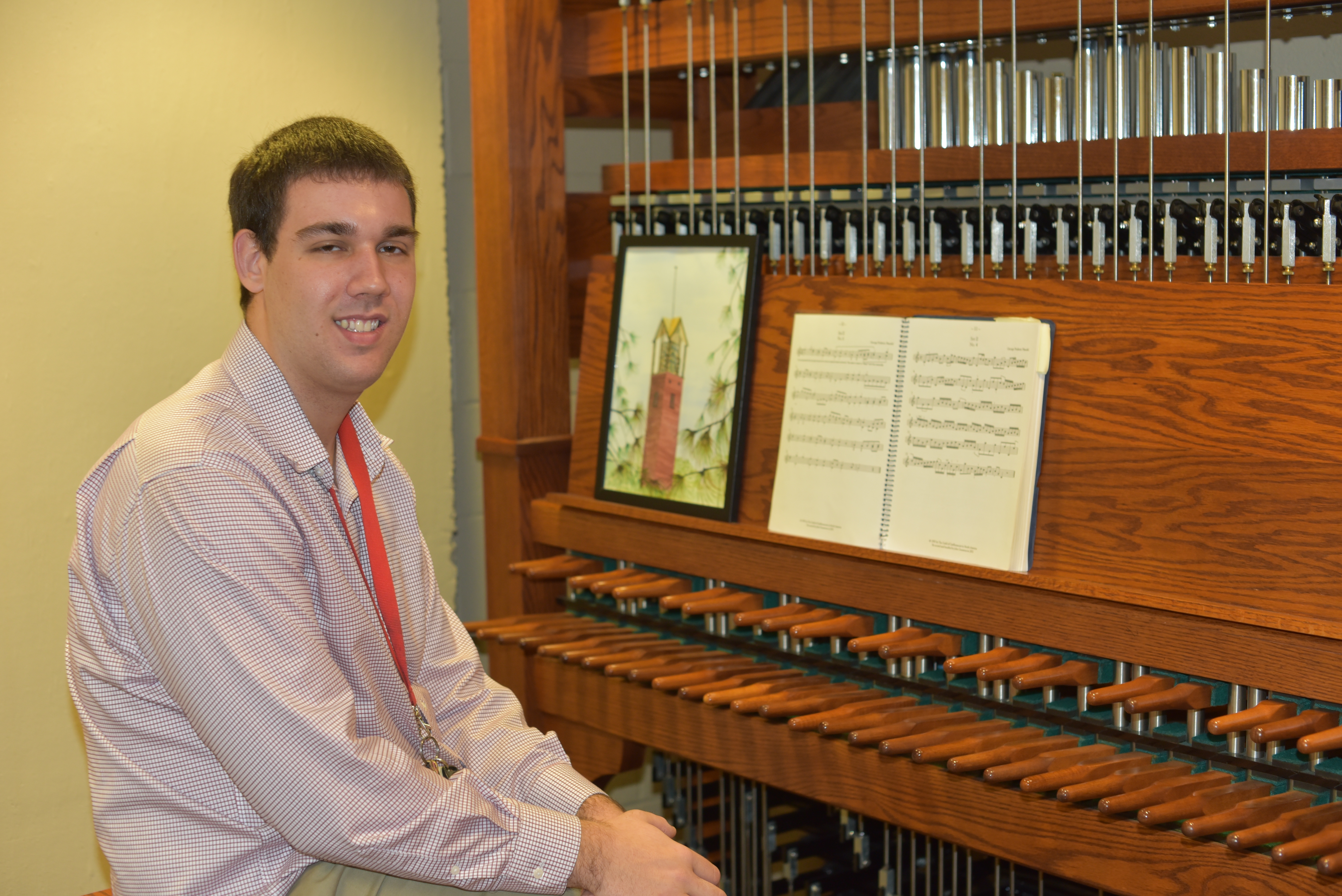
Penn State Behrend sophomore James Lisi began playing the campus’ Smith Carillon this fall. He plays regularly throughout the week on the campus’ practice carillon (pictured) and played a concert during finals week for the campus community. While he’s been a musician since he was a child, mastering the carillon has been a new kind of challenge. “Instead of having the keys right next to you, you have to branch out,” Lisi said. “This wears your hands out a lot faster because you have to move them all over, but there are pedals too, so some of the notes you can play with your feet, which makes it easier.”

By Steve Orbanek
Marketing Communications Specialist, Penn State Behrend

Walk into Penn State Behrend’s Larry and Kathryn Smith Chapel on a weekday morning and chances are you’ll hear James Lisi before you see him.

He’ll be playing one of the building’s many pianos. Or pedaling away on the practice carillon.

“I start every day by playing music here,” said Lisi, a sophomore psychology major. “When I play the piano or the carillon, it gets me going and sets the tone for the day.”

Lisi, a Cleveland native, has always appreciated music. He started singing in third grade and began playing the piano two years later. He is also a member of the Choirs of Penn State Behrend.

While he has experience playing several other instruments, Lisi said he was taken aback to learn about the college’s carillon.

“I had never heard of one before. There are only 200 or so in the country,” he said. “It’s just a really, really rare instrument.”

The 48-bell carillon, along with the chapel’s bell tower, was installed at Penn State Behrend in 2002 as a gift of the late Floyd and Juanita Smith, parents of Larry Smith, president and owner of Automation Devices in Fairview, Pa., and a longtime supporter of the college.

The carillon is an unconventional instrument, to say the least, according to Lisi.

“Instead of having the keys right next to you, you have to branch out,” he said. “This wears your hands out a lot faster because you have to move them all over, but there are pedals too, so some of the notes you can play with your feet, which makes it easier.”

Lisi’s past musical experience is serving him well, as is regular practice and lessons with Daniel Frankforter, professor emeritus of history and the college’s carillonneur.

Lisi is now playing the carillon on a weekly, sometimes daily, basis. He spends hours in Smith Chapel, both studying and playing the pianos and carillon.

“I just love this whole building,” Lisi said. “I get to come here and play three different instruments. It’s a nice way for me to relieve stress. It’s definitely my favorite thing about Behrend.”

During finals week, Lisi played several holiday songs as part of a half-hour carillon concert for the campus community. Students, faculty and staff members were encouraged to gather at Ben Lane Plaza to enjoy hot chocolate as they listened to the bells chime from atop the carillon tower.

“I made some mistakes,” Lisi said with a smile, “but I knew I was not going to be perfect the first time I played publicly. Thankfully, I don’t think anyone noticed.”

He will get another chance to impress this spring at a second carillon concert to be held during finals week.

And if things go his way, Lisi will not be the only one performing. He is currently introducing the carillon to several of his friends.

“I’m really working to persuade some of my friends to play it as well,” he said. “It’s just a totally different kind of instrument. I love the high notes on it, and it’s great that we have one of these right here at Behrend.”

‘I feel so much more comfortable now.’ — Summer Bridge program prepares incoming students

Summer Bridge (Brent Sutula, Sujata Chhetri, Joseph Lombardi, Sydnie Moore) cropped
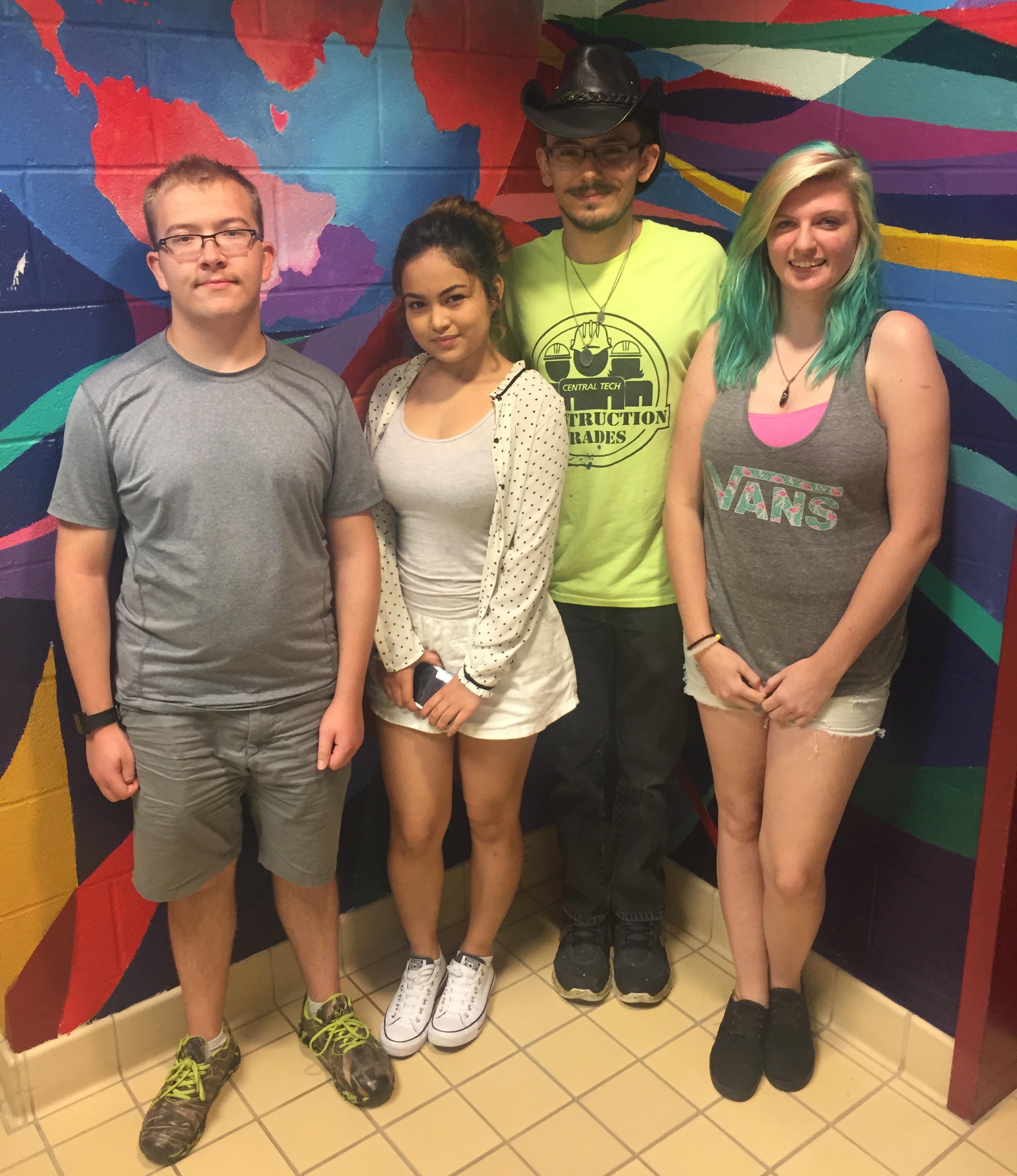
Brent Sutula, Sujata Chhetri, Joseph Lombardi, and Sydnie Moore, pictured left to right, were four of the participants in the Summer Bridge Program at Penn State Behrend. The six-week program is designed for students who want to sharpen their study, note taking, critical reading and time management skills, among others.

By Steve Orbanek
Marketing Communications Specialist, Penn State Behrend

Penn State Behrend welcomed 1,280 new first-year students to campus last week.

For 28 of them, the setting felt more than a little familiar, since they had only recently completed a Summer Bridge Program to ease the transition to college.

The six-week program is designed for students who want to sharpen their study, notetaking, critical reading and time management skills, among others.

“I feel so much more comfortable now. This has just been great to meet new people and learn how to get around campus,” said Joseph Lombardo, a first-year History major from Erie.

The program even included a scavenger hunt in which students learned how to navigate campus by finding places and objects. They also spent time learning about the college’s numerous resources such as the Academic and Career Planning Center and Lilley Library.

“Transition is key. There is such a disconnect from what students did in high school to what they will do here,” said Mary Connerty, a lecturer in English who taught the program.

The program was sponsored by the college’s Office of Student Success and Retention. Half of the program’s attendees were immigrants or refugees.

“We’re obligated to help prepare these students who may need the extra help to succeed,” Connerty said.

To get students accustomed to a college workload, participants in the program received weekly homework assignments, including regular critical readings and a requirement to write multiple-page papers. Connerty estimates that each week’s assignments took students a minimum of three to four hours to complete.

That type of workload can be daunting for any first-year student, but it was also helpful for these students to become aware of college expectations.

Sujata Chhetri, a first-year International Business major, estimated that on a scale of 1-10, her nervousness about college was a 9. She says that after completing the Summer Bridge Program, that number was down to a manageable 5.

“It was a great program,” said Chhetri, a Nepal native who immigrated to Erie. “It really taught me about the workload I’ll be getting. It was somewhat overwhelming, but it also taught me about all of the resources I have that I didn’t know that I have. I don’t feel lost anymore.”

If she or any of the other attendees do happen to feel lost, the good news is that they now know where to go.

“There’s always someone you can go to talk to,” Chhetri said. “I’ve already found so many people who are going to help me with my math.”

Secret Lives of Staff: Dave Lesher—Beekeeper (and much more)

By Heather Cass
Publications & Design Coordinator, Penn State Behrend

There’s much more to Penn State Behrend’s faculty and staff members than what you see on campus. In this occasional series, we’ll take a look at some of the interesting, unconventional, and inspiring things that members of our Behrend community do in their free time.
IMG_7719

Give me a half hour with anyone and I’ll come away with a story. Every person has one. Some have more than a few. Take Dave Lesher, for example.

This piece was supposed to be about Lesher’s beekeeping hobby, but his activities, interests and talents—his “secret lives”—are many.

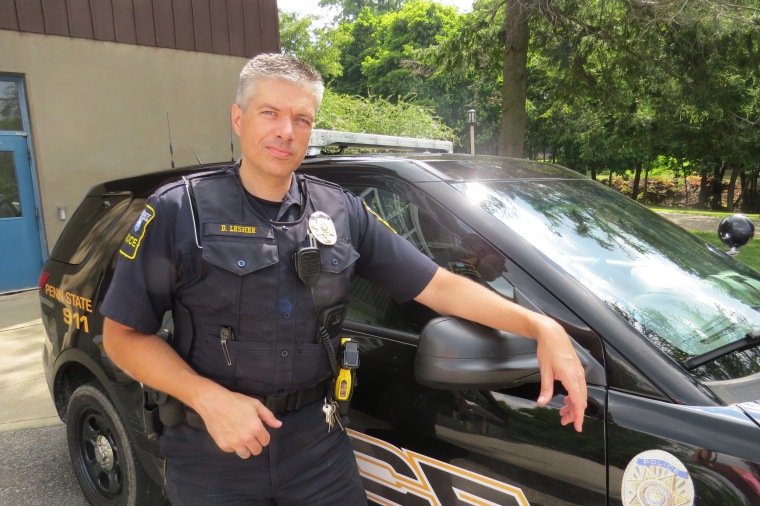
In addition to being a police services officer at Penn State Behrend and a beekeeper, Lesher is also a professional photographer, distance trail runner, cyclist, gardener, home brewer, clean-eater, and a website programmer/designer. Oh, and he’s also a veteran, husband, and father.

Clearly, when Lesher is interested in something, he goes all in. But serendipity plays a role in most of his ventures, too.

Twenty-five years ago, when he was working at a grocery store after having completed basic training in the U.S. Army Reserves, a coworker mentioned she was attending a municipal police training academy. Lesher enrolled a week later.

After graduation, he was hired at Behrend. It’s a job he said he has enjoyed since day one.

“I really like the people here,” he said. “In my role, I come in contact with a wide variety of people and I enjoy interacting with everyone from the janitorial staff to the Chancellor.”

He even likes educating students who have gotten themselves into a bit of trouble.

“Often, the student has just been misguided or made a mistake and the incident can be turned into a learning experience,” he said. “I’d say we can do that 95 percent of the time.”
IMG_8671

Honey habit leads to hobby

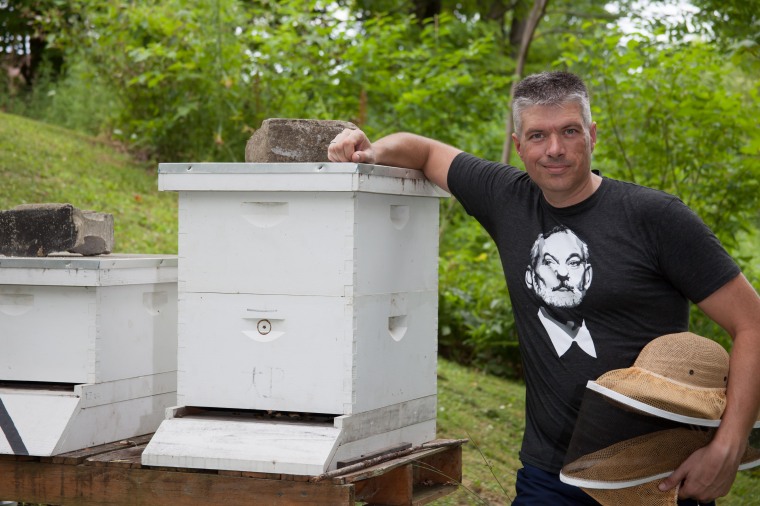
A serious health scare a decade ago inspired Lesher to begin exercising and taking a closer look at the foods he was putting into his body. He eats clean now, avoiding processed foods, meat, caffeine, artificial dyes and additives, and most forms of sugar, with one sweet and all-natural exception—honey.

“It’s expensive, though, and I was eating a lot of it,” he said. “So I started doing some research on beekeeping and got some bee boxes.”

He found his first set of bees on Craigslist.

“This guy was tearing a house down and found the walls were full of honey-bees, so he offered them up to anyone who would come take them,” Lesher said.

“Cut-outs,” as such bee acquisitions are called, are tougher than simply scooping up a homeless swarm and encouraging them into a new home.

“With a cut-out, you’re invading their territory and they will defend it,” Lesher said. “Swarming bees are actually safer to collect. They swarm when they are looking for a new home, so they have nothing to protect and are usually happy to climb right into a bee box.”

Lesher is pleased to offer them a home, and the college’s maintenance and operations staff are just as thrilled to have someone nearby to call when swarms are found on campus.

Except for the occasional replacement queen, Lesher doesn’t buy bees. He prefers to collect native bees since they are used to Erie’s climate.

Lesher has a beekeeper’s hat, but doesn’t wear a full suit because honey-bees are rarely aggressive. He’s been stung only twice.

The average hive makes sixty to eighty pounds of honey a year, which is harvested in the fall. Only a portion of the honey is taken, however, as the bees have to have food for the winter.

“My hives are new this year, so I won’t take any honey,” he said. “I want to keep them happy so they’ll stay and produce more next year and then I can take some.”

From programming to photography to political science 101

A different kind of buzz—talk about the then-new World Wide Web—caught Lesher’s attention twenty-plus years ago. He began reading about, then dabbling in, website programming and design. He soon had paying clients (he still has some today) and a concern about finding adequate photography for their sites.

So he began reading about photography. You see where this is going, right? Today Lesher also works as a professional photographer. He shoots family portraits, senior pictures, and weddings.

Another hat he wears? College student. This fall he’ll complete his degree in General Arts and Sciences with an emphasis in Political Science.

Man in motion

You may wonder where Lesher gets the stamina to keep up all of his hobbies, jobs, and activities. It’s a strength that is, no doubt, hard earned on the trails and roads around Penn State Behrend where he’s logged thousands of miles.

Last summer, he did his first ultra run, the Megatransect, a formidable thirty-mile race up, on, and around Bald Eagle Mountain, just south of Lock Haven—with former Behrend engineering professor and trail-runner Dr. Chris Colston.

“The funny thing is that when I was in the Army, I hated running,” he said. “I never thought I’d start doing it competitively. But then I got interested in it and ended up buying the gear and doing some races and… you know, how it goes.”

Yes, with Lesher, we do know how it goes now—all the way.
IMG_8662

8 fun honey-bee facts

  1. Honey-bees are not native to the United States. They were imported by European settlers.
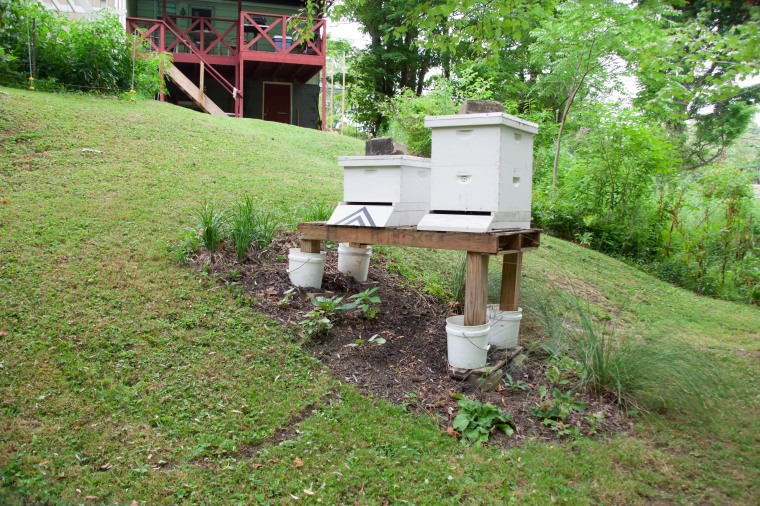
  2. Honey-bees, while instinctual, aren’t very smart. “I have to have different landing strips on my hives or the bees will go in the wrong hive and be killed as invaders,” Lesher said.
  3. Honey-bees use dances to communicate. For example, when honey-bees find food, they do a choreographed “waggle” dance that instructs the rest of the hive where to find a food source.
  4. Honey-bees keep each other warm and fed over winter. Honey-bees keep the hive at about 92 degrees in winter, feasting on the honey they have collected all summer.
  5. Honey is harvested in the fall. Hives typically contain about sixty to eighty pounds of honey; some must be left for the bees to eat.
  6. Unhappy honey-bees will leave. If conditions in the hive are not suitable, the queen will call for a swarm and they’ll swarm and depart.
  7. The honey-bee queen is the sole reproductive female in the colony. She lays 1,000-to-3,000 eggs per day. Female worker bees perform all other colony duties. Male drones exist only to mate with a virgin queen.
  8. Drones are dead before winter. Drones are a liability to the wintering hive and are not allowed in after fall, so they die outside.

IMG_8703

Collecting a swarm

Lesher provided this video of a swarm he collected:

 

Students create blankets for NICU babies

20160428_145345

By Steve Orbanek
Marketing Communications Specialist, Penn State Behrend

When Ashley Sullivan, assistant professor of early childhood education at Penn State Behrend, suggested that students in two of her spring 2016 classes plan a community service project, one idea was top of mind for Karlie Aschenbrenner.

Aschenbrenner, a sophomore Elementary and Early Childhood Education major from Pittsburgh, thought of the concept behind Brady’s Blankets, a program of the Fairfield, CT, children’s non-profit Brady’s Smile, which provides homemade fleece blankets to babies and children in the Neonatal Intensive Care Unit and Pediatric Intensive Care Unit.

“This was the one idea that really made so much sense,” Aschenbrenner said. “If we all donated $5, we would be able to purchase fabric to make tie blankets. We could then donate the blankets to babies in the NICU.”

The students voted on the service project ideas, and Aschenbrenner’s suggestion was the clear winner.

Every student in both Sullivan’s Instruction in Early Childhood Education Derived from Development Theories and Competing Rights: Issues in American Education courses donated $5 each to participate in the project. They spent their last day of class cutting and tying to create 75 blankets, which were donated to Brady’s Smile and then sent to University of Pittsburgh Medical Center’s Children’s Hospital of Pittsburgh.

Aschenbrenner was not the only student with whom the cause resonated.

“The children that we’re donating these blankets to could eventually become the kids that we’re going to teach, so just giving them a better chance to thrive and survive can mean a lot,” said Madison McFeely, a first-year Elementary and Early Childhood Education major from North East.

In addition to creating the blankets, Sullivan’s students volunteered at the Second Harvest Food Bank of Northwest Pennsylvania where they packed more than 200 food boxes to distribute to local seniors.

“As future teachers, I think all of us really appreciate these causes,” said Gionna Fonseca, a sophomore Elementary and Early Childhood Education major from Pittsburgh. “It was really nice to see that big pile of blankets sitting there.”

This slideshow requires JavaScript.

‘Looks Like We Made It’: Behrend choristers perform alongside Barry Manilow

Manilow-Concert_017 (smaller)

By Steve Orbanek
Marketing Communications Specialist, Penn State Behrend

It was not until the lights came on that Elizabeth Seng fully realized the significance of the moment.

Behind her was a jumbotron. In front stood a multi-platinum singer-songwriter. Beyond him was a crowd of thousands of people.

Seng, a senior psychology major at Penn State Behrend, has made many memories in her four years at the college, but performing alongside Barry Manilow as part of the Choirs of Penn State Behrend might take the cake.

“We were out on the stage, and then they shined the lights on us,” said Seng, a Seattle native who has been a regular member of the choir during her time at the college. “There were all these people there, and it was just really exhilarating. It was probably my most memorable experience I’ve had here at Behrend.”

Manilow invited the Behrend Choirs to perform alongside him at his April 25 concert at Erie Insurance Arena. Tone-Acious, Penn State Behrend’s student a cappella club, joined the choir for the performance, which was part of Manilow’s “One Last Time!” tour.

“This was a really unique opportunity, and it highlighted Behrend’s arts offerings in front of a huge audience,” said Gabrielle Dietrich, director of choral ensembles at the college. “It also provided a fun and highly motivating year-end experience for our students.”

“When I found out, I was like, ‘Oh my gosh, are you serious?’” Seng said. “It just felt so special to think that Barry Manilow thought we were good enough to be a part of his concert.”

The choirs’ performance was especially meaningful because they joined him for the three final songs of the concert, which were amongst his greatest hits: “Copacabana,” “Miracle” and “I Write the Songs.”

The day of the concert, the choirs arrived at the arena at 3:30 p.m. and practiced before going on stage at 9:30 p.m.

“We were sent to holding rooms in which they had us practice a lot and learn the choreography,” said Taylor May, a junior software engineering major and member of both the Behrend Choirs and Tone-Acious. “We even ran through it once on the stage with the soundtrack, but thankfully we got to relax a bit before the concert.”

To honor the occasion, choristers created “Behrend Hearts Barry” t-shirts which they wore under their gowns during the concert. They even gave an extra t-shirt to Manilow as a memento.

The shirts are a reminder of what was truly a once-in-a-lifetime experience for many of the choristers.

“Before you knew it, you could see the streamers (coming down from the ceiling), and that was it. It just went by so fast,” Seng said. “To be part of one of his final tours was just really, really cool. I’ll remember it forever.”

This slideshow requires JavaScript.

Students escape to Madagascar via Washington, D.C.

Reem Elhafiz Abdalla, Jillian Dunn, Lillie Gabreski, Dalia Tenda Batuuka
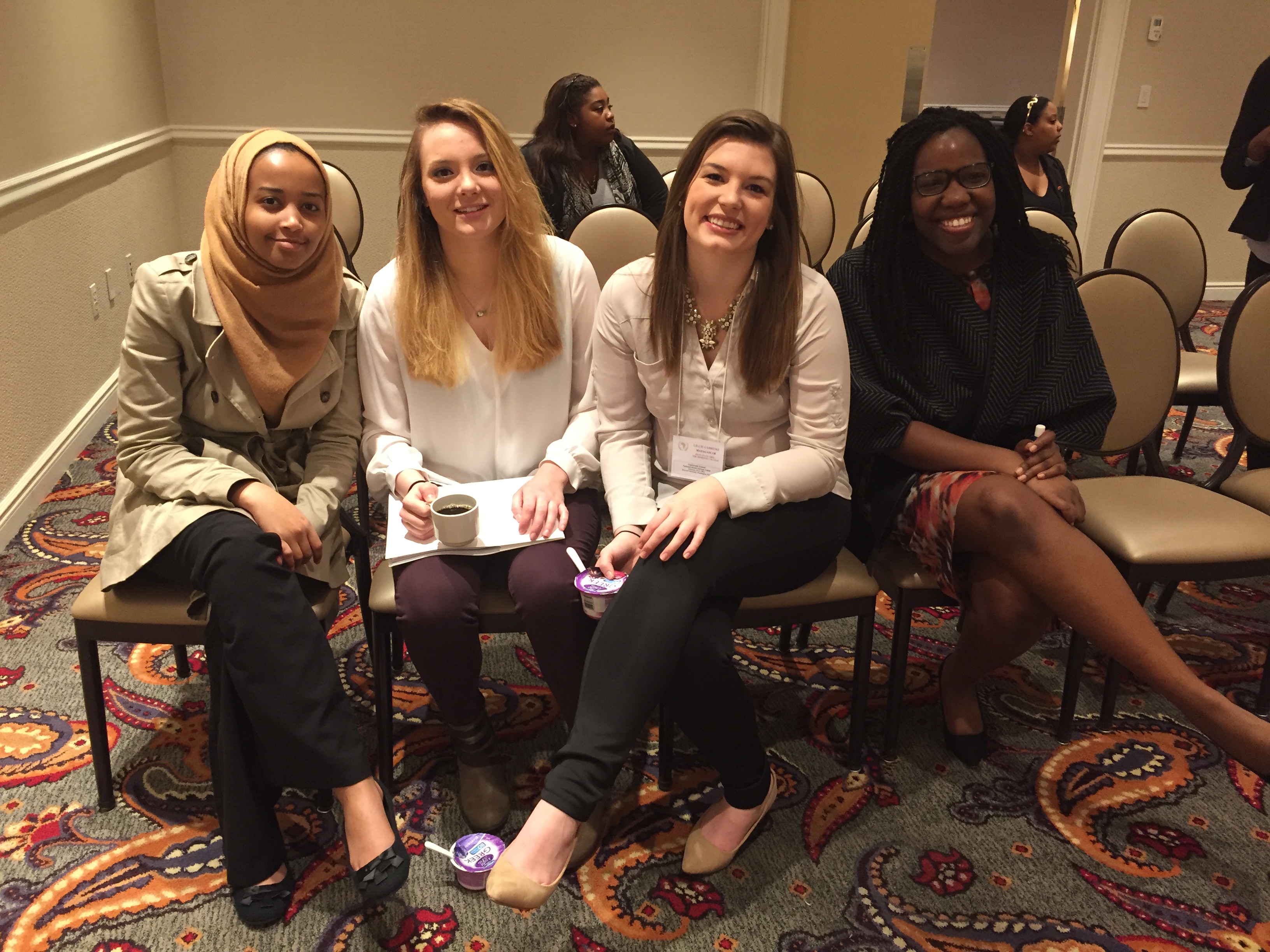
Reem Elhafiz Abdalla, Jillian Dunn, Lillie Gabreski and Dalia Tenda Batuuka represented Penn State Behrend at Howard University’s 14th Annual National Model African Union Summit last month.

By Steve Orbanek
Marketing Communications Specialist, Penn State Behrend

Dalia Tenda Batuuka, Jillian Dunn, Lillie Gabreski and Reem Elhafiz Abdalla are not natives of Madagascar. None of them has ever stepped foot in the country.

Talk to any of these four Penn State Behrend students for even a few minutes though, and you might just think they were native-born Malagasy.

Last month, the students attended and participated in Howard University’s 14th Annual National Model African Union Summit. Sponsored by the African Union Mission and Member State Embassies in Washington, D.C., the four-day summit is a simulation of the proceedings of the African Union, requiring participants to research their assigned countries in-depth before attending the conference.

This marked the first time that Penn State Behrend was represented at the summit, held in February with more than 45 colleges and universities participating. The Behrend students’ assigned country was, of course, Madagascar. The group represented the college well, winning the Michelle Tooley Outstanding Delegation in Committee Award in recognition of their performance on the Social Matters Committee.

“Students really do have to act as delegates and adopt the stance of the country they’re representing,” said Naaborle Sackeyfio, a lecturer in comparative politics who also attended the summit.

The students chose to participate after taking Sackeyfio’s Introduction to Contemporary Africa course during the fall semester.

“We were in the course together, and Dr. Sackeyfio mentioned this summit. It just seemed like such a great opportunity,” said Batuuka, a first-year psychology major.

Each student was assigned a different committee for the summit, in this case Economics (Gabreski), Peace and Security (Batuuka), Social Matters (Abdalla) and Regional Economic Matters (Dunn). This meant that the group had plenty of studying to do beforehand.

“The whole point was to go there and play the role of actual delegates from Madagascar, so you had to be very familiar with the country in advance,” Batuuka said.

The group met several times a week and spent long hours preparing for the event. There were times during the summit where other countries’ delegates would call their expertise into question, but the students held their ground.

“People would contest things over even the smallest words. There were times where you definitely had to stand up and make your case heard,” said Gabreski, a senior political science major.

“The margin for error was very small,” added Dunn, a sophomore political science major.

While the students were happy to receive an award for how they represented Madagascar, it was not the only thing they took away from the summit.

“After this experience, I have such a newfound appreciation for politicians,” Batuuka said. “You always hear, ‘What’s wrong with Congress? Why aren’t they passing this?’ but you realize that it’s not that easy.”

Sophomore creates Behrend’s first Model United Nations chapter

By Steve Orbanek
Marketing Communications Specialist, Penn State Behrend

Delegate-Ivan Pan, Moustafa
Ivan Pan, left, and Moustafa Elhadary were two of the student delegates who represented Penn State Behrend at the 62nd annual Harvard National Model United Nations.

Weibin “Ivan” Pan was optimistic prior to attending the Penn State Behrend Student Leadership Conference in February 2015. The Xiamen, China native had just started his second college semester and was looking to get more involved on campus.

But he did more than just get involved. He paved the way for others to get involved, too.

“I came out of that conference knowing that I wanted to create a Model United Nations at Penn State Behrend. I was very involved in Model UN in high school, and I knew that a lot of students at Behrend would be interested in the group,” says Pan, a sophomore Finance major.

Within a month, he had found a faculty adviser and plenty of interested students. Today, the group, now an official Model UN chapter, has more than 30 members.

Pan said a key reason he wanted to start a chapter was to provide opportunities for the college’s growing international student population. Last year, Penn State Behrend welcomed 186 new international students, the largest international class in its history.

“Model UN is a great place for international students to practice their public speaking skills, English skills and to learn to negotiate with others,” Pan said.

In February, Pan and an additional seven Penn State Behrend student delegates attended the 62nd annual Harvard National Model United Nations (HNMUN). More than 3,000 student delegates from more than 70 countries and 100 universities attended the four-day international relations simulation in downtown Boston. Founded in 1955, the conference is the largest and oldest of its kind, and this year was the first time that Penn State had ever been represented.

For the simulation, Pan and the other student delegates (Stephanie Zhao, Naman Tanwar, Tyagadipta Biswal, Deniz Himmetoglu, Hank Pinge, Moustafa Elhadary, and Keshav Prabhu) were assigned the country of Poland. They spent nearly a year researching the country and its policies to prepare for the event.

“We prepared and met regularly before the event,” Pan said. “It was a great honor to be invited to the conference. Everyone wants to be invited, but there was only a limited number who went.”

While they did not take home any of the major awards at HNMUN, the team plans to apply to attend the conference next year. The group has also applied to attend the eleventh annual Los Angeles Model United Nations (LAMUN) in April at the University of California, Los Angeles.

“There are so many great opportunities for students here at Behrend,” Pan said. “The fact that I was able to start a Model UN chapter just shows that Behrend really does provide great opportunities for its international students.”

This slideshow requires JavaScript.

Makers Engineer Ornaments, Fun

20151209_215318

By Heather Cass
Publications & Design Coordinator, Penn State Behrend

The upcoming holiday season offers the perfect distraction for stressed-out students. In this last week of classes, we found plenty of holiday cramming going on with every area from Housing and Food Services to Student Activities to the School of Engineering fitting in some festive merrymaking before things get serious with Finals Week next week.

Wednesday evening, a dozen students gathered in an electrical lab in Burke 145 to munch holiday treats and craft acrylic LED ornaments with Dr. Chris Coulston, associate professor of electrical and computer engineering.

Students first drew snowflakes on computers using CorelDraw and added any text they wanted before sending their creations to the laser printer to be cut out of acrylic. Then, they used soldering irons, wire, LED lights, and batteries to make their snowflakes glow.

Though the Makers group meets fairly regularly, Coulston refrains from calling it a club.

“It’s more like a gathering of like-minded makers,” he says. “I just invite students to show up and make something. It gives them an opportunity to try some of the tools we have, like the laser cutter and soldering equipment.”

Ultimately, though, it’s about encouraging critical thinking and creativity, which are key concepts for engineering students to grasp.

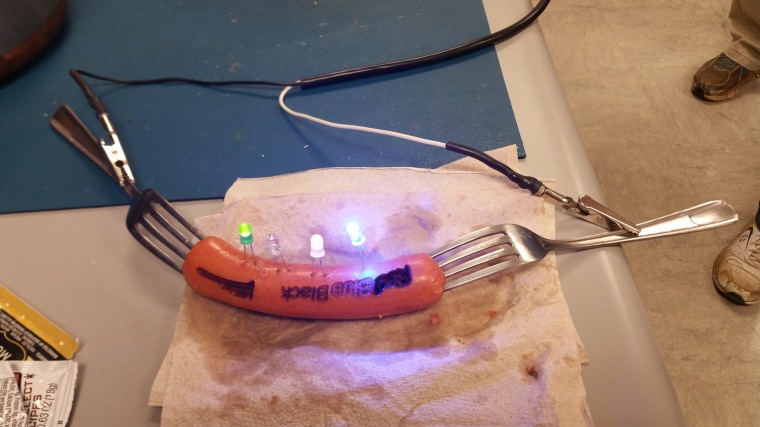
“We try to come up with things that challenge them or make them look at things in a slightly different way,” Coulston said. “For instance, before Thanksgiving, we made LED hot dogs. Who’d have thought you could light up a hot dog?”

dog

While there may be no practical application for glowing frankfurters, there is certainly a demand for people with the creativity, technological skills, and theoretical knowledge to use ordinary objects in a truly unique way.

While the majority of those who attend Coulston’s Maker gatherings are engineering students, he welcomes all students and faculty members.

“I’d love to have some artists and scientists join us, too,” he said. “The more, the merrier. They’d probably have some really cool ideas.”

Coulston brought a special guest to Wednesday’s gathering, his pug, Shiloh, dressed in her holiday best.

“Anyone can get a picture with Santa, but where else can you get a photo with Santa Pug?” he says with a smile.

Just like an engineer, always looking to improve the original product.

This slideshow requires JavaScript.

9-hole disc golf course open at Behrend

By Heather Cass

Publications & Design Coordinator, Penn State Behrend

IMG_9956

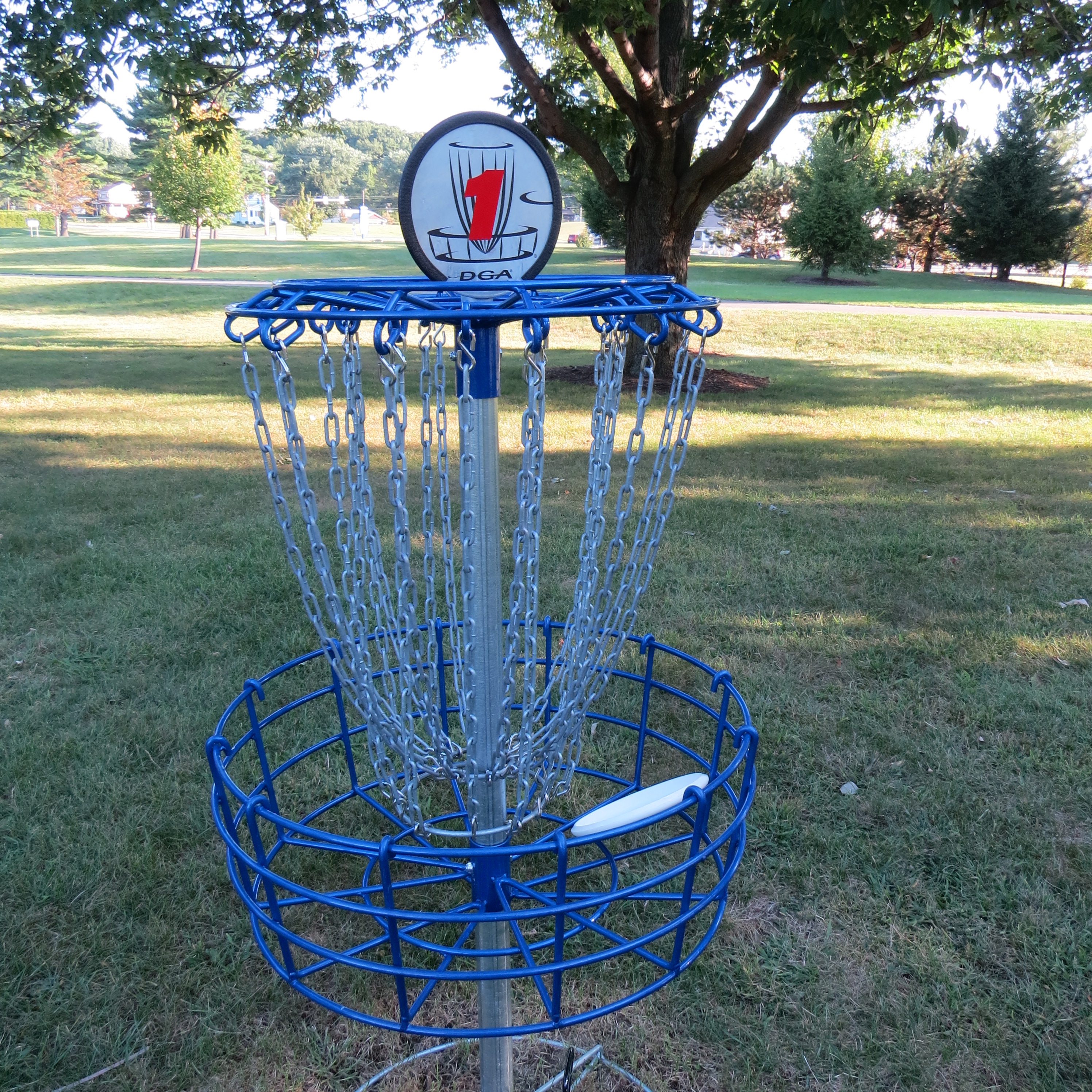
Have you noticed the medieval-looking baskets with chains on metal poles around campus and wondered what they are for?

They’re for your entertainment.

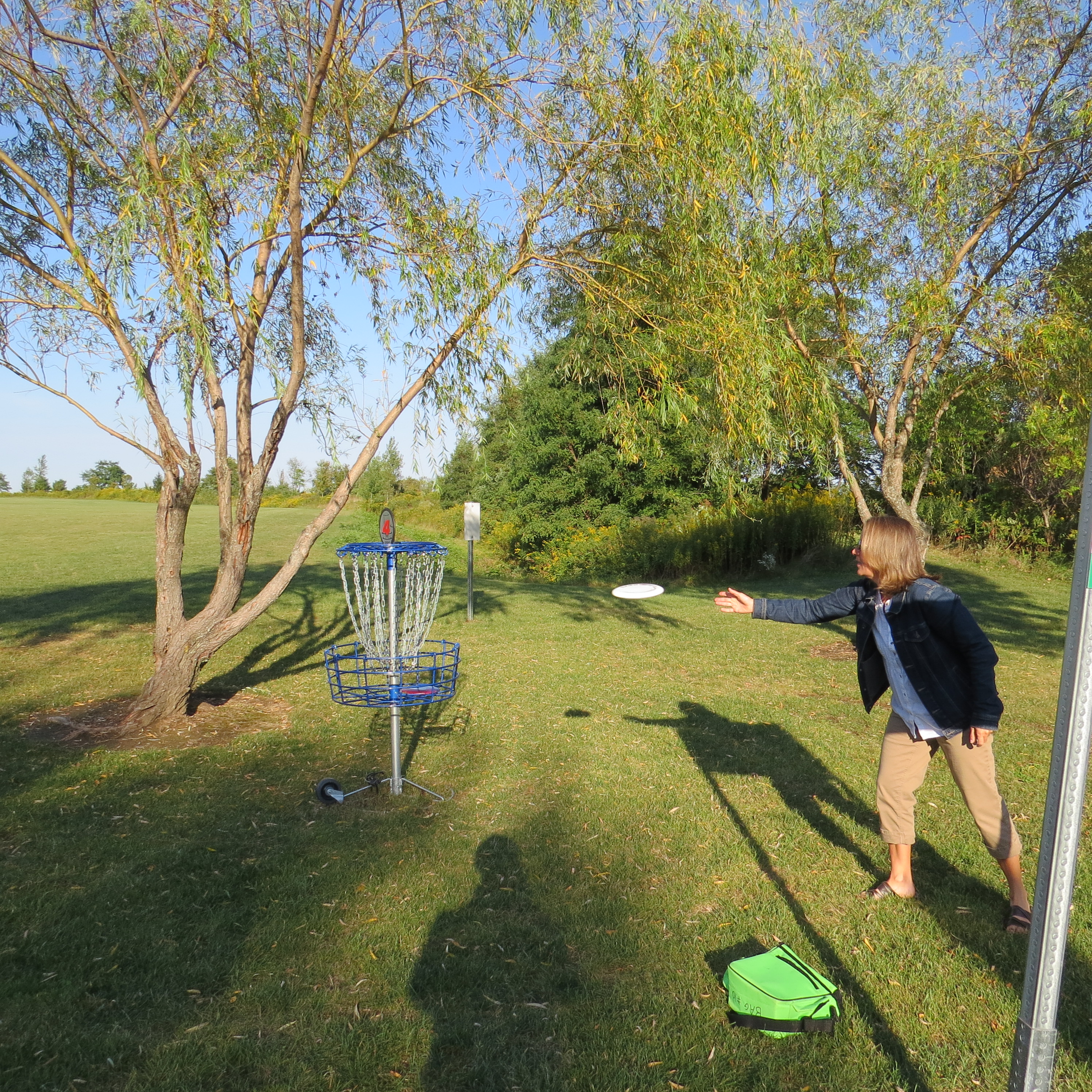
The baskets are targets for a new nine-hole disc golf course that snakes around the perimeter of campus. Disc golf is played much like traditional golf but with flying discs instead of balls and clubs. Players stand near the tee and try to get their disc into the basket in the fewest number of throws.

Student-driven fun

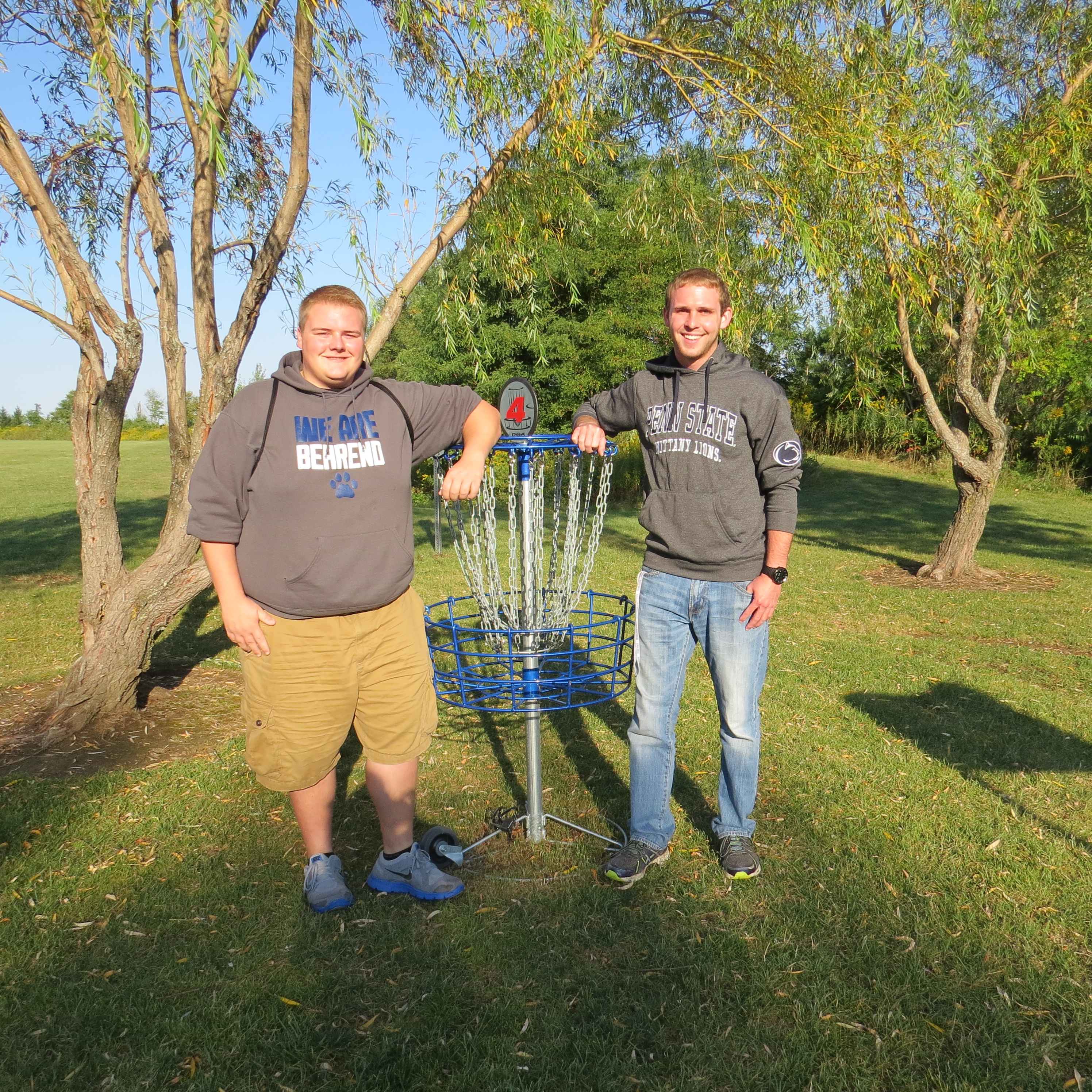
The project was initiated by Kyle Stephan ’14, a former SGA president, who got the ball rolling discs flying, by approaching the Student Activities and Athletics departments to obtain approval, advice, and, eventually, funding to establish a course on campus.

Stephan was joined by Mechanical Engineering majors Trey Neveux and Mark Malecky, and Psychology major Tyler Ferraino, who worked together to design the course, locate equipment, and secure funds.

The students did the majority of the work on the course themselves, with assistance from the Erie Disc Golf Club, the college’s Maintenance and Operations department, and with instruction from Dr. Mike Naber, lecturer in geosciences, on using Geographic Information System (GIS) to layout and measure the course.

IMG_9963

Tyler Ferraino, right, and Trey Neveux.

The course

Though the graphics for the tee markers are still under production, all of the targets/baskets are set and the tee markers (plain white signs) are in place.

The course starts in front of the tennis court/baseball fields near the Jordan road entrance to the college. From there, it snakes around to the old soccer field and then up and around the new track complex before finishing up in the woods across from the track near the bridge to Erie parking lot.

An online map that you can use on your Smartphone while you play can be found here.

Equipment

A basic disc golf set contains three discs—a driver, a mid-range disc, and a putter. Just like in golf, the driver is used for long drives from tee, the mid-range disc is used for shorter distances, and the putter is used when you’re close to the target.

There are at least ten sets of discs available for students to borrow for free at the RUB desk (and Neveux says there are more to come), or you can pick up your own set at a mass retailer or online for less than $30.

How to play/rules

Standing at the tee (currently marked with plain white signs…graphics are in production!), throw your driver disc toward the basket. Players — typically two to four, but more is OK, too — take turns throwing their discs with the one whose disc lands the farthest from the basket going first (like golf).

One point (stroke) is counted each time the disc is thrown and when a penalty is incurred. The goal is to play each hole in the fewest strokes possible. A disc that comes to rest in the basket or chains constitutes a successful completion of that hole.

Most of the holes on Behrend’s course are a par 3, but there are also two par 4s and a par 5. Map here.

The player with the lowest total strokes for the entire course wins.

Learn more about how to play disc golf here.

First-timers take

Neveux and Ferraino spent some time introducing me to the sport on a recent weekday morning.

It was a lot of fun and it wasn’t hard to figure out how to throw the discs to my advantage (most drivers arc left) and when to switch discs to make use of the mid-range and putter discs.

IMG_9962

By the third hole, I had a pretty solid grasp on the sport and enough skill to get the disc in the area I wanted it to be.

Learn more at YouTube, where you can find plenty of videos with tips on disc throwing technique.

Future expansion

Neveux, who serves as president of the Disc Golf club at Behrend, says they are already thinking of expanding.

“We’d like to add another nine holes, so we have an eighteen-hole course,” he said. “We’ve got plenty of space for it on campus.”

And, with the club’s dedication and promotion of the sport, they’re sure to have plenty of players, too.

This slideshow requires JavaScript.

Love of writing defines O’Neill’s time at Behrend

Katherine O'Neill

By Steve Orbanek
Marketing Communications Specialist, Penn State Behrend

As a child, Katie O’Neill always had a keen interest in writing and creative expression. This affinity continued when she got to grade school, and it was not long before others started to notice.

“I had a teacher when I was in first grade who told my mom to get me a journal,” O’Neill recalls.

That would seem to have been excellent advice. As O’Neill has grown up, her passion for writing has become a defining characteristic.

“I’ve always been a writer before anything else,” the Lake Winola, Pa., native says.

That passion is what brought her to Penn State Erie, The Behrend College. The college’s BFA in Creative Writing piqued her interest as the only such program in the Penn State system and one of only a few in the country.

“That was definitely the number one draw,” she says.

Through the inventive program, O’Neill, who graduated this past May, says she was able to focus intently on improving her inventive writing skills. She also improved her editing abilities serving on the staff of Lake Effect, an international literary journal published by the School of Humanities and Social Sciences at Penn State Behrend.

Along the way, O’Neill garnered accolades. This past year alone, her non-fiction story, “Achill Strikes Again,” won Behrend’s Farrell Nonfiction Award while her fiction piece “Juneau” was the college’s Smith Fiction Award winner. Her short fiction piece, “Tony and Rebecca” was also named an honorable mention in the Annual Creative Writing Awards, sponsored by Suffolk County Community College in Long Island, New York.

O’Neill says her inspiration comes from “the weirdest things,” but also a more traditional source. Thanks to the college’s Creative Writers Reading Series and professional conferences, O’Neill met and networked with numerous professional authors throughout her college career. With every interaction, she says she would pick up a tip or two that she put to good use.

During her time at Penn State Behrend, O’Neill was involved beyond creative writing activities. She was the captain of the college’s dance team, a member of the Behrend Choir and a writing tutor in the Learning Resource Center.

This past spring, O’Neill’s efforts were recognized with two awards: Behrend’s Eric A. and Josephine S. Walker Award and a university-wide Eclipse Award. The Walker Award recognizes a student whose character, scholarship, leadership and citizenship have been directed into student programs and services. The Eclipse Award recognizes Penn State students for service and volunteerism to their campus and local communities.

This fall, O’Neill will start pursuing her MFA in Creative Writing at Bowling Green State University in Bowling Green, Ohio. She reflects fondly on her time at Penn State Behrend and hopes new students will choose to follow a similar path.

“My advice is to get involved from the start. I’m so glad I got involved right away. It can be overwhelming, but it’s (worth it),” she says. “I’ve made some amazing friends. I’m going to miss everything about this place.”