
Behrend Beatlemania (Faculty and Staff share their favorites from the Fab Four)

beatles-1964

By Heather Cass
Publications & Design Coordinator, Penn State Behrend

In honor of the 50th anniversary of the Beatles’ appearance on the Ed Sullivan Show this Sunday, February 9, we thought it would be fun to ask faculty and staff members to tell us which Beatles tune is their favorite.  Seems we’ve got a lot of Fab Four fans on campus.  Here are their top choices:

“I’m torn between ‘Here Comes the Sun’ and ‘In My Life.’” — Dr. Gabrielle Dietrich, lecturer in music/director of choral ensembles/artistic director of YPC of Erie (fit all that on a business card!)

“’Blackbird,’ hands-down! Hope springs eternal.” — Kelly Shrout, associate director of student affairs

“I have always loved the Beatles. It is hard to pick just one song as my favorite but if forced to I would have to say ‘All You Need is Love.’ I think the meaning behind the song held true in ’67 and is just as applicable today. It also happens to be the song my husband and I walked down the aisle to for the recessional after we took our vows.  I’m also very partial to ‘Blackbird,’ ‘Across the Universe,’ and ‘I am the Walrus.’ — Dr. Heather Lum, research associate in psychology

In My Life.” — Chris Fox, assistant director, clubs and organizations

“My favorite Beatles song is ‘Eleanor Rigby.’  I have always loved the lyrics line by line.  However, if you piece them together the song can be depressing.  I also love the intensity of the strings.  Fun Fact: The Beatles don’t play any instruments on this song, as it is all strings.” — Mike Rutter, associate professor of statistics

“My favorites are ‘Yesterday’ and ‘Hey Jude.’ — Dr. Bruce Wittmershaus, associate professor of physics

“’Revolution.’ It’s an awesome message overall.  Anytime a friends is feeling down, I’ll sing to the line, ‘Don’t you know it’s gonna be all right?’ — Kristen Comstock, assistant director of alumni relations

“’Let it Be.’ It reminds me of good times in high school.” — Dr. Robert Light, senior associate dean for research, and outreach & COO

‘I Will’ is my favorite.  It was our house lullaby for both of my sons.” — Mary Beth McCarthy, director, academic and career planning center.

“My favorite is ‘Let it Be.’ Why? It’s moving and offers timeless wisdom for navigating the complexities of life.” — Dr. Ralph Ford, director school of engineering, professor of electrical and computer engineering and associate dean for industry and external relations

“If I had to choose, it would be between two songs:  ‘Let it Be,’ and the combination ‘Golden Slumbers/Carry That Weight/The End.’  Both songs resonate with me in their musical quality and their ability to make me introspective.  I feel like I’m in a better state after listening to their music.” — Dr. Robert Weissbach, associate professor of engineering

“My favorite is ‘Norwegian Wood (This Bird Has Flow),’ for no particular reason other than I like the way it sounds.” — Kris Motta Torok, director of student activities and Reed Union Building.

“’Here, There and Everywhere’ gets my vote!” — Dr. Sharon Dale, associate professor of art history

“My favorite Beatles song is ‘Let it Be.’  It reminds me of the value of being a support to those in need so they have less to worry about. Also, it reminds me to be grateful for all my blessings. — Dr. Kathleen Noce, senior lecturer in management information systems

“’Come Together.’ Very strange tune, but it sticks in the head.” — Dr. Al Warner, associate professor of management

‘All my Lovin’’ and ‘Michelle.’ Why do I love ‘em? Memories of a time gone by!” — Dr. Carl Kallgren, director of CORE and associate professor of psychology

“I’m not a huge Beatles fan, but I’d have to say that my favorite tune of theirs is the ‘Golden Slumbers/Carry that Weight/TheEnd’ medley.” — Dr. Joseph Beilein, assistant professor of history

‘Paperback Writer.’ It has one of the best guitar riffs of all-time.” — David Vegh, lecturer in theatre

“I think their songs are so timeless.  As for my favorite, it depends on my mood and activity.  When I’m feeling nostalgic, ‘In My Life’ and ‘Penny Lane’ are excellent choices.  For an impromptu sing-a-long, you can’t get much better than ‘Hey Jude,’ which is why it has been covered so many times.  I also really enjoy ‘Across the Universe.’” — Ian McGinnity, assistant director, civic engagement and The Smith Chapel

Your turn …

What’s your favorite Beatles tune? Post a comment below.

Behrend students hone interview skills at Business Blitz event

004

By Steve Orbanek
Marketing Communications Specialist, Penn State Behrend

Jen Powell remembers the stress that goes hand-in-hand with the job interview process. The sweaty palms, the increased heart rate, the inability to concentrate—these symptoms are par for the course when preparing for a job interview.

“You never know what to expect in a job interview. Preparing for an interview can be very challenging,” said Powell, a 2008 Penn State Erie, The Behrend College graduate who now works as a financial analyst at FMC Technologies.

Powell hoped to help students better prepare for job interviews by volunteering her time Feb. 5 at Business Blitz, a speed networking event at Penn State Behrend.

The event, which was co-sponsored by Behrend’s Financial Management Association (FMA) and the Society of Undergraduate Economists (SUE), was held in McGarvey Commons and used a combination of Behrend students and alumni to simulate the job interview process. More than twenty alumni and sixty-five students registered for the event.

A Behrend alumnus sat at every table in the room, and students rotated from table to table every eight minutes. For the first ninety seconds of each session, the student would offer his or her elevator speech to the alumnus. The alumnus then offered feedback during the remaining time.

The event’s goal was to help students become more acclimated to the interview process and professional interaction.

“It’s important for students to know how to talk to professionals,” said FMA treasurer and junior finance major Brooke Landram. “Communication is so important.”

Artur Szastak has had difficulty in his job search, so he decided to participate in the Business Blitz to hone his interviewing skills.

“I feel you either make it or lose it in the first 60 seconds of talking to someone, and this can be good practice for that,” the senior finance major said. “When you come into an interview, it’s almost as if you’re being judged, and it takes you out of your comfort zone. That initial shock starts to wear away with the more experience you get.”

The trial interviews were just one part of the Business Blitz event.

Following the speed networking sessions, students stayed to network with the alumni in attendance. Alumni were also given a book that included the résumés of every student who participated in the event.

“You can make some great connections here in Erie,” said SUE president and senior business, economics, and marketing major Brittany Martinelli. “Hopefully this event continues for a long time.”

For more information on the Business Blitz event, please email Professor of Finance Dr. Greg Filbeck at mgf11@psu.edu.

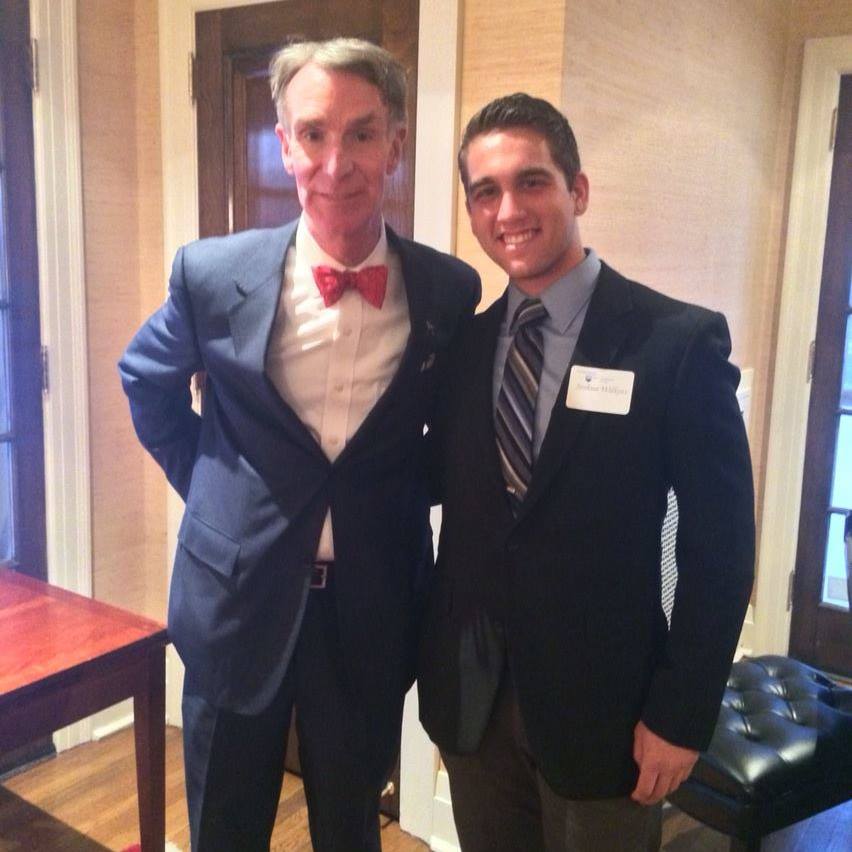
Bill Nye the Science Guy draws large crowd at Penn State Behrend

1621677_10153787859690220_1918157378_n

By Steve Orbanek
Marketing Communications Specialist, Penn State Behrend

Vee Butler was in search of a draw. She needed to find a speaker capable of filling the house.

“I just saw (Bill Nye’s) name and I thought, ‘What do ’90s kids like more than bonding with other ’90s kids about ’90s things?’ It seemed perfect,” said Butler, a junior arts administration major and executive director of the Lion Entertainment Board at Penn State Erie, The Behrend College.

A jam-packed, standing-room only crowd of almost 2,000 squeezed into Junker Center at Penn State Behrend Wednesday evening to watch Nye as part of the college’s Speaker Series. Nye hoped to inspire students to change the world, but it’s clear he’s already done his fair share of inspiring.

It’s been 15 years since a new episode of the PBS television show “Bill Nye the Science Guy” has been produced, but the effects of the show are still evident today.

Sophomore chemistry major Joshua Wilkins said Nye’s show actually inspired him to pursue a science degree. He was more than a little excited when he heard that Nye would be visiting Behrend.

“Ever since I found out he was coming, it’s been in the back of my mind,” Wilkins said. “It’s been a highlight of my year.”

1535647_739006496109770_1947840122_n

Wilkins said “Bill Nye the Science Guy” is one of his most cherished memories from the sixth grade. He recalled struggling to get through science class, but things always became bearable once the teacher popped a “Bill Nye the Science Guy” tape in the VCR.

“He made science funny. We could all feel his enthusiasm, and he was always the guy we wanted to see because he took us away from the traditional classroom setting,” Wilkins said.

Junior project and supply chain management major Chad Muscarella agreed.

“From his television show to the experiments to the ride at Walt Disney World, I remember it all,” Muscarella said. “He was always making education fun.”

In its five-plus year run on PBS, “Bill Nye the Science Guy” won 18 Emmy Awards and continues to be used in classrooms for educational purposes. An attraction at Walt Disney World’s Future World at Epcot, Universe of Energy, is based on the program. Nye also has written five books under “The Science Guy” moniker.

Zany phrases, wacky experiments and quirky music were par for the course on “Bill Nye the Science Guy,” which is one reason Nye believes it continues to be successful.

“This is an extraordinary claim, and I do not have extraordinary proof of this, but there’s a lot of entertainment there,” Nye said. “The show was information-packed and fun to watch.”

However, even Nye is at a loss for words when he hears of how the show has inspired lives.

“I say all the time that I don’t think I get it,” Nye said. “People come to me and say, ‘You’re the reason I became an engineer. You’re the reason I’m a scientist,’ and I’m like, ‘What?’ It amazes me.”

Behrend student offers disaster relief in Philippines over winter break

1546086_10151849088656262_1393937241_n

By Steve Orbanek
Marketing Communications Specialist, Penn State Behrend

So how’d you spend your winter break?

Relaxing?

Traveling?

Catching up on some z’s?

Penn State Behrend senior nursing major Andres Morales opted to spend his break in a less conventional way.

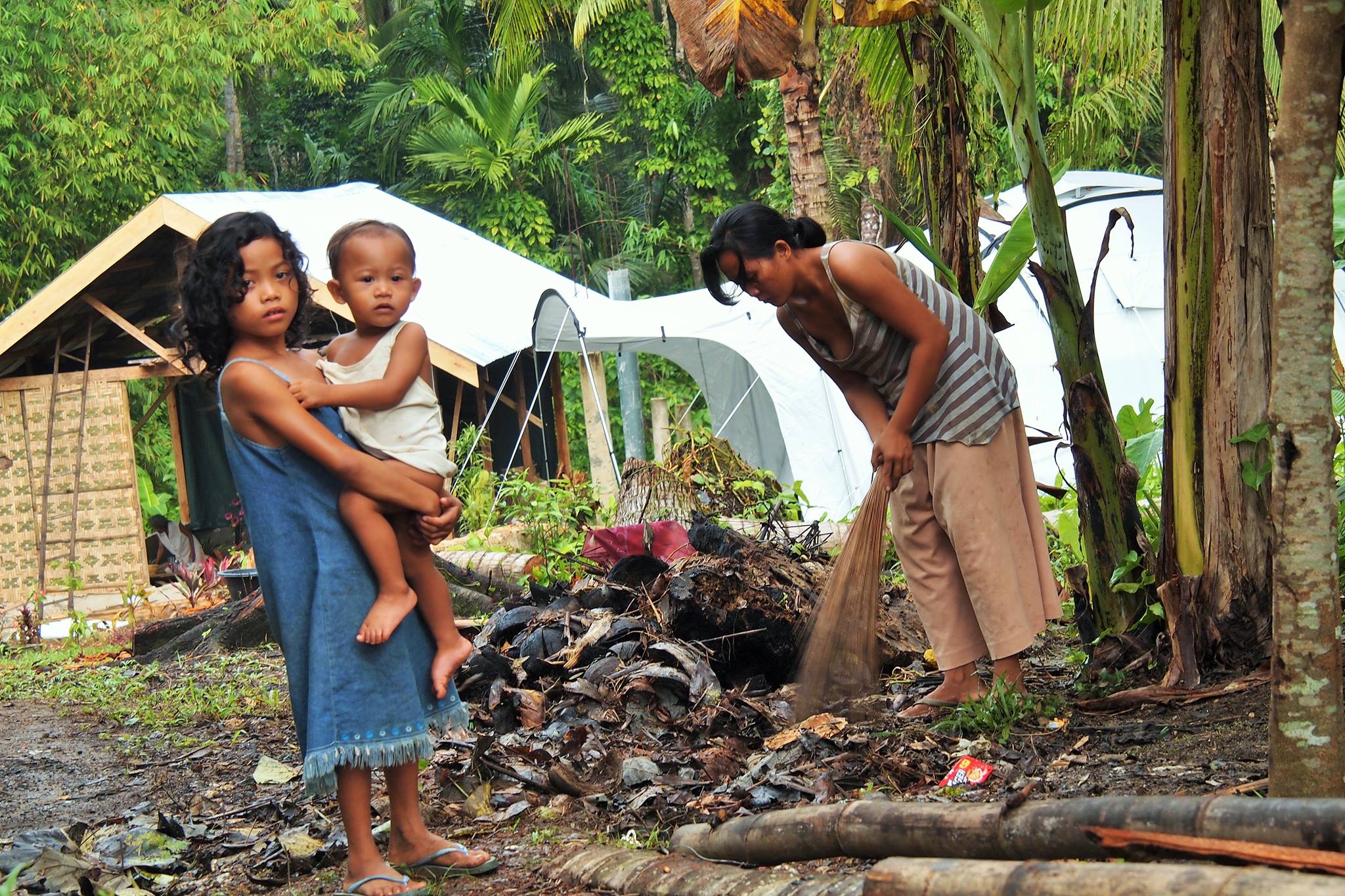
Morales, along with his wife Katie, father-in-law, and another member of the Federated Church of East Springfield, made a trip to the Philippines this December to offer disaster relief to victims of Typhoon Haiyan and the earthquake that hit the island of Bohol.

Morales, a native of Costa Rica, had been searching for a way to help the relief efforts for some time, and he found his answer after he searched Google and discovered the nonprofit organization, All Hands Volunteers. Like the name implies, All Hands Volunteers is a U.S.-based nonprofit organization offers hands-on assistance to communities around the world.

Through All Hands Volunteers, Morales and his church group set up a relief trip to the island of Leyte in the Philippines. To make the trip, Morales had to give up part of his winter break, but it was an easy sacrifice.

“If they can’t have a nice holiday, then why should I?” Morales said.

1560497_10151849112751262_217180321_n

The group arrived at Leyte on December 10. A total of 65 volunteers from all over the world joined Morales’ group, and they spent the majority of their time doing deconstruction work. They took down unsafe homes and also cleared out rubble and trees with chain saws.

Morales said the experience was humbling, and that was especially true after his group took a ride on top of a jeepney.

The jeepney, which is the most popular form of public transportation in the Philippines, took Morales to the area that had been most affected by the typhoon.

“Entire blocks were just flattened. You couldn’t recognize anything. You would go miles before seeing actual homes,” Morales said. “A lot of us just went speechless. It’s just hard to grasp because you think of the things back home, and then you see these people who lost everything.”

While the natives may have had next to nothing in the way of material possessions, Morales said they never hesitated to express their gratitude toward Morales and the other volunteers.

“Strangers would buy food for us during work time, and they didn’t have much,” Morales said. “All they could afford was a loaf of bread and a Coca-Cola. You didn’t want to accept it, but it meant everything to them.”

1612640_10151886755991262_1572491099_o

On December 20, Morales and his group then took two ferries to Bohol where they began to focus their relief efforts toward the 7.2 moment magnitude earthquake that had struck the island on October 15.

Once again, the group began to deconstruct homes and salvage materials.

On Christmas Day, Morales and his church group returned to the United States. Morales said the trip had a profound effect on him.

“On Sunday, I didn’t want to go out for an easy run,” said Morales, who is a member of Behrend’s track and field team.  “But if the people from the Philippines can get back up from nothing, then why can’t I go on a three-mile run?”

Most importantly, Morales’ trip to the Philippines may have provided him with a sneak peek at his future. He will graduate in May, and he hopes to use his nursing degree to benefit the less fortunate.

“The only reason I want to get a job in critical care and pediatrics is to utilize that experience in another country where there’s not as much access to healthcare,” Morales said. “Our mission was two-fold. Yes, we went there to help, but it also allowed us to get our feet wet as to what the future may hold. Disasters are going to keep happening, and someone needs to be there.”

Behrend alumnus’ company grows following Shark Tank appearance

cellhelmet%20team%20on%20ABCs%20Shark%20Tank

By Steve Orbanek
Marketing Communications Specialist, Penn State Behrend

Sometimes our biggest victories can come in defeat. Just ask David Artuso.

In March 2013, the 2011 Penn State Behrend alumnus attempted to impress investors, including Dallas Mavericks owner Mark Cuban, on ABC’s Shark Tank by pitching cellhelmet, a cell-phone case company he started in 2011 with two friends. The company was founded with the goal of offering cell-phone users a new, sleek case that comes with a guarantee: if the phone breaks in the case, the company will replace everything for $50.

Cuban and the other investors on Shark Tank decided against investing in cellhelmet as they felt competitors would be able to undercut the company’s pricing, but the entire experience can hardly be considered a loss for Artuso and his partners.

“It’s a really good leveraging point when you talk to people,” says Artuso, who is cellhelmet’s CMO, co-founder and master technician.  “You can have a sales guy call a person and ask, ‘Have you ever seen ABC’s Shark Tank?’ They’ll respond, ‘Yeah, I saw that,’ so it’s a nice entry point that helps us get in front of people. It established a lot of legitimacy that we didn’t have before.”

After the show was filmed, cellhelmet reached a deal with Eldridge Communications, a Pittsburgh-based Verizon Wireless retailer, to place cases in their stores. The agreement was a win-win for all parties, but it also had a significant impact on how cellhelmet would later reevaluate its business strategy.

Repairs have always been part of what cellhelmet does, but it had never been the focus. However, that changed thanks to the partnership with Eldridge Communications.

cellhelmet began to fix phones for Eldridge Communications, which would then sell them as refurbished phones. Since then, cellhelmet has focused its efforts on repairs, and the results have been very positive.

“It’s actually growing faster than the cases,” Artuso says. “We still sell a decent amount of them, but our main focus is repairs.”

cellhelmet repairs phones and tablets for a handful of companies and offers public repairs via mail order on its website. Customers can also visit the company’s headquarters in Wexford, Pa., for a walk-in discount.

“We use certified repair technicians, the highest-quality grade parts and offer a lifetime guarantee on our repairs,” Artuso says. “We basically built our entire business model on quality. We like you, but we don’t want to see you again because you probably don’t want to get your phone fixed again. When we’re done fixing a phone, you basically have a brand new device.”

cellhelmet has big plans for the future. Artuso says the company would like to open a few retail locations in the next year that will focus on repairs, and the ultimate goal is to franchise the business model.

“We have our hands in the right area now,” Artuso says. “It’s just a really good platform for us to grow.”

cellhelmet will continue to sell its small, compact cases for which the company is named, but the focus has definitely changed. Artuso says there are no plans to manufacture new cases in the near future because of the high costs involved.

The company recently doubled in size to eight employees in November, and there are plans to hire more as well.

No, Artuso may not have been a “winner” ten months ago when he appeared on Shark Tank, but it’s clear he’s winning now.

So, would he go back and do it all again?

“Oh, yeah. Drop of a hat,” Artuso says.

Link to the Shark Tank episode featuring Artuso

Story behind the Hanging of the Greens (the college’s oldest tradition)

Hanging the Greens

By Robb Frederick
Public Information Coordinator, Penn State Behrend

In December 1948 – just two months after the dedication of what was then called the Behrend Center – T. Reed Ferguson, the administrator of the new campus, placed a wreath on the doors of a small chapel in Wintergreen Gorge Cemetery.

That was a favor to Mary Behrend, who had donated her family’s Erie farm property to Penn State. She had moved to Connecticut and was unable to visit the chapel, as she had in years past. She asked Ferguson to hang the wreath in honor of her husband and son, who were interred inside.

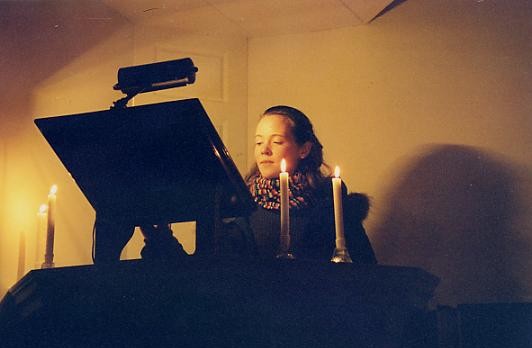
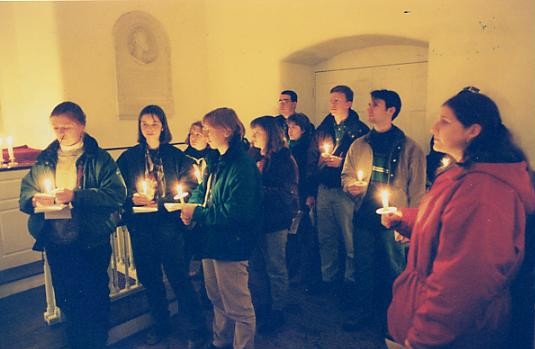
Every year since, a small group of students, faculty members, staff and alumni has returned to the chapel. Holding candles, they sing Christmas carols and give thanks to the family that made Penn State Erie, The Behrend College, possible.

A reading

This year’s program will begin at 7 p.m. Friday, Dec. 6. Shuttle service will be offered from the Reed Union Building.

“It’s a very different feeling, when you gather in there,” said Ken Miller, senior director for campus planning and student affairs. “You’re singing Christmas carols. Everybody’s holding a candle. It’s special.”

Singing

The program honors Ernst and Mary Behrend, whose 400-acre farm property is now a four-year college with 4,350 students. It also pays tribute to their son Warren, who died on Dec. 19, 1929, while driving to South Carolina for a family holiday. He had swerved to avoid a school bus, which a 16-year-old student was driving.

No one on the bus was hurt.

Warren’s death devastated the Behrends. “They say Ernst never got over it,” Miller said.

Mary Behrend spent less time at the farm, choosing instead to live at the family’s home in Connecticut. In the spring of 1948, while returning from a cross-country trip, she stopped at the property. From a window, she noticed two men walking. She went out to talk and learned they were scouting land for a new Penn State campus. Within six months, they would have it.

Entering the chapel

Paint the campus purple for #AJO

ajo

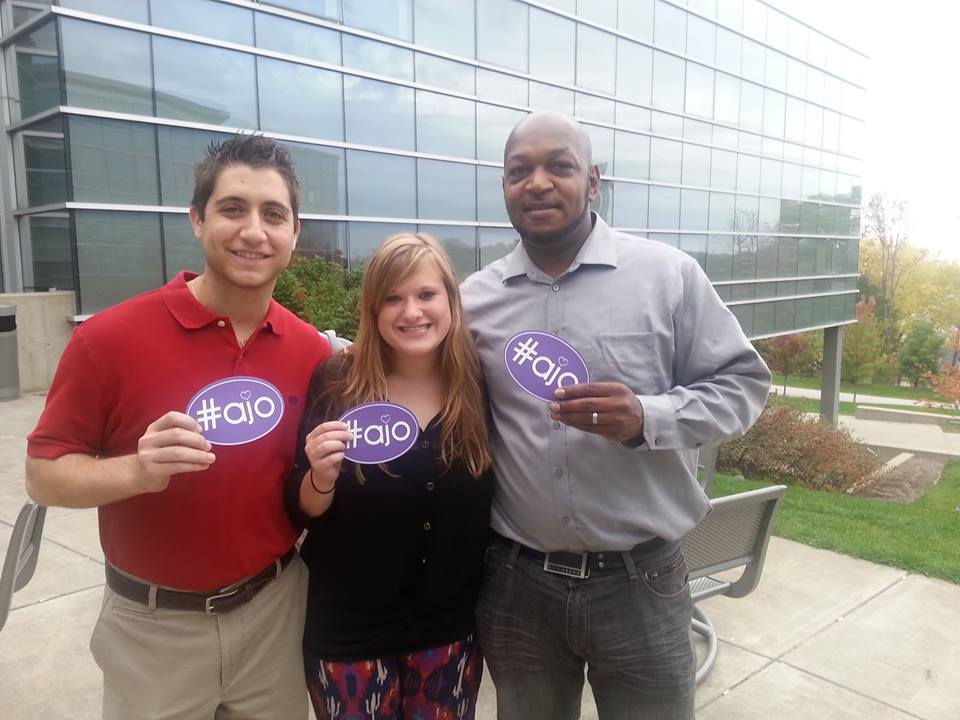
From left, Anthony Cremonese, Melissa Lichtinger, and Antoine Holman are part of the student team working on the #AJO Forever Foundation website.

By Heather Cass
Publications & Design Coordinator, Penn State Behrend

Melissa Lichtinger, a senior majoring in international business and marketing, was working at the Make a Wish booth at a women’s expo in Erie this October when she met Alyssa O’Neill’s father, Jason, and knew she wanted to do whatever she could to help with the #AJO campaign.

AJO stands for Alyssa J. O’Neill, 18, who was a first-year student at Penn State Behrend when she died after suffering a grand mal seizure at home. The day before her death, O’Neill had texted her mother, saying they should meet at Starbucks for a pumpkin spice latte. After her funeral, her parents, Jason and Sarah, bought ten of the drinks for strangers. The barista marked the cups—using purple, a color associated with epilepsy awareness—with #AJO.

That spurred a far broader pay-it-forward campaign. People paid for strangers’ meals, gas, groceries and layaway purchases. They sent #AJO photos from London, Iraq and the Canary Islands. It’s still going. The #AJO Forever in Our Hearts Facebook page has more than 41,000 “likes.”

“Jason said that he and his wife were overwhelmed just trying to keep up with the photos and correspondence pouring in through the AJO  Facebook page,” Lichtinger said. “I wondered how, with my background in marketing, I could help them.”

She asked Dr. Kathleen Noce, senior lecturer in management information systems, if Partnership Erie, a nonprofit outreach extension of the Sam and Irene Black School of Business, could develop a new eCommerce website and social media strategy for the AJO Forever foundation.

Noce agreed and Lichtinger recruited four more students—Anthony Cremonese, Antoine Holman, Kelsie Noce, and Michael Thompson—to work on the project with her.

The new site is expected to be completed by the end of the year.

But Lichtinger didn’t think that was enough. “I really wanted to do something to raise money for the foundation,” she said.

So she talked to Rhonda Reynolds, a Housing and Food Services employee who helped create a very successful employee service committee, and together they came up with the idea to “paint the campus purple” on Tuesday, Dec. 10.

Students, faculty, and staff are all invited to wear purple and take part in making the letters #AJO for a group photo on Dec. 10 at 4 p.m. in the Clark Café in the Jack Burke Research and Economic Development Center. Participants are asked to give at least $2 to the AJO Forever Fund to be a part of the photo.

Students will begin collecting donations at 3 p.m. The first 200 to donate will receive a free purple hat!

The event is sponsored by The Sam and Irene Black School of Business, Partnership Erie, Behrend Commission for Women, the School of Nursing, and Grimm’s Embroidery.

Hope to see you there!

Behrend students humbled by poverty simulation

image

By Steve Orbanek
Marketing and Communications Specialist, Penn State Behrend

According to the United States Census, 15 percent of Americans, roughly 46.5 million people, live at or below the government-defined poverty line.

For an hour this fall, Khardiata Mbengue and Teireik Williams could be counted among that group.

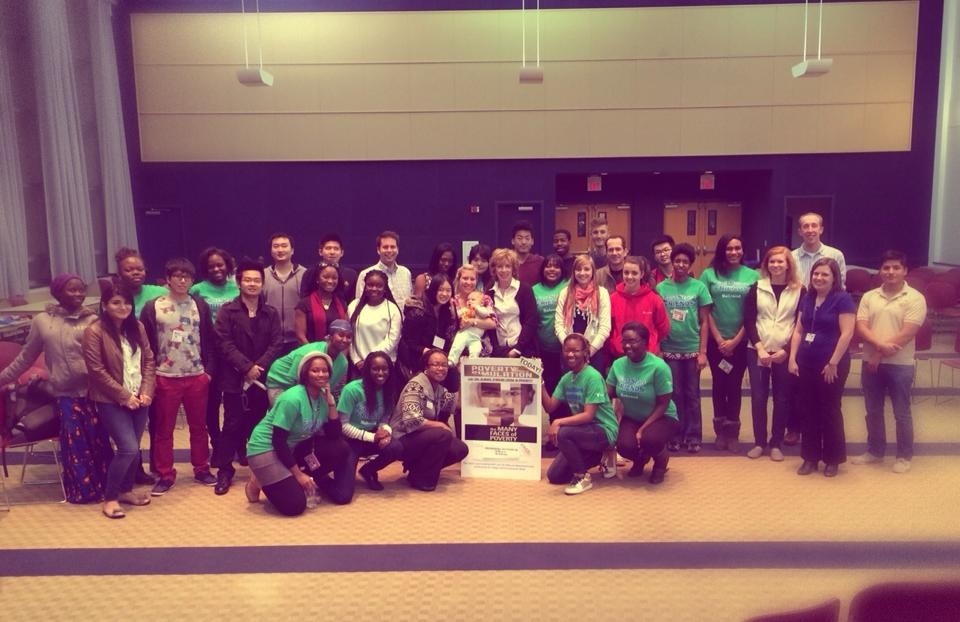
Mbengue and Williams were participants in a poverty simulation sponsored by the Office of Educational Equity & Diversity Programs and the Human Relations Programming Council.

The simulation is designed to help participants understand what it’s like to live in a low-income family, surviving from month to month. Individuals are grouped together as families and are tasked with providing for basic necessities and shelter during the course of four 15-minute “weeks.”

For Mbengue, a junior biology major, and Williams, a sophomore communication and creative writing double major, the simulation was a humbling experience.

The two were paired up as husband and wife as part of the simulation.

I caught up with them to get their thoughts on the program…

Steve: Hi Khardita and Teireik. Thanks for taking the time to join me today. So, to start, why don’t you provide me with a general overview on the poverty simulation?

Khardiata: The poverty simulation is basically designed to help you get insight on how you would live if you were less fortunate or part of a low-income family. Going through the poverty simulation makes you realize how people often live in impoverished conditions even when it’s not their own fault. The system is against them, so they can never work their way up. You also realize that you’re never too far away from the life that they live. After college, we might be doing the same thing that we were doing in the poverty simulation.

Teireik: The poverty simulation provided us with an opportunity to have the same responsibilities of a person who is poverty stricken. It was really designed for you to live a day in the life of the less fortunate.

Steve: How exactly was the simulation set up?

Teireik: The room is divided into different circles, and each circle had chairs that represented a family. Surrounding the housesholds were all of the different businesses and organizations that you had to visit. You also had to purchase a transportation pass for anywhere that you would go. Before the simulation, they gave you a portfolio that had every aspect of your life: how old you were, your family’s history, your savings and your belongings. Everybody’s budget was different. We had savings, and everybody had possessions and things that could be sold for extra money.

Khardiata: And there was a cop, so you could go to jail if you did something wrong.

DSC00083

Steve: Wow, so you could break the law during the simulation?

Khardiata: Someone actually did that, and that person was the only one in the entire simulation who was able to pay their own bills. It just goes to show that it can be difficult to survive, even if you live an honest life. It puts you in a situation where you do what you have to do.

Steve: So, can you give me an idea of what a typical day was like for the both of you?

Teireik: She had to go to work, we had to take the kids to school, we had to pay bills, we had to sign up for benefits like food stamps, and we had to sell our belongings if we ran out of money.

Khardiata: I literally had to run to work, so I would be there on time to receive the full benefits of my work. Even if your child did something wrong at school, it would affect your whole life.

Steve: What do you mean?

Teireik: Our daughter got suspended at school, so one of us had to be at home to take care of her. Khardiata had to go to work, so I was unable go out and pay our bills, search for a job or apply for benefits.

DSC00086

Steve: It seems like the simulation required you to balance a lot of different responsibilities. How humbling was this experience for you?

Khardiata: It was incredibly humbling. It showed me that you should be grateful for everything you have because not everyone is as fortunate. We did this for an hour, but the fact is that many people actually live this life. That was eye-opening for me.

Steve: People living in poverty sometimes get a bit of a bad reputation. Did this change your perspective on them at all?

Khardiata: When I went into the Poverty Simulation, I had that same idea. I thought that if people are in poverty, they could work themselves out. But my opinion changed after living through it. We were doing all we could just to pay our bills and raise the kids, but it still was not enough. Expenses pile up on top of each other. As soon as you thought you had something handled, something else would pop up. That was a major thing that I learned.

Teireik: This simulation shows that not everyone is afforded the same opportunities, and sometimes bad things happen to good people. It’s just out of their control. It’s not necessarily their fault, but they get a bad reputation for it.

Steve: This was the second year for the Poverty Simulation at Behrend. Is this something that you would recommend to others?

Khardiata: Yes, definitely I would. It makes you think, what if this does happen to me? It’s not farfetched to think that it could happen to you. It’s a very realistic thing, and it humbles you a bit. As college students, we seem to think that we’re all struggling, but it’s not as bad as it seems.

Teireik: People should definitely experience it. If you get an opportunity to do something like this, why not? It’s much better to experience poverty through a simulation rather than for real.

6 Things I Learned at the Science Café

Science Cafe_2013-14.pdf

By Heather Cass
Publications & Design Coordinator, Penn State Behrend

Each year, the local chapter of Sigma Xi, a scientific research society which several School of Science faculty members belong to, hosts a series of informal get togethers (the Science Café) designed to “bring scientists and community member together to explore scientific topics in a pubic, accessible, and relaxed venue.”

“Our catch phrase is ‘Food. Beer. Science,'” said Dr. Jay Amicangelo, associate professor of chemistry.

They had me at food. Beer sealed the deal.

So last night, my 10-year-old-daughter, a budding biologist, and I attended the November Science Café at Calamari’s Squid Row, a bar and restaurant in downtown Erie, along with 50+ other people. Many were college students, probably earning extra credit, judging by the note taking I saw going on but there were also several families with kids there.

Last night’s topic was “Wildlife at Presque Isle” and the presenters were Ray Bierbower ’05 (a Behrend grad)  and Brian Gula, Environmental Education Specialists at Presque Isle State Park.

The pair clearly love their jobs. Their enthusiasm for the park, nature, and wildlife was evident and infectious.

As an avid runner and Erie native, I’ve run every inch of that park more times than I can possibly count and, yet, last night, I still learned some things I never knew.

1. Lake Erie, which is the shallowest of the Great Lakes (210 feet at its deepest point),  has more consumable fish than all the other Great Lakes combined.

2. There are typically 6 to 9 coyotes on the park and 40 to 60 deer, and that is a manageable number. There have been as many as 14 coyote and more than 100 deer, which is too many.  Cars, more than guns, tend to cull the herd.

3. Presque Isle Bay is home to a “living fossil.” The bowfish is the last of its species, which thrived about 150 million years ago. It has a lunglike swim bladder that opens to the throat, allowing it to breathe air.

4. One of the ugliest species in the lake has a deceiving cute name. The mudpuppy, which lives its entire life underwater, is distinguished as the only salamander that makes a sound—a dog-like barking.

Mudpuppy (Necturus maculosus).  Walhonding River just below 6-mile dam.

Photo from OhioAmphibians.com

5. People let all kinds of animals go free at Presque Isle. The rangers have found everything from a skate , a small stingray-like fish, to alligators to pot-bellied pigs to pet rabbits, birds, cats, and dogs.  Most of them die.

6. Auto/animal deaths are frequent and are a really good reason to drive the posted 20 m.p.h. speed limit at the park. Three of four fox kits born last year were killed by cars. The mother was eventually hit by a car and killed, too.  The rangers don’t blame motorists.  “There are 4.5 million visitors to the park every year — that’s a lot of cars to dodge,” Gula said. Beirbower added that he’s had many near misses even when driving 10 or 15 miles per hour. That said, they still wish motorists would slow down and keep an eye out for wildlife when driving around the park.

The Science Café was just what Sigma Xi intended it to be — a low-key, informal, but informative scientific “lecture” in non-intimidating environment.  My daughter and I enjoyed it equally.

Mark your calendar now for the remaining Science Café presentations. On the menu:

February 13, 2014 — “Meat, Bacteria and Antibiotics: A Recipe for Concern”  — at Calamari’s Squid Row.  (Hmm…methinks few may order dinner that night.)

March 20, 2014 — “Debunking ‘Bones'” at Voodoo Brewery in Meadville, Pa. (I hear this place is absolutely worth the drive down I-79).

Science Cafe_2013-14.pdf

Veteran’s Day of particular significance for Behrend freshman

DSC_3367

By Steve Orbanek
Marketing Communications Specialist, Penn State Behrend

Papers and exams can be a point of stress for first-year students, but it’s not the kind of stress that Mike Wehrer knows.

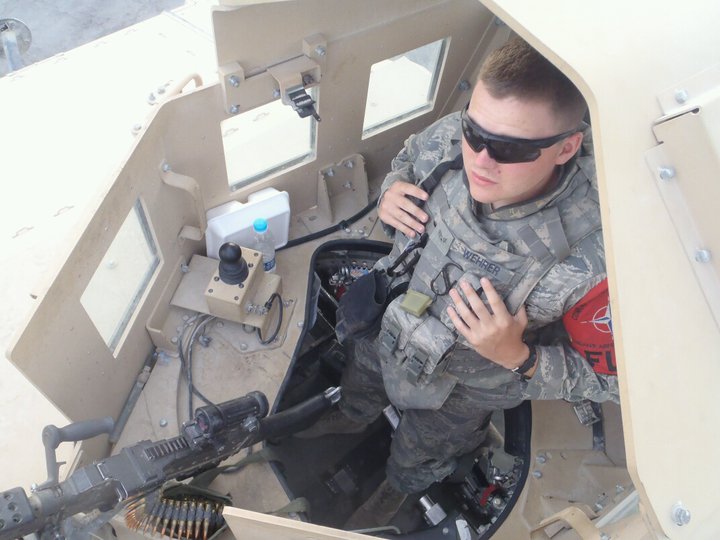
Wehrer, a freshman communications major and current managing editor of the Behrend Beacon, is a member of the United States Air Force Reserves. The 23-year-old Girard, Pa., native spent a half year deployed in Afghanistan in 2011, and it’s safe to say college exams pale in comparison to some of the things that Wehrer experienced.

In honor of Veteran’s Day, I decided to catch up with Mike to get his thoughts on the national holiday and find out what personal significance it holds for him. While many Americans may think of Veteran’s Day as just another day off of work, for Mike and more than 21 million others, this day is a part of their identities.

Here’s what Mike had to say on the topic:

Steve: Hi Mike, thanks for taking the time to chat with me. Could you give me a feel for your background and what ultimately led you to enlist in the military?

Mike: Well, I started out at (Penn State Behrend) out of high school, but basically ended up dropping out after two semesters. I wasn’t a good student and I lacked motivation. It made sense to join the military to help pay off the student loans I already had, and also to help provide the discipline and motivation I needed to grow up a bit.

Steve: When did you enlist in the Air Force Reserves, and what was your experience like from there?

Mike: It was December 2, 2009, and I was 19. I left for basic training in February, I think it might have been Valentines’ Day actually, and that was at Lackland Air Force Base in Texas. Then I entered the Air Force Security Forces Academy. From there, I joined my current unit at Niagara Falls at Niagara Falls Air Reserve Station. I was told when I got there that I’d be on the next deployment.

Steve: Wow, that had to be startling to have the deployment come so quickly. Was that scary?

Mike: It’s what I wanted. The reason I joined security is because it’s the most deployed career field in the Air Force. I thought it would be a good thing for my career. I want to be a war correspondent and an embedded reporter, and I thought it would be a good resume point.

Steve: When was it that you were actually deployed, and what was it like once you got to Afghanistan?

Mike: I left Erie in May, but I actually hit Afghanistan on July 7, 2011. There’s a famous quote, I’m not exactly sure what it is, but it’s along the lines of “there are long periods of boredom punctuated by moments of sheer terror.” I was security for Kandahar Airfield, which basically meant I was controlling access onto the airfield and responding to rocket attacks.

Steve: What was that pressure like? Was it difficult to have such responsibility right away?

Mike: You kind of didn’t have a choice but to do it. You had to accomplish it. If you didn’t, they’d find someone else who could.

268870_1842559423342_4954398_n

Steve: Switching gears a bit, when did you come back to the United States, and enroll back here at Behrend?

Mike: I left Afghanistan on January 15, 2012, and I got back on January 20. It’s been four years since I was last enrolled here, and I applied for and basically got an academic reset. That’s not what it’s called, but that’s basically what it did. It allowed my GPA to go back to zero, so I could start from scratch.

Steve: Was returning to college always a goal of yours?

Mike: It was always a goal. I knew what I wanted to do.

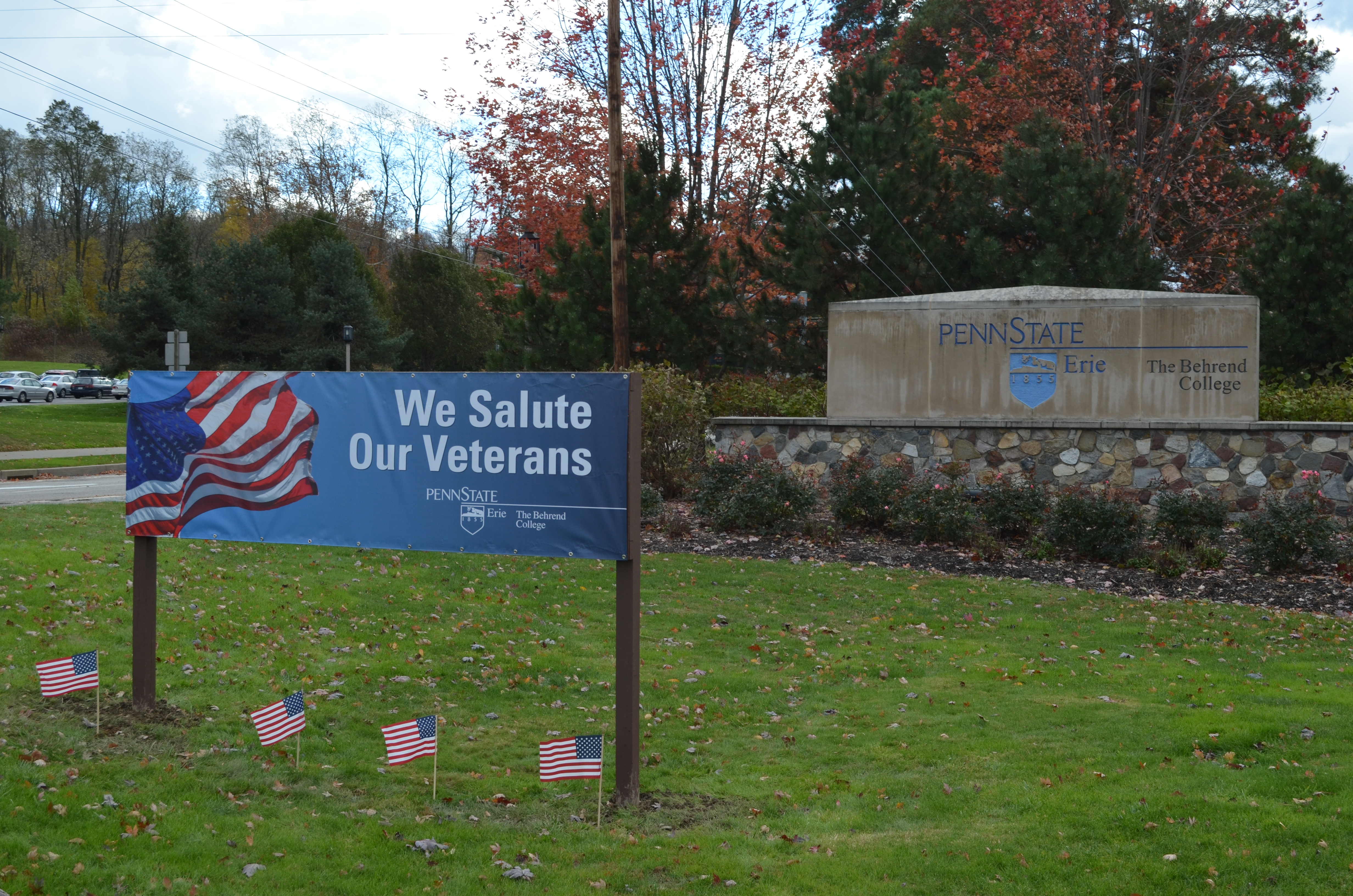
Steve: Why did you choose to come back to Behrend? This fall, Victory Media once again ranked Behrend among the top 20 percent of Veterans Affairs-approved institutions based on the services and resources they offer to military-connected students. Did that factor into your decision at all?

Mike: I had been freelancing last year for the Behrend Beacon, and I knew that I could get a good position on the paper right away. If I went to any other school, I didn’t know if I would have those opportunities right away.

Steve: Would you say your experiences overseas have had an effect on your current college experience?

Mike: Yeah, definitely. It’s small changes, like I always look around a room whenever I walk in it. Half of that is my deployment, and half of that’s just being a cop. As far as academically, it kind of made me realize how easy college really is.

Steve: To follow up on that, you mentioned earlier how you initially enlisted in the military to help improve your discipline and motivation. Do you feel as if your experience overseas has helped you do that?

Mike: I definitely got that. I have realized that not going out on the weekend, and having to stay in and do homework is not a big deal. There are much harder things that I’ve gone through, and that I’ve seen others go through. This is all easy, and it’s easy to make these sacrifices.

DSC_0577

Steve: With Monday being Veteran’s Day, can you give me an idea of how it feels for you personally on that day?

Mike: It’s hard to define. It makes me proud. I’ll probably wear a pin or something. The VA class defines me as a combat veteran because it was a combat mission, but I don’t see myself as a combat veteran because I never had to fire my weapon. So, I still don’t like to call myself a combat veteran because I know guys who have been shot, wounded, or had to kill someone, and to put myself in the same class as them seems not disrespectful but close to it.

Steve: As a veteran yourself, how would you suggest people go about honoring this holiday?

Mike: It’s the small things. Thanking people in uniform means a lot to veterans. Making a donation to something. And, of course, there are a thousand different organizations that you can donate to. Give time, money, whatever you can. My dad has worked with homeless veterans at the VA, and a lot of people don’t realize how many people can’t cope with coming back. You can also always send care packages to those who are still over there, especially now that we’re getting closer to Thanksgiving and Christmas.