Behrend student offers disaster relief in Philippines over winter break

1546086_10151849088656262_1393937241_n

By Steve Orbanek
Marketing Communications Specialist, Penn State Behrend

So how’d you spend your winter break?

Relaxing?

Traveling?

Catching up on some z’s?

Penn State Behrend senior nursing major Andres Morales opted to spend his break in a less conventional way.

Morales, along with his wife Katie, father-in-law, and another member of the Federated Church of East Springfield, made a trip to the Philippines this December to offer disaster relief to victims of Typhoon Haiyan and the earthquake that hit the island of Bohol.

Morales, a native of Costa Rica, had been searching for a way to help the relief efforts for some time, and he found his answer after he searched Google and discovered the nonprofit organization, All Hands Volunteers. Like the name implies, All Hands Volunteers is a U.S.-based nonprofit organization offers hands-on assistance to communities around the world.

Through All Hands Volunteers, Morales and his church group set up a relief trip to the island of Leyte in the Philippines. To make the trip, Morales had to give up part of his winter break, but it was an easy sacrifice.

“If they can’t have a nice holiday, then why should I?” Morales said.

1560497_10151849112751262_217180321_n

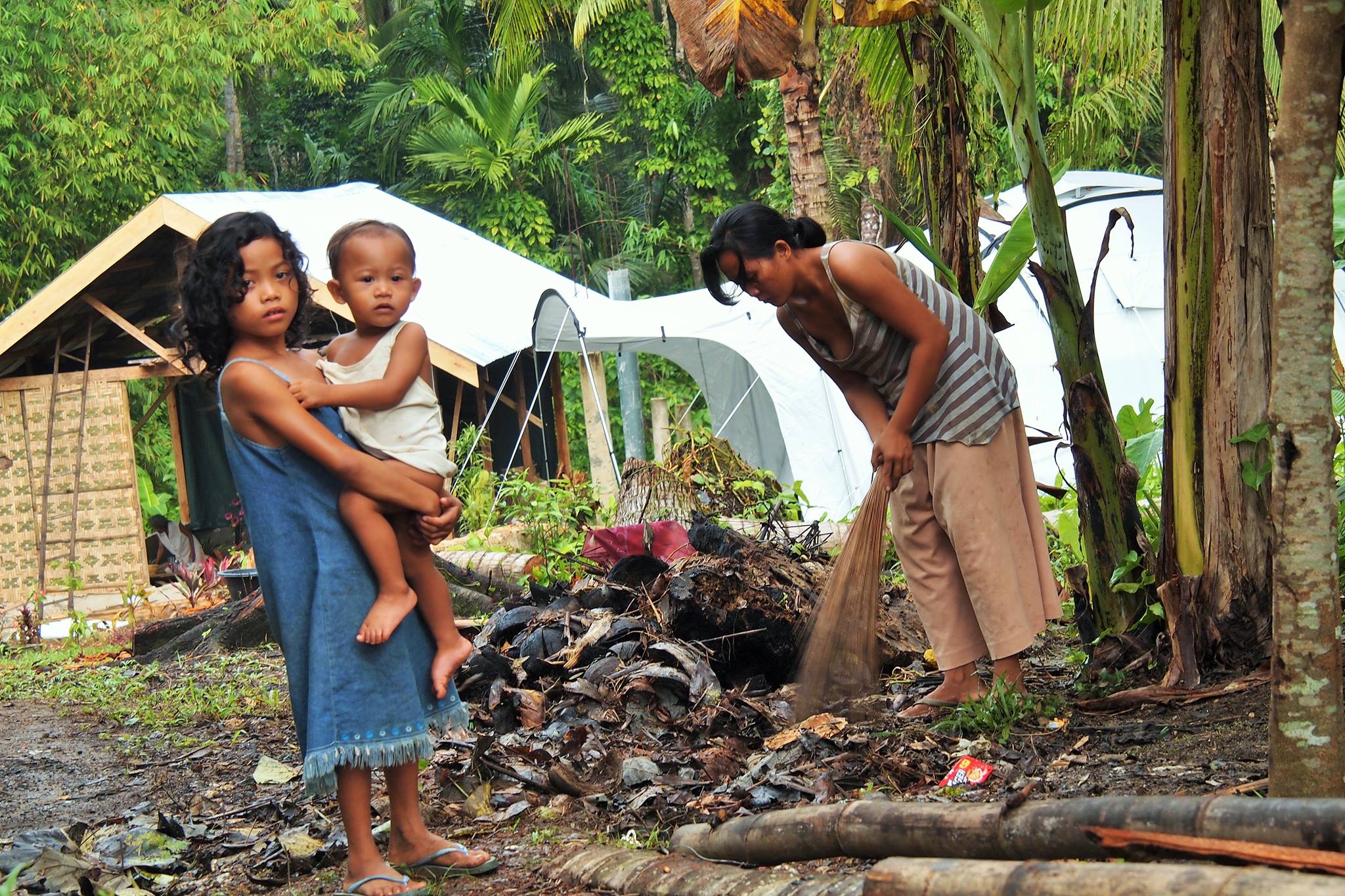
The group arrived at Leyte on December 10. A total of 65 volunteers from all over the world joined Morales’ group, and they spent the majority of their time doing deconstruction work. They took down unsafe homes and also cleared out rubble and trees with chain saws.

Morales said the experience was humbling, and that was especially true after his group took a ride on top of a jeepney.

The jeepney, which is the most popular form of public transportation in the Philippines, took Morales to the area that had been most affected by the typhoon.

“Entire blocks were just flattened. You couldn’t recognize anything. You would go miles before seeing actual homes,” Morales said. “A lot of us just went speechless. It’s just hard to grasp because you think of the things back home, and then you see these people who lost everything.”

While the natives may have had next to nothing in the way of material possessions, Morales said they never hesitated to express their gratitude toward Morales and the other volunteers.

“Strangers would buy food for us during work time, and they didn’t have much,” Morales said. “All they could afford was a loaf of bread and a Coca-Cola. You didn’t want to accept it, but it meant everything to them.”

1612640_10151886755991262_1572491099_o

On December 20, Morales and his group then took two ferries to Bohol where they began to focus their relief efforts toward the 7.2 moment magnitude earthquake that had struck the island on October 15.

Once again, the group began to deconstruct homes and salvage materials.

On Christmas Day, Morales and his church group returned to the United States. Morales said the trip had a profound effect on him.

“On Sunday, I didn’t want to go out for an easy run,” said Morales, who is a member of Behrend’s track and field team.  “But if the people from the Philippines can get back up from nothing, then why can’t I go on a three-mile run?”

Most importantly, Morales’ trip to the Philippines may have provided him with a sneak peek at his future. He will graduate in May, and he hopes to use his nursing degree to benefit the less fortunate.

“The only reason I want to get a job in critical care and pediatrics is to utilize that experience in another country where there’s not as much access to healthcare,” Morales said. “Our mission was two-fold. Yes, we went there to help, but it also allowed us to get our feet wet as to what the future may hold. Disasters are going to keep happening, and someone needs to be there.”

Behrend alumnus’ company grows following Shark Tank appearance

cellhelmet%20team%20on%20ABCs%20Shark%20Tank

By Steve Orbanek
Marketing Communications Specialist, Penn State Behrend

Sometimes our biggest victories can come in defeat. Just ask David Artuso.

In March 2013, the 2011 Penn State Behrend alumnus attempted to impress investors, including Dallas Mavericks owner Mark Cuban, on ABC’s Shark Tank by pitching cellhelmet, a cell-phone case company he started in 2011 with two friends. The company was founded with the goal of offering cell-phone users a new, sleek case that comes with a guarantee: if the phone breaks in the case, the company will replace everything for $50.

Cuban and the other investors on Shark Tank decided against investing in cellhelmet as they felt competitors would be able to undercut the company’s pricing, but the entire experience can hardly be considered a loss for Artuso and his partners.

“It’s a really good leveraging point when you talk to people,” says Artuso, who is cellhelmet’s CMO, co-founder and master technician.  “You can have a sales guy call a person and ask, ‘Have you ever seen ABC’s Shark Tank?’ They’ll respond, ‘Yeah, I saw that,’ so it’s a nice entry point that helps us get in front of people. It established a lot of legitimacy that we didn’t have before.”

After the show was filmed, cellhelmet reached a deal with Eldridge Communications, a Pittsburgh-based Verizon Wireless retailer, to place cases in their stores. The agreement was a win-win for all parties, but it also had a significant impact on how cellhelmet would later reevaluate its business strategy.

Repairs have always been part of what cellhelmet does, but it had never been the focus. However, that changed thanks to the partnership with Eldridge Communications.

cellhelmet began to fix phones for Eldridge Communications, which would then sell them as refurbished phones. Since then, cellhelmet has focused its efforts on repairs, and the results have been very positive.

“It’s actually growing faster than the cases,” Artuso says. “We still sell a decent amount of them, but our main focus is repairs.”

cellhelmet repairs phones and tablets for a handful of companies and offers public repairs via mail order on its website. Customers can also visit the company’s headquarters in Wexford, Pa., for a walk-in discount.

“We use certified repair technicians, the highest-quality grade parts and offer a lifetime guarantee on our repairs,” Artuso says. “We basically built our entire business model on quality. We like you, but we don’t want to see you again because you probably don’t want to get your phone fixed again. When we’re done fixing a phone, you basically have a brand new device.”

cellhelmet has big plans for the future. Artuso says the company would like to open a few retail locations in the next year that will focus on repairs, and the ultimate goal is to franchise the business model.

“We have our hands in the right area now,” Artuso says. “It’s just a really good platform for us to grow.”

cellhelmet will continue to sell its small, compact cases for which the company is named, but the focus has definitely changed. Artuso says there are no plans to manufacture new cases in the near future because of the high costs involved.

The company recently doubled in size to eight employees in November, and there are plans to hire more as well.

No, Artuso may not have been a “winner” ten months ago when he appeared on Shark Tank, but it’s clear he’s winning now.

So, would he go back and do it all again?

“Oh, yeah. Drop of a hat,” Artuso says.

Link to the Shark Tank episode featuring Artuso

Veteran’s Day of particular significance for Behrend freshman

DSC_3367

By Steve Orbanek
Marketing Communications Specialist, Penn State Behrend

Papers and exams can be a point of stress for first-year students, but it’s not the kind of stress that Mike Wehrer knows.

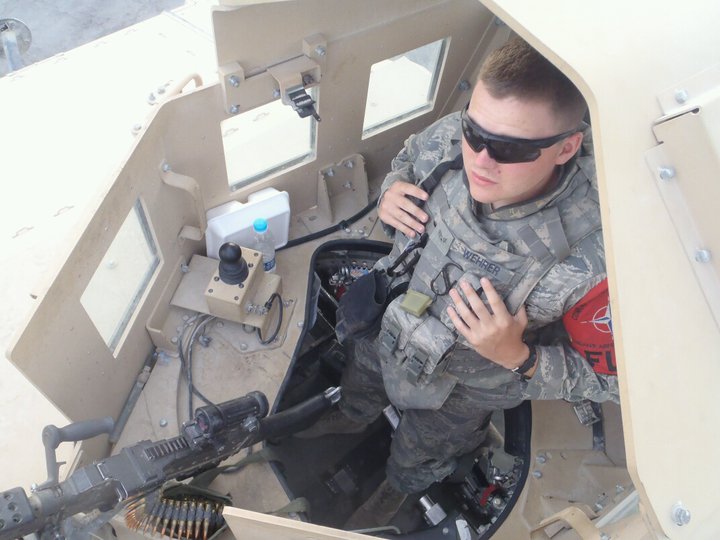
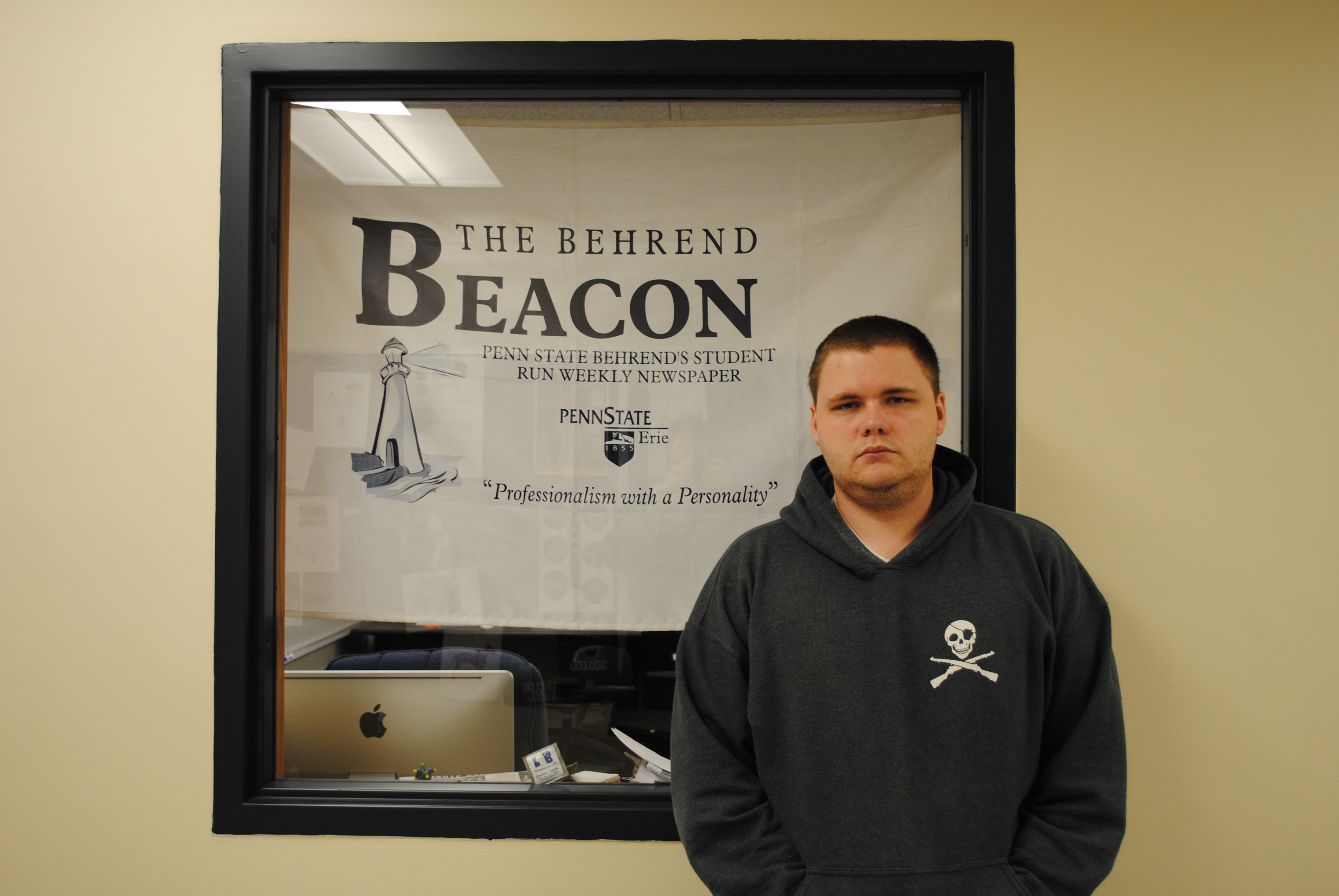
Wehrer, a freshman communications major and current managing editor of the Behrend Beacon, is a member of the United States Air Force Reserves. The 23-year-old Girard, Pa., native spent a half year deployed in Afghanistan in 2011, and it’s safe to say college exams pale in comparison to some of the things that Wehrer experienced.

In honor of Veteran’s Day, I decided to catch up with Mike to get his thoughts on the national holiday and find out what personal significance it holds for him. While many Americans may think of Veteran’s Day as just another day off of work, for Mike and more than 21 million others, this day is a part of their identities.

Here’s what Mike had to say on the topic:

Steve: Hi Mike, thanks for taking the time to chat with me. Could you give me a feel for your background and what ultimately led you to enlist in the military?

Mike: Well, I started out at (Penn State Behrend) out of high school, but basically ended up dropping out after two semesters. I wasn’t a good student and I lacked motivation. It made sense to join the military to help pay off the student loans I already had, and also to help provide the discipline and motivation I needed to grow up a bit.

Steve: When did you enlist in the Air Force Reserves, and what was your experience like from there?

Mike: It was December 2, 2009, and I was 19. I left for basic training in February, I think it might have been Valentines’ Day actually, and that was at Lackland Air Force Base in Texas. Then I entered the Air Force Security Forces Academy. From there, I joined my current unit at Niagara Falls at Niagara Falls Air Reserve Station. I was told when I got there that I’d be on the next deployment.

Steve: Wow, that had to be startling to have the deployment come so quickly. Was that scary?

Mike: It’s what I wanted. The reason I joined security is because it’s the most deployed career field in the Air Force. I thought it would be a good thing for my career. I want to be a war correspondent and an embedded reporter, and I thought it would be a good resume point.

Steve: When was it that you were actually deployed, and what was it like once you got to Afghanistan?

Mike: I left Erie in May, but I actually hit Afghanistan on July 7, 2011. There’s a famous quote, I’m not exactly sure what it is, but it’s along the lines of “there are long periods of boredom punctuated by moments of sheer terror.” I was security for Kandahar Airfield, which basically meant I was controlling access onto the airfield and responding to rocket attacks.

Steve: What was that pressure like? Was it difficult to have such responsibility right away?

Mike: You kind of didn’t have a choice but to do it. You had to accomplish it. If you didn’t, they’d find someone else who could.

268870_1842559423342_4954398_n

Steve: Switching gears a bit, when did you come back to the United States, and enroll back here at Behrend?

Mike: I left Afghanistan on January 15, 2012, and I got back on January 20. It’s been four years since I was last enrolled here, and I applied for and basically got an academic reset. That’s not what it’s called, but that’s basically what it did. It allowed my GPA to go back to zero, so I could start from scratch.

Steve: Was returning to college always a goal of yours?

Mike: It was always a goal. I knew what I wanted to do.

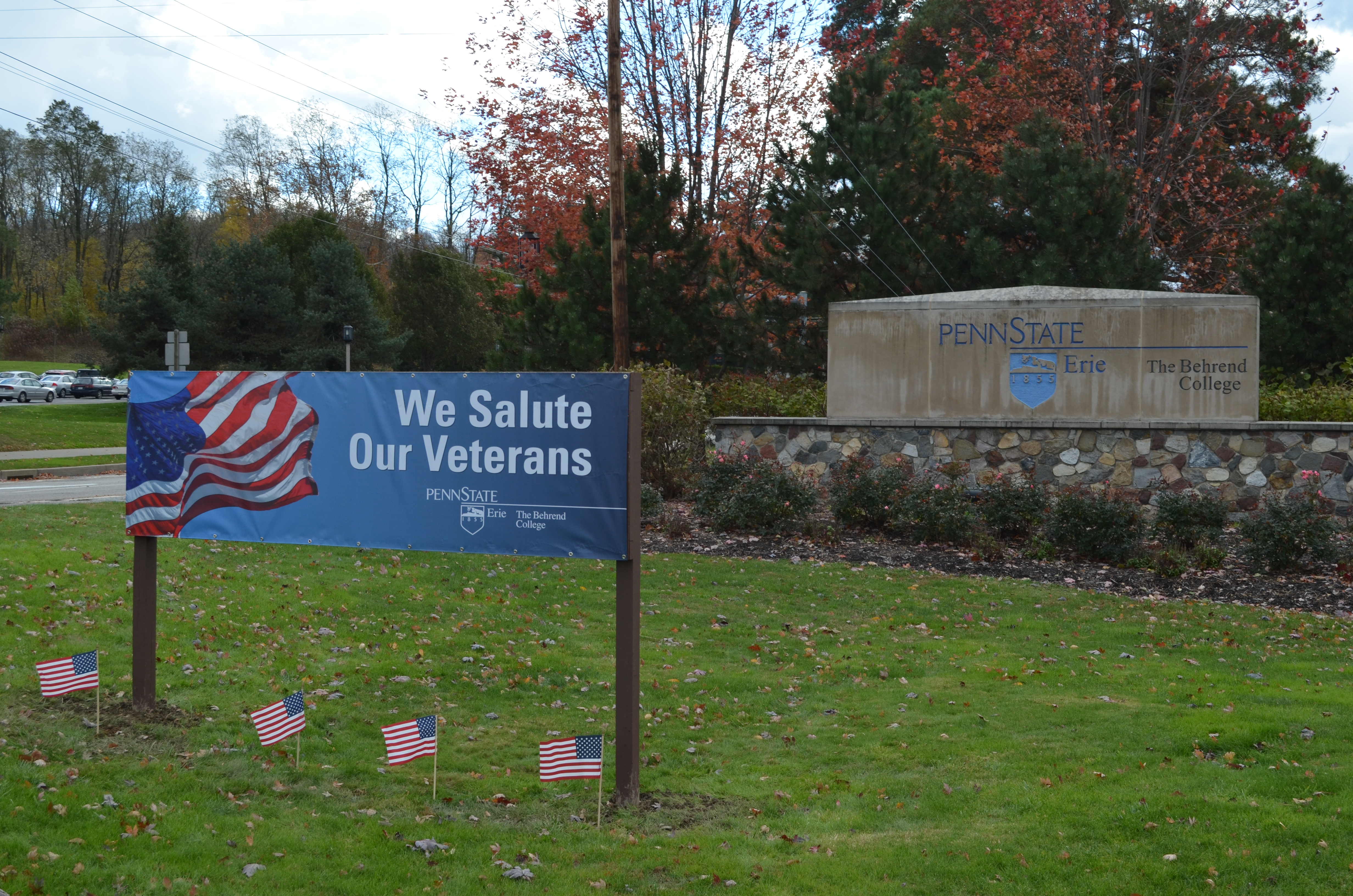
Steve: Why did you choose to come back to Behrend? This fall, Victory Media once again ranked Behrend among the top 20 percent of Veterans Affairs-approved institutions based on the services and resources they offer to military-connected students. Did that factor into your decision at all?

Mike: I had been freelancing last year for the Behrend Beacon, and I knew that I could get a good position on the paper right away. If I went to any other school, I didn’t know if I would have those opportunities right away.

Steve: Would you say your experiences overseas have had an effect on your current college experience?

Mike: Yeah, definitely. It’s small changes, like I always look around a room whenever I walk in it. Half of that is my deployment, and half of that’s just being a cop. As far as academically, it kind of made me realize how easy college really is.

Steve: To follow up on that, you mentioned earlier how you initially enlisted in the military to help improve your discipline and motivation. Do you feel as if your experience overseas has helped you do that?

Mike: I definitely got that. I have realized that not going out on the weekend, and having to stay in and do homework is not a big deal. There are much harder things that I’ve gone through, and that I’ve seen others go through. This is all easy, and it’s easy to make these sacrifices.
DSC_0577

Steve: With Monday being Veteran’s Day, can you give me an idea of how it feels for you personally on that day?

Mike: It’s hard to define. It makes me proud. I’ll probably wear a pin or something. The VA class defines me as a combat veteran because it was a combat mission, but I don’t see myself as a combat veteran because I never had to fire my weapon. So, I still don’t like to call myself a combat veteran because I know guys who have been shot, wounded, or had to kill someone, and to put myself in the same class as them seems not disrespectful but close to it.

Steve: As a veteran yourself, how would you suggest people go about honoring this holiday?

Mike: It’s the small things. Thanking people in uniform means a lot to veterans. Making a donation to something. And, of course, there are a thousand different organizations that you can donate to. Give time, money, whatever you can. My dad has worked with homeless veterans at the VA, and a lot of people don’t realize how many people can’t cope with coming back. You can also always send care packages to those who are still over there, especially now that we’re getting closer to Thanksgiving and Christmas.


Penn State Lives Here

Penn State Lives Here_010

If you’ve been anywhere near Penn State Behrend (or any Penn State campus across Pennsylvania) recently, you’ve probably noticed there is a new brand initiative — “Penn State Lives Here.”

The initiative was publicly introduced with a two-minute video during halftime of the Michigan game on Saturday, October 12, in Beaver Stadium on the University Park campus.

The theme made its appearance at Penn State Behrend yesterday:

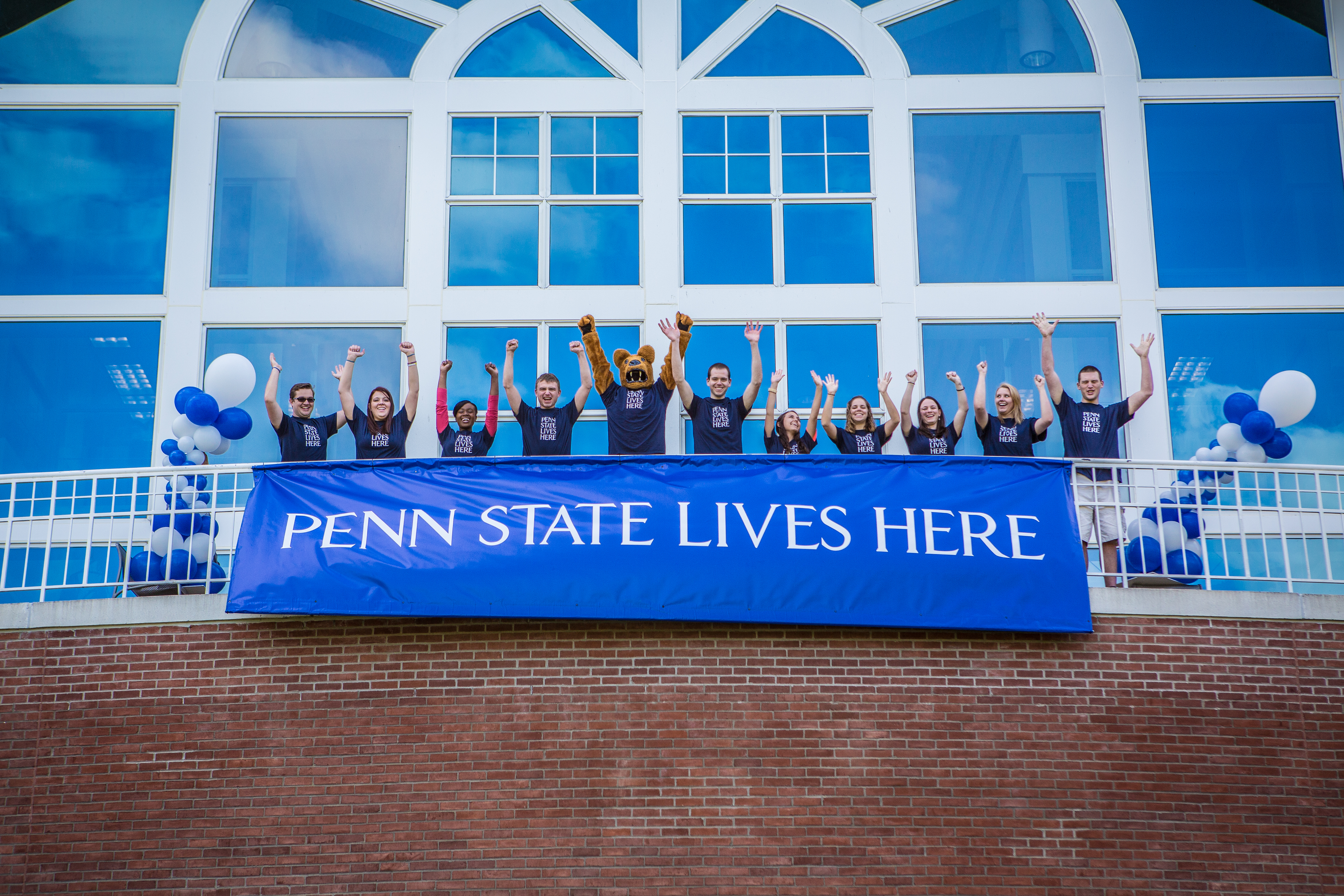
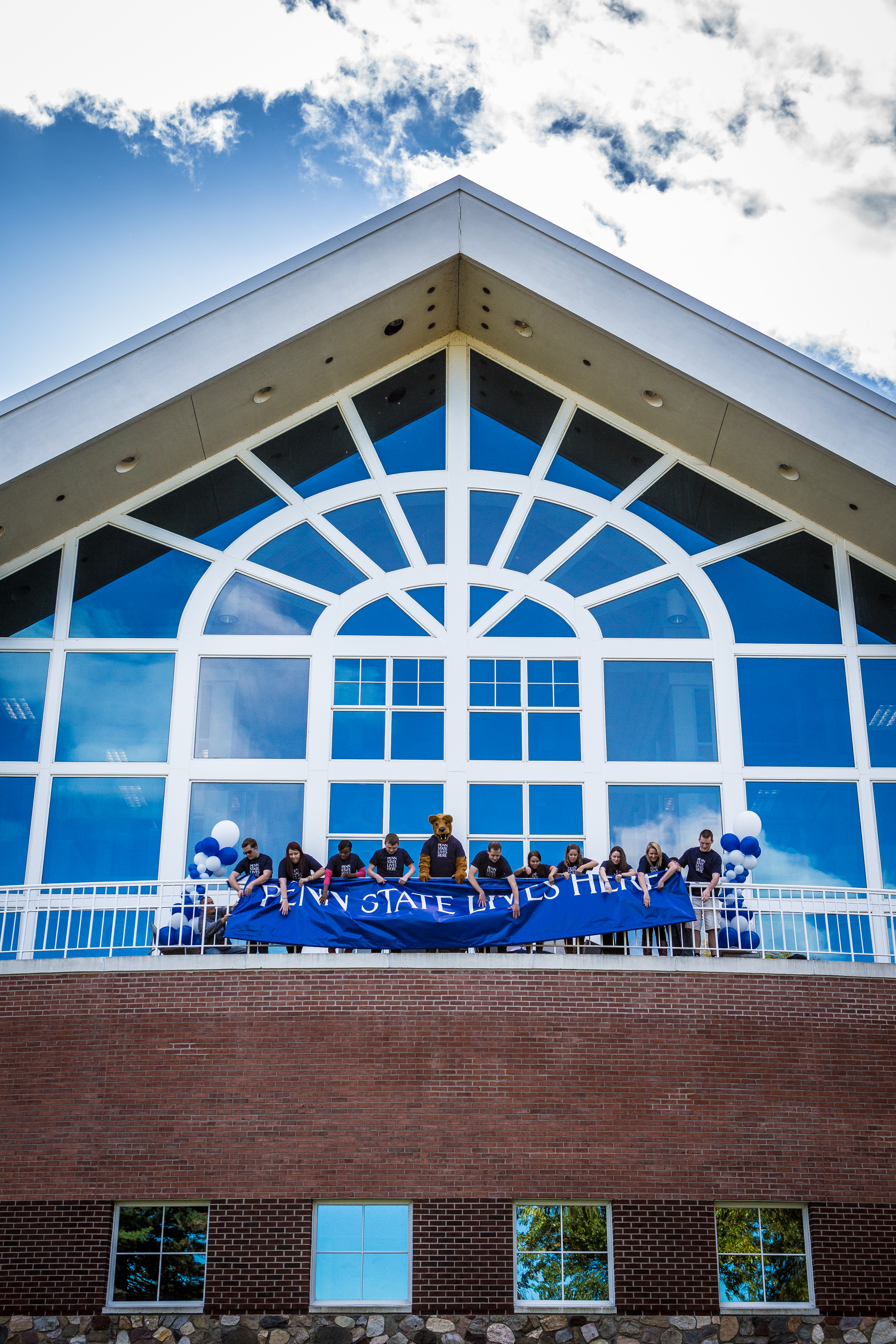
* Ten students and the Penn State lion unfurled a twenty-foot banner that now hangs off the balcony at John M. Lilley Library.  (Thank you, Mother Nature, for providing picture-perfect outdoor-event weather!)

Penn State Lives Here_004

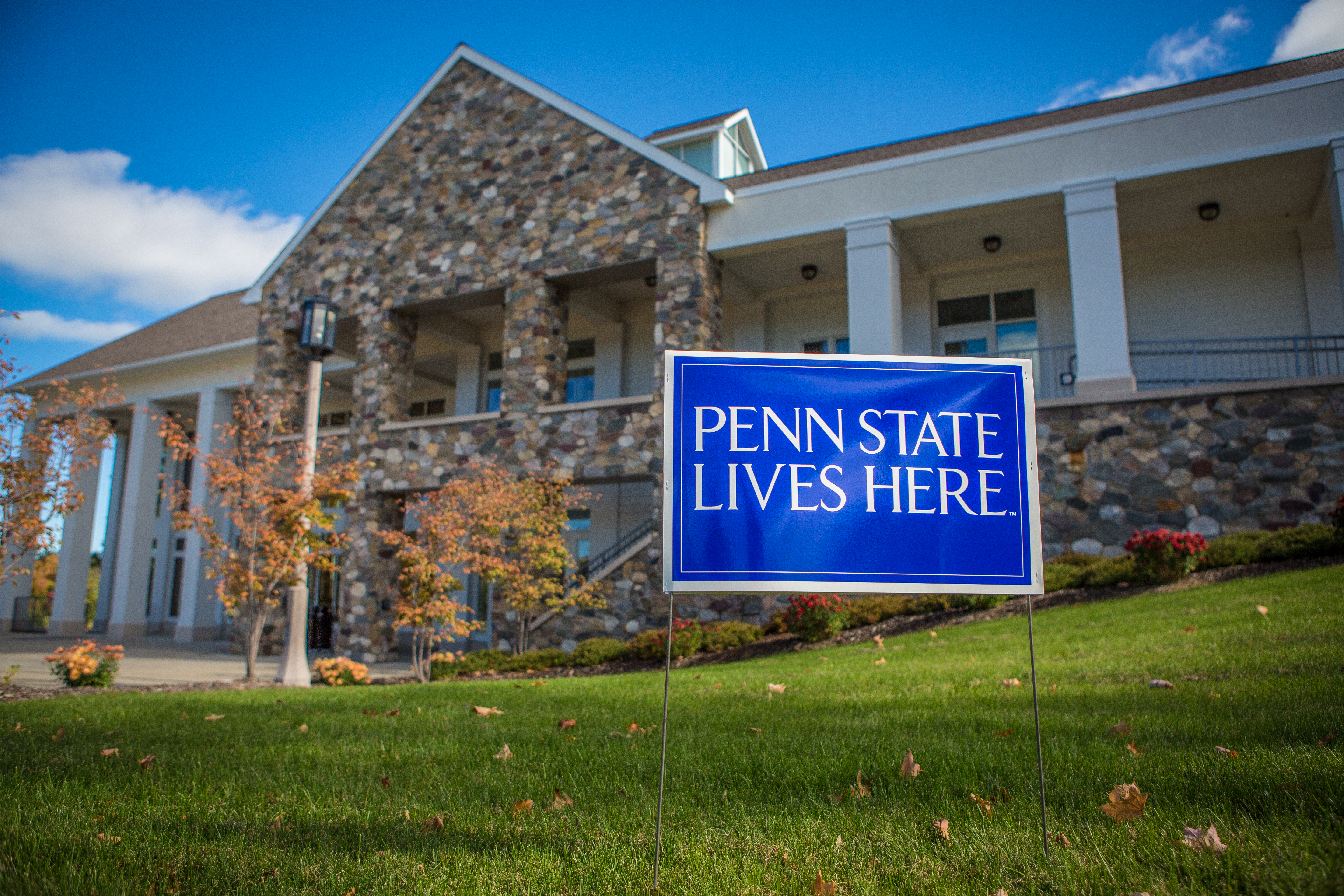
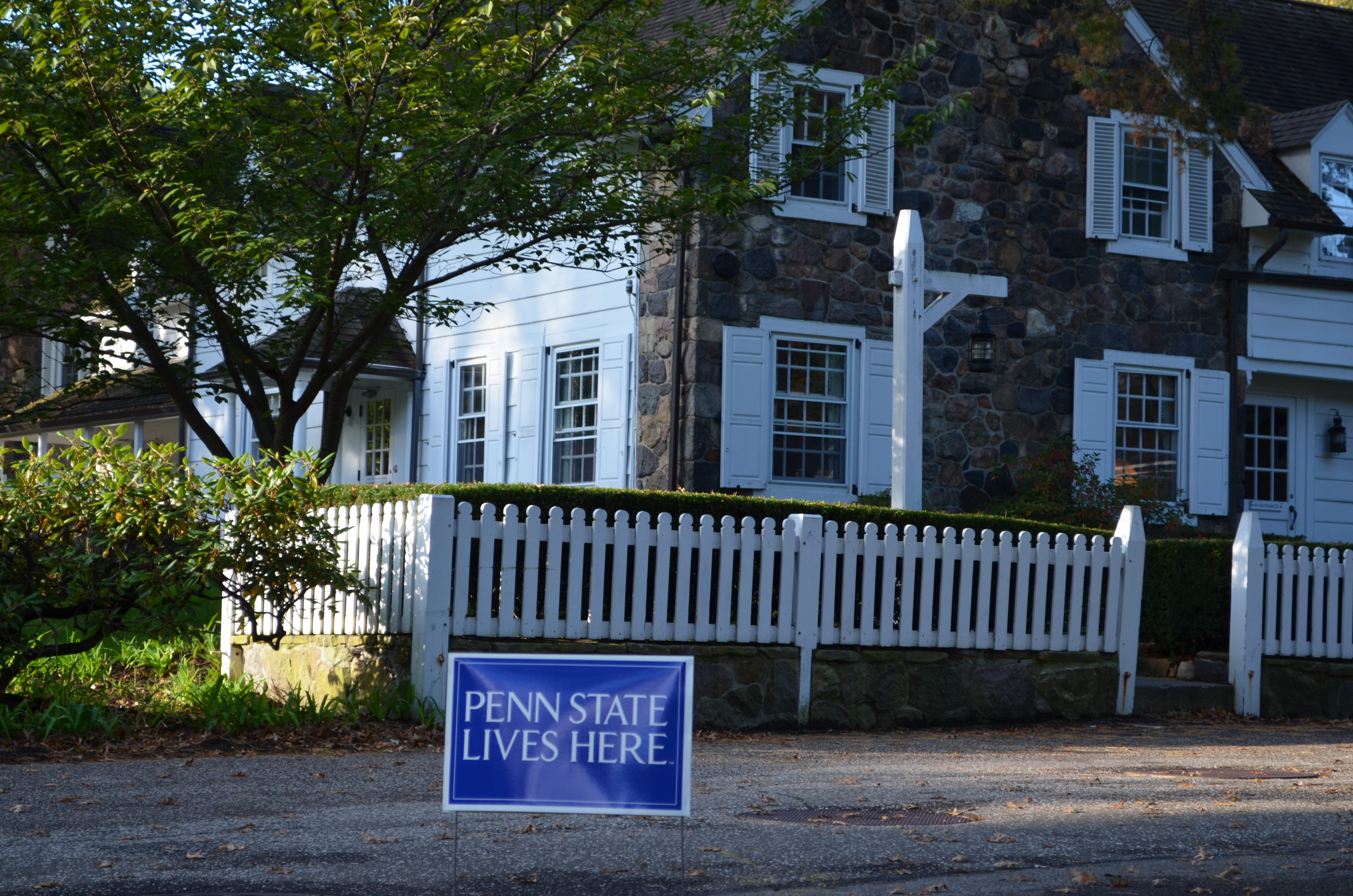
* Twenty lawn signs popped up all around campus.

DSC_1794
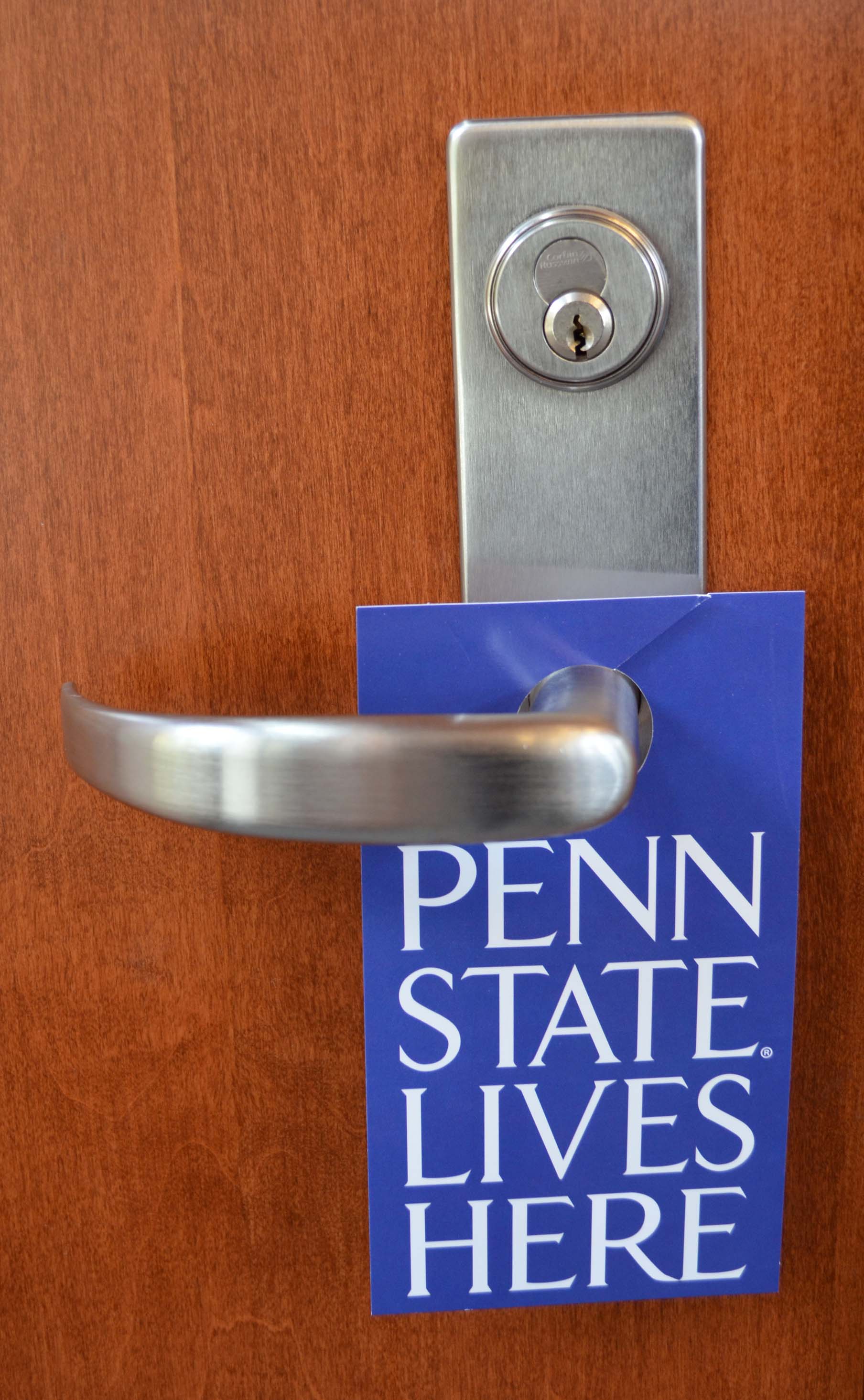
* “Penn State Lives Here” doorhangers were hung on throughout the residence halls.

doorhanger

* “Penn State Lives Here” buttons, vinyl window clings and paw print cookies (delish!) were distributed at lunchtime at Bruno’s, where the campaign video was aired for students, staff, and faculty.
DSC_1795

Clearly, Penn State lives here at Behrend.

So, what does it all mean? What is our branding message about?

Here is an explanation, from the folks who created it:

“Penn Staters are not only high academic achievers, they’re doers. They are nurtured by a culture that encourages setting lofty goals and investing the effort to achieve them. They are molded in an environment that values success, teamwork, and service to others—and graduate intent upon living purposeful, inspired lives. All universities talk about producing leaders, but ask employers where they go to find individuals who inspire others, know the value of hard work, and lead by example. They find them at Penn State.”

Excellence. Innovation. Passion. Collaboration.

These are the things that live at Penn State.

Watch the video here and see for yourself.

Penn State Lives Here_003

Kochel Center gets a makeover

seats2

By Heather Cass
Publications & Design Coordinator, Penn State Behrend

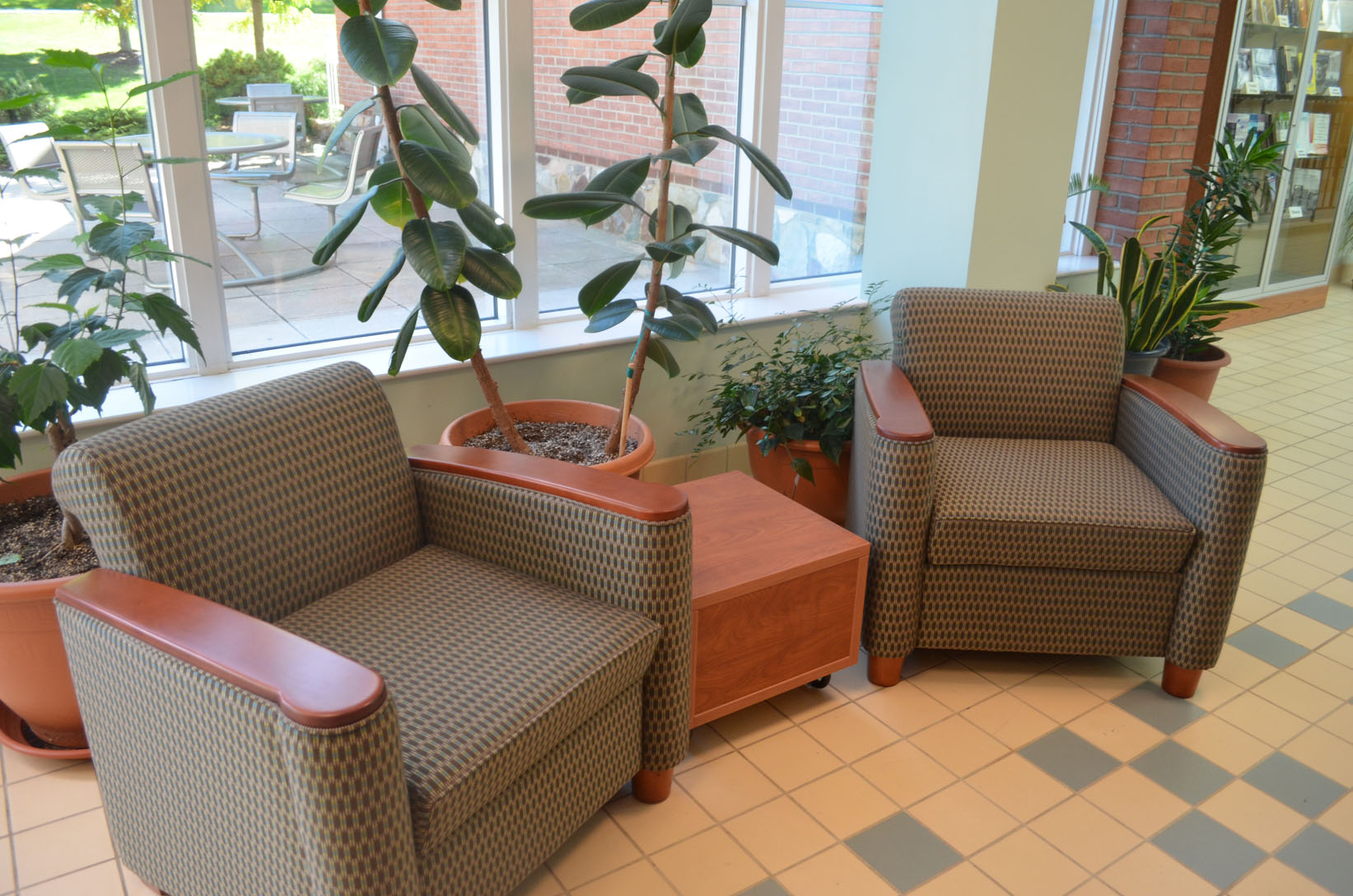
Have you noticed the new have-a-seat-and-stay-a-while environment at Irvin Kochel Center? The stiff, metal benches that once lined the halls are gone, replaced by attractive plush chairs and wooden end tables. On the lower floor, the computer kiosks have been revamped and carpeting put down to add warmth and help muffle echoing footsteps.

The changes are largely the result of suggestions made by students.

“Projects done by students in CAS 252: Business and Professional Communication helped drive many of the improvements to the civility and quality of the Kochel physical and social environment, including the digital signage screens, the up-scale coffee machine, the new furniture, and the printer near the new computer kiosk,” said Dr. Rod Troester, associate professor of communication.

According to Dr. Ken Miller, senior director of campus planning and student affairs, funds from the Student Facility Fee paid for the furniture and carpet, funds from Technology Fee paid for the computers and kiosks, and Housing and Food Services provided the coffee machine.

“It was really a team effort to improve a highly-trafficked area,” Miller said.

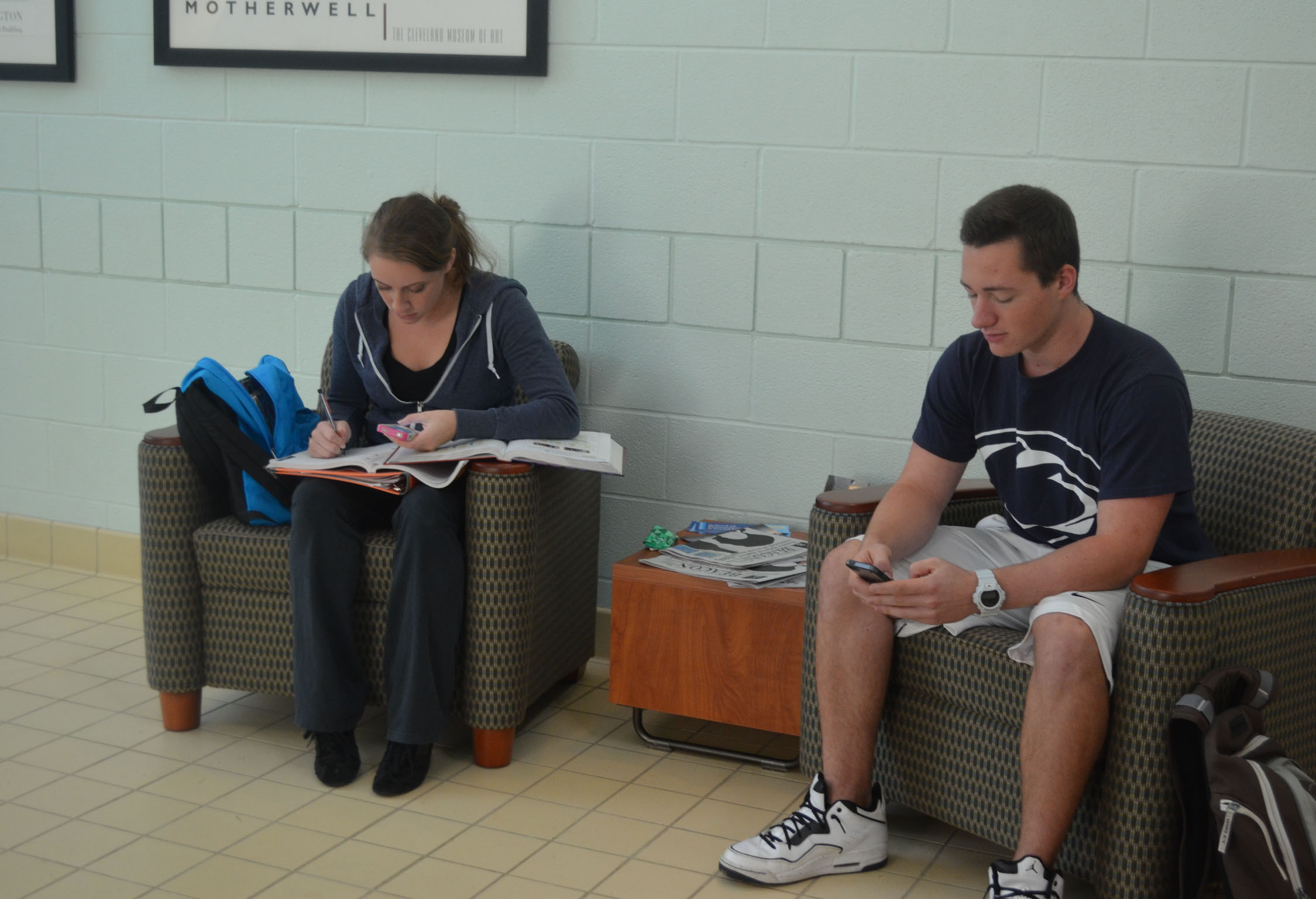
Students seem to have embraced the kinder, softer Kochel Center. When I walked through on a Thursday at 2 p.m., nearly every comfy seat in the house was taken.

seats

Regarding the SFF

Projects funded by the Student Facility Fee are voted on by students. The Kochel project was placed on a campus-wide survey of students who indicated it as a priority for improvement. Then, the SFF committee, a nine-member group with six students as voting members, chose to fund the project. (Currently, Kyle Stephan, student government association president, and Miller co-chair the SFF committee.)

The SFF Committee also funded the construction of The Galley (which Housing and Food Services outfitted), lighting of the soccer/lacrosse field, Reed Auditorium and lounge renovations, and hydration stations across campus.

Future projects under consideration include, the Mary Behrend Monument and Memorial Garden, a recreation center, and a Frisbee golf course.

As for those metal benches that were removed for Kochel? They will likely be repurposed for outdoor use around campus.

Stay informed in an emergency: Sign up for PSUTXT

cell phone

By Heather Cass
Publications & Design Coordinator, Penn State Behrend

One of the first pieces of advice I received from colleagues when I started working in the Office of Marketing Communication at Penn State Behrend was: When dealing with students, get a cell phone number.  Smartphones are the preferred means of communication for today’s college students, especially if you want to spread news fast.

That’s why Penn State developed PSUTXT, a service designed to alert the University community when situations arise that affect the ability of a campus to function normally. Subscribers can receive alerts by text message to their cell phones, and also can elect to have alerts sent to an email address.

Why sign up? Three words for you, my Penn State Behrend friends: Winter is coming.

PSUTXT is the fastest way to receive communication about campus closure, delays, and, occasionally, information about major traffic problems on I-90 and I-79.

The service is used sparingly and only in the event of an emergency or situation that may affect your health or safety.

You can sign up here. Note that you can elect to receive alerts only from Penn State Behrend, if you wish.