Behrend campus recycles 7,219 pounds of electronics

ewaste2

By Steve Orbanek
Marketing Communications Specialist, Penn State Behrend

What does 7,219 pounds look like?

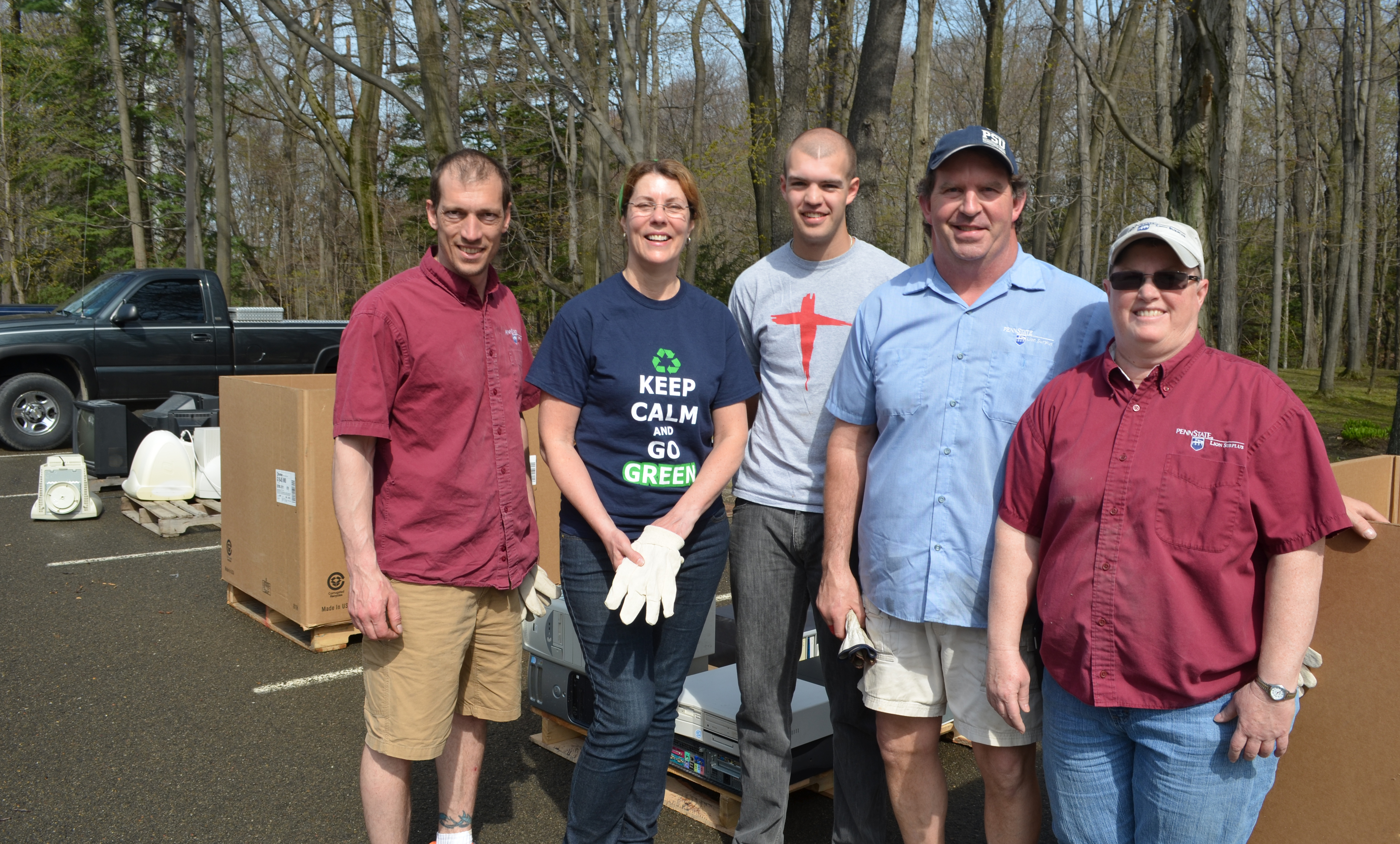
Imagine two hippopotamuses, fourteen gorillas, or two cars, and you’ll have an accurate picture of the amount of electronics collected May 8 at the first Electronic Recycling Event at Penn State Erie, The Behrend College.

The event, co-sponsored by the Greener Behrend Task Force and Lion Surplus, allowed Penn State Behrend faculty members, staff, and students an opportunity to dispose of used electronics in an environmentally friendly way. Television sets, monitors, hard drives, printers, and DVD players were among some of the most collected items.

The 7,219 pounds filled ten pallets. From Erie, the items will be taken to the Lion Surplus facility at University Park to be sorted and sent out to various recycling vendors.

“With a television, the plastic, glass, and parts inside will be separated and go to different vendors,” said Annette Bottorf, a computer technician for Lion Surplus. “We are totally green. Nothing will go to the landfill, and when we contract a company, they have to guarantee us the same thing. Everything will be recycled and reused.”

Ann Quinn, faculty adviser for the Greener Behrend Task Force, said she was impressed with the turnout for the event, and she would like to see it return in the future.

“We really exceeded our expectations, and we filled a need,” Quinn said. “It also did not cost us a thing, which is wonderful.”

This slideshow requires JavaScript.

Behrend student returns to regional Science Olympiad as a judge

Fye1

By Steve Orbanek
Marketing Communications Specialist, Penn State Behrend

One of the Science Olympiad’s stated goals is “to create a passion for learning science.” If the organization is looking for an ambassador, it need not look any further than Gary Fye.

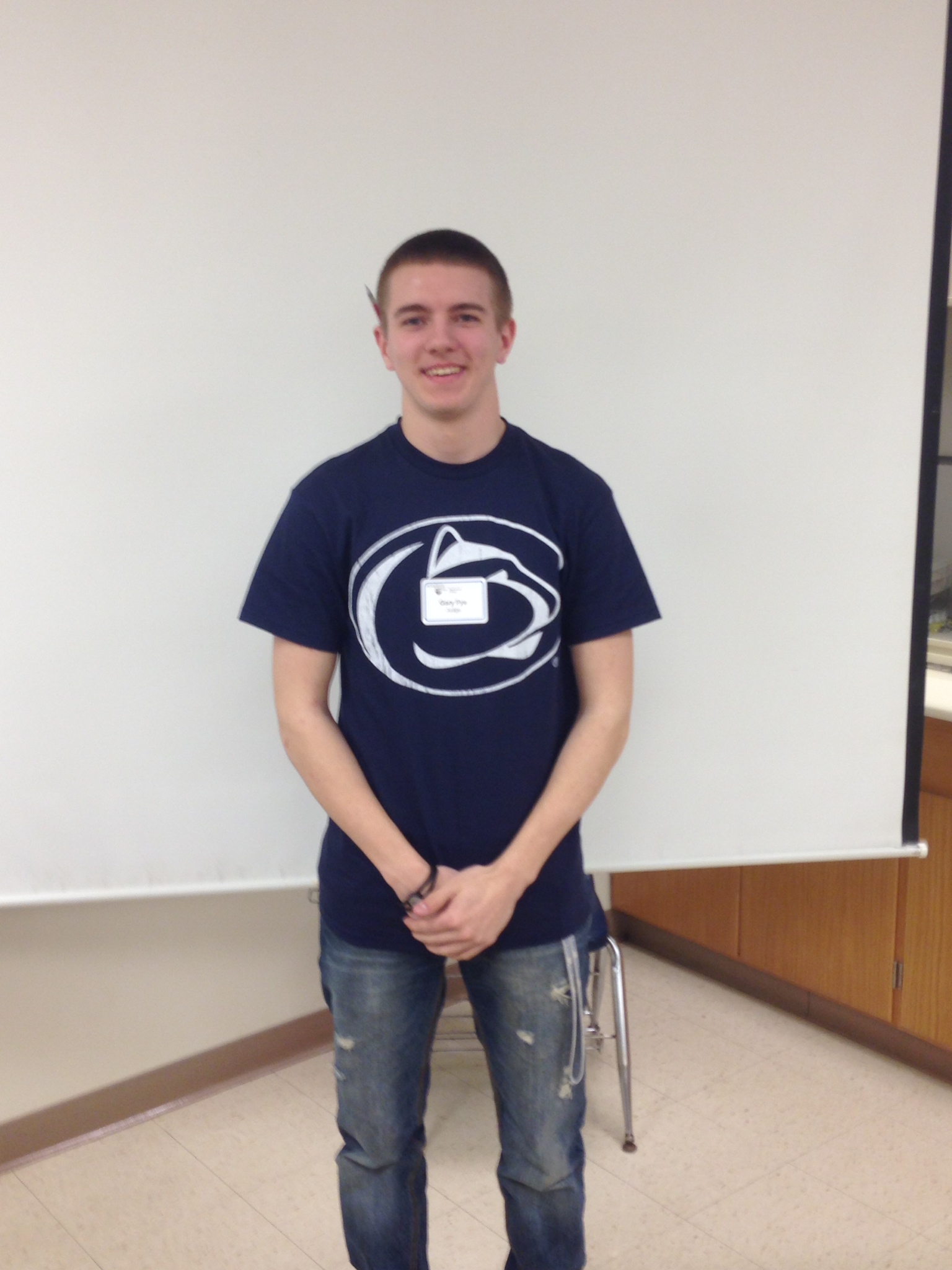
Fye, a first-year Biomedical Engineering major at Penn State Erie, The Behrend College, was a volunteer judge at the regional Science Olympiad held at Behrend this March.

More than 400 students from thirty-three area school districts competed in forty-six science-related events. Among the participating schools was North Clarion High School, which happens to be Fye’s high school alma mater.

From grades seven through twelve, Fye participated in the Science Olympiad. In fact, he took first place in at least one event every year but ninth grade.

“The time just never seemed to last long enough,” Fye said. “It was something I really, really enjoyed.”

That enjoyment is still present today. Although Fye was at home in Leeper, Pa., for spring break, he traveled on a bus with his former high school just so he could volunteer his time at the Science Olympiad.

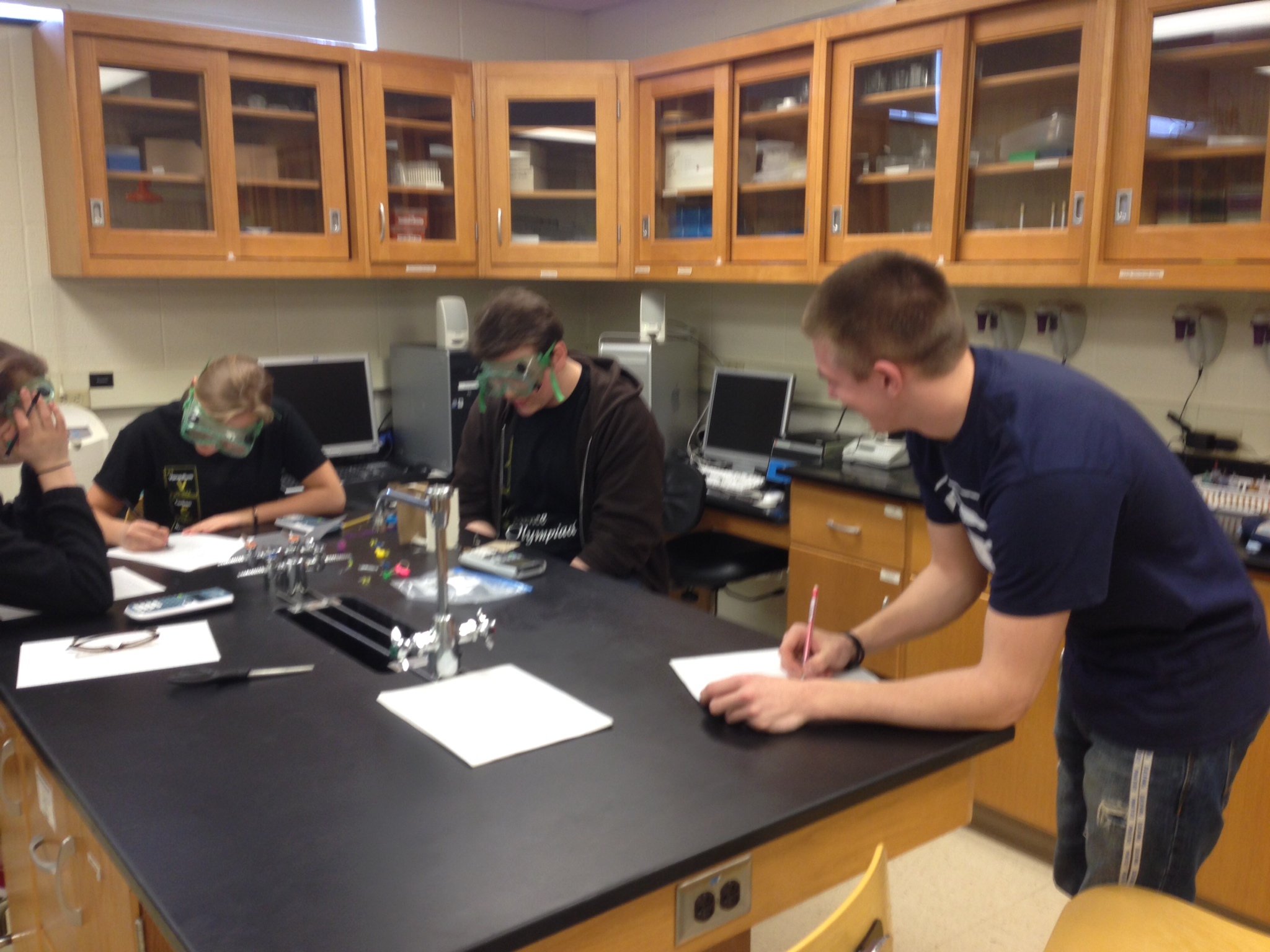
Experimental Design, the event Fye judged, had participants experiment with a springboard and then propose a hypothesis based on that experiment. Experiments like this are what helped pique Fye’s interest in science and engineering years ago.

“It broadens your horizons. You really get a feel for lab work,” he said.

After attending his first Science Olympiad, Fye’s interest in science only grew. In middle school and early high school, he was appropriately nicknamed “Gary Fye the Science Guy.” The name referred to Fye’s love of science, but it was also a word play on Bill Nye, who was the host of the popular PBS children’s show “Bill Nye the Science Guy.” Fye also happened to be a big fan of Nye, which made the nickname an even better fit.

The Science Olympiad influenced Fye in another way as well. The event exposed him to Penn State Behrend.

“I would actually put that as one of the number one reasons as to why I’m here at Behrend,” Fye said. “It definitely introduced me to engineering concepts.”

So far, Behrend has been a good fit.

Earlier this winter, Nye visited Behrend as part of the college’s Speaker Series. Given his natural love of science and interest in the Science Guy, Fye was more than a little excited when he heard the news.

“I sat in the front row,” he said with a smile.

Fye2

Recommended gift ideas from faculty and staff members

By Heather Cass
Publications & Design Coordinator, Penn State Behrend

Forget Furby and Tickle-Me Elmo. Those “hot” holiday toys rarely stand the test of time. For most kids, interest in these trendy, flashy toys fizzles before the garbage truck carries off the boxes.

We asked a few Penn State Behrend faculty and staff members who oversee outreach programs for younger students to tell us what they wish parents/caregivers would give to the kids on their list.

Here are their top choices:

91ZCyCLuWSL__SL1500_  

School of Science 

Ideas provided by Tracy Halmi, senior lecturer in chemistry

  • Legos.  Check out legoeducation.us where you’ll find lots of great information and shop by grade level.
  • Books that encourage experimenting. Three good titles: Apples, Bubbles and Crystals: Your Science ABCs, Best of Wonder Science, ChemClub Cookbook. You can find many more chemistry books here.
  • Snap Circuits. These make a great gift and they are available in a variety of sets so you can find one that will fit your budget.
  • Science kits. There are no shortage of fun science kits available for kids today (spa science, sci-fi slime, crystal-growing kit, butterfly kit). Look for them in craft and book stores.
  • Classic toys:  You can never go wrong with toys that have spanned decades, such as silly putty, Slinkies, and Spirograph.

untitled

School of Business

Ideas provided by Erica Jackson, Director of the Center for Financial and Consumer Outreach

  • Games that allow kids to play as grownups.  Teach kids how to budget their money by giving games like The Game of Life and Monopoly. These games teach children how to live within their means, receive a paycheck, work investment deals, and pay their bills.
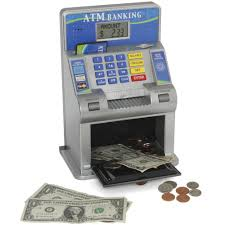
  • Toy ATM. Toy ATMs, like the one manufactured by The Hammacher Schlemmer Institute $40, accepts real coins and bills and displays accurate, up-to-date account information on the screen. Kids even get their own ATM card and PIN number.
  • Piggy bank or a safe. If the child on your list has outgrown cutesy banks, look for a mini safe or vault that opens only by secret code or your child’s voice, which makes saving money more fun and easier to do around little siblings looking to share the wealth.

knex

K’nex

School of Engineering

Ideas provided by Melanie Ford, lecturer in computer science and software engineering

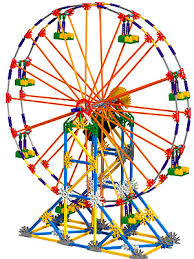
  • K’nex.  One step up from Legos, K’nex are slightly more sophisticated building toys. The roller coaster and simple machines kits teach students basic engineering and physics principles.
  • Origami kits/books. Origami, the art of Japanese paper folding, teaches students spatial skills.
  • Logic puzzles/games. These types of games and puzzles teach problem solving skills — a key concept for all engineers! The Perplexes Maze Games are a favorite among kids. Mindware.com has many more great ideas.
  • GoldieBlox. Part construction set, part story book, the creator of GoldieBlox (a young female engineer herself) aims to tap into girls’ strong verbal skills, while giving young inventors the tools they need to build and create amazing things.
  • Lego Mindstorms. Classic building bricks + robotics = one cool egineering lesson (but don’t tell the kids they are learning, they just think it’s cool.)

art kit

School of Humanities and Social Sciences

Ideas provided by Dr. Thomas Noyes, associate professor of English and creative writing; Kim Todd, assistant professor of English and creative writing

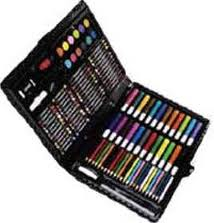
  • Art supply sets. Participation in the visual arts helps children develop an imagination and sharpen their eye for detail.
  • Award-winning books. Any book is a great gift, but quality children’s fiction books, such as Newbery Award Winners, are an especially good choice.
  • Nature journalThe Nature Connection, An Outdoor Workbook for Kids and Families (by Claire Walker Leslie) is a nature journal full of activities and prompts for each month. Parents can guide younger kids through it on a walk or a hike; older kids can just put it in their backpacks and do the activities themselves when they feel like it.

6 Things I Learned at the Science Café

Science Cafe_2013-14.pdf

By Heather Cass
Publications & Design Coordinator, Penn State Behrend

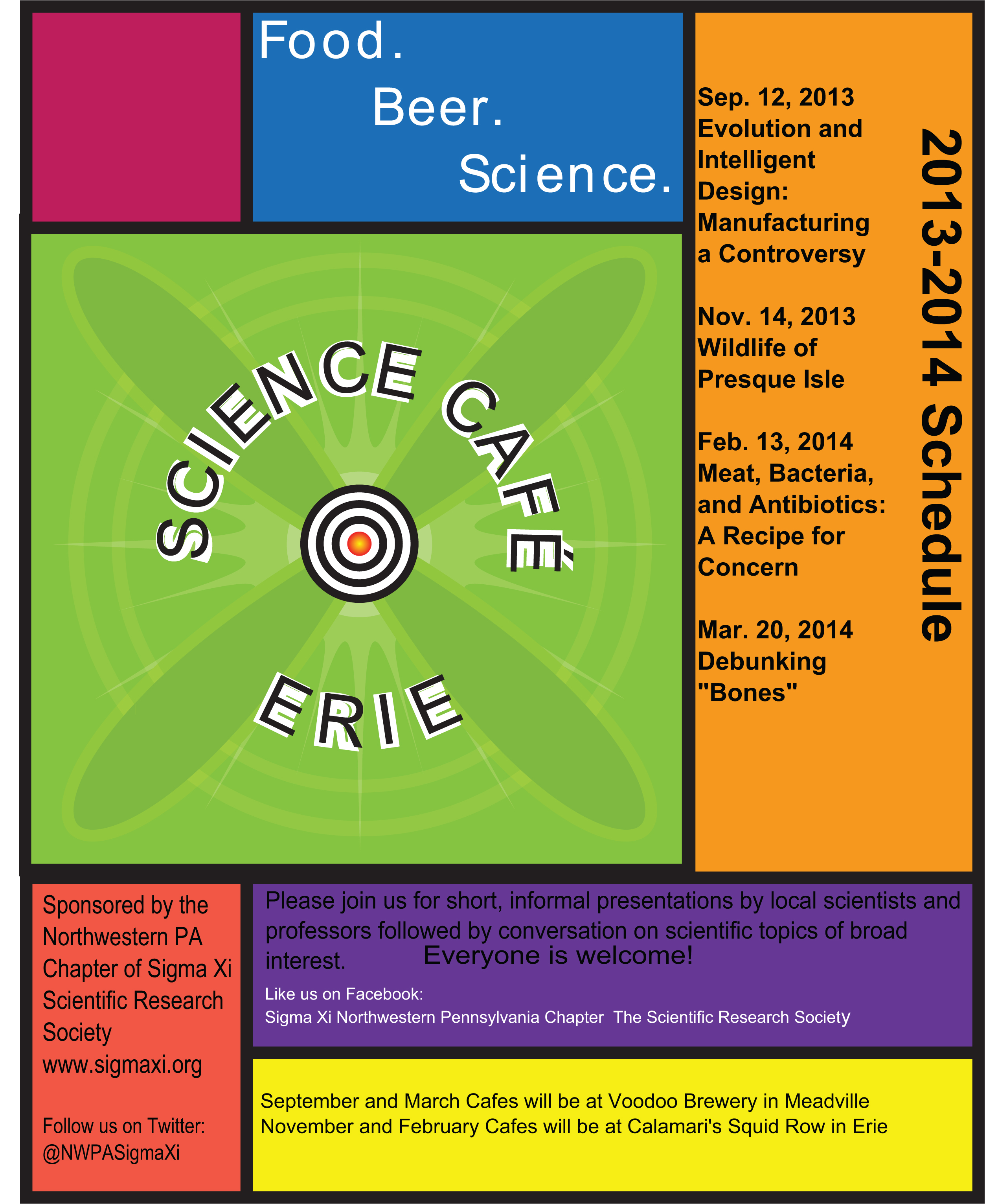
Each year, the local chapter of Sigma Xi, a scientific research society which several School of Science faculty members belong to, hosts a series of informal get togethers (the Science Café) designed to “bring scientists and community member together to explore scientific topics in a pubic, accessible, and relaxed venue.”

“Our catch phrase is ‘Food. Beer. Science,'” said Dr. Jay Amicangelo, associate professor of chemistry.

They had me at food. Beer sealed the deal.

So last night, my 10-year-old-daughter, a budding biologist, and I attended the November Science Café at Calamari’s Squid Row, a bar and restaurant in downtown Erie, along with 50+ other people. Many were college students, probably earning extra credit, judging by the note taking I saw going on but there were also several families with kids there.

Last night’s topic was “Wildlife at Presque Isle” and the presenters were Ray Bierbower ’05 (a Behrend grad)  and Brian Gula, Environmental Education Specialists at Presque Isle State Park.

The pair clearly love their jobs. Their enthusiasm for the park, nature, and wildlife was evident and infectious.

As an avid runner and Erie native, I’ve run every inch of that park more times than I can possibly count and, yet, last night, I still learned some things I never knew.

1. Lake Erie, which is the shallowest of the Great Lakes (210 feet at its deepest point),  has more consumable fish than all the other Great Lakes combined.

2. There are typically 6 to 9 coyotes on the park and 40 to 60 deer, and that is a manageable number. There have been as many as 14 coyote and more than 100 deer, which is too many.  Cars, more than guns, tend to cull the herd.

3. Presque Isle Bay is home to a “living fossil.” The bowfish is the last of its species, which thrived about 150 million years ago. It has a lunglike swim bladder that opens to the throat, allowing it to breathe air.

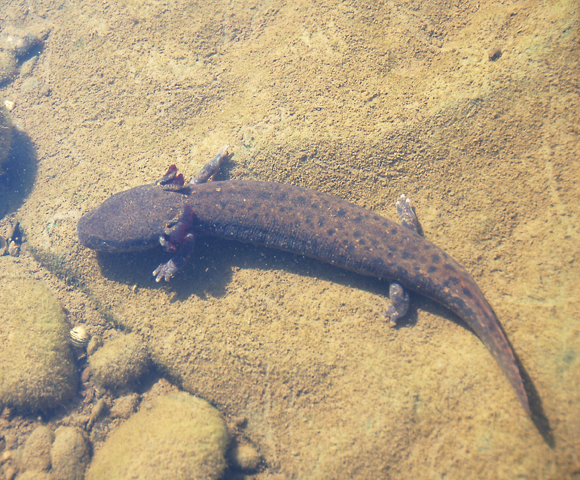
4. One of the ugliest species in the lake has a deceiving cute name. The mudpuppy, which lives its entire life underwater, is distinguished as the only salamander that makes a sound—a dog-like barking.

Mudpuppy (Necturus maculosus).  Walhonding River just below 6-mile dam.

Photo from OhioAmphibians.com

5. People let all kinds of animals go free at Presque Isle. The rangers have found everything from a skate , a small stingray-like fish, to alligators to pot-bellied pigs to pet rabbits, birds, cats, and dogs.  Most of them die.

6. Auto/animal deaths are frequent and are a really good reason to drive the posted 20 m.p.h. speed limit at the park. Three of four fox kits born last year were killed by cars. The mother was eventually hit by a car and killed, too.  The rangers don’t blame motorists.  “There are 4.5 million visitors to the park every year — that’s a lot of cars to dodge,” Gula said. Beirbower added that he’s had many near misses even when driving 10 or 15 miles per hour. That said, they still wish motorists would slow down and keep an eye out for wildlife when driving around the park.

The Science Café was just what Sigma Xi intended it to be — a low-key, informal, but informative scientific “lecture” in non-intimidating environment.  My daughter and I enjoyed it equally.

Mark your calendar now for the remaining Science Café presentations. On the menu:

February 13, 2014 — “Meat, Bacteria and Antibiotics: A Recipe for Concern”  — at Calamari’s Squid Row.  (Hmm…methinks few may order dinner that night.)

March 20, 2014 — “Debunking ‘Bones'” at Voodoo Brewery in Meadville, Pa. (I hear this place is absolutely worth the drive down I-79).


Science Cafe_2013-14.pdf