Pre-Health students sew first stitches in medical career

By Heather Cass
Publications & Design Coordinator, Penn State Behrend

IMG_1133

Suturing—sewing together incisions or torn flesh—is a basic technique every doctor must master. It is, however, a skill that few undergraduate students have the opportunity to practice before entering medical school. But, thanks to the U.S. Army and Penn State Behrend’s Pre-Health Professions program, nearly thirty undergraduate students from four area universities were able to try their hand at three types of basic stitches at a suturing seminar earlier this month.

The class, offered by the Army Health Care Recruiting office in Pittsburgh and held at Penn State Behrend, was taught by Dr. Regan Shabloski, assistant dean for clinical education at Lake Erie College of Osteopathic Medicine, and a member of the Army National Guard’s Medical Corps.

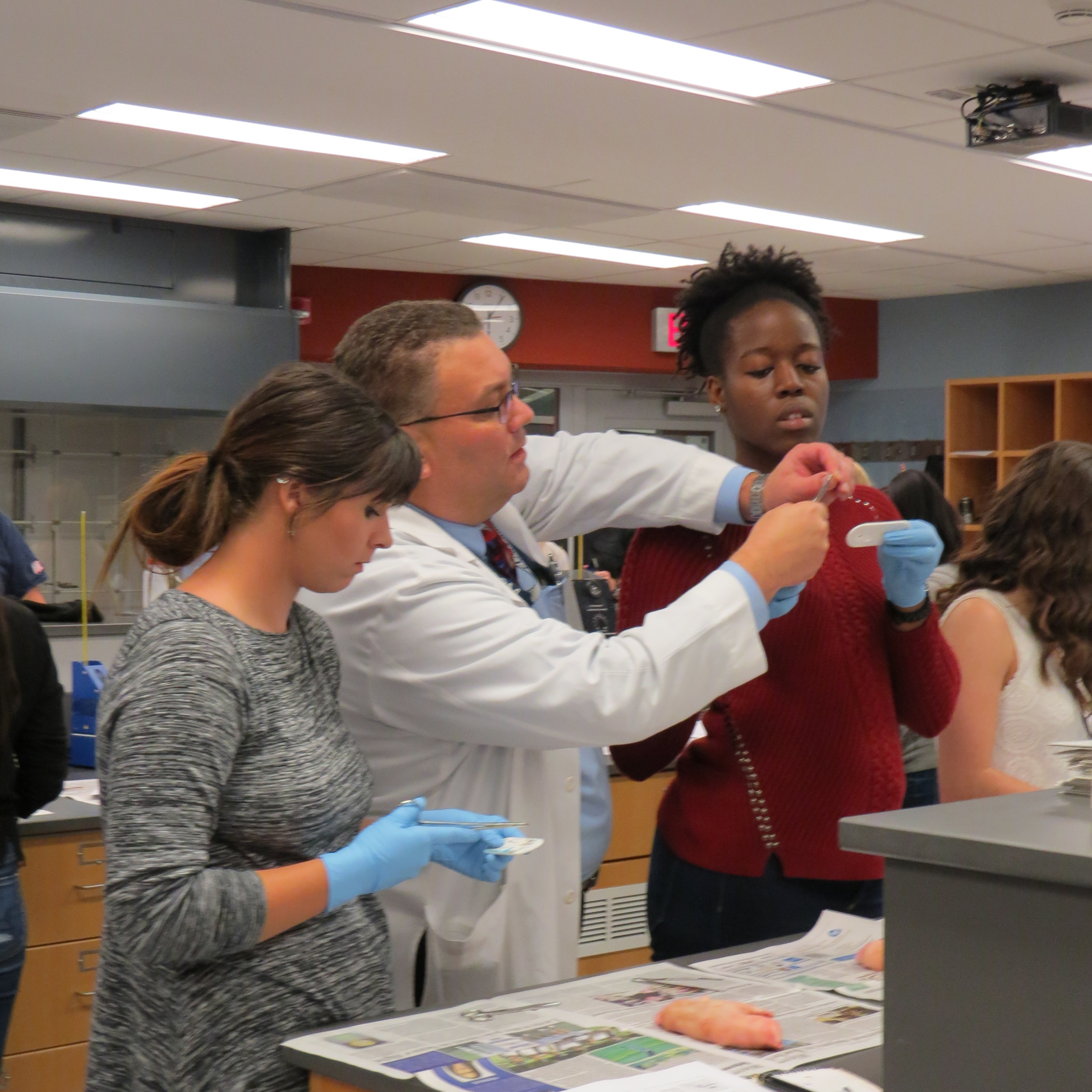
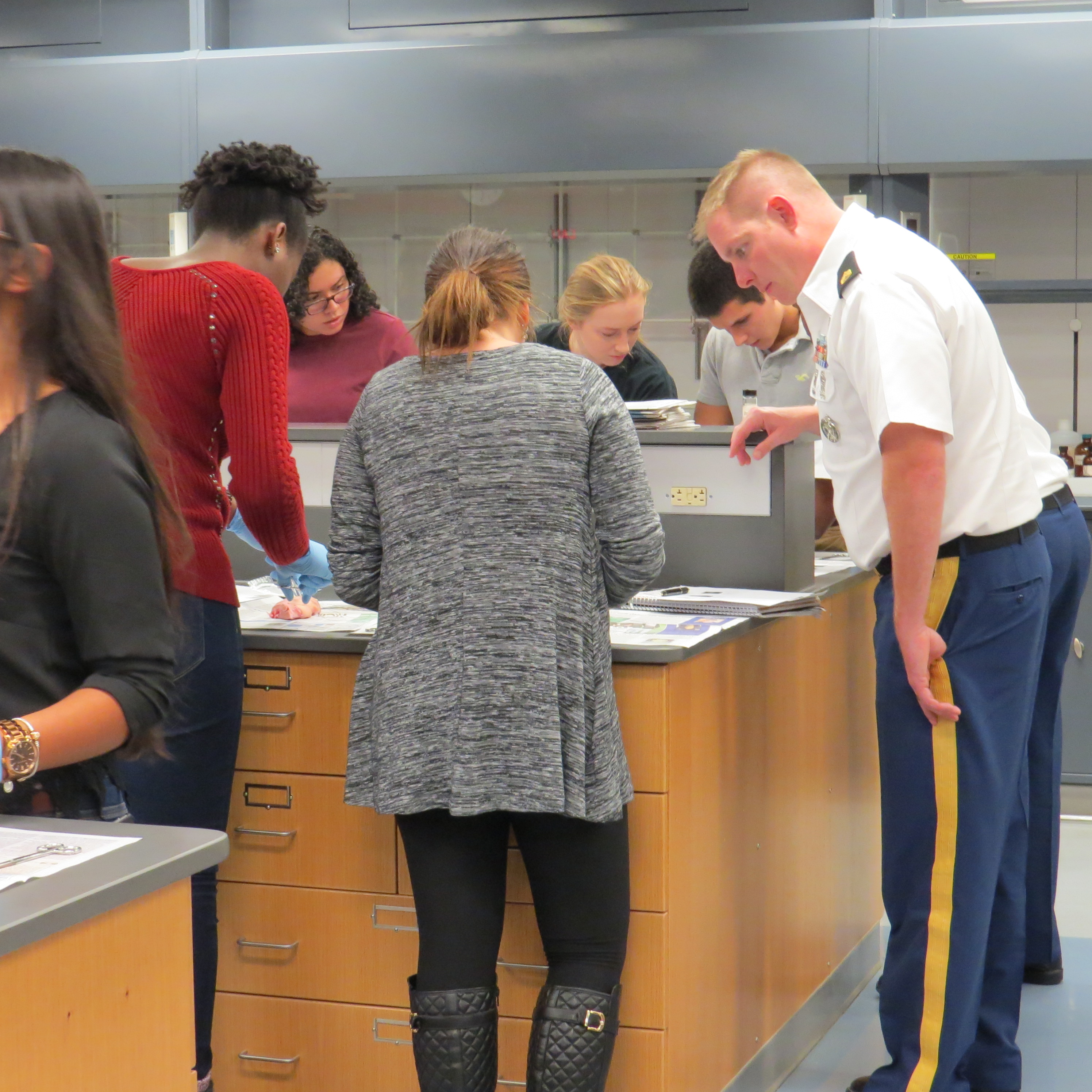
For two hours, students from Penn State Behrend, Allegheny College, Gannon University, and Mercyhurst University worked on severed pigs’ feet, practicing simple interrupted, running, and mattress stitches, using suturing kits provided by the Army.

IMG_1122

Shabloski taught students how to hold the tools, how to start and finish stitching, how to know which stitches to use, how to choose the proper sutures, and the importance of symmetrical sewing.

Straight, evenly spaced stitches are paramount for patients.

“Neatness counts,” Shabloski said as he moved around the room, peering over shoulders at the students’ work. “Suture scars are one of the most visible reminders of your work. Patients care deeply what their scars look like, even if they are in a place where nobody will ever see them.”

Staff Sgt. Benjamin Earle and Staff Sgt. Ricardo Grey, both Army medics, were on hand to assist Shabloski with training.

IMG_1128

The event was sponsored by the Army to bring attention to its Health Professions Scholarship Program, which provides tuition for up to four years of medical school to students pursuing an education at any accredited medical, dental, optometry, clinical or counseling psychology, or veterinary school, in exchange for a four-year commitment to working on an Army base after graduation.

“Students have to apply for this program before they enter medical school, and we were finding that many didn’t know about it until it was too late, so we’ve been making an effort to reach students at the undergraduate level and make them aware of the opportunities available to them through the Army,” Earle said.

Earle is quick to point out that being a doctor in the military does not necessarily mean working in a combat zone.

“We have Army bases all over the world, and on those bases, we have a tremendous need for all kinds of doctors for our soldiers and their families,” Earle said. “We need all the same doctors and specialists that are found in civilian life — OB/GYNs, pediatricians, general practitioners, dentists, and even veterinarians.”

Christina Hilaire, a junior Biology major who wants to be a doctor, participated in the suturing class and said the scholarship program is worth exploring.

“My mother was in the military, so I’ve thought about it,” Hilaire said.

“It is a pretty sweet deal for students inclined to spend a few years working at a military base,” said Dr. Michael Justik, associate professor of chemistry and chair for the Pre-Health Professions programs. Justik helped bring the suturing class to Behrend.

Among the perks? Full tuition paid directly to the medical school, a $20,000 signing bonus, a $2,000+ monthly living stipend, and health insurance, in addition to coverage of school-related expenses, including books, fees, and medical supplies.

It’s a deal that, according to Earle, only gets sweeter after graduation when the newly-minted doctors are admitted to the Army at the level of an officer.

“They are able to practice medicine at Army bases throughout the world without concerns about billing, overhead expenses, or malpractice premiums,” he said. “Many enjoy the lifestyle and stay in the service past their required commitment,” Earle said. “But, even if they don’t and they only put in their four years, we feel that’s a fair deal.”

The military recruits medical professionals in northwestern Pennsylvania because it’s rich in universities and medical facilities.

“Erie is a wonderful place to prepare for a medical career,” Justik said. “We have three hospitals in the area as well as LECOM, a top osteopathic medical school, all of which provide various learning opportunities for pre-health students.”

Here is what some of the students had to say about the suturing experience at Behrend:

  • “It was a fantastic event that helped solidify my career choice. I want to be a surgeon and the suturing class made me realize that it really is what I want to do for a living.” — Stephen Wells, a Penn State Behrend senior Biology major.
  • “It was really helpful to have Dr. Shabloski and the Army medics right there helping us and giving us tips. I took a similar suturing class in high school, but I learned some new and different techniques in this class.” —Thalia Soto, a Penn State Behrend sophomore majoring in Chemistry. Soto wants to be a pediatric surgeon.
  • “I really enjoyed it because it was an opportunity to do some hands-on learning, which is not often a part of the pre-med curriculum.” —Margaret Dunlop, a Penn State Behrend sophomore majoring in Psychology. Dunlop wants to be an orthopedic surgeon.
  • “The suturing class was a great learning experience in a fun, low-pressure setting. It was an excellent opportunity to do one of the many tasks that doctors and health professionals perform almost daily.” — Bethany Kelley, a Mercyhurst University sophomore Pre-Medical major. Kelley wants to be a physician assistant.

Click here for more information about Penn State Behrend’s Pre-Health Professions programs.

Click here or email Benjamin.d.earle2.mil@mail.mil for more information about the Army’s Health Professions Scholarship Program.

This slideshow requires JavaScript.

Summer in South Africa Inspires Political Science Major

By Heather Cass

Publications & Design Coordinator, Penn State Behrend

15802_10206558989406416_4726216575970305014_n

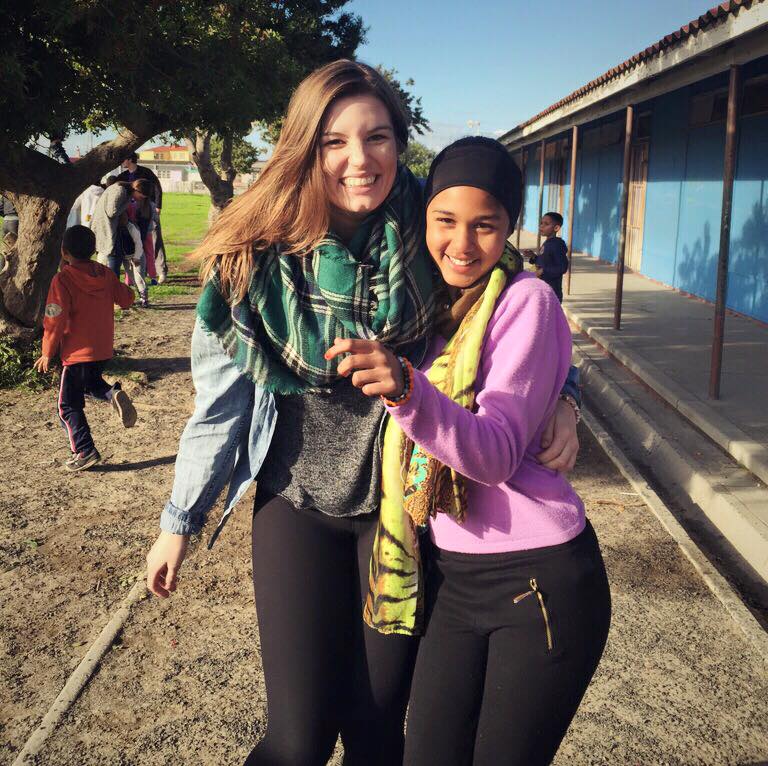
Lillian Gabreski, a senior Political Science major, spent six weeks of her summer studying abroad at the University of Cape Town in Cape Town, South Africa.

We talked with Gabreski to find out more about what it’s like to study in South Africa and what she learned while she was there.

Why did you go to South Africa?

I studied abroad at the University of Cape Town. The experience was fully funded by a grant from Penn State Behrend to complete my research in international and constitutional law. I’ll be using this research to complete my Schreyer Honors Thesis this spring. I also participated in the Students’ Health and Welfare Centres Organisation (SHAWCO) Education program.

What were your responsibilities while there?

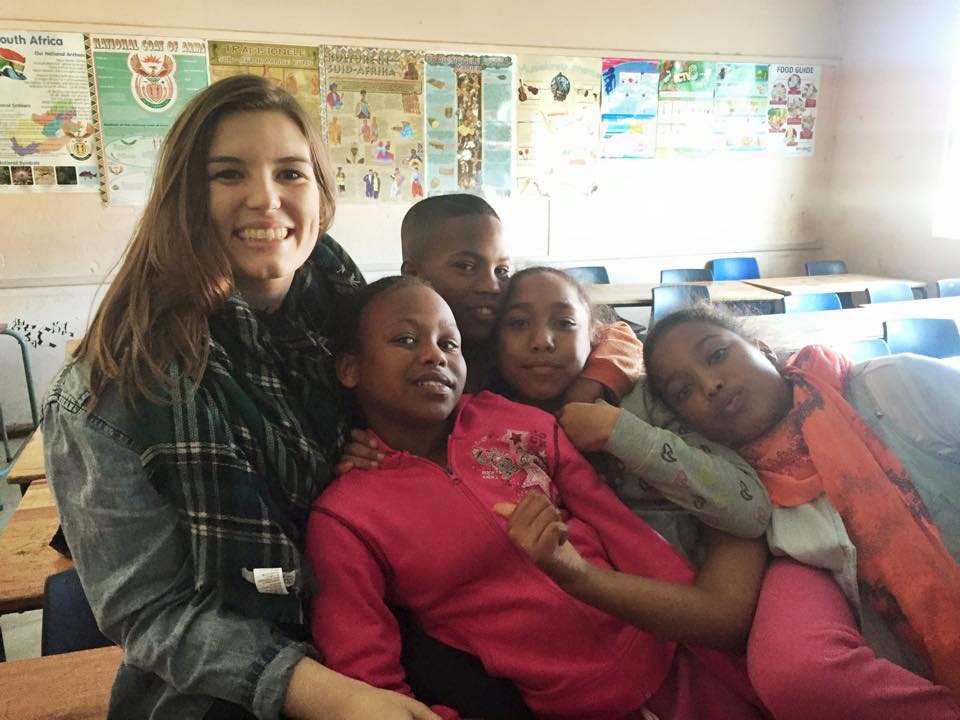
As a student at the University of Cape Town, I studied community development and the impact of development on regional groups and peoples. As a volunteer for the SHAWCO program, I spent 20 hours a week volunteering in the township of Manenberg teaching English and Math to middle schoolers. Manenberg has become infamous for gang-violence that has plagued its residents in recent years.

10404181_10206558989086408_4847686624910044533_n

What made you choose South Africa? Have you been there before?

This was my first time in South Africa. I have always been interested in the country because of its unique socio-political history. With the guidance and influence of Dr. John Gamble, distinguished professor of political science and international law, I began to devote my time to learning about the practice of international and constitutional law. South Africa has one of the most liberal and lauded constitutions in the world, and the politics of a country re-entering the international arena after centuries of its majority population being excluded from democratic processes (see: apartheid) are both unique and absolutely intriguing. Thus, it seemed a natural area of interest for me to study as a political science major.

What was the most eye-opening thing about South Africa…or your experience there?

We have a tendency as Americans to believe that the way we do things is the best way to do them, whether in politics, business, or even our personal lives. While I’ve always considered myself to be open-minded, I still thought this way about the U.S. when I went to South Africa. Upon my return, I had a laundry list of policies and reforms that the U.S. could learn from South Africa. As a stable and relatively new true democratic state, South Africa is willing to experiment when it comes to the way they do things, which is something I think we have lost along the way here in the United States.

11201902_10206392681528823_8913410756497084612_n

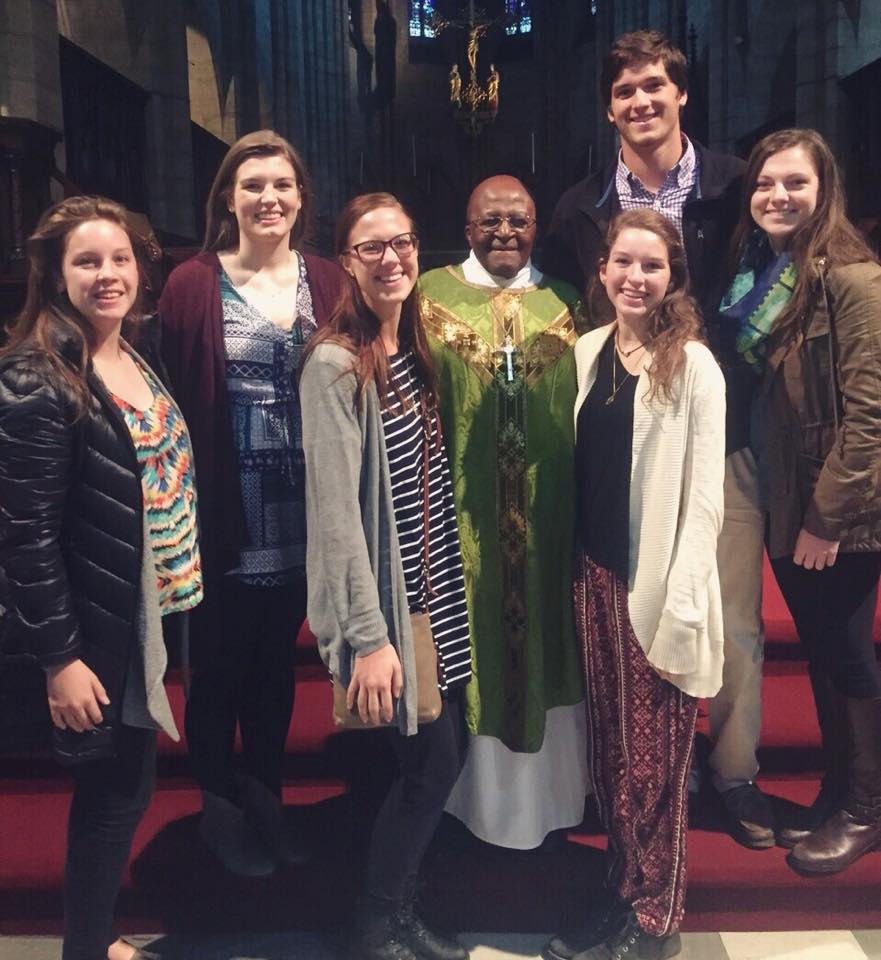
Lillian (second from left) with Archbishop Desmund Tutu.

How do these types of experiences enhance what you’re learning at Behrend?

It is one thing to study a country or a political system in the classroom here in the U.S. We all have our perceptions and we’re learning in our own environment. It is an entirely different experience to go to another country and to interact with its people, who have completely different preconceptions and ideas, and to learn from what’s around you. It’s really as simple as that.

What was it like in South Africa? Did you enjoy being there?

I have traveled all over Western Europe, but Cape Town is the most beautiful city I have ever visited. The people are incredibly kind, the geography is absolutely beautiful, and the perseverance of the South African nation in general is truly inspiring. While I spent only six weeks in South Africa, it was enough to leave an impression that has caused me to alter my post-graduate plans to include a focus in Sub-Saharan Africa.

11665520_10206493271243503_1343250978932109694_n

What’s the most valuable lesson you learned during your experience this summer?

The South African people, specifically those who were discriminated against during apartheid, have an incredible tenet for forgiveness. Rather than seek revenge against those who have wronged them, they seek to remedy their ills via forgiveness and open conversation. I think the principle of being graceful and forgiving rather than continuing the ills of the past via pursuing a path of vengeance can be applicable in any situation whether it be personal or political.

Did you learn anything that you’ll apply this semester to your classes/projects here at Behrend?

Not only am I writing my senior thesis on South Africa and its relation to international law, I am also serving as a teaching assistant for Political Science 003H: Introduction to Comparative Politics this semester and teaching a segment on South African government and politics.

What are you career plans? What do you want to do?

Before studying in South Africa, I had intended to apply for law school. While I’m still taking my LSAT, I’m now focusing more on pursuing a Masters or Ph.D. degree in International Affairs or Public Policy. I would love to someday work in international law, in government, or with an non-governmental organization that would allow me to revise policies and practices on a global scale for the greater benefit of mankind.

Are you earning any minors/certificates?

I’m minoring in History and in Women’s Studies

Do you have any advice for incoming students in your major?

Get to know your professors! They have been invaluable to me not only when it comes to recommendation letters and research opportunities, but also in the advice they have given me to help me find the career path that will make me the happiest. Also, definitely study abroad! It will change your life and help you find your passions.

Why did you choose Behrend?

I initially accepted admission to University Park, but my mother (Dr. Tammie Merino, Lecturer in English at Behrend) convinced me to take a tour of Behrend. I fell in love with the campus and truly felt at home here. After my first year, I knew that the incredible professors and classmates I had at Behrend were invaluable, and that I would spend all of my four years here. There is something to be said for a small campus with the resources of a larger University behind it.

11143711_10206403006106931_5092057385507293611_n


College packing 101

DSC_0209

By Heather Cass
Publications & Design Coordinator, Penn State Behrend

Ah…’tis the season for first-year students to clear the shelves at Bed, Bath & Beyond and Target in preparation for the big move to college. It’s a daunting and, at times, overwhelming task to pack up your life and move into a much smaller (and usually shared) living space.

Don’t stress, we are here to help! (By the way, that’s true not just for packing advice, but for any problem you encounter while you’re here. Never be afraid to ask for help!)

Keys to success

The keys to packing for college are the same things that will help you be successful once you get here:

  1. Do the research.
  2. Make a plan.
  3. Keep track of what you need to get done.
  4. Do not procrastinate.

What to bring

Now, the good news: We’ve done the research for you on what to bring.

Here’s the official list from Penn State’s Housing and Food Services Department:

  • Address book, stamps, stationery
  • Alarm clock
  • Backpack
  • Baskets for toiletries and storage
  • Bed Linen: sheets (extra-long twin), mattress pad (extra-long twin), bedspread/blanket, and pillow
  • Bike and bike lock
  • Cleaning supplies (cleaner, paper towels)
  • Clothing (bathrobe)
  • Computer, printer, and cables
  • Desk items (lamp, pens/pencils/highlighters, calendar, calculator, tape, scissors, stapler, paperclips)
  • Fan (portable)
  • Financial items (checking/savings account, credit/debit card, health insurance card, Social Security card, driver’s license or photo ID)
  • First Aid items (band aids, cotton balls, cotton swabs, cold/cough medicine, first-aid kit, aspirin)
  • Food items (can opener, bottled beverages, coffee maker with automatic shutoff, one set of silverware/plates/bowls/glasses, condiments, napkins, snacks, dish detergent/ towel)
  • Games (cards, board games)
  • Hangers
  • Laundry basket/bag, detergent, iron
  • Padlocks (desk, laptop, and bike)
  • Room decorations (note that posters/photos must be hung with plastic tack)
  • Sewing kit/safety pins
  • Snow shovel/snow brush to store in your car
  • Stereo system (CD player, radio, mini disc player, headphones, CDs, etc.)
  • Television
  • Toiletry Items
  • Towels
  • Umbrella
  • Vacuum Cleaner (although vacuums are available in each residence area, it is suggested that you bring a small one with you, such as a “stick” vacuum, if your room is carpeted)
  • VCR or DVD player (with cables)

Especially for Behrend bound students

There are some additional things you should add to your shopping list if you’re bound for Behrend. We asked current Behrend students, recent alumni, and staff and faculty members what they would add to the list. Here’s what they had to say:

  • Bring winter clothes/brush/gear with you. Last year, a good majority of people were caught surprised by a foot of snow the week before Thanksgiving break. — Zachary McCauley
  • A scientific calculator. — Robert Durbin
  • A flashlight. — Amanda VanBuskirk
  • Swiffer, dust rag, dish soap, and a sponge. — Megan Dunlap
  • Yaktrax (traction cleats designed that pull on over your shoes) give you better traction on ice. — Lauren Minner
  • A sleeping bag for staying in friends’ rooms. — Alysha Simmons
  • A boot mat to put wet footwear on and something to clean the floor with, such as a Swiffer. — Savannah Martin
  • Desk lamp. — Megan Dunlap
  • A small wash bin to do dishes. It’s easier than trying to do them in the sink. — Ashlyn Kelly
  • A warm scarf to cover your face in winter as you walk around campus, good winter boots, a sturdy umbrella, and rain boots, too. — Valeri Maye
  • Bring a pair of old shoes or boots that you can get dirty during walks in the gorge. — Jackie Gowen
  • A boot dryer. —Amanda Hall (Editor’s note: Oooh, good one, Amanda. Very smart investment!)
  • Extension cords and multi-plug outlet adapters. — Carol Brandon

Bittersweet Commencement

By Heather Cass
Publications & Design Coordinator, Penn State Behrend

Earlier this week, I was looking through the photos taken at Commencement and began jotting down the image numbers of students I recognized from having interviewed in the past.

“Oh, that’s a really nice one of Maddie. I’m going to have to send that one to her.  Awww..there’s George. And Vee. And Brian. And look at this one of Katie & Cody. Oh, I love it!  Wait, Nico graduated? And Megan and Paul, too?”

And there go half of my go-to student sources. Dang.

As a writer in the Office of Marketing Communication at Behrend, I work this gig like a newspaper beat, cultivating relationships with people in each school, making contact with the movers-and-shakers, and keeping tabs on standout students.

But, eventually, they all leave.

*sigh*

Such is the nature of the beast in academia. Student turnover is inevitable (and, if we’re being honest, preferable for everyone involved, I’m sure). It’s our job to educate them and send them out into the world.

But it’s bittersweet to see them go. Not just because I lose valuable student sources, but because we lose charismatic, interesting, enthusiastic, and remarkable members of our Penn State Behrend family.

  • Brian established the Waste Not program with his friend and former classmate, Stephen, turning what was waste into food for the hungry.
  • Vee was a very successful president of the LEB and a visible member of the Arts Administration program.
  • George was a hands-on, charismatic Marketing student who gamely posed in a hot, humid water park for a School of Business cover shoot.
  • Katie drove (and worked on) the School of Engineer’s thrice-winning Supermileage Car. Cody was a vital member of the Supermileage team, too.
  • Maddie helped the women’s soccer team to four championships while earning an Interdisciplinary Business with Engineering Studies degree and doing an internship in Germany.
  • Megan was the cheerleading coach and a founding member of Phi Sigma Rho, a new engineering sorority on campus.
  • Danielle was an outstanding tutor. She even has an award to prove it.

I could go on…and on…and on…and on. We have a lot of really great students at Behrend.  And I’ve been here long enough to know that there will be more to replace those who graduate.

While I’m going to miss the students that I got to know in the Class of 2015, I can’t wait to see where they go and what they do. Rest assured, you’ll probably hear about them in the future. I write alumni stories, too, you know.

(So, students…I mean, ’15 alums, go out there and do something I’m going to want to write about!).

Alumnus returns to inspire, encourage at Relay for Life

By Heather Cass
Publications & Design Coordinator, Penn State Behrend

Brooks Family

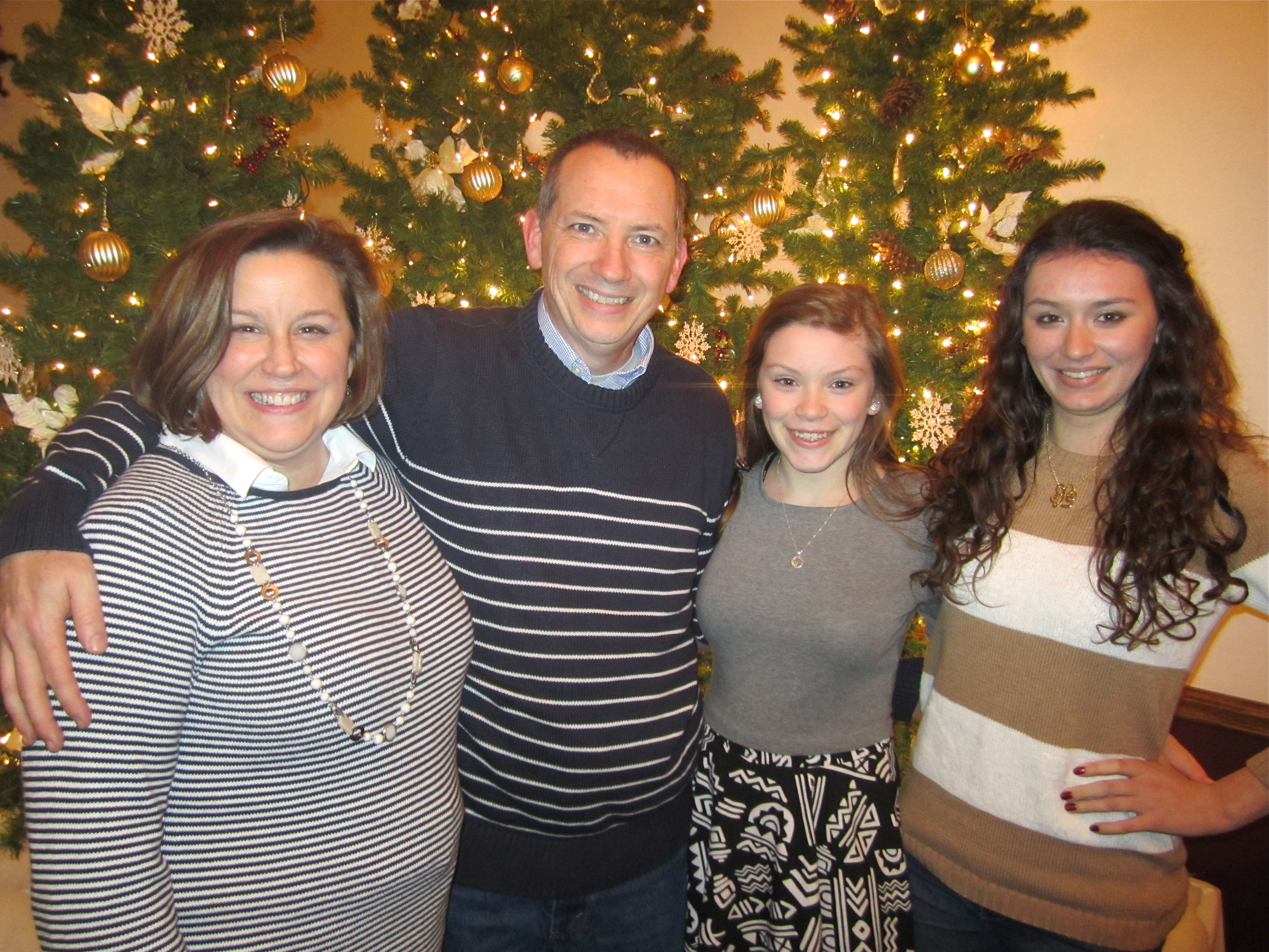
The Brooks family – Amy, Glenn, Haley, and Lindsay

Glenn Brooks ’86 never expected to be invited back to Penn State Behrend to speak to students.

“I changed my major several times and it took me awhile to determine where I was headed as an adult. And, let’s just say that I may have been working on my ‘social skills’ a little too much back then,” he said with a laugh.

But there are lots of surprises in life. Some good. Some not so good, like cancer.

“In September of 2011, I was diagnosed with Stage IV Head and Neck Cancer, originating in the ligual tonsil,” he said. “My treatment included chemotherapy, radiation, hydration therapy, tonsillectomy, a feeding tube, extended stays in the hospital, and nearly three months of not being able to eat, drink, or speak.”

Fortunately, the aggressive treatment plan worked. He’s been cancer-free for two years now and he says he is filled with gratitude and an internal drive to give back.

“Given the choice, I wouldn’t choose to get cancer, of course,” he said. “But it has inspired me to use my experience to help others. I genuinely believe that my calling is to seize as many opportunities as possible to reach out to others as they endure treatments and recovery, as well as to those that have been fighting for the cancer patient, too.”

That’s why he said “yes” when two Penn State Behrend students asked him to return to campus on April 10 to deliver messages of hope to hundreds of participants in the college’s Relay for Life, a 24-hour walk that is a fundraiser for the American Cancer Society. Brooks was the Opening Ceremony speaker.

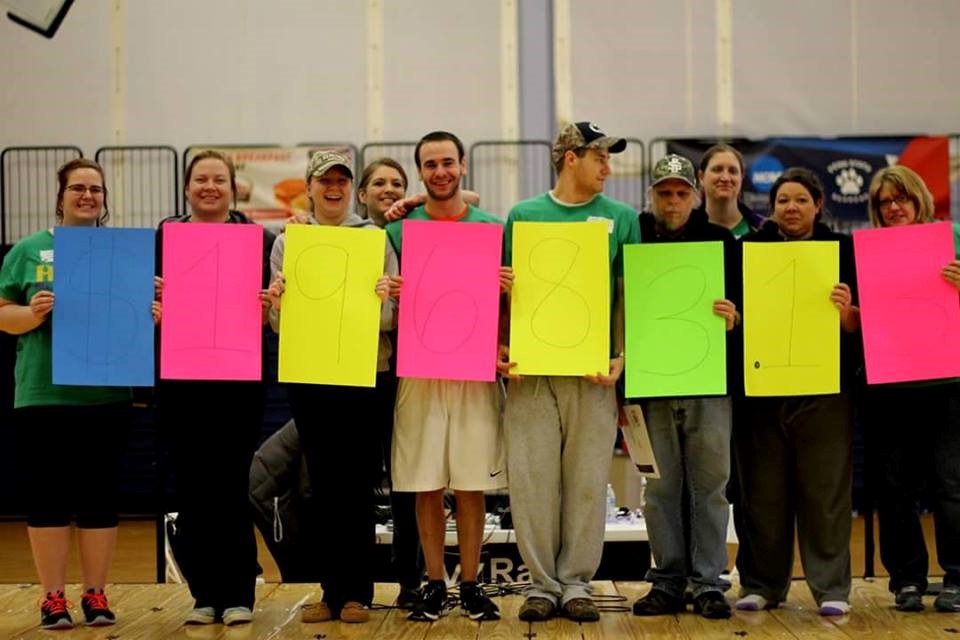
More than 250 participated in the Behrend Relay for Life with twenty-one teams who raised 19,683 for the American Cancer Society! The highest fundraising team was Behrend’s own Housing and Food Service Team Tie Dye who raised $3,817.

relay for life

Brooks, who participated in the Survivors Lap, was recently named a Global Hero of Hope by the American Cancer Society, one of only thirty-one such people in the world.

We talked with Brooks to learn more about his days at Behrend, his journey since, and how he reaches out to help others.

Why did you choose Behrend? Well, because initially I wanted to pursue Civil Engineering. But Calculus 162 said I wasn’t right for that career. In hindsight, I have to agree.

Degree earned: Management, with a Human Resources option.

Where do you work now? I’m the Manager of Organization Development for Student Transportation, Inc., the world’s third largest provider of school transportation services with more than 14,000 employees throughout the United States and Canada.

Family: Wife, Amy, and two daughters, Lindsay, 20, and Haley, 17, who is currently a Penn State Behrend student, but is soon transferring to the University of Hawaii, where she will be joining her fiancé who is serving in the U.S. Navy. They are getting married in June.

You speak regularly about your cancer fight, correct? I do. In the past couple of years, I’ve given more than fifty talks to various groups. I also lead a Cancer Support Network initiative at work and I’ve written several articles about cancer that have been published in various publications and magazines.

What do you say? My typical story describes my cancer journey, from diagnosis to current. I remind the audience that cancer is no longer a death sentence, due in part to the efforts of the American Cancer Society. I always, on behalf of all cancer survivors and their caregivers, thank those who are engaged in the fight against cancer. I encourage them to remain involved so that we can rid the world of cancer in hopes our children and grandchildren never have to hear that terrible diagnosis.

Why go so public? I know that some cancer patients wish to keep their experiences private, but I choose to be an activist for cancer research, recovery, and response. As a cancer survivor, I’ve been given a gift—authentic understanding. It’s something that doctors, nurses, and other health care professionals who haven’t had cancer, don’t have. I understand the financial, spiritual, practical, relational, philosophical, emotional, and physical changes that occur when a person has cancer because I’ve experienced it first-hand.

Do you find sharing to be rewarding or fulfilling in some way? I’ve met some rather incredible folks along the way. The energy and passion that I’ve felt is nothing short of amazing. I can tell you this with full confidence—we are loved. We are all loved by people that don’t even know us. Also, my involvement has given me the opportunity to give back and show appreciation for all the people—family, friends, coworkers, and perfect strangers—who were so good to my wife and my daughters when I was sick.

Your wife was recently diagnosed with cancer? Yes, in March of 2014, she was diagnosed with thyroid cancer. And, when someone tells you that if you have to pick a type of cancer, that’s a good one to get, don’t believe them. Any cancer is horrible.

Did you join in the Relay at Behrend? I did the Survivors Lap and also the Caregiver Lap. I did my best to thank every team member along the way, handing out high-fives all the way.

What is a Global Hero of Hope? I was submitted an application and was selected to represent the cancer survivors/caregivers internationally. There are only thirty-one Global Heroes of Hope in the world with seventeen countries represented. There are just four of us from the United States.

What do you want people with cancer to know? You are not alone. You can win the fight. And, love will beat cancer.

Can people contact you if they have questions or would like you to talk to a group? Sure, they can e-mail me at gabrooks@yahoo.com.

Earth Day display in library highlights paper waste

MelissaOsborn2

Melissa Osborn, Information resources and service support specialist in the Lilley Library

By Robb Frederick
Public Information Coordintor, Penn State Behrend

Libraries are built with paper: 205 pages of “Beowulf,” 248 of Sir Arthur Conan Doyle, 394 more for the poems of W.H. Auden.

So maybe it’s weird, hearing Melissa Osborn, information resources and service support specialist at Lilley Library, say the library uses too much paper. The facility itself is, in every way, a testament to the value of the printed page: It sits on land donated to Penn State by Mary Behrend, whose husband operated the Hammermill Paper Company.

But Osborn, an information resources and services support specialist, has a good argument. The staff at Lilley Library feeds half a million sheets of paper into just two printers each year. That costs the college approximately $1,800 every semester.

Osborn saved the cartons, 50 in all, to show what a semester’s worth of printer paper looks like. Then she stacked them, walling off the reference desk.

“When I got them all out here and stacked and I stood back, I thought, ‘My goodness, that’s a lot of paper,’” she said.

She set note cards – laminated so they can be used again – near the library computers. “Do your part,” they read. “Think before you print!”

“Hopefully, it will give people a moment’s pause,” Osborn said. “It’s so easy to click ‘print’ and move on. Maybe this will make them a bit more conscientious.”

The library staff has taken other steps to reduce their paper waste. They no longer copy DVD covers for the binder that patrons used to browse new additions to the 5,000-title film catalog. They print fewer copies of the directory of academic journals. They order fewer of the actual journals, opting instead for digital copies when that format is offered.

The most effective move was a bit more counterintuitive: In March, with funding from University Libraries, they upgraded the printers, allowing students to print faster.

“The older printers no longer were up to the job,” said Rick Hart, director of Lilley Library. “When the memory in them backed up and the pages didn’t come out, students clicked ‘print’ again. We were always finding extra copies in the trays at the end of the day.”

That paper was recycled, of course. And maybe that’s part of the problem.

“We learn now at an early age that recycling is good for the environment,” Hart said, “and it is. But there are still costs associated with it, and not just in dollars: It takes time, energy and other resources to transport, sort, process and repurpose all that material. Isn’t it better to not waste it in the first place?”

Spring Show highlights Penn State Behrend artists

By Allison Counasse
e-Communications Coordinator, Penn State Behrend

Penn State Behrend Spring Art Show
The Penn State Behrend Spring Art Show includes works by students, faculty, and staff.

Penn State Behrend’s Spring Art Show brings color and beauty to campus. The show presents works by twenty-five artists from the college community through May 8. It is the first time that it will be displayed in the college’s John M. Lilley Library gallery.

Heather Cole, lecturer in digital arts, and Scott Rispin, lecturer in art, collaborated on the show, which received support from the Mary Behrend Cultural Fund. Together, they expanded it from a straightforward student photography show to a professional exhibition in the gallery located on the main floor of the library.

“In the past, we exhibited unframed works in the hallway of a classroom building,” Cole explained. “We were looking for a more professional viewing space. The Lilley Library gallery gave us the opportunity to exhibit the art in a framed, professional manner.”

Rispin had been talking to Dr. Rick Hart, library director, for a few years about using space on the lower level and in the gallery for exhibits. Things came together last fall, when the Faculty Art Show made its debut in the gallery space.

The Spring Art Show promotes the diverse talents and interests of the Penn State Behrend community. Submissions include student works in a variety of media, as well as pieces by faculty and staff. In addition to photography, the show features paintings, drawings, and digital art such as collages, scanograms (scanner art), 3D graphics, and 3D-printed sculptures. Many of the student works were created for photography, digital arts, and painting classes.

The artwork is not arranged by format or artist. “It’s always best to hang a show in a way that creates a better experience for the gallery patron,” Rispin said.

Students demonstrate diverse artistic talents

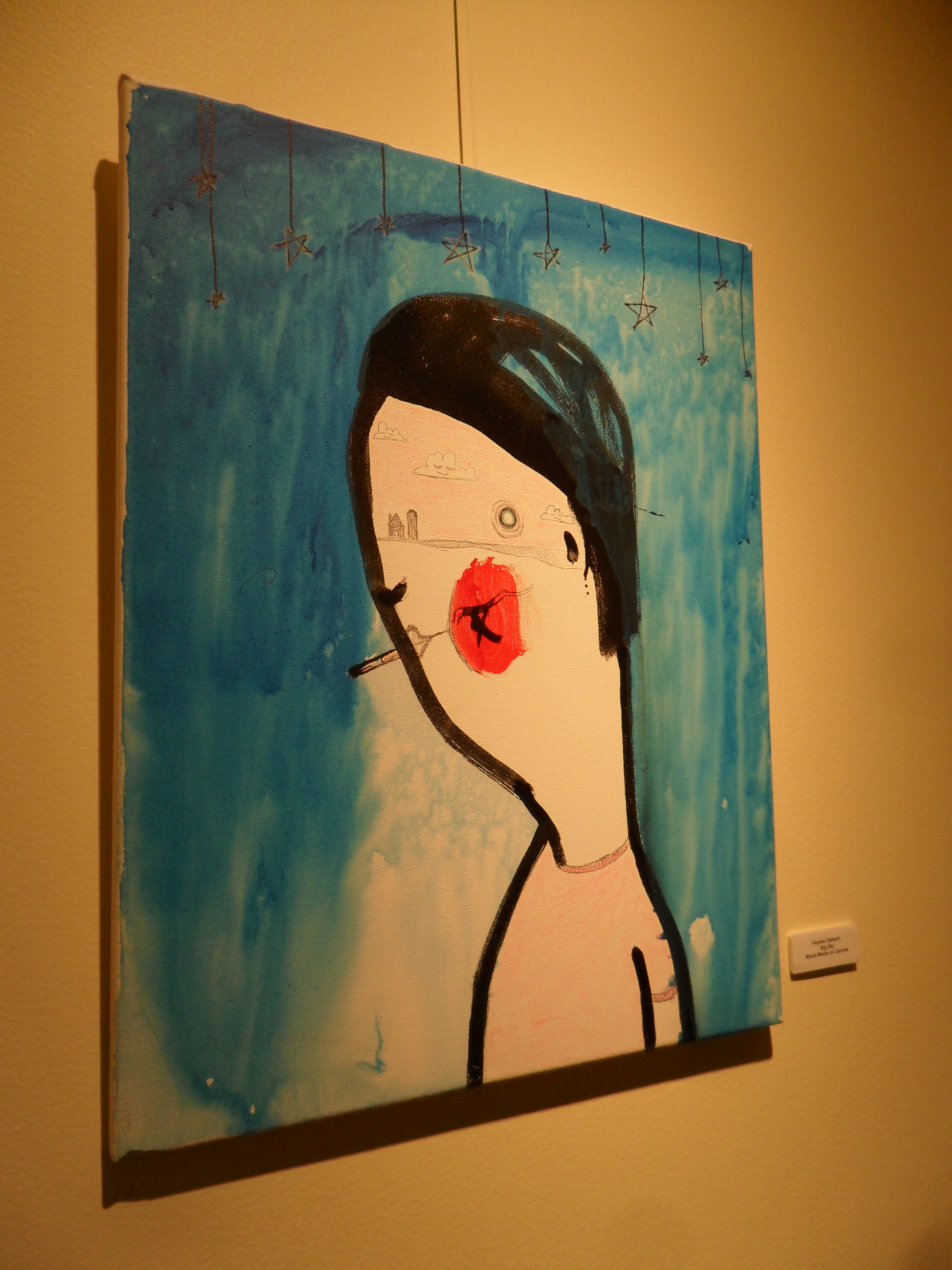
Hayden Seibert,
Hayden Seibert, Big Sky
Mixed Media on Canvas

Hayden Seibert, a sophomore Mechanical Engineering major from Erie, Pa., submitted two paintings to the show. “One was displayed last year in the Erie Art Museum Spring Show and the other is being shown for the first time,” he said. “I’m an artist, and I like to share my work.”

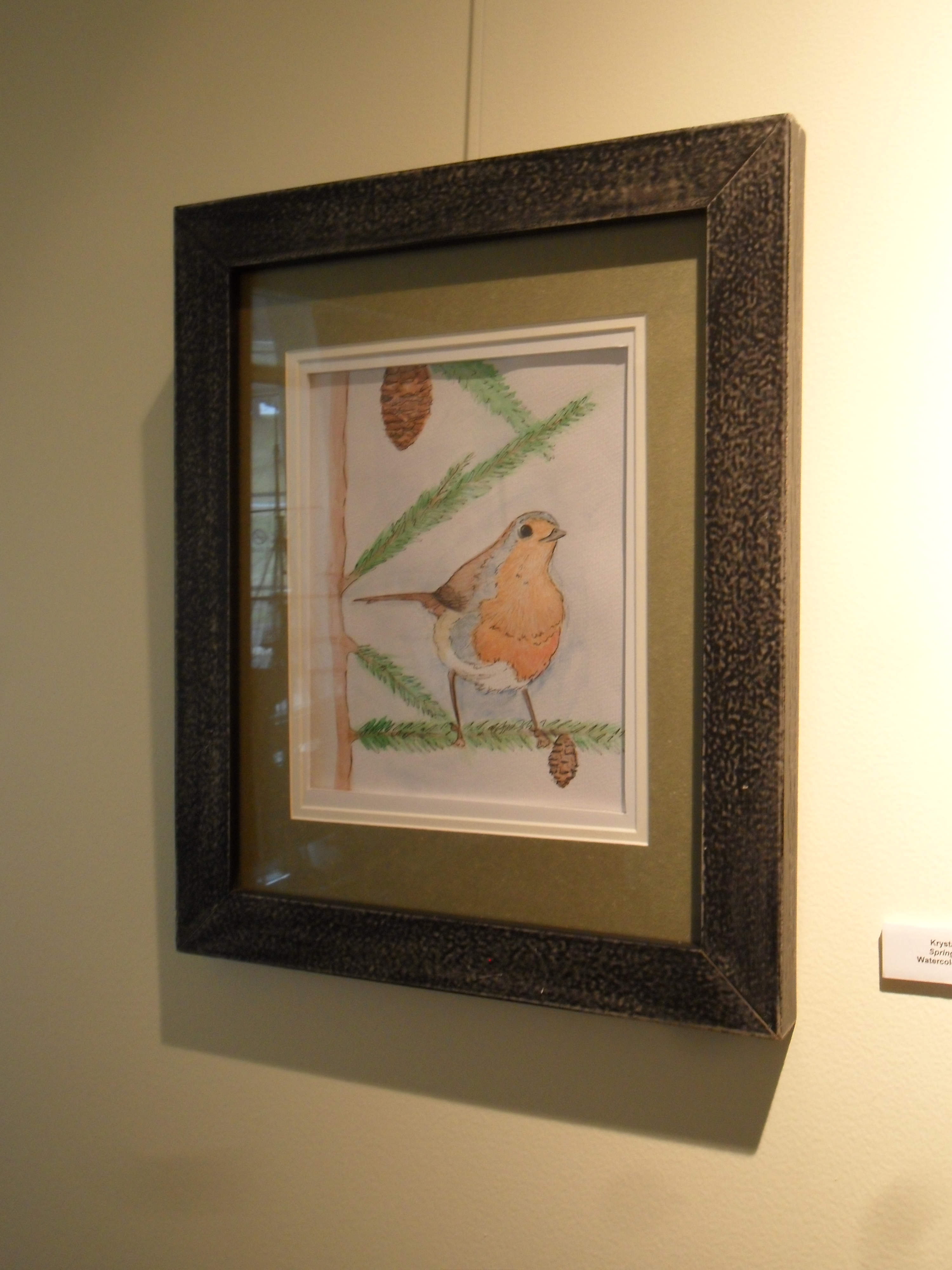
Krystal Elliott,
Krystal Elliott, Spring is Near
Watercolor on paper

Krystal Elliott, a sophomore Software Engineering major from New York City, created her watercolor painting Spring is Near, which depicts a bird on a tree branch, specifically for the show. She said she submitted it to challenge herself to do something new, and she wanted to paint something others could identify with.

“I finally saw a bird outside and it reminded me that winter was nearly over,” she said.

Nick Ranayhossaini,
Nick Ranayhossaini, Burning Oil
Charcoal on paper

Nick Ranayhossaini, a senior majoring in General Arts and Sciences from Harmony, Pa., had started his charcoal drawing of a skull before learning about the show but finished it for the submission deadline.

“I often draw skeletal figures, largely because I enjoy dark themes and just think that skeletons look cool, but also because they don’t represent anyone specific,” Ranayhossaini said. “Seeing the piece in the gallery makes me extremely happy. When I get to watch someone walk in and start examining my work I am extremely proud.”

Digital Arts step into the spotlight

3D Prints and Digital Sculptures

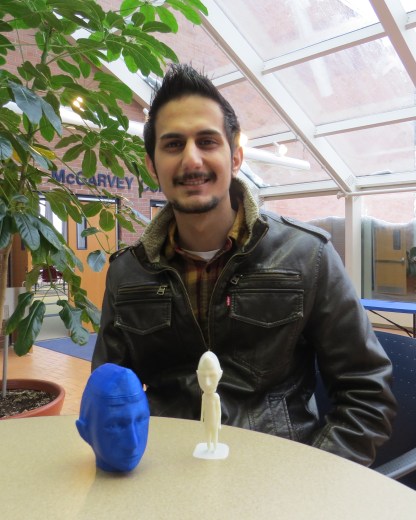
The exhibition includes a display case with 3D objects designed by students in Cole’s ART168 The Digital Medium course. They hadn’t even seen their creations until they went on display. The students created the models with Autodesk Mudbox, a 3D painting and sculpting program, and Cole printed them with a 3D printer recently purchased by the School of Humanities and Social Sciences.

“These are their first projects,” Cole said. “They wanted to get down to the library to see them right away.”

Peter Kalmar,
Peter Kalmar, Sword Model
Digital Sculpting

Peter Kalmar, a junior Computer Science major from Cabot, Pa., created a 3D-printed turtle and also drew concept art for a sword design and implemented it in Blender, a 3D modelling program. He said doing the project was a great way to learn the computer program.

Art at Penn State Behrend will continue to grow

Cole and Rispin say that there are ample opportunities to further expand the show, which would give Arts Administration majors experience in planning, executing, and promoting gallery exhibitions.

Both instructors hope more artists will participate as they become aware of the blossoming art scene on campus. Cole and Rispin often find that fear or inexperience holds back new artists, who may think their work isn’t good enough or might not know how to frame or display artwork.

“All they really need to do is talk to us and we’ll help them,” Cole said. Rispin has even loaned or built frames for students’ work.

Don’t expect all of the art to disappear from the Lilley Libraryor campusafter the show is over. Rispin says additional wall space on the lower level of the library will be used as “ongoing exhibition space.”

The show also was highlighted at a recent Community Arts Walk that took place during the college’s Spring Open House. The event included temporary art displays on bulletin boards and mobile frames around campus, a display in the windows of a residence hall, and performances at Bruno’s Cafe.

“The walk went well,” said Cole, who may “look to inviting clubs to participate next year.” She has lots of other creative projects in the works, too.

Students say that’s good news. “I have high hopes that the college will continue to provide opportunities like this on campus,” Seibert said.

About the Spring Art Show

Admission to the show is free and open to the public during library hours.

Parking is available at the adjacent Reed Union Building or in any campus visitor parking lot. Visitor Parking Permits may be obtained from Police Services in Erie Hall.

Penn State Behrend Spring Art Show
The Penn State Behrend Spring Art Show runs through May 8. The annual exhibition, which includes works by twenty-five members of the Penn State Behrend community, has expanded and moved to the Lilley Library gallery.

Meet Standout Senior Kristina Peszel

By Heather Cass
Publications & Design Coordinator, Penn State Behrend

kristina peszel

Kristina Peszel

Major: English, with Professional Writing option

Minors: Management Information Systems

Certificate: Social Media

On choosing Behrend: “It has the resources and prestige that come with being Penn State, but with smaller classes. I was able to not only really get to know my professors—and to have them know me—but also to have the kind of intense discussions in small classes that turn an average learning experience into a profound one.”

On English as a versatile degree: “I always had a knack for writing and I like helping people. With English, specifically with the professional writing option, I can help businesses communicate more effectively. I like solving problems, and ineffective communication is essentially a problem of words; every word we use is a choice, so how can we use words in the most effective way to get our point of view across? English is an exciting major because it’s a major of possibilities!”

On minoring in MIS: “I decided to minor in MIS without any prior technical background. There were times I questioned my ability to do something so different than what I was used to, but I stuck it out and eventually got two MIS-related internships.”

Proudest accomplishment at Behrend: “Any time I help another student succeed. Whether that’s through tutoring (Peszel was the lead writing tutor at the college’s Learning Resource Center) or just giving someone advice, nothing makes me more proud than knowing I helped someone in a positive way.”

Words to live by: “Someone once told me that there is no comfort in the growth zone, but there’s no growth in the comfort zone. I try to remember that when I’m doing something new. If you never get out of your comfort zone and try new things, you don’t give yourself the chance to grow.”

Advice for new students: “People will tell you not to take your electives right away and to ‘save’ them, but if you aren’t sure what you want to major in, take some electives! You won’t know if something is right for you until you try it.”

During her time at Behrend Peszel was a member and officer of Alpha Sigma Tau, Omicron Delta Kappa, and Reality Check. She participated in Alternative Spring Break in 2014, wrote for the Behrend Beacon, and was involved with the Lion Entertainment Board for two years. She also served as the lead writing Tutor of the Learning Resource Center where she honed her skills in technical writing.

Peszel will graduate on Friday, Dec. 19. She has accepted an MIS position at Erie Insurance.

Behrend Reacts: Who is your favorite professor?

BehrendReactslogolargeBy Nicole Krahe
Marketing Communication Student Assistant, Penn State Behrend

Author William A. Ward once said; “The mediocre teacher tells. The good teacher explains. The superior teacher demonstrates. The great teacher inspires.”

With so many dedicated professors on our campus, we asked Behrend students, who is their favorite and why?

Samantha

Samantha Raible, senior, Biology, from Pittsburgh: “I would have to say my favorite professor is Dr. Pam Silver, Professor of Biology. She was tough but always took the time to help students. She made things interesting enough to keep us awake at an 8:00 A.M class.”

Cat

Cat Hensley, first-year student, Geography, from Michigan: “Dr. Michael Naber, lecturer in geosciences. He’s easygoing, funny, and has Harry Potter glasses.”

Cassie

Cassie Peters, sophomore, Veterinary and Biomedical Sciences, from Erie: “I would say Ms. Luciana Aronne,  lecturer in chemistry. She is supportive, motivational and keeps class interesting.”

Ronnie

Ronnie Cox, sophomore, Physics, from Erie: “My favorite professor would have to be Mr. Adam Combs, lecturer in mathematics. He is not going to take it easy on you but will take the time to go over things you don’t understand.”

Lindsey

Lindsey Chase, first-year student, Kinesiology, from Randolph, N.Y: “Mr. Scott Rispin, lecturer in art. He makes things fun and interesting, and is very personable. You can tell he cares about his students.”

Pat

Pat Kress, sophomore, Finance, from Erie: “I would say my management professor, Dr. Ryan Vogel, assistant professor of management. He is enthusiastic and relates concepts to college students well. He makes an 8:00 A.M class bearable.”

matthew

Matthew Moreau, senior, Biology, from Massachusetts: “Dr. Michael Campbell, a professor of biology. He engages you and makes things interesting. If you pay attention in class, it’s really rewarding.”

Katie

Katie Powers, first-year student, Biology, from Clearfield: “I would say Mr. Scott Simpson, lecturer in chemistry. He’s young and you can tell he’s excited about teaching. He also does experiments every day which is really cool.”

Mary

Mary Bradley, first-year student, Division of Undergraduate Studies, from Erie: “My favorite professor is Dr. Angela Rood, lecturer in psychology.  She breaks the class down to make it easier to understand and does activities every day to keep things fun and interesting.”

Behrend Reacts is a regular Thursday feature at the Behrend Blog that tries to get the campus pulse on a current topic, whether it’s serious or trivial. If you have a question to suggest for Behrend Reacts, please email Nicole Krahe at ndk5089@psu.edu.

Like Us: facebook.com/pennstatebehrend

Follow Us: Instagram.com/psbehrend

Tweet Us: twitter.com/psbehrend

Watch Us: youtube.com/pennstatebehrend1

Behrend Reacts: What is the last photo on your phone?

BehrendReactslogolarge

By Nicole Krahe
Marketing Communication Student Assistant, Penn State Behrend

World-renowned photographer Sally Mann once said, “Photographs open doors to the past, but also allow a look into the future.”

Keeping this in mind, we asked Behrend students what the most recent photo in their phone was, and what it meant to them.

Ben Katsarsky

Ben Katsarsky, first-year student, Plastics Engineering Technology, from Syracuse, N.Y.: “The last photo in my phone is a screenshot of an Instagram post I made 98 weeks ago. I was missing home, so I was scrolling through my old posts and found this one of a duffel bag full of shirts. I used to have a clothing line and it was the first time I took the shirts to school to sell them to my friends.”

Braedon Blasic

Brandon Blasic, first-year student, Division of Undergraduate Studies, from Erie: “My last photo is of my friends and I hanging out before we all went our separate ways to different colleges.”

Tyler Dunlap

Tyler Dunlap, first-year student, Division of Undergraduate Studies, from Erie: “My most recent photo is a screenshot of Untitled Finale by Atreyu, on Pandora.”

Ryan Kepner

Ryan Kepner, sophomore, Mechanical Engineering, from Williamsport, Pa.: “This is a photo of a tattoo I’m about to get. I enlisted in the army a year ago because I wanted to be a part of something bigger than myself and to support this country. I feel like this tattoo will represent that.”

Dan Kozubal

Dan Kozubal, sophomore, Chemical Engineering, from Saegertown, Pa.: “This is just a photo of chemistry notes. I’m working really hard this year to get good grades.

Julia Gabreys

Julia Gabreys, first-year student, Psychology, from Franklin, Pa.: “My most recent photo is actually a screenshot of a Snapchat my boyfriend sent me. It says, ‘Marry me.’”

Rob Strain

Rob Strain, sophomore, Management Information Systems, from Erie:  “My last photo is of my work schedule at the Sara Reed Retirement Center. I love working there because I feel like I am making a difference in the residents’ lives.”

Monique Lebrun

Monique Lebrun, Junior, Communication, from New York, N.Y.: “This is a photo of my friend and I at Aoyama for her birthday dinner. We went to three different restaurants before deciding to go there.”

Sydney Sample

Sydney Sample, sophomore, English, from Corry, Pa.: “This is a screenshot of a quote by Jim Elliott that I found on Tumblr. It says, ‘He is no fool who gives up what he cannot keep, in order to gain what he cannot lose.’ I just like the message.”

Julie Pace

Julie Pace, sophomore, Nursing, from Erie: “My most recent photo is of my sister and I at our birthday dinner. We are really close, so it’s always good to see her.”

Behrend Reacts is a regular Thursday feature at the Behrend Blog that tries to get the campus pulse on a current topic, whether it’s serious or trivial. If you have a question to suggest for Behrend Reacts, please email Nicole Krahe at ndk5089@psu.edu.

Like Us: facebook.com/pennstatebehrend

Follow Us: Instagram.com/psbehrend

Tweet Us: twitter.com/psbehrend

Watch Us: youtube.com/pennstatebehrend1