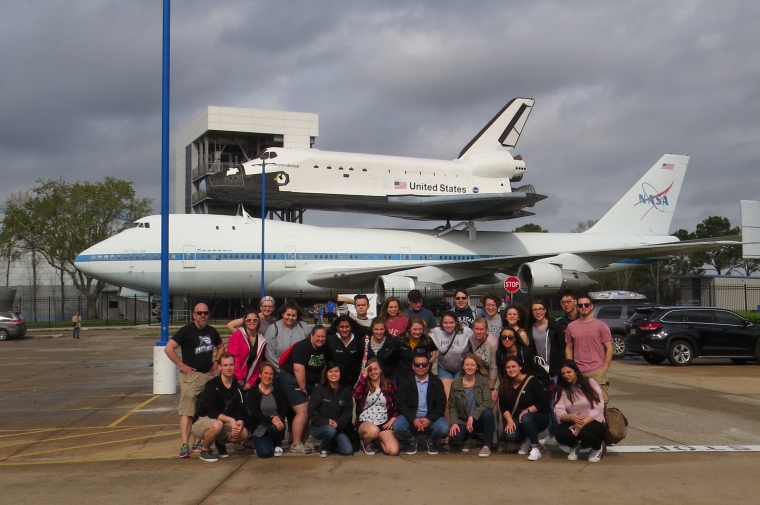
ASB 2018 – Texas – Day 7 (final day)

Last week, twenty-four students and four advisers from Penn State Behrend participated in an Alternative Spring Break service trip to Beaumont, Texas. The group helped residents recover from the catastrophic flooding that occurred as a result of Hurricane Harvey, which hit the greater Houston area in August of 2017, causing at least $125 billion in damages and claiming 108 lives. Behrend’s ASB group was joined by five other Penn State campuses, including Greater Allegheny, Harrisburg, Scranton, University Park, and York.

By Heather Cass

Publications Manager, Office of Strategic Communication, and 2018 ASB participant

group photo  cropped.jpg

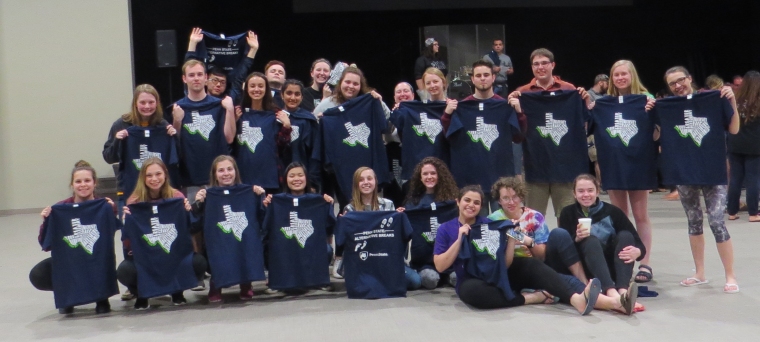
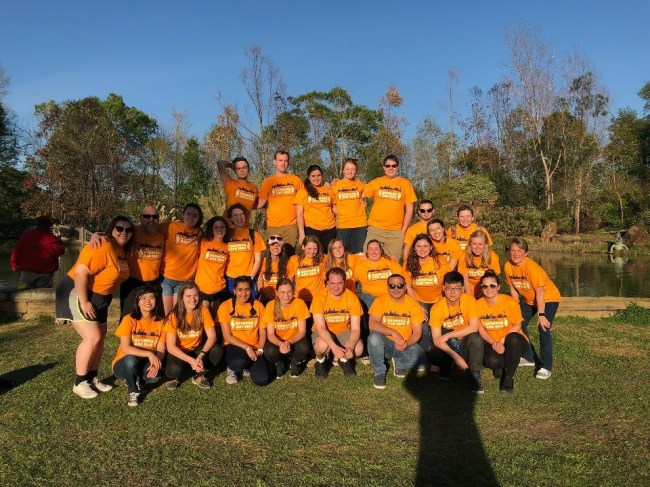
On the evening of Thursday, March 8, we were finally able to have an All Penn State gathering, bringing together all of the Penn State students from all six campuses who were at the church working on homes in Texas.

It’s no easy feat to corral more than 100 students, but Kelli Dowd, program coordinator, service and leadership, from University Park, is no stranger to working with hundreds of students.

She started with a WE ARE…chant, then she and an adviser from each of the other campuses tossed Penn State ASB T-shirts to everyone. After the t-shirts were distributed, we all participated in an hour or so of icebreaker activities and group games.

Following the all Penn State meeting, the Penn State Behrend group held their final Reflections meeting and gave strict instructions for all students to be in the meeting room at 6:45 a.m. with luggage in hand, for an 11 a.m. flight.

The drive to Houston is about 90 minutes from Beaumont, though we neglected to figure in much cushion time for traffic. That nearly did us in, but the roads cleared just in time for all of us to make it to the gate with about 5 minutes to spare.

I asked some of the Penn State Behrend students on the trip to share their top takeaway from this year’s ASB experience. Here’s what they had to say:

“Everyone needs realize that everything is not fine in Houston and that even eight months after the hurricane, there are still houses that have not even been touched since the hurricane hit. I learned that even the smallest things we do for these people can still make a huge difference. Putting a smile on these homeowners’ faces is the greatest feeling you can imagine.” — Priya Patel, Nursing major

“My biggest take away from ASB is that there is no act too small when it comes to helping someone. Whether you’re ripping out a sink, taking down some drywall, or just simply taking the time to talk to someone, you are making a difference in their life. And as much as we give to the people we help, we truly get so much more from them.” — Kelly Miller, Mechanical Engineering major

“My biggest takeaway from this trip is how a group of people from various backgrounds came together to accomplish one thing—to serve others. We came together as strangers, and we are now leaving as friends by having this common goal.” — Ashlyn Kelly, Chemistry major

“The homeowners in southeastern Texas still have a long road a head of them and they know that, but it’s just remarkable how thankful they were for the help. I wouldn’t trade these lifelong memories and lessons from this trip for anything.” — Brianna Riley, Accounting and Management Information Systems major

“Alternative Spring Break is the kind of trip that you know will change your life, but you can’t even begin to understand how you will be impacted until you’re experiencing it. It’s the kind of trip that allows us to learn so much about others, but teaches us about ourselves at the same time. In summary, ASB 2018 was a trip of passion, kindness, growth, and success.” — Emily Archer, Elementary and Early Childhood Education major

“The biggest thing I learned this ASB Trip was that no matter how seemingly small a task, if it is done to support another, it will have meaning to somebody.  Also, you don’t need to be a part of a church or volunteer group to volunteer.  You just need a little heart.” — Angelica “Squeaks” Miller, Mechanical Engineering major

ASB 2018 – Texas – Day 6

Twenty-four students and four advisers from Penn State Behrend are participating in an Alternative Spring Break service trip to Beaumont, Texas. The group will be helping residents recover from the catastrophic flooding that occurred as a result of Hurricane Harvey, which hit the greater Houston area in August of 2017, causing at least $125 billion in damages and claiming 108 lives. Behrend’s ASB group is being joined by five other Penn State campuses, including Greater Allegheny, Harrisburg, Scranton, University Park, and York.

By Heather Cass

Publications Manager, Office of Strategic Communication, and 2018 ASB participant

Thursday, March 8 was Penn State Behrend’s last Alternative Spring Break workday. It was bittersweet as we all missed our families and home (and our soft, comfy beds), but we didn’t want the adventure to end.

And, there is still so much work to be done in the Beaumont, Texas, area.

IMG_8422

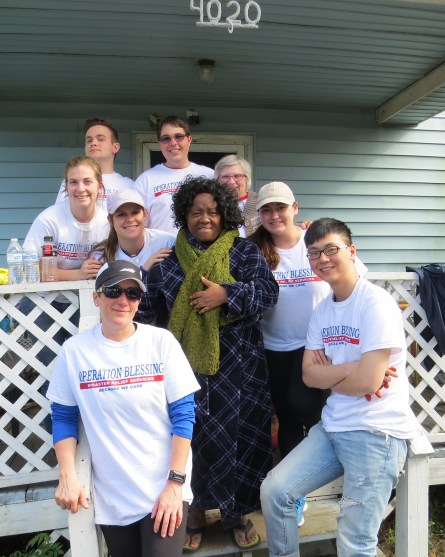
This is Miss Chandra Jones. She is the owner of the final house in Port Arthur, Texas, that my team worked on (Chris Harben’s team had been there earlier in the week). When Miss Jones learned that I was a writer she told me to take her picture and tell her story so that people know the hurricane damage is not all cleaned up and that “folks is still suffering down here.”

Miss Jones was in a catch-22. She couldn’t apply for federal assistance in repairing her home until it was gutted, but couldn’t gut it herself and couldn’t afford to pay anyone to do it.

Enter Operation Blessing and service-minded students on Alternative Spring Break.

Our task at Miss Jones’ house that day was to gut her kitchen. Our goal was to finish that, then turn her electric and water back on and move her appliances back into the kitchen area so she could prepare meals. We did not want to leave her without an operational kitchen.

But, the moment we set foot in the kitchen, stepping on spongy floors, we knew that probably wasn’t going to happen. Whatever was below the linoleum was wet and rotted. It turned out to be particle board and some sort of plastic underlay with more (rotted) wood below.

IMG_8407

We gutted the walls and removed the lower cabinets and counter (they had all be under water and had to go), tore up all but the last layer of flooring. There were plumbing and gas issues along the way. There was a brief break while we waited for the gas company to check out a suspected leak.

All the while, team members spent time on the porch, taking turns talking with Miss Jones. She was entertaining and smart. Intuitive and gregarious. She has two grown children: a son who works 16-hour days and was living in the house with her and a daughter who is a school teacher. The daughter has been begging her mom to leave her house and live with her.

IMG_8430

Miss Jones did live with her daughter for several months after the flood, but she felt like the landlord didn’t want her there and she just wanted to live in her own home. She had paid her little home off just before Hurricane Harvey blew in and wrecked everything.

Most of the houses across the street from her are still boarded up. She said nobody has ever returned to at least three of them. “They just left,” she said.

It occurred to me that every person my team helped this week (with the exception of the day at the animal shelter), was an elderly person or a single mother. It’s our most vulnerable populations that are left struggling — they can’t fix it alone and they don’t have the ability to flee. So they are living in moldy homes with rotten floors and walls and almost no furniture as that was tossed after the flooding.

At least three times, I had to walk away from the job site to hide tears.

One of those times was late in the day after higher ups at Community Collaborations International had stopped by to check on our progress and told us there was no way we would be able to make the kitchen functional that day and that Miss Jones had to be told her house was inhabitable.

IMG1758869001

One of the students, Emily Archer, had formed a special bond with Miss Jones that day, and she volunteered to deliver the news to Miss Jones and her son.

Her son understood. He said that he had told his mother she should not be living there, but was that she wouldn’t listen to him.

She listened to Emily, whose strength, kindness, empathy, and compassion brought me to tears (again). Miss Jones agreed to temporarily move to her daughter’s house until her kitchen floor and plumbing issues could be resolved by CCI and Operation Blessing.

“I see what you did,” she said, waggling a finger at all of us. “Sending this one out here to talk to me,” as she pointed to Emily. “You know we had a special bond, me and this one. That’s why you sent her out here to talk to Miss Jones.”

Guilty as charged. But Emily wanted to tell her because she cared. We all did. We all wished we could take Miss Jones home with us.

As we worked throughout the day, Miss Jones sat on the porch and made a point of getting to know each one of us, even the ones like me who tried to sneak by.

“What are you?” she called out to me as I carried part of her kitchen cabinet to the curb.  “Are you a professor at that college?” she asked me.

“No, I’m a writer for the college,” I said.

“You a writer?! You need to write my story then. Tell them people is still living like this down here.”

“I will, Miss Jones. I promise I’ll tell your story to anyone who will listen.”

Before we left, we asked for a photo with her on the porch of her little periwinkle home. She was happy to oblige and stood in the middle wearing a scarf that another Operation Blessing volunteer had knitted for her.

IMG_8431

She hugged each one of us tightly, and at one point exclaimed, “OOhh, youu all smell like money. I bet you all living in mansions back home in Pennsylvania.”

We don’t. But compared to her, we do.

As I helped tear out Miss Jones’ kitchen floor that day, my husband was laying a new one in our living room in Pennsylvania. He texted me some photos. I glanced at them as I stood in Miss Jones’ destroyed kitchen, a hole to the dirt ground within my field of vision.  And I teared up again. I have so much, and she has so little and I don’t know what to do about that.

So we did what we could for Miss Jones and we got the job site ready for the professionals to do their part next. There are at least two more weeks of spring break student volunteers arriving to help.  I hope she’ll be back in her home and eligible for assistance in rebuilding by early April. She told us she could reapply with FEMA then.

Here is how the other Penn State Behrend ASB teams spent their final workday in Texas:

  • Will Taylor’s team volunteered at the local Salvation Army, helping with organizing and inventory.
  • Chris Harben’s team worked on gutting a home and removing debris.
  • Chris Fox’s team worked at a home in the morning, but were done early and returned to the church to help cleanup after 200 volunteers (no easy job!)

Tomorrow, in my final ASB trip post, I will tell you about the all Penn State activities/gathering we had on Thursday evening, our travel home, and relay some final reflections from Penn State Behrend students who participated in this year’s ASB trip.

~ Heather

This slideshow requires JavaScript.


ASB 2018 – Texas – Day 5

Twenty-four students and four advisers from Penn State Behrend are participating in an Alternative Spring Break service trip to Beaumont, Texas. The group will be helping residents recover from the catastrophic flooding that occurred as a result of Hurricane Harvey, which hit the greater Houston area in August of 2017, causing at least $125 billion in damages and claiming 108 lives. Behrend’s ASB group is being joined by five other Penn State campuses, including Greater Allegheny, Harrisburg, Scranton, University Park, and York.

By Heather Cass

Publications Manager, Office of Strategic Communication, and 2018 ASB participant

IMG496213760

One of the best things about being on the ASB trip is getting to know each person on the 28-member team individually.

After a few days (or hours in a car or on a jobsite), personalities emerge. You learn who is hilarious, who is tougher than nails, who takes charge, who is afraid of dogs, who isn’t going anywhere without lipstick (guilty as charged).  You learn their majors and hometowns, what sports they played in high school, if they have siblings, and whether they are a night owl or an early bird (spoiler: none of them appear to love getting up at 5 a.m. like me).

We spend a lot of time together (In the entire time I’ve been here so far, I have had exactly 45 minutes of free time, not counting my early morning hours when I creep downstairs to blog.) We eat every meal together, we work together, we sleep in one room less than two feet from each other (women and men are in different buildings), we play together, and every night at 8 or 8:30 p.m. two of the student trip leaders do a 90-minute “reflections” activity designed to encourage deeper thinking and conversation about the lessons learned that day.

Reflections activities are guided discussions intended to help the students process what they’ve been exposed to and insights they have gained in a way that transcends the trip.  Reflections give students a wide view of the immersive-learning experience and how it leads to lifelong personal development.

Students who attend ASB say it is life changing, in ways both large and small. For some, it jumpstarts a life of service. For others, it prompts a change in majors or career or confirms they’re on the right path.  Others make friends that last far beyond their college years.

As an adviser, I’m having my own immersive learning experience. (More about that tomorrow).

For now, let me tell you how ruff my team’s day was on Wednesday.

At the 8:30 a.m. orientation, we hit the job roulette jackpot and secured a prime assignment at the Humane Society of Southeast Texas.

The no-kill shelter has been at max capacity since the hurricane as many animals were abandoned or surrendered (then and now) as people try to get their lives and homes back in order.

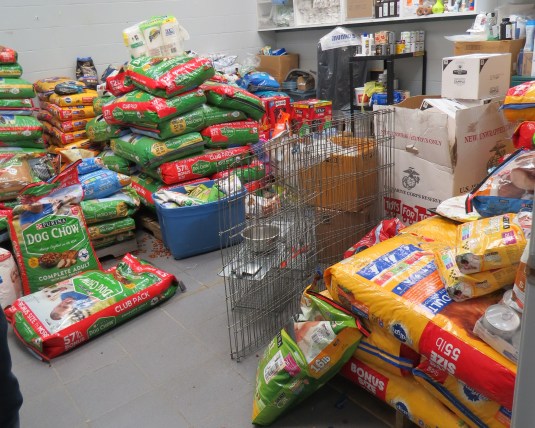
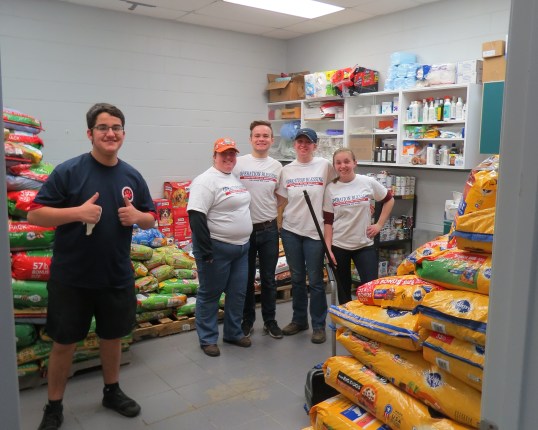
Our first task of the day was to organize the supply room. With seven of us and an addition three boys from a high school volunteer group who were also there, we made quick work of the room:

Before:

IMG_8289

After:

IMG_8306

After lunch, our task was to “love on the dogs” as our volunteer leader, Miss Pearl, put it. Miss Pearl loves her babies and insisted on personally introducing us to every dog in the shelter. Then, we each picked one to take out of their cages for some exercise – a walk, a game of fetch in the pens, etc.  Between the seven of us, I’m sure we walked or played with every dog there (that could be taken out), including a gentle giant of a Great Dane, a Great Pyrenees mix, and lots of young lab, pit, and hound mixes.

After “loving on the dogs” for a couple of hours, Miss Pearl put us to work in the office, separating sheets of newspaper to make cage cleaning easier for the workers. Then we headed back outdoors to transport newly-cleaned supplies (cages, plastic tubs, food dishes, etc.) to the storage shed.

At 3:30 p.m., we headed back to the church for cleanup as we had a 5:30 reservation for the whole crew at a local Texas barbecue grill. (Mmm…brisket.)

Over dinner, we caught up with the other three crews to find out what jobs they worked on that day:

  • Chris Fox’s crew continued work on a single mom’s house, clearing clutter to make it (more) liveable for the woman and her disabled son.
  • Chris Harben’s crew had the most physically demanding job of the day — removing tile flooring from a flood-damaged home.
  • Will Taylor’s crew worked at a home removing walls and insulation that had been damaged in the hurricane.

Today is our last work day. Tomorrow, we are leaving the church at 6 a.m. for an 11 a.m. flight and a 2:30 p.m. arrival in Pittsburgh, followed by a bus ride back home to Erie, where I hear there’s another storm dumping snow on the Great Lakes region.

This slideshow requires JavaScript.


ASB 2018 – Texas – Day 3

Twenty-four students and four advisers from Penn State Behrend are participating in an Alternative Spring Break service trip to Beaumont, Texas. The group will be helping residents recover from the catastrophic flooding that occurred as a result of Hurricane Harvey, which hit the greater Houston area in August of 2017, causing at least $125 billion in damages and claiming 108 lives. Behrend’s ASB group is being joined by five other Penn State campuses, including Greater Allegheny, Harrisburg, Scranton, University Park, and York.

By Heather Cass

Publications Manager, Office of Strategic Communication, and 2018 ASB participant

me

The worst part of the work today? Breathing through this barrier.

Day 3 – Work Day #1

We were all eager to get our assignments and get to work this morning and were among the first in the long line for breakfast. (Did I mention there are about 200 workers here now?).

On the morning menu was biscuits with sausage gravy and yogurt/fruit/granola parfaits for the non-meat option. Our meals are all cooked and served by members of a local Mennonite church and they are delish. The men cook most of the meat on a giant portable grill outdoors.

In the morning, they also set out tables full of lunch and sandwich items and each volunteer packs their own brown bag lunch.

Community Collaborations International, the company Penn State Behrend uses to coordinate it’s annual ASB trips, is working with another organization — Operation Blessing Internationa— that had set up shop in Houston shortly after the storm happened last fall.

The company requires workers to wear Operational Blessing shirts so that residents can easily identify them. So we all changed into our white Operational Blessings shirts before meeting outdoors for an orientation meeting.

IMG_8204

After receiving our assignments, picking up our First Aid kit, tool bucket, cooler full of water, and quilts — one queen size and one child size — made by members of the Mennonite community to be delivered to every home we visit, we set off in different directions.

With four vans and advisers, Behrend had four groups of six to seven people to travel to different jobsites.

My crew worked at a home in a neighboring township about 15 minutes away from the church. Ours was a single-story home that belonged to an 80+ year old woman who was currently living in an R.V. behind her home, which had been completely underwater after the flood and had 5-foot deep standing water for about a month.

IMG_8235

The home had been cleared of debris and all the drywall was down. Half of the home had new plywood flooring and the other half of the home needed the floors pried up so that new wood could be put down. Tearing up the floors was our job.

It was hard, sweaty, and dirty work made slightly harder by the humidity, lack of light in the house, and annoying, but necessary safety gear (masks, safety glasses). By the time our workday was over at 4 p.m., we had removed the entire subfloor in one room and had taken the first couple layers (there are layers of flooring) off in the two other rooms.

The homeowner’s daughter stopped by a couple of times to chat with us and tell us about her family, Texas, and the flood. Interacting with the residents as we work is not only expected, but encouraged. Operation Blessings says that, for some, we are the first ones to show up and give them a glimmer of hope. They told us to listen and ask not “How are you?” (because we’re all conditioned to automatically respond “good”), but “How are you holding up?”

IMG_8233

I can’t imagine answering that question six months after a disaster. Many of the houses that we passed on our way to our jobsite had RVs in front of waterlogged houses and bags of debris and rotten lumber in the yard.

When I got my first look at the house we were working on, I was sad and overwhelmed. The enormity and volume of the work to be done — a half a year after the disaster — was disheartening. And our resident was one of many.

The other Penn State Behrend teams had different, but similar experiences:

  • Chris Fox’s team went to a home only to find the homeowner had had a stroke two days before, so they were reassigned to help a young mother with a severely disabled son clean her house out.
  • Chris Harben’s team demolished a bathroom in one home. Then, they canvassed the neighborhood, talking with residents to see if they had projects they wanted Operation Blessings to help them with.
  • Will Taylor’s team worked on a home, removing walls, insulation, and debris.

We all returned filthy and hungry and hit the showers and dinner line, in that order. Personally, I cared more about shower than dinner.

After dinner, my crew made a Walmart run for supplies, including a cake for Chris Fox who had a birthday yesterday.

Then, more meetings and evening reflections (more about that tomorrow).

Today, Tuesday morning, some of us will receive new assignments, others will continue the work they were doing yesterday.

This slideshow requires JavaScript.

ASB 2018 – Texas – Day 2

Twenty-four students and four advisers from Penn State Behrend are participating in an Alternative Spring Break service trip to Beaumont, Texas. The group will be helping residents recover from the catastrophic flooding that occurred as a result of Hurricane Harvey, which hit the greater Houston area in August of 2017, causing at least $125 billion in damages and claiming 108 lives. Behrend’s ASB group is being joined by five other Penn State campuses, including Greater Allegheny, Harrisburg, Scranton, University Park, and York.

By Heather Cass

Publications Manager, Office of Strategic Communication, and 2018 ASB participant

IMG_8022

Day 2 – Cultural Day

It seems weird to start a week of service with a vacation day, but that’s how it works best with the schedule, so Sunday was our day to learn more about the area and explore Houston.But, first, a shower.
Here is where we shower:

These are shower trailers. Each contains five to six showers, there are three trailers total, split evenly among men and women.
As I showered, I marveled at the engineering and ingenuity involved in a mobile showering unit that I’m sure is a relief in any disaster situation. (Who doesn’t love a good shower?)
The cots that we are sleeping on and the trailers that we are showering in are the same as those used in disaster relief efforts. The difference, of course, is that we have all our possessions (the stuff we could fit in a suitcase under 50 lbs.) and intact homes to return to.
Our situation is temporary. For victims of Hurricane Harvey, though, the disaster continues.
The shower trailers, cots, crowded conditions (nearly 200), and food lines are a good remind of the reason we are here.
Today (Monday), we’ll get a first look at what is left to do and how we can help.
Ah….but, back to our day off.
First stop for the Behrend ASB group was the NASA Johnson Space Center, so the engineering students could geek out and the rest of us could be seriously awed by the history and future of space travel.
More than a few times I found myself standing with a member of our group, slack-jawed at the technology, flight memorabilia, and accomplishments of the National Aeronautics and Space Administration (NASA) since it was established by the United States government in 1958.
NASA occupies 1,620 acres southeast of downtown Houston, in the Clear Lake area of Texas, and employs 3,200 people, more than a few of them are Penn State Behrend, including flight director Mary Lawrence ’01, a mechanical engineering major.
Among the cool things we saw was how NASA viewed Hurricane Harvey from the International Space Station:

IMG1308190668

After spending about three hours at the space museum, we had lunch at a waterfront buffet and wandered around the wharf for a bit before journeying to downtown Houston to have a look at the city.

After a late dinner at a local Tex-Mex restaurant, we headed back to the church and our cots to prepare for our first day of work on hurricane cleanup.
We don’t know where we are going or what we are doing (We’ll learn that after breakfast), but we’re sure it will be both hard and rewarding work.

This slideshow requires JavaScript.

ASB 2018 – Texas – Day 1

Twenty-four students and four advisers from Penn State Behrend are participating in an Alternative Spring Break service trip to Beaumont, Texas. The group will be helping residents recover from the catastrophic flooding that occurred as a result of Hurricane Harvey, which hit the greater Houston area in August of 2017, causing at least $125 billion in damages and claiming 108 lives. Behrend’s ASB group is being joined by five other Penn State campuses, including Greater Allegheny, Harrisburg, Scranton, University Park, and York.

By Heather Cass

Publications Manager, Office of Strategic Communication, and 2018 ASB participant

Day 1 – Travel Day

Most of the students attending this year’s ASB trip met at Reed Wintergarden at 2:30 a.m. to catch a 3 a.m. charter bus to the Pittsburgh airport for a 7:30 a.m. flight to Houston.

We arrived in Houston at 9:30 a.m. (Texas is an hour behind Erie time) and after a few hours at the rental car company (don’t ask), we all headed to Whataburger for lunch.

We had some time before we needed to be at our volunteer location, so the group headed for a local flea market to take in the local culture and enjoy a few churros.

After a few hours at the flea market, we headed to our “home” for the week, Cathedral Church, in Beaumont, Texas.

Those who have been on past ASB trips, say the accommodations are plush compared to previous trips. All of the Behrend women are in one room on cots (think summer camp) and the men are in another building. There are shower trailers outdoors and a tent for outdoor dining when the larger Penn State contingency arrives in the next two days.

After dinner provided by the church members and an orientation meeting, the group did a Walmart run to stock up on hard-to-pack items like pillows and blankets.

Lights out is at 10:30 p.m., which is fine by me as I’ve been up nearly 24 hours now, and we have to be up early for breakfast at 7:15 a.m.

Tomorrow is our cultural day and we have an 11 a.m. tour scheduled at NASA’s Houston Space Center.

Monday, we get to work!

This slideshow requires JavaScript.

Students Will Spend Spring Break Aiding in Hurricane Cleanup

canstockphoto263367

By Heather Cass

Publications Manager, Penn State Behrend

When Hurricane Harvey blew into Houston, Texas, in August of 2017, it altered everything in its path, causing at least $125 billion in damages and claiming 108 lives.

More than 1,350 miles away, Harvey continued to effect change, motivating those planning Penn State Behrend’s Alternative Spring Break service trip to veer off course.

“We had spent all summer looking for a trip that would focus on homelessness, but once Harvey happened, we felt that the need for volunteers would be more prevalent in the south,” said Elizabeth Mamros, a senior Mechanical Engineering major and president of Reality Check, the service club that orchestrates Alternative Spring Break each year.

“We got in touch with Community Collaborations International, a company that coordinates experiential education projects, and they already had people there assessing the volunteer situation and potential projects for spring break,” Mamros said.

Twenty-four students and four advisers will be leaving Behrend early Saturday morning to spend a week working in Beaumont, Texas.

“I think students are going to be surprised at the disarray that still exists six months after the hurricane. Most people have forgotten about it or assume it’s all cleaned up by now,” said Chis Fox, assistant director of civic engagement and the Smith Chapel. “But there’s still plenty of work to be done, especially in less populated and less affluent areas.

The Behrend group will be joined by students and advisers from other Penn State campuses, including Greater Allegheny, Harrisburg, Scranton, University Park, and York. In total, 100 Penn Staters are expected to be in Beaumont next week, helping residents recover from the catastrophic flooding that occurred as a result of Hurricane Harvey.

Teams of students will be dispatched to various sites around Beaumont to work on projects ranging from mucking out and gutting flooded homes to cleaning and reconstruction.

Groups will stay in the Community Collaborations International Volunteer Facility, and sleep in a gym or classrooms with men and women in separate quarters. Volunteers will work, rain or shine, and time will be spent each evening reflecting on the work of the day.

Penn State Behrend students attending are: Emily Archer, Hannah Carlino, Seth Cowen, Safinaz Elhadary, Joshua Hecht, Janelle Housler, Ashley Jankowski, Ashlyn Kelly, Kris Knorr, Nicole Kuhn, Kaitlyn Lacey, Max Magera, Celeste Makay, Liz Mamros, Kelly Miller, Angelica Miller, Katie Murphy, Priya Patel, Pearl Patterson, Brianna Riley, Gretchen Shaffer, Alex Sienerth, Lidong (Thomas) Wang, and Danielle Wieczorek.

The four staff members who volunteered to accompany the students are: me — Heather Cass, publications manager in the Office of Strategic Communication; Chis Fox, assistant director of civic engagement and the Smith Chapel; Chris Harben, assistant teaching professor of management; and Will Taylor, an Americorps VISTA intern at Penn State Behrend.

Behrend’s ASB group have been preparing for the trip by discussing the disaster in Texas and relief efforts, participating in safety and basic maintenance workshops, and watching Trouble the Water, a documentary about the devastating flooding that occurred in New Orleans’ 9th Ward after Hurricane Katrina. They have also been taking part in ice breakers and other activities to get to know one other better.

Check back here….or follow this blog (click on the “follow” button in the lower right hand side of your screen)…to see updates from Texas all next week.

Note: If you wish to support the students efforts in Texas with a donation to the Alternative Spring Break Program, contact Kathryn Buesink, assistant director of development, at klb44@psu.edu.

Finance students rub elbows with 3,000 professionals at industry conference

By Heather Cass

Publications Manager, Penn State Behrend

Penn State Behrend Finance majors Paige Espenshade and Jared Orr recently attended TD Ameritrade Institutional’s National LINC conference in Orlando, Florida, where they were able to get an insider’s view of their chosen field of study.

Espenshade and Orr, who were accompanied by Eric Robbins, lecturer in finance, were two of fifty-six financial planning students from twenty-eight colleges and universities who attended the annual conference in late January.

While there, they had the opportunity to explore job opportunities and connect with more than 3,000 financial advisors and other financial services industry professionals and experts from across the nation.

ameritrade pix 1

Finance students Jared Orr and Paige Espenshade are flanked by TD Ameritrade Institutional President Tom Nally, left, and Kate Kealy, managing director of TD Ameritrade’s Generation Next Program. LILA PHOTO for TD Ameritrade Institutional.

TD Ameritrade is a leading provider of brokerage custody, technology and practice management services for more than 6,000 independent registered investment advisors (RIAs). Since 2007, the firm has been inviting undergraduate financial planning students and their program directors from schools across the U.S. to attend its annual conference, covering travel and hotel expenses for them to do so.

Being Penn State students, Espenshade and Orr garnered special attention from some alumni in the finance industry.

“I was very honored to be actively sought out by alumni and advisors looking to talk specifically with Penn State students,” Espenshade said. “I spoke to an alumnus with an alternative investment firm as well as one with a firm in North Carolina. Altogether, I exchanged contact information with about ten advisors and five vendors.”

At this year’s conference, students attended feature sessions by Ian Bremmer, president, Eurasia Group; Viola Davis, award-winning actress of film, television and theater; Marc Goodman, New York Times best-selling author of Future Crimes;  April Rinne, advisor, Pathfinder, and member of the World Economic Forum; and Jeremy Siegel, the “Wizard of Wharton” Wharton School finance professor.

They also heard about the convergence of financial services and technology from a keynote panel on innovation that included Adena Friedman, president of CEO, Nasdaq; Tim Hockey, president and CEO, TD Ameritrade; Ric Edelman, executive chairman, Edelman Financial Services; and Lex Sokolin, director of fintech strategy, Autonomous.

“Throughout the week I was able to learn about the role of wholesalers, which is a division of the industry that I had never been exposed to,” Orr said. “I now understand the importance of this niche and have a greater understanding of the financial services industry as a whole.”

The students also participated in smaller breakout sessions and panel discussions on investing and evolving as a financial advisor, and attended networking events with advisors and leaders of our firm, including Tom Nally, president of TD Ameritrade Institutional, and Kate Healy, TD Ameritrade’s managing director, Generation Next.

Both Espenshade and Orr say the trip exceeded their expectations.

“It was an amazing event that has had a positive impact on my both my professional network and my awareness of the financial services industry as a whole,” Espenshade said.

“It was a transformative experience,” Orr said. “I now have a better understanding of the different roles within the Registered Investment Advisor (RIA) industry,” Orr said. “The conference exposed me to several aspects of the industry, and because of this, I was able to see what a great community RIAs across the country have created. I hope to attend the conference one day as an RIA so that I, too, can give back to the students as the advisors did for me this year.”

ameritrade pix 2

PLET students explore Austria and Germany

Guest Post by Haley Palys, senior Plastics Engineering Technology major

No matter how vivid the photos or descriptive the lecture, there’s nothing quite like seeing and experiencing another country in person. And, in today’s increasingly global business climate, it’s vital that students be versed in the culture and business practices of international partners. There is much to be learned from seeing how others do it. That’s why, every year, students in the Plastics Engineering Technology program have the opportunity to travel overseas to visit plastics companies and universities and attend a plastics trade show, too.

On Thursday, Oct. 12th, a group of PLET majors embarked on a 10-day trip to Austria and Germany. We asked student Haley Palys to keep a travel log and tell us about her trip. Here’s her report:

Oct. 12-13 — The Journey Begins.

Our bus to Toronto-Pearson Airport left at 9:00 a.m., so a few of us in the group decided to enjoy the Breakfast Place’s food one final time. We later arrived at Toronto early, leaving ourselves PLENTY of time to enjoy the airport’s free Wi-Fi and long lines. A couple hours later, and we were off to Austria (not Australia).

As soon as we arrived in the Vienna Airport, I knew this city was beautiful. Unfortunately, the jet lag wiped out majority of the group. I decided to walk to the famous Museum-Quartier square, and in the Volksgarten, enjoying the perfect weather and sunny skies. Others in our group opted to check out the Natural History Museum and explore.

Everyone got to experience the famous Viennese food, including my first bites of the wiener-schnitzel (and my favorite now)! Meat, cheese, bread, and Italian food were on menus across the town, yet it was all in German, so we couldn’t read it anyways. Later into the night (7:30 p.m.), I was fighting the jet lag while others were still getting to know the city.

Oct. 14 — Exploring Vienna

Everyone met at 8:30 a.m. after a refreshing breakfast of orange juice, sliced meats and cheeses, and bread. Within 30 minutes of walking through the fresh air, I was awake and feeling good.

Our group of six got to the Schloss Schönbrunn as it opened and began to walk the yards. The entire estate was jaw-dropping, especially how large it was. Then we learned it was only a summer-house for the royal family. We then toured thirty-six of the rooms in the palace, which all were stunning—my favorite being the ballroom and porcelain room. Out of the whole experience though, the pretzels and fresh-pressed orange juice at the café blew our minds. We were all done sooner than expected, giving us time to head over to the St. Stephen’s Cathedral. There we toured the catacombs, saw some bones, and then climbed 343 steps for a gorgeous view of the city. After a long day of walking, we found a spot on the Danube River to sit and watch the river boats do 180°s.

For lunch I had a grilled salmon with hollandaise sauce, while the others enjoy more traditional dishes like bratwurst. Some even opted on trying out the non-alcoholic beers, and I struggled to avoid ordering “fizzy” water. Later for dinner, we shared some laughs at a nice outdoor-patio café and wine bar.

Oct. 15 — Saying Goodbye to Vienna

At 8:30 a.m., we were all packed and ready to head out to start the day. After locking up our stuff, we headed off to the Technology Museum. It was located close to the Schönbrunn, and had gorgeous views of the palace.

The exhibits were awesome, and the whole place was huge! We were enjoying the interactive exhibits along with the kids for a while, then realized just how much information there was. The whole museum was about four stories high, with about ten different areas ranging from Energy to Media based technology. After rushing through to get a look at everything, we enjoyed some delicious pizzas and pastas before heading back to pack up. We hopped on the train, and got a stunning view of the countryside and Alps.

Oct. 16 — ENGEL Tour

Our group started the day with some more cold cuts and cheese and bread, then an hour long bus ride to Schwertberg. We were lucky enough to be touring ENGEL, a global injection molding machine manufacturer. We spent the morning there and were served the fanciest lunch plates I have ever seen, with of course sparkling water and orange juice.

After touring the Schwertberg headquarter plant, we set off to the Dietech plant where the automation, or robot, equipment is manufactured. It was a quick tour, but we got to see a lot.

Afterwards, we left for St. Valentine where the big machinery is manufactured. This was truly incredible to see, because everything was bigger than anything I have seen or worked with. Tommy Vervoort and Joe Donofrio were familiar with these large tonnage machines thanks to past internships, and were able to ask questions to the engineers. At the end of the tour, my group was allowed to step inside the machine platens for a picture—that’s how big it was!

We said our thank-you’s and goodbyes, and headed off to the train station. We then left for Munich, enjoying even more views of the Alps along the way to Germany.

A small portion of the group will spend tomorrow in Innsbruck, Austria to spend some time on the slopes of the glacier, so they left to catch their own connection train. They stayed the night there and will spend the next day skiing until their train to Munich arrives.

PLET in germany3

Innsbruck, Austria

We who went straight to Munich found their way to our own hostels. After the long day of traveling I needed some comforts of home—so we went to the KFC down the block for dinner, while the others spent a little more time trying to find a good place to eat and walked around Munich.

PLET in germany2

ENGEL tour, Austria

Oct. 17 — Munich Adventures

Today was another free cultural day, and I had planned to visit the Dachau Concentration Camp. Our group arrived close to the opening time, so the already somber camp seemed even more chilling and empty. The actual museum was moving and gave an in-depth look into life at Dachau. The grounds were serene, despite the immense history surrounding us.

After the solemn tour, I wanted to cheer myself up, so we wandered through Munich past the Marienplatz, and ended up at the Hofbrau Haus for lunch. We each enjoyed some traditional Bavarian meals and drinks, and I was ready to buy all the pretzels I could find.

Image result for german pretzels

With our stomachs full, we decided to walk it off and check out the famous English Garden. Specifically, we wanted to see the Eisbach, or the man-made “perfect surfing wave” in the streets of Munich.

On the way there we ran into some others in our group at an art museum. Ryan Bauer then clued us in on some architectural history of the museum. It was once a Nazi headquarters, and was converted to an officers’ mess hall after WW2, but evidence of its origin, swastika tiling, could be found on the ceiling right outside the front door.

After we had out fill of the street surfers, we strolled past a nude park [unexpected], and began our walk back to the hostel. We walked through the Hofgarten and saw the Bavarian State Chancellery, which also had evidence of the war. Along the front columns, large bullet holes painted the façade.

Oct. 18 — Neuschwanstein Castle

Everyone made their way to the train station at 6:30 a.m. promptly, and boarded the train towards Füssen. Half the group got their tickets for the tours of both castles, and we started our uphill trek towards Neuschwanstein. The fifteenth-century castle was stunning from all views, but the scenery around us was even more breathtaking. We climbed the mountain adjacent to the castle for a birds-eye view of not only the castle, but the mountainous landscapes, pristine lake reflections, and miles of farm land.

Once we had our fill of Neuschwanstein, we took a horse carriage ride down the hill and headed to the other side of the valley to see Hohenschwangau castle. And once again the views took my breathe away. After eating some bratwursts for lunch, we met up with another group to head back to Munich.

img_5652

Oct. 19 — Rosenheim University Tour

Today we were fortunate enough to spend the day at Rosenheim, a university in which some Behrend students have studied abroad at. We were shown around their plastics lab, and got to see all the machines and capabilities they had. We were then treated to lunch, and then sprinted to catch our train back to Munich. We retrieved our bags, and headed to Bieberach to spend the night and rest.

PLET in germany1

Rosenheim University, Germany

Oct. 20 — FAKUMA Show

After enjoying some more lunch meat, orange juice, and bread for breakfast, we left for the FAKUMA show, a case show for companies in the plastics industry to network to customers and showcase their newest technologies and capabilities. We had about five hours to walk around eight different buildings which were each jammed-packed with companies.

We somehow made it through everything (and still missed a lot), and showed off our gadgets and trinkets with each other. The highlight of this was a watch that Arburg, and injection molder manufacturer, was assembling and giving away.

Oct. 21 — Heidelberg

As this was our last day to enjoy Germany, I decided to relax and just walk and see how much of the city I could see. One group hiked up to a famous outlook of the city and Heidelberg Palace, and discovered some more castles along the way. We even found an American themed bar next to the hostel, and showed everyone there how to properly eat a burger (not with a fork and knife).

Auf wiedersehen, Deutschland!


Plastics Engineering Technology Students Off to Austria and Germany

Guest Post by Haley Palys, senior Plastics Engineering Technology major

No matter how vivid the photos or descriptive the lecture, there’s nothing quite like seeing and experiencing another country in person. And, in today’s increasingly global business climate, it’s vital that students be versed in the culture and business practices of international partners. There is much to be learned from seeing how others do it. That’s why, every year, students in the Plastics Engineering Technology program have the opportunity to travel overseas to visit plastics companies and universities and attend a plastics trade show, too.

On Thursday, Oct. 12th, a group of PLET majors will begin a 10-day trip to Austria and Germany. We asked them to send us some photos and tell us about their journey. In this blog post, student Haley Palys gives us a preview of what the group will be seeing while overseas.

With the advancement of technology, foreign partnerships are becoming more and more common for many businesses. This is especially relevant for the growing plastics industry.

That’s why faculty members in the Plastics Engineering Technology program try to help us get the experience and be prepared to take on unfamiliar situations and cultures. In order to get the full experience, each year a group of seniors are given the opportunity to spend ten days studying abroad. The destination changes every year, but is often dependant on tours and technical caseshows.

On October 12, twenty-one students will be begin a journey to Austria and Germany. Our group will travel to Vienna, Munich, and Hiedelberg, while also visiting some smaller cities along the way.

The first major tour is at the Engel headquarters, an injection molding machine manufacturer. We also plan to tour Rosenheim University, a college with which Behrend is currently collaborating through an exchange program. The FAKUMA caseshow is another stop on our map. There, we will network and learn about many companies active in the plastics industry.

With about two weeks left before we depart, some of us students—including myself—are bubbly with excitement. For the majority of the group, this will be our first trip abroad. We are allowed a few cultural days, where we can form groups and schedule our own plans to enjoy the cities.

I asked around the group to see what everyone was most excited about, and it was nice to see such a broad range of interest.

Kevin Orndorf eagerly replied “skiing,” while Mitch Garus said he was just excited to experience the different countries and culture. Joe Donofrio is most excited to tour the Engel headquarters, and to see all the innovative technology they are producing.

heidelbergHeidelberg Palace