Harambee Dinner Brings Campus Community Together

By Heather Cass
Publications Manager, Office of Strategic Communications,  Penn State Behrend
dinner2

Flavors, customs, and tastes may differ from country to country, but food is a universal language of human beings. Sharing a meal, whether an elaborate holiday feast or a simple dinner, can unite and create community among people.

For thirty-two years, Penn State Behrend’s Multi-Cultural Council, a student club comprising of cultural student organizations, sets the table for connection among the campus community at the club’s annual Harambee dinner.

This year’s dinner is scheduled for October 4 from 5:30 to 7:30 p.m. in McGarvey Commons.

“Harambee is a word in Swahili that means ‘Let’s pull together’ and originated in the country of Kenya as a slogan for national unity,” said Andy Herrera, Director of Educational Equity and Diversity Programs and adviser for MCC. “We use this event as a way of uniting our campus community and celebrating the diversity of cultures here at Behrend.”

The annual event offers students, faculty and staff members a chance to get to know one another while enjoying an international buffet dinner and an evening of entertainment. This year’s guest speaker is Shinjini Das, a young entrepreneur, industrial engineer, global millennial influencer, and media personality. She is the founder and CEO of The Das Media Group, a boutique digital strategy consulting firm, and has been recognized for her global efforts to empower women.

The event will also feature a cultural performance with a professional touring group performing Afro-Brazilian music and the Brazilian dance art of capoeira.

“It’s really nice to see the diversity of students and community members who attend the event every year,” Herrera said. “Some students from MCC wear traditional dress from their various cultures, and group members emcee the event and speak about the importance and meaning of Harambee.”

The timing of the event is deliberate, Herrera said.

“Harambee is held in early fall every year to set a tone of cultural awareness and appreciation for the year. Like the name of the dinner suggests, it’s meant to pull us all together.”

This slideshow requires JavaScript.

If you wish to attend Harmabee, RSVP at the Multi-Cultural Council’s Behrendsync page. (NOTE: If link is not live, it will be soon!)


Students Save a Seat for Women in History

Lilley Library art exhibit invites remarkable women to the table

By Heather Cass
Publications Manager, Office of Strategic Communications,  Penn State Behrend

IMG_1464

“For most of history, Anonymous was a woman.”

This quote by author Virginia Woolf sums up the invisibility of women in the collective history of the world. Overshadowed by the accomplishments of men, few females have made it into the history books. And, yet, women have made their presence known in every aspect of human existence from art to banking to the military to the board room and beyond.

In 1979, feminist artist Judy Chicago gave thirty-nine women a seat at the table in her masterwork “The Dinner Party,” a giant sculpture that imagines famous women from myth and history engaged in conversation.

The installation art, which took more than five years to produce, is composed of thirty-nine ornate place settings on a triangular table with thirteen plates on each side. An additional 999 women’s names are written in gold on the floor. The piece toured the world, gaining an audience of millions; it is now on permanent display at the Brooklyn Museum.

Closer to home, you’ll find another dinner party happening in the John M. Lilley Library.

Students in last spring’s WMNST 106 Representations of Women in Literature, Art, and Culture taught by Dr. Sarah Whitney, assistant teaching professor of English and women’s studies, painted plates to honor a women from a wide variety of backgrounds. The students’ work is on display in the gallery space near the entrance to the library.

“For this project, students researched a woman of their choice who made significant contributions,” Whitney said. “They designed and painted on china as Judy Chicago did, using color and shape creatively to demonstrate the chosen figure’s importance. Students also wrote a reflection paper exploring their figure’s historical, and personal, impact on the artist.”

Some of the plates honor women you might expect, such as Supreme Court Justice Ruth Bader Ginsburg, author Maya Angelou, and women’s rights activist Susan B. Anthony.

Others are more surprising.

Molly Boniger, a junior English major, chose to honor Soviet sniper Lyudmila Pavlichenko.

“The purpose of ‘The Dinner Party’ was to recognize women who history had forgotten and I wanted someone who was unconventional, even by today’s standards,” Boniger said. “Pavlichenko has an incredible story. She is a young woman from a Ukrainian village who became the Soviet Union’s greatest sniper during World War II. She showed that woman can be hard and strong, and they don’t have to be the delicate, soft things that society would prefer we be.”

Boniger is an aspiring screenwriter who took WMNST 106 to learn what she suspected she was missing.

“The class was amazing,” Boniger said. “I could not believe the amount of exposure I received and just how much women’s contributions to art and culture have been excluded from the narrative we’ve all been taught.”

Whitney was pleased with the range of women and topics that students picked.

“The plates reflect a diversity of choices, which is wonderful,” Whitney said. “I especially enjoyed learning about new women from our international students whose choices spanned the globe. Furthermore, some students chose mythical or fictional figures, such as Shakti, which were also quite enlightening.”

Among the women represented are: Coco Chanel, Cleopatra, Julie Andrews, Lynsey Addario, Ellen DeGeneres, Chihiro Ogino, Miley Cyrus, Emma Watson, Pasang Lhamu, Athena, Amy Winehouse, Billie Jean King, Marilyn Monroe, Amelia Earhart, Helen Keller, and Janis Joplin.

Not all of the plates honor people.

Junior biology major Caitlin Kent, chose to celebrate the essence of womanhood and give a nod to her future career as an obstetrician/gynecologist.

“I painted a uterus as the center of the universe to represent a feminine divine force or a female creator,” Kent said. “All life stems from women. On my plate, one ovary is painted as the sun and one as the Earth to center the uterus as the birthplace of the universe.”

The plates are simple porcelain and students used a china paint, just like Judy Chicago, to adorn them.

“Using hands-on materials to make historical events come alive is a key part of my teaching practice in general,” Whitney said. “I think using manipulatives is particularly important in studying ‘Dinner Party’ both because it is a visceral, intense piece, and because Chicago was intentional about using traditional women’s art practices, like china painting and embroidery, to honor forgotten female artists. By doing it, you sort of experience Chicago’s process.”

Kent and Boniger gave the project, and the entire course, high marks.

“I think WMNST 106 is a class that all people can benefit from,” Boniger said. “These women’s histories are all of our histories. The class covers such a range of subjects, I can guarantee that any student taking it will learn something new, and enjoy doing so. It’s about time we start bringing women into the conversation and including them in the history they have helped create.”

“My Dinner Party” will be on exhibit in the Lilley Library until October 26. Whitney would like to acknowledge the help of the Lilley librarians, and Scott Rispin, assistant teaching professor of art, who helped to assemble the display.

This slideshow requires JavaScript.


Holiday gift ideas from Behrend faculty and staff members

By Steve Orbanek
Marketing Communications Specialist, Penn State Behrend

It’s crunch time. The holidays are nearly here and there’s only so much time left to grab the perfect gift.

Still need some help? No worries, Penn State Behrend’s faculty and staff members are here for you.

Here are some suggestions for gifts that are both fun and educational:

Idea provided by Tom Noyes, professor of English and Creative Writing

2018 Pushcart Prize XLII. The annual Pushcart Prize anthology gathers the best fiction, nonfiction and poetry published in America’s literary magazines and small presses over the course of the previous year, making it an ideal gift for any book lover on your list. The newest edition, 2018 Pushcart Prize XLII, contains a special treat. The poem “Praying Mantis in My Husband’s Salad” by Laura Kasischke was chosen from the pages of Lake Effect, Penn State Behrend’s award-winning literary journal. $13

Idea provided by Mary-Ellen Madigan, director of enrollment management

BRIXO. Enjoy LEGOs? Then you’ll love BRIXO, which is similar but with even more customization. Some of the things that young people can create include vehicles, wacky lamps, remote-controlled lighthouses and motorized quadcopters. If someone on your list has a big imagination, this gift is for them. Prices vary.

Ideas provided by Tracy Halmi, assistant teaching professor of chemistry

Bath Bombs. It’s a chance to bring chemistry to the tub. Bath bombs are hard-packed mixtures of dry ingredients and give off bubbles when wet. They can be purchased from the web, or young chemists can use this Bath Bombs guide to make their own. $19

Amigurumi Chemistry Set Pattern. This crochet chemistry set pattern is perfect for the person on your list who is crafty but loves science, too. $14

Organic Compounds Cutting Board. Know someone who likes to cook with spices? This cutting board displays all the molecules that add the fragrance to spices. $38.50

Reactions: An Illustrated Exploration of Elements, Molecules, and Change in the Universe. The third and final installment in the trilogy of visual books developed by Theodore Gray, this book details chemical reactions with a set of stunning pictures and stories. $30

Ideas provided by Richard Zhao, assistant professor of computer science and software engineering

Amazon Echo Dot or Google Home Mini. Who wouldn’t want a personal assistant that can tell the weather, order pizza, play music, control home appliances and more? These home automation gadgets from Amazon or Google are also on sale this holiday season. $30

Themed Night Lights. While this makes a nice holiday gift, the lights can actually be used as a home decoration all year round. Prices vary.

Catan. Able to be played by up to four players, this popular board game can be enjoyed by both family members and friends. It’s also easy to learn and fun to play. $49

A Maryland State of Mind: Transitioning to Erie

By Brandon Moten
Senior Communication Major

Hello Penn State Behrend students, faculty, and staff. This is Brandon Moten, and I’m back with another post in my new blog series, “A Maryland State of Mind,” where I share my experience of attending Penn State Behrend as an out-of-state student from Bowie, Maryland.

Today’s post is about my transition from living in Bowie to moving to Erie to begin my journey at Penn State Behrend. Since I was a child, I had always wanted to go to Penn State, something just drew me to this school. I never thought that dream would come to fruition, but in 2013, it became a reality. I accepted my opportunity to attend Penn State Behrend on the same day I received my acceptance letter. However, in the back of my mind, I knew this would be a big change for me, and there were many days where I wondered if I was ready for such a change.

I had lived in Bowie my whole life. I love everything there: my friends, family, environments, and just the general lifestyle, too. I never had been to Erie before, so knowing that I would be moving away for four or five years was hard to comprehend. It was hard to imagine living on my own, doing things on my own, balancing schoolwork, maintaining a new social life, and other numerous changes. The whole situation created a lot of nerves and doubts for me.

Thankfully, I put my nerves and doubts behind me after visiting the campus in July. I immediately felt like the Behrend campus was the place for me to succeed, grow, and enjoy life. The campus gave me a home-style feel, and my nerves and doubts turned into excitement and determination. Also, having amazing support from my family and friends gave me the motivation to continue my transition to Penn State Behrend.

That August, it was time to move into Senat Hall and leaving Maryland was not as difficult as I felt it would be. Based on my July visit, I knew my transition would be a good one. There were definitely rough times throughout my freshman year. I often missed home, family, friends, and even Maryland food. In the end, I got through all of it because  of what Behrend had to offer. I quickly made new friends and found Senat Hall to be a wonderful place to live. It was amazing to go to a college I have always wanted to attend since I was a kid.

Leaving your hometown is never easy, but Penn State Behrend made it a lot easier for me. I’m happy that I can say today that it was one of the best decisions I have ever made. I have grown as a person, met amazing people, and the learning experiences here are really something special.

Circle K Club Members Carve Out Time for Community Service

By Heather Cass

Publications manager, Office of Strategic Communications, Penn State Behrend

Rare is the college student with spare time on their hands. After attending classes, studying, completing assignments, and working at a job or internship, students have precious few hours and little energy left.

Yet some Penn State Behrend students still make helping others a priority. They say service work is not draining, but inspiring and rejuvenating.

“I always tell people that they don’t know what an amazing feeling community service is until they try it,” said Nicole Overby, president of Circle K, a service club at the college affiliated with Kiwanis International. “The drive home after a volunteer event is the best feeling in the world. Knowing that you helped someone and did something to better the world around you gives you a feeling that cannot be explained, only felt.”

There are at nearly a dozen service-focused clubs at Behrend, and many more student groups and organizations that include service projects as part of their regular activities.

Overby first became involved with Kiwanis in high school.

“I was in Key Club, which is the high school branch of the Kiwanis Club,” Overby said. “Circle K is the name given to clubs at the college level.”

Behrend’s Circle K club includes twenty members from a variety of backgrounds.

“It brings together students from all majors, races, and genders,” Overby said. “It is such a diverse group, which is awesome because it means that we come up with lots of different volunteer ideas and activities.”

Among the group’s endeavors this academic year: cleaning wheelchairs and gurneys at Saint Vincent Hospital; participating in Relay for Life; helping at the Kiwanis’ antique show and bowling night; volunteering at Holy Trinity soup kitchen; taking the Special Olympics’ Polar Plunge; raising funds through the college’s Cardboard City event; cleaning up several local highways; and assisting at Meals on Wheels.

“I think the soup kitchen was one of my favorite events,” Overby said. “Besides prepping the meals, we were also able to distribute them and sit and interact with the clients. It is important to open our eyes and have compassion for the hardships others face. It also makes me much more grateful for my own life and the opportunities that I’ve had.”

Most recently, Behrend’s club hosted the Circle K Club’s spring officer training, drawing newly elected club officers from several colleges in the area including Mercyhurst and Edinboro Universities and the University of Pittsburgh at Bradford.

There was, of course, a service project embedded in the day’s activities. Attendees assembled and prepared coloring books to give to Shriner’s Hospital for Children in Erie.

This slideshow requires JavaScript.

Overby, who is majoring in Accounting will be doing an internship at Bank of America in New York City this summer. She expects to graduate in December and sit for the CPA exam before returning to Behrend to earn her M.B.A.

While Overby is still pondering the area of accounting she wants to focus on, she’s sure of one thing: She will continue her service work in the future.

“I will definitely seek out the local Kiwanis Club in whatever city I end up working,” she said. “I love interacting with different people and having volunteer events to look forward to. I feel like community service helps me as much as it helps others.”

If nothing else, Overby’s service work has taught her to find the good in others. When asked who inspires her, she said: “Every person. Every day.”

She further explained: “I have met coworkers who have three jobs to provide for their families. I have met peers in my classes who are taking crazy amounts of classes so they can graduate early and save money. I have met faculty members who go out of their way to help students because they truly care about them. These people inspire me every single day. I hope that I can inspire others someday.”

Did she inspire you?

Circle K meets bi-weekly on Tuesdays at 8 p.m. in Burke 105. To get involved, come to the next meeting on February 28 or email Overby at nmo5050@psu.edu.


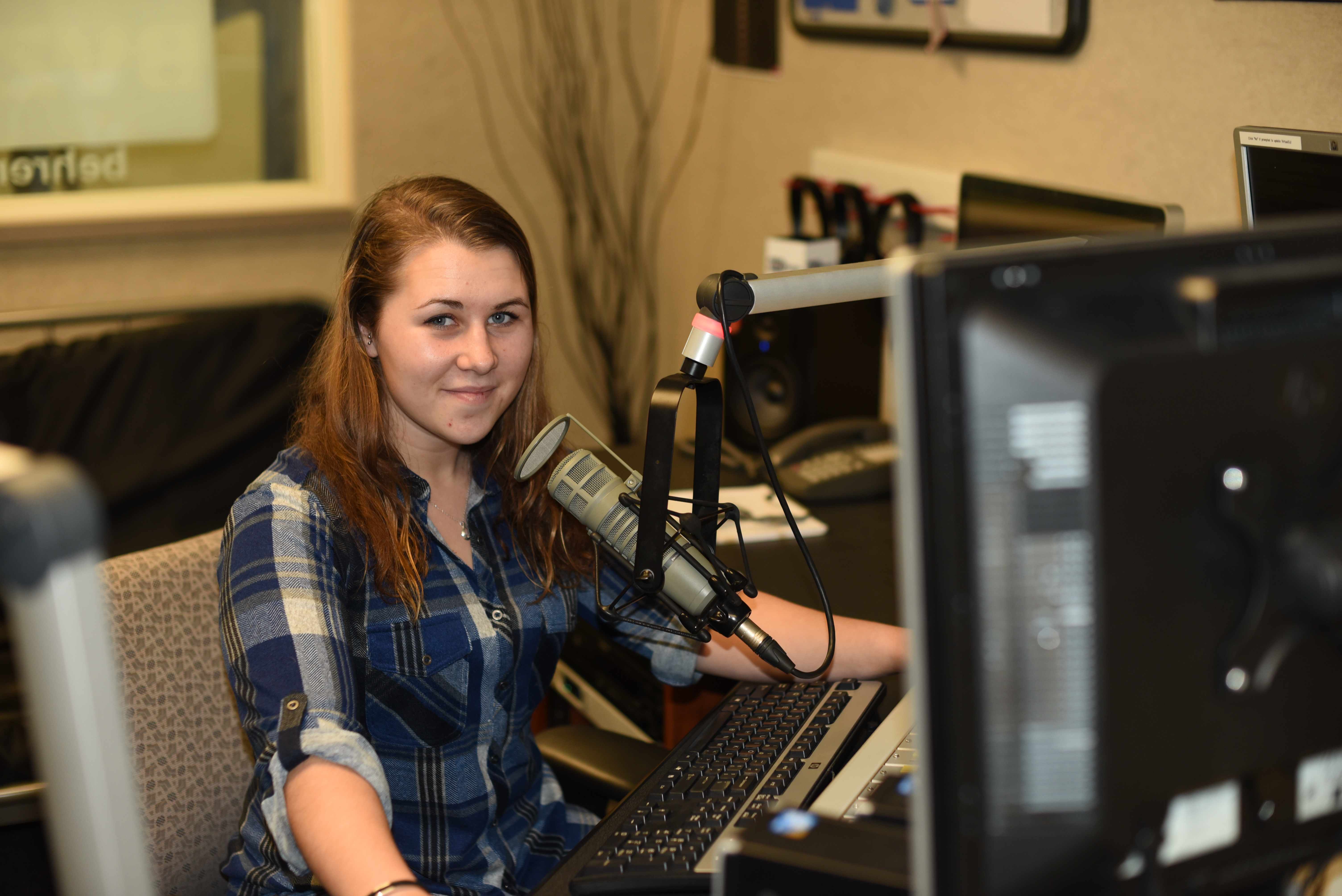
Rachel Cotton finds niche with BVZ: Behrend’s Voice

rachel-cotton-bvz-radio

By Steve Orbanek
Marketing Communications Specialist, Penn State Behrend

If Penn State Behrend’s students have not seen their classmate Rachel Cotton on campus, there’s a good chance they’ve heard her.

For listeners of BVZ: Behrend’s Voice, the college’s online student radio station, Cotton’s voice is a hard one to miss.

The junior communication major serves as station manager of BVZ and can be regularly heard across the cyber waves hosting her current show, “Next in Line,” where she previews upcoming artists. She also is happy to jump in and deejay whenever there’s a lull in programming.

She knows that professional radio jobs may not be easy to attain, but that has not stopped Cotton from positioning herself to be an ideal candidate for a future opening in the field.

“If I could ever make it in radio, that would be the best thing ever,” said Cotton, who is originally from the Philadelphia area. “Having a great personality in radio is so important, and you get to create an emotional appeal. I love it.”

Cotton’s love of radio is nothing new. In high school, she actually won a contest where she got to be a deejay on a local station for a day.

She brought her love for the medium to Behrend as she got involved with BVZ, which celebrated its fifth anniversary in November, early in her freshman year. As a sophomore, she served as PR and events manager for the station before becoming its manager this past fall.

In the past, students could not join BVZ or host a show on the station before first completing the Radio Practicum course, but Cotton saw limitations with this formula.

“There are people who necessarily cannot take the class or might be in a different major where they can’t have it as an elective,” Cotton said. “I wanted to find a way around the class, so folks in any major can find a way to participate.”

This past fall, Cotton developed a BVZ Fast Track program for students who want to host a radio show but cannot take the course. Cotton meets with interested students separately and runs them through the basics of operating a live station in just a few weeks. So far, four students have participated in the program. Cotton said she eventually hopes to have 10 to 20 students going through it at once.

BVZ continues to build its presence on campus as the station hosts weekly “Hump Day” broadcasts from Bruno’s Café. The station is also always willing to collaborate with student groups if the organization would like BVZ at an event it’s hosting.

The station has already worked with some student groups, which Cotton said has helped BVZ spread its reach.

“People love when we come out to events,” she said. “We have been at more events this year than I can ever remember. It’s stellar to see that people are noticing us more and not just for giveaways or concert tickets, either. They’re actually listening to hear us. I love it.”

To listen to BVZ, visit behrendbvz.org.

Students interested in joining BVZ and taking part in the Fast Track program should contact Cotton at ryc5136@psu.edu.

Student finds niche playing Smith Carillon

james-lisi-7
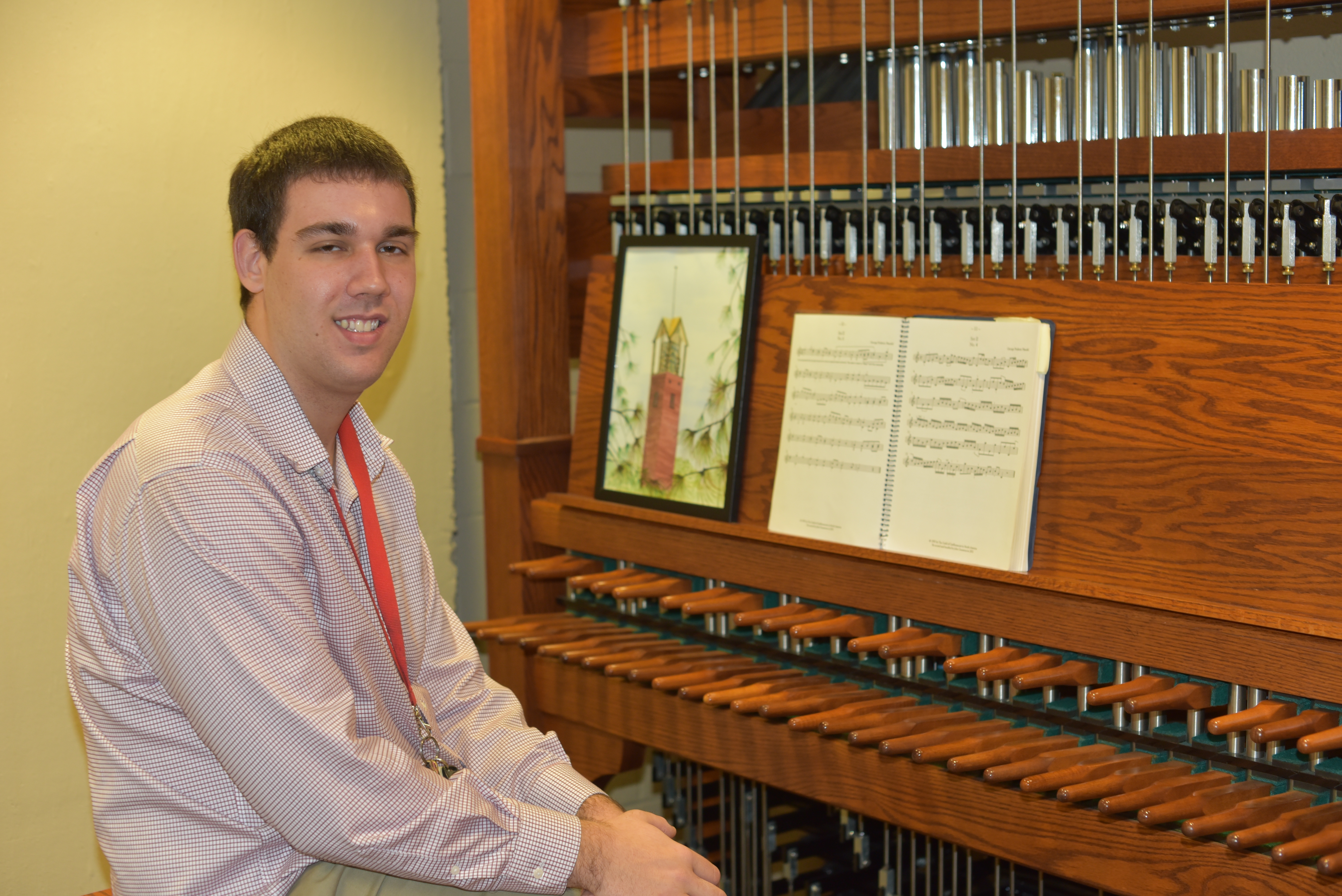
Penn State Behrend sophomore James Lisi began playing the campus’ Smith Carillon this fall. He plays regularly throughout the week on the campus’ practice carillon (pictured) and played a concert during finals week for the campus community. While he’s been a musician since he was a child, mastering the carillon has been a new kind of challenge. “Instead of having the keys right next to you, you have to branch out,” Lisi said. “This wears your hands out a lot faster because you have to move them all over, but there are pedals too, so some of the notes you can play with your feet, which makes it easier.”

By Steve Orbanek
Marketing Communications Specialist, Penn State Behrend

Walk into Penn State Behrend’s Larry and Kathryn Smith Chapel on a weekday morning and chances are you’ll hear James Lisi before you see him.

He’ll be playing one of the building’s many pianos. Or pedaling away on the practice carillon.

“I start every day by playing music here,” said Lisi, a sophomore psychology major. “When I play the piano or the carillon, it gets me going and sets the tone for the day.”

Lisi, a Cleveland native, has always appreciated music. He started singing in third grade and began playing the piano two years later. He is also a member of the Choirs of Penn State Behrend.

While he has experience playing several other instruments, Lisi said he was taken aback to learn about the college’s carillon.

“I had never heard of one before. There are only 200 or so in the country,” he said. “It’s just a really, really rare instrument.”

The 48-bell carillon, along with the chapel’s bell tower, was installed at Penn State Behrend in 2002 as a gift of the late Floyd and Juanita Smith, parents of Larry Smith, president and owner of Automation Devices in Fairview, Pa., and a longtime supporter of the college.

The carillon is an unconventional instrument, to say the least, according to Lisi.

“Instead of having the keys right next to you, you have to branch out,” he said. “This wears your hands out a lot faster because you have to move them all over, but there are pedals too, so some of the notes you can play with your feet, which makes it easier.”

Lisi’s past musical experience is serving him well, as is regular practice and lessons with Daniel Frankforter, professor emeritus of history and the college’s carillonneur.

Lisi is now playing the carillon on a weekly, sometimes daily, basis. He spends hours in Smith Chapel, both studying and playing the pianos and carillon.

“I just love this whole building,” Lisi said. “I get to come here and play three different instruments. It’s a nice way for me to relieve stress. It’s definitely my favorite thing about Behrend.”

During finals week, Lisi played several holiday songs as part of a half-hour carillon concert for the campus community. Students, faculty and staff members were encouraged to gather at Ben Lane Plaza to enjoy hot chocolate as they listened to the bells chime from atop the carillon tower.

“I made some mistakes,” Lisi said with a smile, “but I knew I was not going to be perfect the first time I played publicly. Thankfully, I don’t think anyone noticed.”

He will get another chance to impress this spring at a second carillon concert to be held during finals week.

And if things go his way, Lisi will not be the only one performing. He is currently introducing the carillon to several of his friends.

“I’m really working to persuade some of my friends to play it as well,” he said. “It’s just a totally different kind of instrument. I love the high notes on it, and it’s great that we have one of these right here at Behrend.”

‘I feel so much more comfortable now.’ — Summer Bridge program prepares incoming students

Summer Bridge (Brent Sutula, Sujata Chhetri, Joseph Lombardi, Sydnie Moore) cropped
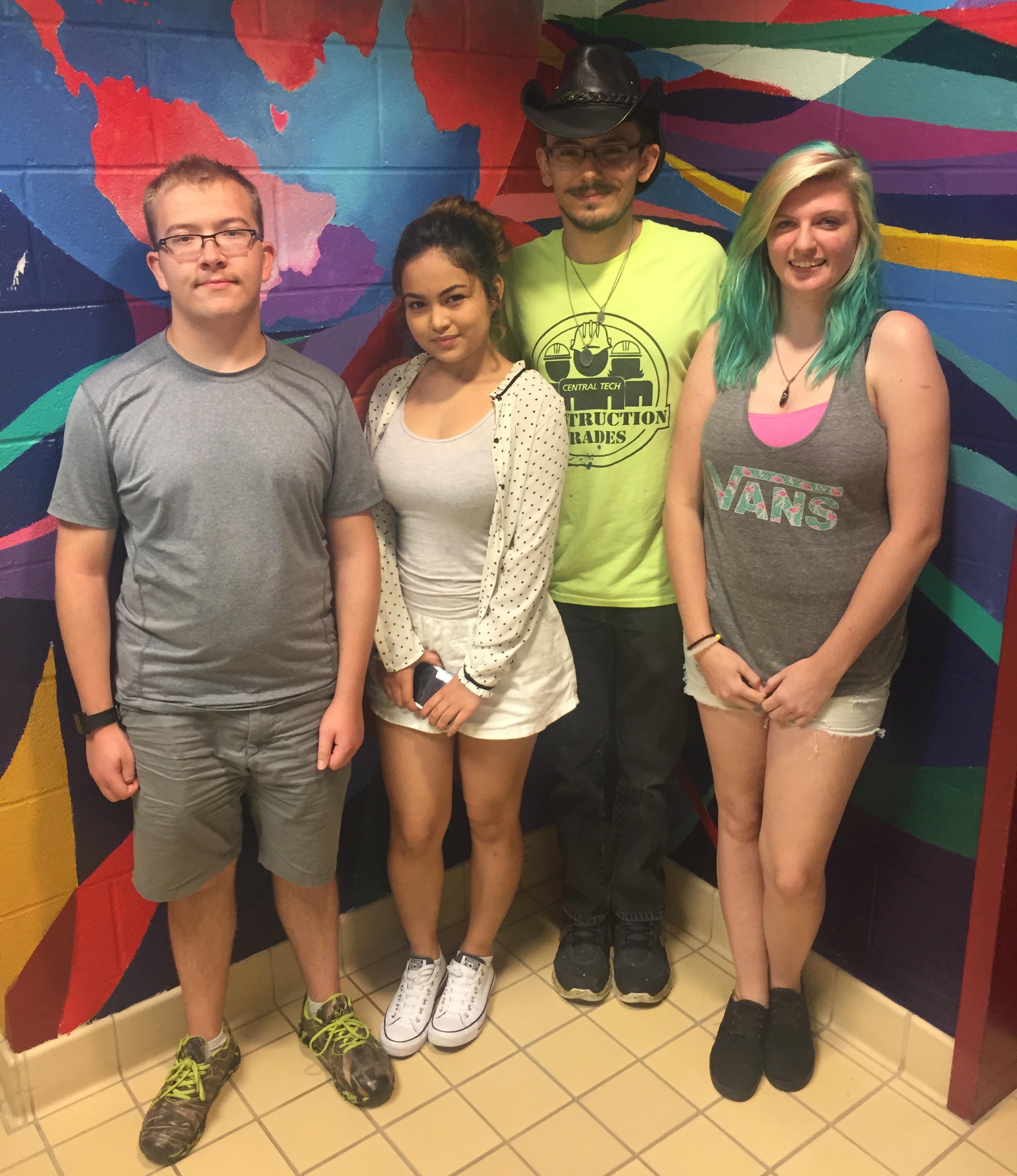
Brent Sutula, Sujata Chhetri, Joseph Lombardi, and Sydnie Moore, pictured left to right, were four of the participants in the Summer Bridge Program at Penn State Behrend. The six-week program is designed for students who want to sharpen their study, note taking, critical reading and time management skills, among others.

By Steve Orbanek
Marketing Communications Specialist, Penn State Behrend

Penn State Behrend welcomed 1,280 new first-year students to campus last week.

For 28 of them, the setting felt more than a little familiar, since they had only recently completed a Summer Bridge Program to ease the transition to college.

The six-week program is designed for students who want to sharpen their study, notetaking, critical reading and time management skills, among others.

“I feel so much more comfortable now. This has just been great to meet new people and learn how to get around campus,” said Joseph Lombardo, a first-year History major from Erie.

The program even included a scavenger hunt in which students learned how to navigate campus by finding places and objects. They also spent time learning about the college’s numerous resources such as the Academic and Career Planning Center and Lilley Library.

“Transition is key. There is such a disconnect from what students did in high school to what they will do here,” said Mary Connerty, a lecturer in English who taught the program.

The program was sponsored by the college’s Office of Student Success and Retention. Half of the program’s attendees were immigrants or refugees.

“We’re obligated to help prepare these students who may need the extra help to succeed,” Connerty said.

To get students accustomed to a college workload, participants in the program received weekly homework assignments, including regular critical readings and a requirement to write multiple-page papers. Connerty estimates that each week’s assignments took students a minimum of three to four hours to complete.

That type of workload can be daunting for any first-year student, but it was also helpful for these students to become aware of college expectations.

Sujata Chhetri, a first-year International Business major, estimated that on a scale of 1-10, her nervousness about college was a 9. She says that after completing the Summer Bridge Program, that number was down to a manageable 5.

“It was a great program,” said Chhetri, a Nepal native who immigrated to Erie. “It really taught me about the workload I’ll be getting. It was somewhat overwhelming, but it also taught me about all of the resources I have that I didn’t know that I have. I don’t feel lost anymore.”

If she or any of the other attendees do happen to feel lost, the good news is that they now know where to go.

“There’s always someone you can go to talk to,” Chhetri said. “I’ve already found so many people who are going to help me with my math.”

Secret Lives of Staff: Dave Lesher—Beekeeper (and much more)

By Heather Cass
Publications & Design Coordinator, Penn State Behrend

There’s much more to Penn State Behrend’s faculty and staff members than what you see on campus. In this occasional series, we’ll take a look at some of the interesting, unconventional, and inspiring things that members of our Behrend community do in their free time.

IMG_7719

Give me a half hour with anyone and I’ll come away with a story. Every person has one. Some have more than a few. Take Dave Lesher, for example.

This piece was supposed to be about Lesher’s beekeeping hobby, but his activities, interests and talents—his “secret lives”—are many.

In addition to being a police services officer at Penn State Behrend and a beekeeper, Lesher is also a professional photographer, distance trail runner, cyclist, gardener, home brewer, clean-eater, and a website programmer/designer. Oh, and he’s also a veteran, husband, and father.

Clearly, when Lesher is interested in something, he goes all in. But serendipity plays a role in most of his ventures, too.

Twenty-five years ago, when he was working at a grocery store after having completed basic training in the U.S. Army Reserves, a coworker mentioned she was attending a municipal police training academy. Lesher enrolled a week later.

After graduation, he was hired at Behrend. It’s a job he said he has enjoyed since day one.

“I really like the people here,” he said. “In my role, I come in contact with a wide variety of people and I enjoy interacting with everyone from the janitorial staff to the Chancellor.”

He even likes educating students who have gotten themselves into a bit of trouble.

“Often, the student has just been misguided or made a mistake and the incident can be turned into a learning experience,” he said. “I’d say we can do that 95 percent of the time.”

IMG_8671

Honey habit leads to hobby

A serious health scare a decade ago inspired Lesher to begin exercising and taking a closer look at the foods he was putting into his body. He eats clean now, avoiding processed foods, meat, caffeine, artificial dyes and additives, and most forms of sugar, with one sweet and all-natural exception—honey.

“It’s expensive, though, and I was eating a lot of it,” he said. “So I started doing some research on beekeeping and got some bee boxes.”

He found his first set of bees on Craigslist.

“This guy was tearing a house down and found the walls were full of honey-bees, so he offered them up to anyone who would come take them,” Lesher said.

“Cut-outs,” as such bee acquisitions are called, are tougher than simply scooping up a homeless swarm and encouraging them into a new home.

“With a cut-out, you’re invading their territory and they will defend it,” Lesher said. “Swarming bees are actually safer to collect. They swarm when they are looking for a new home, so they have nothing to protect and are usually happy to climb right into a bee box.”

Lesher is pleased to offer them a home, and the college’s maintenance and operations staff are just as thrilled to have someone nearby to call when swarms are found on campus.

Except for the occasional replacement queen, Lesher doesn’t buy bees. He prefers to collect native bees since they are used to Erie’s climate.

Lesher has a beekeeper’s hat, but doesn’t wear a full suit because honey-bees are rarely aggressive. He’s been stung only twice.

The average hive makes sixty to eighty pounds of honey a year, which is harvested in the fall. Only a portion of the honey is taken, however, as the bees have to have food for the winter.

“My hives are new this year, so I won’t take any honey,” he said. “I want to keep them happy so they’ll stay and produce more next year and then I can take some.”

From programming to photography to political science 101

A different kind of buzz—talk about the then-new World Wide Web—caught Lesher’s attention twenty-plus years ago. He began reading about, then dabbling in, website programming and design. He soon had paying clients (he still has some today) and a concern about finding adequate photography for their sites.

So he began reading about photography. You see where this is going, right? Today Lesher also works as a professional photographer. He shoots family portraits, senior pictures, and weddings.

Another hat he wears? College student. This fall he’ll complete his degree in General Arts and Sciences with an emphasis in Political Science.

Man in motion

You may wonder where Lesher gets the stamina to keep up all of his hobbies, jobs, and activities. It’s a strength that is, no doubt, hard earned on the trails and roads around Penn State Behrend where he’s logged thousands of miles.

Last summer, he did his first ultra run, the Megatransect, a formidable thirty-mile race up, on, and around Bald Eagle Mountain, just south of Lock Haven—with former Behrend engineering professor and trail-runner Dr. Chris Colston.

“The funny thing is that when I was in the Army, I hated running,” he said. “I never thought I’d start doing it competitively. But then I got interested in it and ended up buying the gear and doing some races and… you know, how it goes.”

Yes, with Lesher, we do know how it goes now—all the way.

IMG_8662

8 fun honey-bee facts

  1. Honey-bees are not native to the United States. They were imported by European settlers.
  2. Honey-bees, while instinctual, aren’t very smart. “I have to have different landing strips on my hives or the bees will go in the wrong hive and be killed as invaders,” Lesher said.
  3. Honey-bees use dances to communicate. For example, when honey-bees find food, they do a choreographed “waggle” dance that instructs the rest of the hive where to find a food source.
  4. Honey-bees keep each other warm and fed over winter. Honey-bees keep the hive at about 92 degrees in winter, feasting on the honey they have collected all summer.
  5. Honey is harvested in the fall. Hives typically contain about sixty to eighty pounds of honey; some must be left for the bees to eat.
  6. Unhappy honey-bees will leave. If conditions in the hive are not suitable, the queen will call for a swarm and they’ll swarm and depart.
  7. The honey-bee queen is the sole reproductive female in the colony. She lays 1,000-to-3,000 eggs per day. Female worker bees perform all other colony duties. Male drones exist only to mate with a virgin queen.
  8. Drones are dead before winter. Drones are a liability to the wintering hive and are not allowed in after fall, so they die outside.

IMG_8703

Collecting a swarm

Lesher provided this video of a swarm he collected:


Students create blankets for NICU babies

20160428_145345

By Steve Orbanek
Marketing Communications Specialist, Penn State Behrend

When Ashley Sullivan, assistant professor of early childhood education at Penn State Behrend, suggested that students in two of her spring 2016 classes plan a community service project, one idea was top of mind for Karlie Aschenbrenner.

Aschenbrenner, a sophomore Elementary and Early Childhood Education major from Pittsburgh, thought of the concept behind Brady’s Blankets, a program of the Fairfield, CT, children’s non-profit Brady’s Smile, which provides homemade fleece blankets to babies and children in the Neonatal Intensive Care Unit and Pediatric Intensive Care Unit.

“This was the one idea that really made so much sense,” Aschenbrenner said. “If we all donated $5, we would be able to purchase fabric to make tie blankets. We could then donate the blankets to babies in the NICU.”

The students voted on the service project ideas, and Aschenbrenner’s suggestion was the clear winner.

Every student in both Sullivan’s Instruction in Early Childhood Education Derived from Development Theories and Competing Rights: Issues in American Education courses donated $5 each to participate in the project. They spent their last day of class cutting and tying to create 75 blankets, which were donated to Brady’s Smile and then sent to University of Pittsburgh Medical Center’s Children’s Hospital of Pittsburgh.

Aschenbrenner was not the only student with whom the cause resonated.

“The children that we’re donating these blankets to could eventually become the kids that we’re going to teach, so just giving them a better chance to thrive and survive can mean a lot,” said Madison McFeely, a first-year Elementary and Early Childhood Education major from North East.

In addition to creating the blankets, Sullivan’s students volunteered at the Second Harvest Food Bank of Northwest Pennsylvania where they packed more than 200 food boxes to distribute to local seniors.

“As future teachers, I think all of us really appreciate these causes,” said Gionna Fonseca, a sophomore Elementary and Early Childhood Education major from Pittsburgh. “It was really nice to see that big pile of blankets sitting there.”

This slideshow requires JavaScript.