Paint the campus purple for #AJO

ajo

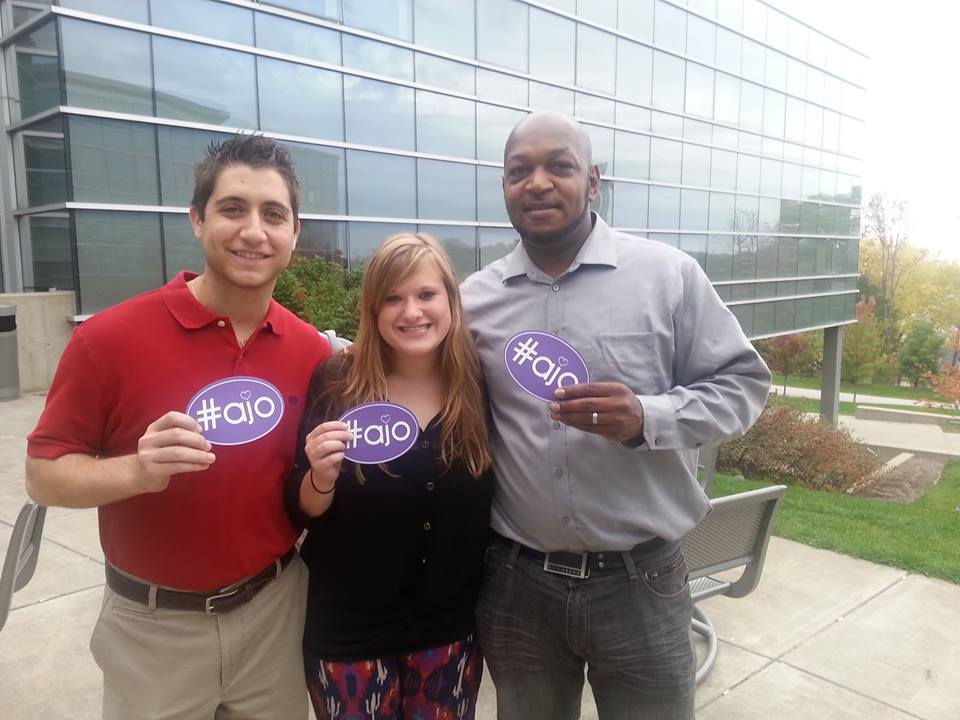
From left, Anthony Cremonese, Melissa Lichtinger, and Antoine Holman are part of the student team working on the #AJO Forever Foundation website.

By Heather Cass
Publications & Design Coordinator, Penn State Behrend

Melissa Lichtinger, a senior majoring in international business and marketing, was working at the Make a Wish booth at a women’s expo in Erie this October when she met Alyssa O’Neill’s father, Jason, and knew she wanted to do whatever she could to help with the #AJO campaign.

AJO stands for Alyssa J. O’Neill, 18, who was a first-year student at Penn State Behrend when she died after suffering a grand mal seizure at home. The day before her death, O’Neill had texted her mother, saying they should meet at Starbucks for a pumpkin spice latte. After her funeral, her parents, Jason and Sarah, bought ten of the drinks for strangers. The barista marked the cups—using purple, a color associated with epilepsy awareness—with #AJO.

That spurred a far broader pay-it-forward campaign. People paid for strangers’ meals, gas, groceries and layaway purchases. They sent #AJO photos from London, Iraq and the Canary Islands. It’s still going. The #AJO Forever in Our Hearts Facebook page has more than 41,000 “likes.”

“Jason said that he and his wife were overwhelmed just trying to keep up with the photos and correspondence pouring in through the AJO  Facebook page,” Lichtinger said. “I wondered how, with my background in marketing, I could help them.”

She asked Dr. Kathleen Noce, senior lecturer in management information systems, if Partnership Erie, a nonprofit outreach extension of the Sam and Irene Black School of Business, could develop a new eCommerce website and social media strategy for the AJO Forever foundation.

Noce agreed and Lichtinger recruited four more students—Anthony Cremonese, Antoine Holman, Kelsie Noce, and Michael Thompson—to work on the project with her.

The new site is expected to be completed by the end of the year.

But Lichtinger didn’t think that was enough. “I really wanted to do something to raise money for the foundation,” she said.

So she talked to Rhonda Reynolds, a Housing and Food Services employee who helped create a very successful employee service committee, and together they came up with the idea to “paint the campus purple” on Tuesday, Dec. 10.

Students, faculty, and staff are all invited to wear purple and take part in making the letters #AJO for a group photo on Dec. 10 at 4 p.m. in the Clark Café in the Jack Burke Research and Economic Development Center. Participants are asked to give at least $2 to the AJO Forever Fund to be a part of the photo.

Students will begin collecting donations at 3 p.m. The first 200 to donate will receive a free purple hat!

The event is sponsored by The Sam and Irene Black School of Business, Partnership Erie, Behrend Commission for Women, the School of Nursing, and Grimm’s Embroidery.

Hope to see you there!

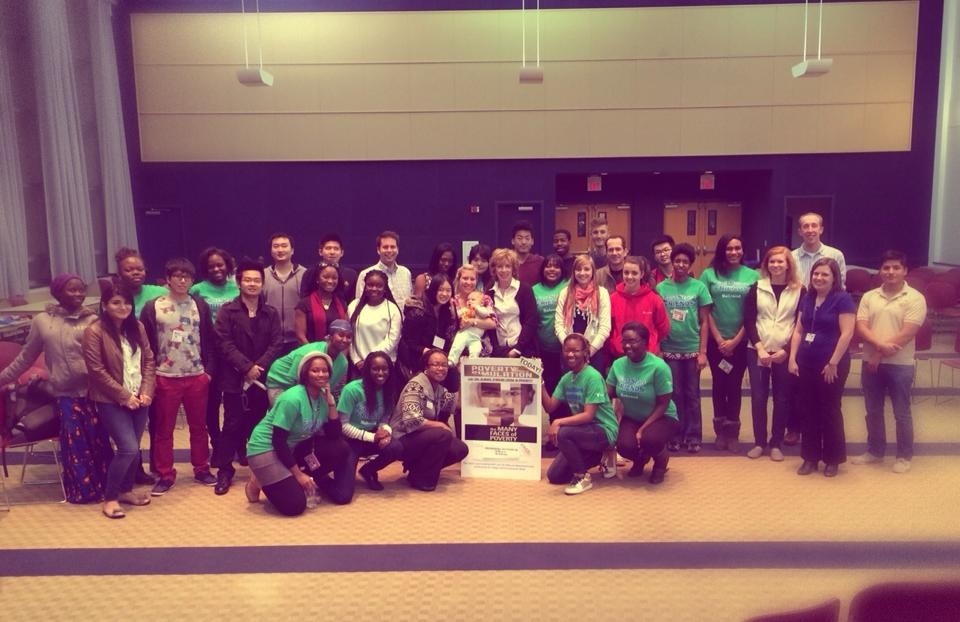
Behrend students humbled by poverty simulation

image

By Steve Orbanek
Marketing and Communications Specialist, Penn State Behrend

According to the United States Census, 15 percent of Americans, roughly 46.5 million people, live at or below the government-defined poverty line.

For an hour this fall, Khardiata Mbengue and Teireik Williams could be counted among that group.

Mbengue and Williams were participants in a poverty simulation sponsored by the Office of Educational Equity & Diversity Programs and the Human Relations Programming Council.

The simulation is designed to help participants understand what it’s like to live in a low-income family, surviving from month to month. Individuals are grouped together as families and are tasked with providing for basic necessities and shelter during the course of four 15-minute “weeks.”

For Mbengue, a junior biology major, and Williams, a sophomore communication and creative writing double major, the simulation was a humbling experience.

The two were paired up as husband and wife as part of the simulation.

I caught up with them to get their thoughts on the program…

Steve: Hi Khardita and Teireik. Thanks for taking the time to join me today. So, to start, why don’t you provide me with a general overview on the poverty simulation?

Khardiata: The poverty simulation is basically designed to help you get insight on how you would live if you were less fortunate or part of a low-income family. Going through the poverty simulation makes you realize how people often live in impoverished conditions even when it’s not their own fault. The system is against them, so they can never work their way up. You also realize that you’re never too far away from the life that they live. After college, we might be doing the same thing that we were doing in the poverty simulation.

Teireik: The poverty simulation provided us with an opportunity to have the same responsibilities of a person who is poverty stricken. It was really designed for you to live a day in the life of the less fortunate.

Steve: How exactly was the simulation set up?

Teireik: The room is divided into different circles, and each circle had chairs that represented a family. Surrounding the housesholds were all of the different businesses and organizations that you had to visit. You also had to purchase a transportation pass for anywhere that you would go. Before the simulation, they gave you a portfolio that had every aspect of your life: how old you were, your family’s history, your savings and your belongings. Everybody’s budget was different. We had savings, and everybody had possessions and things that could be sold for extra money.

Khardiata: And there was a cop, so you could go to jail if you did something wrong.

DSC00083

Steve: Wow, so you could break the law during the simulation?

Khardiata: Someone actually did that, and that person was the only one in the entire simulation who was able to pay their own bills. It just goes to show that it can be difficult to survive, even if you live an honest life. It puts you in a situation where you do what you have to do.

Steve: So, can you give me an idea of what a typical day was like for the both of you?

Teireik: She had to go to work, we had to take the kids to school, we had to pay bills, we had to sign up for benefits like food stamps, and we had to sell our belongings if we ran out of money.

Khardiata: I literally had to run to work, so I would be there on time to receive the full benefits of my work. Even if your child did something wrong at school, it would affect your whole life.

Steve: What do you mean?

Teireik: Our daughter got suspended at school, so one of us had to be at home to take care of her. Khardiata had to go to work, so I was unable go out and pay our bills, search for a job or apply for benefits.

DSC00086

Steve: It seems like the simulation required you to balance a lot of different responsibilities. How humbling was this experience for you?

Khardiata: It was incredibly humbling. It showed me that you should be grateful for everything you have because not everyone is as fortunate. We did this for an hour, but the fact is that many people actually live this life. That was eye-opening for me.

Steve: People living in poverty sometimes get a bit of a bad reputation. Did this change your perspective on them at all?

Khardiata: When I went into the Poverty Simulation, I had that same idea. I thought that if people are in poverty, they could work themselves out. But my opinion changed after living through it. We were doing all we could just to pay our bills and raise the kids, but it still was not enough. Expenses pile up on top of each other. As soon as you thought you had something handled, something else would pop up. That was a major thing that I learned.

Teireik: This simulation shows that not everyone is afforded the same opportunities, and sometimes bad things happen to good people. It’s just out of their control. It’s not necessarily their fault, but they get a bad reputation for it.

Steve: This was the second year for the Poverty Simulation at Behrend. Is this something that you would recommend to others?

Khardiata: Yes, definitely I would. It makes you think, what if this does happen to me? It’s not farfetched to think that it could happen to you. It’s a very realistic thing, and it humbles you a bit. As college students, we seem to think that we’re all struggling, but it’s not as bad as it seems.

Teireik: People should definitely experience it. If you get an opportunity to do something like this, why not? It’s much better to experience poverty through a simulation rather than for real.

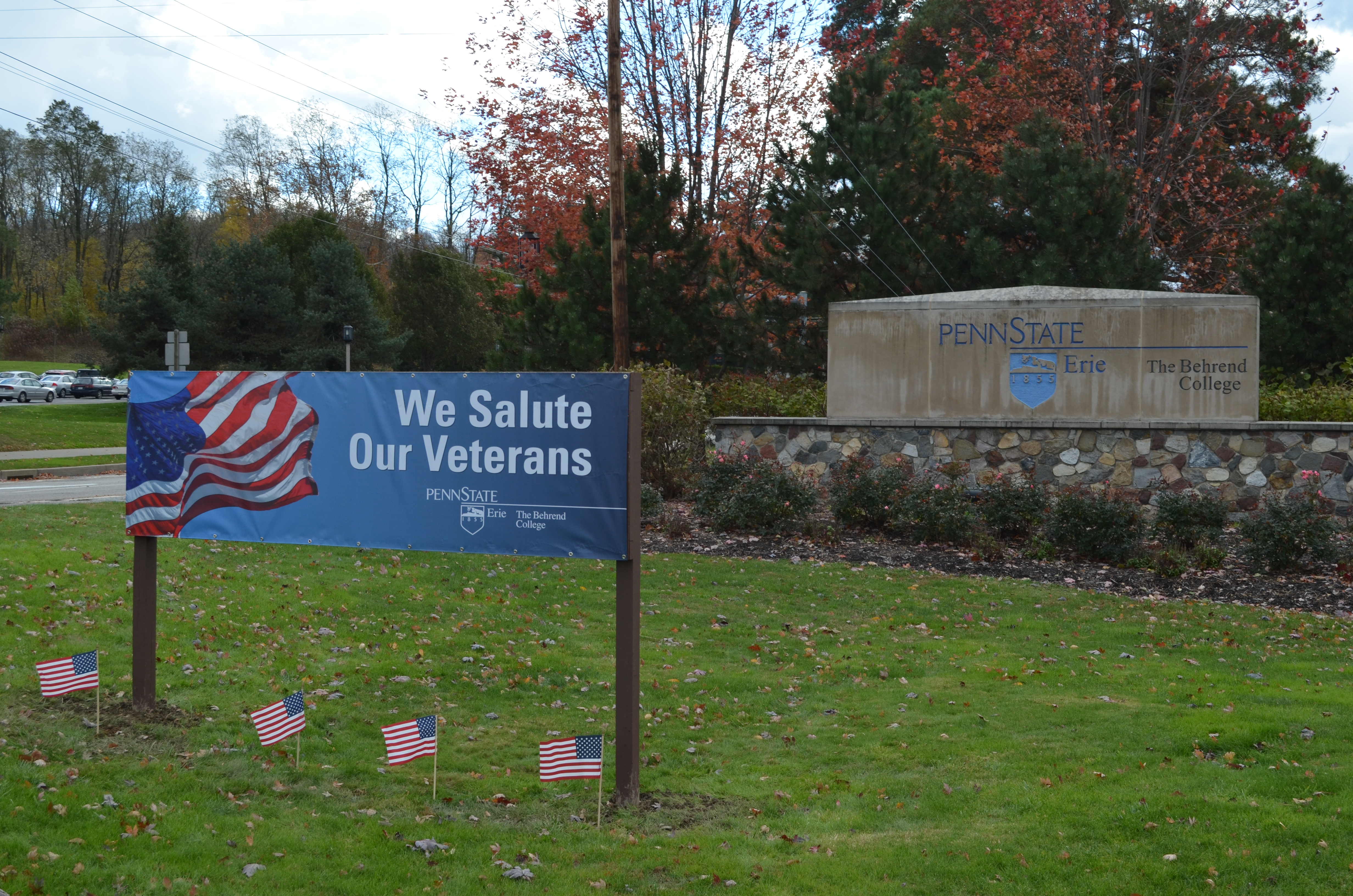
Veteran’s Day of particular significance for Behrend freshman

DSC_3367

By Steve Orbanek
Marketing Communications Specialist, Penn State Behrend

Papers and exams can be a point of stress for first-year students, but it’s not the kind of stress that Mike Wehrer knows.

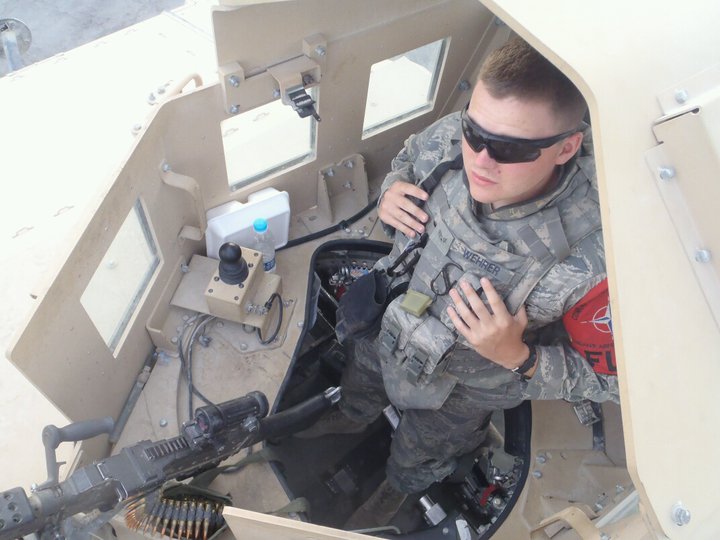
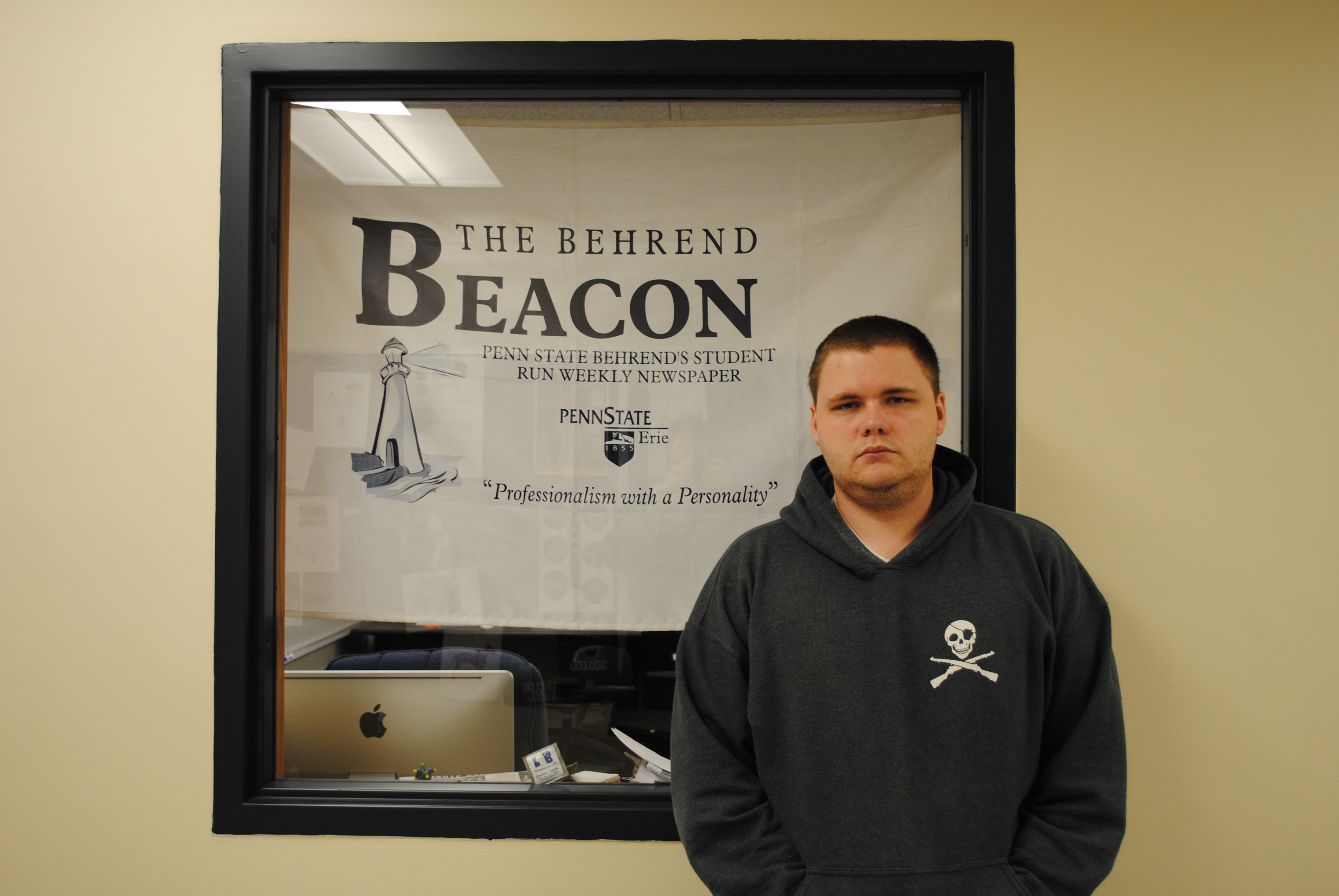
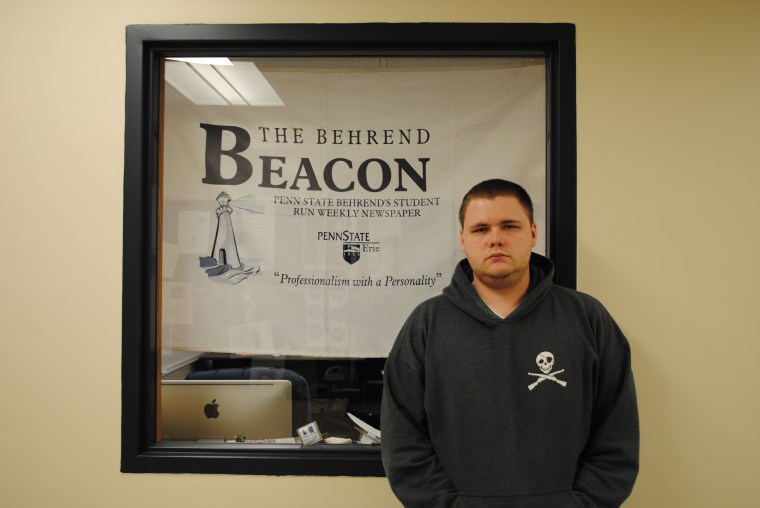
Wehrer, a freshman communications major and current managing editor of the Behrend Beacon, is a member of the United States Air Force Reserves. The 23-year-old Girard, Pa., native spent a half year deployed in Afghanistan in 2011, and it’s safe to say college exams pale in comparison to some of the things that Wehrer experienced.

In honor of Veteran’s Day, I decided to catch up with Mike to get his thoughts on the national holiday and find out what personal significance it holds for him. While many Americans may think of Veteran’s Day as just another day off of work, for Mike and more than 21 million others, this day is a part of their identities.

Here’s what Mike had to say on the topic:

Steve: Hi Mike, thanks for taking the time to chat with me. Could you give me a feel for your background and what ultimately led you to enlist in the military?

Mike: Well, I started out at (Penn State Behrend) out of high school, but basically ended up dropping out after two semesters. I wasn’t a good student and I lacked motivation. It made sense to join the military to help pay off the student loans I already had, and also to help provide the discipline and motivation I needed to grow up a bit.

Steve: When did you enlist in the Air Force Reserves, and what was your experience like from there?

Mike: It was December 2, 2009, and I was 19. I left for basic training in February, I think it might have been Valentines’ Day actually, and that was at Lackland Air Force Base in Texas. Then I entered the Air Force Security Forces Academy. From there, I joined my current unit at Niagara Falls at Niagara Falls Air Reserve Station. I was told when I got there that I’d be on the next deployment.

Steve: Wow, that had to be startling to have the deployment come so quickly. Was that scary?

Mike: It’s what I wanted. The reason I joined security is because it’s the most deployed career field in the Air Force. I thought it would be a good thing for my career. I want to be a war correspondent and an embedded reporter, and I thought it would be a good resume point.

Steve: When was it that you were actually deployed, and what was it like once you got to Afghanistan?

Mike: I left Erie in May, but I actually hit Afghanistan on July 7, 2011. There’s a famous quote, I’m not exactly sure what it is, but it’s along the lines of “there are long periods of boredom punctuated by moments of sheer terror.” I was security for Kandahar Airfield, which basically meant I was controlling access onto the airfield and responding to rocket attacks.

Steve: What was that pressure like? Was it difficult to have such responsibility right away?

Mike: You kind of didn’t have a choice but to do it. You had to accomplish it. If you didn’t, they’d find someone else who could.

268870_1842559423342_4954398_n

Steve: Switching gears a bit, when did you come back to the United States, and enroll back here at Behrend?

Mike: I left Afghanistan on January 15, 2012, and I got back on January 20. It’s been four years since I was last enrolled here, and I applied for and basically got an academic reset. That’s not what it’s called, but that’s basically what it did. It allowed my GPA to go back to zero, so I could start from scratch.

Steve: Was returning to college always a goal of yours?

Mike: It was always a goal. I knew what I wanted to do.

Steve: Why did you choose to come back to Behrend? This fall, Victory Media once again ranked Behrend among the top 20 percent of Veterans Affairs-approved institutions based on the services and resources they offer to military-connected students. Did that factor into your decision at all?

Mike: I had been freelancing last year for the Behrend Beacon, and I knew that I could get a good position on the paper right away. If I went to any other school, I didn’t know if I would have those opportunities right away.

Steve: Would you say your experiences overseas have had an effect on your current college experience?

Mike: Yeah, definitely. It’s small changes, like I always look around a room whenever I walk in it. Half of that is my deployment, and half of that’s just being a cop. As far as academically, it kind of made me realize how easy college really is.

Steve: To follow up on that, you mentioned earlier how you initially enlisted in the military to help improve your discipline and motivation. Do you feel as if your experience overseas has helped you do that?

Mike: I definitely got that. I have realized that not going out on the weekend, and having to stay in and do homework is not a big deal. There are much harder things that I’ve gone through, and that I’ve seen others go through. This is all easy, and it’s easy to make these sacrifices.
DSC_0577

Steve: With Monday being Veteran’s Day, can you give me an idea of how it feels for you personally on that day?

Mike: It’s hard to define. It makes me proud. I’ll probably wear a pin or something. The VA class defines me as a combat veteran because it was a combat mission, but I don’t see myself as a combat veteran because I never had to fire my weapon. So, I still don’t like to call myself a combat veteran because I know guys who have been shot, wounded, or had to kill someone, and to put myself in the same class as them seems not disrespectful but close to it.

Steve: As a veteran yourself, how would you suggest people go about honoring this holiday?

Mike: It’s the small things. Thanking people in uniform means a lot to veterans. Making a donation to something. And, of course, there are a thousand different organizations that you can donate to. Give time, money, whatever you can. My dad has worked with homeless veterans at the VA, and a lot of people don’t realize how many people can’t cope with coming back. You can also always send care packages to those who are still over there, especially now that we’re getting closer to Thanksgiving and Christmas.

6 spooooky things about Penn State Behrend

spooky

By Heather Cass
Publications & Design Coordinator, Penn State Behrend

In honor of the upcoming All Hallows’ Eve festivities, I dug up six spooky (and some just silly) things about Penn State Behrend.  Enjoy!

1. There’s a place in the Wintergreen Gorge on  the edge of campus called “Devil’s backbone.”

Wintergreen-Gorge-Photos_018

Devil’s backbone is the name given to the gorge’s highest vantage point in Wintergreen Gorge, about 250 feet above Four Mile creek. Read more about the gorge (page 13) and watch videos here (under “Extras from this issue”).

In the mood for a good ghost story? Check out this story we found online (but do not attest to): The Ghost Child of Wintergreen Gorge.

Speaking of enduring ghosts haunting campus…..

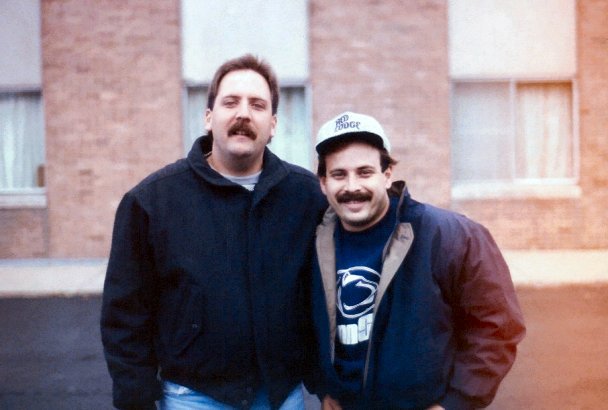
2. Ken Miller, senior director for campus planning and student affairs, has been working at Behrend since George Michael’s “Faith” topped the pop charts, “Heathers” was showing at the theatres,  and the average cost of a gallon of gas was just 91 cents.

Are we making him sound old? Nah, it’s only been 25 years. 😉 And, fortunately, he hasn’t lost his sense of humor…or that awesome ‘stache.

ken miller

Ken Miller, right, with his brother Tim outside of Lawrence Hall, circa 1989.

3. This tree by Wilson Picnic grove:

tree wart

According to Dr. Mike Naber, lecturer in geosciences, the “tumor” on this tree could be Agrobacterium tumefaciens that causes a plant disease called crown gall. Or, Nabor said, it is simply a “burl” caused by stress, injury, or a virus.

Or it could be a zombie calling card.

Speaking of signs from the dearly departed…

4. Bruno’s Café is named after a dead dog. Even spookier? Legend has it that said dog is buried on campus.

Bruno's Portrait

So, if you hear a German shepherd howling late at night…

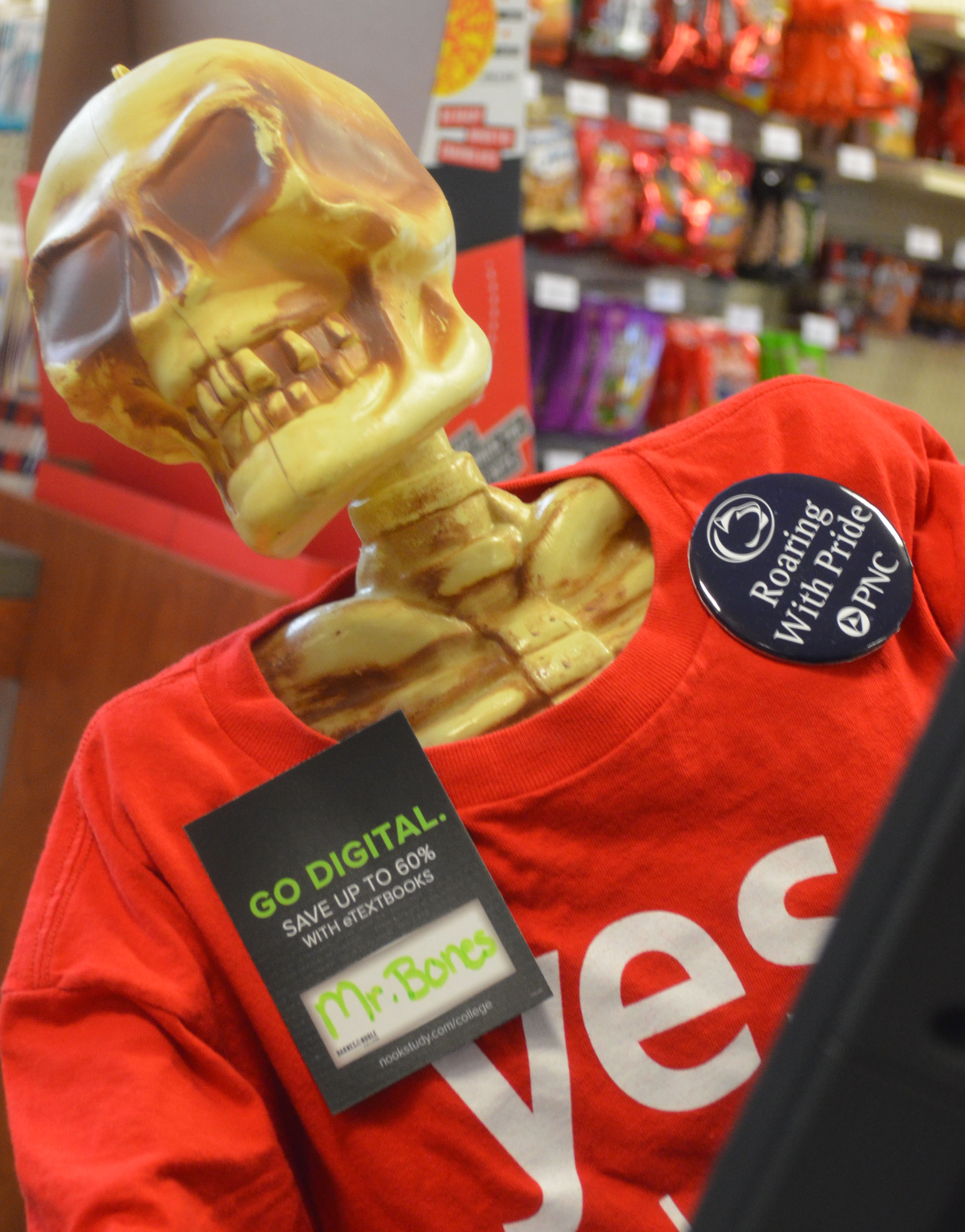
5.  The cashier at the bookstore has gotten really thin.

DSC_0979

Somebody get this guy a peanut butter sandwich.

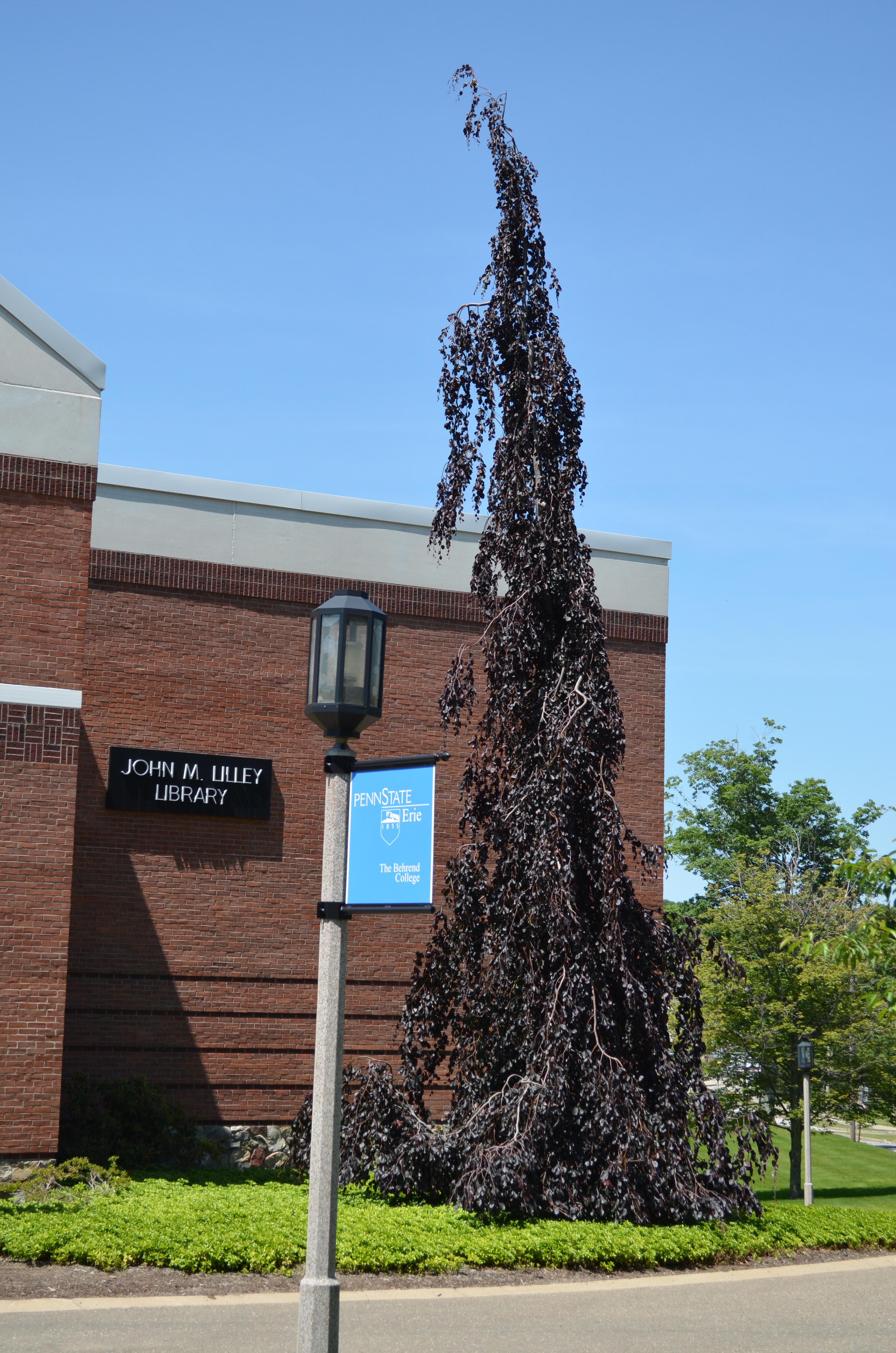
6. This tree by Lilley Library:

DSC_0551

While it’s shaped like a witch’s hat, this is actually a Purple Fountain Weeping Beech, native to Europe.

You know, Europe…where Transylvania is (just sayin’).

Happy Halloween, everyone!

Penn State Lives Here

Penn State Lives Here_010

If you’ve been anywhere near Penn State Behrend (or any Penn State campus across Pennsylvania) recently, you’ve probably noticed there is a new brand initiative — “Penn State Lives Here.”

The initiative was publicly introduced with a two-minute video during halftime of the Michigan game on Saturday, October 12, in Beaver Stadium on the University Park campus.

The theme made its appearance at Penn State Behrend yesterday:

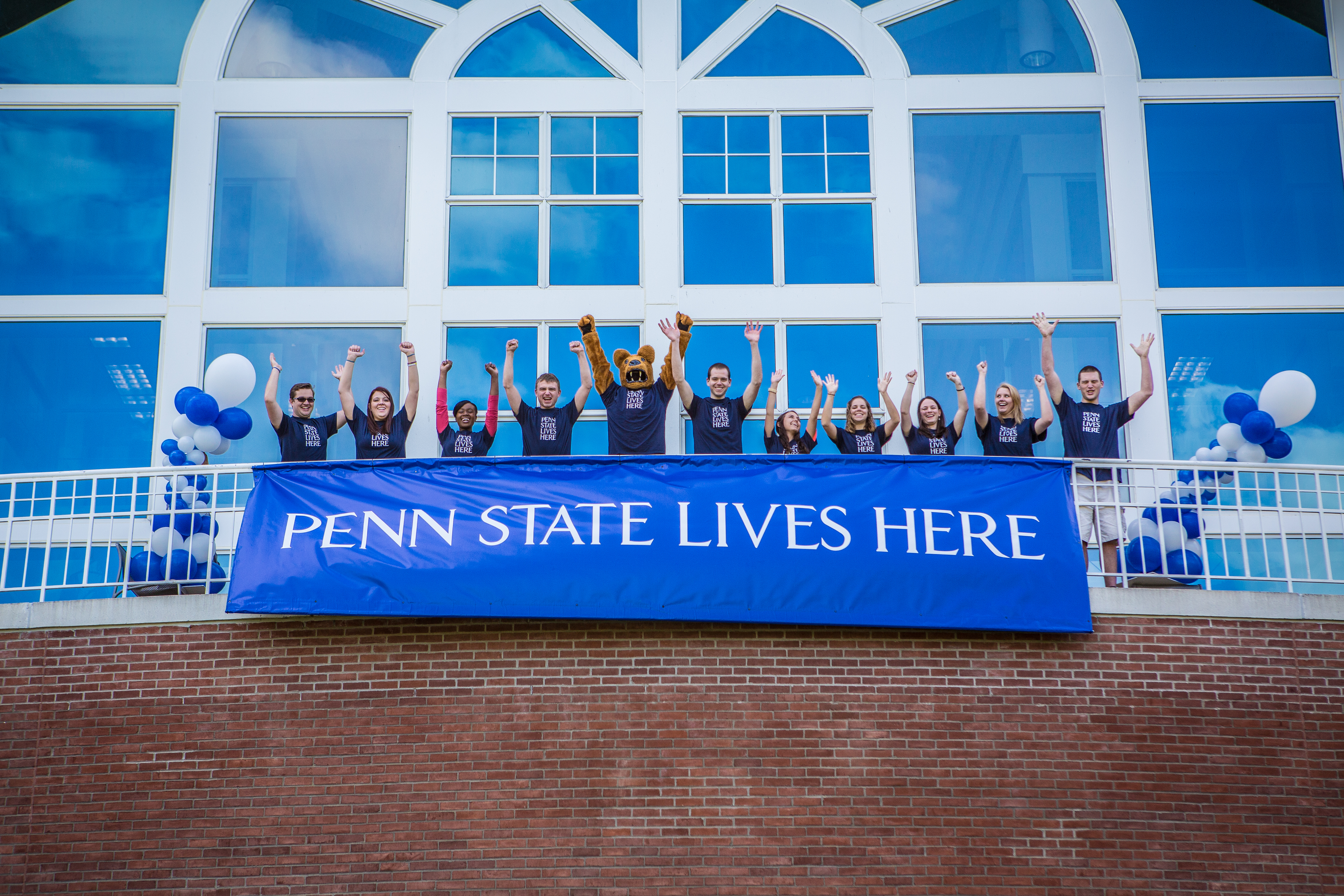
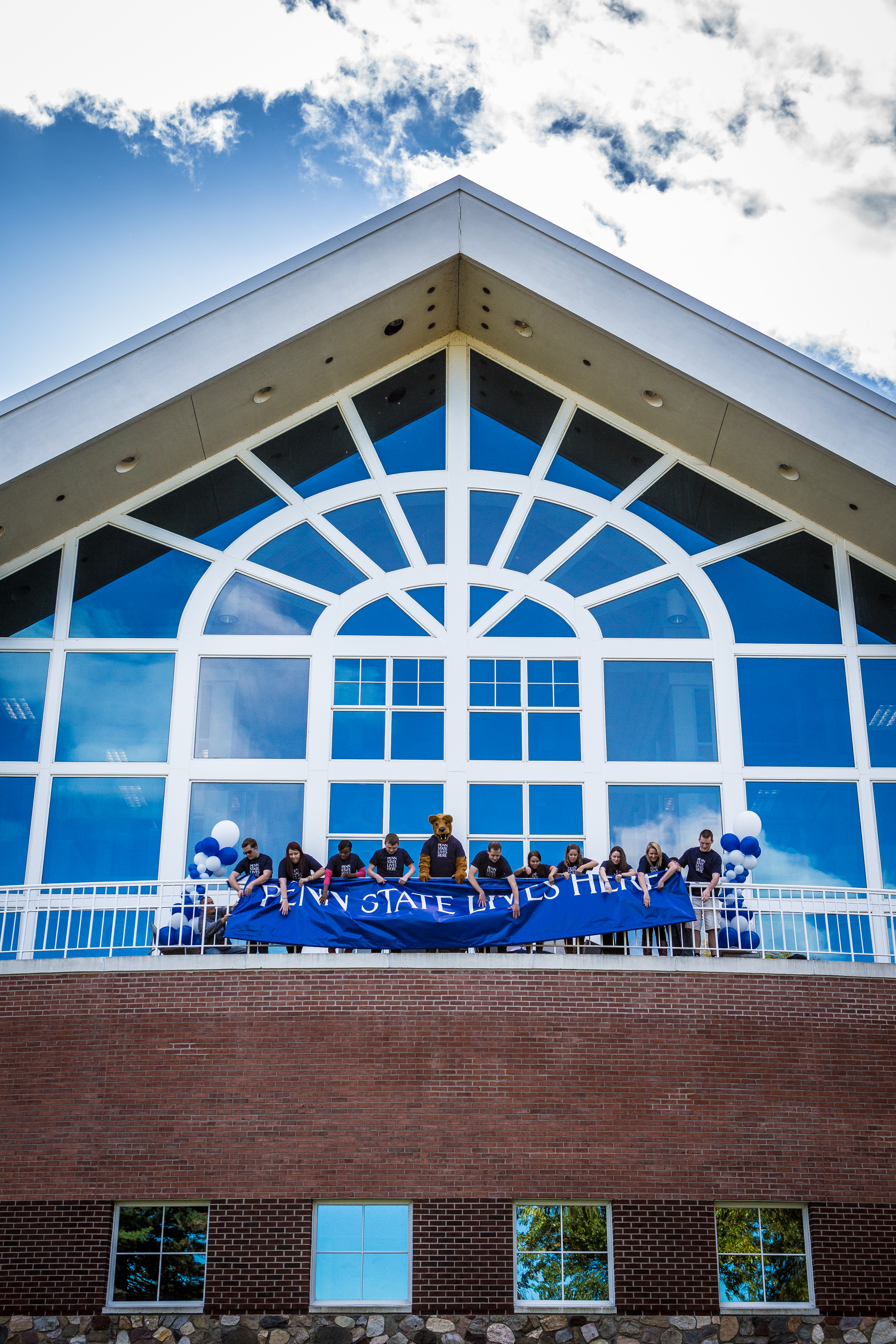
* Ten students and the Penn State lion unfurled a twenty-foot banner that now hangs off the balcony at John M. Lilley Library.  (Thank you, Mother Nature, for providing picture-perfect outdoor-event weather!)

Penn State Lives Here_004

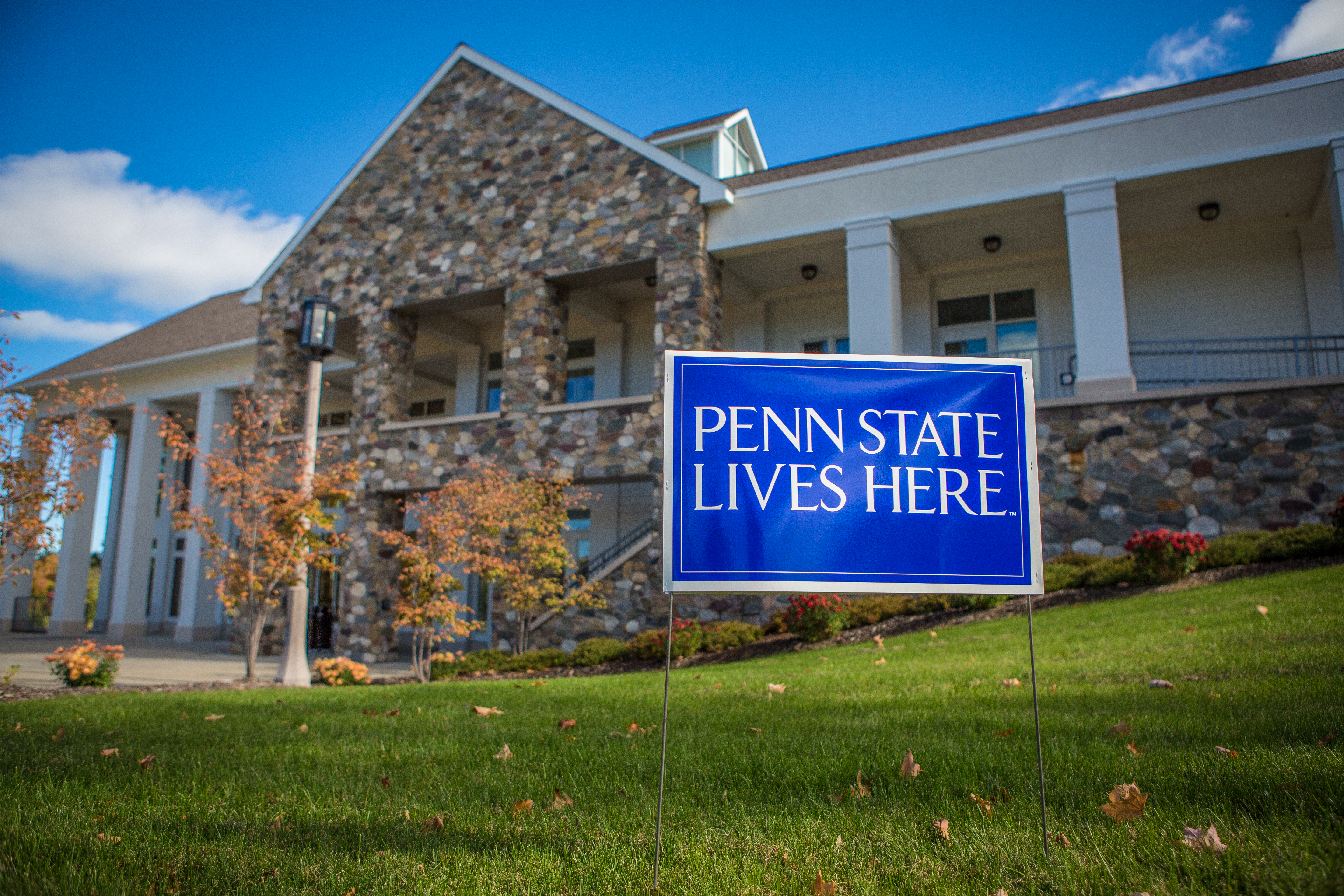
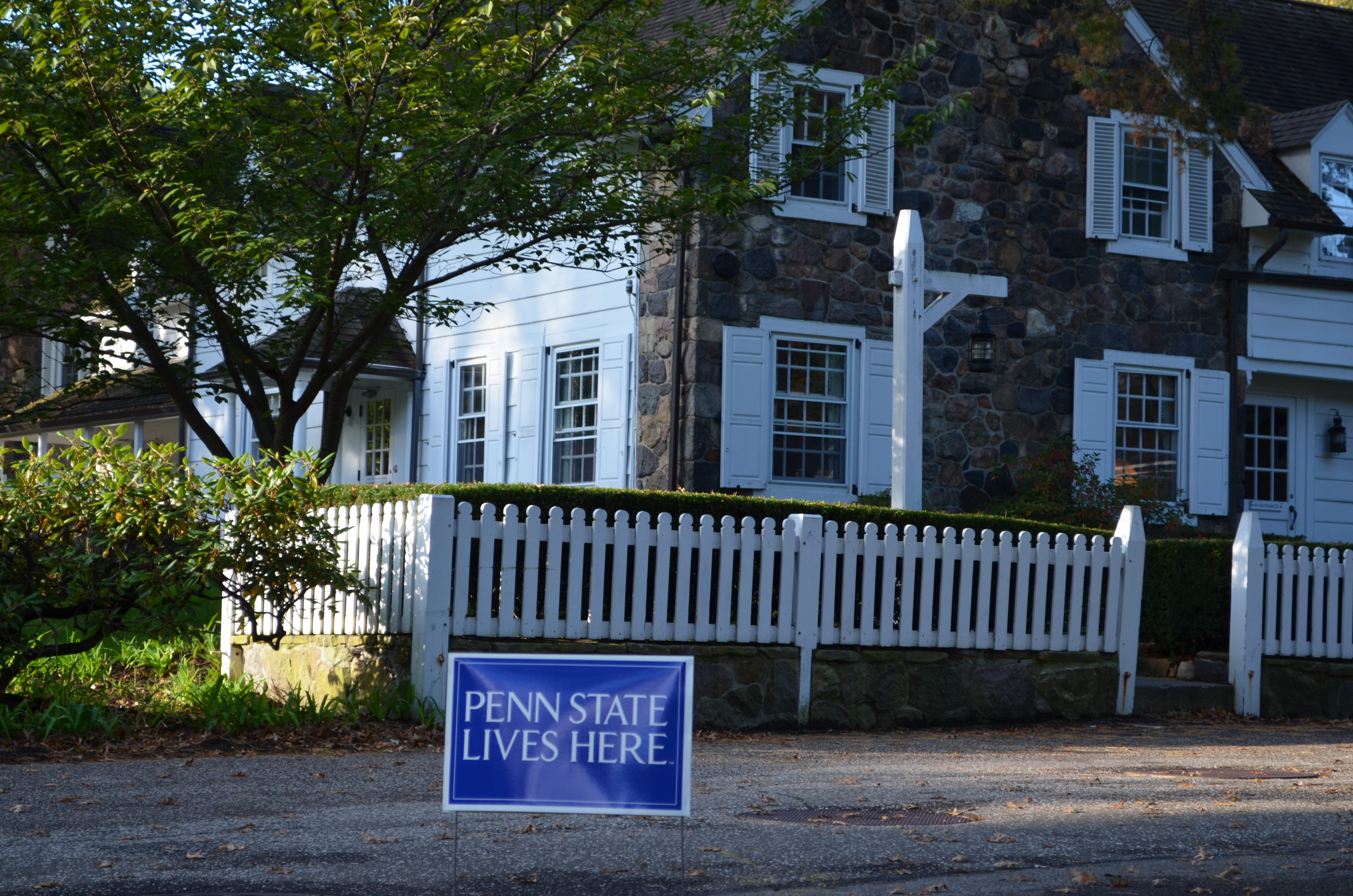
* Twenty lawn signs popped up all around campus.

DSC_1794
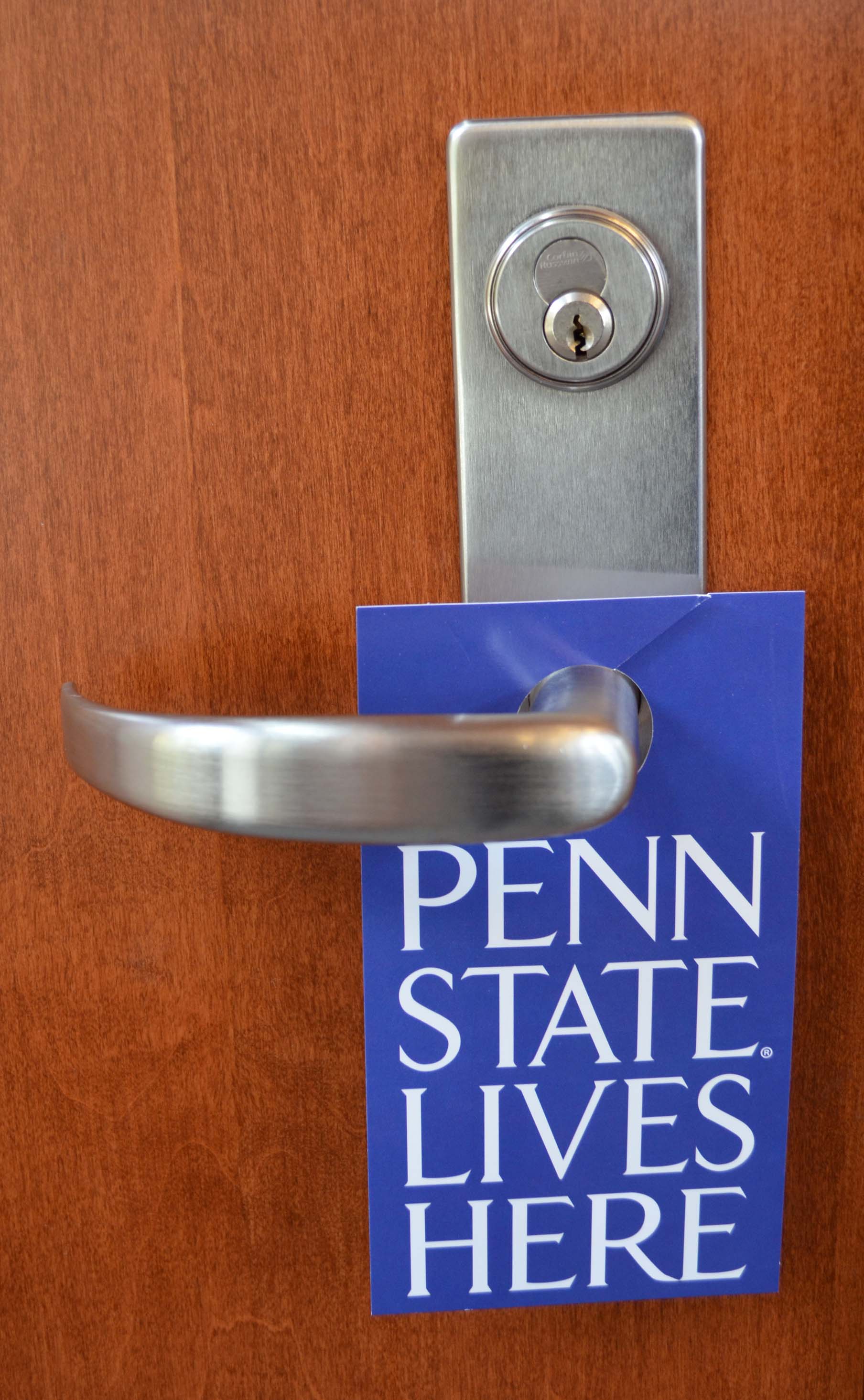
* “Penn State Lives Here” doorhangers were hung on throughout the residence halls.

doorhanger

* “Penn State Lives Here” buttons, vinyl window clings and paw print cookies (delish!) were distributed at lunchtime at Bruno’s, where the campaign video was aired for students, staff, and faculty.
DSC_1795

Clearly, Penn State lives here at Behrend.

So, what does it all mean? What is our branding message about?

Here is an explanation, from the folks who created it:

“Penn Staters are not only high academic achievers, they’re doers. They are nurtured by a culture that encourages setting lofty goals and investing the effort to achieve them. They are molded in an environment that values success, teamwork, and service to others—and graduate intent upon living purposeful, inspired lives. All universities talk about producing leaders, but ask employers where they go to find individuals who inspire others, know the value of hard work, and lead by example. They find them at Penn State.”

Excellence. Innovation. Passion. Collaboration.

These are the things that live at Penn State.

Watch the video here and see for yourself.

Penn State Lives Here_003

Students: Join us on Monday for unveiling of PSLH

branding

Penn Staters make an impact everywhere. Now, there’s a brand initiative that puts it right out there.

The University will introduce the initiative on Saturday, October 12 during halftime of the Michigan game in Beaver Stadium. Penn State Behrend will be unveiling the brand message on Monday (October 14), and students are invited to be part of the announcement.

At 11 a.m., Lilley Library Lawn:
Come watch as your fellow students unfurl a big banner with the theme of PSLH (that’s your only hint!) from the balcony of Lilley Library facing the Bayfront Highway. If you can attend, you’ll see the action from the lawn just below.

At 12:15 p.m, Bruno’s Cafe:
See a short yet dynamic video, grab a cookie, and get your free theme button and vinyl window cling–while supplies last!

Join us Monday to see and hear just how PSLH.

Kochel Center gets a makeover

seats2

By Heather Cass
Publications & Design Coordinator, Penn State Behrend

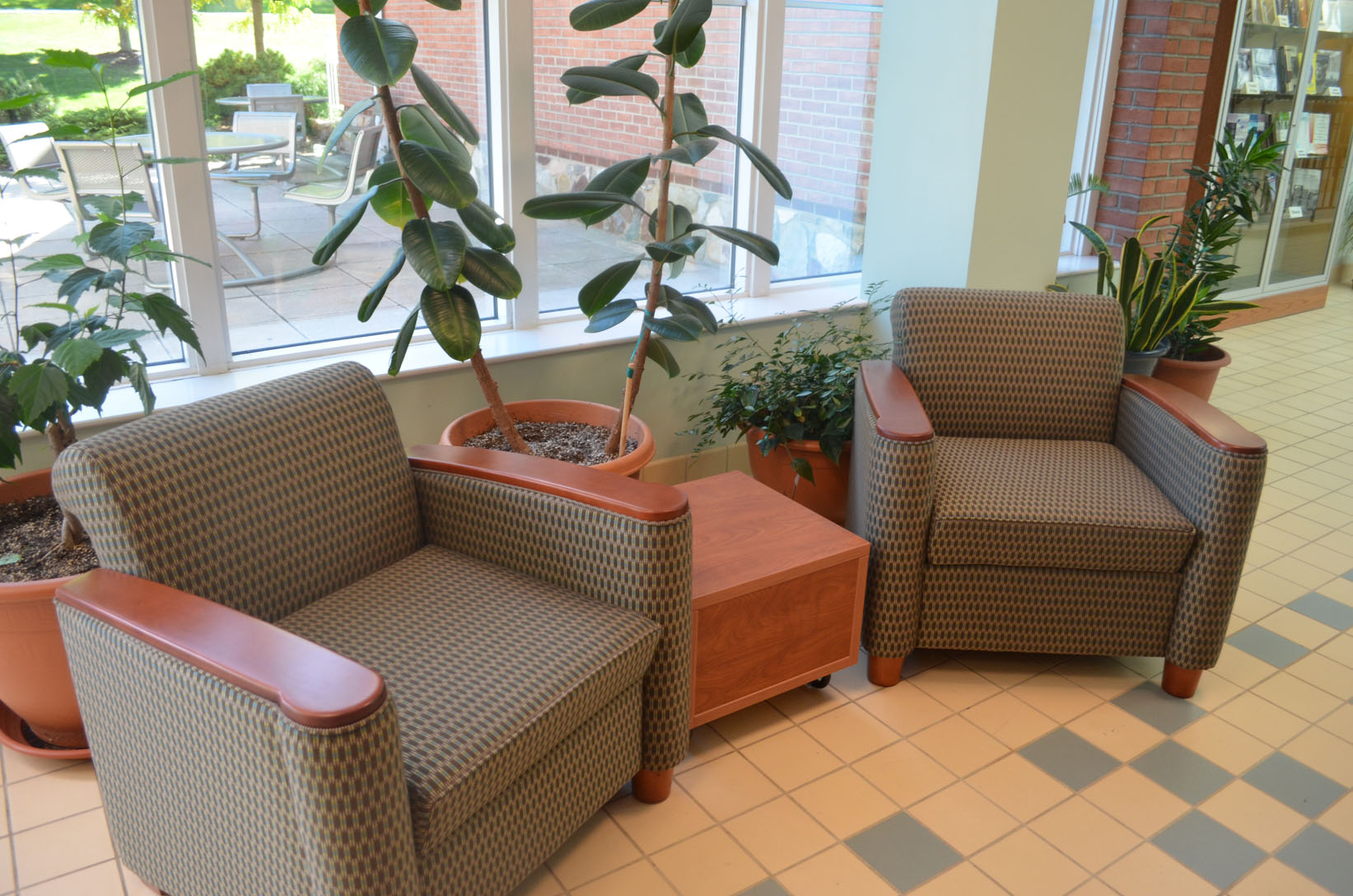
Have you noticed the new have-a-seat-and-stay-a-while environment at Irvin Kochel Center? The stiff, metal benches that once lined the halls are gone, replaced by attractive plush chairs and wooden end tables. On the lower floor, the computer kiosks have been revamped and carpeting put down to add warmth and help muffle echoing footsteps.

The changes are largely the result of suggestions made by students.

“Projects done by students in CAS 252: Business and Professional Communication helped drive many of the improvements to the civility and quality of the Kochel physical and social environment, including the digital signage screens, the up-scale coffee machine, the new furniture, and the printer near the new computer kiosk,” said Dr. Rod Troester, associate professor of communication.

According to Dr. Ken Miller, senior director of campus planning and student affairs, funds from the Student Facility Fee paid for the furniture and carpet, funds from Technology Fee paid for the computers and kiosks, and Housing and Food Services provided the coffee machine.

“It was really a team effort to improve a highly-trafficked area,” Miller said.

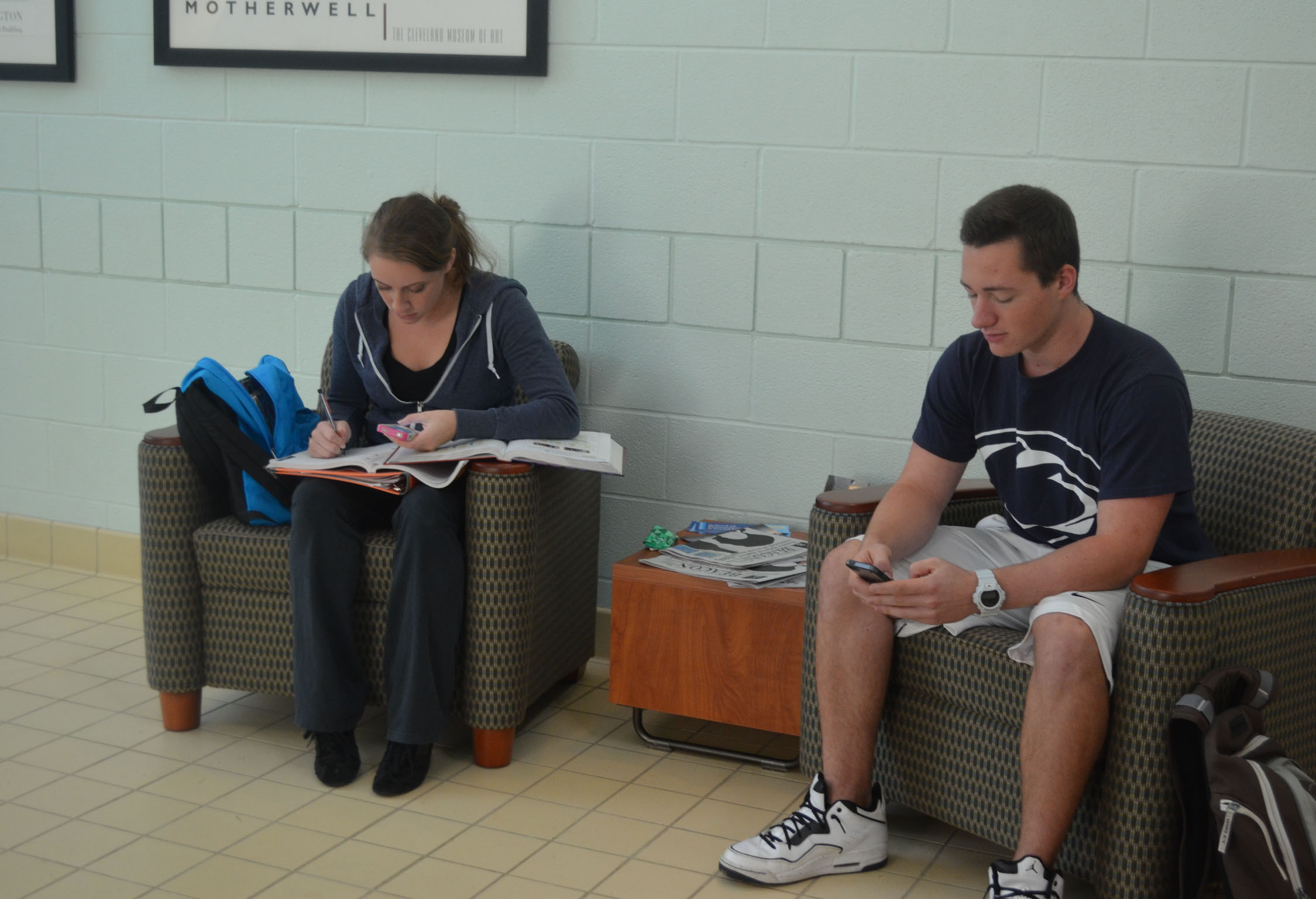
Students seem to have embraced the kinder, softer Kochel Center. When I walked through on a Thursday at 2 p.m., nearly every comfy seat in the house was taken.

seats

Regarding the SFF

Projects funded by the Student Facility Fee are voted on by students. The Kochel project was placed on a campus-wide survey of students who indicated it as a priority for improvement. Then, the SFF committee, a nine-member group with six students as voting members, chose to fund the project. (Currently, Kyle Stephan, student government association president, and Miller co-chair the SFF committee.)

The SFF Committee also funded the construction of The Galley (which Housing and Food Services outfitted), lighting of the soccer/lacrosse field, Reed Auditorium and lounge renovations, and hydration stations across campus.

Future projects under consideration include, the Mary Behrend Monument and Memorial Garden, a recreation center, and a Frisbee golf course.

As for those metal benches that were removed for Kochel? They will likely be repurposed for outdoor use around campus.

Campus running routes, 5Ks, and more

feet

By Heather Cass
Publications & Design Coordinator, Penn State Behrend

With more than 850 acres of property in beautiful Harborcreek Township, Penn State Behrend’s campus is a runner’s paradise.

Offering everything from paved paths to cross-country paths through fields to rugged trails through the Wintergreen Gorge to a brand new 8-lane competition-level track, you’ll never run out of places to…well, run at Behrend.

Another thing you’ll never run out of here? Hills. Just try to find a route around this campus that doesn’t include hills (not counting doing circles around the track!). The good thing, though, is that hills will make you a better, stronger, and faster runner/walker and you’ll learn to love them (or you’ll love to hate them).

In winter, the campus paths are well maintained and lighted, making it a safe alternative in the dark, snowy days of winter. And, yes, you should run outside in winter — it’s spectacular! (But, please be safety minded and run with a friend, or two…or ten).

I have several routes I like to run around campus with friends, including (click on the links for a map on mapmyrun.com):

* A 5-mile Summer Loop.  This route starts on the Bayfront Bikeway trail (back corner of Erie lot) and winds its way down Shannon to Cooper Road and back up to campus via the Wintergreen Gorge trail before heading up to Knowledge Park to loop through the wooded paths and circle back to the parking lot.

* A 5-mile Winter Loop. This is much like my summer loop, but it cuts out the Wintergreen Gorge portion as it’s not safe to run through there in the winter (it’s not plowed or lighted) and we spend a little more time in Knowledge Park, which is both lighted, plowed.

* A 5K (3.1 miles) from Junker Center. This is a challenging course thanks to the giant hill that is old Station Road.

* A 12.5-miler from Knowledge Park. In the mood to go long? This is a fairly simple long run route takes advantage of the peaceful country roads you’ll find south of campus.

* A simple 1.5-mile loop in Knowledge Park. It may sound boring to loop, but Knowledge Park is wooded and beautiful any time of the year and, after 6 p.m., there is virtually no traffic, but plenty of street light.

Want more options?

Just search for “Behrend” on Mapmyrun.com and you’ll find a whole list of running routes that other people planned, including some trail runs mapped by police services officer Dave Lesher and a nice  8-miler (beware of Kane Hill…it is, um, a challenge!) mapped by Chris Coulston, associate professor of electrical and computer engineering.

Of course you can also map your own route. If you do, be sure to “unlock” it so the rest of us can try your route, too!

A few words about safety

Again, please run with a friend (or a few) because some of the routes I listed above take you into isolated areas that don’t see much traffic. There is safety in numbers.

And, of course, heed the basic rules of runner safety, including wearing reflective gear (white won’t cut it).

Racing around Behrend

Ready to test your meddle? You’ve got two opportunities to race around campus in October, which is, of course, one of the most gorgeous times to run on campus!

The Harvest Hoof-It is a 5K run or a 2.5-mile fun walk on Saturday, Oct. 12 at 9 a.m. sponsored by WCTL, Erie’s Christian radio station. More info/application here.

The Penn State Behrend cross-country team is hosting a Twilight 5K at Behrend on Friday, Oct. 25 at 6 p.m. The Twilight event includes a 5K run, a 2-mile fun walk and a kids’ race, too. More info/application will be posted here.

~ Heather

P.S. If you have questions about running at Behrend, or the upcoming races, feel free to email me at hjc13 at psu.edu.

Ice cream, ziplines, and balloon animals. (Oh, my!) Welcome Week wrap-up and photos.

By Heather Cass
Publications & Design Coordinator, Penn State Behrend

Our newest students began arriving early last week, and we were so happy to see them that we could not stop taking photos.

Our International students were the first to arrive. We have dozens of students who traveled from all over the globe to study at Penn State Behrend. Here are a few students we found in the gaming lounge as they arrived on Monday:

This slideshow requires JavaScript.

On Thursday, our first-year students who will live on campus began arriving with lots and lots and lots of boxes and bins and food and clothes and bulletin boards and computers and printers…. You get the picture.  Move-in Day story here.

This slideshow requires JavaScript.

Friday morning was convocation at Junker Center where students heard from various speakers, including a moving and hilarious presentation by Dr. Pelin Bicen, asssistant professor of Marketing, whose life path was altered by a flyer nailed to a tree in Turkey  (if you missed it…don’t worry, that is a story we’re definitely going to have to tell in a future Behrend Magazine!).  We asked new students to wear their “Class of 2017” T-shirts so we could get a group photo. Look at how wonderful they all looked:

This slideshow requires JavaScript.

Also at convocation, Maria Madigan Palmieri ’98, president of the Penn State Behrend Alumni Society, taught our Class of 2017 a very important Penn State lesson:

After convocation and academic meetings, the fun began. The Office of Student Activities planned a whole weekend of ice breakers, get-togethers, and meet-and-greets over ice cream, fruit smoothies and….gulp…even over Reed parking lot via zipline. Check it out:

This slideshow requires JavaScript.

See…I told you we couldn’t stop taking photos! Though, we have to credit our student photographer Sarah Jelinek with the photos in the slideshow above. She’ll be out and about all semester, so …when you see her, give her a smile, then look for your photos on our Facebook page and Twitter feed.

So while summer offers a refreshing change of pace, the pin-drop-quiet campus (save for the hundreds of little ones taking part in College For Kids — see a slideshow of images here) gets a little too quiet sometimes. It’s nice to have lots of students filling up the parking lots, residence halls, classrooms, and chairs in the gaming lounge once again. (Heck, I don’t even mind that I have to park in the back row of the Erie lot if I leave for lunch. Yes, I’m that happy to see the students again ;-)).

I think I speak for all the faculty members and staff when I say that we’re looking forward to another great fall semester. Beautiful things are coming.  Exhibit A:

Autumn Stock Imagery_029

~ Heather