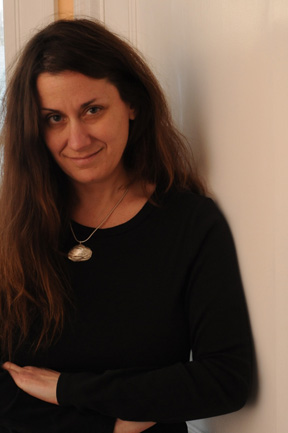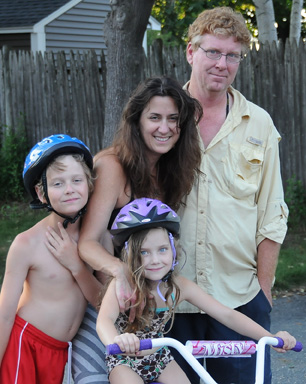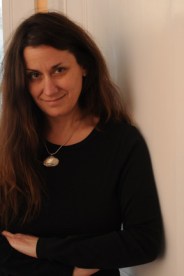
Meet Standout Senior Kelly English-James

By Heather Cass
Publications & Design Coordinator, Penn State Behrend

kelly english-james dec. 14 2

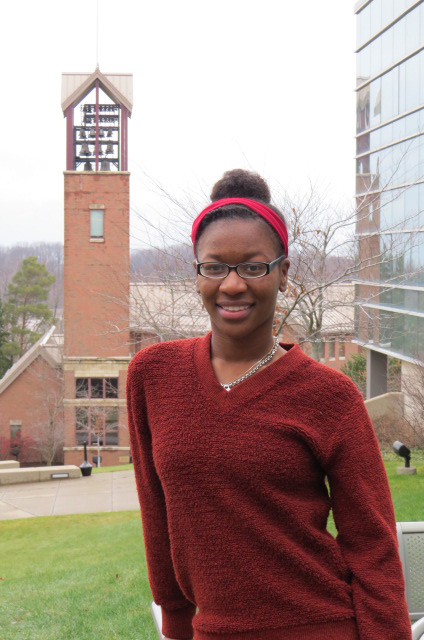
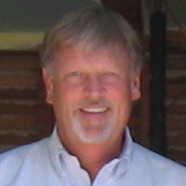
Kelly English-James

Major: Management Information Systems

Minors: Marketing, Operations and Supply Chain Management

On choosing her major: “Originally, I was a Marketing major. I was always a creative person and enjoyed making things that would be visually appealing to others. I was introduced to coding, web design, and data bases in an introductory level MIS course and immediately fell in love. I learned that I’d rather be the person working on the system than in the system. Choosing MIS has been one of the best decisions I’ve made in my life thus far.”

Involved to the nth degree: English-James certainly made the most of her time at Behrend. She was a Lion Ambassador, president of the Human Relations Programming Council, member of the Management Information Systems Club, member of the National Society of Black Engineers, member of the Association for Black collegians, Member of the Multicultural Council, member of the Organization of African and Caribbean students, member of the Organization of Latin American students, member of Women Today, and member of the International Student Organization. Pheww….

On motivation and drive: “I have an outstanding drive and motivation. When I set my mind to things I’m truly unstoppable.”

Embracing differences: “I am most engaged and attracted to people who are intelligent and have unique mindsets. I am very excited when I discover that someone thinks completely different from others. It truly inspires me.”

Advice for new students: “Be open minded and always plan ahead. Plan your next two semesters of courses in advance. If you don’t plan, you may find yourself in a difficult academic situation!”

English-James will graduate on Friday, December 19. She has accepted an MIS position in Rhode Island.

Meet Standout Senior Kristina Peszel

By Heather Cass
Publications & Design Coordinator, Penn State Behrend

kristina peszel

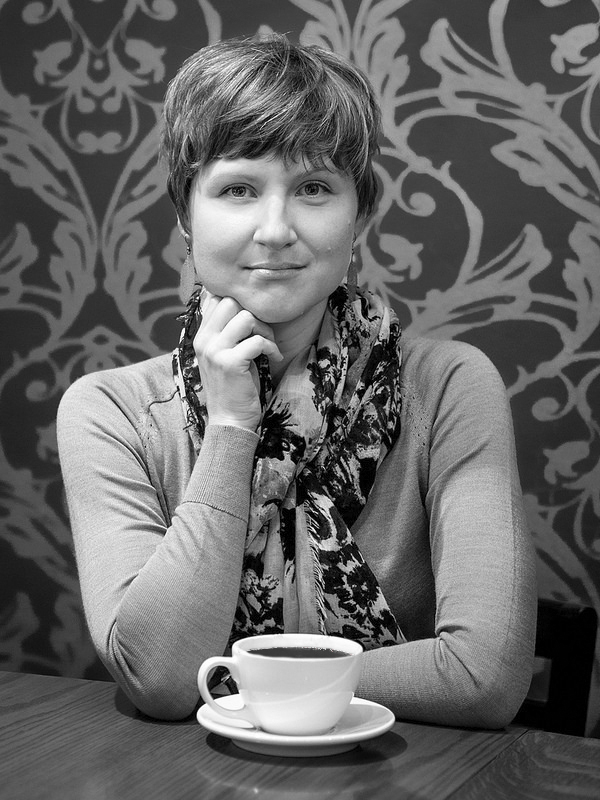
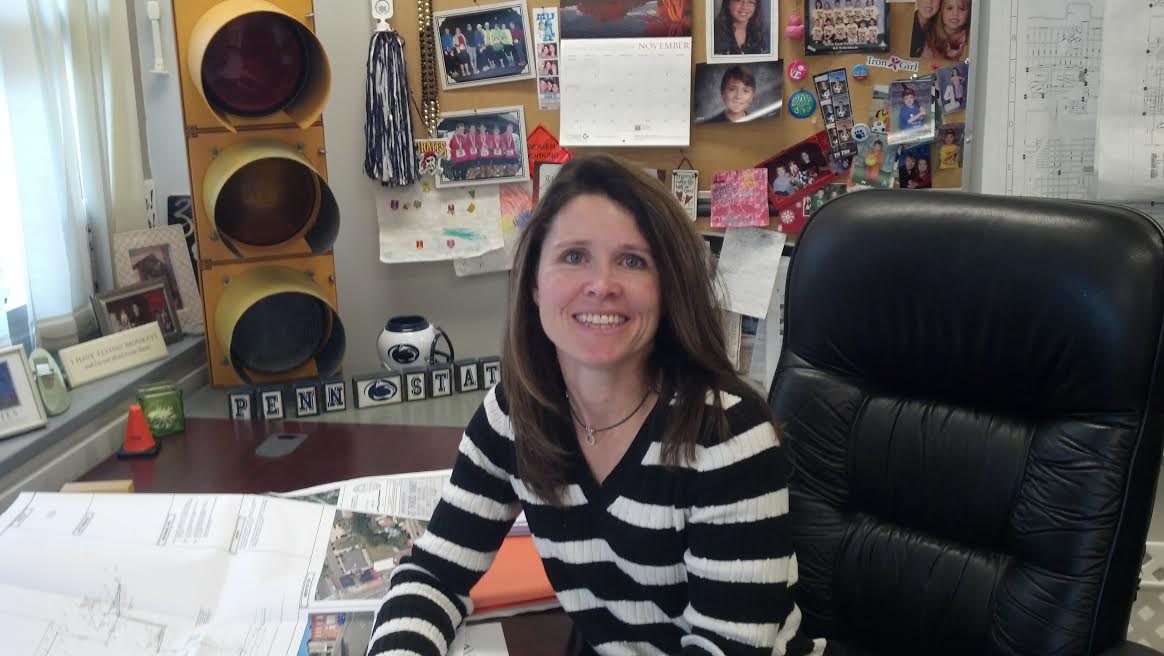
Kristina Peszel

Major: English, with Professional Writing option

Minors: Management Information Systems

Certificate: Social Media

On choosing Behrend: “It has the resources and prestige that come with being Penn State, but with smaller classes. I was able to not only really get to know my professors—and to have them know me—but also to have the kind of intense discussions in small classes that turn an average learning experience into a profound one.”

On English as a versatile degree: “I always had a knack for writing and I like helping people. With English, specifically with the professional writing option, I can help businesses communicate more effectively. I like solving problems, and ineffective communication is essentially a problem of words; every word we use is a choice, so how can we use words in the most effective way to get our point of view across? English is an exciting major because it’s a major of possibilities!”

On minoring in MIS: “I decided to minor in MIS without any prior technical background. There were times I questioned my ability to do something so different than what I was used to, but I stuck it out and eventually got two MIS-related internships.”

Proudest accomplishment at Behrend: “Any time I help another student succeed. Whether that’s through tutoring (Peszel was the lead writing tutor at the college’s Learning Resource Center) or just giving someone advice, nothing makes me more proud than knowing I helped someone in a positive way.”

Words to live by: “Someone once told me that there is no comfort in the growth zone, but there’s no growth in the comfort zone. I try to remember that when I’m doing something new. If you never get out of your comfort zone and try new things, you don’t give yourself the chance to grow.”

Advice for new students: “People will tell you not to take your electives right away and to ‘save’ them, but if you aren’t sure what you want to major in, take some electives! You won’t know if something is right for you until you try it.”

During her time at Behrend Peszel was a member and officer of Alpha Sigma Tau, Omicron Delta Kappa, and Reality Check. She participated in Alternative Spring Break in 2014, wrote for the Behrend Beacon, and was involved with the Lion Entertainment Board for two years. She also served as the lead writing Tutor of the Learning Resource Center where she honed her skills in technical writing.

Peszel will graduate on Friday, Dec. 19. She has accepted an MIS position at Erie Insurance.

Behrend alumna reaches milestone with release of first book

Slomski2

By Steve Orbanek
Marketing Communications Specialist, Penn State Behrend

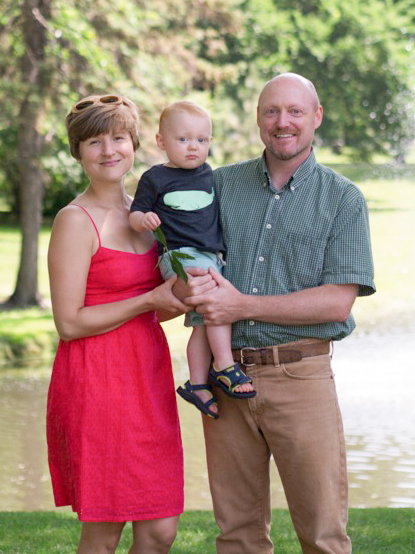
Author Heather A. Slomski ‘03, a Penn State Erie, The Behrend College, alumna, always knew that she wanted to write.

She’s been drawn to stories—both reading and writing them—ever since she was a child, and so it makes sense that her son, 19-month-old Oscar, is turning out to be a voracious reader himself.

Slomski, who earned her B.A. in English with an emphasis in Creative Writing in 2003, and her husband, Vincent Reusch, spend most of Oscar’s waking hours engrossed in children’s books.

“It’s one of the best parts about being a parent,” Slomski says.

Publishing a book herself was a goal that was always driving Slomski, who has had stories published in TriQuarterly, American Letters & Commentary, Columbia: A Journal of Literature & Art, The Normal School, and other journals.

Mission accomplished.

Her crowning achievement comes this fall. That’s when her first book, The Lovers Set Down Their Spoons, will be released from the University of Iowa Press. The book, is a collection of fifteen short stories, was a labor of love for Slomski.

LoversShe worked on it while pursuing her M.F.A. at Western Michigan University and then afterward when she held the Axton Fellowship in Fiction at the University of Louisville.

“Not everything I wrote fit together,” says Slomski, who also is an adjunct professor at Concordia College. “It actually took me a long time to feel as if I had a finished manuscript.”

Yet, when it was finished, Slomski says she had a strong sense of accomplishment. The book has already made waves, receiving the 2014 Iowa Short Fiction Award, a national award given to a first collection of fiction in English and administered through the Iowa Writers’ Workshop.

“It’s really rewarding because I feel good about the individual stories and the collection, but I feel validated for it to be recognized and win this award,” Slomski says.

Slomski says her two favorite stories are the title story and the last story in the collection, “Before the Story Ends.”

“I like the title story a lot because it takes the structure of a play and kind of exists on the border of drama and fiction,” Slomski says. “The last story has some magic to it, and it’s also an exploration of loss, and I felt I achieved something with that story. The two stories almost don’t fit in the same book, but they do. They have totally different tones but both deal with loss in a very different way. The title story actually ends up being about gaining something, which is, of course, the opposite of loss.”

Slomski has already begun work on her next project, The Starlight Ballroom, a novel that tells the fictional story of the lives and deaths of her paternal grandparents.

The Lovers Set Their Spoons is currently available for preorder at Amazon.com and can be purchased at this link.

About Heather A. Slomski

High School: McDowell High School, Erie

Education: Earned B.A. in English with an emphasis in Creative Writing from Penn State Behrend; earned M.F.A. in Creative Writing from Western Michigan University.

Fellowships and Awards: From 2008-2010, Slomski held the Axton Fellowship in Fiction at the University of Louisville, where she taught fiction and organized a two-day literary festival titled “The Story of Form.” She was awarded a 2013 Minnesota State Artist Initiative Grant, which afforded her travel money to spend six weeks in Krakow and take a course release from teaching. While there, she conducted research for her novel-in-progress, The Starlight Ballroom. She also was awarded the 2013 Minnesota Emerging Writers’ Grant, which allowed her to take a course release, so she could continue working on the novel.

Influences: Steven Millhauser, Lydia Davis, Charles Simic, Anne Carson, Angela Carter, Bruno Schulz

Favorite book as a child: “I would say the book I kept turning to was The Lion, The Witch and the Wardrobe because it has that mix of reality and the fantastic. As a child, and even as an adult, you just don’t question it and say ‘This could never happen,’ or ‘This is not how the world works.’”

Advice for aspiring writers: “Find a writing schedule—a time and a place where you can write, every day, if possible—and stick to it. Also read a lot. Continually seek out new authors to read, and take care not to overlook literature in translation, literary journals, or writers who publish with small presses.”

For more information, visit Slomski’s website at heatheraslomski.com.

Slom


Behrend Love Stories: The Gollick’s

By Heather Cass
Publications & Design Coordinator, Penn State Behrend

Gollick1cropped


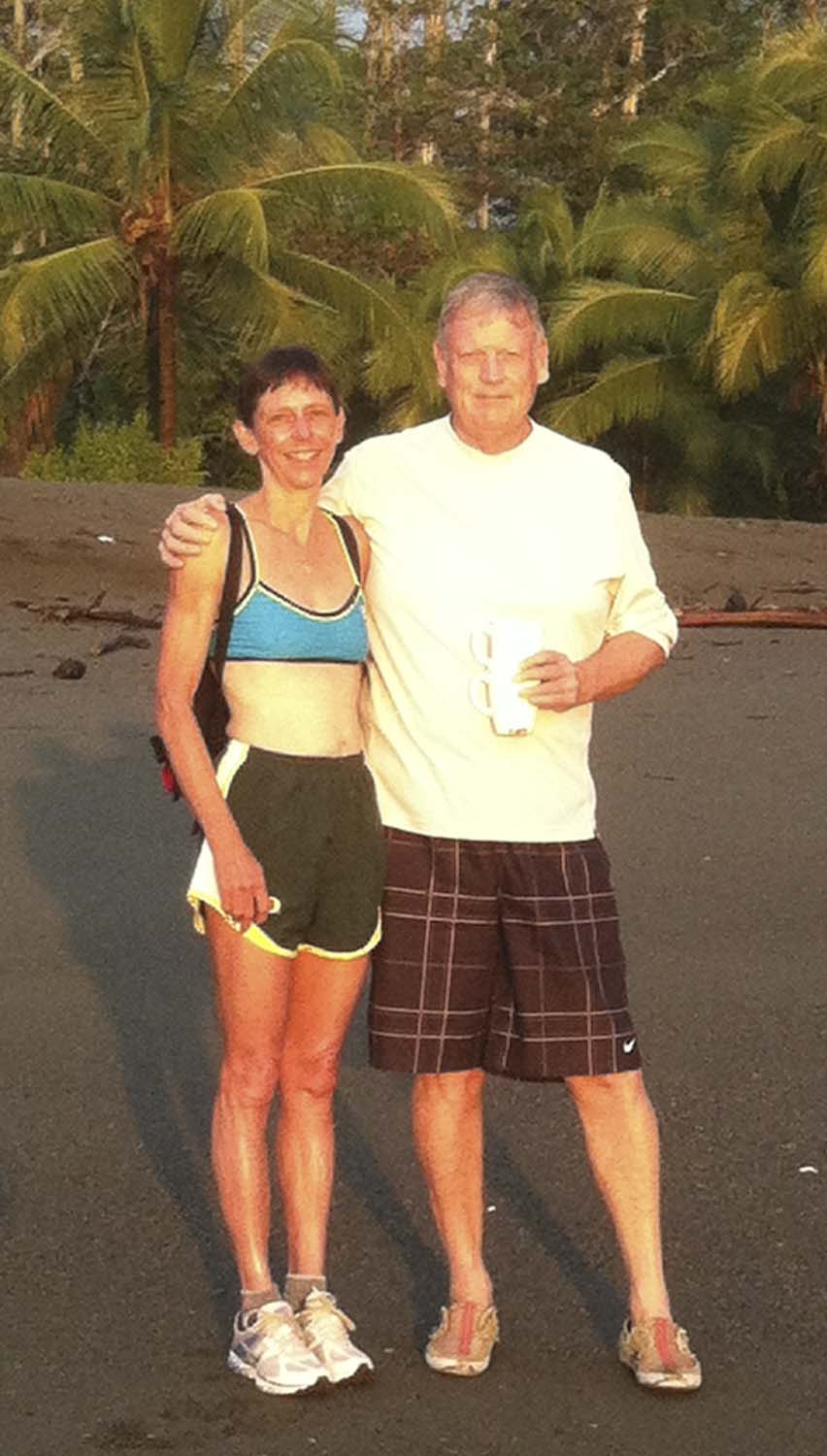
Bob and Kimberly (Cunningham) Gollick ’73

Degrees: Bob ’73, Kim ’73, both in Health and Human Development. Kim did a nutritional internship at Miami Valley Hospital; Bob went to graduate school at the University of Colorado where he earned a master’s degree in Urban Planning.

First met: Fall of 1969.

Married: 1974

Home: Denver, Colorado

Professions: Kim is president of Kimberly Gollick Associates, Inc., a nutritional consulting firm; Bob is president of Robert J. Gollick, Inc., a real estate development consulting firm. Both firms are located in Denver.

How they met, as told by Bob: I started at Behrend in the fall of 1968. The following year I helped the mom of a freshman girl carry some boxes into her daughter’s dorm room. I met her daughter on the way out of the room, her first day on campus. We started dating about four weeks later. Long story short, we’ll be married forty years this October.

Parting thoughts: “While we both finished our undergraduate degrees at University Park, if it weren’t for Behrend and a little luck on move-in day in 1969, I’d never have met the love of my life,” Bob said.

Fit for life: Kim is a runner who also enjoys yoga and ballet and she swims every day. Bob said he had to stop running, but he hikes all over Colorado and Costa Rica.

Gollick Head2 Gollick head1


Behrend alumnus launches game on Android Market

Login Screen

By Steve Orbanek
Marketing Communications Specialist, Penn State Behrend

Stephen Chalker ’13 won’t have to worry about his senior project wallowing away anytime soon.

The Software Engineering graduate designed a cell-phone game titled “The Mind’s Lie” for his senior capstone project. The game, which teaches students to be conscious of cognitive bias, was put up for download on the Android Market this February and has since been downloaded more than 70 times. It is the first game designed by a Penn State Behrend student to be placed on a public online store.

“It is extremely rewarding,” said Chalker, who worked on the project with fellow Software Engineering students Kit Torrelli ’13 and Joe Grise ’13. “This was the first project that I did that was not just for a grade, but for the public to download and play.”

The game was designed to be used for the classes taught by Kristan Wheaton, an associate professor of intelligence studies at Mercyhurst University, but it can now be played anywhere and by anyone. In “The Mind’s Lie,” players are given a scenario and asked to identify one of six kinds of bias that might be present. They earn points for voting with the majority or for convincing others that a different answer is correct.

Scenario

The cell-phone version of “The Mind’s Lie” was modified from a board game designed by Wheaton. According to Chalker, that was a challenge as some of the concepts from the board game could not be easily transferred into the cell-phone version.

“This was the first time that any of us worked with Android, so there was a lot of learning involved,” Chalker said. “We had to design everything, and we tried our best to estimate how it would work in the Android environment, but it often would not work as planned when we tried to implement it.”

Many sleepless nights followed for the trio as they worked to perfect the game. However, Chalker said it was a labor of love.

“It was definitely the hardest project I have worked on so far, but it was well worth it,” Chalker said.

The game is currently played by individuals in the intelligence field, and Chalker said downloads grow by the day.

“It is the crown jewel of my resume, and people are fascinated whenever I bring it up,” Chalker said. “I really have to thank Penn State Behrend for having a senior design program where students can get real-world experience.”

That real-world experience has paid off in a big way for Chalker. He currently works in Austin, Texas, as an Android developer for a startup company, Bypass Mobile.

headshot

Chalker is reaping the benefits of his work, and the same can be said for Penn State Behrend.

“The Mind’s Lie” may have been Penn State Behrend’s first imprint on the gaming industry, but Dr. Matthew White, lecturer in game development, believes it will not be the last. White said the game has paved the way for future games designed by Behrend students.

“For us, the most important thing about this is that it proved a concept,” White said. “From beginning to end, our students can build a game and launch it on a public store.”

Behrend students hone interview skills at Business Blitz event

004

By Steve Orbanek
Marketing Communications Specialist, Penn State Behrend

Jen Powell remembers the stress that goes hand-in-hand with the job interview process. The sweaty palms, the increased heart rate, the inability to concentrate—these symptoms are par for the course when preparing for a job interview.

“You never know what to expect in a job interview. Preparing for an interview can be very challenging,” said Powell, a 2008 Penn State Erie, The Behrend College graduate who now works as a financial analyst at FMC Technologies.

Powell hoped to help students better prepare for job interviews by volunteering her time Feb. 5 at Business Blitz, a speed networking event at Penn State Behrend.

The event, which was co-sponsored by Behrend’s Financial Management Association (FMA) and the Society of Undergraduate Economists (SUE), was held in McGarvey Commons and used a combination of Behrend students and alumni to simulate the job interview process. More than twenty alumni and sixty-five students registered for the event.

A Behrend alumnus sat at every table in the room, and students rotated from table to table every eight minutes. For the first ninety seconds of each session, the student would offer his or her elevator speech to the alumnus. The alumnus then offered feedback during the remaining time.

The event’s goal was to help students become more acclimated to the interview process and professional interaction.

“It’s important for students to know how to talk to professionals,” said FMA treasurer and junior finance major Brooke Landram. “Communication is so important.”

Artur Szastak has had difficulty in his job search, so he decided to participate in the Business Blitz to hone his interviewing skills.

“I feel you either make it or lose it in the first 60 seconds of talking to someone, and this can be good practice for that,” the senior finance major said. “When you come into an interview, it’s almost as if you’re being judged, and it takes you out of your comfort zone. That initial shock starts to wear away with the more experience you get.”

The trial interviews were just one part of the Business Blitz event.

Following the speed networking sessions, students stayed to network with the alumni in attendance. Alumni were also given a book that included the résumés of every student who participated in the event.

“You can make some great connections here in Erie,” said SUE president and senior business, economics, and marketing major Brittany Martinelli. “Hopefully this event continues for a long time.”

For more information on the Business Blitz event, please email Professor of Finance Dr. Greg Filbeck at mgf11@psu.edu.

Behrend alumnus’ company grows following Shark Tank appearance

cellhelmet%20team%20on%20ABCs%20Shark%20Tank

By Steve Orbanek
Marketing Communications Specialist, Penn State Behrend

Sometimes our biggest victories can come in defeat. Just ask David Artuso.

In March 2013, the 2011 Penn State Behrend alumnus attempted to impress investors, including Dallas Mavericks owner Mark Cuban, on ABC’s Shark Tank by pitching cellhelmet, a cell-phone case company he started in 2011 with two friends. The company was founded with the goal of offering cell-phone users a new, sleek case that comes with a guarantee: if the phone breaks in the case, the company will replace everything for $50.

Cuban and the other investors on Shark Tank decided against investing in cellhelmet as they felt competitors would be able to undercut the company’s pricing, but the entire experience can hardly be considered a loss for Artuso and his partners.

“It’s a really good leveraging point when you talk to people,” says Artuso, who is cellhelmet’s CMO, co-founder and master technician.  “You can have a sales guy call a person and ask, ‘Have you ever seen ABC’s Shark Tank?’ They’ll respond, ‘Yeah, I saw that,’ so it’s a nice entry point that helps us get in front of people. It established a lot of legitimacy that we didn’t have before.”

After the show was filmed, cellhelmet reached a deal with Eldridge Communications, a Pittsburgh-based Verizon Wireless retailer, to place cases in their stores. The agreement was a win-win for all parties, but it also had a significant impact on how cellhelmet would later reevaluate its business strategy.

Repairs have always been part of what cellhelmet does, but it had never been the focus. However, that changed thanks to the partnership with Eldridge Communications.

cellhelmet began to fix phones for Eldridge Communications, which would then sell them as refurbished phones. Since then, cellhelmet has focused its efforts on repairs, and the results have been very positive.

“It’s actually growing faster than the cases,” Artuso says. “We still sell a decent amount of them, but our main focus is repairs.”

cellhelmet repairs phones and tablets for a handful of companies and offers public repairs via mail order on its website. Customers can also visit the company’s headquarters in Wexford, Pa., for a walk-in discount.

“We use certified repair technicians, the highest-quality grade parts and offer a lifetime guarantee on our repairs,” Artuso says. “We basically built our entire business model on quality. We like you, but we don’t want to see you again because you probably don’t want to get your phone fixed again. When we’re done fixing a phone, you basically have a brand new device.”

cellhelmet has big plans for the future. Artuso says the company would like to open a few retail locations in the next year that will focus on repairs, and the ultimate goal is to franchise the business model.

“We have our hands in the right area now,” Artuso says. “It’s just a really good platform for us to grow.”

cellhelmet will continue to sell its small, compact cases for which the company is named, but the focus has definitely changed. Artuso says there are no plans to manufacture new cases in the near future because of the high costs involved.

The company recently doubled in size to eight employees in November, and there are plans to hire more as well.

No, Artuso may not have been a “winner” ten months ago when he appeared on Shark Tank, but it’s clear he’s winning now.

So, would he go back and do it all again?

“Oh, yeah. Drop of a hat,” Artuso says.

Link to the Shark Tank episode featuring Artuso

Women in Engineering: Q & A with Alumna, Erie Traffic Engineer

By Heather Cass
Publications & Design Coordinator, Penn State Behrend

Tomorrow (Fri., Nov. 22) is Woman in Engineering (WIE) day at Penn State Behrend. This outreach program is designed to teach girls in 10th and 11th grade what an engineer does and what kinds of careers are available in the field.  This year, a record 167 girls from 17 schools will participate in hands-on and interactive activities/workshops, many of which are taught by practicing female engineers from the Erie area.

We caught up with one such woman, LeAnn Parmenter, 47, who attended Behrend from 1984 to 1986 before moving to University Park to complete her degree in Civil Engineering.   (By the way, it wasn’t all that easy to catch up with Parmenter. In her spare time she’s an avid triathlete and runner who just completed her first marathon and is currently training for her first Ironman next summer.)

Parmenter has been the City of Erie’s traffic engineer for the past seven years.

leann parmenter

LeAnn Parmenter ’88, City of Erie Traffic Engineer

Q. What is civil engineering? What are your job duties?

Traffic/transportation is just one sub-discipline of civil engineering.  As the City’s traffic engineer, I am responsible for all operations relating to the traffic signals, lighting, signing, and marking.

Q. What did you do before you came to Erie?

I worked for the Maryland State Highway Administration and Howard County Public Works Department where I did intersection and interchange design and project management. After working in a larger city and coming back to Erie, I hoped I could make a difference and bring about some change that is needed. However, it all takes time and money. I’m confident we will get there…slowly but surely.

Q. What do you enjoy about civil engineering?

I enjoy the fact that you can design, advertise, and construct a project and feel a sense of accomplishment after your project is constructed.

Q. What do you not enjoy about your job?

Complaining. But when you work for a public agency, it comes with the territory.

Q. What is it like to be a woman (a minority) in the field of engineering?

As with many male dominated careers, you have to battle some bias from time to time. It’s better now than it used to be, but there are situations in which you have to be strong. You can’t be afraid to shake up a traditionally male mindset.  Women bring a different perspective to the table and it’s important that be represented because, well, we do make up half the population.

Q. When you were in engineering school, were you one of the only women in your major?

There were probably only 10 other women in Civil Engineering at Penn State and fewer in my Master’s Program at University of Maryland. I’m not sure the numbers have changed much. Civil engineering isn’t the most glamorous of the engineering fields. Most of my career has been spent working with men in construction, inspection, police force, streets department, and engineering services.

Q. As a girl, what appealed to you about engineering?

I always enjoyed math and I had some encouraging teachers along the way.

Q. Were you the kid taking apart toasters to see how they worked?

(laughs)  No, I didn’t take apart toasters, but my father worked in construction and I always enjoyed being part of a construction project.

Q. Are people ever surprised to find out you’re an engineer? If so, why?

I don’t fit the stereotype of an engineer, so they’re sometimes surprised. Though, once I tell them what I do, the complaints begin! (laughs)

Q. You’re a wife and mother (she and her husband, Jeff Seevers, have two children, Jenna, 10, and Jason, 11), has this been a career that worked for you as a mother?

I have been lucky to have worked for employers that are supportive of my family life. I worked in Baltimore for 14 years, then moved back to North East after my daughter was born. I worked two days a week, flying from Buffalo to Baltimore for two years. Then, I started working part time for the City of Erie. They’ve been great.  I will say that I gave up some earning potential in return for flexibility and more time with my children, but that’s something that many working mothers have to deal with, no matter what their career.

Q. What advice do you have for young women considering a career in civil engineering?

There are many facets of civil engineering (transportation, structural, geotechnical, environmental, and water resources). Try to expose yourself to all of those and get a broad knowledge base of each so that you can make an informed decision about what you would enjoy doing for the rest of your career. Engineering, in general, can be a very rewarding career path, but you should choose an area that really interests you.

Q. What do you remember about your time here at Behrend?

I loved my two years at Behrend. I had studied abroad in Japan during high school, so I wanted to stay close to home for college. Penn State Behrend gave me that opportunity. I live on campus for two years before I went to University Park. The friends I lived with in my freshman year at Behrend are still some of my closest friends today. And we are all very Penn State PROUD!

Q. Are there any professors or classes you remember here at Behrend that stood out as being particularly helpful?

I took most of my entry level engineering classes at Behrend with a smaller number of students than I would later see at University Park. It was nice to take these core classes in a smaller environment with professors that were accessible and helpful. I remember Dr. Lasher pretty well.

Q. How can we get more girls interested in engineering?

I think we need to encourage them to think big and let them know they can be anything they want to. I always hear, “engineering is difficult” or “math is hard” – well, yeah, it is, but instead of letting our girls off the hook, we should be challenging them.  They can do it. Also, we need to expose them to the wonders of engineering and show them that it can be a really fun and exciting career path.

That’s exactly what the Penn State Behrend’s School of Engineering plans to do on Friday.

A Glenhill proposal

Greg_Emmy_Wedding_Edited

By Heather Cass, Publications & Design Coordinator, Penn State Behrend

Glenhill Farmhouse has been the location for everything from Behrend family dinners to VIP luncheons to a women’s dormitory to the chancellor’s office.

Last weekend, it became the location for a marriage proposal when Greg Bossart ’12 proposed to Emily Harrington ’12.

The two met in Antonella Cupillari’s Introduction to Mathematical Proofs Class.

“Neither of us knew anyone in the class and we ended up sitting next to each other. Group work was a strong component of weekly assignments in the class and since Greg looked like the friendliest person there, I quickly asked him to be my partner,” Emily said. “I never expected (nor did he) that my math partner would end up changing my life.”

Their partnership grew, progressing from homework “dates” to real dates. The two would often engage in long talks over cups of coffee at the State Street Starbucks in downtown Erie.

Soon, they were a couple, sharing many, many long walks across campus from Burke Center (Greg was an Electrical Engineering major) to the Otto Behrend Science Hall (Emily was a molecular biology and biochemistry major).

“We took that walk between REDC and OBS/NICK so many times, sharing casual conversation and deeper ones including talking about some of the harder times we were both going through,” she said. “There were so many times that while walking side by side, we would slow down just to enjoy our surroundings. The serenity of the campus and natural beauty are beyond compare.”

On Saturday, September 14, Greg woke Emily up early and asked her to get in the car. He had made a CD full of songs reminiscent of their college days when they would share an iPod while studying in the library together.

 “We arrived at Behrend and got out of the car, taking our ever-familiar walk,” Emily said. “As the sun poked through the clouds in the early morning, and while Behrend students all slept in their beds, Greg took me over to the Glenhill Farmhouse, kissed me, and dropped to one knee.”

Proposal Behrend 1

She said yes, of course.

“Greg and I are best friends and share a love that started at Penn State Behrend; there was nothing more perfect than coming full circle and returning to the place where we started to grow as individuals, met, and fell in love to become engaged to each other in this place,” she said.

We think it’s perfect, too.

Well done, Greg. Congratulations to both of you!

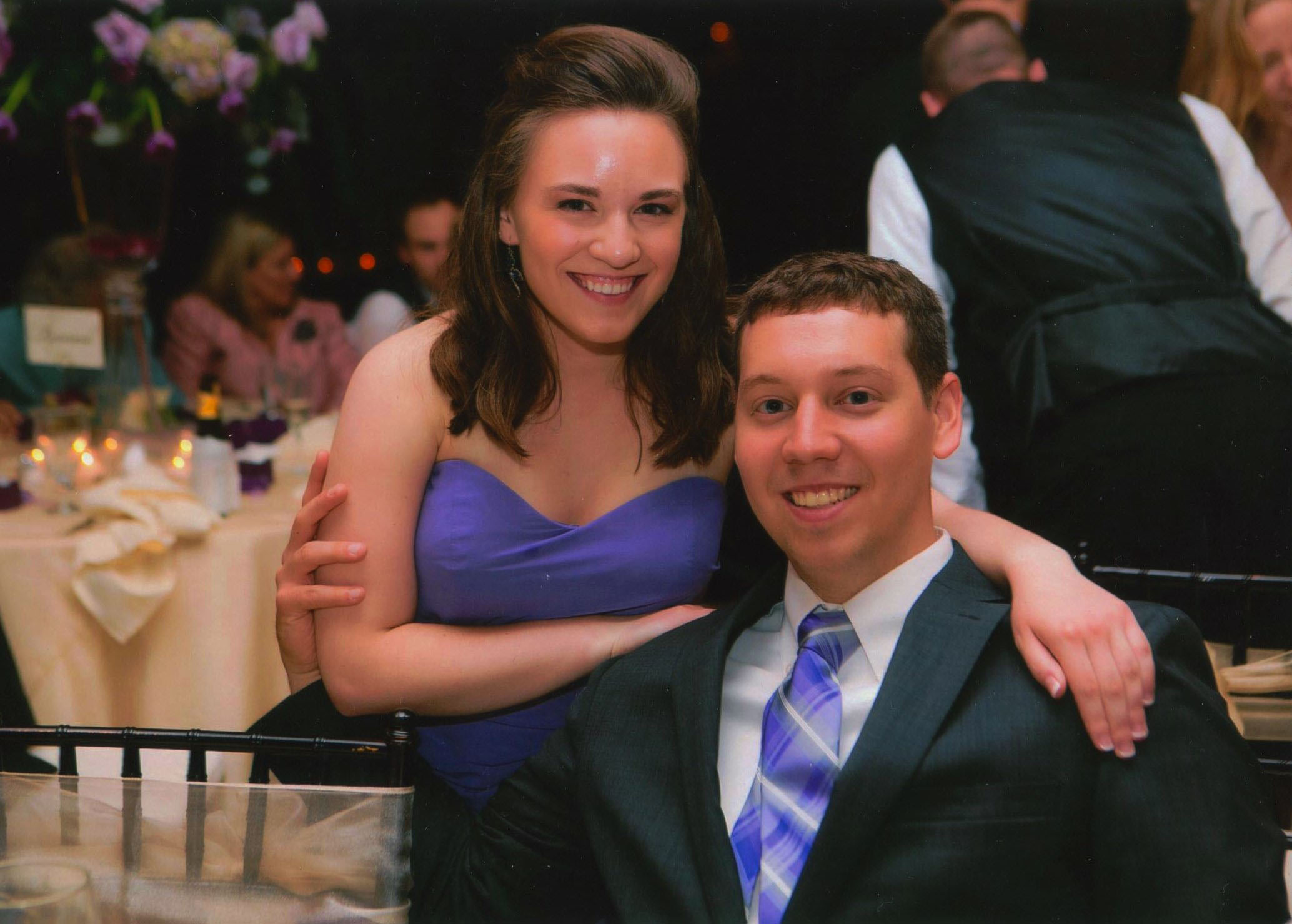
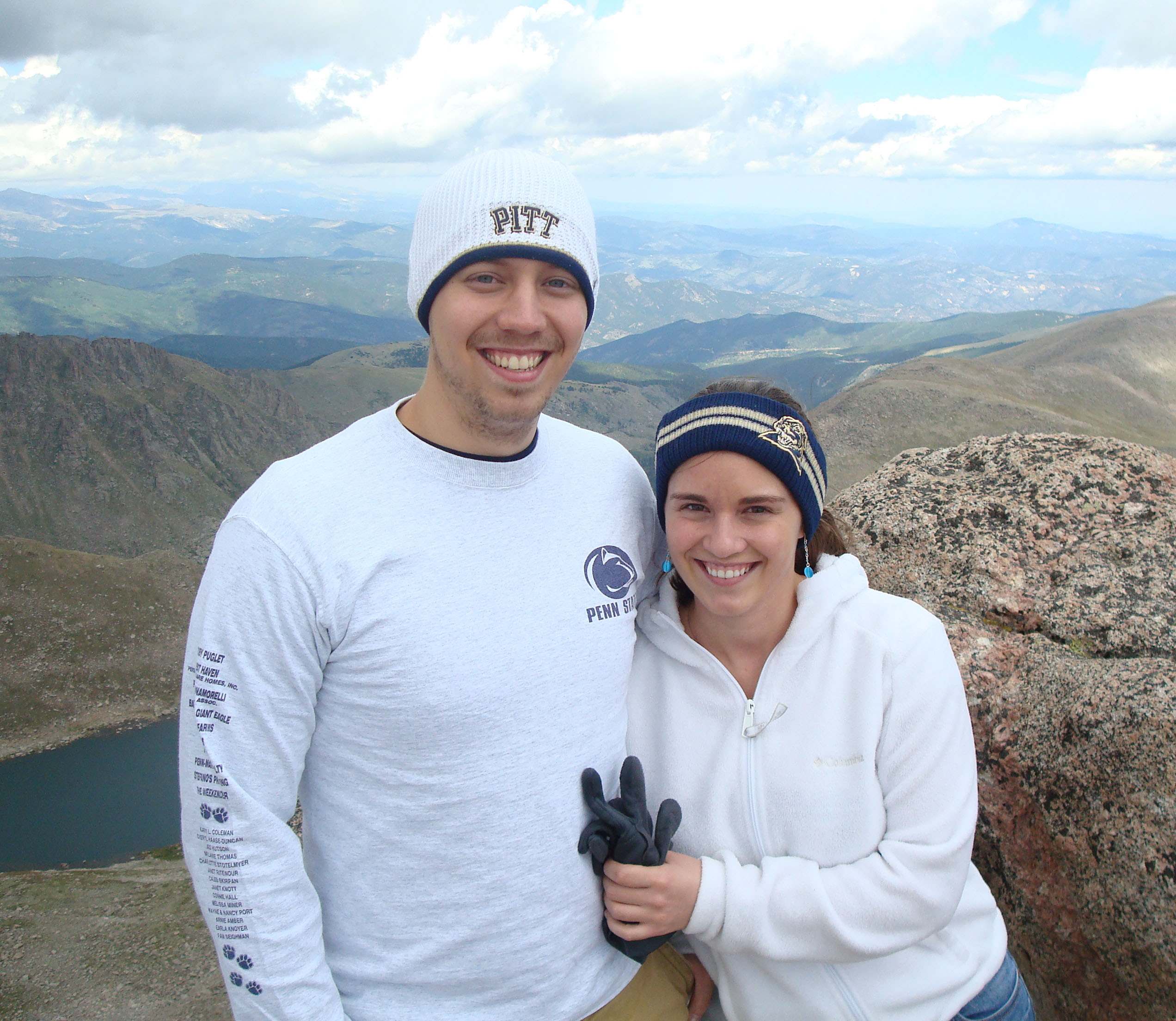
Greg and Emily

Editors note: Um…Greg, what’s with the Pitt hat? LOL. It’s OK, we know you love PSU more.

Greg and Emily currently live in the Bloomfield neighborhood of Pittsburgh. Greg is an electrical engineer at ATI Allegheny Ludlum and is working on his Masters in electrical engineering at the University of Pittsburgh. Emily is a Ph.D. student in the Interdisciplinary Biomedical Graduate Program at the University of Pittsburgh. She holds a laboratory research position at Magee-Women’s Research Institute working on her thesis project on breast cancer.

~ Heather 

P.S. We hope to welcome some little Bossarts here in 20 or 30 years. 😉 (I’m just sayin’)

Alumna shares her 2013 Boston Marathon story

boston - ellen

Penn State Behrend alumna Ellen Goldberg ’89 was running the Boston marathon on Monday, April 15 and was stopped at 24.8 miles after two bombs exploded near the finish line.

It was Goldberg’s eighth marathon and her fourth time running Boston, a race for which she raised money for the Massachusetts Association for the Blind and Visually Impaired .

“This was the first year I raised over $10K ($10,150) in one season, for a four-year total of $27,334! People are generous,” she said.

Goldberg graduated from Behrend in 1989 with a BA in psychology and a minor in English. She attended the Ph.D. program in clinical psychology at Clark University for several years, but ultimately went on to earn an MBA from the High Technology program at Northeastern University in Boston.

She currently manages operations at a non-profit in Boston called Clean Production Action, which works to get toxic chemicals out of products and the supply chain (cleanproduction.org).  She is also a freelance photographer who crafts seaglass and beach stone jewelry, and lives in Nahant, Mass., with her husband Michael, and their two children, Ben and Sarah, ages 10 and 6.

Here is Goldberg’s personal account of her experience at this year’s Boston Marathon:

What do I want to tell you?  This was a race I could not finish.  And not because I was struggling, shuffling, cramped, slow, sunburned, and wondering why the sidelines had thinned, but because, at mile 24.8, the metal gates crossed Park Street at the intersection of Beacon, and I was physically stopped, told the race was over, and that there was no finish line.

The day dawned bright and blue; logistics to the start were perfect. I think over the supportive emails I got in the closing days, make us proud, believe in yourself the whole way.  I cross the start, wiping tears I will not allow to come.  Crossing the start of the Boston Marathon means you did something really good to get there.

If all goes well, I could hope for a 4:30 today.

Mile 1:  10:14  Ok

Mile 2:  10:13   Fine

Mile 3:  10:21  This is the pace I need to maintain.  I feel ok.

Mile 4:  10:04  A little faster than pace but not enough to kill me.  Ok.

Mile 5:  10:21

Mile 6:  10:13

Mile 7:  10:14  I’m really pleased! I’m keeping my pace.  It doesn’t feel hard.  It feels normal.

Mile 8 & 9:  Something happens in my calf.  I feel a twinge, the beginnings of a cramp, and my mind flies back to Boston 2010, when debilitating leg cramps overcame me.  I run to the side of the road and take a salt pill.

Mile 10:  11:11, I stop to stretch out a calf.  I’m fearful.  I can still feel it.  It’s subsided, but hasn’t completely gone away.  It’s also warmer than I thought it was going to be.  I pour water on my head.

Mile 11:  11:31.  I keep it dialed back.  I am afraid to try to go faster.  I am afraid I’ll lose myself to calf cramps completely.

I start to think, 15 more miles is a long way to run with leg cramps.

Mile 12:  I really doubt I can do this.  I don’t think I can.  And then, Wellesley.  The women are here for me, again, reaching over the barriers, yelling, Ellen, you can do this, Ellen you’ve got this, Ellen you kick ass, go Ellen, go Ellen Go, Go!  

I wish I could explain to them, listen, it’s a long way to go, I’m not cut out for this, not with cramps, not the rest of the way and instead I run as close to them as I can, bow my head, hold out my arm, touch their outstretched hands, maybe next year I’ll be brave enough to kiss one of them myself. They make me run this mile.  I don’t do it for me, because I’m nothing now; I do it for them and their belief in me.

Mile 13:  12:48   I pass the half in 2:20.  A little over pace, but maybe there’s still a chance to pull off something respectable.

Mile 14:  11:41

Mile 15:  14:13  A cramp really hurts now, and I actually cry out.  I walk through a water stop, stretch, take another salt pill.  Keep the calf cramps just under the surface.

I think, I’m not having a good race day.  I think, at mile 16.5 I get to see my kids.  Karen will be there with Ben and Sarah and the turquoise lobster umbrella.

Mile 16:  11:36

And there they are – I throw my arms in the air, hear the joyful There she is!  I run to the side of the road. I am wet from pouring water on myself and even too sweaty and disgusting for my kids to touch.  They give me more GU, pour water on me.  I stay there longer that I should.  I tell Karen I’m never doing this again.  I take my inhaler out of the back of my bra, take two precautionary puffs, and warily face the road again.

What do I have to look forward to next?  Arnie at the Mile 18 clock.  I can shuffle that far.

Mile 17: 18:34, including however many minutes I refused to get back on the course after seeing Karen & the kids.

There he is, and I throw my arms up and yell, “ARNIE!!!” and I come full force at him, somehow I find the energy. I don’t even slow down, just throw myself around him, push him backwards, almost knock him down, and I am as gross as ever, wet from Gu and water and salt. He tries to separate himself from me, takes a picture at the Mile 18 clock, shows me his wife, and starts to walk me further up the course.

I tell him I’m struggling, it’s not a great day for me, and he keeps walking me towards the water stop.  I think, why are you moving me forward? Why am I running this race? Why must I finish?  And he says, it’s all downhill after mile 21. And I’m off again, a mixture of walk breaks and determined angry thoughts.  I forget to hit my lap button at Mile 18.

Mile 18 and 19: 27:30. I say to a woman looking about as good as I do, Nobody quits at Mile 20.

What else do I have to look forward to?

Why do you run? Why do you do anything? Examine your motives.  I snarl to myself.

Mile 20:  13:07

It’s hilly, now, more so than usual, and that means it must be Newton.  I feel the hills in my quads, I am shuffling, straining, take another Gu, a bystander tells me, this is it, this is the hill, and I ask, Heartbreak?

Four years running this race and I don’t remember where Heartbreak Hill is until I feel it under me, see the huge broken heart drawn in chalk across the road. I stomp right in the middle of it and curse out loud.

And then it’s Boston College, behind the crowd barriers, Ellen! Ellen! If I don’t move to touch them, I will fall down. I need them and whatever they have, because I have nothing.  I talk to them in my head, please, give me what you have, I need you, and every hand I touch gives me something I can hold for later.

Mile 21:  14:00  Some odd behavior on the course.  Runners start talking on their cell phones.  Water station volunteers call out that there was an explosion at the finish.  The race is being diverted.  People are walking, talking on their phones, the bystanders start to back away.

Mile 22:  12:25  Choppers overhead.  Sirens.

Mile 23:  13:26  One more mile and I can see my kids.

Mile 24:  13:10  A half mile more.  But Beacon Street is usually much more crowded.  Spectators are walking on the sidewalk.  Army guys start barking instructions, “Off the road! Off the road!” I assume he means pedestrians?  Police cars zoom past me.

There they are:  Karen, Mike, Ben, Sarah, Cynthia.  I know there’s only a mile and a half to go.  I yell, run over to them, hug Ben and Sarah.  Cynthia is not yelling, and she does not look happy.  She tells me she thinks I should get off the course.

I have no idea why she would say this to me, 24.5 miles into this thing and I don’t care how I get there but I’m finishing this painful race.  “No!” I yell happily, “I’m going to finish! Yeah! I’m going to finish!” I jump back on Beacon Street, and a New Republic reporter hops in next to me, asks if I’ve heard what happened.  I say, “they tell me there’s an explosion and the race is being diverted.”  She asks if I will keep running and I say, “Well, who is going to stop me?”  

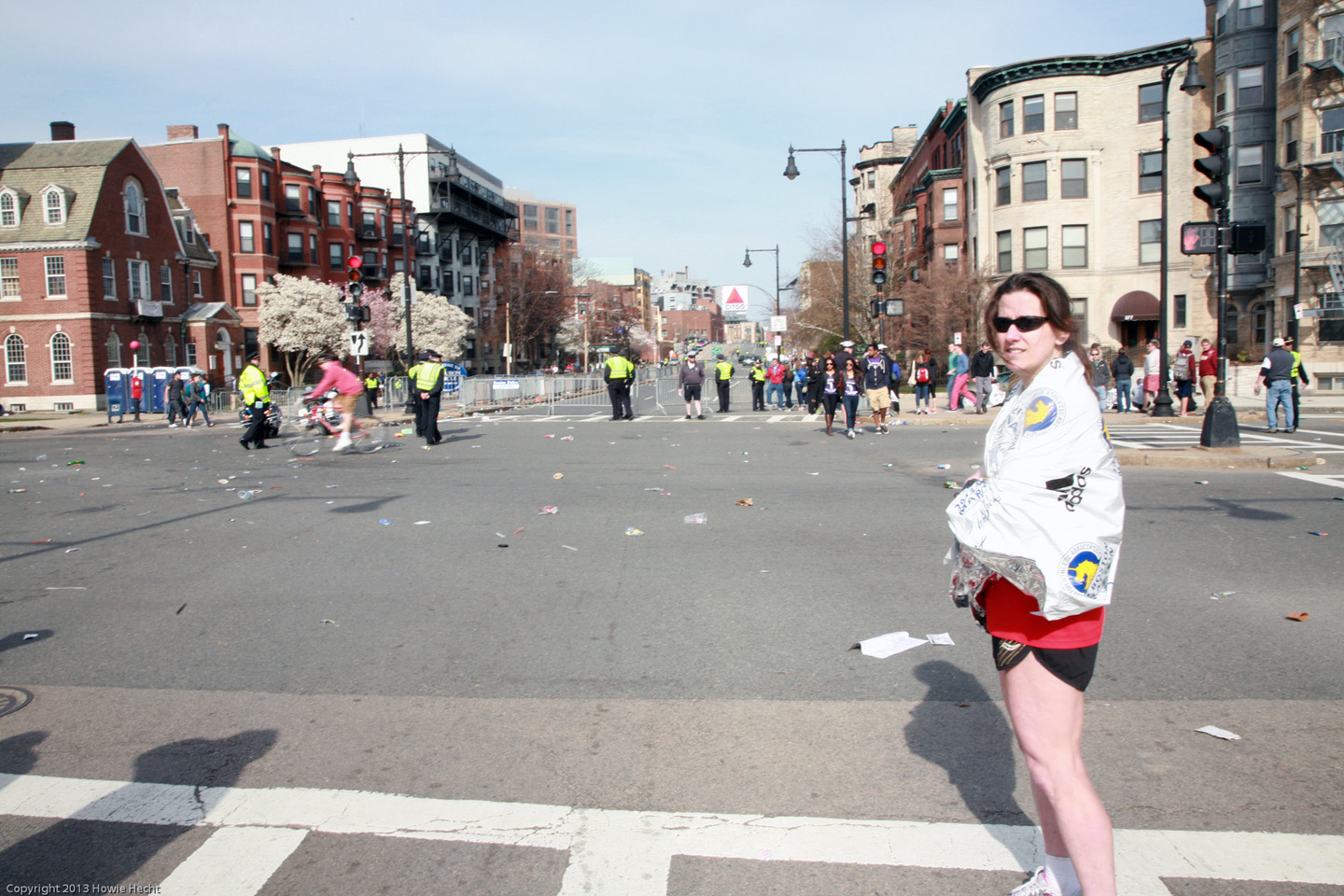
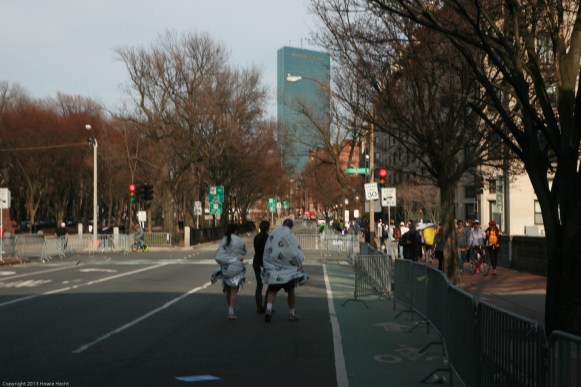
You’ve all heard the saying, “You and what army?”  Well, it’s THAT army.  The one at mile 24.8, setting up metal gates, standing in front of them, police cars flashing, a medical tent with chairs and Vaseline, jugs of water, mylar blankets in a box.  The Citgo Sign is in front of us.  We’re at mile 24.8 in a 26.2 mile race, and we’re stopped.

Mile 24:8:  4:59:40.

I sit.  Am I really not going to finish? What happened? Are people hurt? Where do we go? Is there food? I huddle, try to get out of the wind.

I put my head down.  I think, I raised $10,000 and couldn’t finish this race.  I couldn’t even finish the race. I meant to, I tried, and couldn’t.  What is pride? What is determination? What is my side of the deal?  What will I tell people?

A medical volunteer kneels.  “Are you OK?” he asks, and my eyes are big and wet and I say, “What would happen if I went around those gates? Could I keep going? Could I get to the finish myself? Would anybody stop me? I want to finish.”

He says, kindly, “You are finished.  It’s over.”

boston3

Photo by Howie Hecht

What happens next involves five hours of confusion.  On my person I have a leftover salt tablet in a baggie and an albuterol inhaler, both stuck in the back of my bra.  No money, no cell phone, no car key, no food.  I’ve just run 24.8 miles, and I don’t know what to do.

A woman sits next to me, tells me she’s Sarah, and she is a nurse, is there anything she can do?  I repeat my question, “Do you think I can finish? Do you think I can finish the race?”  I am teary and sniffling.  She lets me use her cell phone to try Karen and Mike; nobody has reception.

What’s next?

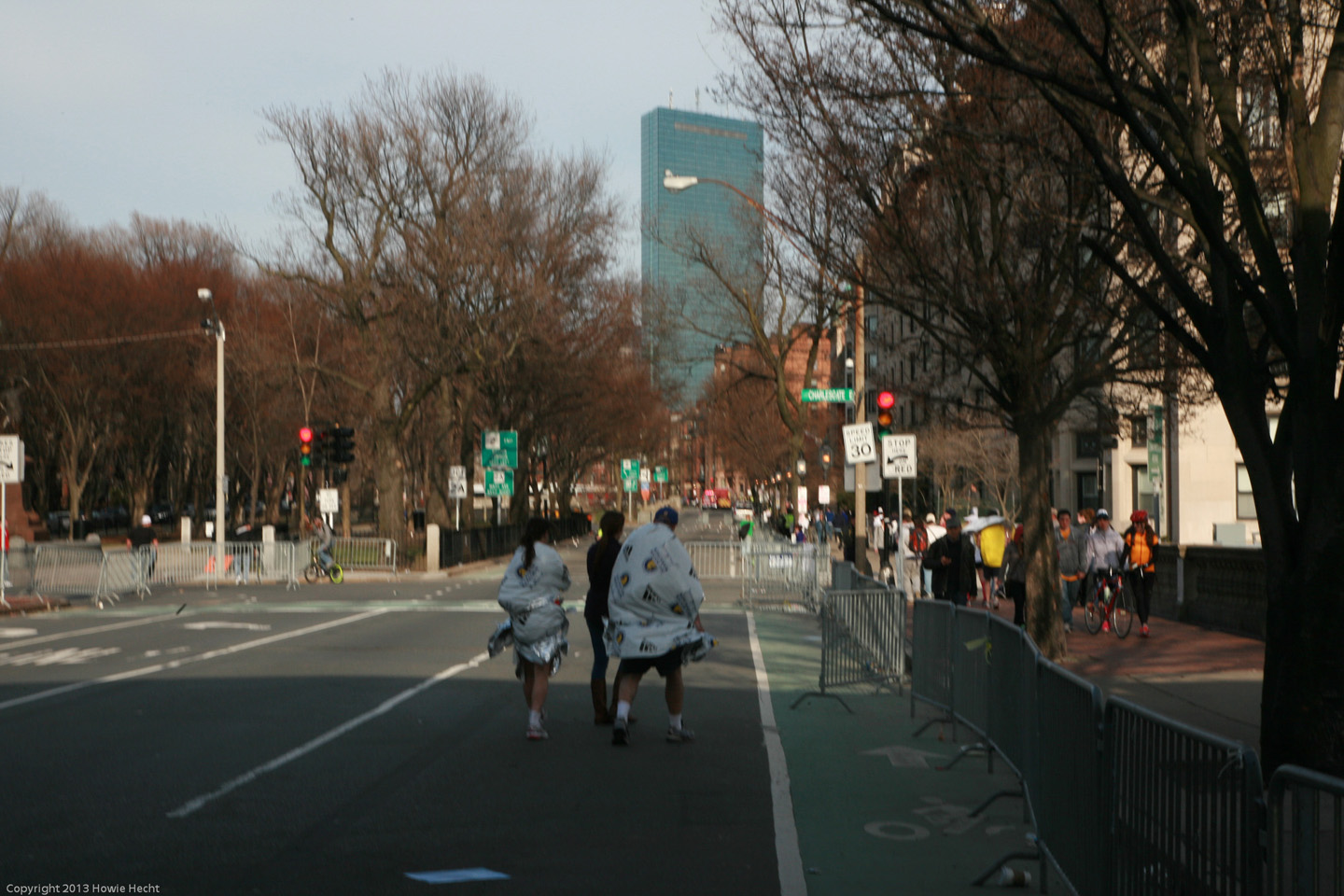
For two hours, we follow conflicting instructions, walk several miles, try to find a bus to some official place.  Sarah and her boyfriend Howie stay with Matt, another stymied runner at 40K, and me. They help us navigate the streets, wrap mylar around us, and let us use their phones.
boston2

Photo by Howie Hecht

We straggle to a bus that brings us to a secure lockdown on the Boston Common, surrounded by SWAT teams and the National Guard.  A paramedic gives me a yellow marathon jacket, says he doesn’t like the looks of me.  I race Sarah’s dying phone battery to text Karen, who pecks back that Mimi and Lisa are looking for me, and the Public Health people let them in the area.

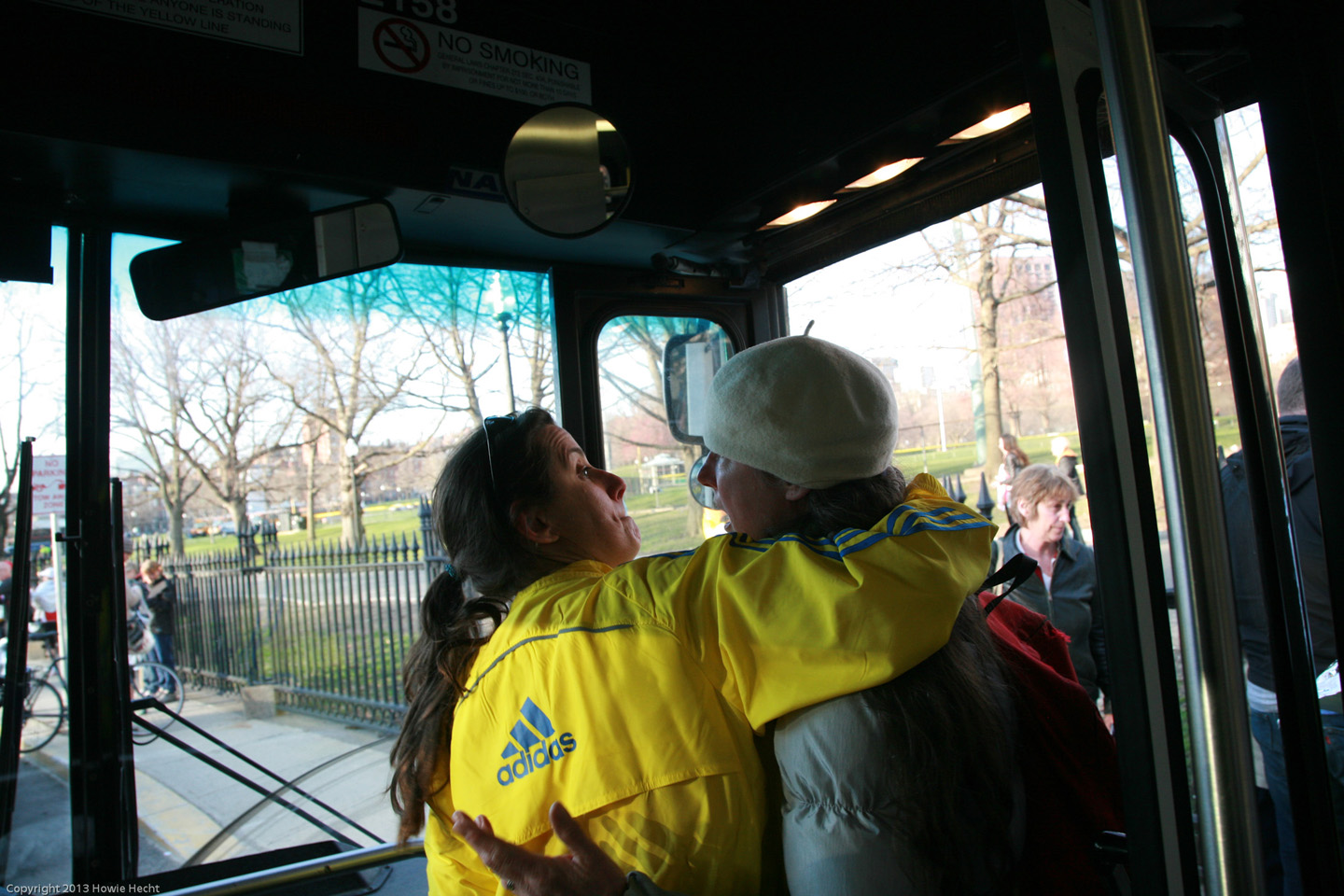
 I throw my arms around them when I see them at the door of the bus.

boston1

Ellen, left, hugs her sister-in-law, Mimi Quigley.  Photo by Howie Hecht

At Mile 16, when I told Karen I would never do this again, what did I mean?  As of this writing, I’ve raised $10,050 – over ten thousand dollars – for a local organization that provides services to the blind, the visually impaired, the brain injured, the developmentally disabled – those who need help and have no other means of getting it.  Over four years, that is $27,234, all by running this race.

That’s the end of my story.  It’s a strange one that I read aloud as I type; now my voice chokes and I stop to wipe my eyes.  I’m safe.  My family is safe.  I ran 24.8 miles before I couldn’t run anymore.   An eight-year-old boy died.  People lost limbs to a bomb.  I’ve no right to bitch about not finishing a race.

I have a yellow jacket, the phone number of a nurse named Sarah in Brookline who seems destined to be my new friend, a couple of duct-taped mylar blankets, and hundreds of emails from all of you, with one that ends, “It is still a victory.”

I like that.  Victory.  Not for all of us, true, but to think about crossing the start in Hopkinton again, in the memory and honor of those who would cheer us on again, if they could? That’s victory.

I hope I did what you asked.

I hope I made you proud.

— Ellen

boston - family

Ellen, her husband, Mike, and their children Ben, 10, and Sarah, 6