10 signs life has returned to normal

By Heather Cass
Publications & Design Coordinator, Penn State Behrend

As a staff member who works at the college year round, I can tell you that the summer months are peaceful and serene.

At first.

But after a few weeks, the novelty of a great parking space wears off and you realize that no Bruno’s or Elements café (both close in summer) means no morning Starbucks and the empty pathways become a little too peaceful and campus starts to feel kind of lonely.

Summer is a nice reprieve, but it’s truly wonderful and exciting when students and faculty members return. Suffice to say we missed you.

We went out today in search of 10 signs that life has returned to normal on campus:
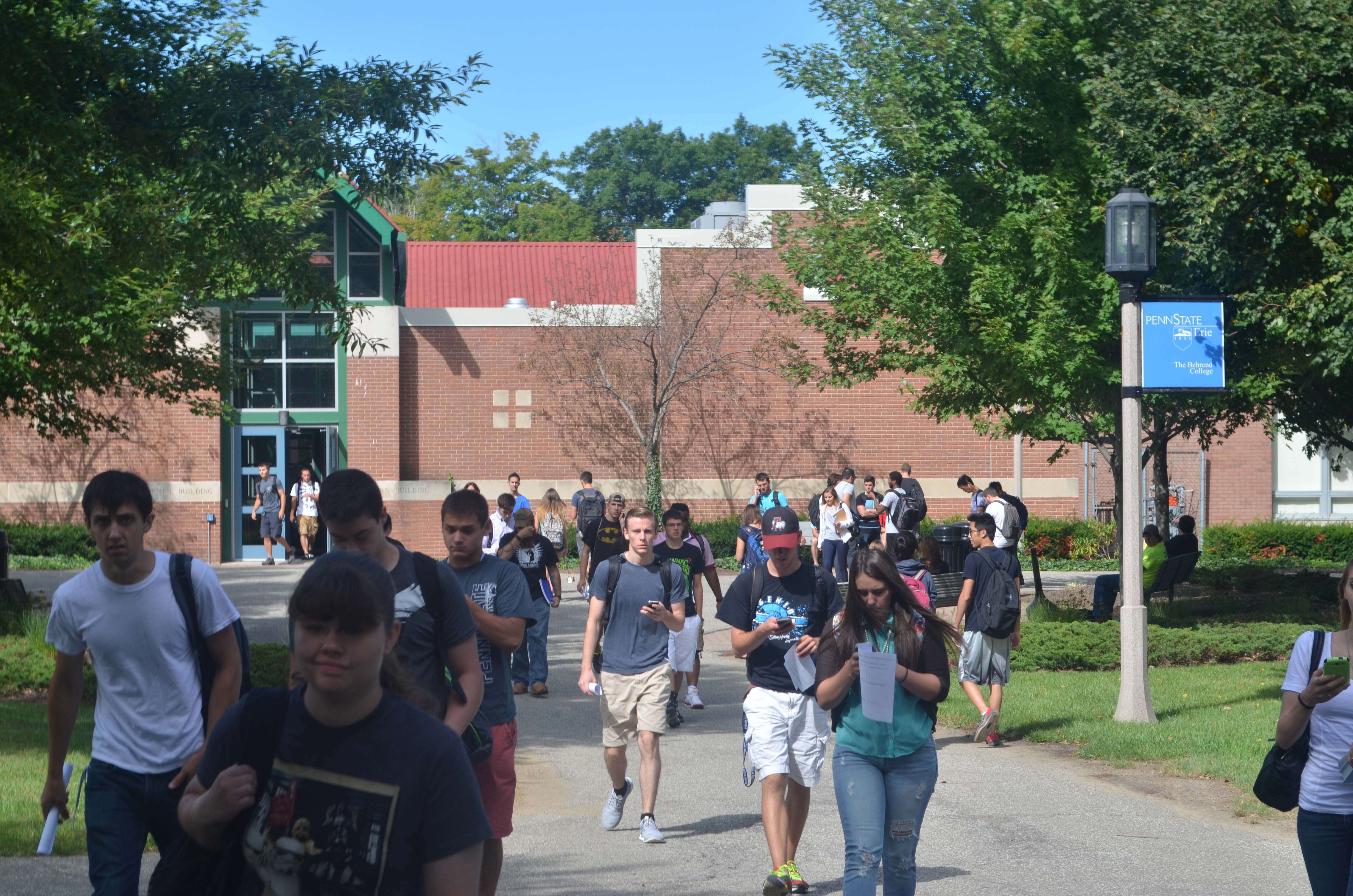
DSC_1798

1. Foot traffic.The pathways around campus are full at class change (and 65% of students are looking at their digital devices while they walk. No judgment here — I’m the one you see walking around with my nose buried in my Kindle, but sometimes it’s nice to look around, too. We have a beautiful campus).
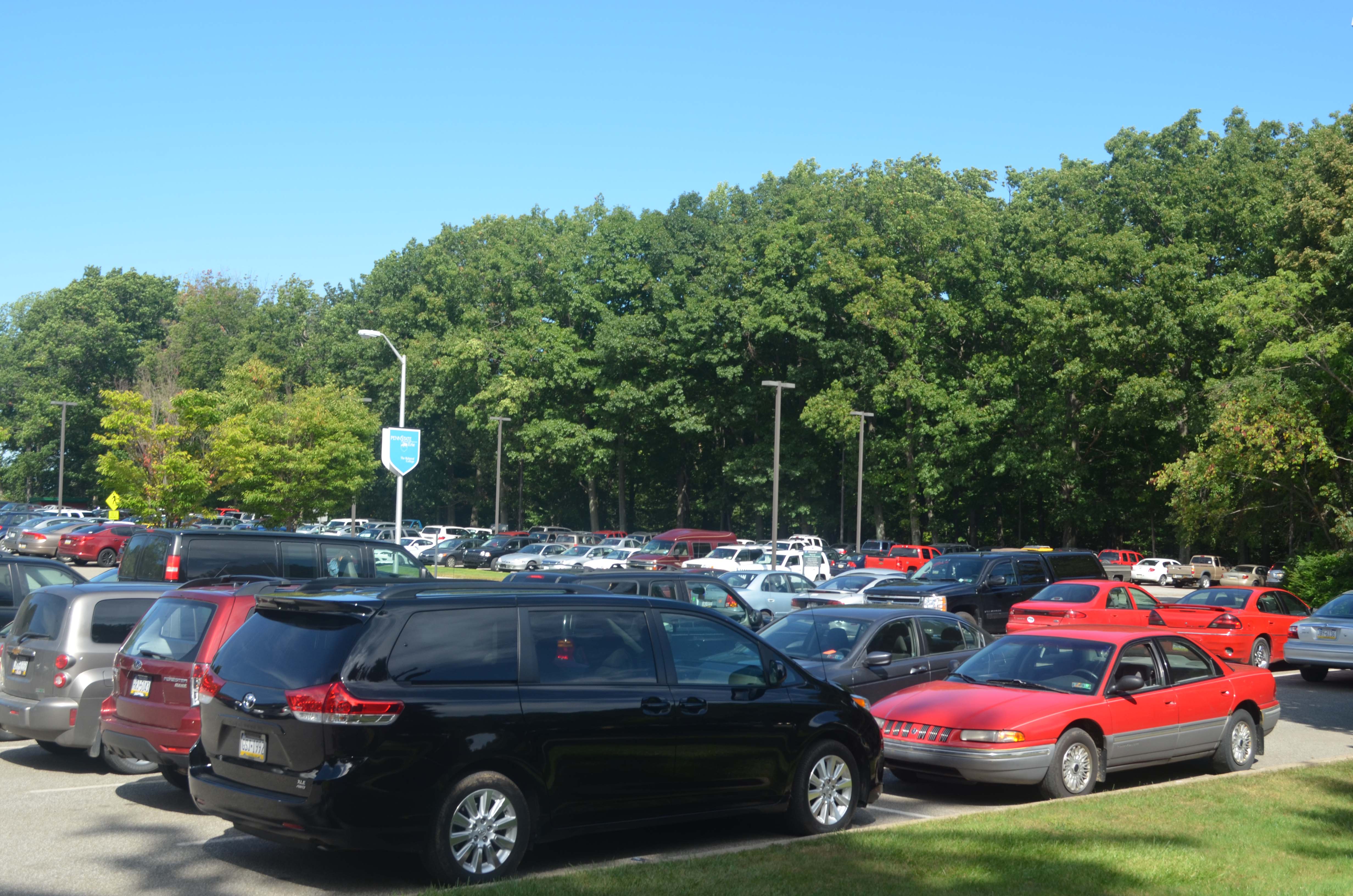
DSC_1805

2. Nearly filled parking lots. (So much for always finding a spot in Reed. It’s OK, though. I don’t mind walking a little farther. It’s does a body good. Now, come February….)
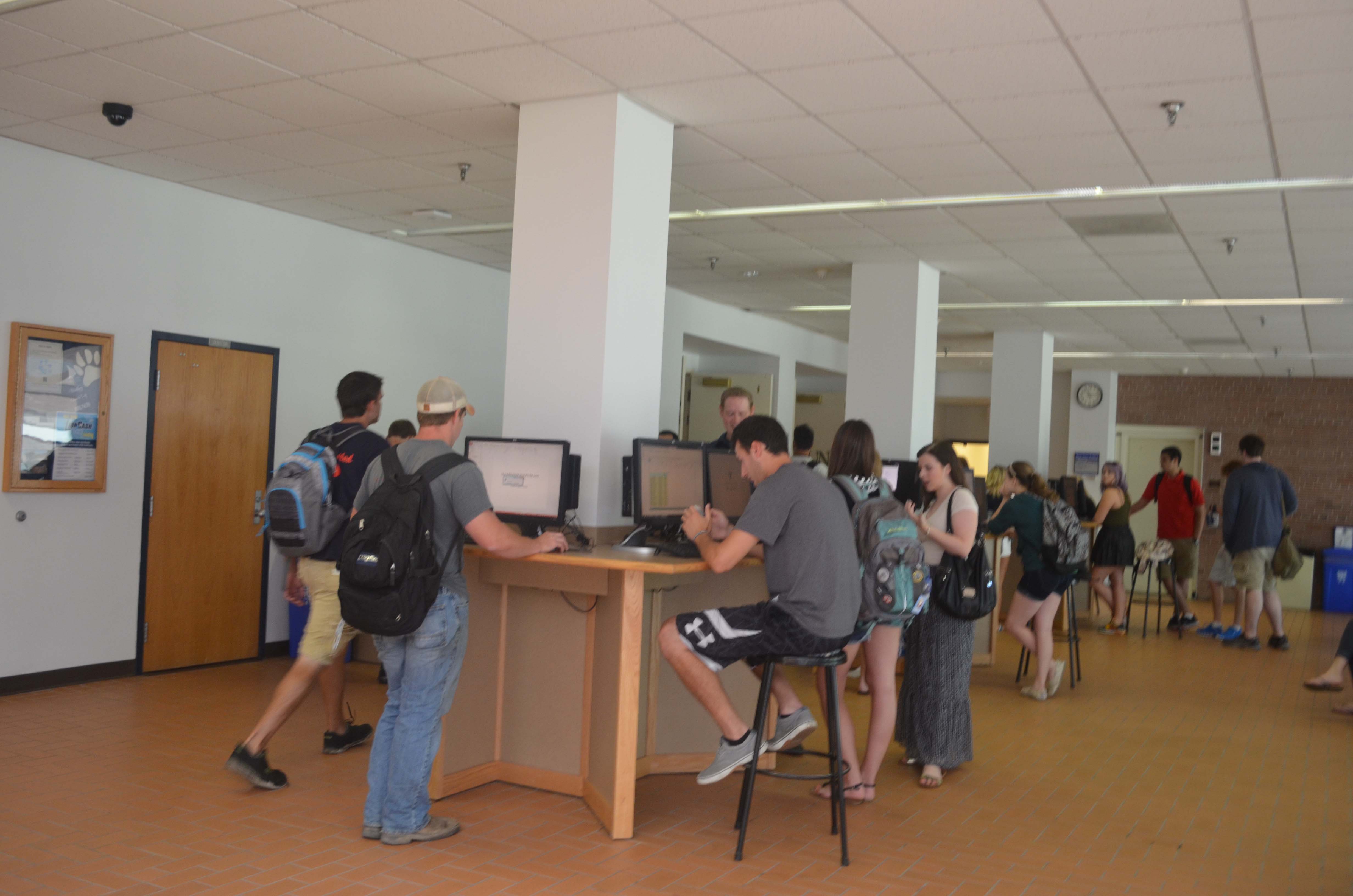
DSC_1820

3. A full house outside of Bruno’s and at nearly every student work station around campus.
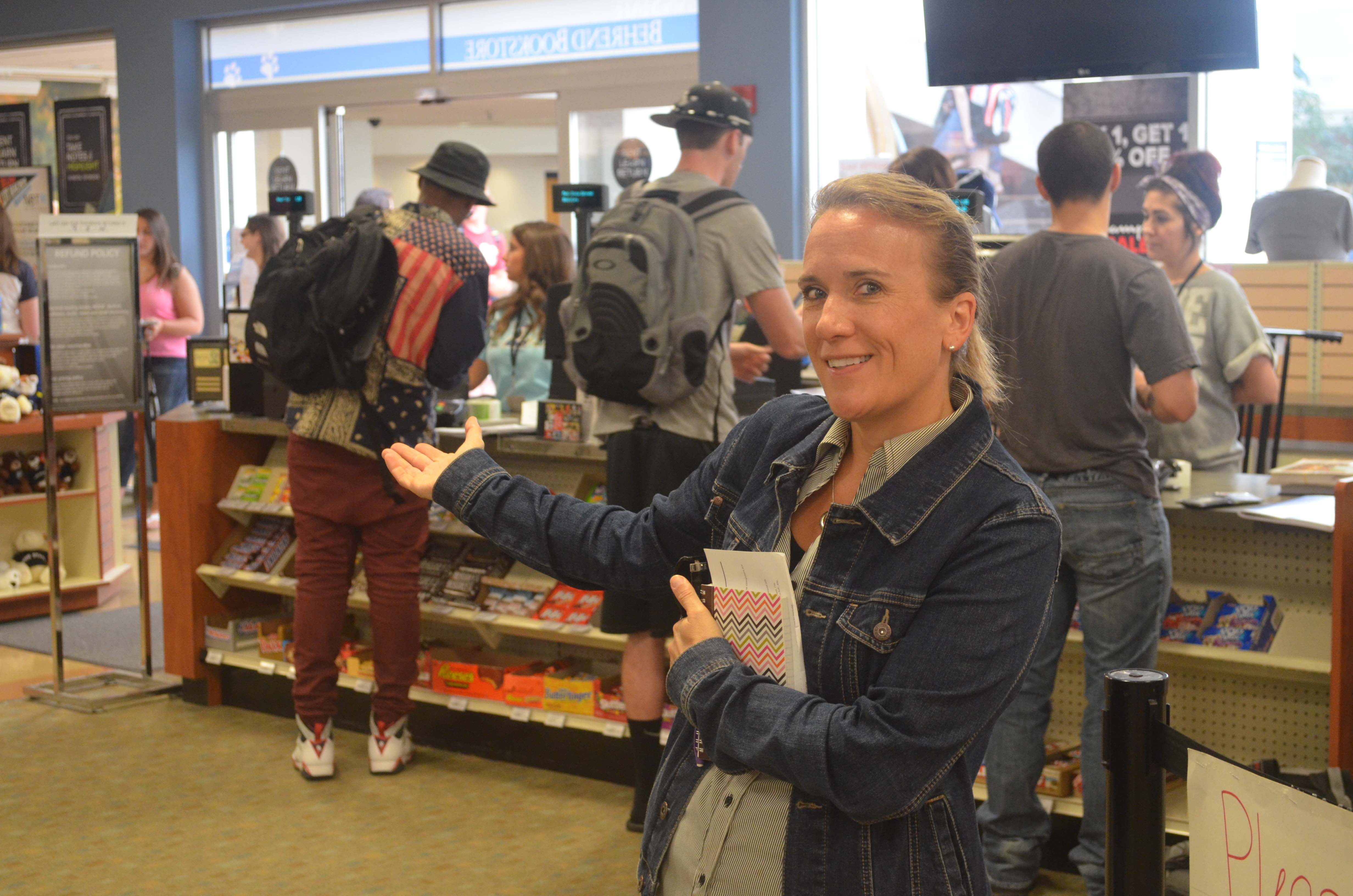
DSC_1817

4. Customers (and three registers open) at the book store.

BTW — that’s me up there in that photo. See that smile? It’s genuine. We’re all quite happy to have you back. See that notebook? I’m almost always carrying one because I never know when I’ll find a story. If you’ve got one to tell, stop me and chat me up.

DSC_1832

5. Paws’ STARBUCKS is open again. STARBUCKS is open again. STARBUCKS is open again. STARBUCKS IS OPEN AGAIN.  (What? Me? Overcaffeinated? Maybe…because STARBUCKS IS OPEN AGAIN! Cue the angels singing).
DSC_1823

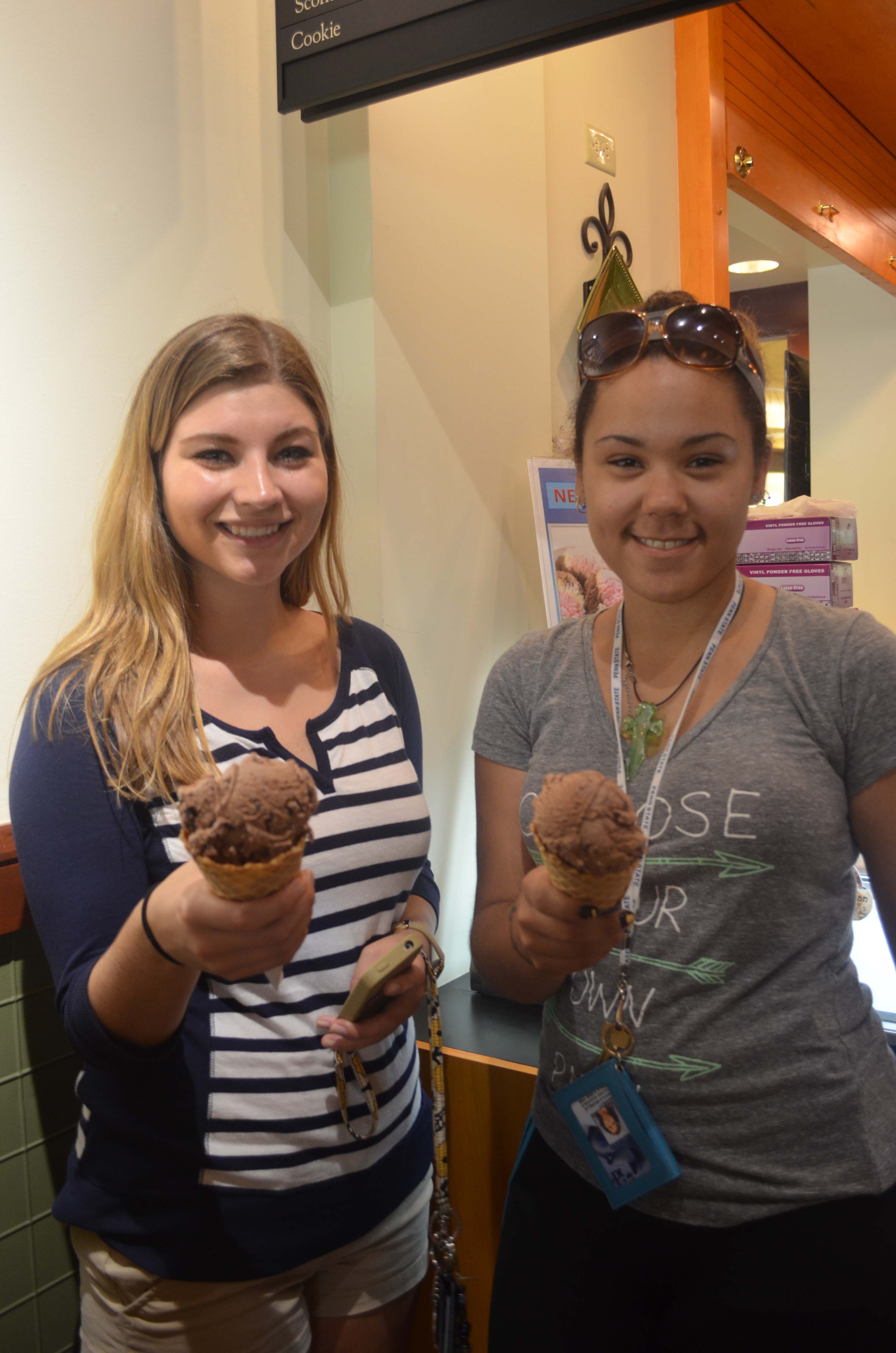
6. Paws is scooping Berkey’s again. I scream…you scream…we all scream for ice cream, but you know what? They don’t sell it in the summer. (Doesn’t that just seem cruel?)

DSC_1833

7. Student organizations are handing out free food (and other stuff). Fact: If you leave college without 4 Frisbees, 12 reusable shopping bags, 25 free T-shirts and 15 extra pounds, you didn’t do it right.

DSC_1828

8. Bruno’s is open again, which means we can get our chicken wrap fix.

DSC_1840

9. There are people in the library again….lots of them. (I guess this means I’ll have to start whispering in the library again).
DSC_1804

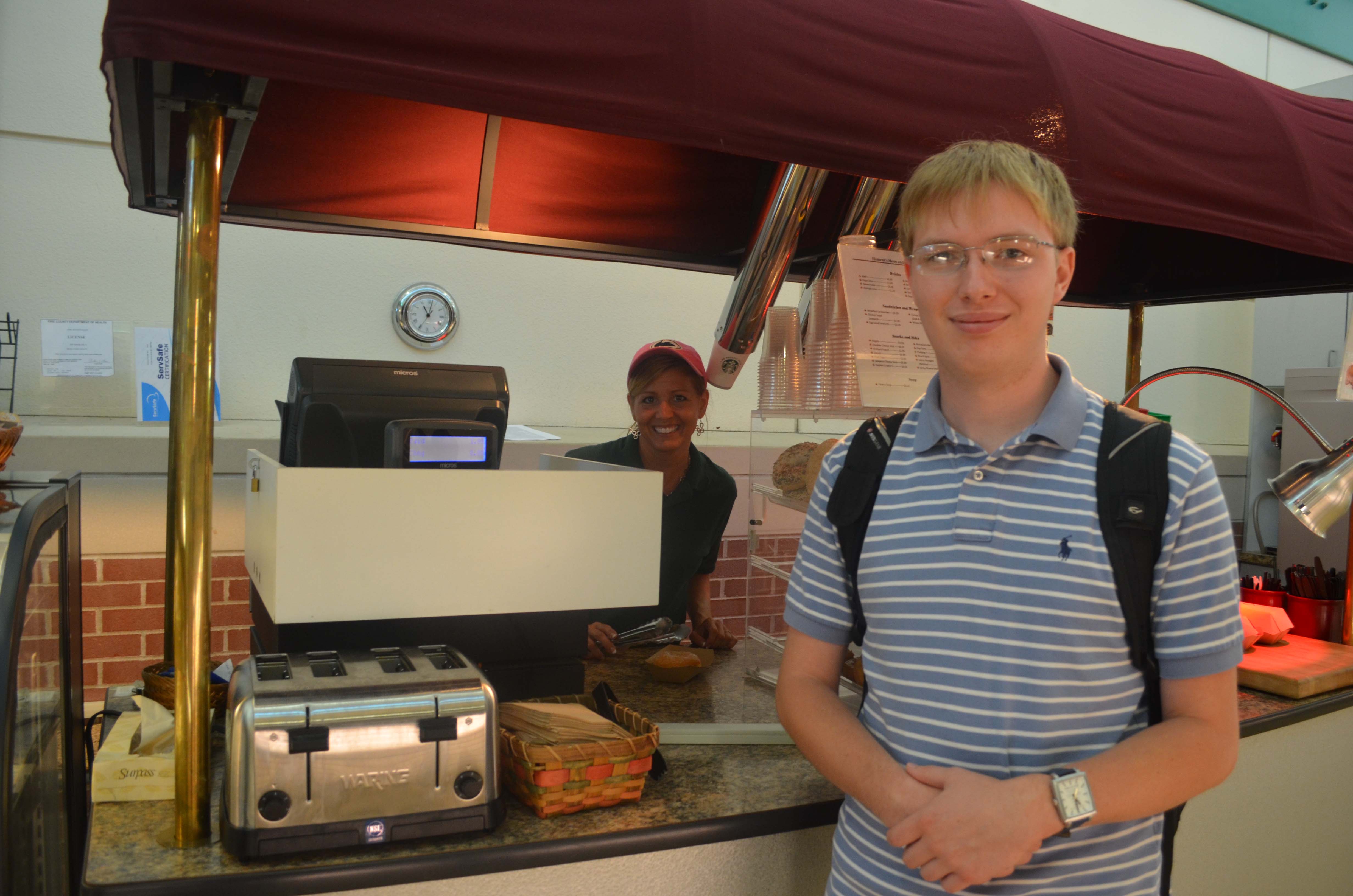
10. Elements Café is open. You know they sell STARBUCKS coffee, right?

Welcome home, everyone! Looking forward to another great year!



International internship leads to amazing experiences for Behrend student

By Heather Cass
Publications & Design Coordinator, Penn State Behrend

nico at bull running

Nico Carbo’s heart beat wildly as he stood on a cobblestone street in Pamplona, Spain, waiting for the sound of hooves and the roar of the crowd gathered behind the barricades. Dressed in the traditional garb—white pants and shirt, red bandanna and a red scarf tied around his waist—Carbo’s primary concern was staying on his feet.

“All I could think was: Don’t fall or you’re done for,” he said.

A 1,500-pound running bull doesn’t care what is in its path. It’s tempting fate, then, to step out and run in front of it. But that’s sort of the point at the annual running of the bulls in Spain, which began as a way to move bulls from Pamplona’s corral to its bullfighting arena and became an annual show of bravado by daredevil young men.

Today, thousands of participants from all over the world dash through the streets trailed by charging bulls each morning of the St. Fermin Festival, which is held annually July 7-14.

Among the runners this year was Carbo, a junior International Business and Marketing major, who is interning as the community manager at EME Catedral Hotel, a five-star boutique hotel in Seville, Spain.

Carbo ran with the bulls not just once, but twice – taking a jog with the snorting half-ton animals on July 7 and 8.

I met Carbo in late April when I interviewed him about a research project he is working on (coming in the next issue of Behrend magazine) and that’s when he told me he had an internship in Spain and he intended to run with the bulls while he was there. Well, I couldn’t let that story go untold, so I emailed Carbo last week to find out how it went.

Where did you run?

I ran with the bulls in Pamplona. We started on calle Santo Domingo.

Is it just men that run? Are women allowed to run?

It is mostly young men, but women are allowed. On the two days I ran, I only saw two women.

How far is the run?

It is 820 meters (roughly a half mile), and the entire thing lasts less than five minutes. I wanted to wait until I saw the bulls before I started running.

How many bulls are there?

They say there are six, but there are actually ten. They initially let out eight bulls first and then there are two that are sent after them to push through any bulls that might have gotten separated from the pack.

How fast was the pace of the run?

The bulls are very fast. It is impossible to run with them the entire time. I ran in front of them for about 20 meters before I had to get out of the way. The bulls get to the arena in about three minutes.

What was the experience like?

I would describe it as beautiful insanity, if that makes sense. I hardly slept the night before because everyone was partying in the streets until daylight.

Were you ever frightened?

Yes, and anxious. The runners do a traditional chant to an image of San Fermin three times before they release the bulls at 8 a.m. By then, my heart was beating very fast. But once I heard the rocket go off (signaling that the bulls have been released), my sole goal was to run and stay alive.

Did you worry about falling?

Yes. There are a lot of people who run and a lot of them are drunk. There are also people who trip and end up pushing you, so I was concerned about that, too. The first day two people fell right in front of me. I was able to jump over the first one and go around the second one. On the second day, a guy in front of me was recording on his phone, and he dropped it. He bent over to pick it up and almost got gored in the head by a bull.

What has your internship experience been like so far?

My colleagues are very friendly and it’s a great experience to work with people internationally. Even though I work in Spain, I work with many French people.

What’s next on your bucket list of things to do in Spain?

I want to go to La Tomatina, which is a tomato festival in Valencia, Spain. It’s basically a giant tomato fight.

Sounds messy, but much safer than trying to outrun a pack of angry bulls.

Here’s a video Carbo sent of the end of the run, shortly after entering the stadium:

Behrend alumna reaches milestone with release of first book

Slomski2

By Steve Orbanek
Marketing Communications Specialist, Penn State Behrend

Author Heather A. Slomski ‘03, a Penn State Erie, The Behrend College, alumna, always knew that she wanted to write.

She’s been drawn to stories—both reading and writing them—ever since she was a child, and so it makes sense that her son, 19-month-old Oscar, is turning out to be a voracious reader himself.

Slomski, who earned her B.A. in English with an emphasis in Creative Writing in 2003, and her husband, Vincent Reusch, spend most of Oscar’s waking hours engrossed in children’s books.

“It’s one of the best parts about being a parent,” Slomski says.

Publishing a book herself was a goal that was always driving Slomski, who has had stories published in TriQuarterly, American Letters & Commentary, Columbia: A Journal of Literature & Art, The Normal School, and other journals.

Mission accomplished.

Her crowning achievement comes this fall. That’s when her first book, The Lovers Set Down Their Spoons, will be released from the University of Iowa Press. The book, is a collection of fifteen short stories, was a labor of love for Slomski.

LoversShe worked on it while pursuing her M.F.A. at Western Michigan University and then afterward when she held the Axton Fellowship in Fiction at the University of Louisville.

“Not everything I wrote fit together,” says Slomski, who also is an adjunct professor at Concordia College. “It actually took me a long time to feel as if I had a finished manuscript.”

Yet, when it was finished, Slomski says she had a strong sense of accomplishment. The book has already made waves, receiving the 2014 Iowa Short Fiction Award, a national award given to a first collection of fiction in English and administered through the Iowa Writers’ Workshop.

“It’s really rewarding because I feel good about the individual stories and the collection, but I feel validated for it to be recognized and win this award,” Slomski says.

Slomski says her two favorite stories are the title story and the last story in the collection, “Before the Story Ends.”

“I like the title story a lot because it takes the structure of a play and kind of exists on the border of drama and fiction,” Slomski says. “The last story has some magic to it, and it’s also an exploration of loss, and I felt I achieved something with that story. The two stories almost don’t fit in the same book, but they do. They have totally different tones but both deal with loss in a very different way. The title story actually ends up being about gaining something, which is, of course, the opposite of loss.”

Slomski has already begun work on her next project, The Starlight Ballroom, a novel that tells the fictional story of the lives and deaths of her paternal grandparents.

The Lovers Set Their Spoons is currently available for preorder at Amazon.com and can be purchased at this link.

About Heather A. Slomski

High School: McDowell High School, Erie

Education: Earned B.A. in English with an emphasis in Creative Writing from Penn State Behrend; earned M.F.A. in Creative Writing from Western Michigan University.

Fellowships and Awards: From 2008-2010, Slomski held the Axton Fellowship in Fiction at the University of Louisville, where she taught fiction and organized a two-day literary festival titled “The Story of Form.” She was awarded a 2013 Minnesota State Artist Initiative Grant, which afforded her travel money to spend six weeks in Krakow and take a course release from teaching. While there, she conducted research for her novel-in-progress, The Starlight Ballroom. She also was awarded the 2013 Minnesota Emerging Writers’ Grant, which allowed her to take a course release, so she could continue working on the novel.

Influences: Steven Millhauser, Lydia Davis, Charles Simic, Anne Carson, Angela Carter, Bruno Schulz

Favorite book as a child: “I would say the book I kept turning to was The Lion, The Witch and the Wardrobe because it has that mix of reality and the fantastic. As a child, and even as an adult, you just don’t question it and say ‘This could never happen,’ or ‘This is not how the world works.’”

Advice for aspiring writers: “Find a writing schedule—a time and a place where you can write, every day, if possible—and stick to it. Also read a lot. Continually seek out new authors to read, and take care not to overlook literature in translation, literary journals, or writers who publish with small presses.”

For more information, visit Slomski’s website at heatheraslomski.com.

Slom


Behrend faculty and staff recommended reading – Part II

By Heather Cass
Publications & Design Coordinator,
Penn State Behrend

382400_3947653647143_2114840972_n

Did you get through all those titles I gave you last week? No? Slacker! (Just kidding, of course). Break out your to-read list because I’ve got some more suggestions for you straight from lips, er, keyboards of the book-loving faculty and staff members at Penn State Behrend.

Without further ado, recommended summer reading part two:

Black Like Me by John Howard Griffin is one of the shortest and most powerful books I’ve ever read.  It was published fifty years ago, and I read it as a teenager and reread it five years ago.  It is nonfiction and tells how the author, through medication and dye, transformed himself into a black man to experience what it was like to be black in the south in the 1950s. It’s hard to believe how recent this history is.” — Dr. Eric Corty, associate director of the School of Humanities and Social Sciences and professor of psychology

“I’ll second Black Like Me. I read it several years ago and it really sticks with you. I use Ann Fadiman’s The Spirit Catches You and You Fall Down in class, and every time I read it I’m stuck by how well she captures both the culture clash of the new Hmong refugee and the western medical model’s failing. For fun, I’m reading the Outlander series by Diana Gabaldon. It consists of eight historical novels written about the Scottish Jacobite upraising and those who eventually immigrated to America. I’ve heard there is a TV series about it being filmed in Scotland now.” — Dr. Dawn Blasko, interim associate dean for Academic Affairs and associate professor of psychology

I recommend House of Breath , Come, The Restorer and Arcadio, all by William Goyen, who is considered in Europe to be one of the greatest writers America has ever produced. Ironically, he’s little known here. All his stories and novels are wonderful, but the books recommended are, in my opinion, his best three novels. The House of Breath was his first novel and Arcadio was his last (published posthumously). Enjoy. — George Looney, professor of English and creative writing

I would recommend The Moon is a Harsh Mistress by Robert A. Heinlein. Not only is he one of the best science fiction writers ever and not only did he receive his fourth Hugo Award for this novel, but this book is really imaginative and captivating. Heinlein depicts an entire society on the moon (and its rebellion against Earth) several years before we had even step foot there. This novel is science fiction at its best. — Dr. Amy Carney, assistant professor of history

I found The Presidents Club by Nancy Gibbs and Michael Duffy to be inspiring. It’s about how current and former presidents have cooperated through time to accomplish great things.  For fiction, I recommend Behind the Beautiful Forevers by Katherine Boo. It’s a great story about “life, death, and hope in the Mumbai undercity.” — Dr. Greg Filbeck, professor of finance

I’ll recommend One Summer: America in 1927 by Bill Bryson. Bryson is a classic storyteller known for his bestsellers such as A Walk in the Woods and A Really Short History of Nearly Everything, but One Summer is the book we all should have all read in some high school or college history class. It consists of juicy and amazingly true stories of Charles Lindbergh, Babe Ruth, Henry Ford, Calvin Coolidge (who seems to have been the worst President ever), and many others of that era. It’s fun and kind of makes you feel intellectually thin for not knowing more history. — Dr. Darren Williams, professor of physics and astronomy

I recently discovered that British author Mary Stewart (The Crystal Cave, among many others) died this year at age 97. Her suspense and romance novels featured independent females in exotic locales and they enthralled me as a teenager. I’ve been picking them up at yard sales for years and want to re-read them this summer. She also wrote several Arthurian novels that were very popular. — Jane Ingold, associate librarian at Lilley Library

I just finished Delivering Happiness a Path to Profits, Passion, and Purpose by Tony Hsieh who is the CEO of Zappos. I had heard that Zappos was a tremendous company, and I like inspirational books. It was good for me to read something out of my field, too. It caused me to do a lot thinking outside of the (shoe) box. — Ann Quinn, lecturer in biology

Mr. Spaceman by Pulitzer Prize winning author Robert Olen Butler is an intensely clever, funny, and poignant book.  The prose is spare and lovely.  The plot weaves historical events from the flight of the Kitty Hawk through the Vietnam War into a larger, compelling story about Desi, the spaceman of the title, his wife, Edna Bradshaw, their cat, and a bus of twelve people he abducts. — Ruth Pflueger, director of the Learning Resource Center and lecturer in English

The Atomic Chef by Steven Casey contains true stories of human error and things that go really wrong and why, from switching embryos to getting locked in an ATM room. I actually use this as a textbook in my upper-level human factors psychology classes. The Zen of Zombie Better Living Through the Undead by Scott Kenemore is a fun and easy read. It is kind of like Don’t Sweat the Small Stuff but from a zombie’s point of view. The Sword of Truth is the first in a large fantasy series by Terry Goodkind. And, finally, 1408 by Stephen King is an interesting, shorter horror-type story. They made it into a movie a few years ago, but it didn’t do the book justice. — Dr. Heather Lum, research associate in psychology


Secret Lives of Faculty Members: Dr. Paul Becker

By Heather Cass

Publications & Design Coordinator, Penn State Behrend

There’s much more to Penn State Behrend’s faculty and staff members than what you see on campus. In this occasional series, we’ll take a look at some of the interesting, unconventional, and inspiring things that members of our Behrend community do in their free time.

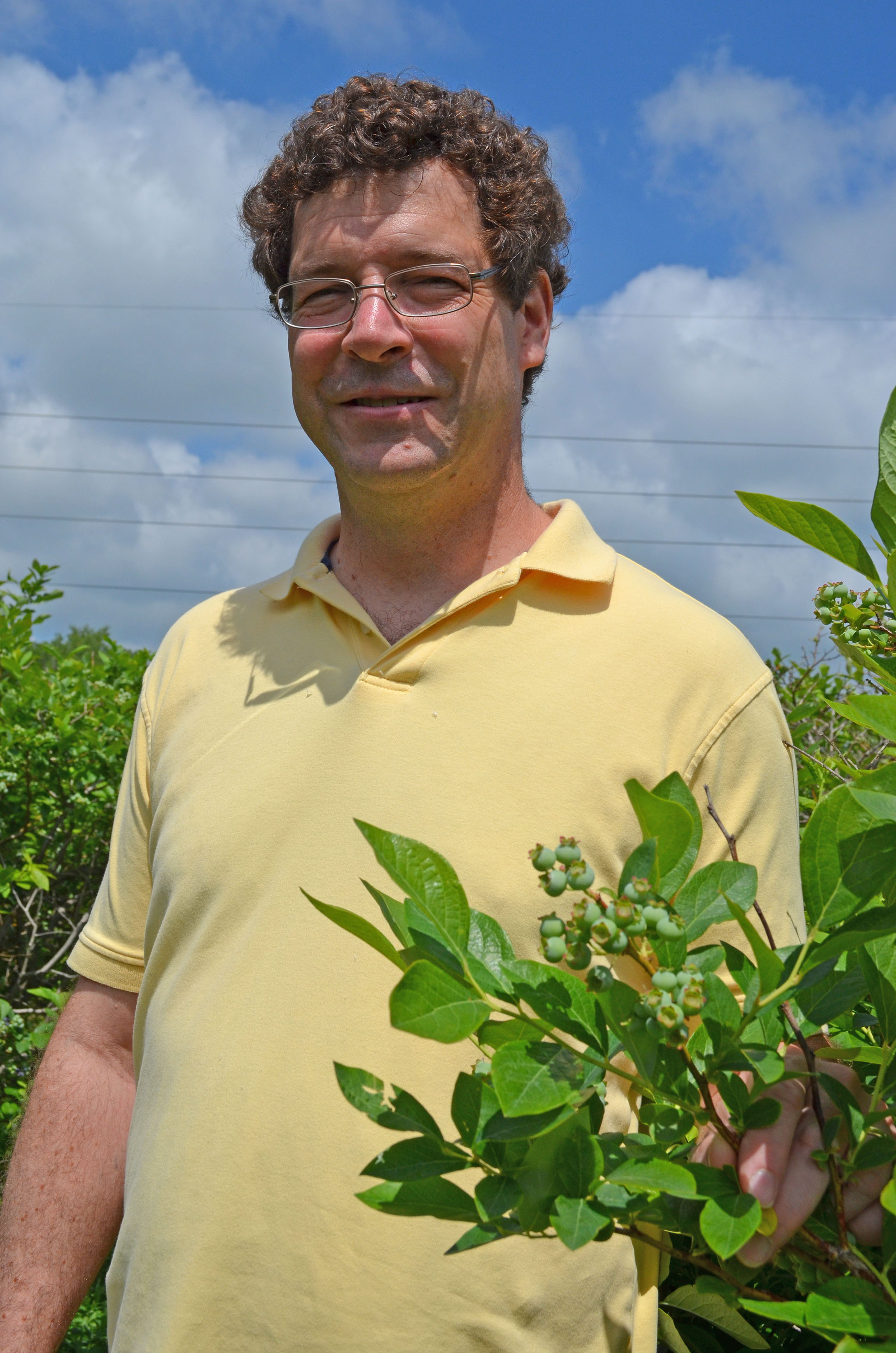
Paul Becker Blueberry Farm

NAME: Dr. Paul Becker

DAY JOB: Associate professor of mathematics, Penn State Behrend

HOBBY/SECOND JOB: Blueberry farmer

FARM: Blue Confusion blueberry farm, 8911 Old French Road

Three seasons of the year, Dr. Paul Becker teaches calculus and algebra and other mathematics courses at Penn State Behrend. Come summer, however, he’s in the blueberry business.

He didn’t mean to be. The job sort of came with the property that he and his wife, Sharon, bought eight years ago on Old French Road in Summit Township.

“When we bought the house they told us there was a blueberry farm in back,” he said. “But it was March and there was three feet of snow on the ground. We had no idea it was as large as it was.”

When all the snow melted, they discovered 866 blueberry bushes.

Customers begged them to keep the farm open.

“Some families have been picking here for almost 40 years,” he said. “We have one family that drives from Cleveland every summer to carry on the blueberry picking tradition.”

Becker and his wife consulted with the Penn State Extension Center who taught them how to prune, fertilize, and care for the five-acre farm, which they named Blue Confusion.

When the berries ripen in late July, the public is invited to pick their own baskets of berries. Becker, his wife, and their five-year-old son, Logan, work in a small shed out back, weighing the berries and collecting money.

Becker says selling is the easy part. The pruning, fertilizing, and mowing require more physical work.

“Pruning begins in early spring and goes until early summer,” he said. “And the mowing takes eight hours. I use the tractor between rows, but I have to use the push mower to get under each bush.”

Lest you think he might trade his faculty ID for barn boots and overalls, you should know it’s not a very lucrative business. Becker says they typically break even, but he’s not in it for the money.

“It’s a hobby, really,” he says.

HOW HE LIKES HIS BERRIES: “I like them fresh on top of a bowl of cornflakes,” Becker said. “And we make a lot of blueberry pancakes and muffins here, too.”

Paul Becker with son logan and dog bo

Becker with his son, Logan, and dog, Bo.

*** Do you have a suggestion for a candidate for a future Secret Lives of Faculty/Staff feature? Email hjc13 at psu.edu.  


In need of a new read? Check out these titles recommended by Behrend faculty and staff members – Part I

382400_3947653647143_2114840972_n

By Heather Cass
Publications & Design Coordinator,
Penn State Behrend

Ah…summer. Time to kick back with a good book. We asked some of the faculty and staff members at Penn State Behrend to share their suggestions for summer reading.

If, like me, you always forget which books you want to read in the future, try one of these strategies.

1. Make a list using the “note” feature on your smart phone or tablet, and you’ll always have your list with you when you’re browsing at the Lilley Library or out shopping.

Or…

2. Create a wish list at an online bookseller (I use Amazon) and add titles to your “to read” list when friends recommend them. It’s a convenient and easily-accessible way to keep track of books you want to read. (Tip: See if you can borrow the book through the Lilley Library before you purchase. I’m linking the books below to Amazon just so you can see the covers and read customer reviews, if you wish.)

OK….get your pencil/mouse/smartphone ready because you’re going to want to add a lot of these books to your list. I’m going to give you half the list today & the other half next Thursday, July 3).

I am finishing Donna Tartt’s The Secret History. A bit too much description of the sometimes drug-addled state of the protagonist, but a good summer read. Also discovered a very talented Sardinian writer, Michela Murgia. Her best known work, Accabadora, is translated into an excellent English version and is just haunting. — Dr. Sharon Dale, associate professor of art history

Life, Animated:  A Story of Sidekicks, Heroes, and Autism by Ron Suskind is on my summer reading list. I’ve heard that it is a wonderful story that provides a unique perspective into the growing population of people diagnosed on the autism spectrum. Oh, and it includes Disney references, so I’m happy. — Dr. Carrie Payne, coordinator for strategic proposal development.

Catching Fire: How Cooking Made Us Human by Richard Wrangham is an interesting look at what might possibly have led to humans being who we are today. Much evidence is given through prior anthropological work and cases. There’s not too much jargon and it’s easy to read. Also, Bad Monkey by Carl Hiaasen. It’s a very sarcastic and witty tale of a typical nature-loving protagonist versus an environmental destructive antagonist. — Dr. Mike Naber, lecturer in geosciences

I am reading The Secret Life of Pronouns: What Our Words Say About Us by social psychologist W. Pennebaker this summer.  This is a very insightful book on how “words… are like fingerprints… windows into people’s personalities.” — Dr. Carol Wilson, assistant professor of psychology

As one of Behrend’s resident sport fanatics, I’ll recommend Play Their Hearts Out by Sports Illustrated writer and Pulitzer Prize winner George Dohrmann. The non-fiction title chronicles Dohrmann’s eight years spent covering the grassroots AAU Basketball scene and the seedy nature of the sport. In the book, he details how coaches almost view their players as investments and reveals the questionable role that sneaker companies play in youth basketball. Whether you’re a sports fan or not, this tale of corruption, greed, and power makes for a must-read. — Steve Orbanek, marketing communications specialist.

Anything by Malcolm Gladwell (Tipping Point, Blink, Outliers). He is one of the most popular storytellers who brings a different flavor to social trends. Drive and A Whole New Mind are two of my favorites by author, Daniel Pink. I’d also recommend Emotional Intelligence and Focus by Daniel Goleman, who is a psychologist who has an amazing talent for explaining today’s wicked issues with psychological theories. Creativity, Inc., written by Pixar CEO Ed Catmull is an amazing book. And, finally, The Charisma Myth by Olivia Fox Cabane is a must-read for everyone. — Dr. Pelin Bicen, assistant professor of marketing

Redeployment by Phil Klay has received great reviews. It’s is a book of short stories by a former Marine who served in Iraq. Each story is written from the point of view of a different narrator – foot soldier, chaplain, foreign service officer, to name a few. The stories are compelling as they provide insight into the challenges and suffering of war from different perspectives. — Dr. Rick Hart, director, Lilley Library, who reminds us to “Think of the Lilley Library’s ‘Browsing Collection’ for your summer reading needs!”

I just finished The Goldfinch, Donna Tartt’s Pulitzer-Prize winning book about a 13-year-old boy who miraculously survives an accident that kills his mother and is abandoned by his father, only to be taken in by the family of a wealthy friend.  Don’t let the book’s bulk (2.1 pounds in hardcover) scare you off – The plot flies. — Chris Palattella, marketing communications coordinator

Empty Mansions by Bill Dedman.  This is a non-fiction book about Huguette Clark, an heiress to a huge fortune amassed by her father. Of course, all this money led to lots of family drama. Huguette lived the last twenty years of her life in a hospital while her two New York City luxury apartments, her mansion on the coast of California, and her country home in Connecticut sat empty, except for the property caretakers. Interestingly, I just read an NPR story that said many of Huguette’s belongings will soon be going to auction. — Dr. Mary-Ellen Madigan, senior director of enrollment management

That should get you through the week. 😉 I’ll post more next week — Thursday, July 3!


10 things I learned about survival at College for Kids

DSC_0851

By Heather Cass
Publications & Design Coordinator, Penn State Behrend

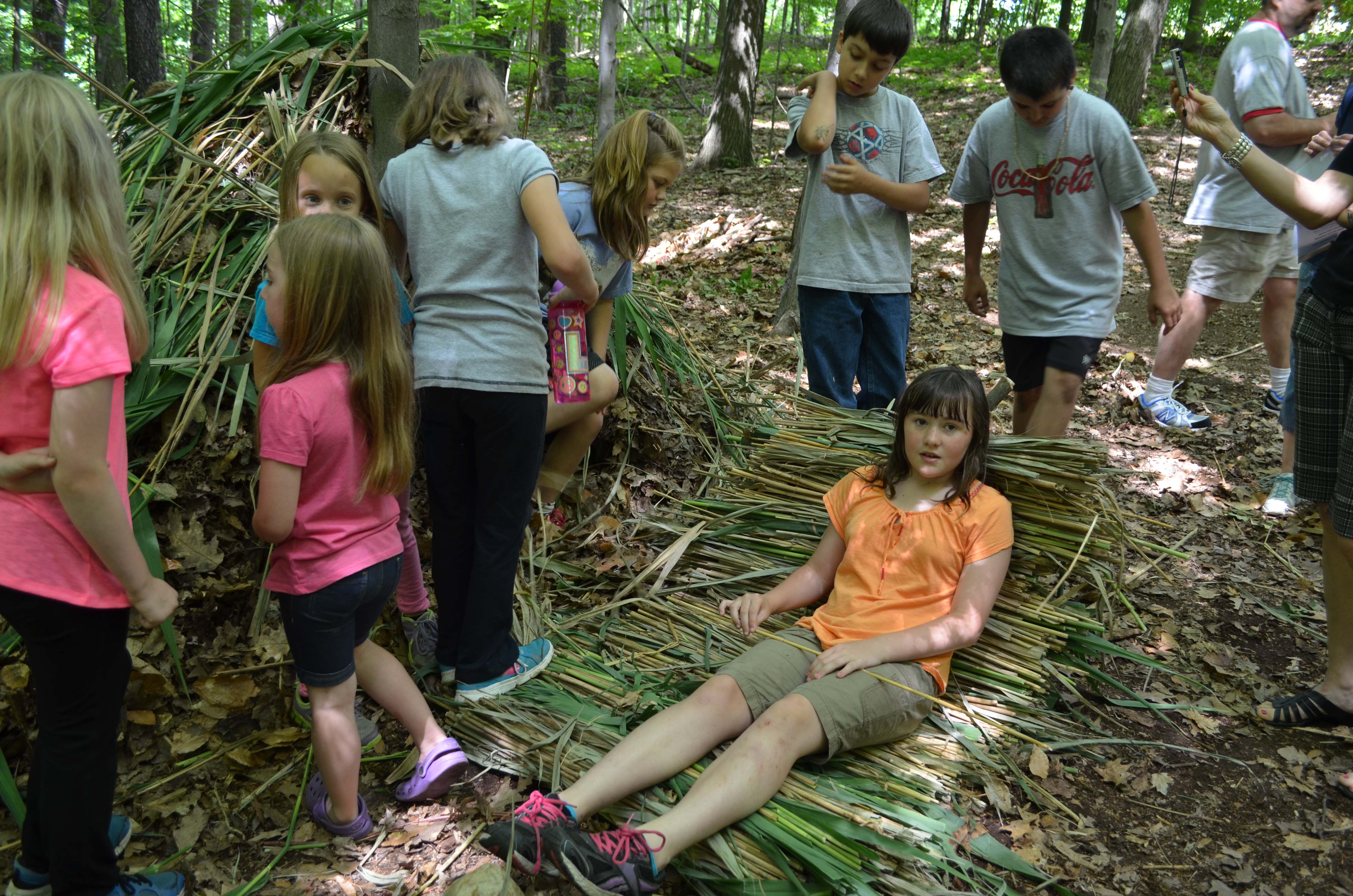
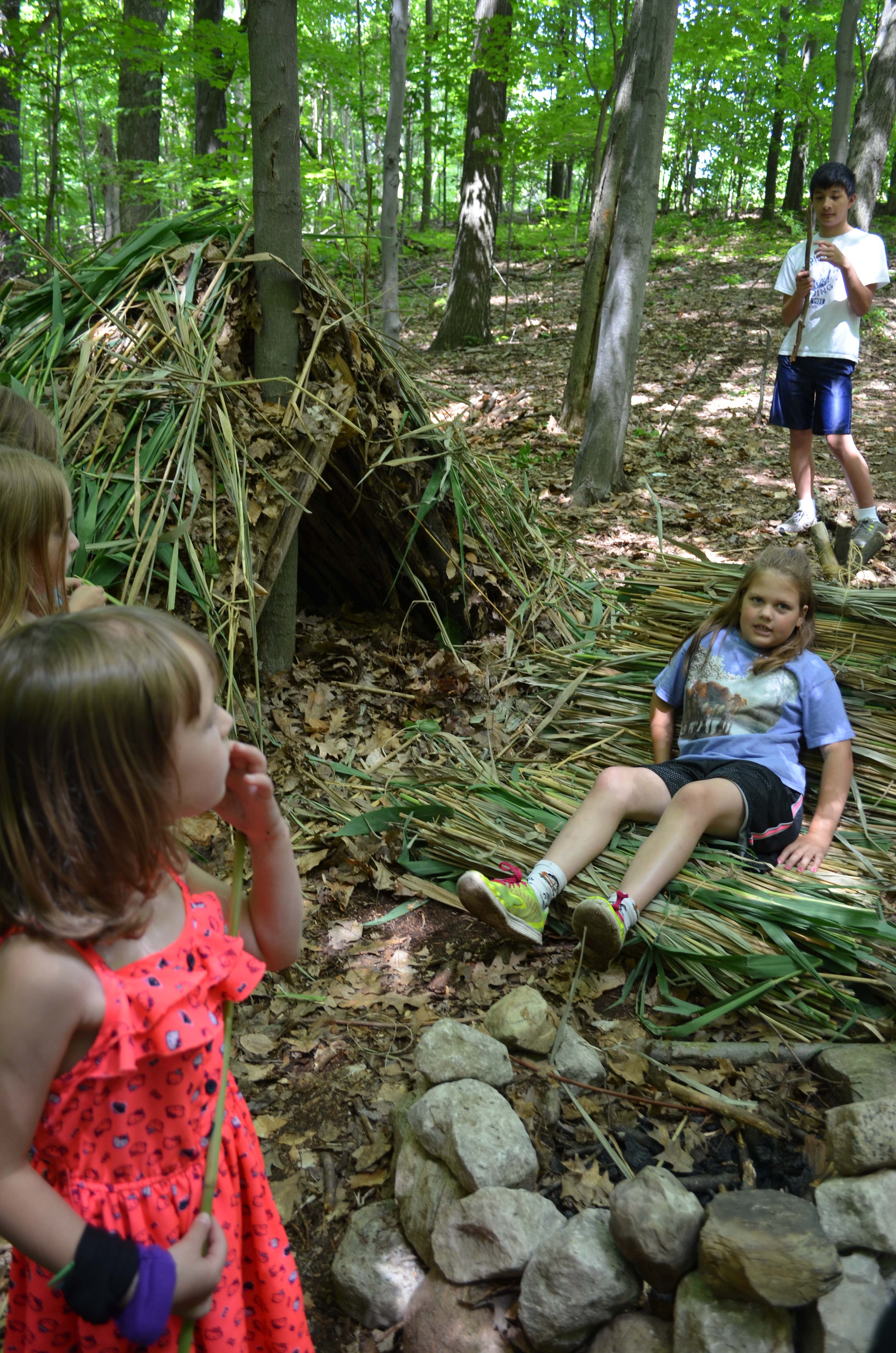
My daughter, Lauren, 10, spent last week making rope out of bark, building a fire with one match, foraging for edible plants, and creating a shelter with leaves, mud, sticks, and phragmites.

No, I didn’t drop her off in the woods, cackling “fend for yourself, baby girl.” (We’re only two weeks into summer break so I’m not that sick of my kids yet. Talk to me in mid-August, and I may sing a different tune). She attended “Surviving the Outback” class at Penn State Behrend’s College For Kids.

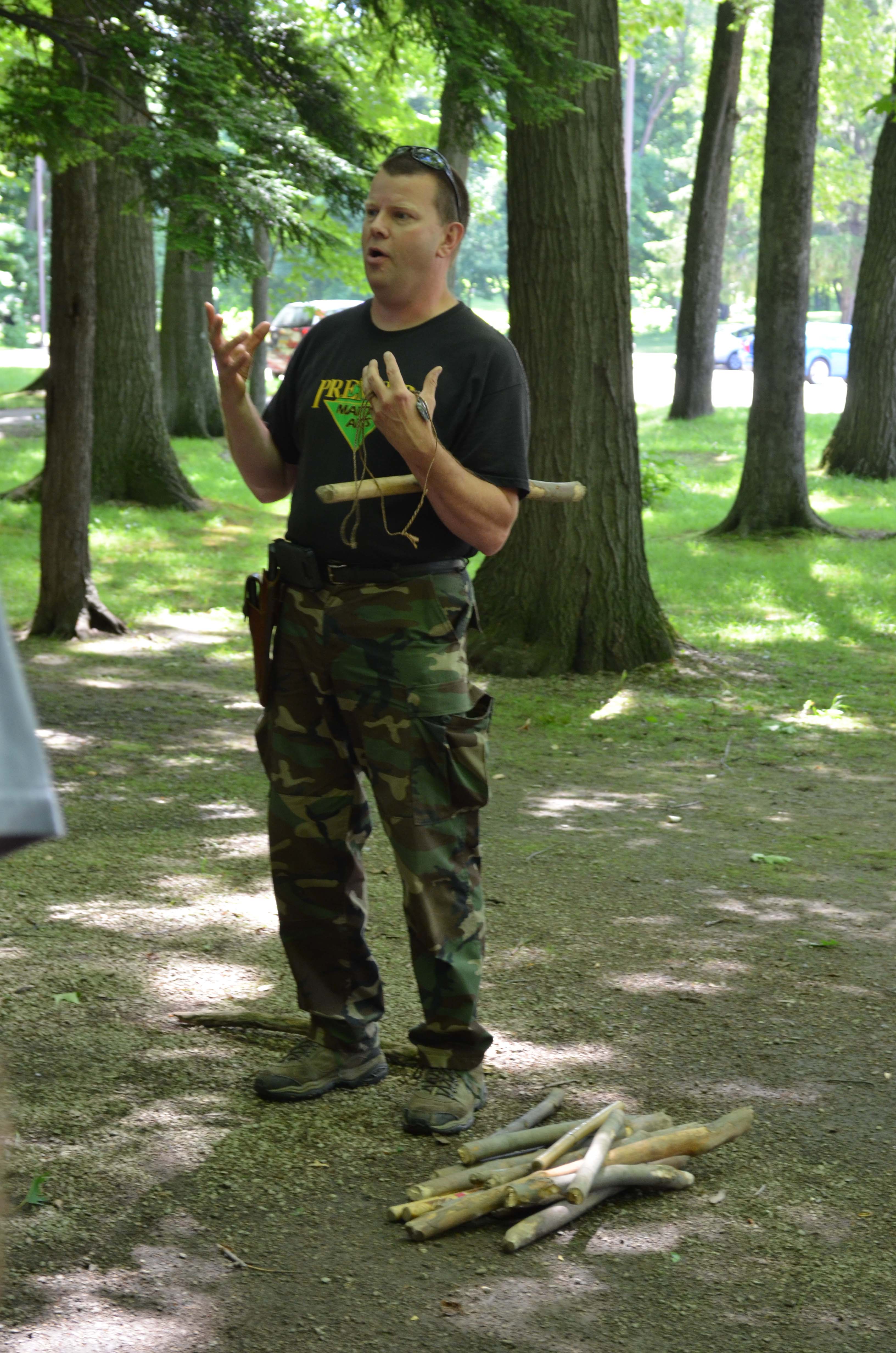
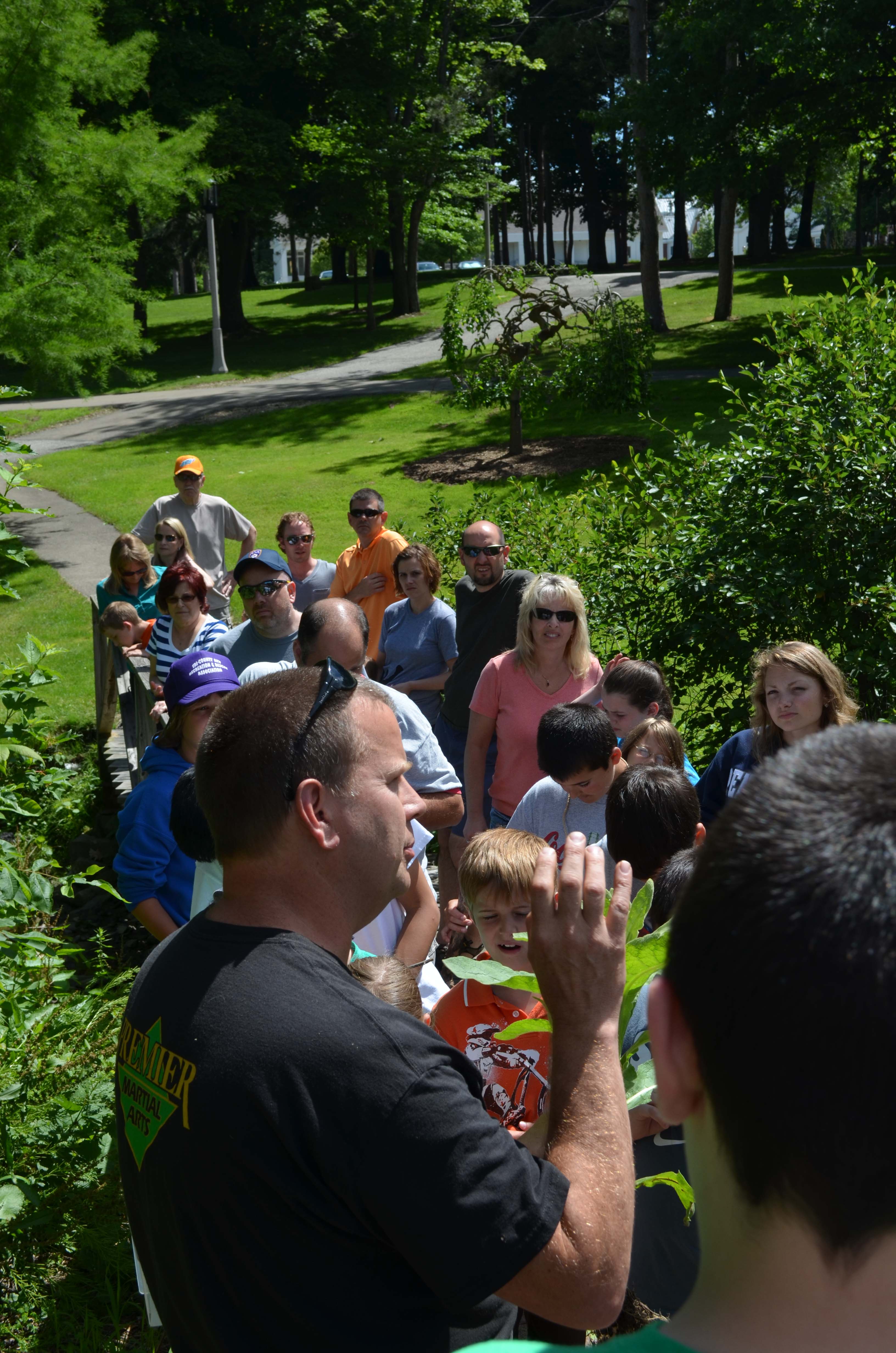
On the last day of class, the instructor, Tim Lucas, a survivalist and owner of Premier Martial Arts in Erie, invited parents to see what their kids (ages 8-12) had been learning and doing all week.

DSC_0850

If you ever find yourself lost in the woods or otherwise living the primitive life, here are ten things I learned during my one-hour survivalist lesson with Lucas:

  1. When it comes to survival in the wilderness, your four priorities in order of importance are: shelter, water, fire, and food.
  2. You can live for two weeks with just shelter and water. “Shelter is most important,” Lucas said. “You’ve got a couple days to find water and weeks to find food, but exposure can kill you quickly.” According to this site, you can live without shelter for three hours, without water for three days and without food for three weeks.
  3. Jewelweed, a common Pennsylvania weed, is a great poison ivy cure. If you’re exposed to poison ivy, crush the jewelweed in your fingers to make a pulpy mash and cover the poison-ivy exposed skin with it. More on that here.
  4. Cattails are one of the most valuable plants for survival. They provide not only food, but also tinder, insulation, and shelter material.
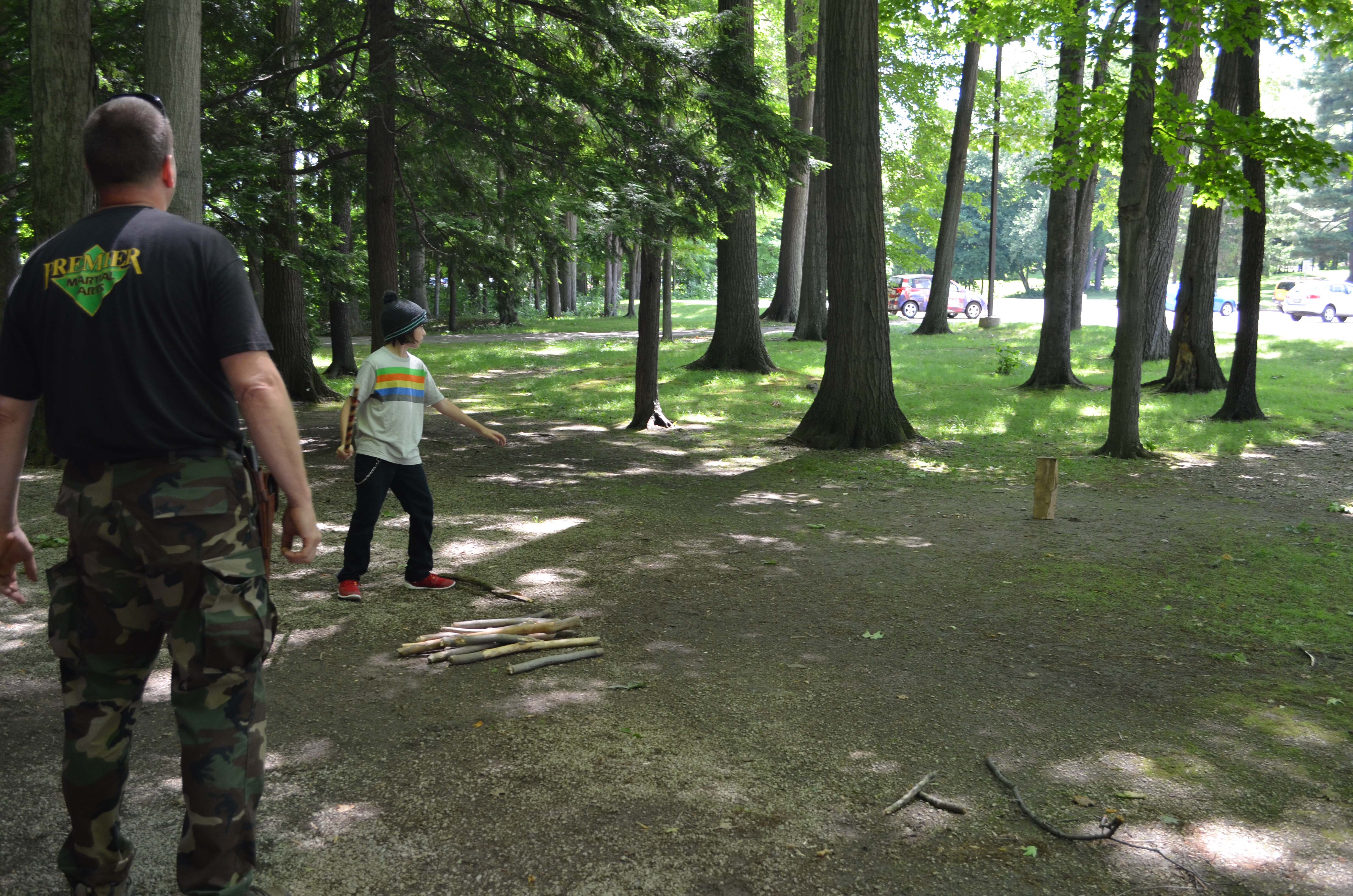
  5. Aside from a sharp knife, one of the most useful tools for wilderness survival is an arm-length, wrist-thick throwing stick. Properly thrown sticks can be used to take down a small animal (raccoon, rabbit, etc.).
  6. You can make twine/rope/cordage using the bark from dead trees and using your fingers to shred and twist it. “Look for trees with dead bark, and strip off long sections of the softer layer between the wood and the outer bark,” Lucas said.
  7. Phragmites, cut and bundled, make great sleeping mats, blankets, chairs, and shelter cover.
  8. When building shelter, be sure to put down a thick (several inches) layer of leaves (or phragmites) to separate your body from the ground, which can get very cold.
  9. Build a fire ring with an opening toward you/your shelter to conserve and aim the heat. The stones should be nose high when sitting in front of it.
  10. Daisies and clover are edible not just for rabbits and deer, but for humans, too. In fact, many wild plants are edible.

So what are your kids doing this summer? There are still openings in many exciting, fun, and educational (don’t tell the kids that though) classes at College for Kids (Click on the registration link to see which classes still have openings) Who knew summer school could be so much fun?

DSC_0852

Demonstrating their throwing stick skills.

DSC_0867

My daughter, Lauren, in the phragmites chair outside the shelter.

DSC_0865

Mud, grass, leaves, phragmites and more were used to build the shelter. Notice the stone fire ring with the opening pointed toward the chair/shelter, too.


Secret Lives of Staff: Doug Lee

By Heather Cass
Publications & Design Coordinator, Penn State Behrend

There’s much more to Penn State Behrend’s faculty and staff members than what you see on campus. In this occasional series, we’ll take a look at some of the interesting, unconventional, and inspiring things that members of our Behrend community do in their free time.

DSC_0498

If you’ve ever played or watched sports, you know how emotionally charged the singing of the National Anthem can be. It’s not uncommon to see players and fans moved to tears by The Star Spangled Banner.

Doug Lee, a groundskeeper at Penn State Behrend, is one of those vocalists who can make big, strong ballplayers weep. Lee, who has a bass voice, has sung the National Anthem before several Erie SeaWolves games over the last few years. And, after his Penn State Behrend colleagues found out about his hidden talent, he was asked to sing at a few events on campus, too, including a Pennsylvania Interscholastic Athletic Association softball tournament.

Lee grew up in a musical household. In fact, his father graduated from the Cincinnati Conservatory of Music as a classical pianist.

“There was always music playing at the house,” Lee said. “I was in the church choir and youth choirs from the time I was a boy.”

Lee’s father never pursued music as a career though, choosing instead to work at the family business — a golf course in Hermitage, Pennsylvania.

It was at that course that Lee’s landscaping career took root. He enjoys working outside and has been known to sing a little on the job at Behrend.

“I sing to my headphones a lot,” he says with a laugh.

He also sings to the congregation at Fairview Presbyterian church every Sunday as a member of the church choir.

Asked to recall the first record he ever owned (and, yes, it was all vinyl back then, kids), Lee smiles and says that it was a Grand Funk Railroad 45 rpm record, given to him by his grandparents, who had bought him a “fold-down record player.”

“I think the song was ‘American Band,’” he said. “They had no idea what they were buying. The guy at the record store told them it was popular.”

Today, Lee, who is a husband and father of three (24, 19 and 14), says he likes nearly all genres of music, but prefers alternative or new-age rock. He has an affinity for Matthew Good, a Canadian rock musician, and Mike Oldfield, an English musician who blends progressive rock with world, folk, classical, electronic, ambient, new-age sounds.

But, when he sings, Lee said he sticks to folk music, hymns and, of course, the Star Spangled Banner. “I don’t have a very contemporary voice,” he explains.

While Lee’s voice may not be contemporary, it sure is impressive. Have a listen for yourself – check out his 2011 Erie SeaWolves National Anthem performance:


Behrend has been the perfect fit for T. Reed Ferguson Award winner

Paul Lukasik

By Steve Orbanek
Marketing Communications Specialist, Penn State Behrend

As a Buffalo, N.Y., native and avid Bills and Sabres fan, Paul Lukasik seemed destined to attend college in his home state. In fact, he didn’t even plan to look at colleges outside of New York.

He’s glad he did, though.

“Penn State Behrend was the only out-of-state school I applied to,” Lukasik says. “Once I came here, I knew this was the place for me.”

Lukasik, who recently finished his junior year as a Project and Supply Chain Management major at Penn State Erie, The Behrend College, says he found college daunting when he first arrived. He knew no one, and the entire area was unfamiliar to him.

So, he devised a plan.

“My strategy was to get as involved as I possibly could,” Lukasik says.

In his three-plus years at the college, Lukasik has been a member of Kappa Delta Rho, Reality Check, and Omicron Delta Kappa, the national leadership honor society. He’s also served as a resident assistant and on the budget committee for the Student Government Association.

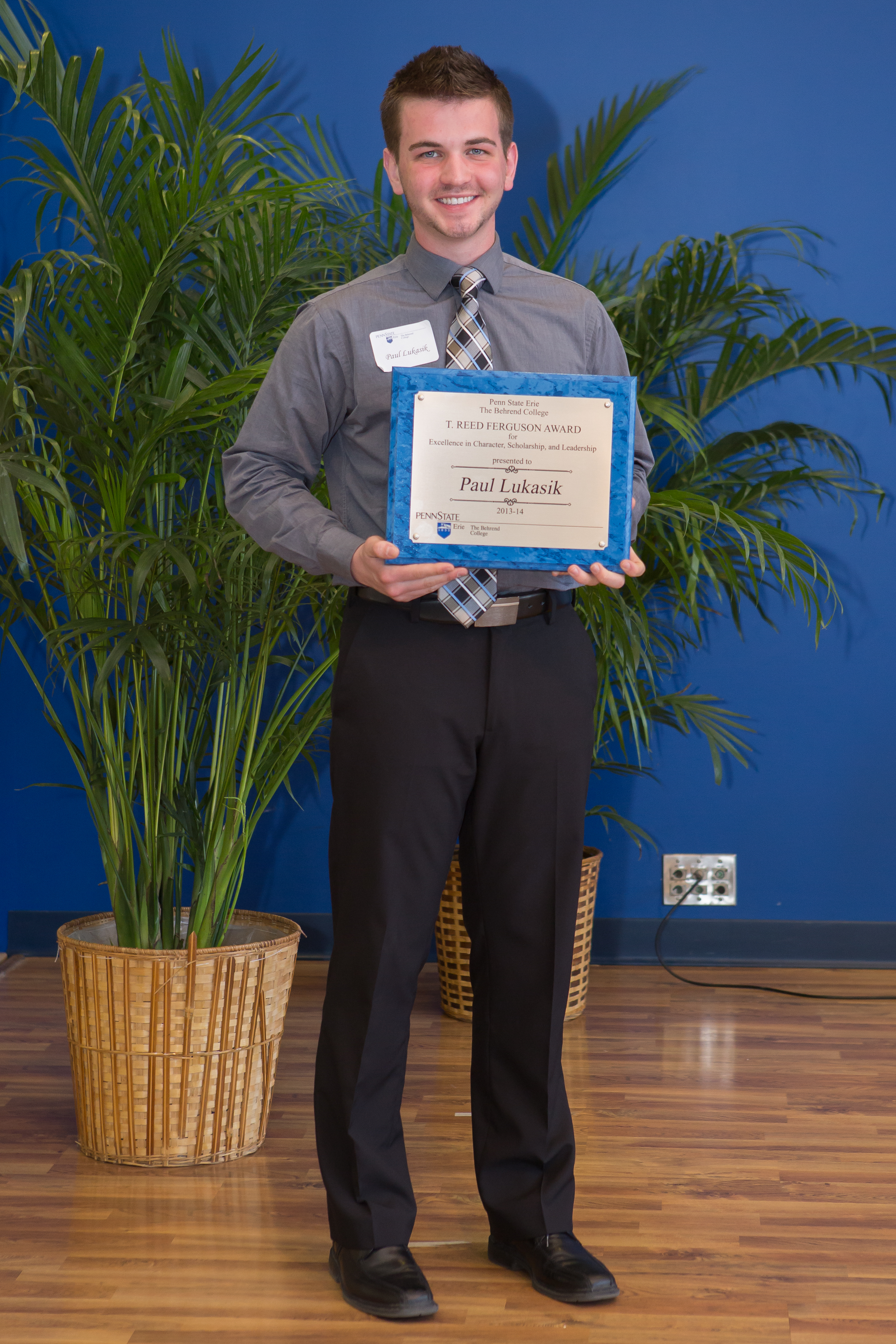
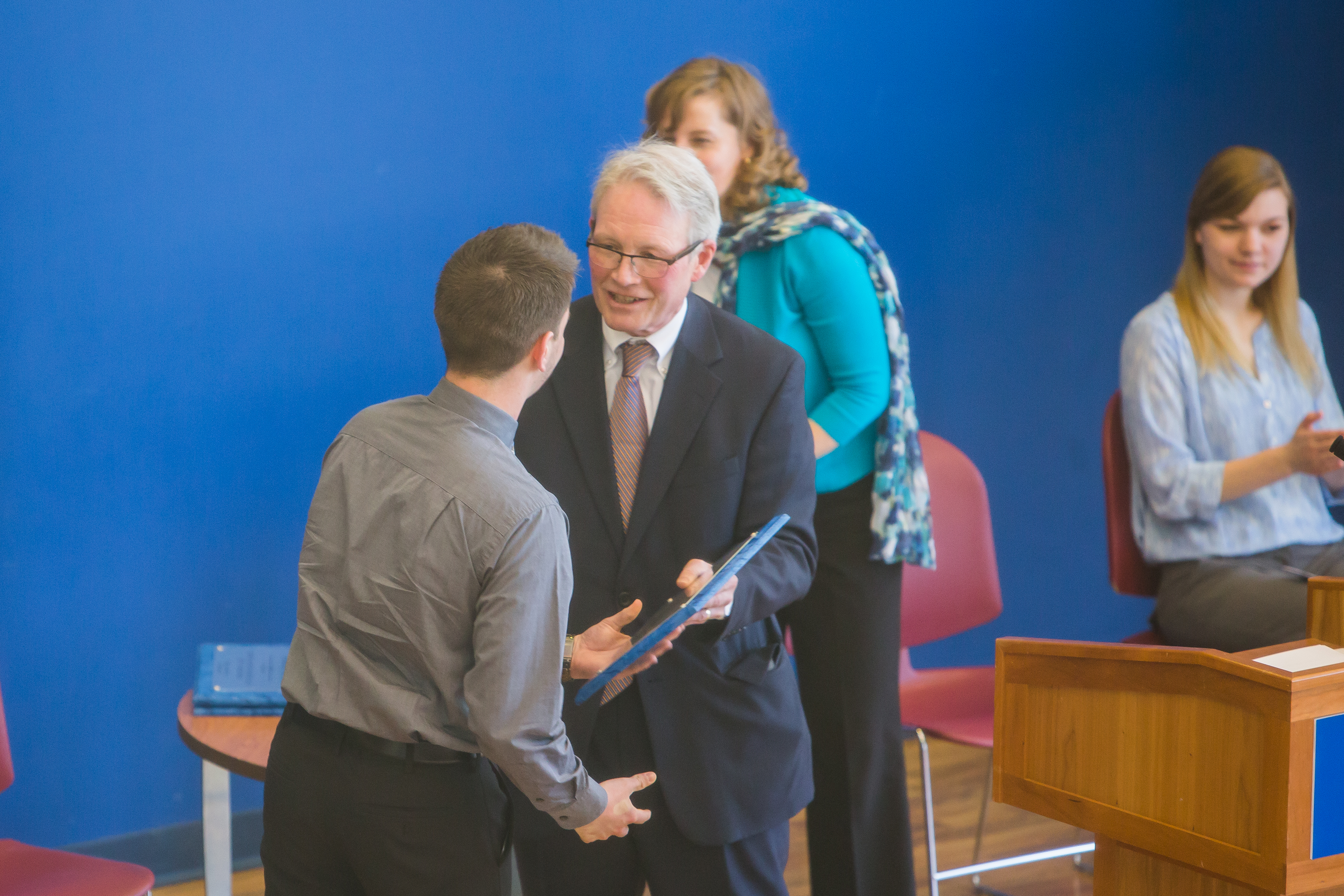
Lukasik’s contributions to the college were recognized April 27 at Penn State Behrend’s sixty-fifth annual Honors and Awards Convocation when he was named the recipient of the T. Reed Ferguson Award. The award recognizes a junior who has demonstrated scholarship, leadership, and citizenship through his or her academic and out-of-class involvement and gives promise of further achievement in the senior year.

Lukasik’s success has carried over outside of the classroom. This past year, he began working as a sourcing intern at GE Transportation. He continues to work in that position over the summer

Lukasik says he learned the need to be active and involved as a young child. His grandparents founded the Fair Haven’s Church in North Tonawanda, N.Y., and he was always helping out.

“It’s been instilled in me,” Lukasik says. “I really just try to make the most of my time, and I just like to help people.”

Lukasik will have the opportunity to help more people this fall when he takes over as president of Reality Check, a community service organization on campus. Every year, the group goes on an Alternative Spring Break, a week-long service trip. The group went to New Orleans this past year and worked on rebuilding houses damaged by Hurricane Katrina.

Lukasik says he has enjoyed the opportunities to help others that Penn State Behrend has given him. He also recognizes how the college has helped him.

“Behrend is the perfect size, has a great group of students, and I can’t say enough good things about the Sam and Irene Black School of Business. Looking back, to when I was a freshman, I’ve just really evolved,” Lukasik says. “I had every intention of eventually transferring to University Park, but after my freshman year, I just knew that wouldn’t be possible.”

Honors-Awards-Ceremony_022

Connecting Behrend to the Bayfront and beyond – Hit the trail!

DSC_0162
By Heather Cass
Publications & Design Coordinator, Penn State Behrend

I’m an avid runner and I live just a few miles from Penn State Behrend. Several years ago, when the Commonwealth was clearing land to make way for the Bayfront Connector, they ruined some of my best running routes. I harbored a grudge against the Bayfront Connector for a while because of that. But then, persuaded by the convenience of traveling to downtown Erie in 10 minutes, I reluctantly began using the road and noticed there was a meandering blacktopped path to the right of the road.

What’s this? Could they have thought of the runners and walkers and bikers? Could it actually run the entire length of the road? No, they wouldn’t have thought of us.

(Yes, I do tend to be skeptical, but in my defense, I worked for the newspaper for fifteen years and you just kinda end up that way when you’re a journalist).

I’m happy to tell you that I was dead wrong.

Trail history

Indeed, there is a wide paved recreational path (similar to the Multipurpose trail at Presque Isle State Park) that runs continuously alongside the Bayfront Connector from Penn State Behrend to Frontier Park on Erie’s west side.

The idea for a landscaped trail alongside the road took root during PennDOT’s public hearings about the planned connector.

“The trail really was a whole community effort,” said Ray Schreckengost, executive director of the Erie Western Pennsylvania Port Authority. “Bill Petit was the district engineer who incorporated it into the design.”

“There was a rallying cry from the community to ‘humanize the connector,'” Petit said. “We started to rethink the project, knowing that we needed to do something special.”

A committee of various interested community members formed and presented ideas to PennDOT. Soon, the meandering trail featured landscaping, decorative noise walls and stonemasonry dividers along the connector, was part of the plan Petit said.

How to get on the trail from Behrend

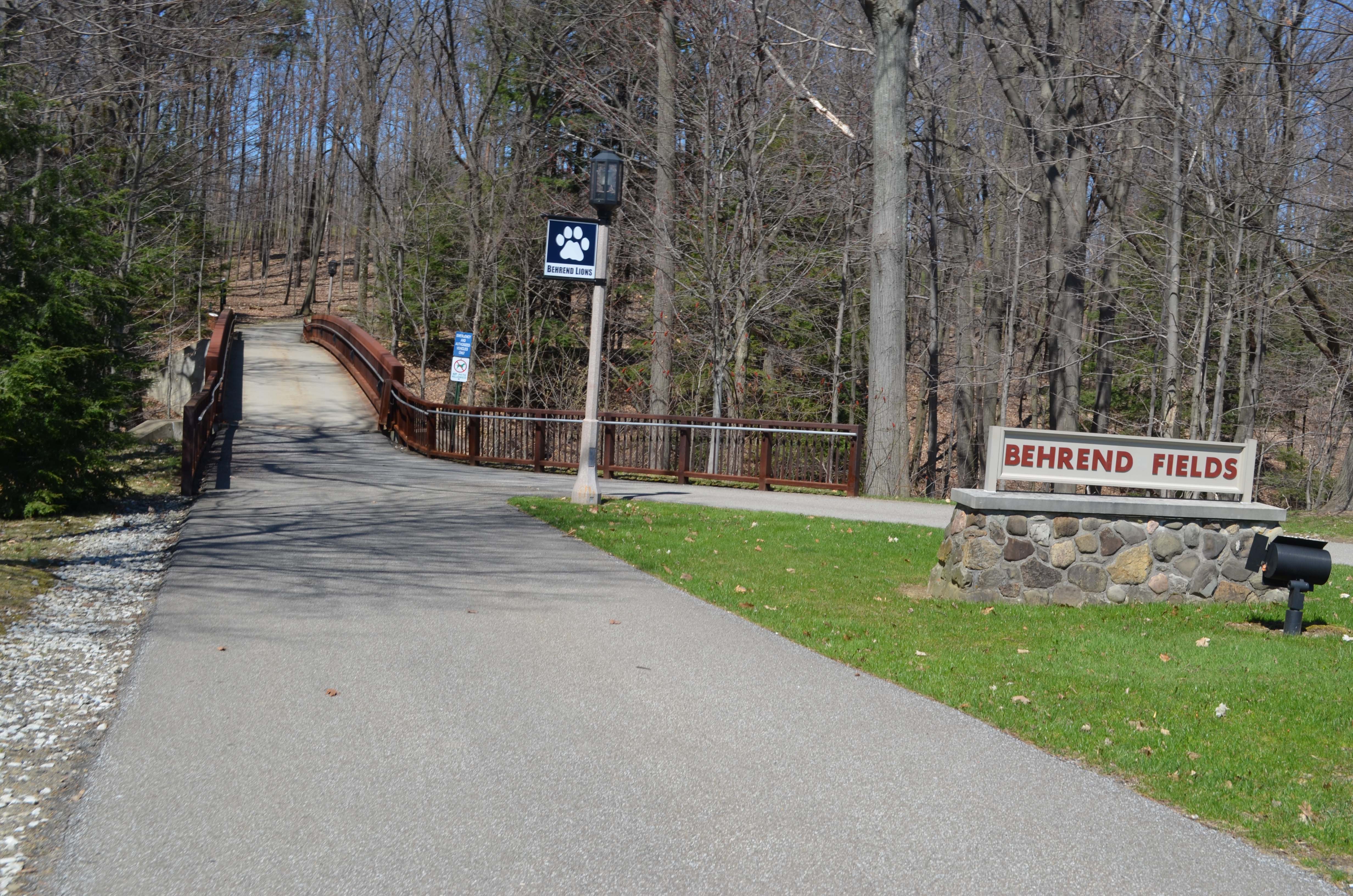
The Bayfront Connector trail entrance is in the back left corner of the Erie Lot, by the sign that says “Behrend Fields.”

You can also get on the trail from the Logan House on Station Road. Trailhead is to the left of the parking lot.

Where you can go (and mileage)

Distance via the Bayfront Connector Trail from Behrend (Erie lot entrance) to….

Shannon Road — 1 mile

38th Street — 1.5 miles

McClelland Ave. – 2 miles

Broad Street – 3.5 miles

12th Street – 4.5 miles

6th Street – 5 miles

Bayfront Parkway – 5.5 miles

Dobbin’s Landing (foot of State St.) – 6.5 miles

Frontier Park – 8 miles

The paved path ends at Frontier Park, but you can ride/run/walk down to Sixth Street and use the bikeway lane all the way to Presque Isle State Park for an 11-mile (one-way) trip from Behrend.

Here’s a map of the entire Bayfront Connector Trail  (with mileage markers) from Behrend to Sara’s restaurant at the foot of Presque Isle State Park.

bayfront

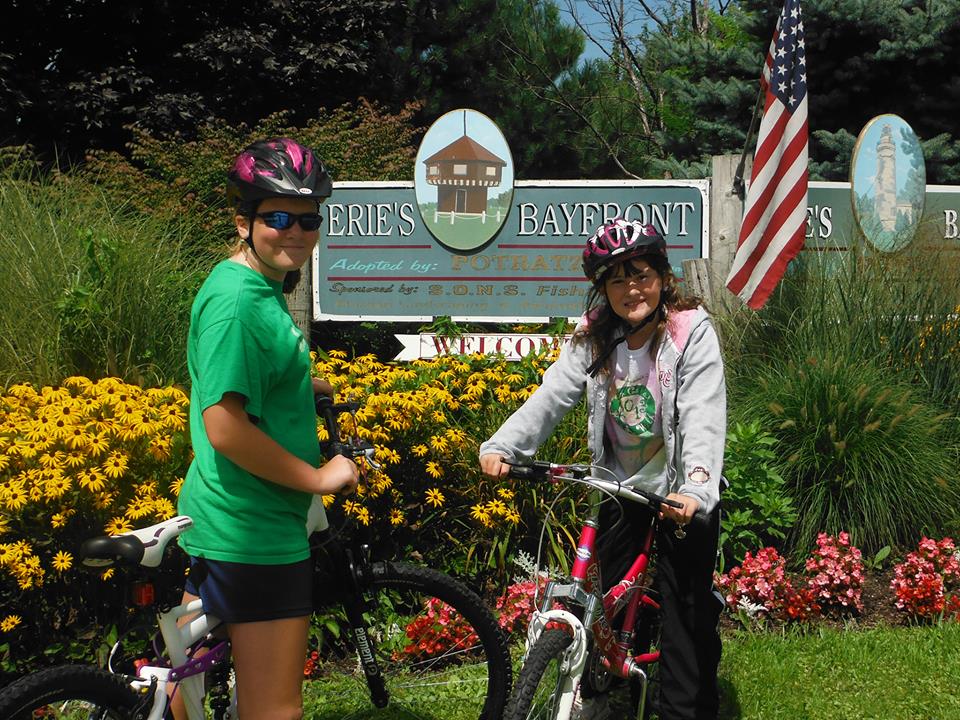
It’s about 5.5 miles from Behrend to this sign at the foot of the bayfront where the Bayfront Connector meets the Bayfront Parkway (trail continues along Parkway).

It’s about 6.5 miles from Behrend to Dobbin’s Landing (above) at the foot of State Street.

It’s about 11 miles if you go all the way to Sara’s at the foot of Presque Isle State Park. Bring some money so you can refuel with a foot-long Smith’s hot dog, curly fries, and ice cream!

What you’ll see

There’s much more to be seen than grass and trees. It changes from the manicured green lawns of Penn State Behrend to an inner-city setting with factories and 6-lane intersections to a bustling bayfront with gorgeous lake views.

The Bayfront Connector has been designated a National Scenic Byway and is part of the Great Lakes Seaway Trail, owing to the scenic vistas and intrinsic qualities that make it different from your run-of-the-mill ribbon of concrete slicing the landscape.

Elevation

Good News: It’s all downhill from Behrend. Bad News: It’s all up on the way back (you know, when you’re good and tired). So, you may want to get a family member or friend to pick you up. (This map includes an elevation chart).

What you need to know

The path may appear to end at various roads/places along the way. It doesn’t. Just look ahead and you’ll see where it starts again.

One place that the trail pickup is not obvious is at State Street. To get on the trail again, cross State Street and enter the parking lot for the bait shop/miniature golf course. Run/walk/bike to the back of the lot and turn right and you’ll run into the path again just past the Bayfront Convention Center.

Safety

I’ve run/biked/walked this entire trail countless times myself, with friends, and with my kids and have never once felt unsafe on the trail, but it does go through the woods in some spots and it goes through areas of the city that some people avoid.

My advice: Take a friend and a cell phone. Also, I would not recommend using the trail after dark. The only portion of it that is lit is the part on Behrend property from the college to Logan House on Station Road.

Trail surface

Most of the trail is blacktop, which is kinder to a runners’ knees than cement and is great for biking/roller blading.

Winter use

The trail is not maintained (read: shoveled) in winter. Bad for runners/walkers/bikers — great for cross country skiers.

Questions?

I’ve covered every inch of this trail/road by car, foot, and bike, and I’m happy to take your questions at hjc13 @ psu. edu.

So….what are you waiting for? Go explore!

us

This slideshow requires JavaScript.