6 spooooky things about Penn State Behrend

spooky

By Heather Cass
Publications & Design Coordinator, Penn State Behrend

In honor of the upcoming All Hallows’ Eve festivities, I dug up six spooky (and some just silly) things about Penn State Behrend.  Enjoy!

1. There’s a place in the Wintergreen Gorge on  the edge of campus called “Devil’s backbone.”

Wintergreen-Gorge-Photos_018

Devil’s backbone is the name given to the gorge’s highest vantage point in Wintergreen Gorge, about 250 feet above Four Mile creek. Read more about the gorge (page 13) and watch videos here (under “Extras from this issue”).

In the mood for a good ghost story? Check out this story we found online (but do not attest to): The Ghost Child of Wintergreen Gorge.

Speaking of enduring ghosts haunting campus…..

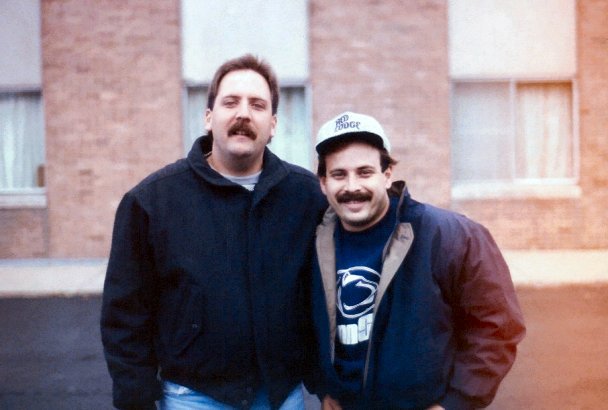
2. Ken Miller, senior director for campus planning and student affairs, has been working at Behrend since George Michael’s “Faith” topped the pop charts, “Heathers” was showing at the theatres,  and the average cost of a gallon of gas was just 91 cents.

Are we making him sound old? Nah, it’s only been 25 years. 😉 And, fortunately, he hasn’t lost his sense of humor…or that awesome ‘stache.

ken miller

Ken Miller, right, with his brother Tim outside of Lawrence Hall, circa 1989.

3. This tree by Wilson Picnic grove:

tree wart

According to Dr. Mike Naber, lecturer in geosciences, the “tumor” on this tree could be Agrobacterium tumefaciens that causes a plant disease called crown gall. Or, Nabor said, it is simply a “burl” caused by stress, injury, or a virus.

Or it could be a zombie calling card.

Speaking of signs from the dearly departed…

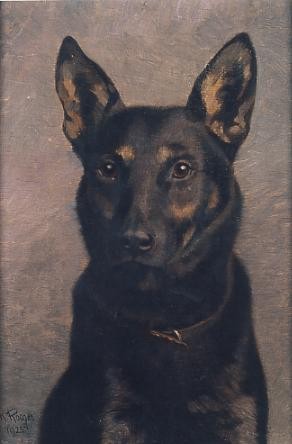
4. Bruno’s Café is named after a dead dog. Even spookier? Legend has it that said dog is buried on campus.

Bruno's Portrait

So, if you hear a German shepherd howling late at night…

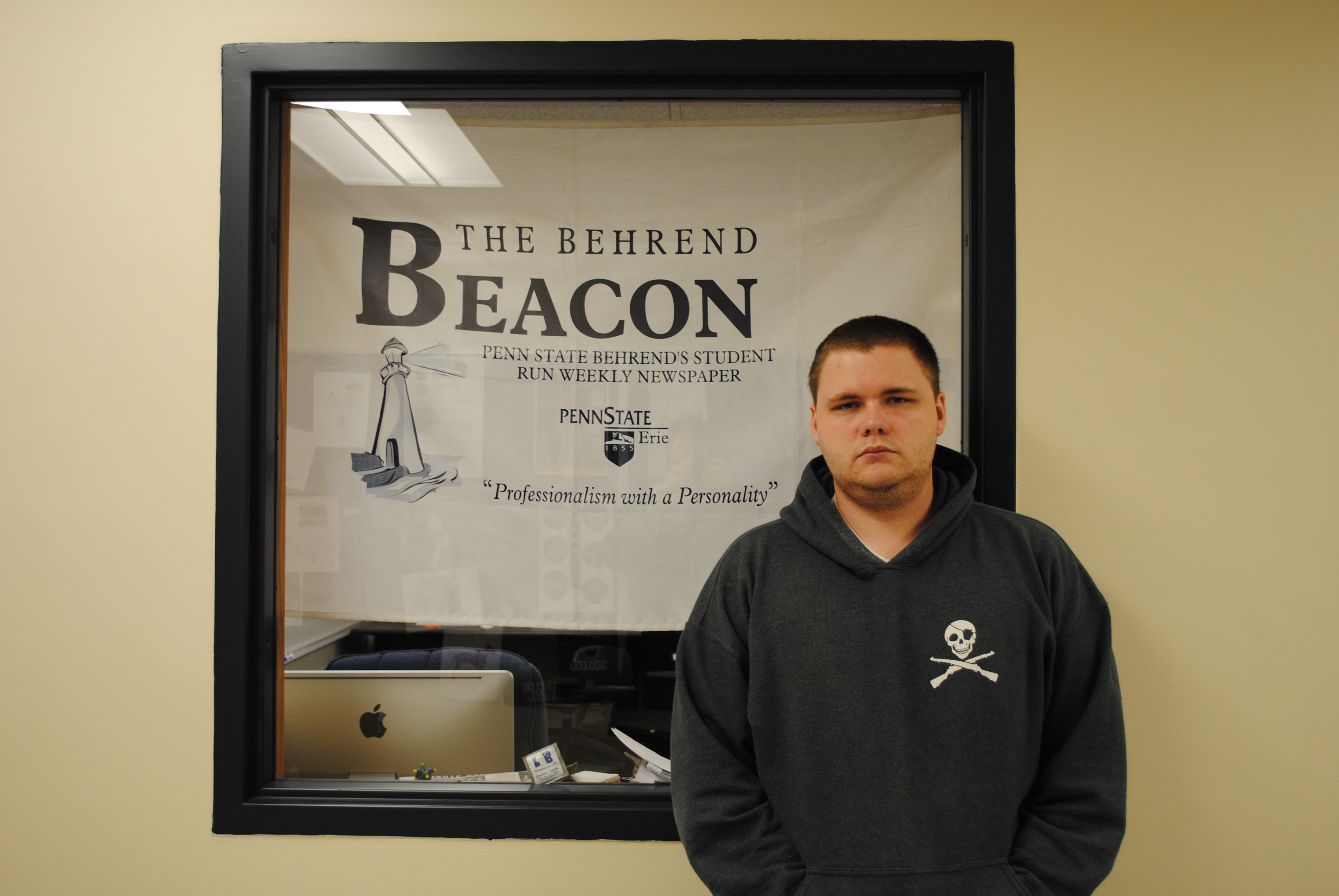
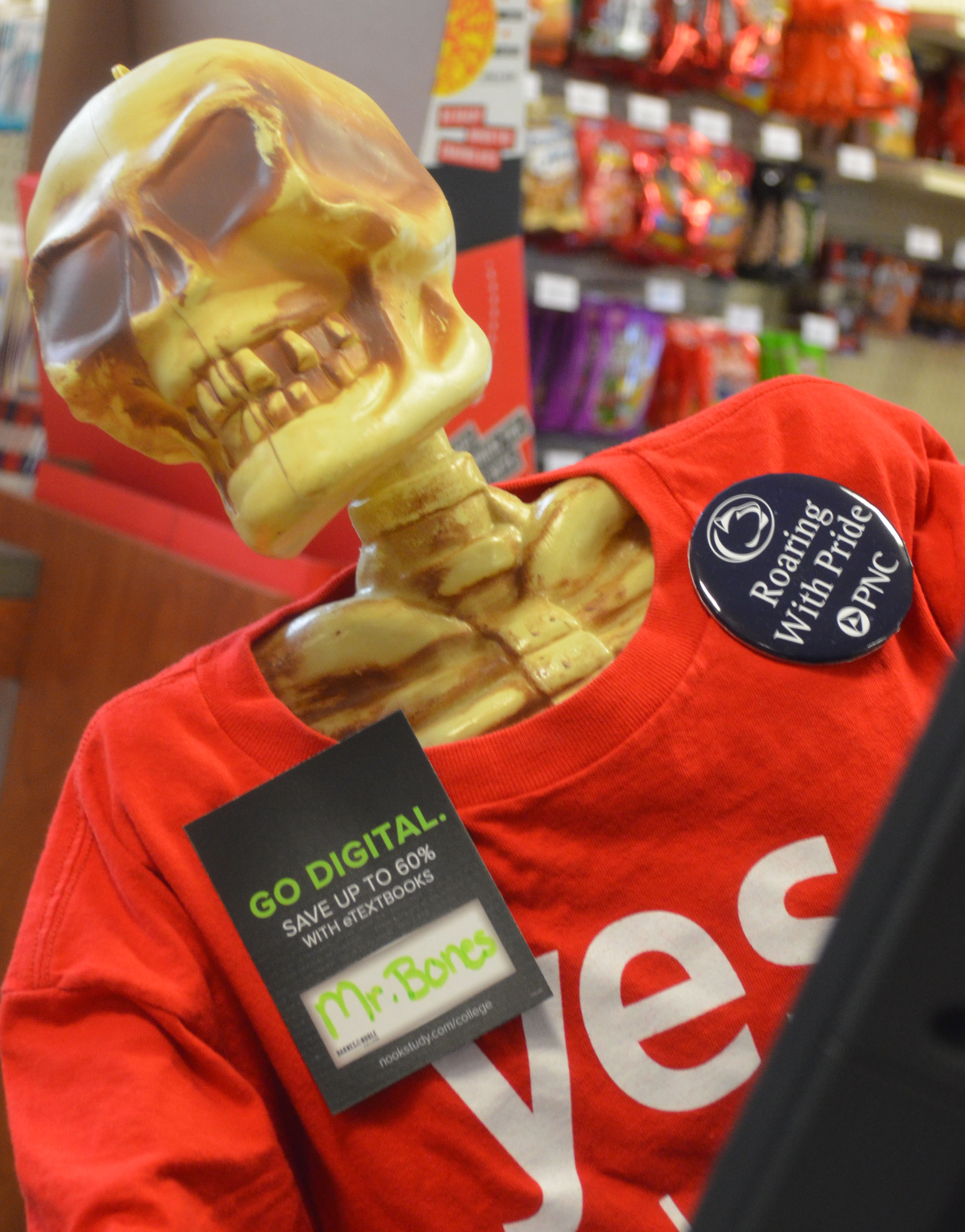
5.  The cashier at the bookstore has gotten really thin.

DSC_0979

Somebody get this guy a peanut butter sandwich.

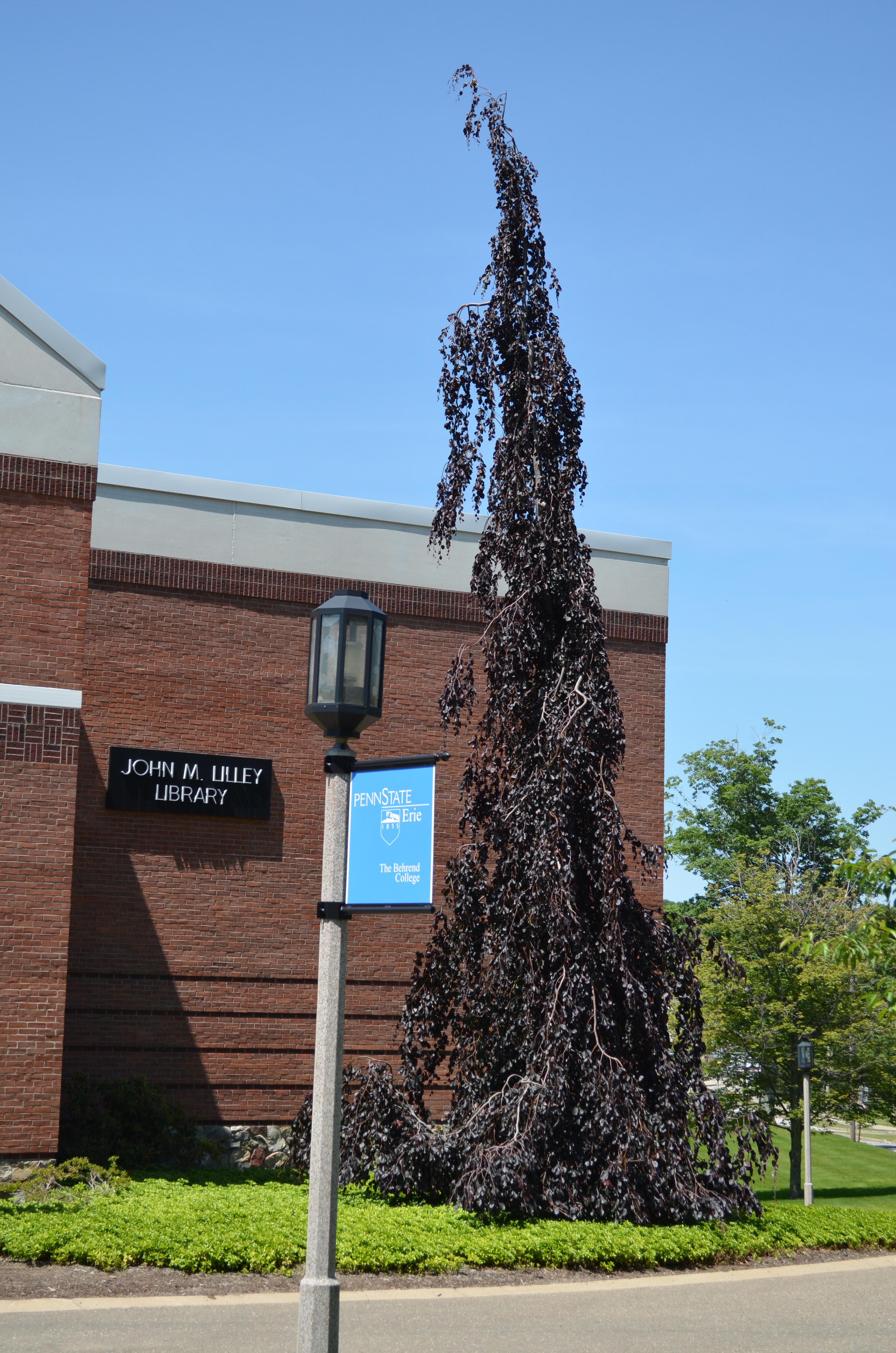
6. This tree by Lilley Library:

DSC_0551

While it’s shaped like a witch’s hat, this is actually a Purple Fountain Weeping Beech, native to Europe.

You know, Europe…where Transylvania is (just sayin’).

Happy Halloween, everyone!

Penn State Lives Here

Penn State Lives Here_010

If you’ve been anywhere near Penn State Behrend (or any Penn State campus across Pennsylvania) recently, you’ve probably noticed there is a new brand initiative — “Penn State Lives Here.”

The initiative was publicly introduced with a two-minute video during halftime of the Michigan game on Saturday, October 12, in Beaver Stadium on the University Park campus.

The theme made its appearance at Penn State Behrend yesterday:

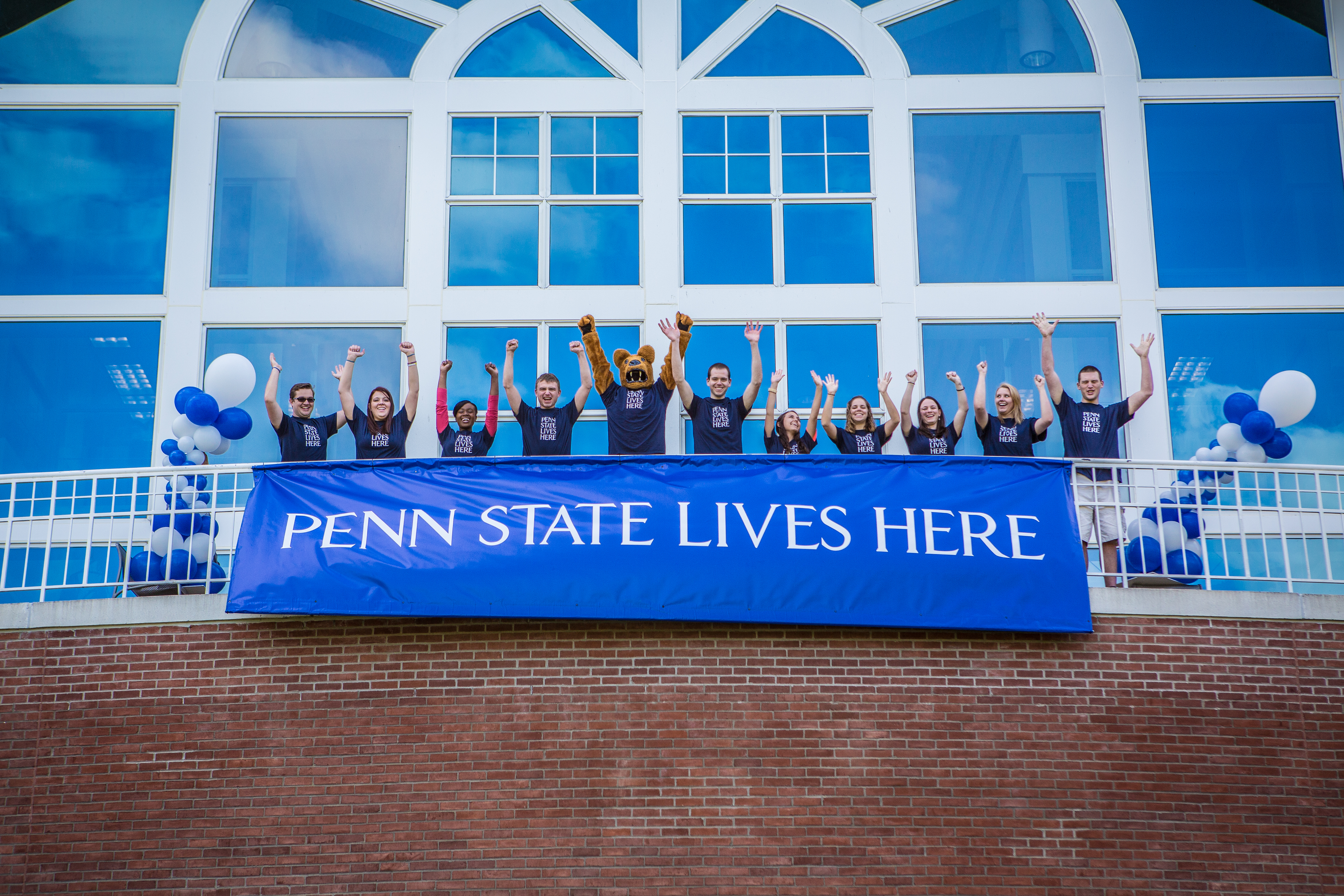
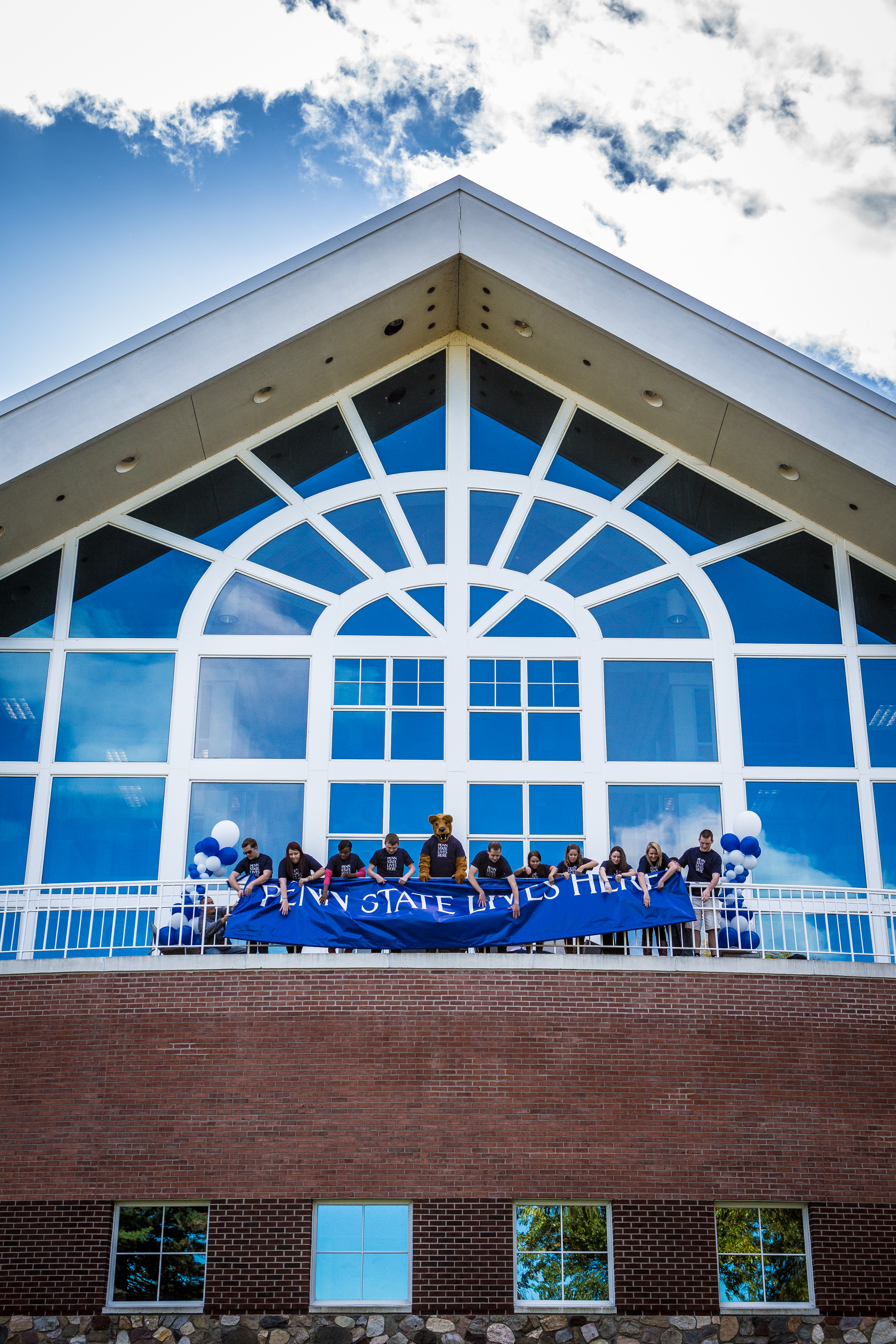
* Ten students and the Penn State lion unfurled a twenty-foot banner that now hangs off the balcony at John M. Lilley Library.  (Thank you, Mother Nature, for providing picture-perfect outdoor-event weather!)

Penn State Lives Here_004

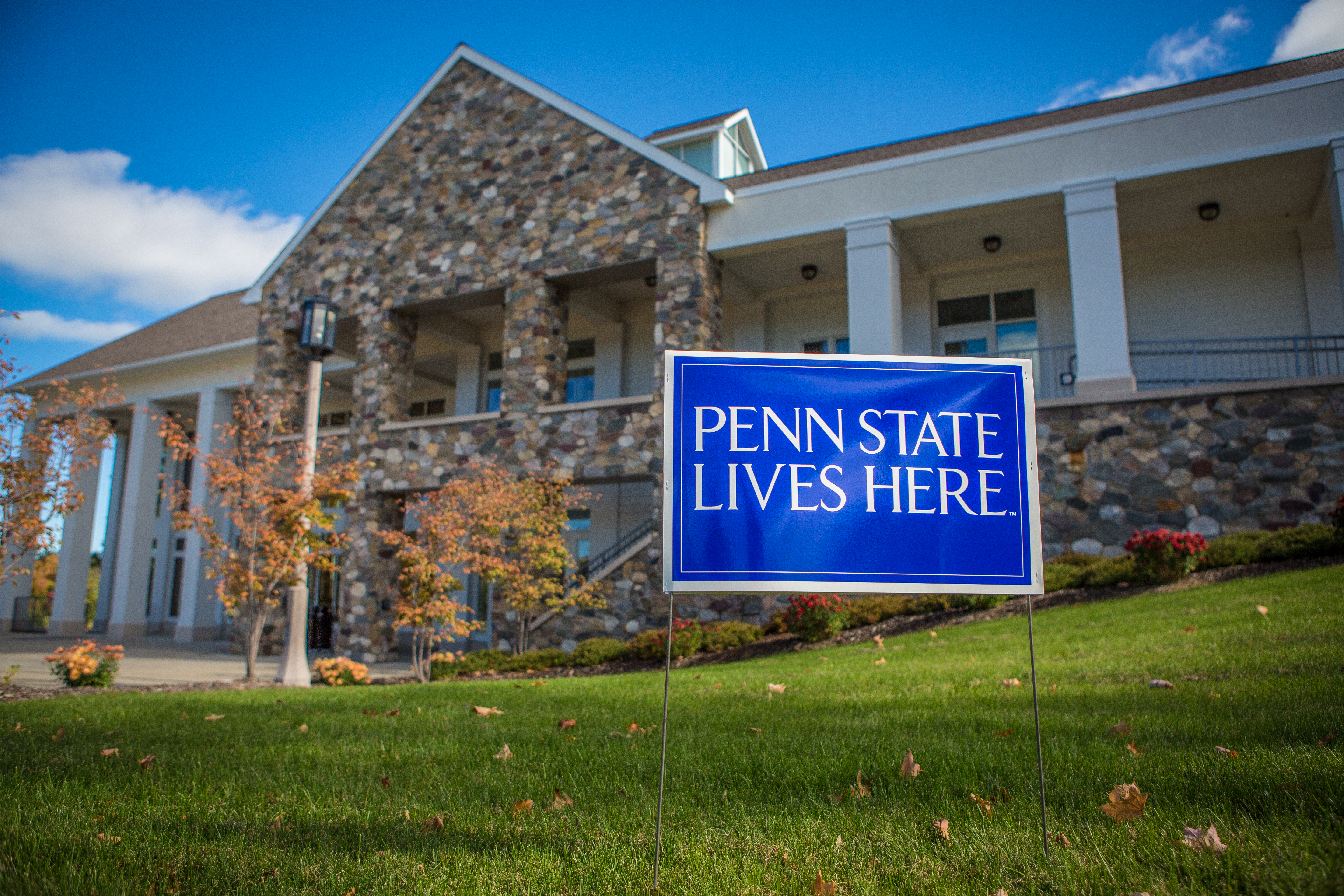
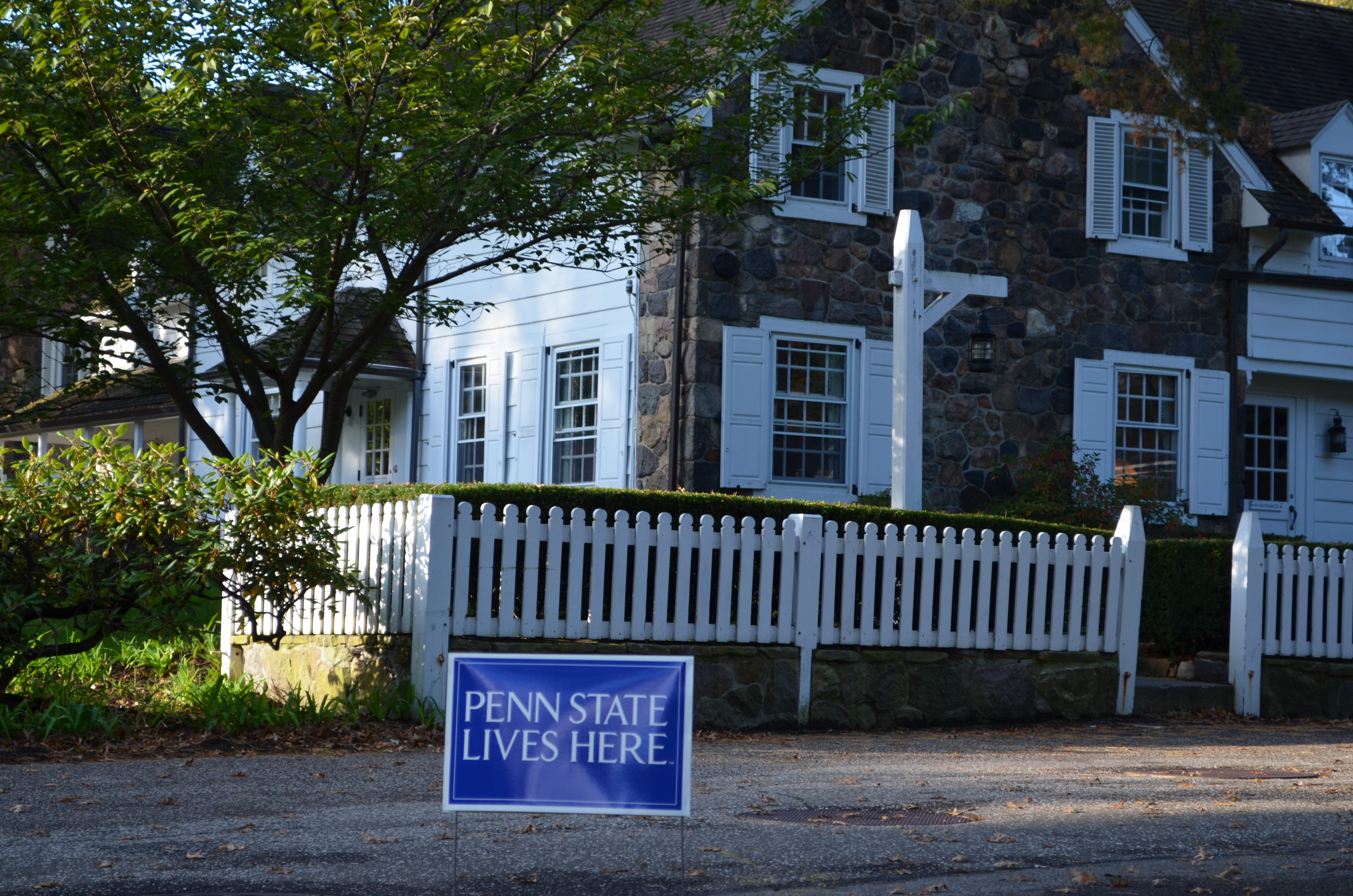
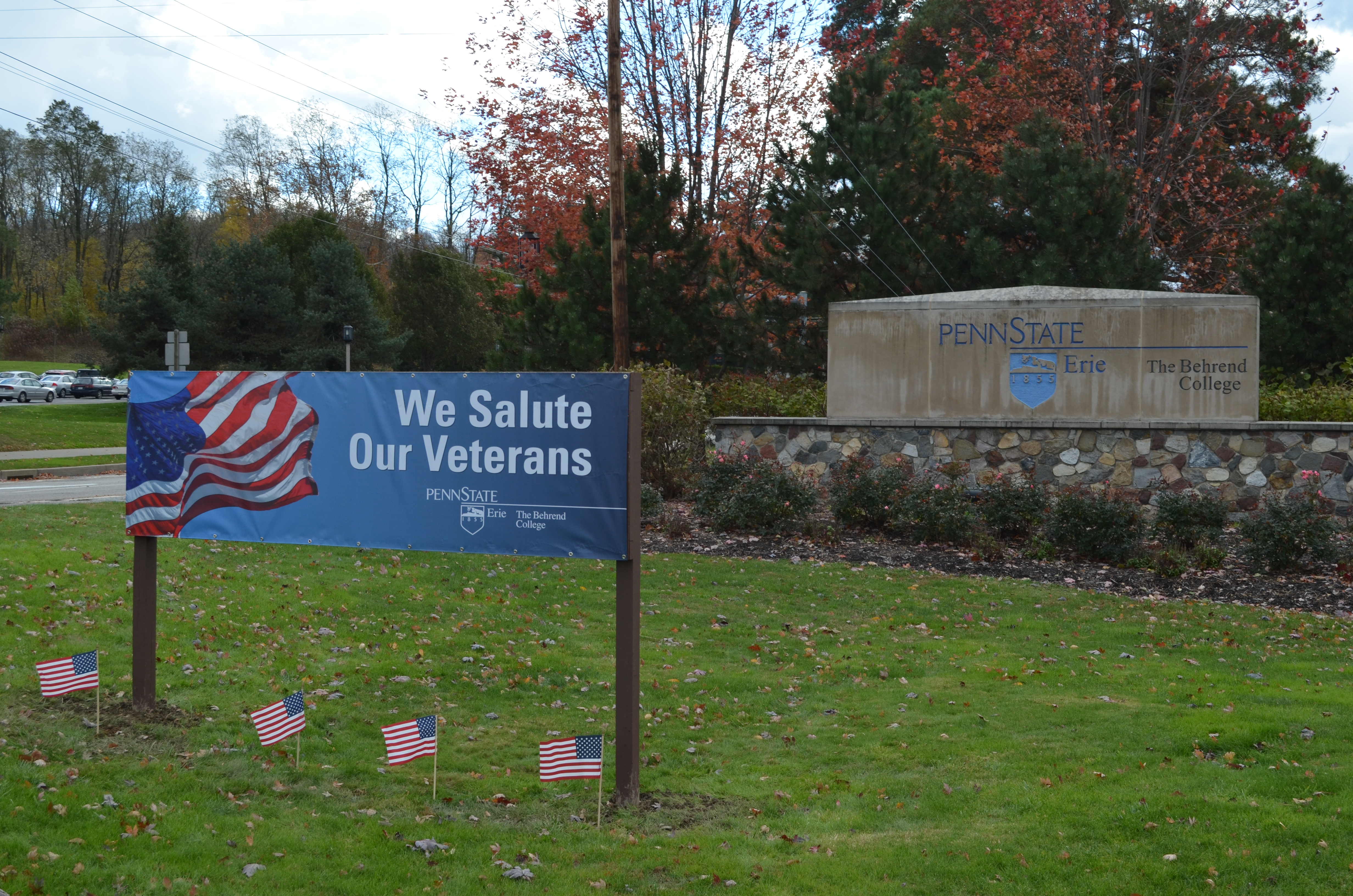
* Twenty lawn signs popped up all around campus.

DSC_1794
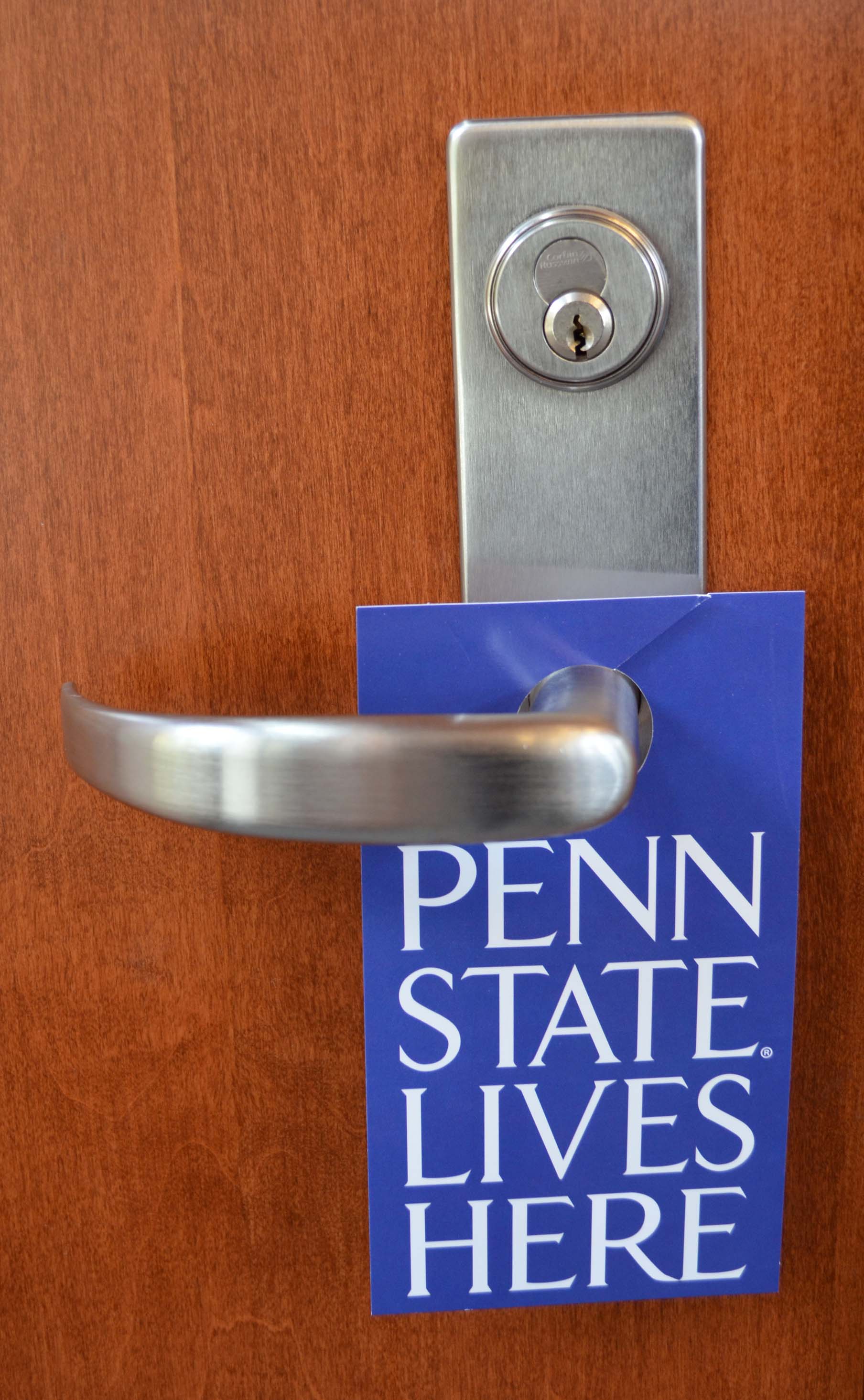
* “Penn State Lives Here” doorhangers were hung on throughout the residence halls.

doorhanger

* “Penn State Lives Here” buttons, vinyl window clings and paw print cookies (delish!) were distributed at lunchtime at Bruno’s, where the campaign video was aired for students, staff, and faculty.
DSC_1795

Clearly, Penn State lives here at Behrend.

So, what does it all mean? What is our branding message about?

Here is an explanation, from the folks who created it:

“Penn Staters are not only high academic achievers, they’re doers. They are nurtured by a culture that encourages setting lofty goals and investing the effort to achieve them. They are molded in an environment that values success, teamwork, and service to others—and graduate intent upon living purposeful, inspired lives. All universities talk about producing leaders, but ask employers where they go to find individuals who inspire others, know the value of hard work, and lead by example. They find them at Penn State.”

Excellence. Innovation. Passion. Collaboration.

These are the things that live at Penn State.

Watch the video here and see for yourself.

Penn State Lives Here_003

Kochel Center gets a makeover

seats2

By Heather Cass
Publications & Design Coordinator, Penn State Behrend

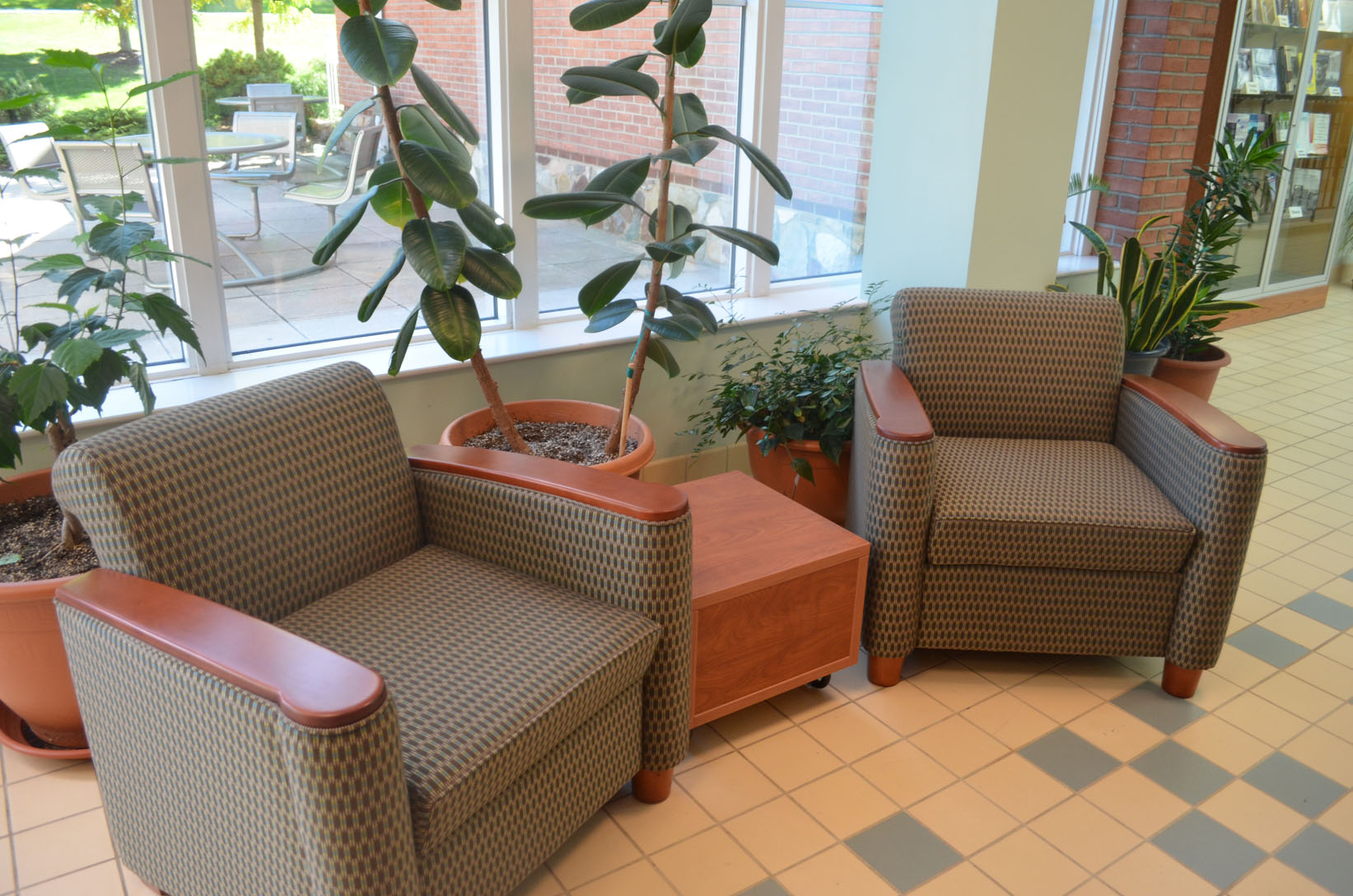
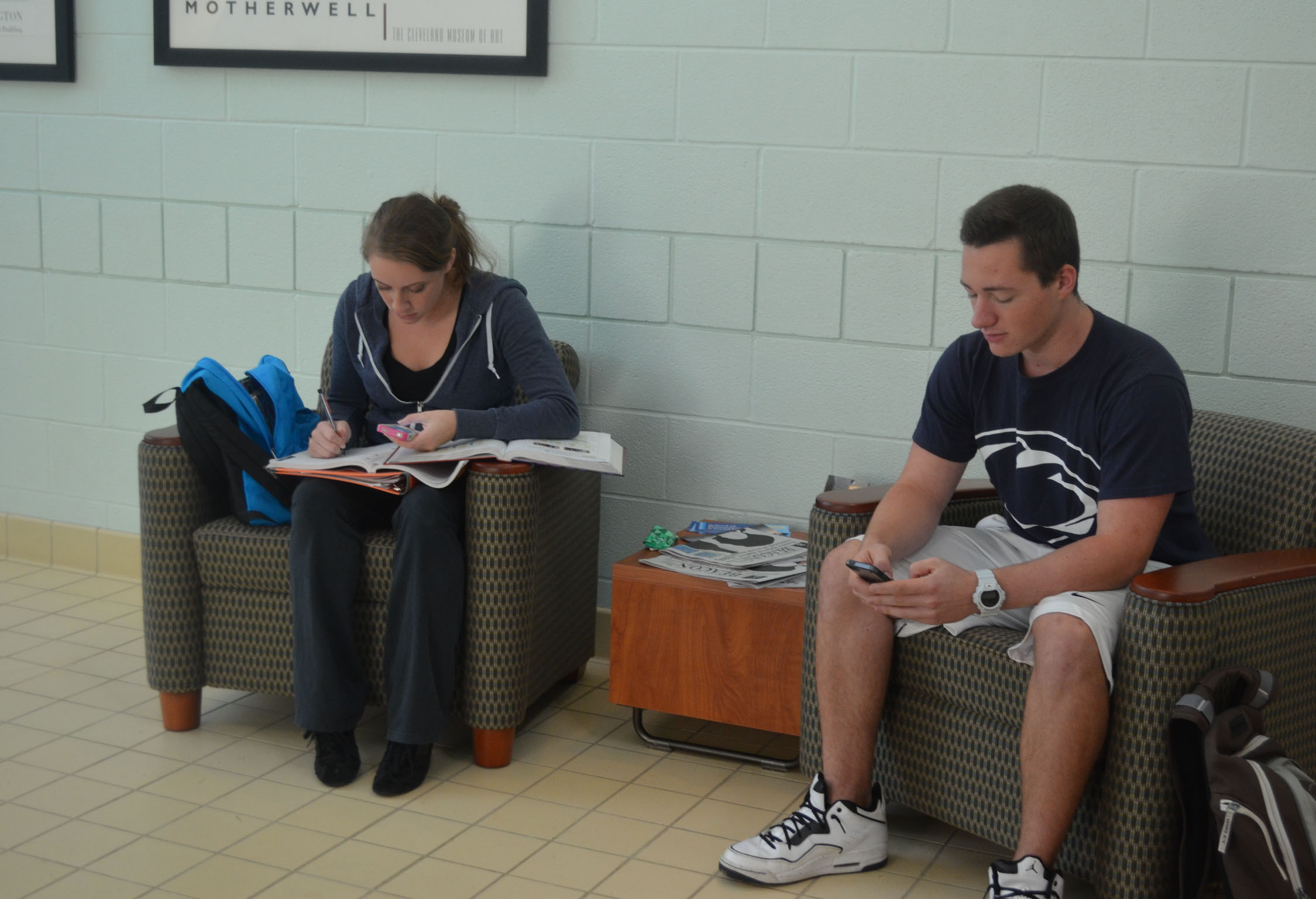
Have you noticed the new have-a-seat-and-stay-a-while environment at Irvin Kochel Center? The stiff, metal benches that once lined the halls are gone, replaced by attractive plush chairs and wooden end tables. On the lower floor, the computer kiosks have been revamped and carpeting put down to add warmth and help muffle echoing footsteps.

The changes are largely the result of suggestions made by students.

“Projects done by students in CAS 252: Business and Professional Communication helped drive many of the improvements to the civility and quality of the Kochel physical and social environment, including the digital signage screens, the up-scale coffee machine, the new furniture, and the printer near the new computer kiosk,” said Dr. Rod Troester, associate professor of communication.

According to Dr. Ken Miller, senior director of campus planning and student affairs, funds from the Student Facility Fee paid for the furniture and carpet, funds from Technology Fee paid for the computers and kiosks, and Housing and Food Services provided the coffee machine.

“It was really a team effort to improve a highly-trafficked area,” Miller said.

Students seem to have embraced the kinder, softer Kochel Center. When I walked through on a Thursday at 2 p.m., nearly every comfy seat in the house was taken.

seats

Regarding the SFF

Projects funded by the Student Facility Fee are voted on by students. The Kochel project was placed on a campus-wide survey of students who indicated it as a priority for improvement. Then, the SFF committee, a nine-member group with six students as voting members, chose to fund the project. (Currently, Kyle Stephan, student government association president, and Miller co-chair the SFF committee.)

The SFF Committee also funded the construction of The Galley (which Housing and Food Services outfitted), lighting of the soccer/lacrosse field, Reed Auditorium and lounge renovations, and hydration stations across campus.

Future projects under consideration include, the Mary Behrend Monument and Memorial Garden, a recreation center, and a Frisbee golf course.

As for those metal benches that were removed for Kochel? They will likely be repurposed for outdoor use around campus.

Windows 8 cheat sheets

images

By Heather Cass
Publications & Design Coordinator, Penn State Behrend

One of the greatest things about working at a university is having access to experts in nearly anything you can think of.

Have a question about the geology of the Wintergreen Gorge? Ask Dr. Tony Foyle, associate professor of Geology. Wondering how you can build a better mousetrap? Call Dr. Robert Weissbach, associate professor of engineering. Need help identifying the strange bird you saw? Ask Dr. Margaret Voss, associate professor of biology.

You get the picture.

But the experts on campus aren’t limited to the classroom. They can be found all over campus, from The Learning Resource Center to the Academic & Career Planning Center to the Computer Center.

For instance, Carolyn Dudas, web developer/information specialist, recently compiled a list of “cheat sheets” full of helpful hints and tips for those making the transition to Windows 8.

“If you’re new to Windows 8, you may be feeling somewhat lost and experiencing frustration, especially since it is drastic change from the former operating system.  So to ease a bit of the learning curve, I’ve compiled a few resources that you might find helpful.  You can access the list here.”

I recently bought a new personal laptop that has Windows 8 on it and I have found it very challenging to adapt to. I was grateful for Carolyn’s expertise and her thoughtfulness in sharing what she found.

So now, I’m compounding that by sharing it with all of you. Pass it on.

Good luck with Windows 8 and remember:

It  is not the strongest of the species that survives, nor the most intelligent that  survives. It is the one that is the most adaptable to change. — Charles  Darwin

~ Heather

Stay informed in an emergency: Sign up for PSUTXT

cell phone

By Heather Cass
Publications & Design Coordinator, Penn State Behrend

One of the first pieces of advice I received from colleagues when I started working in the Office of Marketing Communication at Penn State Behrend was: When dealing with students, get a cell phone number.  Smartphones are the preferred means of communication for today’s college students, especially if you want to spread news fast.

That’s why Penn State developed PSUTXT, a service designed to alert the University community when situations arise that affect the ability of a campus to function normally. Subscribers can receive alerts by text message to their cell phones, and also can elect to have alerts sent to an email address.

Why sign up? Three words for you, my Penn State Behrend friends: Winter is coming.

PSUTXT is the fastest way to receive communication about campus closure, delays, and, occasionally, information about major traffic problems on I-90 and I-79.

The service is used sparingly and only in the event of an emergency or situation that may affect your health or safety.

You can sign up here. Note that you can elect to receive alerts only from Penn State Behrend, if you wish.

Making a game of Ancient history

Students in Dr. Glenn Kumhera’s 406W Research in Medieval Sources class used the research work they completed this semester to create a board game, titled Gesta miserororum or “Deeds of the Ill-fated,” to teach players about eleventh-century Europe.

They unveiled the game last night and invited faculty members, friends, and administrators to Reed 114 to play a game or two.

The students not only produced the board and developed the game concept, but they created more than 600 individual cards, too.

Who knew learning about ancient history could be so much fun?

Oh, right, we did!

This slideshow requires JavaScript.


Alumna shares her 2013 Boston Marathon story

boston - ellen

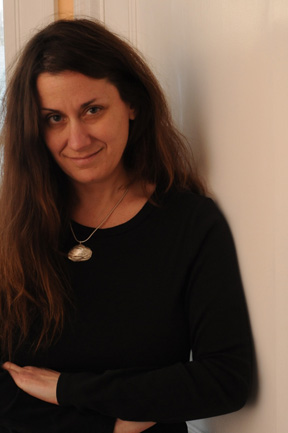
Penn State Behrend alumna Ellen Goldberg ’89 was running the Boston marathon on Monday, April 15 and was stopped at 24.8 miles after two bombs exploded near the finish line.

It was Goldberg’s eighth marathon and her fourth time running Boston, a race for which she raised money for the Massachusetts Association for the Blind and Visually Impaired .

“This was the first year I raised over $10K ($10,150) in one season, for a four-year total of $27,334! People are generous,” she said.

Goldberg graduated from Behrend in 1989 with a BA in psychology and a minor in English. She attended the Ph.D. program in clinical psychology at Clark University for several years, but ultimately went on to earn an MBA from the High Technology program at Northeastern University in Boston.

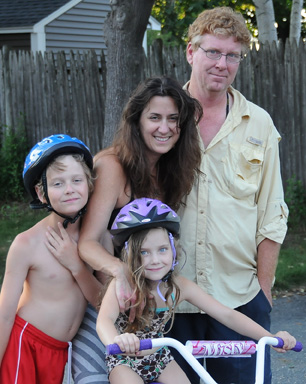
She currently manages operations at a non-profit in Boston called Clean Production Action, which works to get toxic chemicals out of products and the supply chain (cleanproduction.org).  She is also a freelance photographer who crafts seaglass and beach stone jewelry, and lives in Nahant, Mass., with her husband Michael, and their two children, Ben and Sarah, ages 10 and 6.

Here is Goldberg’s personal account of her experience at this year’s Boston Marathon:

What do I want to tell you?  This was a race I could not finish.  And not because I was struggling, shuffling, cramped, slow, sunburned, and wondering why the sidelines had thinned, but because, at mile 24.8, the metal gates crossed Park Street at the intersection of Beacon, and I was physically stopped, told the race was over, and that there was no finish line.

The day dawned bright and blue; logistics to the start were perfect. I think over the supportive emails I got in the closing days, make us proud, believe in yourself the whole way.  I cross the start, wiping tears I will not allow to come.  Crossing the start of the Boston Marathon means you did something really good to get there.

If all goes well, I could hope for a 4:30 today.

Mile 1:  10:14  Ok

Mile 2:  10:13   Fine

Mile 3:  10:21  This is the pace I need to maintain.  I feel ok.

Mile 4:  10:04  A little faster than pace but not enough to kill me.  Ok.

Mile 5:  10:21

Mile 6:  10:13

Mile 7:  10:14  I’m really pleased! I’m keeping my pace.  It doesn’t feel hard.  It feels normal.

Mile 8 & 9:  Something happens in my calf.  I feel a twinge, the beginnings of a cramp, and my mind flies back to Boston 2010, when debilitating leg cramps overcame me.  I run to the side of the road and take a salt pill.

Mile 10:  11:11, I stop to stretch out a calf.  I’m fearful.  I can still feel it.  It’s subsided, but hasn’t completely gone away.  It’s also warmer than I thought it was going to be.  I pour water on my head.

Mile 11:  11:31.  I keep it dialed back.  I am afraid to try to go faster.  I am afraid I’ll lose myself to calf cramps completely.

I start to think, 15 more miles is a long way to run with leg cramps.

Mile 12:  I really doubt I can do this.  I don’t think I can.  And then, Wellesley.  The women are here for me, again, reaching over the barriers, yelling, Ellen, you can do this, Ellen you’ve got this, Ellen you kick ass, go Ellen, go Ellen Go, Go!  

I wish I could explain to them, listen, it’s a long way to go, I’m not cut out for this, not with cramps, not the rest of the way and instead I run as close to them as I can, bow my head, hold out my arm, touch their outstretched hands, maybe next year I’ll be brave enough to kiss one of them myself. They make me run this mile.  I don’t do it for me, because I’m nothing now; I do it for them and their belief in me.

Mile 13:  12:48   I pass the half in 2:20.  A little over pace, but maybe there’s still a chance to pull off something respectable.

Mile 14:  11:41

Mile 15:  14:13  A cramp really hurts now, and I actually cry out.  I walk through a water stop, stretch, take another salt pill.  Keep the calf cramps just under the surface.

I think, I’m not having a good race day.  I think, at mile 16.5 I get to see my kids.  Karen will be there with Ben and Sarah and the turquoise lobster umbrella.

Mile 16:  11:36

And there they are – I throw my arms in the air, hear the joyful There she is!  I run to the side of the road. I am wet from pouring water on myself and even too sweaty and disgusting for my kids to touch.  They give me more GU, pour water on me.  I stay there longer that I should.  I tell Karen I’m never doing this again.  I take my inhaler out of the back of my bra, take two precautionary puffs, and warily face the road again.

What do I have to look forward to next?  Arnie at the Mile 18 clock.  I can shuffle that far.

Mile 17: 18:34, including however many minutes I refused to get back on the course after seeing Karen & the kids.

There he is, and I throw my arms up and yell, “ARNIE!!!” and I come full force at him, somehow I find the energy. I don’t even slow down, just throw myself around him, push him backwards, almost knock him down, and I am as gross as ever, wet from Gu and water and salt. He tries to separate himself from me, takes a picture at the Mile 18 clock, shows me his wife, and starts to walk me further up the course.

I tell him I’m struggling, it’s not a great day for me, and he keeps walking me towards the water stop.  I think, why are you moving me forward? Why am I running this race? Why must I finish?  And he says, it’s all downhill after mile 21. And I’m off again, a mixture of walk breaks and determined angry thoughts.  I forget to hit my lap button at Mile 18.

Mile 18 and 19: 27:30. I say to a woman looking about as good as I do, Nobody quits at Mile 20.

What else do I have to look forward to?

Why do you run? Why do you do anything? Examine your motives.  I snarl to myself.

Mile 20:  13:07

It’s hilly, now, more so than usual, and that means it must be Newton.  I feel the hills in my quads, I am shuffling, straining, take another Gu, a bystander tells me, this is it, this is the hill, and I ask, Heartbreak?

Four years running this race and I don’t remember where Heartbreak Hill is until I feel it under me, see the huge broken heart drawn in chalk across the road. I stomp right in the middle of it and curse out loud.

And then it’s Boston College, behind the crowd barriers, Ellen! Ellen! If I don’t move to touch them, I will fall down. I need them and whatever they have, because I have nothing.  I talk to them in my head, please, give me what you have, I need you, and every hand I touch gives me something I can hold for later.

Mile 21:  14:00  Some odd behavior on the course.  Runners start talking on their cell phones.  Water station volunteers call out that there was an explosion at the finish.  The race is being diverted.  People are walking, talking on their phones, the bystanders start to back away.

Mile 22:  12:25  Choppers overhead.  Sirens.

Mile 23:  13:26  One more mile and I can see my kids.

Mile 24:  13:10  A half mile more.  But Beacon Street is usually much more crowded.  Spectators are walking on the sidewalk.  Army guys start barking instructions, “Off the road! Off the road!” I assume he means pedestrians?  Police cars zoom past me.

There they are:  Karen, Mike, Ben, Sarah, Cynthia.  I know there’s only a mile and a half to go.  I yell, run over to them, hug Ben and Sarah.  Cynthia is not yelling, and she does not look happy.  She tells me she thinks I should get off the course.

I have no idea why she would say this to me, 24.5 miles into this thing and I don’t care how I get there but I’m finishing this painful race.  “No!” I yell happily, “I’m going to finish! Yeah! I’m going to finish!” I jump back on Beacon Street, and a New Republic reporter hops in next to me, asks if I’ve heard what happened.  I say, “they tell me there’s an explosion and the race is being diverted.”  She asks if I will keep running and I say, “Well, who is going to stop me?”  

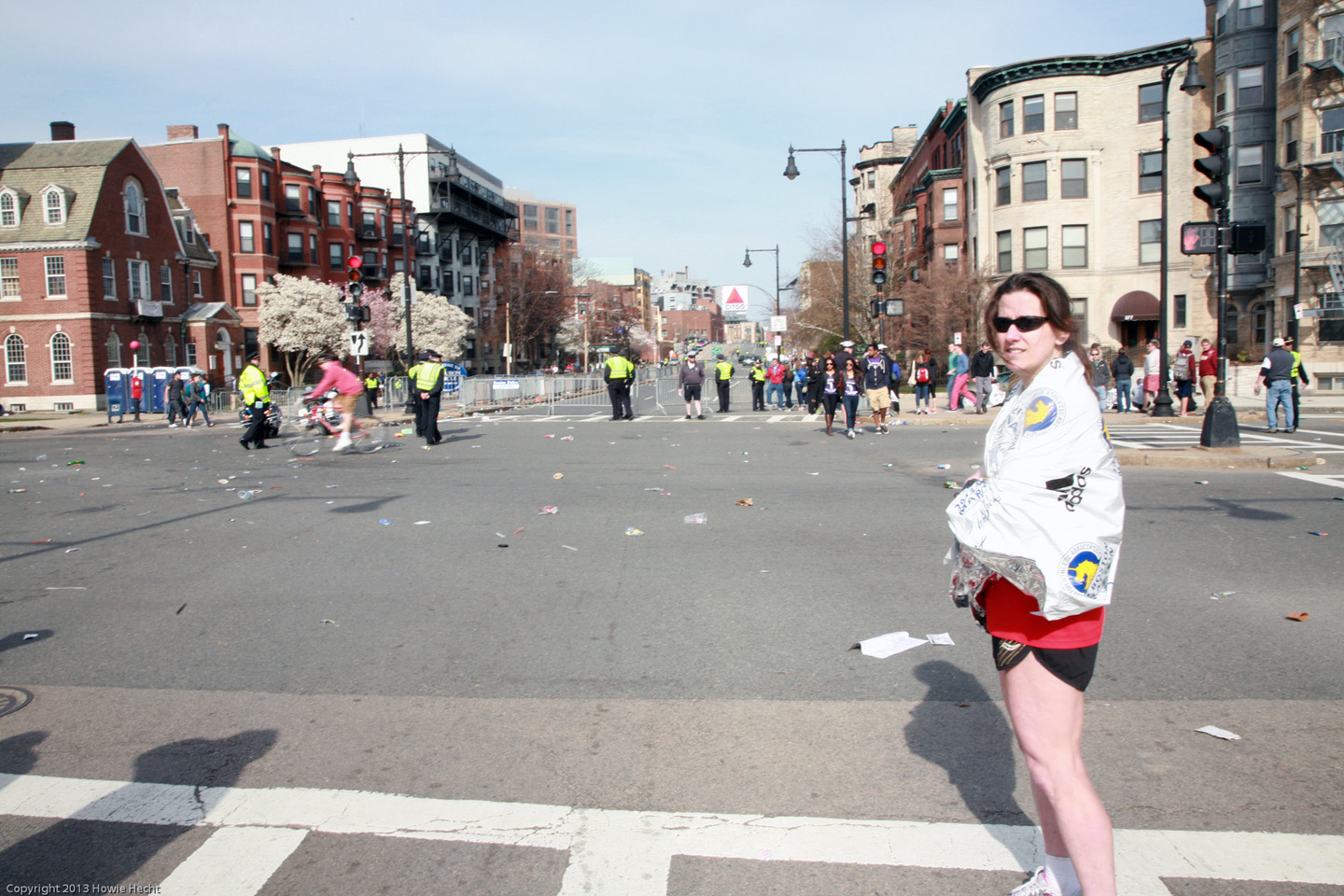
You’ve all heard the saying, “You and what army?”  Well, it’s THAT army.  The one at mile 24.8, setting up metal gates, standing in front of them, police cars flashing, a medical tent with chairs and Vaseline, jugs of water, mylar blankets in a box.  The Citgo Sign is in front of us.  We’re at mile 24.8 in a 26.2 mile race, and we’re stopped.

Mile 24:8:  4:59:40.

I sit.  Am I really not going to finish? What happened? Are people hurt? Where do we go? Is there food? I huddle, try to get out of the wind.

I put my head down.  I think, I raised $10,000 and couldn’t finish this race.  I couldn’t even finish the race. I meant to, I tried, and couldn’t.  What is pride? What is determination? What is my side of the deal?  What will I tell people?

A medical volunteer kneels.  “Are you OK?” he asks, and my eyes are big and wet and I say, “What would happen if I went around those gates? Could I keep going? Could I get to the finish myself? Would anybody stop me? I want to finish.”

He says, kindly, “You are finished.  It’s over.”

boston3

Photo by Howie Hecht

What happens next involves five hours of confusion.  On my person I have a leftover salt tablet in a baggie and an albuterol inhaler, both stuck in the back of my bra.  No money, no cell phone, no car key, no food.  I’ve just run 24.8 miles, and I don’t know what to do.

A woman sits next to me, tells me she’s Sarah, and she is a nurse, is there anything she can do?  I repeat my question, “Do you think I can finish? Do you think I can finish the race?”  I am teary and sniffling.  She lets me use her cell phone to try Karen and Mike; nobody has reception.

What’s next?

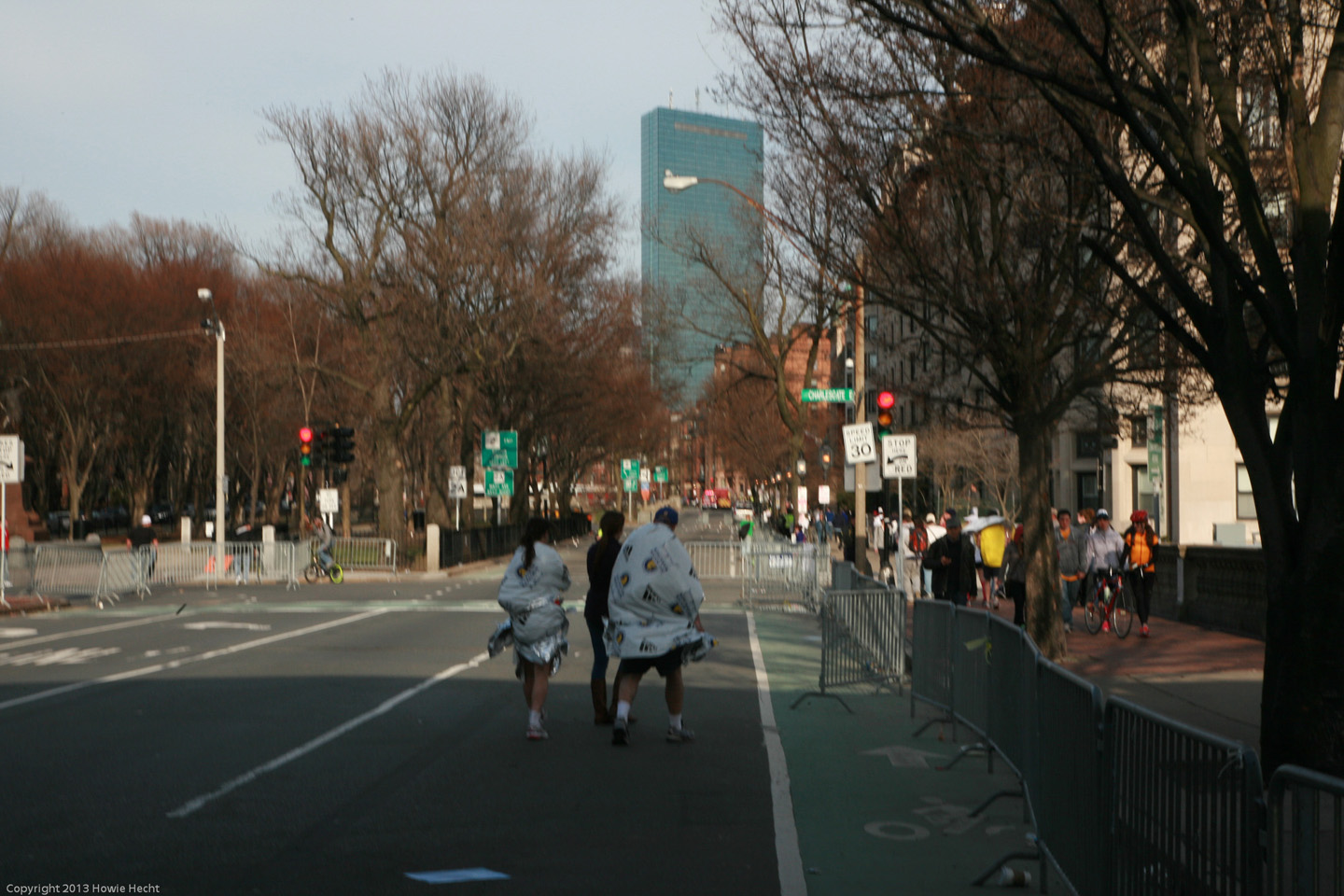
For two hours, we follow conflicting instructions, walk several miles, try to find a bus to some official place.  Sarah and her boyfriend Howie stay with Matt, another stymied runner at 40K, and me. They help us navigate the streets, wrap mylar around us, and let us use their phones.

boston2

Photo by Howie Hecht

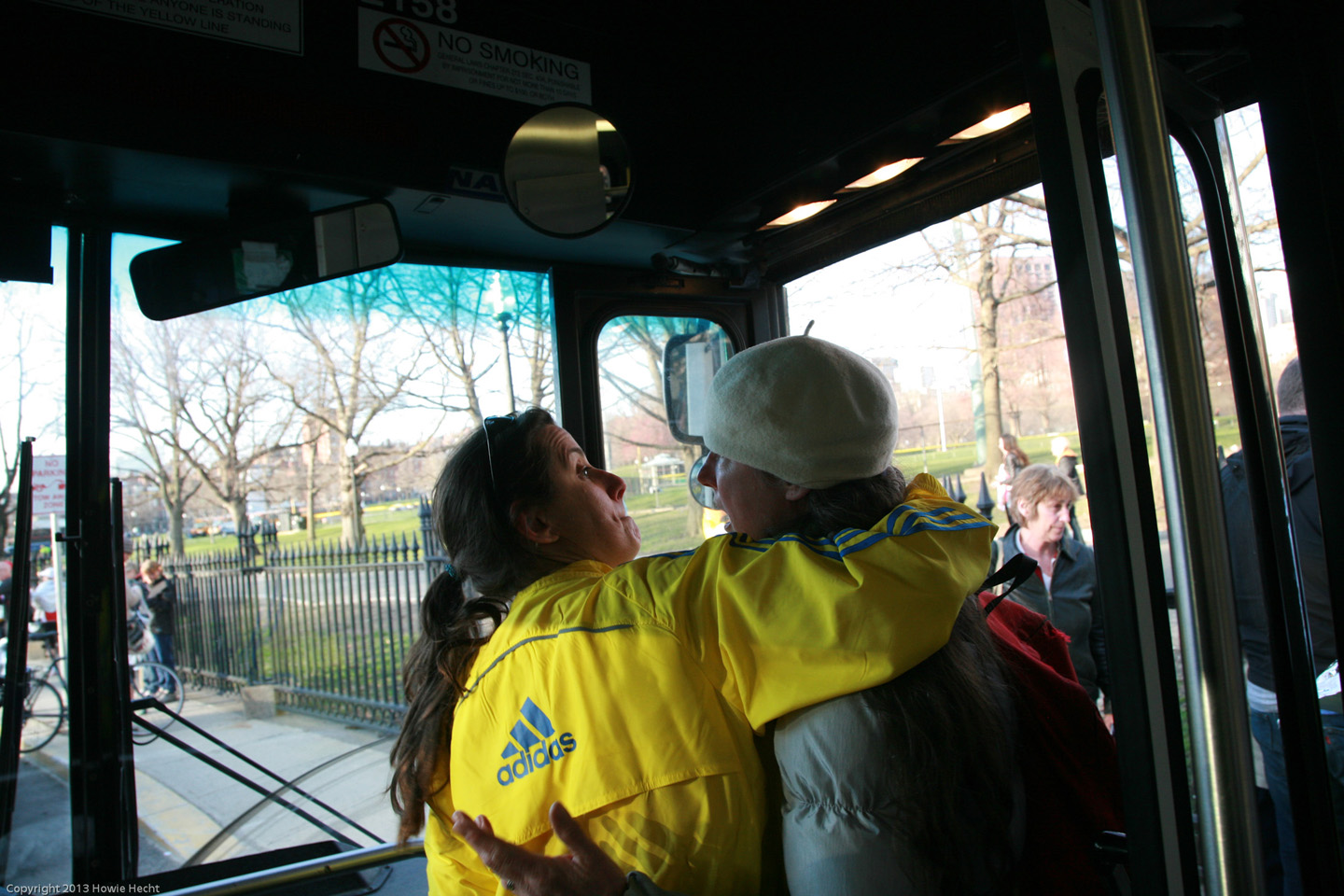
We straggle to a bus that brings us to a secure lockdown on the Boston Common, surrounded by SWAT teams and the National Guard.  A paramedic gives me a yellow marathon jacket, says he doesn’t like the looks of me.  I race Sarah’s dying phone battery to text Karen, who pecks back that Mimi and Lisa are looking for me, and the Public Health people let them in the area.

 I throw my arms around them when I see them at the door of the bus.

boston1

Ellen, left, hugs her sister-in-law, Mimi Quigley.  Photo by Howie Hecht

At Mile 16, when I told Karen I would never do this again, what did I mean?  As of this writing, I’ve raised $10,050 – over ten thousand dollars – for a local organization that provides services to the blind, the visually impaired, the brain injured, the developmentally disabled – those who need help and have no other means of getting it.  Over four years, that is $27,234, all by running this race.

That’s the end of my story.  It’s a strange one that I read aloud as I type; now my voice chokes and I stop to wipe my eyes.  I’m safe.  My family is safe.  I ran 24.8 miles before I couldn’t run anymore.   An eight-year-old boy died.  People lost limbs to a bomb.  I’ve no right to bitch about not finishing a race.

I have a yellow jacket, the phone number of a nurse named Sarah in Brookline who seems destined to be my new friend, a couple of duct-taped mylar blankets, and hundreds of emails from all of you, with one that ends, “It is still a victory.”

I like that.  Victory.  Not for all of us, true, but to think about crossing the start in Hopkinton again, in the memory and honor of those who would cheer us on again, if they could? That’s victory.

I hope I did what you asked.

I hope I made you proud.

— Ellen

boston - family

Ellen, her husband, Mike, and their children Ben, 10, and Sarah, 6