Darwin, Sharks, and Cake (Oh, my!)

sharks 2

February 12 event at Penn State Behrend celebrates Darwin and his Theory of Evolution

By Heather Cass

Publications Manager, Penn State Behrend

One of nature’s greatest success stories is one of its most fearsome creatures. Look no further than the top of the oceanic food chain– sharks—for the ultimate lesson in evolutionary survival.

“Sharks have a fossil record that extends back more than 420 million years,” said Dr. Todd Cook, assistant professor of biology at Penn State Behrend, who has done extensive research work on sharks and rays from the Mesozoic and Cenozoic eras. “As a group, they have been able to survive several mass extinctions and events that have wiped out countless terrestrial and marine species.”

Learn how these predators have adapted and evolved on Wed., Feb. 12 when Penn State Behrend’s School of Science hosts Darwin Day, an international celebration of the life and work of Charles Darwin.

“Darwin’s Theory of Evolution by means of natural selection is the central tenet that unites all areas of biology,” Cook said. “This day recognizes his immeasurable contribution to science, but especially to the natural sciences.”

Don’t be fooled by the word “theory,” Cook cautions.

“Common everyday use of the word ‘theory’ would imply that it’s simply an idea or a guess,” Cook said. “But Darwin’s Theory of Evolution is a well-substantiated explanation for natural phenomena that is supported by vast amounts of evidence. It has been, and continues to be, extensively scrutinized, and it holds up as a solid scientific theory.” 

The public is invited to celebrate Darwin at Behrend from 6:00 to 8:00 p.m., beginning with “Life: A Cosmic Story” at 6:00 p.m. in Yahn Planetarium, followed by a presentation “The Evolutionary History of Sharks” by Cook in Room 101 of Otto Behrend Science Building.

The event is free, open to the public, and geared toward those of all ages. After Cook’s lecture, attendees are invited to stay for a celebratory piece of cake.

Alumna honored for professional achievements

By Heather Cass, Publications Manager at Penn State Behrend

PSB-Ainsle_006

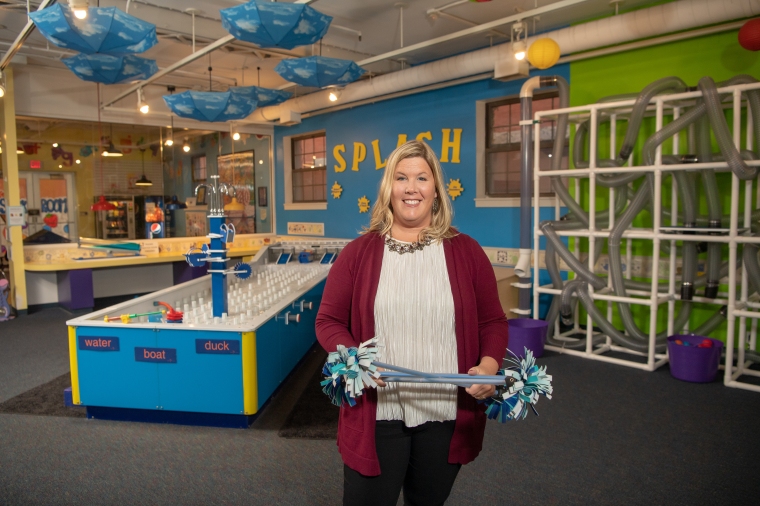
Ainslie Brosig, a 2001 Communication graduate, was recently chosen to receive the Behrend Commission for Women’s 2019 Woman of Impact Award.  The award honors women who are significantly involved with Penn State Behrend and have served as a positive force in their community.

As Brosig, executive director of the ExpERIEnce Children’s Museum, accepted the award at a luncheon at Behrend on Wednesday, the first thing she did was share the spotlight.

“I feel like I get all the credit, but it’s because of all the awesome work that they do,” she said, gesturing to members of her museum team seated at a nearby table. “They make me look good.”

Also in attendance at the luncheon were several of her former professors including Dr. Rod Troester, Dr. Miriam McMullen-Pastrick, Dr. Colleen Kelley, and Cathy Mester, who Brosig remembered had given her a “B” in her class.

“I’d like a retest,” Brosig joked.

She would surely get an “A” today. Brosig is credited with breathing new life into the children’s museum, which was struggling to stay open when she took the helm five years ago.  Brosig and her staff made slow and steady improvements as well as developing corporate and community partnerships that ultimately helped the museum double attendance and triple memberships.  The increased activity has led to even bigger things: Brosig just announced plans for a $15.1 million expansion and renovation of the children’s museum.

A mother of three, Brosig said the most rewarding part of her job is providing opportunities for families to have fun together.

“Children remember their mom going down the slide or their dad helping them build a dam in the water table,” she said. “Those types of interactions are precious and few for many families today.”

This year, Brosig worked with Melanie Ford, director of the college’s Youth Education Outreach program, on a partnership that allowed Behrend’s College for Kids program to offer week-long STEAM (Science, Technology, Engineering, Art, and Math) camps for youngsters at the ExpERIEnce Children’s Museum.

“Up until this summer, College for Kids had not been able to offer a lot of programming for very young kids,” Brosig said. “Of course, that’s what we specialize in, so we were happy to fill that need.”

Ford spoke highly of Brosig’s leadership skills at the luncheon: “You’ve heard the adage that it takes a village to raise a child,” Ford said. “Ainslie is making a huge impact on the children in our village through her work at the museum.”

Commission for women 2019 - ainslie brosig and comm professors

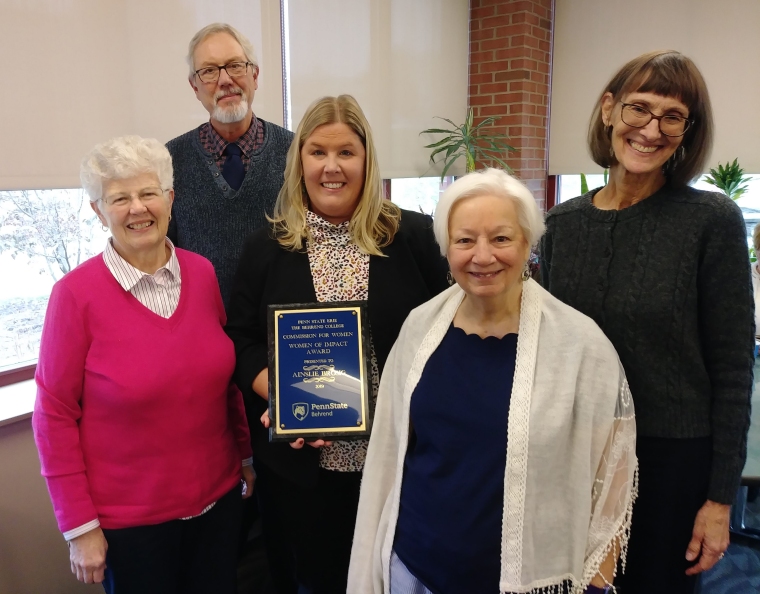
Communication alumna Ainslie Brosig ’01, executive director of the ExpERIEnce Children’s Museum, center, was awarded the Behrend Commission for Women’s 2019 Woman of Impact Award at a luncheon in November. Brosig, center, was joined by some of her former professors, from left, Cathy Mester, Dr. Rod Troester, Dr. Miriam McMullen-Pastrick, and Dr. Colleen Kelley.

Student Wins Bronze in State Equestrian Competition

By Heather Cass, Publications Manager at Penn State Behrend

Faith Wheeler1

While many college students spend their weekends working or catching up on sleep, one Penn State Behrend Marketing major spends her free time in a saddle, and she wouldn’t have it any other way.

Faith Wheeler, a first-year student from Edinboro, Pennsylvania, has been riding horses since she was in preschool. She began participating in 4-H horse shows when she was ten years old.

“I started out showing a little pony that I got for Christmas,” Wheeler said. “I still have him!”

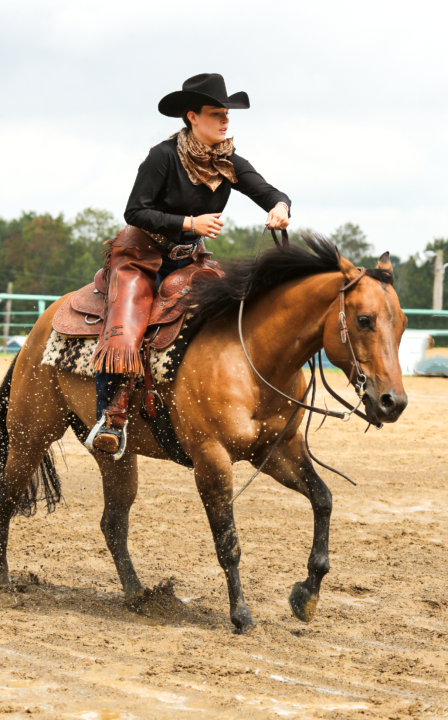
It was Ziggy, however, Wheeler’s faithful Quarter Horse, on which she rode to third place in Pennsylvania in the Ranch Horse Pleasure division of 4-H equestrian competition last month. The two also placed fifth in the state in Reining.

The Behrend Blog recently chatted with Wheeler to find out more about her equestrian hobby and accomplishments.

What equestrian events do you compete in?

For the most part, I compete in reining and ranch riding. Reining is a pattern class that consists of large fast circles, small slow circles, spinning, and sliding stops. Ranch riding is a class that also has a pattern. You do multiple things including loping, trotting fast, slow riding, spinning, and backing up. In this class, you want to have a western outfit and ride like you’re out west working on a ranch.

What type of horse is Ziggy?

Ziggy is his barn name. His registered name is Ima Dream Chex. He is an 8-year-old registered Quarter Horse. His grandfather is the famous Hollywood Dunit.

Horses are said to have distinct personalities. What is Ziggy’s personality like?

Horses absolutely have personalities. Not everyone can see them, but when you have a bond between you and your horse, you can definitely see it. Ziggy has great personality. He is very loyal toward me and willing to do things that he is not 100 percent sure about. I believe he puts in just as much effort as I do and that’s why we compete so well together.

How do you train while you’re a student at Behrend?

I live on campus but go home on weekends. My weekends are devoted to my family and horses. I practice on Saturdays and Sundays for about two hours each day. The shows I compete in are usually on weekends, so it doesn’t interfere with classes.

What does it mean to have gone to 4-H state competition?

States is the largest Pennsylvania 4-H horse show.  You have to qualify by placing in the top three in your class at the district show. Ziggy and I placed in September at the Crawford County fairgrounds.

What does it take to do well in this sport?

It takes commitment, a lot of hard work, and dedication to your horse. It takes both horse and rider competing as one. The horse needs to enjoy what they are doing. If they don’t like it, it would be a constant battle and that would be no fun for the horse or rider.

What would people be surprised to know about your sport?

The level of discipline, exercise, and practice required. The rider is an athlete! Riding requires strength in the arms, legs, and core. Riders also have to have patience and courage to build a working relationship with a 1,200-pound animal. Horses have good and bad days and riders must learn to adapt and figure out what works on any given day.

What are your career goals?

I’d like to work in marketing for a national, brand-name company in the horse/western industry.


This slideshow requires JavaScript.

PLET student travel to Germany — final report

Guest Post by Lauren Hampton, Plastics Engineering Technology major

No matter how vivid the photos or descriptive the lecture, there’s nothing quite like seeing and experiencing another country in person. And, in today’s increasingly global business climate, it’s vital that students be versed in the culture and business practices of international partners. There is much to be learned from seeing how others do it. That’s why, every year, students in the Plastics Engineering Technology (PLET) program have the opportunity to travel overseas to visit plastics companies and universities and attend a plastics trade show, too.

On Thursday, Oct. 17th, a group of PLET majors embarked on an 11-day trip to Germany. We asked student Lauren Hampton to keep a travel log and tell us about the trip. Here is her final report on the experience: 

Day 9 — Friday

Today, we visited Rosenheim University of Applied Sciences. They have a plastics engineering program similar to the one we have at Penn State. Additionally, students from both Penn State Plastics Engineering Technology and Rosenheim Plastics Engineering can participate in a semester study abroad program at the respective school. During our visit, we had a wonderful tour of their labs and got lots of information about the different research projects they are currently working on.

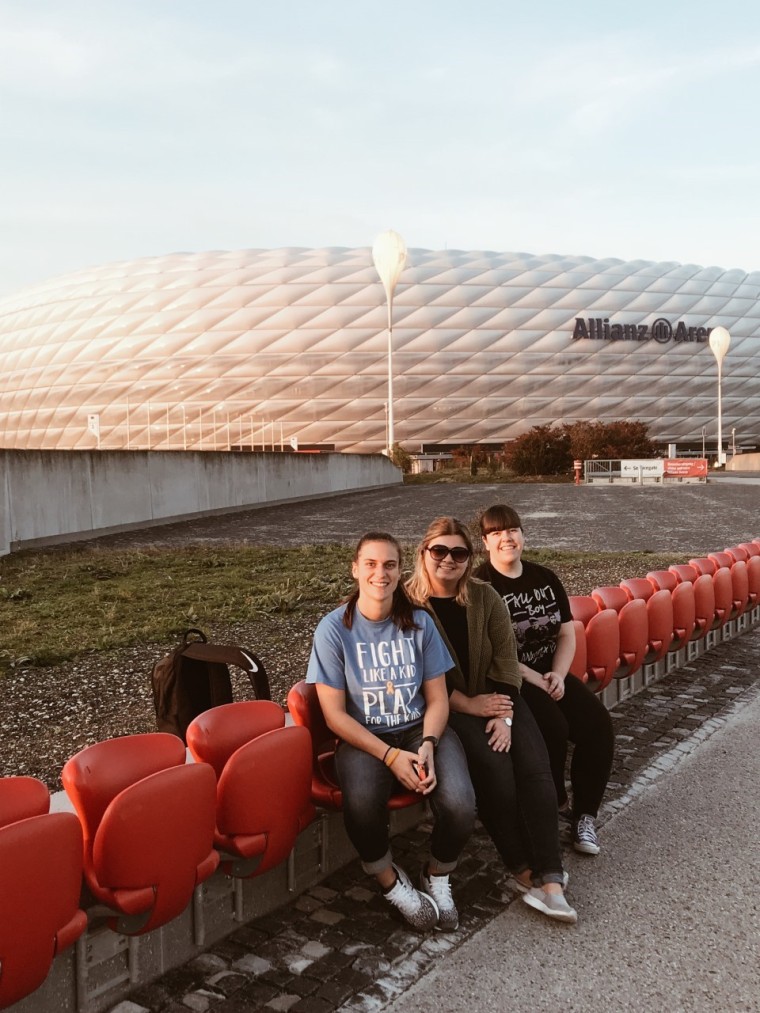
After our tour at Rosenheim, students had a free afternoon in Munich. Some toured the Allianz Arena where FC Bayern Munich plays. Others explored the city.

Group Photo at RosenheimStudents at Allianz ArenaStudents at Allianz Arena

Day 10 — Saturday

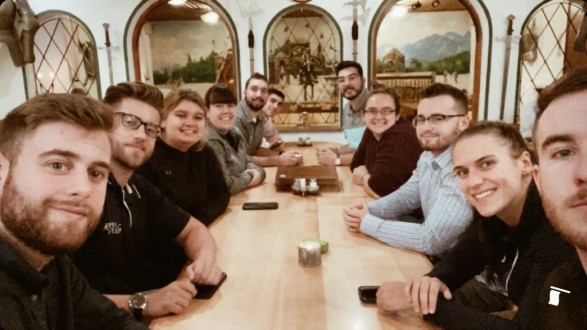
Today, we had a free day in Munich and it was our last (non-travel) day of the trip. Students did a variety of activities during the day. A couple of students visited Eagle’s Nest. Others went to some museums and went shopping in Marienplatz. In the evening, we had a group dinner at Schneider Bräuhaus.

Students at Eagle’s Nest

Students at Eagle’s Nest.

Glockenspiel at Marienplatz

Glockenspiel at Marienplatz.

Parting thoughts

I would like to give a special thanks to all of the faculty members—Jon Meckley, Dr. Gary F. Smith, Lucy Lenhardt, and Dr. Israd Jaafar—who took us on this once-in-a-lifetime trip. I can say on behalf of all of the students, we had a wonderful time and this is an experience that we will remember and cherish for many years to come.

Auf Wiedersehen, Deutschland!


PLET Students travel to Germany — Travel Log #2

Guest Post by Lauren Hampton, Plastics Engineering Technology major

No matter how vivid the photos or descriptive the lecture, there’s nothing quite like seeing and experiencing another country in person. And, in today’s increasingly global business climate, it’s vital that students be versed in the culture and business practices of international partners. There is much to be learned from seeing how others do it. That’s why, every year, students in the Plastics Engineering Technology (PLET) program have the opportunity to travel overseas to visit plastics companies and universities and attend a plastics trade show, too.

On Thursday, Oct. 17th, a group of PLET majors embarked on an 11-day trip to Germany. We asked student Lauren Hampton to keep a travel log and tell us about the trip. Here is her report latest report from Germany:

Day 6 — Tuesday

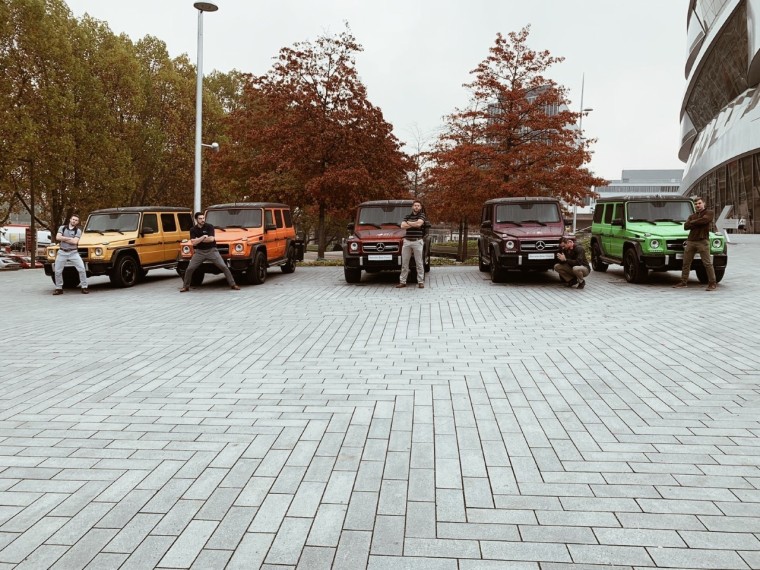
Today, we toured the Mercedes Benz engine plant in Stuttgart. We learned about the company’s history in the Neckar Valley. The afternoon was spent doing various activities. Students toured museums, visited landmarks, and explored the town.

at Mercedes

Students at the Mercedes engine plant in Stuttgart.

Birkenkopf

Students at Birkenkopf.

Dr. Smith and Cake

Dr. Smith likes cake. 

Day 7 — Wednesday

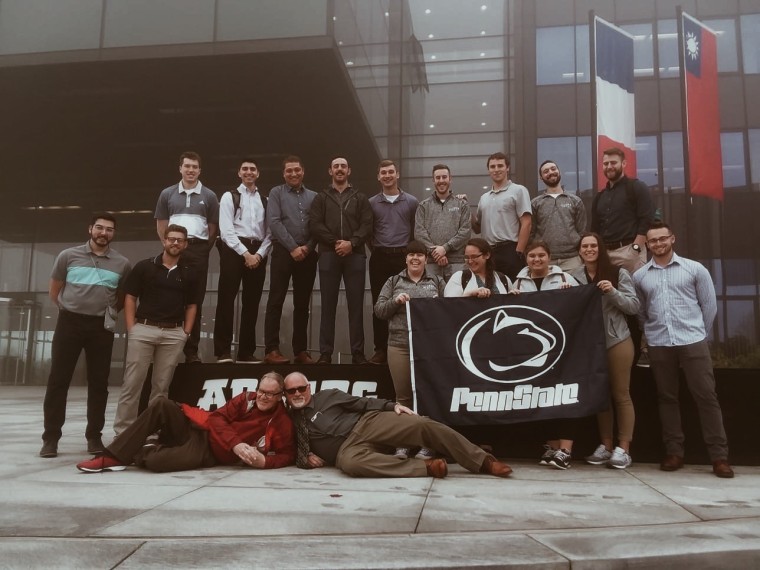
Today we toured Arburg, a prominent injection molding machine manufacturer. Following the tour, we traveled to Füssen. In Füssen, students went out for dinner and explored the town afterwards. Throughout the day, we rode on a total of seven trains – which is a lot of trains, if you ask me.

Group Photo at Arburg

Group photo at Arburg.

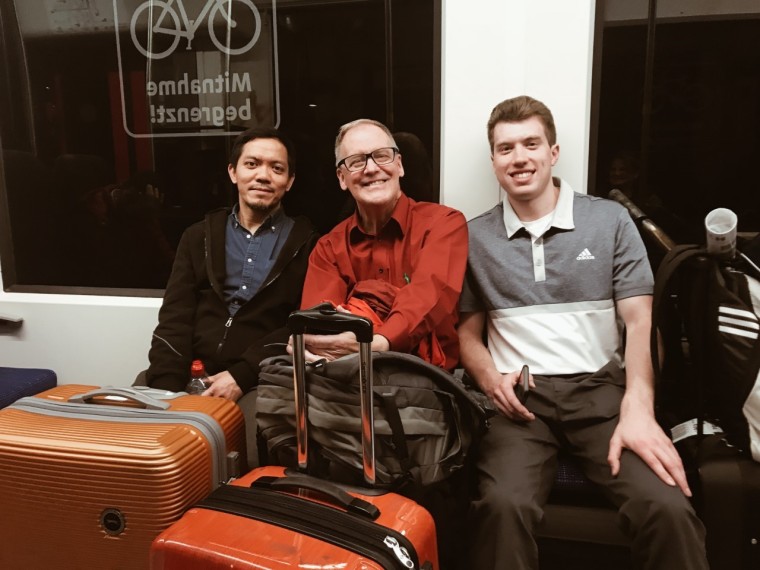
Happy Train Travelers featuring Dr. Smith, Dr. Jaafar, and Ryan Malatesta (Rye Bread)

Happy train travelers — Dr. Smith, Dr. Jaafar, and Ryan Malatesta.

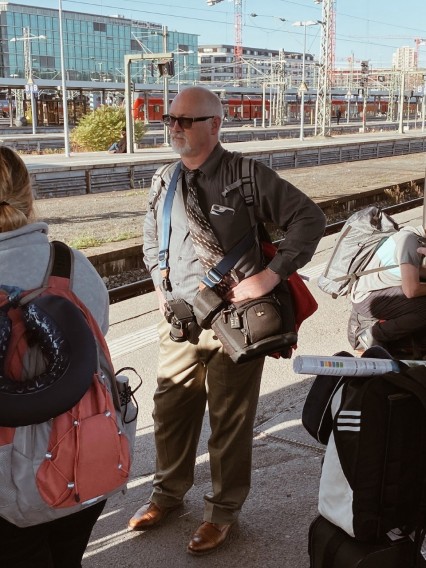
Mr. Meckley

The lonely traveler: Mr. Meckley.

students at dinner

Students at dinner.

Day 8 — Thursday

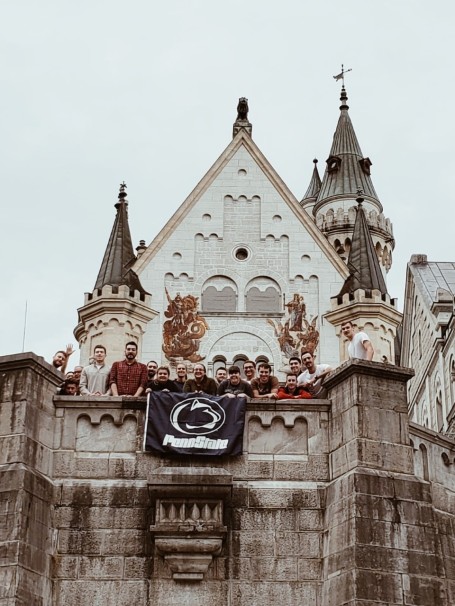
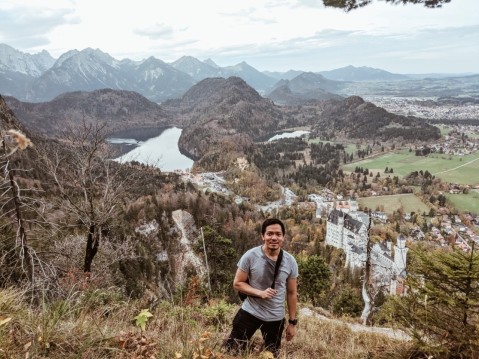
Today we hiked up to Neuschwanstein Castle. We had a private tour inside the castle and then explored the surrounding area. Some went shopping while others hiked up Säuling Mountain.  Then, we travelled to Munich – our final destination.

neuschwanstein castle

Group photo at Neuschwanstein Castle.

Dr. Jaafar at the top of Säuling Mountain

Dr. Jaafar at the top of Säuling Mountain.


PLET students travel to Germany – Travel Log #1

Guest Post by Lauren Hampton, Plastics Engineering Technology major

No matter how vivid the photos or descriptive the lecture, there’s nothing quite like seeing and experiencing another country in person. And, in today’s increasingly global business climate, it’s vital that students be versed in the culture and business practices of international partners. There is much to be learned from seeing how others do it. That’s why, every year, students in the Plastics Engineering Technology (PLET) program have the opportunity to travel overseas to visit plastics companies and universities and attend a plastics trade show, too.

On Thursday, Oct. 17th, a group of PLET majors embarked on an 11-day trip to Germany. We asked student Lauren Hampton to keep a travel log and tell us about the trip. Here is her report from the first five days:

DAY 1 — Thursday, Oct. 17

Day One… Here we go! All the professors showed up to the airport bright-eyed and bushy-tailed (specifically Mr. Meckley rocking his flip-flops and plaid cargo shorts). However, the students were slightly less bright-eyed and bushy-tailed. Some would say they looked like zombies. Nevertheless, everyone was excited and raring to go!

first flight

First Flight

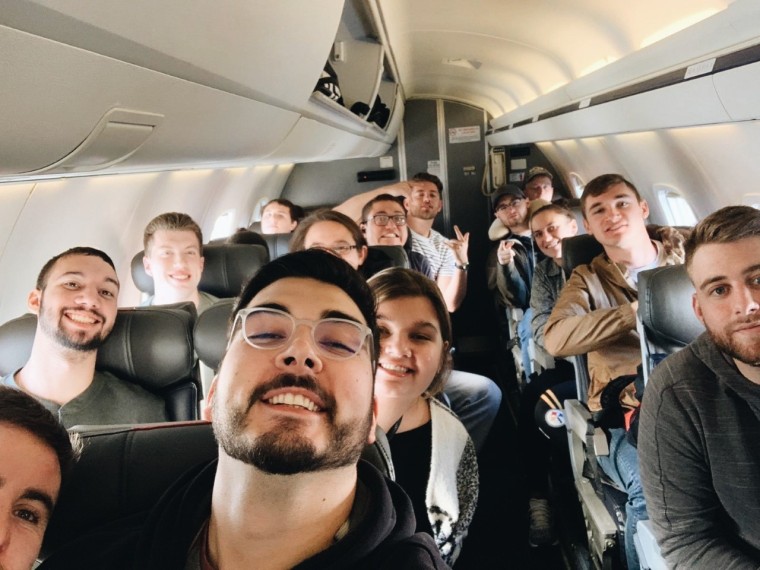
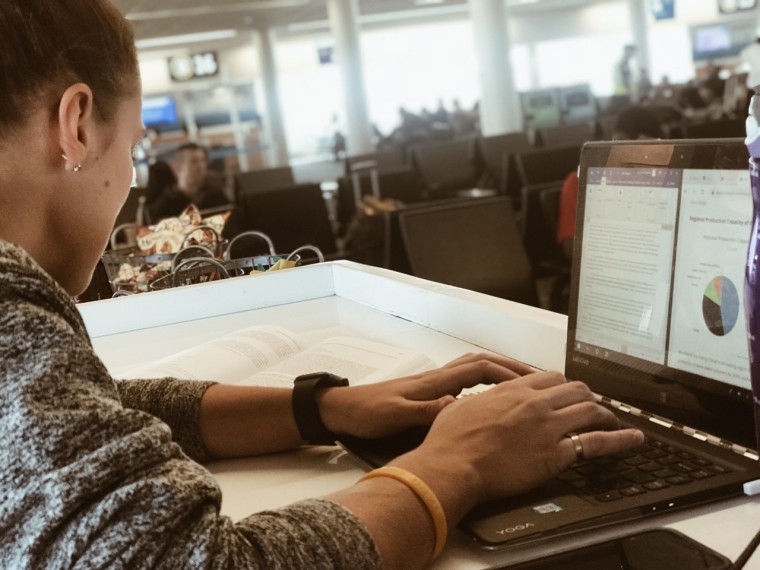
The first flight went very well. Most slept, some listened to music. Then… DUN DUN DUNNNNNNNNN…. THE. EIGHT. HOUR. LAYOVER. Below are some of the activities students chose to participate in to pass the time, including: homework, card games, chit-chat, and of-course some sleep.

layover homework

Homework! Of course!

 card games

Card games

Days 2 & 3 — Friday & Saturday

We arrived in Cologne (Köln), Germany early Friday morning. We had two free days in the city. During that time, we explored the city, ate lots of good German food, and took in all the beautiful views.

cologne

Cologne Cathedral and the Rhein River (Awesome Photo Taken by Dr. Jaafar!)

gelato

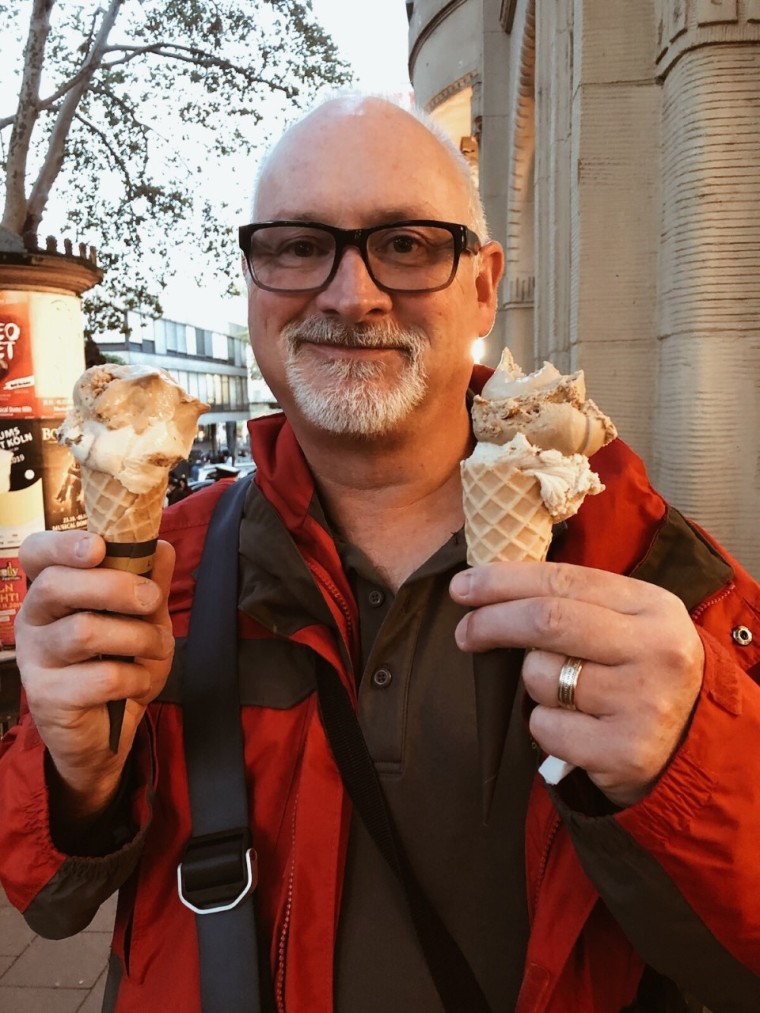
Jon Meckley, associate professor of engineering, with gelato. 

cathedra

Cologne Cathedral

jaafar and pretzel

Dr. Israd Jaafar, assistant teaching professor of engineering, and a giant pretzel. 

Day 4 – Sunday

We attended the K Show in Düsseldorf – the world’s number one tradeshow for plastics and rubber. We visited a number of companies and learned many new things!

smith and meckley with race car

Dr. Gary F. Smith, assistant professor of engineer, and Mr. Meckley with a Race Car at the K Show

interacting with lifting machine

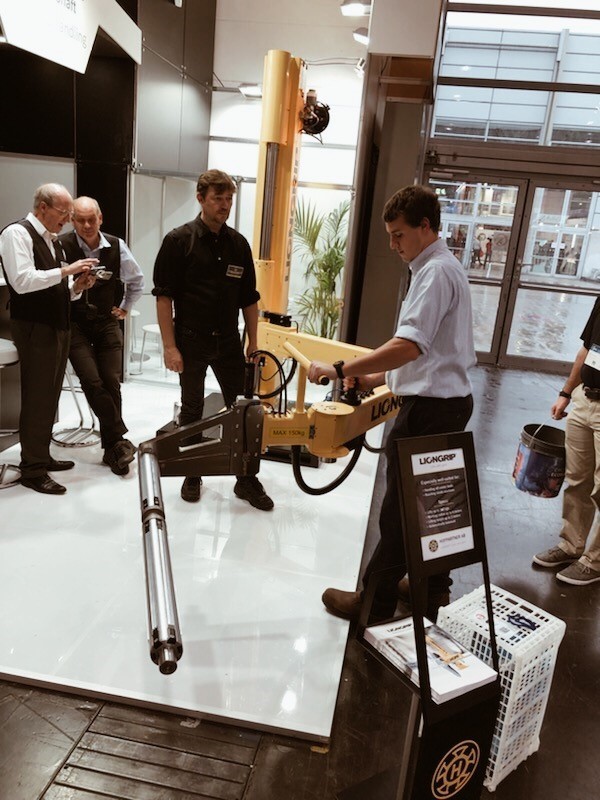
Interacting with Lifting Machine


stduents at K show

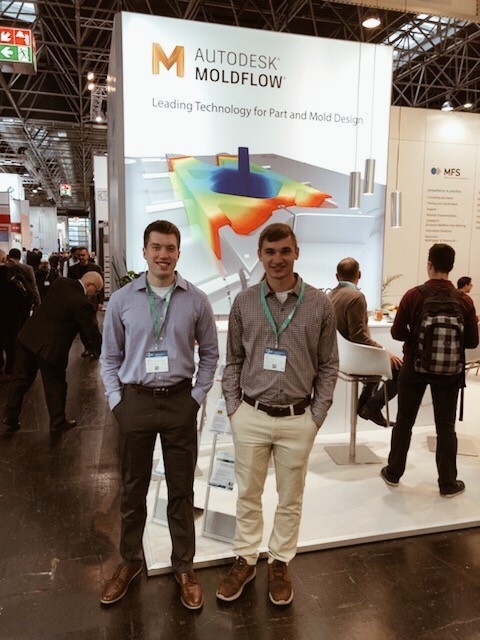
Students at the K Show

Day 5 — Monday

We attended our second day at the K Show.  We met with companies and got to see the new generation of molding machines!  Then, we hopped on a two-and-one-half-hour train ride to Stuttgart.  We arrived in Stuttgart around dinner time and spent the evening relaxing and getting ready for our next tour.

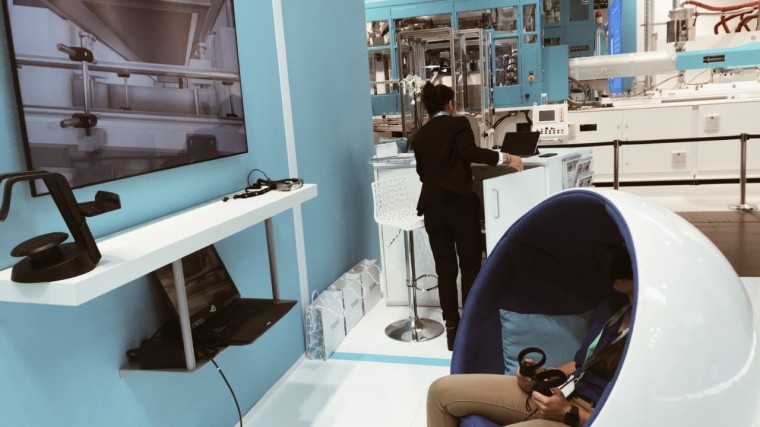
virtual reality of the K show

Virtual Reality at the K Show  (Inside of a Blow Molding Machine)

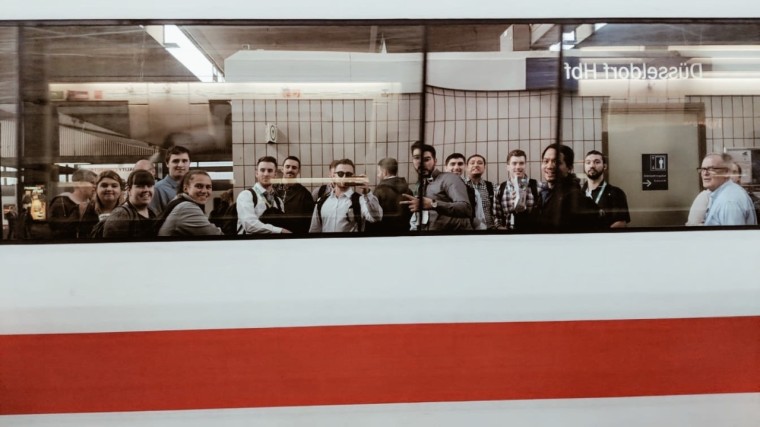
group pix at the train station

Group Photo at the train station. 

NEXT: The PLET students will tour the Mercedes Benz engine assembly plant followed by tours of the Mercedes Benz and Porche Museums. Then, they’ll visit several other cities in Germany before ending in Munich where they will tour the University of Applied Sciences Rosenheim.  We’ll post updates from Lauren as they arrive.


TV Game Show Appearance Fulfills Lifelong Dream of Alumnus

By Heather Cass, Publications Manager at Penn State Behrend

Answer: This 2008 Penn State Behrend alumnus appeared on Jeopardy a decade after earning dual degrees in Physics and Mathematics.

Question: Who is Jeffrey Machusko?

Though he didn’t win, Manchusko walked away with $1,000 and lifelong memories of a dream come true.

Manchusko grew up near Pittsburgh watching Jeopardy, the classic answer-and-question quiz show, with his family.

“I used to keep track on my fingers of how many I could get right,” he said. “I considered it a good night when I made it to my toes.  When my wife and I started dating, we learned early on that we were both big Jeopardy fans.  Watching the show was a great cheap date for us broke college students.”

Fortunately, Machusko, 33, a data engineer for a tech consulting firm in Colorado, is no longer broke, but he and his wife still enjoy the nightly quiz show. Last year, he had the opportunity to appear on the show and meet show host Alex Trebek.

Machusko - Jeopardy

We caught up with Machusko to ask him a few questions about his experience:

When did you appear on the show?

I filmed on November 1, 2017, and the episode aired January 25, 2018. It was a crazy time in my life. In the span of a week, I got married, went to Mexico for our honeymoon and flew from the honeymoon directly to LA to film.

How did you end up on the show?

There is an online pre-screening where participants face fifty rapid-fire clues. If you pass through that screening, you can sign up to be on the show. People who do very well on the screening are invited to live auditions that are held across the country.  The auditions feature another round of testing, then there is some live play where you get to use the buzzers from the show.

How did you do?
Not well! All three of us did poorly.  It was an unusually difficult game.  I did get a True Daily Double though, so it wasn’t a total loss.

Did anything surprise you about the experience?
I was caught off guard by how warm and friendly everyone who works there was.  It eased everyone’s jitters about being on TV.  I expected a show that’s been running for more than thirty years to be a bit of a cold, business-as-usual experience.  I enjoyed spending the day with the show employees and the other contestants.

Did any questions stump you?
Unfortunately, too many! I was never much of a fiction reader, and there were a lot of literature clues as well as other things I just don’t know much about, like trains and Will Rogers.

What makes a good Jeopardy player?
I think the best thing you can possess is a skin-deep knowledge of a broad variety of topics. It also helps to be very fast on the buzzer. And, one thing I think has been overlooked until James Holtzhauer’s recent 32-game-winning streak is a willingness to take risks.

Are you just naturally curious about a variety of things?
Almost to a fault. I tend to get distracted easily.  My dad always had documentaries on when I was a child, and I think it helped foster my curiosity about the world.

What advice do you have for others who want to be on Jeopardy?
Just go for it!  I had to audition three times over ten years to get on the show. The first time I auditioned, I was a student at Behrend and I tried out for the college tournament.  In general, I’d suggest those who want to be contestants watch the show and try to understand the game. There’s a lot more to winning than just knowing the questions.

Were you involved in any clubs, sports, or activities while you were at Behrend?

My peers and I revived the Physics Club and put together a few events and a trip to Fermilab in Chicago.  I was also one of the founding members of the Rugby Club and its first president.

What is one of your fondest memories of Behrend?
Playing rugby.  It was a huge part of helping me find confidence outside of the classroom.  I also really enjoyed the astronomy nights.  Seeing Saturn through the campus observatory was breathtaking.  Overall, being in an environment where I was able to grow and learn was so important and it set me up for success in my career.

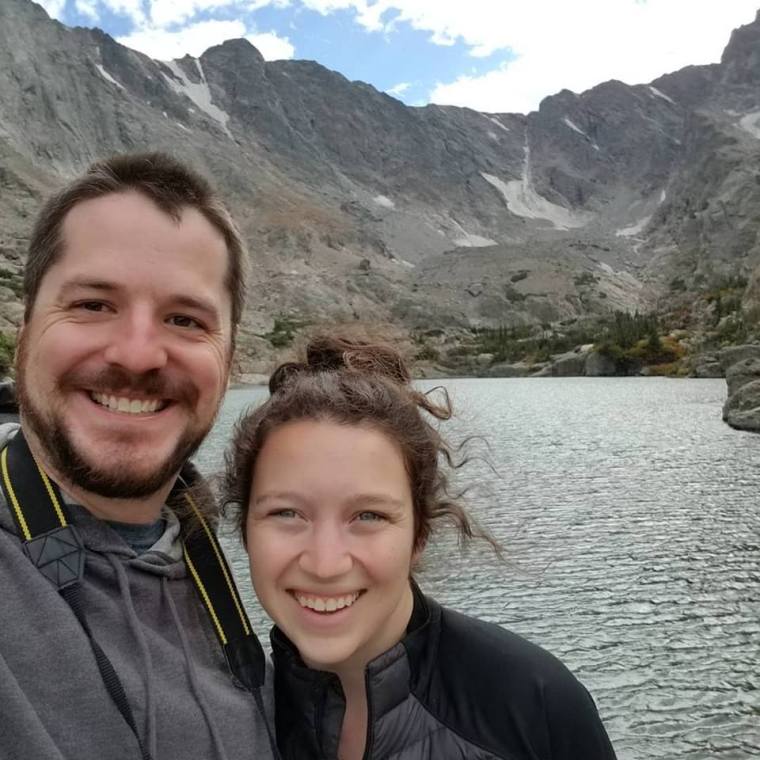
Machusko and wife rebecca at skypond

Jeffrey Machusko and his wife Rebecca at Sky Pond in Rocky Mountain National Park.

The Art of Science: Student/faculty artwork enhances science building

By Heather Cass, Publications Manager at Penn State Behrend

Science and the arts might seem to be very different disciplines, but the scientific method and the creative process are quite similar; inquiry is at the heart of each.

“People sometimes think science is about memorizing facts, but it’s really about making discoveries and wringing answers out of nature,” said Dr. Pam Silver, associate dean for academic affairs and distinguished professor of biology. “When you have a scientific question, it takes a lot of creativity to find the answer to it.”

Scientists are, by nature, creative individuals and the School of Science has recently added two works of art that visibly illustrate that.

Ties that bind

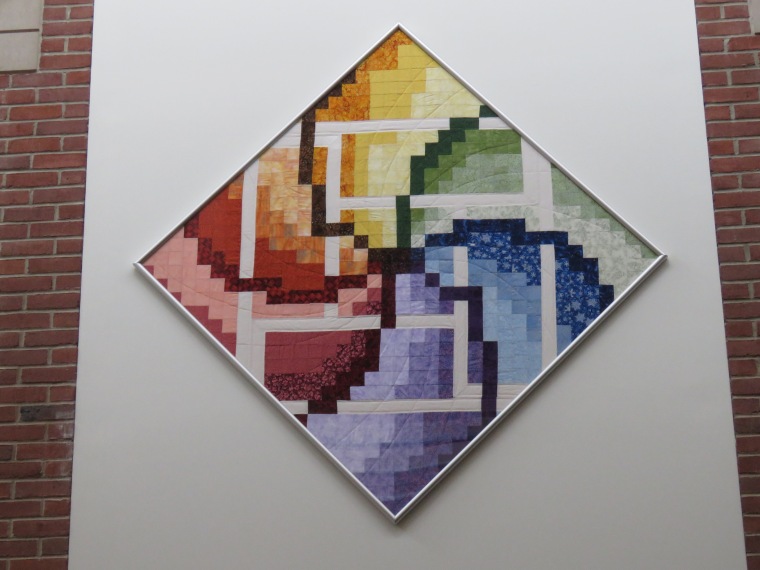
A colorful quilt, titled “A Way of Knowing,” was created by Silver and hangs in Hammermill Hall. Each color in the quilt represents a scientific discipline taught at Behrend—biology, chemistry, environmental science, nursing, physics, and mathematics and mathematics education. A spiral in the quilt represents the net movement of scientific discovery from observation to hypothesis to testing to understanding.

Furthermore, the underlying geometric design “symbolizes that the building blocks of science are not individual disciplines, but rather the discoveries to be made by merging diverse ideas, points of view, and approaches to form a strong and unified way of knowing with the goals of wisdom and the power to enact that wisdom,” Silver said.

briefs - artwork - quilt (1)

“A Way of Knowing,” by Dr. Pam Silver, associate dean for academic affairs and distinguished professor of biology, hangs near the stairwell in Hammermill Hall. 

Math in flight

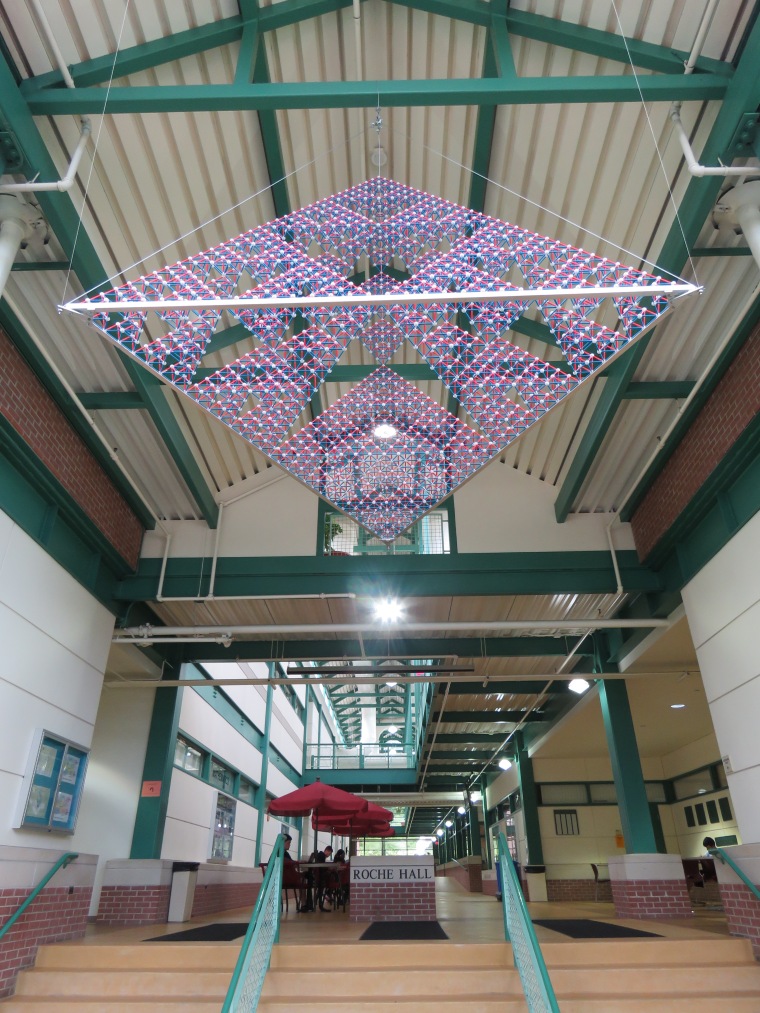
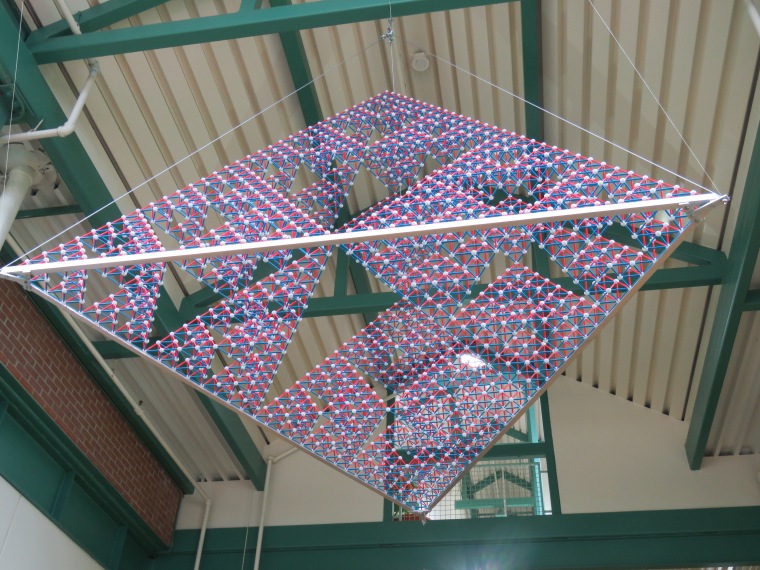
High overhead at the entrance of Roche Hall, is another work of art—a stage-5 Sierpinski tetrahedron that models a fractal with infinite triangles—created by the School of Science Math Club under the direction of club president Thomas Galvin  and Dr. Joe Previte, associate professor of mathematics.

“A fractal is a self-similar structure with recurring patterns at progressively smaller scales,” Previte said. “Fractals are useful in modeling natural structures such as plants, coastlines, or snowflakes.”

Some natural objects appear to be completely random in shape, but there is an underlying pattern that determines how these shapes are formed and what they will look like, according to Previte. Mathematics can help us to better understand the shapes of natural objects, which has applications in medicine, biology, geology, and meteorology.

Students built the fractal using Zometool construction parts. It consists of 2,050 white balls and 6,144 red and blue struts. Learn more about fractals at www.mathigon.org/world/Fractals

briefs - artwork - fractals (1)

A stage-5 Sierpinski tetrahedron created by the School of Science Math Club hangs above the entrance to Roche Hall. 

briefs - artwork - fractals (2)


Student garden interns spend summer sowing seeds of sustainability

By Heather Cass, Publications Manager at Penn State Behrend

67914587_2138250739801265_1950054429583474688_n

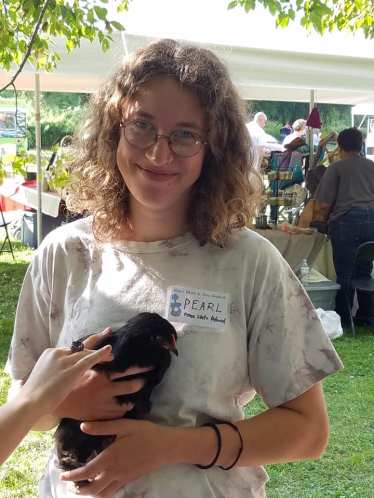
Cuddling chickens is not an activity you would expect at Erie’s Blues & Jazz Festival, an annual weekend-long summer music concert in Frontier Park. But two Penn State Behrend students, Jessie Johnson and Pearl Patterson, knew that a handful of hens at this popular event would be a great way to draw attention to their efforts to overturn a law against keeping chickens in the City of Erie.

Johnson and Patterson are spearheading the operation through Chicks4Erie, an online community they formed through Instagram and Facebook to spread the word about urban poultry-keeping.

“Allowing Erie residents to legally keep chickens will bring numerous positive benefits, including improving the environment through the reduction of pests like ticks and providing organic soil amendments for gardeners,” according to the Chicks4Erie mission statement written by Johnson and Patterson, both Student Garden interns at Behrend. “It will also increase self-sufficiency and food security through the production of eggs and contribute to the city’s encouraging overall trend toward urban agriculture.”

The Chicks4Erie initiative is just one of several projects that three Behrend students—Johnson, Patterson and Aydin Mitchell— have been hard at work on this summer as interns for the University’s Sustainable Food Systems Program.

The program, which launched at University Park three years ago, was expanded to Penn State Behrend in 2018 because of food systems already in place on campus. Among these is the student garden, started by the Greener Behrend student organization in 2016. Greener Behrend president, Celeste Makay, a senior Environmental Science major, has continued to help with the garden for the last two years.

Student Garden interns are responsible for the gardens on Behrend’s campus, but their work reaches far beyond weeding and watering.

“They run the campus CSA (community supported agriculture) program that we started, including generating a newsletter and recipes for members, supporting the Erie schools by serving as coordinators of the Jefferson Elementary School garden, and doing outreach programs throughout the district,” said Katie Chriest, sustainable food systems program coordinator for Commonwealth campuses.  “They also are active members of Erie’s Food Policy Advisory Council, and they are finetuning plans for a new campus club that will debut this fall,”

But, that’s not all. The student interns also host educational activities at Behrend for students from Bethesda Trinity Center and the Neighborhood Art House, staff an informational table at the Little Italy Farmers’ Market in Erie, and research expansion efforts for campus garden space and other sustainable food systems initiatives.

Mitchell, a senior Environmental Science major, didn’t have much gardening experience before this summer, but said he has learned a lot along the way. Not all of it is rooted in the ground, but in other vital connections.

“I thought I’d just be taking care of the gardens, but it turned out to be so much more than that,” said Mitchell, who oversees the Jefferson gardens and serves as the manager of education and outreach for the Student Garden intern program. “It’s really about making connections with people in the community and helping them see how vital sustainable food systems are and how and why they should care.”

Which brings us back to the Erie Blues & Jazz Festival’s Sustainability Village where Patterson and Johnson were so successful at making a case for raising poultry in the city that they quickly ran of petition pages to sign.

“At one point, I asked Jessie, who is just going into her sophomore year, what it feels like to be gaining so much support and enthusiasm for their initiative from residents and community leaders,” Chriest said. “She said she was just amazed that, at such a young age, she could have such an impact on the community around her. I’m not sure there’s a more powerful message we could hope to send to our students than that their work matters and that they can make the world a better, and more sustainable, place.”

This slideshow requires JavaScript.


Secret Lives of Staff — Brent Crandall, race car driver

There’s so much more to Penn State Behrend’s faculty and staff members than what you see them doing on campus. In this occasional series, we take a look at some of the interesting, unconventional, and inspiring things that members of our Behrend community do in their free time.

By Heather Cass
Publications Manager, Office of Strategic Communications, Penn State Behrend

As the maintenance trades supervisor, Brent Crandall could be in almost any building on campus on any given day, overseeing the maintenance and repair of the college’s mechanical systems. But on Sunday evenings, he’s easy to locate. Just follow your ears and the dust in the air to Eriez Speedway in Greene Township where Crandall has been dirt track racing for twenty years.

brent

Brent Crandall

“I used to go watch a lot and then a neighbor who raced there invited me to come over and work on his car with his crew, and that was it. I was hooked,” he said.

A year later, Crandall participated in his first race, driving a friend’s racecar. He quickly learned it was harder than it looked from the stands.

“I got hit before I even got to the green (start) flag,” he said with a laugh, “and, I was lapped right away.”

It didn’t slow Crandall’s enthusiasm for the sport, though. He soon bought his own racecar and trailer and started pouring his free time and expendable income into racing.

It’s not a cheap hobby, requiring not only cash for tires, racing oil, and auto parts, but hours spent maintaining, improving, and repairing cars from the inevitable bang-ups and wrecks that occur.

Crandall has built a couple of his racecars from the ground up. He does most of the work himself. “I do the welding, mechanics, and fabricating,” he said. “Everything but the machining.”

We caught up with Crandall (no easy feat, by the way) to learn more about his not-so-secret racing life.

What kind of car do you race?
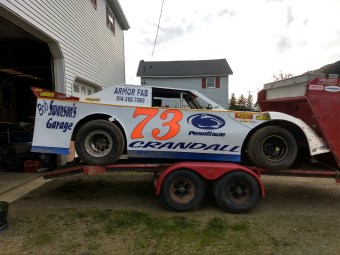
I started in the super sport division, which was supposed to be a less expensive class with cars made up of junkyard parts. But, as with anything in racing, the one who spends the most on their car often wins, so that division didn’t really turn out like I hoped. Now, I race street stock, which have a stock front stub, but a custom-built chassis and motor. My car is #73, which I picked because when I started driving I had two teammates and their cars were #53 and #63.
IMG_20190511_183335763_HDR

Why dirt track? What do you like about it?
Dirt track drivers have much more control over how they do in a race. A good driver can compensate for a less expensive car, and that’s not necessarily true in asphalt racing, where the best car is probably always going to win. Also, dirt track racing is just fun and exciting. There’s a lot more action in dirt track racing.

By action, do you mean bumps and wrecks?
Well, nobody wants to wreck, and drivers don’t ram you on purpose because our cars are expensive and we all have a lot of money tied up in them. But there’s plenty of bumping and sliding on the corners. Rubbing is racing!

Tempers must flare.
Oh, sure. Drivers can get heated up and when I started racing, there were regular brawls in the pits, but the track owners have done a lot to stop that, like fining drivers and making it a rule that if you want to confront another driver after the race, you have to take a pit official with you. Another thing that has helped a lot is videotaping of the races. When you’re in the car, you see things in one way, but when you get out and review it on video, you can see the big picture and why something might have happened. It’s gives drivers perspective and settles arguments.

Have you ever been injured in a race?
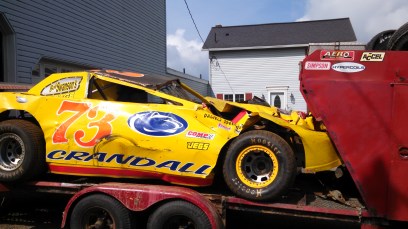
I’ve broken my wrist and had a concussion before. The worst accident I have ever had was a rollover last year. Racecars are built to withstand impact, but not while upside down. I was in third place and had fifteen cars behind me and was worried one of them was going to hit me while the car was on its roof. Once it stopped rolling and I landed on the tires, I knew I would be OK. Cars have fire extinguishers and drivers wear fire suits and five-part harnesses to keep us in the car until we need to get out.
IMG_20170723_103845_086

After the rollover crash

How do you see? Is all that dirt a problem?
Most drivers wear driving glasses with a few tear-offs on the lenses that allow you to quickly rip the top layer off if it gets covered in mud or dirt so you can see. But veteran drivers learn to rely on their other senses, too. I can tell by the sound what is going on and how near other cars are. And, as crazy as it sounds, you can almost feel it, too.

Who causes problems on the track? Is it new drivers?
People who switch positions a lot cause the most trouble. I make it a point to talk to new drivers and encourage them to hold their line and let the faster cars and more experienced driver go around them. You know, we want the sport to continue, so we try to help the younger drivers.

Do you consider it a sport?
People will sometimes say that drivers aren’t athletes, but I get a workout driving. There are so many times that I get out of the car and my whole body hurts from being tensed and my shoulders and arms are toasted from steering. It’s nothing like regular driving.

I’ll bet you have no problem driving in big city traffic?
Nope, doesn’t phase me. Neither does construction on the highway, like when you’re driving 70 miles an hour with concrete dividers on one side and tractor-trailers on the other. My wife will get nervous and I’m laughing, like, don’t worry, we’ve got tons of room. I’m used to guys being inches away from me.

How much does a racecar cost?
You could spend a fortune, of course, but I’d say most spend about $4,000-$5,000 on the chassis and another $5,000-$10,000 on a motor. I keep costs down by doing all my own work and buying parts at swap meets or from other racers.

What other expenses are involved?
Racing oil is expensive, $6 a quart, and we have to change the oil every three races, if not more. Tires are another big expense. I go to the track with twelve tires and can usually get three to four races out of them. It’s important to buy the right tires, though. If you buy the wrong ones, they’ll melt right off after one race. I can usually get two seasons out of an engine, which is another big ticket item.

Do you have to spend time finding sponsors?
I have a few, but they are mostly in-kind or trade sponsorships where the sponsors give me something (like car inspections or racing oil) in exchange for advertising on my car. When I started working at Penn State, I added the Penn State athletics logo and it earns me a lot of “We are!” and thumbs up from spectators, especially during football season. I always take time to talk to them about Penn State Behrend.

Do you race every weekend at Eriez? Are you required to?
I race every Sunday, unless it rains. We can’t race in the rain or on a wet track. The racing season is eighteen weeks long from May to September and you don’t have to race every week, but it helps you in the seasonal points race if you do.

What has been your best finish or moment in racing?
When I switched to street stock, I was named rookie of the year and finished in the top five for the season.
the Crandalls

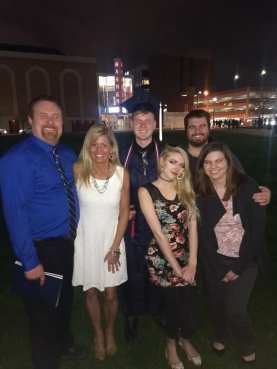
Brent Crandall and his wife, Carol (you may have seen her in Dobbin’s Dining Hall or Bruno’s Café. Carol works for Penn State Housing and Food Services). The two met in high school and have three children. Two of them, Ben and Nick, graduated from Behrend and their daughter, Olivia, is a junior majoring in Marketing. Pictured above, from left, Brent, Carol, Nick, Olivia, Ben and his wife, Courtney.

This slideshow requires JavaScript.