10 things I learned about survival at College for Kids

DSC_0851

By Heather Cass
Publications & Design Coordinator, Penn State Behrend

My daughter, Lauren, 10, spent last week making rope out of bark, building a fire with one match, foraging for edible plants, and creating a shelter with leaves, mud, sticks, and phragmites.

No, I didn’t drop her off in the woods, cackling “fend for yourself, baby girl.” (We’re only two weeks into summer break so I’m not that sick of my kids yet. Talk to me in mid-August, and I may sing a different tune). She attended “Surviving the Outback” class at Penn State Behrend’s College For Kids.

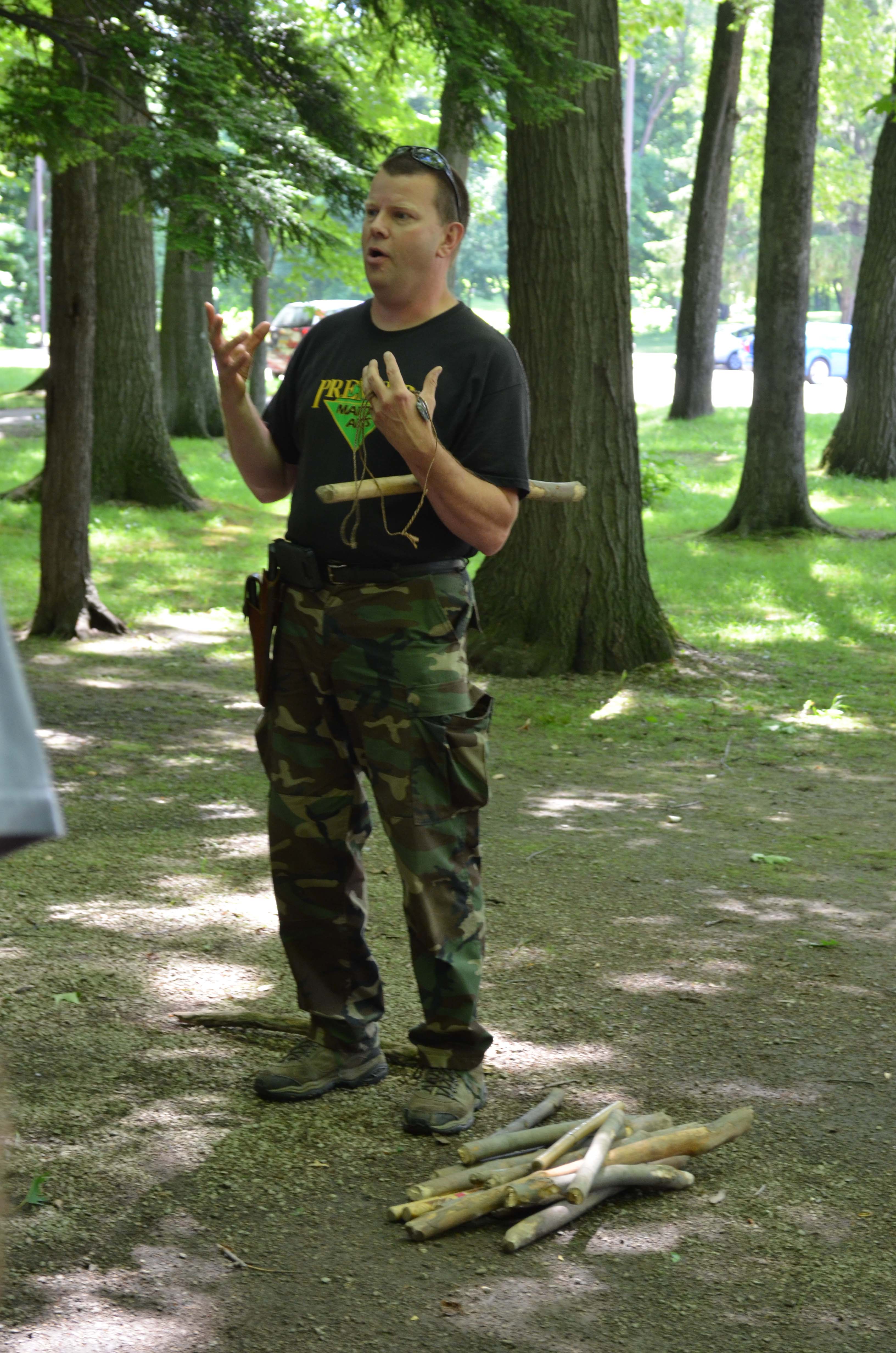
On the last day of class, the instructor, Tim Lucas, a survivalist and owner of Premier Martial Arts in Erie, invited parents to see what their kids (ages 8-12) had been learning and doing all week.
DSC_0850

If you ever find yourself lost in the woods or otherwise living the primitive life, here are ten things I learned during my one-hour survivalist lesson with Lucas:

  1. When it comes to survival in the wilderness, your four priorities in order of importance are: shelter, water, fire, and food.
  2. You can live for two weeks with just shelter and water. “Shelter is most important,” Lucas said. “You’ve got a couple days to find water and weeks to find food, but exposure can kill you quickly.” According to this site, you can live without shelter for three hours, without water for three days and without food for three weeks.
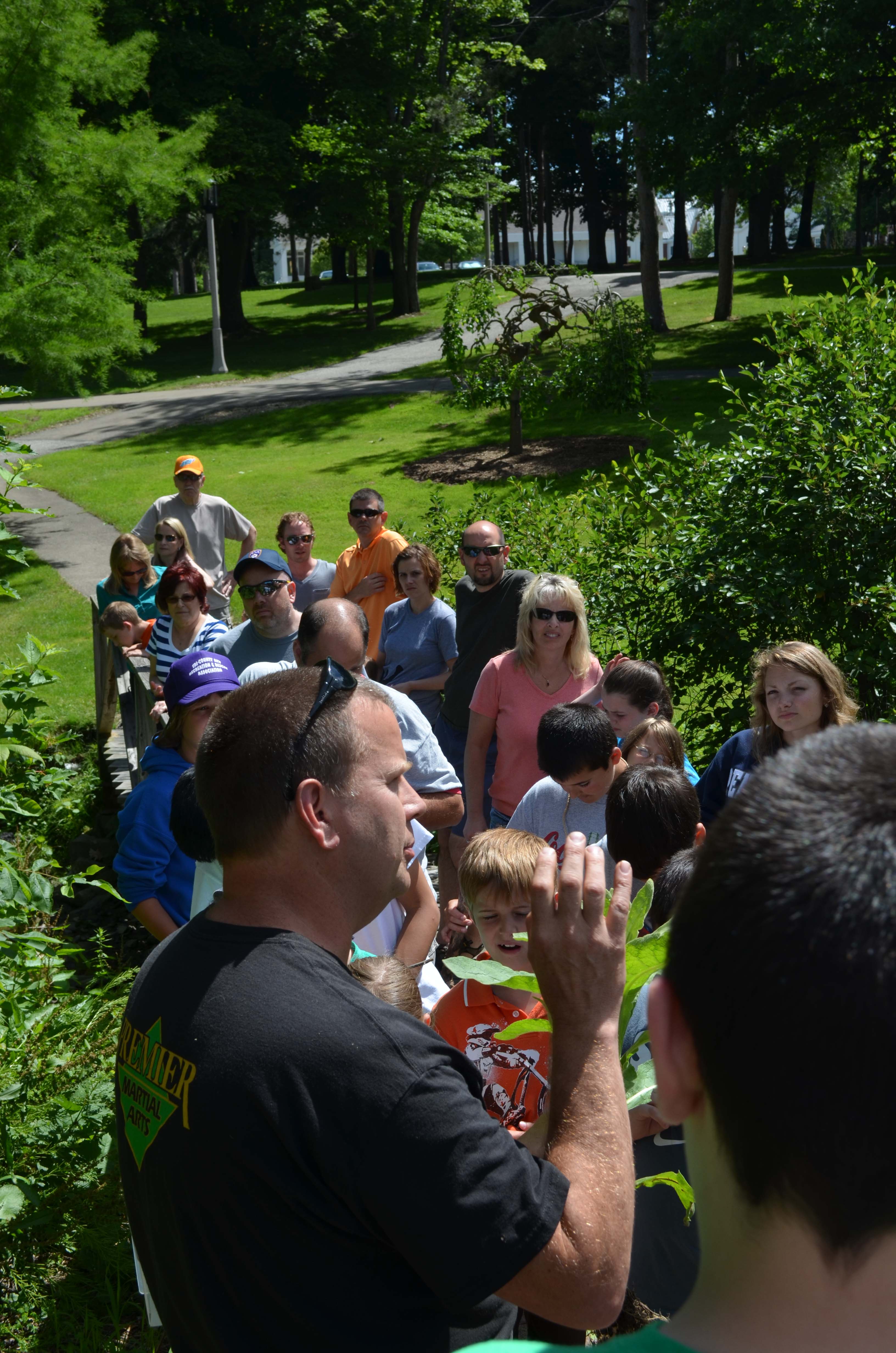
  3. Jewelweed, a common Pennsylvania weed, is a great poison ivy cure. If you’re exposed to poison ivy, crush the jewelweed in your fingers to make a pulpy mash and cover the poison-ivy exposed skin with it. More on that here.
  4. Cattails are one of the most valuable plants for survival. They provide not only food, but also tinder, insulation, and shelter material.
  5. Aside from a sharp knife, one of the most useful tools for wilderness survival is an arm-length, wrist-thick throwing stick. Properly thrown sticks can be used to take down a small animal (raccoon, rabbit, etc.).
  6. You can make twine/rope/cordage using the bark from dead trees and using your fingers to shred and twist it. “Look for trees with dead bark, and strip off long sections of the softer layer between the wood and the outer bark,” Lucas said.
  7. Phragmites, cut and bundled, make great sleeping mats, blankets, chairs, and shelter cover.
  8. When building shelter, be sure to put down a thick (several inches) layer of leaves (or phragmites) to separate your body from the ground, which can get very cold.
  9. Build a fire ring with an opening toward you/your shelter to conserve and aim the heat. The stones should be nose high when sitting in front of it.
  10. Daisies and clover are edible not just for rabbits and deer, but for humans, too. In fact, many wild plants are edible.

So what are your kids doing this summer? There are still openings in many exciting, fun, and educational (don’t tell the kids that though) classes at College for Kids (Click on the registration link to see which classes still have openings) Who knew summer school could be so much fun?
DSC_0852

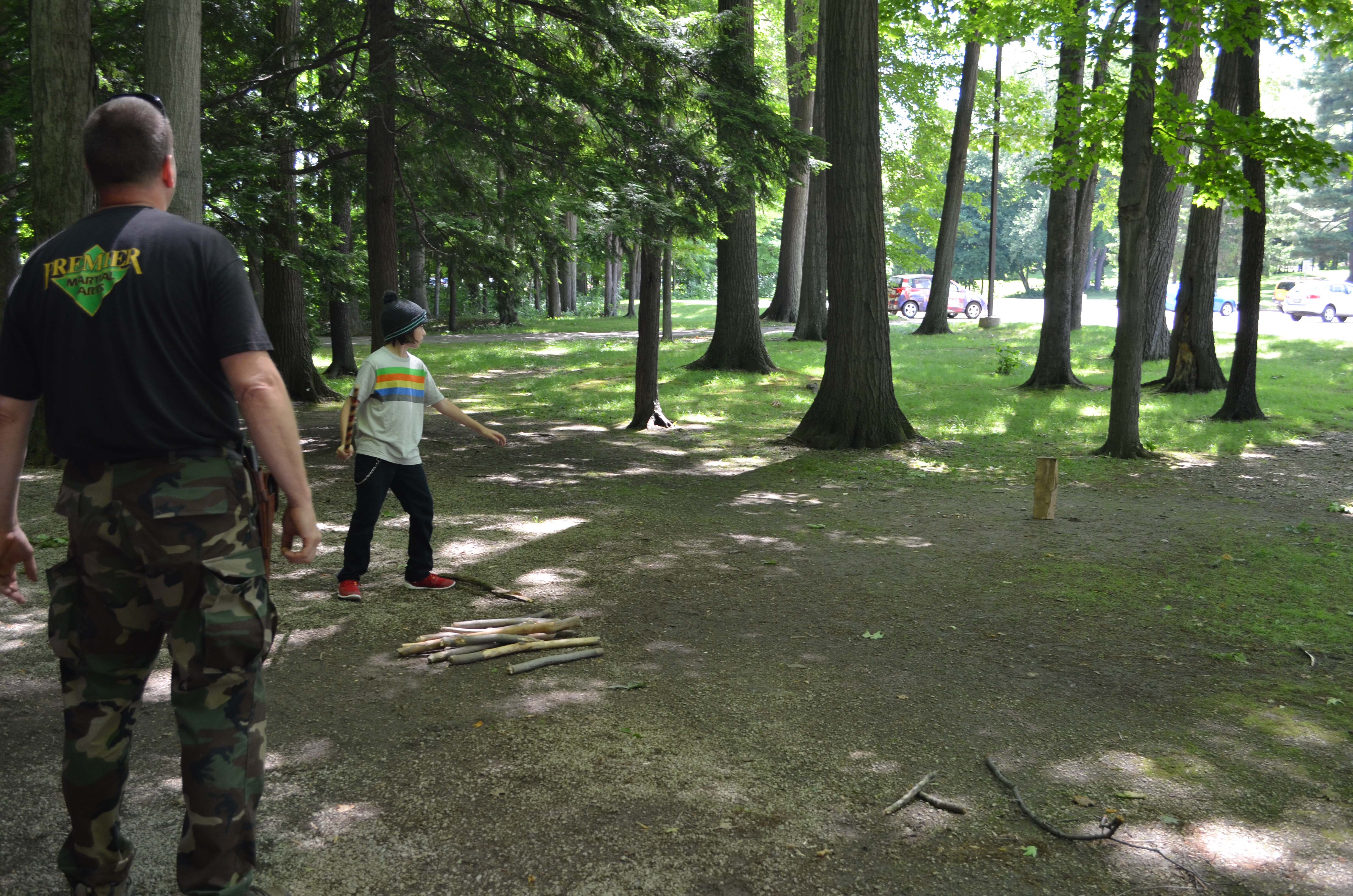
Demonstrating their throwing stick skills.
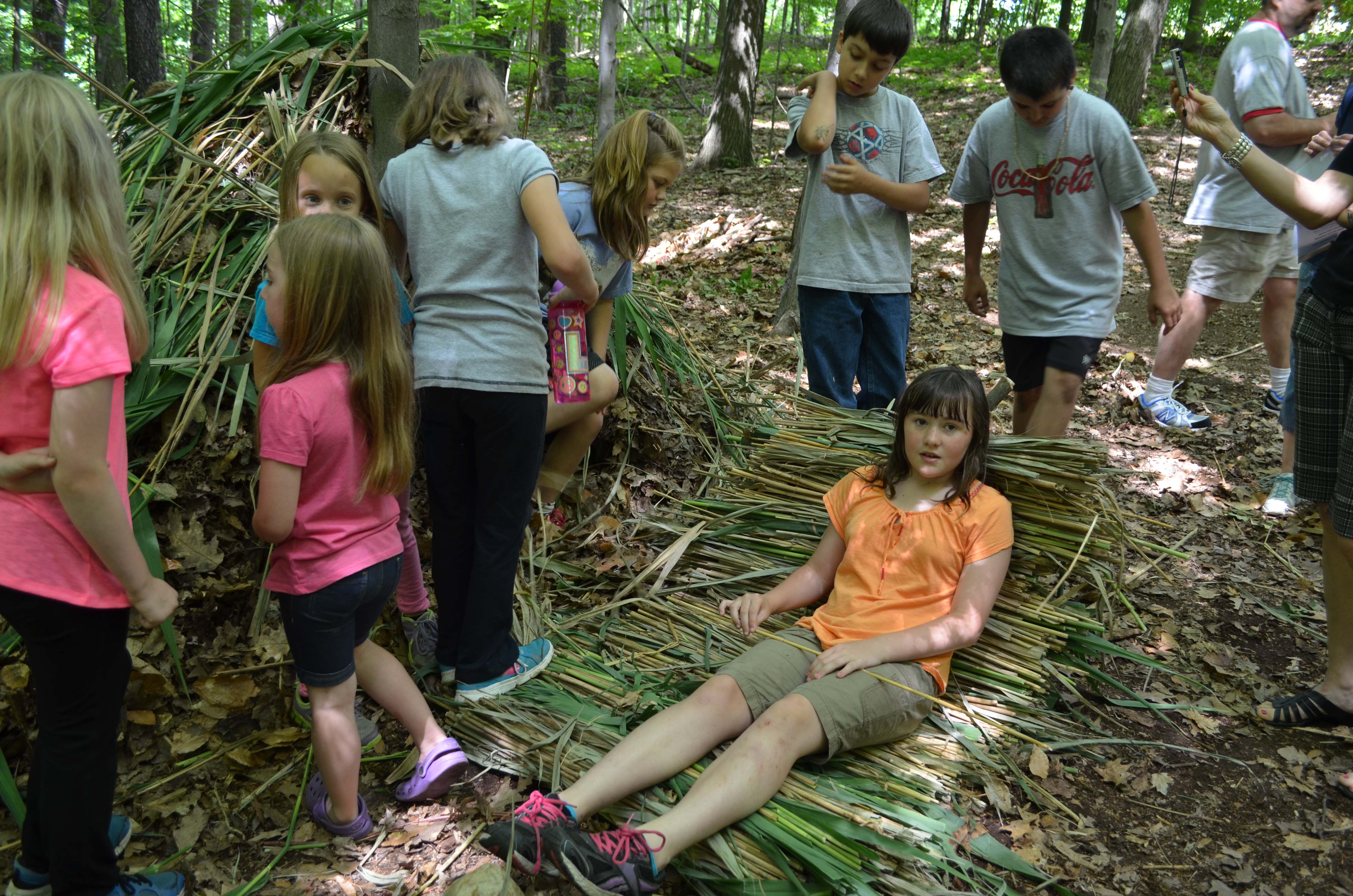
DSC_0867

My daughter, Lauren, in the phragmites chair outside the shelter.
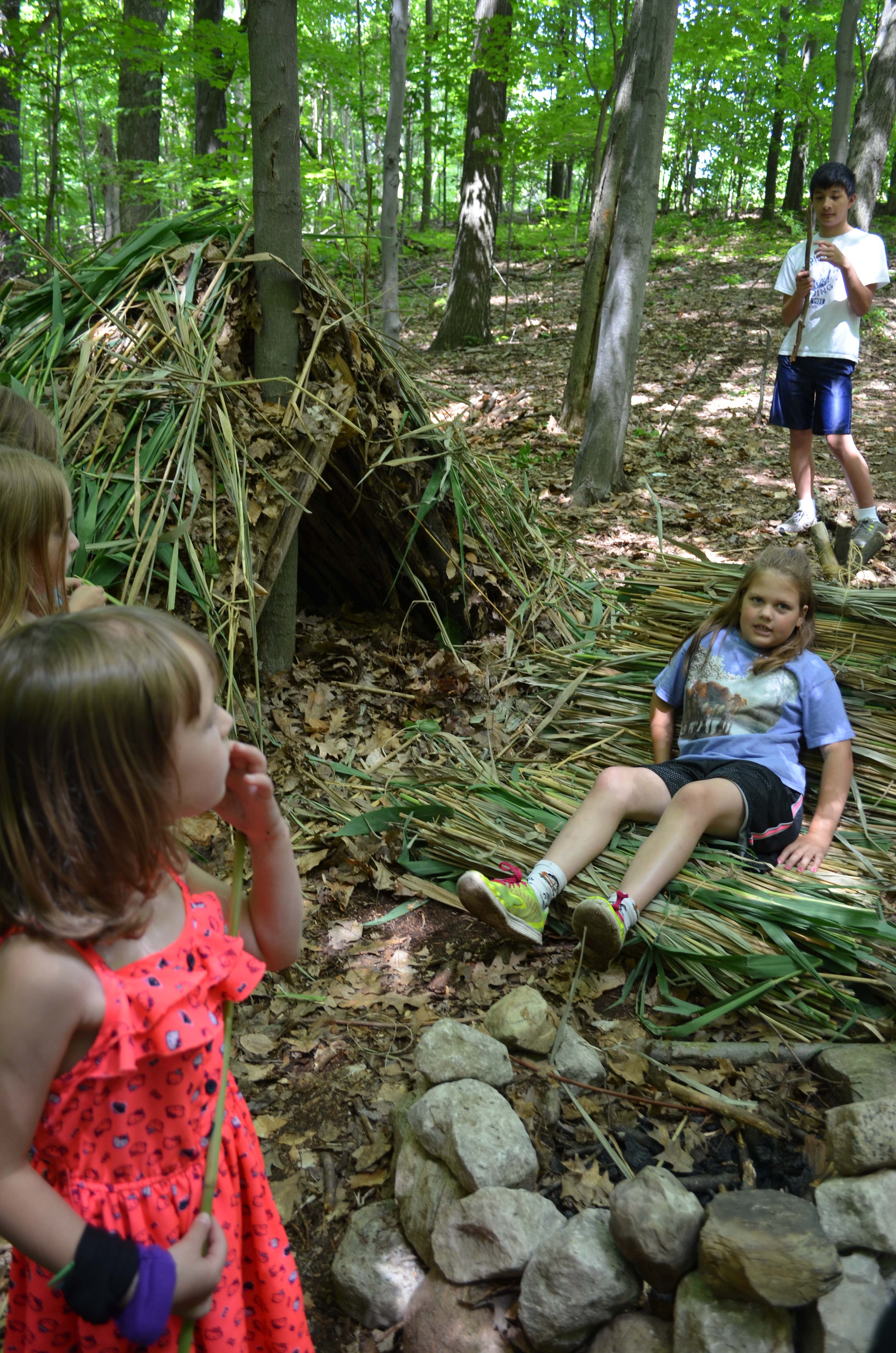
DSC_0865

Mud, grass, leaves, phragmites and more were used to build the shelter. Notice the stone fire ring with the opening pointed toward the chair/shelter, too.



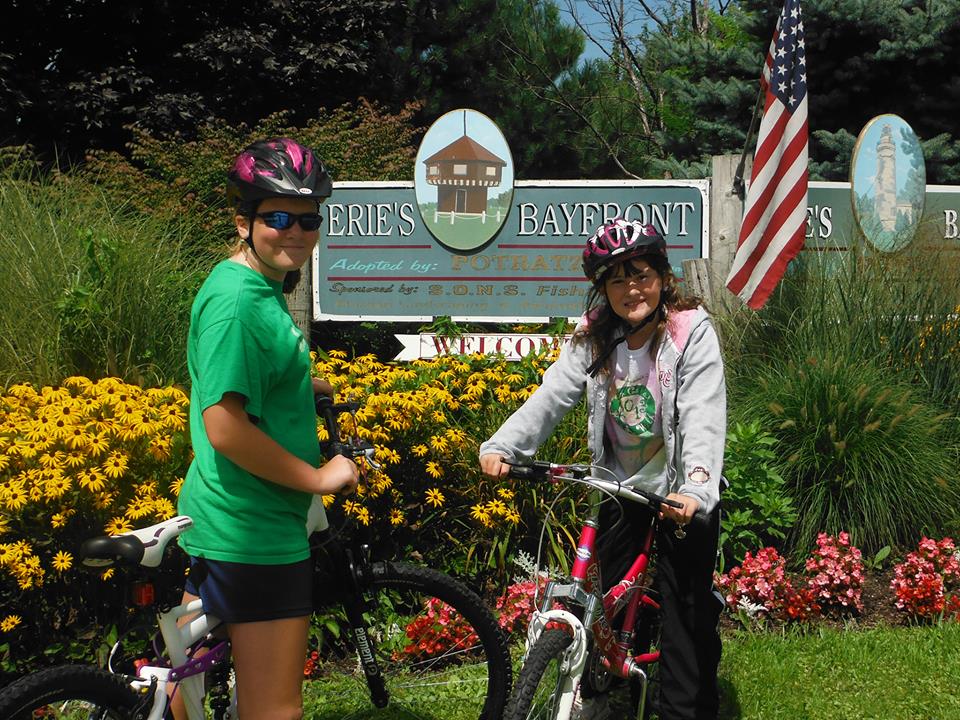
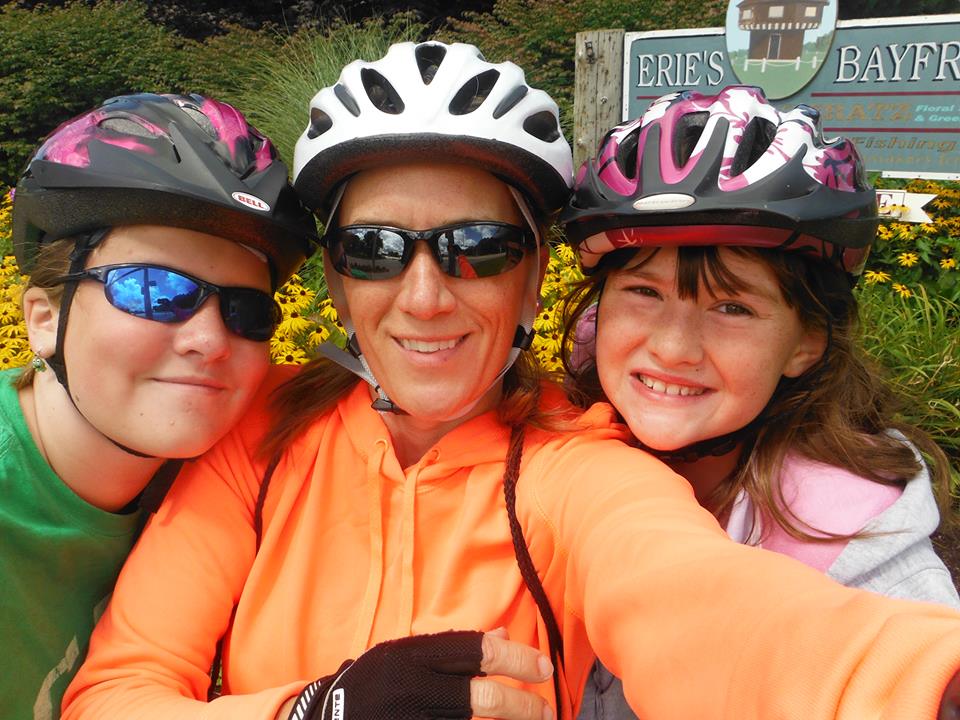
Connecting Behrend to the Bayfront and beyond – Hit the trail!

DSC_0162
By Heather Cass
Publications & Design Coordinator, Penn State Behrend

I’m an avid runner and I live just a few miles from Penn State Behrend. Several years ago, when the Commonwealth was clearing land to make way for the Bayfront Connector, they ruined some of my best running routes. I harbored a grudge against the Bayfront Connector for a while because of that. But then, persuaded by the convenience of traveling to downtown Erie in 10 minutes, I reluctantly began using the road and noticed there was a meandering blacktopped path to the right of the road.

What’s this? Could they have thought of the runners and walkers and bikers? Could it actually run the entire length of the road? No, they wouldn’t have thought of us.

(Yes, I do tend to be skeptical, but in my defense, I worked for the newspaper for fifteen years and you just kinda end up that way when you’re a journalist).

I’m happy to tell you that I was dead wrong.

Trail history

Indeed, there is a wide paved recreational path (similar to the Multipurpose trail at Presque Isle State Park) that runs continuously alongside the Bayfront Connector from Penn State Behrend to Frontier Park on Erie’s west side.

The idea for a landscaped trail alongside the road took root during PennDOT’s public hearings about the planned connector.

“The trail really was a whole community effort,” said Ray Schreckengost, executive director of the Erie Western Pennsylvania Port Authority. “Bill Petit was the district engineer who incorporated it into the design.”

“There was a rallying cry from the community to ‘humanize the connector,'” Petit said. “We started to rethink the project, knowing that we needed to do something special.”

A committee of various interested community members formed and presented ideas to PennDOT. Soon, the meandering trail featured landscaping, decorative noise walls and stonemasonry dividers along the connector, was part of the plan Petit said.

How to get on the trail from Behrend

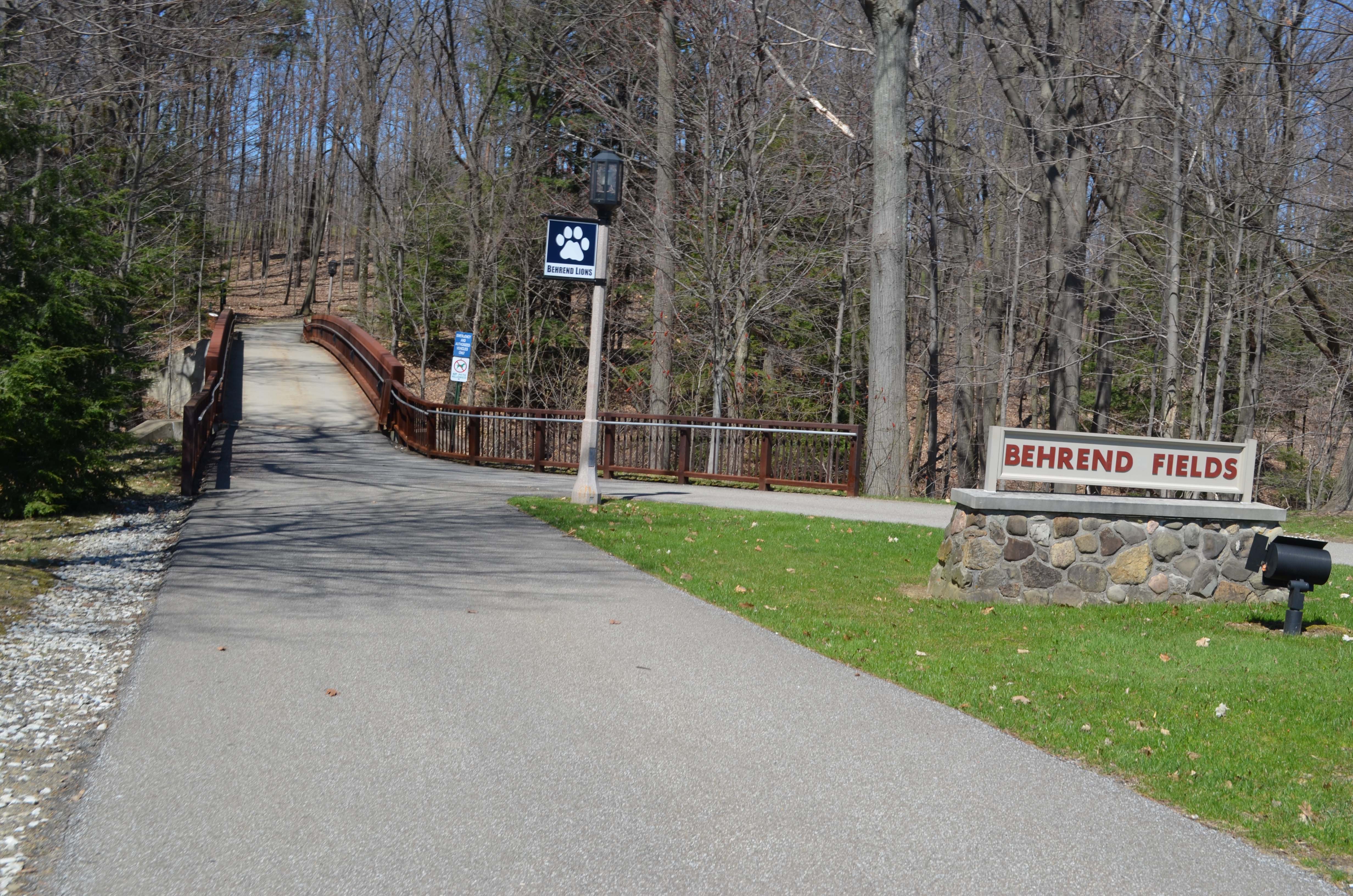
The Bayfront Connector trail entrance is in the back left corner of the Erie Lot, by the sign that says “Behrend Fields.”

You can also get on the trail from the Logan House on Station Road. Trailhead is to the left of the parking lot.

Where you can go (and mileage)

Distance via the Bayfront Connector Trail from Behrend (Erie lot entrance) to….

Shannon Road — 1 mile

38th Street — 1.5 miles

McClelland Ave. – 2 miles

Broad Street – 3.5 miles

12th Street – 4.5 miles

6th Street – 5 miles

Bayfront Parkway – 5.5 miles

Dobbin’s Landing (foot of State St.) – 6.5 miles

Frontier Park – 8 miles

The paved path ends at Frontier Park, but you can ride/run/walk down to Sixth Street and use the bikeway lane all the way to Presque Isle State Park for an 11-mile (one-way) trip from Behrend.

Here’s a map of the entire Bayfront Connector Trail  (with mileage markers) from Behrend to Sara’s restaurant at the foot of Presque Isle State Park.

bayfront

It’s about 5.5 miles from Behrend to this sign at the foot of the bayfront where the Bayfront Connector meets the Bayfront Parkway (trail continues along Parkway).

It’s about 6.5 miles from Behrend to Dobbin’s Landing (above) at the foot of State Street.

It’s about 11 miles if you go all the way to Sara’s at the foot of Presque Isle State Park. Bring some money so you can refuel with a foot-long Smith’s hot dog, curly fries, and ice cream!

What you’ll see

There’s much more to be seen than grass and trees. It changes from the manicured green lawns of Penn State Behrend to an inner-city setting with factories and 6-lane intersections to a bustling bayfront with gorgeous lake views.

The Bayfront Connector has been designated a National Scenic Byway and is part of the Great Lakes Seaway Trail, owing to the scenic vistas and intrinsic qualities that make it different from your run-of-the-mill ribbon of concrete slicing the landscape.

Elevation

Good News: It’s all downhill from Behrend. Bad News: It’s all up on the way back (you know, when you’re good and tired). So, you may want to get a family member or friend to pick you up. (This map includes an elevation chart).

What you need to know

The path may appear to end at various roads/places along the way. It doesn’t. Just look ahead and you’ll see where it starts again.

One place that the trail pickup is not obvious is at State Street. To get on the trail again, cross State Street and enter the parking lot for the bait shop/miniature golf course. Run/walk/bike to the back of the lot and turn right and you’ll run into the path again just past the Bayfront Convention Center.

Safety

I’ve run/biked/walked this entire trail countless times myself, with friends, and with my kids and have never once felt unsafe on the trail, but it does go through the woods in some spots and it goes through areas of the city that some people avoid.

My advice: Take a friend and a cell phone. Also, I would not recommend using the trail after dark. The only portion of it that is lit is the part on Behrend property from the college to Logan House on Station Road.

Trail surface

Most of the trail is blacktop, which is kinder to a runners’ knees than cement and is great for biking/roller blading.

Winter use

The trail is not maintained (read: shoveled) in winter. Bad for runners/walkers/bikers — great for cross country skiers.

Questions?

I’ve covered every inch of this trail/road by car, foot, and bike, and I’m happy to take your questions at hjc13 @ psu. edu.

So….what are you waiting for? Go explore!

us

This slideshow requires JavaScript.


Raise a toast to good public speakers

DSC_9366

By Heather Cass
Publications & Design Coordinator, Penn State Behrend

On a rainy Tuesday evening in late April, twenty-five Penn State Behrend students gathered at Nunzi’s Place to test techniques they had learned in CAS 100 Effective Speech. They dressed up for the occasion. The women wore dresses and cardigans. The men wore business casual attire. A few even wore ties. They sat at banquet tables arranged in a horseshoe formation around a podium.

To the left, at a small table discretely tucked in the corner, Dr. Miriam McMullen-Pastrick, lecturer in speech communication, took notes.

No pressure there, right?

But, pressure is sort of the point at the Toasters’ Banquet—an end-of-class tradition for students in McMullen-Pastrick’s classes.

“I want to put them in situations they might actually have to face when they are making post-graduate contributions to the world,” she said. “In their future, they may have to give opening remarks at an event, or introduce a VIP at a corporate banquet, or debate funding cuts at their child’s school board meeting. These are real situations they are likely to face at some point in their lives. The banquet gives them a chance to practice.”

Each class organizes their own banquet, collecting money from classmates for dinner, creating and printing programs, and voting on which classmates should receive awards — some serious and some not-so-serious.

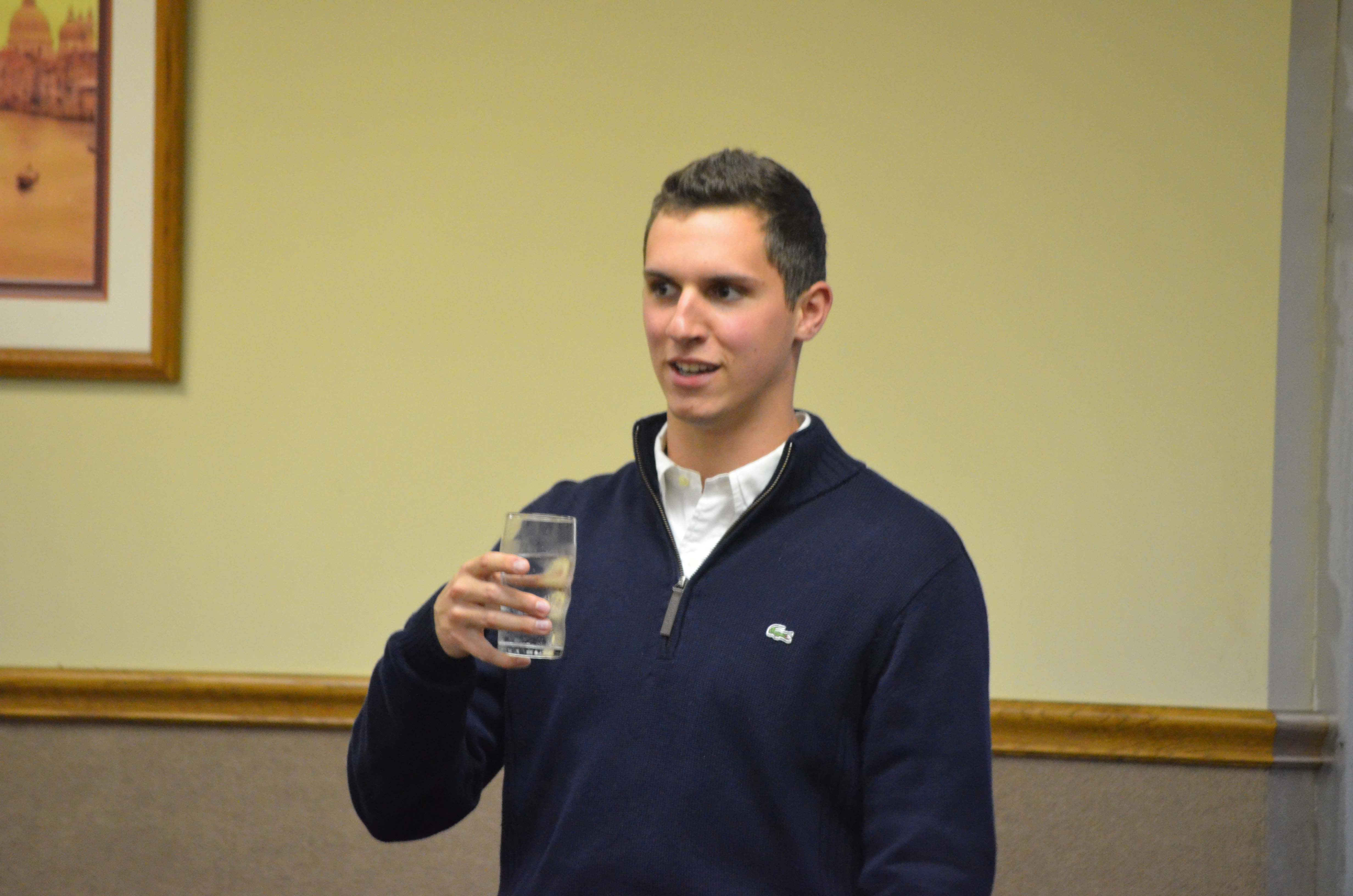
On that rainy Tuesday that Section 005 had their banquet, Andy Peterson, a junior Physics major, gave opening remarks. Brian Ristau, a freshman Engineering major, introduced Jacob Roth, a sophomore Earth and Mineral Science major, who gave an informative speech. Zach Reese, a junior Mechanical Engineering major offered a toast.

And, so it went, with all twenty-five students taking at least one turn at the podium, offering a variety of entertaining, informative, and persuasive speeches, debates, toasts, and introductions until Guiliana Latella, a sophomore Nursing student, gave the closing remarks.

Between all the speeches and presentations, they enjoyed a small feast—pizza, pasta, meatballs, antipasto, and dessert—during which they were encouraged by McMullen-Pastrick to work on their dinner conversation skills.

Throughout the evening, the students laughed, joked, and listened attentively to one another. But, as McMullen-Pastrick might remind you, part of being a good speaker is being a respectful and intense listener. “They learn by listening to each other with focus and purpose,” she said.

McMullen-Pastrick typically teaches three sections of CAS 100 each semester and attends a banquet for each. In the Spring 2014 semester, she attended her 175th banquet.

“Teaching public speaking is my passion because it has such a major impact on the educational  insights and personal confidence of the  students,” she said. “It changes them optimally, for the better, for life.”


This slideshow requires JavaScript.


Training + concentration = Impressive Boston Time for Math Prof

mastroberardino

By Heather Cass
Publications & Design Coordinator, Penn State Behrend

Divide three hours, four minutes and thirty seconds by 26.2 and you’ll get the pace of the fastest mathematics professor at Penn State Behrend.

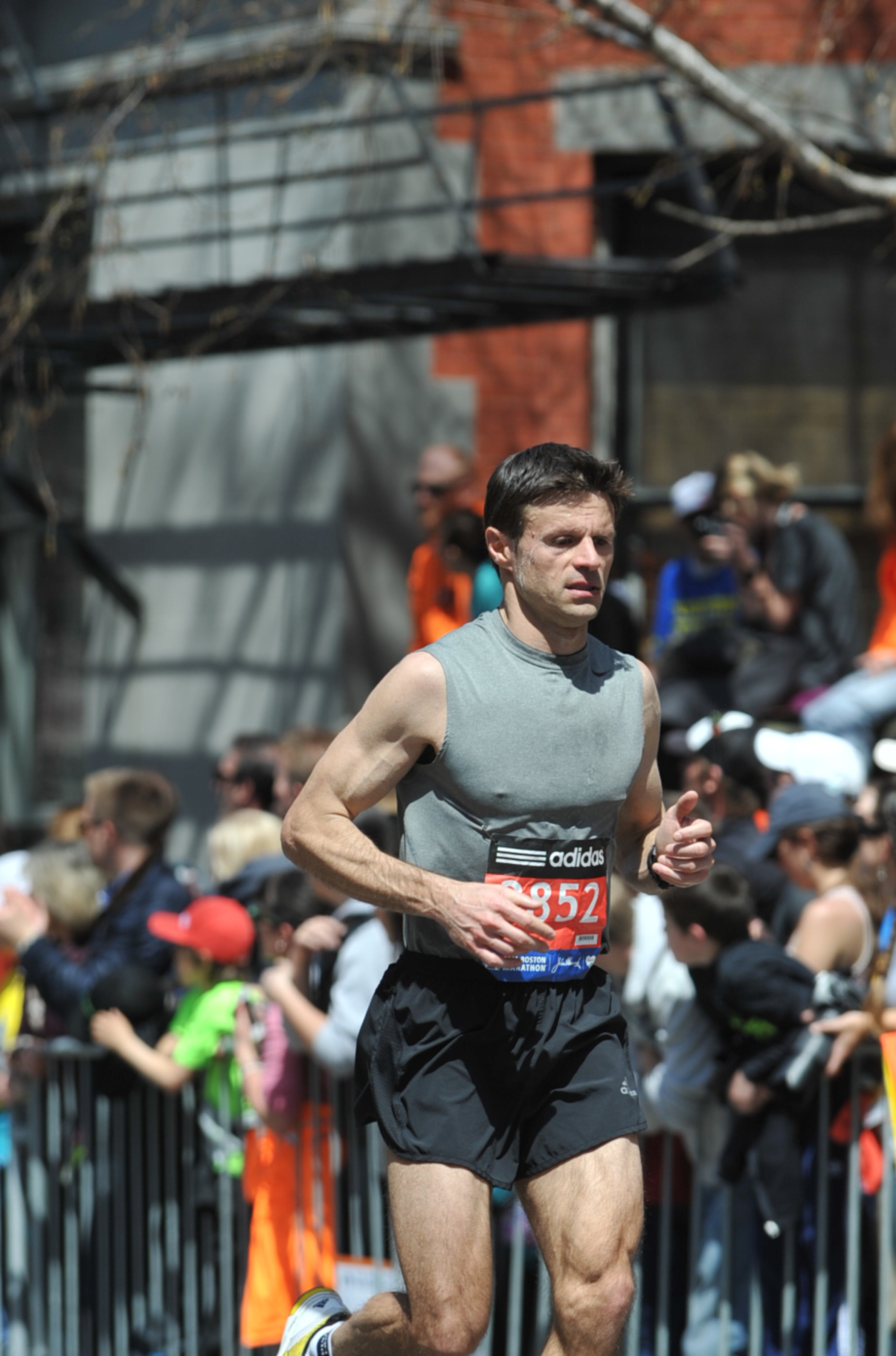
Dr. Antonio Mastroberardino, assistant professor of mathematics, completed the 2014 Boston Marathon last Monday with an impressive average 7.02 minute per mile pace.

But, that wasn’t even his best! Mastroberardino, 39, qualified for the 2014 Boston marathon at the Rochester marathon in September of 2012 with a finish time of 2:58:34, a full 12 minutes under the 3:10 qualifying time he needed.

We caught up with Mastroberardino (which wasn’t easy…he’s quite fast, you know) and talked him into answering a few question about his race through bean town.

What was your finish time at Boston?

3:04:30. The Erie Times-News had an incorrect time of 3:06:24.

Were you happy with that?

I was pleased with the result.

Have you run Boston before?

No, this was my 3rd marathon. Rochester 2012 was my first. Erie 2013 was my second. I hit the proverbial wall in Erie and ran a disappointing 3:14:07.

What was it like to be/run Boston in this emotional year?

It was an amazing day for the city of Boston. From the start in Hopkinton to the finish in Back Bay and through all of the towns in between, the atmosphere was electric. The most amazing part was turning onto Boylston St. with the finish line in sight and having a roaring crowd carry you to the end.

Was your family there?

No, but my mom mentioned that my aunt in Italy was very happy for me.

Were you worried about anything happening?

No, not at all.

What is going through your mind as you run a marathon? What do you think about?

The first thing to do is to establish the right pace in the first 5-6 miles. People often go out too fast, and this could cost you several minutes in the end if you have to slow down to a walking pace in the last part of the race. This happened to me in Erie in 2013. For the miles in between, a friend of mine with a lot of experience told me: You need to be bored at mile 15; otherwise, you are working too hard and are in danger of hitting the wall later in the race.

What is your strategy for dealing with the tough miles (a mantra, doing math problems to distract yourself, etc.)?

The last 5-6 miles require total concentration. At that point, your legs are crying for you to stop, but you have to simply fight the strong desire to give in to your body’s demand of slowing down. In a race like Boston, the crowd support definitely makes a difference.

Where do you train?

This winter, I trained everywhere. I used the treadmill at my apartment complex, the treadmill and the indoor track at LECOM, the treadmill and the indoor track at Junker, the Behrend outdoor track, Veteran’s Stadium, Mercyhurst soccer field, the streets around the Gannon campus, Presque Isle trail, and various other places whenever I traveled out of town.

How many days/miles a week do you run?

I started from 30/week back in December and got up to the low 50’s during the last week of March.

Where is your favorite place to run locally?

I like running at Presque Isle, although I don’t go there that often to run. I actually prefer to ride the bike if I go to the peninsula.

Do you train alone or with friends?

I train alone.

Do you listen to music?

No music. Just the sound of nature.

Favorite running shoes?

I choose shoes that fit the best. I wore Adidas for this marathon and had a pair of Saucony before that. I purchased both pairs from Achille’s Running Shop in Erie.

Why do you enjoy running marathons?

It is a great challenge not only to complete one but also to train for one. And I guess I enjoy the challenge.

What would people be surprised to learn about you?

I played football in high school and in college. In college I played Sprint Football—a varsity sport with a weight limit that has ranged from 150 lbs. in the early years of the league to the current limit of 175 lbs. There are currently eight teams in the Collegiate Sprint Football League, including the Army and Navy teams.

What do you like to do (besides run) in your free time?

I play the violin, although I am not very good. I play in a community orchestra called YADO (Young Artist Debut Orchestra) conducted by Frank Collura. We have a performance in December and one in May every year.

Next race? What are you training for now?

I will run a half marathon in Buffalo at the end of May.

Any other memories from Boston you want to share?

As we walked from the Athletes’ village to the start (just over a kilometer) in Hopkinton, a man standing outside his home was offering everyone donuts, beer, and cigarettes. I passed on the offer.


Behrend Love Stories: The Gollick’s

By Heather Cass
Publications & Design Coordinator, Penn State Behrend

Gollick1cropped


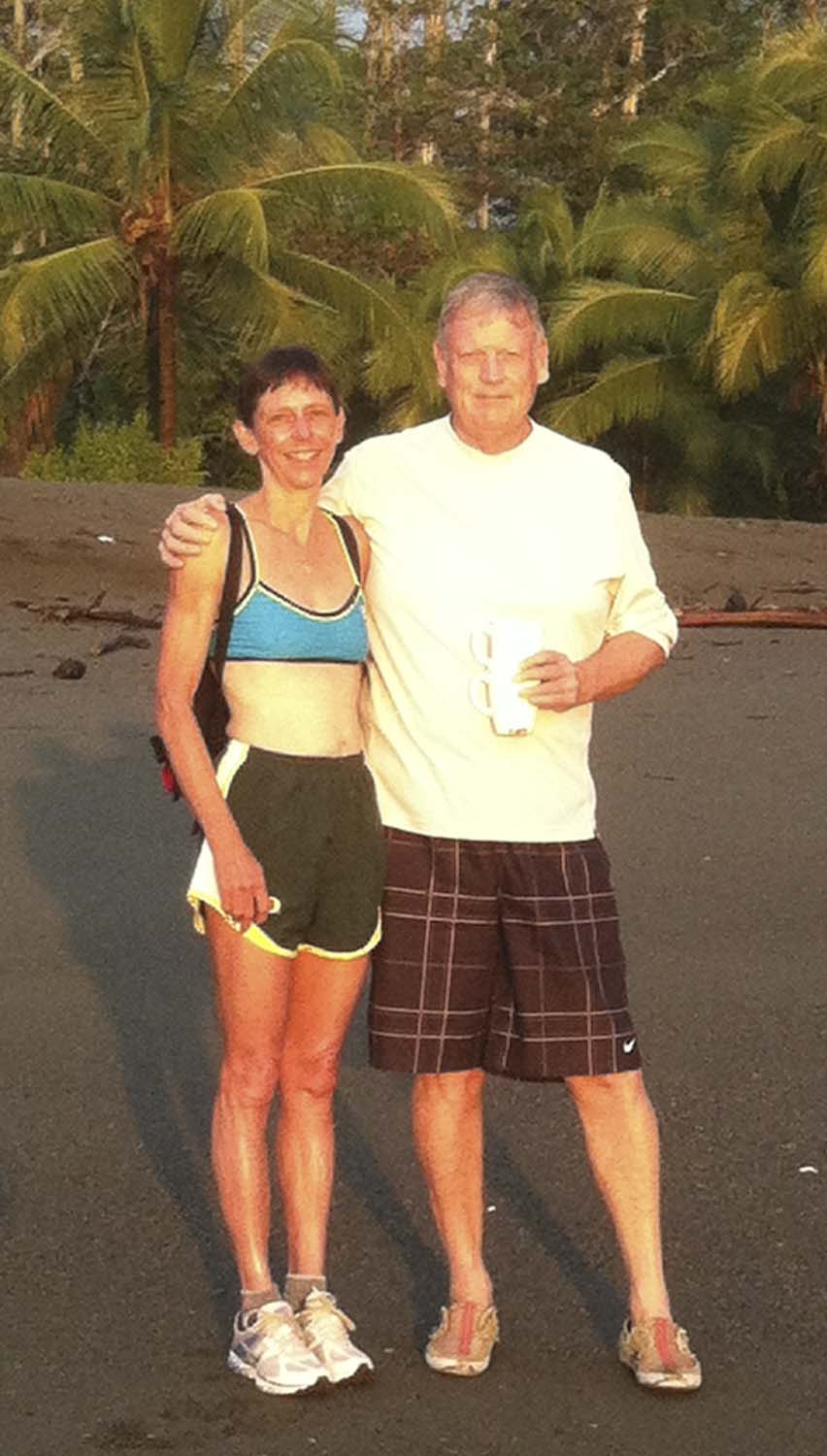
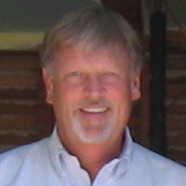
Bob and Kimberly (Cunningham) Gollick ’73

Degrees: Bob ’73, Kim ’73, both in Health and Human Development. Kim did a nutritional internship at Miami Valley Hospital; Bob went to graduate school at the University of Colorado where he earned a master’s degree in Urban Planning.

First met: Fall of 1969.

Married: 1974

Home: Denver, Colorado

Professions: Kim is president of Kimberly Gollick Associates, Inc., a nutritional consulting firm; Bob is president of Robert J. Gollick, Inc., a real estate development consulting firm. Both firms are located in Denver.

How they met, as told by Bob: I started at Behrend in the fall of 1968. The following year I helped the mom of a freshman girl carry some boxes into her daughter’s dorm room. I met her daughter on the way out of the room, her first day on campus. We started dating about four weeks later. Long story short, we’ll be married forty years this October.

Parting thoughts: “While we both finished our undergraduate degrees at University Park, if it weren’t for Behrend and a little luck on move-in day in 1969, I’d never have met the love of my life,” Bob said.

Fit for life: Kim is a runner who also enjoys yoga and ballet and she swims every day. Bob said he had to stop running, but he hikes all over Colorado and Costa Rica.

Gollick Head2 Gollick head1


Secret Lives of Faculty: Dr. Mary Beth Pinto

By Heather Cass
Publications & Design Coordinator, Penn State Behrend

There’s much more to Penn State Behrend’s faculty and staff members than what you see on campus. In this occasional series, we’ll take a look at some of the interesting, unconventional, and inspiring things that members of our Behrend community do in their free time.

DSC_3753

Dr. Pinto with her certified therapy dog, Jessie.

Name: Dr. Mary Beth Pinto

Day job: Professor of marketing, Sam and Irene Black School of Business at Penn State Behrend

Personal passion: Pet therapy

One morning a week, Pinto and her dog Jessie, a certified therapy dog, visit physically and mentally challenged students at the Elizabeth Lee Black School at the Barber National Institute in Erie.

The students in the classrooms that Pinto and Jessie visit have a range of physical and mental challenges, but many are diagnosed with Austism Spectrum Disorder.

Pinto said Jessie is used to reinforce, teach, or reward positive behaviors – for instance, making eye contact, waiting patiently for their turn, or using a language card to point to the activity they’d like to do with Jessie.

“Children on the autism spectrum often don’t like traditional means of reward—a hug, touch, or personal attention—but they love to throw the ball for Jessie or take her for a walk around the classroom,” Pinto said.

For some, just petting Jessie is an important lesson.

“Many children with autism don’t like physical touch, but they like to pet Jessie and that can help them bridge that gap,” Pinto said.

“One young boy, Brandon, made remarkable progress with Jessie. When I first met Brandon he wouldn’t make eye contact and he was doing a lot of hand-flapping (a common self-stimulatory behavior in autism). You should see him now. He’s come so far that he’s now walks Jessie down the hall with me to the next class. He makes eye contact and he doesn’t hand-flap when Jessie is there.”

Jessie revels in the attention, though his eyes are firmly locked on Pinto at all times. She’s a well-trained dog. And, she’s in big demand at the Elizabeth Lee Black School.

“She’s gotten to be a little celebrity down there,” Pinto said. “Everyone wants us to come to their room.”

Benefits:

“I asked one of the teachers one time, ‘Long term, what does pet therapy really do for the kids here?,’” Pinto said. “She said, ‘Mary Beth, we live for the moment here. If we lived for the long-range view, we could never do our job because it would be too overwhelming. If, for one moment, Jessie brings them happiness and joy, then we’ve succeeded.’”

Why she volunteers:

“Social service is in my DNA. Gertrude Barber (the woman who started the Barber National Institute) was my aunt and I grew up with kids who had physical and mental challenges. I realize some may think the Barber Institute is a sad place, but it’s not. They celebrate every child. It is a really happy place.”

This slideshow requires JavaScript.

Have a suggestion for a candidate for a future Secret Lives of Faculty/Staff feature? Email hjc13 at psu.edu.  


Behrend Reacts: How do you plan on finishing the spring semester strong?

BehrendReactslogolarge

By Steve Orbanek
Marketing Communications Specialist, Penn State Behrend

It’s crunch time. Are you ready?

The finish line is in sight as there are just a few weeks left in the spring semester. Penn State Behrend students will be busy as the final papers, projects, and exams are right around the corner.

We asked students how they plan to finish the semester strong.

Nick Denman

Nick Denman, senior, Interdisciplinary Business with Engineering Studies: “I plan on doing a lot more studying.”

Daphne Cruz

Daphne Cruz, freshman, Electrical Engineering: “I plan to keep on studying and go to tutoring almost every day.”

Courtney Post

Courtney Post, sophomore, Project and Supply Chain Management: “I’ll be studying and working on balancing work and school better.”

Drew Chidester

Drew Chidester, sophomore, Civil Engineering: “Getting to bed early, studying a lot, and trying to eat clean.”

Drew Chidester

Jesse Jarrett, sophomore, Mechanical Engineering: “Studying a lot, making sure I stay on top of my homework, getting a lot of sleep, and staying focused.”

Alicia Buccigrossi

Alicia Buccigrossi, senior, General Arts and Science: “I plan on really cracking down on all my work. I do have a lot of big projects coming up, so it’s matter of focusing on those things and sticking to it.”

Corey Hoster

Corey Hoster, senior, History: “Tons of caffeine and manning up.”

Alice Park

Alice Park, freshman, undecided: “I’ll be dedicating more time to studying and reading all my materials ahead of time.”

Jemmerio Harper

Jemmerio Harper, freshman, Psychology: “I plan on dedicating a certain amount of hours to studying and staying focused on what needs to be done for finals.”

Amber Ricci

Amber Ricci, freshman, Plastics Engineering: “I plan on studying hard, keeping active, and not wasting my time.”

Behrend Reacts is a regular Thursday feature at the Behrend Blog that tries to get the campus pulse on a current topic, whether it’s serious or trivial. If you have a question to suggest for Behrend Reacts, please email Steve Orbanek at sco10@psu.edu.

Like Us: facebook.com/pennstatebehrend

Follow Us: Instagram.com/psbehrend

Tweet Us: twitter.com/psbehrend

Watch Us: youtube.com/pennstatebehrend1