Penn State Behrend’s Class of 2026 is ready to make its mark on the world. We’re proud of our students and all that they have learned and accomplished here at Behrend. Over the next several weeks, we will introduce you to a few of our remarkable seniors who have conducted valuable research, pioneered innovation, overcome challenges, and engaged in college life in a big way.
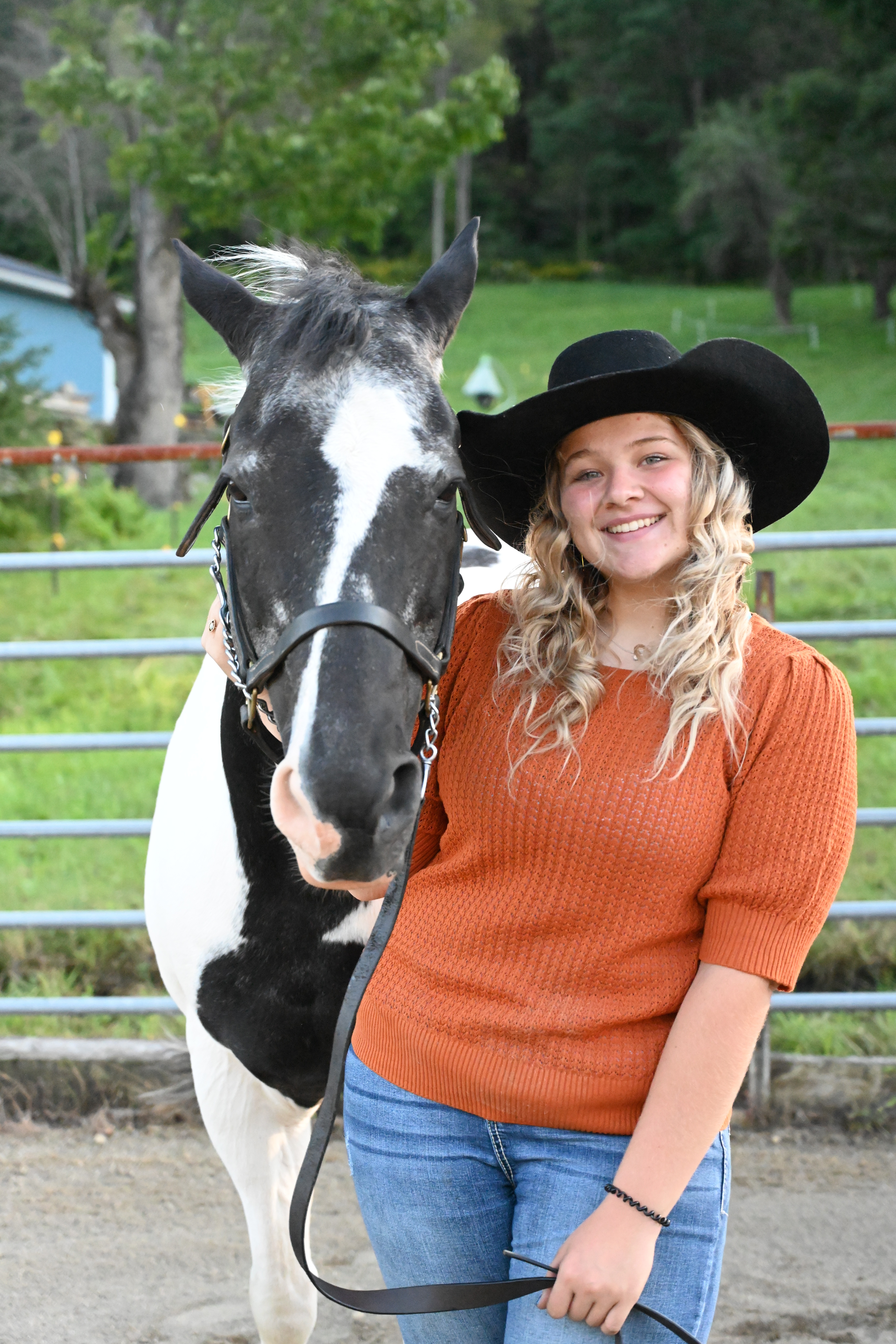
Today, we’d like you to meet Samantha Hulings.
Major: Environmental Science
Hometown: Kane, Pennsylvania
Award: Excellence in Environmental Science, Research
Why she chose Behrend: I chose Behrend because of the professor-to-student ratio. It’s very nice to have the ability to build professional relationships with professors and attend their office hours to get help if needed. I also love the small campus. Behrend also has the Wintergreen Gorge in its backyard, so there are many opportunities to get out in nature.
Challenges overcome: Being away from home and my family was a big challenge for me. I’m very much a homebody and I live about two hours from Behrend, so not being able to see my family and pets was pretty challenging in my first year. I called home frequently to stay in touch, and I went home a lot on the weekends.
What she’s passionate about: Being outdoors. Whether it’s spending my evening on a trail ride on one of my horses or just taking a break to touch grass, being outside resets my busy brain.
Advice for first-year students: Don’t be afraid to go to your professor’s office hours. They really do want to help you.
After her graduation in May, Samantha will work in seasonal fieldwork for Ecological Field Services.
Penn State Behrend’s Class of 2026 is ready to make its mark on the world. We’re proud of our students and all that they have learned and accomplished here at Behrend. Over the next several weeks, we will introduce you to a few of our remarkable seniors who have conducted valuable research, pioneered innovation, overcome challenges, and engaged in college life in a big way.
Today, we’d like you to meet Brooke Korb.
Major: Biology
Minor: Politics and Government
Hometown: Erie, Pennsylvania
Scholarships: PNC Leadership Scholarship and Chancellor’s Scholarship
Awards and accolades: ATHENA Young Professional Award finalist, Aaron Meehl Biology Award (Outstanding Rising Senior), Christopher M. Geitner Award, Guy W. Wilson Award for Service to the College, Most Outstanding Student Organization Member, and President Walker Award.
Why she chose Behrend: I was fortunate to visit Behrend often in middle school and high school. A few of my family members are also Penn State alumni. With every experience I had on campus, I was exposed to great people and engaging lectures. It also stood out to me that Behrend was a smaller campus, meaning I could get to know my professors and classmates very well.
Why she chose her major: I love science and wanted to learn how I could apply it to help others in need, especially in the public health sector. I’m deeply interested in the intersection of science and social issues. The biology coursework at Behrend was flexible in letting me explore this interest.
Proudest accomplishment at Behrend: During my first year on campus, I participated in my first Alternative Spring Break trip to Fort Myers, Florida. We helped with disaster relief efforts after Hurricane Ian. It was an eye-opening, emotional experience that deeply impacted me as a person. I loved serving alongside other Behrend students and connecting with them at this level. I was an ASB student leader for three more trips. It has been a transformative experience for me.
Campus involvement: Alternative Spring Break, Lion Ambassadors, Science Ambassadors, Lion Scouts, Women’s Engagement Council, Gender and Sexuality Equality Club, and Random Acts of Kindness.
What you’d be surprised to know about her: During my sophomore-year ASB trip, I volunteered at the El Yunque National Forest in Puerto Rico. I got to assist with trail maintenance, which included carrying buckets of rocks up and down trails as it rained.
What she’s passionate about: Getting out of my comfort zone. If I hadn’t gotten over my fears or anxieties, my life would have looked a lot different than it does now. We owe it to ourselves to be a little daring from time to time.
Advice for first-year students: College is your time to explore. Nothing is set in stone. You may end up changing your major or anticipated career path, and that’s okay! The most important thing is that you follow your passion and do what makes you happy.
After her graduation in May, Brooke plans to attend Slippery Rock University to pursue a Master of Public Health degree with a concentration in environmental and occupational health.
What if your classroom wasn’t just a classroom, but a creative agency with real clients, real deadlines, and real impact?
That’s the idea behind COMM 481: Advanced Multimedia Production, a new course taught by Tom Deau, lecturer in media and communication. Students in the course don’t just learn production skills — they use those skills to help community partners.
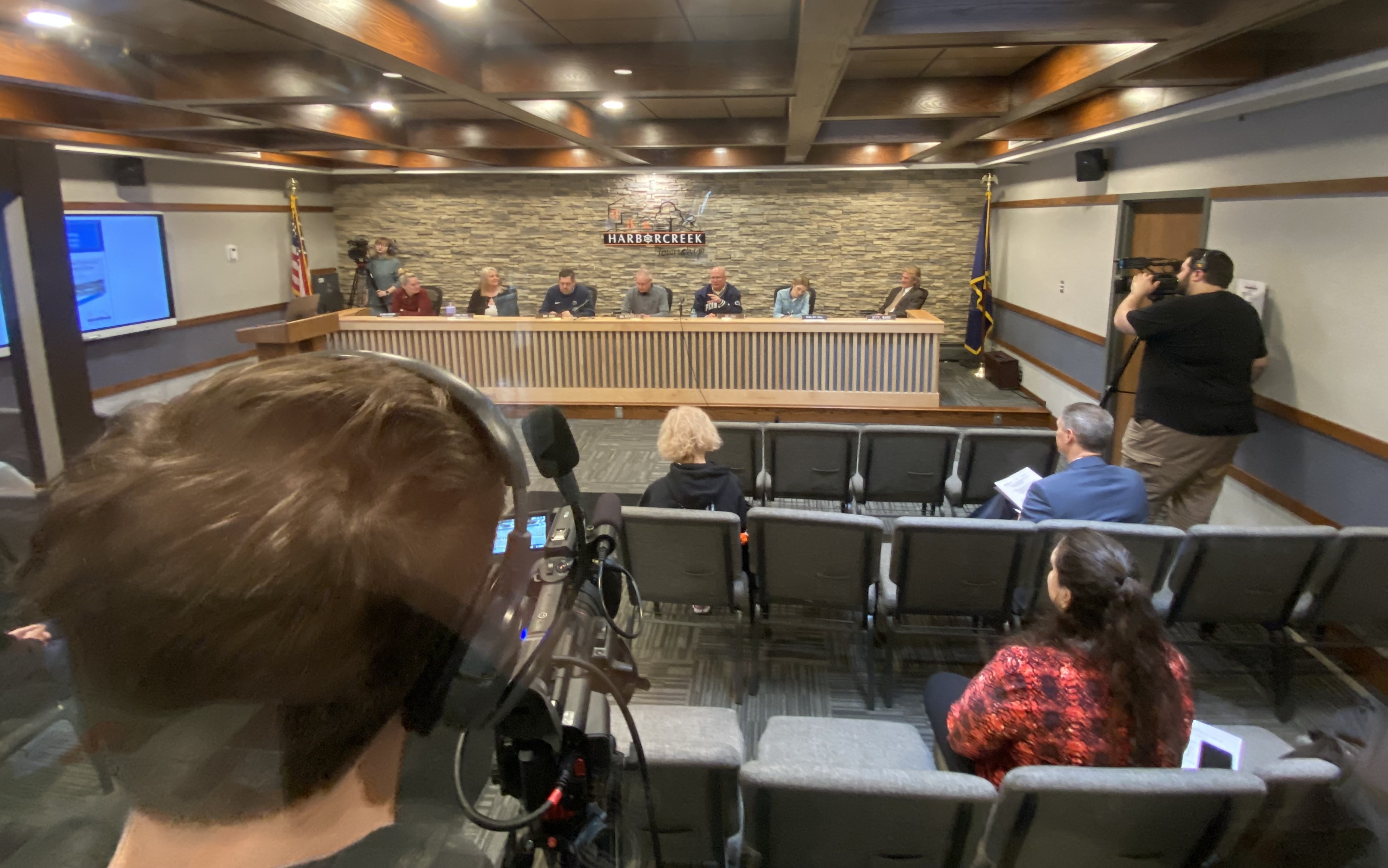
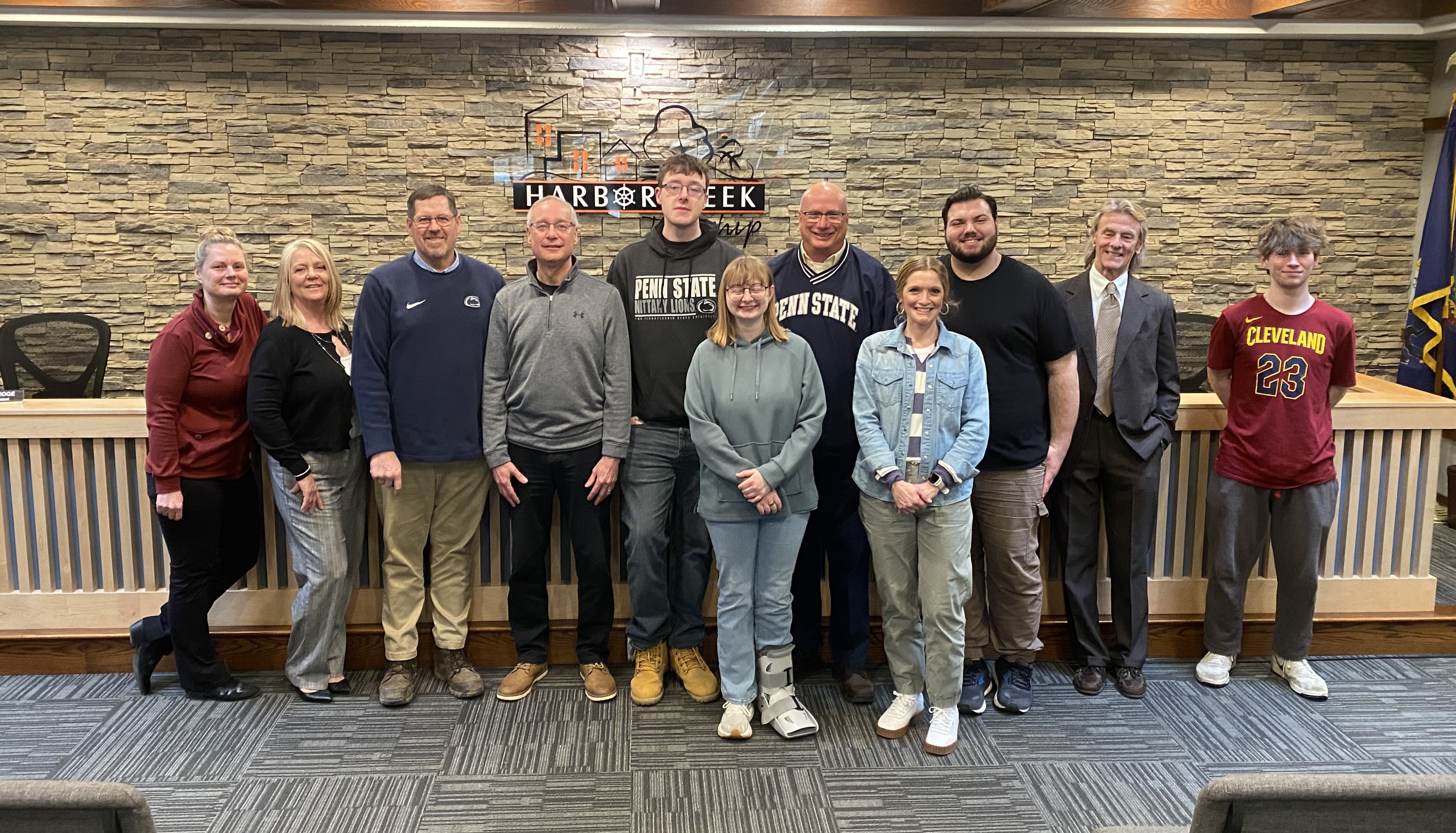
After connecting with Harborcreek Township Supervisor Dean Pepicello, students recently launched a live-streaming initiative for the township’s bi-monthly public meetings, giving community members easier access to local government. The first stream went live on March 4. The next is scheduled for March 18, at 5 p.m. The live streams can be viewed on the Wintergreen Media YouTube channel.
The township streaming project is just one of several new initiatives this semester. Deau’s students also are producing a promotional video for HARVEST 912, a nonprofit that supports individuals who are experiencing homelessness. Other projects include employee profile videos for the School of Humanities and Social Sciences, “Day in the Life” features for social media, and a promotional video for the “Empower Her Summit,” a Junior Achievement of Western PA event that will be held on campus later this month.
These experiences embody the college’s Open Lab model of learning, in which students and faculty members partner with business, industry, and community organizations to design new products, develop new services, or solve specific business challenges. The projects benefit the community, but they help students, too: By applying the fundamentals they learn in class, students gain résumé-building, real-world experience.
The School of Engineering’s annual Fasenmeyer Design Conference is a big day for senior engineering student, the culmination of a two-semester capstone project. Faculty, industry sponsors, family, and friends fill the presentation rooms. Students wear suits and aim to impress.
So, when one team’s project literally fell apart outside the classroom minutes before their presentation, you can imagine the panic it induced. The project, months of work, lay in pieces.
Then Chris and Andy Bartlett arrived.
With tools in hand, Penn State Behrend’s resident machinists and problem-solvers dropped to their knees beside the students.
“It was like a NASCAR pit crew in the hallway,” Chris recalls with a laugh.
They got it working. The students presented. The project succeeded.
It’s exactly the kind of moment Chris and Andy relish and show up for—even when they don’t have to.
“They don’t have to come in over the weekends to machine parts for the Society of Automotive Engineers (SAE) club’s competition car the week before our competition,” said Hunter Kamensky, a senior Mechanical Engineering Technology major and a member of the club’s executive board. “They didn’t have to become Environmental Health and Safety coordinators of the SAE/Robotics Lab to ensure our safety, and they didn’t have to come to the SAE club’s car-testing day at Lake Erie Speedway to show their support, but they did. They care about students.”
Chris has been at Behrend for five years; Andy, his uncle, for three. Combined, they bring sixty years of tool-and-die industry experience to the School of Engineering.
They also bring a willingness to show up, say yes, and help students turn drawings into reality.
We sat down with Chris and Andy to talk about their work, why manufacturing matters, and what they hope students learn from them.
For someone unfamiliar with machining, how would you describe what you do here day-to-day?
Chris: We make things the engineering students and faculty design.
Andy: We try to help them succeed by giving them the best approaches and let them know when something is not feasible. 3D printing is cool, but it’s fictitious. You can design and build parts with a 3D printer that won’t hold up in the real world.
What kinds of projects do you most often help with? Do any stand out as especially challenging?
Chris: We help with research projects, molds for the Plastics Engineering Technology program, welding, fabrication, capstone projects, and student clubs. We’re big supporters of the clubs because students learn a lot tinkering and working on side projects.
Andy: One of the most challenging projects we work on every year is the Cast in Steel capstone project, where students design and build functional replicas of traditionally forged items using modern steel casting. It’s reverse engineering. You basically have to work backward to create the piece. It’s technical, hands-on, and really fun.
When a student brings you a design that isn’t quite manufacturable, how do you handle it?
Chris: We can usually tell just by looking at plans what will work and what won’t. We mark it up, make suggestions, and show them the empirical data on what they are trying to do and why they need to revise.
Andy: Students do challenge us sometimes. We allow them to think it through or even try it, unless it’s going to be catastrophic. Failure teaches more than success.
The difference for us, having worked years in industry, is that we know manufacturing is inherently challenging. But in the shop, where they’re making a profit, everything has to be perfect. Failure is not something they embrace. The education environment is quite the opposite—we let them think through a bad idea. Then they really understand it.
What do engineering students learn in the shop that they can’t learn in a classroom?
Andy: In manufacturing, you learn that there are things that can be perfect in theory but impractical in real life. Tolerancing is a concept that clicks in the machine shop. The weight of materials and size of parts matter. Plastic is light, steel is very heavy. The physical reality matters.
Chris: Before they get to the machine shop, they’re working on fundamentals and hypotheticals. It’s all theoretical in the classroom, but when they see it, they really get it.
Andy: We have a dozen MET students, mostly seniors, who work with us on a weekly basis now. We wish we could get them in the shop in their first year. It would aid everything they’re learning in the classroom.
Can you share a memorable moment working with students?
Chris: That hallway moment with the senior design team—the NASCAR pit crew moment—that’s one.
Andy: Attending the SAE vehicle club’s training sessions at Lake Erie Speedway. We were testing on the track, doing modifications right there. We try to teach students to stay calm, even when things fall apart—because they will. You can’t be in a panic and do good engineering work.
How does your industry experience influence how you teach and support students?
Andy: At 22, young people tend to think they know everything, but I tell them when they get their first job, try to find a guy who is 50 or 55 and learn as much as you can from him. Those guys have real-world experience. You can learn a lot from them.
We also tell them to work on their interpersonal and teamwork skills, and we just try to instill the reality that manufacturing is hard work, and they will have mundane days. That’s just life.
Chris: We also encourage internships. That real-world experience is invaluable. They’re getting an excellent education at Penn State Behrend, but that physical contact with manufacturing matters.
Safety regulations limit the students’ access to the shop. How have you tried to help maintain hands-on opportunities?
Andy: We started to think about ways that we could legally allow students to work in the shop and have been making some headway. There’s a danger factor. We have limitations we have to work with. There’s a lot of training involved.
We’re very involved in America’s Cutting Edge (ACE), which offers hands-on CNC training at Behrend for students over sixteen. It’s ideal for those who are interested in exploring engineering, manufacturing, or hands-on technical careers.
Chris: ACE gave us the ability to get mechanical engineers on the floor for a forty-hour boot camp. They construct an air engine. In total, we’ve had about sixty students take part in the boot camps.
Andy: We also offer support for the METAL program—a four-day hands-on training experience in casting and forging. The goal of these programs is to get young people involved in manufacturing. The next round of skilled manufacturing workers are being developed here.
There are camps scheduled for spring break and right after the semester ends, in May.
What’s the most rewarding part of your job?
Chris: Working with students. Teaching them what I love to do.
Andy: I love it when a student has that lightbulb moment. When they think…“Now that thing I learned in class a year ago makes sense.”
We also love that Behrend emphasizes hands-on experiences. We hear back from friends in the field that Behrend students stand out on the manufacturing floors. One told us: “If I go into a shop and I see a student or young employee who is really sharp, I ask where they go to school—it’s almost always Behrend.”
What do you hope students carry with them from their time working with you?
Andy: We talk about life a lot. We tell them: The most stressful jobs make the most money. What is your life worth to you? How important is that money? Consider if you want to walk that walk.
Chris: We want them to understand that this is real. This is how things are made. This is how you solve problems. And we want them to know they can do it.
Andy: Manufacturing is such a noble thing. Man is meant to make things.
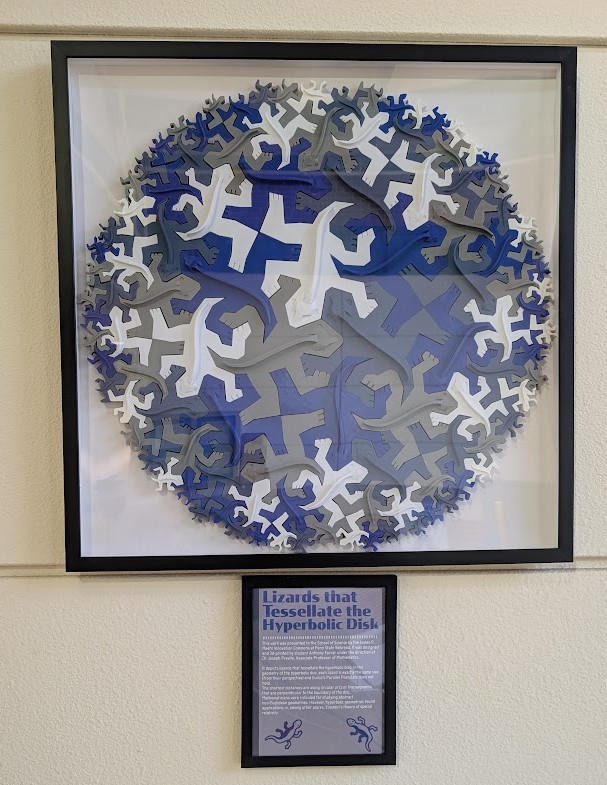
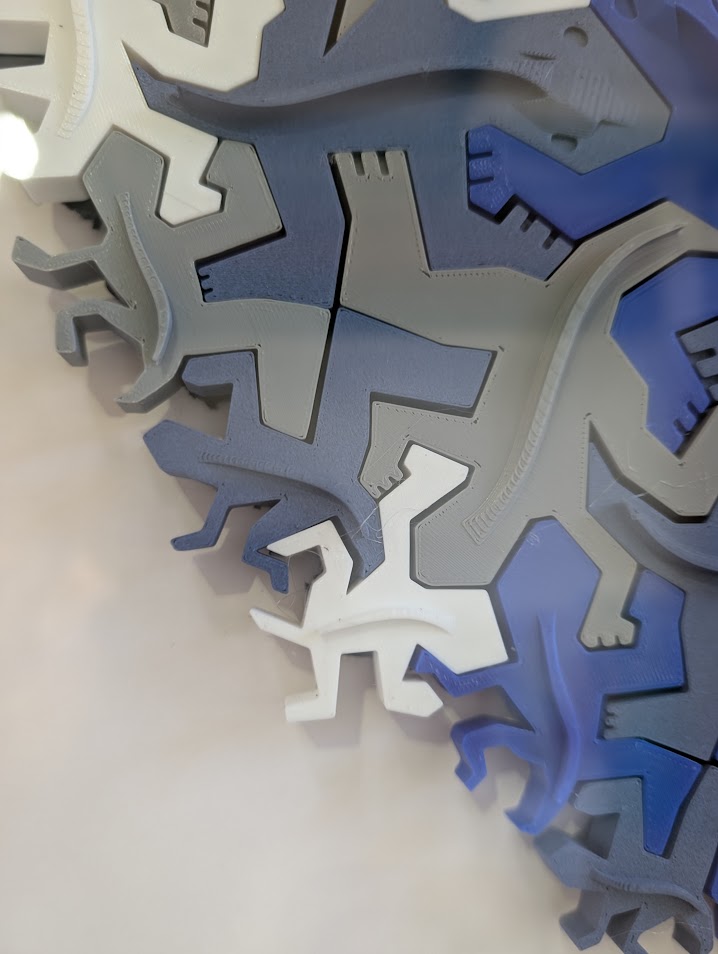
Math isn’t always numbers on a chalkboard. Sometimes it’s a work of art—a swirl of repeating lizards, 3-D printed in Penn State blue and white, then installed in a building where math, art, and science intersect. The lizards blend together in a hypnotic pattern, each appearing to shrink as it spirals toward infinity.
The piece, Lizards thatTessellate the Hyperbolic Disk, was imagined by Dr. Joseph Previte, professor of mathematics, who wanted to capture the beauty of mathematics in a form anyone could see.
He took the design to the James R. Meehl Innovation Commons, the college’s open ideation lab, where engineering students Anthony Farrar and Quinlan Barnes transformed Previte’s concept into reality with 3-D-printed tiles and a sharp eye for symmetry.
The result is art born from math—or perhaps math revealed as art.
Dutch artist M.C. Escher showed the world that geometry could be beautiful with his mesmerizing tessellations and optical illusions, where patterns unfolded in ways both precise and poetic.
“For centuries, mathematicians questioned the value of studying this type of geometry, dismissed it as impractical and useless, with no relation to reality,” Previte said. “But it later proved essential to modern science, including helping Einstein describe how time and space work in his theory of relativity.”
While some mathematicians ridiculed the study of abstract math, others reveled in it. English mathematician G.H. Hardy argued that mathematics was a pure art form, divorced from practicality—something he took great pride in. Hardy’s theories later laid the groundwork for encryption, proving that beauty and utility often travel together.
That same tension—between abstraction and application, imagination and reality—now hangs on the wall at Behrend.
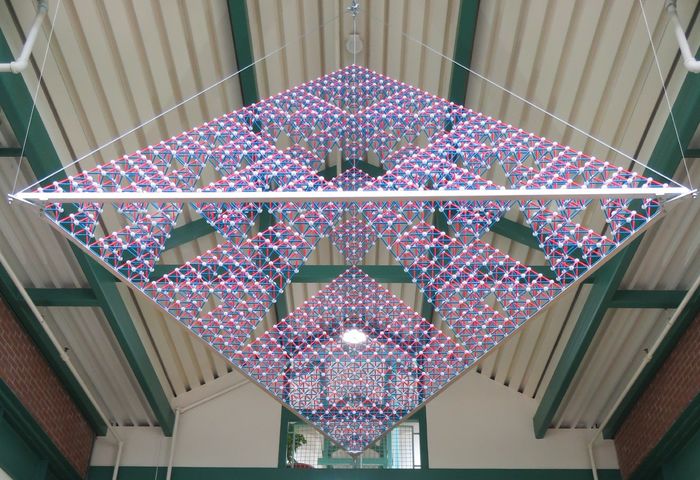
Lizards that Tessellate the Hyperbolic Disk joins an existing sculpture, Math in Flight, a stage-5 Sierpinski tetrahedron, a fractal shape featuring a pattern of infinite triangles, that hangs high above the entrance to Roche Hall in the Science Complex.
Math Club students built the sculpture using Zometool construction parts. It consists of 2,050 white balls and 6,144 red-and-blue struts.
Previte has plans to continue adding to the mathematics art gallery.
“I’d like to do the Platonic solids next,” he said. “I am currently looking for a student in Innovation Commons to make that project a reality.”
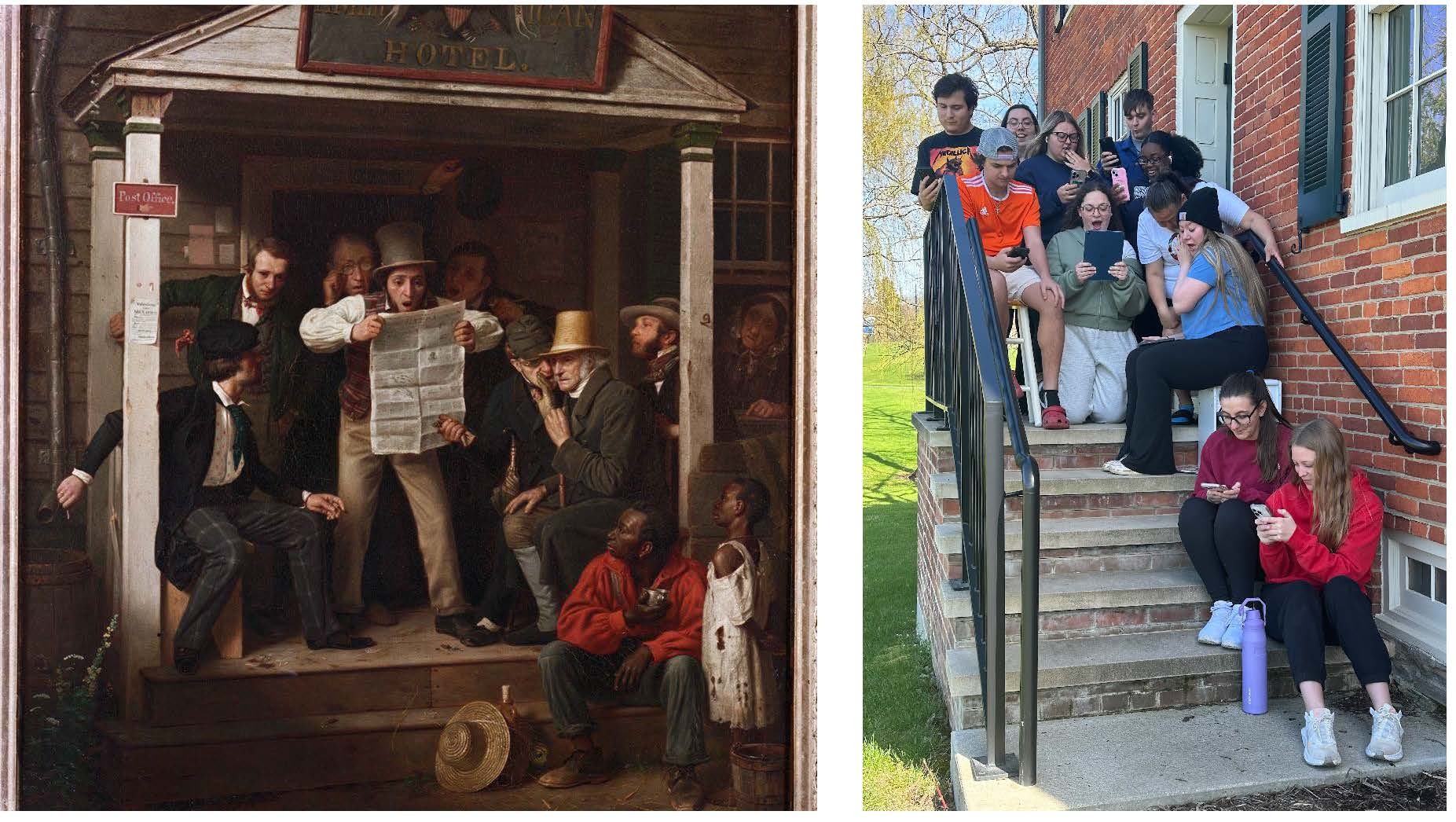
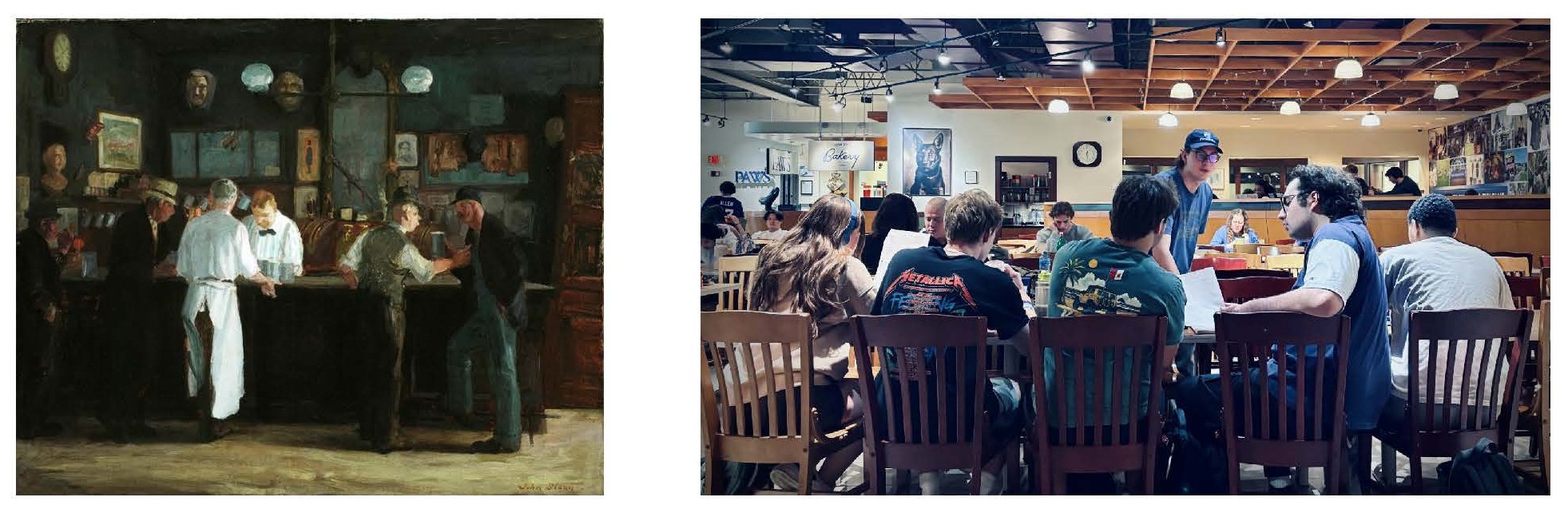
This spring, students in Dr. Matthew Levy’s AMST 307N: American Art and Society course at Penn State Behrend engaged in a unique interdisciplinary project that blended historical analysis with creative expression. As part of the course, students worked in groups to create tableaux vivants—or “living pictures”—that reenact and recontextualize iconic works of American art that were discussed in class.
Not only did students have to study the formal and thematic elements of a chosen painting, but they also had to consider its relevance to contemporary social and cultural issues.
“Working in groups, they researched their chosen work, gaining a deeper understanding of the social issues it represented,” said Levy, associate professor of art history, music, theatre, and visual arts.
Each group then reimagined their selected artwork for a 21st-century context, using modern props, settings, and interpretations to bridge the past and the present.
“They had to think carefully about props, poses, setting, framing, and more to bring the work of art into modern times,” Levy explained.
Here are several standout projects from the class, along with insights from Levy on what made each piece compelling.
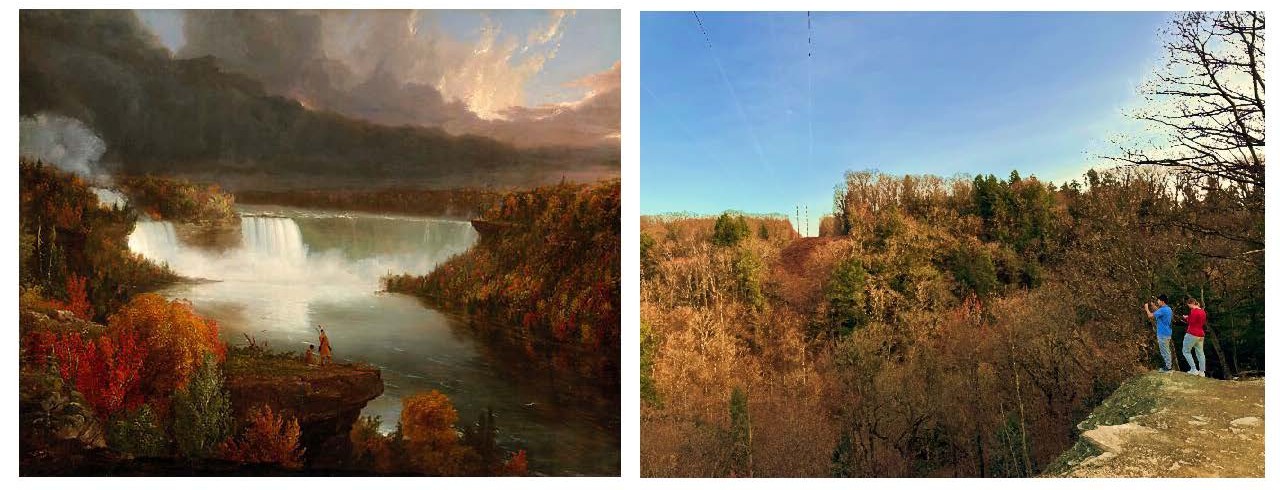
Distant View of Niagara Falls by Thomas Cole: “Where Cole’s view of Niagara Falls depicts the untouched majesty of the falls (represented both by the landscape and the presence of the Native Americans living at one with nature), the students depicted a domesticated and technologized landscape. Using the Wintergreen Gorge as their setting, they drew attention to the power lines, nature trail, and the use of phones to mediate our experience with nature.”
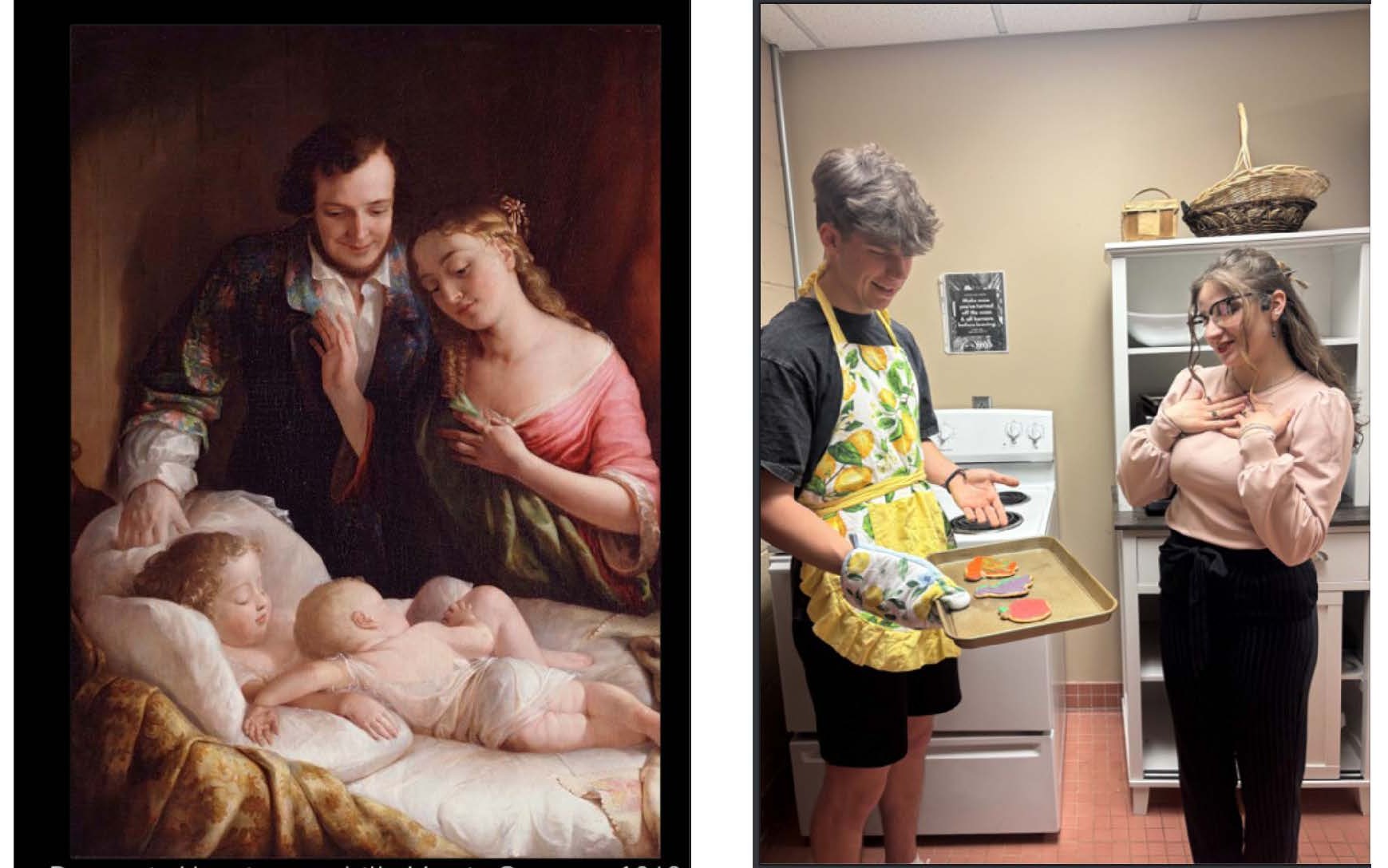
Domestic Happiness by Lilly Martin Spencer: “In the original painting, Spencer offers what was a progressive view of family life for the time, with both mother and father doting on their children. Our students instead depicted a “girl boss” showering praise on the domestic accomplishments of her stay-at-home husband. Notably, no children are present.”
War News from Mexico by Richard Caton Woodville. “Woodville’s painting depicts the latest in information technology—the penny press—which made journalism far more accessible than ever before. Our students depicted a scene in which everyone is responding to the news, not in the shared experience represented by Woodville, but each on their own through their phones and tablets.”
McSorley’s Bar by John Sloan: “Sloan’s painting depicts a scene of working-class sociability in a male-only bar. Our students represented a scene of co-ed sociability in Bruno’s Café on the campus of Penn State Behrend. Again, the presence of devices mediates human-to-human connection. Note how the student group considered the framing of the shot, mirroring the lights and memorabilia on the walls of the original.
Fun fact:McSorely’s Old Ale House is New York City’s oldest continuously operated saloon. The bar did not admit women until it was forced to do so in 1970.”
ABOUT THE COURSE
AMST 307N: American Art and Society covers the history of art in the English colonies and the United States from the seventeenth century to the present, examined through paintings, sculpture, buildings, prints and photographs, as well as exhibitions and national/world fairs.
The course is designed to meet two principal goals. The first is to increase students’ powers of visual analysis and help them build a critical vocabulary for discussing an art object’s medium, composition, style, and iconography. The second is to foster an understanding of the deep implication of the visual arts in their social and cultural contexts.
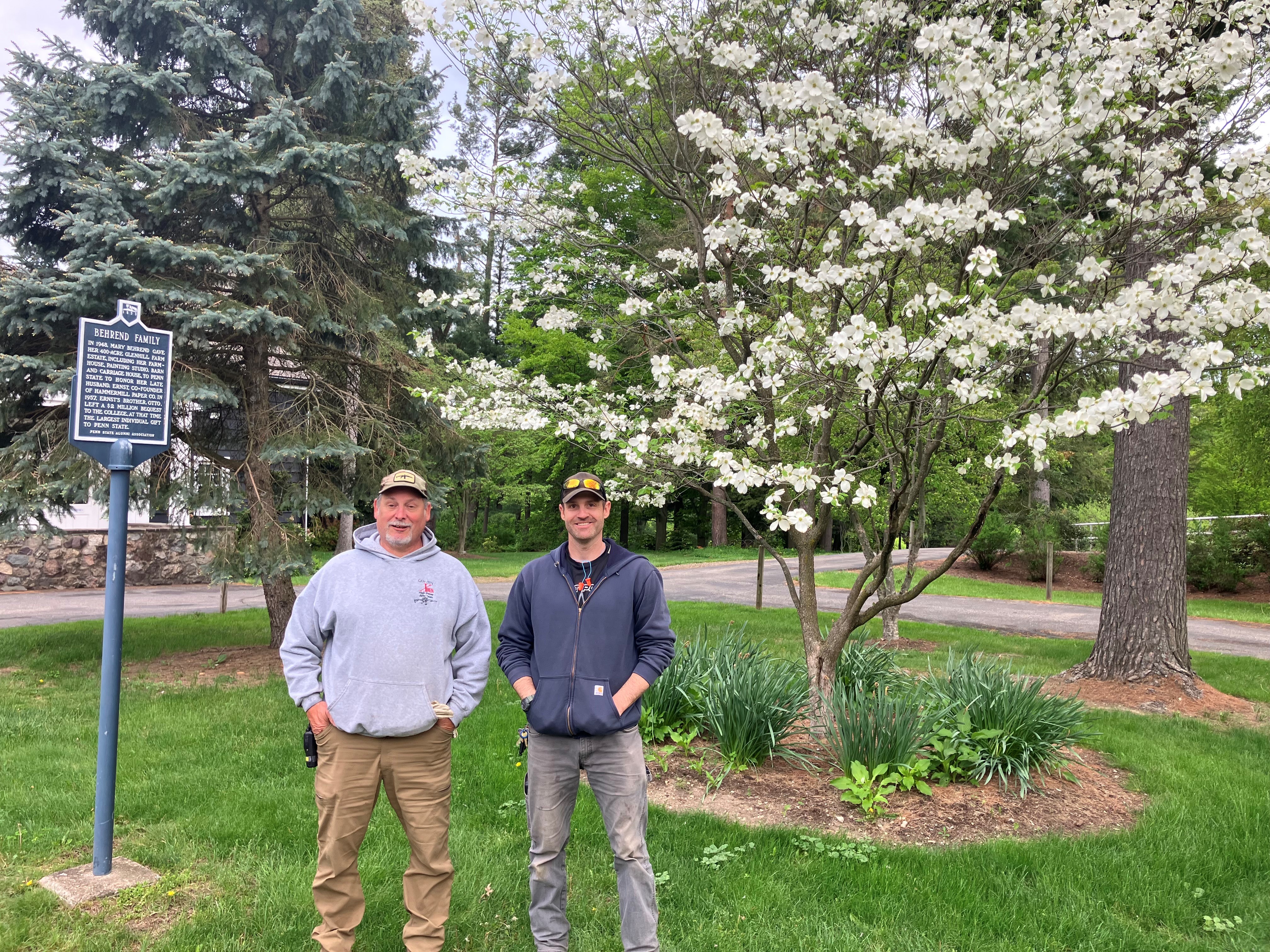
John Troncone, left, and Brooks Travis in front of a flowering dogwood that Troncone has transplanted four times in twenty years.
By Heather Cass, Publications Manager, Penn State Behrend
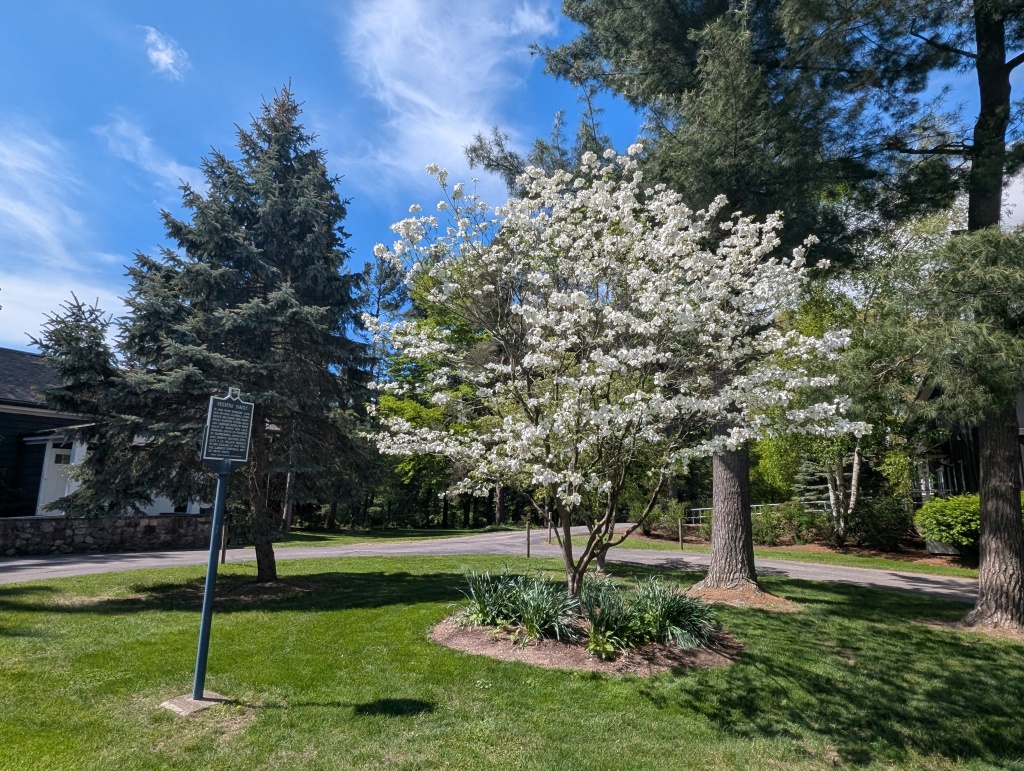
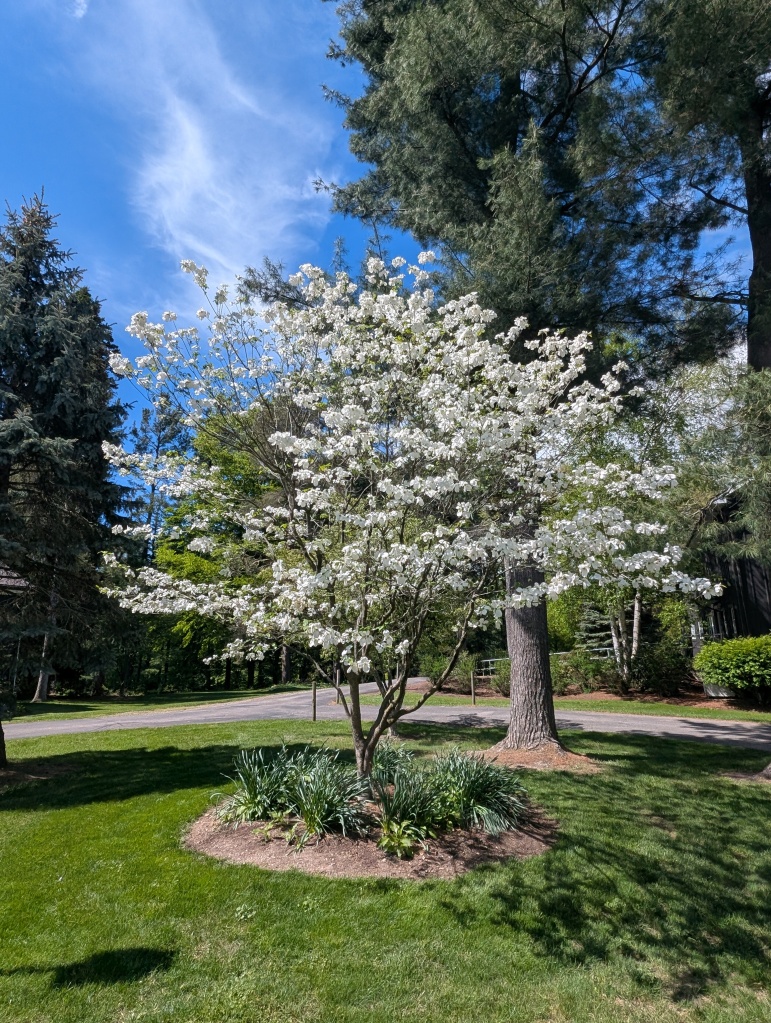
“Bloom where you are planted” is a metaphorical phrase encouraging individuals to make the best of their current circumstances. A real-life example of this sentiment can be found at Penn State Behrend, where a flowering dogwood tree is thriving even after having been transplanted four times.
The tree, Cornus florida, was first planted two decades ago near Lilley Library by groundskeepers John Troncone and Patricia Blackhurst, who is now retired.
“Patty and I planted it along the east side of the library, but it was too wet, and the tree was struggling there,” Troncone said.
They chose to move it next to the old Erie Hall, where the dogwood grew until a fire at Dobbins Dining Hall in March of 2010 forced another move.
“Housing and Food Services had to set up a temporary kitchen in Erie Hall that required us to remove the tree,” Troncone said.
He and Blackhurst dug a third hole for the growing tree, south of the Glenhill swimming pool. Again, the tree grew and flowered until, a dozen years later, Troncone was once again facing the dogwood that had to go to make room for the Glenhill Gardens project.
He and his new groundskeeping partner, Brooks Travis, had to decide whether to destroy the tree or attempt yet another transplant.
“The timing was good,” Troncone said. “The tree was in the dormant stage at that point, and the weather was dry enough to give it a try.”
Troncone, Travis, and Jack Crowley, a student worker, spent three days carefully digging the tree out, wrapping its roots in burlap and tying them into a root ball for transplant. However, moving the 20-foot tree would be no easy feat.
“Then we got lucky,” Troncone said. “The contractor for the pool project had a track loader and offered to help us move it.”
Troncone and Travis found the perfect spot for the tree in a grassy circle surrounded by the college’s original, historical buildings—Glenhill Farmhouse, Mary Behrend’s Studio, and the Turnbull Building.
It’s space fitting of a tree that has born witness to so many important moments and changes on campus.
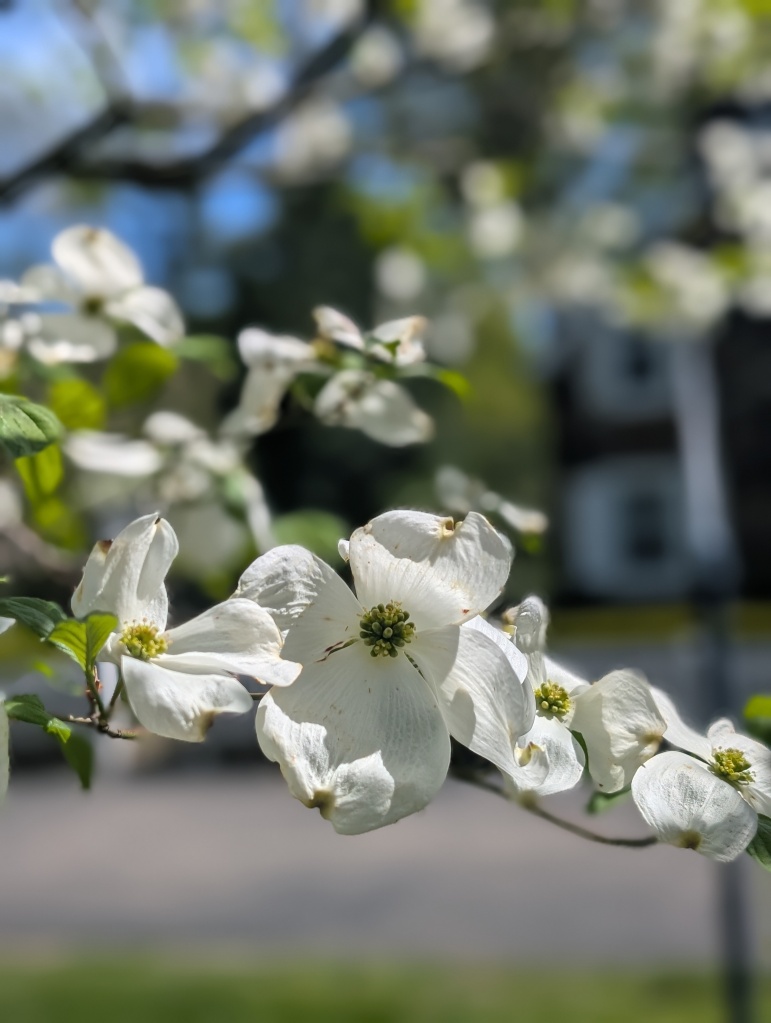
It’s currently in full bloom, a gratifying sight for the caretakers who watch over it.
“Brooks and I are pleased with the tree’s condition to date,” Troncone said. “I’m glad we were able to save it. Hopefully, that will be the last time we have to move it.”
A few interesting facts about flowering dogwood
The large, showy “petals” are actually modified leaves called bracts, not true petals.
Native Americans used dogwood bark to make scarlet dyes and medicinal teas.
In some cultures, the dogwood is a symbol of rebirth and resurrection. (Fitting for the subject of this blog post!)
The “fruit” of the dogwood is a drupe, similar to a plum, with a hard seed inside.
Dogwood wood is hard and strong, making it suitable for tool handles, charcoal, and other items.
The name dogwood is thought to be a variation of the Old English word “dagwood,” meaning a skewer or dagger. The hard wood of the tree was used to make these tools.
Another theory regarding the origin of the name dogwood suggests it could have been named for its berries, called “dogberries,” which might have been considered less desirable or “fit for a dog.”
Dogwoods have been used medicinally for generations; the bark is rich in tannins, so ground bark or leaves are used to treat pain, fevers, backaches, dizziness, weakness, excessive sweating, uterine bleeding, and incontinence.
Penn State Behrend’s Class of 2025 is ready to make its mark on the world. We’re proud of our students and all that they have learned and accomplished here at Behrend. Over the next several weeks, we will introduce you to a few of our remarkable seniors who have conducted valuable research, pioneered innovation, overcome challenges, and engaged in college life in a big way.
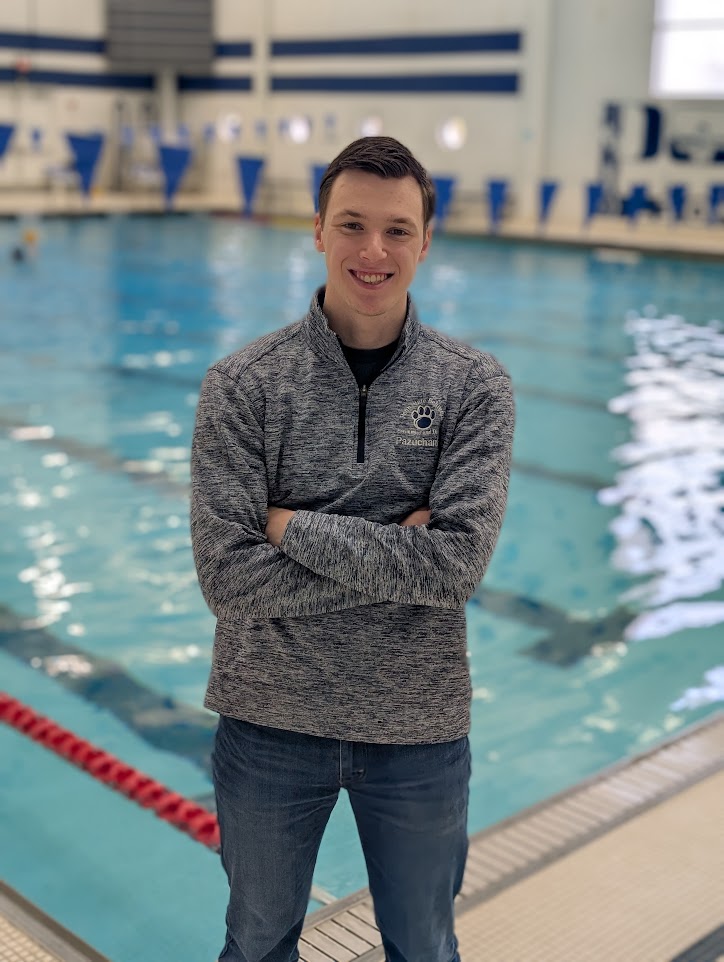
Today, we’d like you to meet Mike Pazuchanics.
Major: Mechanical Engineering
Hometown: McMurray, Pennsylvania
Why did you choose Behrend? It has a strong engineering program with professors that prioritize students and teach in small classroom settings. Additionally, I wanted to swim at the D-III level and Behrend has a strong swim team with a great coach.
Why he chose his major: I’ve been surrounded by engineers and problem solvers since a young age. My dad was an engineer, his dad was an engineer, and my mom’s dad repaired commercial printing machines. Their knack for problem solving had a strong influence on me; we were always fixing or building things around the house. I decided to pursue Mechanical Engineering because I have always been interested in how things move and why things are designed the way they are. Additionally, it is a versatile degree that allows me to work in a variety of fields.
Proudest accomplishment at Behrend: I am proud to have completed my degree in four years while competing in varsity athletics. I swam during all four years of college while balancing a challenging academic workload. Managing studying, homework, and projects with the swimming practices, lifting program, and swim meets was challenging.
Campus involvement: I have been a member of the Behrend Swimming and Diviving team for all four of my years at Behrend. I am also the men’s team representative for the Student Athletic Advisory Committee, which provides insight and shares Behrend Athletic program information with the team. During my junior and senior years, I was a grader for Statics and Strengths II. I also played intramural flag football in the spring the past two years with my swim teammates.
Awards and accolades: I have been part of the AMCC All-Conference all four seasons of my athletic career. Additionally, I was inducted into the Behrend Chapter of Chi Alpha Sigma, which is the National Collegiate Athlete Honor Society. I was voted onto the 2024 AMCC All-Sportsmanship Team in 2024.
I was also an awardee of the 2023 Science, Mathematics, and Research for Transformation (SMART) Program. The SMART Program is a Department of Defense (DoD) scholarship program for STEM students. SMART provides tuition scholarships which are “repaid” by working at a DoD facility after graduation. This program supports STEM majors in college and assists them with starting their professional careers. I highly encourage any STEM major to apply.
Advice for first-year students: When things are not going according to plan, it can be easy to focus on what is going wrong. Taking a step back to reevaluate or change your perspective can help you reset and focus on what is going right. It is important to remember and appreciate what you have accomplished rather than getting bogged down in little failures.
Mike has accepted an offer from the Portsmouth Naval Shipyard in Kittery, Maine, after his graduation in May. He will work as a civilian engineer in the maintenance and overhaul of the Navy’s fast-attack nuclear submarines.
Penn State Behrend’s Class of 2025 is ready to make its mark on the world. We’re proud of our students and all that they have learned and accomplished here at Behrend. Over the next several weeks, we will introduce you to a few of our remarkable seniors who have conducted valuable research, pioneered innovation, overcome challenges, and engaged in college life in a big way.
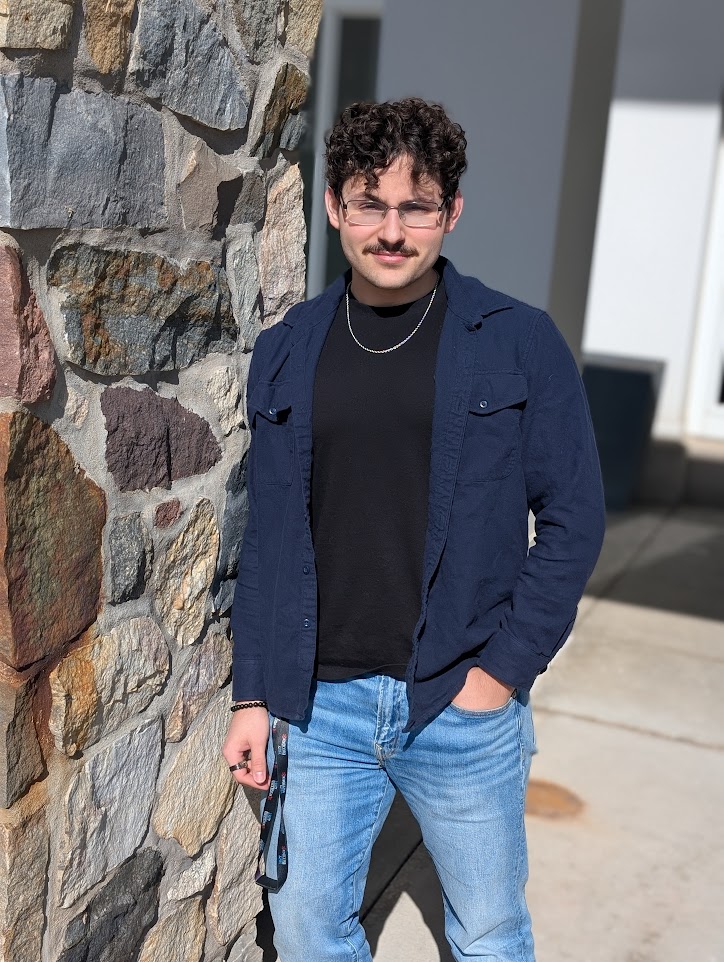
Today, we’d like you to meet Daniel Gayoso.
Major: Computer Engineering
Hometown: Moon Township, Pennsylvania
Scholarships: Frank S. Palkovic Trustee Scholarship
Why he chose Behrend: I like the smaller size of the campus and classes. It also had a reputable engineering program.
Why he chose his major: I built my first computer when I was 12 years old and kept tinkering all the way through high school. I was always very curious to learn how each hardware component functions alongside the software.
Challenges overcome: My classes, mainly in my junior year, were each a challenge in and of themselves. The raw amount of material to learn was incredible, but what also made it difficult is that much of that material is built off foundational math and science from your first and second year. You have to really understand the foundations.
Involvement and activities: Computer Engineering Club (President, Vice President); Behrend Engineering Ambassadors; Resident Assistant; Institute of Electronics and Electrical Engineering Club.
Side quest master: I constantly get sidetracked during homework assignments and projects related to my major because I’ll see some random term I’ve never heard of that sounds interesting and I end up spending a half hour researching it.
What you’d be surprised to know about him: I have dual citizenship in the United States and Spain and my parents are immigrants from Venezuela. That said, my Spanish is not very good!
What he’s passionate about: Lifting weights and anything related to computers, electronics, or communications.
Learning happens outside class, too: You will get as much out of college and your degree as you put into it. Spend as much time as you can going beyond what’s being taught in the classroom. Join clubs, do internships, take on extra projects, or seek out research opportunities with professors. Like Dr. Abdallah Abdallah, associate professor of electrical and computer engineering, says: “Use the knowledge taught to you in your courses to build things outside of them.”
Curiosity and enthusiasm matter: Make sure you enjoy what your major has to offer. The best engineers I know are the ones who think about it 24/7. They are the type of people who wake up in the middle of the night with a solution to a problem they’ve been ruminating on for weeks. This doesn’t mean you have to sacrifice a social life or adequate sleep to be a good engineer, but the more curious and enthusiastic you are about your work, the further you will go.
Advice for first-year students: Make an effort to leave your comfort zone. Also, if you didn’t like the person you were becoming before college or wish that you were different in some way, you can reinvent yourself. It’s a whole new start.
After his graduation in May, Daniel plans to work in the computer engineering field for three to five years and then pursue a master’s degree in computer engineering.
Penn State Behrend’s Class of 2025 is ready to make its mark on the world. We’re proud of our students and all that they have learned and accomplished here at Behrend. Over the next several weeks, we will introduce you to a few of our remarkable seniors who have conducted valuable research, pioneered innovation, overcome challenges, and engaged in college life in a big way.
Today we’d like you to meet Ellen Shade.
Major: Mechanical Engineering
Hometown: Edinboro, Pennsylvania
Scholarships: Ernst R. Behrend Scholarship
Awards: President Walker Award, Dean’s List
Why she chose Behrend: It is close to home and has a great engineering program, a beautiful campus, small class sizes, and is really welcoming.
Why she chose her major: I chose Mechanical Engineering because I have always had a love for math and science. I also love it when problems have answers, even it takes some time to figure it out. Engineering also allows me to be creative.
Proudest accomplishment at Behrend: Being elected president of the Behrend Engineering Ambassadors and president of the Society of Women Engineers.
Campus involvement: I was the president of the Society of Women Engineers, president of the Behrend Engineering Ambassadors, a member of Tau Beta Pi (Engineering Honor Society), and a member of the Schreyer Honors College. I also did undergraduate research work.
What you’d be surprised to know about her: I was on the women’s basketball team for my first two years at Behrend. In total, I played basketball on school teams for thirteen years.
Welcoming the next gen of women engineers: I am very passionate about inspiring young women to pursue engineering! I loved to volunteer at youth outreach events and connect with them.
Advice for first-year students: Get involved. I have met some of my best friends and found what I am passionate about through joining clubs and organizations.
After her graduation in May, Ellen will work as a Project Engineer at Whiting-Turner in Lexington, Kentucky.




 BEHREND BLOG