Standout Seniors ’25: Meet : S. N. “Nic” Darrell (English)

Penn State Behrend’s Class of 2025 is ready to make its mark on the world. We’re proud of our students and all that they have learned and accomplished here at Behrend. Over the next several weeks, we will introduce you to a few of our remarkable seniors who have conducted valuable research, pioneered innovation, overcome challenges, and engaged in college life in a big way.

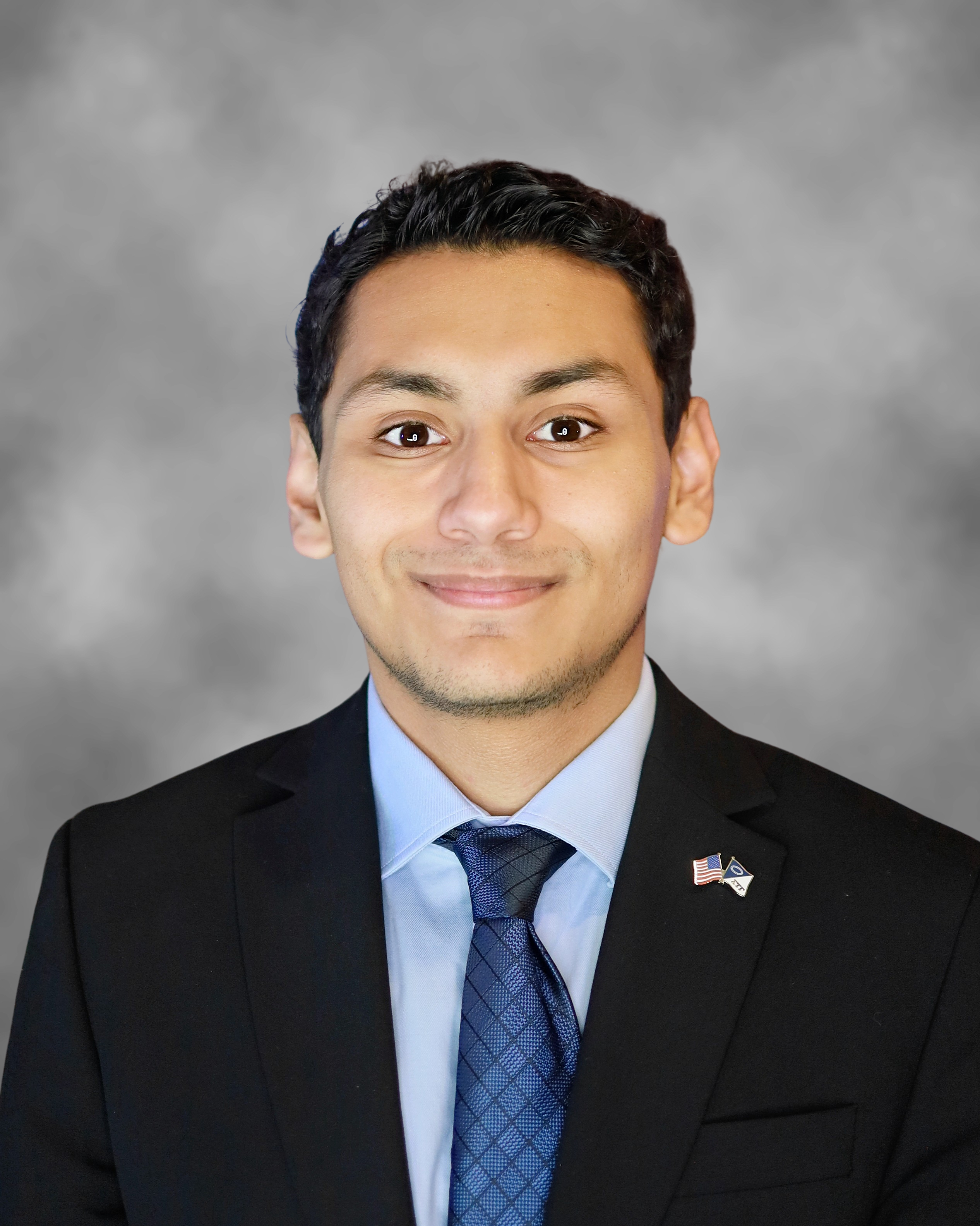
Today, we’d like you to meet: S.N. “Nic” Darrell:

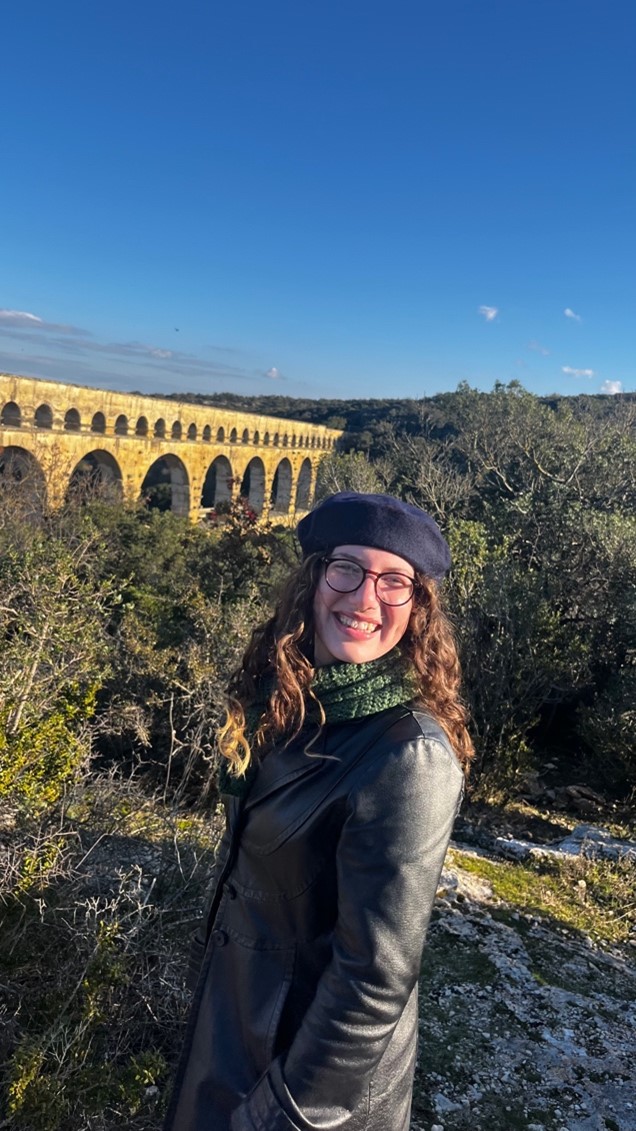
Darrell during a semester abroad in France at Pont du Gard, the largest ancient Roman aqueduct in Europe.

Major: English — Literature, Film, and Culture option

Minor: French and Francophone Studies

Hometown: Perkasie, Pennsylvania

Scholarships: Chancellor’s Scholarship

Why they chose Behrend:  It was far enough from home that it made me I feel I was branching out. It is also the only Penn State Commonwealth Campus with NCAA Water Polo.

Why they chose their major: I have always been involved and interested in languages and the arts. The English Literature, Film, and Culture option offered a diverse learning path that continues to interest me.

Proudest accomplishment at Behrend: I am most proud of the independence I gained while studying abroad for a semester in Montpellier, France. Living with a host family helped me to truly immerse myself in the French language and culture. I gained a global perspective on politics, sustainability, and life, and I can finally call myself multilingual.

Challenge accepted: Balancing work and play is always a challenge. I have had a job throughout my years at Behrend and each semester, I get burned out toward the end. I try to remember to take time for myself and to spend time in nature, with my dog, or with the people I love.

Clubs/activities: I’m a member of Greener Behrend and the French and Francophone clubs.

Awards: Association of Collegiate Water Polo Coaches (ACWPC) Water Polo All-Academic Team, President’s Freshman Award (4.0 in first semester at Behrend).

Captain ‘O Captain: I am the senior captain of the water polo team. I have been playing for nine years. I love the sport. It keeps me healthy and disciplined.

What you’d be surprised to know about them: Although people look at me and assume that I am a woman, I am non-binary and pansexual. Queer/gender studies have been a focus for me in my English classes. I am doing my senior thesis on Orlando by Virginia Woolf, which is a 1928 biographical fiction about a genderfluid aristocrat. LBGTQIA+ studies are underrepresented, and I want to bring light to these unique, queer ideas.

Highest priority for the coming years: I want to travel and understand cultures different from my own as much as possible. I know the best way to do that is to get paid while traveling, so I plan to find a career that accommodates this lifelong dream.

Love for art and nature: I am passionate about consuming and creating art, whether that is through dancing, painting, crocheting, writing, or making music. I also love nature and constantly seek out ways to preserve the Earth through vegetarianism, reducing waste, and giving back to the place we all call home.

Advice for first-year students: Someone told me that in the first month of school, I should say “yes” to any new opportunity that came my way. It was great advice as it allowed me to branch out and take advantage of the diverse student life at Behrend.

After graduation in May, Nic plans to pursue a job that allows them to see the world, perhaps teaching English abroad or being a flight attendant.

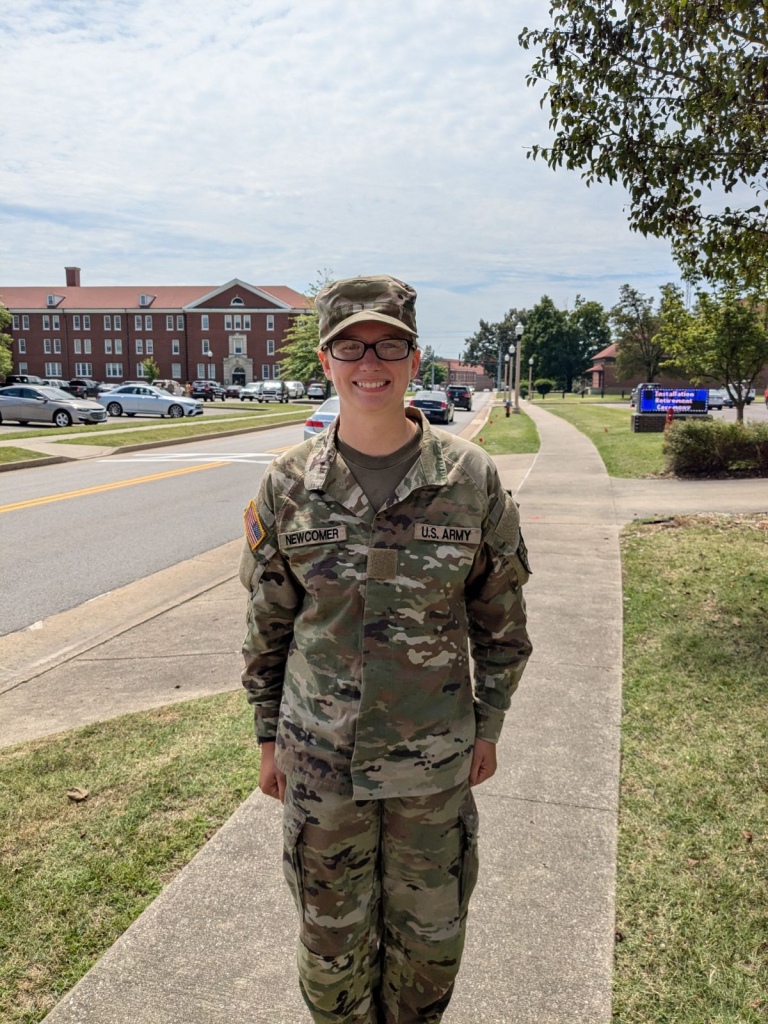
Standout Seniors ’25: Meet Amy Newcomer (Psychology)

Penn State Behrend’s Class of 2025 is ready to make its mark on the world. We’re proud of our students and all that they have learned and accomplished here at Behrend. Over the next several weeks, we will introduce you to a few of our remarkable seniors who have conducted valuable research, pioneered innovation, overcome challenges, and engaged in college life in a big way.

Today, we’d like you to meet Amy Newcomer:

Major: (B.S.) Psychology, Psychology in the Workplace option

Certificates: Behavioral Health and Counseling Psychology; Child Development

Scholarships: United States Army ROTC 3-year Advanced Designee Scholarship

Why she chose Behrend: Behrend offers many opportunities for Psychology majors to gain experience, from mentoring programs at the Susan Hirt Hagen Center for Community Outreach, Research, and Evaluation (CORE) to the ability to do research work with professors, in addition to the built-in research required in some courses. This is work that undergraduates at most universities don’t get to do, so it looks great on my graduate school application.

Why she chose her major: I’m in awe of mentoring and helping professions. Growing up, I dreamed of inspiring and helping people. But, more than that, as I’ve gotten older, I realized how sacred and important the mental health profession is. To truly sit with someone on their darkest and brightest days is an honor I cannot wait to have in my therapeutic relationships.

Awards: President Walker Award (4.0 in first semester); Dean’s List every semester.

Campus involvement: Reserve Officers Training Corps (ROTC) took most of my time, but I was also involved in the Women’s Engagement Council and attended the Penn State Summer Leadership Conference each year.

What makes her unique: Today, it seems most people keep to themselves, but I like to have conversations with new people because we can share insight and learn from each other. My friends joke that I know everyone, or could talk to anyone, and I feel like that is a unique trait today.

A determined leader: I thrive on helping others reach their best selves. I love to mentor, and every day I do the best I can for the people I serve and myself. That’s just how I operate.

What you’d be surprised to know about her: Though I appear to have a lot of confidence, I struggle with feeling inadequate sometimes. I can get rattled and discouraged like every one else.

Go ahead, doubt her: Growing up, I was teased a lot by my classmates and seemed to be the butt of a lot of jokes. They doubted my intelligence and that fired me up to work my hardest to prove myself. After four years, I know it’s time to let those ghosts go. I became successful not in spite of them but because I’m me. I’ll thrive wherever I go.

Post-college plans: I want to take some time to travel and enjoy nature. I have high hopes of going to Acadia National Park in Maine with my partner, Katie. We plan to visit a lot of the National Parks in the future.

Advice for first-year students: Make yourself known, especially to your professors. They love their jobs and are more than happy to talk with you before or after class. Establish a relationship with them because you never know when you might need their help.

Words to live by: My favorite adage is “Don’t get bitter, get better.” There are going to be times when you feel knocked down and defeated. Feel those feelings, then plan to get back on the right track. If you get bitter, it halts your progress, and you get stuck.

After her graduation in May, Amy will serve in the Pennsylvania Army National Guard as an Adjutant General Officer, which is a human resource professional. She plans to attend graduate school in the fall to obtain a master’s degree in clinical mental health counseling.


Hash-Tagging History: Alumna Shapes Social Media at Gettysburg Museums

By Heather Cass, Publications Manager, Penn State Behrend

Alanna Gillis ’24

While job hunting, Alanna Gillis ’24 stumbled across a position as a programs assistant at the Adams County Historical Society (ACHS) in Gettysburg. It seemed a good fit for Gillis, who earned a Creative Writing degree and minored in History at Penn State Behrend.

Though the organization eventually filled that position internally, they encouraged Gillis to interview for a part-time customer service position.

She was disappointed but figured she would interview for the experience.

“One very convincing interview and tour of the building—including their massive library and archives— later, I was working for ACHS as a visitor services associate in a part-time capacity,” she said. “Even though it wasn’t the job I hoped to land right out of college, it was still a job in my field that I felt confident I could do well.”

She did it so well that by September, she was promoted to part-time associate in the marketing department.

“They had been looking for someone to fill that position in marketing and had seen on my resume that I had experience with writing, graphic design, and running social media for the clubs I was in at Behrend,” she said.

Gillis was promoted again in just a few months. Today, she is the full-time social media and marketing coordinator at ACHS, where she creates and curates content for the organization’s social media pages, produces short- and long-form video projects, and contributes to marketing materials and publications.

We chatted with Gillis to learn more about her job, how Behrend helped her get there, what she’s learned so far, and what she’s looking forward to.

Tell us a little bit about the Adams County Historical Society.

The Adams County Historical Society is a nonprofit historical society that runs two museums in Gettysburg. ACHS focuses on preserving, protecting, and sharing the stories of Gettysburg and Adams County. Through our two museums, Gettysburg Beyond the Battle and The Shriver House Museum, we highlight the local history, reaching all the way back to the time of the dinosaurs.

How did your Behrend education help you obtain this role?  

Both of my areas of study were crucial. My History minor helped me get my foot in the door, but my Creative Writing degree allowed me move up and achieve the job I have now.

My job is mainly about communicating with the public, whether that be to our museum patrons, to our followers, or to our YouTube viewers. I needed to have a good grasp of how to best communicate with people through the written word—a skill I felt confident in because of my Creative Writing degree.

Having a good grasp of the English language, from word choice to register, helps me effectively draft both a fun TikTok script and a more formal press release, which is the flexibility that ACHS needed from someone in this position.

My Creative Writing degree has also allowed ACHS to start new projects they wanted to do but didn’t have the staff for, such as publishing firsthand accounts of the Battle of Gettysburg.

What are your primary duties in your current role?

I am responsible for our social media pages; I create and curate content for Facebook, Instagram, TikTok, and YouTube. I generate daily content for all these sites, which varies from photos with captions, to short form videos highlighting our museum, to video thumbnails, to longer videos aimed at teaching people the history of Adams County and Gettysburg.

Beyond that, I am also responsible for filming and editing our longform videos for YouTube. So far, I’ve worked on nearly forty videos with a combined view count of nearly 150,000 on the platform.

I also help with our publications. This includes civilian accounts of the Battle of Gettysburg, informational and promotional flyers, and a museum guide featuring many of the artifacts on display and in our archival collections, like those published by The Smithsonian.

What does a typical day look like for you?

My day starts with a 40-minute commute, but I don’t complain about it too much because it’s a beautiful drive through rural south-central Pennsylvania. It gives me time to center myself and prepare for the day ahead.

The first thing I do is check my email inbox and the inboxes of our various social media sites. If any messages came in overnight, I’ll respond or pass them along to the correct department.

From there, I usually spend the morning editing YouTube and TikTok videos. Depending on the length of the video, this can take anywhere from a few minutes to an hour or more.

After lunch, I work and draft social posts for the week. If I get all that done, I’ll spend time working on secondary assignments like publications.

When do you gather content?

Certain days of the week are reserved for filming content only; I’ll go out onto the Gettysburg Battlefield or into other parts of Adams County with our historian and film episodes for our YouTube channel. Usually, this is how I spend Fridays.

What has been your favorite project so far?

I’m really enjoying getting to put together the civilian accounts of the battle. This project is a perfect blend of my major and my minor, and it’s very rewarding to be able to work on a project where both are useful. Putting together these accounts has also allowed me to see a different type of publishing than I had when I worked on Lake Effect, Behrend’s literary journal.

And your favorite post so far?

The YouTube video “Tim’s Top 10 Defunct Gettysburg Attractions.” Tim Smith is our historian, and he and I spend a lot of time together filming our YouTube videos. I also often consult with him during research or when I’m fact-checking my written content. This was the first episode he and I worked on together, and it was also the first I’d shot and edited in this style. I managed to sneak in some jokes during the editing process, which made the project quite fun.

Have you done anything that turned out to be an unexpected success? 

A few YouTube videos have unexpectedly done well. We don’t typically get more than 3,000 views on our longer lecture videos, but “The Confederate Retreat” lecture has 28,000 views, significantly more than we anticipated.

An unexpected success that is more directly related to me and my work is that I started a book club for fans of Adams County history. Each month, ACHS staff selects a book, usually historical nonfiction, and I prepare a weekly discussion on each section. It’s a virtual book club, which means we have participants from all over the country. So far, we have over 110 members!

What would people be surprised to know about social media marketing? 

A lot of work goes into social media content management and marketing. It’s not as easy as just selecting an image, writing a quick caption, and hitting “post.” Often, images require editing or designs must be created. From there, captions must be drafted and edited to ensure that voice aligns with the company and the historical content is correct. The next step is tagging the correct people and inserting the corresponding ticket links, if necessary. After that, the post is good to go live. Then, it must be cross-posted to all the other platforms. All that work is for one single post, and ACHS usually posts a minimum of five times per week on each platform.

What are you looking forward to? Are there any big events or projects you’re excited about? 

This May, we are hosting the Gettysburg Film Festival: Victory in World War II. We will have guests ranging from historical filmmakers like Ken Burns to authors and screenwriters. I’m excited to help with this and make connections with people in the fields of both writing and history.

What have you learned the hard way? 

When I first started, I was hesitant to ask for help. For a short time, I tried to grin, bear it, and figure it out by myself.

When this resulted in content that I wasn’t happy with, I realized I had two choices: admit I couldn’t do something and ask for help or submit work that I wasn’t proud of.

I asked for help. I realized that if I wanted to succeed in this job and create work that I was happy to have my name associated with, I may need to reach out for guidance sometimes. It’s OK to not know it all.
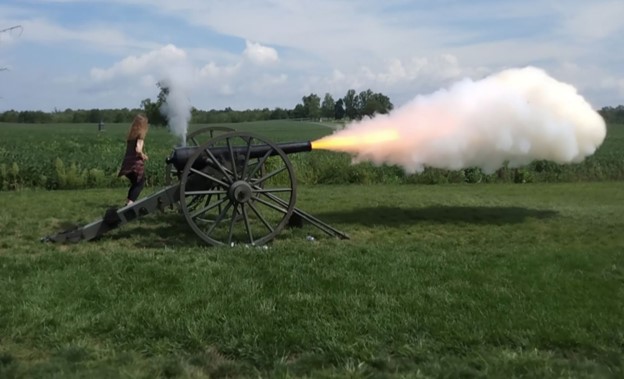
Gillis: “Every now and then, we get to work on fun events or participate in exciting demonstrations. Two examples that I can think of are when I had the chance to shoot a Civil War cannon (above) and when I participated in a day-long leadership tour of the Gettysburg battlefield (below).”  
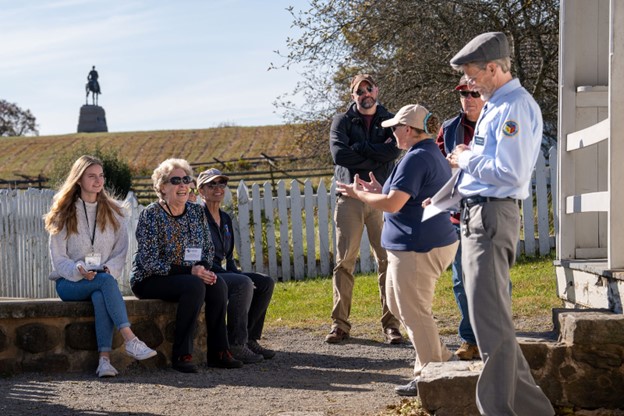
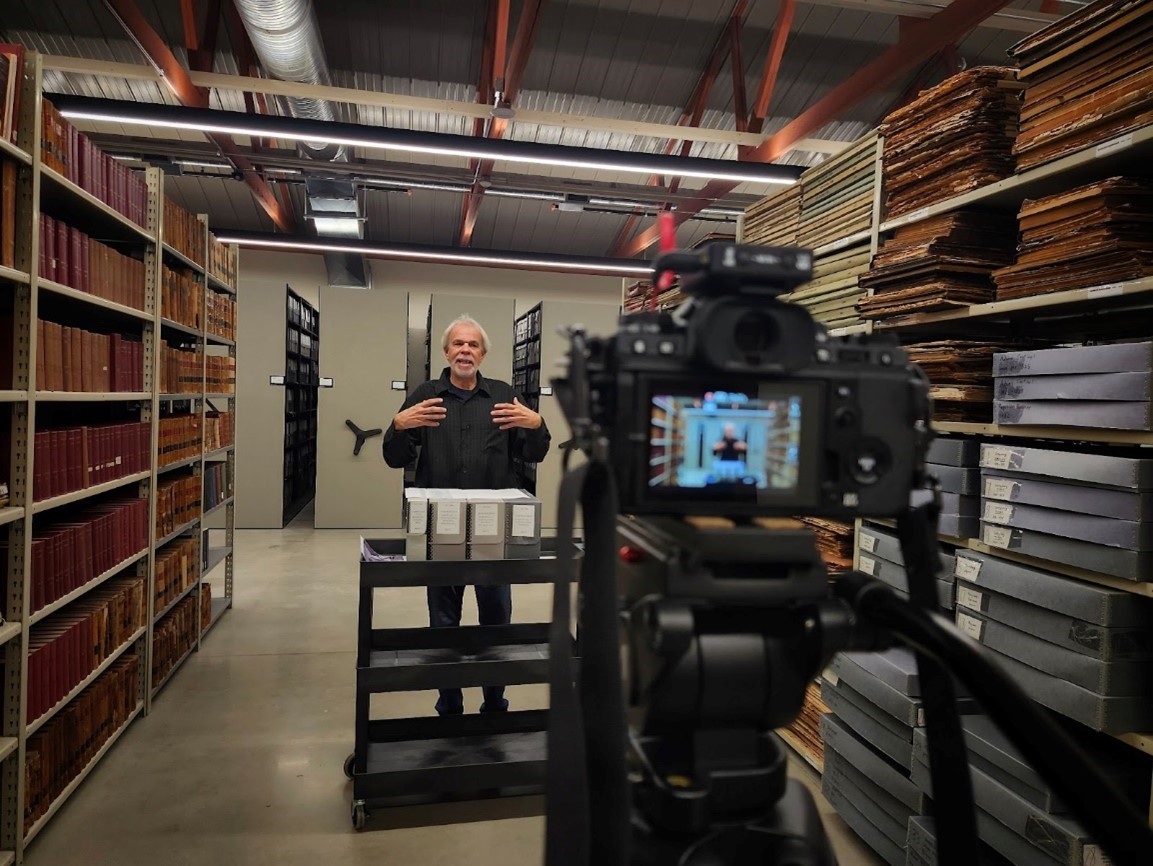
Behind-the-scenes of filming a YouTube video in the ACHS archives. 
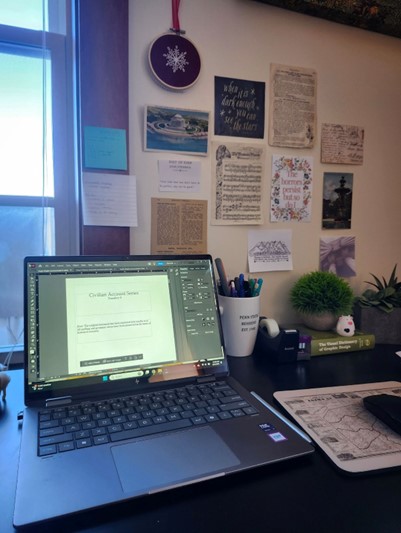
Gillis’ workspace. “I took this while editing a Civilian Account of the Battle of Gettysburg (with my Penn State Behrend mug in the background),” she said.

Behrend Barbershop Quartet Wins District Competition

By Heather Cass, Publications Manager, Penn State Behrend

IMG_1549
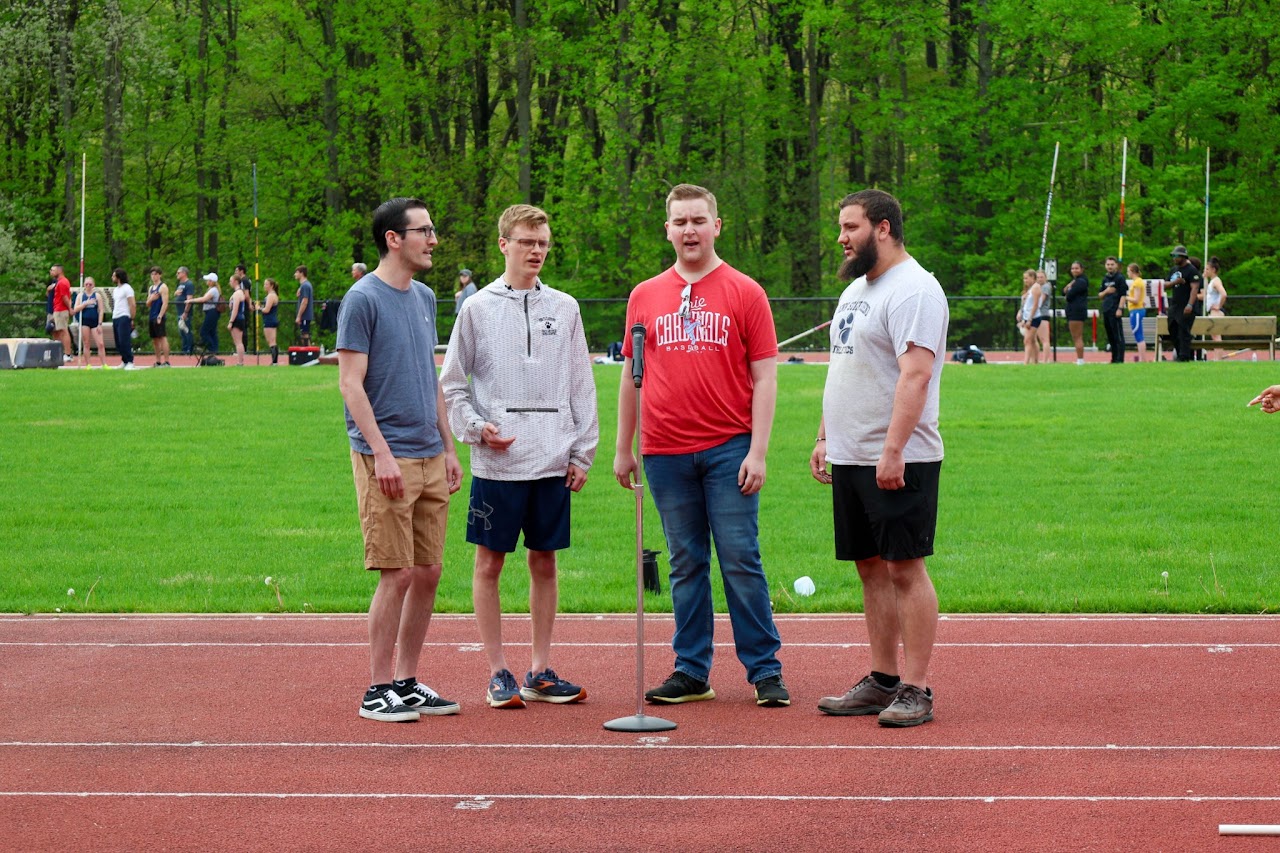
Four Score, a barbershop quartet that includes three Behrend students and one alumnus, perform the National Anthem at a home track meet at Penn State Behrend in spring 2024.

One of the most amazing aspects of college is that a single class can have a profound effect on your life. It might inspire you to change your career plans. It might be the place you meet your best friend or future spouse. It might ignite a lifelong passion or lead you to a place you never expected. 

Max Rohl, a senior Interdisciplinary Science and Business major, never dreamed he would be on stage accepting first place in a barbershop quartet competition in Rochester, New York. He had never even sung in a group until he signed up for Concert Choir class in his first year at Behrend.

“Some of us in the class started a kind of club where we would meet up in Ohio Hall to work on our songs,” Rohl said.

One night, at the end of a choir meet-up, he asked if anyone in the group had any other styles of songs they wanted to work on. Rohl, who had been a fan of the barbershop quartet classic, 76 Trombones, was about to suggest barbershop songs when Wade Williams, now a junior History major, said, “I’ve always wanted to start a Barbershop Quartet.”

“Me, too,” Rohl said.

Wade is a bass singer, Rohl is a baritone, so they needed a tenor and a lead.

They found both in Joey George, a senior Computer Engineering major, who had grown up singing in choirs and at church and could sing both tenor and lead.

The trio looked all over Behrend for a fourth member before Wade did an internet search and found Lake Erie Sound, an established Erie barbershop chorus. He reached out to its leader, John Donohue, who directs the chorus of about two dozen men.

“He probably thought, ‘Why are these college kids bugging me?’ but we talked him into coming to listen and sing with us,” Rohl said.

After that one practice, Donohue, a 2015 Mechanical Engineering alumnus, was in.

“It just sounded so good when we sang together that I knew we had to put our efforts toward getting better and refining our performance,” Donohue said.

The group began practicing a couple of times a week, meeting when Donohue, who is about ten years older and has a job and family, could join them.   

“It was great to meet young people who had been bitten by the ‘barbershop bug,’” Donohue said. “They were eager from the start and soaked up any knowledge I shared with them.”

They chose a name—Four Score Quartet—and performed the National Anthem at a Behrend home track meet in the spring. They hadn’t considered doing much more until Donohue mentioned a nearby competition—the Seneca Land District of Barbershop Harmony Society District Competition in Rochester, New York.

“He said, ‘Hey, there’s this competition in twenty days. Do you guys want to do it?’” Rohl said.

They not only did it; they won it and were named district champions.

“John was not surprised, but we were!” Rohl said.

The group sang four songs, two in preliminaries and two in the finals: “Wait ‘Til the Sun Shines, Nellie,” “A Son of the Sea,” “Sweet and Lovely,” and “That Old Black Magic,” which earned them their highest score of the day. Each song is scored separately, and then song scores are added together to get a final score.

scores

If it sounds easy, Rohl will assure you that it is not.

“It’s actually really difficult to sing barbershop harmony, but I love challenging myself and doing hard things,” Rohl said. “When you have to work hard at something, mastering it is much more rewarding.”

Barbershop singing is different from any other type of choral group singing but it still requires plenty of talent and practice.

 “Although the technique is different than in a classical choir, it’s still very demanding from a musical perspective and can really push an individual both vocally and emotionally,” Donohue said.

Donohue is happy to see younger people interested in barbershop quartet and said that while it is sometimes viewed as an old-fashioned type of singing, that perception is changing.

“In the past ten to fifteen years, quartets have began to adopt more musical theater pieces and songs from pop-culture,” he said.

 Winning the competition solidified the students’ commitment to the quartet.

“We’re all very dedicated to it now, even more so than before,” said Rohl.

Hear the Four Score Quartet for yourself at the group’s YouTube page. 

WHY IS IT CALLED BARBERSHOP QUARTET?

In the late 1800s and early 1900s, every barbershop had its own quartet. The term “barbershop” in reference to harmonizing was first documented in 1910, alongside the release of the song Play That Barbershop Chord.

During this time, barbers were more than just hairdressers; they also pulled teeth and performed minor surgeries. Barbershops gradually became social hubs where locals could gather, play instruments, and sing while waiting for their turn in the chair.

DID YOU KNOW?

Barbershop harmony is believed to be rooted in the Bllack community. According to a post on The Barbershop Harmony Society blog: “Lynn Abbott, a jazz archivist at Tulane University, was an expert on early African-American popular music and gospel quartets. He discovered overwhelming evidence that barbershop quartetting was pervasive in African-American culture in the late 1800s and early 1900s, including among many men who went on to become the pioneers of jazz. Abbott published his findings in a 1992 academic paper that forever changed the way Barbershoppers understand their roots.”

461750648_1101244505337426_3581344516470634633_n
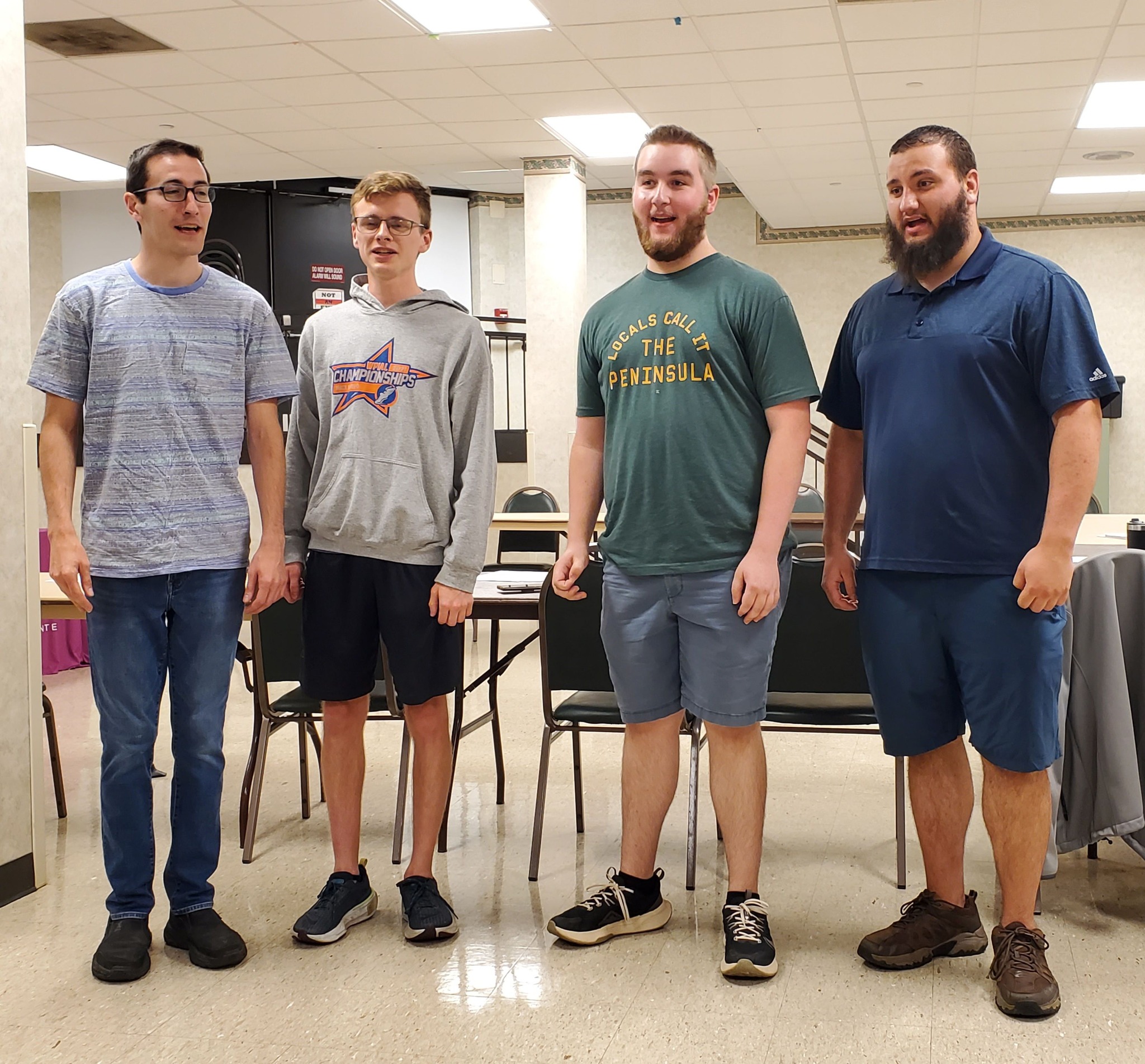
The Four Score Barbershop Quartet includes, from left, John Donohue ’15, and Behrend students, Joey George, Wade Williams, and Max Rohl.

Student Photo Project Explores Connection to Natural World

By Heather Cass, Publications Manager, Penn State Behrend

processed-BD4DD590-EDDD-4E86-A1B5-C2901D374CD0
Frontier Park in Erie. CREDIT: Railey Kranz

Students in Photo 202: Fundamentals of Professional Photography recently completed a photo essay project based on “The Land Ethic,” an essay written by Aldo Leopold in 1949 that argues for a deeper connection between humans and the natural world.

Leopold suggests that humans need to expand their concept of ethics beyond just people and animals to include the land—soil, water, plants, and more. The “land” is not something we own, but something we are a part of, and we should treat it with care and respect. Leopold proposes that we should think of ourselves as caretakers, responsible for maintaining balance and harmony with nature.

IMG_0458
Urban park. CREDIT: Chelsea Quijas

Tommy Hartung, assistant professor of digital media, arts, and technology, instructed students in the class to choose an area and create a series of five 360-degree panoramic images that document the landscape and the biome it contains.

“The site they chose could be anywhere from urban to complete wilderness,” Hartung said. “Students were also required to take notes documenting the ecosystem and use their notes to draft a 500-word essay to go with the images.”

A second part of the assignment involved time-lapse photography.

“The element of time and motion related to photography has allowed humans to see systems develop by compacting time into short motion clips,” Hartung said. “It allows a focus that the human experience may overlook about the location.”

Dobbin’s Landing in Erie. CREDIT: Evan Gerdes

The students’ essays are impressive and thought-provoking.  See for yourself at the links below:

IMG_1160-768x512
An acorn in Wintergreen Gorge. CREDIT: Lyndon Herschell

‘Understaffed, underfunded, and under attack’

Alumnus, deputy director of elections in Michigan, to speak at Penn State Behrend Monday

adam fracassi speaker
Adam Fracassi-Wier, deputy director of elections for the state of Michigan.

Adam Fracassi-Wier, deputy director of elections at the Michigan Bureau of Elections, will discuss the state of elections and election security when the Speaker Series returns to Penn State Behrend at 7:30 p.m. Monday, Oct. 21. His talk, “Facing the Storm: Resilience in Elections after 2020,” will be held in the Metzgar Center. The program is free and open to the public.

Fracassi-Wier graduated from Penn State Behrend in 2012 with Bachelor of Arts degrees in Political Science, International Studies, and English. He earned his law degree from Michigan State University College of Law in 2014. His career includes serving as Michigan’s assistant attorney general from 2015 to 2018, as an adjunct professor at Michigan State University College of Law, and currently as deputy director of elections at the Michigan Bureau of Elections.

Behrend Blog talked with Fracassi-Wier to learn more about what it’s like to work in elections and election law in an increasingly partisan environment.

What are your biggest challenges right now?

Election administrators across the country are understaffed, underfunded, and under attack. This is the biggest challenge. We have to manage elections and election administration in a hyper-partisan environment that fuels misinformation, all while ensuring the safety of ourselves, our staff, other election officials, and poll workers. I’ve had to add different facets to my job that I never thought I would have to add. For example, I’m no longer just an attorney – I’ve had to add communications and marketing into my daily responsibilities.

What does it feel like to oversee election integrity when so many are distrustful of our elections today?

This is a heavy burden, especially in this era where misinformation and distrust are rampant.  Being a nonpartisan civil servant who ensures elections are fair is critical, but it brings risks and requires constant communication and transparency. I take very seriously my responsibility to ensure that every eligible citizen can vote while balancing it against the necessary security checks in the system. It’s hard when something you have dedicated your life to is constantly under threat, and things that you have always done because the law requires it, now are the things making you a target.

How do you fight that disinformation and assure voters that Michigan’s elections are secure?

Transparency and communication are vital. We have had a lot of success going to folks directly with messaging. What I’ve seen in the last four years is that many people are interested in the system but don’t understand it. I have allocated and created new resources in the last several years that are focused on providing educational materials and clearly communicating what we’re doing in advance of doing it. Engaging with voters directly and providing them with accurate information is key to building trust.

I’ve also had a lot of success by coordinating with local officials (clerks, township supervisors, etc.) on the messaging. In many instances, voters will trust their local officials.

The key is just to be a constant source of truth. I’ve been able to build trust with both Democrats and Republicans, voters and elected officials, because I’m consistent in what I do, and the decisions I make are not based on politics.

You secured a $40M budget increase to improve election operations in Michigan. What were you focused on improving?

Voters in 2022 passed a constitutional amendment that dramatically changed elections in Michigan. They implemented early in-person voting, mandated that drop boxes be available in all jurisdictions, and required the state to pay for the return of all absent voter ballots. But this required significant funding for us and the local clerks. I was very fortunate to be able to obtain $40 million to fund the constitutional amendment and the subsequent legislation that passed, but it wasn’t enough to fully fund our office and the local clerks’ offices.

Michigan has more than 1,600 township, city, and county clerks who all have different election roles. We are one of, if not the, most decentralized systems in the country for running elections. More than 900 clerks’ offices are single-precinct jurisdictions that likely have only one staff member—themselves.  This is not enough to run elections. When I sought funding, I sought approximately $125 million for our office and the local clerks.  Everyone thought I was crazy for asking for that, but I had the numbers to back me up. I obtained $40 million, and we spent it almost immediately, with more than $30 million being allocated to clerks directly. With this money, we were able to fund thirty-five additional staff members at the Bureau of Elections, more than doubling our staff.

Since 2020, clerks have seen the number of ballots being returned by mail more than double. We went from approximately 25 percent voting by mail to approximately 55 percent. The funding allocation allowed us to buy new equipment for clerks to account for this increase and ease processing. This funding also allowed us to build a new pollbook to be used to better detect and prevent double voting during the early voting period, buy equipment for clerks to administer early voting, and fund poll workers for jurisdictions.

What do you wish people knew about the election and election security?

Trust your election administrators. Almost every single election administrator – regardless of party affiliation – administers the election the same. We all believe in upholding the integrity of the election while ensuring that voters can exercise their most fundamental right of casting a ballot. If you have questions about the process or want to know more, contact your election official. Start that dialogue with them in a respectful manner, and you will find that they will engage and help you to the best of their ability.

It’s also important to know that there are backups for everything.  Michigan uses paper ballots, as do many other states. Even if you don’t have a paper ballot, there are still backup records to do recounts and audits. All of these are done to verify the accuracy of the results.

After 2020, our office conducted more than 250 audits across the state. The Auditor General audited our office, and the Senate Oversight Committee, led by Republican Senator Ed McBroom, examined everything as well. The audits showed that while there are always improvements to be made, the system worked as it should. We have not seen and do not continue to see massive voter fraud like what is suggested by several candidates.

Is there a better way to handle elections in the U.S.?

Our system is very similar to systems across the world. There are positives and negatives with every system, but I think a “better” way is dependent on the eye of the beholder. What you’re seeing in several states are different methods of electing officeholders that are affecting the policies, starting with redistricting.

Several states—Michigan included—have an independent redistricting commission that draws lines in a nonpartisan manner. In Michigan, this has resulted in a more evenly split legislature. Right now, democrats control both chambers, but only by two seats in each house. If either chamber flips, it would likely only be a two-to-four seat majority for either party.  This results in less partisan bills passing in several states.

Additionally, other states have changed from a plurality-based approach to rank choice voting, where voters rank the candidates in order of preference to ensure that whoever wins obtains a majority of support rather than a plurality.  Alaska has a system where everyone runs together in the primary and the top four vote earners advance to the general election, regardless of party, to run in a rank choice election.

From Student to Emmy Winner in Eight Years

Communications alumna wins award for her work at WQLN

KN_Emmy

Kristen (Bessetti) Nielsen ’16 stands out. From her colorful, creatively shorn hair and dozens of tattoos to her infectious, wide smile and obvious joy for life, she is a woman who enjoys being unconventional.

Case in point: She applied to Penn State Behrend on a whim as a 24-year-old mother of two, searching for a new beginning after leaving an abusive relationship. She arrived ready to explore.

“Just because I was an older student didn’t mean I had any idea what my future career path would be,” Nielsen said.

She soon found her niche and graduated in 2016 with a degree in Communication with a focus on Broadcast Journalism, and a Women’s Studies minor.

While still in school, she obtained an internship at WJET/WFXP and YourErie.com, a broadcast news outlet in Erie. After she graduated, the station offered her a job as an in-studio camera operator. She then moved into the newsroom as a news videographer before being promoted to multimedia journalist.

“I’m pretty sure I could have gotten the Guinness World Record for most tattooed news reporter,” she quipped.

After a three-year stint as the morning show producer, Nielsen moved to WQLN, Erie’s public broadcasting station, where she works as an assistant producer on Chronicles, an immersive docuseries that showcases the Lake Erie region’s past and present.

A year later, Nielsen and her team were in Cleveland, hoisting a golden Emmy statue from the Central Great Lakes Chapter of the National Academy of Television Arts & Sciences for their work on the three-part Chronicles: Bellwether episode exploring the political evolution of Erie.

Nielsen, who went from an unlikely college student to an Emmy award winner in just eight years, can scarcely believe it herself.

“When I was a student at Behrend, I never would have imagined accomplishing half the things I have to this point, and I’m still early in my career,” she said.  “Anything is possible when you really care about the work you do.”

Behrend Blog talked with Nielsen about her career trajectory, the advice she has for other Communication students, and why her husband is glad she made the jump from news to historical storytelling.

What is your role in the WQLN Chronicles series?

I am an assistant producer, but with a small crew, we all pitch in on a variety of tasks. Whether it’s operating a camera, setting up lights, writing scripts, animating lake monsters, monitoring audio, directing, or holding a boom mic, most of us have been credited with multiple roles in each episode. I also help a lot with marketing.

How many seasons are there, and are more to come?

We just wrapped up Season 2 with an episode on Strong Vincent. As it stands now, there will be one more season, which will finish next summer.

Ian Murray_Redlining BTS

What are some of the topics featured in the series?

The USS Wolverine, the nation’s first iron-hulled ship, which was built in Erie; rum running during prohibition; the Behrend family; the Hammermill Paper company; Lake Erie shipwrecks; Antarctic expeditionist Paul Siple, aka “the Father of wind chill”; military strategist John Boyd; Civil War hero Strong Vincent; composer Harry T. Burleigh, and much more!  You can find a full list and links to each episode at: wqln.org/shows/chronicles.

How do you decide what to feature?

The mission of the series is to focus on the lesser-known history of our region, so we look for things that have not been done over and over, like the War of 1812. We did do a two-part series on Daniel Dobbins, who does not get as much credit as he should for building the fleet for the Battle of Lake Erie.

What has been your favorite episode so far?

The three-part Bellwether episode, which won the Emmy, is the first project I put a lot of work into when I got to WQLN, so I call it my “baby.” Chronicles had a total of eighteen nominations across several categories. Seeing how all our work paid off has been really gratifying.

What are you working on now?

I’m working on an hour-long episode for Season 3 about journalist Ida Tarbell. She grew up in the Titusville region during the oil boom and went on to expose John D. Rockefeller’s corrupt practices in the oil industry. Her work led the Supreme Court to break up the oil monopolies.

What’s the hardest part of your job?

In news, we worked very fast, running from story to story, event to event, grabbing some b-roll and putting it all together as quickly as possible. Working on Chronicles is the exact opposite. I’m learning to dig deeper to tell a fuller story. I’m also learning a great deal about the equipment and techniques used in more film-oriented productions.

Why is this type of historical storytelling important?

First, it is important to not let the stories of those who came before us be forgotten. Second, understanding the history of the town you come from or live in makes life more interesting. When I walk downtown now, my mind is flooded with facts and images of what it once was. Compare that to when I was working in news and my husband made a rule that I couldn’t point out all the “murder” houses I would see along our journey. This new lens is much nicer.

Chronicles airs on WQLN on Thursdays at 8 p.m. Watch past episodes at wqln.org/shows/chronicles.

This slideshow requires JavaScript.

Standout Seniors: Meet Samhita Chitturi (Creative Writing)

Penn State Behrend’s Class of 2024 is ready to make its mark on the world!  We’re proud of our students and all that they have learned and accomplished here at Behrend. Over the next several weeks, we will introduce you to a few of our remarkable seniors who have engaged in college life in a big way, conducted valuable research, pioneered innovations, and overcome challenges during their time at Penn State Behrend.

Today, we’d like you to meet Samhita Chitturi.

Samita Chitturi

Major: Creative Writing

Minor: Crime, Law, and Psychology

On choosing Behrend: It chose me. In all of Penn State, the B.F.A. in Creative Writing is only offered here. And, thank God, it is! I love Behrend. It was the best decision I (n)ever made.

On choosing her major: I decided in eighth grade that I wanted to be a professional writer. Writing and storytelling are what I am most passionate about.

Her proudest accomplishment at Behrend: Being a Learning Resource Center tutor and earning the Outstanding Tutor in Humanities Award in Spring 2023. I love tutoring in both writing and math. I also tutor in French, ethics, chemistry, and other subjects. It’s a great way to meet people, to inspire them, and to be inspired by them. Not only do I get to help my peers, but I often learn new approaches to solving problems or out-of-the-box thinking. Anything that opens you up to new perspectives is always a worthwhile activity.

Campus involvement: I’m currently Features Editor at the Behrend Beacon. I started the “Created by Behrend Students” column to showcase students’ creative works, such as poetry, paintings, and more. I have also written the Local Eats pieces, interview articles, and Arts and Entertainment reviews. I’m also a School of Humanities and Social Sciences ambassador.

Awards and recognition: I have won four awards for my writing in the last two years: third place for the Fall 2022 Smith Fiction Award for my short story, “One Night in New York,” which is the second piece in my thesis collection; the SalisMania 2023 Best Romance Book Award for my debut novel, “When You Saved Me”; the Fall 2023 Farrell Nonfiction Award for my essay, “Two Angles on Arts and Ethics: An Exploration into What Determines Artistic Success”; and a 2024 LiFT Award in Contemporary Romance for “When You Saved Me.”

Her talents: I like to do a lot of different things, but I think the one thing I’m best at is daydreaming. It fuels my creativity, it helps me remain open to new perspectives, and it’s a coping mechanism when I need it.

Believe in yourself: Some think I’m pretentious, but what I am is confident. The only way people are going to recognize your value is if you recognize it. That said, just because I recognize my value, doesn’t mean I disvalue others. Everyone has talent, has an interesting personality, and is beautiful on the inside. You just have to look for those qualities sometimes.

Her definition of living a good life: Living it with autonomy and respecting others’ autonomy. I subscribe to Kantianism. I believe autonomy is the key to goodness.

Advice for first-year students: College (and life) is only as difficult as you make it. Rule No. 1 to reduce that difficulty? Communicate! It makes everything more efficient and effective. If you feel like you’re going to fail a class, talk to the professor and make a plan. If your roommate and you are having conflicts, discuss them respectfully and work out a solution. Whatever the problem is, I guarantee you there is a solution or a change in perspective waiting for you that will make everything OK.

Parting thoughts for new students: Take an ethics class with Dr. Joshua Shaw, professor of philosophy and bioethics; an algebra class with Dr. Dan Galiffa, associate professor of mathematics; and at least one English class with Dr. Sara Luttfring, associate professor of English. Taking a class with each of these three professors will help prepare you for the rest of your academic life.

After graduation in May, Samhita will attend the University of New Hampshire to earn an M.F.A. in writing. She plans to work toward a Ph D. and hopes to eventually become a professor at Behrend.

Standout Senior: Meet Kelly Cass (Early Childhood and Elementary Education)

Penn State Behrend’s Class of 2024 is ready to make its mark on the world!  We’re proud of our students and all that they have learned and accomplished here at Behrend. Over the next several weeks, we will introduce you to a few of our remarkable seniors who have engaged in college life in a big way, conducted valuable research, pioneered innovations, and overcome challenges during their time at Penn State Behrend.

Today, we’d like you to meet Kelly Cass.

kelly cass

Major: Elementary and Early Childhood Education

Hometown: Erie, Pennsylvania

Scholarships: Erie Insurance Scholarship Award, PASSS Scholarship Award

Behrend from the beginning: I live just a few minutes from campus and basically grew up at Behrend where my mom works in the Office of Strategic Communications. Since I was a child, my family spent time on campus–walking, biking, sledding, and hiking in the gorge. In middle and high school, I participated in a lot of Youth Outreach programs, like Math Options, the STEAM Fair, Business Day, and College for Kids in the summer.

On choosing her major: I have a big family with a lot of younger cousins, and I have always enjoyed teaching them something new or helping them figure things out.

All the world’s a stage: I participated in theatre throughout middle and high school. I loved being on stage, and being a role model for those who were just starting out in the program. I realized teaching would be a similar experience, allowing me to share knowledge with young students while “performing” and presenting information.

Her proudest accomplishment at Behrend: My proudest accomplishment at Behrend was being the Immersive Administrator for the Virtual/Augmented Reality Edu classroom. Although the immersive classroom no longer exists as VAR Edu, I am very proud of the work I did there. I started as an attendant, finding programs and helping students get set up in headsets during integrations. I was promoted to Immersive Administrator where I practiced working with faculty and staff to find programs and design integrations in our classroom, as well as managing the attendants and daily work we had in the classroom. We started with only 200 integrations for the first semester. We finished with an astounding total of more than 1,000 integrations and a 59 percent increase from the semester before. I continue to work in the VAR Lab and have shifted my work to other projects such as creating a podcast for VAR Studios.

Campus involvement: I was involved for a year in the Tone-acious a capella group, and part of a Behrend rock band called “Group Therapy.”

kelly cass2

Awards and recognitions: I have made the Dean’s List every semester since fall of 2021.

What makes her unique: I love to bake. Fancy cupcakes are my specialty, and I make them for all family events. I also love to sing and was in the Erie Philharmonic Chorus for a year.  I was in every musical in high school, with my final and most fun role being Ursula in “Little Mermaid.”

What you might be surprised to know about her: I’m the lead singer in a Butler-based rock band that creates original music.

Her next top priority: My highest priority for the coming years is to find a job teaching in a community that supports its teachers and students. I’m also looking forward to getting my own house someday so that I can get my own dog to spoil.

After her graduation in May, Kelly plans to teach at a local elementary school and possibly attend graduate school for a master’s degree in an educational field.

Standout Seniors: Meet DeseRai D. Sweat (Psychology)

Penn State Behrend’s Class of 2024 is ready to make its mark on the world!  We’re proud of our students and all that they have learned and accomplished here at Behrend. Over the next several weeks, we will introduce you to a few of our remarkable seniors who have engaged in college life in a big way, conducted valuable research, pioneered innovations, and overcome challenges during their time at Penn State Behrend.

Today, we’d like you to meet DeseRai D. Sweat.

DesiRaeSweat

Major: Psychology, B.S.

Minor: Crime, Law, and Psychology

Certificates: Child Development, Behavioral Health and Counseling Psychology

Hometown: North East, Pennsylvania

Scholarships: Osher Reentry Scholarship, Black Family Trustee Scholarship, Fryer Psychology Scholarship

On choosing Behrend: While looking to further my medical education, I wanted to go where I would not have to uproot my children and family, where I felt at home and was able to get the best education. I found all that at Behrend. The curriculum far exceeded my expectations, I knew without a doubt after meeting with people that this was my home and the path God set for me.

On choosing her major: My major chose me. I’ve spent most of my life in the medical field as a medical assistant and phlebotomist. It seemed only natural to go into nursing. One day in between classes, I was thinking and praying about the path I was on. I just wasn’t sure what direction to go in, so I left it to God’s hands. He put me in the science building where I was working on an assignment in the hallway while I waited for my next class to start. I overheard a professor – Dr. Charisse Nixon, professor of psychology, finishing up her class and decided to go listen. By the end of the semester, I switched to Psychology, a major I never saw myself being in that I am absolutely in love with now.

True crime shows lead to calling: My love of true crime shows, like Criminal Minds inspired me to take a forensics class taught by Dr. Shariffah Sheik Dawood, associate teaching professor of psychology. That class encouraged me to add a minor in Crime, Law, and Psychology.  After that class, I realized that I wanted to work with children with special needs children in the judicial system and to be a voice and an advocate for them.

Her proudest accomplishment at Behrend: I’m most proud of a lot of little moments all added together, from being a mentor for younger students, to being an older student, mother and wife and still managing to accomplish what I did semester after semester, to the moment I was asked to be an undergrad researcher.

Campus involvement: School of Humanities and Social Sciences Ambassador; Susan Hirt Hagen Center for Community Outreach, Research and Evaluation (CORE): The Mentor Project mentor and intern; C3 Church intern; Psychology Club.

What people be surprised to know about her: I’m a pretty transparent person and share myself, the good, bad and the ugly. As a Gen. Xer, I am not crazy about learning new technology, but I love sitting with my boys and taking out some zombies on the Xbox.

Her passions: Being a mom fills me with joy. I love being in my kitchen, whether it’s by myself or with my children or husband, and cooking and baking and expressing myself through food. I’m also passionate about educating people on mental health and that it’s OK to say “I’m not OK.”

Advice for first-year students: Breathe! College is a big change, and you’re going to be overwhelmed and stressed. It’s OK to have a little cry now and then. But, also, live in this moment, soak it in, explore, and open yourself up to new challenges and new possibilities. Don’t be afraid to take a class or explore a new subject. You might find a passion you never knew you had.

Advice for new students, part 2: As a mom, I would remind first-year students that college is also a whole new journey for their parents. They’re going to want to check the oil in your car five times, ask you repeatedly if you understand your meal plan and if you have everything you need, and they are going to want to help you unpack and hug and kiss you more than you want them to. Let them!

After her graduation in December, DeseRai hopes to work with youth with special needs in the Juvenile Judicial System.