Recommended gift ideas from faculty and staff members

By Heather Cass
Publications & Design Coordinator, Penn State Behrend

Forget Furby and Tickle-Me Elmo. Those “hot” holiday toys rarely stand the test of time. For most kids, interest in these trendy, flashy toys fizzles before the garbage truck carries off the boxes.

We asked a few Penn State Behrend faculty and staff members who oversee outreach programs for younger students to tell us what they wish parents/caregivers would give to the kids on their list.

Here are their top choices:

91ZCyCLuWSL__SL1500_  

School of Science 

Ideas provided by Tracy Halmi, senior lecturer in chemistry

  • Legos.  Check out legoeducation.us where you’ll find lots of great information and shop by grade level.
  • Books that encourage experimenting. Three good titles: Apples, Bubbles and Crystals: Your Science ABCs, Best of Wonder Science, ChemClub Cookbook. You can find many more chemistry books here.
  • Snap Circuits. These make a great gift and they are available in a variety of sets so you can find one that will fit your budget.
  • Science kits. There are no shortage of fun science kits available for kids today (spa science, sci-fi slime, crystal-growing kit, butterfly kit). Look for them in craft and book stores.
  • Classic toys:  You can never go wrong with toys that have spanned decades, such as silly putty, Slinkies, and Spirograph.

untitled

School of Business

Ideas provided by Erica Jackson, Director of the Center for Financial and Consumer Outreach

  • Games that allow kids to play as grownups.  Teach kids how to budget their money by giving games like The Game of Life and Monopoly. These games teach children how to live within their means, receive a paycheck, work investment deals, and pay their bills.
  • Toy ATM. Toy ATMs, like the one manufactured by The Hammacher Schlemmer Institute $40, accepts real coins and bills and displays accurate, up-to-date account information on the screen. Kids even get their own ATM card and PIN number.
  • Piggy bank or a safe. If the child on your list has outgrown cutesy banks, look for a mini safe or vault that opens only by secret code or your child’s voice, which makes saving money more fun and easier to do around little siblings looking to share the wealth.

knex

K’nex

School of Engineering

Ideas provided by Melanie Ford, lecturer in computer science and software engineering

  • K’nex.  One step up from Legos, K’nex are slightly more sophisticated building toys. The roller coaster and simple machines kits teach students basic engineering and physics principles.
  • Origami kits/books. Origami, the art of Japanese paper folding, teaches students spatial skills.
  • Logic puzzles/games. These types of games and puzzles teach problem solving skills — a key concept for all engineers! The Perplexes Maze Games are a favorite among kids. Mindware.com has many more great ideas.
  • GoldieBlox. Part construction set, part story book, the creator of GoldieBlox (a young female engineer herself) aims to tap into girls’ strong verbal skills, while giving young inventors the tools they need to build and create amazing things.
  • Lego Mindstorms. Classic building bricks + robotics = one cool egineering lesson (but don’t tell the kids they are learning, they just think it’s cool.)

art kit

School of Humanities and Social Sciences

Ideas provided by Dr. Thomas Noyes, associate professor of English and creative writing; Kim Todd, assistant professor of English and creative writing

  • Art supply sets. Participation in the visual arts helps children develop an imagination and sharpen their eye for detail.
  • Award-winning books. Any book is a great gift, but quality children’s fiction books, such as Newbery Award Winners, are an especially good choice.
  • Nature journalThe Nature Connection, An Outdoor Workbook for Kids and Families (by Claire Walker Leslie) is a nature journal full of activities and prompts for each month. Parents can guide younger kids through it on a walk or a hike; older kids can just put it in their backpacks and do the activities themselves when they feel like it.

Story behind the Hanging of the Greens (the college’s oldest tradition)

Hanging the Greens

By Robb Frederick
Public Information Coordinator, Penn State Behrend

In December 1948 – just two months after the dedication of what was then called the Behrend Center – T. Reed Ferguson, the administrator of the new campus, placed a wreath on the doors of a small chapel in Wintergreen Gorge Cemetery.

That was a favor to Mary Behrend, who had donated her family’s Erie farm property to Penn State. She had moved to Connecticut and was unable to visit the chapel, as she had in years past. She asked Ferguson to hang the wreath in honor of her husband and son, who were interred inside.

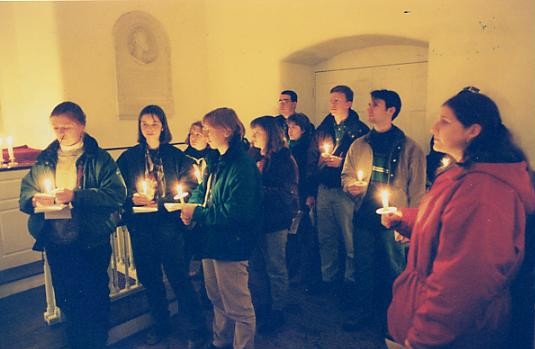
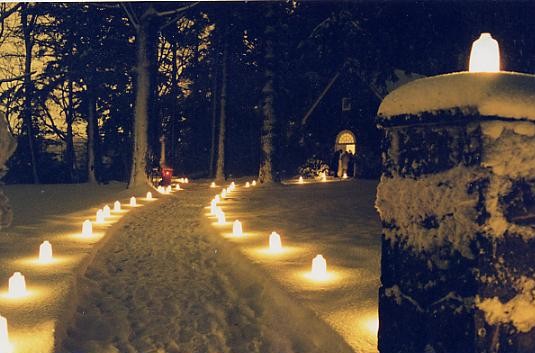
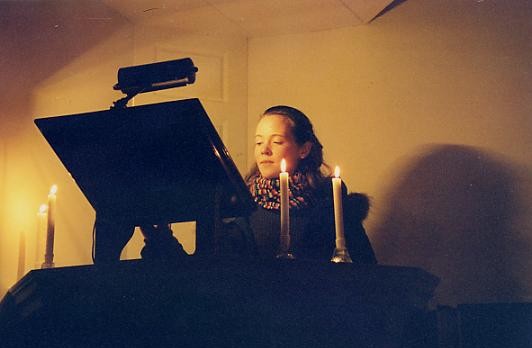
Every year since, a small group of students, faculty members, staff and alumni has returned to the chapel. Holding candles, they sing Christmas carols and give thanks to the family that made Penn State Erie, The Behrend College, possible.

A reading

This year’s program will begin at 7 p.m. Friday, Dec. 6. Shuttle service will be offered from the Reed Union Building.

“It’s a very different feeling, when you gather in there,” said Ken Miller, senior director for campus planning and student affairs. “You’re singing Christmas carols. Everybody’s holding a candle. It’s special.”

Singing

The program honors Ernst and Mary Behrend, whose 400-acre farm property is now a four-year college with 4,350 students. It also pays tribute to their son Warren, who died on Dec. 19, 1929, while driving to South Carolina for a family holiday. He had swerved to avoid a school bus, which a 16-year-old student was driving.

No one on the bus was hurt.

Warren’s death devastated the Behrends. “They say Ernst never got over it,” Miller said.

Mary Behrend spent less time at the farm, choosing instead to live at the family’s home in Connecticut. In the spring of 1948, while returning from a cross-country trip, she stopped at the property. From a window, she noticed two men walking. She went out to talk and learned they were scouting land for a new Penn State campus. Within six months, they would have it.

Entering the chapel

Paint the campus purple for #AJO

ajo

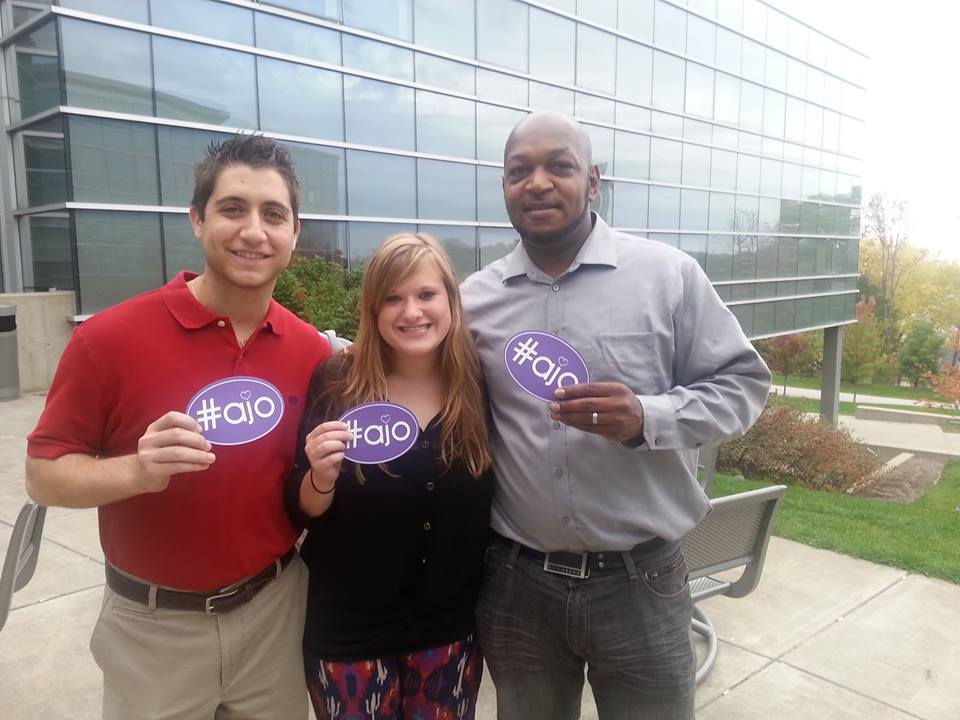
From left, Anthony Cremonese, Melissa Lichtinger, and Antoine Holman are part of the student team working on the #AJO Forever Foundation website.

By Heather Cass
Publications & Design Coordinator, Penn State Behrend

Melissa Lichtinger, a senior majoring in international business and marketing, was working at the Make a Wish booth at a women’s expo in Erie this October when she met Alyssa O’Neill’s father, Jason, and knew she wanted to do whatever she could to help with the #AJO campaign.

AJO stands for Alyssa J. O’Neill, 18, who was a first-year student at Penn State Behrend when she died after suffering a grand mal seizure at home. The day before her death, O’Neill had texted her mother, saying they should meet at Starbucks for a pumpkin spice latte. After her funeral, her parents, Jason and Sarah, bought ten of the drinks for strangers. The barista marked the cups—using purple, a color associated with epilepsy awareness—with #AJO.

That spurred a far broader pay-it-forward campaign. People paid for strangers’ meals, gas, groceries and layaway purchases. They sent #AJO photos from London, Iraq and the Canary Islands. It’s still going. The #AJO Forever in Our Hearts Facebook page has more than 41,000 “likes.”

“Jason said that he and his wife were overwhelmed just trying to keep up with the photos and correspondence pouring in through the AJO  Facebook page,” Lichtinger said. “I wondered how, with my background in marketing, I could help them.”

She asked Dr. Kathleen Noce, senior lecturer in management information systems, if Partnership Erie, a nonprofit outreach extension of the Sam and Irene Black School of Business, could develop a new eCommerce website and social media strategy for the AJO Forever foundation.

Noce agreed and Lichtinger recruited four more students—Anthony Cremonese, Antoine Holman, Kelsie Noce, and Michael Thompson—to work on the project with her.

The new site is expected to be completed by the end of the year.

But Lichtinger didn’t think that was enough. “I really wanted to do something to raise money for the foundation,” she said.

So she talked to Rhonda Reynolds, a Housing and Food Services employee who helped create a very successful employee service committee, and together they came up with the idea to “paint the campus purple” on Tuesday, Dec. 10.

Students, faculty, and staff are all invited to wear purple and take part in making the letters #AJO for a group photo on Dec. 10 at 4 p.m. in the Clark Café in the Jack Burke Research and Economic Development Center. Participants are asked to give at least $2 to the AJO Forever Fund to be a part of the photo.

Students will begin collecting donations at 3 p.m. The first 200 to donate will receive a free purple hat!

The event is sponsored by The Sam and Irene Black School of Business, Partnership Erie, Behrend Commission for Women, the School of Nursing, and Grimm’s Embroidery.

Hope to see you there!

Women in Engineering: Q & A with Alumna, Erie Traffic Engineer

By Heather Cass
Publications & Design Coordinator, Penn State Behrend

Tomorrow (Fri., Nov. 22) is Woman in Engineering (WIE) day at Penn State Behrend. This outreach program is designed to teach girls in 10th and 11th grade what an engineer does and what kinds of careers are available in the field.  This year, a record 167 girls from 17 schools will participate in hands-on and interactive activities/workshops, many of which are taught by practicing female engineers from the Erie area.

We caught up with one such woman, LeAnn Parmenter, 47, who attended Behrend from 1984 to 1986 before moving to University Park to complete her degree in Civil Engineering.   (By the way, it wasn’t all that easy to catch up with Parmenter. In her spare time she’s an avid triathlete and runner who just completed her first marathon and is currently training for her first Ironman next summer.)

Parmenter has been the City of Erie’s traffic engineer for the past seven years.

leann parmenter

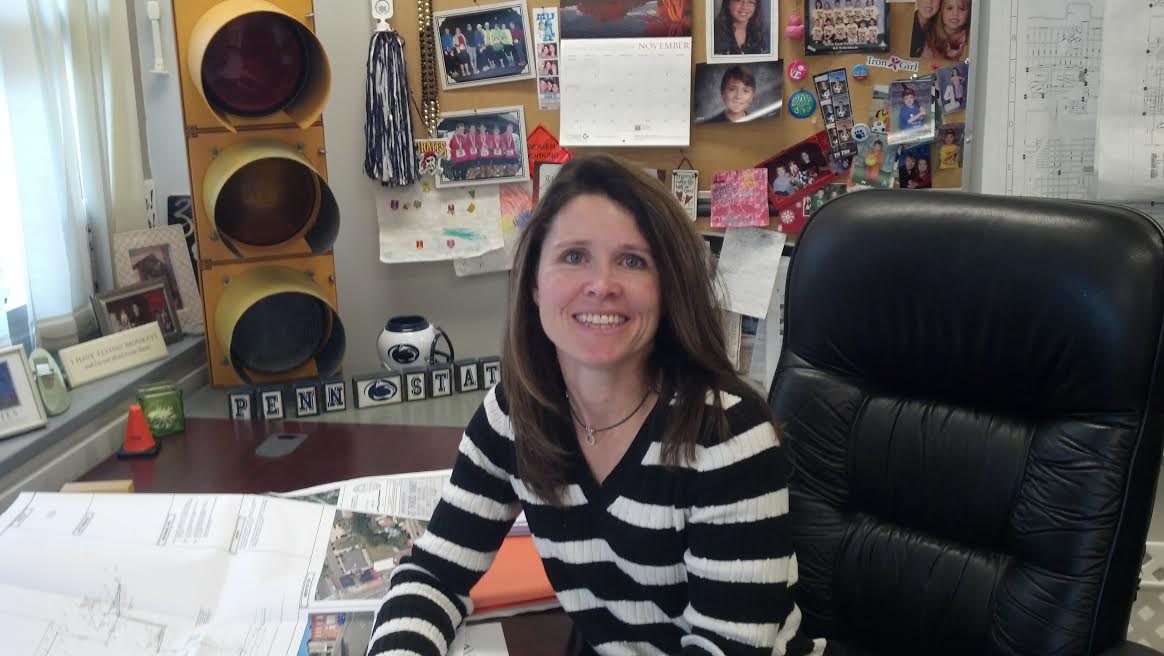
LeAnn Parmenter ’88, City of Erie Traffic Engineer

Q. What is civil engineering? What are your job duties?

Traffic/transportation is just one sub-discipline of civil engineering.  As the City’s traffic engineer, I am responsible for all operations relating to the traffic signals, lighting, signing, and marking.

Q. What did you do before you came to Erie?

I worked for the Maryland State Highway Administration and Howard County Public Works Department where I did intersection and interchange design and project management. After working in a larger city and coming back to Erie, I hoped I could make a difference and bring about some change that is needed. However, it all takes time and money. I’m confident we will get there…slowly but surely.

Q. What do you enjoy about civil engineering?

I enjoy the fact that you can design, advertise, and construct a project and feel a sense of accomplishment after your project is constructed.

Q. What do you not enjoy about your job?

Complaining. But when you work for a public agency, it comes with the territory.

Q. What is it like to be a woman (a minority) in the field of engineering?

As with many male dominated careers, you have to battle some bias from time to time. It’s better now than it used to be, but there are situations in which you have to be strong. You can’t be afraid to shake up a traditionally male mindset.  Women bring a different perspective to the table and it’s important that be represented because, well, we do make up half the population.

Q. When you were in engineering school, were you one of the only women in your major?

There were probably only 10 other women in Civil Engineering at Penn State and fewer in my Master’s Program at University of Maryland. I’m not sure the numbers have changed much. Civil engineering isn’t the most glamorous of the engineering fields. Most of my career has been spent working with men in construction, inspection, police force, streets department, and engineering services.

Q. As a girl, what appealed to you about engineering?

I always enjoyed math and I had some encouraging teachers along the way.

Q. Were you the kid taking apart toasters to see how they worked?

(laughs)  No, I didn’t take apart toasters, but my father worked in construction and I always enjoyed being part of a construction project.

Q. Are people ever surprised to find out you’re an engineer? If so, why?

I don’t fit the stereotype of an engineer, so they’re sometimes surprised. Though, once I tell them what I do, the complaints begin! (laughs)

Q. You’re a wife and mother (she and her husband, Jeff Seevers, have two children, Jenna, 10, and Jason, 11), has this been a career that worked for you as a mother?

I have been lucky to have worked for employers that are supportive of my family life. I worked in Baltimore for 14 years, then moved back to North East after my daughter was born. I worked two days a week, flying from Buffalo to Baltimore for two years. Then, I started working part time for the City of Erie. They’ve been great.  I will say that I gave up some earning potential in return for flexibility and more time with my children, but that’s something that many working mothers have to deal with, no matter what their career.

Q. What advice do you have for young women considering a career in civil engineering?

There are many facets of civil engineering (transportation, structural, geotechnical, environmental, and water resources). Try to expose yourself to all of those and get a broad knowledge base of each so that you can make an informed decision about what you would enjoy doing for the rest of your career. Engineering, in general, can be a very rewarding career path, but you should choose an area that really interests you.

Q. What do you remember about your time here at Behrend?

I loved my two years at Behrend. I had studied abroad in Japan during high school, so I wanted to stay close to home for college. Penn State Behrend gave me that opportunity. I live on campus for two years before I went to University Park. The friends I lived with in my freshman year at Behrend are still some of my closest friends today. And we are all very Penn State PROUD!

Q. Are there any professors or classes you remember here at Behrend that stood out as being particularly helpful?

I took most of my entry level engineering classes at Behrend with a smaller number of students than I would later see at University Park. It was nice to take these core classes in a smaller environment with professors that were accessible and helpful. I remember Dr. Lasher pretty well.

Q. How can we get more girls interested in engineering?

I think we need to encourage them to think big and let them know they can be anything they want to. I always hear, “engineering is difficult” or “math is hard” – well, yeah, it is, but instead of letting our girls off the hook, we should be challenging them.  They can do it. Also, we need to expose them to the wonders of engineering and show them that it can be a really fun and exciting career path.

That’s exactly what the Penn State Behrend’s School of Engineering plans to do on Friday.

Behrend students humbled by poverty simulation

image

By Steve Orbanek
Marketing and Communications Specialist, Penn State Behrend

According to the United States Census, 15 percent of Americans, roughly 46.5 million people, live at or below the government-defined poverty line.

For an hour this fall, Khardiata Mbengue and Teireik Williams could be counted among that group.

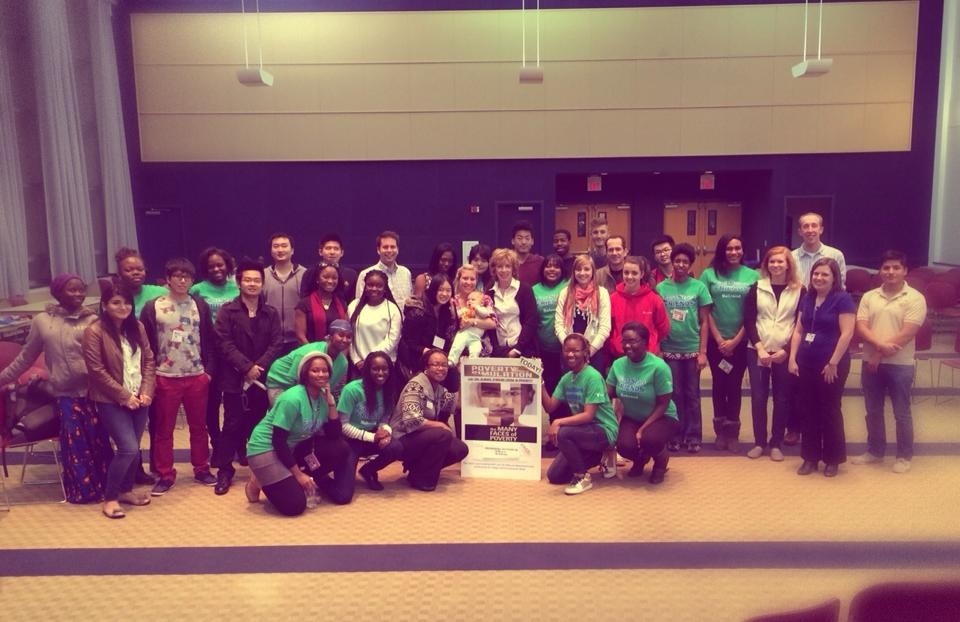
Mbengue and Williams were participants in a poverty simulation sponsored by the Office of Educational Equity & Diversity Programs and the Human Relations Programming Council.

The simulation is designed to help participants understand what it’s like to live in a low-income family, surviving from month to month. Individuals are grouped together as families and are tasked with providing for basic necessities and shelter during the course of four 15-minute “weeks.”

For Mbengue, a junior biology major, and Williams, a sophomore communication and creative writing double major, the simulation was a humbling experience.

The two were paired up as husband and wife as part of the simulation.

I caught up with them to get their thoughts on the program…

Steve: Hi Khardita and Teireik. Thanks for taking the time to join me today. So, to start, why don’t you provide me with a general overview on the poverty simulation?

Khardiata: The poverty simulation is basically designed to help you get insight on how you would live if you were less fortunate or part of a low-income family. Going through the poverty simulation makes you realize how people often live in impoverished conditions even when it’s not their own fault. The system is against them, so they can never work their way up. You also realize that you’re never too far away from the life that they live. After college, we might be doing the same thing that we were doing in the poverty simulation.

Teireik: The poverty simulation provided us with an opportunity to have the same responsibilities of a person who is poverty stricken. It was really designed for you to live a day in the life of the less fortunate.

Steve: How exactly was the simulation set up?

Teireik: The room is divided into different circles, and each circle had chairs that represented a family. Surrounding the housesholds were all of the different businesses and organizations that you had to visit. You also had to purchase a transportation pass for anywhere that you would go. Before the simulation, they gave you a portfolio that had every aspect of your life: how old you were, your family’s history, your savings and your belongings. Everybody’s budget was different. We had savings, and everybody had possessions and things that could be sold for extra money.

Khardiata: And there was a cop, so you could go to jail if you did something wrong.

DSC00083

Steve: Wow, so you could break the law during the simulation?

Khardiata: Someone actually did that, and that person was the only one in the entire simulation who was able to pay their own bills. It just goes to show that it can be difficult to survive, even if you live an honest life. It puts you in a situation where you do what you have to do.

Steve: So, can you give me an idea of what a typical day was like for the both of you?

Teireik: She had to go to work, we had to take the kids to school, we had to pay bills, we had to sign up for benefits like food stamps, and we had to sell our belongings if we ran out of money.

Khardiata: I literally had to run to work, so I would be there on time to receive the full benefits of my work. Even if your child did something wrong at school, it would affect your whole life.

Steve: What do you mean?

Teireik: Our daughter got suspended at school, so one of us had to be at home to take care of her. Khardiata had to go to work, so I was unable go out and pay our bills, search for a job or apply for benefits.

DSC00086

Steve: It seems like the simulation required you to balance a lot of different responsibilities. How humbling was this experience for you?

Khardiata: It was incredibly humbling. It showed me that you should be grateful for everything you have because not everyone is as fortunate. We did this for an hour, but the fact is that many people actually live this life. That was eye-opening for me.

Steve: People living in poverty sometimes get a bit of a bad reputation. Did this change your perspective on them at all?

Khardiata: When I went into the Poverty Simulation, I had that same idea. I thought that if people are in poverty, they could work themselves out. But my opinion changed after living through it. We were doing all we could just to pay our bills and raise the kids, but it still was not enough. Expenses pile up on top of each other. As soon as you thought you had something handled, something else would pop up. That was a major thing that I learned.

Teireik: This simulation shows that not everyone is afforded the same opportunities, and sometimes bad things happen to good people. It’s just out of their control. It’s not necessarily their fault, but they get a bad reputation for it.

Steve: This was the second year for the Poverty Simulation at Behrend. Is this something that you would recommend to others?

Khardiata: Yes, definitely I would. It makes you think, what if this does happen to me? It’s not farfetched to think that it could happen to you. It’s a very realistic thing, and it humbles you a bit. As college students, we seem to think that we’re all struggling, but it’s not as bad as it seems.

Teireik: People should definitely experience it. If you get an opportunity to do something like this, why not? It’s much better to experience poverty through a simulation rather than for real.

6 Things I Learned at the Science Café

Science Cafe_2013-14.pdf

By Heather Cass
Publications & Design Coordinator, Penn State Behrend

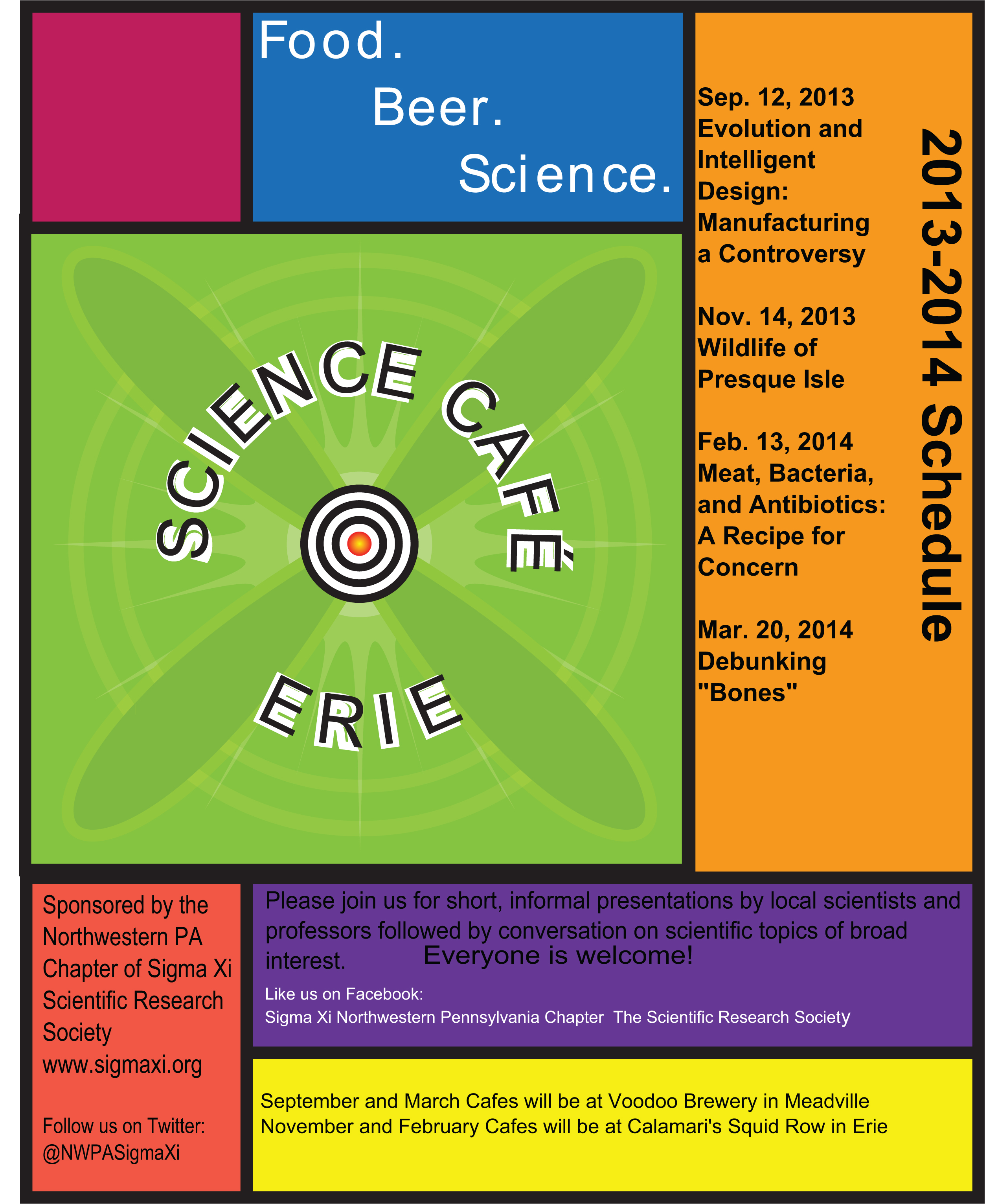
Each year, the local chapter of Sigma Xi, a scientific research society which several School of Science faculty members belong to, hosts a series of informal get togethers (the Science Café) designed to “bring scientists and community member together to explore scientific topics in a pubic, accessible, and relaxed venue.”

“Our catch phrase is ‘Food. Beer. Science,'” said Dr. Jay Amicangelo, associate professor of chemistry.

They had me at food. Beer sealed the deal.

So last night, my 10-year-old-daughter, a budding biologist, and I attended the November Science Café at Calamari’s Squid Row, a bar and restaurant in downtown Erie, along with 50+ other people. Many were college students, probably earning extra credit, judging by the note taking I saw going on but there were also several families with kids there.

Last night’s topic was “Wildlife at Presque Isle” and the presenters were Ray Bierbower ’05 (a Behrend grad)  and Brian Gula, Environmental Education Specialists at Presque Isle State Park.

The pair clearly love their jobs. Their enthusiasm for the park, nature, and wildlife was evident and infectious.

As an avid runner and Erie native, I’ve run every inch of that park more times than I can possibly count and, yet, last night, I still learned some things I never knew.

1. Lake Erie, which is the shallowest of the Great Lakes (210 feet at its deepest point),  has more consumable fish than all the other Great Lakes combined.

2. There are typically 6 to 9 coyotes on the park and 40 to 60 deer, and that is a manageable number. There have been as many as 14 coyote and more than 100 deer, which is too many.  Cars, more than guns, tend to cull the herd.

3. Presque Isle Bay is home to a “living fossil.” The bowfish is the last of its species, which thrived about 150 million years ago. It has a lunglike swim bladder that opens to the throat, allowing it to breathe air.

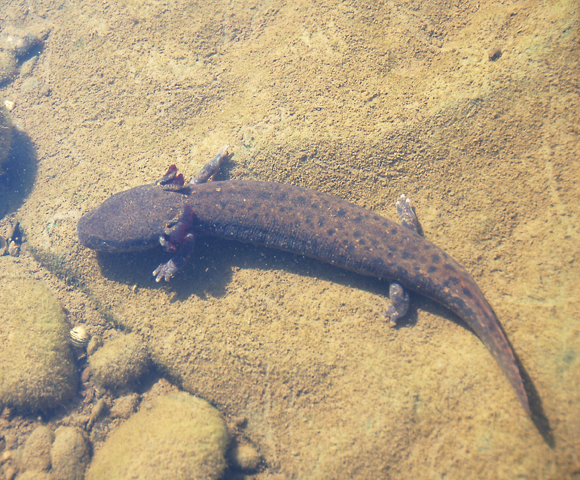
4. One of the ugliest species in the lake has a deceiving cute name. The mudpuppy, which lives its entire life underwater, is distinguished as the only salamander that makes a sound—a dog-like barking.

Mudpuppy (Necturus maculosus).  Walhonding River just below 6-mile dam.

Photo from OhioAmphibians.com

5. People let all kinds of animals go free at Presque Isle. The rangers have found everything from a skate , a small stingray-like fish, to alligators to pot-bellied pigs to pet rabbits, birds, cats, and dogs.  Most of them die.

6. Auto/animal deaths are frequent and are a really good reason to drive the posted 20 m.p.h. speed limit at the park. Three of four fox kits born last year were killed by cars. The mother was eventually hit by a car and killed, too.  The rangers don’t blame motorists.  “There are 4.5 million visitors to the park every year — that’s a lot of cars to dodge,” Gula said. Beirbower added that he’s had many near misses even when driving 10 or 15 miles per hour. That said, they still wish motorists would slow down and keep an eye out for wildlife when driving around the park.

The Science Café was just what Sigma Xi intended it to be — a low-key, informal, but informative scientific “lecture” in non-intimidating environment.  My daughter and I enjoyed it equally.

Mark your calendar now for the remaining Science Café presentations. On the menu:

February 13, 2014 — “Meat, Bacteria and Antibiotics: A Recipe for Concern”  — at Calamari’s Squid Row.  (Hmm…methinks few may order dinner that night.)

March 20, 2014 — “Debunking ‘Bones'” at Voodoo Brewery in Meadville, Pa. (I hear this place is absolutely worth the drive down I-79).

Science Cafe_2013-14.pdf

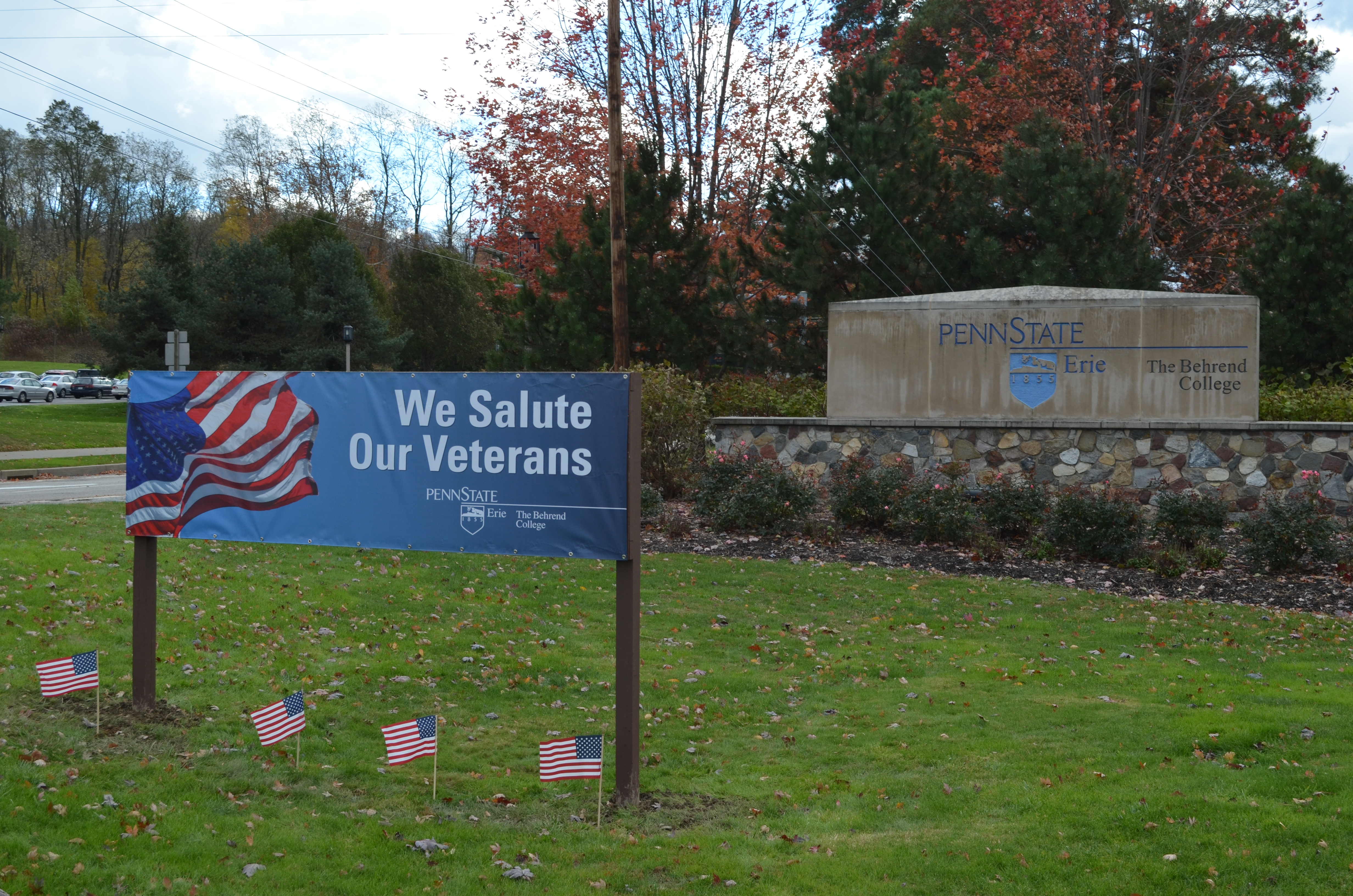
Veteran’s Day of particular significance for Behrend freshman

DSC_3367

By Steve Orbanek
Marketing Communications Specialist, Penn State Behrend

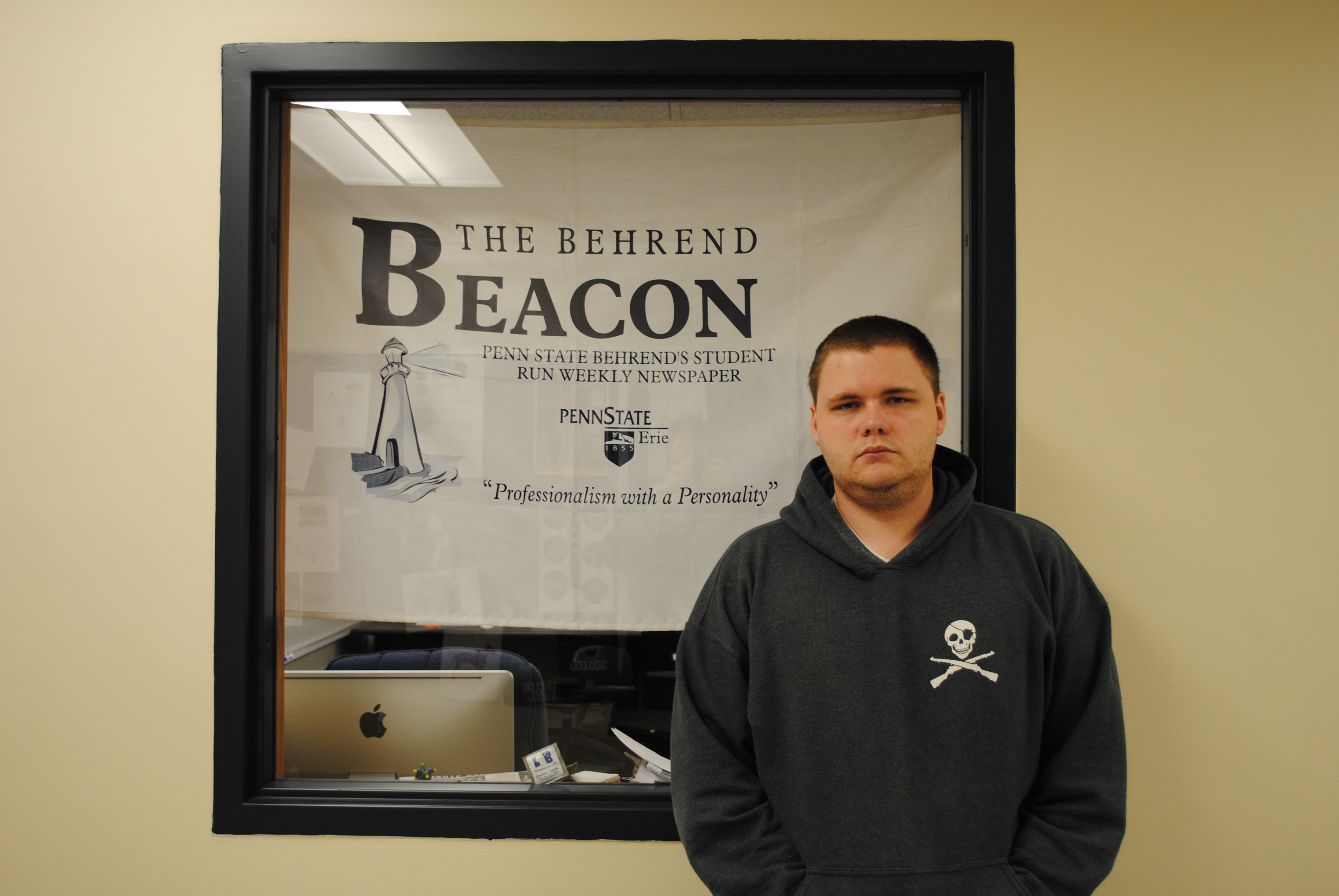
Papers and exams can be a point of stress for first-year students, but it’s not the kind of stress that Mike Wehrer knows.

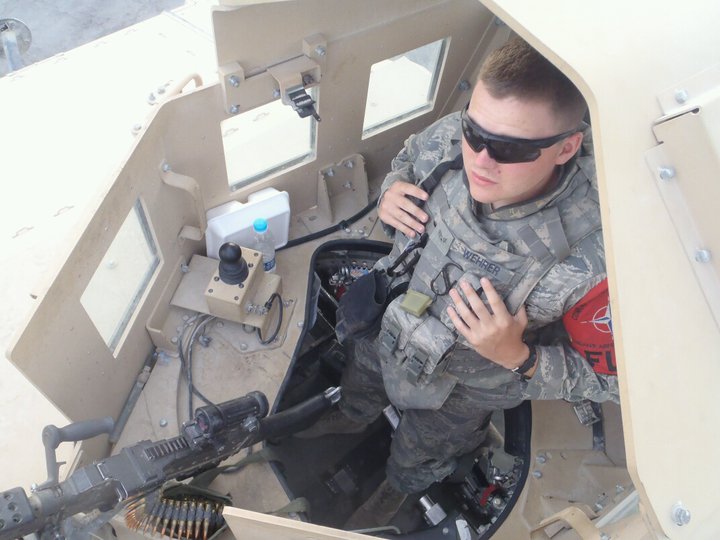
Wehrer, a freshman communications major and current managing editor of the Behrend Beacon, is a member of the United States Air Force Reserves. The 23-year-old Girard, Pa., native spent a half year deployed in Afghanistan in 2011, and it’s safe to say college exams pale in comparison to some of the things that Wehrer experienced.

In honor of Veteran’s Day, I decided to catch up with Mike to get his thoughts on the national holiday and find out what personal significance it holds for him. While many Americans may think of Veteran’s Day as just another day off of work, for Mike and more than 21 million others, this day is a part of their identities.

Here’s what Mike had to say on the topic:

Steve: Hi Mike, thanks for taking the time to chat with me. Could you give me a feel for your background and what ultimately led you to enlist in the military?

Mike: Well, I started out at (Penn State Behrend) out of high school, but basically ended up dropping out after two semesters. I wasn’t a good student and I lacked motivation. It made sense to join the military to help pay off the student loans I already had, and also to help provide the discipline and motivation I needed to grow up a bit.

Steve: When did you enlist in the Air Force Reserves, and what was your experience like from there?

Mike: It was December 2, 2009, and I was 19. I left for basic training in February, I think it might have been Valentines’ Day actually, and that was at Lackland Air Force Base in Texas. Then I entered the Air Force Security Forces Academy. From there, I joined my current unit at Niagara Falls at Niagara Falls Air Reserve Station. I was told when I got there that I’d be on the next deployment.

Steve: Wow, that had to be startling to have the deployment come so quickly. Was that scary?

Mike: It’s what I wanted. The reason I joined security is because it’s the most deployed career field in the Air Force. I thought it would be a good thing for my career. I want to be a war correspondent and an embedded reporter, and I thought it would be a good resume point.

Steve: When was it that you were actually deployed, and what was it like once you got to Afghanistan?

Mike: I left Erie in May, but I actually hit Afghanistan on July 7, 2011. There’s a famous quote, I’m not exactly sure what it is, but it’s along the lines of “there are long periods of boredom punctuated by moments of sheer terror.” I was security for Kandahar Airfield, which basically meant I was controlling access onto the airfield and responding to rocket attacks.

Steve: What was that pressure like? Was it difficult to have such responsibility right away?

Mike: You kind of didn’t have a choice but to do it. You had to accomplish it. If you didn’t, they’d find someone else who could.

268870_1842559423342_4954398_n

Steve: Switching gears a bit, when did you come back to the United States, and enroll back here at Behrend?

Mike: I left Afghanistan on January 15, 2012, and I got back on January 20. It’s been four years since I was last enrolled here, and I applied for and basically got an academic reset. That’s not what it’s called, but that’s basically what it did. It allowed my GPA to go back to zero, so I could start from scratch.

Steve: Was returning to college always a goal of yours?

Mike: It was always a goal. I knew what I wanted to do.

Steve: Why did you choose to come back to Behrend? This fall, Victory Media once again ranked Behrend among the top 20 percent of Veterans Affairs-approved institutions based on the services and resources they offer to military-connected students. Did that factor into your decision at all?

Mike: I had been freelancing last year for the Behrend Beacon, and I knew that I could get a good position on the paper right away. If I went to any other school, I didn’t know if I would have those opportunities right away.

Steve: Would you say your experiences overseas have had an effect on your current college experience?

Mike: Yeah, definitely. It’s small changes, like I always look around a room whenever I walk in it. Half of that is my deployment, and half of that’s just being a cop. As far as academically, it kind of made me realize how easy college really is.

Steve: To follow up on that, you mentioned earlier how you initially enlisted in the military to help improve your discipline and motivation. Do you feel as if your experience overseas has helped you do that?

Mike: I definitely got that. I have realized that not going out on the weekend, and having to stay in and do homework is not a big deal. There are much harder things that I’ve gone through, and that I’ve seen others go through. This is all easy, and it’s easy to make these sacrifices.

DSC_0577

Steve: With Monday being Veteran’s Day, can you give me an idea of how it feels for you personally on that day?

Mike: It’s hard to define. It makes me proud. I’ll probably wear a pin or something. The VA class defines me as a combat veteran because it was a combat mission, but I don’t see myself as a combat veteran because I never had to fire my weapon. So, I still don’t like to call myself a combat veteran because I know guys who have been shot, wounded, or had to kill someone, and to put myself in the same class as them seems not disrespectful but close to it.

Steve: As a veteran yourself, how would you suggest people go about honoring this holiday?

Mike: It’s the small things. Thanking people in uniform means a lot to veterans. Making a donation to something. And, of course, there are a thousand different organizations that you can donate to. Give time, money, whatever you can. My dad has worked with homeless veterans at the VA, and a lot of people don’t realize how many people can’t cope with coming back. You can also always send care packages to those who are still over there, especially now that we’re getting closer to Thanksgiving and Christmas.

6 spooooky things about Penn State Behrend

spooky

By Heather Cass
Publications & Design Coordinator, Penn State Behrend

In honor of the upcoming All Hallows’ Eve festivities, I dug up six spooky (and some just silly) things about Penn State Behrend.  Enjoy!

1. There’s a place in the Wintergreen Gorge on  the edge of campus called “Devil’s backbone.”

Wintergreen-Gorge-Photos_018

Devil’s backbone is the name given to the gorge’s highest vantage point in Wintergreen Gorge, about 250 feet above Four Mile creek. Read more about the gorge (page 13) and watch videos here (under “Extras from this issue”).

In the mood for a good ghost story? Check out this story we found online (but do not attest to): The Ghost Child of Wintergreen Gorge.

Speaking of enduring ghosts haunting campus…..

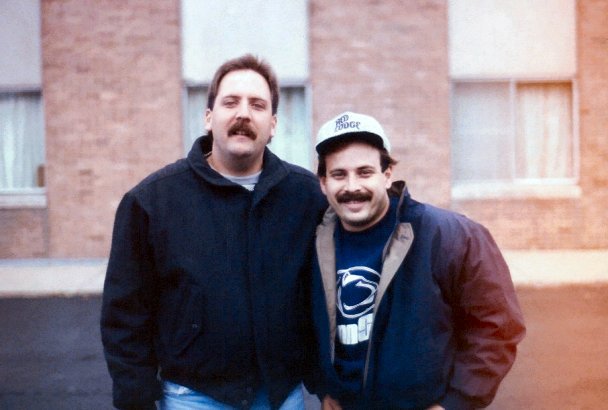
2. Ken Miller, senior director for campus planning and student affairs, has been working at Behrend since George Michael’s “Faith” topped the pop charts, “Heathers” was showing at the theatres,  and the average cost of a gallon of gas was just 91 cents.

Are we making him sound old? Nah, it’s only been 25 years. 😉 And, fortunately, he hasn’t lost his sense of humor…or that awesome ‘stache.

ken miller

Ken Miller, right, with his brother Tim outside of Lawrence Hall, circa 1989.

3. This tree by Wilson Picnic grove:

tree wart

According to Dr. Mike Naber, lecturer in geosciences, the “tumor” on this tree could be Agrobacterium tumefaciens that causes a plant disease called crown gall. Or, Nabor said, it is simply a “burl” caused by stress, injury, or a virus.

Or it could be a zombie calling card.

Speaking of signs from the dearly departed…

4. Bruno’s Café is named after a dead dog. Even spookier? Legend has it that said dog is buried on campus.

Bruno's Portrait

So, if you hear a German shepherd howling late at night…

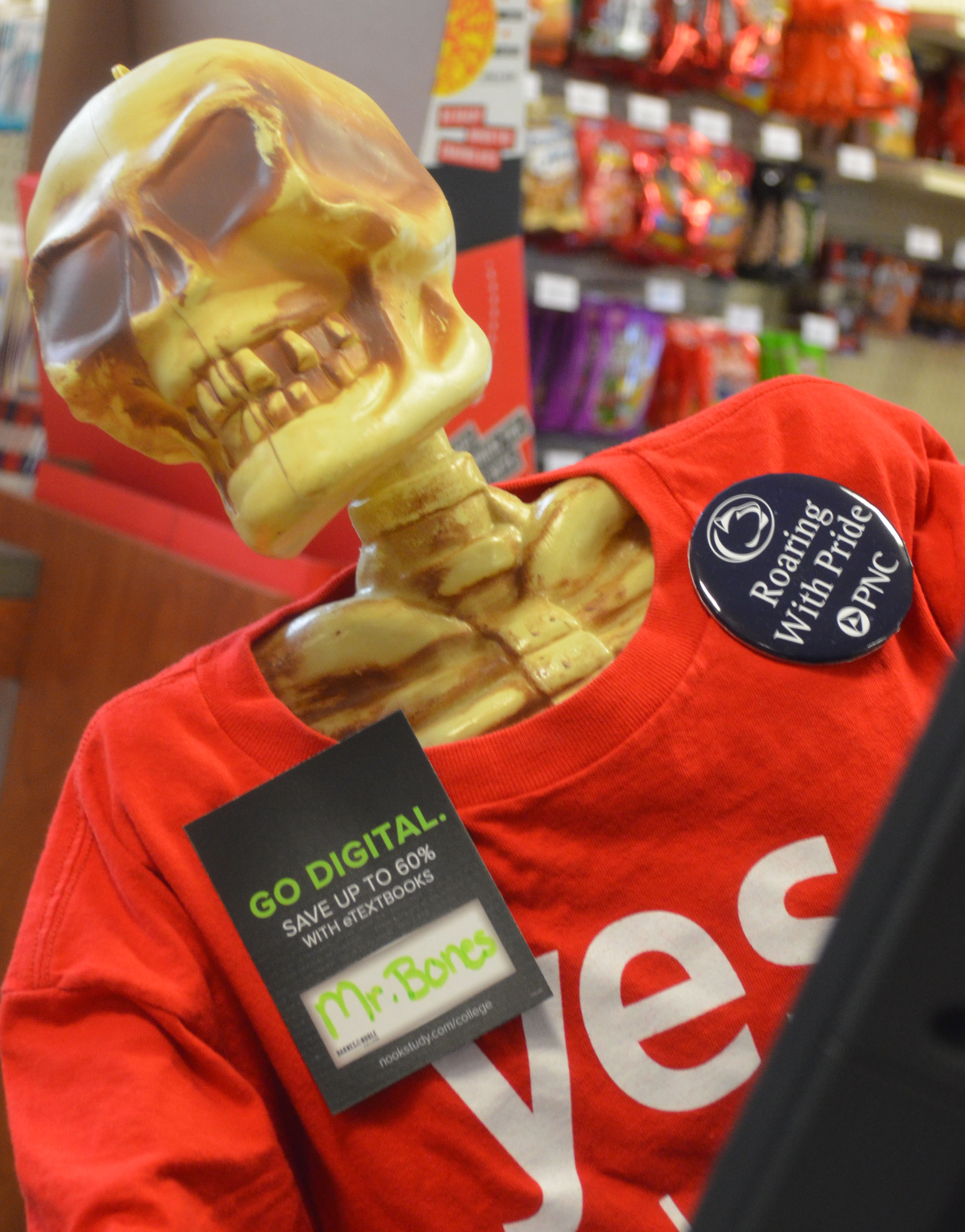
5.  The cashier at the bookstore has gotten really thin.

DSC_0979

Somebody get this guy a peanut butter sandwich.

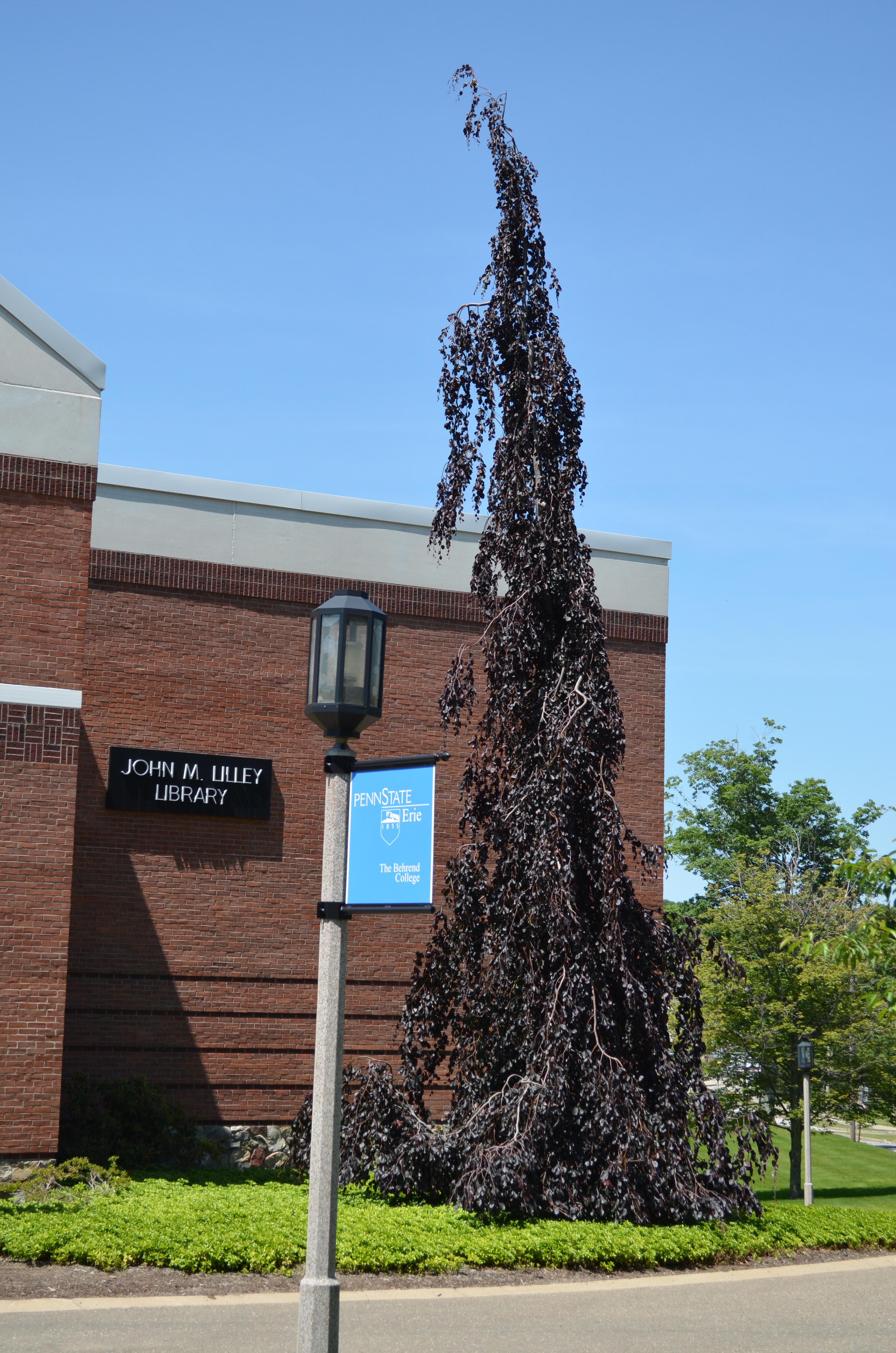
6. This tree by Lilley Library:

DSC_0551

While it’s shaped like a witch’s hat, this is actually a Purple Fountain Weeping Beech, native to Europe.

You know, Europe…where Transylvania is (just sayin’).

Happy Halloween, everyone!

Pose with the PSB Lion at ZooBoo

ZOOBOO

By Heather Cass
Publications & Design Coordinator, Penn State Behrend

My first job after graduating from college was working in the public relations department at the Erie Zoo.  I worked for Scott Mitchell, known around the Erie area as the ZooGuy.  (By the way, Scott, who is now the President and CEO of the Erie Zoological Society, is a Penn State Behrend alum — Class of 1984!).

As you might expect, every day at the zoo brought something different. I aquired lots and lots of unique skills and knowledge in the four years I worked there.

For example: I know exactly how to pick up an alligator without getting bit.  I know that the foulest smelling (and most stupid) animal on earth is the giraffe. I can stuff at least 2,000 plastic Easter eggs in a day. I can set up 200 chairs in less than an hour. And, I can make a scarecrow out of scrap materials in minutes.

So when I read in a recent Erie Zoo newsletter that they were inviting area organization and businesses to create a scarecrow to display at ZooBoo (the zoo’s annual evening Halloween event), I begged my boss to let me make one for Penn State Behrend. (Go ahead, ask him, he’ll tell you that I begged).

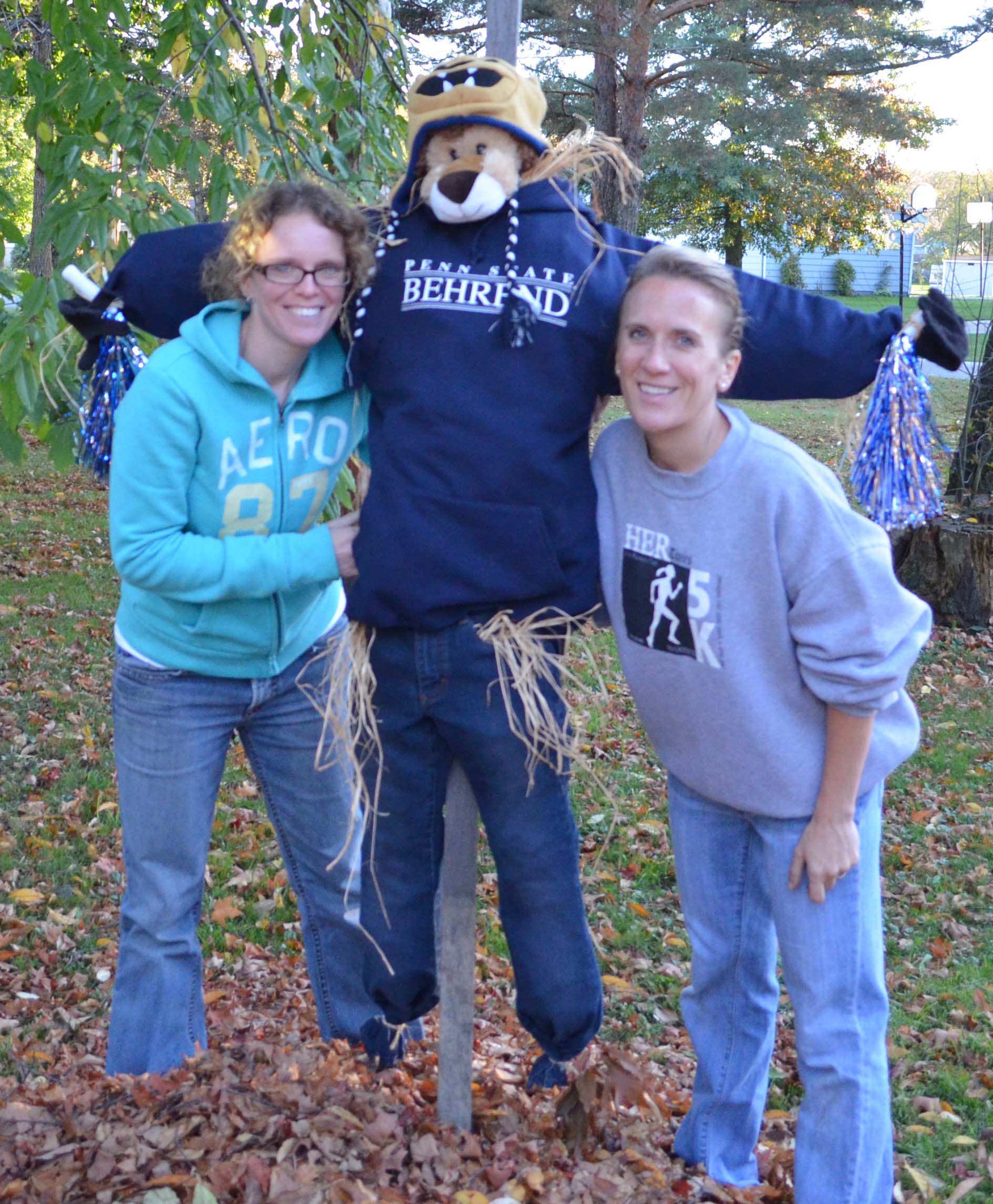
Lest you think the staff of the Office of Marketing Communication spend their days building scarecrows, I should tell you that a coworker, Jodi Herman, and I built this cute little cub after work in less than an hour with materials I had laying around.  (Yeah, I’m that good at scarecrow construction.)

What do you think?

scarecrow with sign

Snap a pix with the PSB scarecrow

If you’re going to ZooBoo with your little boos and ghouls (see, writing clever puns is yet another skill I learned at the zoo!), be sure to look for the Penn State Behrend lion scarecrow. And, if you gather round, take a photo, and send it to us via email (hjc13 at psu.edu) or post it on social media with the hashtag #behrendscarecrow, we’ll put together an album to showcase our Penn State Behrend scarecrow pride (You know a group of lions is a pride, right?)  and share it with everyone.

lion pose

About ZooBoo

ZooBoo is the Erie Zoo’s annual Halloween event and a rare chance to see the zoo after 5 p.m. There are trick-or-treat boooooths (*groan* I know, but I. Just. Can’t. Stop.) for kids 12 and under and Halloween decorations and lights strewn through the zoo grounds.  This year, ZooBoo opens on Friday, October 18th and runs through Wednesday, October 30th from 6 to 9 p.m. nightly.

A few insider tips:

  • Save yourself some time waiting in line and pick your tickets up in advance at the zoo office (423 W. 38th St. next to the zoo) or buy online then you can enter the advance line near the stage (no waiting!). You can even buy your train & carousel tickets in advance!
  • Don’t go right at 6, go at 7 or 7:30 and you’ll miss the big crowds.
  • Ride the train first…most people ride it at the end and the line gets looooong at the end of the night.
  • Expect some animal changes. The orangutans and a few other animals won’t be out (they do not like their sleepy-time schedules messed with), but the big cats will likely be up and moving around — they’re nocturnal animals and they really “come alive” after dark.
  • This might be obvious, but…if you don’t like crowds, opt for a less-than-perfect-weather night. ZooBoo is open every night until Oct. 30, rain, shine, sleet or snow. Also, weeknights — particularly Mon.-Wed. — tend to have lower attendance.
  • On busy nights, the back gate — off Glenwood Park Ave. — is often open.

Penn State Lives Here

Penn State Lives Here_010

If you’ve been anywhere near Penn State Behrend (or any Penn State campus across Pennsylvania) recently, you’ve probably noticed there is a new brand initiative — “Penn State Lives Here.”

The initiative was publicly introduced with a two-minute video during halftime of the Michigan game on Saturday, October 12, in Beaver Stadium on the University Park campus.

The theme made its appearance at Penn State Behrend yesterday:

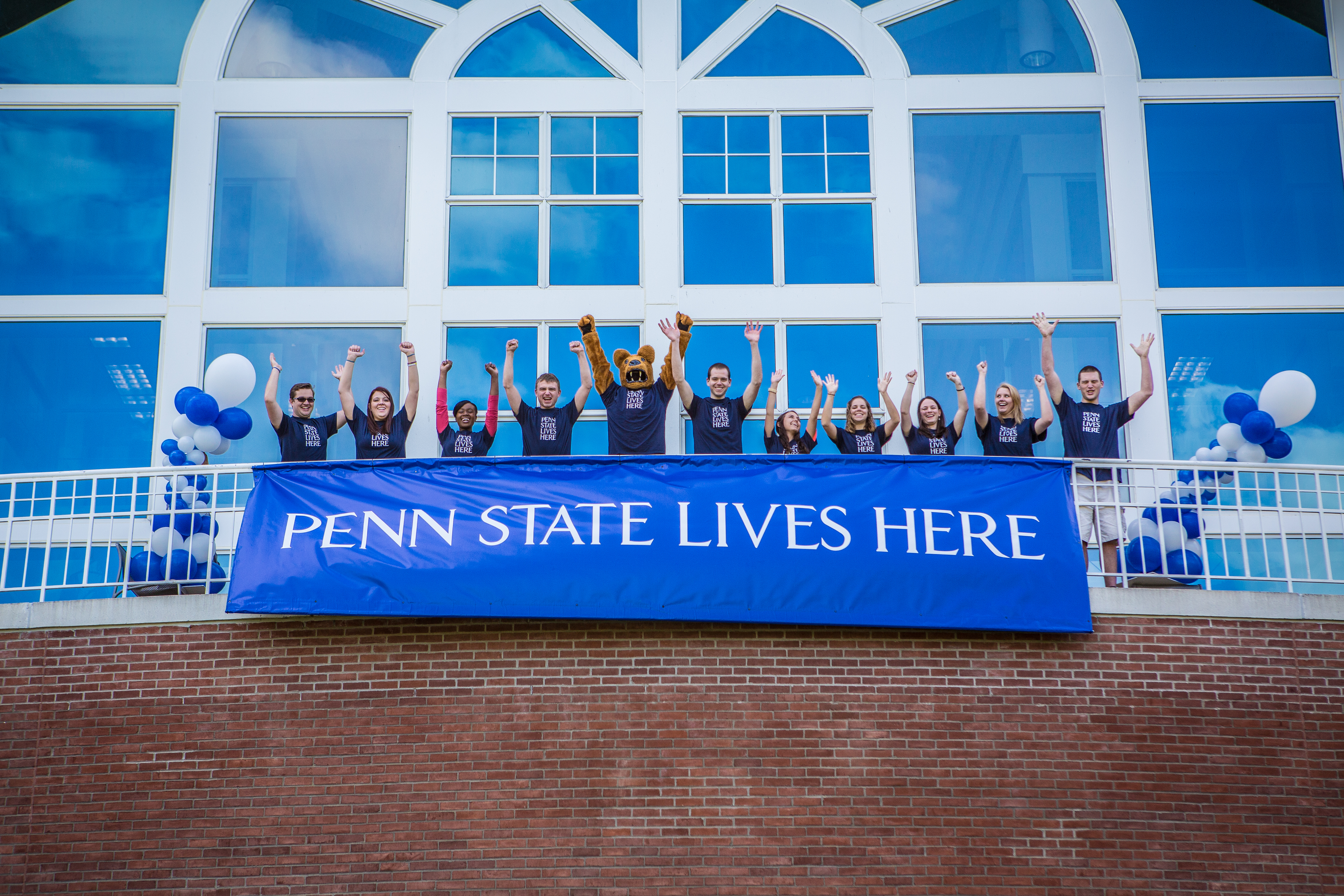
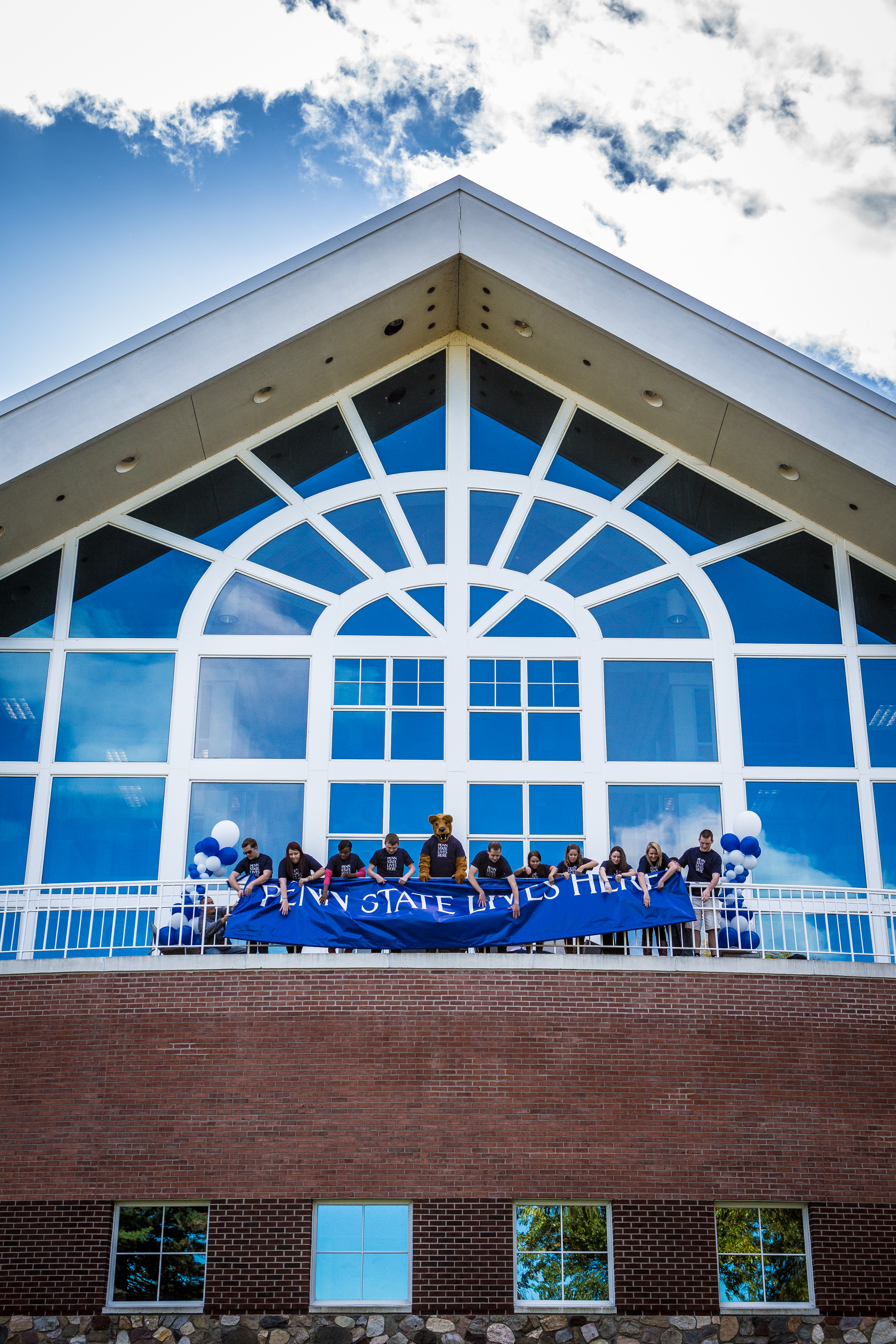
* Ten students and the Penn State lion unfurled a twenty-foot banner that now hangs off the balcony at John M. Lilley Library.  (Thank you, Mother Nature, for providing picture-perfect outdoor-event weather!)

Penn State Lives Here_004

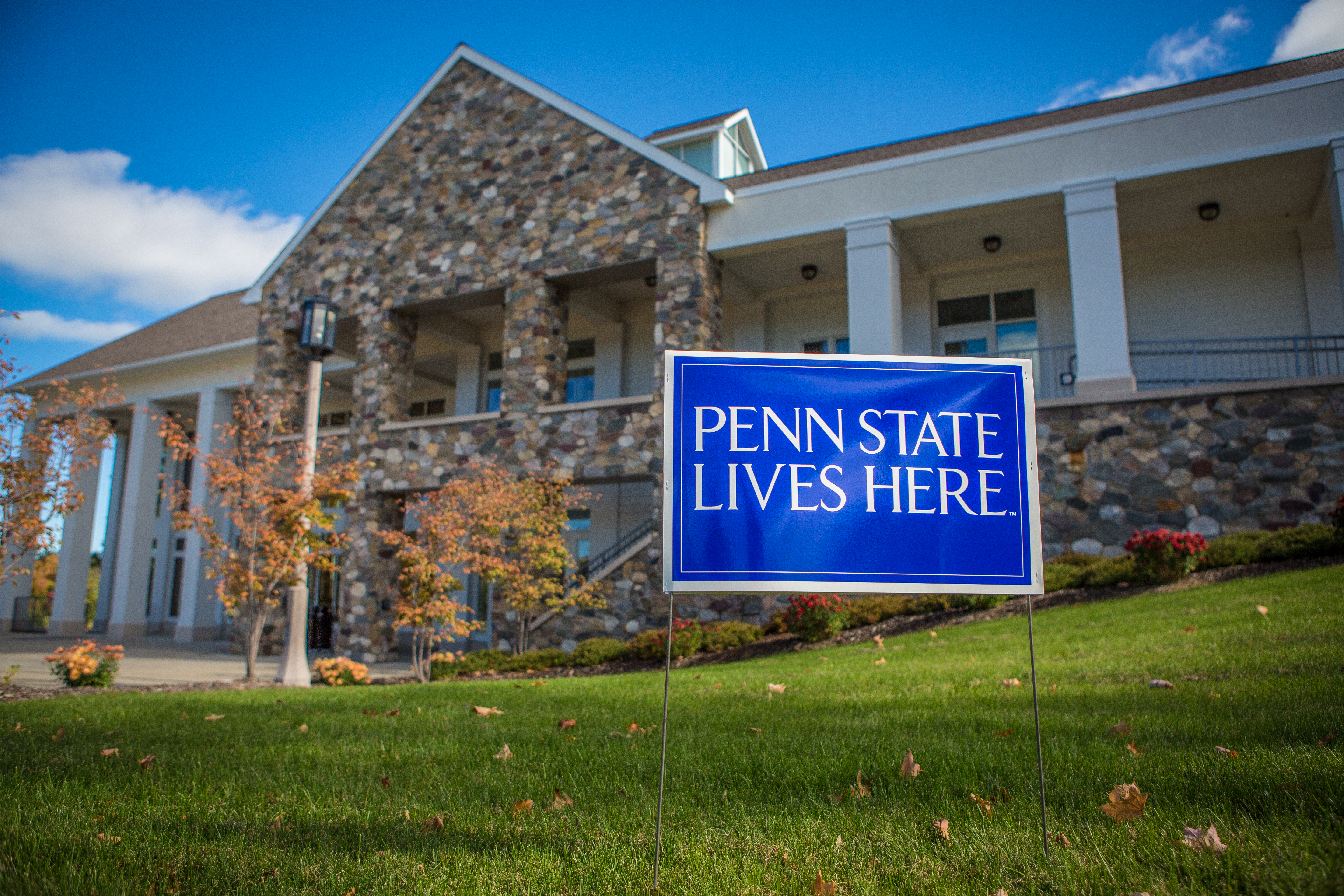
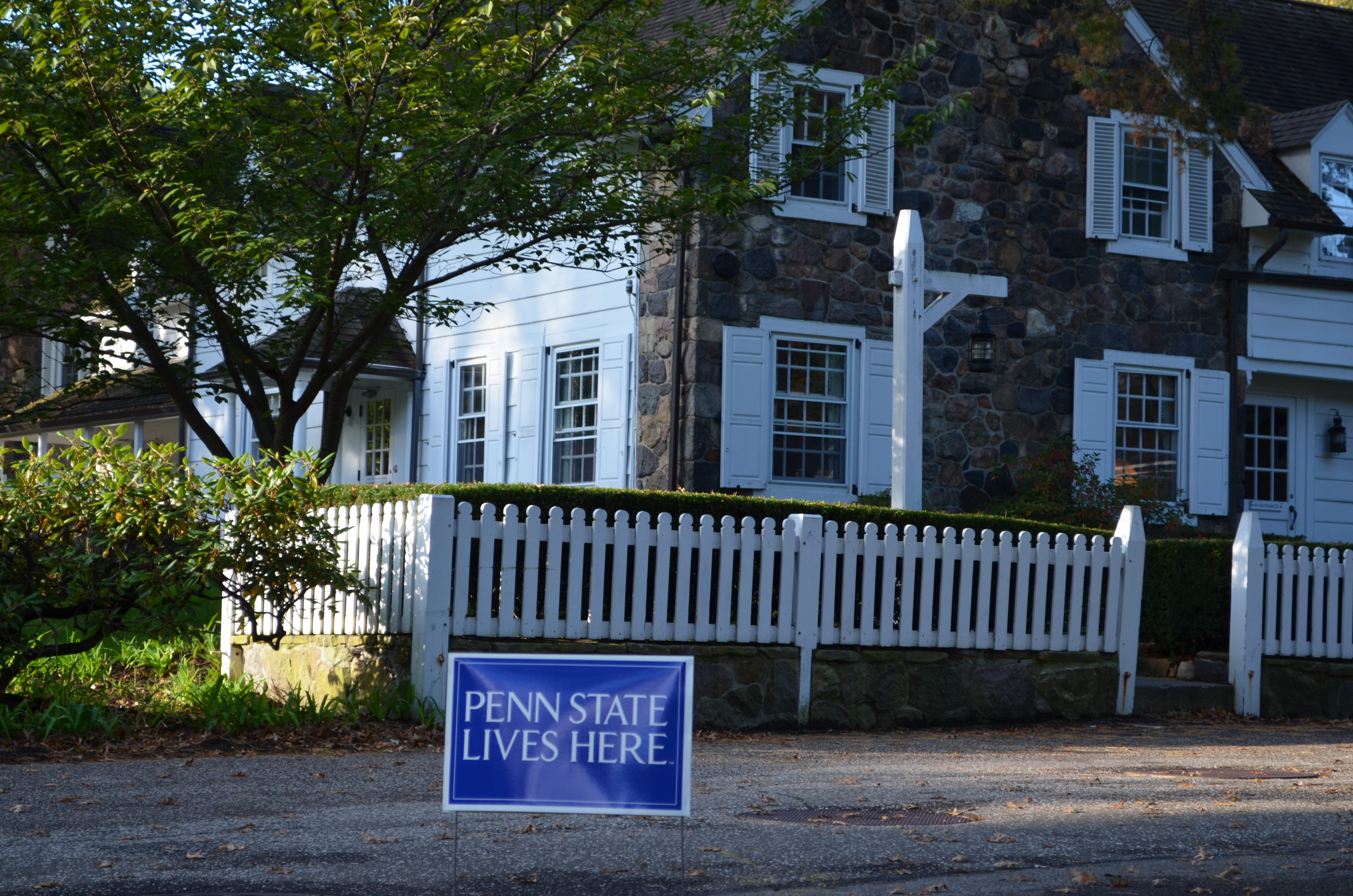
* Twenty lawn signs popped up all around campus.

DSC_1794
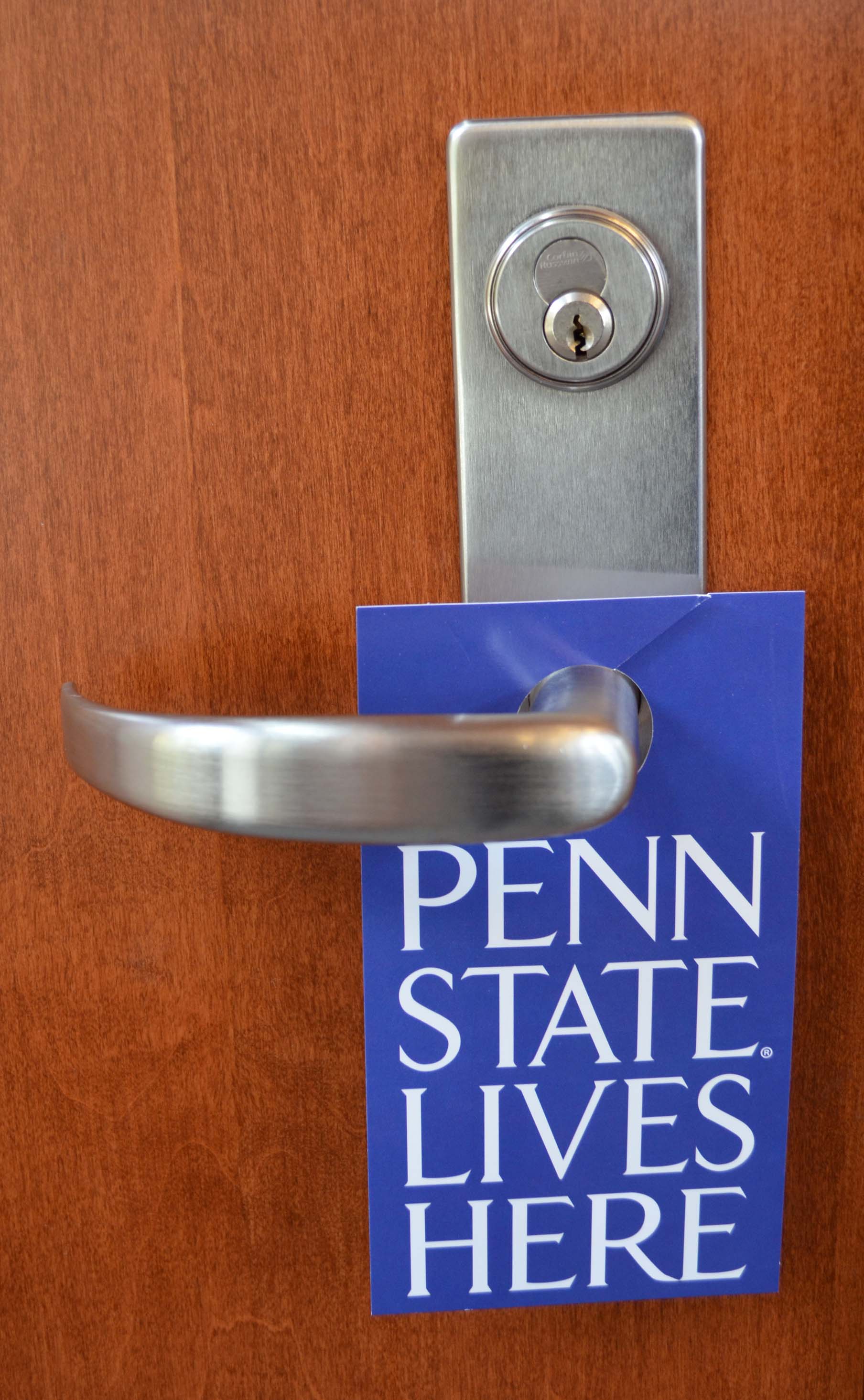
* “Penn State Lives Here” doorhangers were hung on throughout the residence halls.

doorhanger

* “Penn State Lives Here” buttons, vinyl window clings and paw print cookies (delish!) were distributed at lunchtime at Bruno’s, where the campaign video was aired for students, staff, and faculty.
DSC_1795

Clearly, Penn State lives here at Behrend.

So, what does it all mean? What is our branding message about?

Here is an explanation, from the folks who created it:

“Penn Staters are not only high academic achievers, they’re doers. They are nurtured by a culture that encourages setting lofty goals and investing the effort to achieve them. They are molded in an environment that values success, teamwork, and service to others—and graduate intent upon living purposeful, inspired lives. All universities talk about producing leaders, but ask employers where they go to find individuals who inspire others, know the value of hard work, and lead by example. They find them at Penn State.”

Excellence. Innovation. Passion. Collaboration.

These are the things that live at Penn State.

Watch the video here and see for yourself.

Penn State Lives Here_003