Summer in South Africa Inspires Political Science Major

By Heather Cass

Publications & Design Coordinator, Penn State Behrend

15802_10206558989406416_4726216575970305014_n

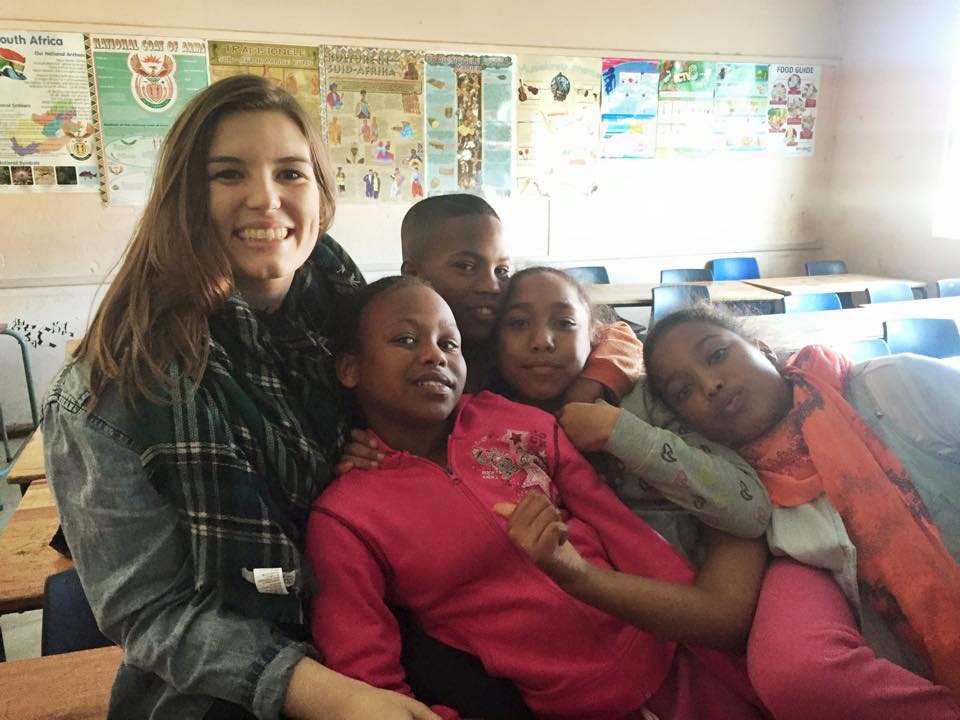
Lillian Gabreski, a senior Political Science major, spent six weeks of her summer studying abroad at the University of Cape Town in Cape Town, South Africa.

We talked with Gabreski to find out more about what it’s like to study in South Africa and what she learned while she was there.

Why did you go to South Africa?

I studied abroad at the University of Cape Town. The experience was fully funded by a grant from Penn State Behrend to complete my research in international and constitutional law. I’ll be using this research to complete my Schreyer Honors Thesis this spring. I also participated in the Students’ Health and Welfare Centres Organisation (SHAWCO) Education program.

What were your responsibilities while there?

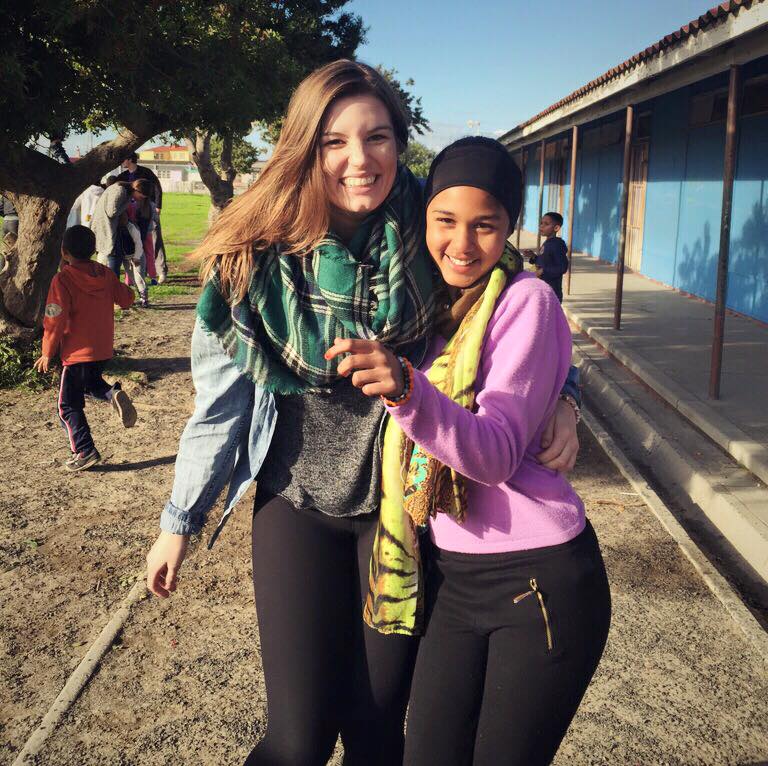
As a student at the University of Cape Town, I studied community development and the impact of development on regional groups and peoples. As a volunteer for the SHAWCO program, I spent 20 hours a week volunteering in the township of Manenberg teaching English and Math to middle schoolers. Manenberg has become infamous for gang-violence that has plagued its residents in recent years.

10404181_10206558989086408_4847686624910044533_n

What made you choose South Africa? Have you been there before?

This was my first time in South Africa. I have always been interested in the country because of its unique socio-political history. With the guidance and influence of Dr. John Gamble, distinguished professor of political science and international law, I began to devote my time to learning about the practice of international and constitutional law. South Africa has one of the most liberal and lauded constitutions in the world, and the politics of a country re-entering the international arena after centuries of its majority population being excluded from democratic processes (see: apartheid) are both unique and absolutely intriguing. Thus, it seemed a natural area of interest for me to study as a political science major.

What was the most eye-opening thing about South Africa…or your experience there?

We have a tendency as Americans to believe that the way we do things is the best way to do them, whether in politics, business, or even our personal lives. While I’ve always considered myself to be open-minded, I still thought this way about the U.S. when I went to South Africa. Upon my return, I had a laundry list of policies and reforms that the U.S. could learn from South Africa. As a stable and relatively new true democratic state, South Africa is willing to experiment when it comes to the way they do things, which is something I think we have lost along the way here in the United States.

11201902_10206392681528823_8913410756497084612_n

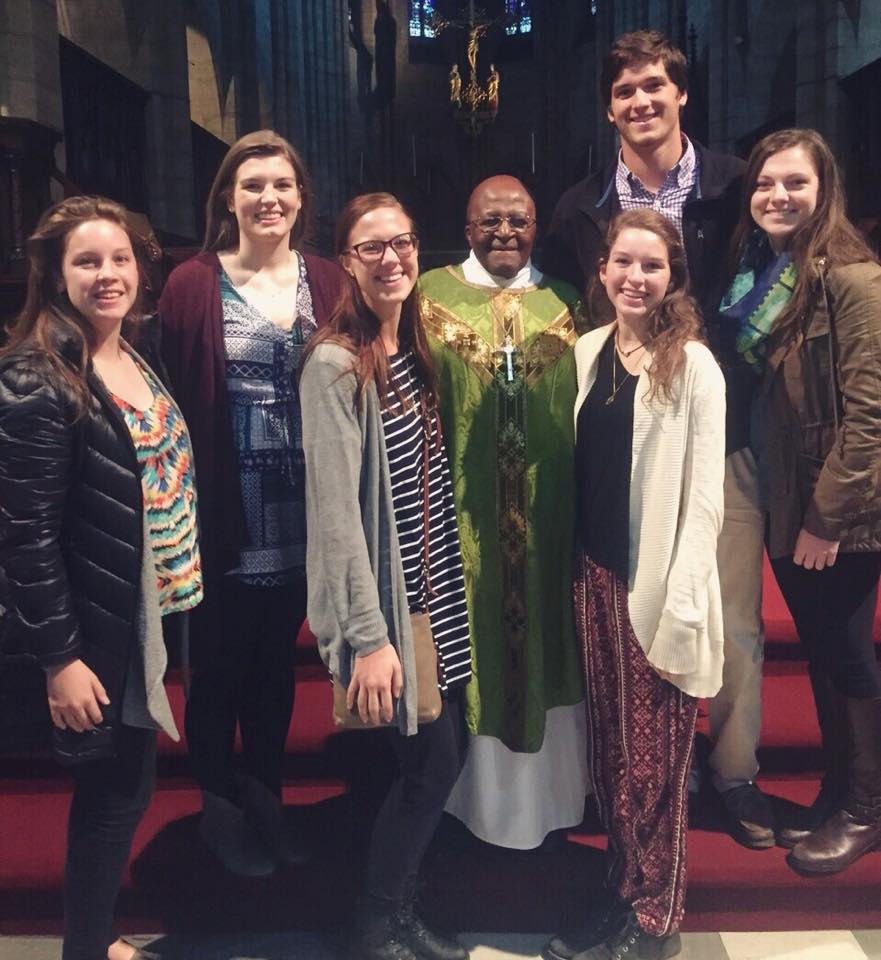
Lillian (second from left) with Archbishop Desmund Tutu.

How do these types of experiences enhance what you’re learning at Behrend?

It is one thing to study a country or a political system in the classroom here in the U.S. We all have our perceptions and we’re learning in our own environment. It is an entirely different experience to go to another country and to interact with its people, who have completely different preconceptions and ideas, and to learn from what’s around you. It’s really as simple as that.

What was it like in South Africa? Did you enjoy being there?

I have traveled all over Western Europe, but Cape Town is the most beautiful city I have ever visited. The people are incredibly kind, the geography is absolutely beautiful, and the perseverance of the South African nation in general is truly inspiring. While I spent only six weeks in South Africa, it was enough to leave an impression that has caused me to alter my post-graduate plans to include a focus in Sub-Saharan Africa.

11665520_10206493271243503_1343250978932109694_n

What’s the most valuable lesson you learned during your experience this summer?

The South African people, specifically those who were discriminated against during apartheid, have an incredible tenet for forgiveness. Rather than seek revenge against those who have wronged them, they seek to remedy their ills via forgiveness and open conversation. I think the principle of being graceful and forgiving rather than continuing the ills of the past via pursuing a path of vengeance can be applicable in any situation whether it be personal or political.

Did you learn anything that you’ll apply this semester to your classes/projects here at Behrend?

Not only am I writing my senior thesis on South Africa and its relation to international law, I am also serving as a teaching assistant for Political Science 003H: Introduction to Comparative Politics this semester and teaching a segment on South African government and politics.

What are you career plans? What do you want to do?

Before studying in South Africa, I had intended to apply for law school. While I’m still taking my LSAT, I’m now focusing more on pursuing a Masters or Ph.D. degree in International Affairs or Public Policy. I would love to someday work in international law, in government, or with an non-governmental organization that would allow me to revise policies and practices on a global scale for the greater benefit of mankind.

Are you earning any minors/certificates?

I’m minoring in History and in Women’s Studies

Do you have any advice for incoming students in your major?

Get to know your professors! They have been invaluable to me not only when it comes to recommendation letters and research opportunities, but also in the advice they have given me to help me find the career path that will make me the happiest. Also, definitely study abroad! It will change your life and help you find your passions.

Why did you choose Behrend?

I initially accepted admission to University Park, but my mother (Dr. Tammie Merino, Lecturer in English at Behrend) convinced me to take a tour of Behrend. I fell in love with the campus and truly felt at home here. After my first year, I knew that the incredible professors and classmates I had at Behrend were invaluable, and that I would spend all of my four years here. There is something to be said for a small campus with the resources of a larger University behind it.

11143711_10206403006106931_5092057385507293611_n


Summer in Sri Lanka: Psychology student serves as medical volunteer

By Heather Cass
Publications & Design Coordinator, Penn State Behrend
Margaret Dunlap, a sophomore Psychology major, had a remarkable and enlightening summer experience as a medical volunteer at a Sri Lankan hospital.

We talked with her to find out more about what it’s like to live and work in a Third World country and what she learned during her time there.

What was your internship position (title)?

Medical volunteer

What were your responsibilities?

I had a mix of observation and helping. My duties included taking blood sugars, blood pressure, pulse, changing dressings, assisting in surgery, and doing physical exams.

How did you obtain this position?

It really just required filling out the application for Projects Abroad. Anyone can do the internship, but skill level and enthusiasm determines how much you are actually doing and you’re doing patient care or just watching.

How long was the internship?

6 weeks

Was it a paid position?

No. It was a volunteer position with Projects Abroad.

What made you look to Sri Lanka? Have you been there before?

I originally planned to be in India, but problems with the visa office resulted in my advisers rerouting me to Sri Lanka, a tropical island off the coast of India. I knew I wanted to be in an underprivileged area with a vastly different culture, preferably in Asia. I had not been to any part of Asia before, so culture-wise, it was a huge shock.

Why do you think they chose you? Why did you stand out?

One reason I stood out was my enthusiasm to learn. I came in as one of the youngest students and I openly admitted to having little real medical training. The doctors and advisors appreciated my humble attitude and willingness to do whatever needed to be done so I could learn.

As a college sophomore, you were doing an internship in a foreign country. Were you ever surprised to find yourself there?

I definitely was in awe that I was able to have an experience like that. If it wasn’t for my parents, I never would have been able to go. There also were several times when I remember thinking “I’m just a kid, what am I doing practicing medicine in a foreign country? When did I become responsible enough or mature enough to do this?”

How do these types of experiences enhance (or bring to life) the lessons you’re learning at Behrend?

At Behrend,  I learned how to be comfortable around people much different from myself. My freshman year, I lived in Perry Hall, which, at the time, housed primarily international students. I grew up in a small town with very little cultural diversity, and I had never lived in close proximity to people with such vastly different backgrounds. I became close friends with many international students, though it did take me some time to get used to being surrounded by different cultures. This experience certainly prepared me for living in Sri Lanka, where everyone’s culture was different from my own. Even the other students staying with the same host family had different backgrounds. I not only got a taste of Sri Lanka but also Japan, Ireland, England, Canada, Germany, and Australia.

margaret dunlap pix2

Margaret Dunlop, left, and a friend ride an Asian elephant while in Sri Lanka this summer

What was it like in Sri Lanka? Did you enjoy living there?

Sri Lanka is a Third World country in Asia. I lived in Colombo, the capital city, which is on the west coast. It was insanely hot, humid, dirty, smelly, and full of insects. But, it was also wonderfully exciting and exotic. All of the things that could have been taken as negatives were actually positives if you looked at them properly. There was no air conditioning, no hot water for bathing, no silverware (you ate your rice with your hands), and no toilet paper. The only Caucasians for miles were the other eleven students living in my house, and only seven of them spoke English as their first language. Living in Sri Lanka certainly was an adjustment. Literally everything is different there, but the differences are also what made the trip so fun!

What’s the most valuable lesson you learned during your experience this summer?

The most valuable lesson I learned is that I am stronger than I think. There were times when I was so scared or miserable that I just wanted to buy a plane ticket home, but I didn’t. I persevered and enjoyed the experience. In the end, I am a better person for it.

Did you learn anything that you’ll apply this semester to your classes/projects here at Behrend?

One of the biggest things I learned is to not second-guess myself. There were times where I was in surgery and panicking that I would make a mistake or I would be doing an initial examination on a patient with other medical students and second-guess myself. Sometimes I would hesitate if a doctor asked me a question just because I didn’t want to say the wrong thing and look stupid. Eventually I realized that I know more than I think and I should learn to be confident in that. And even if I don’t know the answer or I do have a stupid question, who cares? That’s why it’s called learning.

What are you career plans? What do you want to do?

I plan to go to medical school after college to become an orthopedic surgeon with a focus in sports medicine.

Finance major spends summer flying across country to work with clients

By Heather Cass
Publications & Design Coordinator, Penn State Behrend

eric frei

Eric Frei, a senior Finance major, racked up plenty of frequent flier miles this summer working as an intern for FTI Consulting in Pittsburgh. Every week for three months, Frei flew to either Northern Minnesota or Florida to provide on-site consulting services to FTI clients.

We sat down to talk with Frei about his jet-setting summer experience.

Is this the first time you interned for this company?

Yes

How did you obtain the internship?

Faculty members passed my resume onto someone at FTI.

Was it a paid position?

Yes.

Did you fly out every week?

Yes, I either flew to Northern Minnesota or Florida and I stayed for 4 or 5 nights. On the weekends, I flew back to Pittsburgh.

What are the kinds of things you assisted the clients with?

A lot of the work that I did was confidential but I basically assisted companies that were going through the bankruptcy process.

As a college student you were assisting companies going through bankruptcy, that’s pretty impressive. Did you ever think: Wow, I can’t believe I get to do this?

At times, yes. It was a great opportunity to be able to learn more than I ever had about bankruptcy and financial consulting work.

How do these types of experiences enhance (or bring to life) the lessons you’re learning at Behrend?

I was able to apply many of the things I learned in my classes this summer and in previous internships. Now that I’m back at Behrend, I am excited to apply what I learned this summer as well.

Which climate did you like better…Florida or Minnesota? Did you have recreation time…to go see the city, etc.?

To be honest, I did not have much time at all for recreation. Most days we worked from 8 a.m. to 7 p.m. or so and then went out to dinner as a team. I was surprised at how beautiful the summer was in Northern Minnesota.

What’s the most valuable lesson you learned during your experience this summer?

To be confident in what you are doing, triple check everything, and content is nothing if it is not presented in the correct way.

Did you learn anything that you’ll apply this semester to your classes/projects here at Behrend?

Yes, many things. I have set personal goals for my senior year to make myself more a better resource to the company I end up working for after graduation in May.

What are you career plans? What do you want to do?

I am eager to start my career in corporate finance. Currently I am seeking after corporate finance positions; especially those that are a leadership rotation program.

Do you have any advice for incoming students in your major?

Work hard, have fun, and truly absorb what you are being taught in the classroom.


Ready to run for ice cream? (Details on tonight’s 5K)

Ice cream Lion low res

Tonight is the Penn State Behrend Athletics Ice Cream Fun Run. There are currently more than 200 people signed up to run…and then cool down with some delicious Berkey’s Creamery ice cream.

Here’s what you need to know:

  • The race starts & finishes in the Junker Center parking lot near the new soccer complex.
  • Packet pickup is at the race start/finish (see above) from 5-6:15 p.m.
  • Day-of-Race registration is also at the race start/finish area from 5-6 p.m. Cost is $25 and there are a few shirts left. If they go through the leftover stock, they will order and mail out shirts.
  • You can view the race course here. (Also posted below).
  • Dogs are permitted, but they must be leashed. Also, please clean up after your pet.
  • The race is not timed…so bring a watch/GPS if you want to keep track of your splits/pace/finish time.
  • There are no awards, but there is FREE BERKEY’s ICE CREAM!
  • Post-run ice cream will be served out of the concession stand at the soccer complex.
  • You can have seconds! Race organizers say they are not tracking consumption, so…eat up until it’s gone!
  • BTW …Berkey’s is no run-of-the-mill ice cream. It is to ice cream what Smith’s is to hot dogs, which is to say – the very best. It’s made fresh from the cows at Penn State in University Park.

5k Course1

Love of writing defines O’Neill’s time at Behrend

Katherine O'Neill

By Steve Orbanek
Marketing Communications Specialist, Penn State Behrend

As a child, Katie O’Neill always had a keen interest in writing and creative expression. This affinity continued when she got to grade school, and it was not long before others started to notice.

“I had a teacher when I was in first grade who told my mom to get me a journal,” O’Neill recalls.

That would seem to have been excellent advice. As O’Neill has grown up, her passion for writing has become a defining characteristic.

“I’ve always been a writer before anything else,” the Lake Winola, Pa., native says.

That passion is what brought her to Penn State Erie, The Behrend College. The college’s BFA in Creative Writing piqued her interest as the only such program in the Penn State system and one of only a few in the country.

“That was definitely the number one draw,” she says.

Through the inventive program, O’Neill, who graduated this past May, says she was able to focus intently on improving her inventive writing skills. She also improved her editing abilities serving on the staff of Lake Effect, an international literary journal published by the School of Humanities and Social Sciences at Penn State Behrend.

Along the way, O’Neill garnered accolades. This past year alone, her non-fiction story, “Achill Strikes Again,” won Behrend’s Farrell Nonfiction Award while her fiction piece “Juneau” was the college’s Smith Fiction Award winner. Her short fiction piece, “Tony and Rebecca” was also named an honorable mention in the Annual Creative Writing Awards, sponsored by Suffolk County Community College in Long Island, New York.

O’Neill says her inspiration comes from “the weirdest things,” but also a more traditional source. Thanks to the college’s Creative Writers Reading Series and professional conferences, O’Neill met and networked with numerous professional authors throughout her college career. With every interaction, she says she would pick up a tip or two that she put to good use.

During her time at Penn State Behrend, O’Neill was involved beyond creative writing activities. She was the captain of the college’s dance team, a member of the Behrend Choir and a writing tutor in the Learning Resource Center.

This past spring, O’Neill’s efforts were recognized with two awards: Behrend’s Eric A. and Josephine S. Walker Award and a university-wide Eclipse Award. The Walker Award recognizes a student whose character, scholarship, leadership and citizenship have been directed into student programs and services. The Eclipse Award recognizes Penn State students for service and volunteerism to their campus and local communities.

This fall, O’Neill will start pursuing her MFA in Creative Writing at Bowling Green State University in Bowling Green, Ohio. She reflects fondly on her time at Penn State Behrend and hopes new students will choose to follow a similar path.

“My advice is to get involved from the start. I’m so glad I got involved right away. It can be overwhelming, but it’s (worth it),” she says. “I’ve made some amazing friends. I’m going to miss everything about this place.”

Athletics to host cool 5K fun run (ice cream is involved!)

Ice Cream Run TV

By Heather Cass

Publications & Design Coordinator, Penn State Behrend

Some people run for fun. Some people run for fitness. Some people run to spend time with friends.

What would you run for?

How about free Berkey Creamery ice cream (and a cool T-shirt, too)?

Ah…now there’s a tempting reason and sweet reward for running (or walking) the Penn State Behrend Athletics first Ice Cream Run on Friday, August 28 at 6:30 p.m.

Not up for 3.1 miles? There’s also a Family Fun 1-Mile Walk.

The races start and finish in the Junker Center parking lot, near the new soccer complex. The course is on all paved paths through campus and Coach Greg Cooper (cross-country and track) was merciful when he designed the course as it goes up first, then is mostly flat or downhill. Course map here (also posted below).

Race registration is $25 and includes a long-sleeve shirt and free Berkey’s Creamery ice cream when you finish the race. Register here (online registration only). By the way, this is a family-friendly event – there’s a $5 discount for every additional family member you register.

Four legged friends are even welcome to run with you, too, but they must be leashed and under control at all times.

This is a fun run, so there will not be a timer or awards.

All proceeds benefit Behrend Athletics! For more information call 814-898-6240.

5k Course1

Young Erie authors publish one-week novels at College for Kids

DSC_0646

By Robb Frederick
Public Information Coordinator, Penn State Behrend

Once upon a time there was a boy named David. He liked to write. He came to a college called Penn State Behrend for a program called College for Kids. He was one of 1,283 kids in the program.

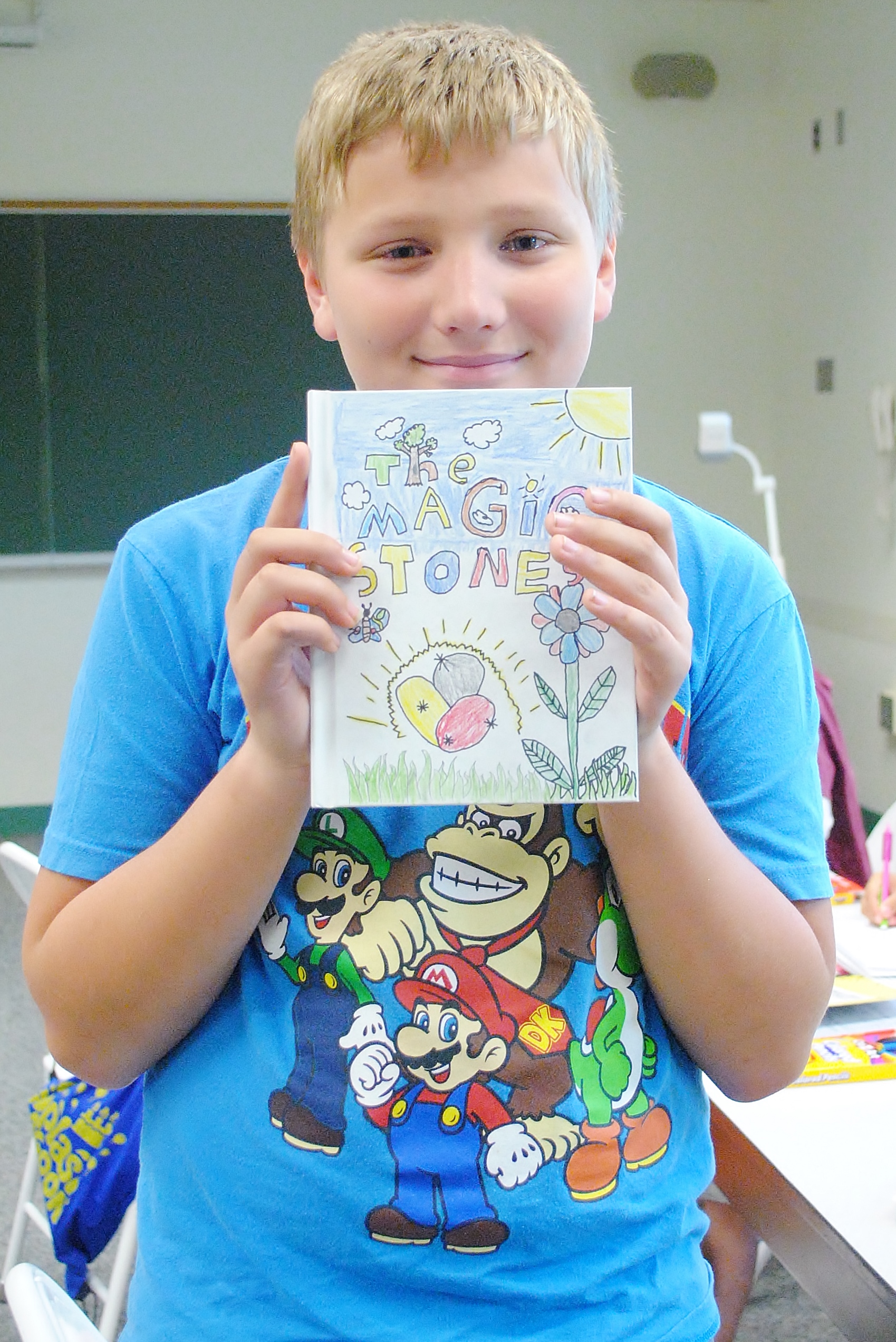
The kids had fun. They launched rockets and built robots and made stained-glass mosaics. David’s class was called “Author’s Club.” The kids in it made their very own hard-cover books. David’s book was “The Magic Stones,” by David Showers, age 10. He dedicated it to his Gramma.

His teacher, Ms. Lenze, helped him write it. She taught him about plot and character and conflict. She made him practice. One time, she gave the class the ending of a story and asked them to write what the characters did to get to that point. That was like a backward book.

Ms. Lenze played classical music while the kids wrote. Some kids sat at desks. Some sat on the floor, their legs folded crisscross applesauce. David sat next to Audi, whose book was called “Mark and Jasmine Meet an Alien.” The boy across from them wrote “Attack of the Changeos.” Whatever those are.

“They are so creative at this age,” Ms. Lenze said. “The stories they come up with are just so imaginative.”

David’s story was about a boy who found three magic stones. The red stone made the boy invisible. The gold stone helped him fly. The black stone granted all of his wishes. But not right away. That was in a later chapter.

“I just moved here like six months ago,” David said. “I read a lot of books. I think it’s cool that I’m making my own.”

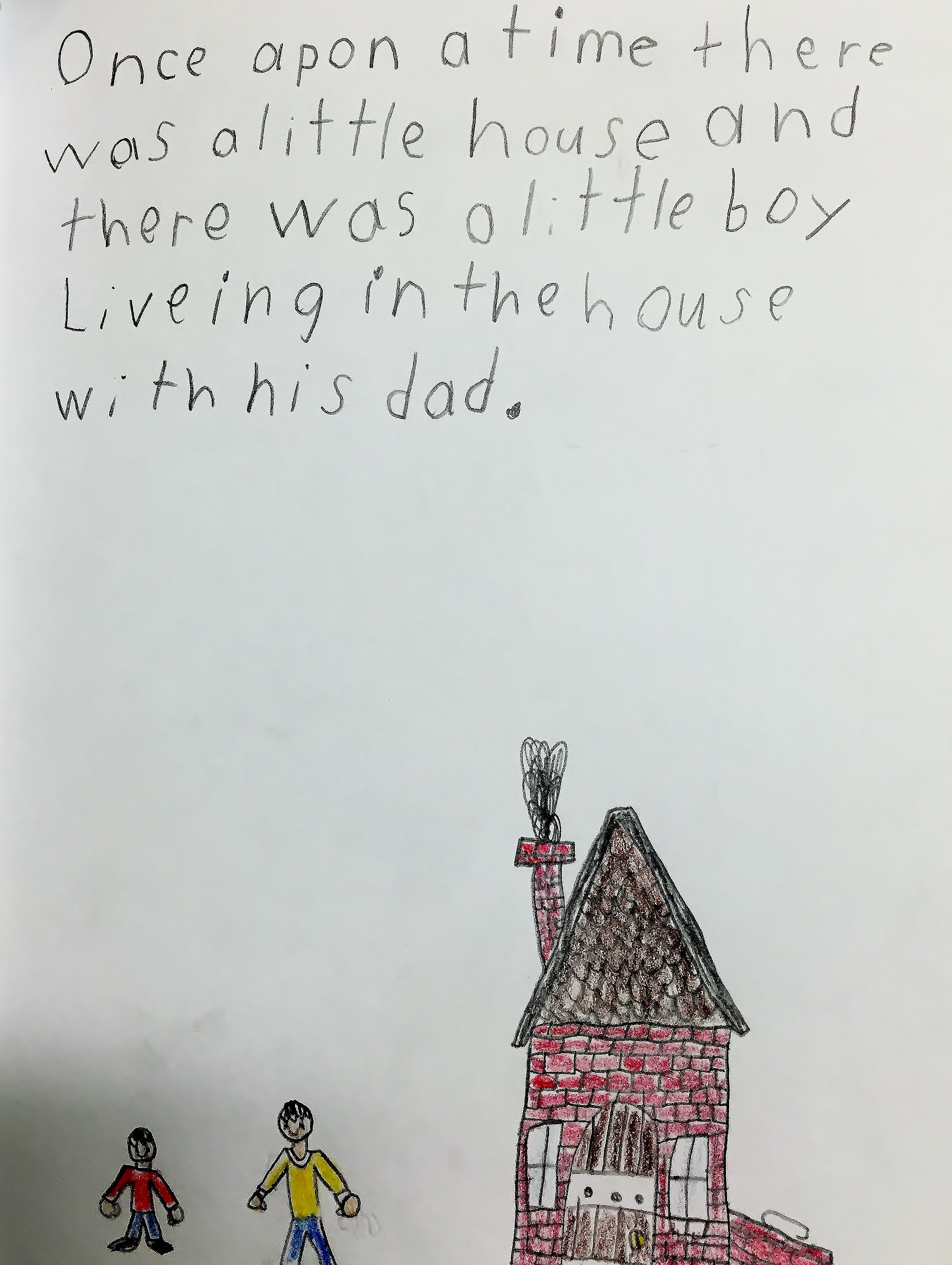
He wrote the first draft in a notebook. Then he copied the story into a blank book that Ms. Lenze gave him. He spent a lot of time on the drawings. Especially the first page, where he drew the boy and the boy’s dad and the big house they lived in. He drew all the bricks and shingles and even put smoke on the chimney.

IMG_2883

“I’m really good at drawing houses,” David said. He pointed to the front door, which looked like wood. “Isn’t that good?”

On the next page, the boy goes into the woods. He finds the magic stones. He starts to learn about their power.

Ms. Lenze said a good book should have some conflict. Like a fight. So David made his boy meet another boy – a friend, but not really – who also wanted the magic stones. That boy planned to do bad things with the power. So the boys wrestled, each of them grabbing at the stones, until the magic rocks dropped and broke.

And then?

Then it just ends. The last pages are blank. Ms. Lenze would call that a cliffhanger. David called it time-to-clean-up-for-lunch.

“That’s as far as I got,” he said. “I’ll have to write some more tomorrow, I guess.”

A Textbook Case of Win-Win: Student filmmakers, professors, textbook company team up to create educational videos

Papiya

Dr. Papiya Bhattacharjee

By Christine Palattella
Marketing Communications Specialist, Penn State Behrend

Associate professor of mathematics Dr. Papiya Bhattacharjee’s daily summer lectures have an audience of just one unblinking video camera, but the potential to reach millions of math students.

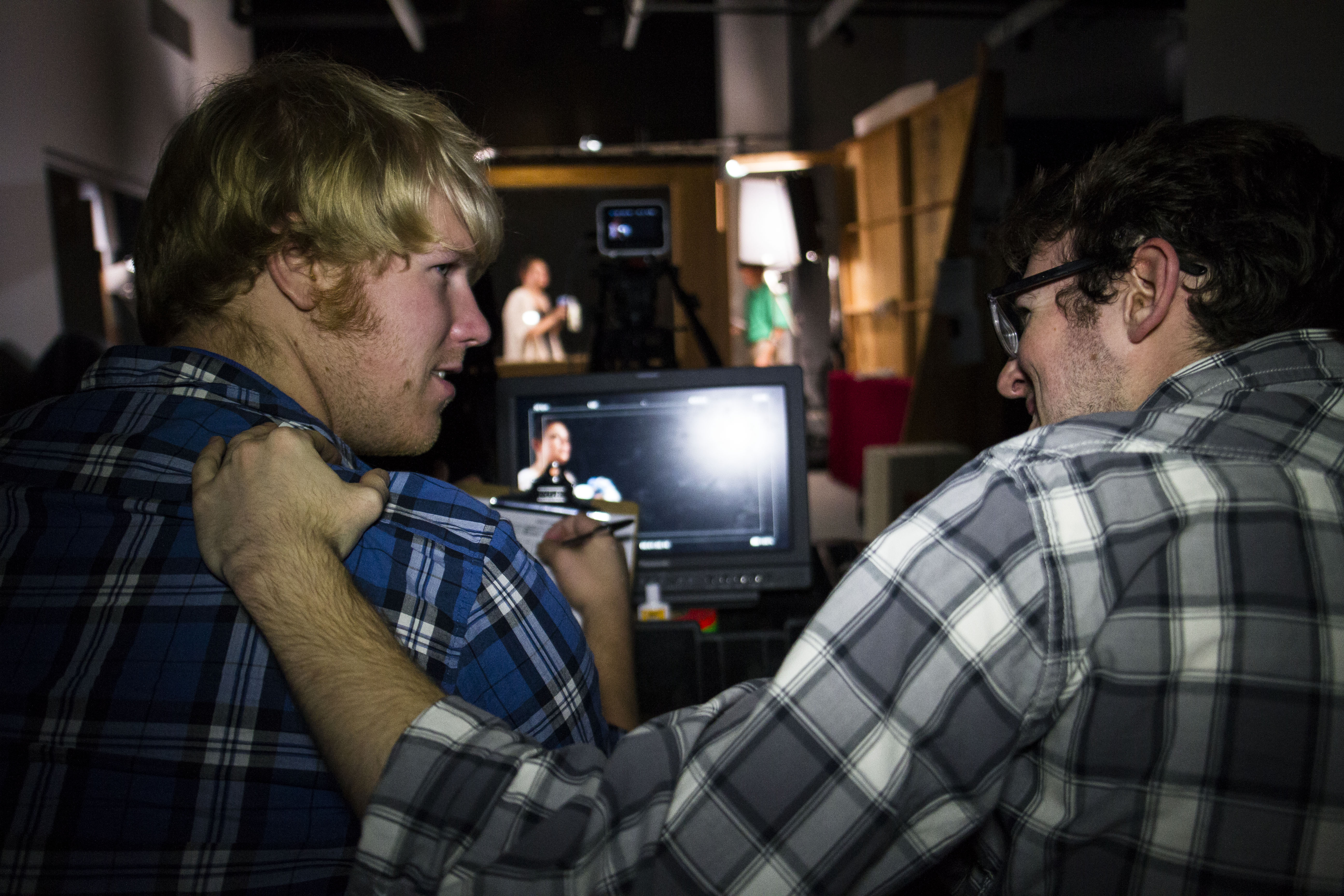
Bhattacharjee is one of four calculus teachers chosen by regional audition to act as talent in supplemental video content to be distributed by Erie-based Larson Texts. The video series is being produced using equipment provided by Greater Erie Arts Rental (GEAR), a new outreach services of the School of Humanities and Social Sciences, and with the assistance of Behrend students working as production interns for Larson.

“I think the videos are going to be extremely helpful for any student, but especially the visual learners,” says Bhattacharjee, who spends four hours each morning in the Kochel Center television studio, working aloud while illustrating her commentary in grease marker on a large pane of glass. (The glass will be flipped in post-production to make the pane readable.)

Years of teaching have left Bhattacharjee comfortable speaking in public. It’s the addition of technology that’s the challenge. “I need to remember to always look at the camera while speaking, move away from my writing so it can be seen clearly in the camera, and so on,” she says. “I am trying to have fun. All I have to remember is that the camera is my student, and I am tutoring my student.”

But this is no average student: The camera is an Epic-M Red Dragon Pro, the same model used to film Game of Thrones, The Hobbit, and Avenger: Age of Ultron. This camera is just one piece of equipment in GEAR’s inventory, which includes high-end cameras, lighting kits, and other hardware and software. The equipment is available to professional and student filmmakers and regional artists. GEAR’s equipment inventory, purchased using a $500,000 gift commitment from the Samuel P. Black Family Fund of the Erie Community Foundation, also includes lenses, tripods and stage legs; six-channel sound mixers; shotgun and wireless mics; Fresnal, LED, and HMI lighting systems; and Mac Pro, Adobe and DaVinci Resolve editing and rendering software.

Tim Larson ’87 is a partner in Grant Larson Productions, creator of the calculus video series. He anticipates filming 700 individual videos averaging seven minutes in length by the time the shoot wraps in August. Larson calls GEAR “a wonderful resource. It’s so nice to have this kind of equipment in Erie. On previous shoots we’ve had to rent cameras and equipment from Columbus and Buffalo, so this is an astounding benefit to us.”

An additional GEAR benefit is a ready-made film crew, since a rental discount is available to GEAR clients who hire Penn State Behrend students. “I feel so incredibly lucky to be able to work on this project,” says Erik Brown, a spring Communication graduate and one of six Behrend students and young alumni working for Grant Larson as paid production interns. “The great thing about working here is not only learning about the film industry itself, but also being exposed to high-quality equipment. We’re not using just a couple house lights and DSLR cameras, but industry-standard gear for lighting, sound recording, and cameras. I’ve always wanted to work in the film industry and, now, working on this shoot, I feel like I have a realistic chance of doing that.”

Erik Brown, left, Josh Lapping

Erik Brown, left, and Josh Lapping, (above) are two of six Behrend students and recent alumni working on the videos for Grant Larson Productions using equipment from the Greater Erie Arts Rental, or GEAR, a new outreach service of the School of Humanities and Social Sciences that provides professional and student filmmakers and regional artists access to high-end cameras, lighting kits, and other hardware and software. 

Josh Lapping, Ciara Smith

Penn State students, Josh Lapping, left, and Ciara Smith, work on a series of videos for Grant Larson Productions.

Shelby Dailey

Shelby Dailey, Penn State Behrend Communication major and intern for Grant Larson Productions.

Intern Shelby Dailey, pictured above, a Communication major starting her senior year at the college, appreciates that Grant Larson rotates its student workers. “We’re given the chance to experience all the moving parts of film, such as camera operating, producing, directing, and script supervising. I’ve learned things that textbooks can’t adequately prepare students for, such as (crew) dos and don’ts, set etiquette, and (the importance) of networking.”

“We want to offer an educational experience that is at the same time a close facsimile of what students will experience once they enter the professional environment of producing film and television,” says GEAR coordinator Michael Berlin, whose previous professional experiences include managing crew and equipment for New York City’s Fashion Week and the E! and Pop television networks and production management for ABC World News, CNBC, and ESPN. “The students working on these calculus videos are gaining technical know-how and a type of muscle memory that characterizes this industry, plus they are learning the responsibility that comes with arriving on-set day in and day out. They also are enjoying the benefit of getting paid for their hard work—believe me when I tell you that this type of arrangement is a very rare and very special as a teaching tool that is fair to all parties involved.”

For additional information about GEAR, email Michael Berlin at mbb21@psu.eduLarson Texts and Grant Larson Productions online.

Move over, Bill Nye. Penn State Behrend has its own ‘Science Guy’

By Steve Orbanek
Marketing Communications Specialist, Penn State Behrend

Joel Solomon (3)
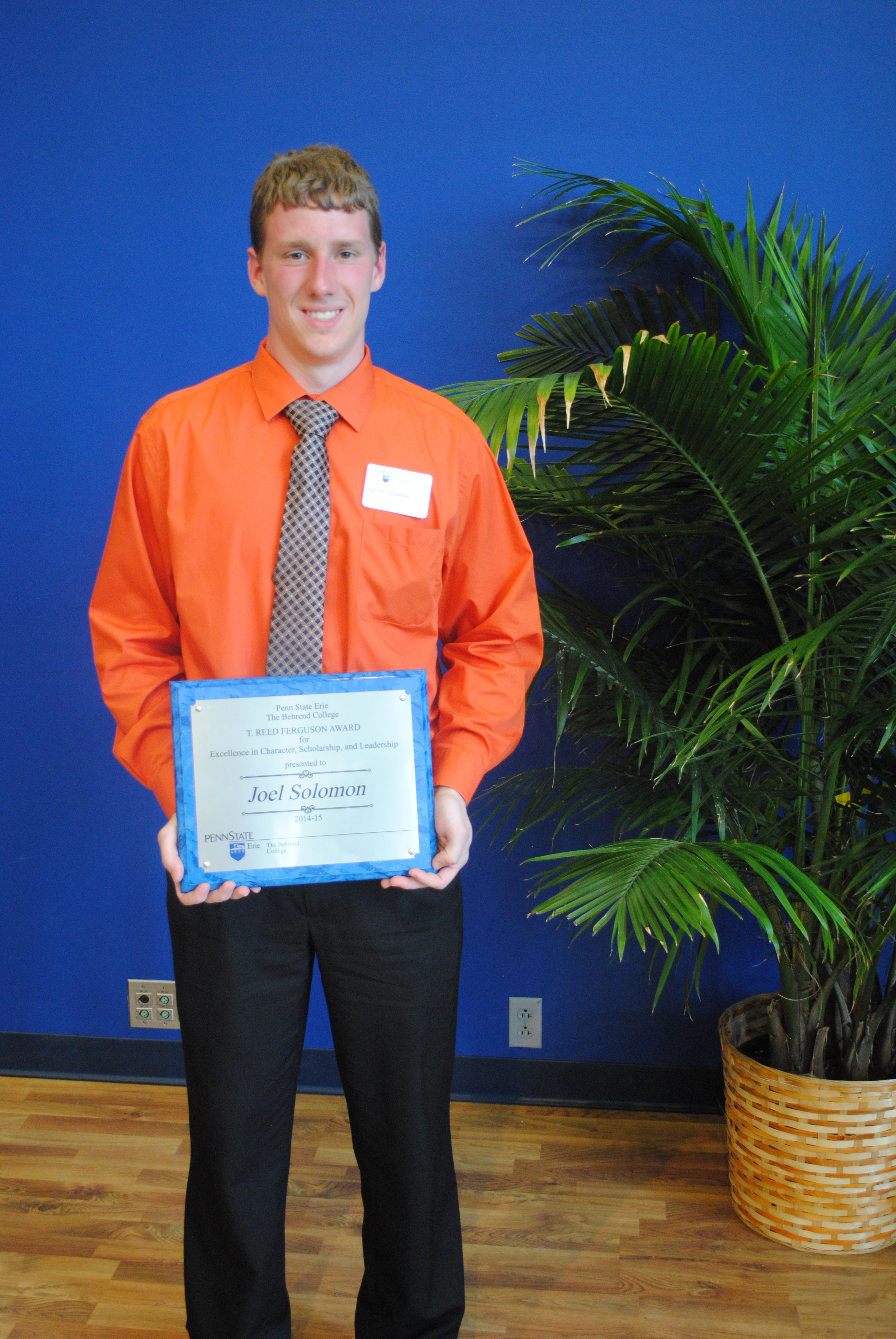
Joel Solomon, a physics major, was the recipient of this year’s T. Reed Ferguson Award. The award recognizes a junior who has demonstrated scholarship, leadership and citizenship through academic and out-of-class involvement and gives promise of further achievement in the senior year.

For some kids, it’s Cartoon Network. For others, it’s Nickelodeon. For Joel Solomon, it was the Science channel?

“Growing up, I just always watched that channel,” says Solomon, who recently completed his junior year at Penn State Erie, The Behrend College. “I was fascinated by what humanity has been able to do over the years, and I knew that I wanted to be a part of that.”

Math and science resonated with Solomon, and that interest led the New Wilmington, Pa., native to Penn State Behrend. As he got older, he knew he wanted to pursue research in college, and he could think of no better destination than Behrend.

“Being able to get a great education at a small campus is great,” says Solomon, a physics major. “I was looking for a research-oriented institution, and Behrend is one of the few schools in the region that offers such opportunities. I know that with a degree from here, I can go anywhere that I choose.”

This past year, Solomon collaborated with Bruce Wittmershaus, associate professor of physics, on a research project titled, “Concentration Dependence of Coated Gold Nanoparticles for Metal Enhanced Fluorescence.” The project was recognized as the Best Poster Presentation this past April at the Sigma Xi Undergraduate Student Research and Creative Accomplishment Conference.

Undergraduate research has been a big part of his time at the college, but Solomon’s interests go beyond the academic realm. For the past three years, he’s been a goalie on the men’s soccer team. This past year, Solomon was inducted into Chi Alpha Sigma, a national society that honors collegiate student-athletes who excel in both the classroom and in athletic competition. The society recognizes student-athletes who received a varsity letter in their sport while maintaining a cumulative GPA of 3.4 or higher throughout their junior and/or senior years. Solomon is also a former AMCC All-Academic selection.

“I feel as if soccer complements my academics. Just being physically active helps me keep up with my coursework,” he says.

Solomon’s accomplishments on the field and in the classroom played a key role in his receiving the 2014-15 T. Reed Ferguson Award last April at the college’s 66th annual Honors and Awards Convocation. The award recognizes a junior who has demonstrated scholarship, leadership and citizenship through academic and out-of-class involvement and gives promise of further achievement in the senior year.

“I was very happy to receive the award, and it was nice to know my work is paying off,” Solomon says. “It just reassured me that I’m on the right path, but I know there’s more that I can do.”

Solomon will get the chance to fulfill that promise of further achievement this fall, continuing his undergraduate research as the recipient of a grant to explore the topic of “Enhancing the Photostability of Fluorophores Using Metal Enhanced Fluorescence.”

For the future, Solomon plans to attend graduate school and possibly work with optics. His ultimate goal, though, has its roots in the programs he watched on Science as a boy.

“My dream job is always going to be something with NASA. I have always been fascinated by all of NASA’s accomplishments,” he says, “so that’s the dream, and that’s what I’ll keep working toward.”

Kunming, China, native comes to Penn State Behrend to ‘claim’ an education

By Steve Orbanek
Marketing Communications Specialist, Penn State Behrend

(Wang, Arthur) Rose_Cologne_Keystone Award
Arthur Wang, a Kunming China, native, is shown holding the Rose Cologne Keystone Citizen Award, a University-wide award that he received this spring.

Yuanheng “Arthur” Wang arrived in the United States for the first time in 2006. His parents felt it was time for him to see the world, so the Kunming, China, native went to live with his uncle in Seattle.

He knew there would be only one way to adapt.

“I really struggled back then because I basically knew nothing about English. I realized then that I had to master this language to survive,” Wang says.

Now a junior at Penn State Erie, The Behrend College, Wang is doing more than surviving — he’s thriving.

He has made the Dean’s List every semester so far, has joined the Lambda Sigma National Honor Society, has served as the regional vice president of the Student Pennsylvania State Education Association and was recently accepted into the University’s Schreyer Honors College. His greatest accomplishment though, might be the work he is doing to help his fellow international students, he says.

Wang serves as a teaching assistant for Penn State Behrend’s English Language Learners program and holds office hours each week, tutoring students in college-level reading, writing, speaking and listening skills. The English language has resonated with him.

“I like English, and I like communication. They just make me excited,” Wang says.

In fact, he’s so enthused about the language that English has become his major. Now he’s using that excitement to assist others.

“I want to help those who are learning English, but in order to do that, I have to master the language myself,” Wang says. “I use English and Chinese interchangeably, which we call ‘code-switching.’ I want to encourage those around me to realize and appreciate the beauty of language.”

Wang’s efforts were recognized this spring when he was honored with two awards: Behrend’s Irvin H. Kochel Award and the University-wide Rose Cologne Keystone Citizen Award. The Kochel Award is presented annually to an outstanding student who demonstrates character, scholarship, leadership and citizenship through efforts that positively influence students and the college community. The Cologne Award recognizes students for service and volunteerism to their campus and local communities.

After graduation, Wang plans to pursue a master’s degree in education or instructional communication and would eventually like to be a professor of language and literacy education. He’s not afraid to challenge stereotypical notions along the way.

“I wish to challenge the stereotype that Asian students or international students are not able to major in English or the humanities. I want to challenge the stereotype that says all international students are going to major in business, engineering or the sciences,” he says.

Guiding him along the way is a principle he picked up from a speech titled “Claiming an Education,” given by poet Adrienne Rich at the 1977 convocation of Douglass College in New Jersey.

“I’m not here to accept or receive an education. I’m here to claim an education. I want to claim all of the resources here available to me,” Wang says. “This term inspires me because it really confirms my dedication and informs my direction.”

He’s hoping other students are willing to follow his footsteps in claiming their education.

“College is all about choice,” he says. “If you want to be happy, if you want to be a success, then you make that choice and do it. Once you make that choice, no one can take it away from you.”