Penn State Behrend’s Class of 2026 is ready to make its mark on the world. We’re proud of our students and all that they have learned and accomplished here at Behrend. Over the next several weeks, we will introduce you to a few of our remarkable seniors who have conducted valuable research, pioneered innovation, overcome challenges, and engaged in college life in a big way.
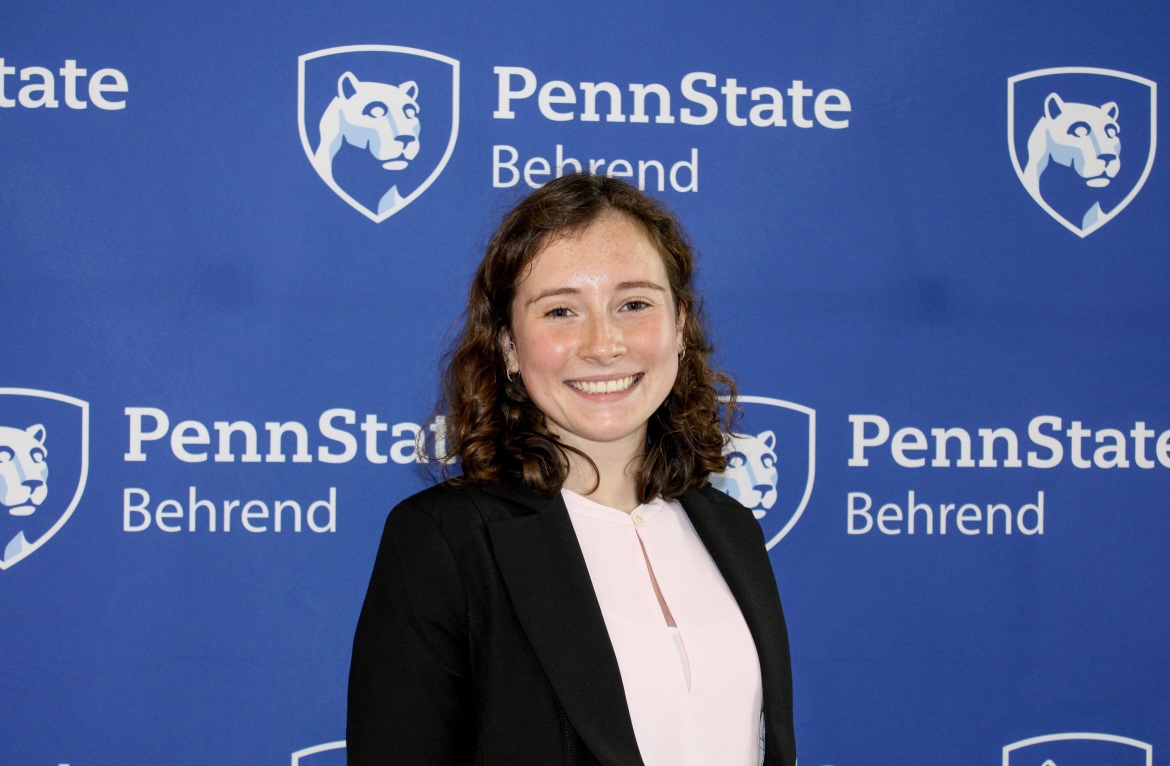
Today, we’d like you to meet Morgan McQueeney.
Major: Psychology (B.S.)
Hometown: Erie, Pennsylvania
Scholarships: Petersen Family Trustee Scholarship and Ernest E. and Bernice C. Fryer and Family Psychology Scholarship
Why she chose Behrend: I have a long line of family members who attended Penn State Behrend, so I had a lot of love for the campus.
Why she chose her major: I learned about psychology in high school and fell in love with it. I also learned a lot about the field from my mom. She has a Ph.D. in behavioral health.
Proudest accomplishment at Behrend: My work with the Random Acts of Kindness (RAK) club. Specifically, when I worked with my fellow executive board members and schools in the community to create more than 600 holiday cards for veterans and deliver them to the Pennsylvania Soldiers’ and Sailors’ Home here in Erie.
Challenges overcome: I’ve had to overcome my shyness and social anxiety. I’m thankful I’ve had such a great community that helped me come out of my shell.
Campus involvement: Lion Entertainment Board, Random Acts of Kindness, Alpha Phi Omega
What you’d be surprised to know about her: I love comic books and botanical Legos.
Advice for first-year students: There are so many clubs and opportunities available at Behrend. Don’t be afraid to get out there and try something new.
After her graduation in May, Morgan plans to work full time in the field of psychology in the Erie area before pursuing a master’s degree in Clinical Psychology.
Penn State Behrend’s Class of 2026 is ready to make its mark on the world. We’re proud of our students and all that they have learned and accomplished here at Behrend. Over the next several weeks, we will introduce you to a few of our remarkable seniors who have conducted valuable research, pioneered innovation, overcome challenges, and engaged in college life in a big way.
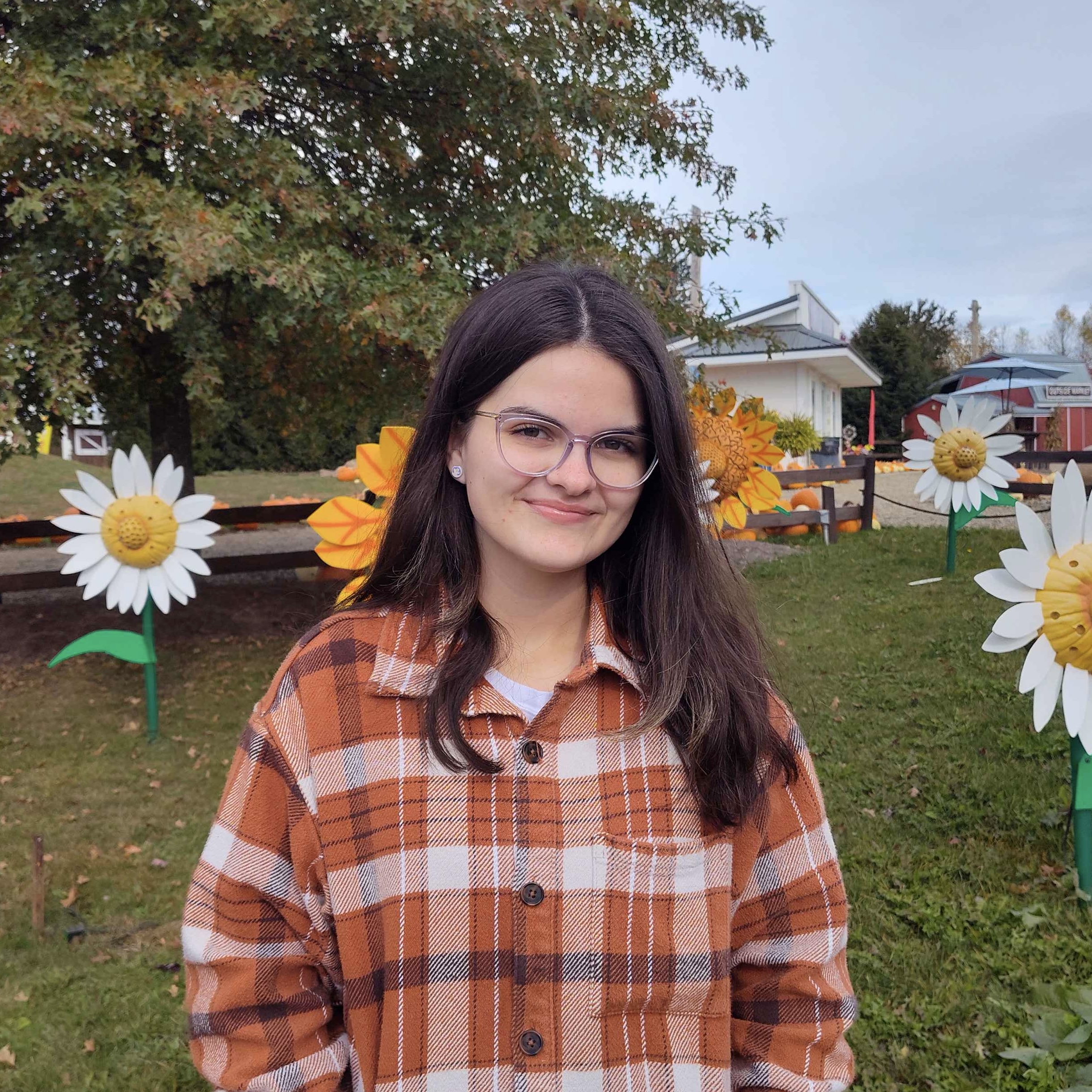
Today, we’d like you to meet Chloe Heeter.
Major: Mechanical Engineering
Hometown: Erie
Scholarships: Joseph A. and Berit I.Benacci Family Scholarship and a Pennsylvania Ready to Succeed Scholarship
Why she chose Behrend: It is a smaller school where I could build relationships with my professors and meet with them when I needed help. It’s also a strong engineering school and was close to home for me.
Why she chose her major: I’ve always loved math and science and enjoy solving problems. I also love fixing things, altering them to better meet my needs, or building things from scratch.
Proudest accomplishment at Behrend: Graduating. When I started college, I hated it and wanted to drop out. I’ve come a long way since then and have grown to genuinely enjoy college.
Awards: Dean’s List, several semesters
Advice for first-year students: Talk to as many people as you can when you first start and find a good group of friends in your major. Also, try out multiple clubs and see what fits you best because it might even help you decide what you want to do once you graduate.
Penn State Behrend’s Class of 2026 is ready to make its mark on the world. We’re proud of our students and all that they have learned and accomplished here at Behrend. Over the next several weeks, we will introduce you to a few of our remarkable seniors who have conducted valuable research, pioneered innovation, overcome challenges, and engaged in college life in a big way.
Today, we’d like you to meet Brooke Korb.
Major: Biology
Minor: Politics and Government
Hometown: Erie, Pennsylvania
Scholarships: PNC Leadership Scholarship and Chancellor’s Scholarship
Awards and accolades: ATHENA Young Professional Award finalist, Aaron Meehl Biology Award (Outstanding Rising Senior), Christopher M. Geitner Award, Guy W. Wilson Award for Service to the College, Most Outstanding Student Organization Member, and President Walker Award.
Why she chose Behrend: I was fortunate to visit Behrend often in middle school and high school. A few of my family members are also Penn State alumni. With every experience I had on campus, I was exposed to great people and engaging lectures. It also stood out to me that Behrend was a smaller campus, meaning I could get to know my professors and classmates very well.
Why she chose her major: I love science and wanted to learn how I could apply it to help others in need, especially in the public health sector. I’m deeply interested in the intersection of science and social issues. The biology coursework at Behrend was flexible in letting me explore this interest.
Proudest accomplishment at Behrend: During my first year on campus, I participated in my first Alternative Spring Break trip to Fort Myers, Florida. We helped with disaster relief efforts after Hurricane Ian. It was an eye-opening, emotional experience that deeply impacted me as a person. I loved serving alongside other Behrend students and connecting with them at this level. I was an ASB student leader for three more trips. It has been a transformative experience for me.
Campus involvement: Alternative Spring Break, Lion Ambassadors, Science Ambassadors, Lion Scouts, Women’s Engagement Council, Gender and Sexuality Equality Club, and Random Acts of Kindness.
What you’d be surprised to know about her: During my sophomore-year ASB trip, I volunteered at the El Yunque National Forest in Puerto Rico. I got to assist with trail maintenance, which included carrying buckets of rocks up and down trails as it rained.
What she’s passionate about: Getting out of my comfort zone. If I hadn’t gotten over my fears or anxieties, my life would have looked a lot different than it does now. We owe it to ourselves to be a little daring from time to time.
Advice for first-year students: College is your time to explore. Nothing is set in stone. You may end up changing your major or anticipated career path, and that’s okay! The most important thing is that you follow your passion and do what makes you happy.
After her graduation in May, Brooke plans to attend Slippery Rock University to pursue a Master of Public Health degree with a concentration in environmental and occupational health.
There’s much more to Penn State Behrend’s faculty and staff members than what you see on campus. In this occasional series, we’ll take a look at some of the interesting, unconventional, and inspiring things that members of our Behrend community do in their free time.
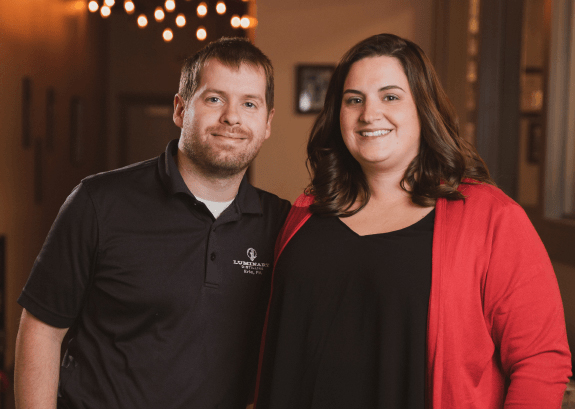
Joel Normand, lecturer in business statistics, and his wife, Maria DiSanza, own Luminary Distilling and Eatery in Erie.
At Penn State Behrend, Joel Normand, lecturer in business statistics, teaches students how to use statistical methods, like probability theory and hypothesis testing, to make informed decisions and solve business problems. It’s something he is well versed in, having applied it to his own venture, a micro-distilling hobby that has grown into a thriving Erie business.
Normand and his wife, Maria DiSanza, own Luminary Distillery and Eatery on upper Peach Street as well as a bottle shop on North Park Row in downtown Erie, where they sell a variety of small-batch artisan spirits.
Normand began dabbling in home brewing, wine making, and distilling in 2010 while working as a high school math teacher.
“I had always wanted to be involved in the alcohol industry,” he said. “Spirit production, as well as micro distilling, was growing in popularity nationally.”
He spent about seven years perfecting his recipes for brandy, whiskey, rum, gin, vodka, moonshine, and more, and he and Maria opened a small bar and bottle shop in March 2017. Normand knew that selling bottles alone wouldn’t generate enough revenue, so when they outgrew their first location, the couple decided to think bigger.
In 2020, they purchased the former Fuhrman’s Cider market at 8270 Peach Street and blended the two businesses, merging the cider mill and bakery with a restaurant and bar serving their signature Luminary cocktails. Two years later, they opened a bottle shop and bar at 36 North Park Row through a partnership with Erie’s Downtown Development Corporation.
Behrend Blog talked with Normand to learn more about the math-teacher-turned-distiller’s “secret” life.
Is there a story/significance to the name “Luminary”?
Every bottle we produce has a label with the definition of Luminary: “A person who inspires or influences others, especially one prominent in a particular sphere.” It is my hope that I can mesh producing carefully crafted spirits with educating consumers about distillation.
How did you get started in distilling?
Distilling begins with proper fermentation. That’s where my prior experience with making beer and wine came in handy. I had a few family friends that dabbled in distillation, and I attended several workshops with master distillers to acquire the proper knowledge to make great spirits.
How do you and your wife manage your business partnership?
We focus on our strengths. I generally oversee production and day-to-day operations, while Maria deals with scheduling, inventory, employee management, and finances.
What has been your biggest challenge?
The biggest challenge has been maintaining a consistent and well-trained staff, which has been especially difficult during the COVID era. I’ve had to transition from production to managing a diverse group of individuals.
What have you learned the hard way?
Things break down all the time. If you can’t fix it yourself, you’re paying a premium to get someone else to fix it.
The food at Luminary is not typical bar food. Was that important to you and your brand
We always strive to provide something a bit different for our customers. That includes a unique menu that changes quarterly. People can get the usual comfort food anywhere. We aim to provide something more.
What do you wish you knew five years ago?
Not to spread myself too thin with too many projects or facets of the business, and to focus on a few things that I do well.
What did you think would work but did not?
I was hoping to have many more outside sales, as well as a stronger presence in the online market. It’s a bit saturated with other distilleries and spirits.
What was a surprise success?
Our focus on cocktails and event planning for large parties. We have a highly competent staff that can offer a unique experience.
What is your favorite cocktail/liquor at Luminary?
Our best sellers are our Apple Pie Moonshine and our Coffee Liqueur. Personally, I prefer our Summit Gin. If I had to choose a single favorite cocktail, it’d be a Rye Whiskey Old Fashioned.
What is your favorite dish/meal?
Our unique pizzas, such as pear and prosciutto, as well as our Reuben are some of the most popular food options. I prefer our Mediterranean salad.
What is in the future for Luminary?
We plan to consolidate some of the many things we currently do into a more focused approach. We have also toyed around with the idea of a food truck. We’ll see what opportunities present themselves!
Alumnus, deputy director of elections in Michigan, to speak at Penn State Behrend Monday
Adam Fracassi-Wier, deputy director of elections for the state of Michigan.
Adam Fracassi-Wier, deputy director of elections at the Michigan Bureau of Elections, will discuss the state of elections and election security when the Speaker Series returns to Penn State Behrend at 7:30 p.m. Monday, Oct. 21. His talk, “Facing the Storm: Resilience in Elections after 2020,” will be held in the Metzgar Center. The program is free and open to the public.
Fracassi-Wier graduated from Penn State Behrend in 2012 with Bachelor of Arts degrees in Political Science, International Studies, and English. He earned his law degree from Michigan State University College of Law in 2014. His career includes serving as Michigan’s assistant attorney general from 2015 to 2018, as an adjunct professor at Michigan State University College of Law, and currently as deputy director of elections at the Michigan Bureau of Elections.
Behrend Blog talked with Fracassi-Wier to learn more about what it’s like to work in elections and election law in an increasingly partisan environment.
What are your biggest challenges right now?
Election administrators across the country are understaffed, underfunded, and under attack. This is the biggest challenge. We have to manage elections and election administration in a hyper-partisan environment that fuels misinformation, all while ensuring the safety of ourselves, our staff, other election officials, and poll workers. I’ve had to add different facets to my job that I never thought I would have to add. For example, I’m no longer just an attorney – I’ve had to add communications and marketing into my daily responsibilities.
What does it feel like to oversee election integrity when so many are distrustful of our elections today?
This is a heavy burden, especially in this era where misinformation and distrust are rampant. Being a nonpartisan civil servant who ensures elections are fair is critical, but it brings risks and requires constant communication and transparency. I take very seriously my responsibility to ensure that every eligible citizen can vote while balancing it against the necessary security checks in the system. It’s hard when something you have dedicated your life to is constantly under threat, and things that you have always done because the law requires it, now are the things making you a target.
How do you fight that disinformation and assure voters that Michigan’s elections are secure?
Transparency and communication are vital. We have had a lot of success going to folks directly with messaging. What I’ve seen in the last four years is that many people are interested in the system but don’t understand it. I have allocated and created new resources in the last several years that are focused on providing educational materials and clearly communicating what we’re doing in advance of doing it. Engaging with voters directly and providing them with accurate information is key to building trust.
I’ve also had a lot of success by coordinating with local officials (clerks, township supervisors, etc.) on the messaging. In many instances, voters will trust their local officials.
The key is just to be a constant source of truth. I’ve been able to build trust with both Democrats and Republicans, voters and elected officials, because I’m consistent in what I do, and the decisions I make are not based on politics.
You secured a $40M budget increase to improve election operations in Michigan. What were you focused on improving?
Voters in 2022 passed a constitutional amendment that dramatically changed elections in Michigan. They implemented early in-person voting, mandated that drop boxes be available in all jurisdictions, and required the state to pay for the return of all absent voter ballots. But this required significant funding for us and the local clerks. I was very fortunate to be able to obtain $40 million to fund the constitutional amendment and the subsequent legislation that passed, but it wasn’t enough to fully fund our office and the local clerks’ offices.
Michigan has more than 1,600 township, city, and county clerks who all have different election roles. We are one of, if not the, most decentralized systems in the country for running elections. More than 900 clerks’ offices are single-precinct jurisdictions that likely have only one staff member—themselves. This is not enough to run elections. When I sought funding, I sought approximately $125 million for our office and the local clerks. Everyone thought I was crazy for asking for that, but I had the numbers to back me up. I obtained $40 million, and we spent it almost immediately, with more than $30 million being allocated to clerks directly. With this money, we were able to fund thirty-five additional staff members at the Bureau of Elections, more than doubling our staff.
Since 2020, clerks have seen the number of ballots being returned by mail more than double. We went from approximately 25 percent voting by mail to approximately 55 percent. The funding allocation allowed us to buy new equipment for clerks to account for this increase and ease processing. This funding also allowed us to build a new pollbook to be used to better detect and prevent double voting during the early voting period, buy equipment for clerks to administer early voting, and fund poll workers for jurisdictions.
What do you wish people knew about the election and election security?
Trust your election administrators. Almost every single election administrator – regardless of party affiliation – administers the election the same. We all believe in upholding the integrity of the election while ensuring that voters can exercise their most fundamental right of casting a ballot. If you have questions about the process or want to know more, contact your election official. Start that dialogue with them in a respectful manner, and you will find that they will engage and help you to the best of their ability.
It’s also important to know that there are backups for everything. Michigan uses paper ballots, as do many other states. Even if you don’t have a paper ballot, there are still backup records to do recounts and audits. All of these are done to verify the accuracy of the results.
After 2020, our office conducted more than 250 audits across the state. The Auditor General audited our office, and the Senate Oversight Committee, led by Republican Senator Ed McBroom, examined everything as well. The audits showed that while there are always improvements to be made, the system worked as it should. We have not seen and do not continue to see massive voter fraud like what is suggested by several candidates.
Is there a better way to handle elections in the U.S.?
Our system is very similar to systems across the world. There are positives and negatives with every system, but I think a “better” way is dependent on the eye of the beholder. What you’re seeing in several states are different methods of electing officeholders that are affecting the policies, starting with redistricting.
Several states—Michigan included—have an independent redistricting commission that draws lines in a nonpartisan manner. In Michigan, this has resulted in a more evenly split legislature. Right now, democrats control both chambers, but only by two seats in each house. If either chamber flips, it would likely only be a two-to-four seat majority for either party. This results in less partisan bills passing in several states.
Additionally, other states have changed from a plurality-based approach to rank choice voting, where voters rank the candidates in order of preference to ensure that whoever wins obtains a majority of support rather than a plurality. Alaska has a system where everyone runs together in the primary and the top four vote earners advance to the general election, regardless of party, to run in a rank choice election.
By Heather Cass, Publications Manager, Penn State Behrend
You could spend Friday night watching Netflix and binging episodes of your favorite comfort show or, you could expand your viewing horizons at Behrend’s weekly International Film Screening Series.
The series, sponsored by Behrend’s Digital Creations Club and BOLD-C (Behrend Open Lab for Digital Creations), will run on Fridays from 7 to 9 p.m. in Reed 117 through November 11. Students, faculty, and staff can enjoy a different film every week and free pizza, too. (Student couples, take note: that’s a free date night!)
International film festivals are more than just celebrations of cinema—they are crucial spaces for artistic expression, cultural exchange, industry growth, and social advocacy. They help cultivate an appreciation for diverse forms of cinema, encouraging audiences to explore films beyond mainstream Hollywood productions.
Sean Martin, a junior Digital Media Arts and Technology major, student manager of BOLD-C, and president of the Digital Creations Club, spearheaded the effort to bring the semester-long series to Behrend. He chose the films from three different streaming services available to the Penn State community, taking care to find a wide variety.
“Students, faculty and staff should come and watch these films because they offer a completely unique and compelling look into a different culture, time, and story from an artistic perspective,” Martin said.
Showing this Friday, October 11, is Battleship Potemkin, a film set “in the midst of the Russian Revolution of 1905 when the crew of the battleship Potemkin mutiny against the brutal, tyrannical regime of the vessel’s officers. The resulting street demonstration in Odessa brings on a police massacre.”
Several more films are planned this semester. Martin said that he is especially looking forward to L’Age D’or on October 25 and All About My Mother on November 1.
Guest Post by Molly Joyce, senior Plastics Engineering Technology major
Day 4 Sunday, October 21, 2018
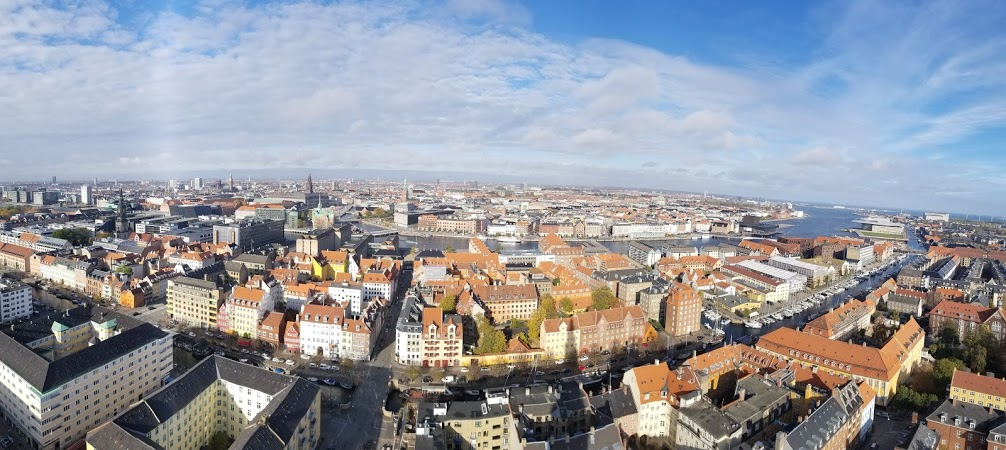
The fourth day was a day that the students became experts in public transportation in Copenhagen. Not really, but a couple of us did successfully use the bus and subway a few times. This sounds like a simple task, but most of use are from rural areas back home without public transportation systems, and it was in a different language. We had some bumps along the way; we may have jumped on the right bus but it was going in the wrong direction, but we still arrived at our destination, and we (or I) considered it a successful feat. All of us, both students and professors, ended up climbing the Church of our Savior at one point or another. This meant climbing up very steep steps in cramped areas for about 20 minutes until you got to see an unforgettable view of the city. Another group of students learned the laws of the road for bicycles and biked to the Copenhagen zoo. In the afternoon, we took a train ride from Copenhagen to Fredericia. This gave us the opportunity to see a little bit of Denmark’s country side. Our hostel had a view of a pond and a “little” village.
This slideshow requires JavaScript.
Day 5 Monday, October 22, 2018
LEGO day! Today, after a quick train and bus ride we arrived at LEGO headquarters. Usually, Mr. Meckley does a great job at transportation and getting us places. However, today was not his best day. I will give him that the building was under construction. Nonetheless, we walked in very cold weather for a bit. But we did find it after some touring of the city of Billund. It was amazing to see the LEGO factories surrounded by cow pastures. Our tour started with a quick history of the company LEGO, where we learned that it started as a wooden toy company by a carpenter. We learned about LEGO’s motto of ‘Learn through play’. They gave each of us a bag of six LEGOs. Then, they started the clock and told us we have 45 seconds to create a duck with these six pieces. It was interesting to see some of the different designs, some resembled a duck, one resembled a platypus, and we’re not really sure what Mr. Meckley was going for in his. Next, we got to tour the evolution of LEGO throughout the years. We met a design engineer that explained product development to us. It was neat to hear his story. He wanted to be a LEGO engineer since he was little, and emailed LEGO to ask about how to become one. They responded with a list of qualifications for the job title but could not guarantee a job at the end. Well, he completed those qualifications and ended up getting a job with them as soon as he graduated. It was clear to see that the employees at LEGO are passionate about what they do and the message they convey. Afterwards, we had lunch at their cafeteria, which made me want to be a LEGO employee, so I could eat their food every day because it was delicious. We then took a tour of one of the buildings. One building had 64 injection molding machines, and there were 12 buildings. That’s 768 injection molding machines!! The process they have for the LEGOs is efficient and minimizes human error. There are robots that take the parts from the press to the conveyor belt on the other end of the room. From there, we took another bus and train back to Copenhagen for our last night there. This was a night that the students had to book their own hostels so we all went our separate ways.
Day 6 Tuesday, October 23, 2018
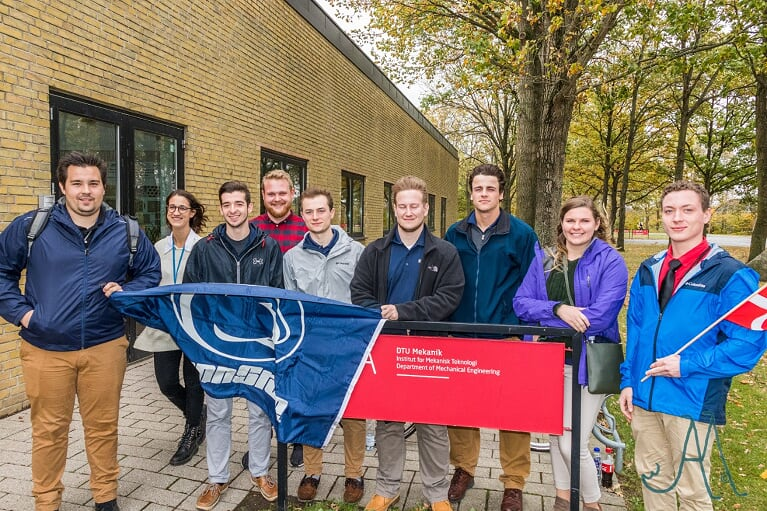
Today was a tour of the Technical University of Denmark (DTU). We had two awesome PHD students named Macerana and Sebastian to give us a tour and tell us what they do. They served some of the best pastries I’ve ever had at breakfast. The program we were learning about was Additive Manufacturing (AM), and they told us about their projects and gave us a tour of the lab. They are trying to make innovations in their fields, so they can share their knowledge in this topic. It was really neat to see they strongly believe that we need collaboration across universities and companies in order to expand our knowledge on areas in this field. Sebastian’s project was building a mock machine of one that already exists so he can modify it and see if it is replicable.
By Steve Orbanek Marketing Communications Specialist, Penn State Behrend
It’s crunch time. The holidays are nearly here and there’s only so much time left to grab the perfect gift.
Still need some help? No worries, Penn State Behrend’s faculty and staff members are here for you.
Here are some suggestions for gifts that are both fun and educational:
Idea provided by Tom Noyes, professor of English and Creative Writing
2018 Pushcart Prize XLII. The annual Pushcart Prize anthology gathers the best fiction, nonfiction and poetry published in America’s literary magazines and small presses over the course of the previous year, making it an ideal gift for any book lover on your list. The newest edition, 2018 Pushcart Prize XLII, contains a special treat. The poem “Praying Mantis in My Husband’s Salad” by Laura Kasischke was chosen from the pages of Lake Effect, Penn State Behrend’s award-winning literary journal. $13
Idea provided by Mary-Ellen Madigan, director of enrollment management
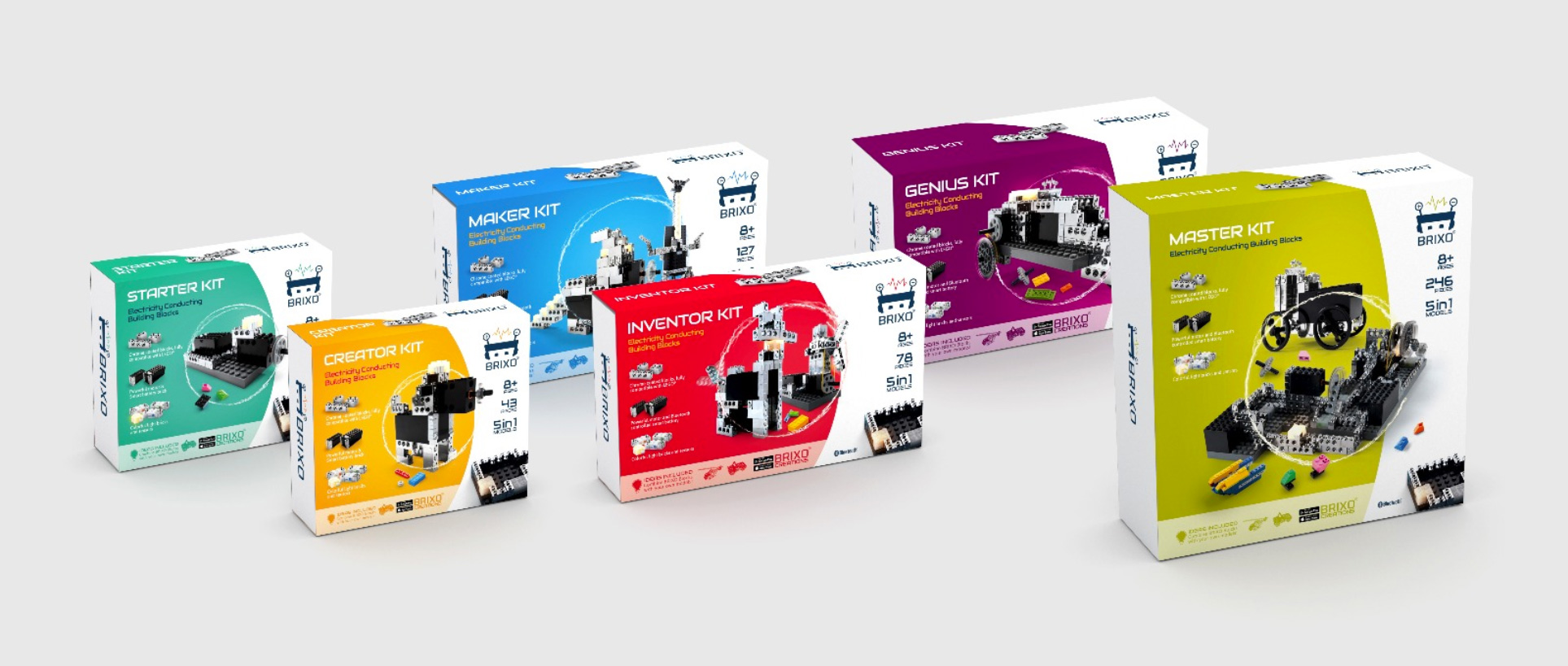
BRIXO. Enjoy LEGOs? Then you’ll love BRIXO, which is similar but with even more customization. Some of the things that young people can create include vehicles, wacky lamps, remote-controlled lighthouses and motorized quadcopters. If someone on your list has a big imagination, this gift is for them. Prices vary.
Ideas provided by Tracy Halmi, assistant teaching professor of chemistry
Bath Bombs. It’s a chance to bring chemistry to the tub. Bath bombs are hard-packed mixtures of dry ingredients and give off bubbles when wet. They can be purchased from the web, or young chemists can use this Bath Bombs guide to make their own. $19
Amigurumi Chemistry Set Pattern. This crochet chemistry set pattern is perfect for the person on your list who is crafty but loves science, too. $14
Organic Compounds Cutting Board. Know someone who likes to cook with spices? This cutting board displays all the molecules that add the fragrance to spices. $38.50
Ideas provided by Richard Zhao, assistant professor of computer science and software engineering
Amazon Echo Dot or Google Home Mini. Who wouldn’t want a personal assistant that can tell the weather, order pizza, play music, control home appliances and more? These home automation gadgets from Amazon or Google are also on sale this holiday season. $30
Themed Night Lights. While this makes a nice holiday gift, the lights can actually be used as a home decoration all year round. Prices vary.
Catan. Able to be played by up to four players, this popular board game can be enjoyed by both family members and friends. It’s also easy to learn and fun to play. $49
Hello Penn State Behrend students, faculty, and staff, my name is Brandon Moten. I’m a senior from Bowie, Maryland, majoring in Communication with certificates in Advertising & Social Media. I have been attending Penn State Behrend since August of 2013 and have loved every minute of it. From the people to the class experiences, it’s been an awesome time.
Over the course of the semester, I’ll be writing a new series of blog posts called “A Maryland State of Mind” where I’ll share my experience of attending Penn State Behrend as an out-of-state student. I will discuss my transition from moving from a place I lived my whole life to a new state, differences between where I’m from and Erie, how I balance school and daily life, and how I handled the challenges I faced along the way.
Penn State Behrend is an amazing school, and I have grown in many ways and experienced so many new things. When I first came to college in 2013, I had no idea of what to expect. I have been living in Bowie, Maryland, my whole life and leaving home was not easy. In the beginning, I had nerves about experiencing new cultures, being six hours away from home, leaving my friends and family, and so much more.
I’m sure there are many current and future out-of-state students who are or will be experiencing the same emotions. I hope this blog series helps those students who have these same thoughts and emotions as I once did. Ultimately, I hope to give everyone a better idea on the life of an out-of-state Penn State Behrend student.
By Steve Orbanek Marketing Communications Specialist, Penn State Behrend
If Penn State Behrend’s students have not seen their classmate Rachel Cotton on campus, there’s a good chance they’ve heard her.
For listeners of BVZ: Behrend’s Voice, the college’s online student radio station, Cotton’s voice is a hard one to miss.
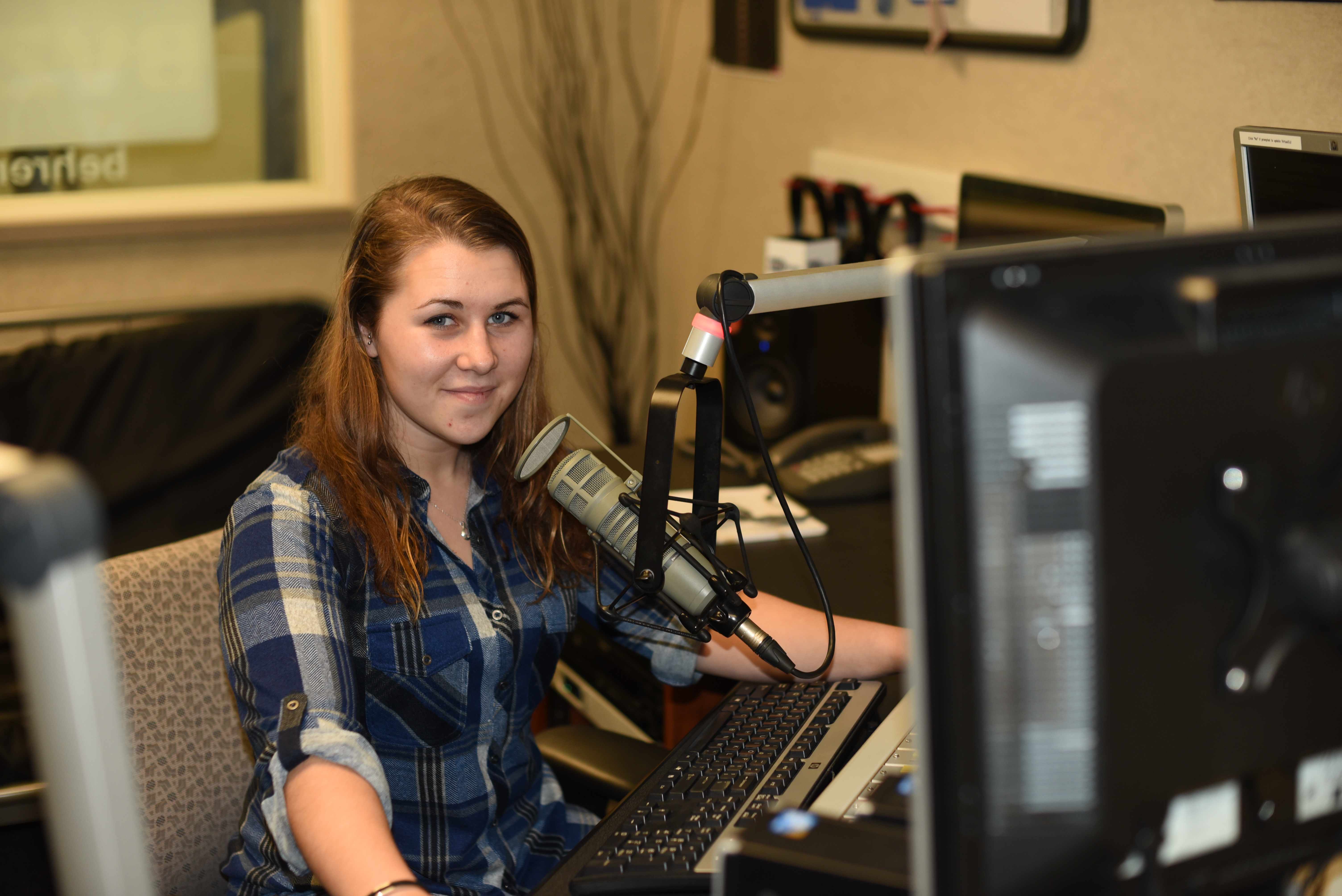
The junior communication major serves as station manager of BVZ and can be regularly heard across the cyber waves hosting her current show, “Next in Line,” where she previews upcoming artists. She also is happy to jump in and deejay whenever there’s a lull in programming.
She knows that professional radio jobs may not be easy to attain, but that has not stopped Cotton from positioning herself to be an ideal candidate for a future opening in the field.
“If I could ever make it in radio, that would be the best thing ever,” said Cotton, who is originally from the Philadelphia area. “Having a great personality in radio is so important, and you get to create an emotional appeal. I love it.”
Cotton’s love of radio is nothing new. In high school, she actually won a contest where she got to be a deejay on a local station for a day.
She brought her love for the medium to Behrend as she got involved with BVZ, which celebrated its fifth anniversary in November, early in her freshman year. As a sophomore, she served as PR and events manager for the station before becoming its manager this past fall.
In the past, students could not join BVZ or host a show on the station before first completing the Radio Practicum course, but Cotton saw limitations with this formula.
“There are people who necessarily cannot take the class or might be in a different major where they can’t have it as an elective,” Cotton said. “I wanted to find a way around the class, so folks in any major can find a way to participate.”
This past fall, Cotton developed a BVZ Fast Track program for students who want to host a radio show but cannot take the course. Cotton meets with interested students separately and runs them through the basics of operating a live station in just a few weeks. So far, four students have participated in the program. Cotton said she eventually hopes to have 10 to 20 students going through it at once.
BVZ continues to build its presence on campus as the station hosts weekly “Hump Day” broadcasts from Bruno’s Café. The station is also always willing to collaborate with student groups if the organization would like BVZ at an event it’s hosting.
The station has already worked with some student groups, which Cotton said has helped BVZ spread its reach.
“People love when we come out to events,” she said. “We have been at more events this year than I can ever remember. It’s stellar to see that people are noticing us more and not just for giveaways or concert tickets, either. They’re actually listening to hear us. I love it.”








 BEHREND BLOG