You’re Invited to a Tree Hunt

By Heather Cass, Publications Manager, Penn State Behrend
When’s the last time you really looked at a tree? Not through a windshield or a window and not while scrolling past a picture on social media but standing right in front of it. The 2025 Erie County Tree Scavenger Hunt invites you to do just that.

The hunt—a free, self-guided activity created by the Penn State Master Gardeners of Erie County—is your invitation to step outside, slow down, and discover eighteen remarkable trees growing in the region.

“We want to encourage people to get out of their houses and cars and explore Erie County,” said Lisa Rand, coordinator of the project. “When you’re standing in front of a tree, you notice things you can’t get from a website or a drive-by. You can study its shape, feel the texture of its bark, and catch the scent of its leaves or needles.”

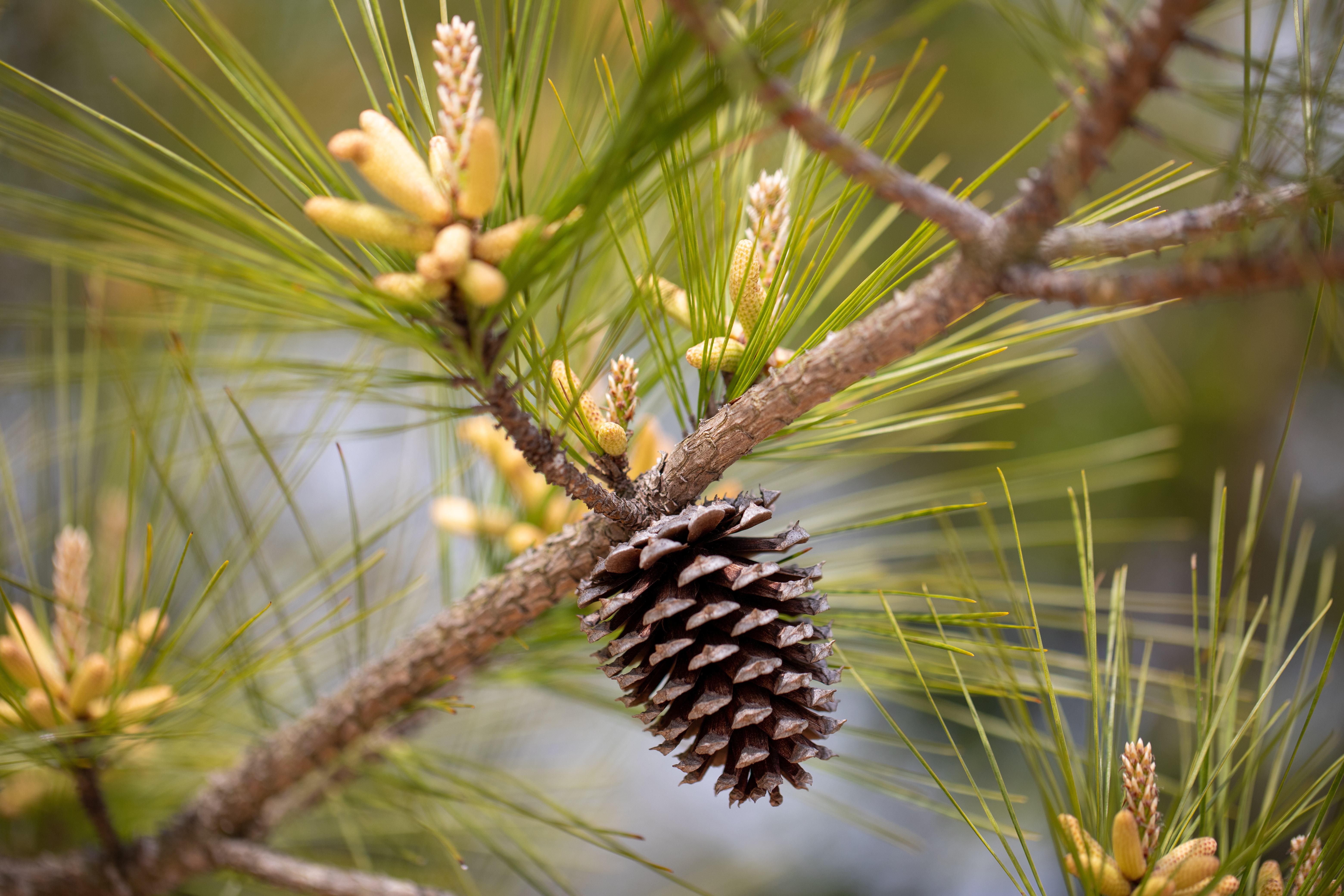
This year’s hunt focuses on conifers (cone-bearing trees) with eighteen “remarkable” specimens to find. All are located on public land or in places that welcome visitors, like Penn State Behrend, which is an official arboretum and home to more than 200 unique tree species.

What makes a tree remarkable?

“They’re all special for some reason—be it form, location, or historical significance,” Rand said. “The guide explains why each tree is significant.”

The scavenger hunt runs through October 1 and is open to anyone curious enough to lace up their shoes and start exploring. It’s part outdoor challenge, part botany lesson, and part treasure hunt—all rolled into one.
How to Play
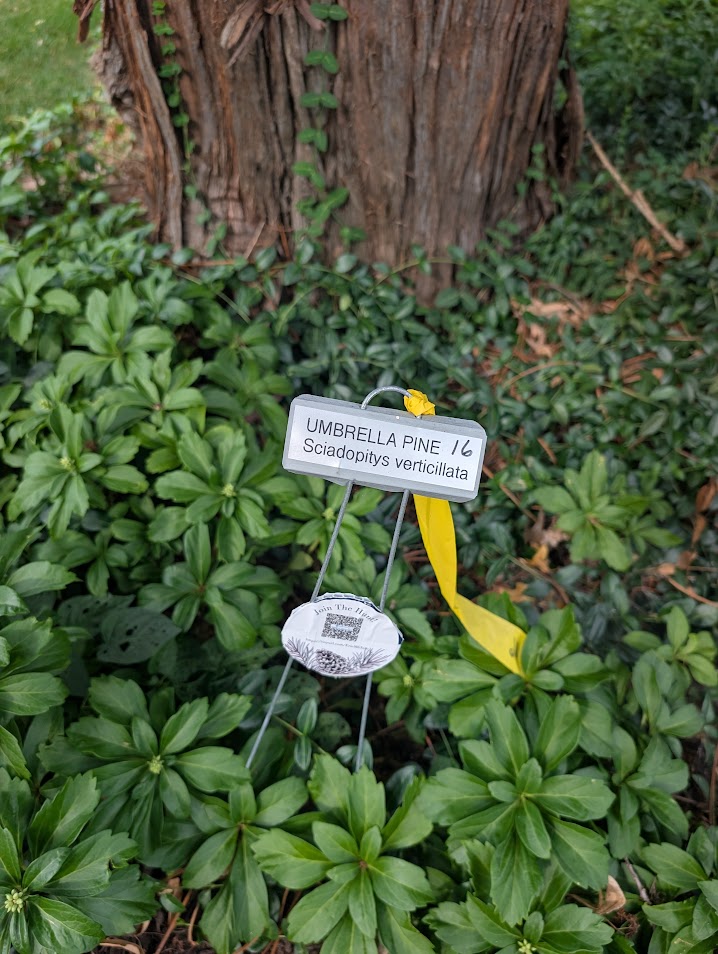
Use the digital Tree Hunt Guide, filled with clues to locate specially tagged trees across the county. At each stop, you’ll find a metal ID tag with a number. Find at least ten trees, log their numbers using the yellow links in the guide, and you’ll be entered in a prize drawing to win—what else?—a live tree.  

It’s an easy, low-pressure way to spend time outdoors, learn about native trees, and maybe even discover a new favorite park or trail.

One past participant told Rand she and her mother found every tree in a previous hunt and couldn’t wait to do it again.

“It’s something they could enjoy doing together,” Rand said.

Note to college students: This also makes a fun—and free—date idea, and a nice break from hitting the books. Hint: One of the trees is right here at Behrend.

P.S. Want to go old school? A printable guide is available here.
 

Ode to Resilience on National Love-a-Tree Day

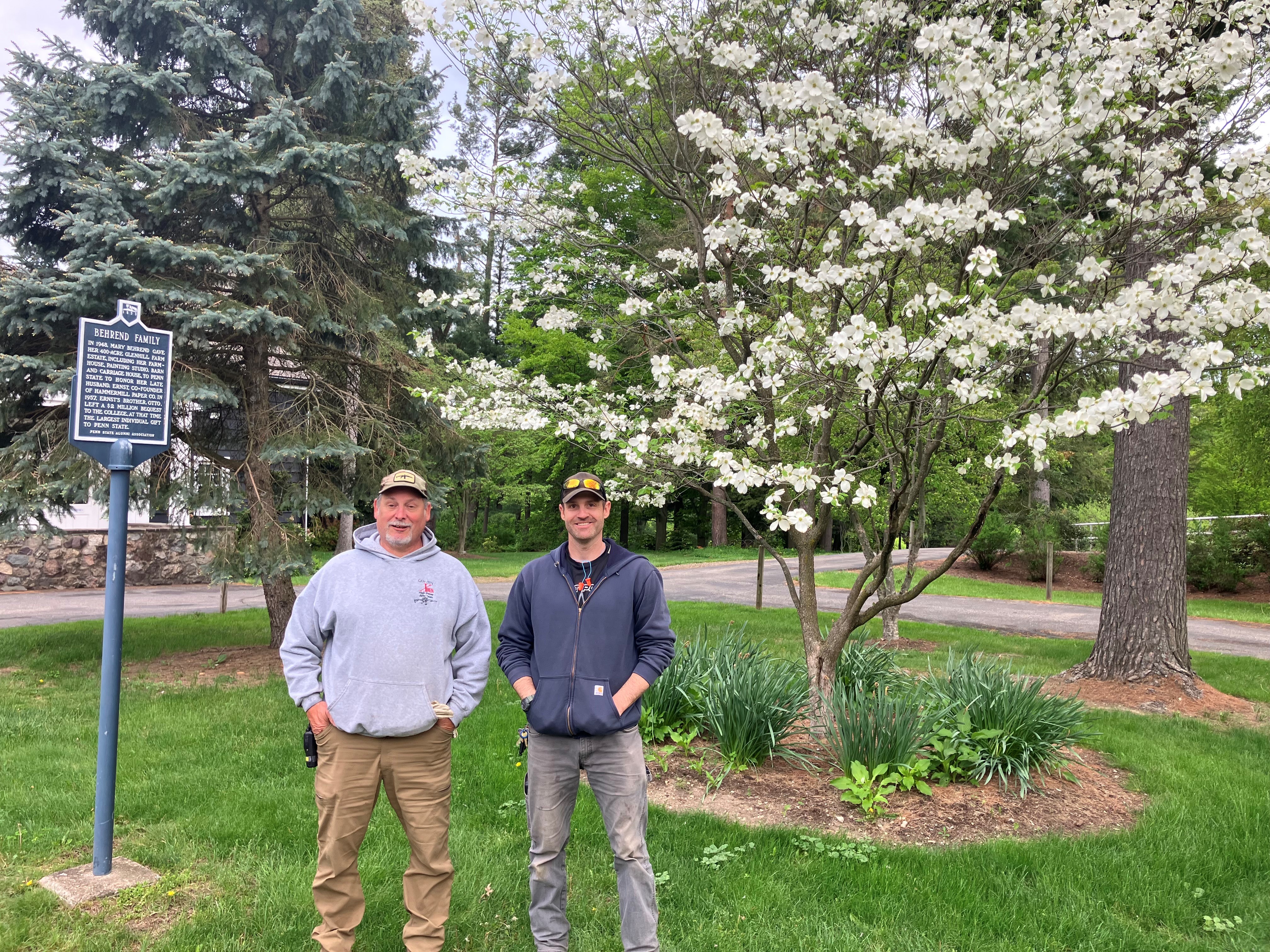
John Troncone, left, and Brooks Travis in front of a flowering dogwood that Troncone has transplanted four times in twenty years.

By Heather Cass, Publications Manager, Penn State Behrend

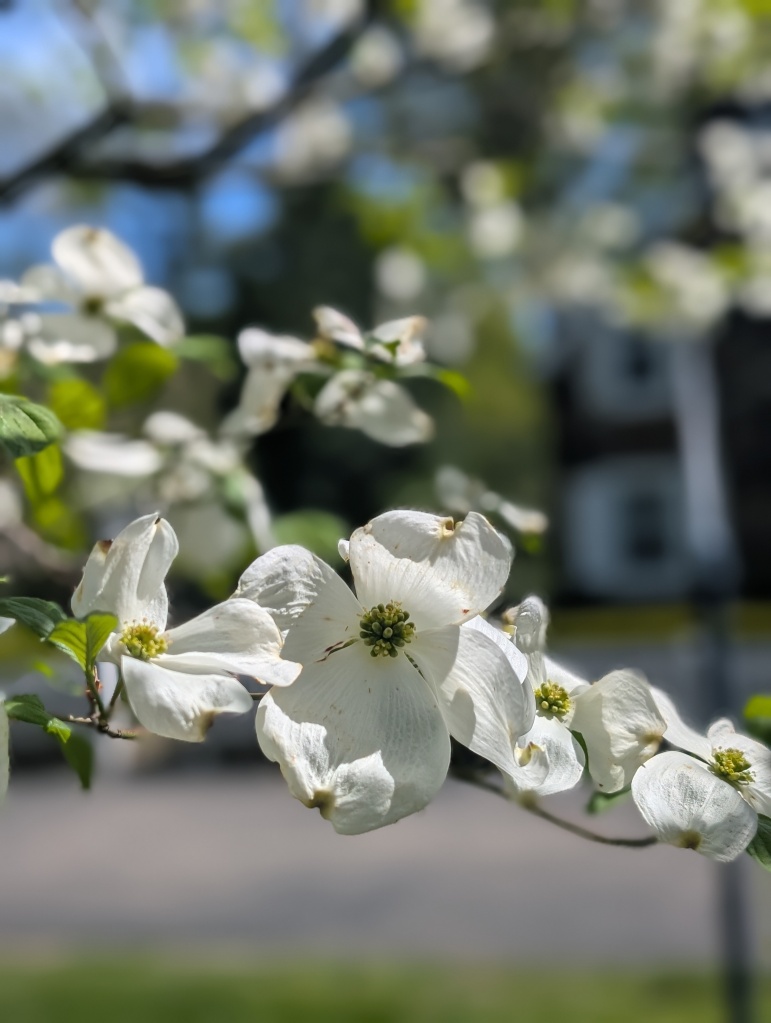
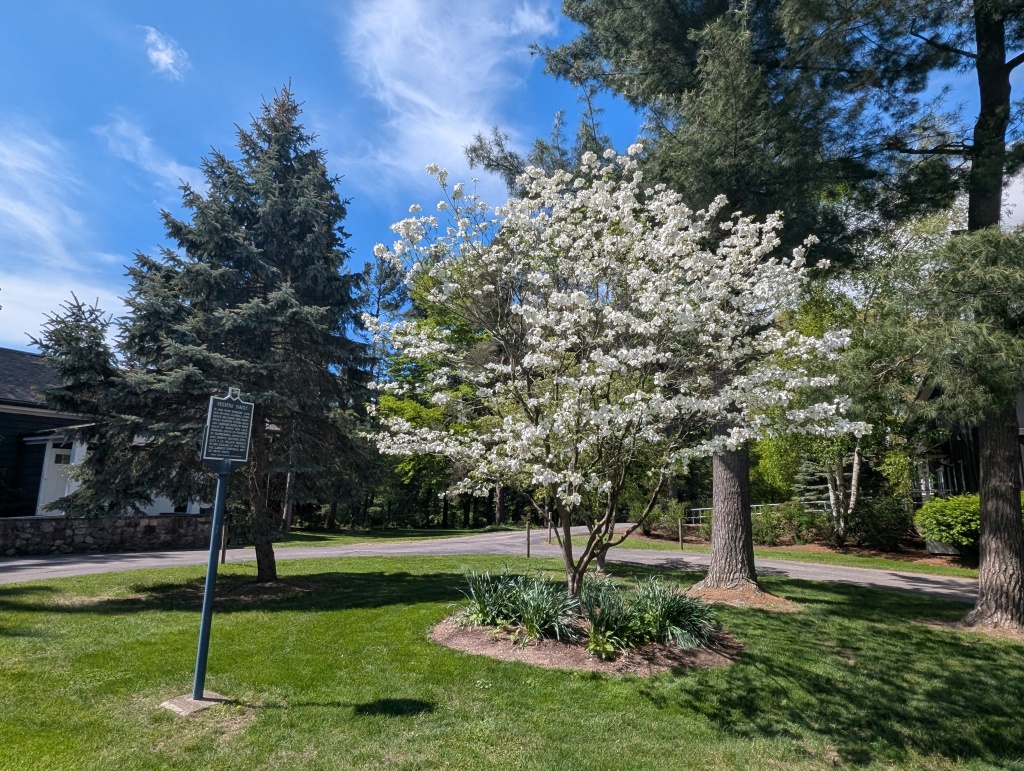
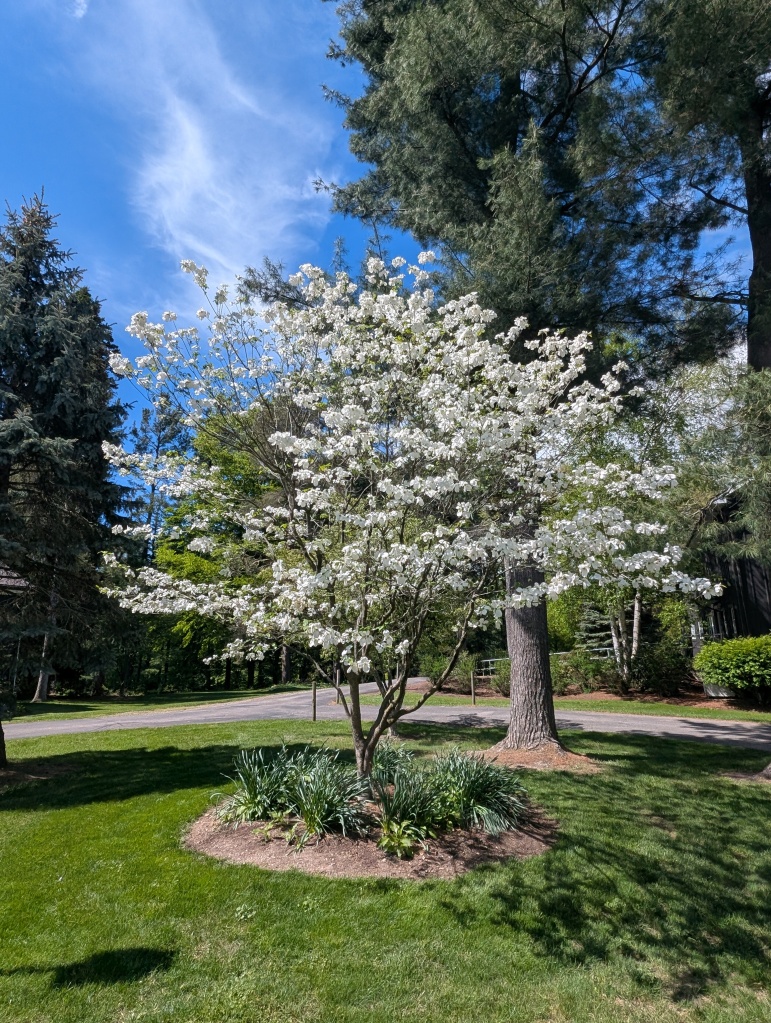
“Bloom where you are planted” is a metaphorical phrase encouraging individuals to make the best of their current circumstances. A real-life example of this sentiment can be found at Penn State Behrend, where a flowering dogwood tree is thriving even after having been transplanted four times.

The tree, Cornus florida, was first planted two decades ago near Lilley Library by groundskeepers John Troncone and Patricia Blackhurst, who is now retired.

“Patty and I planted it along the east side of the library, but it was too wet, and the tree was struggling there,” Troncone said.

They chose to move it next to the old Erie Hall, where the dogwood grew until a fire at Dobbins Dining Hall in March of 2010 forced another move.

“Housing and Food Services had to set up a temporary kitchen in Erie Hall that required us to remove the tree,” Troncone said.

He and Blackhurst dug a third hole for the growing tree, south of the Glenhill swimming pool.  Again, the tree grew and flowered until, a dozen years later, Troncone was once again facing the dogwood that had to go to make room for the Glenhill Gardens project.

He and his new groundskeeping partner, Brooks Travis, had to decide whether to destroy the tree or attempt yet another transplant.

“The timing was good,” Troncone said. “The tree was in the dormant stage at that point, and the weather was dry enough to give it a try.”

Troncone, Travis, and Jack Crowley, a student worker, spent three days carefully digging the tree out, wrapping its roots in burlap and tying them into a root ball for transplant. However, moving the 20-foot tree would be no easy feat.

“Then we got lucky,” Troncone said. “The contractor for the pool project had a track loader and offered to help us move it.”

Troncone and Travis found the perfect spot for the tree in a grassy circle surrounded by the college’s original, historical buildings—Glenhill Farmhouse, Mary Behrend’s Studio, and the Turnbull Building.

It’s space fitting of a tree that has born witness to so many important moments and changes on campus.

It’s currently in full bloom, a gratifying sight for the caretakers who watch over it.

“Brooks and I are pleased with the tree’s condition to date,” Troncone said.  “I’m glad we were able to save it. Hopefully, that will be the last time we have to move it.”

A few interesting facts about flowering dogwood

  • The large, showy “petals” are actually modified leaves called bracts, not true petals.
  • Native Americans used dogwood bark to make scarlet dyes and medicinal teas. 
  • In some cultures, the dogwood is a symbol of rebirth and resurrection. (Fitting for the subject of this blog post!)
  • The “fruit” of the dogwood is a drupe, similar to a plum, with a hard seed inside.
  • Dogwood wood is hard and strong, making it suitable for tool handles, charcoal, and other items.
  • The name dogwood is thought to be a variation of the Old English word “dagwood,” meaning a skewer or dagger. The hard wood of the tree was used to make these tools.
  • Another theory regarding the origin of the name dogwood suggests it could have been named for its berries, called “dogberries,” which might have been considered less desirable or “fit for a dog.”
  • Dogwoods have been used medicinally for generations; the bark is rich in tannins, so ground bark or leaves are used to treat pain, fevers, backaches, dizziness, weakness, excessive sweating, uterine bleeding, and incontinence.

Student Photo Project Explores Connection to Natural World

By Heather Cass, Publications Manager, Penn State Behrend

processed-BD4DD590-EDDD-4E86-A1B5-C2901D374CD0
Frontier Park in Erie. CREDIT: Railey Kranz

Students in Photo 202: Fundamentals of Professional Photography recently completed a photo essay project based on “The Land Ethic,” an essay written by Aldo Leopold in 1949 that argues for a deeper connection between humans and the natural world.

Leopold suggests that humans need to expand their concept of ethics beyond just people and animals to include the land—soil, water, plants, and more. The “land” is not something we own, but something we are a part of, and we should treat it with care and respect. Leopold proposes that we should think of ourselves as caretakers, responsible for maintaining balance and harmony with nature.

IMG_0458
Urban park. CREDIT: Chelsea Quijas

Tommy Hartung, assistant professor of digital media, arts, and technology, instructed students in the class to choose an area and create a series of five 360-degree panoramic images that document the landscape and the biome it contains.

“The site they chose could be anywhere from urban to complete wilderness,” Hartung said. “Students were also required to take notes documenting the ecosystem and use their notes to draft a 500-word essay to go with the images.”

A second part of the assignment involved time-lapse photography.

“The element of time and motion related to photography has allowed humans to see systems develop by compacting time into short motion clips,” Hartung said. “It allows a focus that the human experience may overlook about the location.”

Dobbin’s Landing in Erie. CREDIT: Evan Gerdes

The students’ essays are impressive and thought-provoking.  See for yourself at the links below:

IMG_1160-768x512
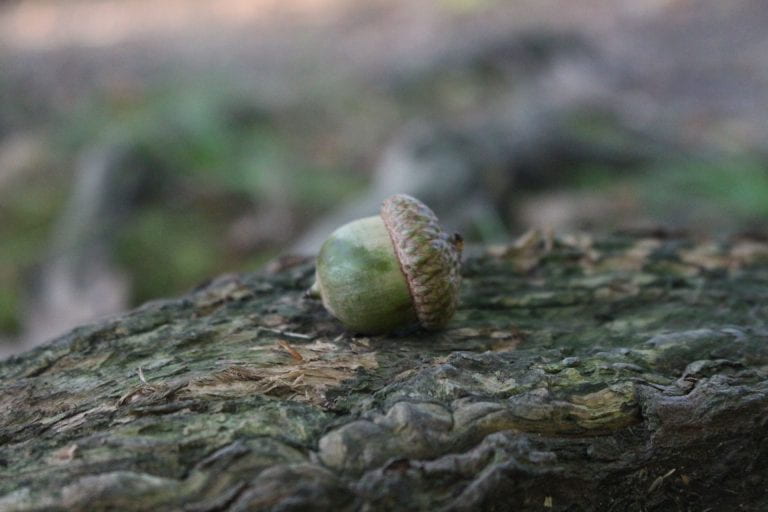
An acorn in Wintergreen Gorge. CREDIT: Lyndon Herschell

Found Treasure: Behrend family travel trunk discovered in consignment shop

By Heather Cass, Publications Manager, Penn State Behrend

This slideshow requires JavaScript.

Ernst and Mary Behrend, whose Glenhill farm property formed the core of Penn State Behrend in 1948, were avid world travelers.

“It was a very important part of their lives,” said Jane Ingold, reference librarian and archivist at the college’s Lilley Library. “We have many photos and postcards that they collected while on their frequent trips abroad. We even have some film of them visiting the locks at the Panama Canal.”

Thanks to the eagle eye of a Behrend food service staff member and the generosity of Steve Miller, associate director of Housing and Food Services, Ingold has another treasure to add to the Behrend collection: one of Ernst’s travel trunks.

“One of my employees mentioned that they saw an old steamer trunk that had ‘E. Behrend’ stamped on it on a photo posted on social media by One-Eighty Consignment and Thrift Shoppe in Albion,” Miller said. “I knew as soon as I saw it that it belonged in Behrend’s archives.”

When Miller drove to Albion to see the trunk, he was surprised at its condition.

“Normally, the leather handles on this type of steamer trunk deteriorate over time, but the handles on this trunk had not,” Miller said. “It appears to have been stored fairly well for some time.”

This slideshow requires JavaScript.

Behrend Blog talked with Miller, a history buff, to learn more about the trunk, which he purchased and donated to the Behrend archives.

Do you know where the trunk came from?

The best the store could gather was that the man who sent it to the store for consignment sale had received it from his wife’s uncle. Who that is or why he had the trunk is unknown.

How do you know it belonged to Ernst Behrend?

It has a brass identification plaque reading “E.R. Behrend Erie PA, U.S.A.” and “E.R. Behrend, Erie, PA” is written in white paint on the front.

Does it have any other identifying marks?

It has a shipping sticker from the American Express Railway Company (AERC). The AERC was formed in 1917 from an amalgamation of three express companies: First Express Company, Pony Express, and Wells Fargo Express. This was an effort to streamline shipping to aid in the war effort as the U.S. was involved in World War I at the time. The AERC was sold in 1929, so this dates the trunk to the 1917–1929-time frame.

It appears the trunk was shipped either to or from Newport, Rhode Island, which makes sense as the Behrend’s had a summer home there in 1913.

The sticker also has the abbreviation “N.Y.N.H. & H.” This is a reference to the New York, New Haven and Hartford Railroad. Service from this railroad ran from eastern New York state through Connecticut, Rhode Island, and Massachusetts. The shipping sticker places the value of the trunk at $300, which is approximately $4,800 in today’s dollars.

This slideshow requires JavaScript.

Were trunks commonly used by travelers then?

Steamer trunks or cabin trunks, which were named after their ability to be stored in the cabin of a steam ship, became popular in the 1880-1920 time period. They had a lower profile than typical shipping trunks to fit under berths in trains and steam ships. The trunks were typically identified with the name or initials of the owner. In addition, they carried notations to identify the contents of the trunk for appropriate storage. In the case of the Behrend trunk, a painted circle with “B” in the center.

You suspect this was one of many trunks the Behrends used?

Yes. Wealthy families typically traveled with many trunks to store their belongings for a long journey. The trunks were typically prepared by the house staff (maids, butlers, etc.) and shipped with a courier service to be placed in a steam liner berth or a train cabin.

Plans for the trunk

Ingold displayed the trunk with a few other Behrend family travel artifacts in the Glenhill Farmhouse during last month’s Parents, Families, and Alumni Weekend at Behrend. This summer, she plans to create a larger display about Ernst and Mary’s travels centered around the trunk that will be on display in the fall 2025 semester.

“It’s in remarkably good condition,” Ingold said. “But things were built to last back then.”

The predator above us (Wings over Behrend)

By Christine Palattella
Marketing Communications Specialist, Penn State Behrend

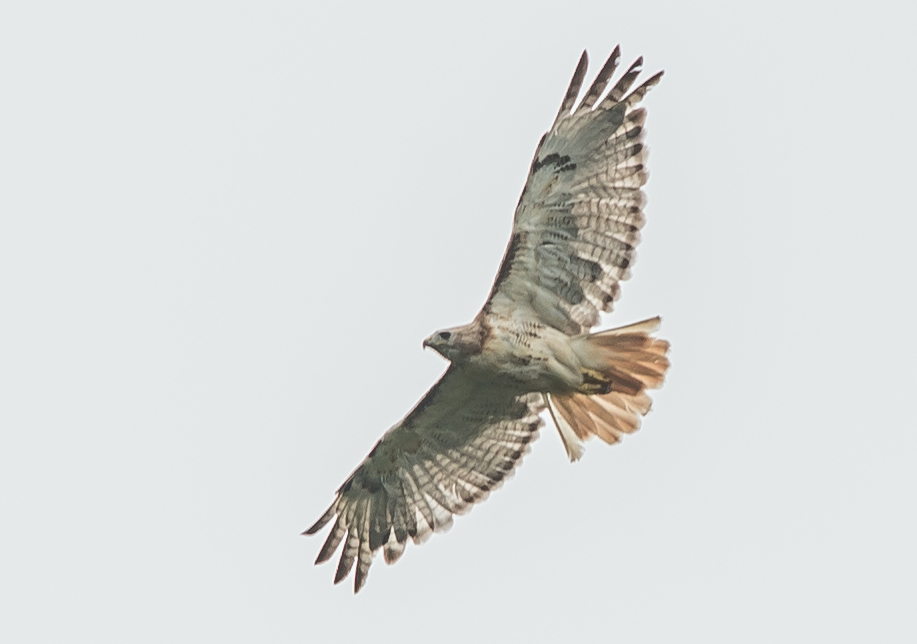
Red-Tailed Hawk cropped

Photo by Andy Colwell ’11 COMM

The secret to optimizing your Behrend bird watching experience? Have a great photographer with you, and hope that he or she owns a lens the size of a dinner plate.

I was lucky to be in the company of Andy Colwell ’11 COMM two Saturdays ago when a pair of large raptors started circling high above Junker Center. Andy used his Nikon Nikkor 400mm f/2.8 manual telephoto lens to capture this image of a red-tailed hawk, Buteo jamaicensis.

Any lens with its own handle is a serious piece of business, but Andy’s also has an interesting provenance: Before finding its way to him, the Nikkor spent twenty years on the sidelines at Beaver Stadium, shooting Nittany Lion football games. Andy learned the patience and finesse needed to coax crisp images from his mega-manual lens while earning his two undergraduate photography degrees, in visual journalism and in art photography.

As for Buteo jamaicensis, they are year-round residents of the region and common sight over campus. Assistant Professor of Biology Dr. John Steffen told me that the males are indistinguishable from the females, to humans at least. Red-tails themselves clearly have it worked out, because they are monogamous and somewhat infamous in the bird world for their elaborate mating display: After a series of aerial swoops and dives, the pair will rest in a tree. The male will stoop down in front of the female, and if she’s into him, she rolls over so that their cloacas can meet. They’ll build a stick nest in the crotch of a tree to incubate their clutch of two or three eggs; Steffen says it’s not unusual for these nests to reach four feet in diameter. He added that in many places, red-tails are the top-dog predator; their diet of songbirds, small mammals, reptiles, and amphibians keeps the population of smaller vertebrates regulated.

Learn more about the red tailed-hawk and hear its call here (it will be a familiar sound to you if you’ve been at Behrend for a while).

Learn more about photographer Andy Colwell (below) and see more of his work here.