
By Heather Cass, Publications Manager, Penn State Behrend
“Bloom where you are planted” is a metaphorical phrase encouraging individuals to make the best of their current circumstances. A real-life example of this sentiment can be found at Penn State Behrend, where a flowering dogwood tree is thriving even after having been transplanted four times.
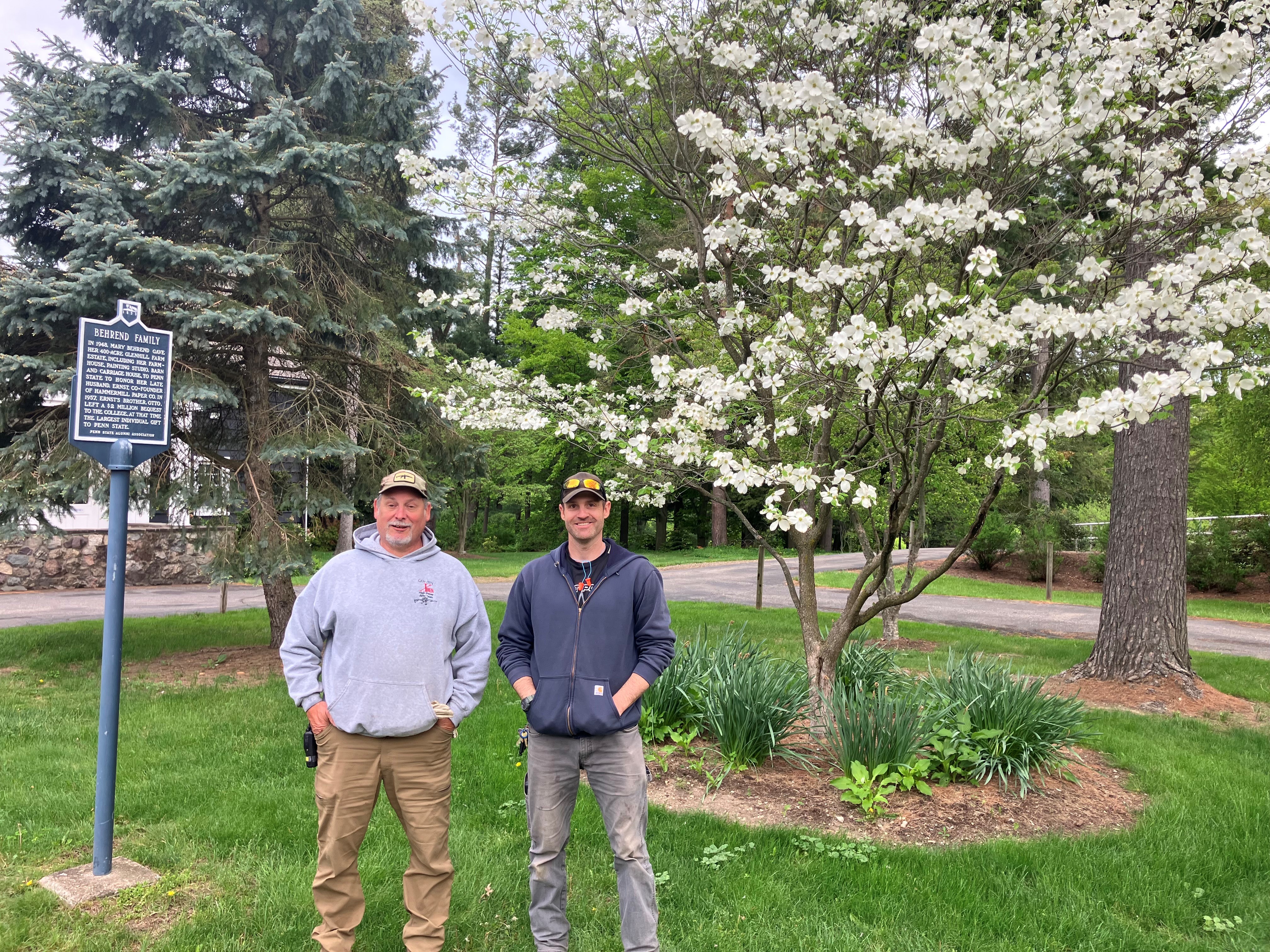
The tree, Cornus florida, was first planted two decades ago near Lilley Library by groundskeepers John Troncone and Patricia Blackhurst, who is now retired.
“Patty and I planted it along the east side of the library, but it was too wet, and the tree was struggling there,” Troncone said.
They chose to move it next to the old Erie Hall, where the dogwood grew until a fire at Dobbins Dining Hall in March of 2010 forced another move.
“Housing and Food Services had to set up a temporary kitchen in Erie Hall that required us to remove the tree,” Troncone said.
He and Blackhurst dug a third hole for the growing tree, south of the Glenhill swimming pool. Again, the tree grew and flowered until, a dozen years later, Troncone was once again facing the dogwood that had to go to make room for the Glenhill Gardens project.
He and his new groundskeeping partner, Brooks Travis, had to decide whether to destroy the tree or attempt yet another transplant.
“The timing was good,” Troncone said. “The tree was in the dormant stage at that point, and the weather was dry enough to give it a try.”
Troncone, Travis, and Jack Crowley, a student worker, spent three days carefully digging the tree out, wrapping its roots in burlap and tying them into a root ball for transplant. However, moving the 20-foot tree would be no easy feat.
“Then we got lucky,” Troncone said. “The contractor for the pool project had a track loader and offered to help us move it.”
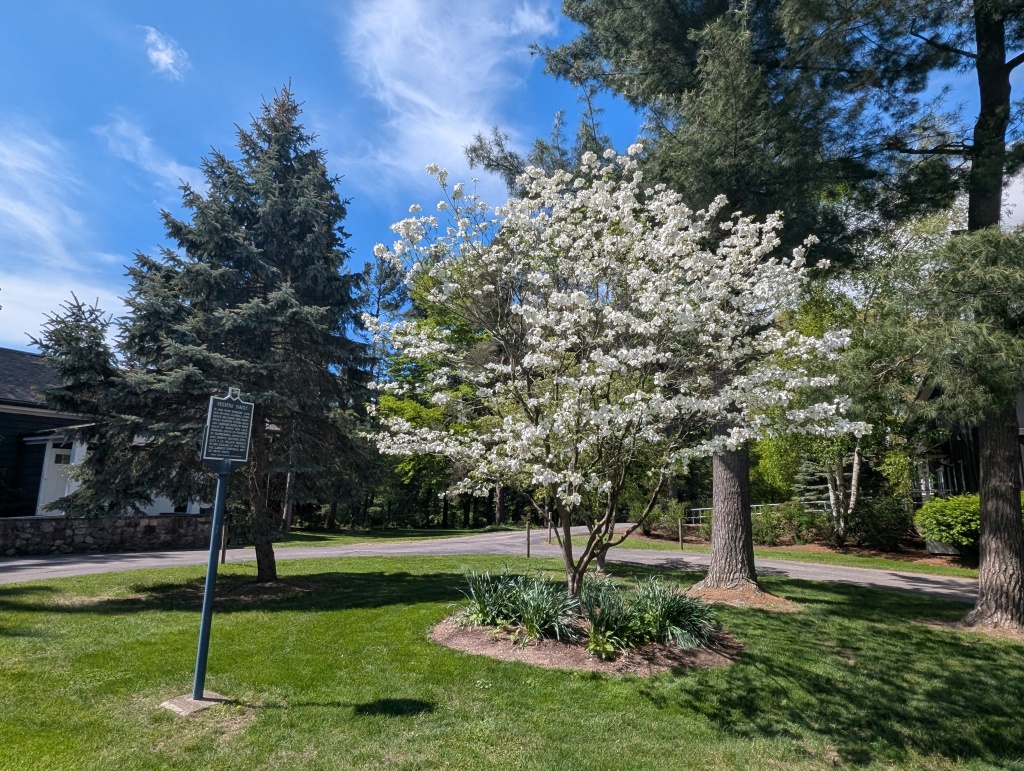
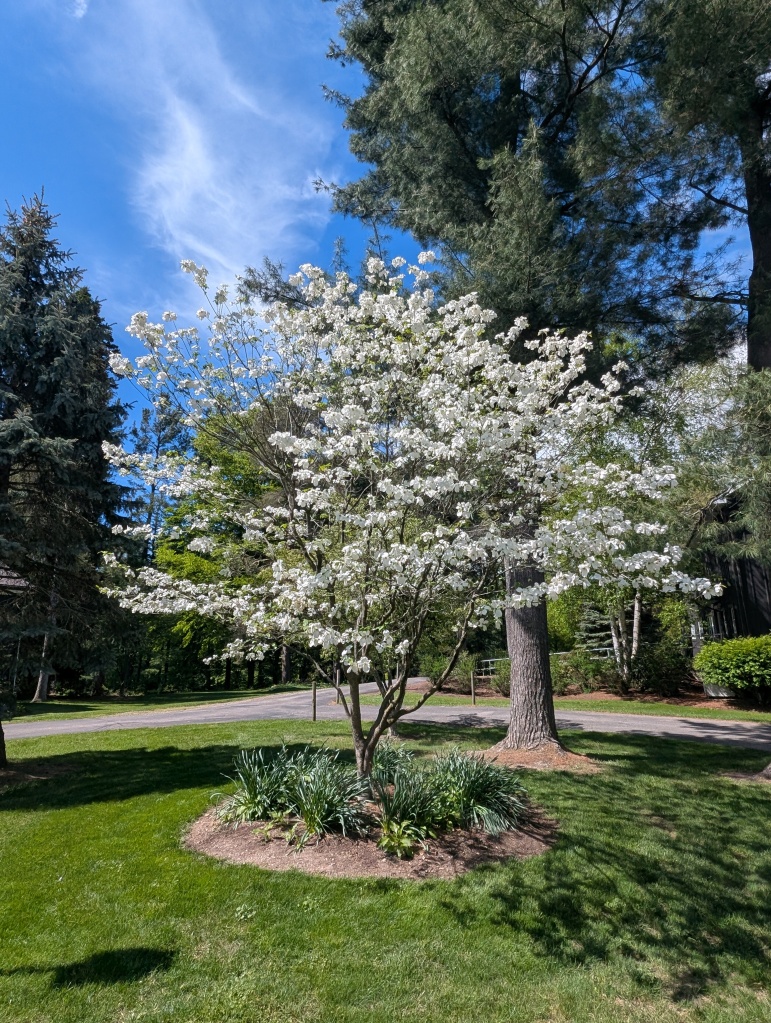
Troncone and Travis found the perfect spot for the tree in a grassy circle surrounded by the college’s original, historical buildings—Glenhill Farmhouse, Mary Behrend’s Studio, and the Turnbull Building.
It’s space fitting of a tree that has born witness to so many important moments and changes on campus.
It’s currently in full bloom, a gratifying sight for the caretakers who watch over it.
“Brooks and I are pleased with the tree’s condition to date,” Troncone said. “I’m glad we were able to save it. Hopefully, that will be the last time we have to move it.”

A few interesting facts about flowering dogwood
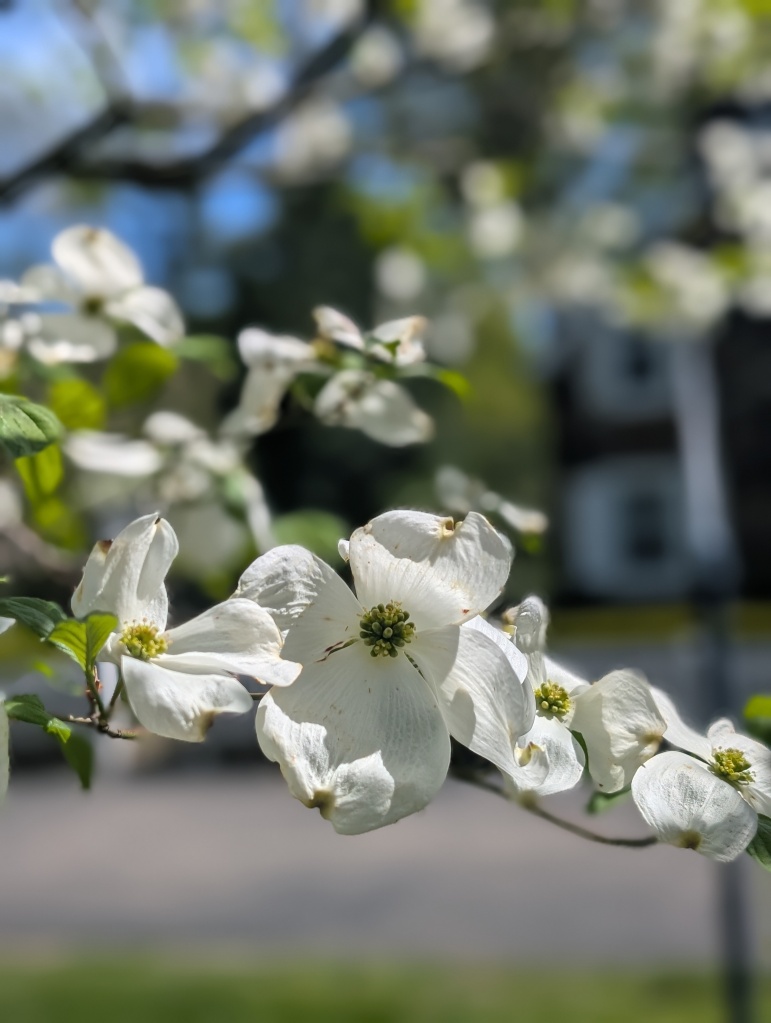
- The large, showy “petals” are actually modified leaves called bracts, not true petals.
- Native Americans used dogwood bark to make scarlet dyes and medicinal teas.
- In some cultures, the dogwood is a symbol of rebirth and resurrection. (Fitting for the subject of this blog post!)
- The “fruit” of the dogwood is a drupe, similar to a plum, with a hard seed inside.
- Dogwood wood is hard and strong, making it suitable for tool handles, charcoal, and other items.
- The name dogwood is thought to be a variation of the Old English word “dagwood,” meaning a skewer or dagger. The hard wood of the tree was used to make these tools.
- Another theory regarding the origin of the name dogwood suggests it could have been named for its berries, called “dogberries,” which might have been considered less desirable or “fit for a dog.”
- Dogwoods have been used medicinally for generations; the bark is rich in tannins, so ground bark or leaves are used to treat pain, fevers, backaches, dizziness, weakness, excessive sweating, uterine bleeding, and incontinence.
 BEHREND BLOG