Recommended gift ideas from faculty and staff members

By Steve Orbanek
Marketing Communications Specialist, Penn State Behrend
Still got some holiday shopping left to do? Don’t worry, Penn State Behrend’s faculty and staff members have you covered. Here are some of their top suggestions for gifts that are both fun and educational.

irkt_marvel_gotg_holiday_dancing_groot

Ideas provided by Tracy Halmi, senior lecturer in chemistry

  • Weather station. Any future meteorologists on your gift list? This is perfect as it accurately measures the temperature, humidity, and wind speed. $100.
  • Elements: A Visual Exploration of Every Known Atom in the Universe. This book offers never-before-seen photographic representations of the 118 elements in the periodic table. We’re all familiar with aluminum and copper, but what exactly does Copernicium look like? This book will show you. $15.
  • ThinkGeek products. Whether it’s Marvel, Minecraft or the Millennium Falcon, everyone knows geek is the new cool. This website offers items that will surely satisfy any “geek” on your gift list. Various prices.

k2-_4c7fc749-3b72-4ff1-9ce5-bd9f911e1cc5_v1

Ideas provided by Dr. Richard Zhao, lecturer in computer science and software engineering

  • Custom photo jigsaw puzzle. It never hurts to give a gift with a personal touch, and jigsaw puzzles can be a fun, challenging task. $14.
  • LEGO Star Wars. The new movie is right around the corner, so anything Star Wars is guaranteed to be a hot item this holiday season. However, why not inspire a little creativity with a LEGO Star Wars set? There’s one available in every price range. Various prices.
  • Make-Your-Own Robots. Thanks to Makershed.com, you can choose from a number of options and create your own small robot from scratch. $20-$500.

61ZhXMb3yRL__SL1280_

Ideas provided by Melanie Ford, director of Youth Education Outreach

  • Blink Blink DIY kits. These kits are perfect for girls interested in any of the STEAM fields as they integrate art, fashion, simple circuits, and e-textiles into the hands-on building process. Kids can create a number of fun items, including cards, paper lamps, origami, scarves, and light-up leggings. $39-$89.
  • Makey Makey. Dubbed the “Invention Kit for Everyone,” Makey Makey makes it possible to connect a computer to almost any object. It could be a banana, an ice cube or a living person, but basically any material that can conduct at least a tiny bit of electricity can be used. $50.
  • K’Nex. These are similar to LEGOs but a bit more advanced. K’Nex really emphasize engineering and physics principles, allowing the builder to create some pretty awesome things like roller coasters and Ferris wheels. Various prices.

61DETogR+IL

Idea provided by Dr. Mary Ellen Madigan, director of enrollment management

  • Adult Coloring Books. Have someone on your gift list who is always stressed-out? Adult Coloring Books  are an Amazon No. 1 National Bestseller, and provide hours and hours of stress relief, mindful calm, and fun, creative expression. $9.

Pre-Health students sew first stitches in medical career

By Heather Cass
Publications & Design Coordinator, Penn State Behrend

IMG_1133

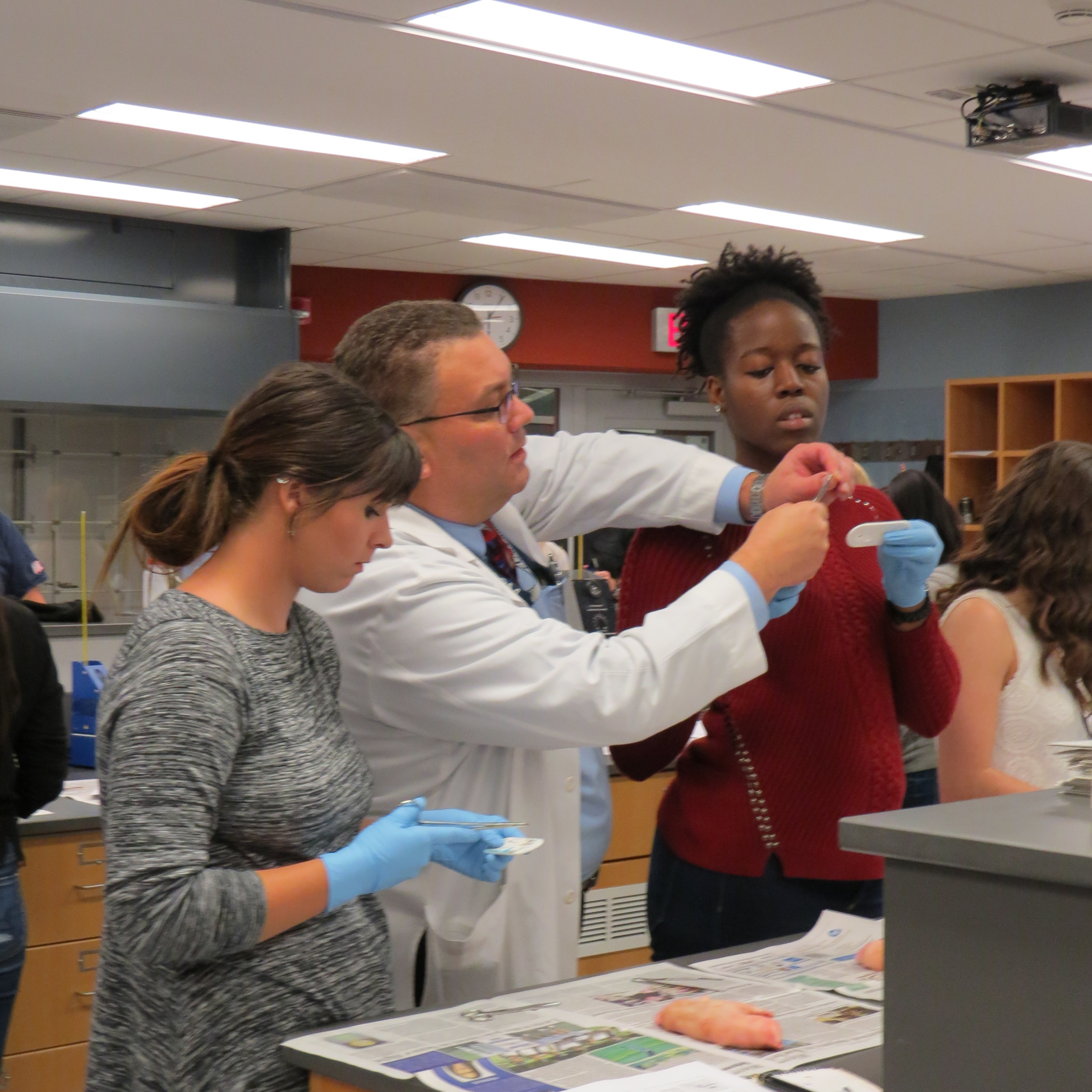
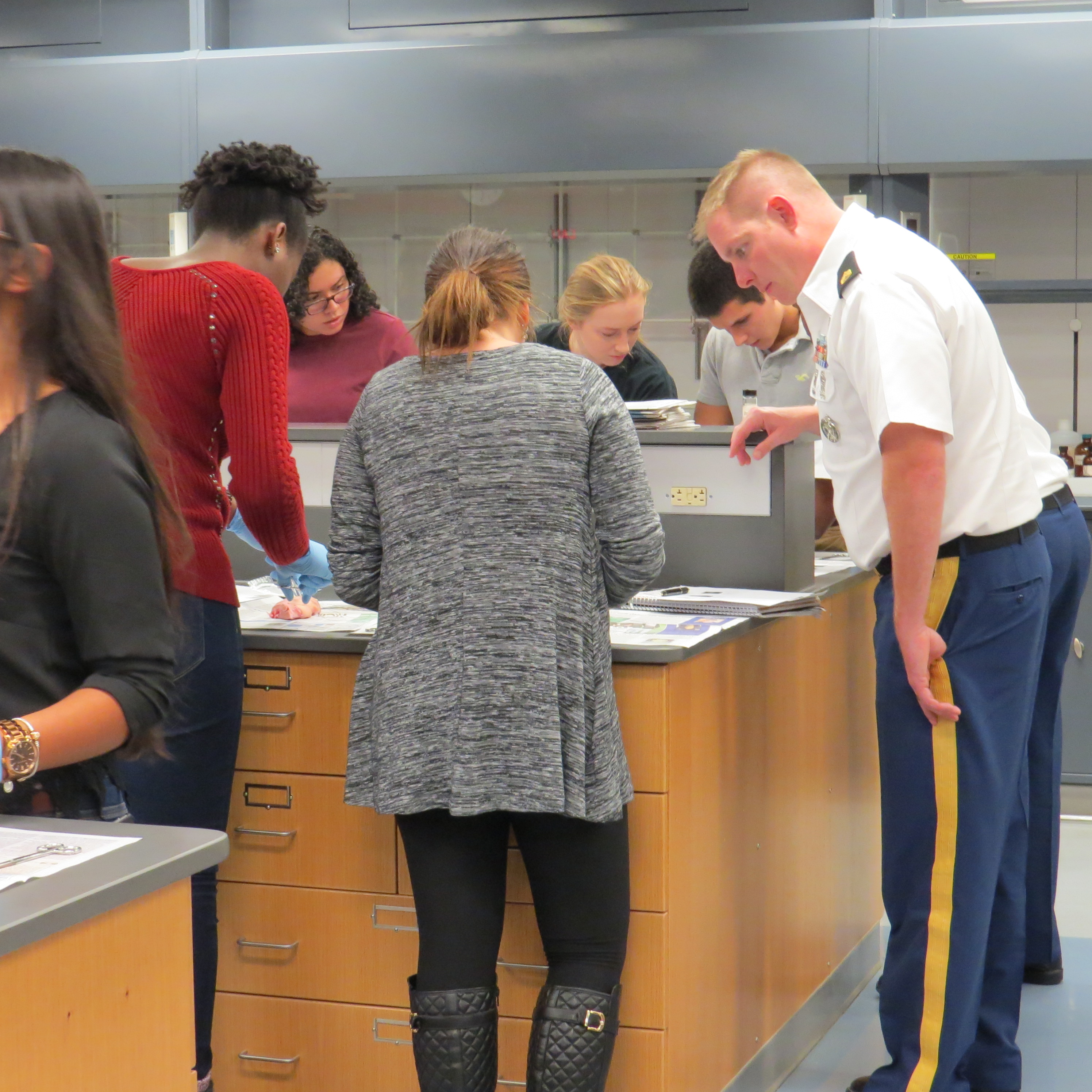
Suturing—sewing together incisions or torn flesh—is a basic technique every doctor must master. It is, however, a skill that few undergraduate students have the opportunity to practice before entering medical school. But, thanks to the U.S. Army and Penn State Behrend’s Pre-Health Professions program, nearly thirty undergraduate students from four area universities were able to try their hand at three types of basic stitches at a suturing seminar earlier this month.

The class, offered by the Army Health Care Recruiting office in Pittsburgh and held at Penn State Behrend, was taught by Dr. Regan Shabloski, assistant dean for clinical education at Lake Erie College of Osteopathic Medicine, and a member of the Army National Guard’s Medical Corps.

For two hours, students from Penn State Behrend, Allegheny College, Gannon University, and Mercyhurst University worked on severed pigs’ feet, practicing simple interrupted, running, and mattress stitches, using suturing kits provided by the Army.

IMG_1122

Shabloski taught students how to hold the tools, how to start and finish stitching, how to know which stitches to use, how to choose the proper sutures, and the importance of symmetrical sewing.

Straight, evenly spaced stitches are paramount for patients.

“Neatness counts,” Shabloski said as he moved around the room, peering over shoulders at the students’ work. “Suture scars are one of the most visible reminders of your work. Patients care deeply what their scars look like, even if they are in a place where nobody will ever see them.”

Staff Sgt. Benjamin Earle and Staff Sgt. Ricardo Grey, both Army medics, were on hand to assist Shabloski with training.

IMG_1128

The event was sponsored by the Army to bring attention to its Health Professions Scholarship Program, which provides tuition for up to four years of medical school to students pursuing an education at any accredited medical, dental, optometry, clinical or counseling psychology, or veterinary school, in exchange for a four-year commitment to working on an Army base after graduation.

“Students have to apply for this program before they enter medical school, and we were finding that many didn’t know about it until it was too late, so we’ve been making an effort to reach students at the undergraduate level and make them aware of the opportunities available to them through the Army,” Earle said.

Earle is quick to point out that being a doctor in the military does not necessarily mean working in a combat zone.

“We have Army bases all over the world, and on those bases, we have a tremendous need for all kinds of doctors for our soldiers and their families,” Earle said. “We need all the same doctors and specialists that are found in civilian life — OB/GYNs, pediatricians, general practitioners, dentists, and even veterinarians.”

Christina Hilaire, a junior Biology major who wants to be a doctor, participated in the suturing class and said the scholarship program is worth exploring.

“My mother was in the military, so I’ve thought about it,” Hilaire said.

“It is a pretty sweet deal for students inclined to spend a few years working at a military base,” said Dr. Michael Justik, associate professor of chemistry and chair for the Pre-Health Professions programs. Justik helped bring the suturing class to Behrend.

Among the perks? Full tuition paid directly to the medical school, a $20,000 signing bonus, a $2,000+ monthly living stipend, and health insurance, in addition to coverage of school-related expenses, including books, fees, and medical supplies.

It’s a deal that, according to Earle, only gets sweeter after graduation when the newly-minted doctors are admitted to the Army at the level of an officer.

“They are able to practice medicine at Army bases throughout the world without concerns about billing, overhead expenses, or malpractice premiums,” he said. “Many enjoy the lifestyle and stay in the service past their required commitment,” Earle said. “But, even if they don’t and they only put in their four years, we feel that’s a fair deal.”

The military recruits medical professionals in northwestern Pennsylvania because it’s rich in universities and medical facilities.

“Erie is a wonderful place to prepare for a medical career,” Justik said. “We have three hospitals in the area as well as LECOM, a top osteopathic medical school, all of which provide various learning opportunities for pre-health students.”

Here is what some of the students had to say about the suturing experience at Behrend:

  • “It was a fantastic event that helped solidify my career choice. I want to be a surgeon and the suturing class made me realize that it really is what I want to do for a living.” — Stephen Wells, a Penn State Behrend senior Biology major.
  • “It was really helpful to have Dr. Shabloski and the Army medics right there helping us and giving us tips. I took a similar suturing class in high school, but I learned some new and different techniques in this class.” —Thalia Soto, a Penn State Behrend sophomore majoring in Chemistry. Soto wants to be a pediatric surgeon.
  • “I really enjoyed it because it was an opportunity to do some hands-on learning, which is not often a part of the pre-med curriculum.” —Margaret Dunlop, a Penn State Behrend sophomore majoring in Psychology. Dunlop wants to be an orthopedic surgeon.
  • “The suturing class was a great learning experience in a fun, low-pressure setting. It was an excellent opportunity to do one of the many tasks that doctors and health professionals perform almost daily.” — Bethany Kelley, a Mercyhurst University sophomore Pre-Medical major. Kelley wants to be a physician assistant.

Click here for more information about Penn State Behrend’s Pre-Health Professions programs.

Click here or email Benjamin.d.earle2.mil@mail.mil for more information about the Army’s Health Professions Scholarship Program.

This slideshow requires JavaScript.

Behrend alumni lead textbook company’s transition to digital age

Totzke, Dauber Berlin (32)
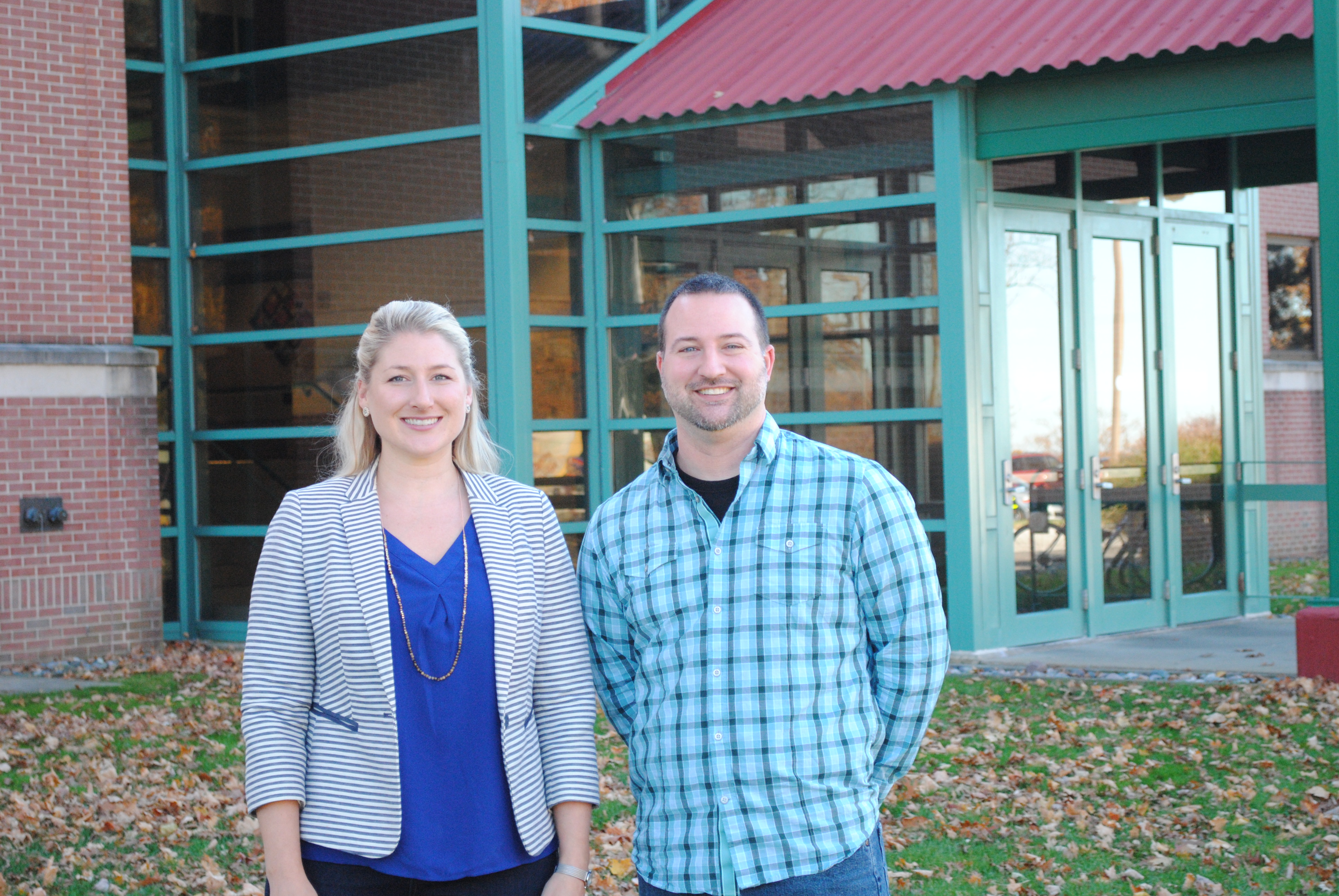
Behrend alumni Erika Dauber Berlin and Matthew Totzke are challenged with running a textbook company, Larson Texts, in the 21st century.

By Steve Orbanek
Marketing Communications Specialist, Penn State Behrend

In an age dominated by tablets and tweets, the prospect of running a textbook company might seem daunting. There’s nothing “textbook” about the operations of Larson Texts, however.

Technology has changed the game, but the Erie-based company has continued to adapt.

“The physical book is still valuable, but the way you get your hands on it is much different,” says Matthew Totzke, CEO of Larson Texts and a Penn State Behrend mathematics alumnus. “The technology now allows us to do a much better job of enhancing the learning experience.”

Larson Texts was founded more than 30 years ago by Ron Larson, then a professor of mathematics, now emeritus at Penn State Behrend. At the time, Larson was responding to what he saw as the need for more student-friendly math textbooks.

Today, the company produces math textbooks for sixth grade through college-level calculus classes that are used by more than five million students each year. Larson has also published textbooks for such well-known educational publishers as Cengage Learning, Houghton Mifflin Harcourt, Pearson, and W. H. Freeman and also publishes its own textbooks through Big Ideas Learning and AndYou.com.

Publishing a book, involves more than producing a physical textbook. With every college-level textbook that Larson Texts creates, the company also develops a fully-responsive companion website for all platforms: desktops, tablets and smartphones.

“We’re able to access so much more information than ever before. Now, we can really blend a great print book with strong digital content,” Totzke says.

That type of digital content featured on the companion sites includes worked-out proofs, instructional videos, rotatable graphs and downloadable data. All of these tools are great reference materials for students.

“There’s a lot of modeling in mathematics that you just can’t show on a print page,” Totzke says. “We put together interactive explorations that bring three-dimensional concepts to a workable medium.”

Being ahead of the digital curve is no new development for Larson. In 2001, the company created the website CalcChat as a tool that students could use to double check answers to questions posed in textbook exercises.

The site has since been supplemented by a tutor component and corresponding Twitter and Facebook accounts where students can talk with an actual tutor if they are struggling with a particular problem. Larson Texts monitors the tutor conversations as a way to gain feedback and develop solutions in areas in which students are continually struggling. According to Totzke, an estimated six million upper-level high school and college students have used the CalcChat service since 2010.

Through Big Ideas Learning, Larson publishes its own primary-school level books, a market segment the company expects to see expand as schools catch up to colleges and universities in terms of technology.

“Schools are beginning to have the infrastructure to embrace some of this technology,” says Erika Dauber Berlin, vice president of technology at Larson Texts and a Penn State Behrend communication & media alumna. “We have to draw inspiration from a lot of different areas and then anticipate how we’ll meet teachers’ needs into the future.”

It may not be the “textbook” method for creating educational publications, but Totzke would not have it any other way.

“We consider this to be an opportunity,” he says. “We’re able to deliver high-quality educational materials like we’ve never done before.”

9-hole disc golf course open at Behrend

By Heather Cass

Publications & Design Coordinator, Penn State Behrend

IMG_9956

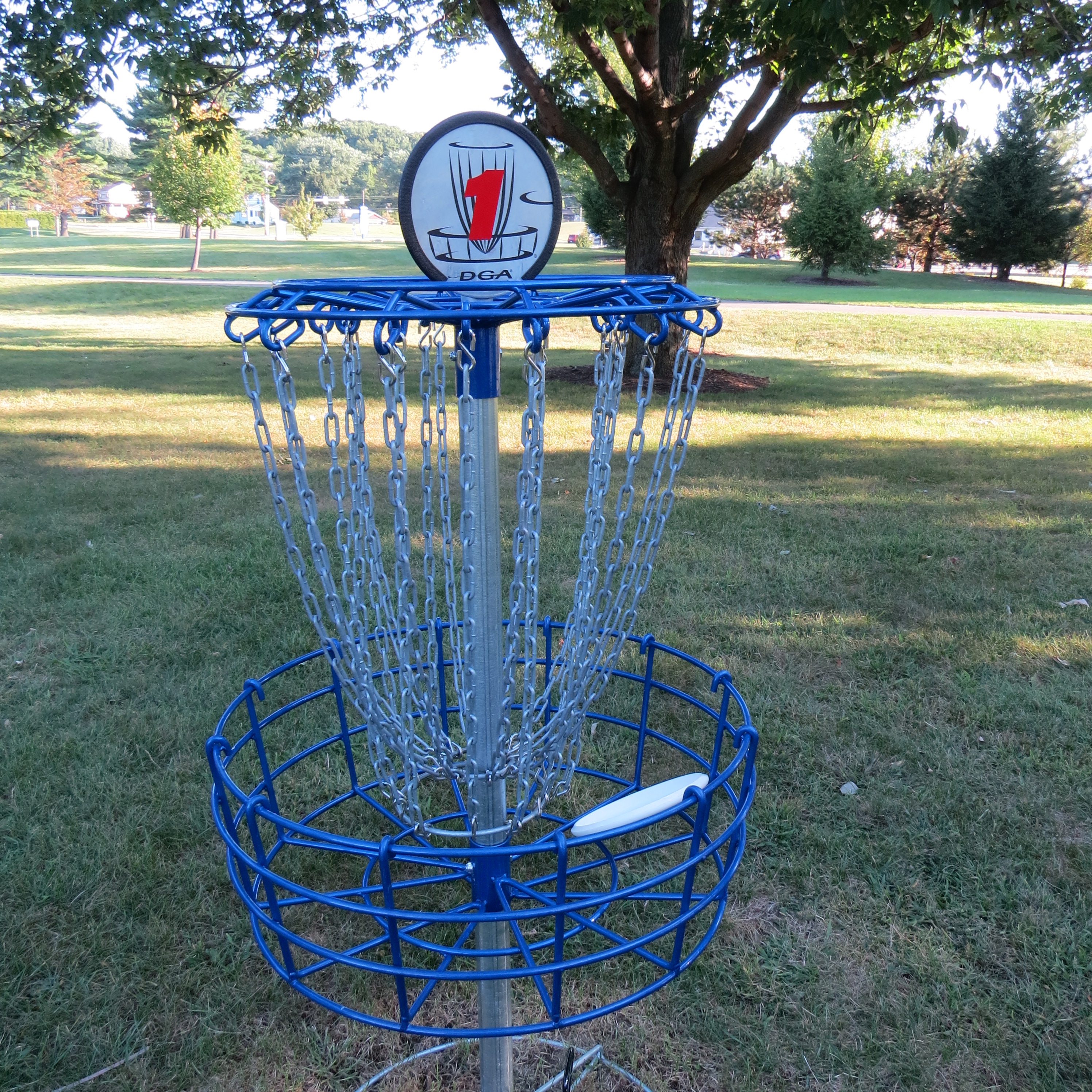
Have you noticed the medieval-looking baskets with chains on metal poles around campus and wondered what they are for?

They’re for your entertainment.

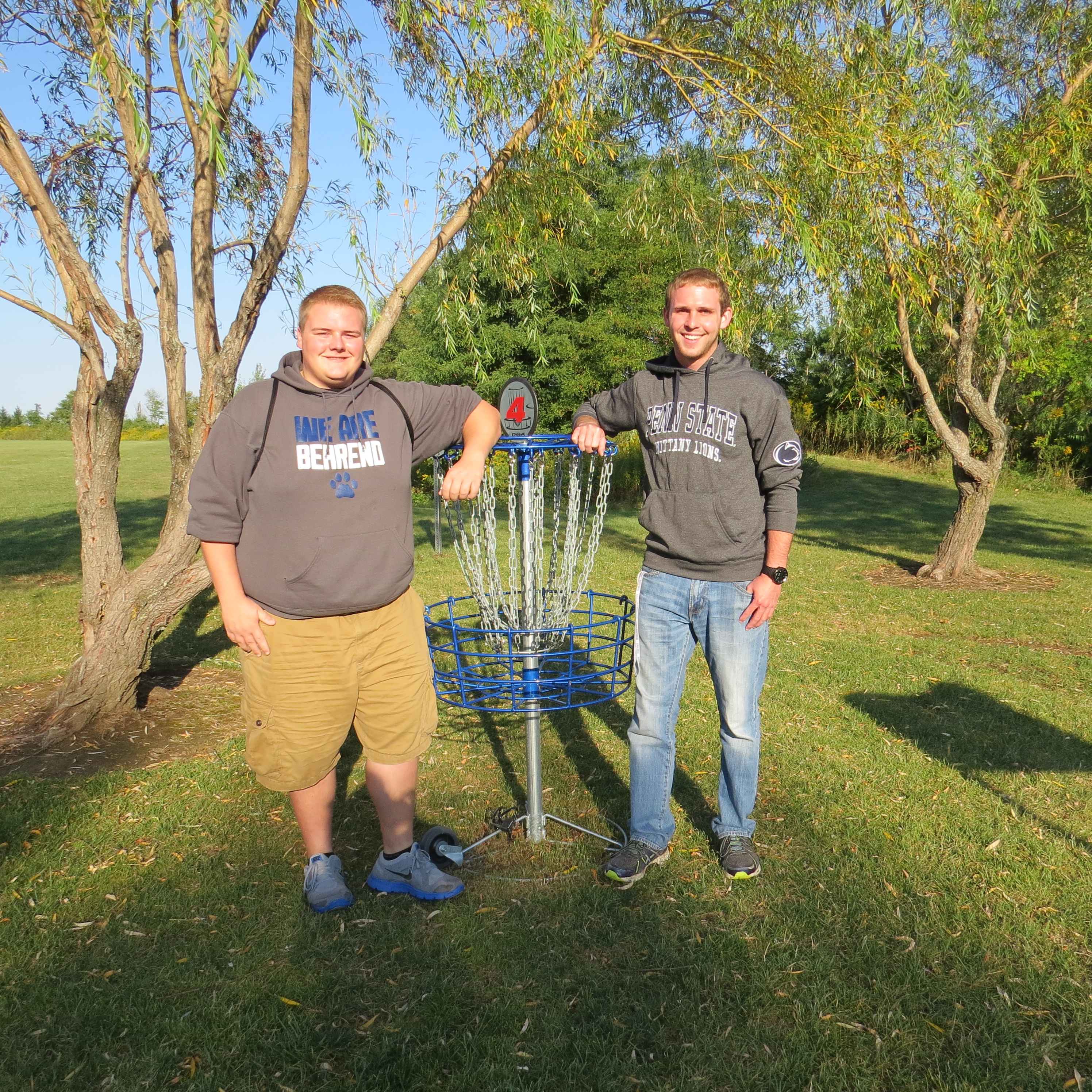
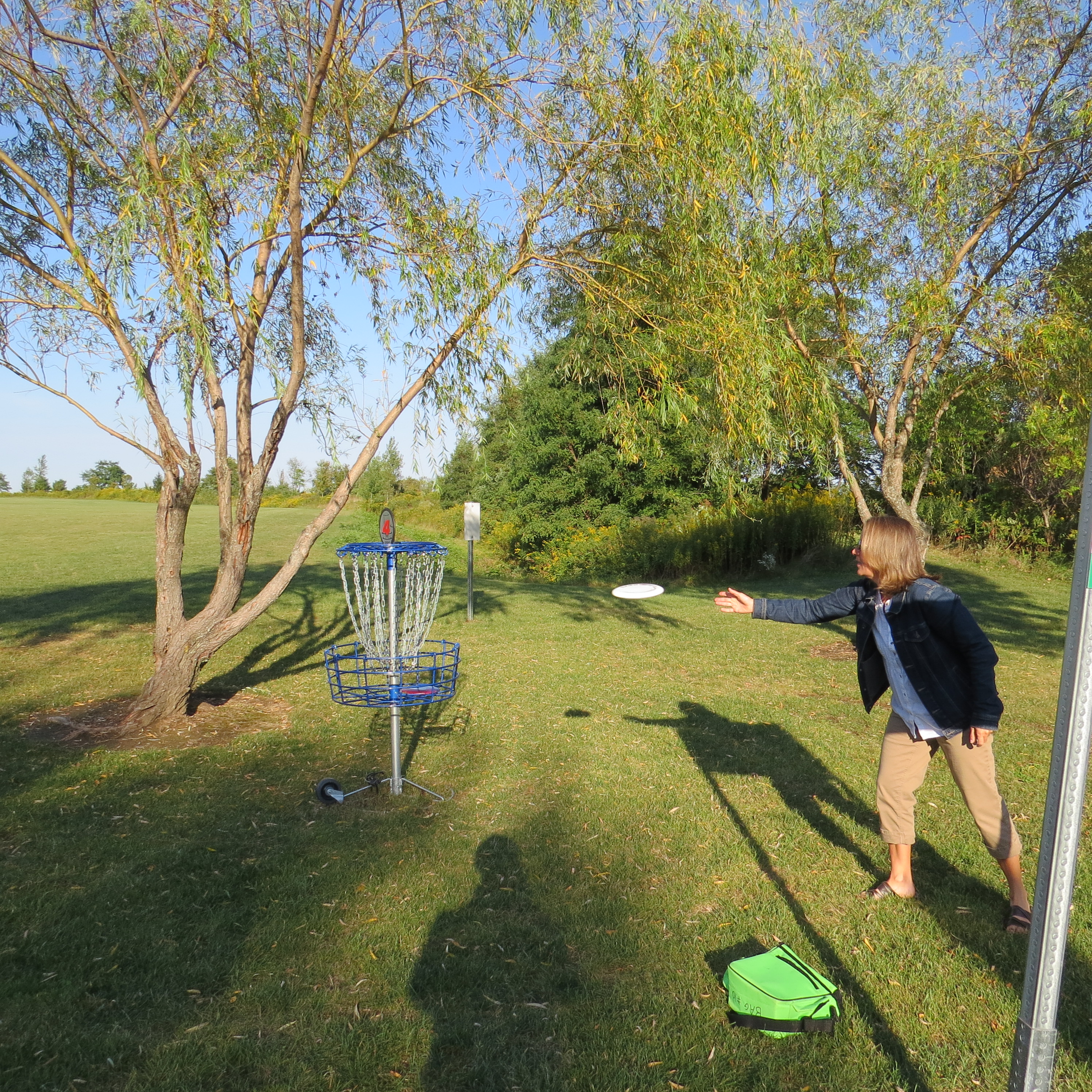
The baskets are targets for a new nine-hole disc golf course that snakes around the perimeter of campus. Disc golf is played much like traditional golf but with flying discs instead of balls and clubs. Players stand near the tee and try to get their disc into the basket in the fewest number of throws.

Student-driven fun

The project was initiated by Kyle Stephan ’14, a former SGA president, who got the ball rolling discs flying, by approaching the Student Activities and Athletics departments to obtain approval, advice, and, eventually, funding to establish a course on campus.

Stephan was joined by Mechanical Engineering majors Trey Neveux and Mark Malecky, and Psychology major Tyler Ferraino, who worked together to design the course, locate equipment, and secure funds.

The students did the majority of the work on the course themselves, with assistance from the Erie Disc Golf Club, the college’s Maintenance and Operations department, and with instruction from Dr. Mike Naber, lecturer in geosciences, on using Geographic Information System (GIS) to layout and measure the course.

IMG_9963

Tyler Ferraino, right, and Trey Neveux.

The course

Though the graphics for the tee markers are still under production, all of the targets/baskets are set and the tee markers (plain white signs) are in place.

The course starts in front of the tennis court/baseball fields near the Jordan road entrance to the college. From there, it snakes around to the old soccer field and then up and around the new track complex before finishing up in the woods across from the track near the bridge to Erie parking lot.

An online map that you can use on your Smartphone while you play can be found here.

Equipment

A basic disc golf set contains three discs—a driver, a mid-range disc, and a putter. Just like in golf, the driver is used for long drives from tee, the mid-range disc is used for shorter distances, and the putter is used when you’re close to the target.

There are at least ten sets of discs available for students to borrow for free at the RUB desk (and Neveux says there are more to come), or you can pick up your own set at a mass retailer or online for less than $30.

How to play/rules

Standing at the tee (currently marked with plain white signs…graphics are in production!), throw your driver disc toward the basket. Players — typically two to four, but more is OK, too — take turns throwing their discs with the one whose disc lands the farthest from the basket going first (like golf).

One point (stroke) is counted each time the disc is thrown and when a penalty is incurred. The goal is to play each hole in the fewest strokes possible. A disc that comes to rest in the basket or chains constitutes a successful completion of that hole.

Most of the holes on Behrend’s course are a par 3, but there are also two par 4s and a par 5. Map here.

The player with the lowest total strokes for the entire course wins.

Learn more about how to play disc golf here.

First-timers take

Neveux and Ferraino spent some time introducing me to the sport on a recent weekday morning.

It was a lot of fun and it wasn’t hard to figure out how to throw the discs to my advantage (most drivers arc left) and when to switch discs to make use of the mid-range and putter discs.

IMG_9962

By the third hole, I had a pretty solid grasp on the sport and enough skill to get the disc in the area I wanted it to be.

Learn more at YouTube, where you can find plenty of videos with tips on disc throwing technique.

Future expansion

Neveux, who serves as president of the Disc Golf club at Behrend, says they are already thinking of expanding.

“We’d like to add another nine holes, so we have an eighteen-hole course,” he said. “We’ve got plenty of space for it on campus.”

And, with the club’s dedication and promotion of the sport, they’re sure to have plenty of players, too.

This slideshow requires JavaScript.

Love of writing defines O’Neill’s time at Behrend

Katherine O'Neill

By Steve Orbanek
Marketing Communications Specialist, Penn State Behrend

As a child, Katie O’Neill always had a keen interest in writing and creative expression. This affinity continued when she got to grade school, and it was not long before others started to notice.

“I had a teacher when I was in first grade who told my mom to get me a journal,” O’Neill recalls.

That would seem to have been excellent advice. As O’Neill has grown up, her passion for writing has become a defining characteristic.

“I’ve always been a writer before anything else,” the Lake Winola, Pa., native says.

That passion is what brought her to Penn State Erie, The Behrend College. The college’s BFA in Creative Writing piqued her interest as the only such program in the Penn State system and one of only a few in the country.

“That was definitely the number one draw,” she says.

Through the inventive program, O’Neill, who graduated this past May, says she was able to focus intently on improving her inventive writing skills. She also improved her editing abilities serving on the staff of Lake Effect, an international literary journal published by the School of Humanities and Social Sciences at Penn State Behrend.

Along the way, O’Neill garnered accolades. This past year alone, her non-fiction story, “Achill Strikes Again,” won Behrend’s Farrell Nonfiction Award while her fiction piece “Juneau” was the college’s Smith Fiction Award winner. Her short fiction piece, “Tony and Rebecca” was also named an honorable mention in the Annual Creative Writing Awards, sponsored by Suffolk County Community College in Long Island, New York.

O’Neill says her inspiration comes from “the weirdest things,” but also a more traditional source. Thanks to the college’s Creative Writers Reading Series and professional conferences, O’Neill met and networked with numerous professional authors throughout her college career. With every interaction, she says she would pick up a tip or two that she put to good use.

During her time at Penn State Behrend, O’Neill was involved beyond creative writing activities. She was the captain of the college’s dance team, a member of the Behrend Choir and a writing tutor in the Learning Resource Center.

This past spring, O’Neill’s efforts were recognized with two awards: Behrend’s Eric A. and Josephine S. Walker Award and a university-wide Eclipse Award. The Walker Award recognizes a student whose character, scholarship, leadership and citizenship have been directed into student programs and services. The Eclipse Award recognizes Penn State students for service and volunteerism to their campus and local communities.

This fall, O’Neill will start pursuing her MFA in Creative Writing at Bowling Green State University in Bowling Green, Ohio. She reflects fondly on her time at Penn State Behrend and hopes new students will choose to follow a similar path.

“My advice is to get involved from the start. I’m so glad I got involved right away. It can be overwhelming, but it’s (worth it),” she says. “I’ve made some amazing friends. I’m going to miss everything about this place.”

A Textbook Case of Win-Win: Student filmmakers, professors, textbook company team up to create educational videos

Papiya

Dr. Papiya Bhattacharjee

By Christine Palattella
Marketing Communications Specialist, Penn State Behrend

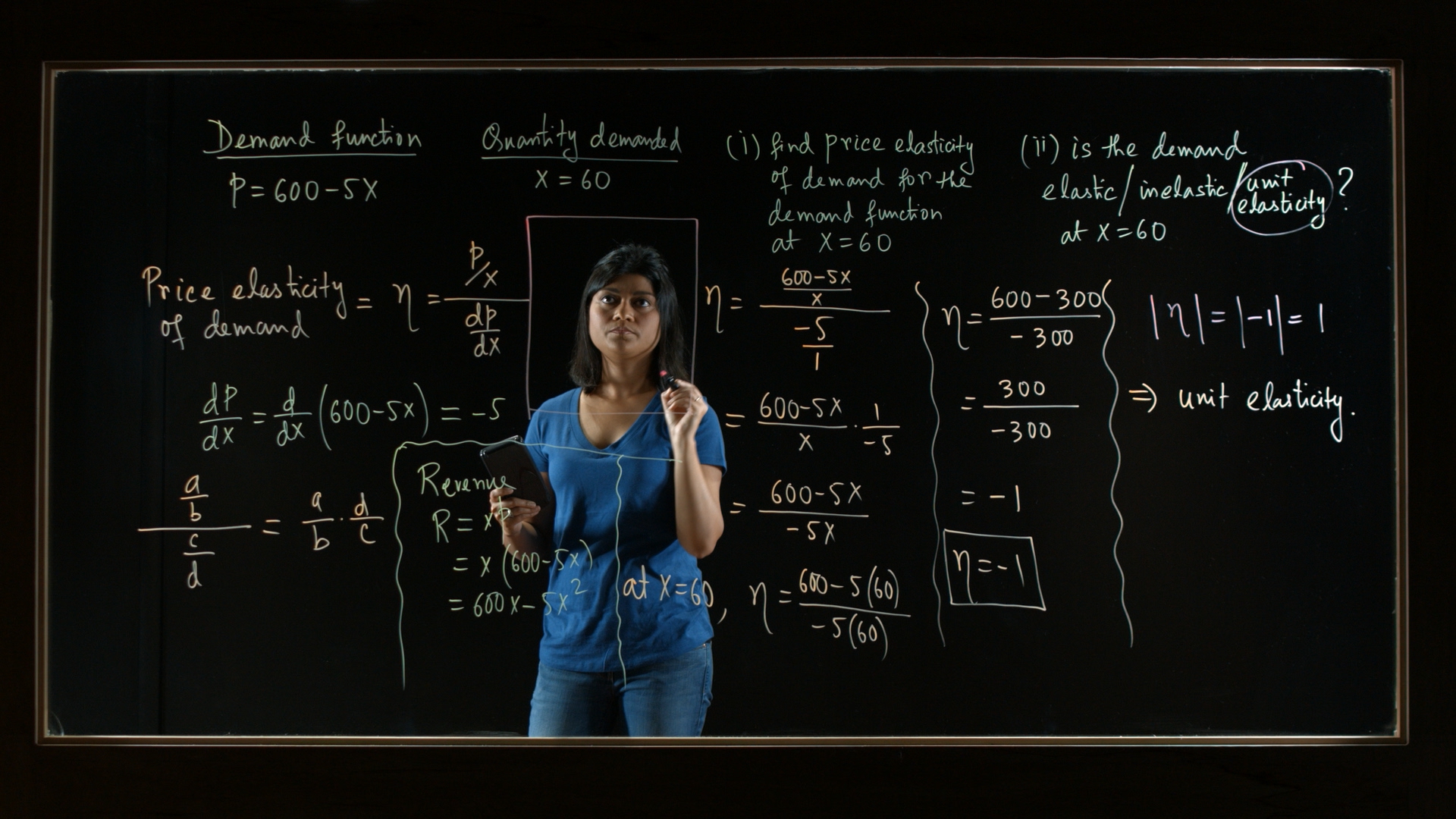
Associate professor of mathematics Dr. Papiya Bhattacharjee’s daily summer lectures have an audience of just one unblinking video camera, but the potential to reach millions of math students.

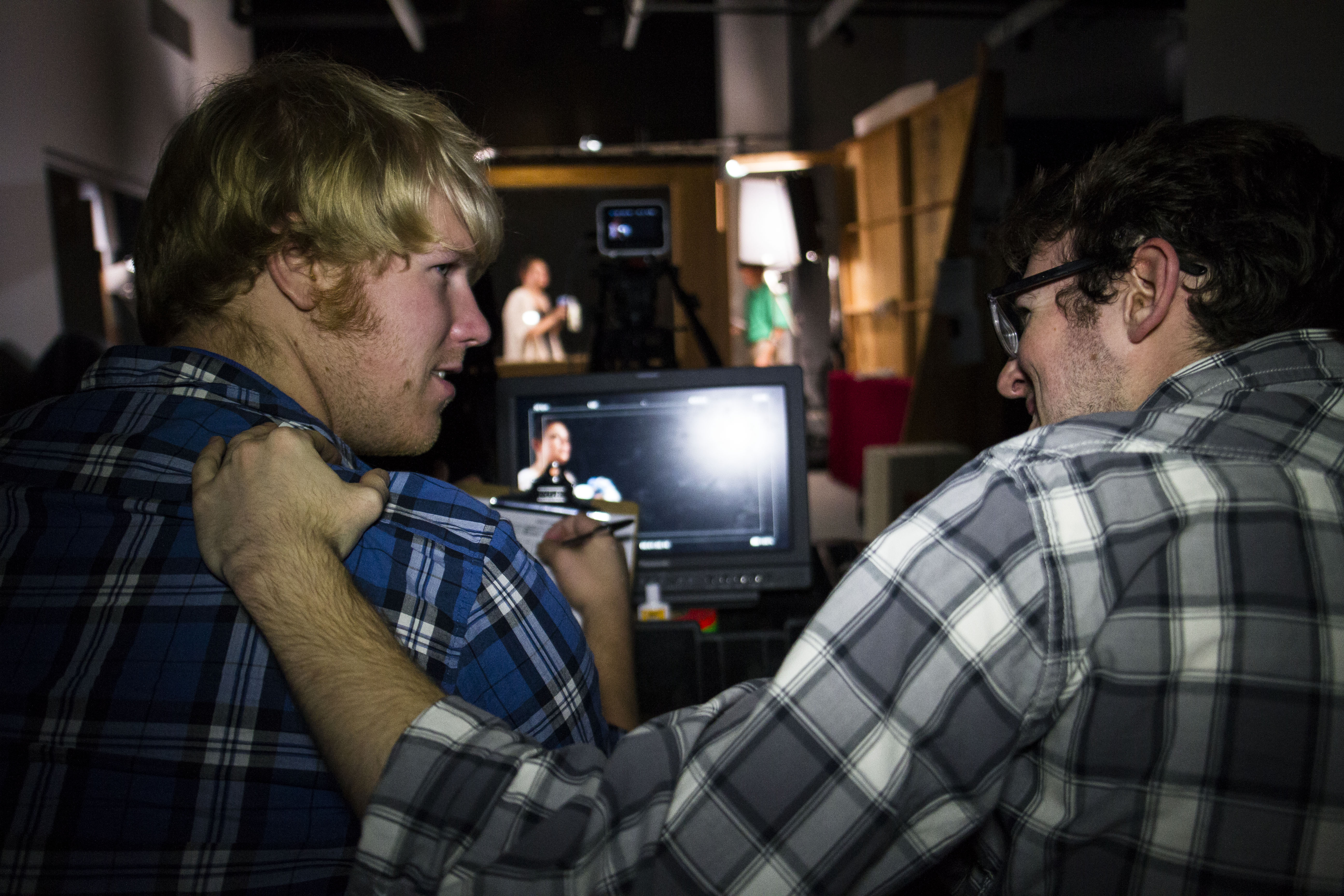
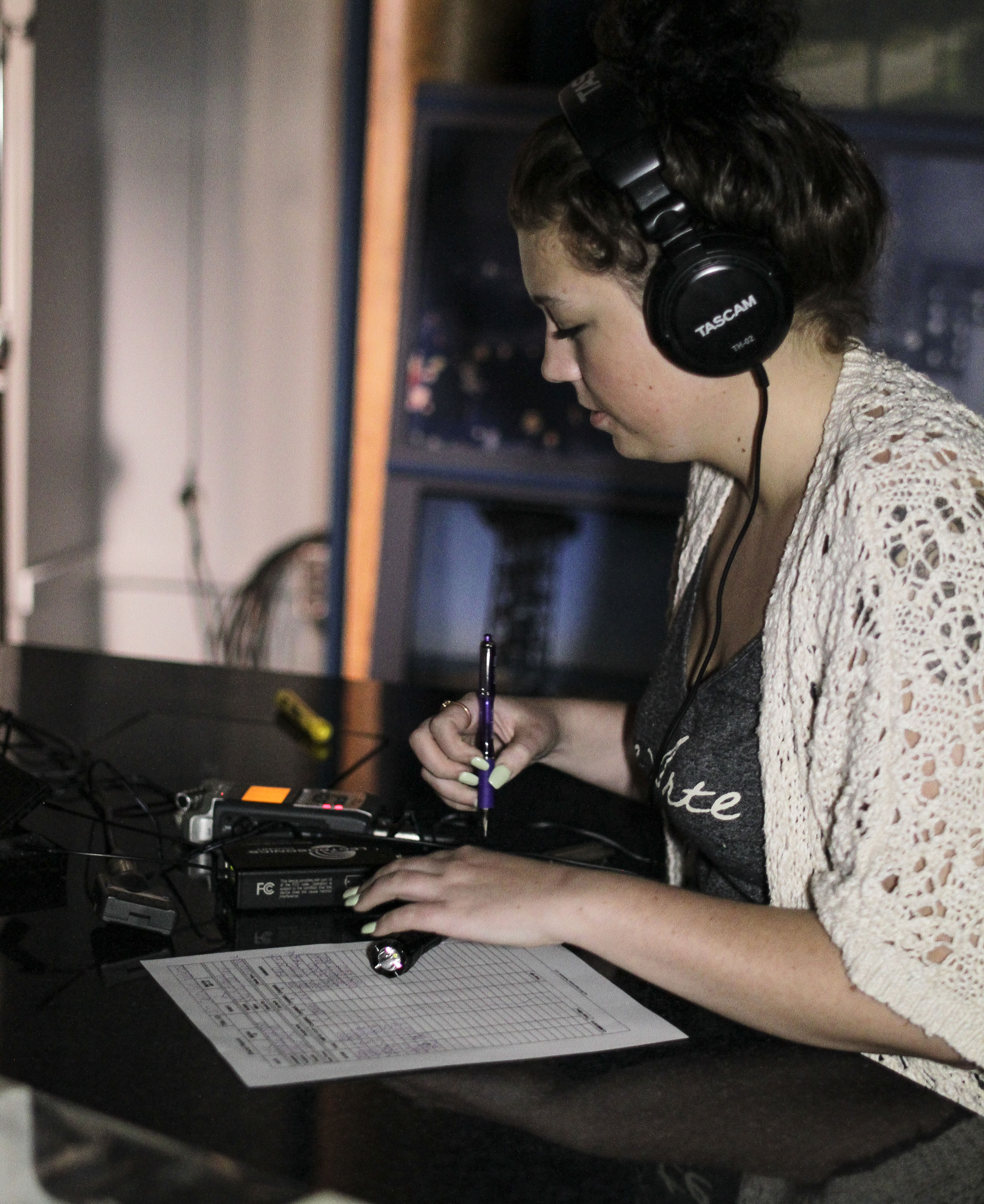
Bhattacharjee is one of four calculus teachers chosen by regional audition to act as talent in supplemental video content to be distributed by Erie-based Larson Texts. The video series is being produced using equipment provided by Greater Erie Arts Rental (GEAR), a new outreach services of the School of Humanities and Social Sciences, and with the assistance of Behrend students working as production interns for Larson.

“I think the videos are going to be extremely helpful for any student, but especially the visual learners,” says Bhattacharjee, who spends four hours each morning in the Kochel Center television studio, working aloud while illustrating her commentary in grease marker on a large pane of glass. (The glass will be flipped in post-production to make the pane readable.)

Years of teaching have left Bhattacharjee comfortable speaking in public. It’s the addition of technology that’s the challenge. “I need to remember to always look at the camera while speaking, move away from my writing so it can be seen clearly in the camera, and so on,” she says. “I am trying to have fun. All I have to remember is that the camera is my student, and I am tutoring my student.”

But this is no average student: The camera is an Epic-M Red Dragon Pro, the same model used to film Game of Thrones, The Hobbit, and Avenger: Age of Ultron. This camera is just one piece of equipment in GEAR’s inventory, which includes high-end cameras, lighting kits, and other hardware and software. The equipment is available to professional and student filmmakers and regional artists. GEAR’s equipment inventory, purchased using a $500,000 gift commitment from the Samuel P. Black Family Fund of the Erie Community Foundation, also includes lenses, tripods and stage legs; six-channel sound mixers; shotgun and wireless mics; Fresnal, LED, and HMI lighting systems; and Mac Pro, Adobe and DaVinci Resolve editing and rendering software.

Tim Larson ’87 is a partner in Grant Larson Productions, creator of the calculus video series. He anticipates filming 700 individual videos averaging seven minutes in length by the time the shoot wraps in August. Larson calls GEAR “a wonderful resource. It’s so nice to have this kind of equipment in Erie. On previous shoots we’ve had to rent cameras and equipment from Columbus and Buffalo, so this is an astounding benefit to us.”

An additional GEAR benefit is a ready-made film crew, since a rental discount is available to GEAR clients who hire Penn State Behrend students. “I feel so incredibly lucky to be able to work on this project,” says Erik Brown, a spring Communication graduate and one of six Behrend students and young alumni working for Grant Larson as paid production interns. “The great thing about working here is not only learning about the film industry itself, but also being exposed to high-quality equipment. We’re not using just a couple house lights and DSLR cameras, but industry-standard gear for lighting, sound recording, and cameras. I’ve always wanted to work in the film industry and, now, working on this shoot, I feel like I have a realistic chance of doing that.”

Erik Brown, left, Josh Lapping

Erik Brown, left, and Josh Lapping, (above) are two of six Behrend students and recent alumni working on the videos for Grant Larson Productions using equipment from the Greater Erie Arts Rental, or GEAR, a new outreach service of the School of Humanities and Social Sciences that provides professional and student filmmakers and regional artists access to high-end cameras, lighting kits, and other hardware and software. 

Josh Lapping, Ciara Smith

Penn State students, Josh Lapping, left, and Ciara Smith, work on a series of videos for Grant Larson Productions.

Shelby Dailey

Shelby Dailey, Penn State Behrend Communication major and intern for Grant Larson Productions.

Intern Shelby Dailey, pictured above, a Communication major starting her senior year at the college, appreciates that Grant Larson rotates its student workers. “We’re given the chance to experience all the moving parts of film, such as camera operating, producing, directing, and script supervising. I’ve learned things that textbooks can’t adequately prepare students for, such as (crew) dos and don’ts, set etiquette, and (the importance) of networking.”

“We want to offer an educational experience that is at the same time a close facsimile of what students will experience once they enter the professional environment of producing film and television,” says GEAR coordinator Michael Berlin, whose previous professional experiences include managing crew and equipment for New York City’s Fashion Week and the E! and Pop television networks and production management for ABC World News, CNBC, and ESPN. “The students working on these calculus videos are gaining technical know-how and a type of muscle memory that characterizes this industry, plus they are learning the responsibility that comes with arriving on-set day in and day out. They also are enjoying the benefit of getting paid for their hard work—believe me when I tell you that this type of arrangement is a very rare and very special as a teaching tool that is fair to all parties involved.”

For additional information about GEAR, email Michael Berlin at mbb21@psu.eduLarson Texts and Grant Larson Productions online.

Move over, Bill Nye. Penn State Behrend has its own ‘Science Guy’

By Steve Orbanek
Marketing Communications Specialist, Penn State Behrend

Joel Solomon (3)
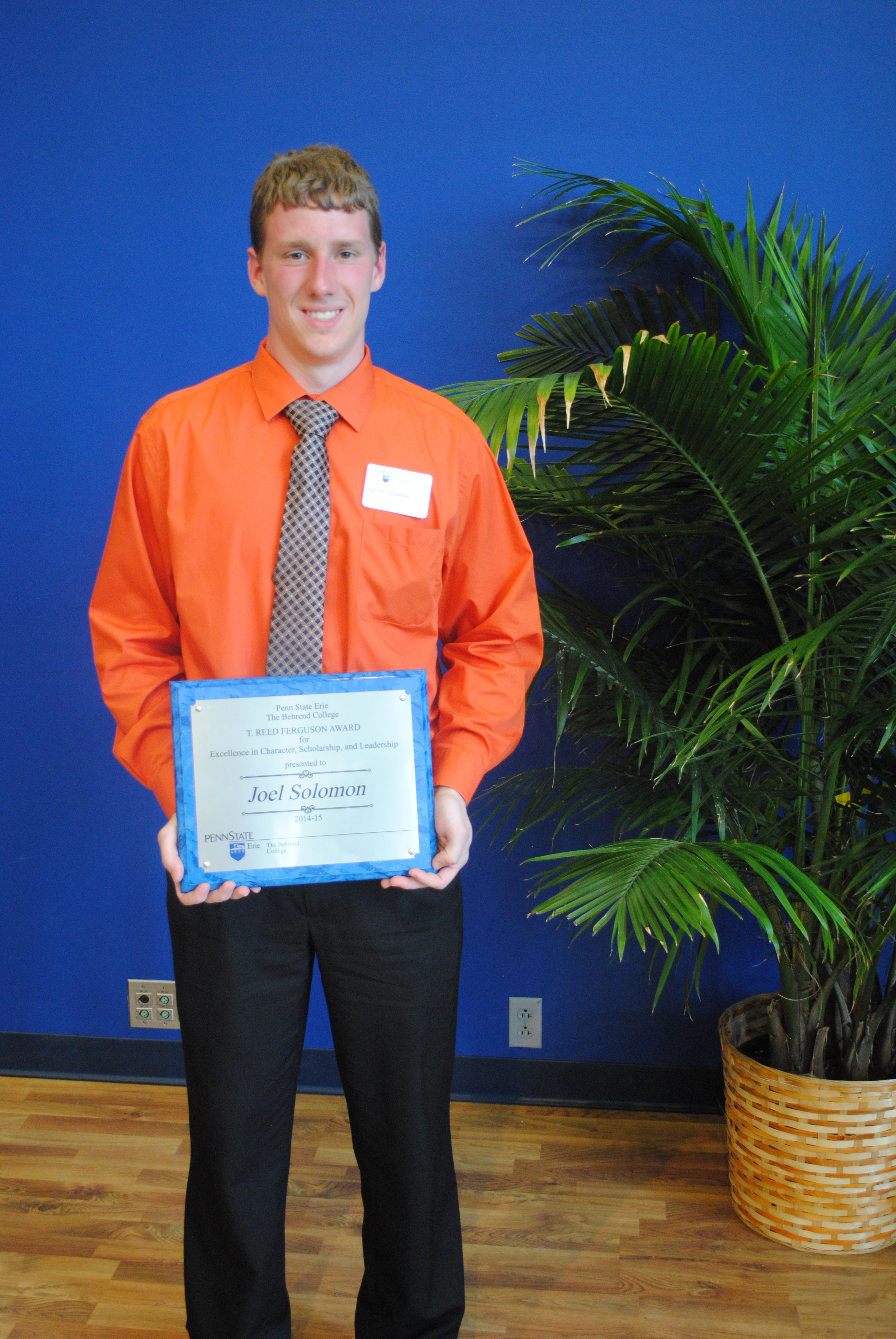
Joel Solomon, a physics major, was the recipient of this year’s T. Reed Ferguson Award. The award recognizes a junior who has demonstrated scholarship, leadership and citizenship through academic and out-of-class involvement and gives promise of further achievement in the senior year.

For some kids, it’s Cartoon Network. For others, it’s Nickelodeon. For Joel Solomon, it was the Science channel?

“Growing up, I just always watched that channel,” says Solomon, who recently completed his junior year at Penn State Erie, The Behrend College. “I was fascinated by what humanity has been able to do over the years, and I knew that I wanted to be a part of that.”

Math and science resonated with Solomon, and that interest led the New Wilmington, Pa., native to Penn State Behrend. As he got older, he knew he wanted to pursue research in college, and he could think of no better destination than Behrend.

“Being able to get a great education at a small campus is great,” says Solomon, a physics major. “I was looking for a research-oriented institution, and Behrend is one of the few schools in the region that offers such opportunities. I know that with a degree from here, I can go anywhere that I choose.”

This past year, Solomon collaborated with Bruce Wittmershaus, associate professor of physics, on a research project titled, “Concentration Dependence of Coated Gold Nanoparticles for Metal Enhanced Fluorescence.” The project was recognized as the Best Poster Presentation this past April at the Sigma Xi Undergraduate Student Research and Creative Accomplishment Conference.

Undergraduate research has been a big part of his time at the college, but Solomon’s interests go beyond the academic realm. For the past three years, he’s been a goalie on the men’s soccer team. This past year, Solomon was inducted into Chi Alpha Sigma, a national society that honors collegiate student-athletes who excel in both the classroom and in athletic competition. The society recognizes student-athletes who received a varsity letter in their sport while maintaining a cumulative GPA of 3.4 or higher throughout their junior and/or senior years. Solomon is also a former AMCC All-Academic selection.

“I feel as if soccer complements my academics. Just being physically active helps me keep up with my coursework,” he says.

Solomon’s accomplishments on the field and in the classroom played a key role in his receiving the 2014-15 T. Reed Ferguson Award last April at the college’s 66th annual Honors and Awards Convocation. The award recognizes a junior who has demonstrated scholarship, leadership and citizenship through academic and out-of-class involvement and gives promise of further achievement in the senior year.

“I was very happy to receive the award, and it was nice to know my work is paying off,” Solomon says. “It just reassured me that I’m on the right path, but I know there’s more that I can do.”

Solomon will get the chance to fulfill that promise of further achievement this fall, continuing his undergraduate research as the recipient of a grant to explore the topic of “Enhancing the Photostability of Fluorophores Using Metal Enhanced Fluorescence.”

For the future, Solomon plans to attend graduate school and possibly work with optics. His ultimate goal, though, has its roots in the programs he watched on Science as a boy.

“My dream job is always going to be something with NASA. I have always been fascinated by all of NASA’s accomplishments,” he says, “so that’s the dream, and that’s what I’ll keep working toward.”

Kunming, China, native comes to Penn State Behrend to ‘claim’ an education

By Steve Orbanek
Marketing Communications Specialist, Penn State Behrend

(Wang, Arthur) Rose_Cologne_Keystone Award
Arthur Wang, a Kunming China, native, is shown holding the Rose Cologne Keystone Citizen Award, a University-wide award that he received this spring.

Yuanheng “Arthur” Wang arrived in the United States for the first time in 2006. His parents felt it was time for him to see the world, so the Kunming, China, native went to live with his uncle in Seattle.

He knew there would be only one way to adapt.

“I really struggled back then because I basically knew nothing about English. I realized then that I had to master this language to survive,” Wang says.

Now a junior at Penn State Erie, The Behrend College, Wang is doing more than surviving — he’s thriving.

He has made the Dean’s List every semester so far, has joined the Lambda Sigma National Honor Society, has served as the regional vice president of the Student Pennsylvania State Education Association and was recently accepted into the University’s Schreyer Honors College. His greatest accomplishment though, might be the work he is doing to help his fellow international students, he says.

Wang serves as a teaching assistant for Penn State Behrend’s English Language Learners program and holds office hours each week, tutoring students in college-level reading, writing, speaking and listening skills. The English language has resonated with him.

“I like English, and I like communication. They just make me excited,” Wang says.

In fact, he’s so enthused about the language that English has become his major. Now he’s using that excitement to assist others.

“I want to help those who are learning English, but in order to do that, I have to master the language myself,” Wang says. “I use English and Chinese interchangeably, which we call ‘code-switching.’ I want to encourage those around me to realize and appreciate the beauty of language.”

Wang’s efforts were recognized this spring when he was honored with two awards: Behrend’s Irvin H. Kochel Award and the University-wide Rose Cologne Keystone Citizen Award. The Kochel Award is presented annually to an outstanding student who demonstrates character, scholarship, leadership and citizenship through efforts that positively influence students and the college community. The Cologne Award recognizes students for service and volunteerism to their campus and local communities.

After graduation, Wang plans to pursue a master’s degree in education or instructional communication and would eventually like to be a professor of language and literacy education. He’s not afraid to challenge stereotypical notions along the way.

“I wish to challenge the stereotype that Asian students or international students are not able to major in English or the humanities. I want to challenge the stereotype that says all international students are going to major in business, engineering or the sciences,” he says.

Guiding him along the way is a principle he picked up from a speech titled “Claiming an Education,” given by poet Adrienne Rich at the 1977 convocation of Douglass College in New Jersey.

“I’m not here to accept or receive an education. I’m here to claim an education. I want to claim all of the resources here available to me,” Wang says. “This term inspires me because it really confirms my dedication and informs my direction.”

He’s hoping other students are willing to follow his footsteps in claiming their education.

“College is all about choice,” he says. “If you want to be happy, if you want to be a success, then you make that choice and do it. Once you make that choice, no one can take it away from you.”

For adult student, degree is ‘one of those lifetime badges you get’

By Robb Frederick
Public Information Coordinator, Penn State Behrend

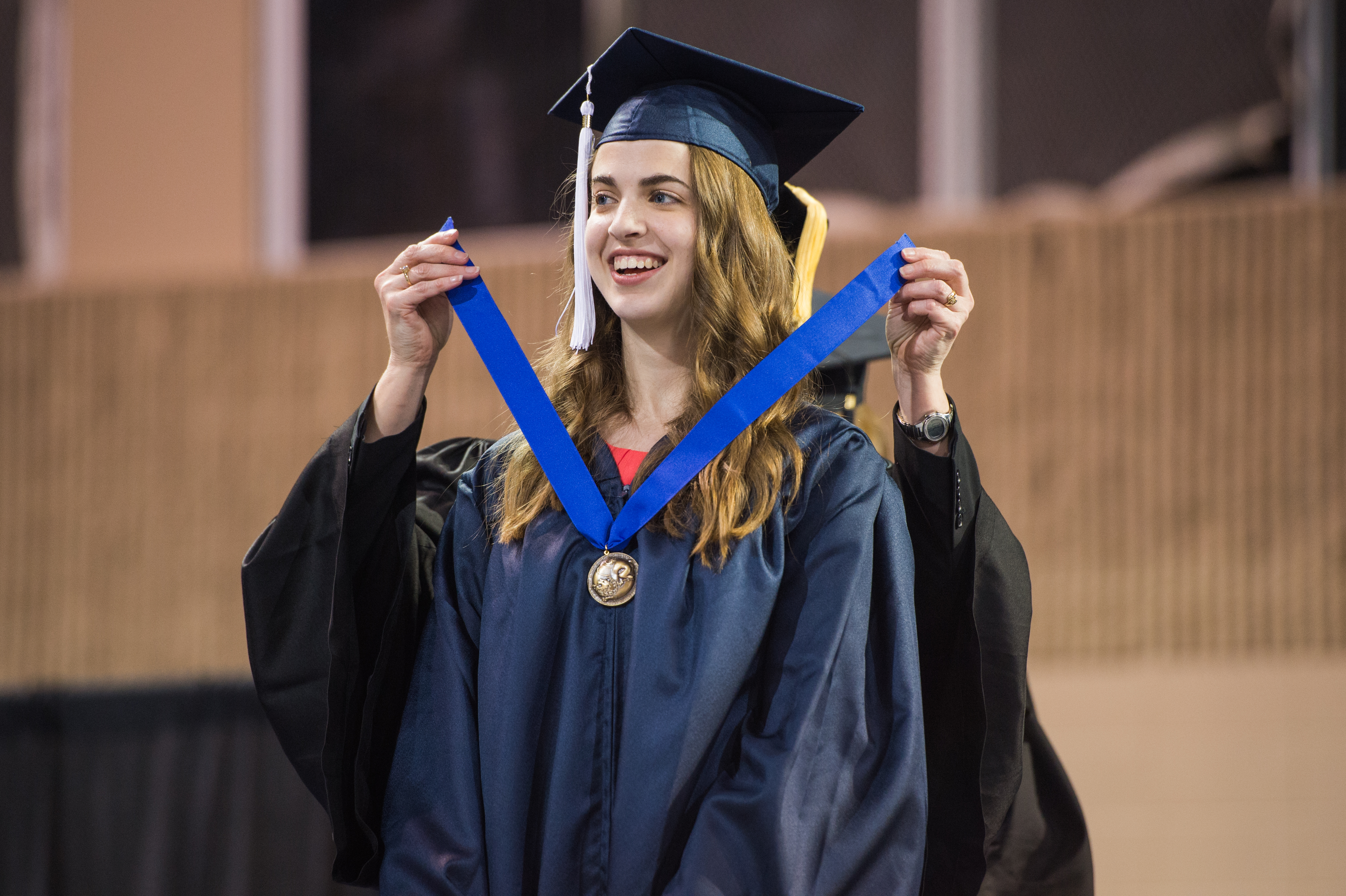
Michael Linhart (3) (682x1024)Michael Linhart took his time getting to Erie Insurance Arena, where he received a bachelor’s degree in general arts and sciences. He crossed the stage in May, 24 years after he first enrolled at Penn State Erie, The Behrend College.

“It’s hard to describe how that felt,” Linhart, 42, said. “To be honest, I just tried to soak it all in.”

The Fairview resident first arrived at Penn State Behrend in 1991. The Kochel and Burke centers had not yet been built. Ohio and Almy halls were still woodlots.

Linhart had trouble adjusting to college life. After three semesters, his GPA had flat-lined at 1.5.

“I wasn’t ready for college,” he said. “I didn’t have the focus or the determination to stay with it. I needed to grow up.”

So he left. He worked the cash register at a grocery store and helped manage a Taco Bell. He watched his friends go on to better things.

“All my friends were getting these great 9-to-5 jobs,” he said. “They were getting married, having kids, and I was stuck, still living hand-to-mouth.”

In 1998, after five years away, he came back to campus. He tried to be more active: He joined the Zeta Beta Tau fraternity and the Returning Adult Student Organization. He volunteered as an orientation leader.

“He had a renewed sense of what he needed to do to be successful here,” said Biddy Brooks, director of the Office of Adult Learner Services. “He was committed to putting in the work. So it was hard to see him leave again.”

After two years of study, Linhart was offered an internship at a property management company. He worked as a leasing consultant, matching renters to apartments in a 132-unit complex. When his boss offered him a full-time position – good pay, and a path up the organizational ladder – he accepted, leaving college for a second time.

Before long, however, the work bored him. He joined the U.S. Navy Reserve, training as an aviation supply worker. He completed basic training on Sept. 5, 2001.

Six days later, the nation went to war.

“I ended up in the Persian Gulf, on the USS Theodore Roosevelt, thinking, ‘Yeah, this was a great plan,’” Linhart said.

When his tour ended, he returned to Erie, wanting to be close to family again. He met a woman and had two children. He’d raise them on his own, tending bar and working as a massage therapist.

He married again in 2012. When his new wife, Amy, encouraged him to complete his degree, Linhart once more found himself in Biddy Brooks’ office.

“He just persevered,” Brooks said. “He was so positive and outgoing, and always willing to talk with other adult students. He wanted to help them through situations he’d already had to work through.”

He kept his own doubts to himself. “I was a lot more apprehensive, coming back that third time,” Linhart said. “I was like, ‘What am I doing here?’ But I stayed with it. I saw it as one of those lifetime badges you get: the ‘turn 40 and go back to college’ badge.”

It worked. He earned his final credits and was honored as the college’s top adult learner. The day of his last exam, he lingered on campus.

“This school has given me so much,” he said. “So many friends, so many experiences, so many nuggets of wisdom I can take with me anywhere. I just walked around and took it all in one more time.”

Before the commencement ceremony, he drove to the cemetery where his grandparents are buried. He placed an invitation in a zip-lock bag and tucked it between their headstones. Then he went home and taped a message to the top of his mortarboard: “I MADE IT.”

Creating the Penn State Behrend Performance Band was one of Miranda’s many highlights

Print

SONY DSC
One of Craig Miranda’s favorite moments from this past academic year was creating the Penn State Behrend Performance Band, which performed a series of concerts on campus by the spring semester’s end.

By Steve Orbanek
Marketing Communications Specialist, Penn State Behrend

Editor’s note: Far from Home is an occasional series in which we document a year in the life of international students at Penn State Erie, The Behrend College.

When Craig Miranda arrived at Penn State Erie, The Behrend College, he had one goal.

“Even though I’m just a freshman, I want to start big. I want to make an impact,” the first-year computer science major said at the beginning of the academic year.

Miranda did more than start big. He finished big.

Through the course of the academic year, he excelled in the classroom, joined numerous campus organizations, started his own club, joined the tennis team and even presented a project at the Clinton Global Initiative University’s 2015 meeting, held this past March in Miami.

It’s not how Miranda expected his first year to go when he set foot on campus last August.

“I came here thinking that I would be more secluded. I thought I would just focus on getting my work done to get through, but it turned out to be the opposite,” he says.

Miranda credits the friends he made at Behrend with helping him get involved. Being so far away from home can be challenge, but he’s begun to build a strong support system at the college through the friends he has made.

“Friends are what help me to keep going,” he says. “They give me an escape to get away from whatever I’m feeling, whether it’s homesickness or something else.”

Together with his friends, Miranda created the Penn State Behrend Performance Band student organization as an outlet for anyone who enjoys singing or performing live music. By the end of the semester, the band had 12 members and had performed six concerts.

“We want to reach diverse groups of people, who come from different cultures and might have different tastes in music,” Miranda says of the student organization. “One of the songs we performed this year was an original written by two of our members, and it included both English and Chinese lyrics.”

An emphasis on musical diversity is a reason why Miranda, currently president of the club, has already begun the process of having the Penn State Behrend Performance Band brought under the college’s Multi-Cultural Council (MCC) banner. As the group grows, he envisions it being used even more to promote diversity on campus.

Miranda’s work with the band, coupled with his other accomplishments, made for a busy year, but he says he has no plans to slow down over the summer. Now back home in Kuwait, he reports that he’s already thinking about returning to Behrend in the fall, with plans to do “do something a lot bigger.”

This slideshow requires JavaScript.