You’re Invited to a Tree Hunt

By Heather Cass, Publications Manager, Penn State Behrend

When’s the last time you really looked at a tree? Not through a windshield or a window and not while scrolling past a picture on social media but standing right in front of it. The 2025 Erie County Tree Scavenger Hunt invites you to do just that.

The hunt—a free, self-guided activity created by the Penn State Master Gardeners of Erie County—is your invitation to step outside, slow down, and discover eighteen remarkable trees growing in the region.

“We want to encourage people to get out of their houses and cars and explore Erie County,” said Lisa Rand, coordinator of the project. “When you’re standing in front of a tree, you notice things you can’t get from a website or a drive-by. You can study its shape, feel the texture of its bark, and catch the scent of its leaves or needles.”

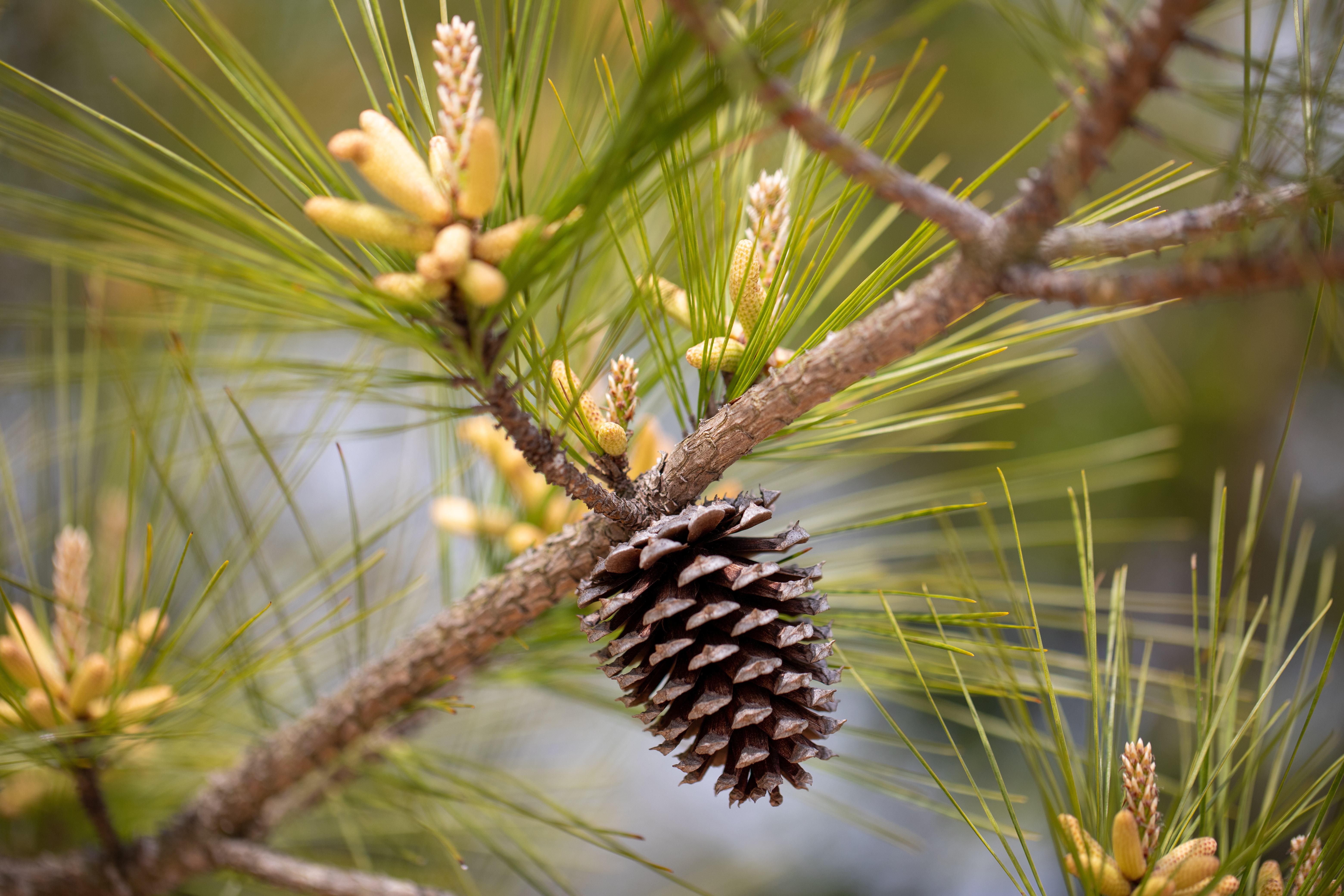
This year’s hunt focuses on conifers (cone-bearing trees) with eighteen “remarkable” specimens to find. All are located on public land or in places that welcome visitors, like Penn State Behrend, which is an official arboretum and home to more than 200 unique tree species.

What makes a tree remarkable?

“They’re all special for some reason—be it form, location, or historical significance,” Rand said. “The guide explains why each tree is significant.”

The scavenger hunt runs through October 1 and is open to anyone curious enough to lace up their shoes and start exploring. It’s part outdoor challenge, part botany lesson, and part treasure hunt—all rolled into one.

How to Play
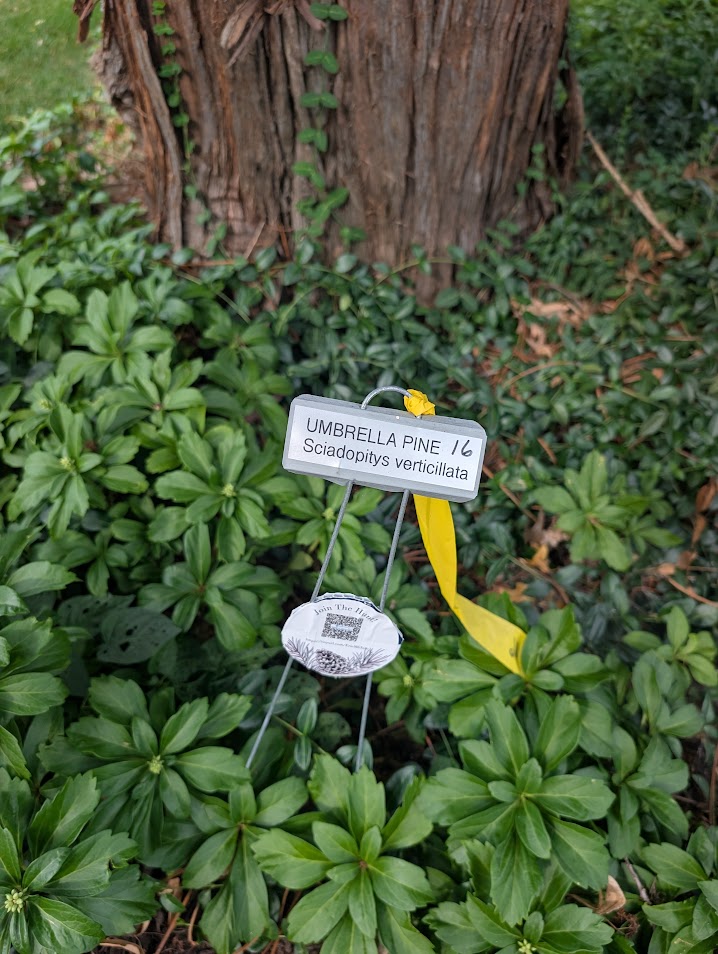
Use the digital Tree Hunt Guide, filled with clues to locate specially tagged trees across the county. At each stop, you’ll find a metal ID tag with a number. Find at least ten trees, log their numbers using the yellow links in the guide, and you’ll be entered in a prize drawing to win—what else?—a live tree.  

It’s an easy, low-pressure way to spend time outdoors, learn about native trees, and maybe even discover a new favorite park or trail.

One past participant told Rand she and her mother found every tree in a previous hunt and couldn’t wait to do it again.

“It’s something they could enjoy doing together,” Rand said.

Note to college students: This also makes a fun—and free—date idea, and a nice break from hitting the books. Hint: One of the trees is right here at Behrend.

P.S. Want to go old school? A printable guide is available here.


Ode to Resilience on National Love-a-Tree Day

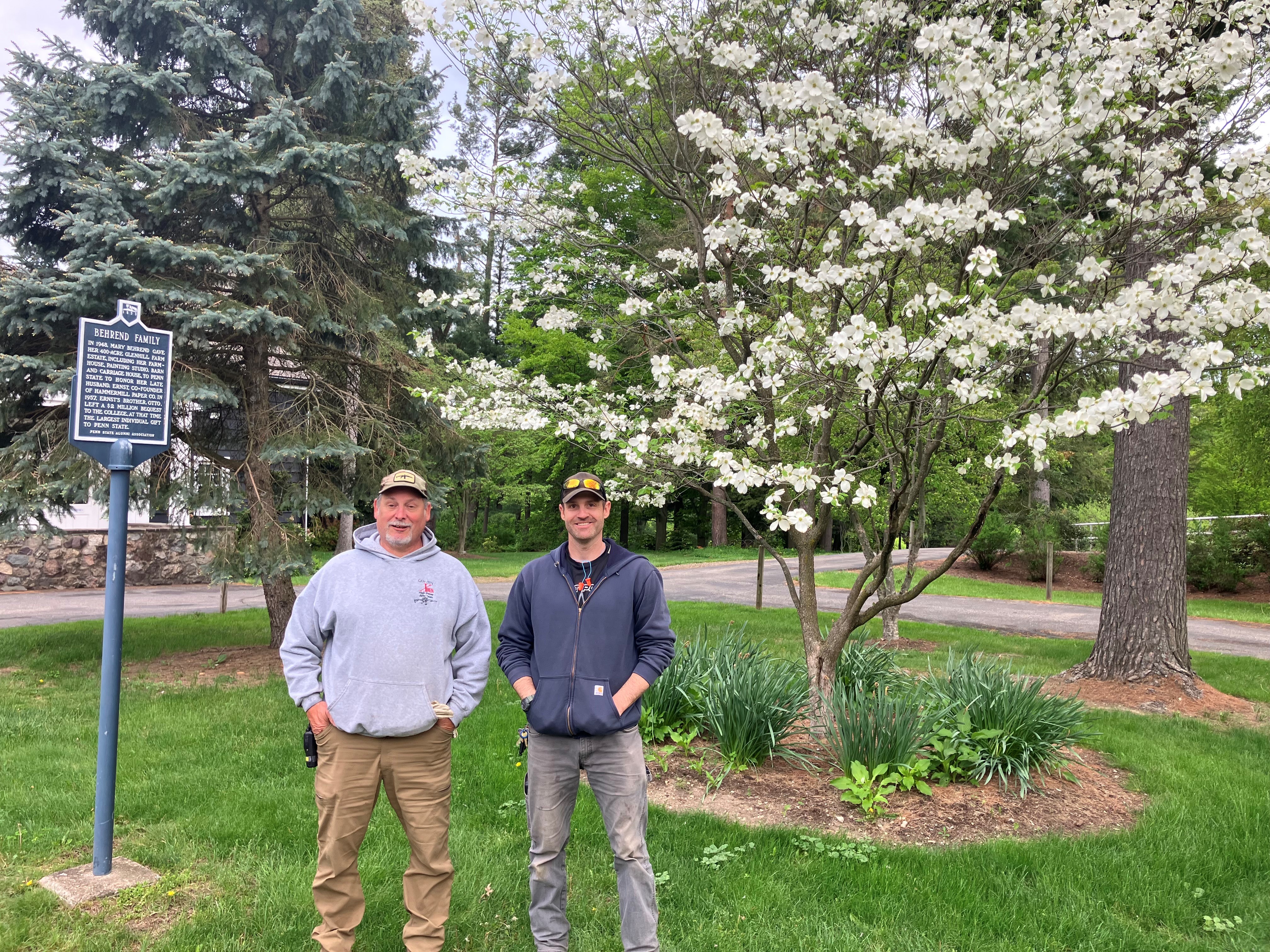
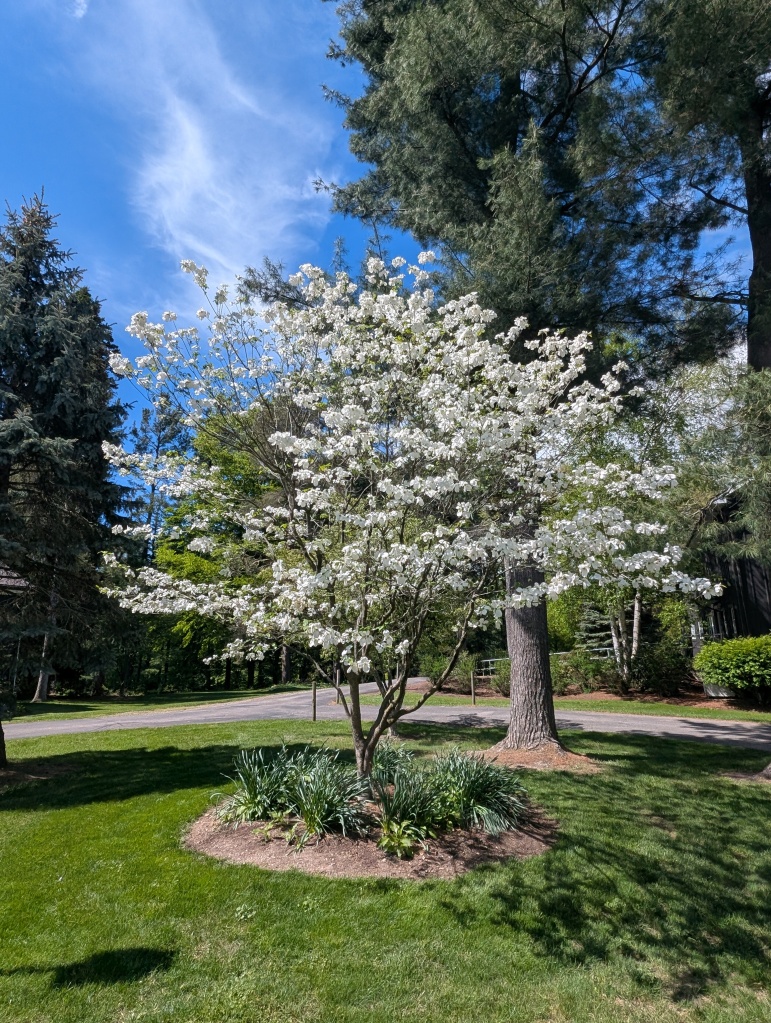
John Troncone, left, and Brooks Travis in front of a flowering dogwood that Troncone has transplanted four times in twenty years.

By Heather Cass, Publications Manager, Penn State Behrend

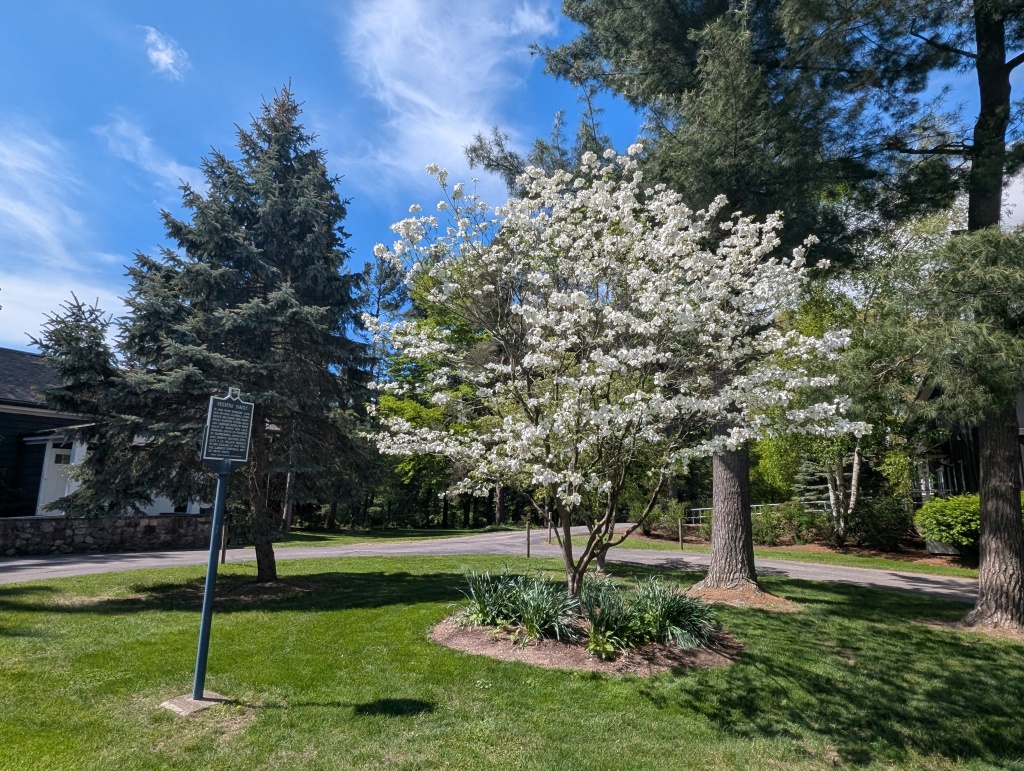
“Bloom where you are planted” is a metaphorical phrase encouraging individuals to make the best of their current circumstances. A real-life example of this sentiment can be found at Penn State Behrend, where a flowering dogwood tree is thriving even after having been transplanted four times.

The tree, Cornus florida, was first planted two decades ago near Lilley Library by groundskeepers John Troncone and Patricia Blackhurst, who is now retired.

“Patty and I planted it along the east side of the library, but it was too wet, and the tree was struggling there,” Troncone said.

They chose to move it next to the old Erie Hall, where the dogwood grew until a fire at Dobbins Dining Hall in March of 2010 forced another move.

“Housing and Food Services had to set up a temporary kitchen in Erie Hall that required us to remove the tree,” Troncone said.

He and Blackhurst dug a third hole for the growing tree, south of the Glenhill swimming pool.  Again, the tree grew and flowered until, a dozen years later, Troncone was once again facing the dogwood that had to go to make room for the Glenhill Gardens project.

He and his new groundskeeping partner, Brooks Travis, had to decide whether to destroy the tree or attempt yet another transplant.

“The timing was good,” Troncone said. “The tree was in the dormant stage at that point, and the weather was dry enough to give it a try.”

Troncone, Travis, and Jack Crowley, a student worker, spent three days carefully digging the tree out, wrapping its roots in burlap and tying them into a root ball for transplant. However, moving the 20-foot tree would be no easy feat.

“Then we got lucky,” Troncone said. “The contractor for the pool project had a track loader and offered to help us move it.”

Troncone and Travis found the perfect spot for the tree in a grassy circle surrounded by the college’s original, historical buildings—Glenhill Farmhouse, Mary Behrend’s Studio, and the Turnbull Building.

It’s space fitting of a tree that has born witness to so many important moments and changes on campus.

It’s currently in full bloom, a gratifying sight for the caretakers who watch over it.

“Brooks and I are pleased with the tree’s condition to date,” Troncone said.  “I’m glad we were able to save it. Hopefully, that will be the last time we have to move it.”

A few interesting facts about flowering dogwood

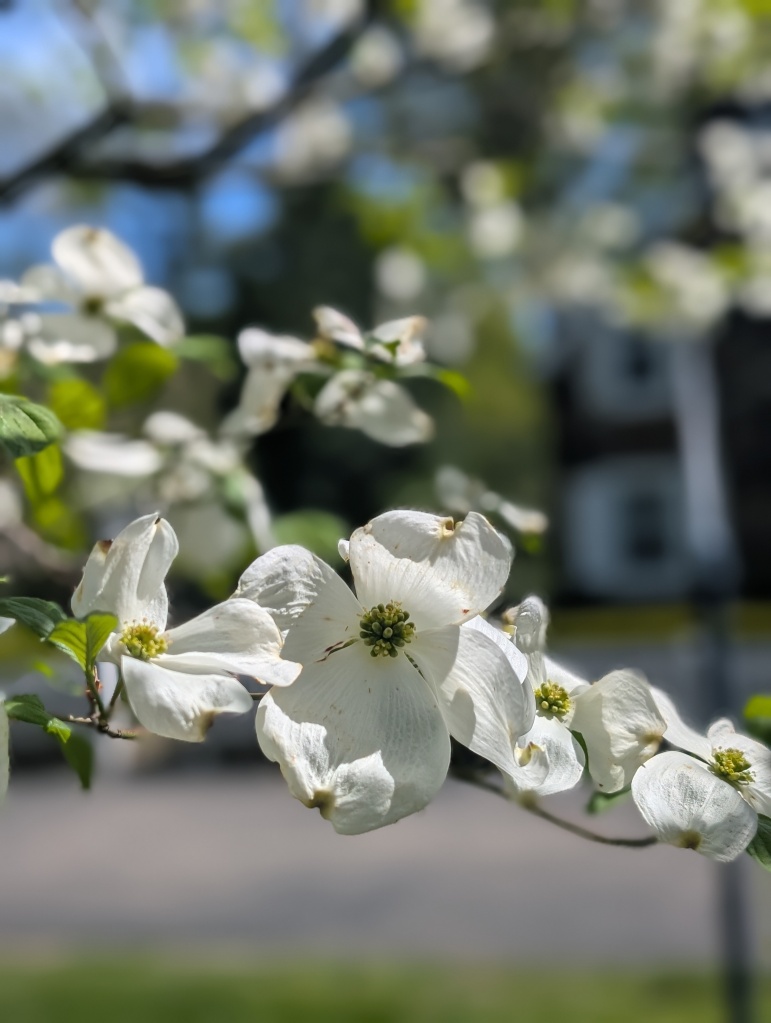
  • The large, showy “petals” are actually modified leaves called bracts, not true petals.
  • Native Americans used dogwood bark to make scarlet dyes and medicinal teas. 
  • In some cultures, the dogwood is a symbol of rebirth and resurrection. (Fitting for the subject of this blog post!)
  • The “fruit” of the dogwood is a drupe, similar to a plum, with a hard seed inside.
  • Dogwood wood is hard and strong, making it suitable for tool handles, charcoal, and other items.
  • The name dogwood is thought to be a variation of the Old English word “dagwood,” meaning a skewer or dagger. The hard wood of the tree was used to make these tools.
  • Another theory regarding the origin of the name dogwood suggests it could have been named for its berries, called “dogberries,” which might have been considered less desirable or “fit for a dog.”
  • Dogwoods have been used medicinally for generations; the bark is rich in tannins, so ground bark or leaves are used to treat pain, fevers, backaches, dizziness, weakness, excessive sweating, uterine bleeding, and incontinence.

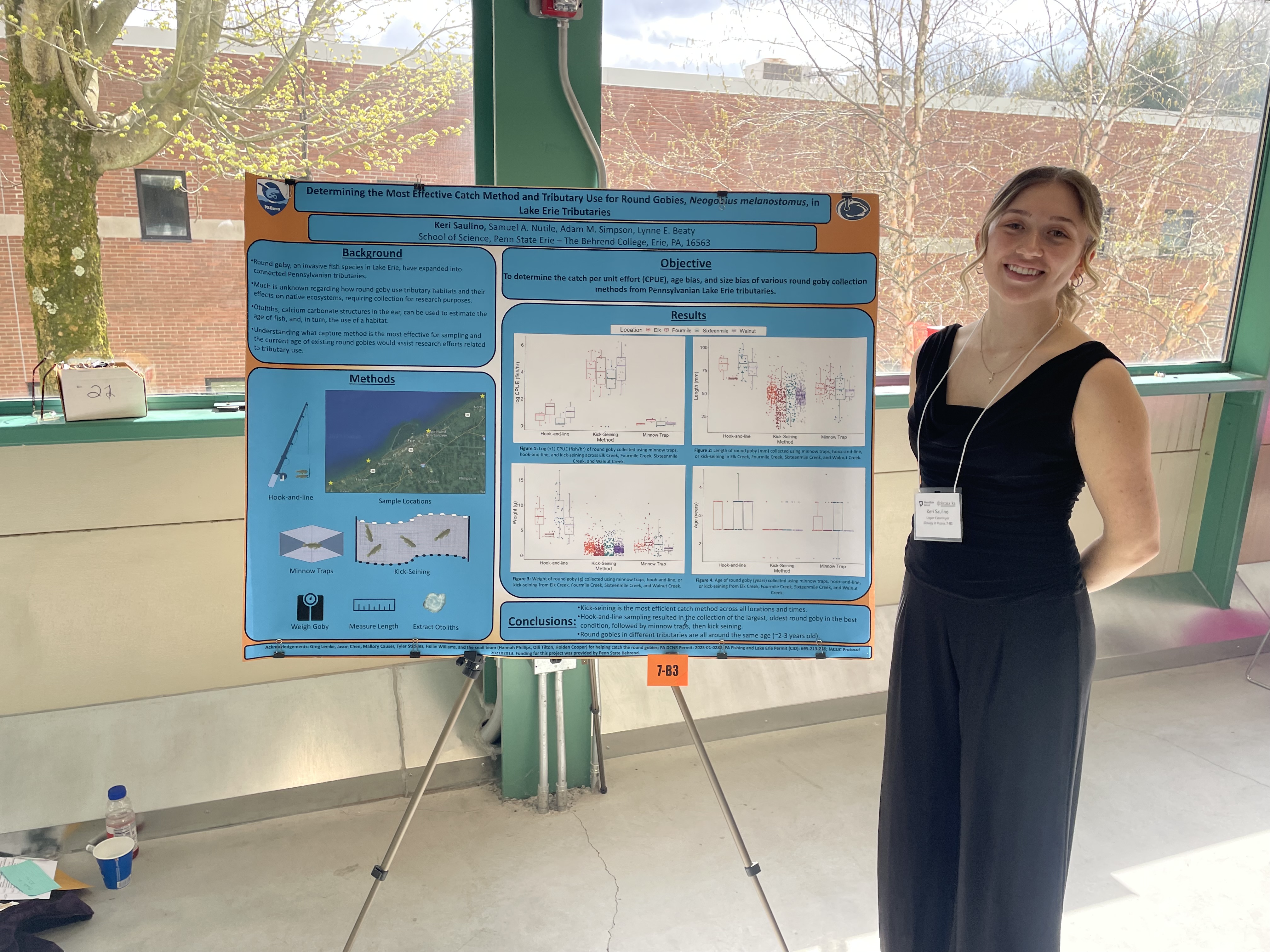
Standout Seniors 2025: Meet Keri Saulino (Environmental Science)

Penn State Behrend’s Class of 2025 is ready to make its mark on the world. We’re proud of our students and all that they have learned and accomplished here at Behrend. Over the next several weeks, we will introduce you to a few of our remarkable seniors who have conducted valuable research, pioneered innovation, overcome challenges, and engaged in college life in a big way.

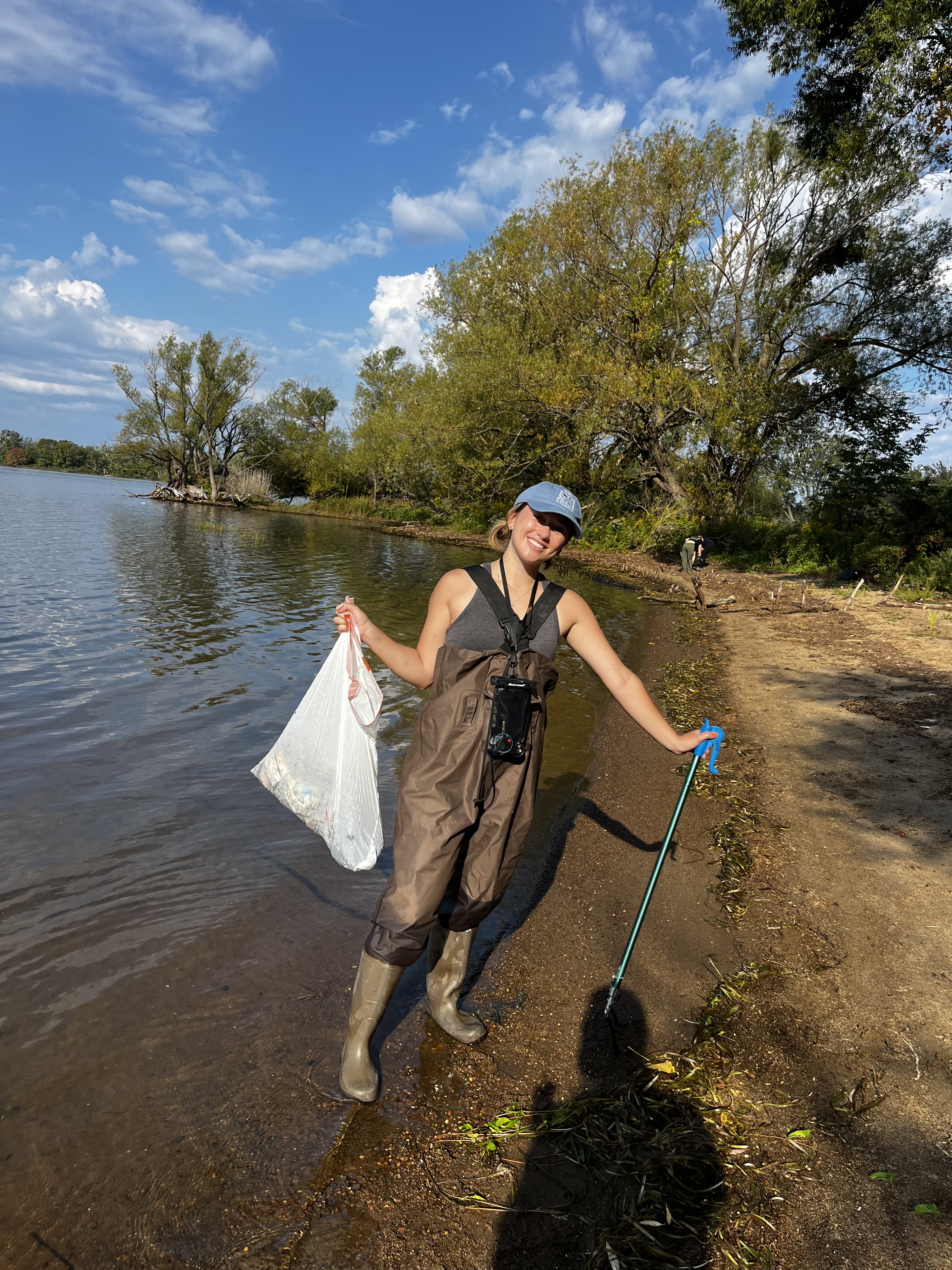
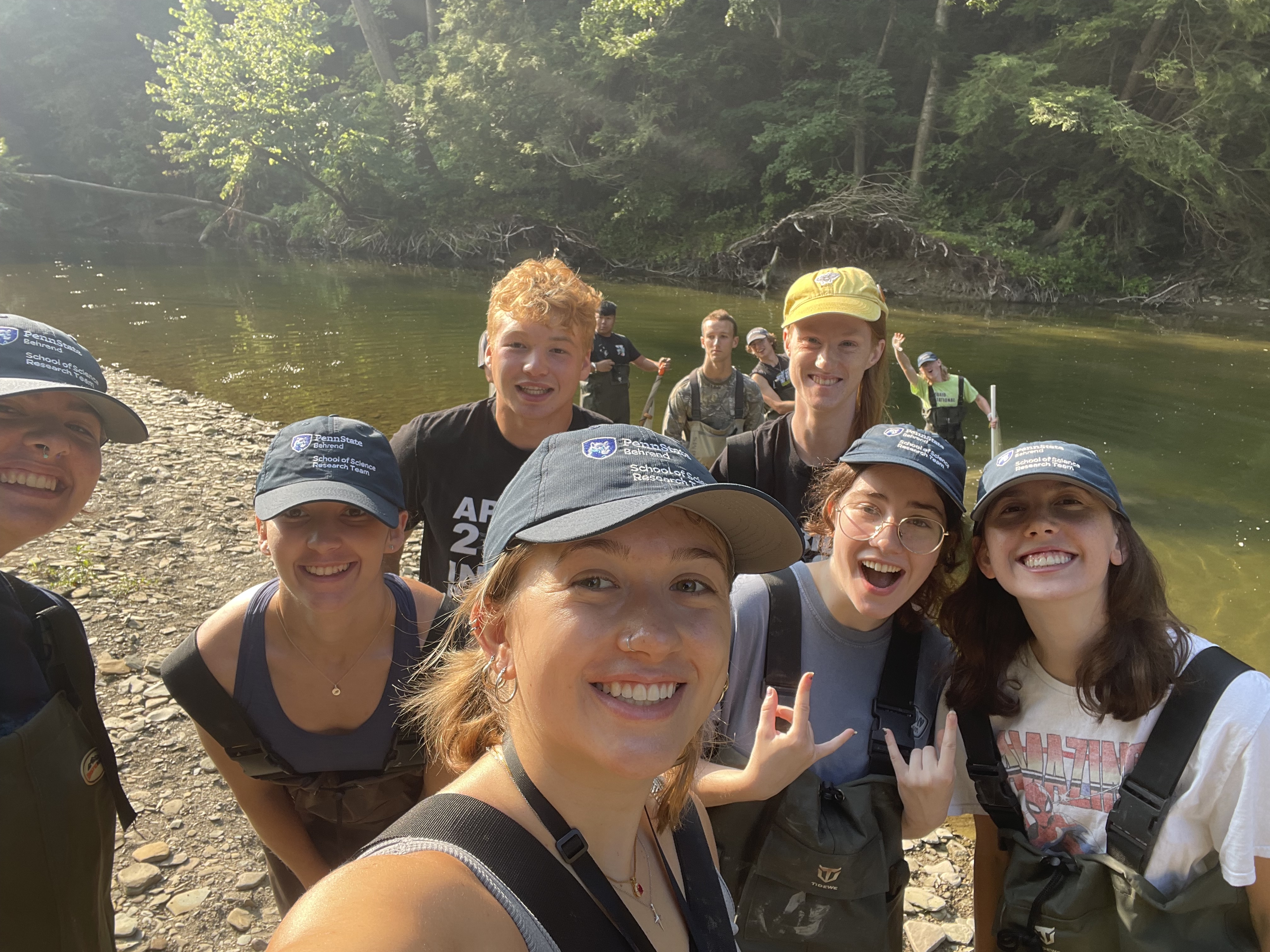
Today, we’d like you to meet: Keri Saulino

Major: Environmental Science

Minors: Biology, Sustainability Leadership

Hometown: Bethlehem, Pennsylvania

Scholarships: Gerald Bayles Memorial Scholarship, the Penn State Provost Award from the Schreyer Honors College, and the Chancellor’s Scholarship.

On choosing Behrend: The main reason I came to Behrend was because my major only exists here; however, the longer I have been at Behrend, the more I have appreciated it. The people at Behrend are so friendly, and having such easy access to Wintergreen Gorge, Lake Erie, and so many other natural areas for geoscience and ecology classes really enhanced my learning experience.

On choosing her major: I really care about the planet. The air we breathe, the water we drink, and the food we grow are all supported by the environment. Knowing how climate change affects our natural systems and the people across the globe inspired me to learn what I can do to help.

Her proudest accomplishment at Behrend: I earned second place in undergraduate oral presentations at the Regional Science Consortium conference for my research on round gobies. I had presented at conferences before, but never an oral presentation, nor had I won anything before.

Awards:  AMCC All-Sportsmanship Team Award twice for good sportsmanship; President Walker Award (4.0 GPA), Outstanding Freshman in Chemistry/American Chemical Society Award, First-Year Writing Award, President Sparks Award, Academic Excellence in Environmental Science – Research Award, Dean’s list throughout college years.

Campus involvement: I am a Schreyer Scholar and was on the Behrend Schreyer council as the secretary for one year and vice president for two years. I played on the women’s tennis team starting in my second year and was the team captain in my senior year. I am a Science Ambassador and am highly involved with Greener Behrend, where I served as treasurer for one year and as president for the last two years. This past year, I also took on the role of sustainable lab consultant, where I go into a lab on campus and work to find ways to make it more sustainable.

On overcoming challenges: Maintaining good mental health throughout school, and life in general, has been a bit of a challenge. I would describe myself as a perfectionist, but life is not perfect, making it sometimes hard to be proud of accomplishments or feel satisfied in my work. This has also made it difficult to start projects, as I worry about them not being “perfect.” The phrase “if something is worth doing, it is worth doing badly” has helped me a lot, showing that something done poorly is better than not trying at all. I have been trying to do more new things, no matter how bad, and it has helped me to let go of some of the pressure I put on myself.

What makes her unique: I was obsessed with cooking shows as a kid and would recreate dishes myself. This experience has been helpful in the present day because I love to do my own plant-based cooking and come up with new recipes. I love bringing a dish or sharing something I’ve made with others so they can taste how good vegan food can be.

What you may be surprised to know about her: I really enjoy seeing and making art, especially what may be seen as odd. I like pieces that confuse me and make me think. I did ceramics throughout high school, making a large jar with four faces on it, a Tim Burton inspired jack-in-the-box, a skull with vines coming out of it, and more. I am trying to get into painting right now, and I hope to have a ceramics studio someday.

Have passport, will travel: Aside from my career goals, my personal goals in the immediate future are do more traveling, go to more festivals, and attend more concerts. I went to the Bahamas and Iceland as a study abroad trip while at Behrend, and this opened my eyes to how much more there is to see and experience.

Her passions: A lot of my hobbies and interests have turned into my desire to be more sustainable. I love to watch videos on sustainable actions, read books on the causes of climate change, and talk to people about these topics. It brings me joy to know I am making a difference.

Advice for first-year students: Prioritize your schoolwork, but also include time for fun and for breaks. You will not forget the friends and memories you make along the way.

After her graduation in May, Keri plans to pursue a career in conservation or sustainable development. She also plans to attend graduate school after gaining some experience in her field.

Student Photo Project Explores Connection to Natural World

By Heather Cass, Publications Manager, Penn State Behrend

processed-BD4DD590-EDDD-4E86-A1B5-C2901D374CD0
Frontier Park in Erie. CREDIT: Railey Kranz

Students in Photo 202: Fundamentals of Professional Photography recently completed a photo essay project based on “The Land Ethic,” an essay written by Aldo Leopold in 1949 that argues for a deeper connection between humans and the natural world.

Leopold suggests that humans need to expand their concept of ethics beyond just people and animals to include the land—soil, water, plants, and more. The “land” is not something we own, but something we are a part of, and we should treat it with care and respect. Leopold proposes that we should think of ourselves as caretakers, responsible for maintaining balance and harmony with nature.

IMG_0458
Urban park. CREDIT: Chelsea Quijas

Tommy Hartung, assistant professor of digital media, arts, and technology, instructed students in the class to choose an area and create a series of five 360-degree panoramic images that document the landscape and the biome it contains.

“The site they chose could be anywhere from urban to complete wilderness,” Hartung said. “Students were also required to take notes documenting the ecosystem and use their notes to draft a 500-word essay to go with the images.”

A second part of the assignment involved time-lapse photography.

“The element of time and motion related to photography has allowed humans to see systems develop by compacting time into short motion clips,” Hartung said. “It allows a focus that the human experience may overlook about the location.”

Dobbin’s Landing in Erie. CREDIT: Evan Gerdes

The students’ essays are impressive and thought-provoking.  See for yourself at the links below:

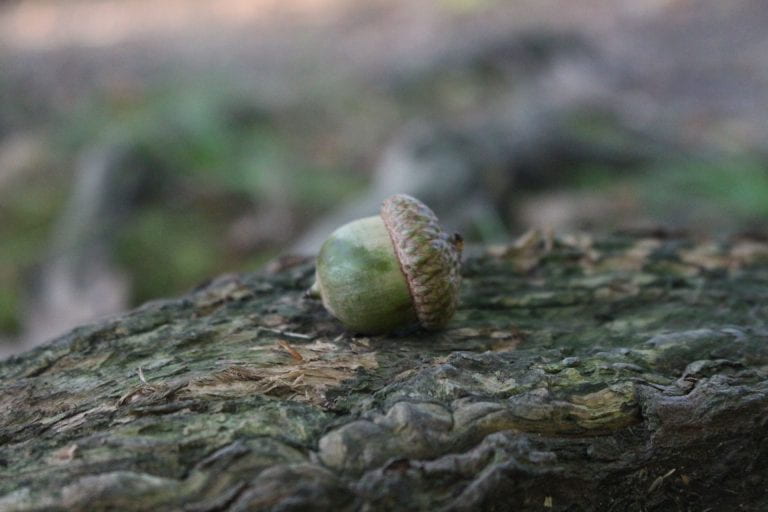
IMG_1160-768x512
An acorn in Wintergreen Gorge. CREDIT: Lyndon Herschell

Will Brake for Frogs, Salamanders, Newts, Spring Peepers….

By Heather Cass, Publications Manager, Penn State Behrend

newt

Why did the amphibian cross the road? To lay eggs on the other side.

The area around Penn State Behrend’s Advanced Manufactur­ing and Innovation Center (AMIC) in Knowledge Park is an amphibian’s paradise. Woods give way to marshy areas and small ponds, some tucked safely behind trees and shrubs, providing the perfect habitat for frogs, salamanders, and newts that live in woods but breed in water.

Each spring, a parade of am­phibians crosses Technology Drive and the AMIC parking lot to reach the ponds where they can lay their eggs. Many don’t make it, falling victim to vehicle traffic or plunging through the grates that cover road drainage tubes. Motorists passing by may not notice, but the faculty members and students in Behrend’s Biology program who study spotted salamanders do.

“Frankly, we’ve seen too many road-killed amphibians and egg-laden females stuck in the drains to not try to do something about it,” said Dr. Lynne Beaty, assistant professor of biology. “They’re not alone, though, as many wood frogs, red-spotted newts, and spring peepers also face those same hazards to reach breeding ponds in the spring.”

Beaty reached out to the college’s Maintenance and Operations (M&O) department with two solutions to mitigate the problem. One was to install “amphibian migration route” signs to encourage drivers to pay attention to amphibians on the asphalt. The second solution involves placing a mesh covering over the drains in the area to prevent small amphibians from falling through on their way to their breeding sites.

The signs, which were designed by senior Biology student Phoebe Will, are now installed, and a team of engineering students is working with M&O to create the mesh coverings for the drains.

“Our Maintenance and Operations group is always willing to help the college achieve its academic and research missions, especially when that involves protecting wildlife,” said Randy Geering, senior director of operations.

So, if you regularly travel Technology Drive, please go slow and keep an eye out for wildlife!

IMG_20220320_144515785_HDR

Don’t toss it, pickle it!

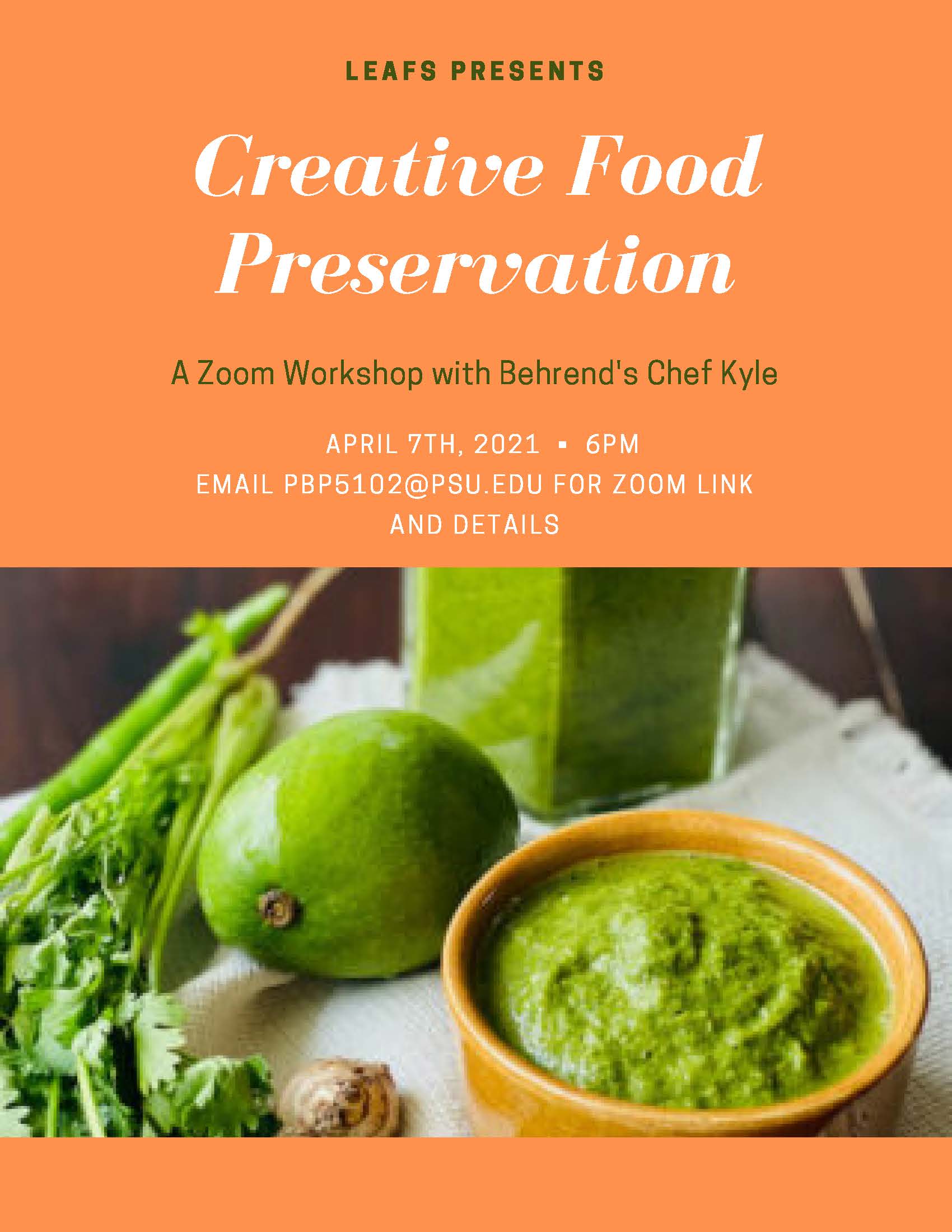
LEAFS Club to host Creative Food Preservation workshop with Behrend’s head chef

By Heather Cass, Publications Manger, Penn State Behrend

According to the Food and Drug Administration, 30 to 40 percent of food in the United States is wasted. That figure is particularly hard to swallow given that an estimated 35 million people in our country experience hunger every year.

“This means that the food isn’t being consumed or even turned into compost, but instead ends up in our landfills,” said Pearl Patterson, a senior Psychology major and president of the Leaders in Education and Action in Food Systems (LEAFS) Club. “While much of the change needed to develop sustainable food systems must come at the policy-making and law-making levels, being able to reduce waste in our own homes is absolutely of importance and can make an enormous difference.”

To help area individuals learn how to safely extend the life of their food, the CLUB is hosting a webinar on Creative Food Presentation Wednesday, April 7, at 6:00 p.m. with Penn State Behrend’s Chef Kyle Coverdale.

“Creative food preservation means using techniques that are traditionally used for preserving food, like pickling, while transforming the food into something new,” Patterson said. “For example, Chef Kyle will be demonstrating a very flexible pesto recipe.”

Making pesto is a great way to preserve leafy greens, such as cilantro, kale, or chard, which can spoil quickly in their original form. Once they are made into pesto, however, the greens will last much longer and can even be frozen for later use.

During the session, participants will also learn about different pickling methods and how to make sauerkraut and ricotta. Participants can buy the ingredients and cook right along with Chef Kyle from their own kitchens or watch and try it on their own later.

To register for the event and get a Zoom link and list of ingredients, email Patterson at pbp5102@psu.edu.

Creative Food Preservation (002)

Student garden interns spend summer sowing seeds of sustainability

By Heather Cass, Publications Manager at Penn State Behrend

67914587_2138250739801265_1950054429583474688_n

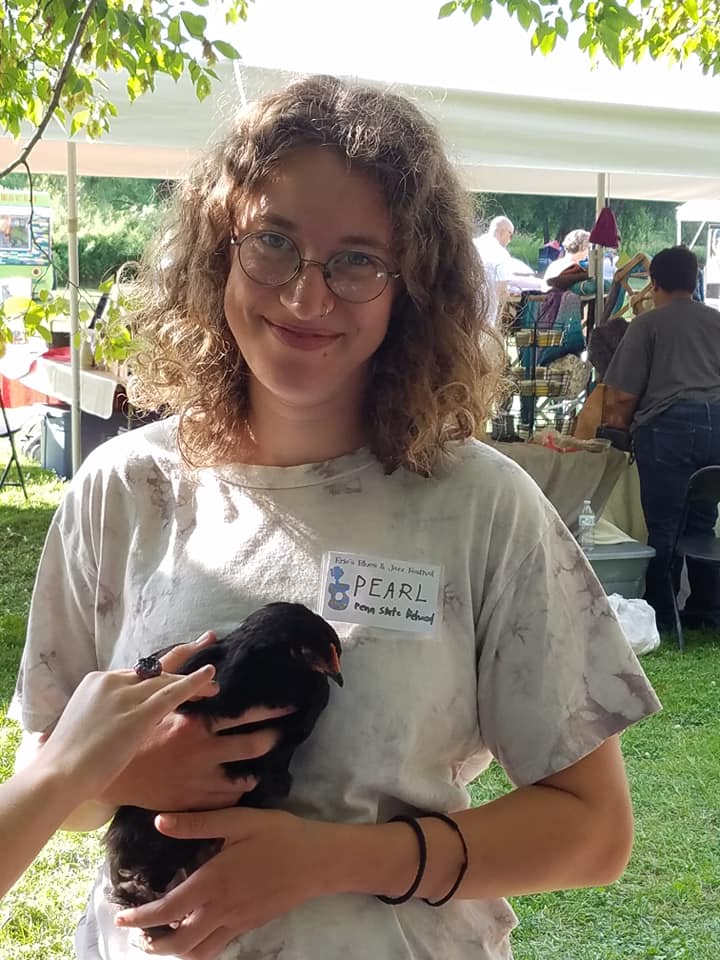
Cuddling chickens is not an activity you would expect at Erie’s Blues & Jazz Festival, an annual weekend-long summer music concert in Frontier Park. But two Penn State Behrend students, Jessie Johnson and Pearl Patterson, knew that a handful of hens at this popular event would be a great way to draw attention to their efforts to overturn a law against keeping chickens in the City of Erie.

Johnson and Patterson are spearheading the operation through Chicks4Erie, an online community they formed through Instagram and Facebook to spread the word about urban poultry-keeping.

“Allowing Erie residents to legally keep chickens will bring numerous positive benefits, including improving the environment through the reduction of pests like ticks and providing organic soil amendments for gardeners,” according to the Chicks4Erie mission statement written by Johnson and Patterson, both Student Garden interns at Behrend. “It will also increase self-sufficiency and food security through the production of eggs and contribute to the city’s encouraging overall trend toward urban agriculture.”

The Chicks4Erie initiative is just one of several projects that three Behrend students—Johnson, Patterson and Aydin Mitchell— have been hard at work on this summer as interns for the University’s Sustainable Food Systems Program.

The program, which launched at University Park three years ago, was expanded to Penn State Behrend in 2018 because of food systems already in place on campus. Among these is the student garden, started by the Greener Behrend student organization in 2016. Greener Behrend president, Celeste Makay, a senior Environmental Science major, has continued to help with the garden for the last two years.

Student Garden interns are responsible for the gardens on Behrend’s campus, but their work reaches far beyond weeding and watering.

“They run the campus CSA (community supported agriculture) program that we started, including generating a newsletter and recipes for members, supporting the Erie schools by serving as coordinators of the Jefferson Elementary School garden, and doing outreach programs throughout the district,” said Katie Chriest, sustainable food systems program coordinator for Commonwealth campuses.  “They also are active members of Erie’s Food Policy Advisory Council, and they are finetuning plans for a new campus club that will debut this fall,”

But, that’s not all. The student interns also host educational activities at Behrend for students from Bethesda Trinity Center and the Neighborhood Art House, staff an informational table at the Little Italy Farmers’ Market in Erie, and research expansion efforts for campus garden space and other sustainable food systems initiatives.

Mitchell, a senior Environmental Science major, didn’t have much gardening experience before this summer, but said he has learned a lot along the way. Not all of it is rooted in the ground, but in other vital connections.

“I thought I’d just be taking care of the gardens, but it turned out to be so much more than that,” said Mitchell, who oversees the Jefferson gardens and serves as the manager of education and outreach for the Student Garden intern program. “It’s really about making connections with people in the community and helping them see how vital sustainable food systems are and how and why they should care.”

Which brings us back to the Erie Blues & Jazz Festival’s Sustainability Village where Patterson and Johnson were so successful at making a case for raising poultry in the city that they quickly ran of petition pages to sign.

“At one point, I asked Jessie, who is just going into her sophomore year, what it feels like to be gaining so much support and enthusiasm for their initiative from residents and community leaders,” Chriest said. “She said she was just amazed that, at such a young age, she could have such an impact on the community around her. I’m not sure there’s a more powerful message we could hope to send to our students than that their work matters and that they can make the world a better, and more sustainable, place.”

This slideshow requires JavaScript.


When You Give an Engineer a Problem….

By Heather Cass
Publications Manager, Office of Strategic Communications,  Penn State Behrend

Plastics recycling - Valerie Zivkovich and Olivia Dubin - horiz.jpg

Valerie Zivkovich and Olivia Dubin, seniors majoring in Plastics Engineering Technology.

Engineers are problem solvers by nature. So it should come as no surprise that when faced with a recycling conundrum, students in Penn State Behrend’s School of Engineering saw an opportunity.

The quandary

China, which is the largest consumer of recycled material from the United States, has significantly reduced the amount and types of material it will accept and introduced strong restrictions on contamination, i.e. trash mixed in with recyclables.

This has forced a wave of changes in the U.S. recycling industry.

“Waste Management has had to adjust the way it recycles materials to ensure those materials pass through numerous quality checks and has also found it necessary to pass on increased costs to customers, including Behrend,” said Randall Geering, senior director of business and operations. “The impact of these changes is being felt everywhere, not just on our campus.”

The bottom line: Recycling is becoming harder and more expensive for consumers and businesses to do and unprofitable for material recovery facilities.

It is not hard to see how this could lead to complete breakdown in the recycling system.

Seeds of change

Recycling and the waste generated by landscaping containers is what led Valerie Zivkovich, a senior from Gibsonia, Pennsylvania, to the Plastics Engineering Technology (PLET) program at Penn State Behrend.

“I worked at a vegetable farm in high school, and we were constantly throwing out plastic containers that the plants were in,” Zivkovich said. “We couldn’t reuse them because of potential contaminants in the soil, and I understood that, but I thought there had to be a better way. I wanted to develop a better plastic for agricultural use.”

Zivkovich and her capstone project partner, fellow PLET senior Olivia Dubin, had heard the uproar from the Penn State Behrend community about the prospect of no longer recycling and realized the campus could recycle its own plastic bottles.

At a campus-wide meeting with Waste Management officials, Zivkovich and Dubin presented a proposal to collect, clean, and pelletize bottles into raw material that could then be used to create new products.

“Basically, we’ll collect plastic bottles—primarily PET (polyethylene terephthalate) and PP (polypropylene) such as pop bottles, Starbucks cups, etc.—then grind them up into tiny pellets and use or resell them to a vendor,” Zivkovich said.

They worked on their initial plan with Jason Williams, assistant teaching professor of engineering.

“I think this could work because we already have most of the equipment and skills in our plastics department,” Williams said. “We are unique in that we have both a plastics factory and a research facility. This combination of resources makes Behrend a great place to test something like this.”

Waste Management agreed and awarded the students a $3,000 Think Green grant to help get the program going.

“The recycling industry is changing, and it’s going to take projects like this one to help identify different markets for material,” said Erika Deyarmin-Young, public affairs coordinator at Waste Management.

Williams is excited about the possibilities.

“I think this initiative is a valuable teaching tool and a demonstration of how engineers can make things better,” he said. “It will also give us tools we can use to study ways to handle post-consumer waste. I think there is a lot of research opportunity in developing automatic sorting technology and material handling of plastics.”

“As PLET majors, we learn about the impact and importance of recycling,” Dubin said. “We are excited to have come up with a solution that our whole campus could be involved in.”

It takes a village

The first step, Zivkovich said, is spreading the word about what can and can’t be recycled and the importance of rinsing containers before tossing them into the recycling bin.

“There definitely needs to be a campus-wide education campaign,” she said. “We need to teach others how to recycle properly with information sessions, posters, and clear signage on the collection containers.”

“We want students to get involved with every aspect of the recycling process,” Dubin said.

Other priorities include finding more funding and securing workspace. “We need a new grinder and that’s $45,000,” Zivkovich said. “We’re applying for grants to find that funding. As for lab space, we think the Merwin building in Knowledge Park would be ideal.”

Another important part of the equation: volunteers from all four schools.

“We don’t want this to be a project only for PLET or engineering students,” Williams said. “This is an opportunity for students across the college to get involved with these recycling efforts.”

Zivkovich plans to reach out to the college’s sustainability program and Greener Behrend club for help securing volunteers to sort and collect plastics.

“Whatever major you are in, you’ll deal with recycling somewhere—at home, at work, in your community,” Zivkovich said. “This effects all of us whether you work in the industry or not.”

Artistic barrels allow Behrend to save for a non-rainy day

By Heather Cass
Publications & Design Coordinator, Penn State Behrend

abloom

Penn State Behrend is known for its park-like campus with lush lawns, natural wooded areas, raingardens, landscaped pathways, and colorful flowerbeds.

While Mother Nature does a pretty good job of watering at Behrend, there are times the college’s groundskeeping crew has to step in and give parched plants a drink.

But just as a mother’s milk is best for babies, Mother Nature’s “milk” is best for plants. They thrive on natural rain water, which contains no chlorine, ammonia, fluoride, or other chemicals found in municipal water systems.

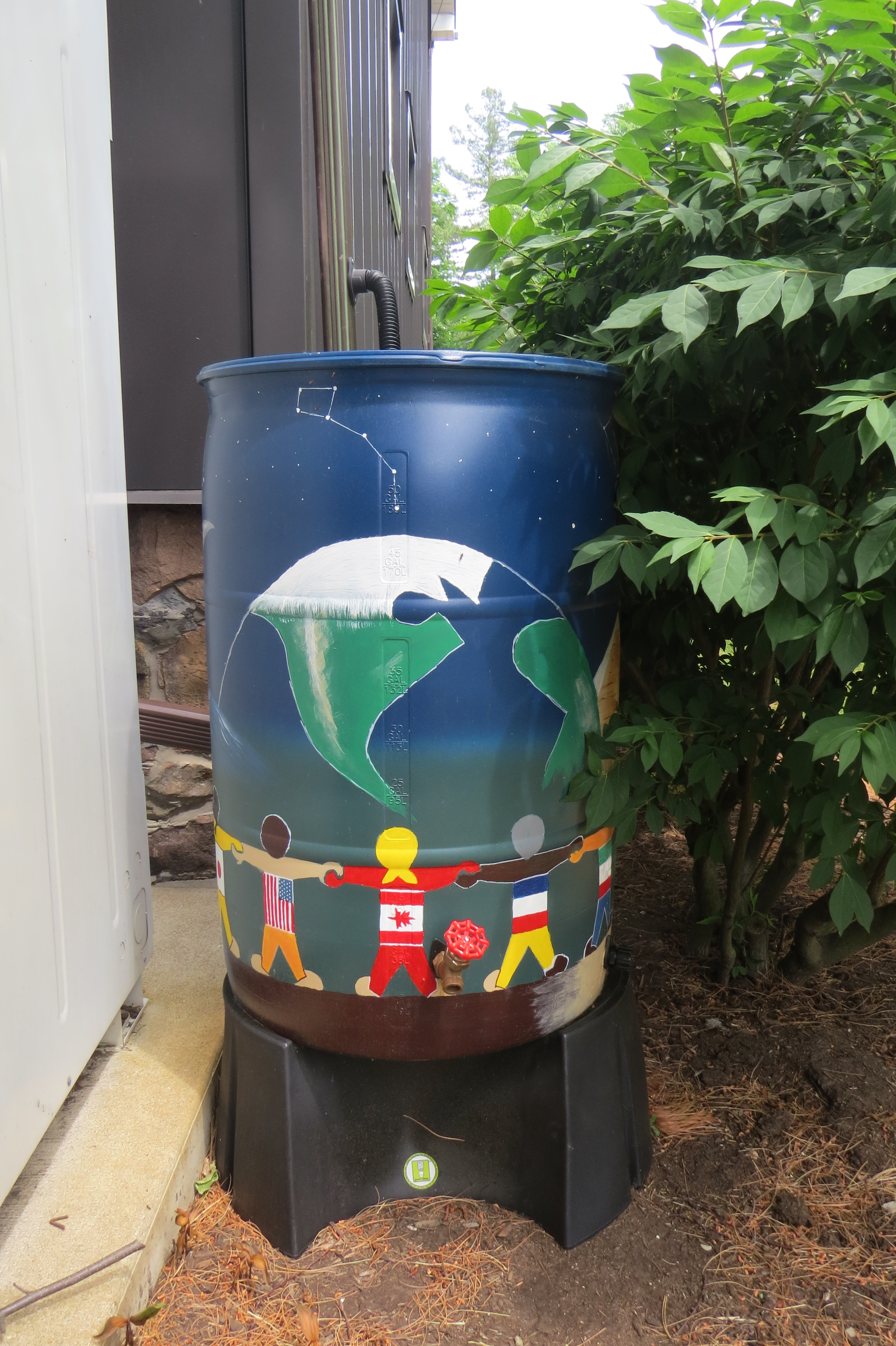
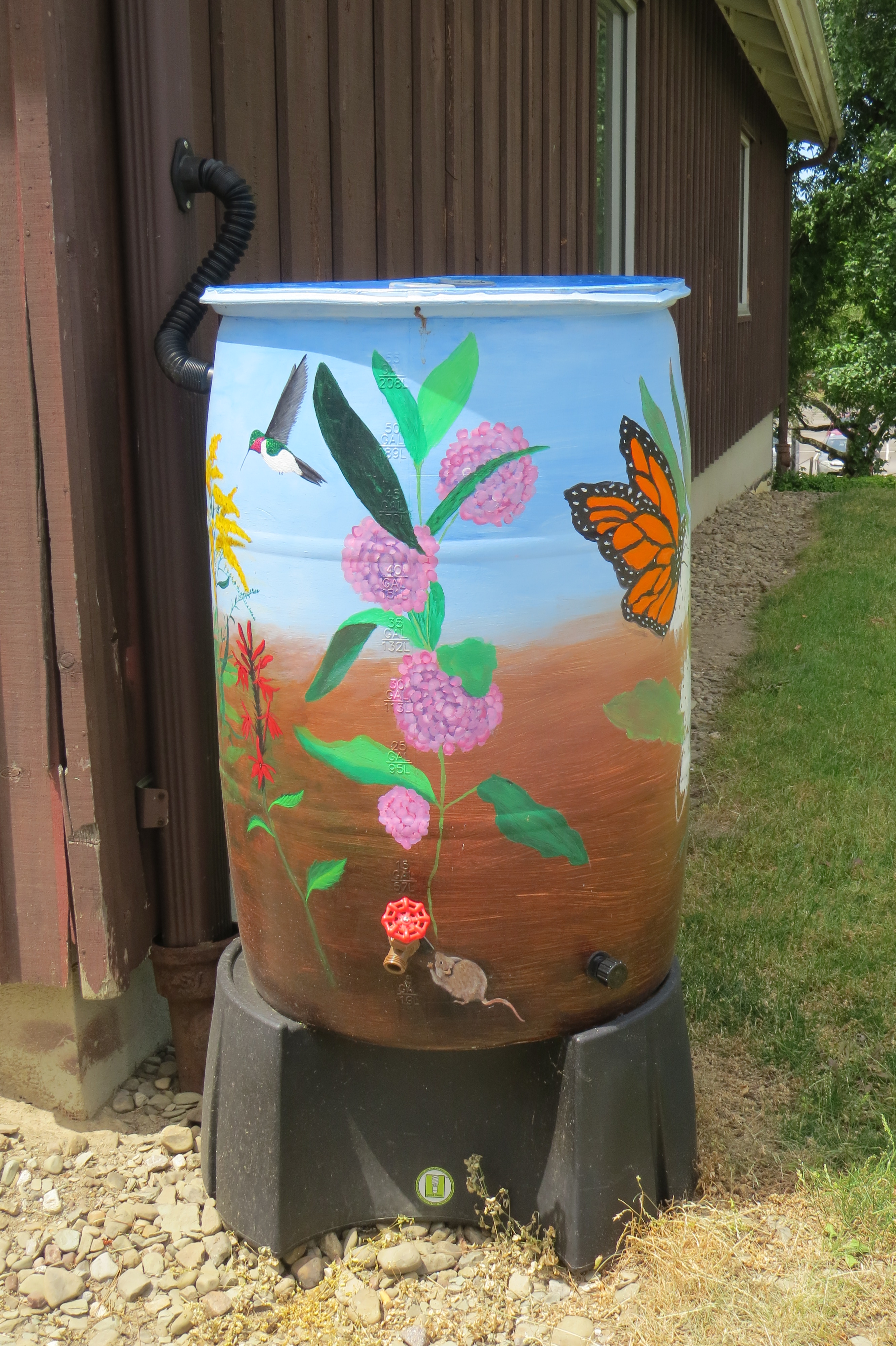
Now, thanks to a public art project—Don’t Give Up the Drip—conceived and orchestrated by Erie-area environmental agencies, Behrend is able to collect and save rain water for plants in three new fifty-five gallon rain barrels on campus—one at the Health and Wellness building, one at Turnbull Hall, and one at Erie Hall.

These aren’t just plain plastic rain barrels though; they are works of art.

“Our goal was to showcase our local art talent while educating the community about the benefits of harvesting rainwater and water conservation and health,” said Kristen Currier, environmental educator at the Erie County Conservation District, one of the organizations behind the art project.

A total of fifty-two plastic barrels were transformed by forty-six different artists. The barrels then were placed in publically accessible locations throughout the Erie area, including three at Penn State Behrend.

The rainwater will be used to quench the thirst of Behrend’s vast flora.

“Erie receives above average rainfall annually. Still, throughout the summer we experience shortages and the rain barrels are extremely useful then,” said Ann Quinn, director of Greener Behrend, an environmental service club on campus. “The water stored will be used to water nearby plants on our campus in a sustainable, simple way.”

Resulting, of course, in a greener Behrend.

4 reasons to collect rainwater:

  • It is better for your plants — it’s fluoride and chlorine free.
  • It will lower your water usage (and water bills).
  • It cuts down on flooding and erosion of the land around buildings.
  • It reduces runoff — the water that washes pollutants into our streams and lakes during rainstorms.

Behrend’s Barrels

Health & Wellness

“The Green Man” by artist Luke Gehring

Location: Health and Wellness Center


Turnbull

“Save our water” by artist Lewis Prest

Location: Turnbull Hall


Erie Hall

“The Life Cycle of the Monarch Butterfly” by artist Downia Glass

Location: Erie Hall

Want to see all the barrels?

For a map to the location of all the rain barrels in the Erie area, click here.