By Steve Orbanek Marketing Communications Specialist, Penn State Behrend
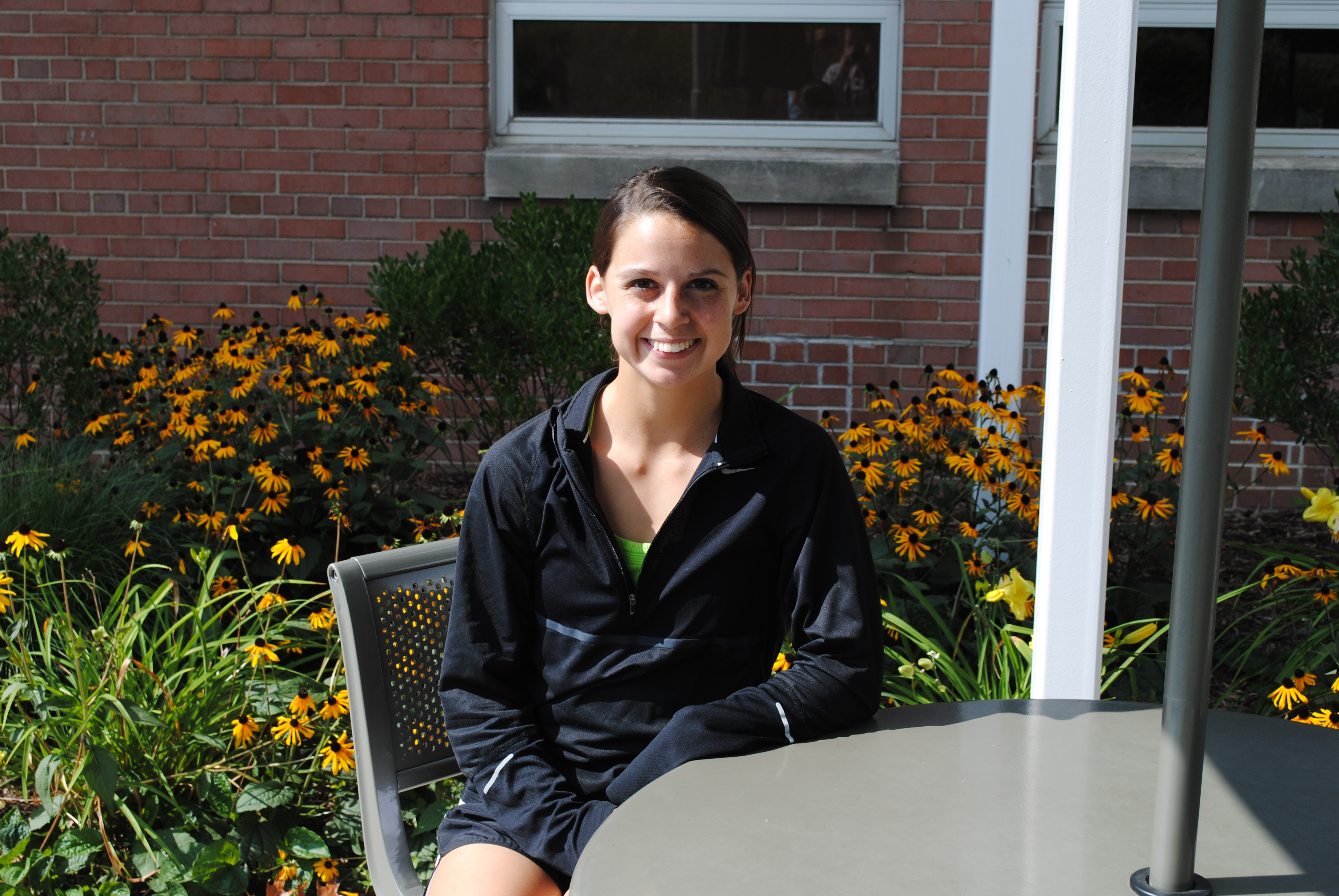
Miranda Boatman took a deep breath as she boarded the Lockheed C-130 Hercules aircraft. After two-plus weeks of training, the time had finally come.
Within minutes, the Penn State Behrend junior childhood and early adolescent education major would be more than 1,200 feet above ground. Then she would jump from the aircarft and fall at speeds exceeding 130 miles an hour.
“Once we’re in that plane, and they open that door, that’s when it gets real,” said Boatman. “There’s only one way down.”
The Bellefonte, Pennsylvania native spent three weeks this summer completing the Army’s Basic Airborne Course at Fort Benning, Georgia. The course is better recognized by its nickname — Jump School.
“They teach you how to do a PLF — parachute landing fall,” said Boatman, a member of The Pride of Pennsylvania ROTC Battalion (which includes students from Penn State Behrend, Gannon University, and Mercyhurst University). “For me, it wasn’t as bad because I’m smaller, so I hit the grounder lighter.”
The training schedule that leads to the completion of an airborne jump is significant. It’s broken down into three weeklong intervals: ground week, tower week, and jump week.
Once the training has been completed, participants are expected to be able to execute jumps, deploy parachutes, land safely, pack swiftly, and move to a designated rally point.
Boatman said the training could be tedious at times, especially during ground week, but it’s a tried-and-true process.
“With ground week, you start on a (34-foot) platform and start swinging back and forth. They say they’ve been teaching these same methods for over twenty years, and it obviously works,” Boatman said.
During week two, participants practice jumps from 250-foot towers. The week is devoted to teaching all of the different phases of parachute flight.
The training process is far from easy. According to Boatman, more than 150 participants in her training group were dropped from the training because their jumps were not proficient during weeks one and two.
Those who made it to week three were in for some real, high-flying fun.
Boatman made a total of five jumps from the aircraft, including a night jump that proved to be the highlight of her experience.
“After you hit the ground on that jump, you knew you were getting your wings, so that was pretty great,” she said. “Everyone’s adrenaline was going after that jump, and everyone had their own little story about it.”
Boatman’s success in jumping should not come as a surprise. It’s in her blood.
Her father, John Boatman, completed the same training years earlier before serving in the National Guard. He was on hand for his daughter’s jumps and presented her with her airborne jump wings on the final day of the training.
Boatman plans to follow in her father’s footsteps and join the National Guard after her graduation in 2015. She’s thankful for the experiences ROTC has given her, especially her unique “summer school” venture.
“I just had such a great summer,” she said. “ROTC has provided me with so many opportunities that I wouldn’t have otherwise had. I wouldn’t have been able to jump out of a plane. That’s just not something a normal college kid gets to do.”
By Steve Orbanek Marketing Communications Specialist, Penn State Behrend
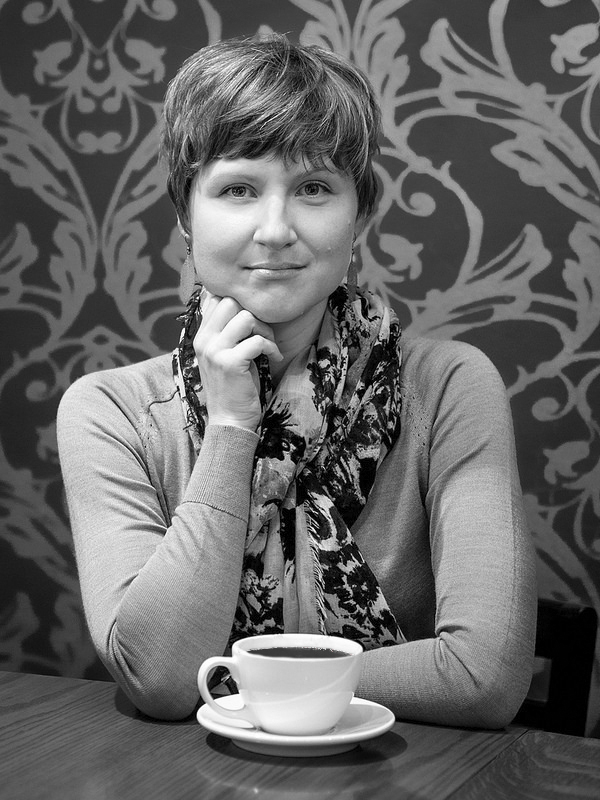
Author Heather A. Slomski ‘03, a Penn State Erie, The Behrend College, alumna, always knew that she wanted to write.
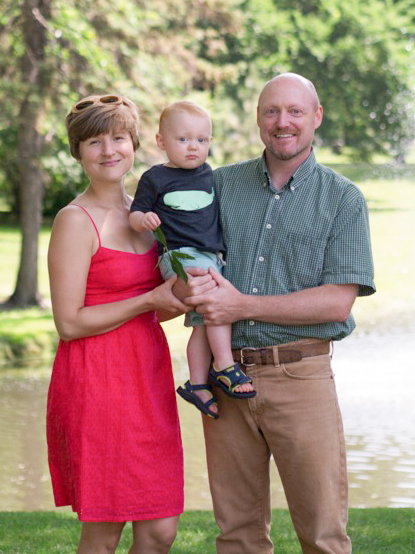
She’s been drawn to stories—both reading and writing them—ever since she was a child, and so it makes sense that her son, 19-month-old Oscar, is turning out to be a voracious reader himself.
Slomski, who earned her B.A. in English with an emphasis in Creative Writing in 2003, and her husband, Vincent Reusch, spend most of Oscar’s waking hours engrossed in children’s books.
“It’s one of the best parts about being a parent,” Slomski says.
Publishing a book herself was a goal that was always driving Slomski, who has had stories published in TriQuarterly, American Letters & Commentary, Columbia: A Journal of Literature & Art, The Normal School, and other journals.
Mission accomplished.
Her crowning achievement comes this fall. That’s when her first book, The Lovers Set Down Their Spoons, will be released from the University of Iowa Press. The book, is a collection of fifteen short stories, was a labor of love for Slomski.
She worked on it while pursuing her M.F.A. at Western Michigan University and then afterward when she held the Axton Fellowship in Fiction at the University of Louisville.
“Not everything I wrote fit together,” says Slomski, who also is an adjunct professor at Concordia College. “It actually took me a long time to feel as if I had a finished manuscript.”
Yet, when it was finished, Slomski says she had a strong sense of accomplishment. The book has already made waves, receiving the 2014 Iowa Short Fiction Award, a national award given to a first collection of fiction in English and administered through the Iowa Writers’ Workshop.
“It’s really rewarding because I feel good about the individual stories and the collection, but I feel validated for it to be recognized and win this award,” Slomski says.
Slomski says her two favorite stories are the title story and the last story in the collection, “Before the Story Ends.”
“I like the title story a lot because it takes the structure of a play and kind of exists on the border of drama and fiction,” Slomski says. “The last story has some magic to it, and it’s also an exploration of loss, and I felt I achieved something with that story. The two stories almost don’t fit in the same book, but they do. They have totally different tones but both deal with loss in a very different way. The title story actually ends up being about gaining something, which is, of course, the opposite of loss.”
Slomski has already begun work on her next project, The Starlight Ballroom, a novel that tells the fictional story of the lives and deaths of her paternal grandparents.
Education: Earned B.A. in English with an emphasis in Creative Writing from Penn State Behrend; earned M.F.A. in Creative Writing from Western Michigan University.
Fellowships and Awards: From 2008-2010, Slomski held the Axton Fellowship in Fiction at the University of Louisville, where she taught fiction and organized a two-day literary festival titled “The Story of Form.” She was awarded a 2013 Minnesota State Artist Initiative Grant, which afforded her travel money to spend six weeks in Krakow and take a course release from teaching. While there, she conducted research for her novel-in-progress, The Starlight Ballroom. She also was awarded the 2013 Minnesota Emerging Writers’ Grant, which allowed her to take a course release, so she could continue working on the novel.
Influences: Steven Millhauser, Lydia Davis, Charles Simic, Anne Carson, Angela Carter, Bruno Schulz
Favorite book as a child: “I would say the book I kept turning to was The Lion, The Witch and the Wardrobe because it has that mix of reality and the fantastic. As a child, and even as an adult, you just don’t question it and say ‘This could never happen,’ or ‘This is not how the world works.’”
Advice for aspiring writers: “Find a writing schedule—a time and a place where you can write, every day, if possible—and stick to it. Also read a lot. Continually seek out new authors to read, and take care not to overlook literature in translation, literary journals, or writers who publish with small presses.”
Did you get through all those titles I gave you last week? No? Slacker! (Just kidding, of course). Break out your to-read list because I’ve got some more suggestions for you straight from lips, er, keyboards of the book-loving faculty and staff members at Penn State Behrend.
Without further ado, recommended summer reading part two:
Black Like Meby John Howard Griffin is one of the shortest and most powerful books I’ve ever read. It was published fifty years ago, and I read it as a teenager and reread it five years ago. It is nonfiction and tells how the author, through medication and dye, transformed himself into a black man to experience what it was like to be black in the south in the 1950s. It’s hard to believe how recent this history is.” — Dr. Eric Corty, associate director of the School of Humanities and Social Sciences and professor of psychology
“I’ll second Black Like Me. I read it several years ago and it really sticks with you. I use Ann Fadiman’s The Spirit Catches You and You Fall Down in class, and every time I read it I’m stuck by how well she captures both the culture clash of the new Hmong refugee and the western medical model’s failing. For fun, I’m reading the Outlander series by Diana Gabaldon. It consists of eight historical novels written about the Scottish Jacobite upraising and those who eventually immigrated to America. I’ve heard there is a TV series about it being filmed in Scotland now.” — Dr. Dawn Blasko, interim associate dean for Academic Affairs and associate professor of psychology
I recommend House of Breath, Come, The Restorer and Arcadio, all by William Goyen, who is considered in Europe to be one of the greatest writers America has ever produced. Ironically, he’s little known here. All his stories and novels are wonderful, but the books recommended are, in my opinion, his best three novels. The House of Breathwas his first novel and Arcadio was his last (published posthumously). Enjoy. — George Looney, professor of English and creative writing
I would recommend The Moon is a Harsh Mistress by Robert A. Heinlein. Not only is he one of the best science fiction writers ever and not only did he receive his fourth Hugo Award for this novel, but this book is really imaginative and captivating. Heinlein depicts an entire society on the moon (and its rebellion against Earth) several years before we had even step foot there. This novel is science fiction at its best. — Dr. Amy Carney, assistant professor of history
I found The Presidents Clubby Nancy Gibbs and Michael Duffy to be inspiring. It’s about how current and former presidents have cooperated through time to accomplish great things. For fiction, I recommend Behind the Beautiful Forevers by Katherine Boo. It’s a great story about “life, death, and hope in the Mumbai undercity.” — Dr. Greg Filbeck, professor of finance
I’ll recommend One Summer: America in 1927 by Bill Bryson. Bryson is a classic storyteller known for his bestsellers such as A Walk in the Woods and A Really Short History of Nearly Everything, but One Summeris the book we all should have all read in some high school or college history class. It consists of juicy and amazingly true stories of Charles Lindbergh, Babe Ruth, Henry Ford, Calvin Coolidge (who seems to have been the worst President ever), and many others of that era. It’s fun and kind of makes you feel intellectually thin for not knowing more history. — Dr. Darren Williams, professor of physics and astronomy
I recently discovered that British author Mary Stewart (The Crystal Cave, among many others) died this year at age 97. Her suspense and romance novels featured independent females in exotic locales and they enthralled me as a teenager. I’ve been picking them up at yard sales for years and want to re-read them this summer. She also wrote several Arthurian novels that were very popular. — Jane Ingold, associate librarian at Lilley Library
I just finished Delivering Happiness a Path to Profits, Passion, and Purposeby Tony Hsieh who is the CEO of Zappos. I had heard that Zappos was a tremendous company, and I like inspirational books. It was good for me to read something out of my field, too. It caused me to do a lot thinking outside of the (shoe) box. — Ann Quinn, lecturer in biology
Mr. Spaceman by Pulitzer Prize winning author Robert Olen Butler is an intensely clever, funny, and poignant book. The prose is spare and lovely. The plot weaves historical events from the flight of the Kitty Hawk through the Vietnam War into a larger, compelling story about Desi, the spaceman of the title, his wife, Edna Bradshaw, their cat, and a bus of twelve people he abducts. — Ruth Pflueger, director of the Learning Resource Center and lecturer in English
The Atomic Chefby Steven Casey contains true stories of human error and things that go really wrong and why, from switching embryos to getting locked in an ATM room. I actually use this as a textbook in my upper-level human factors psychology classes. The Zen of Zombie Better Living Through the Undead by Scott Kenemore is a fun and easy read. It is kind of like Don’t Sweat the Small Stuff but from a zombie’s point of view. The Sword of Truthis the first in a large fantasy series by Terry Goodkind. And, finally, 1408 by Stephen King is an interesting, shorter horror-type story. They made it into a movie a few years ago, but it didn’t do the book justice. — Dr. Heather Lum, research associate in psychology
Ah…summer. Time to kick back with a good book. We asked some of the faculty and staff members at Penn State Behrend to share their suggestions for summer reading.
If, like me, you always forget which books you want to read in the future, try one of these strategies.
1. Make a list using the “note” feature on your smart phone or tablet, and you’ll always have your list with you when you’re browsing at the Lilley Library or out shopping.
Or…
2. Create a wish list at an online bookseller (I use Amazon) and add titles to your “to read” list when friends recommend them. It’s a convenient and easily-accessible way to keep track of books you want to read. (Tip: See if you can borrow the book through the Lilley Library before you purchase. I’m linking the books below to Amazon just so you can see the covers and read customer reviews, if you wish.)
OK….get your pencil/mouse/smartphone ready because you’re going to want to add a lot of these books to your list. I’m going to give you half the list today & the other half next Thursday, July 3).
I am finishing Donna Tartt’s The Secret History. A bit too much description of the sometimes drug-addled state of the protagonist, but a good summer read. Also discovered a very talented Sardinian writer, Michela Murgia. Her best known work, Accabadora, is translated into an excellent English version and is just haunting. — Dr. Sharon Dale, associate professor of art history
Life, Animated: A Story of Sidekicks, Heroes, and Autismby Ron Suskind is on my summer reading list. I’ve heard that it is a wonderful story that provides a unique perspective into the growing population of people diagnosed on the autism spectrum. Oh, and it includes Disney references, so I’m happy. — Dr. Carrie Payne, coordinator for strategic proposal development.
Catching Fire: How Cooking Made Us Humanby Richard Wrangham is an interesting look at what might possibly have led to humans being who we are today. Much evidence is given through prior anthropological work and cases. There’s not too much jargon and it’s easy to read. Also, Bad Monkeyby Carl Hiaasen. It’s a very sarcastic and witty tale of a typical nature-loving protagonist versus an environmental destructive antagonist. — Dr. Mike Naber, lecturer in geosciences
I am reading The Secret Life of Pronouns: What Our Words Say About Usby social psychologist W. Pennebaker this summer. This is a very insightful book on how “words… are like fingerprints… windows into people’s personalities.” — Dr. Carol Wilson, assistant professor of psychology
As one of Behrend’s resident sport fanatics, I’ll recommend Play Their Hearts Outby Sports Illustrated writer and Pulitzer Prize winner George Dohrmann. The non-fiction title chronicles Dohrmann’s eight years spent covering the grassroots AAU Basketball scene and the seedy nature of the sport. In the book, he details how coaches almost view their players as investments and reveals the questionable role that sneaker companies play in youth basketball. Whether you’re a sports fan or not, this tale of corruption, greed, and power makes for a must-read. — Steve Orbanek, marketing communications specialist.
Anything by Malcolm Gladwell (Tipping Point, Blink, Outliers). He is one of the most popular storytellers who brings a different flavor to social trends. Driveand A Whole New Mind are two of my favorites by author, Daniel Pink. I’d also recommend Emotional Intelligenceand Focus by Daniel Goleman, who is a psychologist who has an amazing talent for explaining today’s wicked issues with psychological theories. Creativity, Inc.,written by Pixar CEO Ed Catmull is an amazing book. And, finally, The Charisma Mythby Olivia Fox Cabane is a must-read for everyone. — Dr. Pelin Bicen, assistant professor of marketing
Redeployment by Phil Klay has received great reviews. It’s is a book of short stories by a former Marine who served in Iraq. Each story is written from the point of view of a different narrator – foot soldier, chaplain, foreign service officer, to name a few. The stories are compelling as they provide insight into the challenges and suffering of war from different perspectives. — Dr. Rick Hart, director, Lilley Library, who reminds us to “Think of the Lilley Library’s ‘Browsing Collection’ for your summer reading needs!”
I just finished The Goldfinch, Donna Tartt’s Pulitzer-Prize winning book about a 13-year-old boy who miraculously survives an accident that kills his mother and is abandoned by his father, only to be taken in by the family of a wealthy friend. Don’t let the book’s bulk (2.1 pounds in hardcover) scare you off – The plot flies. — Chris Palattella, marketing communications coordinator
Empty Mansionsby Bill Dedman. This is a non-fiction book about Huguette Clark, an heiress to a huge fortune amassed by her father. Of course, all this money led to lots of family drama. Huguette lived the last twenty years of her life in a hospital while her two New York City luxury apartments, her mansion on the coast of California, and her country home in Connecticut sat empty, except for the property caretakers. Interestingly, I just read an NPR story that said many of Huguette’s belongings will soon be going to auction. — Dr. Mary-Ellen Madigan, senior director of enrollment management
That should get you through the week. 😉 I’ll post more next week — Thursday, July 3!
By Steve Orbanek Marketing Communications Specialist, Penn State Behrend
Call it extra motivation. Call it an added incentive. Call it a chip on her shoulder.
However you label it, it’s clear there’s something that drives Kristina Peszel.
“When I first went to grade school, I was one of the youngest kids in my class. Because of that, I felt as if people questioned me and my ability,” says Peszel, a senior English major with the professional writing option at Penn State Erie, The Behrend College. “Since then, it’s driven me. I have always had this need to stand out and prove myself.”
Mission accomplished.
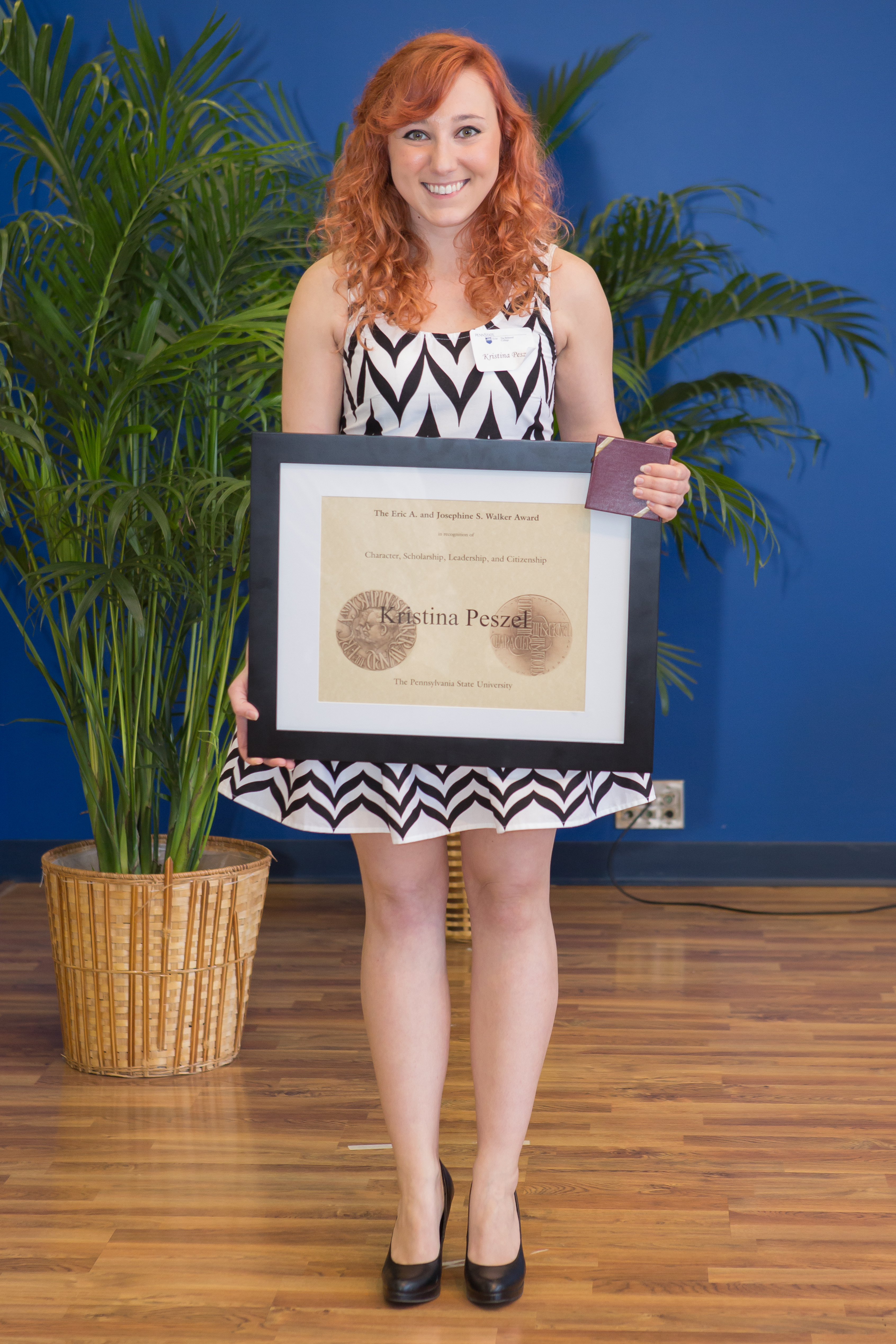
In her time at the college, Peszel has been a standout student, as evidenced by the Eric A. and Josephine S. Walker Award she won at this year’s Honors and Awards Convocation on April 27. The award recognizes a student whose outstanding qualities of character, scholarship, leadership, and citizenship have been directed into student programs and services.
Peszel was thrilled to have been chosen for the award.
“It was really exciting, and it felt like recognition of everything that I’ve done on campus,” Peszel says.
It was a much deserved honor.
The Erie native has a 3.96 GPA and is the lead writing tutor at the Learning Resource Center. She’s served as the vice president and secretary for both the Alpha Sigma Tau sorority and Omicron Delta Kappa, the national leadership honor society. She’s also been a member of the Lion Entertainment Board, Reality Check, Studio Theatre, and a contributing writer for the Behrend Beacon.
Through her campus involvement, Peszel learned that she prefers to be busy. She thrives on activity, one reason she believes she’s been successful.
“If I have enough time to watch television, I feel as if I’ve forgotten something,” says Peszel, who will graduate in December.
Things have not slowed down this summer for Peszel, who is interning at Erie Insurance in the company’s IT department. The work she is doing relates directly to her experiences as lead writing tutor in the Learning Resource Center.
As a tutor, Peszel often edited various engineering papers, which provided her with skills and experience in technical writing. It has led her to think of her future in a different light.
“I realized that I’m not just a humanities student, but I can do the technology thing too,” Peszel says.
Ruth Pflueger, director of the Learning Resource Center, has worked with Peszel for the past three years at Penn State Behrend.
“Kristina is remarkable in the number of students she has impacted during her time at Behrend. She has tutored literally hundreds of students and also has a leadership role in the Learning Resource Center, organizing the Composition Support Program and mentoring new writing tutors,” Pflueger says. “Her professionalism, energy, and sincere desire to help others succeed will serve her well in all her future endeavors.”
With one semester left until graduation, Peszel plans to make some great memories and leave a legacy.
“I like surrounding myself with genuine, good people who like to help others,” Peszel says. “We can be remembered for all kinds of things, but how we affect other people’s lives is most important.”
On a rainy Tuesday evening in late April, twenty-five Penn State Behrend students gathered at Nunzi’s Place to test techniques they had learned in CAS 100 Effective Speech. They dressed up for the occasion. The women wore dresses and cardigans. The men wore business casual attire. A few even wore ties. They sat at banquet tables arranged in a horseshoe formation around a podium.
To the left, at a small table discretely tucked in the corner, Dr. Miriam McMullen-Pastrick, lecturer in speech communication, took notes.
No pressure there, right?
But, pressure is sort of the point at the Toasters’ Banquet—an end-of-class tradition for students in McMullen-Pastrick’s classes.
“I want to put them in situations they might actually have to face when they are making post-graduate contributions to the world,” she said. “In their future, they may have to give opening remarks at an event, or introduce a VIP at a corporate banquet, or debate funding cuts at their child’s school board meeting. These are real situations they are likely to face at some point in their lives. The banquet gives them a chance to practice.”
Each class organizes their own banquet, collecting money from classmates for dinner, creating and printing programs, and voting on which classmates should receive awards — some serious and some not-so-serious.
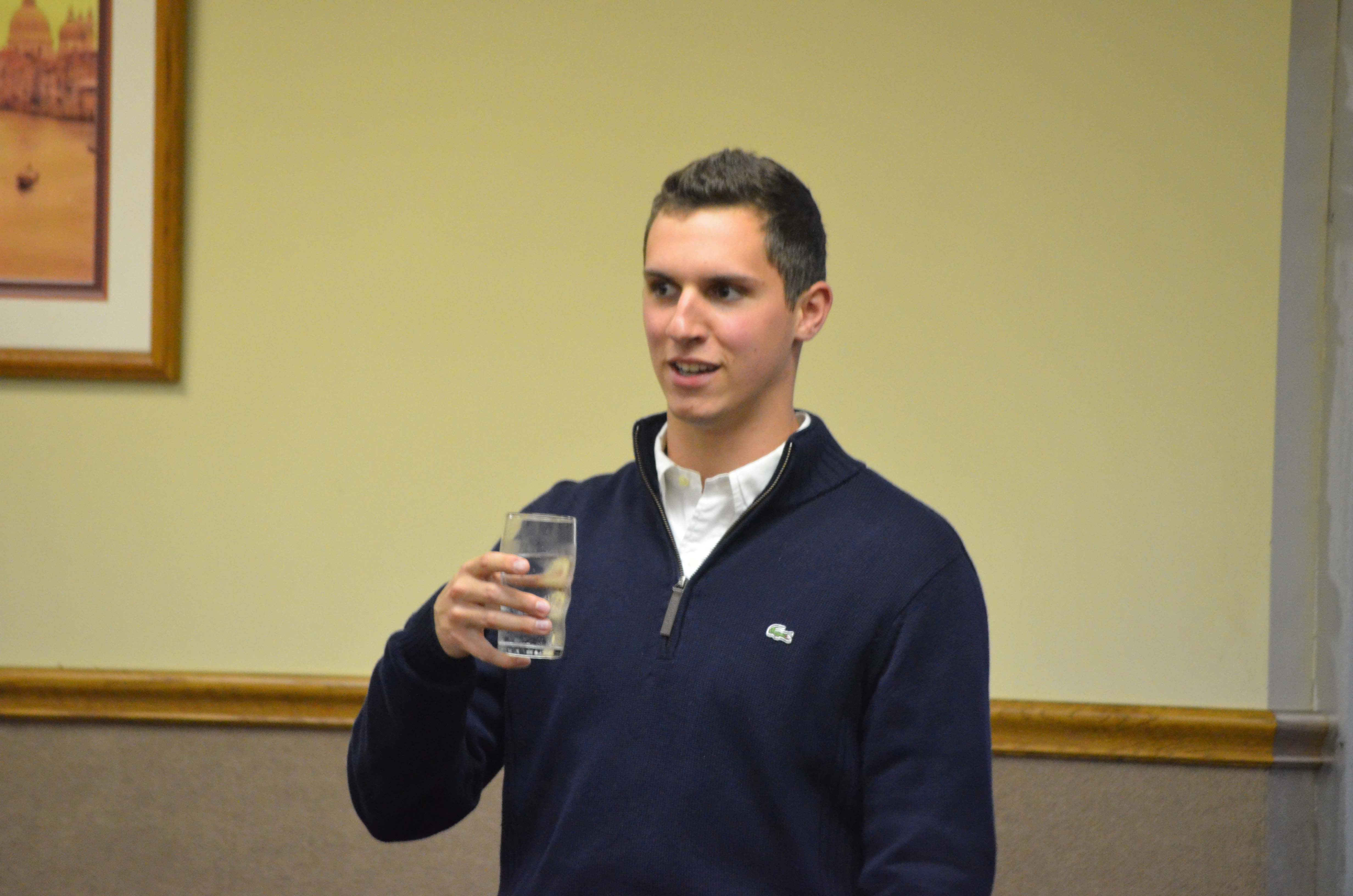
On that rainy Tuesday that Section 005 had their banquet, Andy Peterson, a junior Physics major, gave opening remarks. Brian Ristau, a freshman Engineering major, introduced Jacob Roth, a sophomore Earth and Mineral Science major, who gave an informative speech. Zach Reese, a junior Mechanical Engineering major offered a toast.
And, so it went, with all twenty-five students taking at least one turn at the podium, offering a variety of entertaining, informative, and persuasive speeches, debates, toasts, and introductions until Guiliana Latella, a sophomore Nursing student, gave the closing remarks.
Between all the speeches and presentations, they enjoyed a small feast—pizza, pasta, meatballs, antipasto, and dessert—during which they were encouraged by McMullen-Pastrick to work on their dinner conversation skills.
Throughout the evening, the students laughed, joked, and listened attentively to one another. But, as McMullen-Pastrick might remind you, part of being a good speaker is being a respectful and intense listener. “They learn by listening to each other with focus and purpose,” she said.
McMullen-Pastrick typically teaches three sections of CAS 100 each semester and attends a banquet for each. In the Spring 2014 semester, she attended her 175th banquet.
“Teaching public speaking is my passion because it has such a major impact on the educational insights and personal confidence of the students,” she said. “It changes them optimally, for the better, for life.”
By Steve Orbanek Marketing Communications Specialist, Penn State Behrend
Margaret Eimers regularly reminds her children that a person is not defined by his or her past mistakes.
She would know. She’s proved it.
More than twenty years ago, Eimers dropped out of high school during her sophomore year after she failed a class and became fed up with school.
Now, in a few days, the Erie native is about to walk in her first commencement ceremony. She will graduate with a 3.94 grade point average and bachelor’s degree in Psychology from Penn State Erie, The Behrend College. How’s that for juxtaposition?
When it comes to Eimers, graduation is the icing on the cake.
Throughout her time at the college, Eimers has been president of the Penn State Behrend Circle of Omicron Delta Kappa National Leadership Honor Society, vice president of the Society of Undergraduate Economists, and a member of Psi Chi International Psychology Honor Society, Phi Kappa Phi National Honor Society, and the National Society of Leadership and Success. She has also served as an ambassador for adult student open houses and a career counseling intern at the Academic and Career Planning Center.
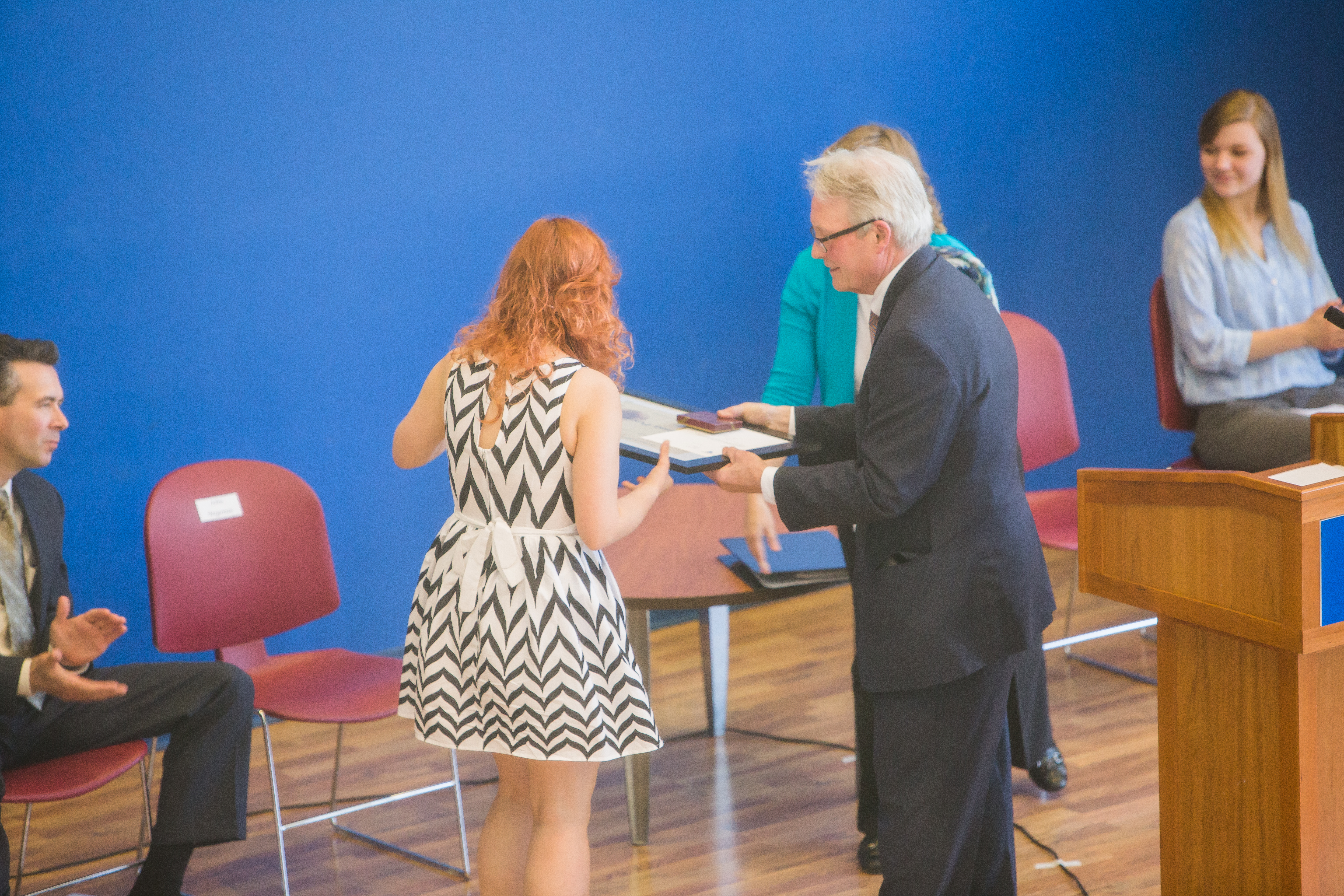
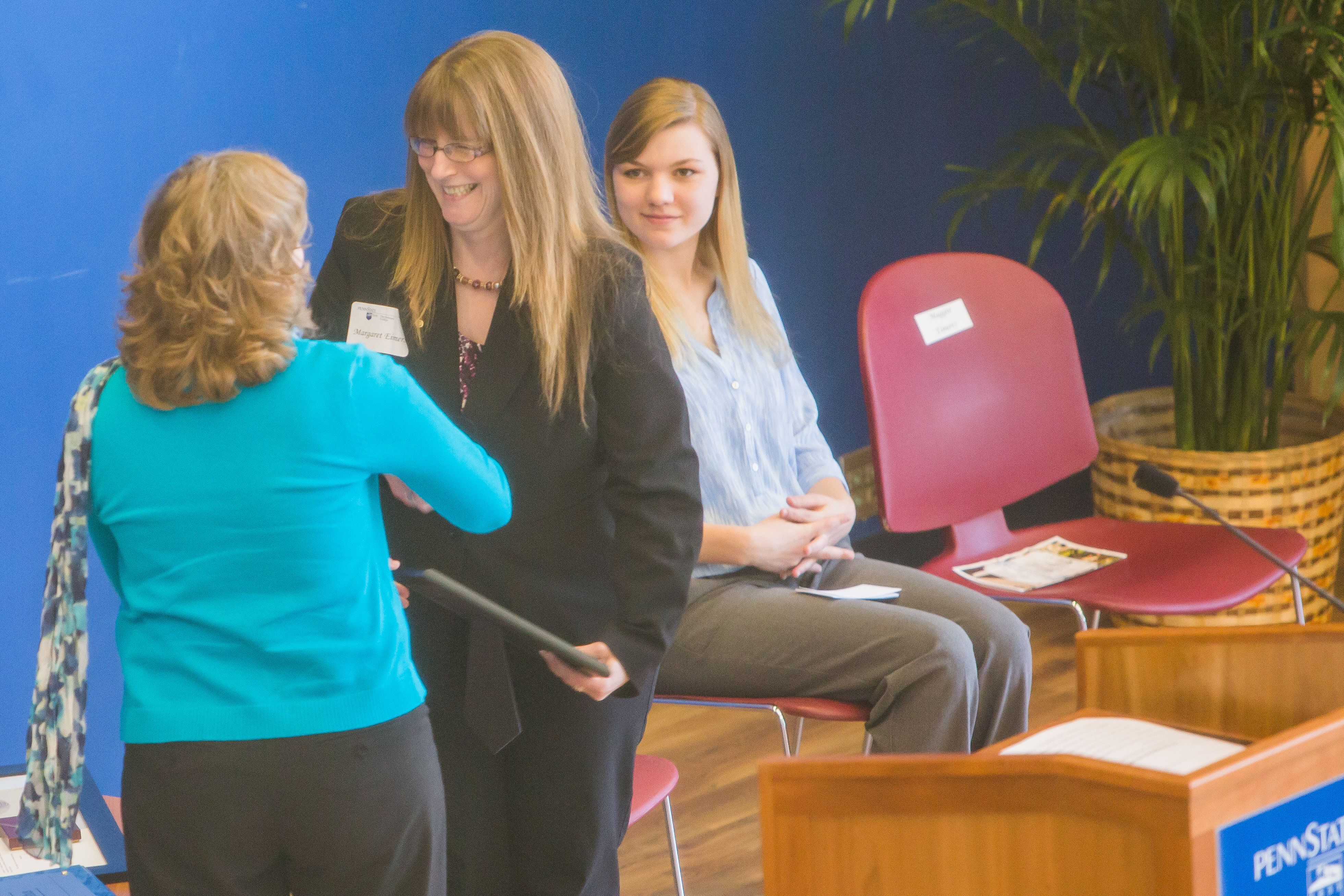
Eimers was recognized for all of her collegiate accomplishments on April 27 when she was awarded a Ralph Dorn Hetzel Memorial Award at the Sixty-fifth Annual Honors and Awards Convocation at Penn State Behrend. The award is named after Penn State’s tenth president and recognizes a combination of high scholastic achievement with good citizenship, and participation and leadership in student activities.
While Eimers may not have had a high school diploma, she always had a thirst for knowledge and cognition. Prior to enrolling at Penn State Behrend, she worked for eleven years as a crossing guard and estimated that she read at least fifty books annually during her downtime while directing traffic. Eventually, Eimers was asked to stop reading during her shifts, which led her to consider college.
“I said, ‘Why am I doing this when I really could be learning?’” said Eimers, who earned her GED after dropping out of school.
Eimers decided to apply to college, and Penn State Behrend was at the top of her list as she was aware of the value that a Penn State degree carries. Unfortunately, her application was initially denied.
“I went through the appeals process to become a student here,” Eimers said. “After I wrote an essay and was accepted, I then began as a provisional student.”
Eimers started as an Accounting major, a subject she had previously studied at a business school in Pittsburgh.
Accounting worked initially for Eimers, but something was missing.
“I can do accounting, and I do like it, but what I do is build relationships; what I do is help people,” Eimers said.
That drive led Eimers to change her major to Psychology with the goal of one day becoming an academic counselor.
Upon graduation, Eimers will work for the summer in the Academic and Career Planning Center. She’s looking forward to spending more time with her husband, Greg, as well as her children, David and Rebekah, who she said have been extremely supportive during her time as a Penn State Behrend student.
Eimers’ story as an adult student is far from over though.
In the fall, she begins work on a master of arts in counseling from Edinboro University. It’s just the latest stop in her academic journey.
“I like to call this my very happy mid-life crisis,” Eimers said. “I feel as if I have exceeded my expectations. Life is a moving target though, so now I’ll create new expectations. “
By Steve Orbanek Marketing Communications Specialist, Penn State Behrend
Danielle Ropp sat quietly toward the center of the table as her legs shook under the tablecloth, hidden from the audience seated in front. Her quiet demeanor, indicative of her anxiousness, would soon subside.
After all, every living thing thrives in its natural habitat, and that’s exactly where Ropp was once the panel discussion got underway.
“I’ve just always loved history. Whenever I hear an interesting fact, I commit it to memory,” said Ropp, a junior History major at Penn State Erie, The Behrend College.
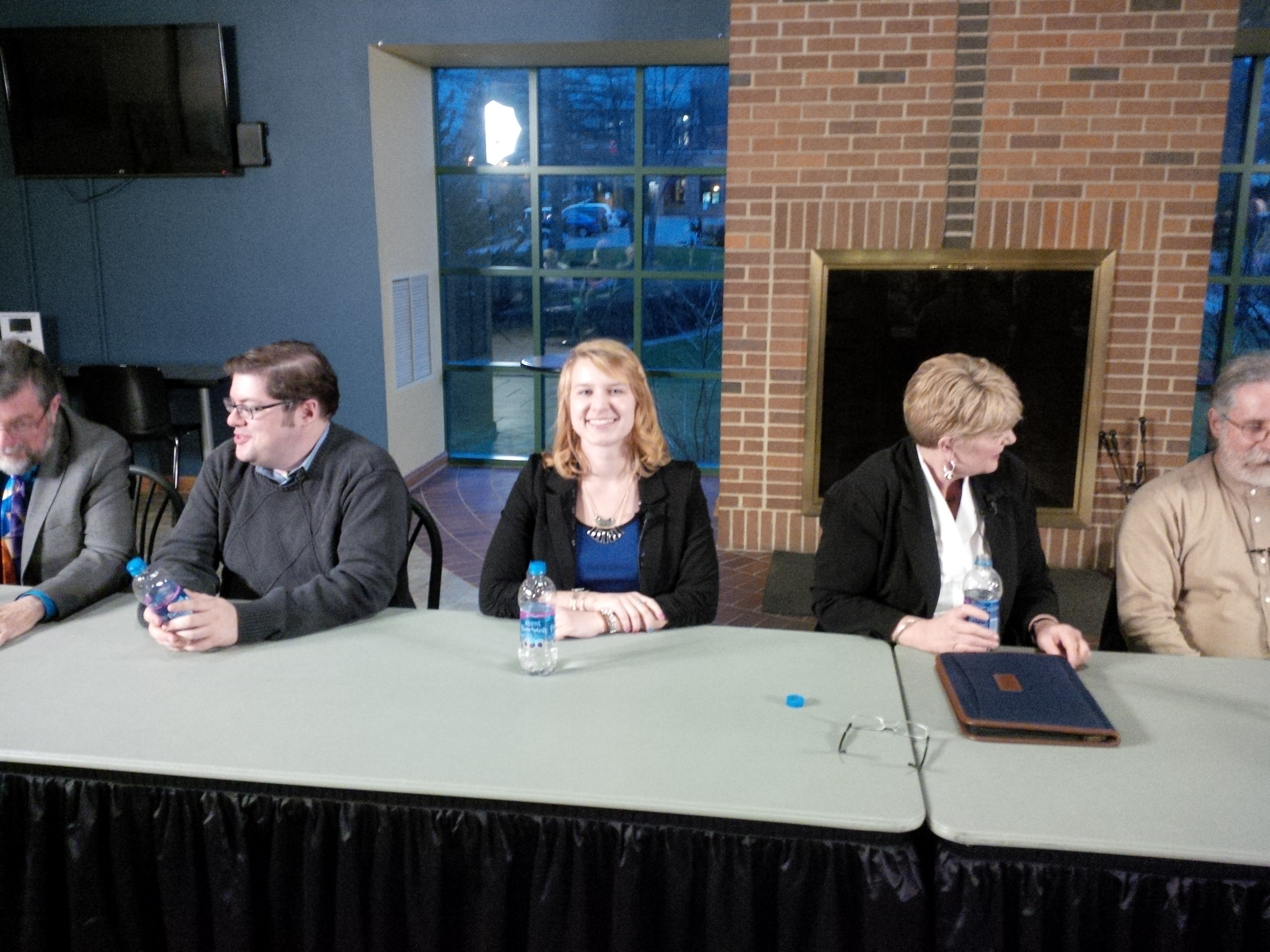
Ropp displayed the depth of her historical knowledge by participating in a panel discussion of the WQLN documentary Perspective: Jewish History, Parts I and II at Mercyhurst University in Erie on April 22.
The Folsom, California, native earned a spot on the panel as well as $500 after winning first place in WQLN and Mercyhurst University’s “Story of the Jews” college essay contest. The prompt for the contest was: “How has history shaped the modern perception of Jews?”
Other panel participants included: Dr. Joshua Ezra Burns, assistant professor of theology at Marquette University; Rabbi John Bush, Temple Anshe Hesed; Dr. Randall Howarth, professor of ancient history at Mercyhurst University; Dr. Olena Surzhko-Harned, assistant professor of political science at Mercyhurst University; and Dr. Robert von Thaden, Jr., associate professor of religious studies at Mercyhurst University. The panel was moderated by Kim Young, instructor in journalism at Penn State Behrend.
Ropp’s essay was titled “The Crucifixion Shaping Modern Jewish Perceptions,” and it discussed how Jewish individuals are still viewed negatively because of their perceived participation in the crucifixion. Ropp said her own perception was vividly changed through her research.
Ropp found edicts from past Popes that absolve blame for the crucifixion away from Jewish people, but she said that message has not permeated within the general public.
“The fundamental core of Christianity is that Jesus had to die. These people were blamed for this, but it wasn’t their fault,” Ropp said. “Today’s Jews are also different from the Jews back then. You cannot blame people for actions that happened 2,000 years ago.”
While Ropp thoroughly enjoyed writing the essay, she said she was surprised she won.
“This is definitely one of the biggest things I’ve ever accomplished,” Ropp said. “The fact that I won just makes me want to do it again.”
Given Ropp’s career aspirations, it’s likely the essay was just the beginning. Ropp plans to pursue a master’s degree in secondary education upon graduation in 2015 and then plans to attain a doctorate in history. Her ultimate goal is to spread her knowledge as a college professor.
“I can’t imagine myself doing anything but history,” Ropp said.
By Steve Orbanek Marketing Communications Specialist, Penn State Behrend
There seems to be one in every family: one person who differs from the rest of the clan.
Jessa holds that distinction in the Boarts family, but she wouldn’t have it any other way.
“On multiple occasions, my mom has asked me where I came from,” Boarts says.
A first-year Psychology major at Penn State Erie, The Behrend College, Boarts is somewhat of a fanatic when it comes to choir. On a typical day, the Erie native can be found humming choir songs, listening to choir CDs in her car, or practicing the tunes she performs as part of the Chamber Singers and Concert Choir at Penn State Behrend.
Music and singing have come naturally to Boarts even though no one in her family has ever had any experience with it.
“It’s just easier for me to express my emotions through music,” says Boarts.
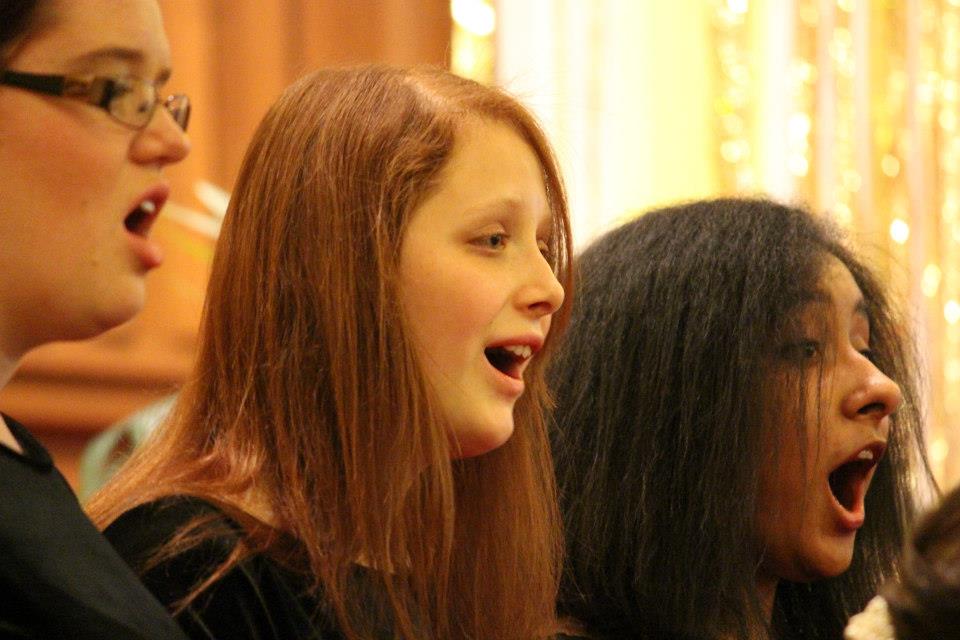
Boarts is one of twenty-five students who will be performing Sunday, April 27, during “Wayfaring Stranger,” the spring concert from Penn State Behrend’s Chamber Singers and Concert Choir. The concert is the latest stop in what has been long musical career for Boarts at Penn State Behrend.
In eighth grade, she joined the Young People’s Chorus of Erie, which was in its first year of existence. YPC Erie is a youth outreach organization of the School of Humanities and Social Sciences at Penn State Behrend and northwestern Pennsylvania’s only comprehensive youth choral program.
Boarts had longed to join a choir ever since her first exposure as an elementary school student, and YPC Erie was the perfect fit.
“It was kind of like a second family. I liked the togetherness that we all shared,” she says.
Over the next five years, Boarts performed in a slew of concerts as a member of YPC. She formed many relationships along the way, and her passion for choir music continued to grow.
Of all the relationships Boarts forged, perhaps none was more significant than the bond she developed with Dr. Gabrielle Dietrich. Dietrich joined Penn State Behrend in 2012 as the college’s director of choral ensembles and serves as YPC’s artistic director as part of her position.
The two immediately hit it off.
“Jessa is really special,” Dietrich says. “She’s not only a wonderful singer, but she’s one of those people who shows up every week and has a great attitude, a great spirit, and is willing to try everything.”
As Boarts began to look at colleges during her senior year of high school, she says it became apparent that Penn State Behrend would be an ideal choice. Not only did the college have the Psychology major that she sought, but it would also allow her an opportunity to continue to grow musically with Dietrich as part of the college’s Chamber Singers and Concert Choir.
“I was really interested in how she brought the music out in YPC, and I wanted to be able to continue that in the Behrend Choir,” Boarts says.
Dietrich was more than a little enthused when she heard the news.
“I was thrilled to hear she was staying because she’s the kind of kid you want in your choir. She’s not only the type of girl who brings good with her, she’s the type of girl who spreads good,” Dietrich says.
Boarts does more than spread good. She’s constantly trying to encourage her friends and other students on campus to enroll in either the Chamber Singers or Concert Choir class.
She subscribes to the idea that everyone has the ability to sing, which comes from Hungarian composer Zoltán Kodály and is a big part of Dietrich’s teachings. It’s the reason she believes everyone should consider joining the choir.
“Anyone can sing, it’s just a matter of will someone join a choir and portray different types of music,” Boarts says.
Many different types of music will be portrayed by Boarts and the rest of the Penn State Behrend Chamber Singers and Choir Orchestra during Sunday’s “Wayfaring Stranger” concert. The concert will include works from American composers Aaron Copland, Cecil Effinger, and Kirke Mechem; African-American spirituals; a folk song from Northern Thailand; and music of the French Renaissance.
For Boarts, the concert is the culmination of months of practice and hard work. It’s a long road to get to the point of being ready to perform, but Boarts says it’s always worth it.
“My life would be pretty boring without choir,” Boarts says. “Something would definitely be missing.”
In recognition of Women’s History Month, we’d like to introduce you to just a few of the dynamic women in Penn State Behrend’s history. Our college has a rich history of leadership and involvement by strong, forward thinking, and generous women. Each Monday in March, we’ll highlight a woman who has made, or is currently making, her mark on the college.
Today, we’d like you to meet Dr. Diana Hume George, Professor Emerita of English and Women’s Studies.
Diana Hume George at JFK International Airport. Photo by John Edwards.
I caught up with her by email to ask her about the importance of women’s studies, why she doesn’t (yes, you read that right!) miss teaching at Behrend, and what she’s been doing lately.
You taught women’s studies at Penn State Behrend. Why is it important for college students to learn about this subject?
Yes, I taught women’s studies and I worked for years on founding what became the women’s studies program at Behrend—I’m so glad it’s still going.
As much progress as women have made in this country and around the world, there’s nothing like genuine equity yet. Women can still be owned, enslaved, beaten, and maimed in many places, including in some parts of this country—and control of women’s bodies is still a primary political aim. Sometimes I am heartened by all the advances—no one’s surprised by women in the so-called professions any more, as doctors or professors or politicians or talking heads on TV, and that progress is genuine. But it’s just as true that in many cultures and countries, there’s still a war against women’s equality that is violent and terrifying.
Without women’s studies, younger women would be even more likely to backslide, to lose touch with all that has gone before, and to become re-enculturated in ways that disable and disenfranchise them—I see it every day. The lack of a feminist awareness among young women scares me deeply and daily and a lot.
What do you miss about teaching at Behrend?
I don’t miss teaching at Behrend, because I took the best of it with me. I’m still in contact with a bunch of my previous students over the years—one became among the best friends of my life, another student-turned-friend I meet up with at the Cleveland Film Festival every year. I visit one in Baltimore regularly, another is getting ready to run the Boston Marathon and makes me great beach-glass earrings, and yet another sends me his wonderful poems. And there’s another fellow writer, and another is a magazine editor—come to think of it, I’m in touch with someone from every generation of my career there.
I also stay in touch with department colleagues—I met up with John Champagne and Sharon Dale in Rome last year and stayed at John’s place in Perugia, and I see George Looney because along with Phil Terman at Clarion, we run the Chautauqua Writers’ Festival together, which is how I also run into Greg Morris as well as newer colleagues like Kim Todd and Tom Noyes. Other writer colleagues from long ago, names current people might not even remember, like Melissa Bender and Ann Pancake, are part of my life, too. And after leaving Behrend, I got to know a couple of colleagues that I never had time to know when I was working constantly—I love and miss Toby Cunningham, whom I barely knew at Behrend, but once we were gone, we ended up in a writers’ group together and my partner John Edwards published his wonderful book.
My son Bernie is back at Behrend finishing up his degree—so put it all together and it’s like I never left.
What have you been working on since leaving Behrend?
Since I left Behrend, I’ve been teaching creative nonfiction in an MFA program at Goucher College in Baltimore. I’ve also been to several colleges and universities as a visiting writer, teaching for a few weeks or even a semester, at places such as Davidson in North Carolina, UNC/Wilmington, and Ohio University.
What do you enjoy about teaching in the MFA program at Goucher College?
I live in Pennsylvania, and work online, going to Baltimore a couple of times a year. I mentor writers who always wanted to write a book. Our program is geared toward helping them write voice-driven narrative—some have been professional journalists all their lives and they haven’t yet gotten to write long-form. It’s great fun and I get to learn as much as I teach, because whatever they’re writing a book about, I’m reading that book as they write it. And we also get doctors and psychologists and professors, as well as people who want to write about their own lives, so I edit memoirs on trauma and on travel, and sometimes that can be the same book.
You mentioned in our email exchanges that you have been traveling. Please tell us more.
I have the privilege of shaping my life so that I can do my favorite thing, which is to travel with my friends or my partner, John Edwards. I wrote one travel book and I’m always writing the next one. I try to go to Italy for about a month every other year. Lately I’ve been alternating Italy with the Yucatan peninsula, from which I’m just back right now. I stay on Isla Mujares, an undeveloped island right off Cancun, where I first went with a fellow writer on a retreat back when I was at Behrend. I got hooked on those Caribbean breezes in January.
What are your other interests?
Even more than travel and writing, I want to read. I don’t get to read enough. That’s my goal, lots of good books, the kind where you can throw yourself down on a bed and get lost in an imaginary world.
And I love long-form drama on TV, where a lot of the best storytelling takes place, both comic and tragic—Deadwood, The Sopranos, and Breaking Bad were almost as important to me as literature.
You wrote and edited books on the American poet Anne Sexton. Does her work still resonate with you? How has your relationship with her work changed?
I wrote or edited three books about Anne Sexton, and she was a wondrous enough poet that I never got weary of her writing—but I did get battle fatigue about her psyche. She was a joyful and delightful person, witty, wicked smart, and ironic, but she was also bipolar, and being in the presence of that kind of mind can yank you around. My friend and the co-editor with me of Sexton’s Selected Poems, Diane Wood Middlebrook, lived inside Sexton’s head for a decade, and she said it was nearly too much.
I was attracted to her sense of joy, and I still admire her willingness to also say the depth of her pain—but she couldn’t live, in the end, and I can. So although my affection for her poetry remains, and I think she was tremendously important, and deserves to endure, I am a bit distant from her now.
But if you’re lucky, your old literary loves from early in your life stay with you in some sense throughout, they get internalized and are part of who you are, and all of my early loves became part of me—Sexton and Adrienne Rich and William Blake and Freud.
If someone is unfamiliar with your writing, what might be a good introductory work? Personal essays I wrote, such as “Wounded Chevy at Wounded Knee” or “The Last of the Raccoon,” still represent my work.
Diana Hume George will do a public reading at Clarion University of Pennsylvania on April 17, 2014. The second edition of her book The Lonely Other: A Woman Watching America will be released in April, with several new essays.





 BEHREND BLOG