Political Science Major Wins Two-Month Fellowship to Berlin

megan mcconnell

Megan McConnell

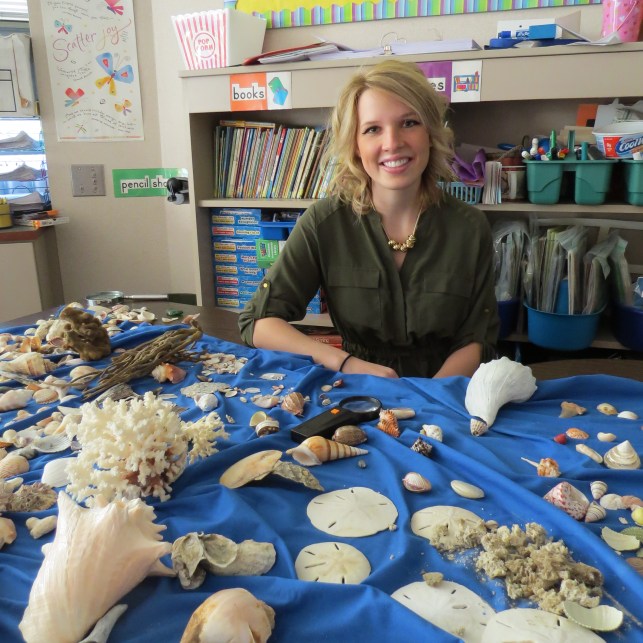
Megan McConnell, a sophomore majoring in Political Science at Penn State Behrend, has won a fully-funded Cultural Vista Fellowship to complete a two-month internship in Berlin this summer. The fellowship also covers an orientation in New York City, airfare, housing, internship placement, and transportation.

Cultural Vista Fellowships offer U.S. college students the opportunity to advance their career goals, develop global competencies, and experience life in another culture.

“Cultural Vista Fellowship is a classic example of engaged scholarship affording students with a hands-on international two-months internship experience, in this case in Berlin, Germany, immersing Megan in German language and culture, and giving her the opportunity to gain solid real world experience by interning with a German employer,” said Dr. Eva Kuttenberg, associate professor of German. “I am humbled by Megan’s drive and commitment.”

McConnell, who is minoring in German and History, is one of just four national recipients of the fellowship.

“I think my strong background in German language and ability to adapt to diverse situations played a big part in why I was selected,” McConnell said. “My comfort interacting with people from all walks of life also helped make me a viable candidate.”

McConnell will attend orientation in New York City at the end of May before departing for Berlin on June 1. While she is there, she’ll be working as an intern with a political organization.

“I’m looking forward to gaining invaluable insight into the German political system and ideologies,”McConnell said. “I plan on pursuing a career in politics and diplomacy, so this experience will help me interact with the country in a diplomatic sense later.”

McConnell is the third winner of a fully-funded fellowship from Penn State Behrend. Last year, History major Olivia Duryea won a Teaching Assistants fellowship and spent nine months in Bad Hofgastein, Austria, assisting with English classes. In 2009, Physics and Science major Nicole Gall won a Deutscher Akademischer Austauschdienst Research Internship in Science and Engineering Fellowship and spent three months working in a physics lab at the University of Tuebingen, Germany.

Class of 2016: Meet Courtney Hopson (Elementary and Early Childhood Education)

By Heather Cass
Publications & Design Coordinator, Penn State Behrend

Penn State Behrend’s class of 2016 is ready to make its mark on the world!  We’re proud of our students and the things they’ve accomplished and learned while here at Behrend.  Over the next couple months, we’ll be introducing you to a few of our remarkable seniors who have overcome challenges, pioneered new technology, participated in important research projects, and left an impression at Penn State Behrend.

Today, we’d like you to meet Courtney Hopson

Courtney Hopson1

Major: Elementary and Early Childhood Education

Hometown: Erie

Why Behrend? I knew I wanted to go to a Penn State campus because of the rigorous, hands-on programs offered. I chose Behrend specifically so I could play volleyball.

Proudest accomplishment at Behrend: Winning the MVP award this volleyball season, because it was given to me by my teammates. I have been through so much with my team and couldn’t be prouder to be a part of something so special.

What makes you unique? My level of motivation when facing a challenge. I am always trying to improve myself in every aspect of my life. I love to set goals and strive to reach them. I am a really competitive person and I love the process that goes into getting great results.

What’s your passion? I am passionate about inspiring children like I have been inspired through my life. I have such a great support system in my family and in my church, and it really bothers me to know that some children don’t have that support. I want my students to know that they have someone who cares for them and is rooting for them to succeed.

Advice for current students: Not everything is going to go smoothly, and that is okay! It’s all about the journey, so enjoy your time in college and do the best that you can.

Courtney plans to work as an elementary school teacher following her graduation in May.

Students escape to Madagascar via Washington, D.C.

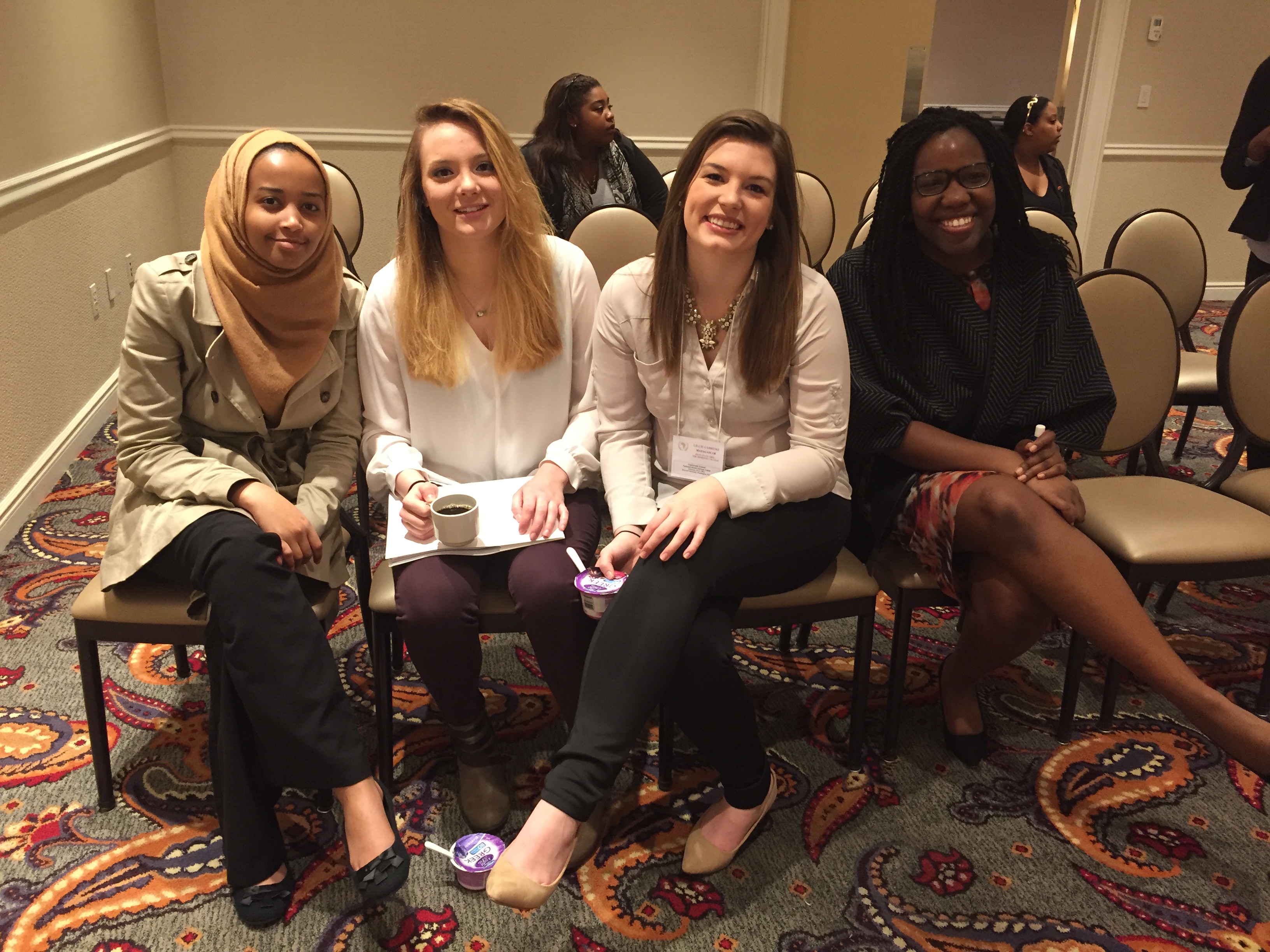
Reem Elhafiz Abdalla, Jillian Dunn, Lillie Gabreski, Dalia Tenda Batuuka
Reem Elhafiz Abdalla, Jillian Dunn, Lillie Gabreski and Dalia Tenda Batuuka represented Penn State Behrend at Howard University’s 14th Annual National Model African Union Summit last month.

By Steve Orbanek
Marketing Communications Specialist, Penn State Behrend

Dalia Tenda Batuuka, Jillian Dunn, Lillie Gabreski and Reem Elhafiz Abdalla are not natives of Madagascar. None of them has ever stepped foot in the country.

Talk to any of these four Penn State Behrend students for even a few minutes though, and you might just think they were native-born Malagasy.

Last month, the students attended and participated in Howard University’s 14th Annual National Model African Union Summit. Sponsored by the African Union Mission and Member State Embassies in Washington, D.C., the four-day summit is a simulation of the proceedings of the African Union, requiring participants to research their assigned countries in-depth before attending the conference.

This marked the first time that Penn State Behrend was represented at the summit, held in February with more than 45 colleges and universities participating. The Behrend students’ assigned country was, of course, Madagascar. The group represented the college well, winning the Michelle Tooley Outstanding Delegation in Committee Award in recognition of their performance on the Social Matters Committee.

“Students really do have to act as delegates and adopt the stance of the country they’re representing,” said Naaborle Sackeyfio, a lecturer in comparative politics who also attended the summit.

The students chose to participate after taking Sackeyfio’s Introduction to Contemporary Africa course during the fall semester.

“We were in the course together, and Dr. Sackeyfio mentioned this summit. It just seemed like such a great opportunity,” said Batuuka, a first-year psychology major.

Each student was assigned a different committee for the summit, in this case Economics (Gabreski), Peace and Security (Batuuka), Social Matters (Abdalla) and Regional Economic Matters (Dunn). This meant that the group had plenty of studying to do beforehand.

“The whole point was to go there and play the role of actual delegates from Madagascar, so you had to be very familiar with the country in advance,” Batuuka said.

The group met several times a week and spent long hours preparing for the event. There were times during the summit where other countries’ delegates would call their expertise into question, but the students held their ground.

“People would contest things over even the smallest words. There were times where you definitely had to stand up and make your case heard,” said Gabreski, a senior political science major.

“The margin for error was very small,” added Dunn, a sophomore political science major.

While the students were happy to receive an award for how they represented Madagascar, it was not the only thing they took away from the summit.

“After this experience, I have such a newfound appreciation for politicians,” Batuuka said. “You always hear, ‘What’s wrong with Congress? Why aren’t they passing this?’ but you realize that it’s not that easy.”

Behrend alumni lead textbook company’s transition to digital age

Totzke, Dauber Berlin (32)
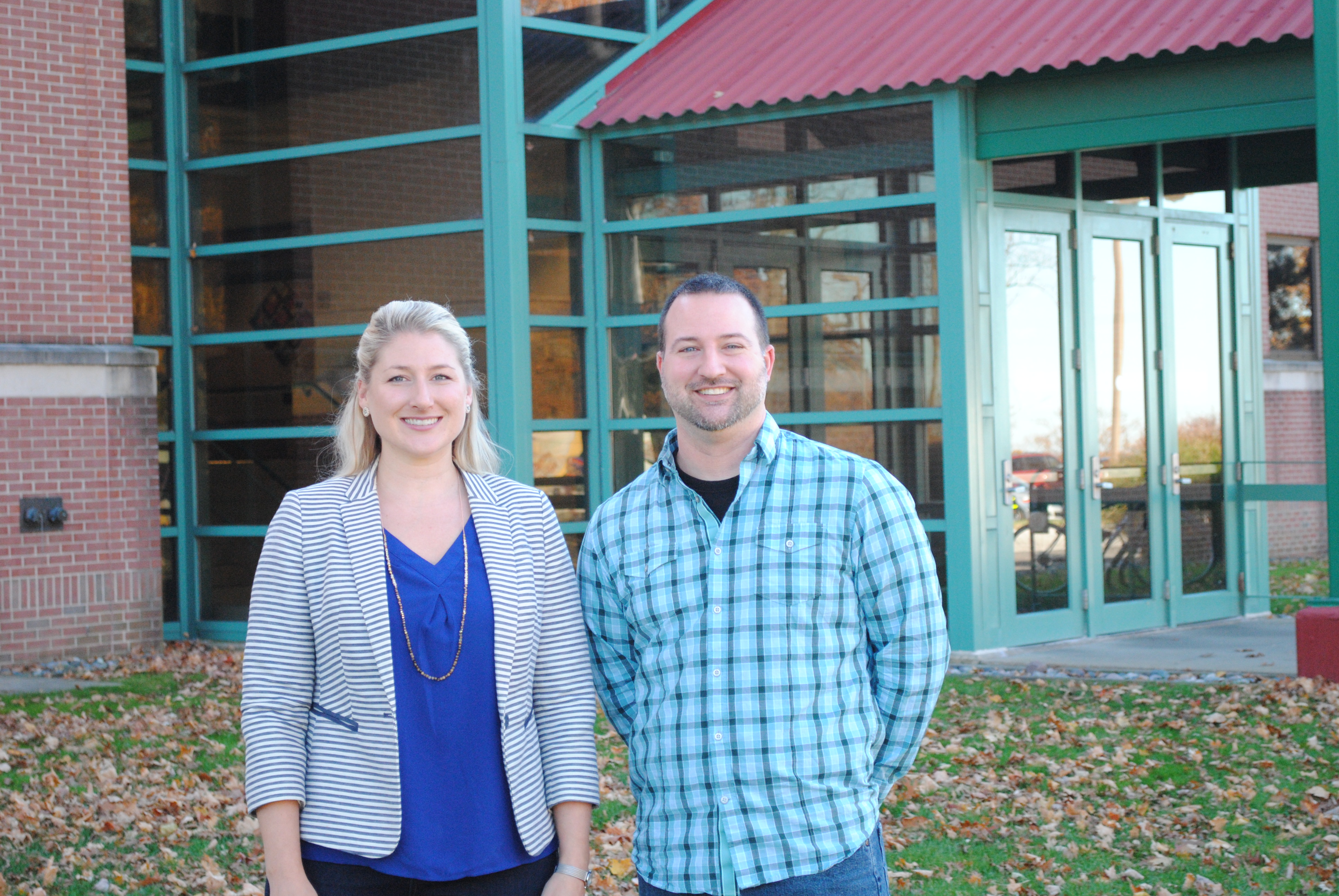
Behrend alumni Erika Dauber Berlin and Matthew Totzke are challenged with running a textbook company, Larson Texts, in the 21st century.

By Steve Orbanek
Marketing Communications Specialist, Penn State Behrend

In an age dominated by tablets and tweets, the prospect of running a textbook company might seem daunting. There’s nothing “textbook” about the operations of Larson Texts, however.

Technology has changed the game, but the Erie-based company has continued to adapt.

“The physical book is still valuable, but the way you get your hands on it is much different,” says Matthew Totzke, CEO of Larson Texts and a Penn State Behrend mathematics alumnus. “The technology now allows us to do a much better job of enhancing the learning experience.”

Larson Texts was founded more than 30 years ago by Ron Larson, then a professor of mathematics, now emeritus at Penn State Behrend. At the time, Larson was responding to what he saw as the need for more student-friendly math textbooks.

Today, the company produces math textbooks for sixth grade through college-level calculus classes that are used by more than five million students each year. Larson has also published textbooks for such well-known educational publishers as Cengage Learning, Houghton Mifflin Harcourt, Pearson, and W. H. Freeman and also publishes its own textbooks through Big Ideas Learning and AndYou.com.

Publishing a book, involves more than producing a physical textbook. With every college-level textbook that Larson Texts creates, the company also develops a fully-responsive companion website for all platforms: desktops, tablets and smartphones.

“We’re able to access so much more information than ever before. Now, we can really blend a great print book with strong digital content,” Totzke says.

That type of digital content featured on the companion sites includes worked-out proofs, instructional videos, rotatable graphs and downloadable data. All of these tools are great reference materials for students.

“There’s a lot of modeling in mathematics that you just can’t show on a print page,” Totzke says. “We put together interactive explorations that bring three-dimensional concepts to a workable medium.”

Being ahead of the digital curve is no new development for Larson. In 2001, the company created the website CalcChat as a tool that students could use to double check answers to questions posed in textbook exercises.

The site has since been supplemented by a tutor component and corresponding Twitter and Facebook accounts where students can talk with an actual tutor if they are struggling with a particular problem. Larson Texts monitors the tutor conversations as a way to gain feedback and develop solutions in areas in which students are continually struggling. According to Totzke, an estimated six million upper-level high school and college students have used the CalcChat service since 2010.

Through Big Ideas Learning, Larson publishes its own primary-school level books, a market segment the company expects to see expand as schools catch up to colleges and universities in terms of technology.

“Schools are beginning to have the infrastructure to embrace some of this technology,” says Erika Dauber Berlin, vice president of technology at Larson Texts and a Penn State Behrend communication & media alumna. “We have to draw inspiration from a lot of different areas and then anticipate how we’ll meet teachers’ needs into the future.”

It may not be the “textbook” method for creating educational publications, but Totzke would not have it any other way.

“We consider this to be an opportunity,” he says. “We’re able to deliver high-quality educational materials like we’ve never done before.”

Summer in South Africa Inspires Political Science Major

By Heather Cass

Publications & Design Coordinator, Penn State Behrend

15802_10206558989406416_4726216575970305014_n

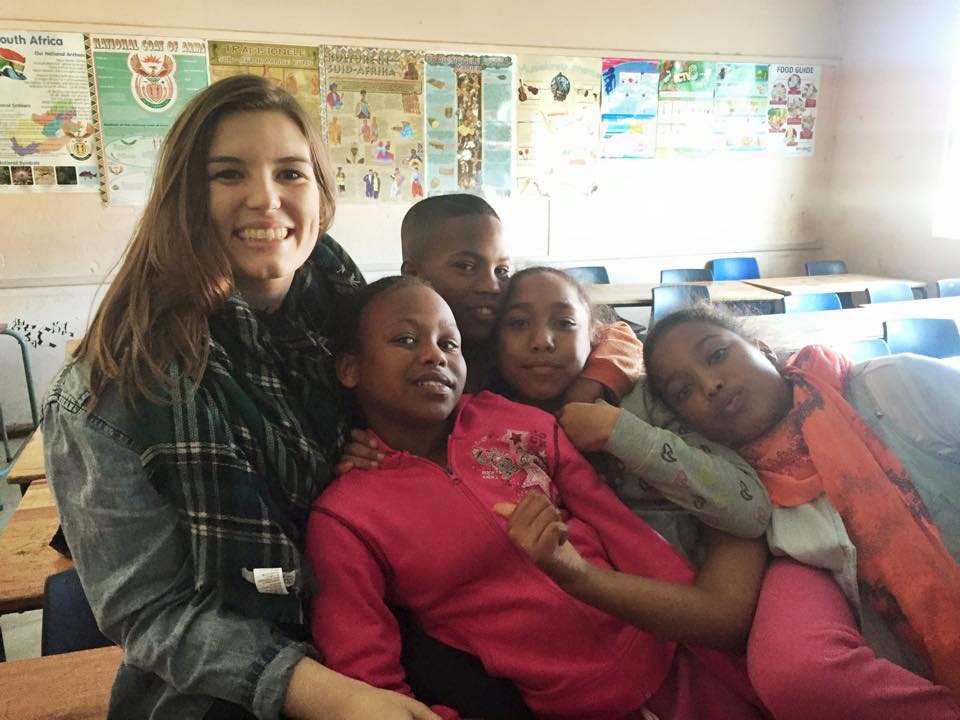
Lillian Gabreski, a senior Political Science major, spent six weeks of her summer studying abroad at the University of Cape Town in Cape Town, South Africa.

We talked with Gabreski to find out more about what it’s like to study in South Africa and what she learned while she was there.

Why did you go to South Africa?

I studied abroad at the University of Cape Town. The experience was fully funded by a grant from Penn State Behrend to complete my research in international and constitutional law. I’ll be using this research to complete my Schreyer Honors Thesis this spring. I also participated in the Students’ Health and Welfare Centres Organisation (SHAWCO) Education program.

What were your responsibilities while there?

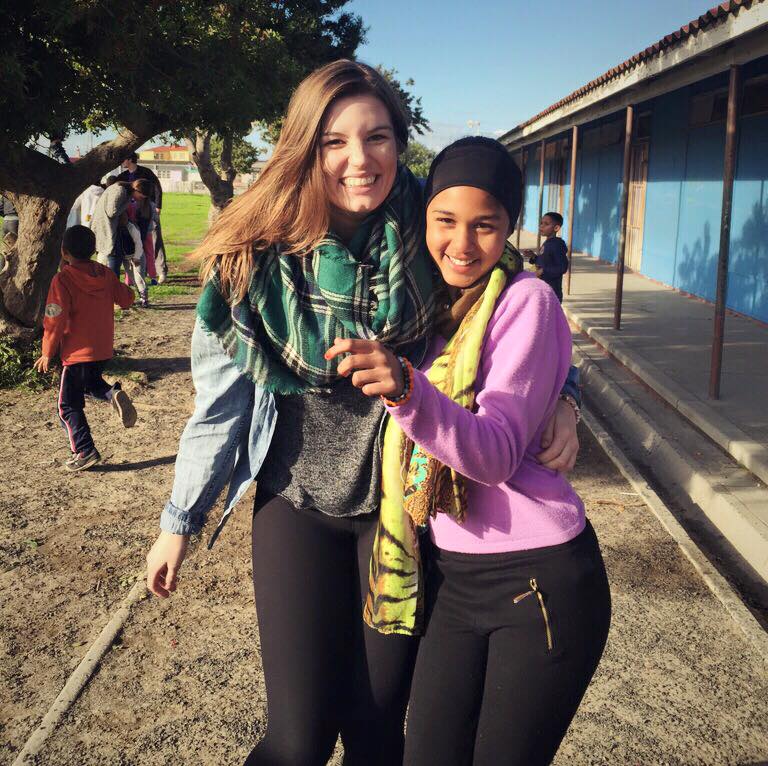
As a student at the University of Cape Town, I studied community development and the impact of development on regional groups and peoples. As a volunteer for the SHAWCO program, I spent 20 hours a week volunteering in the township of Manenberg teaching English and Math to middle schoolers. Manenberg has become infamous for gang-violence that has plagued its residents in recent years.

10404181_10206558989086408_4847686624910044533_n

What made you choose South Africa? Have you been there before?

This was my first time in South Africa. I have always been interested in the country because of its unique socio-political history. With the guidance and influence of Dr. John Gamble, distinguished professor of political science and international law, I began to devote my time to learning about the practice of international and constitutional law. South Africa has one of the most liberal and lauded constitutions in the world, and the politics of a country re-entering the international arena after centuries of its majority population being excluded from democratic processes (see: apartheid) are both unique and absolutely intriguing. Thus, it seemed a natural area of interest for me to study as a political science major.

What was the most eye-opening thing about South Africa…or your experience there?

We have a tendency as Americans to believe that the way we do things is the best way to do them, whether in politics, business, or even our personal lives. While I’ve always considered myself to be open-minded, I still thought this way about the U.S. when I went to South Africa. Upon my return, I had a laundry list of policies and reforms that the U.S. could learn from South Africa. As a stable and relatively new true democratic state, South Africa is willing to experiment when it comes to the way they do things, which is something I think we have lost along the way here in the United States.

11201902_10206392681528823_8913410756497084612_n

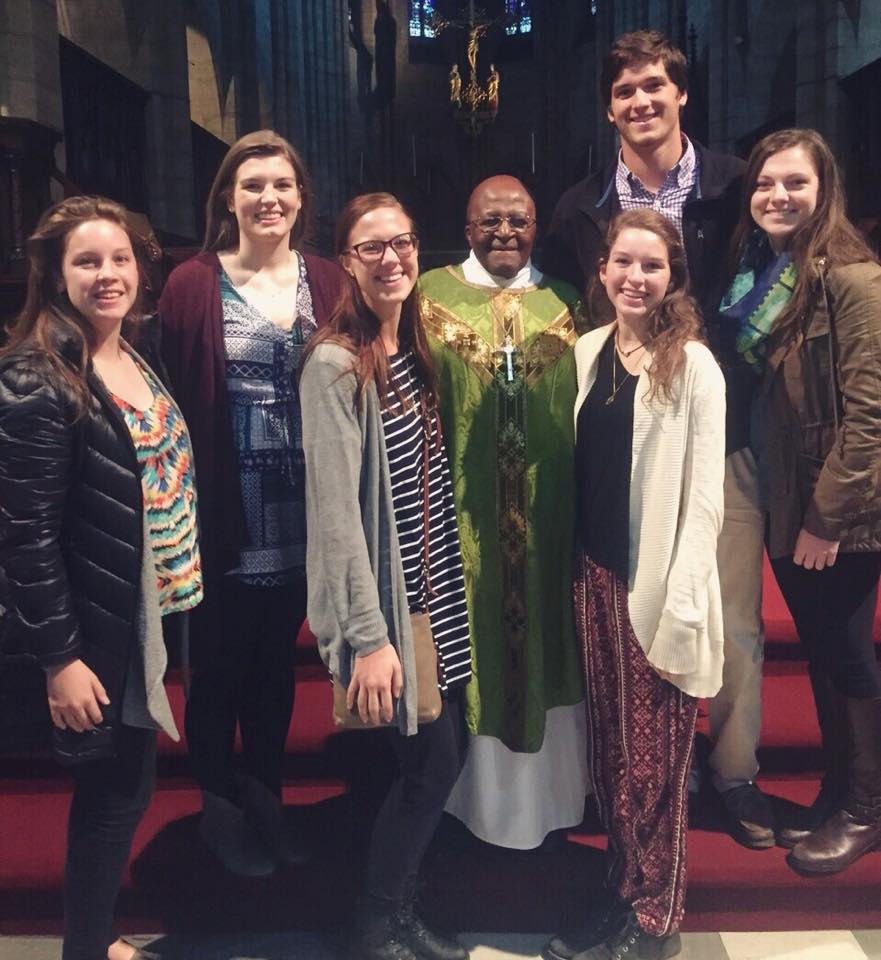
Lillian (second from left) with Archbishop Desmund Tutu.

How do these types of experiences enhance what you’re learning at Behrend?

It is one thing to study a country or a political system in the classroom here in the U.S. We all have our perceptions and we’re learning in our own environment. It is an entirely different experience to go to another country and to interact with its people, who have completely different preconceptions and ideas, and to learn from what’s around you. It’s really as simple as that.

What was it like in South Africa? Did you enjoy being there?

I have traveled all over Western Europe, but Cape Town is the most beautiful city I have ever visited. The people are incredibly kind, the geography is absolutely beautiful, and the perseverance of the South African nation in general is truly inspiring. While I spent only six weeks in South Africa, it was enough to leave an impression that has caused me to alter my post-graduate plans to include a focus in Sub-Saharan Africa.

11665520_10206493271243503_1343250978932109694_n

What’s the most valuable lesson you learned during your experience this summer?

The South African people, specifically those who were discriminated against during apartheid, have an incredible tenet for forgiveness. Rather than seek revenge against those who have wronged them, they seek to remedy their ills via forgiveness and open conversation. I think the principle of being graceful and forgiving rather than continuing the ills of the past via pursuing a path of vengeance can be applicable in any situation whether it be personal or political.

Did you learn anything that you’ll apply this semester to your classes/projects here at Behrend?

Not only am I writing my senior thesis on South Africa and its relation to international law, I am also serving as a teaching assistant for Political Science 003H: Introduction to Comparative Politics this semester and teaching a segment on South African government and politics.

What are you career plans? What do you want to do?

Before studying in South Africa, I had intended to apply for law school. While I’m still taking my LSAT, I’m now focusing more on pursuing a Masters or Ph.D. degree in International Affairs or Public Policy. I would love to someday work in international law, in government, or with an non-governmental organization that would allow me to revise policies and practices on a global scale for the greater benefit of mankind.

Are you earning any minors/certificates?

I’m minoring in History and in Women’s Studies

Do you have any advice for incoming students in your major?

Get to know your professors! They have been invaluable to me not only when it comes to recommendation letters and research opportunities, but also in the advice they have given me to help me find the career path that will make me the happiest. Also, definitely study abroad! It will change your life and help you find your passions.

Why did you choose Behrend?

I initially accepted admission to University Park, but my mother (Dr. Tammie Merino, Lecturer in English at Behrend) convinced me to take a tour of Behrend. I fell in love with the campus and truly felt at home here. After my first year, I knew that the incredible professors and classmates I had at Behrend were invaluable, and that I would spend all of my four years here. There is something to be said for a small campus with the resources of a larger University behind it.

11143711_10206403006106931_5092057385507293611_n


Love of writing defines O’Neill’s time at Behrend

Katherine O'Neill

By Steve Orbanek
Marketing Communications Specialist, Penn State Behrend

As a child, Katie O’Neill always had a keen interest in writing and creative expression. This affinity continued when she got to grade school, and it was not long before others started to notice.

“I had a teacher when I was in first grade who told my mom to get me a journal,” O’Neill recalls.

That would seem to have been excellent advice. As O’Neill has grown up, her passion for writing has become a defining characteristic.

“I’ve always been a writer before anything else,” the Lake Winola, Pa., native says.

That passion is what brought her to Penn State Erie, The Behrend College. The college’s BFA in Creative Writing piqued her interest as the only such program in the Penn State system and one of only a few in the country.

“That was definitely the number one draw,” she says.

Through the inventive program, O’Neill, who graduated this past May, says she was able to focus intently on improving her inventive writing skills. She also improved her editing abilities serving on the staff of Lake Effect, an international literary journal published by the School of Humanities and Social Sciences at Penn State Behrend.

Along the way, O’Neill garnered accolades. This past year alone, her non-fiction story, “Achill Strikes Again,” won Behrend’s Farrell Nonfiction Award while her fiction piece “Juneau” was the college’s Smith Fiction Award winner. Her short fiction piece, “Tony and Rebecca” was also named an honorable mention in the Annual Creative Writing Awards, sponsored by Suffolk County Community College in Long Island, New York.

O’Neill says her inspiration comes from “the weirdest things,” but also a more traditional source. Thanks to the college’s Creative Writers Reading Series and professional conferences, O’Neill met and networked with numerous professional authors throughout her college career. With every interaction, she says she would pick up a tip or two that she put to good use.

During her time at Penn State Behrend, O’Neill was involved beyond creative writing activities. She was the captain of the college’s dance team, a member of the Behrend Choir and a writing tutor in the Learning Resource Center.

This past spring, O’Neill’s efforts were recognized with two awards: Behrend’s Eric A. and Josephine S. Walker Award and a university-wide Eclipse Award. The Walker Award recognizes a student whose character, scholarship, leadership and citizenship have been directed into student programs and services. The Eclipse Award recognizes Penn State students for service and volunteerism to their campus and local communities.

This fall, O’Neill will start pursuing her MFA in Creative Writing at Bowling Green State University in Bowling Green, Ohio. She reflects fondly on her time at Penn State Behrend and hopes new students will choose to follow a similar path.

“My advice is to get involved from the start. I’m so glad I got involved right away. It can be overwhelming, but it’s (worth it),” she says. “I’ve made some amazing friends. I’m going to miss everything about this place.”

A Textbook Case of Win-Win: Student filmmakers, professors, textbook company team up to create educational videos

Papiya

Dr. Papiya Bhattacharjee

By Christine Palattella
Marketing Communications Specialist, Penn State Behrend

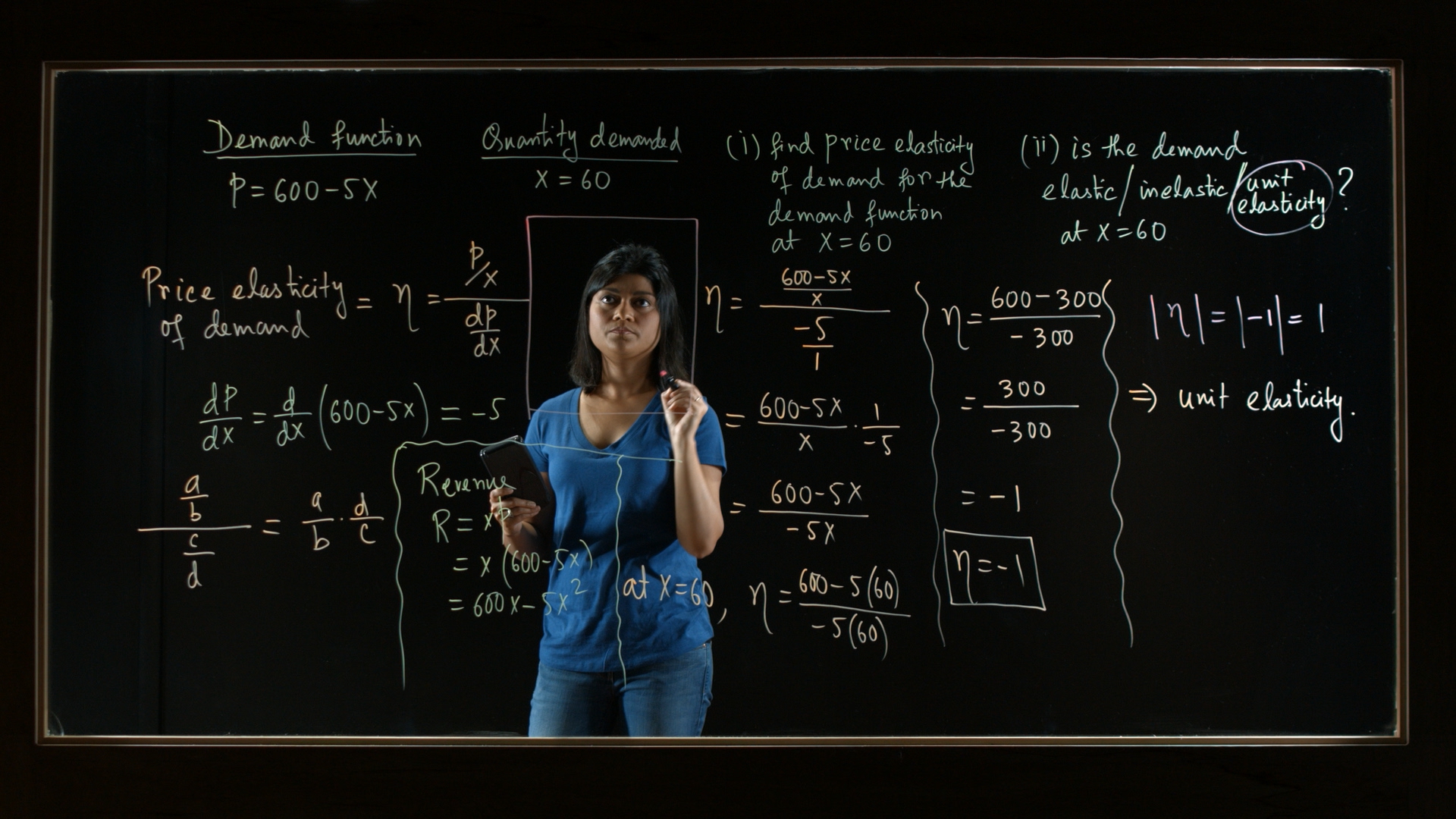
Associate professor of mathematics Dr. Papiya Bhattacharjee’s daily summer lectures have an audience of just one unblinking video camera, but the potential to reach millions of math students.

Bhattacharjee is one of four calculus teachers chosen by regional audition to act as talent in supplemental video content to be distributed by Erie-based Larson Texts. The video series is being produced using equipment provided by Greater Erie Arts Rental (GEAR), a new outreach services of the School of Humanities and Social Sciences, and with the assistance of Behrend students working as production interns for Larson.

“I think the videos are going to be extremely helpful for any student, but especially the visual learners,” says Bhattacharjee, who spends four hours each morning in the Kochel Center television studio, working aloud while illustrating her commentary in grease marker on a large pane of glass. (The glass will be flipped in post-production to make the pane readable.)

Years of teaching have left Bhattacharjee comfortable speaking in public. It’s the addition of technology that’s the challenge. “I need to remember to always look at the camera while speaking, move away from my writing so it can be seen clearly in the camera, and so on,” she says. “I am trying to have fun. All I have to remember is that the camera is my student, and I am tutoring my student.”

But this is no average student: The camera is an Epic-M Red Dragon Pro, the same model used to film Game of Thrones, The Hobbit, and Avenger: Age of Ultron. This camera is just one piece of equipment in GEAR’s inventory, which includes high-end cameras, lighting kits, and other hardware and software. The equipment is available to professional and student filmmakers and regional artists. GEAR’s equipment inventory, purchased using a $500,000 gift commitment from the Samuel P. Black Family Fund of the Erie Community Foundation, also includes lenses, tripods and stage legs; six-channel sound mixers; shotgun and wireless mics; Fresnal, LED, and HMI lighting systems; and Mac Pro, Adobe and DaVinci Resolve editing and rendering software.

Tim Larson ’87 is a partner in Grant Larson Productions, creator of the calculus video series. He anticipates filming 700 individual videos averaging seven minutes in length by the time the shoot wraps in August. Larson calls GEAR “a wonderful resource. It’s so nice to have this kind of equipment in Erie. On previous shoots we’ve had to rent cameras and equipment from Columbus and Buffalo, so this is an astounding benefit to us.”

An additional GEAR benefit is a ready-made film crew, since a rental discount is available to GEAR clients who hire Penn State Behrend students. “I feel so incredibly lucky to be able to work on this project,” says Erik Brown, a spring Communication graduate and one of six Behrend students and young alumni working for Grant Larson as paid production interns. “The great thing about working here is not only learning about the film industry itself, but also being exposed to high-quality equipment. We’re not using just a couple house lights and DSLR cameras, but industry-standard gear for lighting, sound recording, and cameras. I’ve always wanted to work in the film industry and, now, working on this shoot, I feel like I have a realistic chance of doing that.”

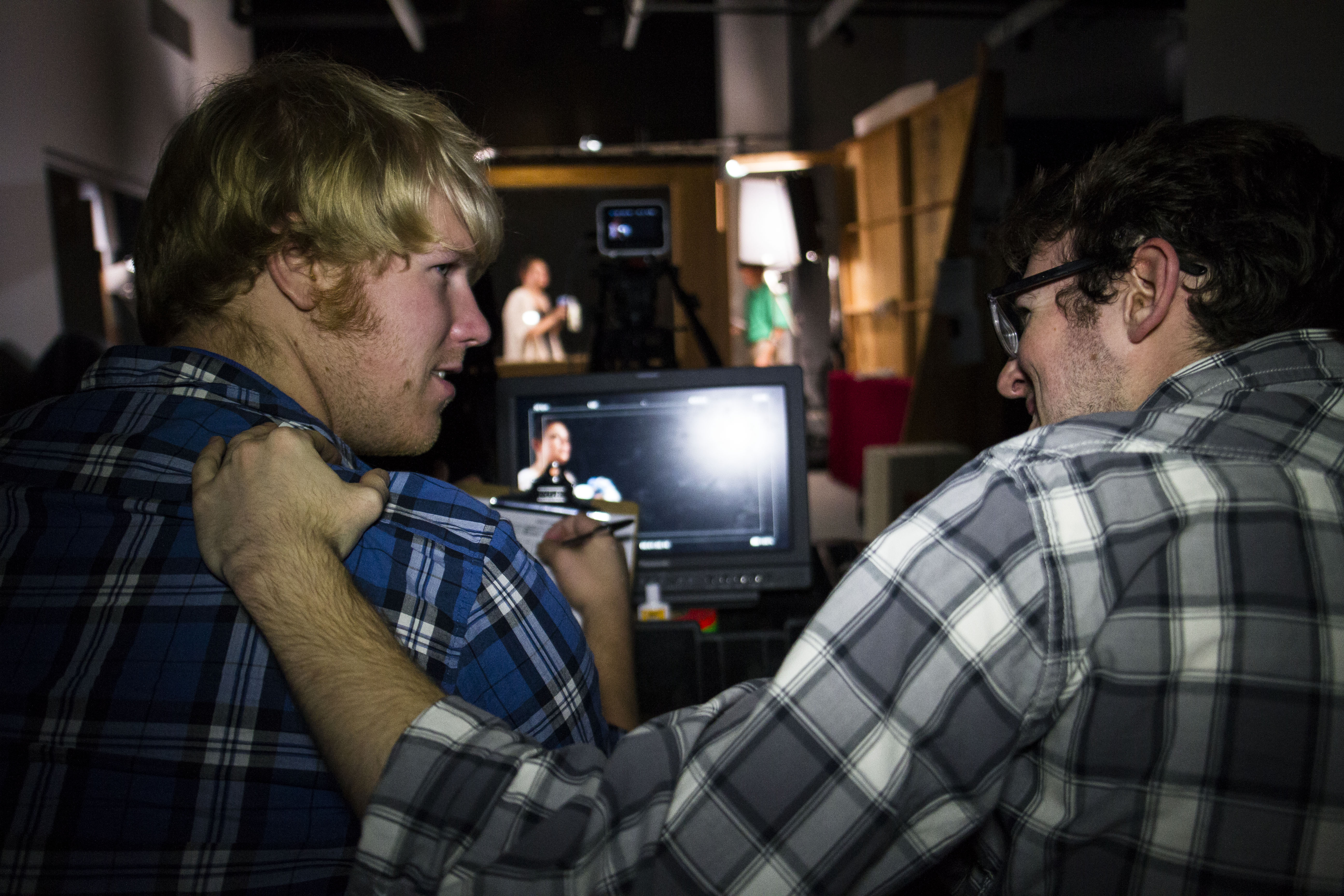
Erik Brown, left, Josh Lapping

Erik Brown, left, and Josh Lapping, (above) are two of six Behrend students and recent alumni working on the videos for Grant Larson Productions using equipment from the Greater Erie Arts Rental, or GEAR, a new outreach service of the School of Humanities and Social Sciences that provides professional and student filmmakers and regional artists access to high-end cameras, lighting kits, and other hardware and software. 

Josh Lapping, Ciara Smith

Penn State students, Josh Lapping, left, and Ciara Smith, work on a series of videos for Grant Larson Productions.

Shelby Dailey

Shelby Dailey, Penn State Behrend Communication major and intern for Grant Larson Productions.

Intern Shelby Dailey, pictured above, a Communication major starting her senior year at the college, appreciates that Grant Larson rotates its student workers. “We’re given the chance to experience all the moving parts of film, such as camera operating, producing, directing, and script supervising. I’ve learned things that textbooks can’t adequately prepare students for, such as (crew) dos and don’ts, set etiquette, and (the importance) of networking.”

“We want to offer an educational experience that is at the same time a close facsimile of what students will experience once they enter the professional environment of producing film and television,” says GEAR coordinator Michael Berlin, whose previous professional experiences include managing crew and equipment for New York City’s Fashion Week and the E! and Pop television networks and production management for ABC World News, CNBC, and ESPN. “The students working on these calculus videos are gaining technical know-how and a type of muscle memory that characterizes this industry, plus they are learning the responsibility that comes with arriving on-set day in and day out. They also are enjoying the benefit of getting paid for their hard work—believe me when I tell you that this type of arrangement is a very rare and very special as a teaching tool that is fair to all parties involved.”

For additional information about GEAR, email Michael Berlin at mbb21@psu.eduLarson Texts and Grant Larson Productions online.

Kunming, China, native comes to Penn State Behrend to ‘claim’ an education

By Steve Orbanek
Marketing Communications Specialist, Penn State Behrend

(Wang, Arthur) Rose_Cologne_Keystone Award
Arthur Wang, a Kunming China, native, is shown holding the Rose Cologne Keystone Citizen Award, a University-wide award that he received this spring.

Yuanheng “Arthur” Wang arrived in the United States for the first time in 2006. His parents felt it was time for him to see the world, so the Kunming, China, native went to live with his uncle in Seattle.

He knew there would be only one way to adapt.

“I really struggled back then because I basically knew nothing about English. I realized then that I had to master this language to survive,” Wang says.

Now a junior at Penn State Erie, The Behrend College, Wang is doing more than surviving — he’s thriving.

He has made the Dean’s List every semester so far, has joined the Lambda Sigma National Honor Society, has served as the regional vice president of the Student Pennsylvania State Education Association and was recently accepted into the University’s Schreyer Honors College. His greatest accomplishment though, might be the work he is doing to help his fellow international students, he says.

Wang serves as a teaching assistant for Penn State Behrend’s English Language Learners program and holds office hours each week, tutoring students in college-level reading, writing, speaking and listening skills. The English language has resonated with him.

“I like English, and I like communication. They just make me excited,” Wang says.

In fact, he’s so enthused about the language that English has become his major. Now he’s using that excitement to assist others.

“I want to help those who are learning English, but in order to do that, I have to master the language myself,” Wang says. “I use English and Chinese interchangeably, which we call ‘code-switching.’ I want to encourage those around me to realize and appreciate the beauty of language.”

Wang’s efforts were recognized this spring when he was honored with two awards: Behrend’s Irvin H. Kochel Award and the University-wide Rose Cologne Keystone Citizen Award. The Kochel Award is presented annually to an outstanding student who demonstrates character, scholarship, leadership and citizenship through efforts that positively influence students and the college community. The Cologne Award recognizes students for service and volunteerism to their campus and local communities.

After graduation, Wang plans to pursue a master’s degree in education or instructional communication and would eventually like to be a professor of language and literacy education. He’s not afraid to challenge stereotypical notions along the way.

“I wish to challenge the stereotype that Asian students or international students are not able to major in English or the humanities. I want to challenge the stereotype that says all international students are going to major in business, engineering or the sciences,” he says.

Guiding him along the way is a principle he picked up from a speech titled “Claiming an Education,” given by poet Adrienne Rich at the 1977 convocation of Douglass College in New Jersey.

“I’m not here to accept or receive an education. I’m here to claim an education. I want to claim all of the resources here available to me,” Wang says. “This term inspires me because it really confirms my dedication and informs my direction.”

He’s hoping other students are willing to follow his footsteps in claiming their education.

“College is all about choice,” he says. “If you want to be happy, if you want to be a success, then you make that choice and do it. Once you make that choice, no one can take it away from you.”

Behrend alumna specializes in OCD research

Jessica Schubert (2)

By Steve Orbanek
Marketing Communications Specialist, Penn State Behrend

Jessica Schubert has heard it all too many times.

“I’m so OCD.” “Oh, that’s my OCD acting up.” They’re the explanations many people offer to explain their little quirks.

The problem is that a quirk — a peculiar behavioral habit — is much different from obsessive compulsive disorder (OCD) — a potentially severe mental illness that affects more than three million Americans in the United States.

“People don’t mean harm when they make generalizations like that, but I do think it perpetuates this mindset that mental illness is not a big deal,” says Schubert, who graduated from Penn State Erie, The Behrend College, in 2009 with a degree in psychology. “OCD is a real, chronic and disabling condition. It’s a broader disorder than a lot of people think.”

Bringing awareness to OCD and its complications is one of the Harborcreek native’s goals. Now a Ph.D. candidate at Binghamton University – SUNY, Schubert has developed an interest in OCD, partially because treatment of the disorder remains a relatively new concept.

“It’s only in the last 30 years where we’ve had any  effective treatment for OCD. Before that, the field was very psychodynamic, but over time, the theoretical focus changed to behaviorism. That small change in focus has really led to the treatment of OCD,” she says.

According to Schubert, treatment can take many forms. Medications may be used, but Schubert says they’re often not a long-term fix.

Instead, she proposes exposure-and-ritual prevention, a type of cognitive-behavioral therapy. The idea is to encourage the person suffering from OCD to face his or her fears.

“The problem with someone who has OCD is that they’re avoiding what they’re afraid of. Having them stay with their anxiety will allow them to see it go down over time,” she says.

Schubert’s doctoral research specializes in sleep patterns and how they potentially affect OCD. This was also her topic of discussion when she returned to Behrend this semester to speak as part of the college’s Colloquium Series in Psychological Sciences and Human Behavior.

Schubert estimates that at least half of those diagnosed with OCD are unable to maintain regular sleep schedules. In fact, OCD sufferers tend to stay awake through the night time hours, only to sleep throughout the day. Schubert’s research examines the role that disrupted circadian timing of sleep plays in the severity of obsessions and compulsions. Often referred to as the “body clock”, the circadian rhythm is a 24-hour cycle that tells our bodies when to sleep and regulates many other physiological processes.

“It’s not that people with OCD are not sleeping enough, but that they’re sleeping at the wrong time,” she says. “My research looks at whether we can normalize sleep, so they can engage in normal treatment.”

Although Schubert is still conducting more research on the topic, she says she’s encouraged by her findings, which suggest that sleep patterns do play a role in the severity and effectiveness of treating OCD symptoms.

Schubert plans to dive further into the topic in the years to come, but she is also excited about the other potential paths her professional future could take.

“There’s this huge array of opportunities available to someone in this field,” she says. “You can teach, you can see patients, you can do research or you can do a combination of all three. It’s a field you can never get bored in.”

Spring Show highlights Penn State Behrend artists

By Allison Counasse
e-Communications Coordinator, Penn State Behrend

Penn State Behrend Spring Art Show
The Penn State Behrend Spring Art Show includes works by students, faculty, and staff.

Penn State Behrend’s Spring Art Show brings color and beauty to campus. The show presents works by twenty-five artists from the college community through May 8. It is the first time that it will be displayed in the college’s John M. Lilley Library gallery.

Heather Cole, lecturer in digital arts, and Scott Rispin, lecturer in art, collaborated on the show, which received support from the Mary Behrend Cultural Fund. Together, they expanded it from a straightforward student photography show to a professional exhibition in the gallery located on the main floor of the library.

“In the past, we exhibited unframed works in the hallway of a classroom building,” Cole explained. “We were looking for a more professional viewing space. The Lilley Library gallery gave us the opportunity to exhibit the art in a framed, professional manner.”

Rispin had been talking to Dr. Rick Hart, library director, for a few years about using space on the lower level and in the gallery for exhibits. Things came together last fall, when the Faculty Art Show made its debut in the gallery space.

The Spring Art Show promotes the diverse talents and interests of the Penn State Behrend community. Submissions include student works in a variety of media, as well as pieces by faculty and staff. In addition to photography, the show features paintings, drawings, and digital art such as collages, scanograms (scanner art), 3D graphics, and 3D-printed sculptures. Many of the student works were created for photography, digital arts, and painting classes.

The artwork is not arranged by format or artist. “It’s always best to hang a show in a way that creates a better experience for the gallery patron,” Rispin said.

Students demonstrate diverse artistic talents

Hayden Seibert,
Hayden Seibert, Big Sky
Mixed Media on Canvas

Hayden Seibert, a sophomore Mechanical Engineering major from Erie, Pa., submitted two paintings to the show. “One was displayed last year in the Erie Art Museum Spring Show and the other is being shown for the first time,” he said. “I’m an artist, and I like to share my work.”

Krystal Elliott,
Krystal Elliott, Spring is Near
Watercolor on paper

Krystal Elliott, a sophomore Software Engineering major from New York City, created her watercolor painting Spring is Near, which depicts a bird on a tree branch, specifically for the show. She said she submitted it to challenge herself to do something new, and she wanted to paint something others could identify with.

“I finally saw a bird outside and it reminded me that winter was nearly over,” she said.

Nick Ranayhossaini,
Nick Ranayhossaini, Burning Oil
Charcoal on paper

Nick Ranayhossaini, a senior majoring in General Arts and Sciences from Harmony, Pa., had started his charcoal drawing of a skull before learning about the show but finished it for the submission deadline.

“I often draw skeletal figures, largely because I enjoy dark themes and just think that skeletons look cool, but also because they don’t represent anyone specific,” Ranayhossaini said. “Seeing the piece in the gallery makes me extremely happy. When I get to watch someone walk in and start examining my work I am extremely proud.”

Digital Arts step into the spotlight

3D Prints and Digital Sculptures

The exhibition includes a display case with 3D objects designed by students in Cole’s ART168 The Digital Medium course. They hadn’t even seen their creations until they went on display. The students created the models with Autodesk Mudbox, a 3D painting and sculpting program, and Cole printed them with a 3D printer recently purchased by the School of Humanities and Social Sciences.

“These are their first projects,” Cole said. “They wanted to get down to the library to see them right away.”

Peter Kalmar,
Peter Kalmar, Sword Model
Digital Sculpting

Peter Kalmar, a junior Computer Science major from Cabot, Pa., created a 3D-printed turtle and also drew concept art for a sword design and implemented it in Blender, a 3D modelling program. He said doing the project was a great way to learn the computer program.

Art at Penn State Behrend will continue to grow

Cole and Rispin say that there are ample opportunities to further expand the show, which would give Arts Administration majors experience in planning, executing, and promoting gallery exhibitions.

Both instructors hope more artists will participate as they become aware of the blossoming art scene on campus. Cole and Rispin often find that fear or inexperience holds back new artists, who may think their work isn’t good enough or might not know how to frame or display artwork.

“All they really need to do is talk to us and we’ll help them,” Cole said. Rispin has even loaned or built frames for students’ work.

Don’t expect all of the art to disappear from the Lilley Libraryor campusafter the show is over. Rispin says additional wall space on the lower level of the library will be used as “ongoing exhibition space.”

The show also was highlighted at a recent Community Arts Walk that took place during the college’s Spring Open House. The event included temporary art displays on bulletin boards and mobile frames around campus, a display in the windows of a residence hall, and performances at Bruno’s Cafe.

“The walk went well,” said Cole, who may “look to inviting clubs to participate next year.” She has lots of other creative projects in the works, too.

Students say that’s good news. “I have high hopes that the college will continue to provide opportunities like this on campus,” Seibert said.

About the Spring Art Show

Admission to the show is free and open to the public during library hours.

Parking is available at the adjacent Reed Union Building or in any campus visitor parking lot. Visitor Parking Permits may be obtained from Police Services in Erie Hall.

Penn State Behrend Spring Art Show
The Penn State Behrend Spring Art Show runs through May 8. The annual exhibition, which includes works by twenty-five members of the Penn State Behrend community, has expanded and moved to the Lilley Library gallery.