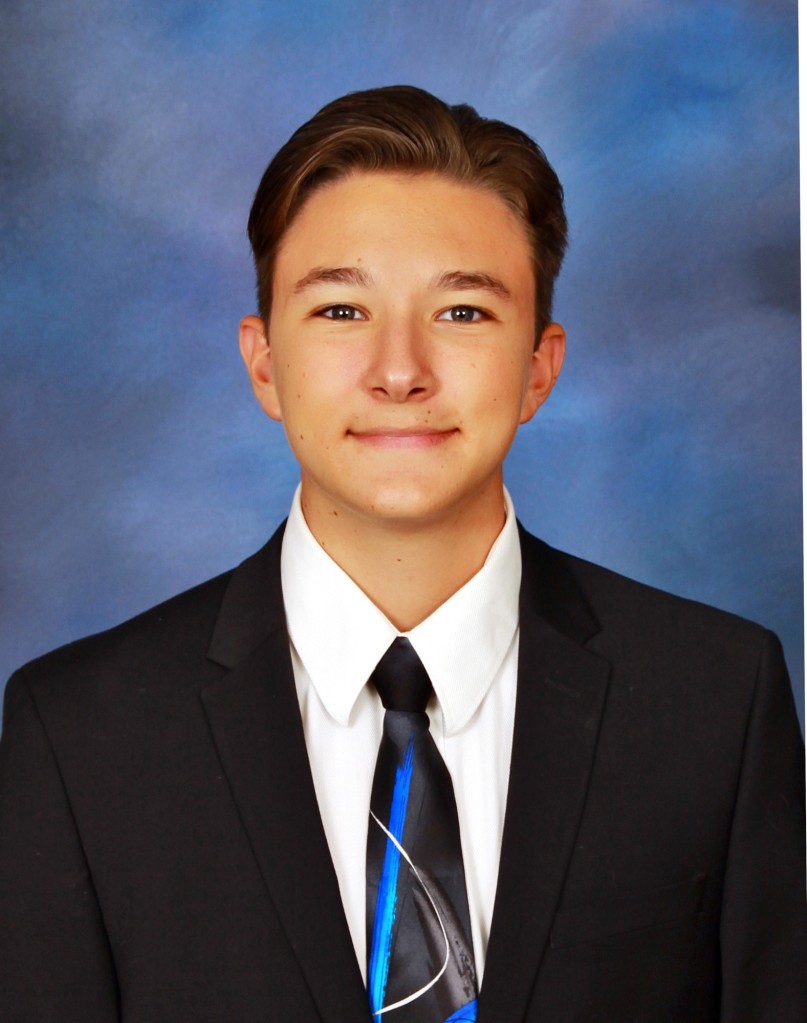
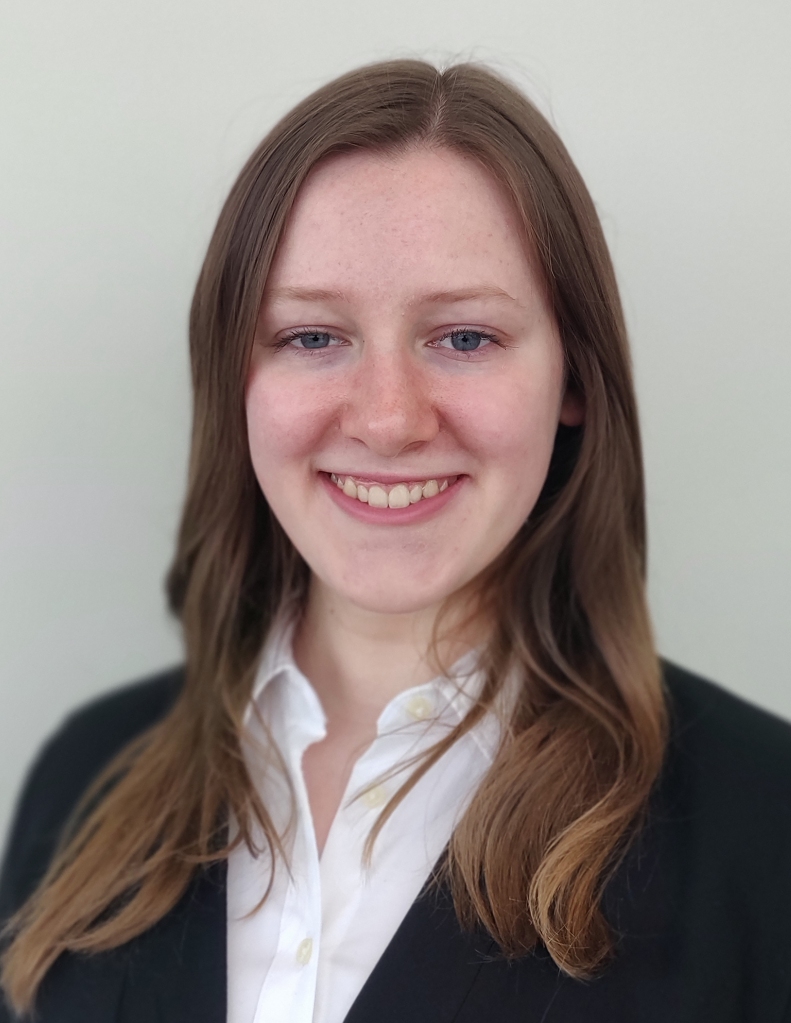
Penn State Behrend’s Class of 2023 is ready to make its mark on the world! We’re proud of our students and the things they’ve accomplished and learned while here at Behrend. Over the next several weeks, we’ll be introducing you to a few of our remarkable seniors who have overcome challenges, pioneered new technology, participated in important research projects, and left an impression at Penn State Behrend.
Today, we’d like you to meet Chase Schultz.
Major: Mechanical Engineering
Hometown: Edinboro, Pennsylvania
Scholarships: Erie Insurance Open Doors Scholarship; Moyer Trustee Scholarship; Arloween Zurn Todd Leadership Scholarship; Jim and Lynn Levinson Memorial Scholarship for Penn State Behrend’s Educational Partnership Program; ASM International Northwestern Pennsylvania Chapter Scholarship; and Ryan E. Knoll Open Doors Scholarship
On choosing his major: Mechanical Engineering is very broad, and I knew I would have a lot of opportunities in many different industries.
Proudest accomplishment at Behrend: Participating in the Steel Founders’ Society of America (SFSA) Cast in Steel competition twice, creating a sword and a spear. These two projects were done through the Materials and Manufacturing Group (MMG) club. We handled all aspects of creating a new Celtic Leaf sword and an African spear point, exploiting the casting manufacturing process from design conception to performance.
Campus involvement: I’m the president of the Outdoors Club and treasurer of the Materials and Manufacturing Group.
His definition of living a good life: Working hard, playing hard, and loving even harder.
Passion project: In 2017, a friend and I started a brand called flowdaddyfishing. We have an Instagram page to promote hunting, fishing, and making the most of every day.
Advice for first-year students: Get your priorities straight and go after what you want. Make friends who are smarter than you are. Find some healthy hobbies. Work hard and accept that college, and any career path, is going to be difficult. Without the struggle, there will be no reward.
Have job, will travel: I’m looking forward to my job at ExxonMobil. I will have the opportunity to travel domestically and internationally to both inland and offshore well site locations on a rotational schedule.
Chase has accepted a position as a well operations supervisor with ExxonMobil following his graduation in May.
Penn State Behrend’s class of 2023 is ready to make its mark on the world! We’re proud of our students and all that they have learned and accomplished here at Behrend. Over the next several weeks, we’ll introduce you to a few of our remarkable seniors who have overcome challenges, pioneered new technologies, participated in important research projects, and made their mark at Penn State Behrend.
Today, we’d like you to meet Seth Myers:
Major: Dual majoring in Interdisciplinary Business with Engineering Studies and Project and Supply Chain Management
Hometown: Erie
Scholarships: Bunton-Waller Scholarship and CMI EPTI Trustee Scholarship
On choosing Behrend: I chose Behrend because it has great engineering and business programs. Also, I had the opportunity to continue my athletic career and play basketball for the Behrend Lions.
On choosing his major: IBE is a unique major offered by only a few colleges in the country. I felt I would be well-rounded with a foundation in engineering and business, and it would give me a lot of career options.
Proudest accomplishment at Behrend: Maintaining a solid grade point average (3.8) while double majoring and playing on the men’s basketball team for four years.
Awards and honors: Inducted into the Chi Alpha Sigma National College Athletic Honor Society and Academic All-AMCC
His definition of living a good life: Enjoying what you do while having a positive impact on others in some way or another.
What he is passionate about: My faith, family, and friends.
Advice he would give to a first-year student: Enjoy your time and experiences here–and get your work done early.
After his graduation in May, Seth will work at Wabtec Corporation in the LEAD Operations rotational program.
Penn State Behrend’s class of 2022 is ready to make its mark on the world! We’re proud of our students and the things they’ve accomplished and learned while here at Behrend. Over the next several weeks, we’ll be introducing you to a few of our remarkable seniors who have overcome challenges, pioneered new technology, participated in important research projects, and left an impression at Penn State Behrend.
Today, we’d like you to meet Cara Harben.
Major: Software Engineering
Hometown: Attica, Ohio
On choosing Behrend: Two of the most important items on my college checklist were small class sizes and hands-on engagement. Behrend’s intimate classroom settings were instrumental in allowing me to feel connected to the course material and the faculty here. My labs have been more challenging than I ever imagined, too, but they have taught me vital skills that have left me better prepared for my career.
On switching gears: I always planned to go into medicine, but in my senior year of high school, I took a web design course and fell in love with programming. It completely flipped my plans upside down. I attended Google’s Computer Science Summer Institute before college, and it solidified my decision. I couldn’t be happier now.
Proudest accomplishments at Behrend: I’m fortunate to have had internships for the last three years at TechnipFMC in Erie and Northrop Grumman’s Space Systems division in California. As a member of Northrop’s intern council, I was able to pitch and start a support program for interns at my location to prevent discrimination in the workplace. That was my proudest moment during my academic career.
Campus involvement: I am a member of Behrend Engineering Ambassadors, Phi Sigma Rho (engineering/science sorority), and the Cultural Cooking Club (CCC). We just made dumplings for CCC, and while the ones I made were not aesthetically pleasing, they sure were delicious.
Java master: Being in this field has taught me the necessity of experimenting with different coffee brewing methods. I’m told I make a mean cup of coffee with my AeroPress, or so my partner says.
What you’d be surprised to know about her: My hometown is a village of fewer than 800 people in the middle of nowhere.
Take a moment to enjoy life: If you move too fast from one thing to the next, you’ll miss out on a lot of beautiful experiences. I like to stop and smell the flowers sometimes, whether by watching the sunset from the Burke parking garage, looking for the International Space Station on good nights, or cooking a good meal after a rough day. That’s what makes me happy.
Adventures await I am ecstatic to have a clean slate to work with once my partner and I move to Colorado Springs this year. I’d really like to spend some time learning a new language and getting back into playing guitar. We’d also like to try backpacking!
Cultivating the next generation of engineers: Computer science outreach is what inspired me to become a software engineer. Currently, I am in the process of designing a program for a local middle school that teaches kids how to create their own Space Invaders style game in Scratch, which teaches kids to program through drag-and-drop code!
Advice for first-year students: Go to the career fair in your first year. Worst case scenario, you come out of it better equipped to face the next fair. In my case, I never thought I’d have an internship after my first year, but I did!
Parting thanks: My professors have been wonderful throughout my time here, and I’m grateful to them for their help, advice, and patience, especially Dr. Wen-Li Wang, associate professor of computer science and software engineering; Dr. Amed Sammoud, lecturer in computer science and software engineering; and Dr. Abdallah S. Abdallah Abousheaisha, assistant professor of electrical and computer engineering.
After graduation, Cara will be joining Progressive Insurance in Colorado Springs, Colorado, as a software developer.
Penn State Behrend’s class of 2022 is ready to make its mark on the world! We’re proud of our students and the things they’ve accomplished and learned while here at Behrend. Over the next several weeks, we’ll be introducing you to a few of our remarkable seniors who have overcome challenges, pioneered new technology, participated in important research projects, and left an impression at Penn State Behrend.
Today, we’d like you to meet: Katrina Stevenson.
Major: Electrical Engineering
Hometown: Cheswick, Pennsylvania
On choosing Behrend: I wanted to go somewhere away from my hometown, but close enough to go home on weekends. Behrend’s Electrical Engineering program also has a great reputation.
On choosing her major: I chose Electrical Engineering because it was the engineering discipline that I knew the least about, but was interested in.
Campus involvement: I am involved in Behrend Engineering Ambassadors, Society of Women Engineers, Institute of Electrical and Electronics Engineering, and the Behrend STEM Mentoring Program.
What you would be surprised to know about her: I love to be outdoors! I like to hunt, fish, kayak, hike, and just explore.
Her definition of the good life: One in which you feel accomplished and keep learning. Most importantly, live your life on your terms – put yourself and your goals first and do what makes you happy.
Top priority: Learning as much as I can! As I start my first full time job, I am looking forward to combining my internship experiences with everything I have learned in school and applying it to my position. Continuing to learn is important to me and it gives me a sense of accomplishment.
Advice for first-year students: You can still be successful if you struggle at the beginning. Don’t give up. Your GPA does not define you. Also, try to get industry experience through internships or co-ops as soon as possible.
After her graduation in May, Katrina will begin working as a Product Development Electrical Engineer at Xylem Inc. in Seneca Falls, New York.
Penn State Behrend’s class of 2022 is ready to make its mark on the world! We’re proud of our students and the things they’ve accomplished and learned while here at Behrend. Over the next several weeks, we’ll be introducing you to a few of our remarkable seniors who have overcome challenges, pioneered new technology, participated in important research projects, and left an impression at Penn State Behrend.
Today, we’d like you to meet Rebecca Abraham:
Major: Software Engineering
Hometown: Mumbai, India
On choosing her major: I have always aimed for a career in a STEM field. My parents and uncles all work in STEM. In my senior year of high school, I did a computer science project and developed an interest in programming.
The best of both worlds: The individual work and teamwork involved in a software programming career appealed to my personality. Sometimes I enjoy thinking and working alone, and sometimes the energy and ‘joie de vivre’ of a team brings out the best in me. Hence software engineering, which offers the opportunity for both, was for me.
Proudest accomplishment at Behrend: There is no one single event. My whole journey at Behrend has been an uplifting experience for me. From being offered the Multi-Campus Research Experience for Undergraduates, a summer research program at University Park for students across the commonwealth campuses, to serving as president of South Asian Student Organization (SASO), life has been a series of happy accomplishments.
Campus involvement: I helped re-activate the SASO Club in 2021-2022 and was recently awarded the “Most Outstanding President of SASO” by the Multi-Cultural Council.
What people would be surprised to know about her: I look very serious, but I am fun loving.
What makes a good life good life: A good education, a strong support system made up of family and friends, my Catholic spirituality and mindfulness.
What she is passionate about: Learning, connecting, and software engineering.
Advice for first-year students: The primary focus should be to attain one’s undergraduate degree, but also remember to experience college life through friends and events on campus. Finally, do not feel pressured to belong to a group or ideology detrimental to healthy lifestyle choices.
After graduation, Rebecca plans to attend graduate school for a master’s degree in software engineering.
Penn State Behrend’s class of 2022 is ready to make its mark on the world! We’re proud of our students and the things they’ve accomplished and learned while here at Behrend. Over the next several weeks, we’ll be introducing you to a few of our remarkable seniors who have overcome challenges, pioneered new technology, participated in important research projects, and left an impression at Penn State Behrend.
Today, we’d like you to meet Alison Huffman
Major: Computer Engineering with a minor in Music Technology
Hometown: Scottdale, Pennsylvania
Scholarships: Nishi Gupta Scholarship in Engineering, Behrend Excellence Award, Council of Fellows Leadership Scholarship, Intel Scholar
On choosing Behrend: I chose Behrend because of its phenomenal engineering program and the opportunity to play Division III athletics. I was on the soccer team my freshman year.
On choosing her major: I have always been interested in programming and electronics, specifically with video game design when I was younger. As I approached college, I really wanted to learn about audio products and signal processing in addition to gaining a general understanding of electronics and computers. This led me to choose computer engineering.
Campus involvement: I am the worship leader and weekly meeting team leader for Cru, the vice president of the Computer Engineering Club, the vice president of the Society of Women Engineers, and a member of Tau Beta Pi.
People would be surprised to know: My biggest passion in life is music. I play multiple instruments (drums are my favorite), and I lead worship at two churches in the Erie area. I also co-wrote and co-produced a worship album called “For Your Glory that’s available on Spotify.” Additionally, I love combining my love of engineering with my love of music to better understand how audio works on both the hardware and software sides, so a lot of my school projects were centered around that.
Proudest accomplishment at Behrend: Besides the worship album, I completed a project through the Huck Institutes of the Life Sciences at University Park that displays data about virology through art, light, and sound. It is a structure mounted to the wall with an interface in front of it for users to interact with and trigger videos and audio. I designed and assembled the interface, and I also created the audio using music programing. The structure was installed at University Park in the spring of 2022.
Advice for first-year students: Don’t be afraid to get involved with clubs and events on campus and get involved early! I met some of my best friends through the clubs in which I am involved, and the clubs have given me great opportunities for leadership, as well.
After graduation, Alison will be working for Northrop Grumman in Melbourne, Florida, as a software engineer in their aeronautics division.
Penn State Behrend’s class of 2022 is ready to make its mark on the world! We’re proud of our students and the things they’ve accomplished and learned while here at Behrend. Over the next several weeks, we’ll be introducing you to a few of our remarkable seniors who have overcome challenges, pioneered new technology, participated in important research projects, and left an impression at Penn State Behrend.
Today, we’d like you to meet Michael Gibilterra
Major: Plastics Engineering Technology
Hometown: Hershey, Pennsylvania
Scholarships: The Joseph and IsabelPrischakTrusteeScholarship.
On choosing his major: Originally, I came to Behrend for Computer Engineering. But, after getting involved with Innovation Commons (see below), I realized I wanted to do more with 3D printing. In doing that work, I learned that I didn’t have a strong knowledge of what happens to plastics when printing. After talking to some of faculty members, especially Jason Williams, assistant teaching professor of engineering, I switched to Plastics Engineering Technology.
About Innovation Commons: It is an open ideation, product development, and prototyping center staffed by students who help guide innovators and entrepreneurs through the early stages of development. It is open to all entrepreneurs and innovators throughout Erie County and the surrounding region, including students, who are looking for support to organize, collaborate, compose, and construct their ideas.
Proudest accomplishment at Behrend: Becoming the first student volunteer at Innovation Commons. This is where my entrepreneurial spirit grew and where I learned about starting my own company. I’m incredibly thankful for the opportunities Innovation Commons has created for students.
Campus involvement: I was a member of Alpha Phi Omega, a service fraternity. I also helped to revive the Entrepreneurship Club and served as president. The club brought in guest speakers, including a variety of entrepreneurs and/or those who support them, and we helped with Penn State Behrend’s Global Entrepreneurship Week activities.
What makes him unique: I can become very focused on a topic, which has been a “superpower” that helps me tackle big problems and led to my ability to develop new products, machines, or designs in a relatively short amount of time.
People would be surprised to know: That I have autism and it’s one of my biggest strengths. While it has certainly had its hindrances, it has helped me significantly in my professional life and has enabled me to approach problems in a different light.
A printing passion: I have an obsession with 3D printing. It started back in high school when I built my first 3D printer using motors from some CD drives, a microcontroller kit, zip ties, cardboard, and the cheapest 3D doodler pen I could find at the time. I really enjoyed writing the code and then getting to see my creation print. I went on to build myself a 3D printer farm selling 3D printed parts and developing new 3D printers that each solve a different problem.
Advice for first-year students: Don’t be afraid to ask questions to get a deeper understanding. I’ve learned so much by just asking why or how something happens. Also, your professors want you to succeed. Don’t be afraid to ask them for help.
Michael is working to launch his own company, Additive Manufacturing System — a 3D printer manufacturing company that focuses on producing 3D printers, materials, and software for engineering applications in sectors such as aerospace, automotive, and medical.
Penn State Behrend’s class of 2022 is ready to make its mark on the world! We’re proud of our students and the things they’ve accomplished and learned while here at Behrend. Over the next several weeks, we’ll be introducing you to a few of our remarkable seniors who have overcome challenges, pioneered new technology, participated in important research projects, and left an impression at Penn State Behrend.
Today, we’d like you to meet Ashley Seamon:
Major: Industrial Engineering
Minor: Operations and Supply Chain Management
Hometown: McDonald, Pennsylvania
On choosing Behrend: I chose Behrend because of the small campus setting that also came with all the connections and perks of being part of a big university. Also, Behrend has a strong engineering reputation with ABET (Accreditation Board for Engineering and Technology) accreditation, both of which were important to me.
On choosing her major: I’ve always had an aptitude for math and science, but I associated engineering with doing hands-on fixing. On a visit to Penn State Behrend, I learned that industrial engineering was a field centered around efficiency and conceptual problem solving, and I knew it would be a perfect fit!
Proudest accomplishment at Behrend: My proudest accomplishment at Behrend has been my participation in undergraduate research, which has allowed me to study engineering education techniques. Along with my adviser, Dr. Omar Ashour, associate professor of industrial engineering, I have been studying the effects of integrating 3D-simulations and nonlinear storytelling into industrial engineering curricula.
Campus involvement: NCAA DIII Varsity Women’s Basketball; Student-Athlete Advisory Committee, 2021-2022 Vice President; Lion Ambassadors, 2020-21 Internal Affairs Co-Chair/ 2021-2022 Executive Vice President; Society of Women Engineers, Behrend Chapter 2020-21 Secretary/2021-2022 President; Behrend Engineering Ambassadors, 2021-2022 Secretary; Institute of Industrial and Systems Engineers; Materials & Manufacturing Group; Women’s Engagement Council
Awards and scholarships: Behrend Honors Program; Behrend Chancellor’s Scholarship; President’s Freshman Award; Behrend Leadership Scholar; Council of Fellows Leadership Scholar; Dean’s List; Tau Beta Pi Engineering Honor Society; Chi Alpha Sigma Athlete Honor Society; 2021 Outstanding Tutor Award.
What makes her unique: I wake up every day with the intention to better myself. While it may not sound unique, I think my self-motivation to challenge myself every day is what has led to the success I’ve had during my time at Behrend.
On working (and playing) hard: In addition to being an engineering student, I currently play on the women’s basketball team. It has been a major commitment, and while it has challenged me outside my comfort zone, I have become a better person because of it. I also have four jobs at Behrend. By the time I graduate, my jobs on campus will have included peer tutoring (3 years), undergraduate research assistant (1.5 years), student grader (1 year), and teacher’s assistant (1/2 year).
On eating the elephant one bite at a time: Take every day one step at a time. Focusing on the little things will allow the big things to fall into place. Find some small way to challenge and improve yourself every day.
Her passion is learning: My goal is to earn my Ph.D. in industrial and systems engineering with a concentration in supply chain and logistics to become a college professor.
Advice for first-year students: Don’t be afraid to fail in engineering. It’s better to try and fail than to regret that you didn’t try to pursue something that could have changed your life for the better.
After graduation, Ashley plans to enter the Industrial and Systems Engineering Ph.D. Program at North Carolina State University.
By Heather Cass Publications Manager, Office of Strategic Communications, Penn State Behrend
Plastics recycling class opens eyes, options for high school students
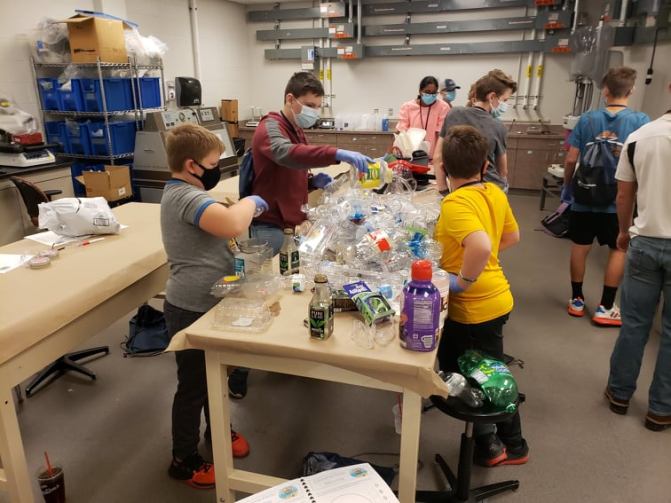
When you toss your 2-liter soda bottle or yogurt container in the recycling bin, you may not think about where it ends up or how it might be recycled, but ten Erie-area students, recent “graduates” of Penn State Behrend’s Recycling Bootcamp, sure do.
The students, ages 14-18, saved their home plastic waste for a week before the all-day bootcamp event in August in Burke Center. It was led by Plastics Engineering Technology (PLET) faculty members—Dr. Alicyn Rhoades, associate professor of engineering; Dr. Gamini Mendis, assistant professor of engineering; Anne Gohn, assistant research professor; and Dr. Xiaoshi Zhang, engineering researcher. Several Behrend PLET students helped throughout the day, as well.
The students started the day identifying the different types or families of plastics they collected. They then counted the number of pieces in each family and calculated the weight fractions of each type of material, which is critical for cost-effective recycling.
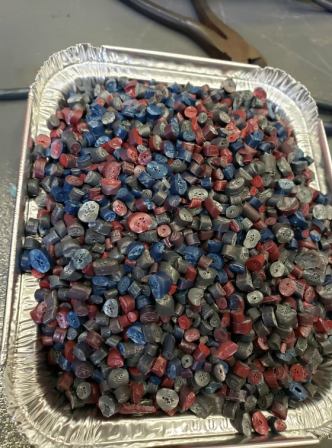
“Students shredded their high-density polyethylene (recycling code #2) materials, extruded to pelletized form, and injection-molded test samples and plastic building bricks,” Gohn said. “Samples were tensile- and impact-tested at various levels of recycling content. The students then stretched and impact-tested the samples to analyze changes in material properties.”
The work they put into recycling their plastic waste opened their eyes to the challenges involved in the process.
“They were surprised by how much recycling affects the strength of plastic material and how complicated the process can be,” Gohn said.
Comments from student participants reflect the value of outreach efforts and learning in a hands-on environment. Several students said they were now “excited about plastics” and at least one is considering a career in plastics engineering. That’s just what organizers of the event hoped would be the result.
The bootcamp was funded through a $500,000 National Science Foundation Faculty Early Career Development (CAREER) Program grant awarded to Rhoades. The CAREER program is designed to support early-career faculty members who serve as academic role models in research and education.
Plans change but summer learning experiences continue
By Heather Cass, Publications Manager, Penn State Behrend
When the COVID-19 pandemic arrived in the United States, it disrupted not only the last few weeks of the academic semester for Penn State Behrend students, but also summer plans, too. With activity across the country and most of the world at a standstill, job offers, internships, and research opportunities were suddenly vanishing or being put on hold.
Even in a time as tumultuous as this, though, persistence and ingenuity pay off, and many Behrend students have been able to find ways to continue learning and getting hands-on experience from home this summer.
Caralyn Harben
Caralyn Harben, intern at Northrop Grumman
Caralyn Harben, a junior majoring in Software Engineering, had been looking forward to spending her summer in sunny California working at Northrop Grumman’s Redondo Beach location before the coronavirus conspired to keep her at home.
While she laments the location change, she is thankful to still have the opportunity to support the company’s Space Systems division as a software engineering intern.
“I was lucky that Northrop Grumman decided to continue their internship program with many of us, including me, working remotely,” Harben said. “They shipped my work computer and additional hardware to me.”
In addition to her internship duties, Harben is an active member of the company’s intern council where she helps plan various virtual social events to keep her peers connected.
“I’m having a lot of fun with the work and the council, and it’s been a blast learning more about the company as a whole,” she said.
Micahel Magnotti
Michael Magnotti, paid research assistant
Industrial Engineering sophomore Michael Magnotti wants to get as much hands-on experience as he can before he graduates from Behrend. “Research is all about learning and I love to learn,” said Magnotti, who is also a Schreyer Honors scholar.
So when he learned about a summer research opportunity with Dr. Faisal Aqlan, associate professor of industrial engineering, and Carol Putman, assistant teaching professor of management, Magnotti teamed up with two other classmates, Samantha Melnik and Cameron Butts, to work on the project that focuses on applying an abstract concept to everyday business processes.
“Our team is working on developing a concept relationship map and an implementation plan for Industry 4.0 in manufacturing and the service industry,” Magnotti said. “First, we identified the main pillars of Industry 4.0 and how they are relate to one other and then we developed a visual representation of this relationship and created a simulation model for a small-scale implementation of Industry 4.0.”
It’s a paid position, which Magnotti said he appreciates in light of the time it requires, and it’s one that was easily adapted to an at-home work format. The Penn State Behrend Undergraduate Student Summer Remote Research Fellowship he received requires the research work be completed with software and tools that are free and available to the public on the Internet.
“You would think a virtual research experience like this would be mostly writing, but we have many different physical deliverables as well as simulation programs that allow us to be more physically creative instead of solely reading and writing every day,” Magnotti said. “The experience is incredibly exciting, even with the reading and writing, and I am so grateful to Penn State Behrend for giving students opportunities throughout these uncertain and stressful times.”
Rebecca Grey
Rebecca Grey, intern turned researcher
Rebecca Grey, a senior Mechanical Engineering major, had a summer internship lined up, but it was rescinded due to the pandemic.
“When my internship was canceled, I figured that I would probably spend my summer doing research since I am a member of the Schreyer Honors College and was beginning to transition research into work for my honors thesis,” Grey said.
But then, Dr. Charlotte de Vries, assistant professor of mechanical engineering, told her about the Multi-Campus Research Experience for Undergraduates (MCREU) organized by University Park.
Grey had worked with de Vries on a research project investigating the use of 3D printers to produce accessibility aids to support aging in place. Aging in place is an initiative largely centered on improving home accessibility to allow older adults to live in their homes longer.
Grey submitted a last-minute application and was accepted as the program was approved to go fully virtual for the summer.
“I am still doing research with Dr. de Vries and was also given another mentor for the MCREU program, Swapnil Sinha, who is a Ph.D. candidate in mechanical engineering at University Park,” Grey said. “My research has now transitioned from what is being printed on a 3D printer to focusing on improving the overall usability of the physical 3D printer.”
To that end, Grey is working on developing guidelines for 3D printers governed by the principles of universal design, a concept that focuses on product and building design that is accessible and user-friendly for individuals of varying ages and physical abilities
Grey said the project is going well and she has benefitted from having a second mentor.
“I am reviewing a lot of literature, analyzing various aspects of 3D printers that cause issues, looking for areas of improvement, and designing a survey for future use to gain more perspective on usability issues that others have dealt with,” she said. “In a remote research environment, it has been great working with a professor I know and have previously conducted research with. Having an additional mentor as well has been helpful in bringing a new perspective to my project and extra tips on conducting effective research.”