By Heather Cass, Publications Manager, Penn State Behrend
When’s the last time you really looked at a tree? Not through a windshield or a window and not while scrolling past a picture on social media but standing right in front of it. The 2025 Erie County Tree Scavenger Hunt invites you to do just that.
The hunt—a free, self-guided activity created by the Penn State Master Gardeners of Erie County—is your invitation to step outside, slow down, and discover eighteen remarkable trees growing in the region.
“We want to encourage people to get out of their houses and cars and explore Erie County,” said Lisa Rand, coordinator of the project. “When you’re standing in front of a tree, you notice things you can’t get from a website or a drive-by. You can study its shape, feel the texture of its bark, and catch the scent of its leaves or needles.”
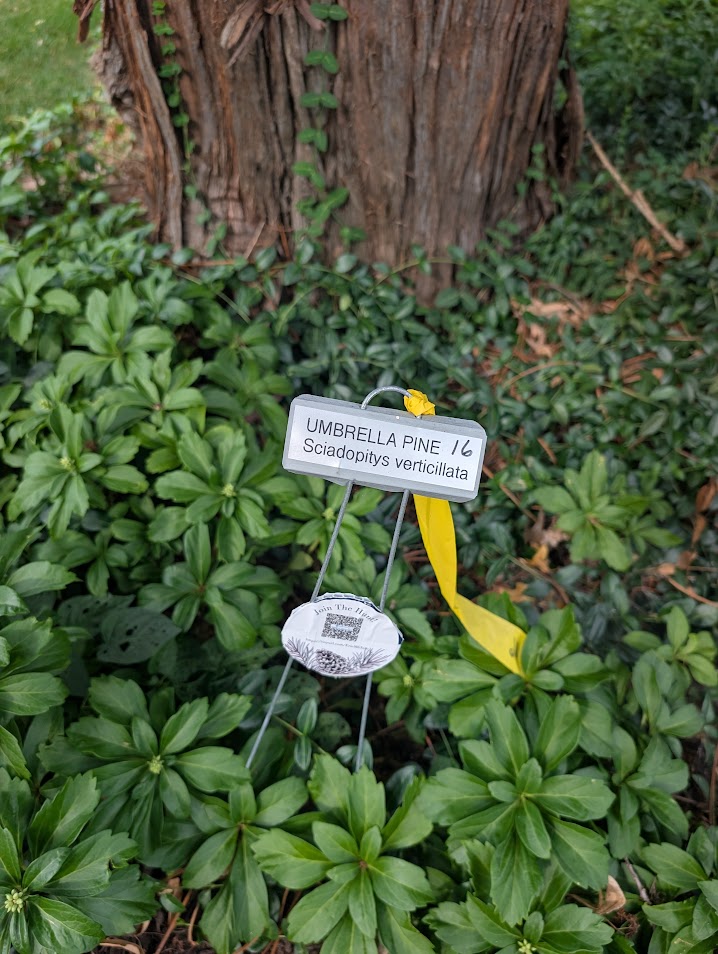
This year’s hunt focuses on conifers (cone-bearing trees) with eighteen “remarkable” specimens to find. All are located on public land or in places that welcome visitors, like Penn State Behrend, which is an official arboretum and home to more than 200 unique tree species.
What makes a tree remarkable?
“They’re all special for some reason—be it form, location, or historical significance,” Rand said. “The guide explains why each tree is significant.”
The scavenger hunt runs through October 1 and is open to anyone curious enough to lace up their shoes and start exploring. It’s part outdoor challenge, part botany lesson, and part treasure hunt—all rolled into one.
How to Play Use the digital Tree Hunt Guide, filled with clues to locate specially tagged trees across the county. At each stop, you’ll find a metal ID tag with a number. Find at least ten trees, log their numbers using the yellow links in the guide, and you’ll be entered in a prize drawing to win—what else?—a live tree.
It’s an easy, low-pressure way to spend time outdoors, learn about native trees, and maybe even discover a new favorite park or trail.
One past participant told Rand she and her mother found every tree in a previous hunt and couldn’t wait to do it again.
“It’s something they could enjoy doing together,” Rand said.
Note to college students: This also makes a fun—and free—date idea, and a nice break from hitting the books. Hint: One of the trees is right here at Behrend.
Their mistake is understandable. In just three years, Orange, an immersive administrator in the college’s Virtual/Augmented Reality (VAR) Lab, has left his mark on campus—literally. From 3D scanning equipment and building video game consoles in the VAR Lab to creating 360-degree virtual tours for industry partners, Orange’s work can be seen all over Behrend.
“He oversees several of the undergraduate employees in the lab, working with them across a half dozen or more projects, helping them to achieve their own goals,” said Dr. Chris Shelton, associate professor of psychology and director of the VAR Lab. “He goes out of his way to learn and help others who are trying new techniques in the lab, while also improving the atmosphere with his positive attitude and calm demeanor.”
Orange is also collaborating with Jane Ingold, reference and instruction librarian and Behrend’s archivist, to digitally preserve college artifacts as part of his Schreyer Honors College thesis project.
“He is so engaged and is a real champion of Behrend history through the preservation work that he’s doing,” Ingold said. “This spring, he did 3D scans of Ernst Behrend’s old steamer trunk, the bust of Moritz Behrend’s head, and Bruno’s headstone.”
Behrend Blog caught up with Orange before he returned home to New Bethlehem for the summer.
How did you get involved in the VAR Lab? I met another student, Marcus Jacobs (a ’22 Business Economics and International Business grad), who worked there, and he roped me in. I was interested in what they were doing in the lab. Now I do a lot of the project managing. I joke that I’m Marcus 2.0.
What are some projects you’ve worked on? Most recently, I helped create a 360-degree virtual tour for Snap-tite, an Erie company, and I’m working on the Echoes of HistERIE project—scanning historical sites and artifacts like the Presque Isle Lighthouse. If something ever happens to these places, at least we’d still have them digitally.
We heard you built a turntable to help scan people in 3D? Yes! It’s hard to do 360-degree scans of people while lugging around the camera and cables, so it’s easier if the person rotates on a platform while the camera stays put. You can buy turntables like this, but my true gumption is being frugal—so I wanted to build one. My dad and I used the motor from a pig roaster, since it offers a slow, strong spin. It turned out great.
You also created an augmented reality sandbox. Tell us about that. It’s an interactive display that lets users shape and manipulate 3D topographic maps in real time. A 3D camera senses the shape of the sand, and a projector overlays a topographic map onto it. You can build mountains and valleys right in front of you. Again, you can buy these, but we made ours out of plywood and an old projector.
And the VARcade? That’s an arcade machine I built from an old kitchen cabinet. It runs classic games and also gives students a platform to test new games they create in computer science or game design classes.
You sound like an engineer. Why did you choose DIGIT? DIGIT is the best of both worlds. I get to work with emerging technology but in a more creative or artsy way. I like 3D modeling, photography, making movies, and videogames. I’m also minoring in game development.
What are some practical uses for VR and 3D images? A lot of people think VR is just for video games, but it has serious real-world uses—training simulations, for instance, where it’s safer to make mistakes. It’s also great for exposure therapy for phobias and PTSD. And 3D tours can give people a sense of what a place looks and feels like without needing to physically go there.
What motivates you? My faith—especially Jeremiah 29:11: “I know the plans I have for you, declares the Lord, plans to prosper you and not to harm you, plans to give you hope and a future.”
What are you looking forward to when you return in August? My Schreyer thesis project, which is a continuation of the work I do in the lab. I’ll be using different scanners on various artifacts to find the most efficient methods for digital preservation. And I’m excited to see what else comes my way in the VAR Lab. I’m up for anything.
This spring, students in Dr. Matthew Levy’s AMST 307N: American Art and Society course at Penn State Behrend engaged in a unique interdisciplinary project that blended historical analysis with creative expression. As part of the course, students worked in groups to create tableaux vivants—or “living pictures”—that reenact and recontextualize iconic works of American art that were discussed in class.
Not only did students have to study the formal and thematic elements of a chosen painting, but they also had to consider its relevance to contemporary social and cultural issues.
“Working in groups, they researched their chosen work, gaining a deeper understanding of the social issues it represented,” said Levy, associate professor of art history, music, theatre, and visual arts.
Each group then reimagined their selected artwork for a 21st-century context, using modern props, settings, and interpretations to bridge the past and the present.
“They had to think carefully about props, poses, setting, framing, and more to bring the work of art into modern times,” Levy explained.
Here are several standout projects from the class, along with insights from Levy on what made each piece compelling.
Distant View of Niagara Falls by Thomas Cole: “Where Cole’s view of Niagara Falls depicts the untouched majesty of the falls (represented both by the landscape and the presence of the Native Americans living at one with nature), the students depicted a domesticated and technologized landscape. Using the Wintergreen Gorge as their setting, they drew attention to the power lines, nature trail, and the use of phones to mediate our experience with nature.”
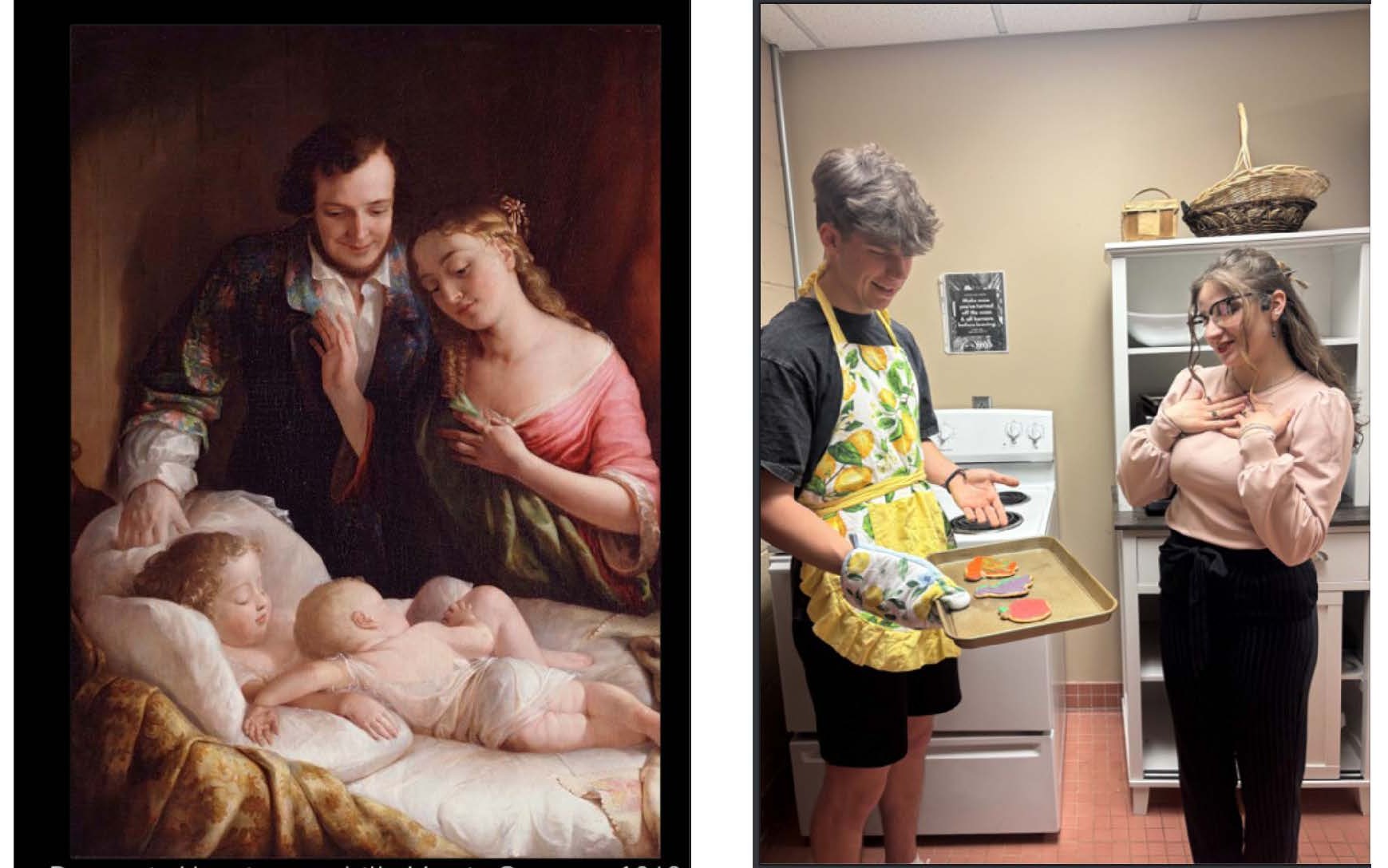
Domestic Happiness by Lilly Martin Spencer: “In the original painting, Spencer offers what was a progressive view of family life for the time, with both mother and father doting on their children. Our students instead depicted a “girl boss” showering praise on the domestic accomplishments of her stay-at-home husband. Notably, no children are present.”
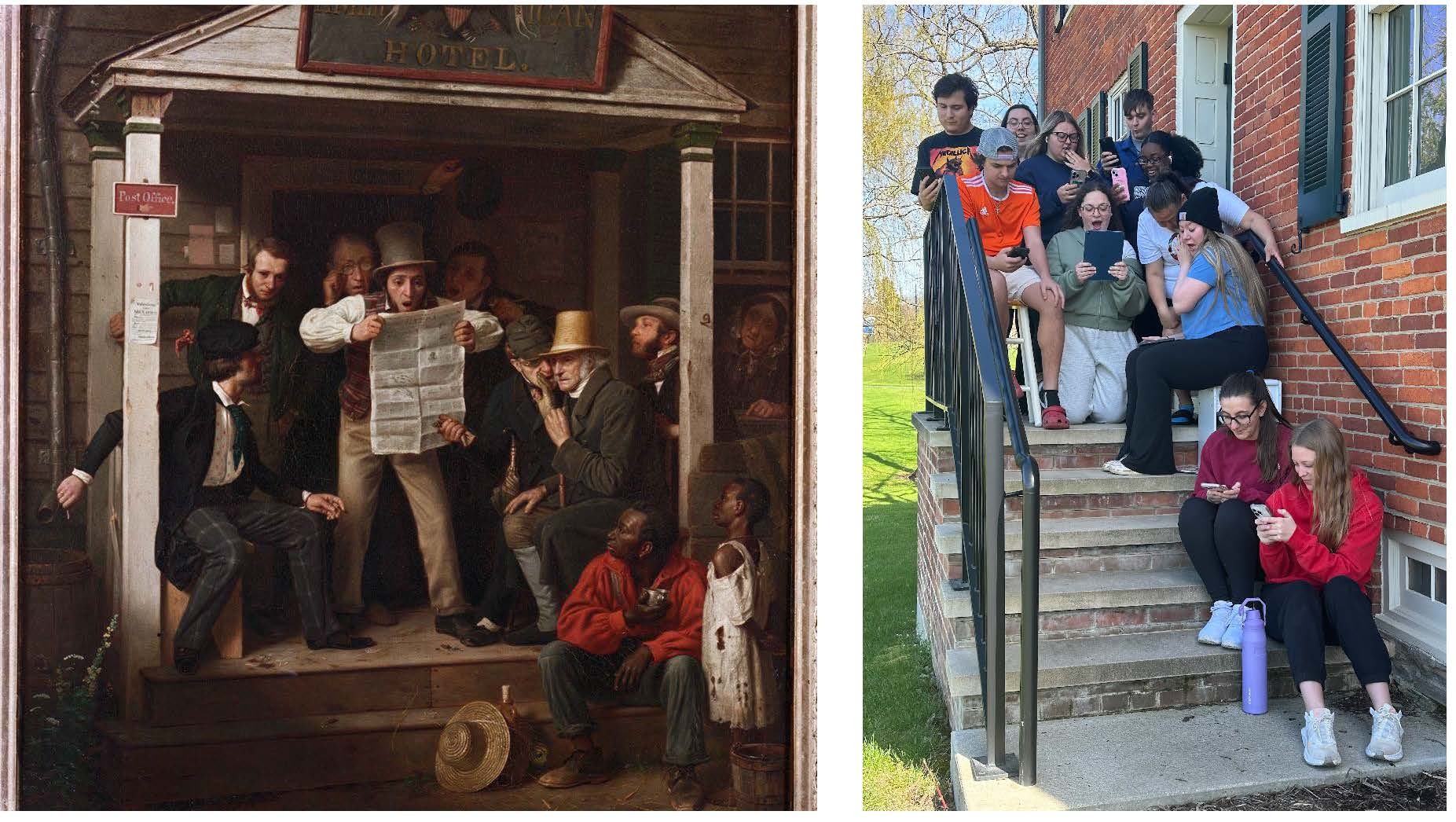
War News from Mexico by Richard Caton Woodville. “Woodville’s painting depicts the latest in information technology—the penny press—which made journalism far more accessible than ever before. Our students depicted a scene in which everyone is responding to the news, not in the shared experience represented by Woodville, but each on their own through their phones and tablets.”
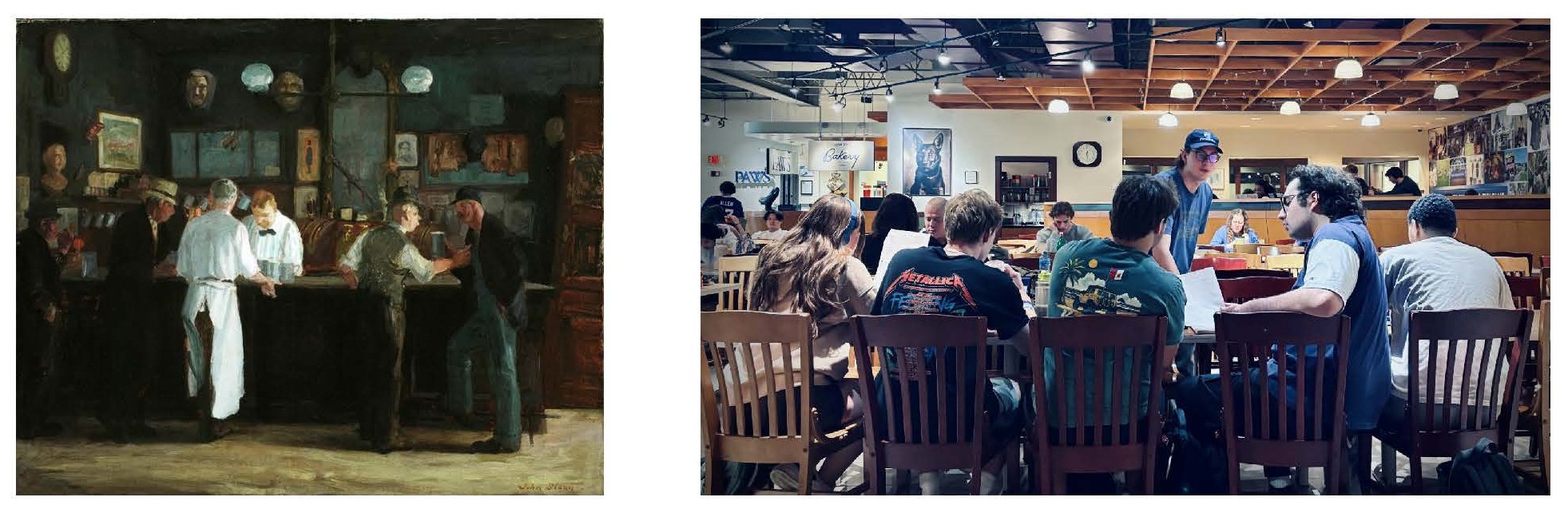
McSorley’s Bar by John Sloan: “Sloan’s painting depicts a scene of working-class sociability in a male-only bar. Our students represented a scene of co-ed sociability in Bruno’s Café on the campus of Penn State Behrend. Again, the presence of devices mediates human-to-human connection. Note how the student group considered the framing of the shot, mirroring the lights and memorabilia on the walls of the original.
Fun fact:McSorely’s Old Ale House is New York City’s oldest continuously operated saloon. The bar did not admit women until it was forced to do so in 1970.”
ABOUT THE COURSE
AMST 307N: American Art and Society covers the history of art in the English colonies and the United States from the seventeenth century to the present, examined through paintings, sculpture, buildings, prints and photographs, as well as exhibitions and national/world fairs.
The course is designed to meet two principal goals. The first is to increase students’ powers of visual analysis and help them build a critical vocabulary for discussing an art object’s medium, composition, style, and iconography. The second is to foster an understanding of the deep implication of the visual arts in their social and cultural contexts.
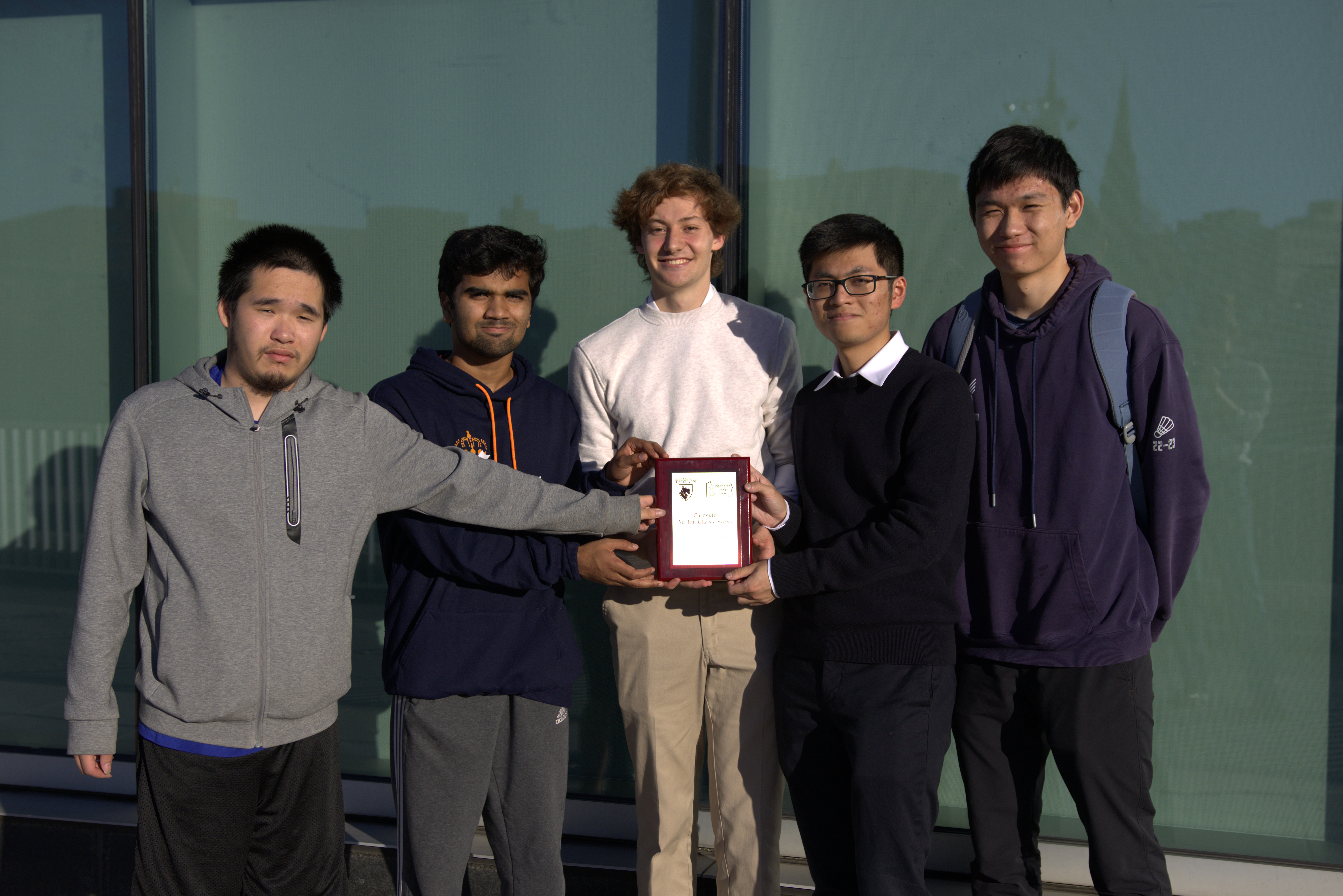
Behrend chess team members: Dennis Chu, Kelvin Li, Advaith Kodipparambil, Jordan DeLauer, Christian Wang, and Seth Mellring.
Chess is a complex game, with sixteen pieces of six types, each moving in a different way. Players must not only master the rules but also develop strategies and tactics to defeat their opponents while adapting to every move.
Kelvin Li, treasurer of Penn State Behrend’s chess club, said the game is worth the effort, especially when he finds the tactic—whether it’s a beautiful move or the only move—that will win the game.
A tactic in chess is a series of moves that gives a player an immediate advantage. Tactics are usually short-term and involve forcing moves that limit the opponent’s options.
“It is incredibly satisfying to find the tactic because they are very difficult to spot, especially for new players,” Li said. “After so many games, you usually develop an intuition and can more quickly spot good moves. But even that is rarely simple because you must think about all your opponent’s possible responses to your move.”
No two chess matches are the same, but there are patterns. A player who can spot the pattern gains the upper hand.
“Advanced players usually study these positional patterns and how to play them, so if they recognize them in a real game, they gain a solid advantage over their opponent,” Li said. “While real games are usually quite messy, knowing what you can work with and how to exploit it is important.”
Spotting patterns is something Li, a dual major in mathematics and physics, is well-versed in. Math can be considered the study of patterns, as it focuses on identifying, analyzing, and describing repeating structures and relationships with numbers, shapes, and other mathematical concepts.
Li began playing chess in high school and was pleased to learn that Behrend had an active chess club. The club, which meets on Thursday nights in the Reed Gaming Lounge, includes a mix of intermediate to advanced players, but they enjoy teaching newbies as well.
“We welcome all players,” Li said. “In our weekly meetings, we play casual games to foster a positive learning environment where newer players can play and learn from some of the more advanced players.”
Each month, the club holds a chess tournament with prizes. To level the playing field, they adopt the Swiss system, a non-elimination tournament format that pairs players with similar scores. The winner is the player with the most points at the end of the tournament.
“Chess is an adversarial game by nature, so we always encourage healthy competition,” Li said.
The practice has paid off. Last semester, the Behrend team won the Carnegie Mellon Chess Open, held at Carnegie Mellon University in Pittsburgh, besting CMU by a half-point to win the top spot. Competition was stiff, with teams from the University of Pittsburgh, Penn State University Park, Shippensburg University, and others participating.
In November, at the Pennsylvania State Chess Federation’s Pennsylvania Team Championship in Shippensburg, the Behrend club won the top college team prize and tied for first place out of thirteen college teams.
The club will compete in the Ira Lee Riddle Memorial Championship in Harrisburg in March and the Pennsylvania State Game/29 Championships in April at the University of Pittsburgh.
Follow the chess club at instagram.com/psbchessclub.
Behrend Chess team members: Jack Ni, Advaith Kodipparambil, Jordan DeLauer, Kelvin Li and Christian Wang.
By Heather Cass, Publications Manager, Penn State Behrend
Each year, twenty-four Penn State Behrend students and four advisers participate in an Alternative Spring Break (ASB) service trip coordinated by the Office of Civic and Community Engagement. The experience, in which participants spend their break volunteering for a community in need, is designed to engage students on multiple levels, including personal development, group and team dynamics, and public service.
Many who participate in ASB find it life changing. Some discover a passion for service. Some make lifelong friends. Some choose a new career path. Some meet their soulmate.
Though it would be years before they officially dated, their friend Ashlyn Kelly ’18, who was also on the trip, spotted the chemistry right away. (She would have. Ashlyn was a Chemistry major.)
Gretchen (Shaffer) and Max Magera, fourth and fifth from the left, at Penn State Behrend’s 2018 Alternative Spring Break service trip to Beaumont, Texas, where participants helped with Hurricane Harvey cleanup.
“I remember early on in the trip, a group of us were standing around talking while waiting for everyone to go to the worksite, and I noticed how much Gretchen lit up when Max would join the conversation,” Ashlyn said. “I could tell something was going on.”
Ashlyn spent the next several years gently encouraging her friends to be more than friends.
“I always knew they’d end up together one day,” she said.
Sweet as (American) Pie
Gretchen, a Plastics Engineering Technology major, liked Max, a Mechanical Engineering major, right away. He was smart, funny, capable, and among the first in the group to jump in and do the hard labor needed in the flood-ravaged homes they were working on.
It’s a tradition on ASB trips for each person to anonymously submit a favorite song to a playlist members listen to when traveling during the trip. The challenge is to match the song to the person who selected it.
Gretchen chose “The Saga Begins,” a “Weird Al” Yankovic parody of Don McLean’s “American Pie,” with lyrics that humorously summarize the plot of Star Wars: Episode I – The Phantom Menace through the point of view of Obi-Wan Kenobi, one of the film’s protagonists.
“Everyone hated that song,” Gretchen said. “It must’ve played five times before they figured out it was me.”
Halfway through the trip, when the group decided to make another playlist with fresh songs, Max chose the original “American Pie.” Gretchen knew right away who submitted that song.
It went on like this for the two: friendly conversations, shared jokes, and subtle flirting. They did another ASB trip together, traveling to Puerto Rico in 2019.
When Max graduated in May 2019, he moved away and began a series of six-month rotations in Wabtec’s LEAD Program. He and Gretchen stayed in touch with occasional texts.
Rotation Leads to Reunion
“In 2020, Max texted and said that he was going to be back in Erie for six months,” Gretchen said.
They reconnected, and their near-weekly happy hour hangouts at a local brewpub soon turned into something more.
“Every time she made a comment about seeing Max, I asked if they were hanging out or dating,” Ashlyn said. “When she finally said they were dating, I said, ‘Well, it’s about time!’”
Their first official date had a Behrend connection: They went to see The Groove, a band that features Jim Dowds, a case manager in Behrend’s Personal Counseling center, on drums.
By spring 2023, Max decided to pop the question at Behrend’s Lion Shrine.
He enlisted help from Ashlyn and Behrend’s Mary Kay Williams, whose official title is admissions support assistant but who also serves as a surrogate “campus mom” to the many students she befriends.
“Mary Kay and I scheduled a lunch with Gretchen,” Ashlyn said. “The plan was for Mary Kay to cancel at the last minute, which she did, so that I could suggest that Max and Gretchen still meet up with me and my boyfriend for a walk on campus with our dogs.”
First stop was the Lion Shrine to “take some photos.” Ashlyn was prepared, whipping out her camera and handing her phone to her boyfriend, Paul Lutz ’19, to capture the proposal in both photos and video.
“Happy to say that after all that hard work, she said ‘yes,’” Ashlyn said.
This slideshow requires JavaScript.
Blending Blue and White Forever
On September 28, 2024, Max and Gretchen married at Behrend’s Smith Chapel—the building where it all started, with the first ASB planning meetings held in the downstairs lounge. Ashlyn was a bridesmaid.
This slideshow requires JavaScript.
Photo credit: Alan Freed Photography
During the ceremony, the couple performed a unity sand ceremony—a wedding tradition in which a couple pours sand from separate vessels into one vase, symbolizing two people uniting in marriage. The sand in their ceremony was Penn State blue and white, a nod to the college that brought them together.
Max is a supplier quality engineer at Wabtec in Grove City. Gretchen is a project engineer at Molded Fiber Glass in Union City. The couple resides in Cambridge Springs with their dogs, Zeus and Athena.
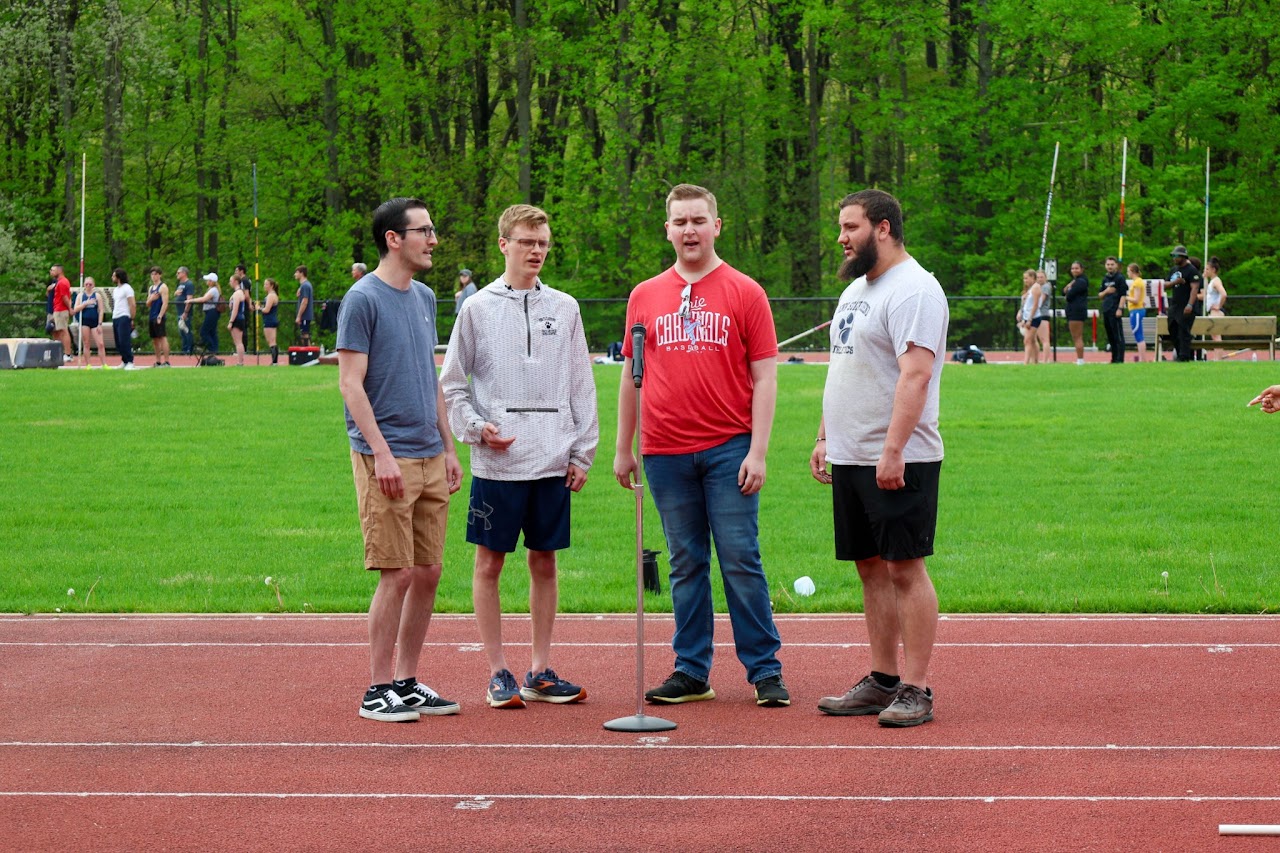
Four Score, a barbershop quartet that includes three Behrend students and one alumnus, perform the National Anthem at a home track meet at Penn State Behrend in spring 2024.
One of the most amazing aspects of college is that a single class can have a profound effect on your life. It might inspire you to change your career plans. It might be the place you meet your best friend or future spouse. It might ignite a lifelong passion or lead you to a place you never expected.
Max Rohl, a senior Interdisciplinary Science and Business major, never dreamed he would be on stage accepting first place in a barbershop quartet competition in Rochester, New York. He had never even sung in a group until he signed up for Concert Choir class in his first year at Behrend.
“Some of us in the class started a kind of club where we would meet up in Ohio Hall to work on our songs,” Rohl said.
One night, at the end of a choir meet-up, he asked if anyone in the group had any other styles of songs they wanted to work on. Rohl, who had been a fan of the barbershop quartet classic, 76 Trombones, was about to suggest barbershop songs when Wade Williams, now a junior History major, said, “I’ve always wanted to start a Barbershop Quartet.”
“Me, too,” Rohl said.
Wade is a bass singer, Rohl is a baritone, so they needed a tenor and a lead.
They found both in Joey George, a senior Computer Engineering major, who had grown up singing in choirs and at church and could sing both tenor and lead.
The trio looked all over Behrend for a fourth member before Wade did an internet search and found Lake Erie Sound, an established Erie barbershop chorus. He reached out to its leader, John Donohue, who directs the chorus of about two dozen men.
“He probably thought, ‘Why are these college kids bugging me?’ but we talked him into coming to listen and sing with us,” Rohl said.
After that one practice, Donohue, a 2015 Mechanical Engineering alumnus, was in.
“It just sounded so good when we sang together that I knew we had to put our efforts toward getting better and refining our performance,” Donohue said.
The group began practicing a couple of times a week, meeting when Donohue, who is about ten years older and has a job and family, could join them.
“It was great to meet young people who had been bitten by the ‘barbershop bug,’” Donohue said. “They were eager from the start and soaked up any knowledge I shared with them.”
They chose a name—Four Score Quartet—and performed the National Anthem at a Behrend home track meet in the spring. They hadn’t considered doing much more until Donohue mentioned a nearby competition—the Seneca Land District of Barbershop Harmony Society District Competition in Rochester, New York.
“He said, ‘Hey, there’s this competition in twenty days. Do you guys want to do it?’” Rohl said.
They not only did it; they won it and were named district champions.
“John was not surprised, but we were!” Rohl said.
The group sang four songs, two in preliminaries and two in the finals: “Wait ‘Til the Sun Shines, Nellie,” “A Son of the Sea,” “Sweet and Lovely,” and “That Old Black Magic,” which earned them their highest score of the day. Each song is scored separately, and then song scores are added together to get a final score.
If it sounds easy, Rohl will assure you that it is not.
“It’s actually really difficult to sing barbershop harmony, but I love challenging myself and doing hard things,” Rohl said. “When you have to work hard at something, mastering it is much more rewarding.”
Barbershop singing is different from any other type of choral group singing but it still requires plenty of talent and practice.
“Although the technique is different than in a classical choir, it’s still very demanding from a musical perspective and can really push an individual both vocally and emotionally,” Donohue said.
Donohue is happy to see younger people interested in barbershop quartet and said that while it is sometimes viewed as an old-fashioned type of singing, that perception is changing.
“In the past ten to fifteen years, quartets have began to adopt more musical theater pieces and songs from pop-culture,” he said.
Winning the competition solidified the students’ commitment to the quartet.
“We’re all very dedicated to it now, even more so than before,” said Rohl.
In the late 1800s and early 1900s, every barbershop had its own quartet. The term “barbershop” in reference to harmonizing was first documented in 1910, alongside the release of the song Play That Barbershop Chord.
During this time, barbers were more than just hairdressers; they also pulled teeth and performed minor surgeries. Barbershops gradually became social hubs where locals could gather, play instruments, and sing while waiting for their turn in the chair.
DID YOU KNOW?
Barbershop harmony is believed to be rooted in the Bllack community. According to a post on The Barbershop Harmony Society blog: “Lynn Abbott, a jazz archivist at Tulane University, was an expert on early African-American popular music and gospel quartets. He discovered overwhelming evidence that barbershop quartetting was pervasive in African-American culture in the late 1800s and early 1900s, including among many men who went on to become the pioneers of jazz. Abbott published his findings in a 1992 academic paper that forever changed the way Barbershoppers understand their roots.”
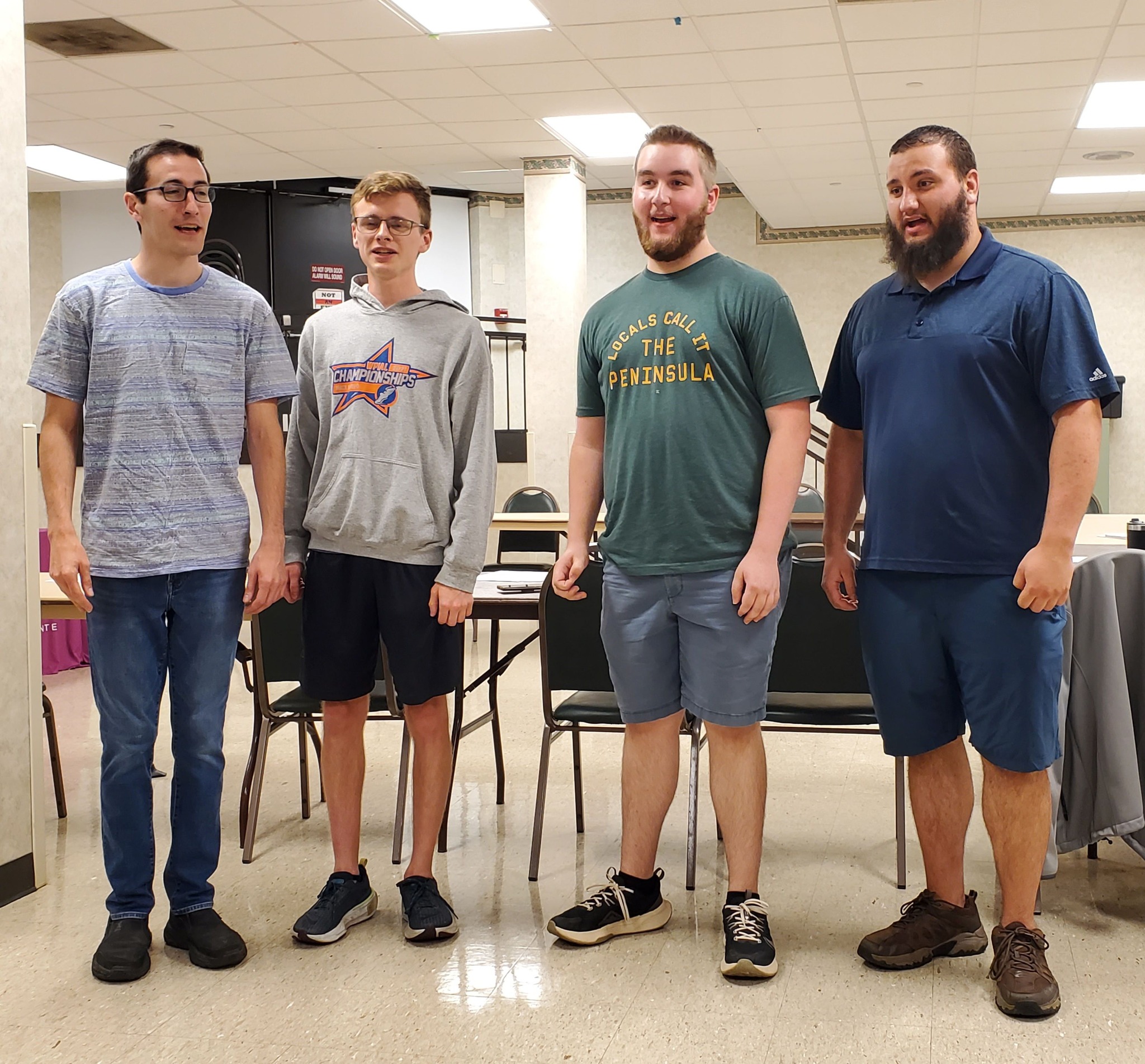
The Four Score Barbershop Quartet includes, from left, John Donohue ’15, and Behrend students, Joey George, Wade Williams, and Max Rohl.
Students in Photo 202: Fundamentals of Professional Photography recently completed a photo essay project based on “The Land Ethic,” an essay written by Aldo Leopold in 1949 that argues for a deeper connection between humans and the natural world.
Leopold suggests that humans need to expand their concept of ethics beyond just people and animals to include the land—soil, water, plants, and more. The “land” is not something we own, but something we are a part of, and we should treat it with care and respect. Leopold proposes that we should think of ourselves as caretakers, responsible for maintaining balance and harmony with nature.
Urban park. CREDIT: Chelsea Quijas
Tommy Hartung, assistant professor of digital media, arts, and technology, instructed students in the class to choose an area and create a series of five 360-degree panoramic images that document the landscape and the biome it contains.
“The site they chose could be anywhere from urban to complete wilderness,” Hartung said. “Students were also required to take notes documenting the ecosystem and use their notes to draft a 500-word essay to go with the images.”
A second part of the assignment involved time-lapse photography.
“The element of time and motion related to photography has allowed humans to see systems develop by compacting time into short motion clips,” Hartung said. “It allows a focus that the human experience may overlook about the location.”
Dobbin’s Landing in Erie. CREDIT: Evan Gerdes
The students’ essays are impressive and thought-provoking. See for yourself at the links below:
By Heather Cass, Publications Manager, Penn State Behrend
You could spend Friday night watching Netflix and binging episodes of your favorite comfort show or, you could expand your viewing horizons at Behrend’s weekly International Film Screening Series.
The series, sponsored by Behrend’s Digital Creations Club and BOLD-C (Behrend Open Lab for Digital Creations), will run on Fridays from 7 to 9 p.m. in Reed 117 through November 11. Students, faculty, and staff can enjoy a different film every week and free pizza, too. (Student couples, take note: that’s a free date night!)
International film festivals are more than just celebrations of cinema—they are crucial spaces for artistic expression, cultural exchange, industry growth, and social advocacy. They help cultivate an appreciation for diverse forms of cinema, encouraging audiences to explore films beyond mainstream Hollywood productions.
Sean Martin, a junior Digital Media Arts and Technology major, student manager of BOLD-C, and president of the Digital Creations Club, spearheaded the effort to bring the semester-long series to Behrend. He chose the films from three different streaming services available to the Penn State community, taking care to find a wide variety.
“Students, faculty and staff should come and watch these films because they offer a completely unique and compelling look into a different culture, time, and story from an artistic perspective,” Martin said.
Showing this Friday, October 11, is Battleship Potemkin, a film set “in the midst of the Russian Revolution of 1905 when the crew of the battleship Potemkin mutiny against the brutal, tyrannical regime of the vessel’s officers. The resulting street demonstration in Odessa brings on a police massacre.”
Several more films are planned this semester. Martin said that he is especially looking forward to L’Age D’or on October 25 and All About My Mother on November 1.
Penn State Behrend’s rich history of influential women begins with Mary Behrend, who in 1948 donated her Glenhill home to the University in memory of her late husband, Ernst, founder of Hammermill Paper Company.
Recognizing that legacy and the growing importance of engaging women in leadership roles, Behrend formed the Women’s Engagement Council (WEC) in 2020 to encourage women to become involved in the life of the college, serve as a resource for Behrend students, enhance the personal and professional goals of its members, and more.
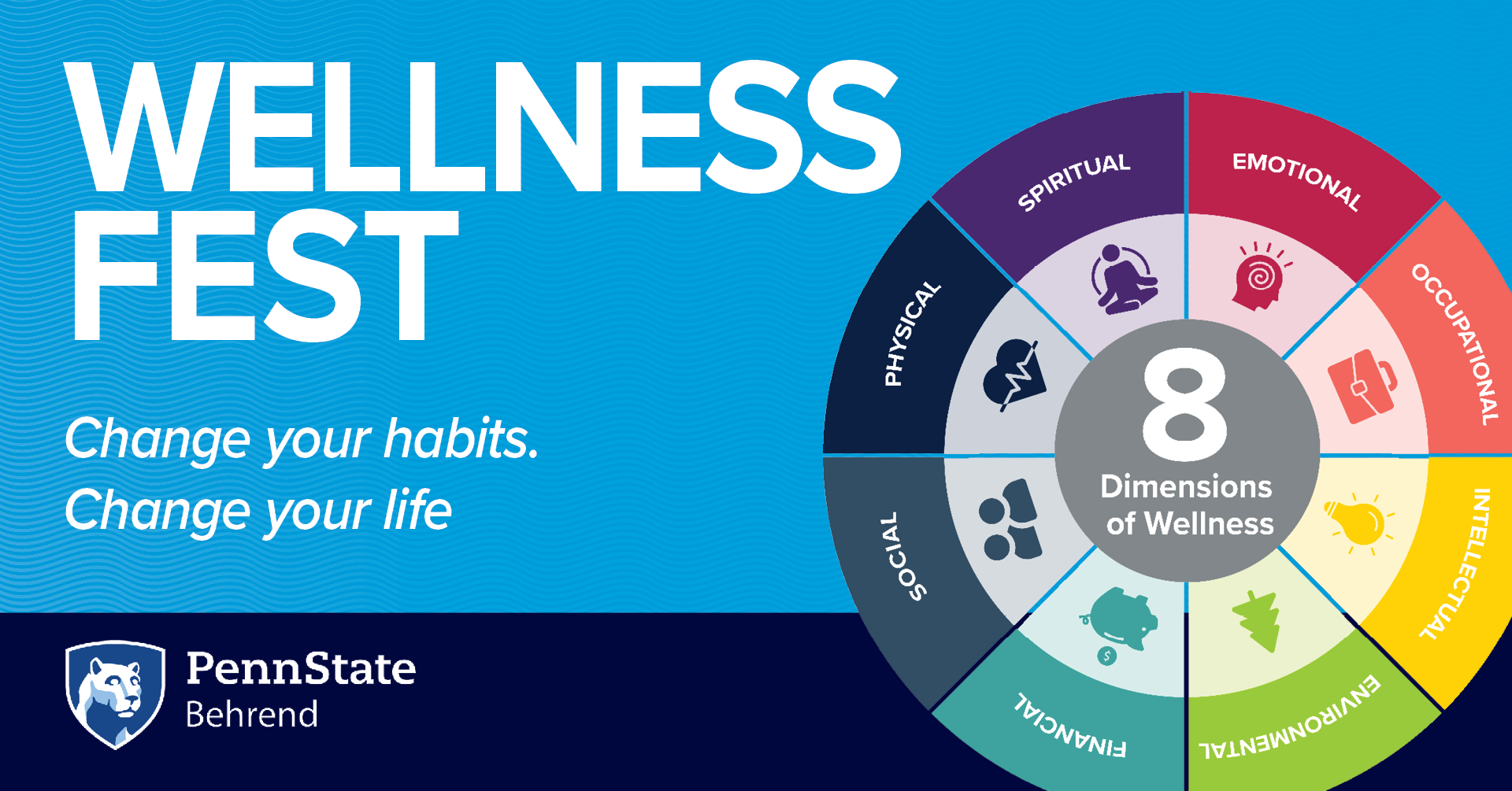
The Council’s directors are committed to supporting and lifting women around, which is why they are spearheading a new event – Wellness Fest – to be held on Thursday, September 19, from 4:30 to 7:30 p.m. at Behrend’s McGarvey Commons.
The event, which is free and open to the public, will address 8 Dimensions of Wellness: emotional, occupational, intellectual, environmental, financial, social, physical, and spiritual.
“It’s a great opportunity to see what resources are available from Penn State Behrend and in the Erie area to help you achieve whole-body well-being,” said Anne Eisert, chair of WEC’s Outreach Committee. “With more than thirty organizations attending, there will be something for everyone.”
Wellness Fest is being held in partnership with Behrend Student Wellness Services and is part of Penn State’s Healthy Campus Initiative.
“Initially we were going to focus on mental health,” Eisert said. “But then we realized a person’s well-being is influenced by a lot of factors that contribute to mental health, so we decided to widen the focus for a whole-body approach.”
In addition to exhibitors and interactive stations, participants will be able to take part in free activities including yoga, sound meditation, animal interactions, and a group hike in Wintergreen Gorge.
By Heather Cass, Publications Manager, Penn State Behrend
When Nancy Loker ’13 received a miniature model, “Sam’s Study,” for Christmas, she thought it looked like her workspace at Penn State Behrend’s John M. Lilley Library. So, when Loker, who works on the circulation desk at Lilley, put the model together, she decided to customize it with tiny details to highlight the services the college’s library provides.
Take a close look at the square-foot model, which is on display in the library now, and you’ll notice some familiar artwork, including a tiny bust of Moritz Behrend, a globe, plants, signage, and many other artifacts that can found in Lilley Library.
“When I could, I used real materials that we use in the library,” Loker said. “The boxes and packing paper in them are bits of materials that we use to ship and receive books. The paper covers on the books are exactly the kind you’ll find on interlibrary loaned books behind the circulation desk.”
Nancy Loker ’13
There are plenty of bitty books on the model’s shelves to represent the stacks at Behrend, which include reference books, works of fiction, and even a children’s book section for the Elementary and Early Childhood Education majors. But, as anyone who has set foot in a library in the last twenty years knows, libraries are much more than books today. On the shelves, you’ll also find board games, newspapers, video games, movies, puzzles, and more.
A clipboard, markers and a bottle of water are meant to represent the many student workers, who often arrive for work with hydration in hand.
Next to the display is a list of the library’s services that are represented in the model. It’s like a tiny 3-D version of the “Look and Find” puzzle in the beloved Highlights children’s magazine.
Loker’s artwork is a small-scale reminder of the very big role that libraries, and librarians, play in the lives of college students.
This week, April 3-9, is National Library Week and the staff of Lilley Library will be celebrating with several activities, including a Board Game Day to highlight the library’s circulating game collection of games, and a Doodle/Adult Coloring Day to promote the library’s ongoing efforts to encourage students to find ways to relax, including taking study breaks for their mental health.
Additionally, library visitors will find a display of “staff picks”: books, movies, podcasts, games, and other media that help students discover new things, and maybe even connect to a staff member (“Hey, I love Star Trek, too!).















 BEHREND BLOG