Behrend alumni lead textbook company’s transition to digital age

Totzke, Dauber Berlin (32)
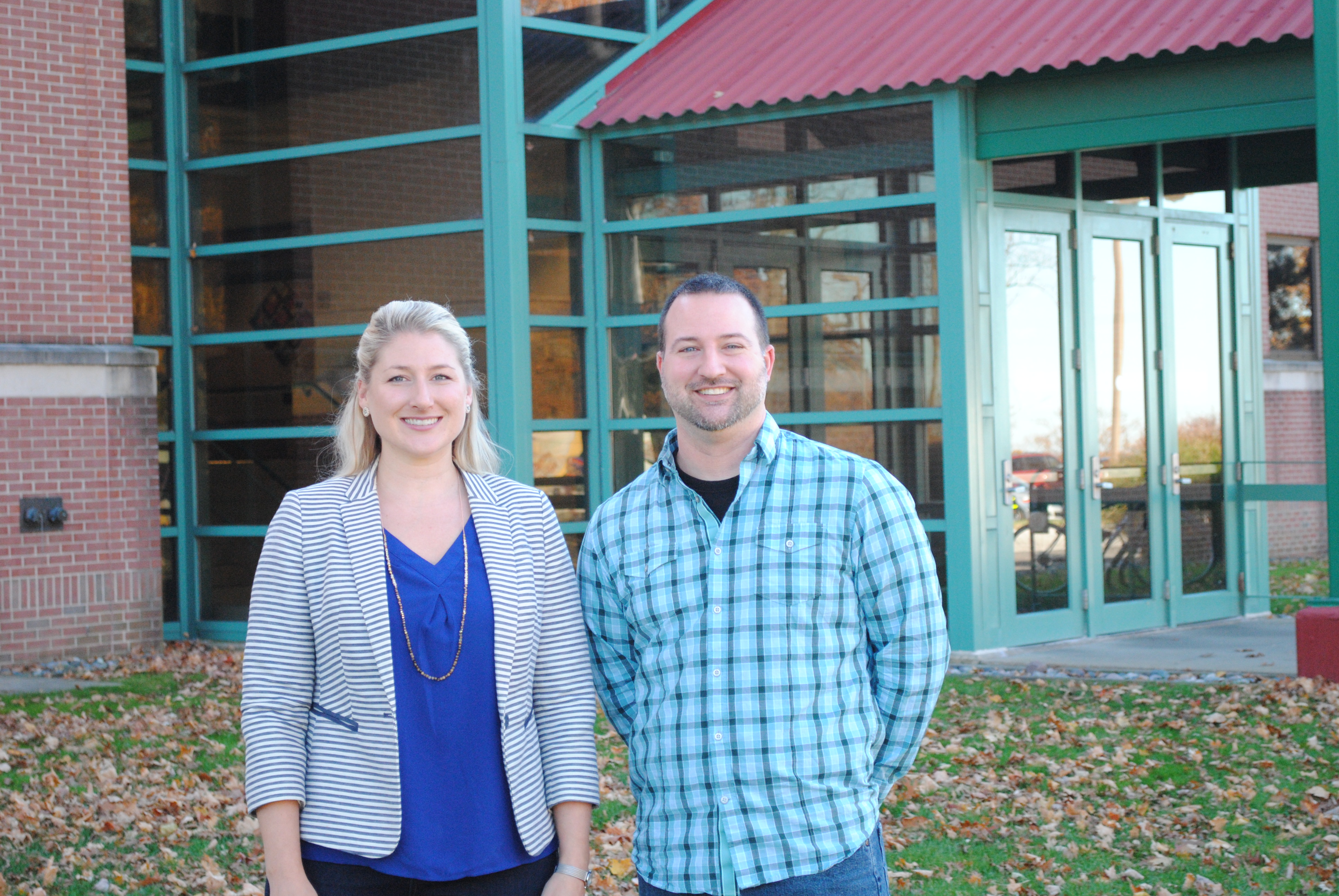
Behrend alumni Erika Dauber Berlin and Matthew Totzke are challenged with running a textbook company, Larson Texts, in the 21st century.

By Steve Orbanek
Marketing Communications Specialist, Penn State Behrend

In an age dominated by tablets and tweets, the prospect of running a textbook company might seem daunting. There’s nothing “textbook” about the operations of Larson Texts, however.

Technology has changed the game, but the Erie-based company has continued to adapt.

“The physical book is still valuable, but the way you get your hands on it is much different,” says Matthew Totzke, CEO of Larson Texts and a Penn State Behrend mathematics alumnus. “The technology now allows us to do a much better job of enhancing the learning experience.”

Larson Texts was founded more than 30 years ago by Ron Larson, then a professor of mathematics, now emeritus at Penn State Behrend. At the time, Larson was responding to what he saw as the need for more student-friendly math textbooks.

Today, the company produces math textbooks for sixth grade through college-level calculus classes that are used by more than five million students each year. Larson has also published textbooks for such well-known educational publishers as Cengage Learning, Houghton Mifflin Harcourt, Pearson, and W. H. Freeman and also publishes its own textbooks through Big Ideas Learning and AndYou.com.

Publishing a book, involves more than producing a physical textbook. With every college-level textbook that Larson Texts creates, the company also develops a fully-responsive companion website for all platforms: desktops, tablets and smartphones.

“We’re able to access so much more information than ever before. Now, we can really blend a great print book with strong digital content,” Totzke says.

That type of digital content featured on the companion sites includes worked-out proofs, instructional videos, rotatable graphs and downloadable data. All of these tools are great reference materials for students.

“There’s a lot of modeling in mathematics that you just can’t show on a print page,” Totzke says. “We put together interactive explorations that bring three-dimensional concepts to a workable medium.”

Being ahead of the digital curve is no new development for Larson. In 2001, the company created the website CalcChat as a tool that students could use to double check answers to questions posed in textbook exercises.

The site has since been supplemented by a tutor component and corresponding Twitter and Facebook accounts where students can talk with an actual tutor if they are struggling with a particular problem. Larson Texts monitors the tutor conversations as a way to gain feedback and develop solutions in areas in which students are continually struggling. According to Totzke, an estimated six million upper-level high school and college students have used the CalcChat service since 2010.

Through Big Ideas Learning, Larson publishes its own primary-school level books, a market segment the company expects to see expand as schools catch up to colleges and universities in terms of technology.

“Schools are beginning to have the infrastructure to embrace some of this technology,” says Erika Dauber Berlin, vice president of technology at Larson Texts and a Penn State Behrend communication & media alumna. “We have to draw inspiration from a lot of different areas and then anticipate how we’ll meet teachers’ needs into the future.”

It may not be the “textbook” method for creating educational publications, but Totzke would not have it any other way.

“We consider this to be an opportunity,” he says. “We’re able to deliver high-quality educational materials like we’ve never done before.”


Love of writing defines O’Neill’s time at Behrend

Katherine O'Neill

By Steve Orbanek
Marketing Communications Specialist, Penn State Behrend

As a child, Katie O’Neill always had a keen interest in writing and creative expression. This affinity continued when she got to grade school, and it was not long before others started to notice.

“I had a teacher when I was in first grade who told my mom to get me a journal,” O’Neill recalls.

That would seem to have been excellent advice. As O’Neill has grown up, her passion for writing has become a defining characteristic.

“I’ve always been a writer before anything else,” the Lake Winola, Pa., native says.

That passion is what brought her to Penn State Erie, The Behrend College. The college’s BFA in Creative Writing piqued her interest as the only such program in the Penn State system and one of only a few in the country.

“That was definitely the number one draw,” she says.

Through the inventive program, O’Neill, who graduated this past May, says she was able to focus intently on improving her inventive writing skills. She also improved her editing abilities serving on the staff of Lake Effect, an international literary journal published by the School of Humanities and Social Sciences at Penn State Behrend.

Along the way, O’Neill garnered accolades. This past year alone, her non-fiction story, “Achill Strikes Again,” won Behrend’s Farrell Nonfiction Award while her fiction piece “Juneau” was the college’s Smith Fiction Award winner. Her short fiction piece, “Tony and Rebecca” was also named an honorable mention in the Annual Creative Writing Awards, sponsored by Suffolk County Community College in Long Island, New York.

O’Neill says her inspiration comes from “the weirdest things,” but also a more traditional source. Thanks to the college’s Creative Writers Reading Series and professional conferences, O’Neill met and networked with numerous professional authors throughout her college career. With every interaction, she says she would pick up a tip or two that she put to good use.

During her time at Penn State Behrend, O’Neill was involved beyond creative writing activities. She was the captain of the college’s dance team, a member of the Behrend Choir and a writing tutor in the Learning Resource Center.

This past spring, O’Neill’s efforts were recognized with two awards: Behrend’s Eric A. and Josephine S. Walker Award and a university-wide Eclipse Award. The Walker Award recognizes a student whose character, scholarship, leadership and citizenship have been directed into student programs and services. The Eclipse Award recognizes Penn State students for service and volunteerism to their campus and local communities.

This fall, O’Neill will start pursuing her MFA in Creative Writing at Bowling Green State University in Bowling Green, Ohio. She reflects fondly on her time at Penn State Behrend and hopes new students will choose to follow a similar path.

“My advice is to get involved from the start. I’m so glad I got involved right away. It can be overwhelming, but it’s (worth it),” she says. “I’ve made some amazing friends. I’m going to miss everything about this place.”

A Textbook Case of Win-Win: Student filmmakers, professors, textbook company team up to create educational videos

Papiya

Dr. Papiya Bhattacharjee

By Christine Palattella
Marketing Communications Specialist, Penn State Behrend

Associate professor of mathematics Dr. Papiya Bhattacharjee’s daily summer lectures have an audience of just one unblinking video camera, but the potential to reach millions of math students.

Bhattacharjee is one of four calculus teachers chosen by regional audition to act as talent in supplemental video content to be distributed by Erie-based Larson Texts. The video series is being produced using equipment provided by Greater Erie Arts Rental (GEAR), a new outreach services of the School of Humanities and Social Sciences, and with the assistance of Behrend students working as production interns for Larson.

“I think the videos are going to be extremely helpful for any student, but especially the visual learners,” says Bhattacharjee, who spends four hours each morning in the Kochel Center television studio, working aloud while illustrating her commentary in grease marker on a large pane of glass. (The glass will be flipped in post-production to make the pane readable.)

Years of teaching have left Bhattacharjee comfortable speaking in public. It’s the addition of technology that’s the challenge. “I need to remember to always look at the camera while speaking, move away from my writing so it can be seen clearly in the camera, and so on,” she says. “I am trying to have fun. All I have to remember is that the camera is my student, and I am tutoring my student.”

But this is no average student: The camera is an Epic-M Red Dragon Pro, the same model used to film Game of Thrones, The Hobbit, and Avenger: Age of Ultron. This camera is just one piece of equipment in GEAR’s inventory, which includes high-end cameras, lighting kits, and other hardware and software. The equipment is available to professional and student filmmakers and regional artists. GEAR’s equipment inventory, purchased using a $500,000 gift commitment from the Samuel P. Black Family Fund of the Erie Community Foundation, also includes lenses, tripods and stage legs; six-channel sound mixers; shotgun and wireless mics; Fresnal, LED, and HMI lighting systems; and Mac Pro, Adobe and DaVinci Resolve editing and rendering software.

Tim Larson ’87 is a partner in Grant Larson Productions, creator of the calculus video series. He anticipates filming 700 individual videos averaging seven minutes in length by the time the shoot wraps in August. Larson calls GEAR “a wonderful resource. It’s so nice to have this kind of equipment in Erie. On previous shoots we’ve had to rent cameras and equipment from Columbus and Buffalo, so this is an astounding benefit to us.”

An additional GEAR benefit is a ready-made film crew, since a rental discount is available to GEAR clients who hire Penn State Behrend students. “I feel so incredibly lucky to be able to work on this project,” says Erik Brown, a spring Communication graduate and one of six Behrend students and young alumni working for Grant Larson as paid production interns. “The great thing about working here is not only learning about the film industry itself, but also being exposed to high-quality equipment. We’re not using just a couple house lights and DSLR cameras, but industry-standard gear for lighting, sound recording, and cameras. I’ve always wanted to work in the film industry and, now, working on this shoot, I feel like I have a realistic chance of doing that.”

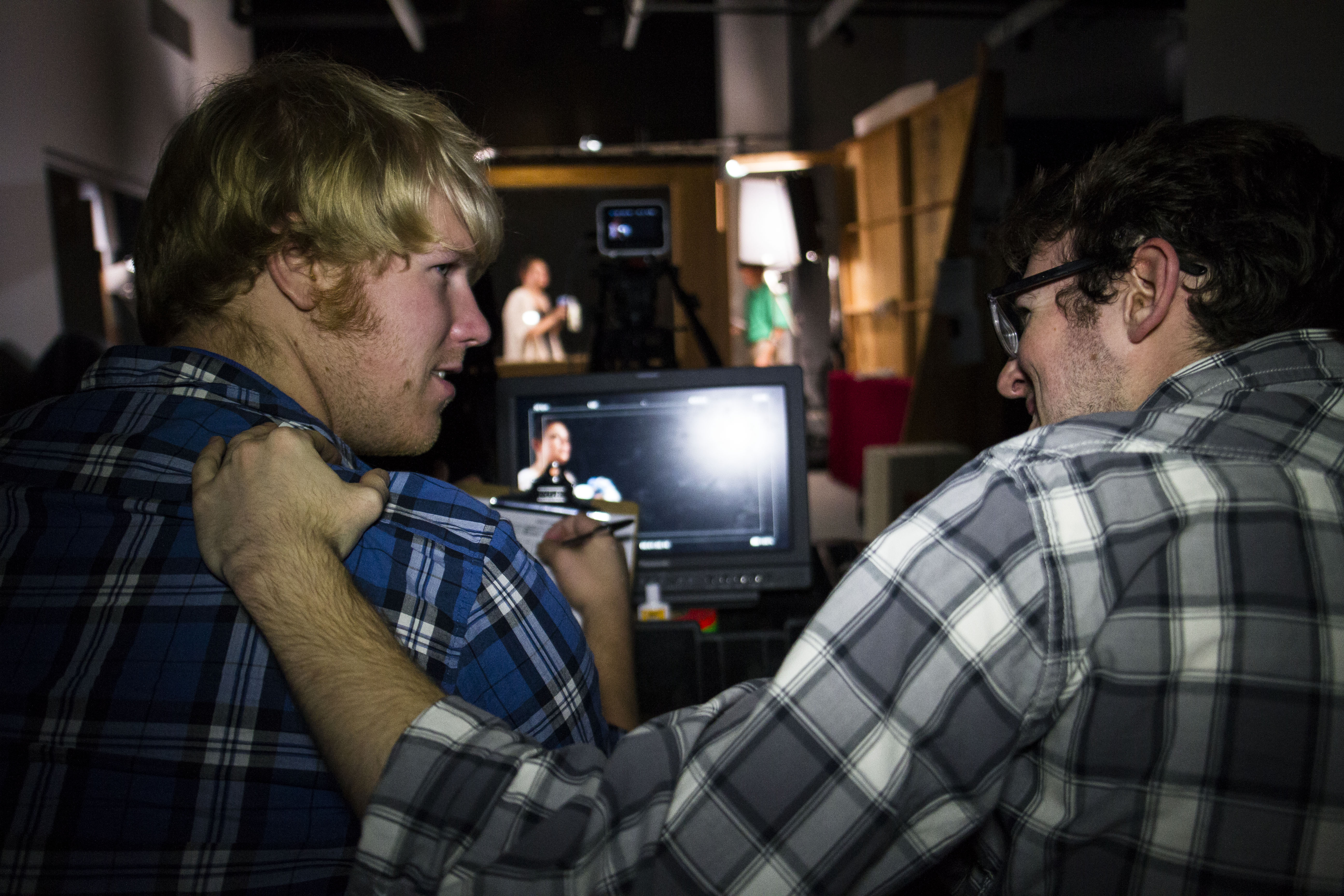
Erik Brown, left, Josh Lapping

Erik Brown, left, and Josh Lapping, (above) are two of six Behrend students and recent alumni working on the videos for Grant Larson Productions using equipment from the Greater Erie Arts Rental, or GEAR, a new outreach service of the School of Humanities and Social Sciences that provides professional and student filmmakers and regional artists access to high-end cameras, lighting kits, and other hardware and software. 

Josh Lapping, Ciara Smith

Penn State students, Josh Lapping, left, and Ciara Smith, work on a series of videos for Grant Larson Productions.

Shelby Dailey

Shelby Dailey, Penn State Behrend Communication major and intern for Grant Larson Productions.

Intern Shelby Dailey, pictured above, a Communication major starting her senior year at the college, appreciates that Grant Larson rotates its student workers. “We’re given the chance to experience all the moving parts of film, such as camera operating, producing, directing, and script supervising. I’ve learned things that textbooks can’t adequately prepare students for, such as (crew) dos and don’ts, set etiquette, and (the importance) of networking.”

“We want to offer an educational experience that is at the same time a close facsimile of what students will experience once they enter the professional environment of producing film and television,” says GEAR coordinator Michael Berlin, whose previous professional experiences include managing crew and equipment for New York City’s Fashion Week and the E! and Pop television networks and production management for ABC World News, CNBC, and ESPN. “The students working on these calculus videos are gaining technical know-how and a type of muscle memory that characterizes this industry, plus they are learning the responsibility that comes with arriving on-set day in and day out. They also are enjoying the benefit of getting paid for their hard work—believe me when I tell you that this type of arrangement is a very rare and very special as a teaching tool that is fair to all parties involved.”

For additional information about GEAR, email Michael Berlin at mbb21@psu.eduLarson Texts and Grant Larson Productions online.

For adult student, degree is ‘one of those lifetime badges you get’

By Robb Frederick
Public Information Coordinator, Penn State Behrend

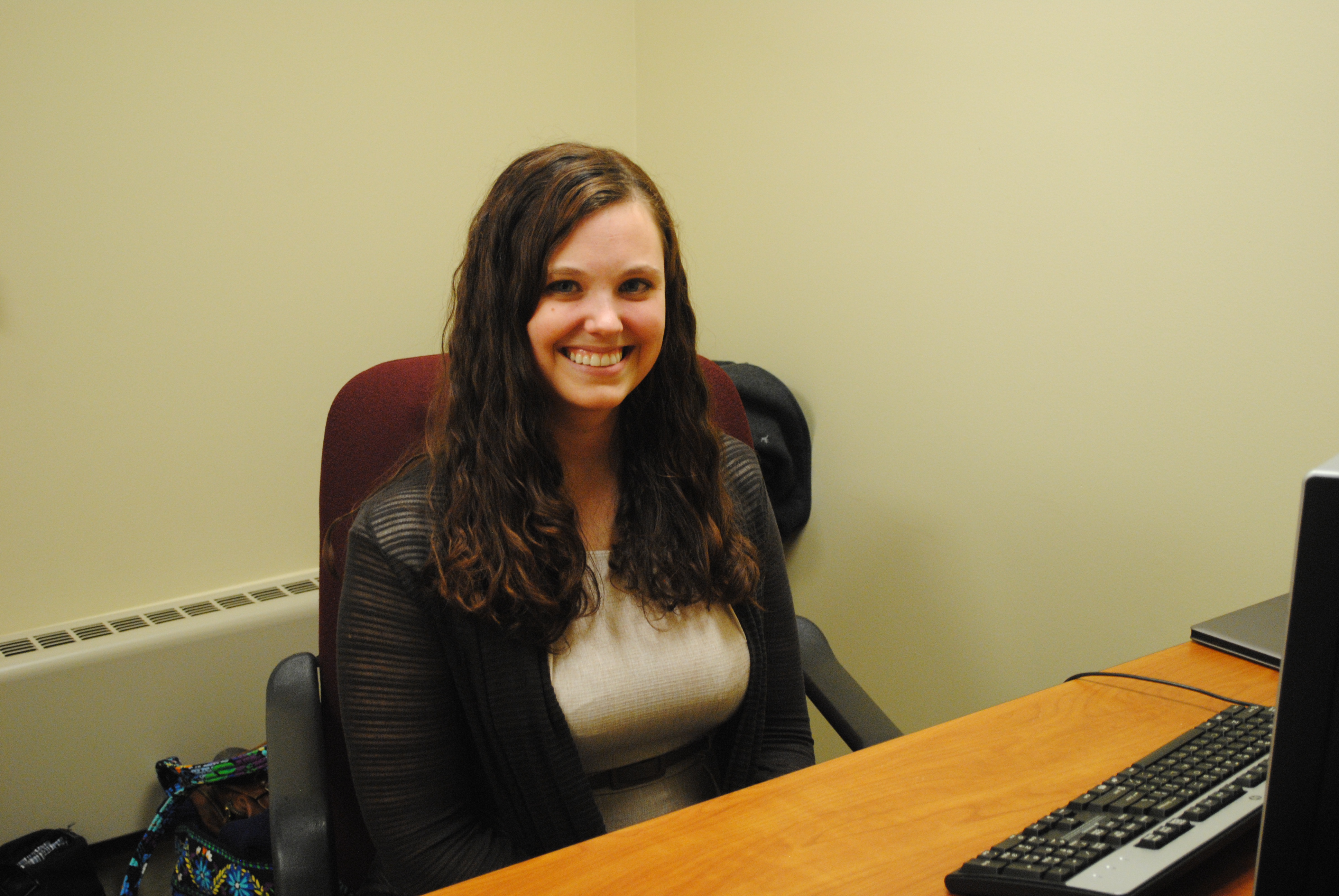
Michael Linhart (3) (682x1024)Michael Linhart took his time getting to Erie Insurance Arena, where he received a bachelor’s degree in general arts and sciences. He crossed the stage in May, 24 years after he first enrolled at Penn State Erie, The Behrend College.

“It’s hard to describe how that felt,” Linhart, 42, said. “To be honest, I just tried to soak it all in.”

The Fairview resident first arrived at Penn State Behrend in 1991. The Kochel and Burke centers had not yet been built. Ohio and Almy halls were still woodlots.

Linhart had trouble adjusting to college life. After three semesters, his GPA had flat-lined at 1.5.

“I wasn’t ready for college,” he said. “I didn’t have the focus or the determination to stay with it. I needed to grow up.”

So he left. He worked the cash register at a grocery store and helped manage a Taco Bell. He watched his friends go on to better things.

“All my friends were getting these great 9-to-5 jobs,” he said. “They were getting married, having kids, and I was stuck, still living hand-to-mouth.”

In 1998, after five years away, he came back to campus. He tried to be more active: He joined the Zeta Beta Tau fraternity and the Returning Adult Student Organization. He volunteered as an orientation leader.

“He had a renewed sense of what he needed to do to be successful here,” said Biddy Brooks, director of the Office of Adult Learner Services. “He was committed to putting in the work. So it was hard to see him leave again.”

After two years of study, Linhart was offered an internship at a property management company. He worked as a leasing consultant, matching renters to apartments in a 132-unit complex. When his boss offered him a full-time position – good pay, and a path up the organizational ladder – he accepted, leaving college for a second time.

Before long, however, the work bored him. He joined the U.S. Navy Reserve, training as an aviation supply worker. He completed basic training on Sept. 5, 2001.

Six days later, the nation went to war.

“I ended up in the Persian Gulf, on the USS Theodore Roosevelt, thinking, ‘Yeah, this was a great plan,’” Linhart said.

When his tour ended, he returned to Erie, wanting to be close to family again. He met a woman and had two children. He’d raise them on his own, tending bar and working as a massage therapist.

He married again in 2012. When his new wife, Amy, encouraged him to complete his degree, Linhart once more found himself in Biddy Brooks’ office.

“He just persevered,” Brooks said. “He was so positive and outgoing, and always willing to talk with other adult students. He wanted to help them through situations he’d already had to work through.”

He kept his own doubts to himself. “I was a lot more apprehensive, coming back that third time,” Linhart said. “I was like, ‘What am I doing here?’ But I stayed with it. I saw it as one of those lifetime badges you get: the ‘turn 40 and go back to college’ badge.”

It worked. He earned his final credits and was honored as the college’s top adult learner. The day of his last exam, he lingered on campus.

“This school has given me so much,” he said. “So many friends, so many experiences, so many nuggets of wisdom I can take with me anywhere. I just walked around and took it all in one more time.”

Before the commencement ceremony, he drove to the cemetery where his grandparents are buried. He placed an invitation in a zip-lock bag and tucked it between their headstones. Then he went home and taped a message to the top of his mortarboard: “I MADE IT.”

Alumnus returns to inspire, encourage at Relay for Life

By Heather Cass
Publications & Design Coordinator, Penn State Behrend

Brooks Family

The Brooks family – Amy, Glenn, Haley, and Lindsay

Glenn Brooks ’86 never expected to be invited back to Penn State Behrend to speak to students.

“I changed my major several times and it took me awhile to determine where I was headed as an adult. And, let’s just say that I may have been working on my ‘social skills’ a little too much back then,” he said with a laugh.

But there are lots of surprises in life. Some good. Some not so good, like cancer.

“In September of 2011, I was diagnosed with Stage IV Head and Neck Cancer, originating in the ligual tonsil,” he said. “My treatment included chemotherapy, radiation, hydration therapy, tonsillectomy, a feeding tube, extended stays in the hospital, and nearly three months of not being able to eat, drink, or speak.”

Fortunately, the aggressive treatment plan worked. He’s been cancer-free for two years now and he says he is filled with gratitude and an internal drive to give back.

“Given the choice, I wouldn’t choose to get cancer, of course,” he said. “But it has inspired me to use my experience to help others. I genuinely believe that my calling is to seize as many opportunities as possible to reach out to others as they endure treatments and recovery, as well as to those that have been fighting for the cancer patient, too.”

That’s why he said “yes” when two Penn State Behrend students asked him to return to campus on April 10 to deliver messages of hope to hundreds of participants in the college’s Relay for Life, a 24-hour walk that is a fundraiser for the American Cancer Society. Brooks was the Opening Ceremony speaker.

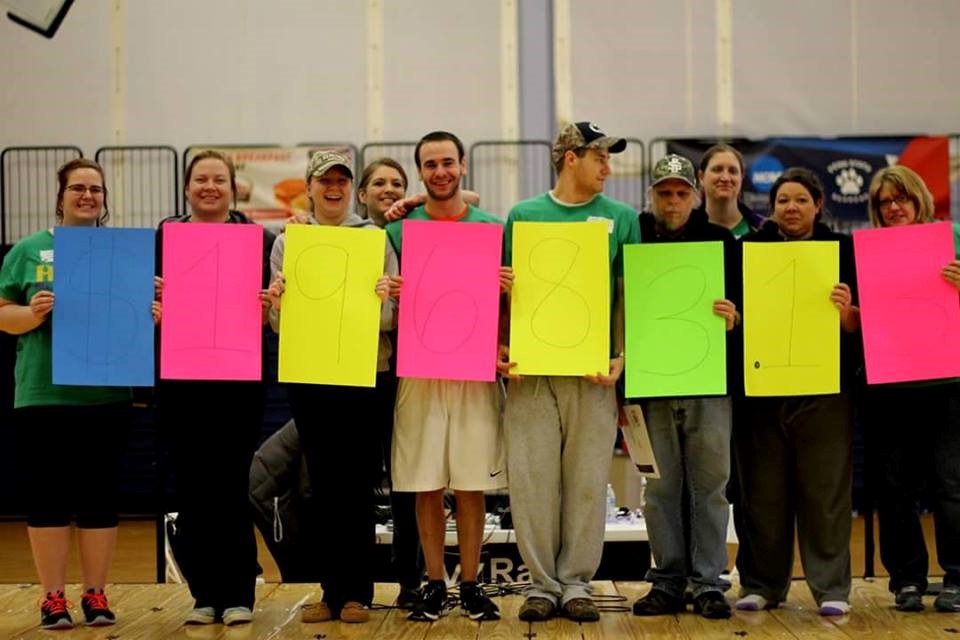
More than 250 participated in the Behrend Relay for Life with twenty-one teams who raised 19,683 for the American Cancer Society! The highest fundraising team was Behrend’s own Housing and Food Service Team Tie Dye who raised $3,817.

relay for life

Brooks, who participated in the Survivors Lap, was recently named a Global Hero of Hope by the American Cancer Society, one of only thirty-one such people in the world.

We talked with Brooks to learn more about his days at Behrend, his journey since, and how he reaches out to help others.

Why did you choose Behrend? Well, because initially I wanted to pursue Civil Engineering. But Calculus 162 said I wasn’t right for that career. In hindsight, I have to agree.

Degree earned: Management, with a Human Resources option.

Where do you work now? I’m the Manager of Organization Development for Student Transportation, Inc., the world’s third largest provider of school transportation services with more than 14,000 employees throughout the United States and Canada.

Family: Wife, Amy, and two daughters, Lindsay, 20, and Haley, 17, who is currently a Penn State Behrend student, but is soon transferring to the University of Hawaii, where she will be joining her fiancé who is serving in the U.S. Navy. They are getting married in June.

You speak regularly about your cancer fight, correct? I do. In the past couple of years, I’ve given more than fifty talks to various groups. I also lead a Cancer Support Network initiative at work and I’ve written several articles about cancer that have been published in various publications and magazines.

What do you say? My typical story describes my cancer journey, from diagnosis to current. I remind the audience that cancer is no longer a death sentence, due in part to the efforts of the American Cancer Society. I always, on behalf of all cancer survivors and their caregivers, thank those who are engaged in the fight against cancer. I encourage them to remain involved so that we can rid the world of cancer in hopes our children and grandchildren never have to hear that terrible diagnosis.

Why go so public? I know that some cancer patients wish to keep their experiences private, but I choose to be an activist for cancer research, recovery, and response. As a cancer survivor, I’ve been given a gift—authentic understanding. It’s something that doctors, nurses, and other health care professionals who haven’t had cancer, don’t have. I understand the financial, spiritual, practical, relational, philosophical, emotional, and physical changes that occur when a person has cancer because I’ve experienced it first-hand.

Do you find sharing to be rewarding or fulfilling in some way? I’ve met some rather incredible folks along the way. The energy and passion that I’ve felt is nothing short of amazing. I can tell you this with full confidence—we are loved. We are all loved by people that don’t even know us. Also, my involvement has given me the opportunity to give back and show appreciation for all the people—family, friends, coworkers, and perfect strangers—who were so good to my wife and my daughters when I was sick.

Your wife was recently diagnosed with cancer? Yes, in March of 2014, she was diagnosed with thyroid cancer. And, when someone tells you that if you have to pick a type of cancer, that’s a good one to get, don’t believe them. Any cancer is horrible.

Did you join in the Relay at Behrend? I did the Survivors Lap and also the Caregiver Lap. I did my best to thank every team member along the way, handing out high-fives all the way.

What is a Global Hero of Hope? I was submitted an application and was selected to represent the cancer survivors/caregivers internationally. There are only thirty-one Global Heroes of Hope in the world with seventeen countries represented. There are just four of us from the United States.

What do you want people with cancer to know? You are not alone. You can win the fight. And, love will beat cancer.

Can people contact you if they have questions or would like you to talk to a group? Sure, they can e-mail me at gabrooks@yahoo.com.

Behrend alumna specializes in OCD research

Jessica Schubert (2)

By Steve Orbanek
Marketing Communications Specialist, Penn State Behrend

Jessica Schubert has heard it all too many times.

“I’m so OCD.” “Oh, that’s my OCD acting up.” They’re the explanations many people offer to explain their little quirks.

The problem is that a quirk — a peculiar behavioral habit — is much different from obsessive compulsive disorder (OCD) — a potentially severe mental illness that affects more than three million Americans in the United States.

“People don’t mean harm when they make generalizations like that, but I do think it perpetuates this mindset that mental illness is not a big deal,” says Schubert, who graduated from Penn State Erie, The Behrend College, in 2009 with a degree in psychology. “OCD is a real, chronic and disabling condition. It’s a broader disorder than a lot of people think.”

Bringing awareness to OCD and its complications is one of the Harborcreek native’s goals. Now a Ph.D. candidate at Binghamton University – SUNY, Schubert has developed an interest in OCD, partially because treatment of the disorder remains a relatively new concept.

“It’s only in the last 30 years where we’ve had any  effective treatment for OCD. Before that, the field was very psychodynamic, but over time, the theoretical focus changed to behaviorism. That small change in focus has really led to the treatment of OCD,” she says.

According to Schubert, treatment can take many forms. Medications may be used, but Schubert says they’re often not a long-term fix.

Instead, she proposes exposure-and-ritual prevention, a type of cognitive-behavioral therapy. The idea is to encourage the person suffering from OCD to face his or her fears.

“The problem with someone who has OCD is that they’re avoiding what they’re afraid of. Having them stay with their anxiety will allow them to see it go down over time,” she says.

Schubert’s doctoral research specializes in sleep patterns and how they potentially affect OCD. This was also her topic of discussion when she returned to Behrend this semester to speak as part of the college’s Colloquium Series in Psychological Sciences and Human Behavior.

Schubert estimates that at least half of those diagnosed with OCD are unable to maintain regular sleep schedules. In fact, OCD sufferers tend to stay awake through the night time hours, only to sleep throughout the day. Schubert’s research examines the role that disrupted circadian timing of sleep plays in the severity of obsessions and compulsions. Often referred to as the “body clock”, the circadian rhythm is a 24-hour cycle that tells our bodies when to sleep and regulates many other physiological processes.

“It’s not that people with OCD are not sleeping enough, but that they’re sleeping at the wrong time,” she says. “My research looks at whether we can normalize sleep, so they can engage in normal treatment.”

Although Schubert is still conducting more research on the topic, she says she’s encouraged by her findings, which suggest that sleep patterns do play a role in the severity and effectiveness of treating OCD symptoms.

Schubert plans to dive further into the topic in the years to come, but she is also excited about the other potential paths her professional future could take.

“There’s this huge array of opportunities available to someone in this field,” she says. “You can teach, you can see patients, you can do research or you can do a combination of all three. It’s a field you can never get bored in.”

Career Roundtable educates School of Science students on available opportunities

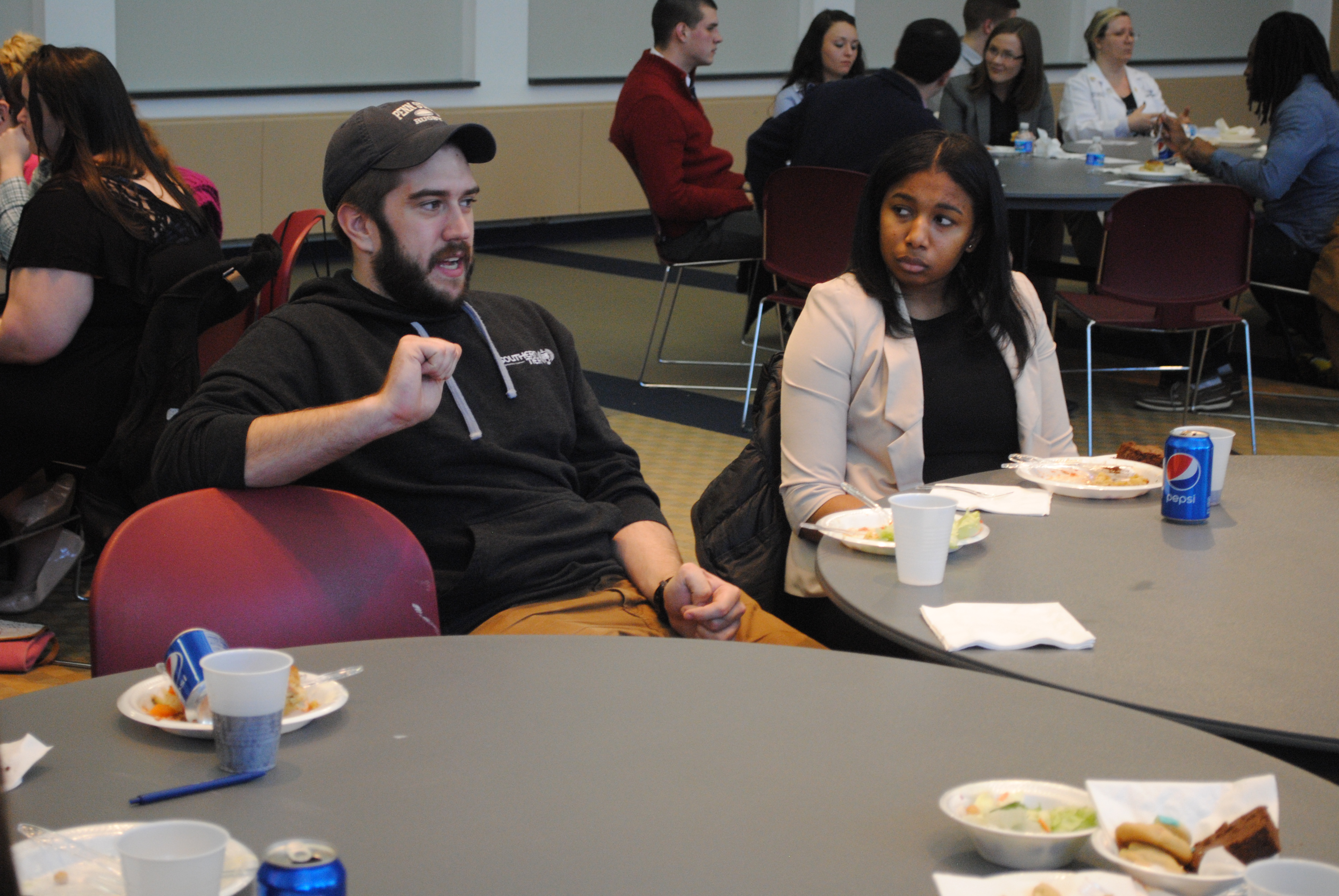
DSC_0963
Todd Thorniley, a 2014 Penn State Behrend biology graduate, now works as a quality control technician at Southern Tier Brewing Company in Lakewood, New York. On Wednesday, March 25, he was one of the alumni who returned to Behrend to educate current School of Science students on the opportunities available to them during the Career Roundtable for Biology and Chemistry Majors.

By Steve Orbanek
Marketing Communications Specialist, Penn State Behrend

For a biology or chemistry graduate, there’s no shortage of opportunities. Environmental consultant, genetic counselor — even a quality control technician for a brewery.

“Students have no idea how much they can do with their degree,” said Todd Thorniley, a 2014 biology graduate of Penn State Erie, The Behrend College, who now works as a quality control technician for Southern Tier Brewing Company in Lakewood, New York. “It’s not just medical. It’s not just research. You can go work with beer, too.”

Emphasizing the diverse career paths available to students was one of the purposes of the Career Roundtable for Biology and Chemistry Majors, a networking event hosted by the School of Science at Penn State Behrend on Wednesday, March 25.

Designed like a round of speed dating, professionals who work in science-related fields were seated at tables in McGarvey Commons. A group of six to eight students was also seated at the table.

For ten minutes, professionals discussed the tasks, challenges and requirements of the jobs they perform every day. At the end of ten minutes, the professionals moved on to the next table, and the process repeated.

“The structure of the event really allows students to hear about a number of career paths in a relatively short amount of time and begin networking,” said Beth Potter, assistant professor of biology who coordinated the event. “The event is great for freshman as well as seniors, who still may not know what they want to do.”

During the two-hour event, more than 100 students interacted with 10 professionals, many of whom were Penn State Behrend alumni, representing companies that included Michael Baker International, the Pennsylvania State Crime Lab, PerkinElmer Genetics, Southern Tier and Lake Erie College of Osteopathic Medicine.

One of the alumni in attendance was 2013 graduate Leah Wolfe, who attended the same event while she was a student.

“When I attended, I wasn’t sure who I wanted to be, what I wanted to be or where I wanted to go,” said Wolfe, who is now pursing a master’s degree in orthotics and prosthetics from the University of Pittsburgh. “But actually hearing from these professionals was so helpful.”

Denise DeVore, a sophomore biology major, was one of the students in attendance at the Career Roundtable. She hoped the event would have the same effect on her that it had on Wolfe years earlier.

“I’m interested in pediatrics, but I’m not entirely sure that’s for me,” DeVore said. “I feel like this is going to help me narrow it down to what I want to do because there are so many options out there for a science major.”

Alumnus, MIS Professional earns Maryland State Guard Association’s Soldier of the Year Award

By Heather Cass
Publications & Design Coordinator, Penn State Behrend

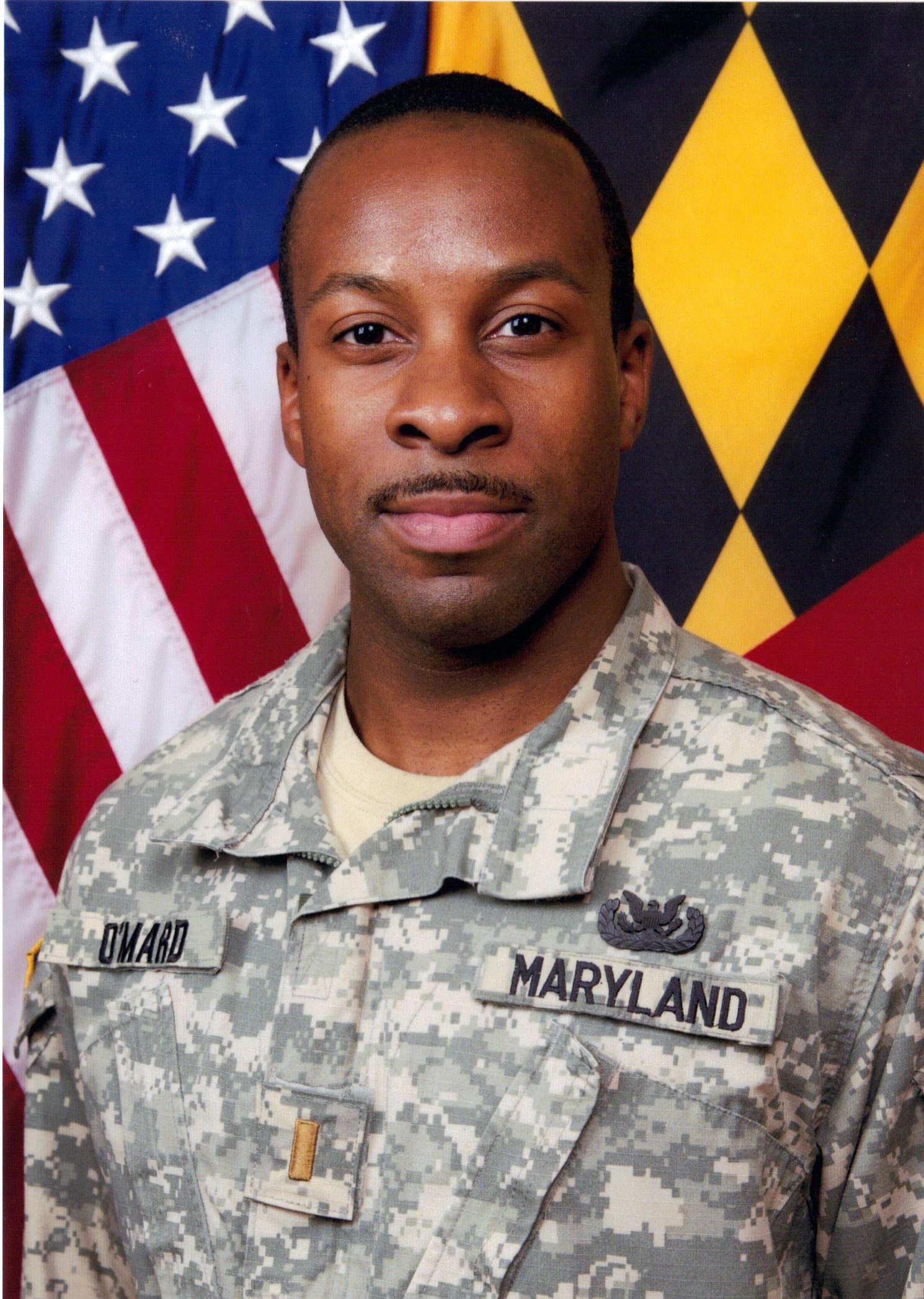
Jeremy O'Mard

Jeremy O’Mard ’13 was just ten years old when the planes flew into the twin towers in his hometown of New York City on 9/11. Like millions of other Americans, the event altered the course of his life.

“It really hit home because my brother was a police officer, and we were attacked on our home soil,” O’Mard said. “I knew then that I wanted to find a way to help others and give back to my country when I got older.”

He participated in JROTC and Civil Air Patrol while in high school, but after graduation he chose to go to college instead of entering the military.

“I didn’t really know what I wanted to do with my life and, honestly, I’d gotten used to the comforts of civilian life.”

A fortuitous misunderstanding

He ended up at Penn State Behrend by accident.

“I was accepted at University Park, but was confused by how the campuses were set up, so I chose Erie, thinking it was an area of U.P.,” he said with a laugh. “When I visited Behrend, I fell in love with the campus and decided to stay.”

O’Mard majored in Management Information Systems, because the blend of technology and business appealed to him.

“I liked computers and technology, but I’d always had a business mindset, so MIS really captivated me,” he said.

Mixing business and service

Today, O’Mard, who also earned a minor in Operations and Supply Chain Management, works full time as an Oracle business intelligence developer at IBM in Washington, D.C.

He has also found a way to give back.

Since his freshman year in college, O’Mard has been a volunteer in the Maryland Defense Force (MDDF), a uniformed military agency established by the state of Maryland to provide professional, technical, and military support to the state’s National Guard and Emergency Management Agency.

“When I returned home to Maryland after my first year at Behrend, I was looking around online to see if I could find anything I might do that summer to supplement my MIS major and I stumbled upon the MDDF’s Information Technology unit and saw they needed volunteers,” he said.

After initial training, he began helping the MDDF by providing tech support, troubleshooting hardware and software problems, and working on ad hoc problems.

Quick climb up the ranks

His role in the MDDF steadily increased. He was a visible member of the MDDF Information Technology team, participated in training sessions and headquarter drills, and served on the honor guard for military funerals.

In just four years, O’Mard rose to the rank of 2nd Lieutenant and is now the Commanding General’s aide-de-camp (personal assistant to a person of high rank). He estimates he volunteers about twenty hours a month.

His peers and superiors speak highly of him, complimenting his leadership skills, positivity, professionalism, and dedication to the MDDF.

Soldier of the Year

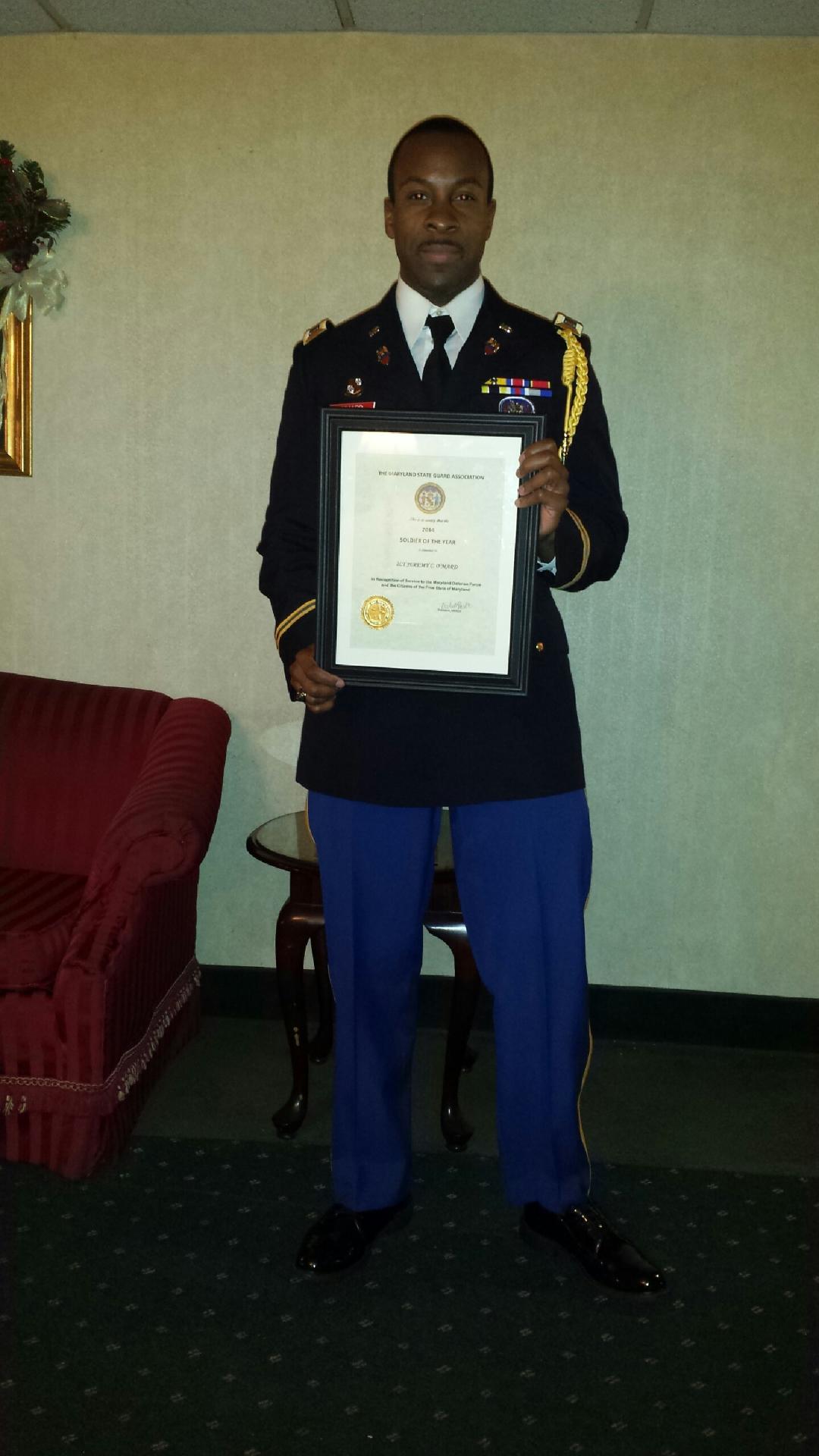
In December, they backed up those words with an official award. O’Mard was chosen to receive the Maryland State Guard Association’s Soldier of the Year award for his “exceptional leadership, motivation, military bearing, dependability, and loyalty to the mission of the MDDF, the Maryland Military Department, and citizens of the State of Maryland.”

O’Mard, who was surprised by the honor, said it was both humbling and inspiring.

“I know I do a lot for the MDDF, but I know many others who do, too, so I was very humbled to be chosen,” he said. “It definitely puts things in perspective and makes me want to have an even stronger year this year.”

Best of both worlds

If O’Mard likes the military life, why not make it his career?

He said he enjoys his job at IBM, which offers him myriad opportunities to challenge himself, learn, and advance at the company.

“I feel like this is perfect for me,” he said. “I can maintain the civilian life I want and still be in the military. It’s the best of both worlds.”

jeremy o'mard award

THON proposal reflects couple’s commitment

1THON2015_-1%20copy%203

By Steve Orbanek
Marketing Communications Specialist, Penn State Behrend

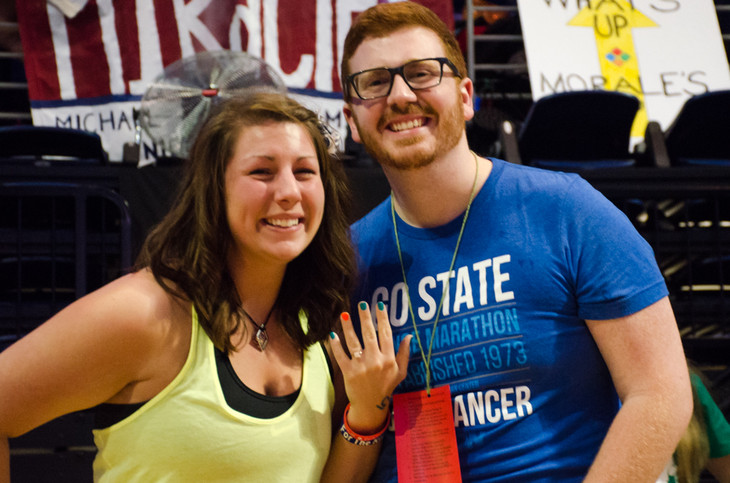
It was hour 32 of THON, and Taylor Hennon ’13 had hit the wall.

She was exhausted and sleepy. Her emotions bordered delirium. This is all par for the course with THON, Penn State’s 46-hour dance marathon designed to raise money to support children and families as they combat pediatric cancer.

But then came Mail Call, an event during THON weekend in which dancers receive letters and packages from friends, family and supporters to inspire and motivate them to continue dancing. Hennon had no idea she was about to receive the biggest pick-me-up imaginable.

The final letter she read came from Timmy Donovan ’13, her boyfriend, whom she first met five years earlier during a trip to Germany while they were both students at Penn State Behrend.

“There were a lot of references to the future. In his letter, he wrote of how proud my grandma would be of me,” says Hennon, who graduated from Penn State Behrend in 2013 and is now pursuing a master’s degree in counseling at University Park. “Then, right after, he asked me (to marry him). I just remember hugging him, and he said, ‘I have something of your grandma’s that I really want to give to you.’”

For Donovan and Hennon, THON, which was held February 20-22 this year at Penn State’s Bryce Jordan Center, was the perfect venue for a proposal. For the past four years, it’s been a staple in their relationship. For the proposal, Donovan used Hennon’s grandmother’s ring, which made the moment even more meaningful.

“I knew THON would be the right way to (propose) because it has been such a big part of our relationship,” says Donovan, who graduated from Penn State Behrend in 2013 and is now pursuing a master’s degree in higher education at University Park. “It’s always been the mainstay in our relationship.”

Following the proposal, it was not long before the entire Bryce Jordan Center caught on to what was happening.

“There was this moment where I opened my eyes and looked around, and the entire Bryce Jordan Center is watching us and applauding. It was surreal,” Donovan says.

The timing of the proposal also helped reenergized Hennon, who danced independently in this year’s THON. From that point on, she was excited to share the news with her mother, who joined her on the floor of the Bryce Jordan Center around 7 a.m. Sunday morning.

According to Donovan and Hennon, the significance of THON in their relationship cannot be understated. While at Behrend, the two both became involved during junior year and as seniors, Hennon was Behrend’s THON chair, and Donovan was a dancer.

Throughout their involvement, the two endured a breakup, but their connection to THON kept them close.

“Our whole senior year, we were broken up, but we were still working together. No matter what, we realized that us working toward finding the cure for pediatric cancer was more important than any fight or any awkward moment we could have,” Donovan says. “Sure, there were awkward moments, but we always said THON was bigger than both of us, and that actually made us stay friends.”

Shortly after graduating from Behrend, the two got back together.

Regardless of what journey awaits the two, THON is certain to remain a crucial part of their lives and relationship. They have already planned to include members of their THON family, Rylee and Dalaney Dorer, in their wedding.

“It’s just that important to us,” Hennon says. “It’s amazing now that every year, I get to have a constant reminder of how all this came to be.”

Alumnus to star in HGTV show – Nashville Flipped

By Heather Cass Publications & Design Coordinator, Penn State Behrend Troy Dean Shafer

Though we humans put a lot of thought and care into planning our future, the simple fact is that life can change on a dime. Single moments, simple choices, and chance meetings can lead us down a different path to a whole new life.

Such has been the case for Penn State Behrend alumnus, Troy Dean Shafer ’04, founder and owner of Nashville Flipped, a historical home restoration business in Nashville, Tennessee, who is the subject of a new HGTV show created by American Pickers star Mike Wolfe. The pilot episode of Nashville Flipped is scheduled to air on HGTV this Thursday, March 19, at 11 p.m., eastern standard time

Walmart detour leads to HGTV show

Wolfe and Shafer became friends after a fortuitous meeting at a Tennessee Walmart.

“I was picking something up for my wife when I heard an overhead announcement that Mike was there signing autographs,” he said. “I was a fan of the show, so I wandered over to meet him. We talked and I gave him a copy of my business card. To my surprise, he said he’d heard about my business. He said he was buying a historical building in downtown Nashville and asked if I’d come take a look at it for him.”

Shafer happily agreed and even did some work to help stabilize the building, which Wolfe converted to retail space.

The two became fast friends as they share a passion for preserving history—Wolfe through artifacts, Shafer through architecture.

Building on a Black School of Business Degree

You may remember Shafer from a story in the January 2013 Behrend Magazine, or you may remember him from the early 2000s when he spent four years at the Black School of Business earning a degree in Business Management.

Here’s the foundation of Shafer’s story: The son of custom-home contractor, Shafer grew up around the construction industry and planned to be an architect. Fearing an architecture degree would be too limiting, he went the business route at Behrend, a decision that would serve him well later. He moved to Nashville after graduation to try his hand at a singing career. While his music career blossomed (he served as a backup signer on some impressive concert tours), his business acumen and life-long love for old houses and architecture, led him to begin “rescuing” historic homes in his spare time and he founded Nashville Flipped, a home renovation business.

“I’m saving historic homes that other people would just raze,” he said. “I gut the house and rebuild it with all the latest amenities, while preserving the architecture and character of the house.”

nash flipped logo

Bucking the trend

He renovates about a dozen houses a year with the help of a handful of employees and a variety of subcontractors. He does a lot of the work himself, as you’ll see on the pilot episode of Nashville Flipped, where he works with interior designer Alexandra Cirimelli to renovate a 1932 craftsman-style bungalow in East Nashville.

“It’s in a historic part of Nashville called Cleveland Park. I bought it at an auction and actually got into a bit of a bidding war over it,” he said with a laugh. “I loved the style and feel of it. It had original moldings and door handles and built-in bookshelves. It had so much character and it needed to be saved.”

Shafer bucks the trend of many developers in East Nashville who buy old properties, tear down the house and build three more in its place.

“I’ve built a bit of a fan base because I do the exact opposite,” Shafer said. “I save the old houses when nobody else wants to put that kind of work into them.”

Labor of love

Shafer isn’t afraid of the work. It’s safe to say he loves it. He has a genuine affection for the homes he restores.

“I think about the future of that house—the newborn baby that might be brought home to it, the Christmas tree that will fit perfectly in that front window, the driveway where a kid may learn to ride a two-wheel bike. . .,” he trails off, then adding, “It’s cool to be a hidden part of those future memories.”

Shafer is the real deal. He says Wolfe is, too.

“He is absolutely the same guy you see on television,” Shafer said. “He’s one of the most intelligent, passionate people I’ve ever met.”

Together, the two are sure to build a show HGTV viewers will flip for.

Home History 101

Nashville Flipped will be unlike any other home renovation show because there will be a heavy emphasis on the history of the house, the surrounding neighborhood, and even interviews with past residents.

Shafer won’t know until late this summer if the network will order more episodes of Nashville Flipped.

“They will air several different pilots over the next few months to see what sticks,” Shafer said, “so the more people who watch the show and watch the reruns or talk about the show, the better chance it has of being picked up.”

Tune in on Thursday at 11 p.m. (EST) on HGTV.

More info

Read more about Shafer in a 2013 Behrend Magazine story and an online Q&A here.

For more information about Nashville Flipped or to see some of the company’s latest work, visit nashvilleflipped.com or follow Troy at twitter.com/nashflipped 2015-03-13 10.59.11