
By Heather Cass, Publications Manager, Penn State Behrend
This spring, students in Dr. Matthew Levy’s AMST 307N: American Art and Society course at Penn State Behrend engaged in a unique interdisciplinary project that blended historical analysis with creative expression. As part of the course, students worked in groups to create tableaux vivants—or “living pictures”—that reenact and recontextualize iconic works of American art that were discussed in class.
Not only did students have to study the formal and thematic elements of a chosen painting, but they also had to consider its relevance to contemporary social and cultural issues.
“Working in groups, they researched their chosen work, gaining a deeper understanding of the social issues it represented,” said Levy, associate professor of art history, music, theatre, and visual arts.
Each group then reimagined their selected artwork for a 21st-century context, using modern props, settings, and interpretations to bridge the past and the present.
“They had to think carefully about props, poses, setting, framing, and more to bring the work of art into modern times,” Levy explained.
Here are several standout projects from the class, along with insights from Levy on what made each piece compelling.
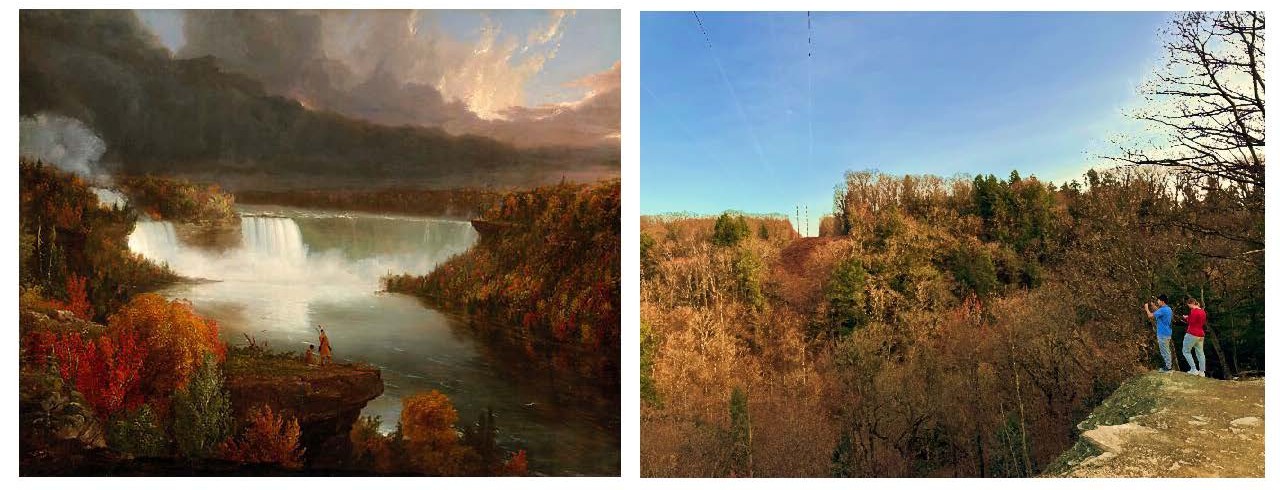
Distant View of Niagara Falls by Thomas Cole: “Where Cole’s view of Niagara Falls depicts the untouched majesty of the falls (represented both by the landscape and the presence of the Native Americans living at one with nature), the students depicted a domesticated and technologized landscape. Using the Wintergreen Gorge as their setting, they drew attention to the power lines, nature trail, and the use of phones to mediate our experience with nature.”
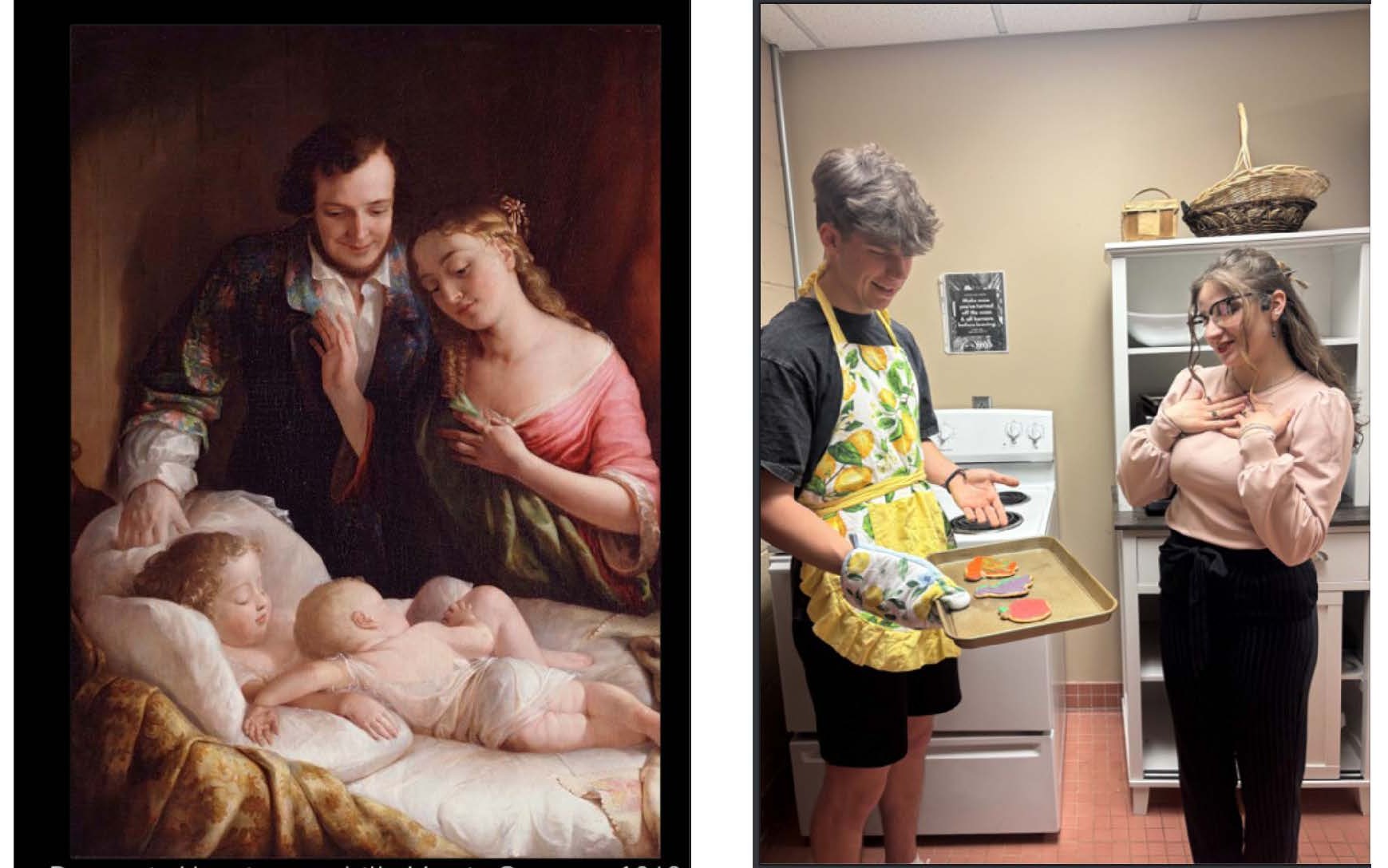
Domestic Happiness by Lilly Martin Spencer: “In the original painting, Spencer offers what was a progressive view of family life for the time, with both mother and father doting on their children. Our students instead depicted a “girl boss” showering praise on the domestic accomplishments of her stay-at-home husband. Notably, no children are present.”
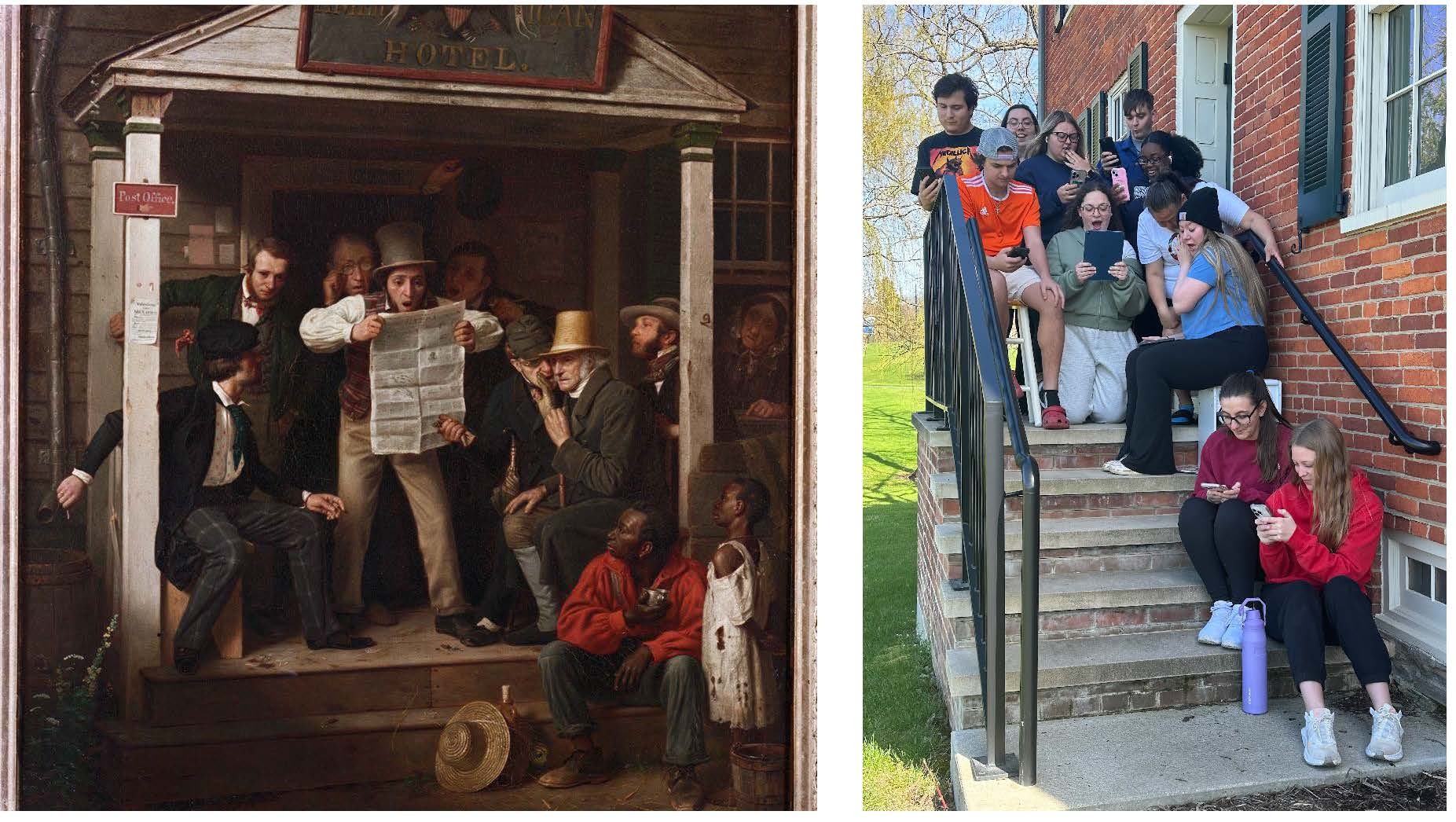
War News from Mexico by Richard Caton Woodville. “Woodville’s painting depicts the latest in information technology—the penny press—which made journalism far more accessible than ever before. Our students depicted a scene in which everyone is responding to the news, not in the shared experience represented by Woodville, but each on their own through their phones and tablets.”
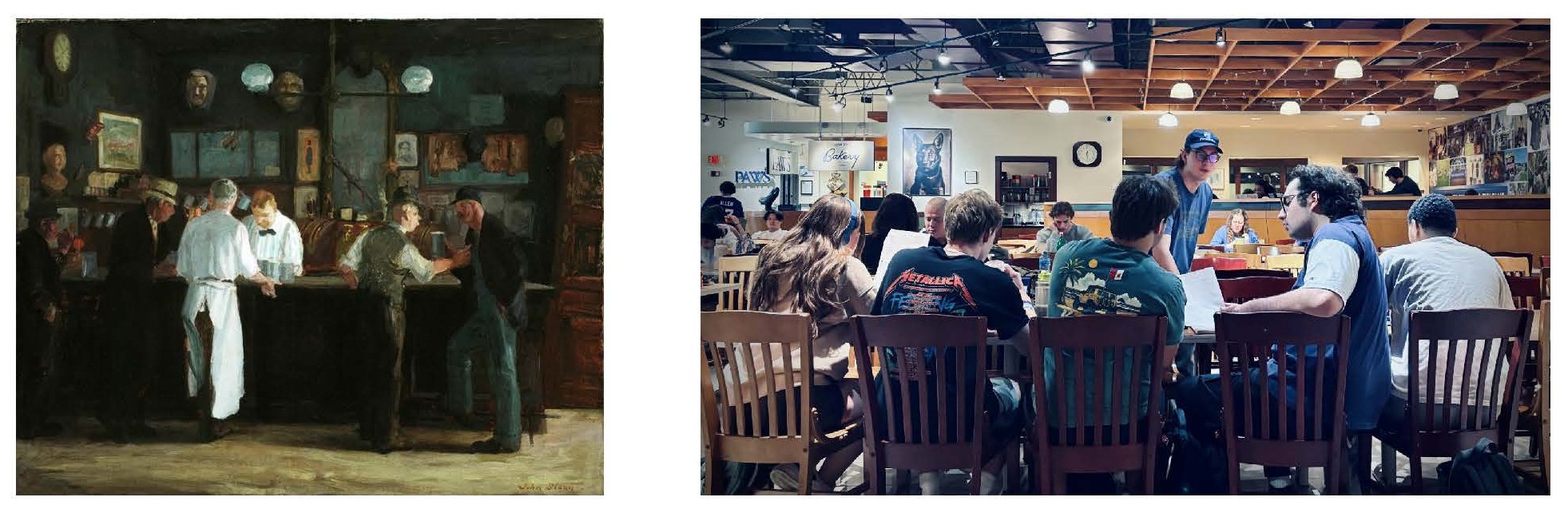
McSorley’s Bar by John Sloan: “Sloan’s painting depicts a scene of working-class sociability in a male-only bar. Our students represented a scene of co-ed sociability in Bruno’s Café on the campus of Penn State Behrend. Again, the presence of devices mediates human-to-human connection. Note how the student group considered the framing of the shot, mirroring the lights and memorabilia on the walls of the original.
Fun fact: McSorely’s Old Ale House is New York City’s oldest continuously operated saloon. The bar did not admit women until it was forced to do so in 1970.”
ABOUT THE COURSE
AMST 307N: American Art and Society covers the history of art in the English colonies and the United States from the seventeenth century to the present, examined through paintings, sculpture, buildings, prints and photographs, as well as exhibitions and national/world fairs.
The course is designed to meet two principal goals. The first is to increase students’ powers of visual analysis and help them build a critical vocabulary for discussing an art object’s medium, composition, style, and iconography. The second is to foster an understanding of the deep implication of the visual arts in their social and cultural contexts.
 BEHREND BLOG