Student Photo Project Explores Connection to Natural World

By Heather Cass, Publications Manager, Penn State Behrend
processed-BD4DD590-EDDD-4E86-A1B5-C2901D374CD0
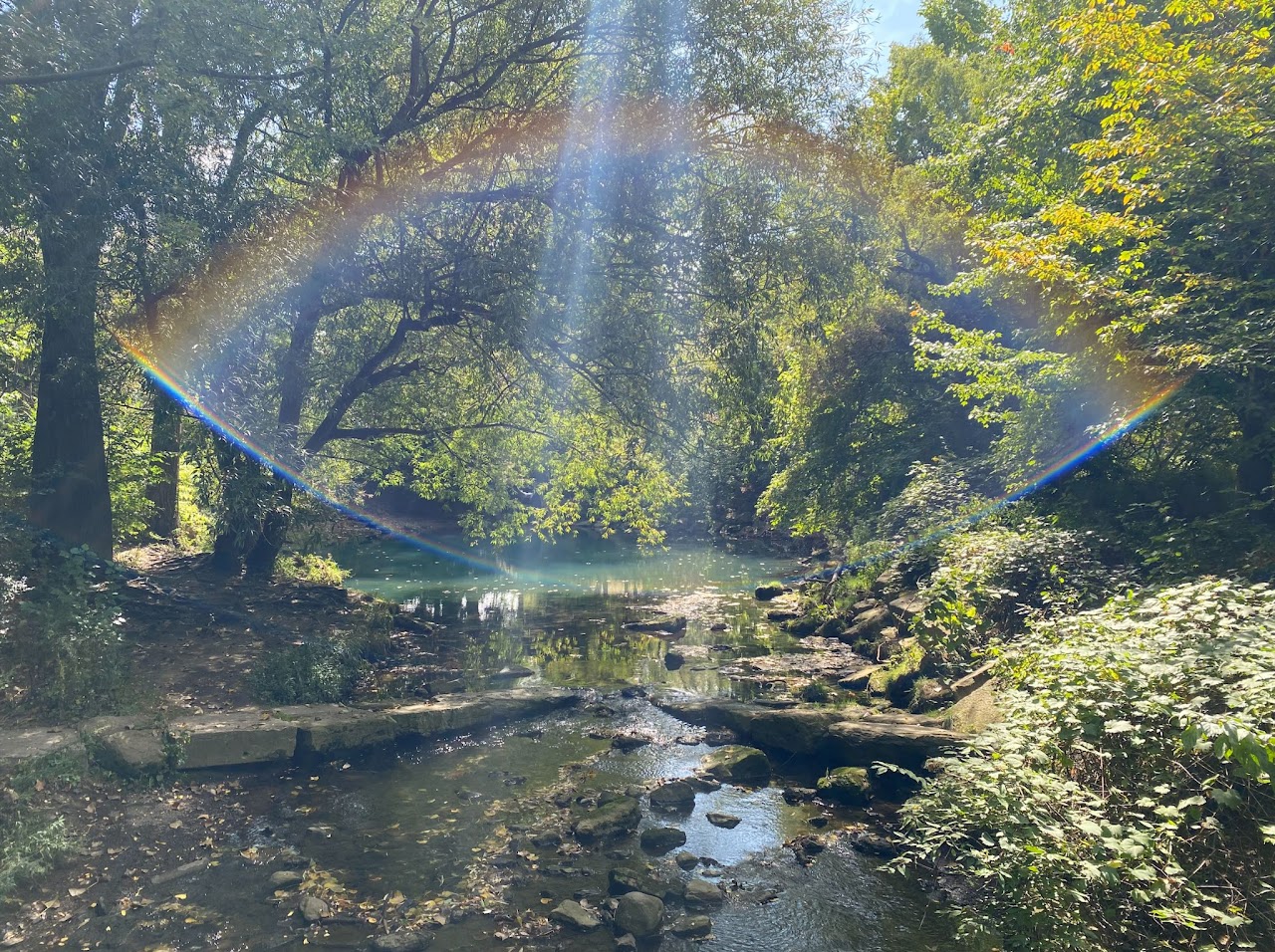
Frontier Park in Erie. CREDIT: Railey Kranz

Students in Photo 202: Fundamentals of Professional Photography recently completed a photo essay project based on “The Land Ethic,” an essay written by Aldo Leopold in 1949 that argues for a deeper connection between humans and the natural world.

Leopold suggests that humans need to expand their concept of ethics beyond just people and animals to include the land—soil, water, plants, and more. The “land” is not something we own, but something we are a part of, and we should treat it with care and respect. Leopold proposes that we should think of ourselves as caretakers, responsible for maintaining balance and harmony with nature.

IMG_0458
Urban park. CREDIT: Chelsea Quijas

Tommy Hartung, assistant professor of digital media, arts, and technology, instructed students in the class to choose an area and create a series of five 360-degree panoramic images that document the landscape and the biome it contains.

“The site they chose could be anywhere from urban to complete wilderness,” Hartung said. “Students were also required to take notes documenting the ecosystem and use their notes to draft a 500-word essay to go with the images.”

A second part of the assignment involved time-lapse photography.

“The element of time and motion related to photography has allowed humans to see systems develop by compacting time into short motion clips,” Hartung said. “It allows a focus that the human experience may overlook about the location.”

Dobbin’s Landing in Erie. CREDIT: Evan Gerdes

The students’ essays are impressive and thought-provoking.  See for yourself at the links below:

IMG_1160-768x512
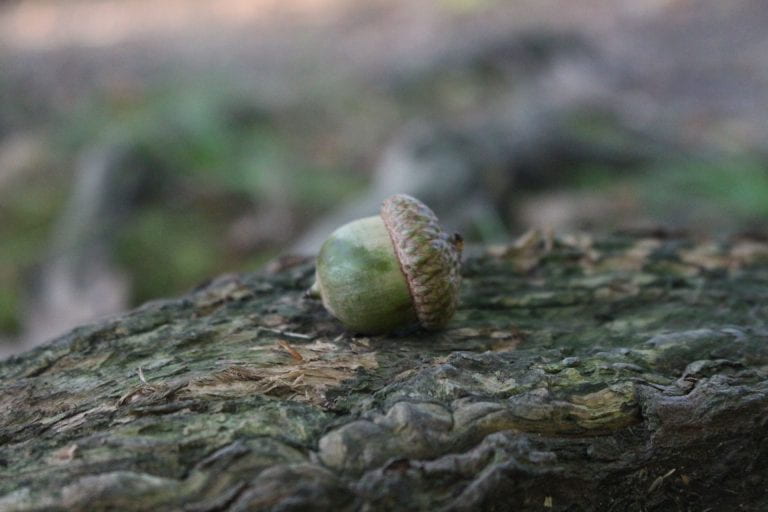
An acorn in Wintergreen Gorge. CREDIT: Lyndon Herschell

Found Treasure: Behrend family travel trunk discovered in consignment shop

By Heather Cass, Publications Manager, Penn State Behrend

This slideshow requires JavaScript.

Ernst and Mary Behrend, whose Glenhill farm property formed the core of Penn State Behrend in 1948, were avid world travelers.

“It was a very important part of their lives,” said Jane Ingold, reference librarian and archivist at the college’s Lilley Library. “We have many photos and postcards that they collected while on their frequent trips abroad. We even have some film of them visiting the locks at the Panama Canal.”

Thanks to the eagle eye of a Behrend food service staff member and the generosity of Steve Miller, associate director of Housing and Food Services, Ingold has another treasure to add to the Behrend collection: one of Ernst’s travel trunks.

“One of my employees mentioned that they saw an old steamer trunk that had ‘E. Behrend’ stamped on it on a photo posted on social media by One-Eighty Consignment and Thrift Shoppe in Albion,” Miller said. “I knew as soon as I saw it that it belonged in Behrend’s archives.”

When Miller drove to Albion to see the trunk, he was surprised at its condition.

“Normally, the leather handles on this type of steamer trunk deteriorate over time, but the handles on this trunk had not,” Miller said. “It appears to have been stored fairly well for some time.”

This slideshow requires JavaScript.

Behrend Blog talked with Miller, a history buff, to learn more about the trunk, which he purchased and donated to the Behrend archives.

Do you know where the trunk came from?

The best the store could gather was that the man who sent it to the store for consignment sale had received it from his wife’s uncle. Who that is or why he had the trunk is unknown.

How do you know it belonged to Ernst Behrend?

It has a brass identification plaque reading “E.R. Behrend Erie PA, U.S.A.” and “E.R. Behrend, Erie, PA” is written in white paint on the front.

Does it have any other identifying marks?

It has a shipping sticker from the American Express Railway Company (AERC). The AERC was formed in 1917 from an amalgamation of three express companies: First Express Company, Pony Express, and Wells Fargo Express. This was an effort to streamline shipping to aid in the war effort as the U.S. was involved in World War I at the time. The AERC was sold in 1929, so this dates the trunk to the 1917–1929-time frame.

It appears the trunk was shipped either to or from Newport, Rhode Island, which makes sense as the Behrend’s had a summer home there in 1913.

The sticker also has the abbreviation “N.Y.N.H. & H.” This is a reference to the New York, New Haven and Hartford Railroad. Service from this railroad ran from eastern New York state through Connecticut, Rhode Island, and Massachusetts. The shipping sticker places the value of the trunk at $300, which is approximately $4,800 in today’s dollars.

This slideshow requires JavaScript.

Were trunks commonly used by travelers then?

Steamer trunks or cabin trunks, which were named after their ability to be stored in the cabin of a steam ship, became popular in the 1880-1920 time period. They had a lower profile than typical shipping trunks to fit under berths in trains and steam ships. The trunks were typically identified with the name or initials of the owner. In addition, they carried notations to identify the contents of the trunk for appropriate storage. In the case of the Behrend trunk, a painted circle with “B” in the center.

You suspect this was one of many trunks the Behrends used?

Yes. Wealthy families typically traveled with many trunks to store their belongings for a long journey. The trunks were typically prepared by the house staff (maids, butlers, etc.) and shipped with a courier service to be placed in a steam liner berth or a train cabin.

Plans for the trunk

Ingold displayed the trunk with a few other Behrend family travel artifacts in the Glenhill Farmhouse during last month’s Parents, Families, and Alumni Weekend at Behrend. This summer, she plans to create a larger display about Ernst and Mary’s travels centered around the trunk that will be on display in the fall 2025 semester.

“It’s in remarkably good condition,” Ingold said. “But things were built to last back then.”

Secret Lives of Faculty: Meet Joel Normand, distiller and restaurant owner

There’s much more to Penn State Behrend’s faculty and staff members than what you see on campus. In this occasional series, we’ll take a look at some of the interesting, unconventional, and inspiring things that members of our Behrend community do in their free time.

By Heather Cass, Publications Manager at Penn State Behrend

joel and Maria copy
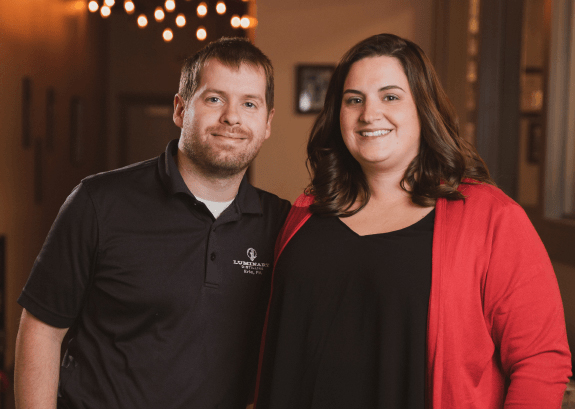
Joel Normand, lecturer in business statistics, and his wife, Maria DiSanza, own Luminary Distilling and Eatery in Erie.

At Penn State Behrend, Joel Normand, lecturer in business statistics, teaches students how to use statistical methods, like probability theory and hypothesis testing, to make informed decisions and solve business problems. It’s something he is well versed in, having applied it to his own venture, a micro-distilling hobby that has grown into a thriving Erie business.

Normand and his wife, Maria DiSanza, own Luminary Distillery and Eatery on upper Peach Street as well as a bottle shop on North Park Row in downtown Erie, where they sell a variety of small-batch artisan spirits.

Normand began dabbling in home brewing, wine making, and distilling in 2010 while working as a high school math teacher.

“I had always wanted to be involved in the alcohol industry,” he said. “Spirit production, as well as micro distilling, was growing in popularity nationally.”

He spent about seven years perfecting his recipes for brandy, whiskey, rum, gin, vodka, moonshine, and more, and he and Maria opened a small bar and bottle shop in March 2017.  Normand knew that selling bottles alone wouldn’t generate enough revenue, so when they outgrew their first location, the couple decided to think bigger.

In 2020, they purchased the former Fuhrman’s Cider market at 8270 Peach Street and blended the two businesses, merging the cider mill and bakery with a restaurant and bar serving their signature Luminary cocktails. Two years later, they opened a bottle shop and bar at 36 North Park Row through a partnership with Erie’s Downtown Development Corporation.

Behrend Blog talked with Normand to learn more about the math-teacher-turned-distiller’s “secret” life.

Is there a story/significance to the name “Luminary”?

Every bottle we produce has a label with the definition of Luminary: “A person who inspires or influences others, especially one prominent in a particular sphere.” It is my hope that I can mesh producing carefully crafted spirits with educating consumers about distillation.

How did you get started in distilling?

Distilling begins with proper fermentation. That’s where my prior experience with making beer and wine came in handy. I had a few family friends that dabbled in distillation, and I attended several workshops with master distillers to acquire the proper knowledge to make great spirits.

How do you and your wife manage your business partnership?

We focus on our strengths. I generally oversee production and day-to-day operations, while Maria deals with scheduling, inventory, employee management, and finances.

What has been your biggest challenge?

The biggest challenge has been maintaining a consistent and well-trained staff, which has been especially difficult during the COVID era. I’ve had to transition from production to managing a diverse group of individuals.

What have you learned the hard way?

Things break down all the time. If you can’t fix it yourself, you’re paying a premium to get someone else to fix it.

The food at Luminary is not typical bar food. Was that important to you and your brand

We always strive to provide something a bit different for our customers. That includes a unique menu that changes quarterly. People can get the usual comfort food anywhere. We aim to provide something more.

What do you wish you knew five years ago?

Not to spread myself too thin with too many projects or facets of the business, and to focus on a few things that I do well.

What did you think would work but did not?

I was hoping to have many more outside sales, as well as a stronger presence in the online market. It’s a bit saturated with other distilleries and spirits.

What was a surprise success?

Our focus on cocktails and event planning for large parties. We have a highly competent staff that can offer a unique experience.

What is your favorite cocktail/liquor at Luminary?

Our best sellers are our Apple Pie Moonshine and our Coffee Liqueur. Personally, I prefer our Summit Gin. If I had to choose a single favorite cocktail, it’d be a Rye Whiskey Old Fashioned.

What is your favorite dish/meal?

Our unique pizzas, such as pear and prosciutto, as well as our Reuben are some of the most popular food options. I prefer our Mediterranean salad.

What is in the future for Luminary?

We plan to consolidate some of the many things we currently do into a more focused approach. We have also toyed around with the idea of a food truck. We’ll see what opportunities present themselves!

This slideshow requires JavaScript.