
The fascinating science of frogs in winter
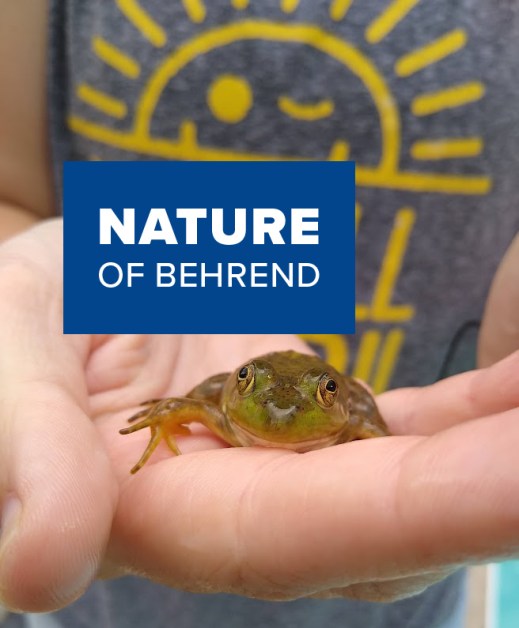
Behrend is home to a wide variety of frogs and toads, but have you ever wondered where they go in winter?
They don’t migrate or hibernate; they brumate.
Brumation is to amphibians what hibernation is to mammals. When temperatures drop and the days get shorter, amphibians seek out a warm, safe hiding place where their metabolism slows to the bare minimum, and they rest until spring.
“Amphibians brumate differently depending on the species,” said Dr. Lynne Beaty, assistant professor of biology. “Some, like pickerel frogs and bullfrogs, brumate underwater; some, like American toads, brumate on land underground below the frost line; and some, like spring peepers, gray treefrogs, and wood frogs, brumate in the freezing zone.”
If “the freezing zone” sounds like a frigid place to spend the winter at Behrend, be assured that it is. Not only is it cold, but it’s very cool in a nature-is-so-amazing way.
“All frog species that overwinter in the freezing zone exhibit some degree of freeze tolerance—that is, up to sixty percent of the frog can freeze solid and survive. They just thaw out when warmer temperatures arrive,” Beaty said.
“This is primarily due to the action of cryoprotective compounds (i.e., antifreeze) that prevent vital parts from freezing completely,” Beaty said. “Many of these organisms also have an inherent ability to resist structural damage when ice crystals form in the body, and their cells are particularly hardy in the face of massive dehydration that occurs during the freezing process.”
Of all the frogs that do this, the wood frog can handle freezing temperatures the best, which is why they have the northernmost range of all frog species in North America.
“Wood frogs, which we have on campus, are the real ‘super freezers,’” Beaty said. “Watch this cool video to see why.”
________________________________________________
NATURE OF BEHREND is an ongoing series highlighting Behrend’s unique environment, beautiful campus, and outdoor learning opportunities. New items are posted every Monday on the college’s Facebook and Instagram pages.
Do you have question about something you’ve seen outdoors at Behrend — trees, plants, animals, insects, paths, artifacts, etc.? Email hjc13@psu.edu and we may cover it in a “Nature of Behrend” post, story, or video.
 BEHREND BLOG