Nature of Behrend: Freezing Frogs

The fascinating science of frogs in winter
frogs in winter

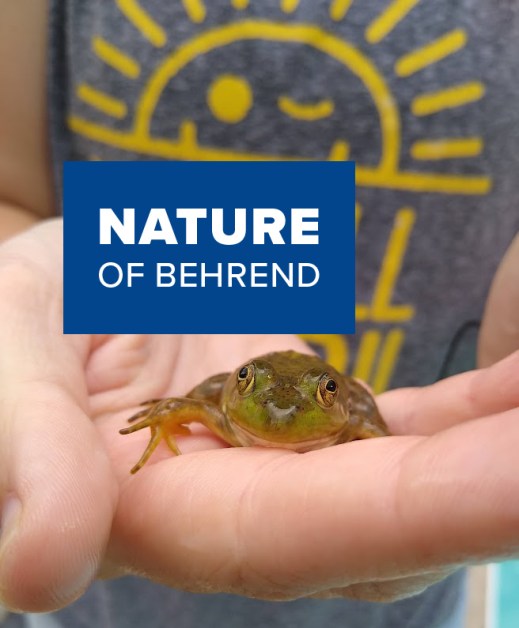
Behrend is home to a wide variety of frogs and toads, but have you ever wondered where they go in winter?

They don’t migrate or hibernate; they brumate.

Brumation is to amphibians what hibernation is to mammals. When temperatures drop and the days get shorter, amphibians seek out a warm, safe hiding place where their metabolism slows to the bare minimum, and they rest until spring.

“Amphibians brumate differently depending on the species,” said Dr. Lynne Beaty, assistant professor of biology.  “Some, like pickerel frogs and bullfrogs, brumate underwater; some, like American toads, brumate on land underground below the frost line; and some, like spring peepers, gray treefrogs, and wood frogs, brumate in the freezing zone.”

If “the freezing zone” sounds like a frigid place to spend the winter at Behrend, be assured that it is. Not only is it cold, but it’s very cool in a nature-is-so-amazing way.

“All frog species that overwinter in the freezing zone exhibit some degree of freeze tolerance—that is, up to sixty percent of the frog can freeze solid and survive. They just thaw out when warmer temperatures arrive,” Beaty said.

“This is primarily due to the action of cryoprotective compounds (i.e., antifreeze) that prevent vital parts from freezing completely,” Beaty said. “Many of these organisms also have an inherent ability to resist structural damage when ice crystals form in the body, and their cells are particularly hardy in the face of massive dehydration that occurs during the freezing process.”

Of all the frogs that do this, the wood frog can handle freezing temperatures the best, which is why they have the northernmost range of all frog species in North America.

“Wood frogs, which we have on campus, are the real ‘super freezers,’” Beaty said. “Watch this cool video to see why.”

________________________________________________

NATURE OF BEHREND is an ongoing series highlighting Behrend’s unique environment, beautiful campus, and outdoor learning opportunities. New items are posted every Monday on the college’s Facebook and Instagram pages. 

Do you have question about something you’ve seen outdoors at Behrend — trees, plants, animals, insects, paths, artifacts, etc.? Email hjc13@psu.edu and we may cover it in a “Nature of Behrend” post, story, or video.

Secret Lives of Staff: Jim Dowds, professional musician

There’s so much more to Penn State Behrend’s faculty and staff members than what you see them doing on campus. In this occasional series, we take a look at some of the interesting, unconventional, and inspiring things that members of our Behrend community do in their free time. 

By Heather Cass
Publications Manager, Office of Strategic Communications, Penn State Behrend

Had Jim Dowds, case manager in Personal Counseling, not been tossed off the basketball team for a minor infraction in eighth grade, he may never have discovered his not-so-secret passion: making music.   

Bored and with time on his hands while all his friends were at hoops practice, he began channeling his energy into an old drum set his family had.

“I didn’t know what I was doing,” he said. “I didn’t even know how to set it up right. I just started trying to make my hands and arms work the right way. I had nothing to learn from. There was no YouTube, no Google back then.”

But eventually, after hours and hours of practice, including a couple of times he kicked a drum across the room in frustration, Dowds figured it out.

“It was the best thing that my past self ever did for my future self,” he said. “It was an excellent investment.”

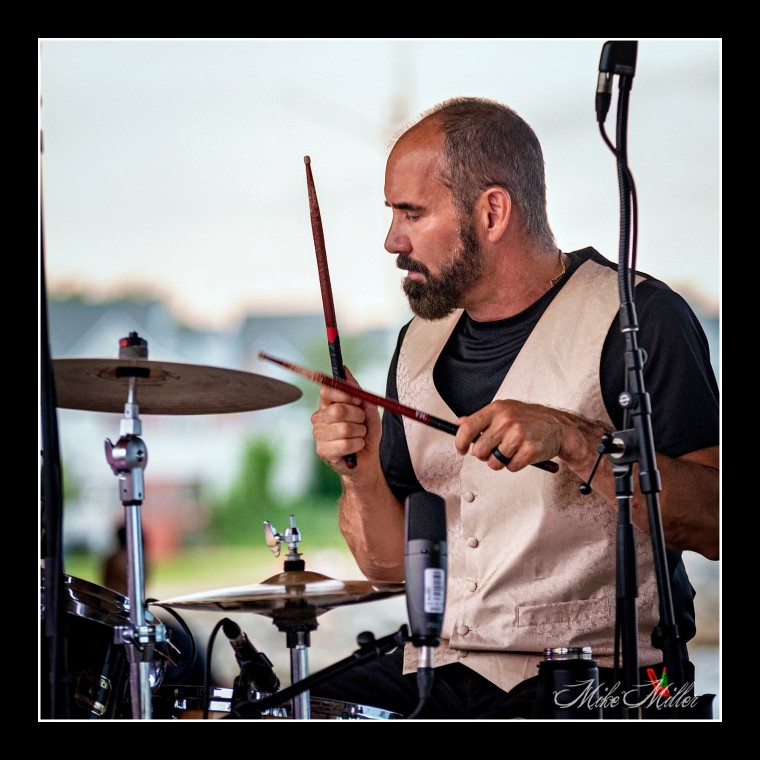
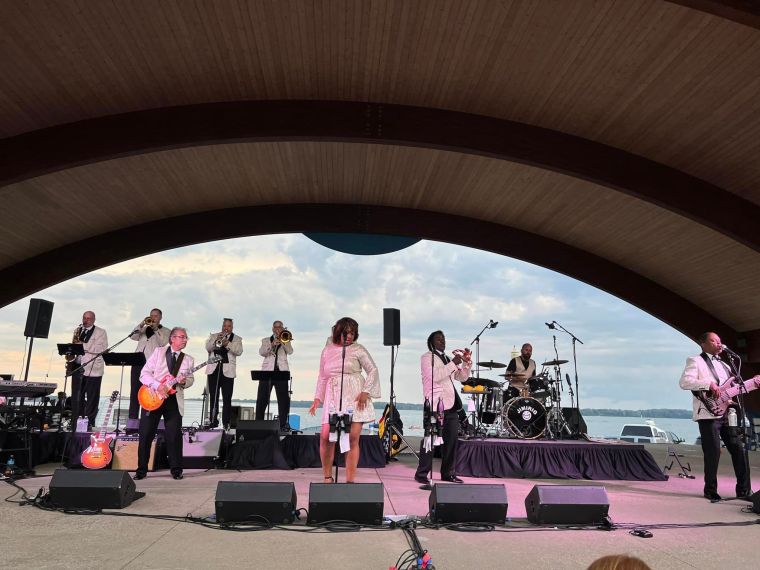
Today, after a day of helping Behrend students in the Personal Counseling office, Dowds can often be found behind a drum kit, practicing or performing with The Groove, a popular Erie dance band. The nine-member group, which includes a brass section, covers pop, funk, and R&B hits. They draw big crowds wherever they perform in the Erie area.

“A band that plays danceable music will become a popular band,” he said. “People want to be a part of the music. They want to get up, move, and have fun.”

We sat down with Dowds to learn more about his night life, his passion for percussion, and how he uses music to help students at Behrend.

What does playing the drums do for you?

As a kid, it kept me on the right track. Today, it’s a form of stress relief, and it is a lot of fun. I get to do something that everybody loves, and I can see they do when they dance, laugh, and smile. One thing I know for sure is that people want to be a part of music.

What do you mean by that?

Music is like magic. It speaks to every human and has throughout history. It’s found in some form in every nation on every continent. Singing. Dancing. Drumming. Music is a part of every culture. Humans used their own bodies for instruments before there were instruments.

Can anyone learn to play an instrument?

Yes, and I think it’s an excellent investment because making music is something you can do for your entire life. Think about the thousands of hours that an athlete puts into their sport from grade school through college. They put in so much effort, training and improving, and then, college is over and they don’t have a football team or a basketball team and this thing they’ve spent half their life doing just ends. Music never ends. It’s something you can do in your 90s.  

Why is music important for college students?

Students need a place to escape, to get away from the stress of school, to be creative, and to have fun. It’s also a good way to find a social group. I’ve seen it transform students.

How so?

I had a student who came to see me recently, and he was completely in his shell.  Eventually, we started talking about his interests. He told me he liked to play guitar, so we started talking about music and his entire demeanor changed. He came alive. He was sitting forward in his chair, listening and engaging.

Tell me about the drum circles that you and some of the counselors offer on campus.

We have hand drums and a cajon box drum that we can take anywhere on campus – indoors or out — and start playing. It draws students in every time. Some want to play. Others just listen, bobbing their heads and smiling. It’s hard to be sad when you’re tapping your toes to a beat. The thing about music is that the deeper you get into it, from listening to dancing to playing, the more it can help you.

Playing with The Groove is a big commitment. What keeps you going?

I’ve played in bands all my life, and the best ones have a flow, where the musicians are aware of and listening to what everyone else in the band is doing, and they can easily adjust and pick up what another is laying down. When that happens and you are creating in real time, it’s a high that you just keep chasing. It will send chills up your spine.